Get 20% OFF All Premium 3D & STL Models!

In the dynamic world of 3D visualization, automotive design, and game development, the demand for high-fidelity, production-ready 3D car models is ever-present. Artists, developers, and engineers consistently seek assets that not only look authentic but also perform flawlessly across diverse platforms and engines. From crafting photorealistic marketing renders to populating expansive open-world games, the quality of your foundational 3D models dictates the success and realism of your entire project.
Enter the Chrysler Grand Voyager 2008 3D Model – a meticulously crafted digital asset that embodies the perfect synergy of visual authenticity and technical optimization. This model is more than just a digital replica; it’s a versatile tool designed to accelerate professional workflows, offering an ideal balance of detail and performance for a myriad of applications. Whether you’re an architectural visualizer adding a touch of realism to an urban streetscape, a game developer seeking a period-accurate family vehicle, or an AR/VR enthusiast building an immersive experience, this Grand Voyager model provides a robust foundation.
Throughout this comprehensive guide, we’ll delve into the intricacies of acquiring and utilizing premium 3D car models, focusing on how a specialized asset like the Chrysler Grand Voyager 2008 from 88cars3d.com can elevate your projects. We’ll explore critical technical considerations, examine practical workflows, and uncover the creative possibilities unlocked by having access to such a high-quality digital representation.
In any 3D production pipeline, the quality of your source assets is paramount. For automotive projects, this means models that accurately reflect real-world proportions, intricate styling cues, and a robust underlying mesh structure. Investing in professionally created 3D car models saves countless hours of modeling time, ensures accuracy, and prevents downstream issues that can derail complex projects.
High-quality 3D car models serve as the crucial link between conceptual design and tangible visualization. For automotive manufacturers, they enable rapid prototyping, design iteration, and marketing visualization long before a physical prototype exists. In architectural visualization, they inject life and scale into static environments. For game developers, they provide realistic vehicles that populate virtual worlds, enhancing player immersion. The Chrysler Grand Voyager 2008 3D Model is an excellent example of an asset built with this versatility in mind, capable of fitting seamlessly into diverse scenarios requiring a touch of authentic, everyday realism.
Developing 3D car models from scratch is an incredibly time-consuming and specialized task, often requiring hundreds of hours for a single vehicle. This includes meticulous blueprint matching, intricate surface modeling, UV unwrapping, texturing, and optimization for various use cases. By leveraging pre-built, production-ready assets like those found on 88cars3d.com, artists and developers can significantly reduce development cycles and allocate their valuable time to more creative aspects of their projects, such as scene composition, animation, or interactive logic. This efficiency is critical for meeting tight deadlines and maintaining project profitability.
The versatility of a 3D model is often defined by the array of file formats it supports. Each format is engineered for specific purposes, offering unique advantages in terms of compatibility, data retention, and optimization for different software and pipelines. The Chrysler Grand Voyager 2008 3D Model is available in a comprehensive suite of formats, ensuring maximum utility across the industry. Understanding these is crucial for professional workflow integration.
The .blend file format is Blender’s native project file. It encapsulates an entire Blender scene, including all 3D geometry, materials (with complex node setups), textures, lighting, cameras, animation data, physics simulations, and even custom scripts. When you download a .blend file like the one for the Chrysler Grand Voyager 2008, you’re getting a fully editable, ready-to-render scene, meticulously organized within the Blender environment. This is ideal for Blender users who want to dive straight into customization, animation, or rendering without needing to import or re-establish material pipelines.
.fbx (Filmbox) is a proprietary file format owned by Autodesk, but it has become an industry standard for exchanging 3D data between various applications. It’s particularly favored for its robust support for geometry, materials (though sometimes simplified on export), animations, rigging, and scene hierarchies. For importing the Chrysler Grand Voyager 2008 into real-time engines like Unreal Engine or Unity, or into other DCC (Digital Content Creation) software like Maya or Cinema 4D, .fbx is often the go-to choice due to its comprehensive data retention and reliable compatibility.
.obj (Wavefront OBJ) is a more universal and simpler format, primarily used for transferring geometry data. It stores vertices, normals, UV coordinates, and face definitions. While .obj is highly compatible across almost all 3D software, it typically does not store animation, rigging information, or complex material node setups directly within the file (materials are usually defined in a companion .mtl file). For simple static mesh transfers, the .obj version of the Grand Voyager model offers excellent cross-software compatibility.
.glb (GLB, short for glTF Binary) is the binary version of the glTF (GL Transmission Format) specification, which is rapidly becoming the standard for 3D models in web, AR (Augmented Reality), and VR (Virtual Reality) applications. .glb files are self-contained, including geometry, textures, and PBR (Physically Based Rendering) material definitions in a single, highly optimized file. This makes them incredibly efficient for streaming and displaying 3D content directly in browsers or mobile AR/VR experiences, offering a lightweight yet visually rich representation of the Chrysler Grand Voyager 2008.
.stl (Stereolithography) is one of the most widely used file formats for 3D printing. It represents a 3D model as a collection of unconnected triangular facets, without color, texture, or material information. The key requirement for .stl files is that the mesh must be “watertight” (manifold), meaning it has no holes or gaps, ensuring a solid printable object. The .stl version of the Chrysler Grand Voyager 2008 is perfect for hobbyists or professionals looking to 3D print a physical replica.
.ply (Polygon File Format) is another format primarily used for representing 3D scanned data or models with very precise geometric information. It can store a wider range of properties than .stl, including color, transparency, surface normals, and even texture coordinates. While less common for direct 3D printing than .stl, .ply is valuable for specific CAD or analysis workflows where detailed mesh data is crucial.
The .unreal format, often referring to an Unreal Engine project file or pre-packaged asset, indicates that the Chrysler Grand Voyager 2008 is provided as an engine-ready asset. This means it may include pre-configured materials (using Unreal’s PBR system), collision meshes, LODs (Levels of Detail), and potentially even basic blueprints for vehicle movement, saving significant setup time for Unreal Engine developers.
Similarly, the .max format is the native file type for Autodesk 3ds Max. Like .blend, it contains the full scene, including all specific 3ds Max features, modifiers, advanced V-Ray or Corona materials, and animation. For professionals operating within the 3ds Max ecosystem, this file offers the highest level of editability and direct integration.
By offering the Chrysler Grand Voyager 2008 in such a diverse range of formats, 88cars3d.com ensures that users can confidently integrate this high-quality asset into virtually any professional 3D pipeline.
The essence of a great 3D model lies in its meticulous attention to detail and intelligent optimization. The Chrysler Grand Voyager 2008 3D Model exemplifies this principle, offering a faithful recreation of the iconic minivan while adhering to best practices for digital performance.
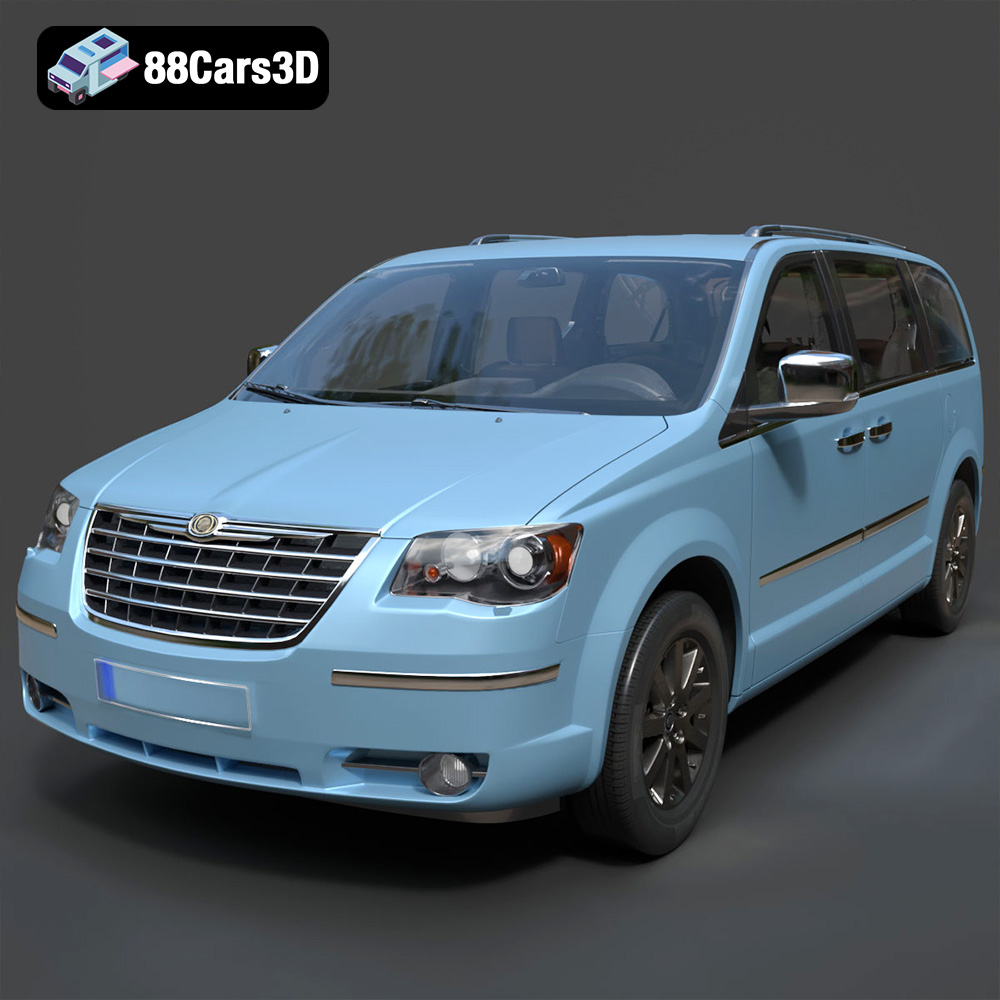
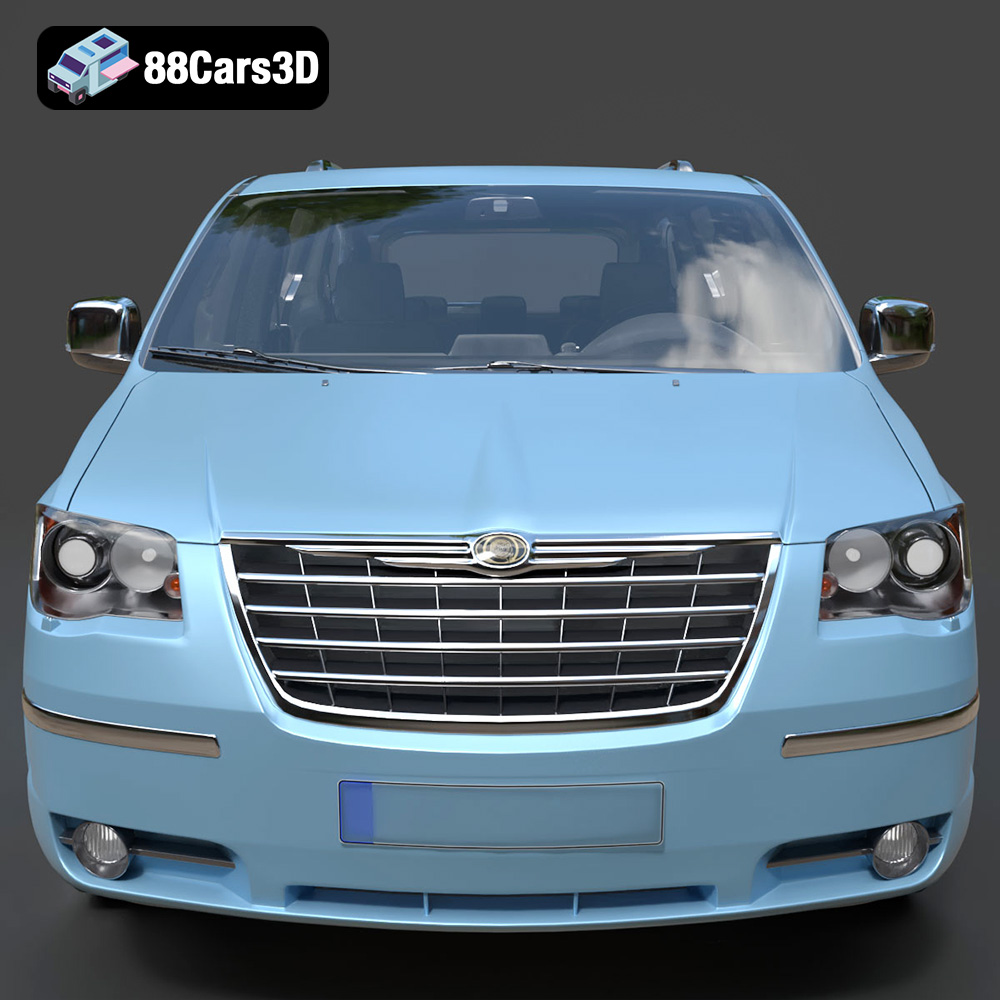
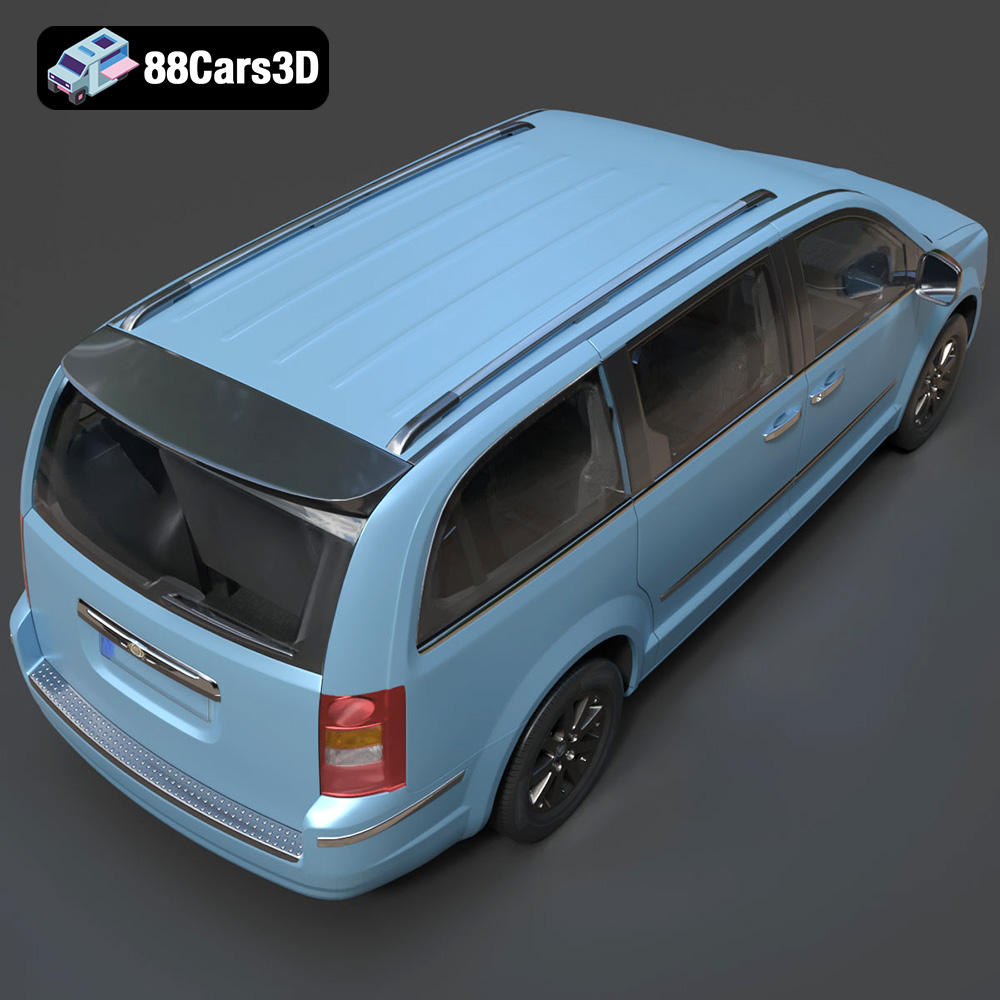
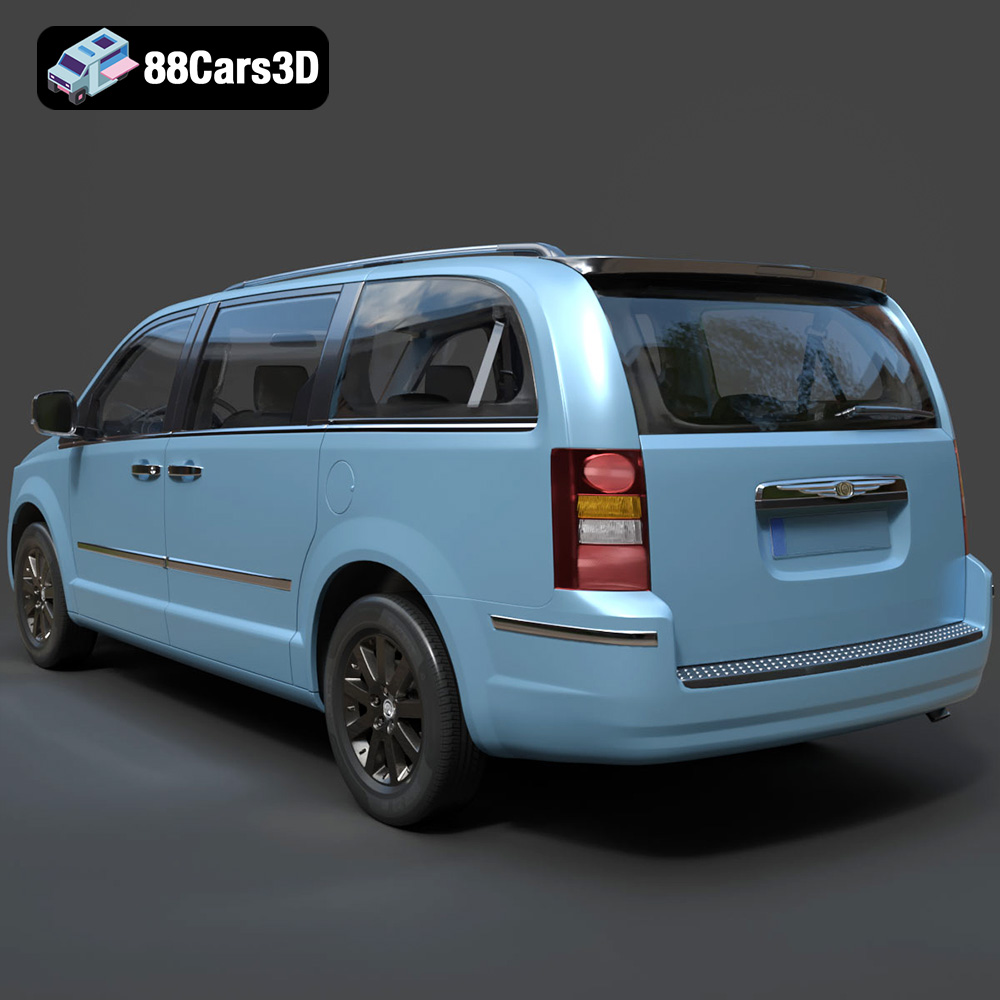
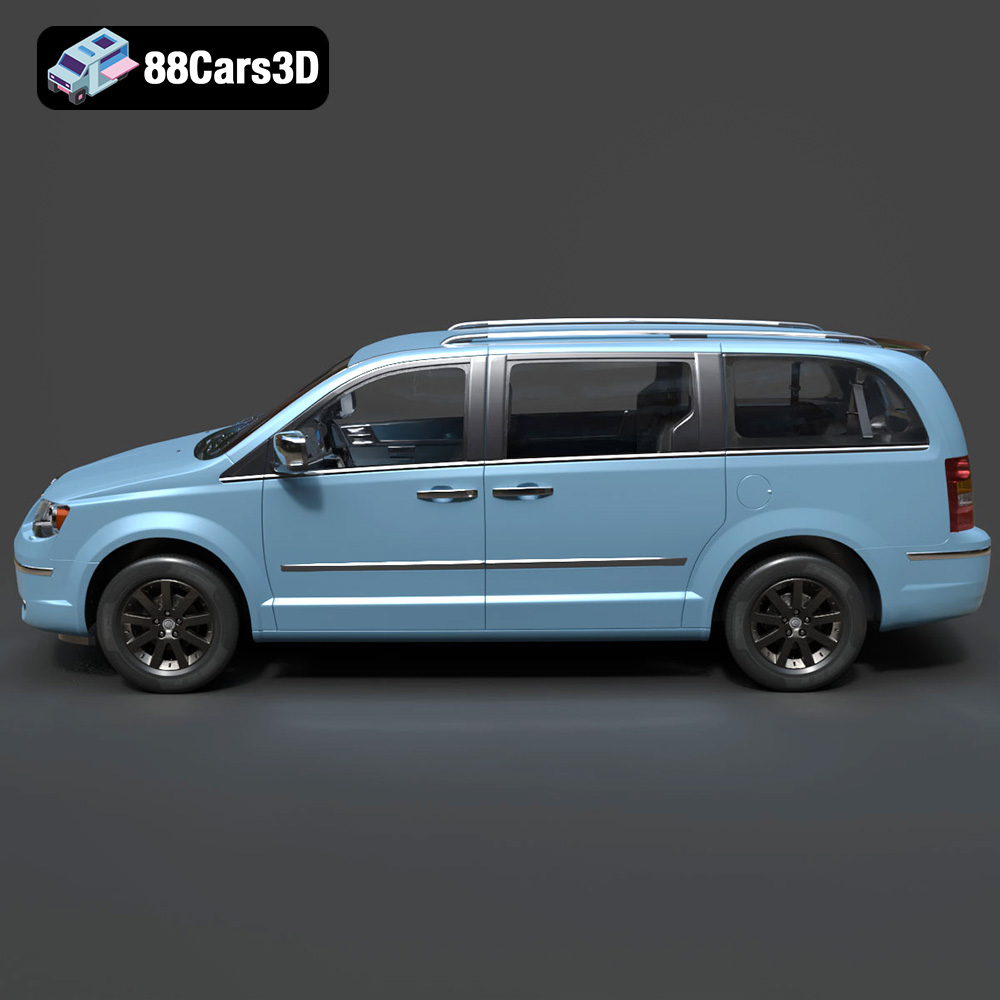
This model meticulously captures the unmistakable road presence of the 2008 Grand Voyager. From the signature wide front grille and prominent headlight housings that define its face, to the elongated, aerodynamic body curves, every aspect has been carefully considered. The dual exhaust styling, subtle rear tailgate contours, and the unique multi-spoke wheel design, complete with realistic tire tread patterns, all contribute to an authentic visual experience. Furthermore, accurate multi-spoke wheel design and realistic tire tread patterns ensure visual integrity even in close-up renders. The geometry includes precisely modeled suspension components and wheel wells, with separate wheels, suspension, and steering components rigged for seamless animation, making it perfect for dynamic scenes or interactive simulations.
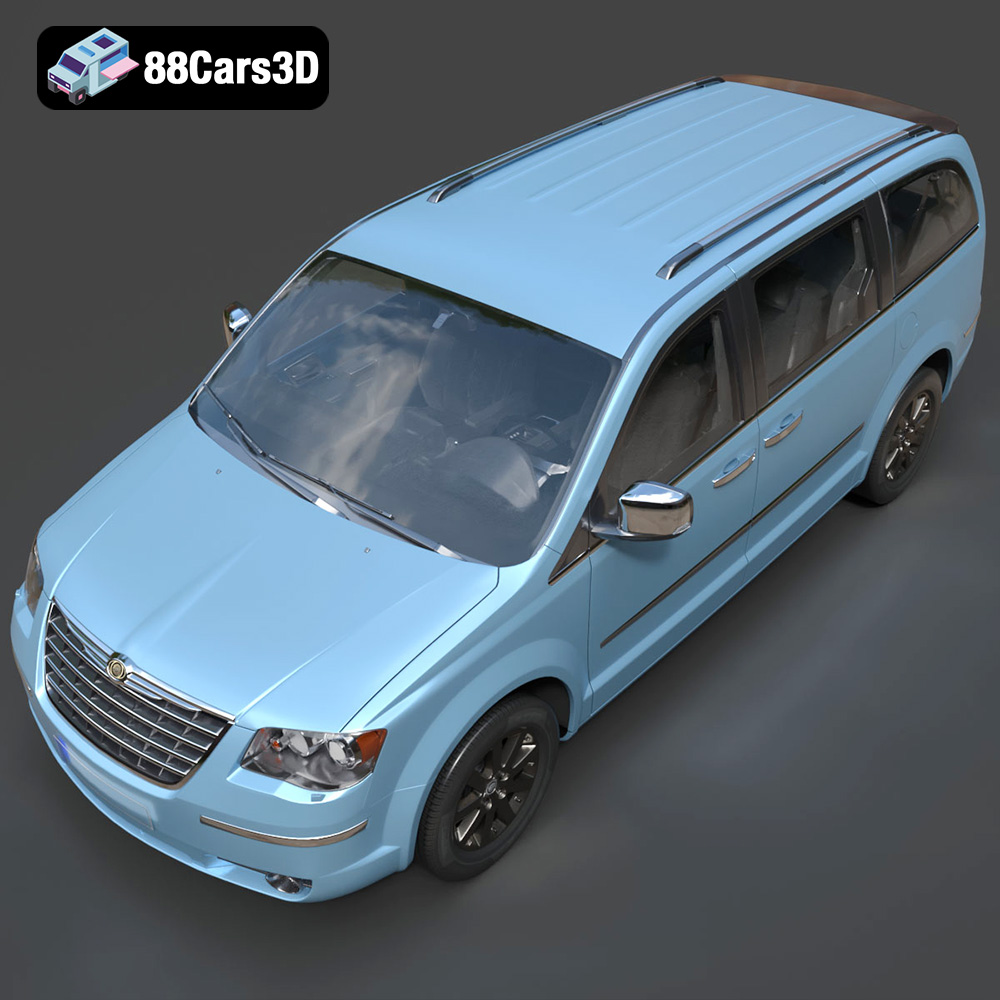
Beyond its striking exterior, the model boasts a highly detailed interior, crucial for first-person perspectives in games or immersive VR experiences. The multi-row seating arrangement, complete with distinctive upholstery patterns, provides a realistic cabin environment. The accurate multi-function steering wheel, detailed instrument cluster, and a central infotainment console mirror the real vehicle. Every control detail, from pedals and the gear selector to climate controls, has been recreated, ensuring that even a virtual “driver” would feel at home. This optimized interior geometry makes the Grand Voyager a prime candidate for applications where cabin realism is paramount.
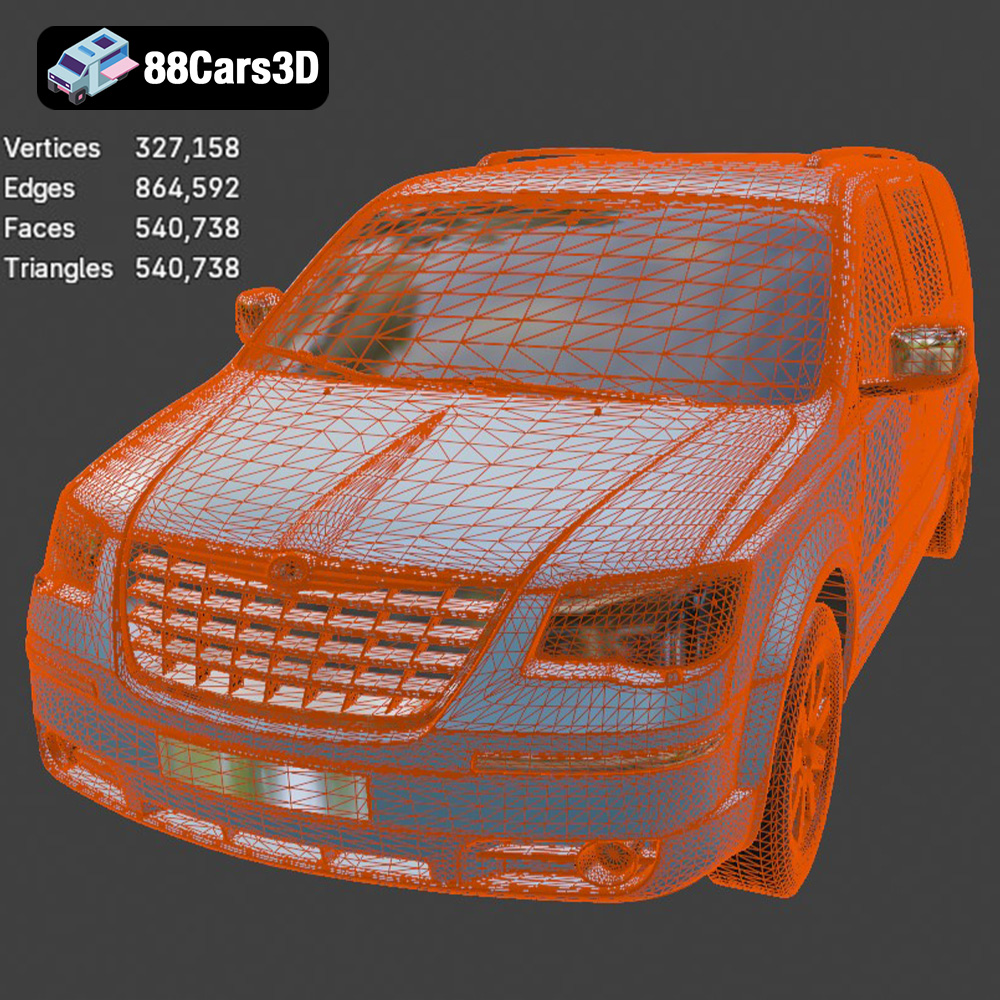
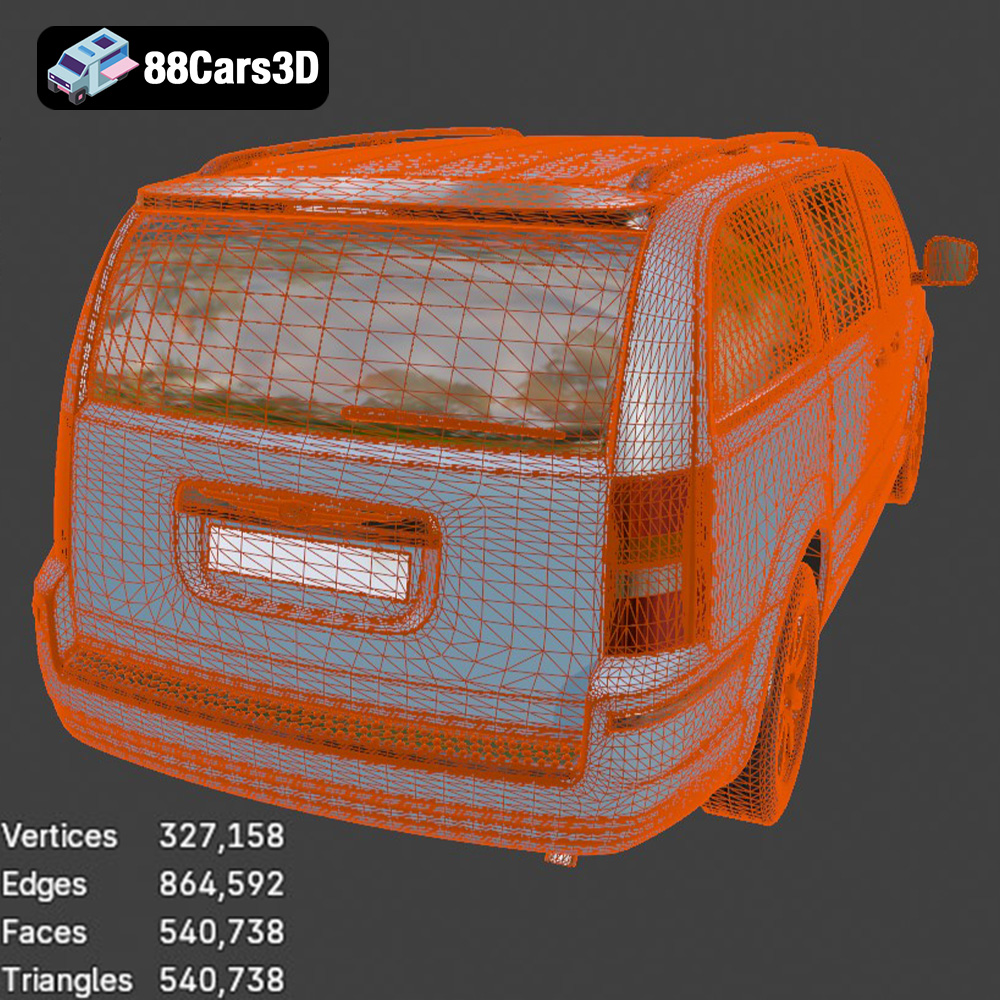
Achieving visual realism without compromising performance is a delicate balance, and this model strikes it perfectly. With an optimized triangle count of 540,738, the Chrysler Grand Voyager 2008 is explicitly designed to be “game-ready.” This polycount is high enough to maintain excellent visual fidelity, allowing for clean reflections and shading, yet optimized to prevent bogging down real-time engines like Unreal or Unity. The model adheres to real-world scale accuracy, based on actual vehicle chassis dimensions, ensuring consistent integration into scenes. Furthermore, proper pivot setups for steering, wheel rotation, and suspension travel facilitate straightforward animation and dynamic simulations, cementing its versatility across diverse professional applications.
The utility of a high-quality 3D car model extends far beyond simple rendering. The Chrysler Grand Voyager 2008 3D Model, with its blend of detail and optimization, is a powerful asset for a wide range of industries.
For game developers, finding the right balance between visual quality and performance is a constant challenge. This Grand Voyager model, with its 540,738 triangle count, is perfectly suited for open-world games, racing titles, and simulation environments. Its optimized topology ensures smooth performance even when multiple instances are present in a scene, while the detailed exterior and interior provide rich visual fidelity for cinematic cutscenes or player-driven experiences. The inclusion of separate, pivot-ready components for wheels, suspension, and steering further enhances its utility for creating realistic vehicle physics and animations within engines like Unreal and Unity.
The burgeoning fields of Augmented Reality (AR) and Virtual Reality (VR) demand assets that are both high-quality and lightweight. The Grand Voyager model’s optimized geometry makes it ideal for immersive virtual showrooms, where potential customers can interact with a virtual car in a realistic setting. It’s also perfect for mobile AR applications, allowing users to place a life-sized virtual minivan in their driveway. The availability of the .glb format is particularly beneficial here, as it’s optimized for efficient delivery and display in web-based and mobile XR environments.
For architectural visualization artists and professional renderers, the Grand Voyager provides an essential prop for grounding scenes in realism. Imagine a sprawling suburban development or a bustling urban streetscape – adding a familiar, accurately modeled vehicle like this minivans instantly adds scale, context, and a sense of lived-in authenticity. Its clean topology ensures flawless reflections and shading under various lighting conditions, making it excellent for high-resolution brand campaigns, lifestyle renders, and studio lighting setups. The ability to easily customize colors and material finishes further enhances its versatility for specific client needs.
Beyond digital displays, the Chrysler Grand Voyager 2008 model is designed with 3D printing in mind. Available in the .stl format, it opens up avenues for creating physical replicas for display, prototyping, or educational purposes. The recommended scales (1:12, 1:18, 1:24) allow for detailed physical models, while suggestions for layer height (0.04–0.12 mm, with resin printing recommended for fine details), wall thickness, infill, and support placement guide users toward successful prints. Post-processing suggestions, such as sanding, priming, and applying authentic factory colors, empower hobbyists to create truly stunning miniature versions.
Integrating a new 3D asset into an existing project pipeline requires more than just importing a file. It demands an understanding of workflow optimization, material setup, and the specific needs of your target platform. The Chrysler Grand Voyager 2008 3D Model is built for seamless integration.
Consider a typical workflow for game development using Blender and Unreal Engine. You’d likely start with the .blend file to examine the model’s structure, verify scale, and perhaps make minor adjustments. For export to Unreal, the .fbx format is ideal. Exporting from Blender ensures all crucial data—geometry, UVs, and pivots—are correctly transferred. Once in Unreal Engine, you’d import the FBX, typically as a skeletal mesh if you plan for animation, or a static mesh. The model’s clean UVs are essential for applying PBR (Physically Based Rendering) materials. You would then create materials in Unreal, assigning textures for diffuse, normal, roughness, metallic, and ambient occlusion, leveraging Unreal’s robust material editor. The optimized polycount of the Voyager model means less manual optimization post-import, allowing for quicker iteration and performance gains.
The versatility of the Grand Voyager model lies in its adaptability. Artists can easily modify body and trim colors, experimenting with factory finishes, metallic paints, or even custom liveries. Changing tire textures—from all-season to winter variants—adds another layer of realism for specific environments. Adapting material finishes (matte, gloss, chrome) and adjusting lighting for different times of day or environmental conditions allows for endless creative possibilities. In a PBR workflow, this involves swapping out texture maps or adjusting material parameters within your chosen renderer (e.g., Cycles in Blender, V-Ray in 3ds Max, or Unreal Engine’s native renderer) to achieve the desired visual effect. The model’s clean UVs ensure that texture mapping is straightforward and free from distortion.
Even with an optimized base model, understanding further performance enhancements is crucial for large-scale projects. For game development, consider implementing Levels of Detail (LODs) if the model will be viewed from varying distances. While the base model is optimized, generating lower-polygon versions for distant views can drastically reduce GPU load. Material instancing is another key optimization in engines like Unreal, allowing multiple instances of the same material to share a common parent, saving memory. Furthermore, careful consideration of draw calls and batching can improve rendering efficiency. The structured geometry and separate components of the Grand Voyager model facilitate these advanced optimization techniques, providing a flexible foundation for high-performance applications.
The Chrysler Grand Voyager 2008 3D Model’s technical attributes and aesthetic fidelity open doors to a myriad of creative projects. Let’s explore some real-world applications where this specific model can shine.
Imagine an architectural visualization of a new housing development or a detailed urban planning simulation. Populating these scenes with realistic vehicles is essential for context and scale. A fleet of Chrysler Grand Voyager 2008 3D Models, perhaps in varying colors, can instantly transform a barren street into a bustling, believable neighborhood. The model’s optimized polycount ensures that even with dozens of cars, the scene remains performant for real-time walkthroughs or high-resolution renders, making it an invaluable asset for showcasing infrastructure projects or city planning concepts.
For filmmakers, animators, or advertisers looking to create a nostalgic period piece or a family-oriented commercial, the Grand Voyager offers an authentic touch. Its accurately separated and pivot-ready components (wheels, suspension, steering) allow for complex and realistic animations—from navigating tight city streets to traversing scenic highways. Imagine a cinematic sequence showing the minivan pulling up to a school, or packing for a family vacation. The high fidelity of the interior also allows for captivating in-cabin shots, crucial for storytelling and character interaction within the vehicle.
With the rise of e-commerce and immersive marketing, virtual product showrooms are becoming increasingly popular. Automakers can showcase classic models or enthusiasts can build historical car collections in a fully interactive 3D environment. The Chrysler Grand Voyager 2008 is perfect for this. Utilizing its .glb format for web-based configurators or its .unreal asset for high-end VR experiences, customers could explore every angle of the car, open doors, inspect the interior, and even customize colors in real-time. This level of interaction provides an engaging and informative experience that transcends traditional static images or videos.
In the expansive and ever-evolving landscape of 3D content creation, the pursuit of realism, efficiency, and versatility remains constant. High-quality 3D car models are not merely visual enhancements; they are fundamental building blocks that enable professionals across industries to realize their creative visions and meet technical demands. The Chrysler Grand Voyager 2008 3D Model stands as a testament to this principle, offering an exceptional blend of authentic detail, optimized performance, and broad compatibility.
From its meticulously recreated exterior and highly detailed interior to its game-ready polycount and extensive file format support, this model is engineered for success in diverse applications—be it game development, AR/VR experiences, professional rendering, or 3D printing. Its versatility ensures seamless integration into major 3D software and real-time engines, providing artists and developers with a powerful tool to accelerate their workflows and elevate their projects.
Whether you’re populating a bustling urban scene, animating a cinematic sequence, or creating an interactive virtual showroom, the Chrysler Grand Voyager 2008 3D Model offers the technical excellence and visual fidelity required to make your digital worlds truly come alive. For this premium asset and a vast collection of other high-quality 3D car models, explore the comprehensive offerings at 88cars3d.com – your trusted source for professional-grade 3D automotive assets.
The Chrysler Grand Voyager 2008 stands as a quintessential icon of modern family transport, renowned for its spaciousness, practicality, and unmistakable road presence. This 3D model captures the essence of the classic MPV, featuring the vehicle’s signature wide front grille, prominent headlight housings, and the elongated, aerodynamic body that defined a generation of minivans. From the meticulously crafted dual exhaust styling to the subtle curves of the rear tailgate, every defining styling cue has been faithfully recreated to deliver an authentic visual experience. Crafted with a detailed yet optimized triangle count of 540,738, this model perfectly balances high-end visual fidelity with game-ready performance. The clean topology ensures flawless reflections and shading, making it an exceptionally versatile asset for game development, AR/VR applications, architectural visualization, and cinematic animations. The geometry has been structured to maintain high realism without bogging down real-time engines. Perfect for urban environment dressing, family lifestyle renders, traffic simulation scenarios, and interactive virtual showrooms.
$42.50
.2008
.blend
.chrysler
.fbx
.glb
.max
.minivan
.mpv
.obj
.ply
.rendering
.stl
.unreal
car-3d-model
family-car
game asset
game-ready
grand-voyager
low-poly
optimized
VR/AR