Get 20% OFF All Premium 3D & STL Models!

In the rapidly evolving landscape of digital content creation, the demand for exceptionally detailed and versatile 3D models is greater than ever. From blockbuster video games to cinematic architectural visualizations, and from cutting-edge AR/VR experiences to highly realistic automotive marketing campaigns, the quality of a 3D asset can profoundly impact a project’s success. High-fidelity 3D car models are particularly sought after, serving as foundational elements that breathe life into virtual environments and provide crucial tools for designers and engineers alike. These aren’t just static objects; they are complex digital blueprints that carry intricate details, precise measurements, and optimized structures, enabling a myriad of creative and functional applications.
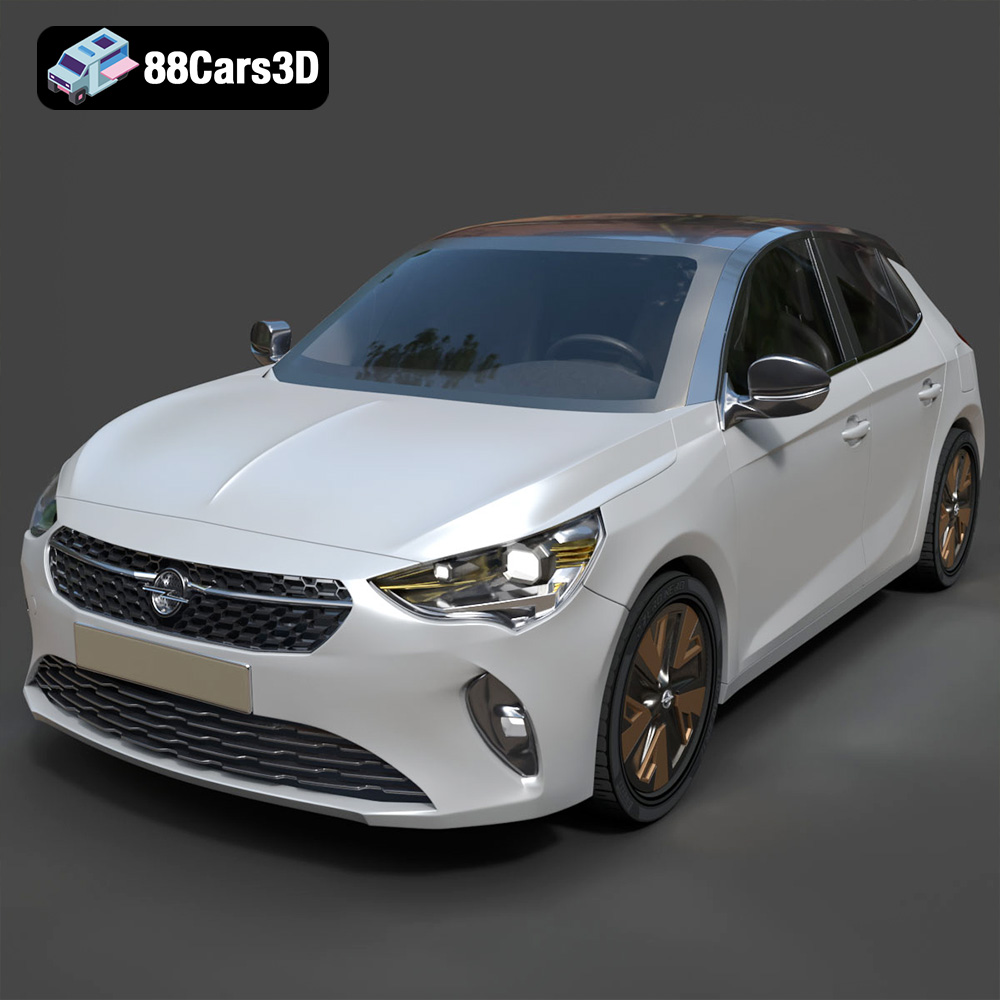
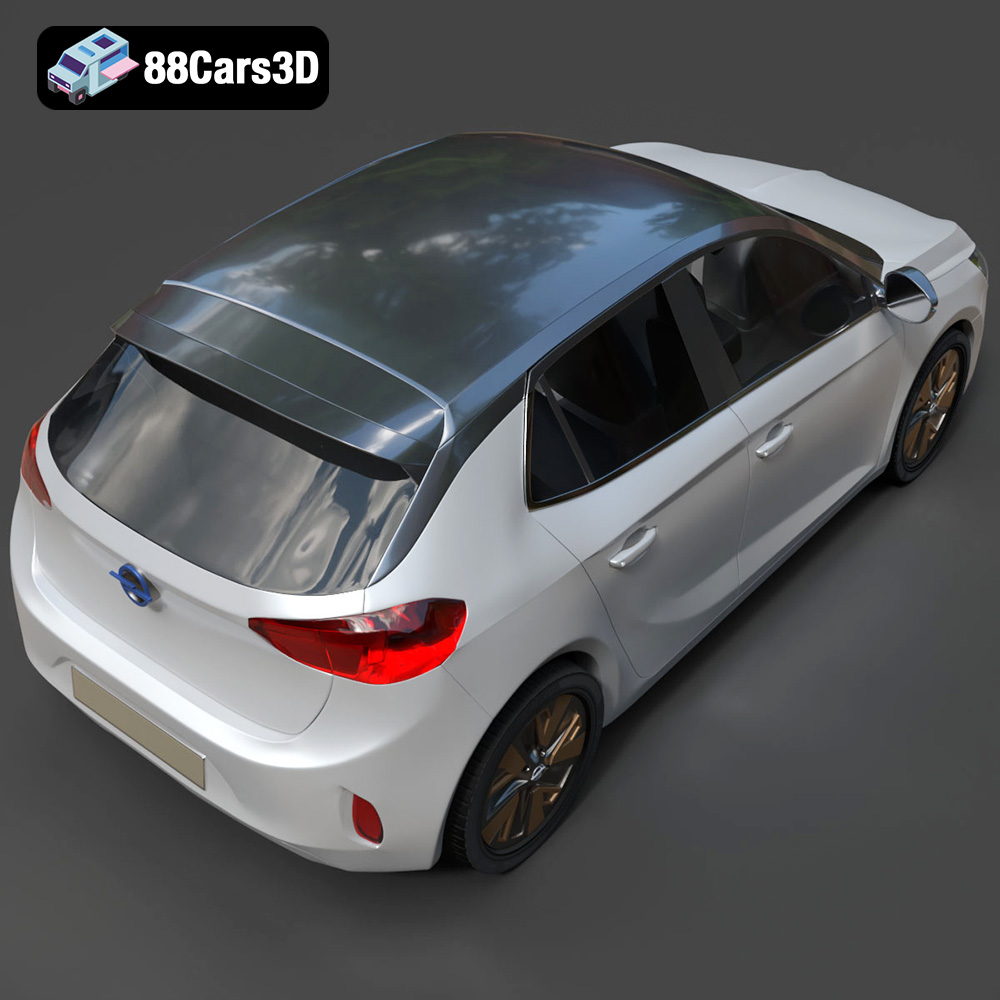
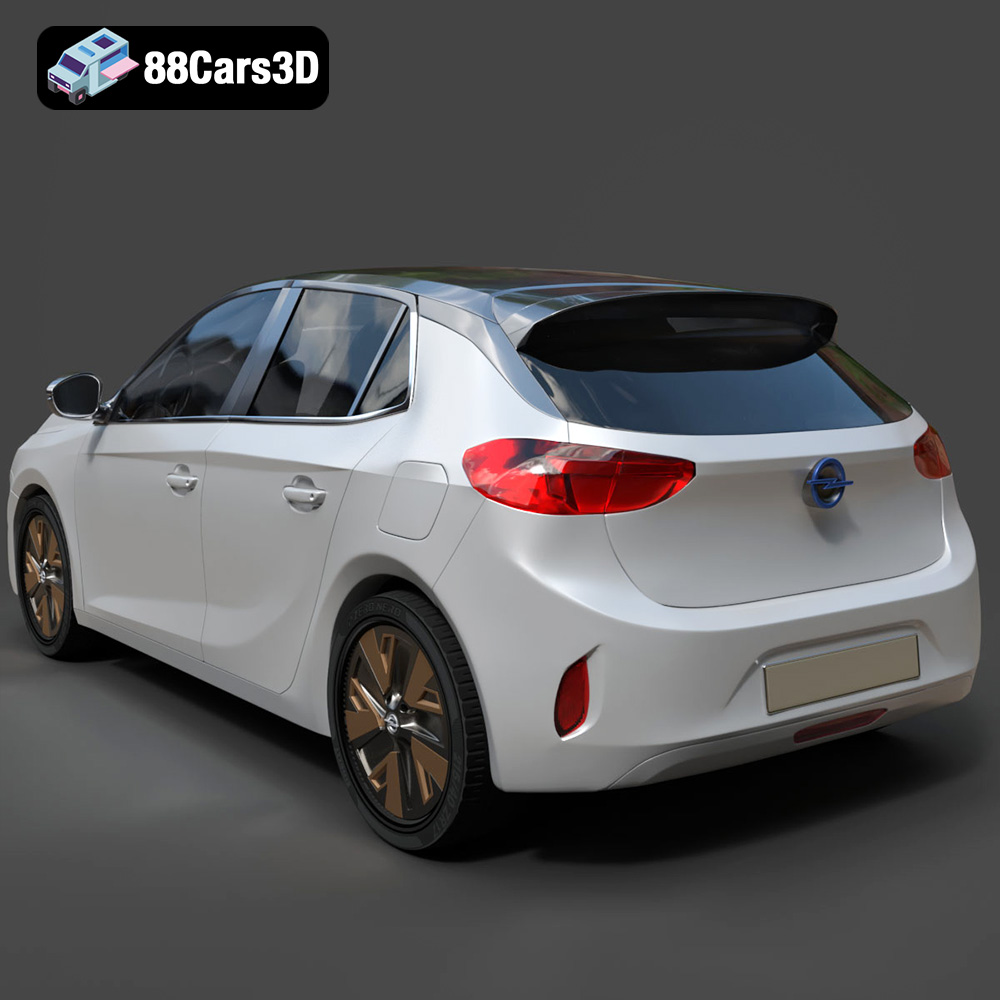
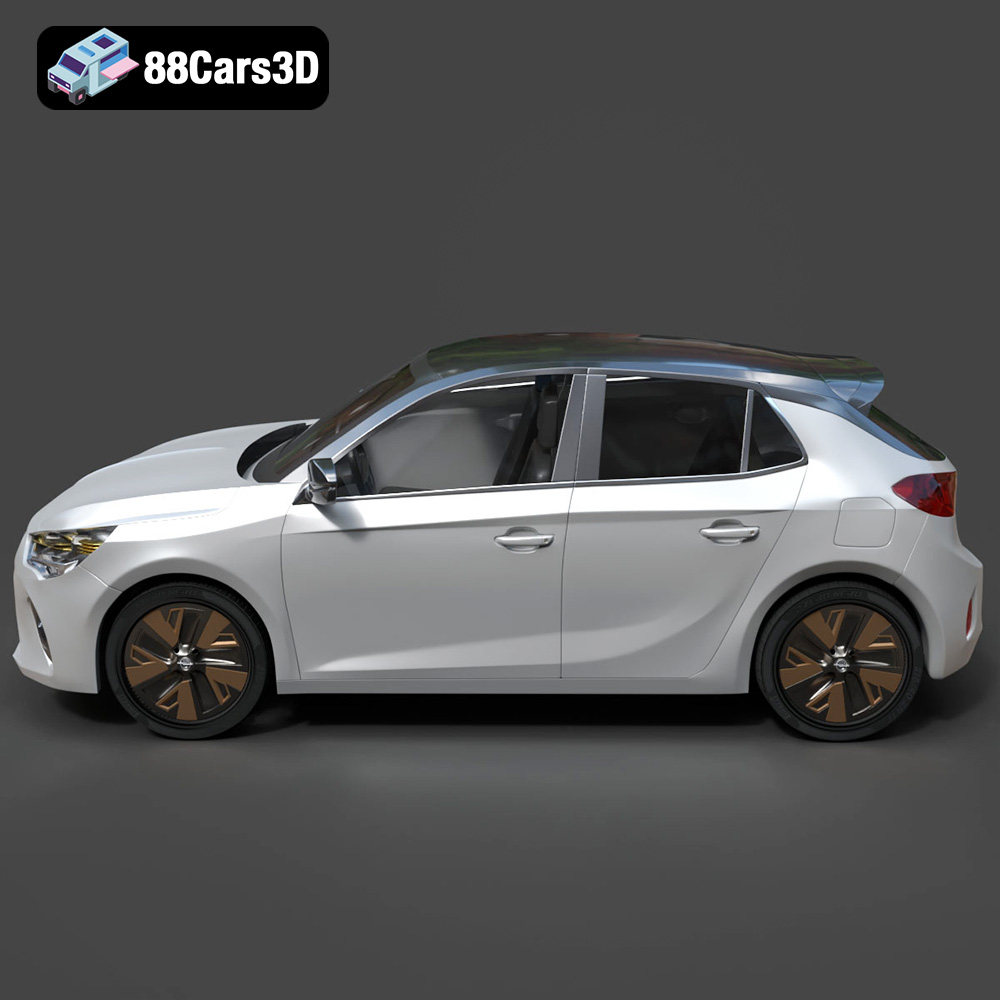
Today, we delve into the world of professional 3D asset creation, focusing on a prime example of engineering and aesthetic excellence: the Opel Corsa E 2019 3D model. This compact hatchback, a staple of European urban driving, has been meticulously recreated in the digital realm to offer unparalleled realism and flexibility. Whether you’re a game developer striving for immersive realism, an automotive designer in need of a precise reference, or a visualization artist crafting stunning renders, this model exemplifies the pinnacle of available 3D car models. Its carefully balanced topology and comprehensive feature set make it an invaluable asset, ready to integrate into diverse professional pipelines and elevate any project seeking authentic automotive representation. Sourced from platforms like 88cars3d.com, such models ensure quality and compatibility, streamlining development workflows significantly.
Choosing the correct file format is a critical first step in any 3D project, directly impacting compatibility, performance, and the scope of editable features. The Opel Corsa E 2019 3D model is provided in a comprehensive suite of formats, ensuring seamless integration into virtually any professional workflow. Understanding the nuances of each is essential for maximizing efficiency and achieving desired outcomes.
The .blend format is Blender’s native file type, offering a complete, fully editable scene. This includes not just the mesh data, but also materials, textures, lighting, cameras, animation data, modifiers, and even custom scripts. For users deeply integrated into the Blender ecosystem, a .blend file is the most robust option, allowing for direct manipulation of every aspect of the Opel Corsa E 2019 model. It preserves all the intricate shader networks, UV layouts, and object hierarchies created within Blender, making it ideal for those who wish to customize the model extensively or use Blender’s powerful rendering capabilities like Cycles or Eevee.
.fbx (Filmbox) is widely recognized as the industry-standard exchange format, particularly for real-time applications such as game development and animation. Its robust support for mesh data, skeletal animation, blend shapes, materials (often as PBR maps), and embedded textures makes it indispensable for transferring assets between different 3D software and game engines. For integrating the Opel Corsa E 2019 into Unreal Engine, Unity, or other real-time pipelines, .fbx is the go-to format, ensuring that the model’s geometry, UVs, and PBR textures are correctly interpreted.
.obj (Wavefront OBJ) is a universal, open-standard format that has been around for decades. It primarily stores geometry data (vertices, normals, texture coordinates, faces) and can reference external .mtl (material) files for basic material properties. While it doesn’t support animation or advanced scene data like .fbx or .blend, its simplicity and widespread support make it incredibly reliable for cross-software compatibility. If you need to import the Opel Corsa E 2019 into a less common 3D application or simply require the raw mesh data, .obj is a dependable choice.
.glb (GL Transmission Format Binary) is the binary version of glTF, a modern, royalty-free specification for the efficient transmission and loading of 3D scenes and models by engines and applications. It is particularly optimized for AR, VR, and browser-based displays, embedding all model data (geometry, materials, textures, animation) into a single file. For interactive web experiences, virtual showrooms, or mobile AR applications featuring the Opel Corsa E 2019, .glb offers an optimized, lightweight, and performant solution, crucial for rapid loading and smooth interaction.
.stl (Stereolithography) is the de facto standard for 3D printing. It represents a 3D model as a collection of unconnected triangles, defining only the surface geometry without color, texture, or material information. When preparing the Opel Corsa E 2019 for physical fabrication, converting it to .stl is essential. This format is directly compatible with slicing software, which then generates the necessary toolpaths for 3D printers, allowing enthusiasts to bring a tangible version of the virtual model into existence. The Opel Corsa E 2019 3D model from 88cars3d.com is designed with 3D printing in mind, ensuring a robust output.
.ply (Polygon File Format) is another format for storing 3D data, often used in scientific and engineering applications, particularly for scan data. It supports a wider range of properties than .obj, including color per vertex, normal information, and confidence values. While less common in general 3D art pipelines, .ply can be valuable for precision mesh analysis or specific CAD workflows where detailed vertex attributes are crucial for the Opel Corsa E 2019 model.
The inclusion of an .unreal file directly signifies an asset pre-configured for the Unreal Engine. This often means the asset has been imported, optimized, and set up within an Unreal project, potentially including materials, collision meshes, LODs (Levels of Detail), and blueprint configurations. For developers using Unreal, this format offers the quickest and most streamlined integration of the Opel Corsa E 2019, saving significant setup time and ensuring optimal performance within the engine.
Similar to .blend for Blender, the .max format is the native file type for Autodesk 3ds Max. It stores the complete project scene, including all 3D geometry, materials, lighting, cameras, animation, modifiers, and render settings. For professionals working in architectural visualization, product design, or traditional animation using 3ds Max, the .max file provides full editability and access to all the model’s components and hierarchies, making it perfect for custom animations, advanced automotive rendering, and complex scene integration.
The creation of a truly high-fidelity 3D car model is an intricate blend of artistic skill and technical precision. The Opel Corsa E 2019 3D model exemplifies this fusion, offering a level of detail that satisfies both demanding visualizers and performance-conscious game developers. Every curve, panel gap, and functional component has been meticulously replicated to achieve photographic realism and functional authenticity.
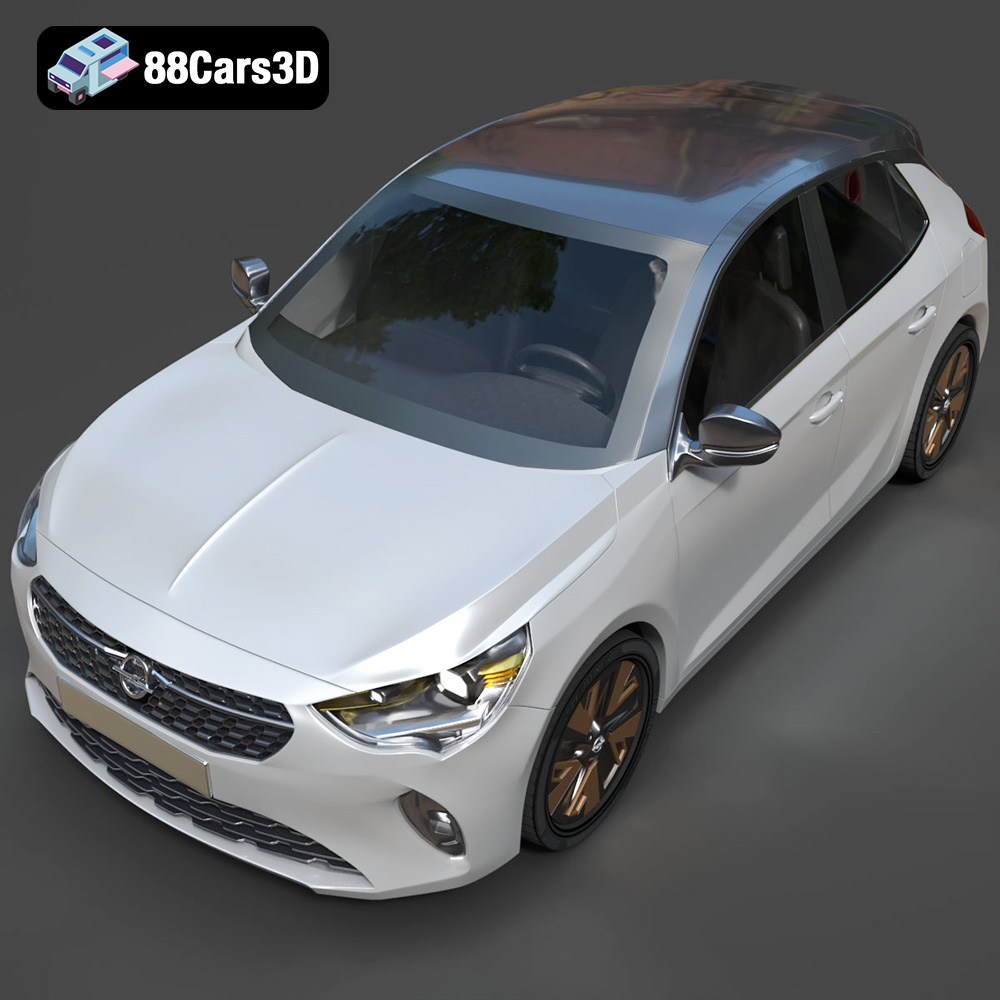
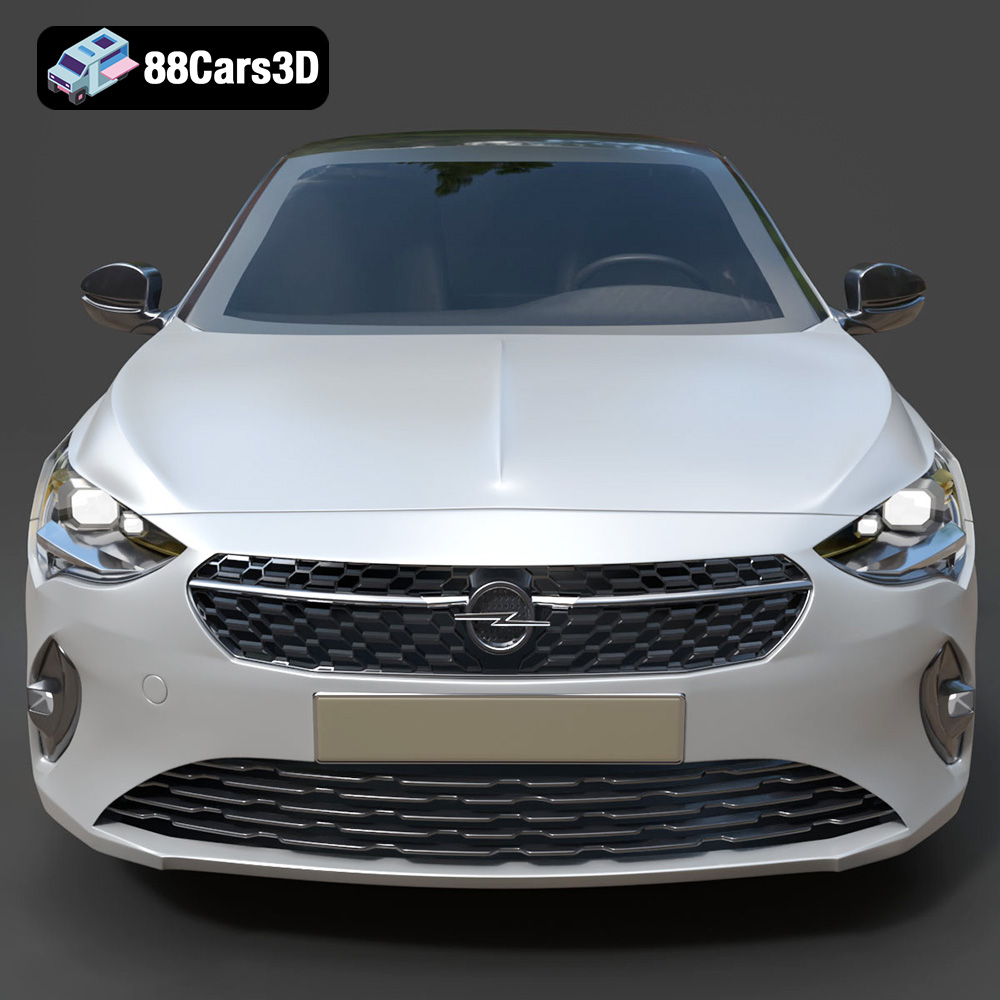
The exterior of the Opel Corsa E 2019 3D model is a testament to meticulous observation and modeling. Its accurate frame geometry and proportions precisely match the real-world vehicle, providing a solid foundation for any project. Beyond the surface, the model delves into structural components typically unseen, such as the detailed engine bay layout and a realistic exhaust system complete with an accurate tailpipe finish. Crucially, elements like the highly detailed LED headlight and taillight assemblies, featuring inner reflector geometry, not only look convincing but also behave realistically under various lighting conditions, essential for compelling automotive rendering.
For dynamic applications like simulations or cinematics, the model’s animation readiness is a significant advantage. Authentic factory alloy wheels are paired with realistic tire tread patterns and sidewall details, ensuring that close-up shots hold up under scrutiny. More importantly, separate wheels, suspension components, and steering elements are provided. This modularity is vital for animators who need to simulate realistic steering, wheel rotation, and dynamic suspension travel, allowing for truly engaging virtual driving experiences or detailed product showcases.
The interior of a vehicle is often as important as its exterior, particularly for immersive experiences like AR/VR or first-person gameplay. The Opel Corsa E 2019 3D model doesn’t disappoint, offering a fully realized cockpit with impressive fidelity. Accurate fabric and leather-textured bucket seats provide a comfortable and realistic visual, complemented by a detailed multifunction steering wheel with integrated controls that beckon interaction. The high-resolution digital/analog instrument cluster geometry is sharp and readable, while the realistic center console, infotainment screen, and climate control dials complete the immersive environment.
For game development, the optimized geometry of the interior is specifically designed for first-person POV, ensuring smooth performance even when the player is directly interacting with the cockpit. This level of detail and optimization makes the Opel Corsa E 2019 an ideal game asset, allowing for believable in-car perspectives without sacrificing performance.
Achieving a balance between stunning visual realism and efficient real-time performance is a constant challenge in 3D asset creation. The Opel Corsa E 2019 3D model has been expertly crafted to walk this tightrope, delivering high-end detail while remaining perfectly optimized for demanding real-time engines and workflows.
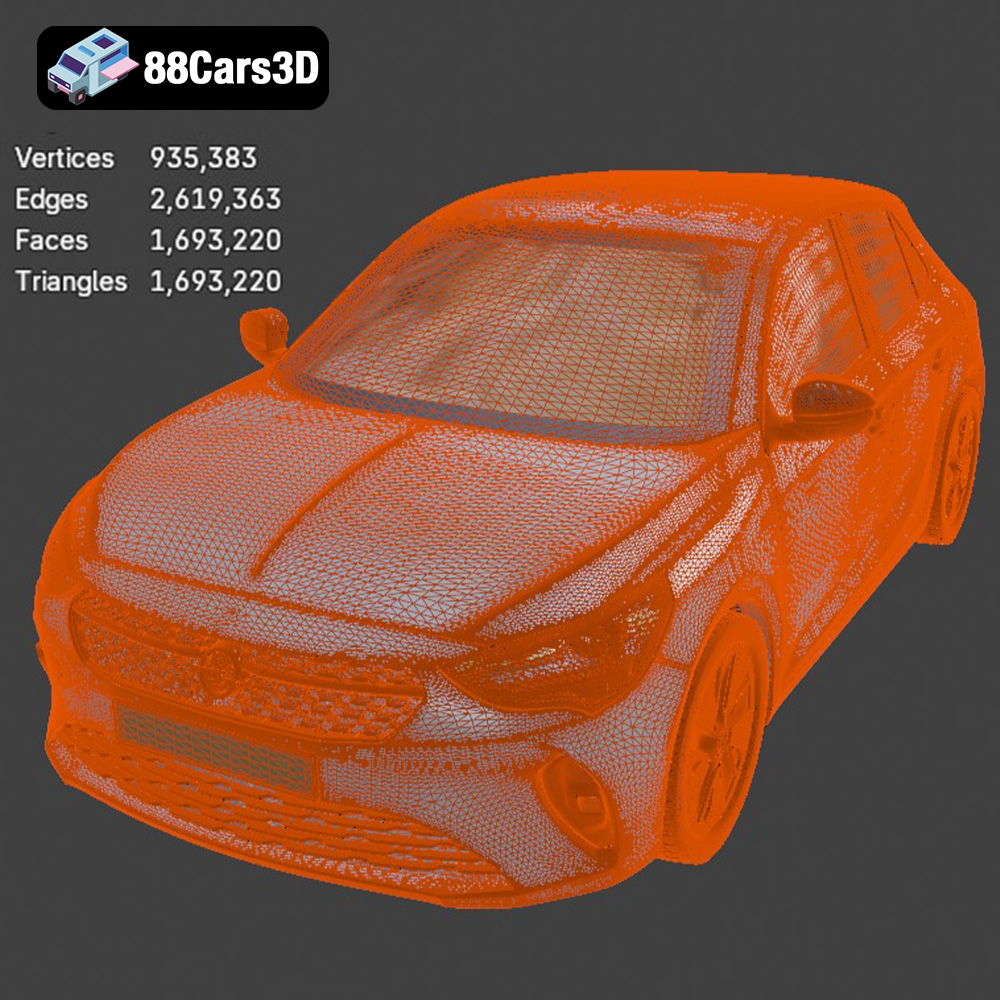
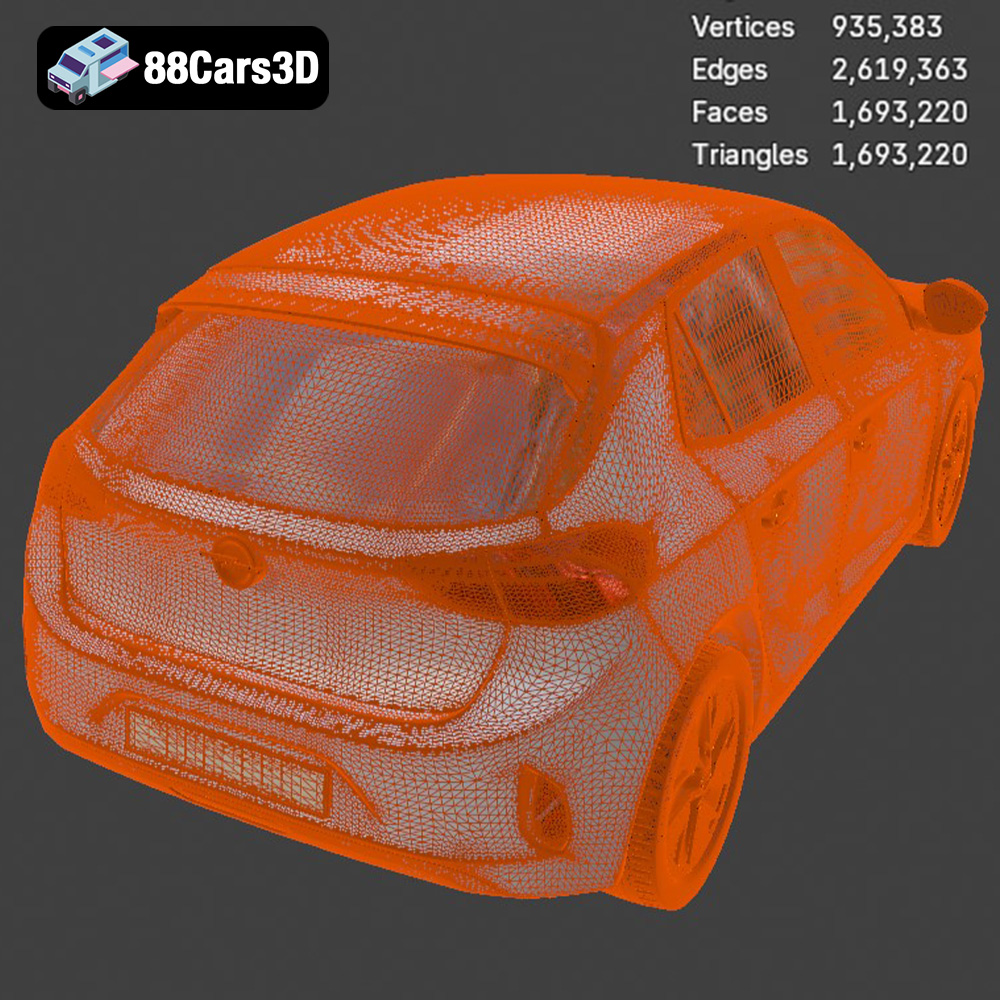
With an exact triangle count of 1,693,220, this model hits a sweet spot for modern 3D car models. This polycount is substantial enough to capture the intricate details, smooth curves, and sharp edges necessary for high-end rendering applications like V-Ray or Arnold, where every reflection and subtle surface deviation matters for automotive rendering. Simultaneously, it is meticulously optimized to ensure smooth, game-ready performance within real-time engines such as Unreal Engine and Unity. This careful balance means artists and developers don’t have to compromise on visual quality for the sake of frame rate, allowing for cinematic-quality visuals even in interactive environments. The PBR-ready materials further enhance this, ensuring physically accurate lighting and surface responses across all rendering platforms.
Accuracy is paramount, especially in professional visualization and simulation. The Opel Corsa E 2019 3D model boasts real-world scale accuracy, precisely based on the actual vehicle chassis. This ensures that when integrated into virtual scenes, it feels correctly proportioned and behaves realistically within a physics engine. Beyond static dimensions, the model benefits from proper pivot setups for key animated components. Steering, wheel rotation, and suspension travel are all pre-configured with correct pivot points, drastically reducing setup time for animators and ensuring physically accurate movement. This attention to functional detail streamlines the animation process, making it easier to create convincing driving sequences or interactive vehicle configurators.
The versatility of a high-quality 3D asset lies in its adaptability across various professional domains. The Opel Corsa E 2019 3D model is not just a static representation; it’s a dynamic tool designed to empower creators in diverse industries, from interactive entertainment to cutting-edge product marketing.
For game developers, the Opel Corsa E 2019 3D model is an exceptional game asset. Its optimized polycount and PBR materials make it ideal for integration into open-world games, racing titles, and realistic simulators. In racing games, the detailed exterior and interior can provide an immersive player experience, while in open-world environments, the model can populate virtual cities with authentic traffic. The included .fbx and .unreal formats significantly ease the import process into engines like Unreal Engine, allowing developers to quickly set up materials, collisions, and integrate it into game logic. The model’s game-ready nature means less time spent on optimization and more time on creating engaging gameplay.
In the realm of automotive rendering and visualization, precision and visual fidelity are non-negotiable. This 3D car model excels in generating stunning imagery for brand campaigns, lifestyle scenes, and studio lighting setups. Marketing agencies can leverage its accuracy to create photorealistic advertisements, configurators, and product unveilings. Designers can use it for design validation, exploring different color schemes, material finishes, and environmental contexts without the need for physical prototypes. The model’s detailed geometry and PBR materials ensure that light interacts with the surfaces precisely, yielding breathtaking results whether rendered in V-Ray, Corona, or Arnold.
The immersive potential of Augmented and Virtual Reality demands high-quality, optimized assets. The Opel Corsa E 2019 is perfect for immersive virtual showrooms, where customers can explore the car in a 360-degree environment, or for interactive configurators that allow real-time customization. Mobile AR experiences, which bring the car into the user’s real-world space, benefit immensely from the model’s optimized .glb format and balanced polycount. Furthermore, for enthusiasts and professionals alike, the model offers a gateway to the physical realm through 3D printing. Convertible to .stl format, it allows for the creation of display-scale models. Recommended scales like 1:12, 1:18, or 1:24, combined with fine layer heights (0.04–0.12 mm, preferably with resin printing for details), ensure high-quality physical reproductions. Specific instructions for wall thickness, infill, supports, and print orientation are provided, guiding users through the process of bringing this digital marvel into tangible form for hobbyists and collectors.
A truly valuable 3D asset provides a strong foundation but also allows for extensive creative freedom. The Opel Corsa E 2019 3D model is designed with customization in mind, offering artists and designers ample opportunities to tailor it to their specific project requirements and artistic vision.
One of the most immediate and impactful customization options is the ability to change body and tank colors. Whether replicating authentic factory colors for a precise automotive rendering project or exploring bold, custom finishes for a stylized game environment, the model’s material setup allows for easy color adjustments. Beyond primary colors, artists can modify material finishes, transitioning between matte, gloss, and metallic properties to achieve various looks and lighting interactions. This flexibility ensures that the Opel Corsa E 2019 can seamlessly integrate into diverse aesthetic contexts, from realistic studio shots to stylized, fantastical scenes.
The model’s adaptability extends beyond its inherent appearance to how it interacts with its environment. Artists can easily adapt lighting for different environments, from a sunny outdoor scene to a dramatic night-time render, influencing how the car’s surfaces reflect and refract light. Furthermore, the ability to modify tire textures opens up possibilities for different use cases. Switching between off-road and street variants allows the same base model to serve in a wider range of scenarios, from a gritty rally game to a sleek urban simulator. This level of environmental and material customization makes the Opel Corsa E 2019 3D model a highly versatile asset, ready to be transformed for any creative vision.
The real power of a comprehensive 3D car model lies in its seamless integration into established professional workflows. The Opel Corsa E 2019, available on 88cars3d.com, is engineered for maximum compatibility and ease of use across industry-standard software and engines.
For artists preferring Blender, the included .blend file offers the most direct and powerful integration. Simply opening the file provides access to the fully editable scene, complete with materials, textures, and the carefully organized object hierarchy. From here, you can leverage Blender’s Cycles or Eevee renderers for high-quality automotive rendering, animate the separate wheel and suspension components, or export customized versions for other applications. Similarly, the .max file provides native access for Autodesk 3ds Max users. Importing this file allows full manipulation within the 3ds Max environment, making it ideal for architectural visualization projects, complex scene compositions, or animation with tools like Arnold or V-Ray. Material setup in both software packages is straightforward, given the PBR-ready nature of the textures, ensuring physically accurate shaders from the outset.
Game developers utilizing Unreal Engine will find the Opel Corsa E 2019 3D model particularly well-suited for their needs. The .fbx format is the recommended starting point for robust import, carrying all necessary mesh, UV, and material data. For even greater convenience, the .unreal file often indicates an asset pre-packaged for the engine, potentially saving significant setup time. Once imported, setting up the PBR materials involves connecting the provided texture maps (albedo, normal, roughness, metallic, ambient occlusion) to the appropriate slots in Unreal’s material editor. Collision meshes can be automatically generated or custom-created for precise physics interactions. For animation, the separated components (wheels, steering, suspension) can be easily integrated with vehicle blueprints and physics assets, enabling realistic driving dynamics. The model’s optimized polycount ensures that it performs efficiently within demanding real-time environments, making it a stellar game asset for any project.
In the dynamic world of 3D content creation, the Opel Corsa E 2019 3D model stands out as a testament to precision, versatility, and professional-grade quality. From its meticulously crafted exterior and immersive interior to its optimized triangle count and extensive file format support, this asset is designed to meet the rigorous demands of modern digital production. Whether your goal is to populate a vast open-world game, generate breathtaking automotive rendering for marketing, create interactive AR/VR experiences, or even produce a physical 3D print, this model provides the essential foundation.
Its robust technical specifications, coupled with deep customization options and seamless integration into industry-standard workflows like Blender, 3ds Max, and Unreal Engine, make it an indispensable tool for designers, artists, and developers. By choosing high-quality 3D car models like the Opel Corsa E 2019 from trusted sources such as 88cars3d.com, creators can elevate their projects, achieve unparalleled realism, and unlock new creative possibilities. Embrace the power of expertly crafted digital assets and drive your projects forward with confidence and visual excellence.
The Opel Corsa E 2019 is a prominent figure in the compact hatchback segment, blending modern European styling with everyday practicality. This iconic city car boasts a distinctive front fascia with sleek headlamps, aerodynamic body contours, and an efficient powertrain layout that makes it a favorite among urban drivers. Its well-proportioned exterior features crisp character lines and a modern grille, perfectly capturing the essence of contemporary automotive design. With an exact triangle count of 1,693,220, this high-fidelity 3D model offers exceptional topology and visual realism. Meticulously optimized for game-ready performance and stunning high-end rendering, the model seamlessly bridges the gap between cinematic detail and real-time efficiency. Its precise geometry and PBR-ready materials make it the ultimate asset for game development, AR/VR applications, animation, and professional visualization.
$80.99
.2019
.blend
.fbx
.glb
.hatchback
.max
.obj
.opel
.ply
.rendering
.stl
.unreal
car-3d-model
compact-car
corsa-e
game asset
game-ready
optimized
VR/AR