Get 20% OFF All Premium 3D & STL Models!

In the dynamic world of 3D visualization, game development, and immersive experiences, the demand for exceptionally detailed and technically sound 3D car models has never been higher. Automotive design and luxury vehicles, in particular, require an unparalleled level of fidelity to translate their real-world elegance and engineering prowess into the digital realm. Whether for breathtaking automotive rendering, integrating into next-generation racing simulations, or powering interactive configurators, the quality of the underlying 3D asset is paramount.
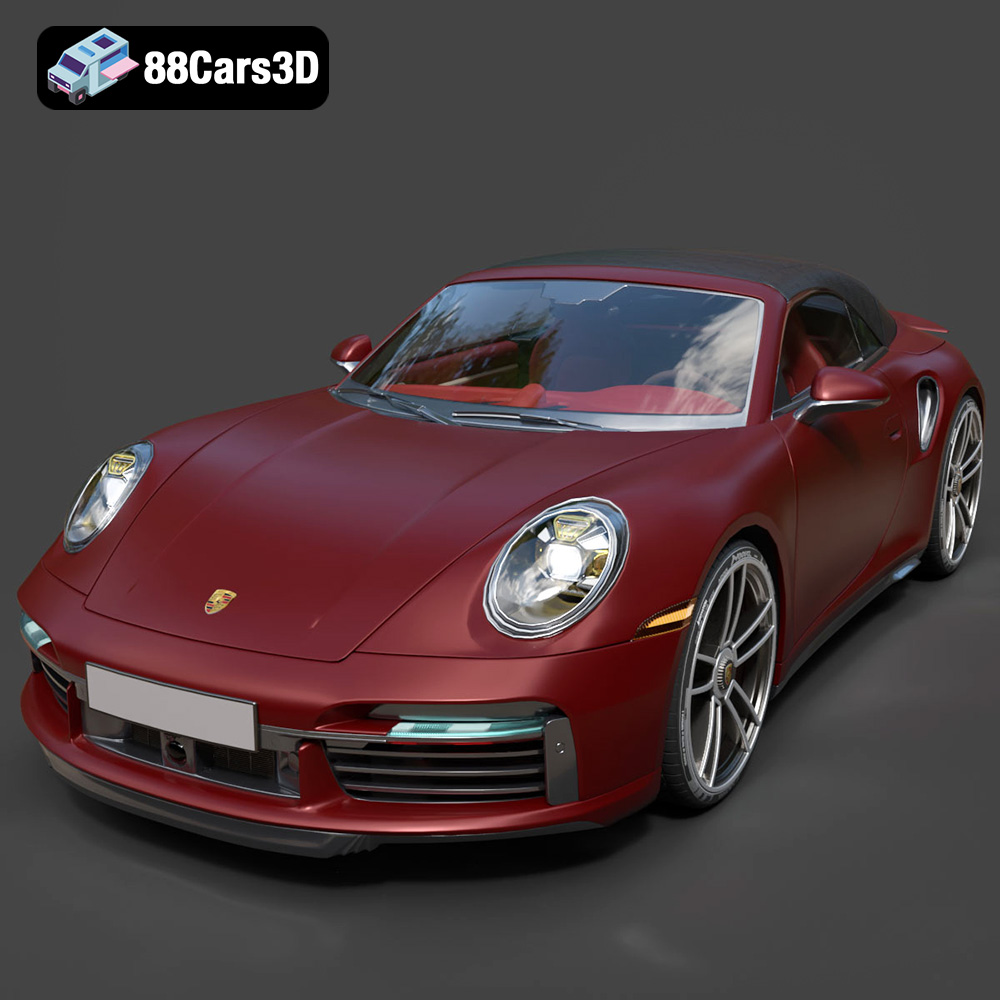
Few vehicles embody this blend of performance, luxury, and iconic design quite like the Porsche 911 Turbo S Cabriolet. Its aggressive stance, meticulous aerodynamics, and a cockpit designed for pure driving exhilaration make it a dream subject for any 3D artist or developer. We’re going to delve deep into what makes a premium 3D model of such a vehicle, using the Porsche 911 Turbo S Cabriolet 2021 3D Model from 88cars3d.com as a prime example of excellence. We’ll explore its technical specifications, how it integrates into various professional workflows, and why investing in high-quality game assets like this is crucial for delivering impactful visual content.
One of the first considerations when acquiring or working with 3D car models is understanding the various file formats available. Each format serves specific purposes, offering different levels of data preservation, compatibility, and optimization for distinct pipelines. The Porsche 911 Turbo S Cabriolet 2021 3D model, for instance, comes in a comprehensive suite of formats, ensuring maximum versatility for any project.
The .blend file format is native to Blender, the powerful open-source 3D creation suite. When you receive a .blend file, you’re not just getting a mesh; you’re getting a complete Blender scene. This includes all objects, cameras, lights, materials (often set up with Cycles or Eevee rendering engines), modifiers, animations, and even physics simulations. For artists working primarily in Blender, this format offers the highest degree of editability and flexibility. You can dissect every part of the model, adjust its topology, modify materials, or extend animations without losing any original scene data. It’s perfect for detailed customization or incorporating the car into a larger, complex Blender-native project.
The Autodesk Filmbox (.fbx) format has become an industry standard for exchanging 3D data between various software applications. It’s incredibly robust, capable of storing not just geometry but also materials, textures, animations, skinning, and rigging information. For developers building real-time experiences, .fbx is often the go-to choice for importing models into game engines like Unreal Engine and Unity. Its widespread support ensures a smooth transition of assets, making it ideal for collaborative pipelines where different artists might use different DCC (Digital Content Creation) tools. The Porsche 911 Turbo S model in .fbx format is perfectly suited for direct import into these environments, preserving critical data like pivot points and hierarchical structures.
The Wavefront OBJ (.obj) format is a widely adopted, universal exchange format primarily known for its simplicity and broad compatibility. It stores geometry data (vertices, normals, texture coordinates, and faces) and can reference external material (.mtl) files for basic color and texture information. While it doesn’t support advanced features like animation or rigging, its universality makes it an excellent choice for basic mesh transfer between virtually any 3D software. For static renders or foundational mesh work, the .obj version of the Porsche 911 Turbo S Cabriolet 3D model provides a clean, portable asset that can be easily imported into any program without complex setup requirements.
GL Transmission Format (.glb) is a compact, single-file representation of the glTF (Graphics Language Transmission Format), designed for efficient transmission and loading of 3D scenes and models in web and AR/VR environments. It’s optimized for real-time graphics applications and supports PBR (Physically Based Rendering) materials, animations, and skeletal rigging. For interactive web configurators, virtual showrooms, or mobile augmented reality experiences involving the Porsche 911 Turbo S, the .glb format is invaluable. Its “ready-to-use” nature minimizes loading times and ensures consistent visual quality across different platforms and browsers.
The Stereolithography (.stl) format is specifically designed for 3D printing. It represents a 3D model as a series of connected triangles (a triangulated surface mesh) without any color, texture, or material information. It’s a fundamental format for translating digital designs into physical objects. When you want to bring the exquisite details of the Porsche 911 Turbo S Cabriolet 3D model into the physical world, converting it to .stl is the first step. This format ensures that the geometric integrity required for manufacturing processes, like FDM or resin printing, is maintained, allowing hobbyists and professionals alike to create tangible replicas.
The Polygon File Format (.ply) is a versatile format often used for storing 3D data from scanners and other digital capture devices. It supports a wider range of properties than .obj, including color per vertex, normal information, transparency, and even specific confidence values for scanned points. While less common for handcrafted 3D car models, its inclusion signifies a commitment to comprehensive data. For advanced CAD applications, scientific visualization, or even certain historical preservation projects requiring precise geometric and attribute data, the .ply version of the Porsche 911 offers robust precision.
The .unreal format, or more accurately, assets packaged specifically for Unreal Engine, implies that the model has been optimized and pre-configured for direct use within the engine. This often means PBR materials are set up, textures are properly linked, and sometimes even basic blueprints or LODs (Levels of Detail) are included. For game developers and cinematic artists leveraging Unreal Engine’s powerful real-time rendering capabilities, an Unreal-ready asset like the Porsche 911 Turbo S saves significant setup time, allowing for immediate integration into scenes, racing games, or interactive architectural visualizations.
Finally, the .max format is the native file type for Autodesk 3ds Max, a leading software for 3D modeling, animation, and rendering, particularly strong in architectural visualization and high-end automotive rendering. A .max file contains the entire 3ds Max scene, including all geometry, textures, materials (often V-Ray or Corona Renderer materials for photorealistic output), lighting setups, cameras, and animations. For artists relying on 3ds Max for their primary workflow, having the Porsche 911 model in .max format ensures complete access to every detail and the ability to finely tune materials and scene elements for maximum realism.
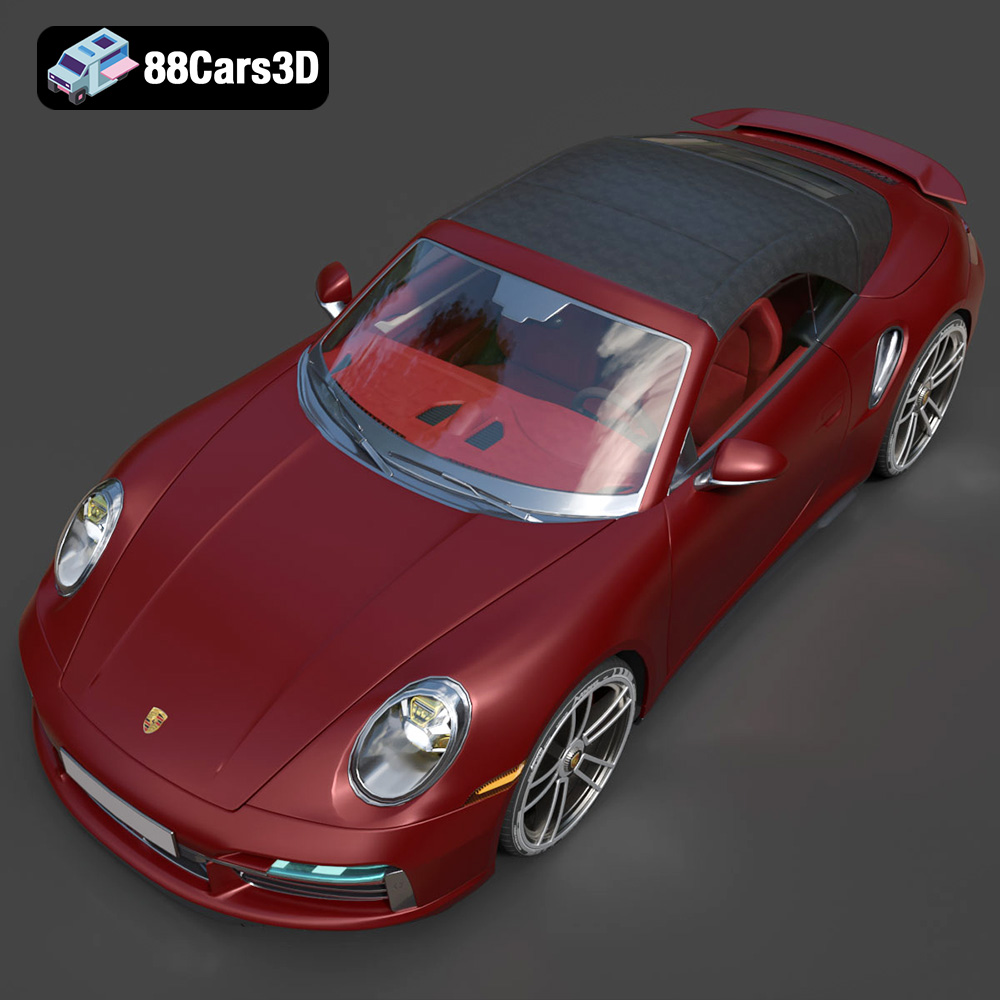
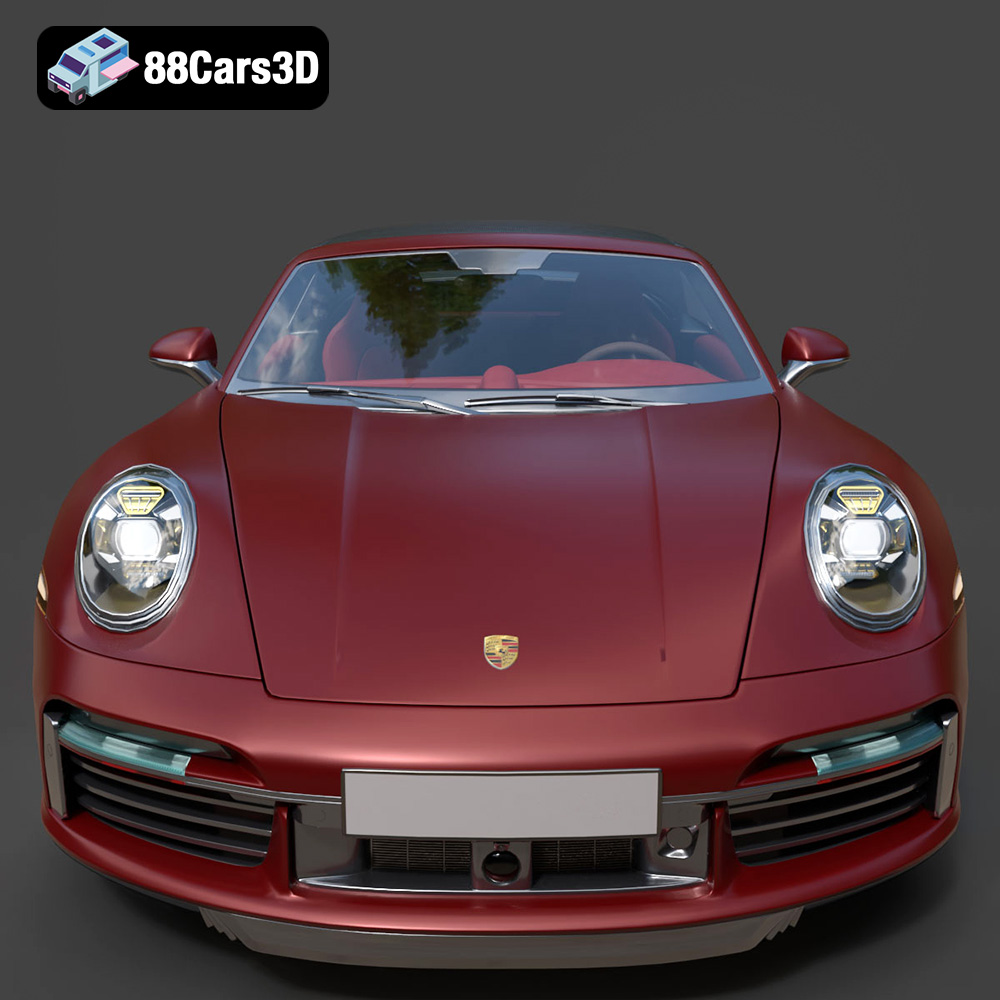
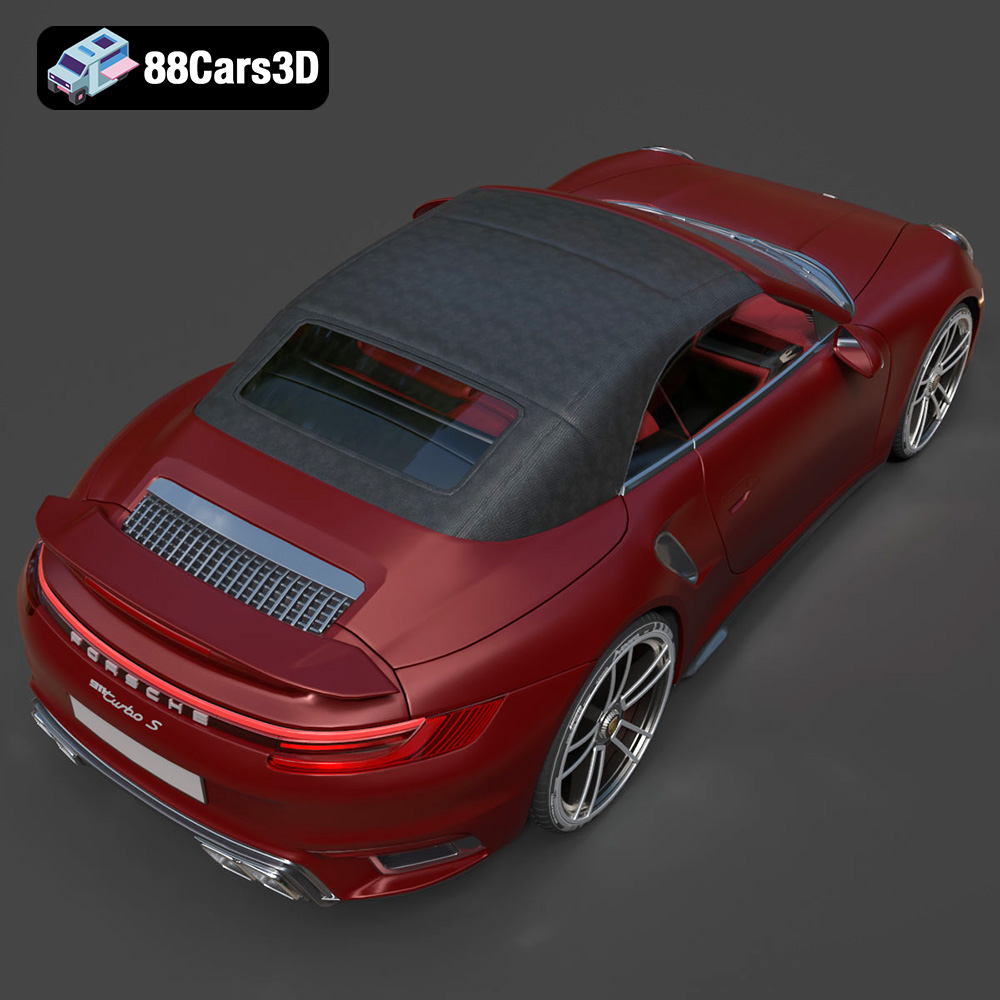
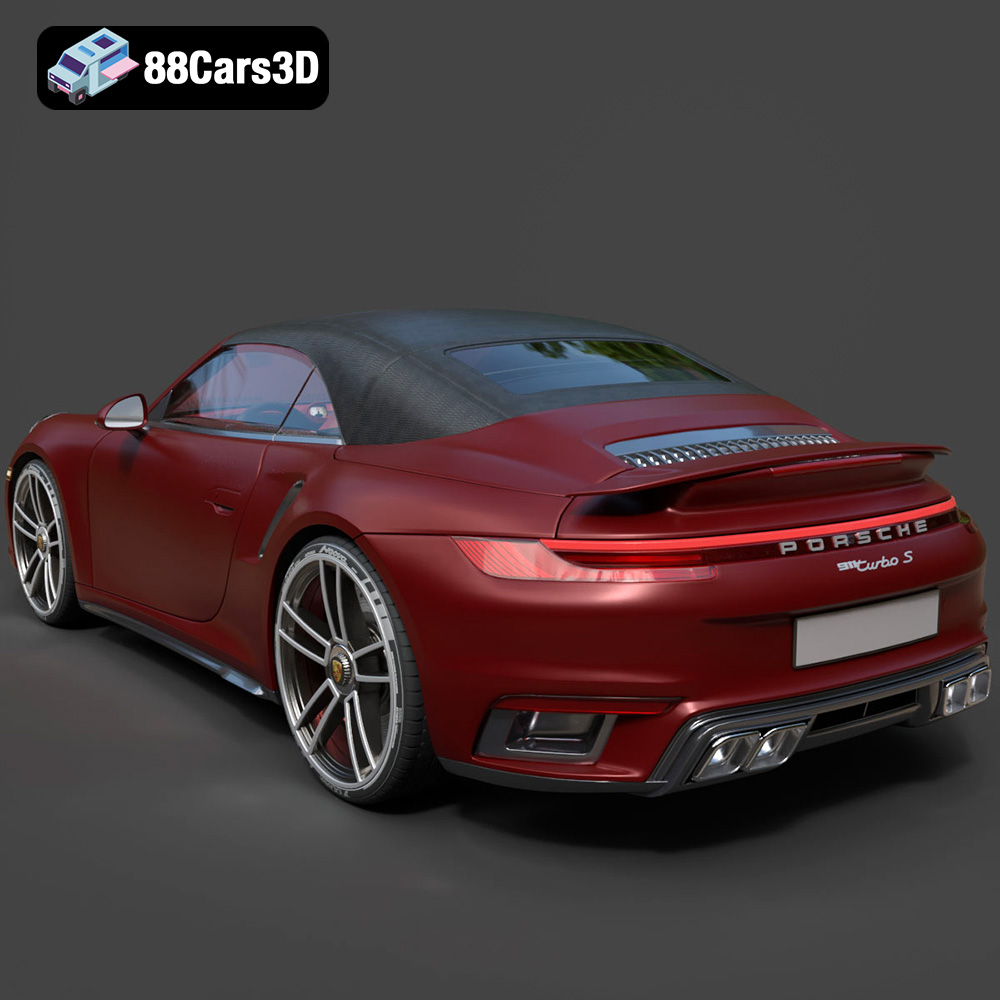
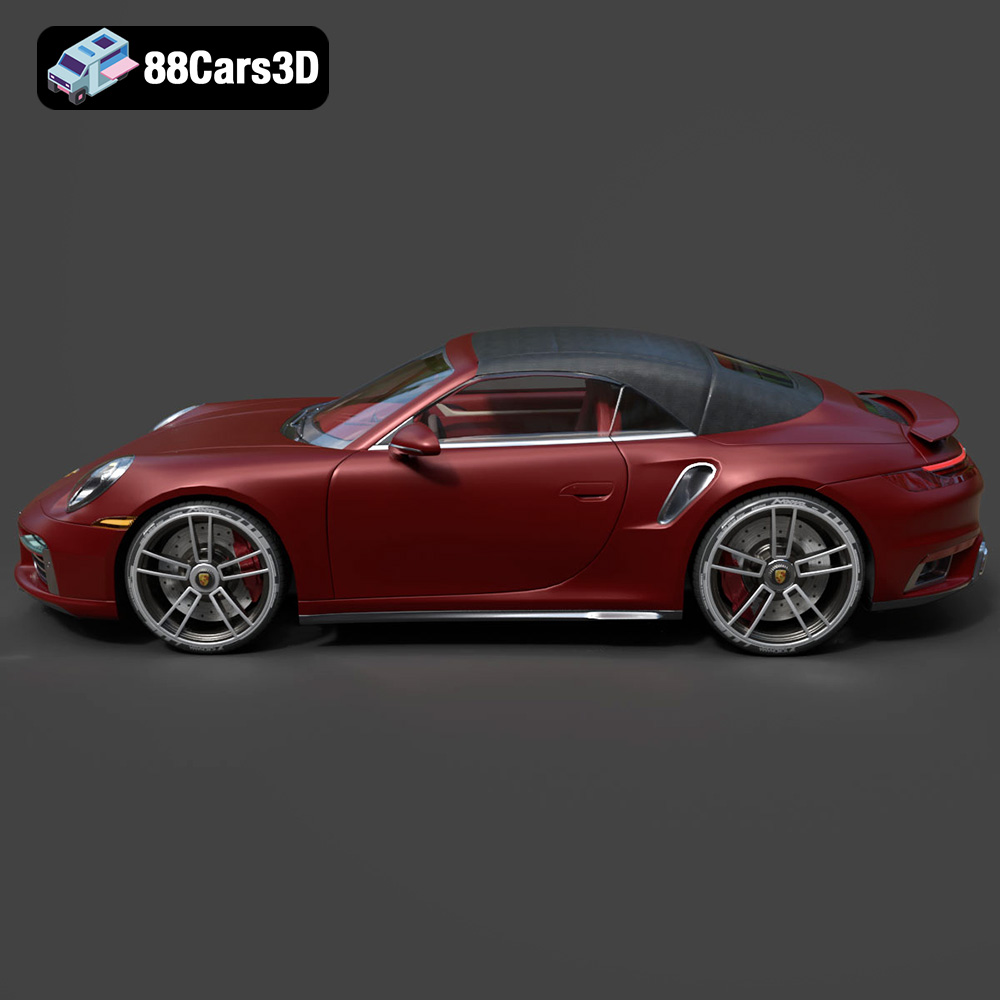
The essence of a premium 3D model lies in its ability to faithfully replicate its real-world counterpart. The Porsche 911 Turbo S Cabriolet 2021 3D Model exemplifies this, meticulously crafted to represent the pinnacle of open-top performance.
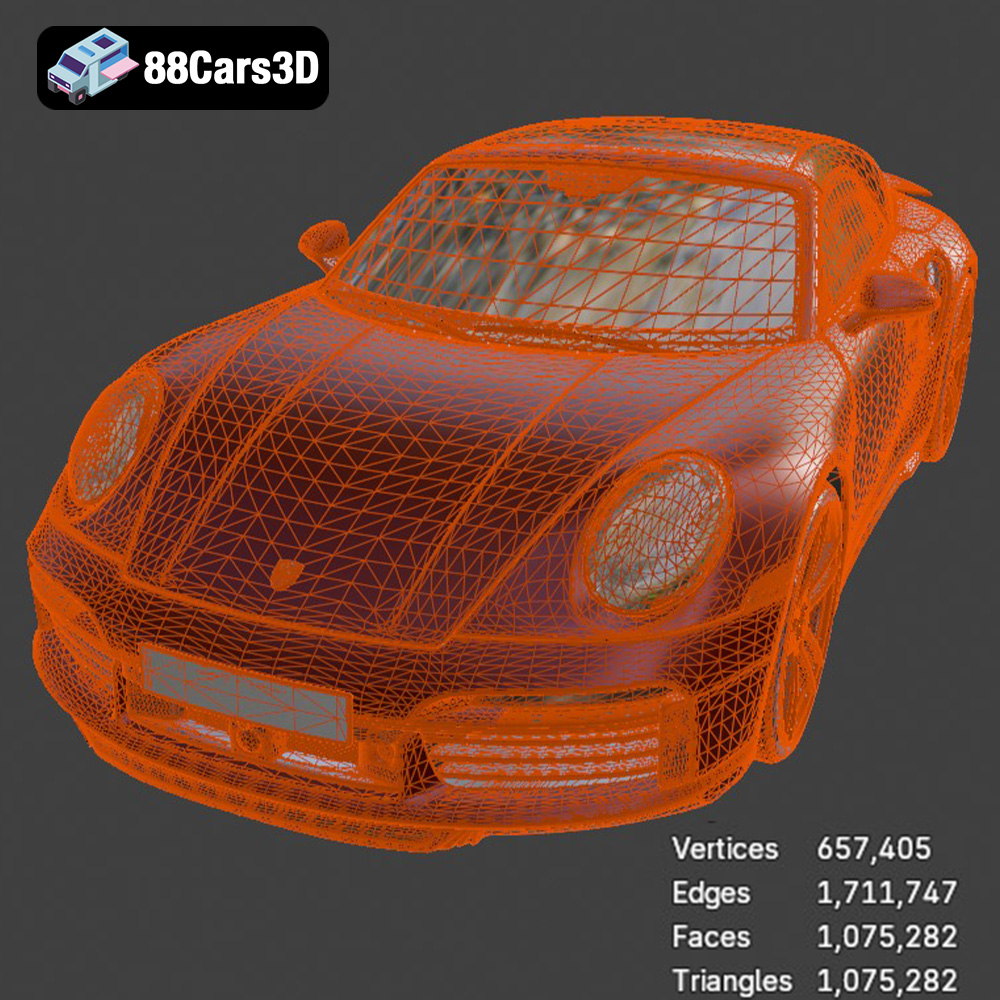
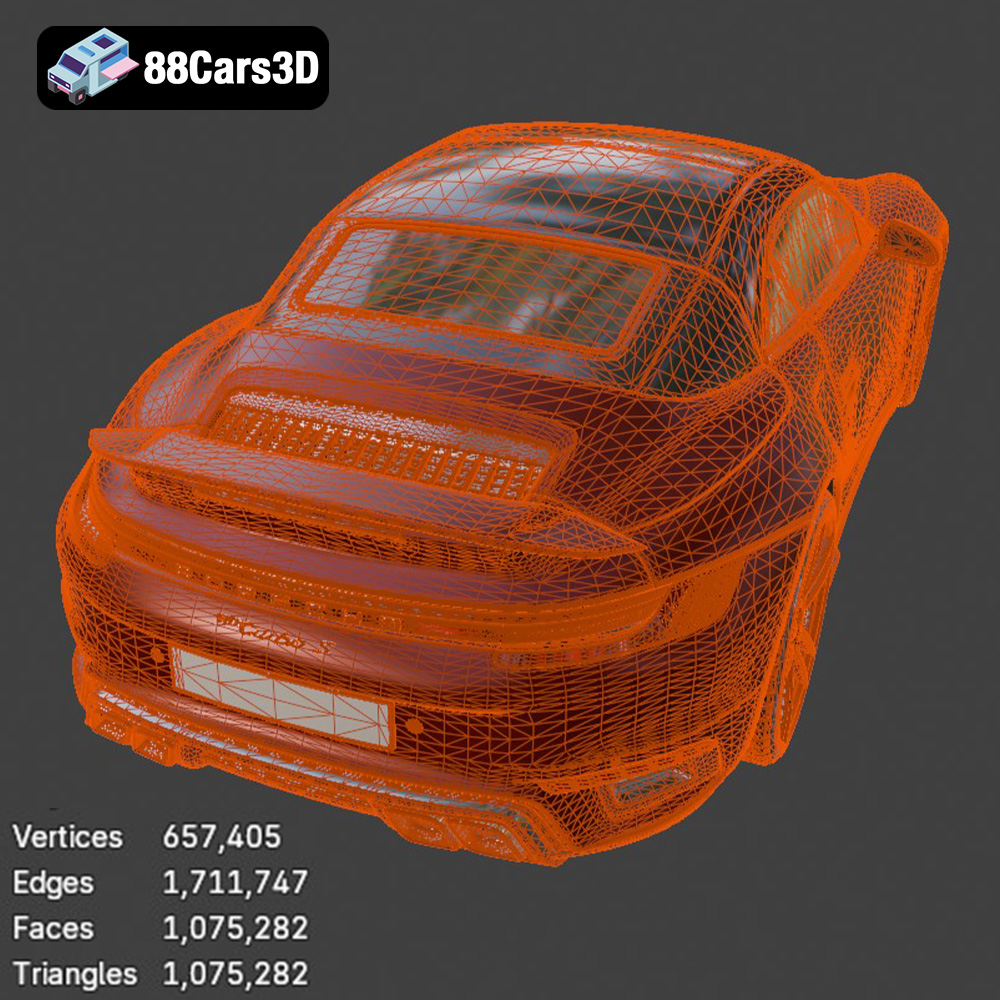
The aggressive wide-body stance, distinctive rear wing, and signature quad-tailpipe sport exhaust system are all accurately modeled, ensuring the digital rendition captures the very soul of the Turbo S. The intricate LED matrix headlights and the continuous rear light strip, hallmarks of modern Porsche design, are not merely textured but boast detailed geometry for authentic light interaction. Precision center-lock alloy wheels and high-performance tires, along with the detailed braking system featuring carbon-ceramic rotors and calipers, are individually modeled. Furthermore, separate components for wheels, suspension, and steering ensure that the model is animation-ready, crucial for dynamic renders or interactive simulations. With an impressive 1,075,282 triangles, this model strikes a perfect balance, providing high-end visual realism without becoming excessively cumbersome for certain real-time applications.
The interior of a luxury sports car is just as important as its exterior. This 3D model delivers with exquisitely detailed 18-way adaptive sport seats that showcase complex stitching and ergonomic design. The authentic GT sport steering wheel, complete with its mode switch, and the highly detailed instrument cluster featuring an analog tachometer flanked by digital displays, immerse the viewer. The accurate center console layout, with its gear selector and climate controls, completes the cockpit. Crucially, the geometry is optimized for first-person POV (Point of View) in gaming, meaning that every detail holds up under close scrutiny, essential for immersive racing titles or virtual showroom experiences where users can “sit” inside the car.
Beyond visual appeal, the technical specifications are what truly make this a professional-grade asset. The “game-ready & optimized” classification, despite its high poly count, indicates thoughtful topology and efficient mesh construction suitable for real-time engines like Unreal and Unity. The model boasts real-world scale accuracy, based on actual vehicle chassis dimensions, ensuring it fits seamlessly into environments designed for true-to-life proportions. Proper pivot setups for steering, wheel rotation, and suspension travel are implemented, drastically simplifying the rigging and animation process. This meticulous attention to detail ensures compatibility with major 3D software platforms and real-time rendering engines, making it a versatile and reliable foundation for any project.
The versatility of a high-quality 3D car model like the Porsche 911 Turbo S Cabriolet lies in its ability to adapt to various professional pipelines, from photorealistic marketing to interactive gaming.
For cinematic visuals and advertising campaigns, automotive rendering demands the utmost realism. Utilizing the .max format within 3ds Max, artists can leverage industry-leading renderers like V-Ray or Corona Renderer to achieve stunning results. This workflow involves setting up complex studio lighting environments, often using HDRI maps combined with targeted area lights to highlight the car’s curves and reflections. Materials are meticulously fine-tuned: realistic car paint shaders with multiple layers (base coat, clear coat, metallic flakes), authentic leather for the interior, and carbon fiber accents. The high polygon count of the Porsche 911 model ensures that even extreme close-ups reveal crisp detail, from the brake calipers to the stitching on the seats. Animations of opening doors, rotating wheels, or convertible top operation can further enhance the storytelling in product reveals or virtual brochures.
Integrating this Porsche 911 model into a game engine is a streamlined process, especially with the provided .fbx or .unreal formats. In Unreal Engine, developers can import the asset, set up PBR materials using the engine’s powerful node-based shader system, and then create vehicle blueprints for physics-based driving. The model’s optimized geometry and proper pivot setup are crucial here, allowing for accurate wheel rotation, steering, and suspension compression. While its 1 million-plus triangle count is high for some game applications, it’s ideal for high-fidelity racing titles, VR experiences, or open-world games where hero vehicles require exceptional detail. For less demanding scenarios, developers could generate LODs from this high-res base mesh. Collision meshes would be added, and performance would be fine-tuned to ensure smooth gameplay at target frame rates.
The future of sales and marketing increasingly involves immersive technologies. The Porsche 911 Turbo S Cabriolet 3D model is perfect for creating interactive AR/VR applications. Using the .glb format, developers can build web-based augmented reality experiences where users can place the virtual car in their real-world environment via a smartphone or tablet. For virtual reality, the model can be integrated into VR showrooms or interactive configurators, allowing potential buyers to explore every detail of the vehicle, customize colors, interior trims, and wheel options in a fully immersive environment. The optimized geometry and clean topology ensure these experiences run smoothly on various devices, offering a highly engaging and personalized interaction with the product.
The versatility of a high-quality 3D car model extends beyond purely digital applications. The Porsche 911 Turbo S Cabriolet 3D model can be transformed from a digital asset into a tangible, physical object through 3D printing.
Converting the model to the .stl format is the crucial first step. Before printing, the model needs to be thoroughly checked for manifold geometry (ensuring there are no holes or flipped normals) using specialized 3D printing software. Scaling is also a critical consideration; the product description recommends scales like 1:12, 1:18, or 1:24, which are standard for display models. The entire model can then be sliced into printable layers, or individual components like wheels, mirrors, and exhaust pipes can be printed separately to optimize detail and minimize support structures. This meticulous preparation ensures a successful print that accurately reflects the digital design.
For a model as intricate as the Porsche 911, resin 3D printing (SLA/DLP) is highly recommended over FDM (Fused Deposition Modeling) due to its superior ability to capture fine details, sharp edges, and smooth surfaces. Recommended layer heights range from 0.04 to 0.12 mm, allowing for incredibly smooth finishes. Proper wall thickness (1.2–2.0 mm) and infill (20–30%) ensure structural integrity without wasting material. Supports will be required for overhangs and delicate parts like the exhaust, mirrors, and steering wheel, and careful placement of these supports is key to minimizing post-processing marks. After printing, the model undergoes extensive post-processing: curing, cleaning, sanding, priming, and finally, painting with authentic factory colors and metallic finishes to bring the virtual supercar to life on a display shelf. This process demonstrates the incredible bridge between digital assets and physical craftsmanship enabled by high-fidelity 3D car models.
In today’s fast-paced creative industries, time is a precious commodity. The strategic acquisition of ready-to-use, high-quality 3D car models offers significant economic and creative benefits.
Creating a highly detailed 3D vehicle from scratch is an incredibly time-consuming and labor-intensive process. It involves extensive blueprint research, complex polygon modeling, meticulous UV unwrapping, material creation, and often, rigging for animation. A project like the Porsche 911 Turbo S Cabriolet 2021 3D model could easily consume hundreds of hours of a skilled 3D artist’s time. By purchasing a pre-built, optimized asset from a reputable source like 88cars3d.com, studios and individual artists can bypass these initial development stages entirely. This allows them to allocate their resources to more creative aspects of a project, such as scene composition, lighting design, animation, or interactive logic. The immediate availability of a professional-grade asset dramatically shortens production cycles and reduces overall project costs.
With the fundamental vehicle model already in place, artists are empowered to focus on the creative flourishes that make a project unique. The included customization options for the Porsche 911 model—changing body and fabric roof colors, modifying tire textures, adjusting material finishes (matte, gloss, metallic, carbon fiber), and adapting lighting—provide a flexible foundation. Instead of struggling with topology or UV seams, designers can experiment with different aesthetics, explore various environments, and tell compelling visual stories. This creative liberation ensures that the final output is not just technically sound but also visually stunning and concept-driven.
Consider a luxury automotive brand launching a new marketing campaign. Instead of scheduling expensive photoshoots or physical car deliveries, they can use this 3D model to generate photorealistic stills and animations in a virtual studio. Different environments, lighting conditions, and camera angles can be tested and rendered rapidly, providing unparalleled flexibility and cost savings. For game studios, integrating such a detailed asset into a racing simulator means instantly having a hero vehicle that enhances player immersion and gameplay realism. Virtual dealerships can leverage these models to create interactive online showrooms, allowing potential customers to explore vehicle features, customize options, and even take virtual test drives, all from the comfort of their homes. Each of these scenarios highlights how premium 3D car models serve as indispensable building blocks for a wide array of professional applications.
The journey from concept to a perfectly rendered digital asset or a tangible 3D print is a complex one, yet the availability of high-quality 3D car models simplifies this process immensely. The Porsche 911 Turbo S Cabriolet 2021 3D model stands as a testament to meticulous craftsmanship and technical excellence, providing a versatile foundation for any professional endeavor.
Whether your goal is to produce breathtaking automotive rendering for advertising, develop immersive racing experiences as game assets, or fabricate a physical replica, the comprehensive file formats, detailed geometry, and optimized structure of this model ensure seamless integration and exceptional results. Investing in such a premium asset not only saves invaluable time and resources but also elevates the overall quality and impact of your creative projects. For those seeking top-tier 3D models that meet the most demanding industry standards, exploring offerings like this Porsche 911 Turbo S Cabriolet 3D model at 88cars3d.com is a definitive step towards achieving digital perfection.
The 2021 Porsche 911 Turbo S Cabriolet represents the pinnacle of open-top performance, blending iconic 911 heritage with breathtaking twin-turbocharged power. This 3D model meticulously captures the aggressive wide-body stance, distinctive rear wing, quad exhaust system, and sleek aerodynamic curves that make this convertible a true supercar legend. Crafted with an impressive 1,075,282 triangles, this high-fidelity 3D model offers unparalleled visual realism while maintaining excellent topology. It is perfectly suited for high-end rendering, close-up automotive visualizations, VR/AR experiences, and next-gen game development where detail is paramount. Perfect for luxury car configurators, high-fidelity racing simulations, cinematic animations, and virtual dealership environments.
$63.50
.2021
.blend
.cabriolet
.convertible
.fbx
.glb
.max
.obj
.ply
.porsche
.rendering
.sports car
.stl
.supercar
.unreal
911-turbo-s
car-3d-model
game asset
game-ready
high poly
optimized
VR/AR