Get 20% OFF All Premium 3D & STL Models!

In the expansive and ever-evolving landscape of 3D modeling, the demand for highly detailed, technically accurate, and versatile assets is paramount. From blockbuster game titles that seek ultimate realism to intricate engineering simulations and immersive AR/VR training environments, the foundation of any successful project lies in the quality of its 3D components. Heavy machinery, in particular, presents a unique challenge, requiring not only visual fidelity but also precise mechanical articulation and authentic material representation. This is where specialized 3D models truly shine, transforming abstract concepts into tangible, interactive experiences.
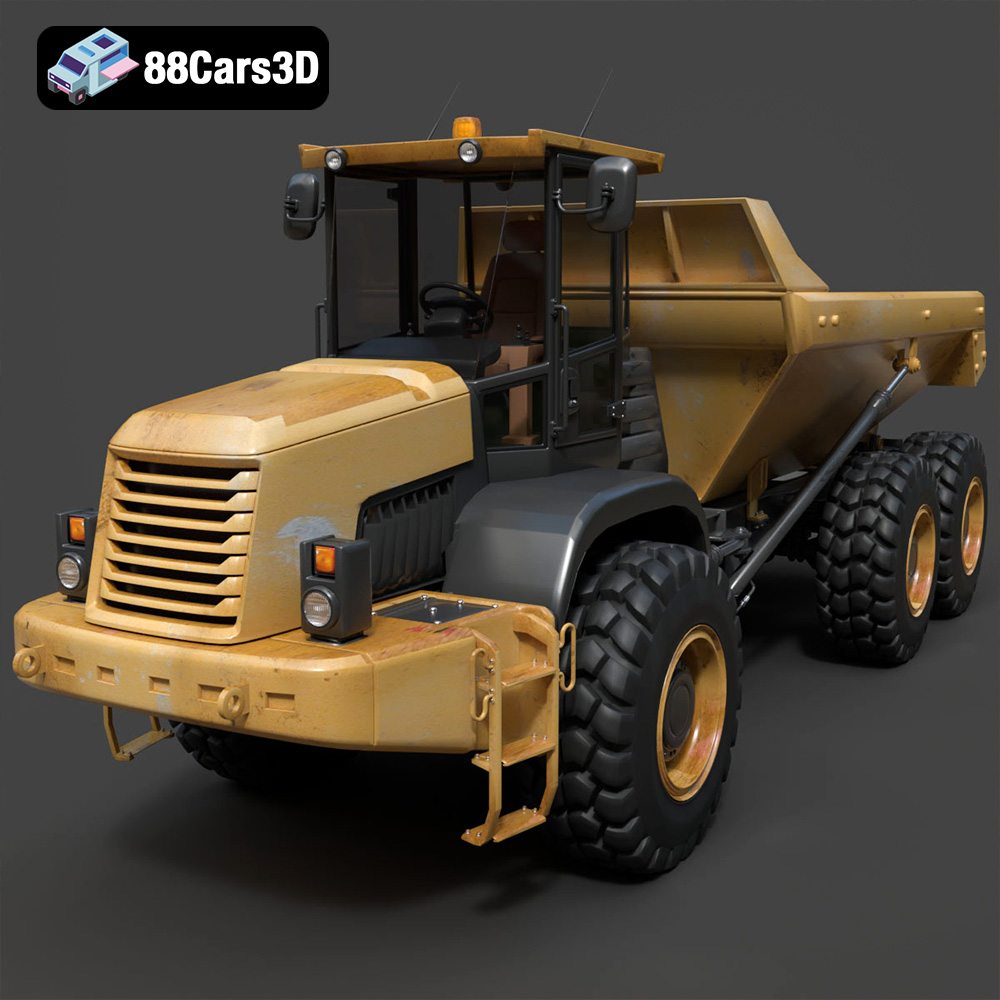
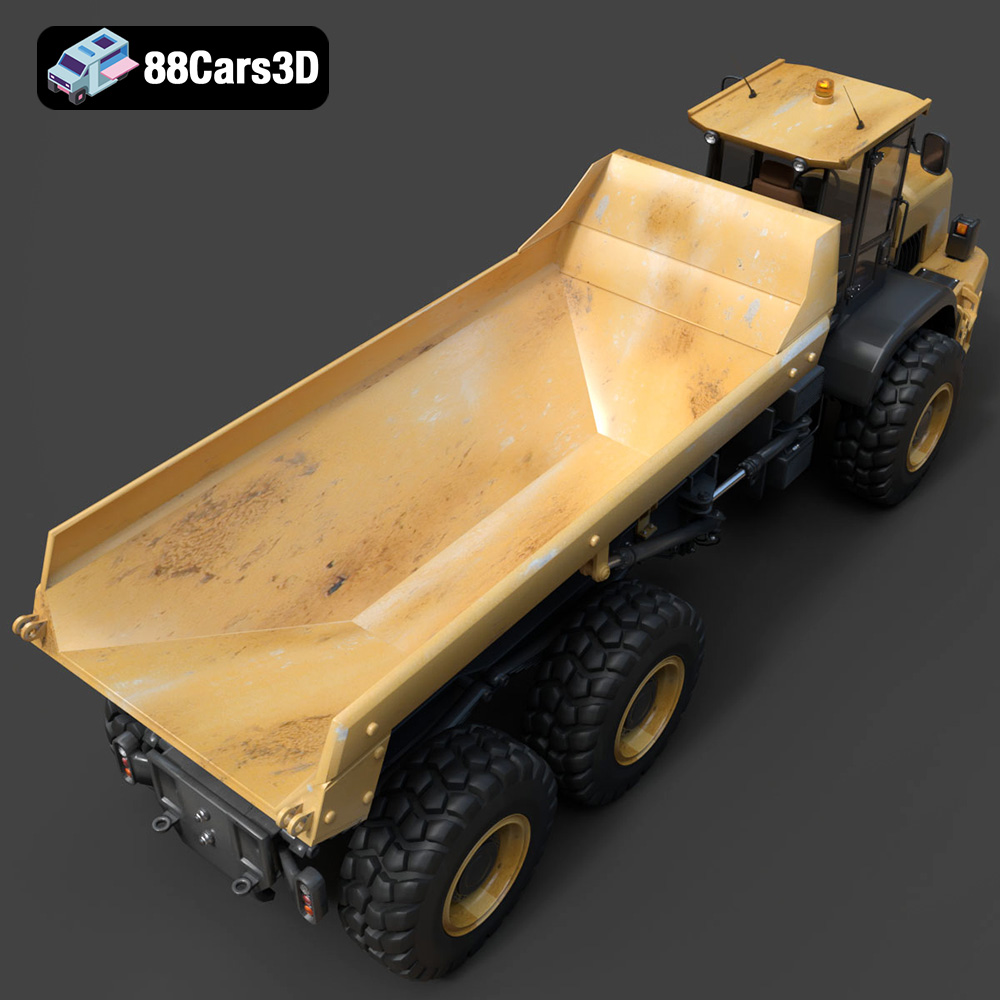
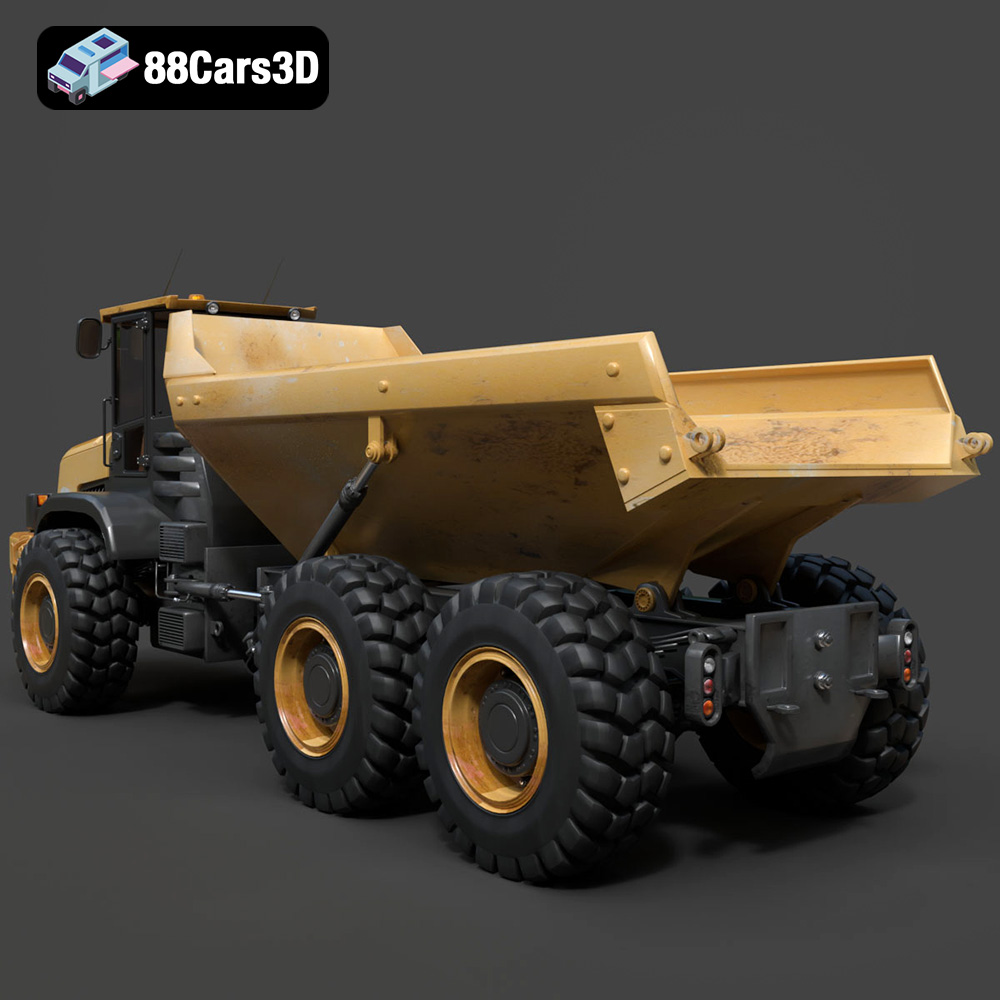
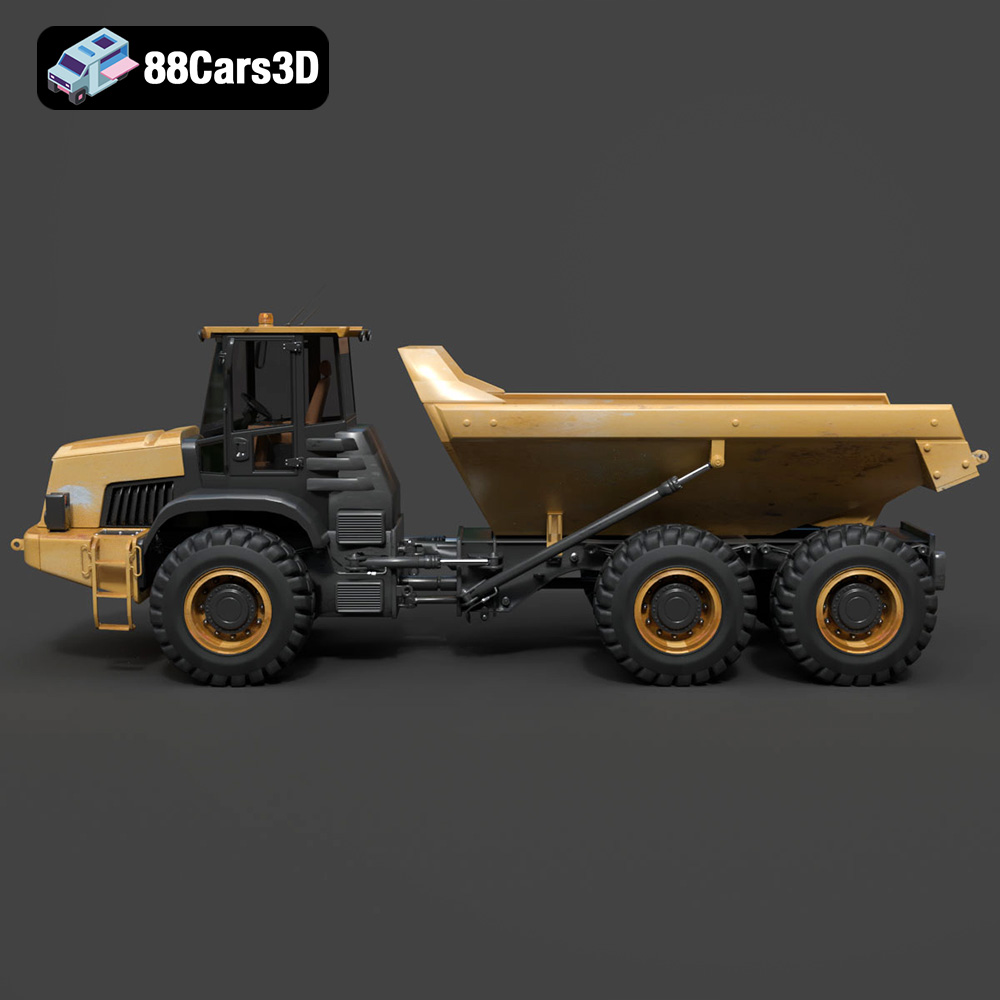
Today, we delve into the world of industrial-grade assets with a close look at a prime example: the Articulated Dump Truck 3D Model. This formidable digital reconstruction of a construction and mining behemoth offers an exceptional blend of visual detail and technical readiness, making it an invaluable tool for professionals across multiple disciplines. Its robust design, coupled with meticulously crafted interior and exterior features, positions it as an essential asset for anyone looking to elevate their projects from mere visualization to compelling realism. From its massive off-road tires to its functional pivot joint and hydraulic mechanisms, every aspect has been considered to deliver a model that is not just aesthetically pleasing, but deeply functional for demanding applications. We will explore how such a complex 3D model fits into diverse professional workflows, from game development to advanced rendering and even 3D printing, and highlight the critical role of versatile file formats in ensuring its broad utility.
The digital age has blurred the lines between the virtual and the real, especially in fields like engineering, construction, and entertainment. In these sectors, a 3D model is more than just a visual representation; it’s a data-rich component that can simulate real-world physics, educate, and inspire. Low-fidelity models, while quick to produce, often fall short of meeting the rigorous demands of professional applications, leading to inaccuracies, visual discrepancies, and ultimately, a less convincing end product.
For industries relying on precision and authenticity, such as heavy machinery manufacturing or construction planning, realistic 3D models are indispensable. Imagine a civil engineering firm planning a new mine site; they need to visualize earthmoving operations, assess vehicle maneuverability, and even train operators. A high-fidelity Articulated Dump Truck 3D model allows them to simulate these scenarios with unparalleled accuracy. The model’s detailed geometry, including its articulated chassis and hydraulic systems, ensures that simulated movements and interactions reflect real-world physics, providing critical insights long before physical construction begins. This level of realism enhances decision-making, reduces risks, and streamlines project execution, moving beyond simple aesthetics to offer genuine functional value.
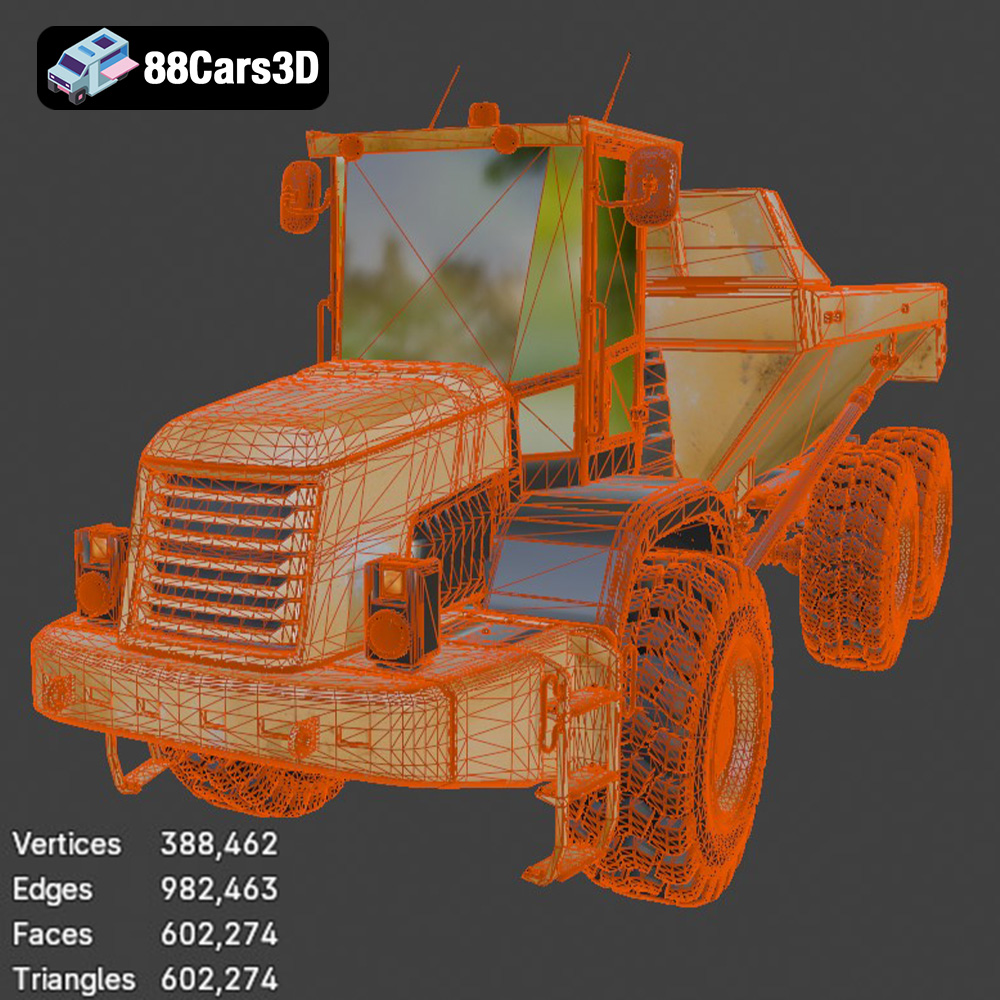
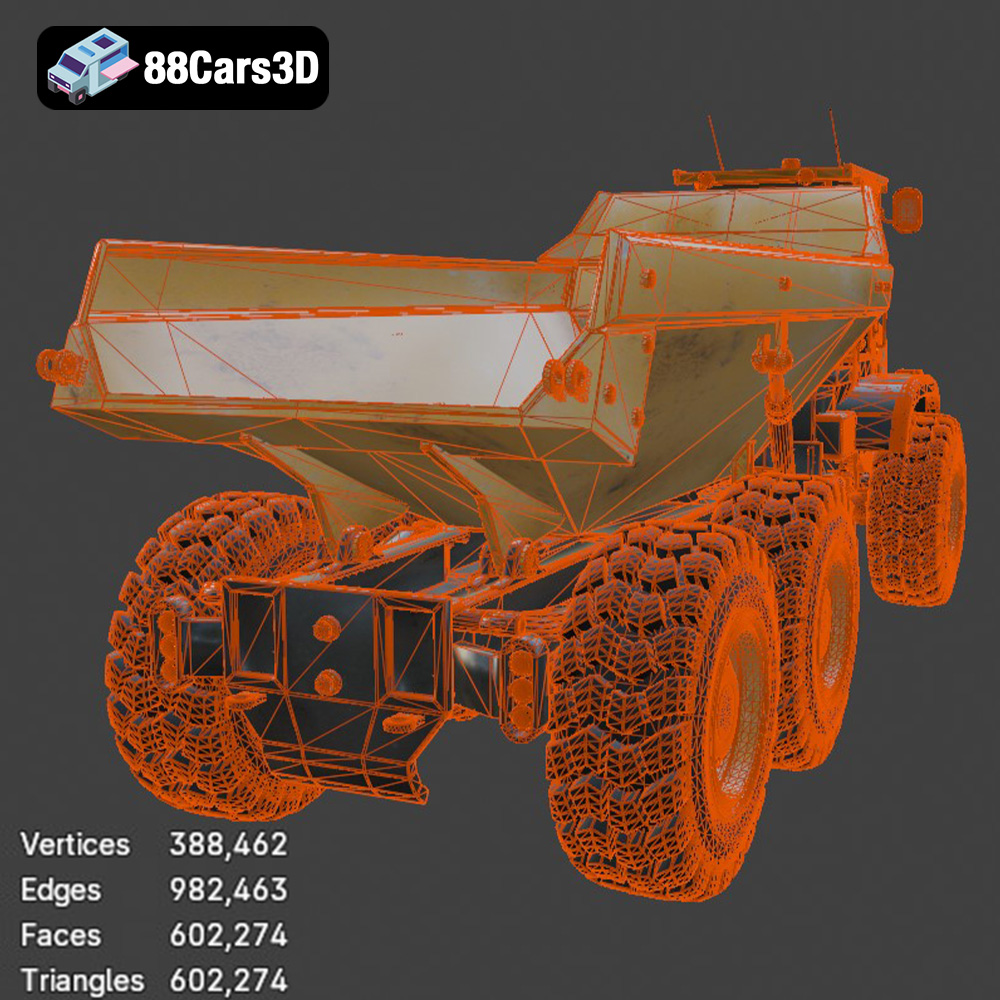
Industrial-grade assets are characterized by their technical robustness, adherence to real-world scale, and thoughtful optimization for various platforms. They are built with not just rendering in mind, but also for performance in real-time engines, configurability, and future scalability. The Articulated Dump Truck 3D Model from 88cars3d.com exemplifies this by boasting a triangle count of 602,274. This figure strikes an optimal balance, providing exceptional visual fidelity without overburdening real-time engines like Unreal or Unity. Such optimization is crucial for projects ranging from open-world construction games to advanced VR training modules, where smooth performance is as important as visual detail. Professionals seek models that are not only visually compelling but also structured in a way that facilitates easy integration and manipulation within complex digital environments.
Beyond raw polygon count, the quality of a 3D model is profoundly influenced by its topology and texturing. Good topology ensures clean deformations during animation and efficient UV mapping, which is essential for applying realistic textures without stretching or distortion. For the Articulated Dump Truck, this translates into perfectly deforming tires, smooth hydraulic cylinder movements, and accurate articulation of its pivot joint. Furthermore, physically based rendering (PBR) textures—capturing nuances of metallic sheen, rugged dirt, and weathered paint—are vital for achieving photorealistic results. These textures, when meticulously crafted, imbue the model with a sense of history and utility, making it feel like a genuine piece of heavy machinery that has seen hard work, rather than a sterile digital construct. This attention to detail allows the model to hold up under close-up shots and varying lighting conditions, a critical factor for automotive rendering and visualization specialists.
The choice of file format is a foundational decision in any 3D project, dictating compatibility, feature support, and overall workflow efficiency. Each format serves distinct purposes, optimized for specific software, engines, or end-use applications. Understanding these differences is crucial for any professional working with 3D assets, especially when integrating complex models like the Articulated Dump Truck from 88cars3d.com into diverse pipelines.
The .blend format is the native file type for Blender, the powerful open-source 3D creation suite. A .blend file saves an entire Blender scene, including all 3D geometry, materials, textures, lighting, cameras, animations, rigging, and even scene settings. This makes it a comprehensive package for Blender users, allowing for full editability and seamless continuation of work within the software. For a model like the Articulated Dump Truck, a .blend file would include all its intricate parts, hydraulic setups, and material assignments, providing a starting point for artists who wish to further customize or animate the asset directly within Blender’s ecosystem. Its primary advantage is retaining all native Blender features, but it requires Blender to be opened and edited.
.fbx (Filmbox) is arguably the most widely adopted 3D exchange format in the industry. Developed by Autodesk, FBX is designed for interoperability between different 3D software applications and real-time engines like Unreal Engine and Unity. It supports complex data, including geometry (meshes, polygons), materials, textures, animations (skeletal and blend shapes), cameras, and lights. This makes .fbx an ideal choice for transferring the Articulated Dump Truck model with its full rigging and animation potential to game development pipelines or other rendering software. Its robustness and broad compatibility ensure that critical information, such as pivot points for the truck’s articulated joint or wheel rotations, is preserved across different platforms.
The .obj (Wavefront Object) format is one of the oldest and most universally supported 3D file formats. It primarily stores geometric data, including vertices, normals, UV coordinates, and faces, making it excellent for transferring static mesh data. While .obj files can reference external material (.mtl) files and textures, they do not inherently support animations, rigging, or scene hierarchy in the way .fbx does. For simpler applications or when a pure geometric representation of the Articulated Dump Truck is needed – perhaps for initial modeling, sculpting, or cross-software mesh exchange – .obj remains a reliable and highly compatible option. Its simplicity ensures that the core mesh data is almost universally readable by any 3D software.
.glb (GL Transmission Format Binary) is an increasingly popular format, especially for web-based 3D, augmented reality (AR), and virtual reality (VR) applications. It’s a binary version of glTF, which is designed to be a compact, efficient, and self-contained format that includes models, textures, and animations in a single file. .glb is optimized for fast loading and rendering, making it perfect for deploying the Articulated Dump Truck model in interactive web experiences, mobile AR apps, or VR showrooms. Its efficiency allows for rich visual fidelity on resource-constrained platforms, crucial for accessible 3D content.
.stl (Stereolithography) is the standard file format for 3D printing. It represents the surface geometry of a 3D object using a collection of interconnected triangles. STL files do not store color, texture, or material information, focusing solely on the object’s shape for additive manufacturing. When converting the Articulated Dump Truck model for 3D printing, the .stl format is essential. It defines the truck’s physical form, enabling hobbyists and professionals to create tangible scaled models for display or prototyping. Careful consideration of mesh integrity is needed when generating .stl files to ensure watertight geometry suitable for printing.
The .ply (Polygon File Format) is often used for storing 3D scanner data, point clouds, and mesh models with additional properties. Unlike .stl, .ply can store color, transparency, texture coordinates, and even normal vectors, making it suitable for more complex data sets, often encountered in CAD (Computer-Aided Design) or scientific analysis. For engineers analyzing the Articulated Dump Truck’s structure or generating high-precision digital twins, .ply can offer a robust and detailed mesh representation, potentially including data beyond just geometry, which can be valuable for advanced simulations or reverse engineering.
While not a direct file extension like the others, an “.unreal” asset typically refers to a 3D model that has been specifically prepared and optimized for direct integration into Unreal Engine. This often means the model (usually an FBX) comes with pre-configured materials, textures, LODs (Levels of Detail), and potentially collision meshes, all set up to function seamlessly within the Unreal Engine environment. For the Articulated Dump Truck 3D Model, an “unreal” package would imply that all its components, from the detailed engine block to the articulated joint, are ready to be dropped into a game or simulation project with minimal setup, ensuring optimal performance and visual quality out of the box.
The .max format is the native file format for Autodesk 3ds Max, a leading software for 3D modeling, animation, and rendering. Similar to .blend, a .max file contains a complete 3ds Max scene, including all geometry, textures, materials, lighting, cameras, animation data, and modifiers specific to the software. For users of 3ds Max, the .max version of the Articulated Dump Truck offers the highest level of editability and control, allowing for complex animation setups, advanced rendering techniques, and integration with 3ds Max’s extensive plugin ecosystem. It’s the go-to format for artists and studios deeply embedded in the Autodesk workflow, providing maximum flexibility for high-end visualization and cinematic productions.
The value of a professional 3D model, especially for complex machinery, is rooted in its underlying technical specifications. It’s not just about how it looks, but how it’s built, how it performs, and how easily it can be integrated and manipulated within various digital environments. The Articulated Dump Truck 3D Model stands out due to its meticulous construction, designed to meet the rigorous demands of professional use cases.
At the core of this model’s impressive visual fidelity is its carefully managed geometry. With a triangle count of 602,274, it strikes a critical balance between high detail and real-time performance. This polycount allows for the accurate representation of intricate components such as the heavy-duty diesel engine block, the functional hydraulic cylinders, and the distinct deep treads of its massive off-road tires, all without creating an unmanageable load for game engines or rendering software. The topology is clean and efficient, meaning that the mesh flows naturally, preventing unsightly pinching or stretching when deformations occur, which is essential for animating the dump bed and steering mechanisms. This precise topology is a hallmark of high-quality 3D car models and heavy machinery assets, ensuring structural integrity even in close-up shots and physically accurate simulations.
The Articulated Dump Truck model excels in its comprehensive detailing, both inside and out. The exterior features are true to its real-world counterpart, encompassing accurate frame geometry, industrial proportions, and realistic components like exhaust stacks, industrial safety lighting, and heavy rims. The functional hydraulic cylinders and dump bed mechanics are not merely visual but designed for animation, with separate components for optimal rigging. Moving into the cockpit, the attention to detail continues with an industrial operator seat complete with safety restraints, a detailed steering wheel, joystick control panels, and an accurate instrument cluster. Foot pedals, safety levers, and transmission controls are all present, making it “optimized geometry for first-person POV in simulators.” This level of detail is critical for creating immersive VR training modules or realistic game environments where players might interact directly with the vehicle’s interior.
One of the most significant advantages of this Articulated Dump Truck 3D Model is its inherent animation readiness. It features a “proper pivot setup for steering, wheel rotation, bed tipping, and chassis articulation.” This means that key components are correctly linked and pivoted, allowing for straightforward rigging and animation within 3D software like 3ds Max or Blender. The articulated joint, a defining feature of these trucks, is set up to provide realistic maneuverability, while the dump bed can be animated to tip with authentic hydraulic action. This pre-configured setup saves countless hours for animators and game developers, providing a robust foundation for creating dynamic scenes, realistic simulations, or interactive gameplay where the heavy machinery truly comes to life.
The versatility of a well-crafted 3D model is measured by its ability to seamlessly integrate into various professional pipelines. The Articulated Dump Truck 3D Model, with its multiple file formats and optimized structure, is engineered for broad compatibility, making it an ideal asset for diverse creative and industrial applications.
For game developers, performance and visual quality are equally critical. The Articulated Dump Truck model is “Game-Ready & Optimized,” making it perfect for integration into leading engines like Unreal Engine and Unity. Its 602,274 triangle count is carefully balanced to deliver high-end visual realism without sacrificing frame rates, crucial for open-world games, racing titles, or simulation genres where heavy machinery plays a central role. The included .fbx and .unreal formats provide a straightforward path to import, often retaining material assignments and pivot setups. Game developers can leverage its accurate real-world scale, proper pivot points for animation, and optimized geometry to build immersive and believable virtual construction sites or mining operations. The interior detailing also allows for first-person driver views, enhancing player immersion significantly.
For cinematic rendering and high-resolution visualization, the Articulated Dump Truck offers unparalleled detail. Architects, industrial designers, and marketing agencies can utilize the .max or .blend files to import the model into their preferred rendering suites. In 3ds Max or Blender, artists have full control over lighting, camera angles, and advanced material shaders to create stunning photorealistic imagery. Imagine a brand campaign showcasing a new industrial development; the truck can be integrated into a large scene, with realistic dirt and wear applied, dynamic shadows cast, and reflections catching the metallic surfaces. The ability to customize body colors, material finishes, and lighting allows for endless creative possibilities, making it an excellent asset for automotive rendering and visualization specialists seeking to create captivating brand campaigns or lifestyle scenes.
The burgeoning fields of Augmented Reality (AR) and Virtual Reality (VR) demand highly optimized yet detailed 3D assets. The Articulated Dump Truck model, particularly through its .glb format, is “Perfect for immersive virtual showrooms, configurators, and mobile AR experiences.” VR training environments for heavy machinery operators benefit immensely from its optimized geometry and detailed cockpit features, allowing for realistic first-person POV interactions. Trainees can familiarize themselves with control panels, steering mechanisms, and operational procedures in a safe, virtual space before stepping into a real vehicle. For AR applications, the model can be placed in real-world environments, allowing stakeholders to visualize how the truck might look and operate on a construction site, enhancing planning and client presentations.
While the primary application of 3D models often lies in digital environments, the ability to transition from the virtual to the physical realm adds another layer of versatility. The Articulated Dump Truck 3D Model, via its .stl format, is designed to facilitate this transition, opening doors for hobbyists, educators, and even engineers to create tangible representations.
Converting a complex digital asset like this heavy machinery model for 3D printing requires careful preparation. The included .stl format is specifically for this purpose. However, simply having an STL file isn’t always enough. The model needs to be “watertight” (no gaps or internal inconsistencies in the mesh) and manifold (edges connected correctly) to ensure a successful print. For complex models such as articulated vehicles, it is often beneficial to separate components into individual STL files, as the Articulated Dump Truck recommends printing the “frame printed angled for structural integrity” and “wheels printed separately.” This modular approach not only simplifies the printing process but also allows for better detail retention and easier assembly post-print, catering to enthusiasts who enjoy building and customizing physical models.
When 3D printing the Articulated Dump Truck, scale is a critical factor, directly impacting detail resolution and material requirements. The recommended scales of 1:12, 1:18, or 1:24 offer a balance between manageable print size and visible detail. For fine details like exhaust stacks, hydraulic components, and interior controls, “Resin printing recommended for fine details” due to its ability to achieve thinner layers (0.04–0.12 mm) and smoother surfaces compared to FDM (Fused Deposition Modeling) printers. Wall thickness recommendations (1.2–2.0 mm) are crucial for structural integrity, especially for a heavy-duty vehicle model, ensuring parts don’t become too brittle. Selecting the appropriate print material—whether it’s durable ABS-like resin for functional parts or standard PLA for display models—will significantly influence the final physical outcome, transforming a 3D car model into a robust miniature.
The journey from a raw 3D print to a polished display model often involves significant post-processing. For the Articulated Dump Truck, this includes “sanding, primer, and authentic factory colors with metallic finishes.” Supports, which are “required for detailed parts like exhaust, mirrors, handlebars,” must be carefully removed. Sanding smooths layer lines or resin artifacts, while a good primer prepares the surface for paint. Applying authentic factory colors, such as the typical construction yellow or orange, often with weathering effects, truly brings the miniature truck to life, replicating the look of a real working vehicle. Enthusiasts can further enhance realism with metallic finishes for engine components, hydraulic hoses, and grilles, making the printed model a captivating piece of art or a valuable educational tool.
A truly professional 3D model offers more than just static beauty; it provides the flexibility for extensive customization, allowing artists and developers to tailor the asset to meet specific project requirements, branding guidelines, or artistic visions. The Articulated Dump Truck 3D Model excels in its adaptability, enabling users to transform its appearance and functionality with relative ease.
The ability to “Change body/tank colors” and “Modify tire textures” is fundamental for adapting the Articulated Dump Truck to diverse environments and branding. A model destined for a desert mining simulation might feature weathered, dust-covered textures with “off-road deep-tread tires,” while one used in a promotional video for a pristine construction site might sport a glossy, factory-fresh paint job. Material finishes can be adjusted from “matte, gloss, metallic” to reflect different states of wear and tear, or to match corporate color palettes. This flexibility is invaluable for automotive rendering specialists who need to present the same vehicle in various conditions or brand contexts, ensuring the model fits perfectly into any scene without requiring a complete re-modeling effort.
While the Articulated Dump Truck model is already “Game-Ready & Optimized” with its 602,274 triangle count, advanced projects may require further optimization or conversely, higher fidelity. For extremely demanding real-time applications or mobile AR experiences, artists might implement Level of Detail (LOD) systems, creating simplified versions of the model that automatically swap in at a distance to boost performance. Conversely, for ultra-high-resolution cinematic renderings, additional surface details could be sculpted or higher-resolution textures applied. The clean topology of the base model ensures that these modifications can be implemented efficiently, allowing creators to balance performance needs with visual requirements for their specific game assets or visualization projects.
Beyond visual customization, the Articulated Dump Truck 3D Model offers a robust foundation for extending functionality. Its “separate wheels, chassis sections, and hydraulic components for animation” make it easy to add custom elements such as company logos, specialized warning decals, or even custom attachments specific to a particular mining operation or construction project. Engineers could integrate additional sensors or safety features into the model for advanced simulations. This adaptability transforms a generic heavy machinery model into a bespoke asset, tailored precisely to a client’s brand identity or a project’s unique technical specifications, further enhancing its value in professional pipelines.
The journey through the technical intricacies and versatile applications of the Articulated Dump Truck 3D Model underscores a fundamental truth in modern digital creation: high-quality 3D assets are indispensable. Whether for immersive game development, critical engineering simulations, photorealistic architectural visualization, or tangible 3D prints, the demands for realism, performance, and adaptability continue to grow. This featured model exemplifies the pinnacle of industrial-grade 3D assets, offering meticulously crafted geometry, detailed interiors and exteriors, and a design optimized for animation and broad software compatibility.
The ability to leverage various file formats—from the native power of .blend and .max, to the industry standard .fbx, the universal .obj, web-optimized .glb, 3D printing ready .stl, and the robust .ply—ensures that this Articulated Dump Truck 3D Model is truly a universal tool in the hands of professionals. It’s not just a static image; it’s a dynamic, customizable component ready to be integrated into the most demanding workflows, from intricate automotive rendering scenes to high-stakes VR training modules. Investing in such a comprehensive and well-prepared asset dramatically streamlines production, enhances visual fidelity, and ultimately elevates the impact of any project.
For those seeking to equip their digital workshops with premium 3D car models and heavy machinery assets, 88cars3d.com provides a curated selection designed to meet the highest professional standards. The Articulated Dump Truck 3D Model is a testament to the quality and versatility available, empowering creators to build more realistic, engaging, and impactful digital experiences across a multitude of industries.
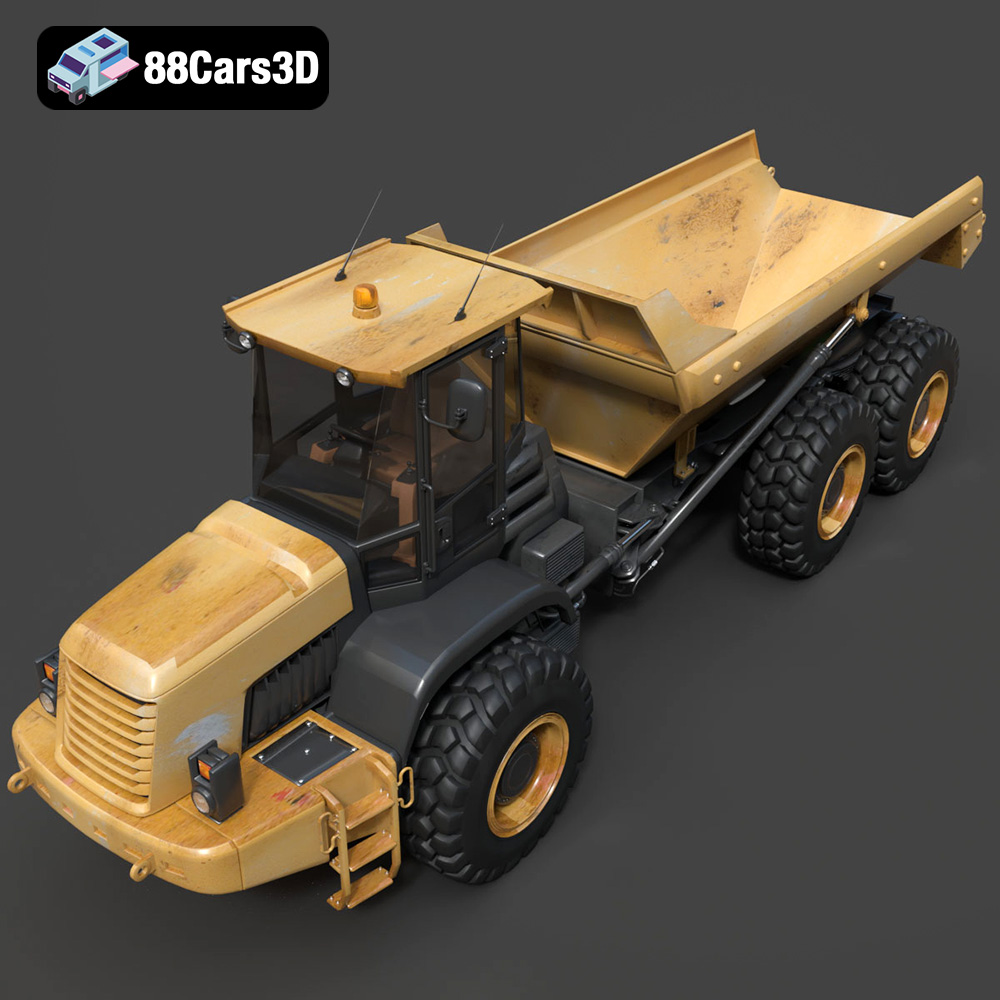
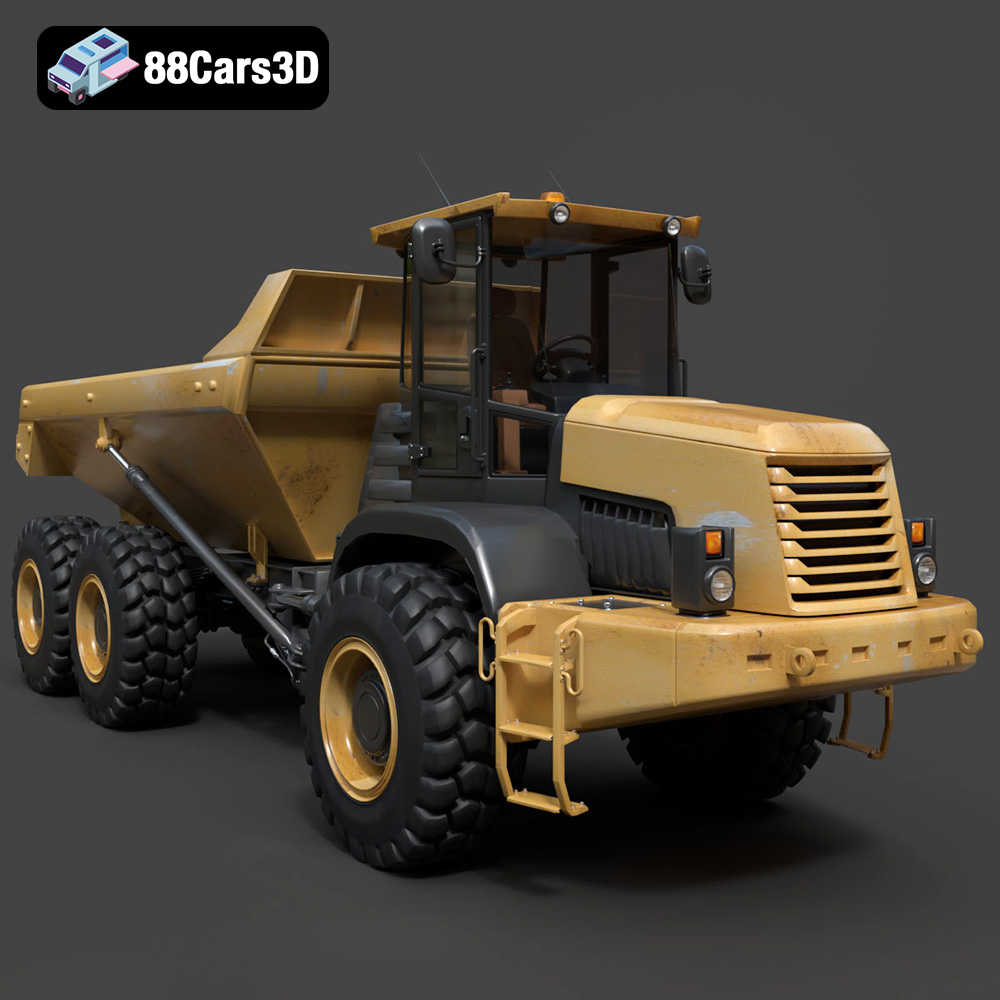
The Articulated Dump Truck is a heavy-duty titan of construction and mining, designed to transport massive payloads over the most challenging terrains. Known for its rugged articulated chassis, immense hauling capacity, and robust hydraulic tipping mechanism, this workhorse is essential for earthmoving operations. Distinctive features include its massive off-road tires, heavy-duty dump bed, and functional pivot joint that provides unmatched maneuverability in tight, muddy job sites.
$44.50
.blend
.fbx
.glb
.industrial
.max
.obj
.ply
.rendering
.stl
.unreal
articulated-dump-truck
construction-vehicle
dump-truck
game asset
game-ready
heavy-machinery
high poly
optimized
truck-3d-model
VR/AR