Get 20% OFF All Premium 3D & STL Models!

In the vibrant world of 3D visualization, automotive models stand as a cornerstone for a multitude of creative and technical endeavors. From breathtaking photorealistic renders that define brand aesthetics to high-octane racing simulations and immersive virtual reality experiences, the quality of a 3D car model can make or break a project. Achieving realism, performance, and versatility requires not just artistic skill, but a deep understanding of technical specifications, software workflows, and industry standards.
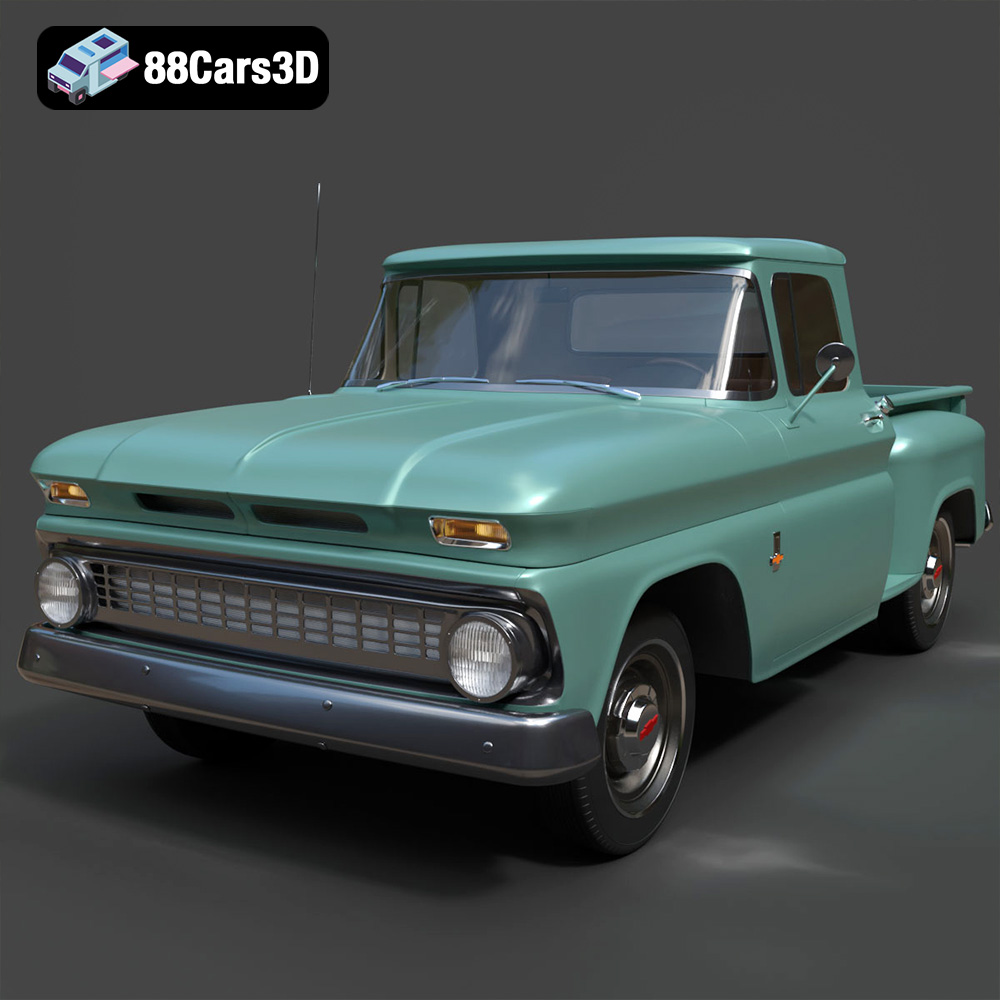
Today, we delve into the intricate details of professional 3D car models, using a prime example from 88cars3d.com’s extensive collection: the meticulously crafted Chevrolet C10 (C14) 1963 3D Model. This iconic American pickup truck, celebrated for its rugged charm and distinctive design, offers a unique blend of vintage appeal and modern technical optimization. Whether you’re a seasoned game developer, an architectural visualizer, an AR/VR innovator, or a hobbyist looking for a stunning asset for 3D printing, understanding the nuances of such a model is crucial for maximizing its potential in your workflow.
We’ll explore how this particular 3D model, with its highly detailed topology and comprehensive file format support, serves as an invaluable asset across diverse applications. From its authentic exterior styling to its detailed engine bay and period-correct interior, the ’63 C10 model embodies the principles of high-quality asset creation. Join us as we uncover the technical underpinnings that make 3D car models like this a cornerstone of modern digital content creation.
When acquiring a 3D model, especially one as versatile as the Chevrolet C10 (C14) 1963, comprehending the various file formats it comes in is paramount. Each format is designed with specific use cases, software compatibility, and technical advantages in mind. The right format ensures seamless integration, optimal performance, and access to all the features the model has to offer.
The .blend format is the native file type for Blender, the popular open-source 3D creation suite. When you receive a .blend file, you’re getting a complete, fully editable Blender scene. This means not just the mesh data of the 3D car model, but also its materials (often set up with physically-based rendering or PBR principles), textures, lighting, cameras, animation data, and even modifiers. For artists working primarily in Blender, this format offers the most flexibility for customization, rigging, animation, and rendering directly within their preferred environment. It’s ideal for deep modifications, scene composition, and leveraging Blender’s powerful rendering engines like Cycles or Eevee.
.fbx (Filmbox) is a proprietary file format owned by Autodesk and has become an industry-standard for 3D data interchange, particularly in game development and real-time visualization. It’s renowned for its robust support of mesh data, materials, textures, animations, and skeletal structures. For assets like the C10 model, an .fbx file is perfect for importing into game engines like Unreal Engine and Unity, or other 3D software such as 3ds Max, Maya, or Cinema 4D. Its widespread compatibility makes it a go-to choice when moving assets between different applications while retaining crucial data like pivot points, UVs, and animation rigs.
The .obj (Wavefront OBJ) format is one of the oldest and most universally supported 3D formats. It primarily stores geometric data – vertices, faces, normals, and UV coordinates – and can reference external material files (.mtl). While it doesn’t store animation or advanced scene data like .fbx or .blend, its simplicity and widespread support ensure that virtually any 3D software can open and work with an .obj file. This makes it an excellent choice for basic mesh transfer and cross-software compatibility, especially when the focus is on the raw geometry of the 3D car model, such as for the Chevrolet C10 (C14) 1963.
.glb (GL Transmission Format Binary) is the binary version of the glTF format, designed for efficient transmission and loading of 3D scenes and models by applications. It packages all asset data – geometry, materials, textures, and animation – into a single file, making it incredibly convenient for web-based 3D viewers, augmented reality (AR), virtual reality (VR), and mobile applications. Its compact size and optimized structure ensure fast loading times and smooth performance, making it an essential format for showcasing 3D car models like the C10 in interactive browser experiences or AR/VR environments.
.stl (Stereolithography) is the de facto standard file format for 3D printing. It represents a 3D model as a collection of unconnected triangular facets, defining the surface geometry of the object. While it lacks color, texture, or material information, its simplicity makes it ideal for rapid prototyping and additive manufacturing. For hobbyists or professionals looking to 3D print the Chevrolet C10 (C14) 1963, the .stl format is essential, requiring careful consideration of scale, wall thickness, and support structures to ensure a successful physical model.
The .ply (Polygon File Format) is often used for storing 3D data from 3D scanners, CAD systems, and other applications requiring precision mesh representations. It can store a wider range of properties than .obj, including color, transparency, normals, texture coordinates, and even reliability information for each vertex and face. While less common for general 3D model exchange, it’s valuable in scientific visualization, reverse engineering, and applications where precise geometric analysis of the 3D car model is required.
The .unreal format, or more accurately, assets packaged specifically for Unreal Engine, typically refers to a compiled asset or a project file structure containing the imported mesh, materials, textures, and blueprints configured for optimal performance within the engine. This “engine-ready” state means the asset, like the C10 model, has been meticulously prepared with proper collision meshes, LODs (Levels of Detail), and material instances to ensure seamless integration into a real-time environment. This significantly reduces setup time for game developers and real-time visualization artists.
Similar to .blend for Blender, .max is the native file format for Autodesk 3ds Max, a powerful 3D modeling, animation, and rendering software widely used in architectural visualization, game development, and film. A .max file for the Chevrolet C10 (C14) 1963 would contain the full scene, including all its objects, materials, textures, lighting, cameras, and animation data, allowing full editability and leveraging 3ds Max’s robust toolset for high-fidelity rendering with V-Ray or Corona Renderer, or preparing assets for game engines.
Understanding these diverse formats empowers creators to choose the right tool for the job, ensuring the Chevrolet C10 (C14) 1963 3D Model can be utilized to its fullest potential across any project requirement.
Creating a high-quality 3D car model, especially one as iconic as the Chevrolet C10 (C14) 1963, is a complex endeavor that blends artistic vision with rigorous technical execution. It’s about capturing not just the visual likeness, but the very essence and character of the vehicle, while ensuring it’s optimized for modern 3D pipelines.
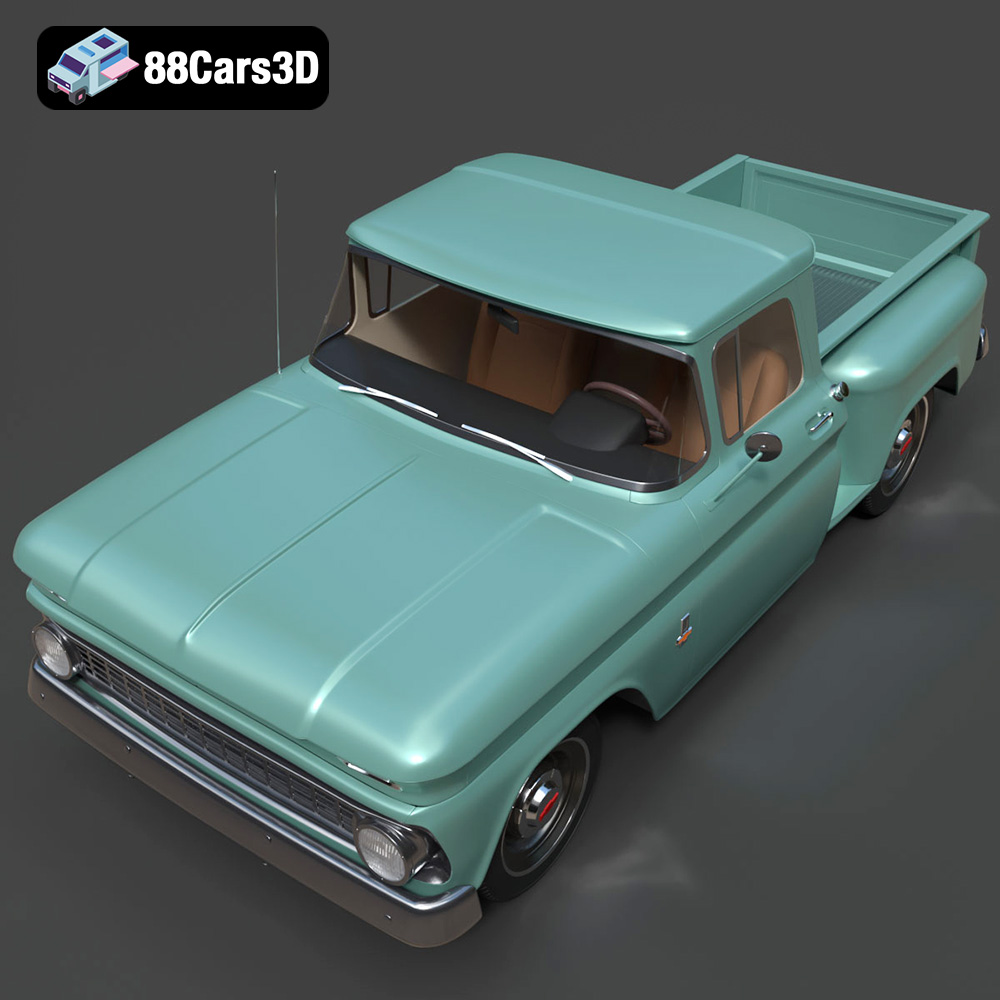
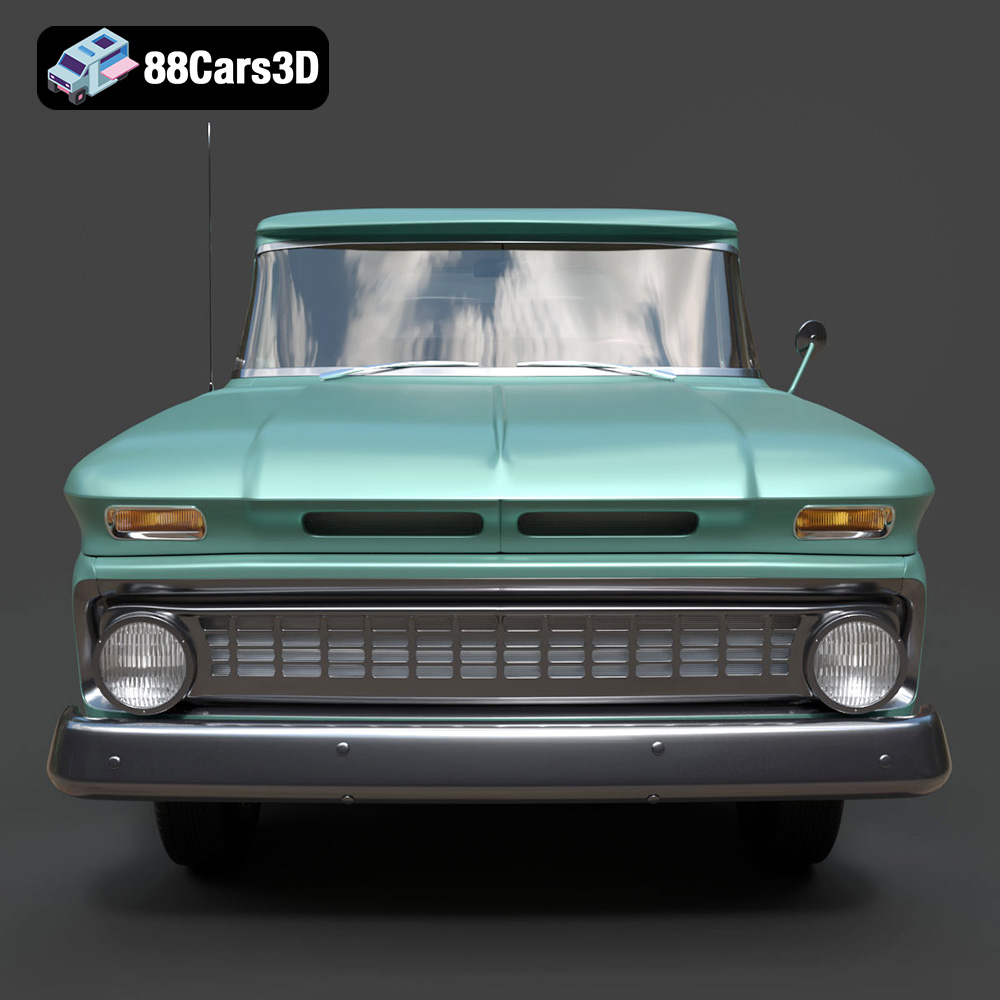
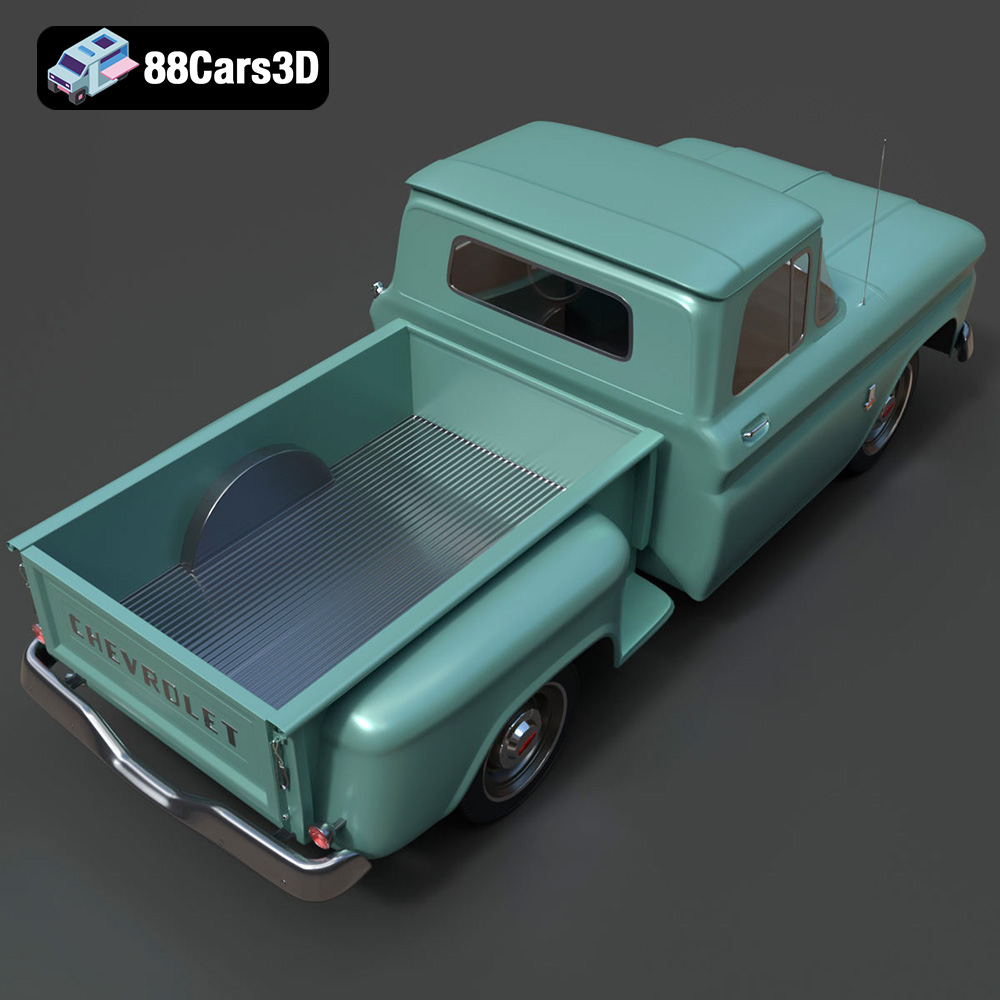
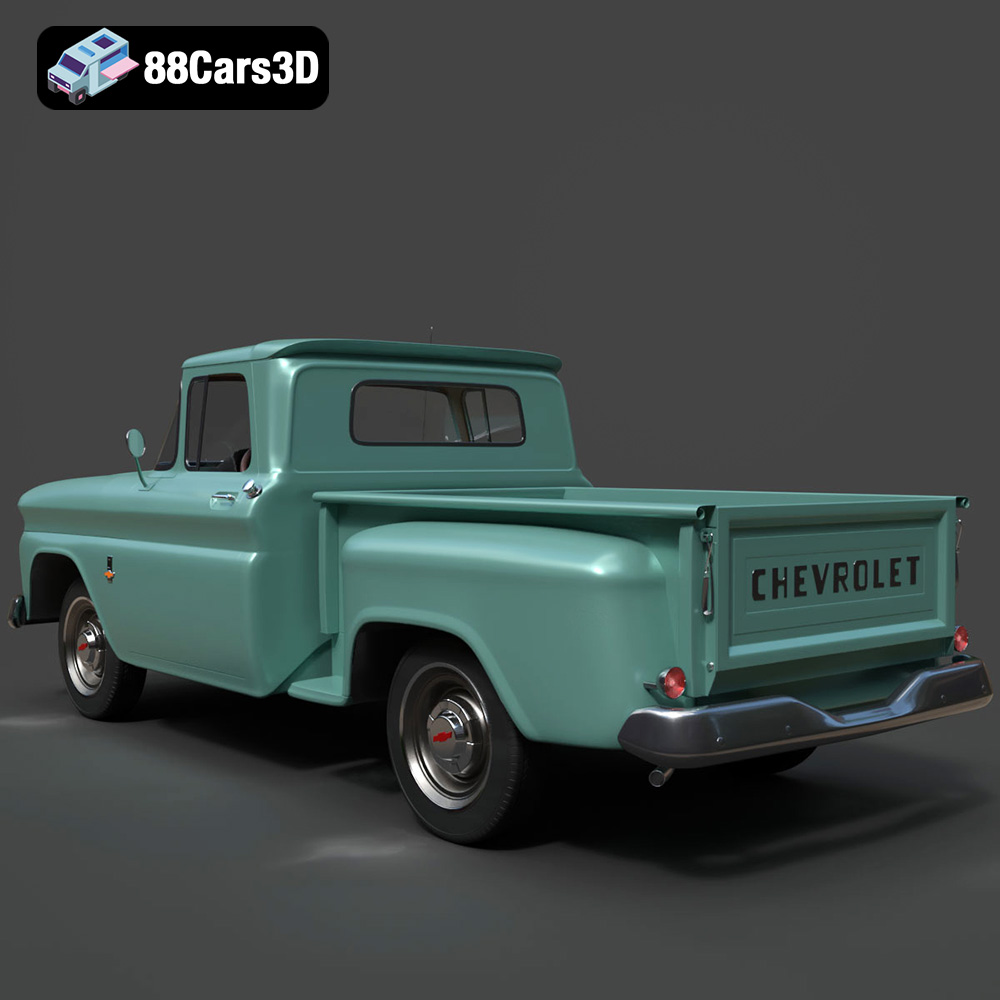
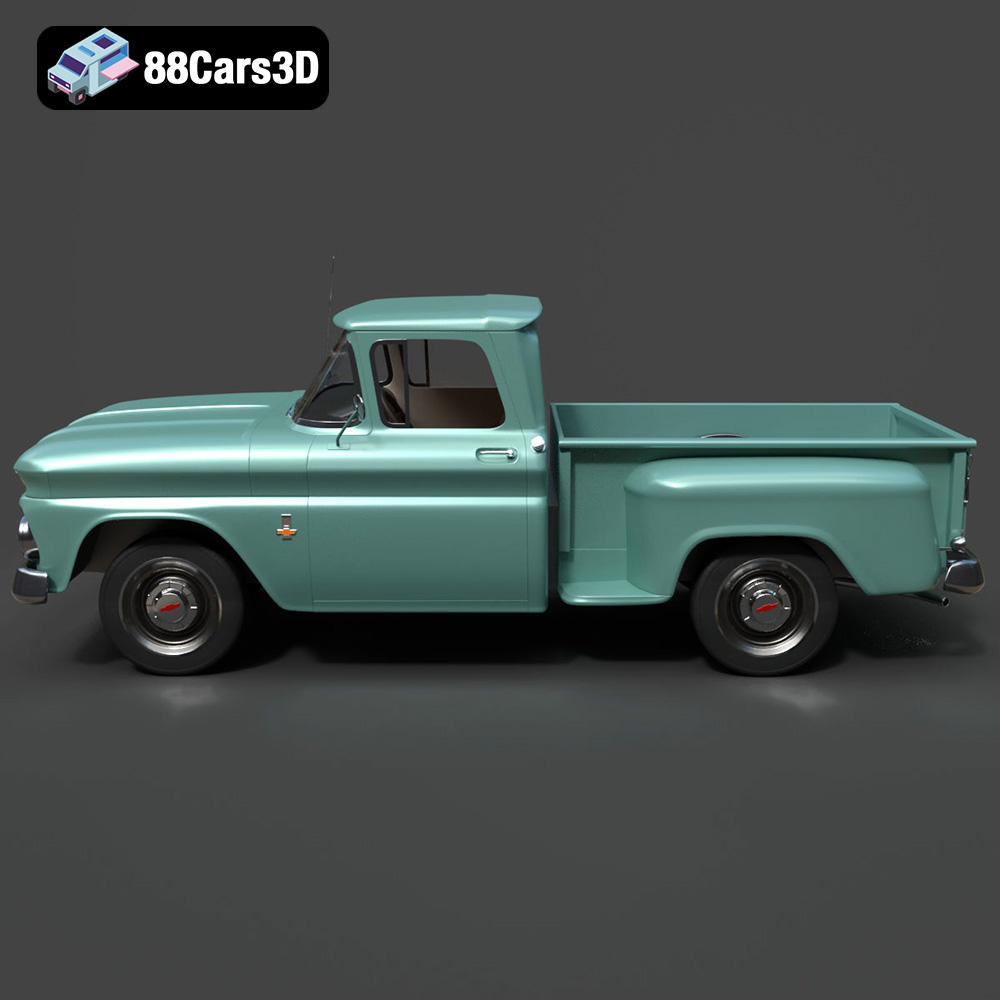
The success of an automotive 3D model hinges on its attention to detail. For the ’63 C10, this means going beyond just the overall shape. It involves painstakingly recreating the distinctive front grille, the unique classic step-side or fleet-side body lines, and even subtle elements that define its era. This model features historically accurate round headlights and vintage taillight assemblies, period-correct steel wheels with chrome hubcaps, and classic tread tires. Inside, the classic vinyl bench seat with authentic stitching, vintage large-diameter steering wheel, and accurate instrument cluster with analog gauges transport the viewer back in time. These details are not merely aesthetic; they are critical for achieving photorealism and immersing the audience in the model’s narrative.
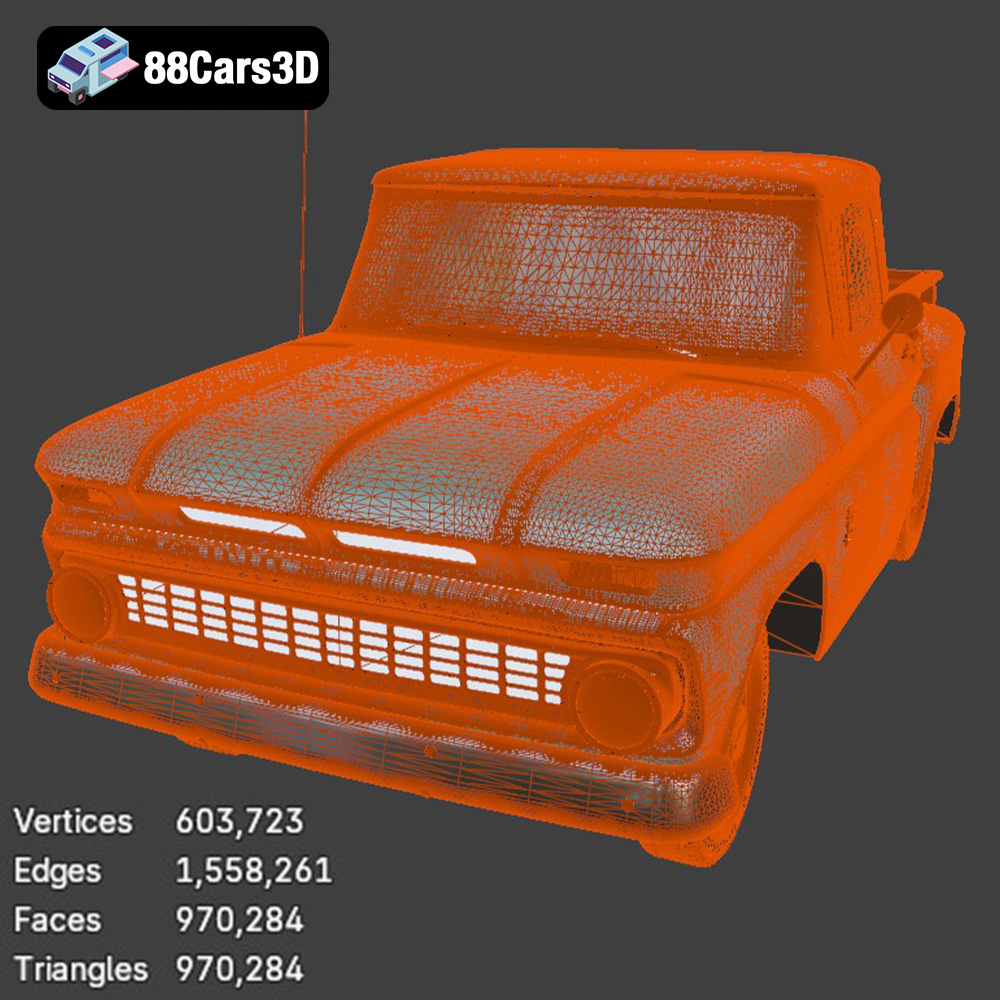
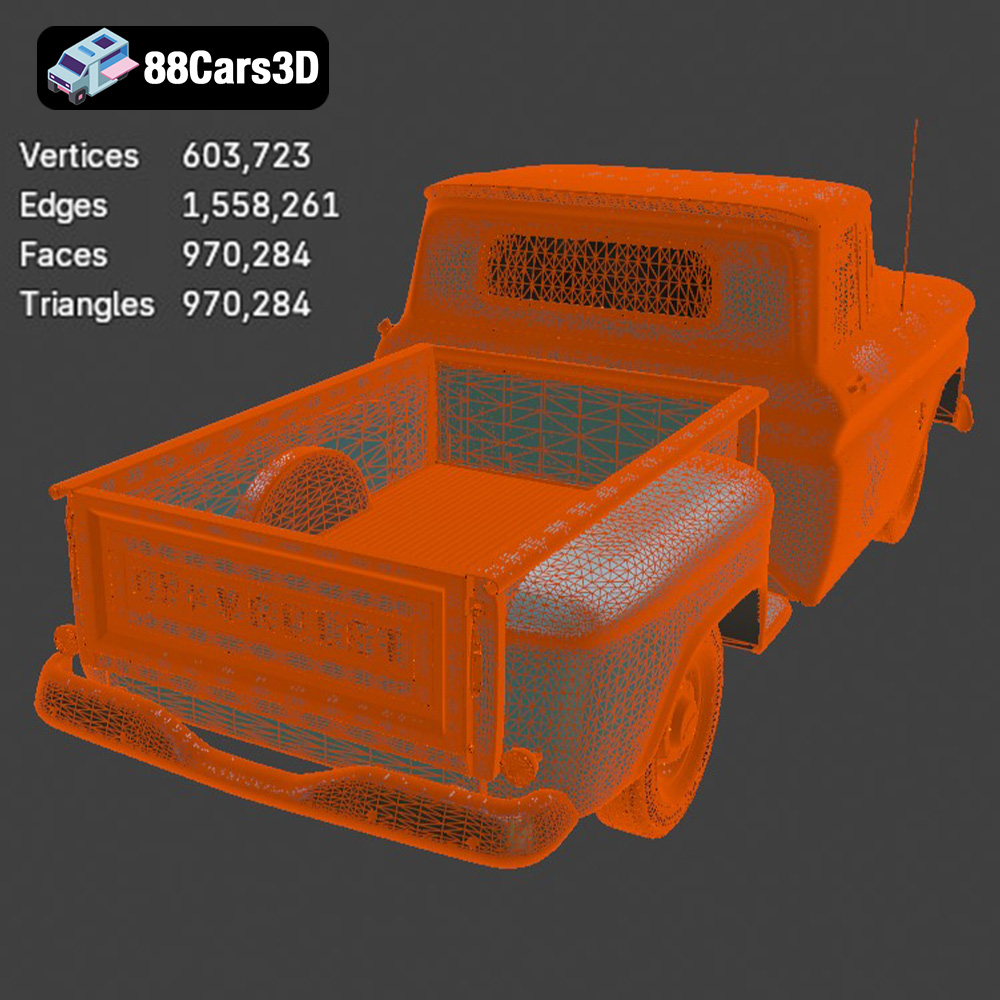
A significant technical consideration for any 3D car model is its topology and polycount. The Chevrolet C10 (C14) 1963 3D Model boasts a highly detailed topology with 970,284 triangles. This specific count represents a sweet spot, a balance between visual fidelity and performance efficiency. For professional game development, especially in open-world titles or racing games, models need to look great without crippling frame rates. A well-optimized mesh ensures smooth performance in real-time engines like Unreal Engine and Unity, allowing for the creation of rich, interactive environments without compromise. The judicious placement of polygons ensures that crucial details are preserved while non-essential areas are optimized to maintain a manageable triangle count. Furthermore, elements like separate wheels, suspension, and steering components are designed for easy animation, underscoring its utility as a game-ready asset.
Accuracy extends to the fundamental dimensions of the model. The Chevrolet C10 (C14) 1963 model is built to real-world scale, based on the actual vehicle chassis. This is not just for aesthetic accuracy but is crucial for seamless integration into real-world simulations, architectural visualizations, and physics-based game engines where scale directly impacts interactions and perceptions. Beyond scale, proper pivot setup for steering, wheel rotation, and suspension travel is meticulously implemented. This means animators and developers can instantly articulate the vehicle with realistic motion, avoiding tedious manual adjustments and accelerating project timelines. The detailed engine block and authentic dual/single exhaust system routing further add to its realism, providing ample detail for close-up shots or even showcasing under-the-hood customization.
The true value of a versatile 3D asset like the Chevrolet C10 (C14) 1963 lies in its seamless integration into various professional 3D software and real-time engine workflows. From high-end cinematic rendering to interactive game environments, the model is engineered for efficiency and compatibility.
For game developers and real-time visualization artists, Unreal Engine is a powerhouse, and the C10 model is game-ready and optimized for it. Importing the .fbx or .unreal format allows immediate access to the model’s geometry and material slots. Developers can then leverage Unreal’s sophisticated material editor to create PBR (Physically Based Rendering) materials, applying high-resolution textures for body paint, chrome, rubber, and glass. The model’s optimized polycount (970,284 triangles) ensures it performs well within the engine, even in complex scenes. Developers can easily set up vehicle physics, integrate collision meshes, and utilize Unreal’s animation blueprints for realistic suspension, steering, and wheel rotations. This makes it ideal for open-world games, racing titles, and interactive virtual showrooms where real-time performance and visual fidelity are paramount.
Blender artists will find the .blend file format particularly advantageous. This provides the complete scene, including materials and potentially lighting setups, allowing for deep customization. Artists can easily modify the model’s materials to explore different finishes – from a showroom-glossy paint job to a weathered patina, or custom two-tone finishes. Blender’s powerful sculpting tools can be used for subtle surface variations, and its animation capabilities, combined with the C10’s pre-setup pivots, allow for complex cinematic sequences. Rendering with Cycles or Eevee can produce stunning photorealistic images or stylized visuals, perfect for marketing campaigns, lifestyle scenes, or digital art portfolios. The C10 model serves as a fantastic base for further artistic exploration.
In architectural visualization (arch-viz) and studio rendering, 3ds Max remains a dominant force, often paired with renderers like V-Ray or Corona. The .max file for the Chevrolet C10 (C14) 1963 allows arch-viz artists to drop the classic truck into exterior or interior scenes, instantly adding character and realism. Imagine the C10 parked outside a rustic cabin or displayed in a modern industrial garage scene – its presence adds context and a human element. The model’s detailed engine bay and exterior features are perfect for close-up renders, while its accurate proportions ensure it sits naturally within any architectural context. Artists can easily adjust lighting, add environmental effects, and render hyper-realistic images for advertising, product showcases, or environmental design projects.
The utility of a high-quality 3D asset extends far beyond static renders. The Chevrolet C10 (C14) 1963 3D Model is engineered to be a versatile tool for various cutting-edge applications, each demanding specific technical considerations and offering unique creative opportunities.
For game developers, the C10 model is an excellent candidate for integration into diverse game genres. Its optimized polycount and game-ready status make it suitable for a range of titles, from realistic driving simulators to action-adventure games where it might serve as a drivable vehicle or an environmental prop. The separate wheels, suspension, and steering components are crucial for implementing realistic vehicle physics and animation, enabling dynamic gameplay. Consider it as a central element in an open-world game set in a retro American landscape, or as a customizable asset in a classic car configurator. The model’s optimized geometry for first-person POV in gaming ensures that interior details are robust enough for immersive cockpit experiences, enhancing player engagement.
Augmented Reality (AR) and Virtual Reality (VR) platforms are transforming how we interact with digital content. The C10 model, particularly in its .glb format, is ideal for immersive virtual showrooms, configurators, and mobile AR experiences. Imagine overlaying the vintage C10 onto your driveway via your smartphone, or exploring its detailed interior in a VR environment, allowing users to change body colors, modify tire textures, or adjust material finishes in real-time. This level of interaction fosters a deeper connection with the product and is invaluable for marketing, education, and entertainment. The model’s real-world scale accuracy is especially critical for AR/VR, ensuring a believable and consistent user experience.
The inclusion of the .stl format for the C10 model opens up the fascinating world of 3D printing. Hobbyists and model makers can bring this digital classic into the physical realm. The product description provides essential 3D print settings, recommending scales like 1:12, 1:18, or 1:24, and specific layer heights (0.04–0.12 mm, with resin printing recommended for fine details). Considerations like wall thickness, infill percentage, and support structures for detailed parts (exhaust, mirrors, steering wheel) are clearly outlined. This allows for the creation of highly detailed physical models for display, dioramas, or even as components for custom builds. Post-processing with sanding, primer, and authentic factory colors can result in stunning physical replicas that truly capture the vintage spirit of the C1963 Chevrolet C10 (C14).
Creating a 3D car model that excels in both visual quality and technical performance is an ongoing challenge in the industry. The Chevrolet C10 (C14) 1963 3D Model strikes a commendable balance, showcasing optimization techniques vital for modern asset pipelines.
As mentioned, the 970,284 triangles represent a carefully chosen polycount. While ultra-high-poly models can achieve incredible detail, they often come at the cost of performance, especially in real-time applications. Conversely, overly simplistic models lack visual realism. The C10 model’s topology is designed to provide exceptional visual fidelity for photorealistic renders while remaining manageable for game engines. This means intelligent edge loops, clean geometry, and efficient mesh flow, all contributing to a model that looks fantastic from both close-up and distant perspectives without overburdening system resources.
While not explicitly detailed in the provided description, a high-quality 3D car model like the C10 would rely on a robust material and texture pipeline. This typically involves physically based rendering (PBR) workflows, utilizing texture maps such as Albedo/Base Color, Normal, Roughness, Metallic, and Ambient Occlusion. These maps simulate how light interacts with different surfaces, allowing for incredibly realistic appearances, from the metallic sheen of the paint to the subtle imperfections on chrome or the texture of the vinyl seats. Well-structured materials ensure seamless integration and customization across various 3D software and renderers, allowing artists to effortlessly change body/tank colors, modify tire textures, or adjust material finishes to achieve matte, gloss, metallic, or even weathered patina effects.
The importance of real-world scale cannot be overstated for accurate visualization and simulation. The C10 model’s adherence to actual vehicle chassis dimensions ensures it integrates seamlessly into scenes with other real-world scaled assets. Beyond static scale, the proper setup of pivot points is critical for animation and interaction. Having precise pivots for steering, wheel rotation, and suspension travel simplifies rigging and animation considerably. This technical precision allows for dynamic scenarios, such as the C10 navigating uneven terrain with realistic suspension compression, or its wheels turning accurately during a cinematic sequence. Such attention to detail saves countless hours in production and enhances the overall believability of the automotive rendering.
A well-designed 3D car model provides a solid foundation, but its true power lies in its capacity for customization and adaptation to diverse creative visions. The Chevrolet C10 (C14) 1963 3D Model offers extensive opportunities for artists and developers to inject their unique touch.
The ability to customize a 3D model is crucial for matching specific project requirements or artistic directions. With the C10 model, users can easily change body and tank colors, applying anything from authentic factory colors to modern custom two-tone finishes. This flexibility extends to tire textures, allowing for the swap between street variants for a classic show truck look or off-road textures for a rugged, utilitarian vibe. Adjusting material finishes—matte, gloss, metallic, or a subtle patina—can drastically alter the vehicle’s character, enabling artists to tell different stories. Furthermore, adapting lighting for different environments, whether it’s a sunny outdoor scene, a dramatic studio setup, or a moody night render, allows the C10 to shine in any context.
Imagine a marketing campaign for a vintage car restoration company: the C10 model could be rendered in various states, from a dilapidated barn find to a gleaming, fully restored masterpiece. In a game scenario, the base model could be adapted into multiple variants: a pristine museum piece, a heavily modded street racer, or a beat-up vehicle found abandoned in a post-apocalyptic setting. For educational purposes, an interactive 3D configurator built around the C10 could teach users about classic truck components, allowing them to disassemble and reassemble the detailed engine block and suspension elements. These examples highlight how a versatile 3D car model like the Chevrolet C10 (C14) 1963 becomes a powerful tool in a creator’s arsenal, allowing for endless permutations and narratives.
The long-term value of a high-quality game asset cannot be overstated. Assets like the C10 model, available on marketplaces such as 88cars3d.com, represent a significant investment in terms of professional modeling, texturing, and optimization. By providing an expertly crafted foundation, it allows developers to focus on gameplay mechanics and creative content rather than spending precious resources on building a core asset from scratch. Its compatibility with major 3D software and real-time rendering engines ensures it remains relevant across multiple project cycles and evolving technology, making it a sustainable and cost-effective choice for any studio or individual developer.
The journey through the technical and creative facets of the Chevrolet C10 (C14) 1963 3D Model underscores the intricate relationship between artistry and engineering in the world of 3D content creation. We’ve explored how a meticulous attention to detail, from historically accurate components to optimized topology, culminates in a 3D car model that is not only visually stunning but also incredibly versatile and performant across a myriad of applications. From the foundational understanding of critical file formats like .fbx, .obj, .blend, and .unreal, to its seamless integration into professional workflows like Unreal Engine, Blender, and 3ds Max, this model exemplifies excellence in asset development.
Whether you are developing immersive game worlds, crafting photorealistic automotive renders, building interactive AR/VR experiences, or even bringing a digital classic to life through 3D printing, the C10 model provides a robust and reliable foundation. Its game-ready optimization, real-world scale, and thoughtful articulation ensure that it meets the demanding requirements of modern pipelines, saving valuable development time and enhancing creative output. The ability to customize its appearance, from paint finishes to tire textures, further empowers creators to tell unique stories and realize their distinct artistic visions.
In a rapidly evolving digital landscape, high-quality 3D car models like the Chevrolet C10 (C14) 1963 are indispensable assets that fuel innovation and creativity. They represent not just digital objects, but opportunities for unparalleled engagement and expression. For those seeking to elevate their projects with premium assets, 88cars3d.com stands as a reliable source for such meticulously crafted models, enabling professionals and enthusiasts alike to push the boundaries of digital visualization and interaction.
Experience the timeless appeal of the Chevrolet C10 (C14) 1963, a true icon of American automotive history. This legendary pickup truck is celebrated for its distinctive front grille, classic step-side or fleet-side body lines, and rugged utilitarian heritage. Our meticulously crafted 3D model captures the essence of this vintage workhorse, featuring authentic exterior styling cues, a detailed engine bay, and historically accurate mechanical components that made the ’63 C10 a favorite among truck enthusiasts. Boasting a highly detailed topology with 970,284 triangles, this model is expertly optimized to deliver exceptional visual fidelity without compromising performance. Whether you’re creating a realistic virtual environment, building a high-octane racing game, or producing photorealistic cinematic renders, this game-ready asset provides the perfect foundation. Its accurate geometry and well-structured materials ensure seamless integration into modern real-time engines like Unreal Engine and Unity.
$60.99
.1963
.blend
.chevrolet
.fbx
.glb
.max
.obj
.ply
.rendering
.stl
.unreal
c10-c14
car-3d-model
classic-car
classic-truck
game asset
game-ready
optimized
pickup-truck
VR/AR