Get 20% OFF All Premium 3D & STL Models!

In the dynamic world of digital visualization, automotive design, and game development, the demand for exceptionally crafted 3D car models has never been higher. From the hyper-realistic cinematic sequences that grace our screens to the immersive open-world environments we explore, the quality of these digital assets is paramount. They are not merely static representations but complex digital sculptures engineered for performance, precision, and unparalleled visual fidelity. The foundation of any truly compelling virtual experience or rendering project often begins with a meticulously built 3D model, capable of conveying the intricate details and emotional resonance of its real-world counterpart.
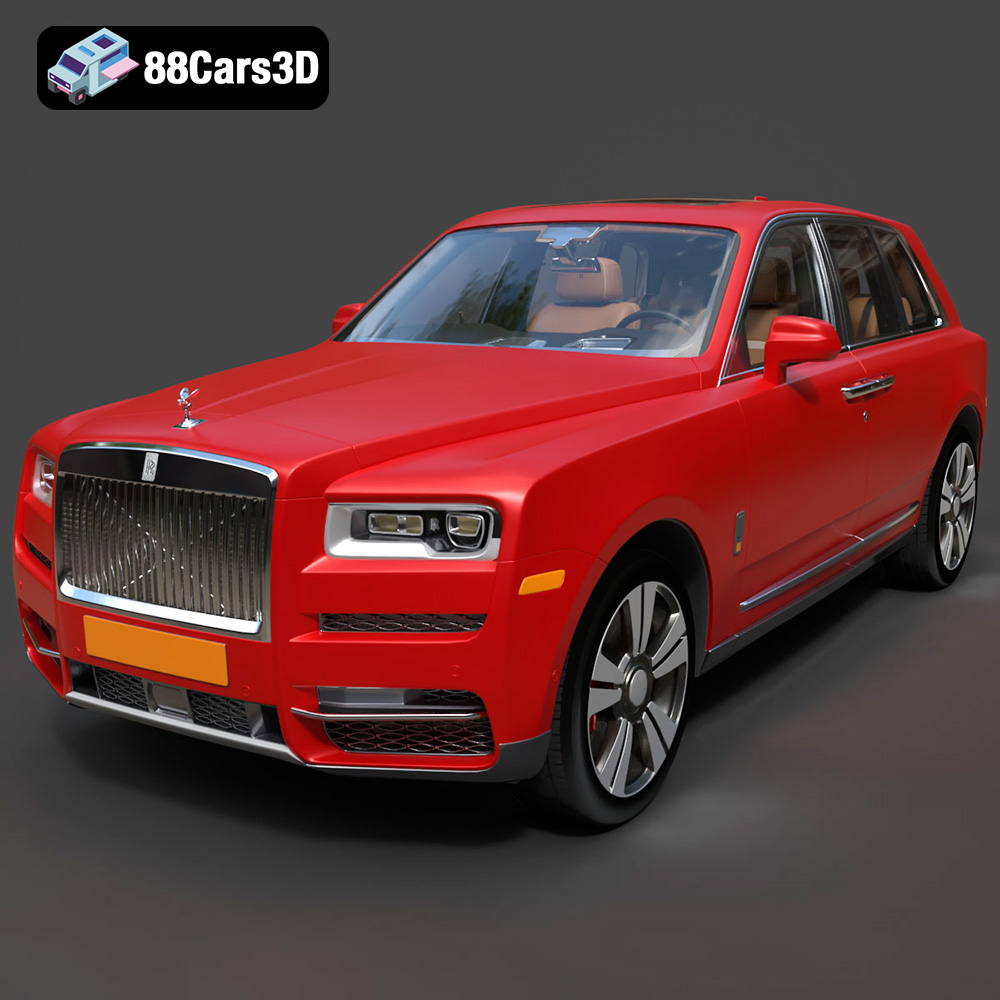
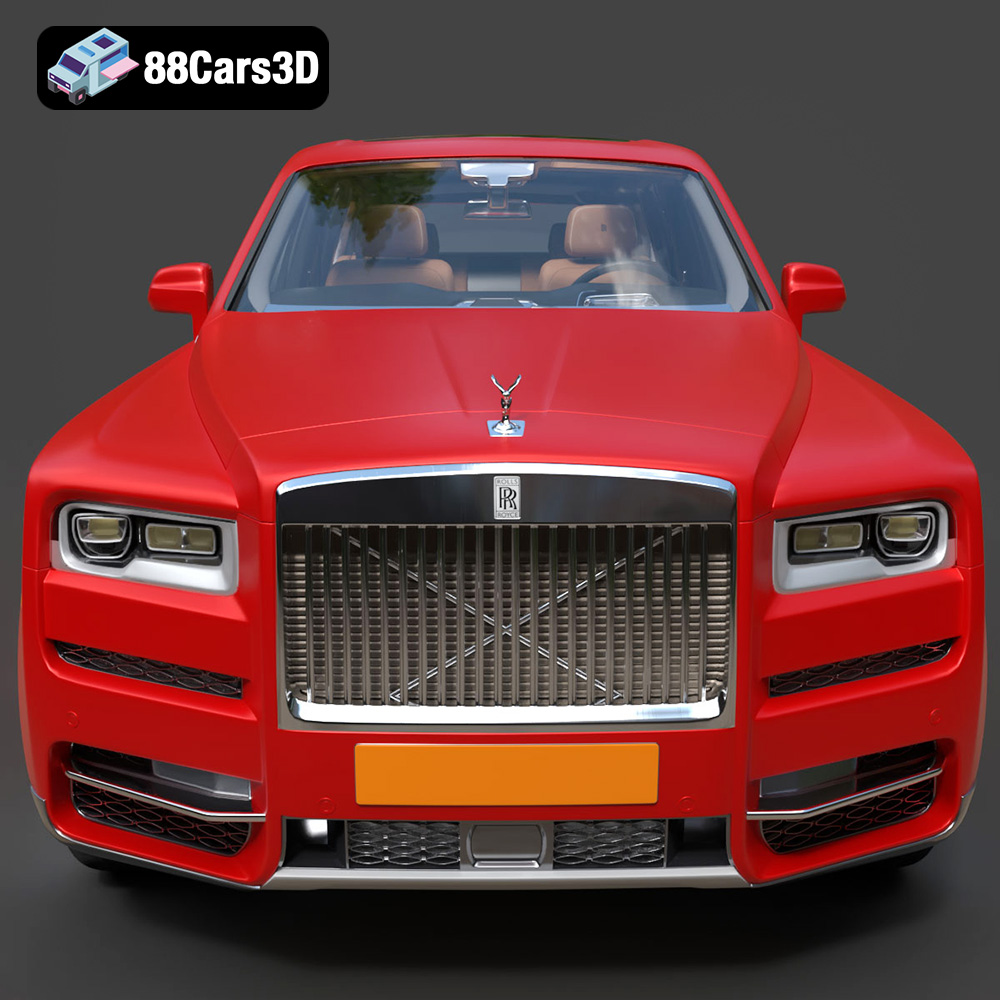
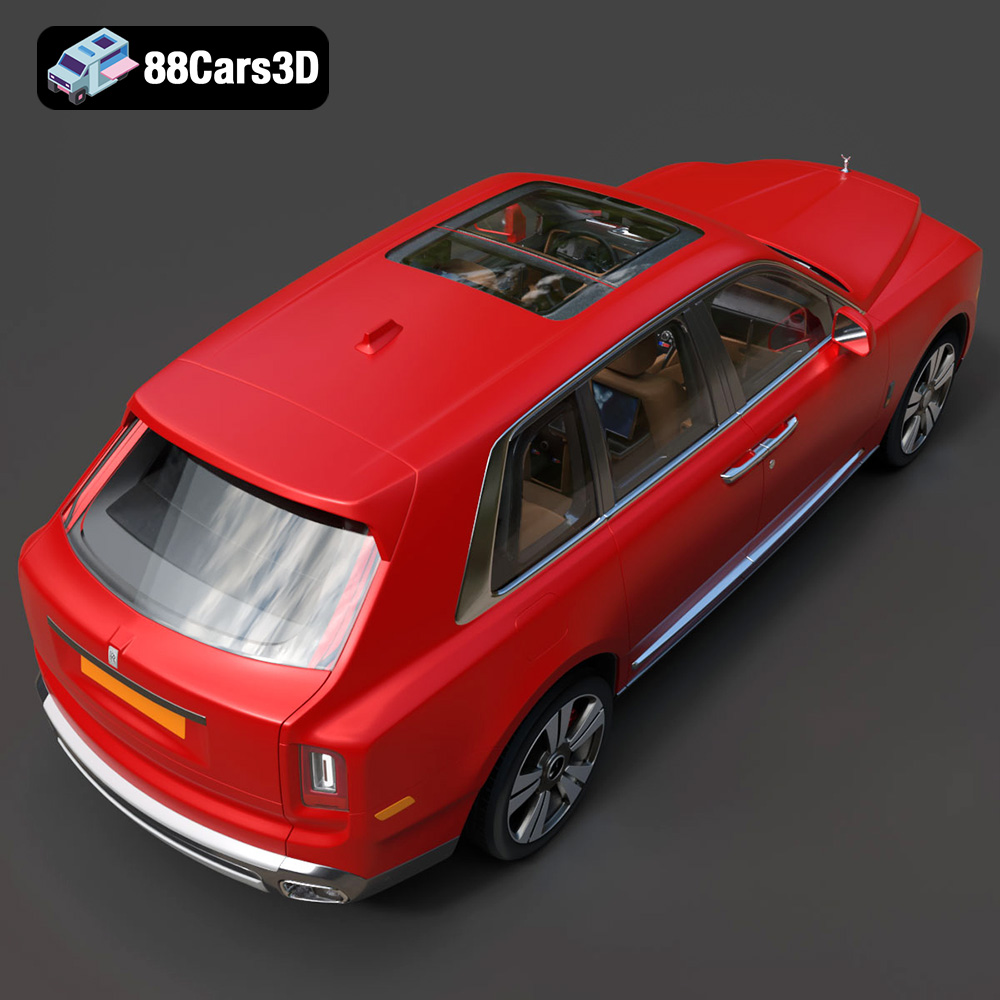
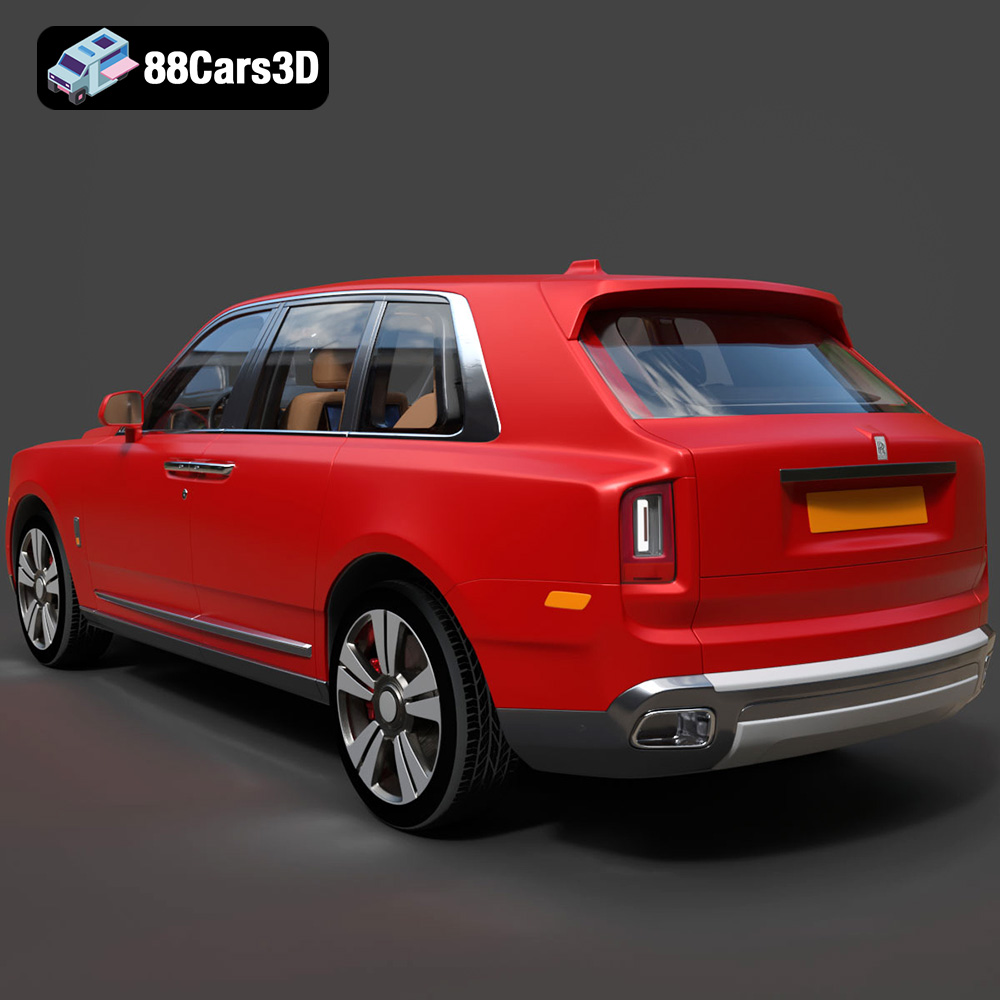
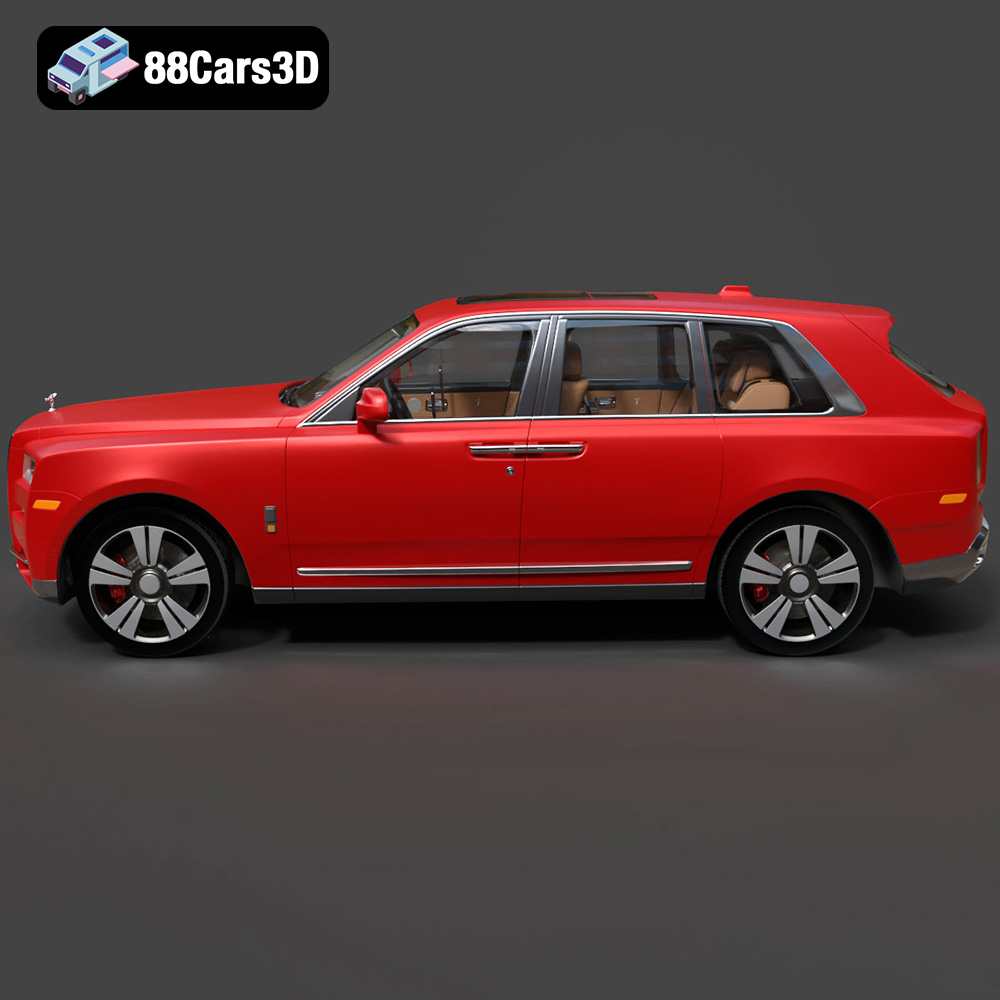
Today, we delve into the specialized realm of high-quality automotive 3D assets, exploring what makes them indispensable for professionals across various industries. We’ll examine the technical specifications, workflow considerations, and diverse applications that elevate a good model to an exceptional one. As a prime example of such excellence, we will frequently reference the **Rolls-Royce Cullinan 2019 3D Model** available on 88cars3d.com, a testament to how sophisticated modeling can capture the ultimate expression of luxury and engineering prowess in a digital format. This model encapsulates the commanding presence, signature Pantheon grille, and iconic Spirit of Ecstasy of the marque’s first-ever SUV, meticulously translated into a game-ready, high-fidelity asset.
The digital automotive industry thrives on realism. Whether it’s for a car configurator, a blockbuster video game, an architectural visualization, or a cutting-edge AR/VR experience, the visual accuracy and technical integrity of a 3D car model directly impact the perceived quality of the final output. A high-fidelity model transcends simple aesthetics; it’s about capturing the essence, the physics, and the minute details that make a vehicle recognizable and desirable.
For automotive manufacturers and marketing agencies, 3D car models are central to their visualization pipelines. They enable stunning product showcases long before a physical prototype exists, offering flexibility for various color schemes, material finishes, and environmental backdrops. Imagine rendering the Rolls-Royce Cullinan 2019 against a dramatic desert landscape or gleaming under studio lights – such scenarios are effortlessly created with a high-quality model. These models must possess accurate geometry, proper material definitions, and a logical UV layout to ensure that textures, reflections, and lighting interact authentically. Without this level of detail, the illusion of realism breaks down, detracting from the brand’s luxury image. Professionals rely on assets that are built to real-world scale, with meticulously replicated exterior features like signature LED headlights, intricate multi-spoke alloy wheels with precise tire tread patterns, and integrated dual exhaust systems.
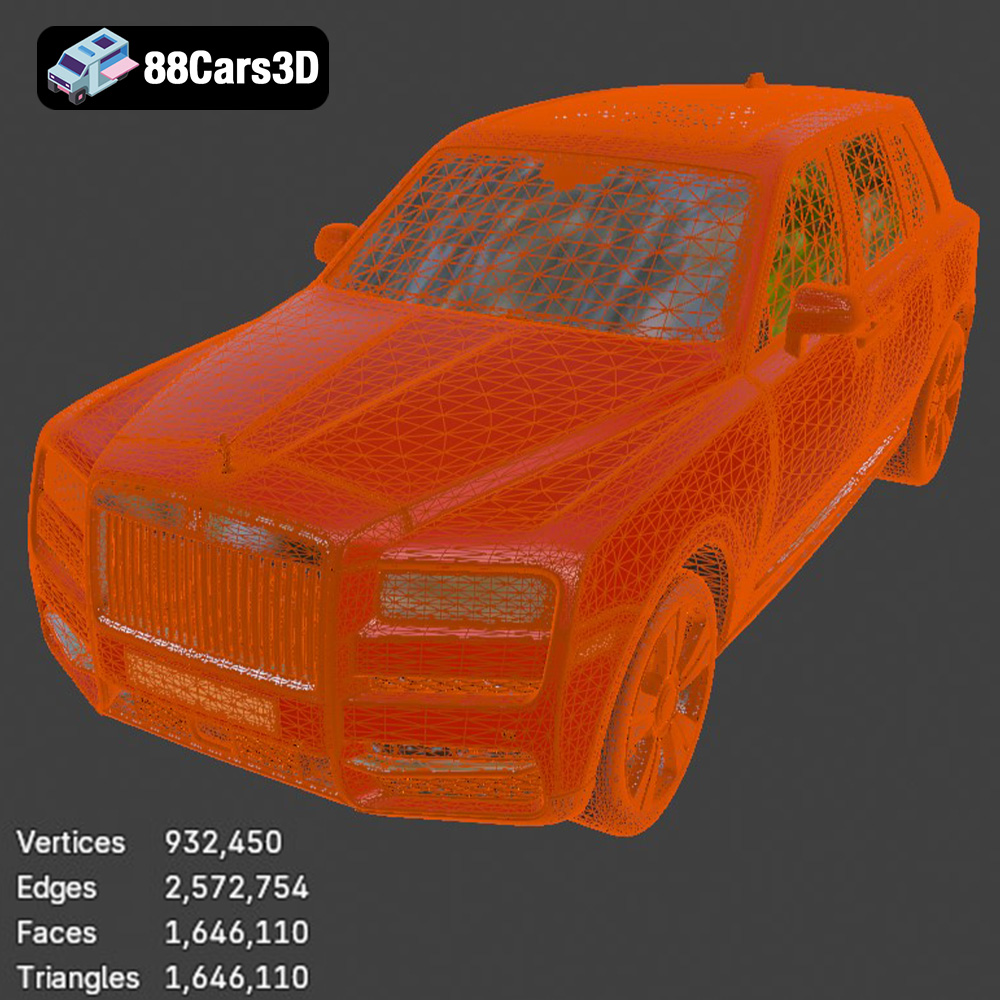
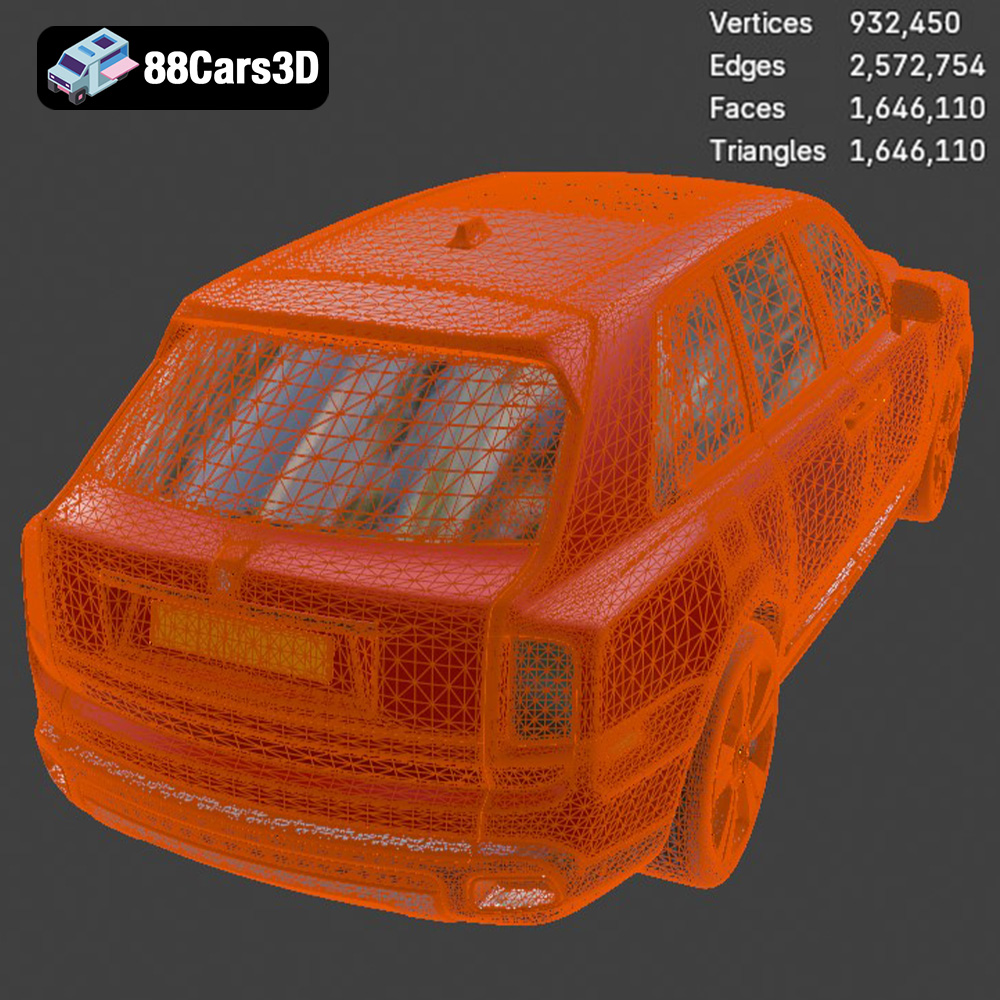
In the world of gaming, AR, and VR, 3D car models are not just visual elements; they are interactive characters. For these real-time applications, a balance between visual fidelity and performance optimization is critical. A model needs to look fantastic while also running smoothly without taxing system resources. The Rolls-Royce Cullinan 2019 3D model, with its impressive 1646110 triangles, strikes this perfect balance. It delivers exceptional visual fidelity suitable for high-end cinematic cutscenes while remaining optimized for game development in engines like Unreal or Unity. This optimization includes crucial elements like proper pivot setups for steering, wheel rotation, and suspension travel, allowing for dynamic and believable animations within an interactive environment. Its detailed cockpit and interior features, including luxurious bespoke leather seating and an accurate instrument cluster, are also optimized for first-person POV, essential for immersive gaming or virtual showroom experiences.
Navigating the diverse landscape of 3D software and applications requires a deep understanding of file formats. Each format serves a specific purpose, offering different levels of data preservation, compatibility, and optimization for particular workflows. Choosing the correct format is crucial for maintaining model integrity, ensuring efficient transfer, and achieving desired results. The Rolls-Royce Cullinan 2019 3D model, for instance, is offered in a comprehensive suite of formats, catering to virtually any professional need.
* .blend (Blender Scene): This is Blender’s native file format. When you receive a .blend file, you are essentially getting the full Blender scene, complete with the model’s geometry, materials, textures, lighting, camera setups, and even animation data if present. It’s fully editable, making it ideal for artists who primarily work in Blender or need to make extensive modifications to the original asset. It ensures the most direct and uncompromised access to the model’s original structure and artistic intent within the Blender ecosystem.
* .max (3ds Max Project): Similar to .blend, the .max format is native to Autodesk 3ds Max. It contains all scene information specific to 3ds Max, including object hierarchy, modifiers, materials (especially V-Ray, Corona, or standard Max materials), lights, and animation. This format is crucial for professionals who use 3ds Max for animation, rendering, or architectural visualization, as it preserves the scene’s setup and allows for seamless integration into existing 3ds Max projects.
* .fbx (Filmbox): Developed by Autodesk, FBX is a highly versatile and widely adopted interchange format. It’s excellent for transferring 3D data between different software applications (e.g., 3ds Max to Unreal Engine, Blender to Unity). FBX supports geometry, materials (though sometimes requiring re-setup in the target application), textures, animation, and rigging. Its robustness makes it the industry standard for game development pipelines (Unreal, Unity) due to its efficient handling of complex scene data and skeletal animations.
* .obj (Wavefront OBJ): This is one of the most universal and oldest 3D file formats. OBJ files primarily store geometry (vertices, normals, texture coordinates, and faces) and can reference external material files (.mtl) for basic color and texture information. While it doesn’t support animation or advanced material properties, its widespread compatibility makes it an excellent choice for simple model transfers between virtually any 3D software. It’s often used as a fallback or for models where only geometry is required.
* .glb (GL Transmission Format Binary): GLB is the binary version of glTF, specifically optimized for web-based 3D, AR, and VR applications. It’s a self-contained format that bundles geometry, materials, textures, and animations into a single file, making it incredibly efficient for streaming and display in browsers or mobile AR/VR environments. Its compact size and ease of integration make it perfect for virtual showrooms, online configurators, and mobile augmented reality experiences, delivering rich 3D content quickly.
* .stl (Stereolithography): STL is the standard file format for 3D printing. It represents a 3D model as a series of connected triangles (a triangulated surface mesh) without any color, texture, or material information. It’s purely about the geometry of the physical object to be printed. The Rolls-Royce Cullinan 2019 model is convertible to .stl, making it suitable for hobbyists or professionals looking to create display-scale physical models.
* .ply (Polygon File Format): PLY is primarily used for storing 3D data from 3D scanners or for CAD/analysis. It can store a variety of properties including color, transparency, normals, texture coordinates, and even data about the reliability of the data. While less common for general-purpose 3D model distribution than FBX or OBJ, it offers precision for complex mesh data and can be valuable in specialized engineering or scientific visualization contexts.
* .unreal (Unreal Engine Asset): While not a single file type in the traditional sense, an “Unreal” asset refers to a model that has been specifically prepared and optimized for direct import into the Unreal Engine ecosystem. This often means the FBX has been imported, materials set up within Unreal’s material editor, collisions defined, and sometimes even Blueprints created. Having an asset already in this format significantly streamlines the development process for Unreal Engine users, as much of the initial setup work has already been done, providing an engine-ready asset for real-time environments.
The choice of file format often dictates the level of detail and specific attributes that are preserved or require re-configuration. For instance, an FBX file might carry basic material definitions, but rendering software like 3ds Max with V-Ray or Blender with Cycles will often require a more robust material setup for photorealistic results, leveraging the native .max or .blend format’s comprehensive material libraries. Understanding these distinctions ensures a smooth workflow, minimizes data loss, and maximizes the utility of your 3D car models. When a marketplace like 88cars3d.com provides multiple formats for a model like the Cullinan, it significantly enhances its value and adaptability across different professional pipelines.
The hallmark of a truly professional 3D asset is not just its visual appeal but its underlying technical integrity. For 3D car models, this means a careful balance between polygon count, texture resolution, and structural organization, especially when destined for real-time applications.
Modern game engines like Unreal Engine and Unity demand highly optimized assets to maintain smooth frame rates and responsive gameplay. This involves careful polygon budgeting, efficient UV mapping, and streamlined material setups. The Rolls-Royce Cullinan 2019 3D model exemplifies this philosophy with 1646110 triangles. This polycount is considered high-end for a game-ready asset, signifying that it’s designed to deliver “exceptional visual fidelity” while remaining performant enough for modern gaming PCs and consoles. It’s ideal for hero vehicles, cinematic sequences, or high-detail vehicle configurators where every curve and reflection matters. For less demanding scenarios or mobile games, developers might use LOD (Level of Detail) systems to dynamically swap in lower-polygon versions of the model as the camera moves further away.
Beyond the raw polycount, the quality of a 3D car model is defined by several critical technical attributes:
* **Real-world Scale Accuracy:** The model must be built to accurate real-world dimensions. This is fundamental for realistic rendering, physical simulations, and seamless integration into virtual environments. The Cullinan model explicitly states “real-world scale accuracy,” ensuring it fits perfectly into any scene.
* **Proper Pivot Setup:** For animation and interactive controls, correctly positioned pivots for wheels, steering components, and suspension are essential. This allows for realistic wheel rotation, independent steering, and dynamic suspension travel, crucial for driving simulators and open-world games.
* **Optimized Geometry:** Clean, quad-based topology (where appropriate), minimal ngons, and efficient edge flow contribute to easier UV unwrapping, smoother deformations during animation, and better subdivision surface performance.
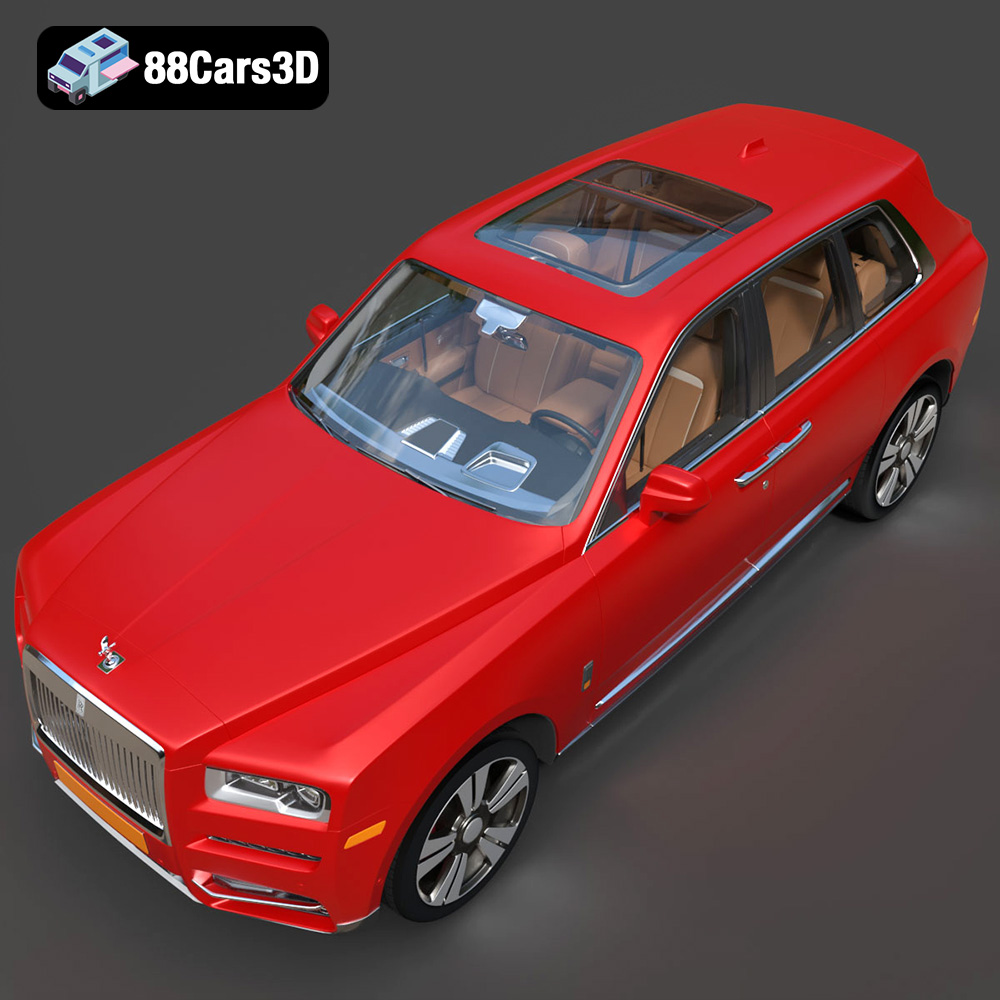
* **Detailed Interior and Exterior:** A truly premium model, such as the Cullinan, features not only an accurate exterior frame geometry but also a detailed 6.75L V12 engine bay, integrated dual exhaust, undercarriage details, and most importantly, a fully modeled cockpit. Luxurious bespoke leather seating, a classic-meets-modern steering wheel, high-fidelity digital and analog instrument clusters, and detailed center console controls are all integral for immersive first-person perspectives.
* **Separate Components for Animation:** The ability to animate individual parts like wheels, suspension, and steering independently offers immense flexibility for game developers and animators. The Cullinan model is built with separate components for this very reason.
The Rolls-Royce Cullinan 2019 3D model truly shines as an example of what a high-quality automotive asset should be. Its technical specifications are meticulously detailed: 1646110 triangles, optimized for real-time engines like Unreal and Unity while maintaining stunning visual realism. The model boasts accurate Rolls-Royce Cullinan 2019 frame geometry, detailed engine bay components, integrated dual exhaust, and precise tire tread patterns on its intricate multi-spoke alloy wheels. Furthermore, the interior is just as detailed, with bespoke leather seating, an accurate steering wheel, and a high-fidelity instrument cluster, all optimized for first-person POV in gaming. This comprehensive approach ensures that the model is not only visually impressive but also functionally robust for a wide range of professional applications.
Acquiring a high-quality 3D car model is just the first step. Integrating it effectively into a professional workflow requires understanding various software packages and rendering techniques. Let’s explore how a model like the Rolls-Royce Cullinan 2019 fits into typical studio pipelines.
Many projects begin with 3D modeling software like Autodesk 3ds Max or Blender. If you start with a generic model and need to refine it, or if you’re using a .max or .blend native file, these programs are your command center.
* **Import and Scale Check:** Upon importing, the first step is always to verify real-world scale accuracy. While the Cullinan model from 88cars3d.com is already built to scale, it’s good practice.
* **Material and Texture Setup:** Even with pre-made materials, artists often need to adapt them to their specific rendering engine (e.g., converting standard materials to V-Ray or Corona materials in 3ds Max, or Cycles/Eevee materials in Blender). This involves adjusting reflections, refractions, glossiness, and normal maps to achieve desired photorealism. For a luxury vehicle like the Cullinan, subtle nuances in paint metallic flake, leather grain, and chrome reflectivity are critical.
* **Rigging and Animation Preparation:** For animated sequences or game integration, ensuring the model’s pivot points for wheels, steering, and suspension are correctly set up (as they are with the Cullinan model) is vital. Further rigging might be required for more complex deformations or interactions.
* **LOD Generation (if necessary):** For games or large scenes, artists might create lower-polygon versions (LODs) of the model in 3ds Max or Blender to optimize performance without sacrificing visual quality at a distance.
For interactive experiences, game engines are the destination. The Rolls-Royce Cullinan 2019 model’s “game-ready & optimized” status makes this transition seamless.
* **FBX Import and Scene Setup:** The .fbx format is the go-to for importing into Unreal Engine or Unity. The model’s clean hierarchy and proper pivot points (as noted for the Cullinan) simplify this process.
* **Material Instancing and Shading:** In game engines, artists often create material instances to easily change properties like body color, rim color, or tire textures, as highlighted in the Cullinan’s customization options. Unreal’s PBR (Physically Based Rendering) workflow allows for highly realistic materials that react correctly to light.
* **Collision Setup:** For vehicles in games, accurate collision meshes are essential for realistic physics and interaction with the environment.
* **Blueprint/Scripting Integration:** In Unreal Engine, Blueprints can be used to set up driving mechanics, steering input, suspension dynamics, and even interactive elements within the cockpit. The Cullinan’s separate components for animation are invaluable here.
For static renders, architectural visualizations, or cinematic sequences, dedicated rendering engines are used.
* **Lighting and Environment:** Setting up realistic lighting is crucial. This often involves HDRIs (High Dynamic Range Images) for environmental lighting and area lights or spot lights to highlight specific features of the car, such as the Cullinan’s signature grille or the interior details.
* **Camera Angles and Depth of Field:** Strategic camera placement and appropriate depth of field help to create artistic compositions that emphasize the luxury and detail of the vehicle.
* **Render Settings and Post-Processing:** Fine-tuning render settings for quality, noise reduction, and speed is an art in itself. Post-processing in tools like Photoshop can add final touches, color grading, and effects to make the image truly pop. The high-fidelity of models like the Cullinan means that even extreme close-ups will hold up to scrutiny in these high-resolution renders.
The utility of a premium 3D car model extends far beyond traditional screen-based rendering and game development. Its accurate geometry and meticulous detail make it suitable for a variety of emerging and specialized applications.
The ability to convert a complex digital model into a physical object via 3D printing opens up new avenues for designers, enthusiasts, and marketing professionals. The Rolls-Royce Cullinan 2019 3D model, for instance, is advertised as convertible to .stl format, directly enabling 3D printing.
* **Prototyping and Display Models:** Automotive designers can print scale models for physical review or presentation. Hobbyists can create highly detailed display pieces. The recommended scales (1:12 / 1:18 / 1:24) for the Cullinan model are perfect for collectible replicas.
* **Technical Considerations:** For successful 3D printing, specific parameters are crucial. The product description highlights recommendations like layer height (0.04–0.12 mm, with resin printing recommended for fine details), wall thickness (1.2–2.0 mm), infill (20–30%), and the necessity of supports for intricate parts like exhausts or mirrors. Proper print orientation (e.g., frame angled, wheels separately) ensures structural integrity and optimal detail.
* **Post-processing:** After printing, models often require post-processing like sanding, priming, and painting to achieve the desired finish, replicating authentic factory colors and metallic sheens. This fusion of digital and physical craftsmanship allows for a tangible appreciation of the model’s design.
Augmented Reality (AR) and Virtual Reality (VR) are transforming how consumers interact with products, especially in the automotive sector. High-quality 3D car models are the backbone of these immersive experiences.
* **Virtual Showrooms and Configurators:** Imagine stepping into a VR showroom and being able to walk around, sit inside, and customize a Rolls-Royce Cullinan 2019 in real-time. This level of immersion, powered by optimized 3D models (especially in .glb format), provides an unparalleled sales and marketing tool. Customers can experience bespoke options before committing to a purchase.
* **Mobile AR Applications:** With a high-quality, optimized 3D model, users can place a virtual Cullinan in their driveway or living room using their smartphone, interacting with it as if it were physically present. This is a powerful tool for brand engagement and pre-visualization.
* **Training and Simulation:** AR/VR experiences can also be used for technical training or driving simulations, allowing users to interact with vehicle components or practice driving in various virtual scenarios. The Cullinan’s detailed interior features, optimized for first-person POV, make it an ideal candidate for such simulations.
A premium 3D car model isn’t just a static asset; it’s a foundation for boundless creative exploration. The versatility and customization options inherent in a well-structured model empower artists and developers to adapt it to an endless array of scenarios, fulfilling unique project requirements.
The Rolls-Royce Cullinan 2019 3D model, like all top-tier assets, provides extensive possibilities for aesthetic modification. This flexibility is crucial for designers aiming to tailor the vehicle to specific brand guidelines, artistic visions, or target demographics.
* **Changing Body/Tank Colors:** One of the most common and impactful customizations is altering the vehicle’s paint. With a properly UV-unwrapped and textured model, artists can effortlessly change the body color, applying everything from authentic factory colors to vibrant custom finishes or even wild artistic liveries. This is facilitated by well-organized materials that allow for easy adjustment of base color parameters within the 3D software or game engine.
* **Modifying Tire Textures:** Beyond color, tire aesthetics play a significant role in defining a vehicle’s character. The ability to swap tire textures, for instance, between sleek street variants and rugged off-road patterns, can dramatically change the perception of the vehicle’s capability and intended use. This often involves swapping out texture maps or adjusting material properties for the tire rubber.
* **Adjusting Material Finishes:** The finish of materials—matte, gloss, metallic, pearlescent—adds another layer of realism and customization. A high-quality model will have materials set up to allow precise control over these properties. Changing a gloss finish to a satin matte or enhancing the metallic flake in the paint can drastically alter the car’s visual impact, making it suitable for different moods or environments within a rendering or game scene. These adjustments typically involve tweaking roughness, metallic, and clearcoat parameters in PBR materials.
The true power of a versatile 3D car model lies in its ability to be integrated into dynamic and interactive scenes. The Cullinan model’s design, with separate components for animation and proper pivot setups, makes it an ideal candidate for such applications.
* **Adapting Lighting for Different Environments:** A car never looks the same under different lighting conditions. A well-constructed 3D model will react realistically to various light sources. Artists can place the Cullinan in a sun-drenched coastal drive, a moody urban night scene, or a brightly lit studio, and the model’s materials will interact authentically with the environmental lighting, reflecting the mood and time of day. This flexibility is essential for creating diverse visual narratives for marketing campaigns or game levels.
* **Animation for Cinematics and Gameplay:** The included separate wheels, suspension, and steering components are invaluable for animators and game developers. This modularity allows for realistic driving animations, suspension compression over rough terrain, and accurate steering movements without complex rigging from scratch. Imagine the Cullinan smoothly navigating an off-road track in a game, or executing a dramatic turn in an automotive commercial – these dynamic actions are made possible by the model’s thoughtful engineering.
* **Integration into Complex Scenes:** Whether it’s populating an open-world game, adding a luxury vehicle to an architectural visualization of a grand estate, or featuring it in an AR/VR experience, the model’s game-ready optimization and real-world scale ensure seamless integration. It acts as a powerful hero asset, drawing attention and adding a layer of realism and prestige to any digital environment.
In the fast-evolving landscape of digital content creation, the importance of high-quality 3D car models cannot be overstated. They are the backbone of photorealistic renders, immersive interactive experiences, engaging game environments, and tangible 3D prints. From the intricate details of a car’s engine bay to the luxurious textures of its interior, every element must be meticulously crafted and technically optimized to meet the exacting standards of modern professionals.
The **Rolls-Royce Cullinan 2019 3D Model**, available at 88cars3d.com, stands as a prime example of such an asset. Its impressive 1646110 triangles, combined with game-ready optimization and a comprehensive suite of file formats (including .blend, .fbx, .obj, .glb, .stl, .ply, .unreal, and .max), demonstrate a commitment to both visual fidelity and practical utility. Whether your project involves creating cinematic visualizations, developing an open-world game, designing an AR/VR configurator, or even 3D printing a scale model, this asset provides the precision and versatility needed to achieve exceptional results.
Investing in premium 3D car models from reputable sources like 88cars3d.com significantly streamlines production workflows, reduces development time, and ultimately elevates the quality of your final output. It’s an investment not just in a digital file, but in the foundation of your next groundbreaking project, enabling you to drive digital dreams into stunning reality.
Experience the ultimate expression of luxury with the Rolls-Royce Cullinan 2019. As the marque’s first-ever SUV, the Cullinan redefines opulence with its commanding presence, signature Pantheon grille, iconic Spirit of Ecstasy hood ornament, and imposing silhouette. Powered by a formidable 6.75-liter twin-turbocharged V12 engine, its design seamlessly blends aristocratic elegance with rugged off-road capability. This premium 3D model boasts an impressive 1646110 triangles, delivering exceptional visual fidelity and uncompromising detail. Expertly modeled with game-ready optimization in mind, it provides the perfect balance between high-end aesthetic appeal and performance for diverse applications, including game development, high-end AR/VR experiences, architectural visualization, and cinematic animations. Perfect for luxury lifestyle renderings, automotive configurators, open-world video games, and VIP virtual environments.
$80.50
.2019
.blend
.cullinan
.fbx
.glb
.luxury suv
.max
.obj
.ply
.rendering
.stl
.unreal
car-3d-model
game asset
game-ready
low-poly
optimized
rolls-royce
SUV
VR/AR