Get 20% OFF All Premium 3D & STL Models!

In the dynamic realm of 3D visualization, the demand for meticulously crafted assets continues to grow across industries. From sprawling open-world games and immersive virtual reality experiences to photorealistic architectural visualizations and engineering simulations, the underlying quality of 3D models dictates the success of a project. Nowhere is this more apparent than in the specialized niche of heavy machinery, where accuracy, functionality, and performance optimization are paramount.
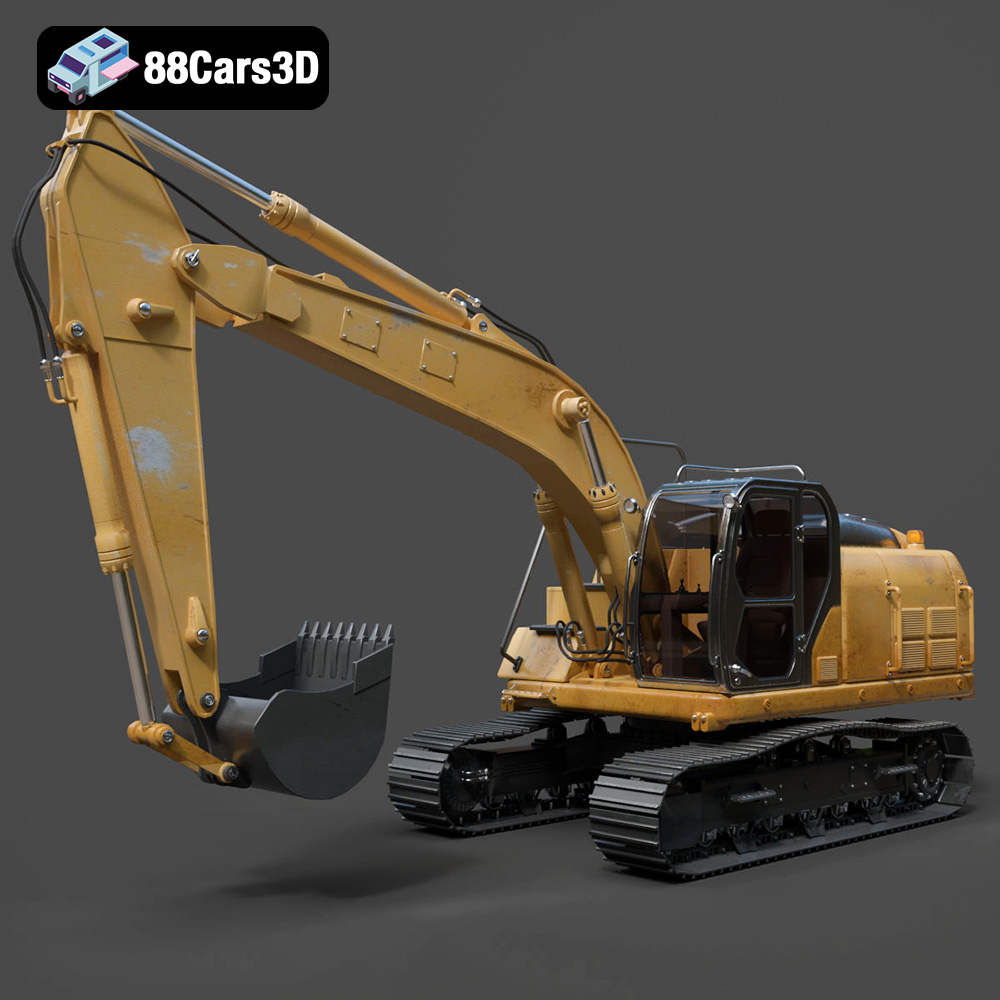
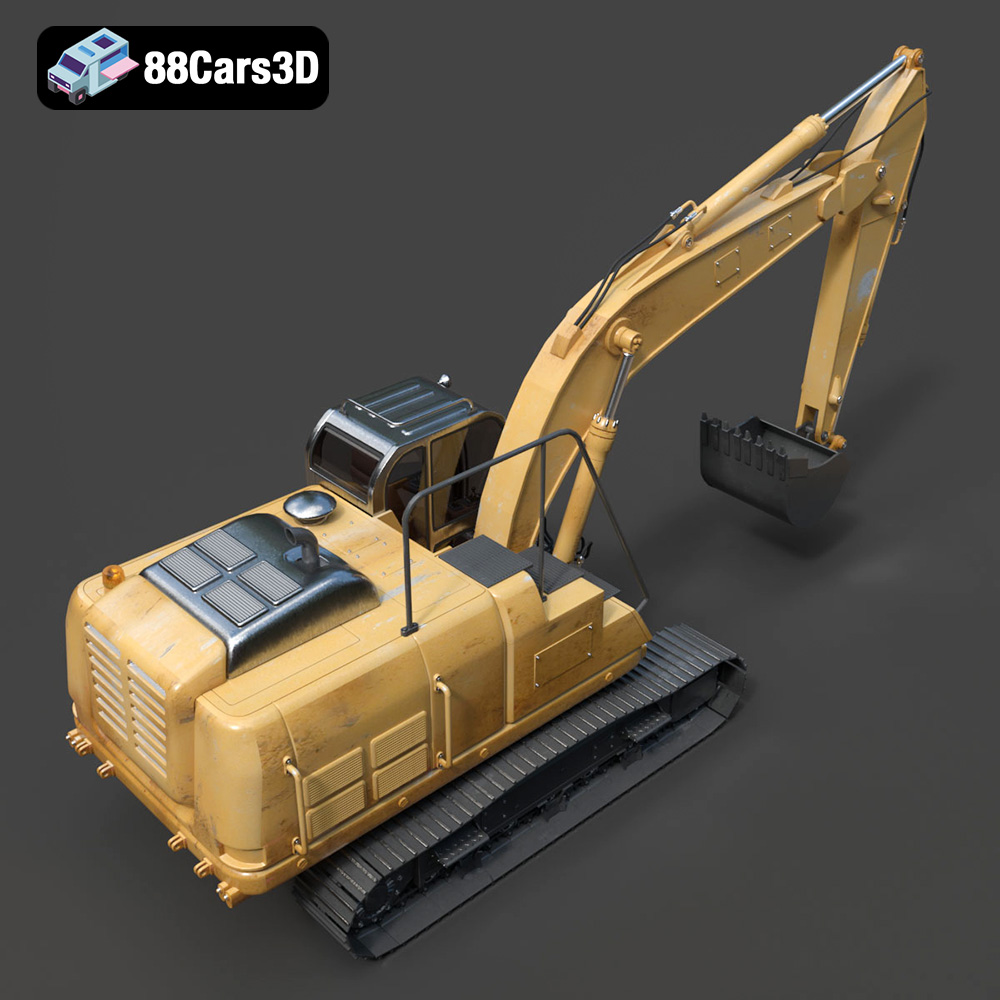
Today, we’re delving into a prime example of such an asset: the Track Excavator 3D Model. This formidable digital asset is not just a visual representation; it’s a comprehensive tool designed to integrate seamlessly into a multitude of professional pipelines. With its detailed geometry, game-ready optimization, and availability in a wide array of formats, this Track Excavator 3D Model exemplifies the type of high-utility heavy machinery 3D model that professionals seek to elevate their projects, whether for automotive rendering contexts, industrial simulations, or interactive experiences.
The versatility of a 3D model is often defined by the file formats it supports. Different formats are optimized for various purposes, from retaining full scene data for editing to providing lightweight, optimized meshes for real-time applications or precise data for 3D printing. The Track Excavator 3D Model offers an extensive suite of formats, ensuring maximum compatibility and utility across diverse professional workflows. Understanding each format’s strengths is key to leveraging the model to its fullest potential.
The .blend format is the native file type for Blender, a powerful and increasingly popular open-source 3D creation suite. When you download the Track Excavator 3D Model in .blend, you receive a complete Blender scene. This means all geometry, materials (often set up with PBR shaders), textures, lighting, camera setups, and even animation data are preserved. For artists working primarily in Blender, this is invaluable, allowing for immediate customization, re-texturing, rigging adjustments, and rendering without any import/export issues. It provides the highest level of editability for Blender users, making it ideal for those who want to integrate the excavator into complex Blender-based animations or scene compositions.
FBX (Filmbox) is an industry-standard proprietary file format developed by Autodesk, widely used for exchanging 3D data between different software applications. Its strength lies in its ability to store not just mesh data, but also materials, textures, animations (skeletal and blend shapes), cameras, and lights in a single file. This makes the .fbx version of the Track Excavator 3D Model perfect for game development. Engines like Unreal Engine and Unity have robust FBX importers, allowing developers to bring in the excavator with its rigging, animations, and PBR materials largely intact, ready for real-time interaction and deployment in construction simulators or virtual environments.
OBJ (or .obj) is one of the oldest and most widely supported 3D file formats. It’s a simple, universal format primarily focused on storing geometry data (vertices, normals, UV coordinates, and faces). While it can reference external material files (.mtl) for basic color and texture information, it doesn’t typically store complex PBR material networks, rigging, or animation data. The .obj version of the Track Excavator 3D Model is excellent for basic mesh import into virtually any 3D software for rendering or further modeling, providing a reliable fallback for cross-software compatibility when complex features aren’t required, or if the user prefers to set up materials from scratch.
GLB (GL Transmission Format Binary) is a relatively newer format specifically designed for efficient transmission and loading of 3D scenes and models in web and real-time applications. It’s a binary container format that includes geometry, materials, textures, animations, and other scene data in a single, self-contained file. The .glb version of the Track Excavator 3D Model is highly optimized for AR/VR applications, web-based configurators, and quick previews in browsers. Its single-file nature simplifies asset management and reduces load times, making it perfect for interactive virtual showrooms or training modules where immediate deployment is crucial.
STL (STereoLithography) is the de facto standard file format for 3D printing. It represents a 3D model as a series of connected triangles, describing only the surface geometry of an object without color, texture, or other model attributes. For hobbyists or professionals looking to physically manifest the Track Excavator, the .stl format is essential. It provides the raw mesh data necessary for slicer software to prepare the model for additive manufacturing, allowing for the creation of scale models for display or prototyping. The product description details specific print settings, emphasizing its readiness for physical fabrication.
PLY (Polygon File Format or Stanford Triangle Format) is another format used for storing 3D data, particularly from 3D scanners. It supports a wider range of properties than .obj or .stl, including color, transparency, normals, texture coordinates, and often can represent point clouds as well as polygonal meshes. While less common for general 3D model distribution than FBX or OBJ, its inclusion for the Track Excavator 3D Model can be beneficial for precision engineering applications, CAD integration, or specific scientific visualization or analysis tasks where detailed mesh information beyond basic geometry is required.
The “.unreal” format likely refers to an asset specifically prepared or packaged for direct integration into Unreal Engine projects. This might include pre-configured Blueprints, material instances, collision meshes, LODs (Levels of Detail), and optimized textures, all set up to meet Unreal’s specific requirements. This direct engine-ready format significantly streamlines the workflow for Unreal developers, minimizing the setup time and ensuring the Track Excavator 3D Model performs optimally within the engine’s real-time rendering pipeline, making it a truly ‘plug-and-play’ solution.
Similar to .blend for Blender, .max is the native file format for Autodesk 3ds Max, another industry-leading 3D modeling, animation, and rendering software. The .max file contains the complete scene data, including geometry, materials, textures, lights, cameras, modifiers, and animation curves. For professionals using 3ds Max, this provides full access to the original scene, enabling comprehensive customization, advanced rigging, high-end rendering with V-Ray or Corona, and complex animation sequences. The Track Excavator 3D Model in .max format offers unparalleled flexibility for users dedicated to the 3ds Max ecosystem, including those performing detailed automotive rendering scenes that might feature heavy machinery.
Beyond file formats, the true value of a 3D model lies in its inherent quality and technical specifications. The Track Excavator 3D Model from 88cars3d.com is a testament to meticulous craftsmanship, built to deliver unparalleled industrial authenticity without compromising performance. Its design philosophy expertly balances visual fidelity with real-time optimization, making it a standout asset for diverse applications.
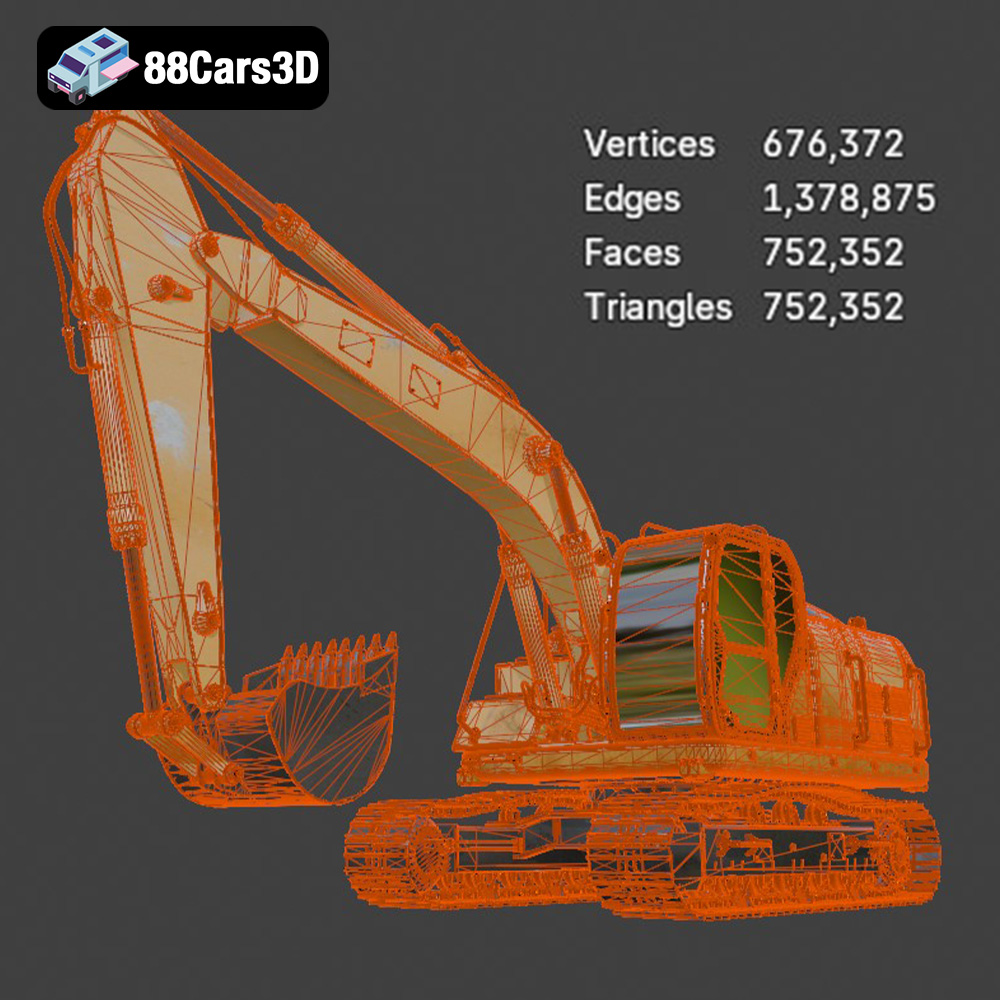
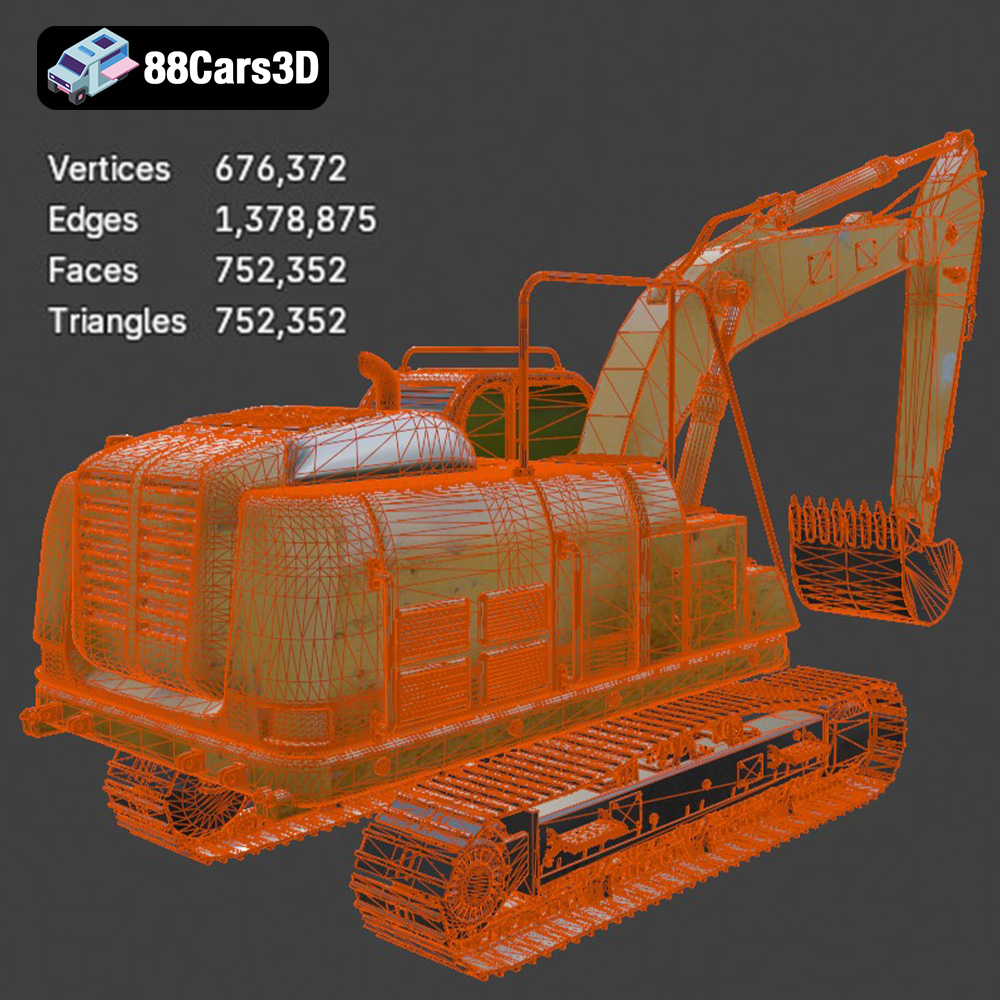
With a robust triangle count of 752,352, this Track Excavator 3D Model strikes a perfect balance for professionals. This figure is substantial enough to capture the intricate details expected of heavy machinery – the subtle curves of the boom, the texture of the engine housing, and the individual links of the tracked undercarriage – yet it remains within a game-ready optimization threshold. This careful consideration ensures that the model performs smoothly in demanding real-time environments like game engines (Unreal, Unity) or AR/VR simulations, preventing performance bottlenecks while still delivering a high-end visual experience. Clean topology, implied by its “game-ready” status, further aids in efficient rendering and deformation during animation.
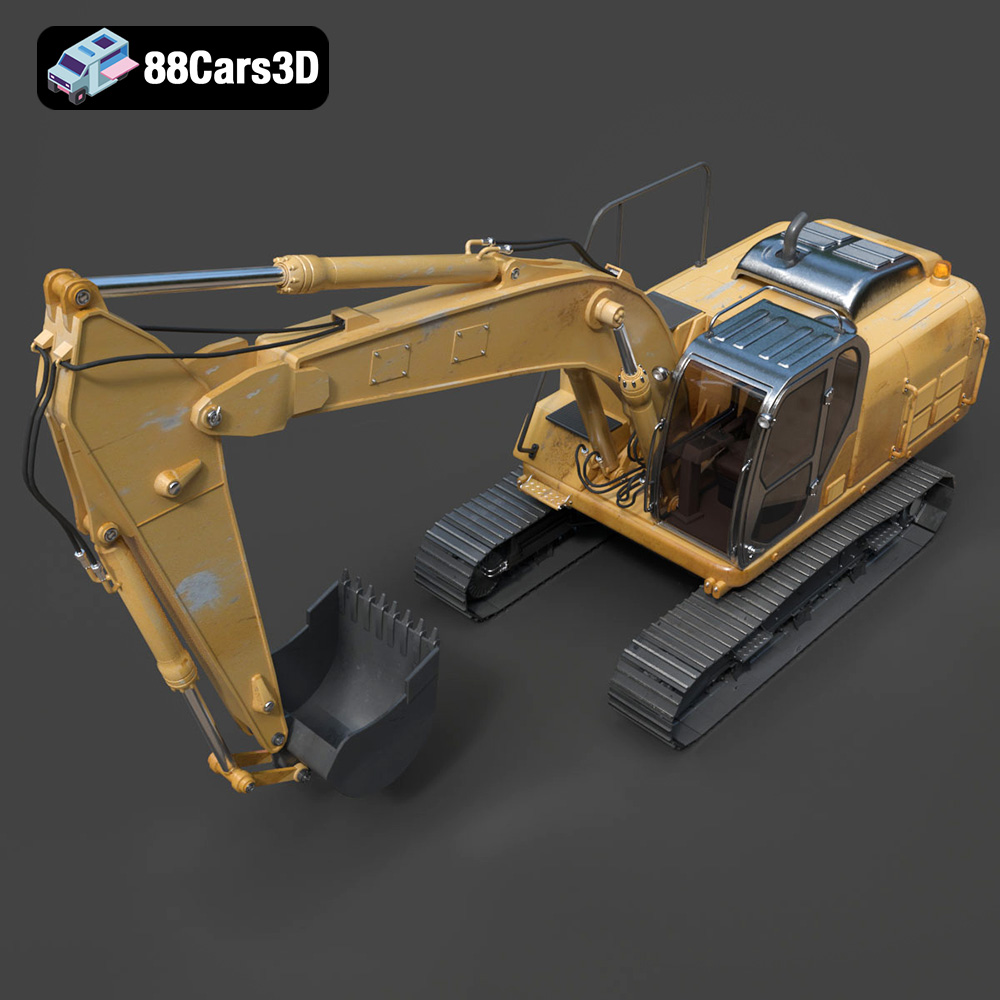
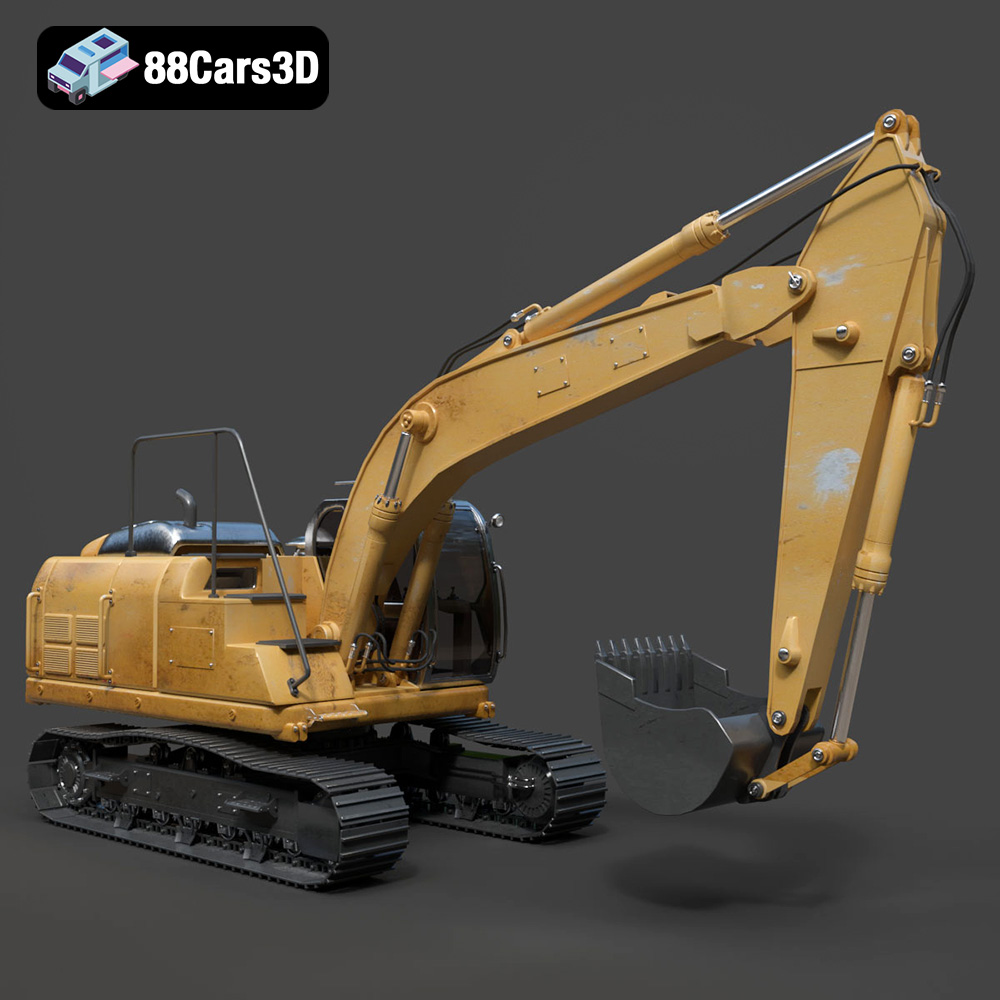
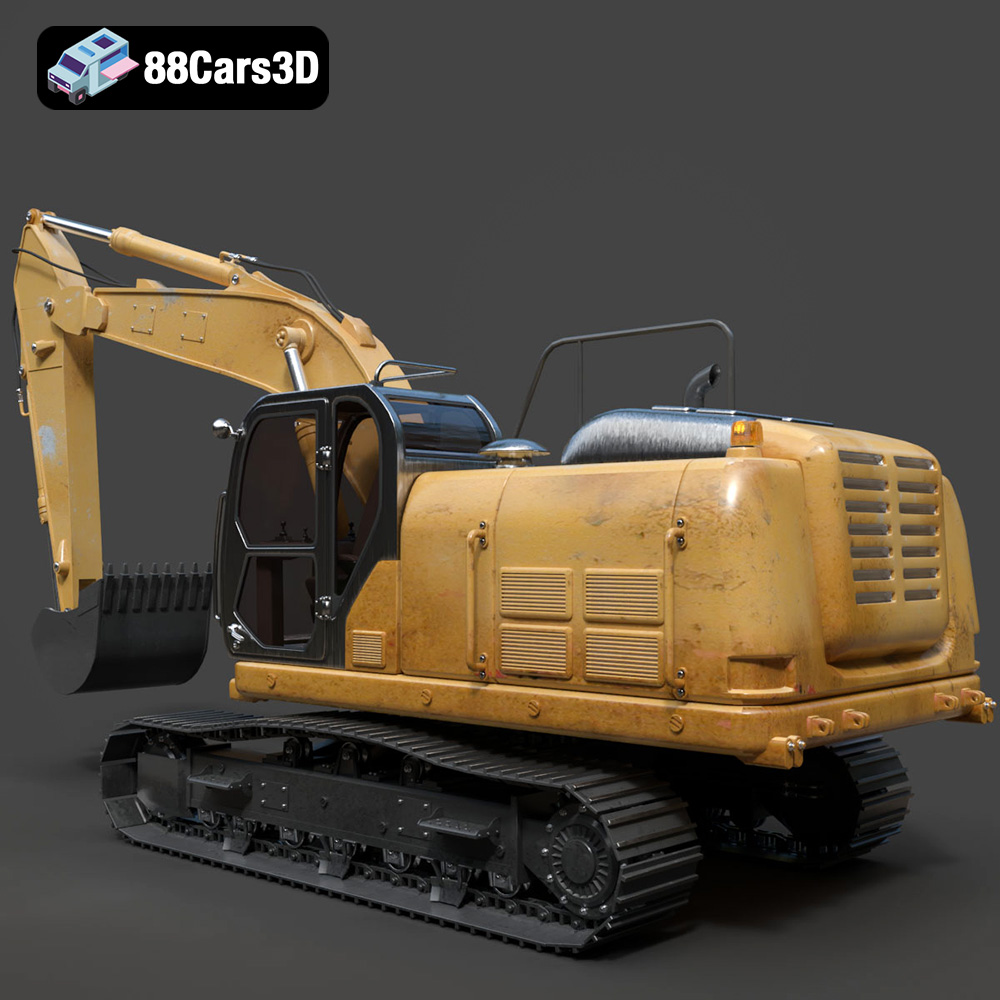
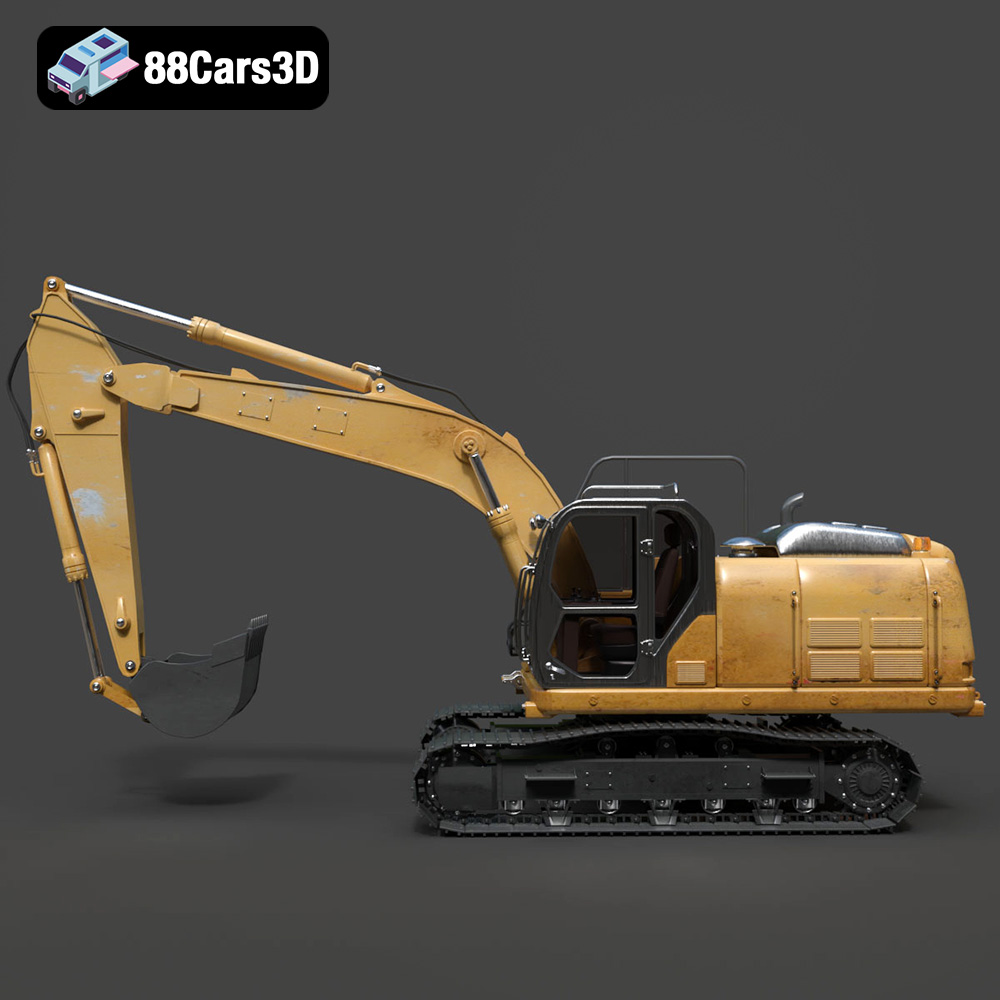
The true power of this excavator model lies in its articulated design. Key components such as the tracks, turntable, boom, stick, and bucket are modeled as separate, distinct objects. This separation is crucial for animation, allowing each part to move independently, replicating the complex hydraulic actions of a real-world excavator. The model also boasts a proper pivot setup, which is fundamental for realistic turntable rotation, hydraulic arm movement, and the scrolling action of the tracks. The intricate hydraulic system, complete with lines, hoses, and pistons, is faithfully recreated, enhancing the mechanical realism. Furthermore, the model’s real-world scale accuracy, based on actual heavy machinery blueprints, ensures it will integrate seamlessly into any scene without scale discrepancies, whether alongside other industrial equipment or 3D car models.
No detail has been overlooked in the pursuit of authenticity. The exterior features are comprehensive, including an accurate chassis, heavy-duty proportions, detailed engine housing with cooling ventilation, and realistic industrial lighting setups with work lights and beacons. The tracked undercarriage is highly detailed, featuring individual track links and rollers, a common challenge in 3D modeling that this asset addresses with precision. The reinforced bucket exhibits realistic wear details and digging teeth, adding to its rugged character. Moving to the interior, the operator’s cabin is equally impressive. It features an industrial operator seat with suspension details, a dual joystick control configuration, foot pedals, and a digital instrument cluster. Safety grilles and a robust ROPS (Roll-Over Protective Structure) design complete the cabin, with optimized geometry specifically tailored for first-person POV in operating simulators, providing an immersive and functional environment for virtual operators.
The versatility and technical quality of the Track Excavator 3D Model make it an indispensable asset across various professional domains. Its meticulous design allows for seamless integration and optimal performance in diverse project pipelines.
For game developers, the Track Excavator 3D Model is a boon. Utilizing the .fbx or the dedicated .unreal format, developers can easily import the model into engines like Unreal Engine and Unity. The game-ready optimization ensures minimal performance impact, critical for maintaining high frame rates in complex game environments. Developers can leverage the separated components and proper pivot setups to create intricate animation blueprints, allowing players to control the boom, stick, bucket, and tracks dynamically. Setting up physically based rendering (PBR) materials is straightforward, bringing the realistic textures and wear details to life within the game engine. This model is ideal for construction simulators, where accurate heavy machinery is vital, or for adding environmental realism to industrial-themed open-world games and strategy titles. It offers an authentic touch that elevates the realism of any virtual construction site.
When it comes to high-fidelity rendering for presentations, marketing materials, or detailed industrial visualizations, the Track Excavator 3D Model excels. With native .max and .blend files included, artists working in 3ds Max or Blender have full access to the scene, allowing for advanced rendering techniques. They can set up sophisticated lighting scenarios, from realistic HDRI environments mimicking construction sites to controlled studio lighting for product showcases. Using renderers like V-Ray, Corona, Cycles, or Eevee, artists can generate photorealistic images and animations. The customization options for materials – changing body colors, adjusting wear and tear, and modifying finishes – provide immense flexibility to match specific project requirements. This makes it an invaluable asset for corporate presentations, showcasing new construction projects, or creating compelling visual narratives around heavy equipment alongside other high-quality 3D car models.
The burgeoning fields of Augmented Reality (AR) and Virtual Reality (VR) demand highly optimized yet visually rich 3D assets. The Track Excavator 3D Model, particularly in its .glb format, is perfectly suited for these immersive applications. Its balanced poly count ensures smooth performance within AR/VR headsets and mobile devices, crucial for comfortable and responsive user experiences. For operator training, this model provides an incredibly realistic and interactive platform. Trainees can virtually operate the excavator, learning controls and procedures in a safe, cost-effective environment. In virtual showrooms or technical configurators, the model allows potential buyers to explore the machinery in detail, interacting with its components and even customizing finishes in real-time, offering a truly engaging and innovative way to present industrial equipment.
The utility of a high-quality 3D model extends beyond digital screens. For enthusiasts, educators, or design validation, the ability to transform a digital asset into a physical object via 3D printing is a significant advantage. The Track Excavator 3D Model is fully prepared for this transition.
The inclusion of the .stl and .ply formats is critical for 3D printing. The .stl format is universally recognized by 3D printing software (slicers) and provides a tessellated representation of the model’s surface geometry. This ensures that the physical print accurately reflects the digital design. The .ply format, offering potentially more detailed mesh data, can also be useful for certain precision-oriented printing tasks or for quality control. Before printing, users can scale the model to desired dimensions, with recommended scales like 1:35, 1:50, or 1:87 allowing for hobby-grade display models or architectural miniatures. The robust and watertight geometry of the Track Excavator 3D Model ensures a clean transition from digital mesh to physical layers, minimizing printing errors.
Achieving a high-quality physical print requires attention to detail. The product description provides excellent guidelines: a layer height of 0.04–0.12 mm is recommended, with resin printing suggested for capturing the fine details like hydraulic lines. Proper wall thickness (1.2–2.0 mm) ensures structural integrity, while a 20–30% infill provides a good balance of strength and material efficiency. Supports are required for complex parts like the boom, bucket, tracks, and cabin, especially during resin printing where overhangs can sag. Strategic print orientation – printing the main chassis angled and the tracks and boom separately – can enhance structural integrity and print quality. After printing, post-processing steps like sanding, priming, and painting with authentic industrial colors (yellow/orange) and weathering effects can bring the miniature excavator to life, making it a perfect display piece for heavy machinery hobbyists or an educational tool.
A truly professional 3D model isn’t just about static perfection; it’s about adaptability. The Track Excavator 3D Model offers extensive customization options, allowing artists and developers to tailor it precisely to the needs of their specific projects, whether they involve detailed 3D car models or industrial equipment.
The ability to easily modify materials and colors is a significant advantage. Users can change the main body colors from standard industrial yellow to custom corporate liveries or any other desired aesthetic. This is invaluable for branding, architectural visualizations that require specific color palettes, or game levels with distinct faction themes. Furthermore, artists can adjust the material wear and tear, presenting the excavator as factory new, lightly used, or heavily weathered and muddy from prolonged work on a construction site. This level of control over surface finishes, from matte paint to glossy decals and bare metal hydraulics, allows for incredible visual storytelling and enhances the realism of any scene. 88cars3d.com provides this foundation of quality for easy adaptation.
Beyond surface properties, the Track Excavator 3D Model is designed for flexible environmental integration. Its realistic lighting setup, including work lights and beacons, can be adapted for various scenarios – bright daytime construction, dimly lit night shifts, or even moody cinematic renders. This flexibility allows the model to seamlessly fit into diverse scenes, from bustling urban construction sites and remote mining operations to disaster relief scenarios or futuristic industrial complexes. The robust design and meticulous details ensure that regardless of the environmental context or lighting conditions, the excavator maintains its visual integrity and compelling presence, making it a highly versatile asset for any professional project requiring detailed heavy machinery assets.
The demand for high-quality, versatile 3D models continues to define success in diverse digital and physical applications. The Track Excavator 3D Model stands as a testament to what meticulous craftsmanship and technical foresight can achieve. From its balanced geometry and game-ready optimization to its intricately detailed mechanical components and operator cabin, every aspect of this model has been designed for professional utility.
Its comprehensive file format support ensures seamless integration into any workflow, whether you’re animating in Blender or 3ds Max, developing real-time experiences in Unreal Engine or Unity, creating immersive AR/VR training simulations, or even embarking on the exciting journey of 3D printing. The flexibility to customize materials, colors, and wear provides artists with the creative freedom to adapt the excavator to any project vision, making it an invaluable asset for industrial visualization, game development, or architectural contexts.
Ultimately, investing in high-quality 3D models like this Track Excavator elevates the standard of your projects, saving valuable development time and ensuring a visually superior outcome. Explore this exceptional model and discover other professional 3D car models and industrial assets at 88cars3d.com, your trusted source for premium digital assets that empower creativity and innovation.
The Track Excavator is a powerhouse of modern heavy machinery, designed for demanding construction, mining, and earthmoving tasks. This highly detailed 3D model captures the rugged essence of industrial equipment, featuring a robust tracked undercarriage, an intricately modeled hydraulic boom and stick assembly, and a heavy-duty bucket. Every visual element, from the ventilated engine housing and heavy counterweight to the reinforced operator cabin, has been faithfully recreated to deliver unparalleled industrial authenticity. Boasting a highly detailed geometry with a triangle count of 752,352, this model ensures uncompromising visual fidelity while retaining game-ready optimization. Whether deployed in a real-time game engine, utilized for immersive AR/VR training simulations, or featured in high-end pre-rendered industrial animations, this asset guarantees a premium visual standard without sacrificing performance.
$50.00
.blend
.fbx
.glb
.industrial
.max
.obj
.ply
.rendering
.stl
.unreal
3d model
construction-equipment
game asset
game-ready
heavy-machinery
optimized
track-excavator
VR/AR