Get 20% OFF All Premium 3D & STL Models!

The world of 3D modeling has revolutionized how we interact with design, engineering, and entertainment. From breathtaking cinematic sequences to immersive virtual realities and the cutting edge of real-time game engines, high-fidelity 3D assets are the foundation of digital innovation. Among the most challenging yet rewarding subjects to capture in this domain are automobiles, vehicles that encapsulate both mechanical precision and aesthetic brilliance. Today, we delve into the intricate process of bringing such a marvel to life digitally, focusing on a truly exceptional example: the Audi RS7 Sportback 2020 3D model.
The Audi RS7 Sportback 2020 is not merely a car; it’s a statement. Its aggressive stance, sweeping roofline, and the raw power of its twin-turbo V8 command attention on the road. Translating this commanding presence into a digital asset demands unparalleled attention to detail, technical prowess, and an understanding of diverse application needs. A premium 3D model of this iconic vehicle provides artists, developers, and designers with an invaluable tool, ready for deployment across a spectrum of professional projects.
Creating a photorealistic 3D car model is a complex endeavor that marries artistic vision with rigorous technical execution. It requires more than just replicating shapes; it involves understanding material properties, light interaction, and the underlying engineering that defines a vehicle’s character. High-quality 3D car models serve as the backbone for various industries, enabling everything from pre-visualization for automotive designers to crafting exhilarating racing simulations.
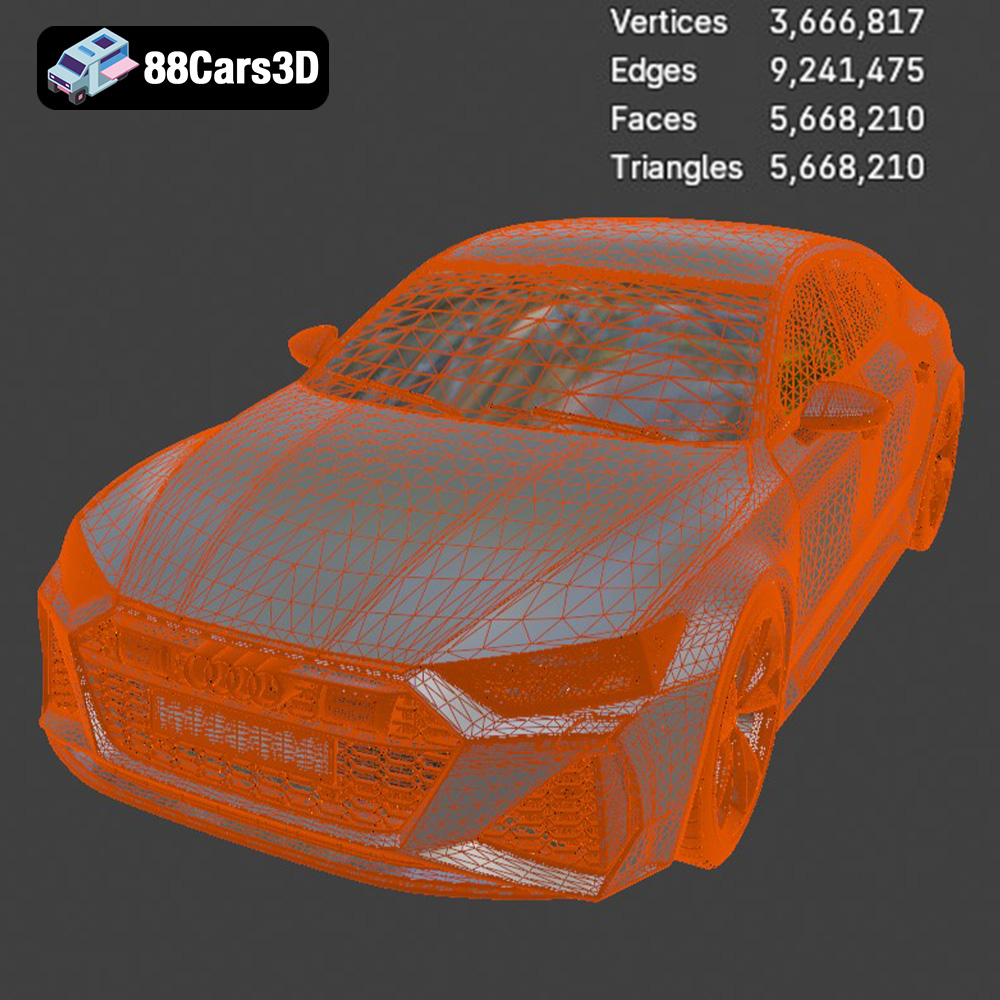
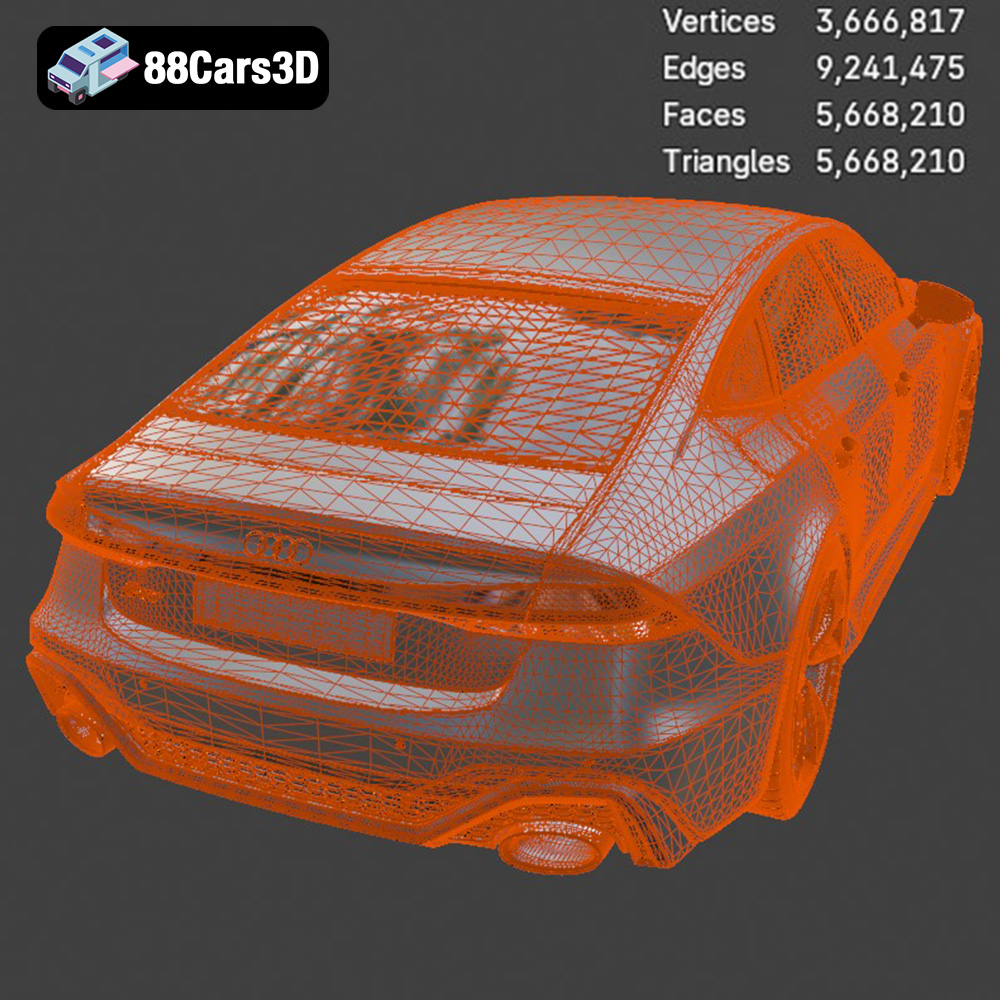
The cornerstone of a convincing 3D model is its topology – the arrangement of vertices, edges, and faces that form the mesh. For automotive subjects like the Audi RS7 Sportback 2020, achieving smooth, flowing surfaces without artifacts is paramount. This demands meticulous edge flow, ensuring that reflections behave correctly across curved panels and that deformation for animation is clean. A high-polygon count, such as the 5,668,210 triangles found in the Audi RS7 Sportback 2020 model, allows for the capture of nuanced details like subtle body lines, intricate grille patterns, and the precise contours of headlights and taillights.
Beyond the raw polycount, the efficiency of the topology is crucial. “Game-ready optimization principles” are not just about reducing polygons, but about structuring them intelligently. This means using quad-dominant meshes where possible, minimizing N-gons, and ensuring UV mapping is clean and non-overlapping. These practices streamline texturing workflows and improve performance in real-time engines, even for highly detailed assets.
An automotive 3D model isn’t just a static sculpture; it often needs to convey motion, power, and dynamism. This necessitates careful attention to components that contribute to both performance and aesthetics. For instance, the detailed 4.0-liter twin-turbo TFSI V8 engine bay elements, the signature RS sport oval twin-exhaust system, and the high-performance alloy wheels wrapped in accurately treaded tires are not just visual flair. They are functional components that speak to the vehicle’s engineering. Separately modeled wheels, suspension, and steering components with proper pivot setups are critical for realistic animation, allowing for accurate rotation, suspension travel, and steering input. This level of technical consideration ensures that the digital Audi RS7 Sportback 2020 can perform as authentically as it looks.
Choosing the correct 3D model file format is a critical decision in any professional workflow, directly impacting compatibility, functionality, and optimization for specific applications. The Audi RS7 Sportback 2020 3D model from 88cars3d.com offers a comprehensive suite of formats, each serving distinct purposes. Understanding their technical nuances is key to leveraging your assets effectively.
The .blend file format is native to Blender, an incredibly versatile open-source 3D creation suite. A .blend file typically encapsulates an entire scene, including mesh data, materials (often using Blender’s Principled BSDF shader for PBR workflows), textures, lighting, cameras, animation data, and even physics simulations. This format is ideal when Blender is your primary DCC (Digital Content Creation) tool, providing full editability and access to all the model’s raw components and scene setup. It allows for advanced non-destructive workflows, node-based materials, and seamless integration with Blender’s extensive add-on ecosystem. For artists primarily working within Blender, this is the most flexible and robust format, preserving all the nuances of the original creation.
FBX (Filmbox) is a proprietary file format developed by Autodesk, serving as one of the most widely adopted interchange formats in the 3D industry. It excels at transferring 3D model data, including geometry, materials, textures, bone skeletons, skinning, and most importantly, animation data, between different 3D software applications and game engines like Unreal Engine and Unity. Its strength lies in its ability to preserve complex scene hierarchies and animation curves, making it indispensable for character animation, vehicle rigging, and game asset pipelines. While highly versatile, users should be mindful of version compatibility and potential discrepancies in material interpretation between different software packages, often requiring re-setup of shaders in the target application.
OBJ (or Wavefront OBJ) is one of the oldest and most universally supported 3D file formats. It’s a simple, text-based format primarily used to store 3D geometry (vertices, normals, texture coordinates, and faces). Material properties are typically referenced in a companion .mtl (Material Template Library) file, which defines basic color, specular, and transparency properties, often requiring a full material re-creation in the destination software for PBR workflows. OBJ’s strength lies in its widespread compatibility, making it a reliable choice for transferring static mesh data between almost any 3D application. However, it does not support animation, rigging, or scene hierarchy, limiting its use for complex animated assets.
GLB (GL Transmission Format Binary) is the binary version of glTF, a royalty-free specification for 3D scenes and models. GLB is specifically optimized for efficient transmission and loading of 3D content in web browsers, AR (Augmented Reality), and VR (Virtual Reality) applications. It bundles all necessary assets—geometry, materials, textures, animations—into a single, self-contained file, reducing requests and improving loading times. GLB natively supports PBR materials and is designed for modern real-time rendering pipelines, making it the go-to format for interactive 3D content on the web and mobile platforms.
STL (STereoLithography) is the de facto standard file format for 3D printing. It represents a 3D model as a series of connected triangles, defining only the surface geometry of an object without color, texture, or other CAD attributes. For successful 3D printing, the STL model must represent a “watertight” mesh, meaning it has no holes or gaps, ensuring a manifold surface. The Audi RS7 Sportback 2020 model, when converted to .stl, becomes ready for physical production, ideal for display-scale hobbyists or rapid prototyping. Careful attention to scale, wall thickness, and print orientation is required when preparing an STL for printing, as detailed in the product specifications.
PLY (Polygon File Format or Stanford Triangle Format) is a file format designed to store 3D data from 3D scanners. It can represent a wider range of data than STL, including color, transparency, normals, texture coordinates, and even properties like confidence values for scan data. While less common for general 3D model distribution, PLY is valued in fields requiring high precision mesh data, such as scientific visualization, engineering, and reverse engineering. Its ability to store vertex colors makes it suitable for models where color is intrinsic to the geometry rather than texture-mapped.
The “.unreal” format, often referring to a package of assets optimized for Unreal Engine, implies an asset that is ready to be dropped into an Unreal project with minimal setup. This typically means the asset is delivered as a .uasset file or a folder structure containing meshes, materials, textures, and blueprints that are pre-configured for Unreal Engine’s rendering pipeline. This includes properly set up PBR materials, collision meshes, LODs (Levels of Detail), and potentially animation blueprints. Assets provided in this manner significantly accelerate development time for projects targeting Unreal Engine, as much of the engine-specific optimization and material work has already been completed.
The .max file format is native to Autodesk 3ds Max, a powerful 3D modeling, animation, and rendering software. Similar to .blend, a .max file contains the complete 3ds Max scene, including geometry, materials, textures, lighting setups, cameras, animation, and any modifiers or procedural elements applied. This format is essential for users who want full control over the model’s original construction, allowing for advanced edits, rendering with specific V-Ray or Corona setups, and integration into existing 3ds Max project pipelines. It retains all the original scene information, making it the most editable version for 3ds Max users.
The success of any 3D asset lies in its fidelity to the source material and its technical robustness. The Audi RS7 Sportback 2020 3D model exemplifies this by meticulously recreating every facet of the real vehicle, from its aggressive exterior to its luxurious, tech-laden interior. This attention to detail is what transforms a simple mesh into a compelling digital asset.
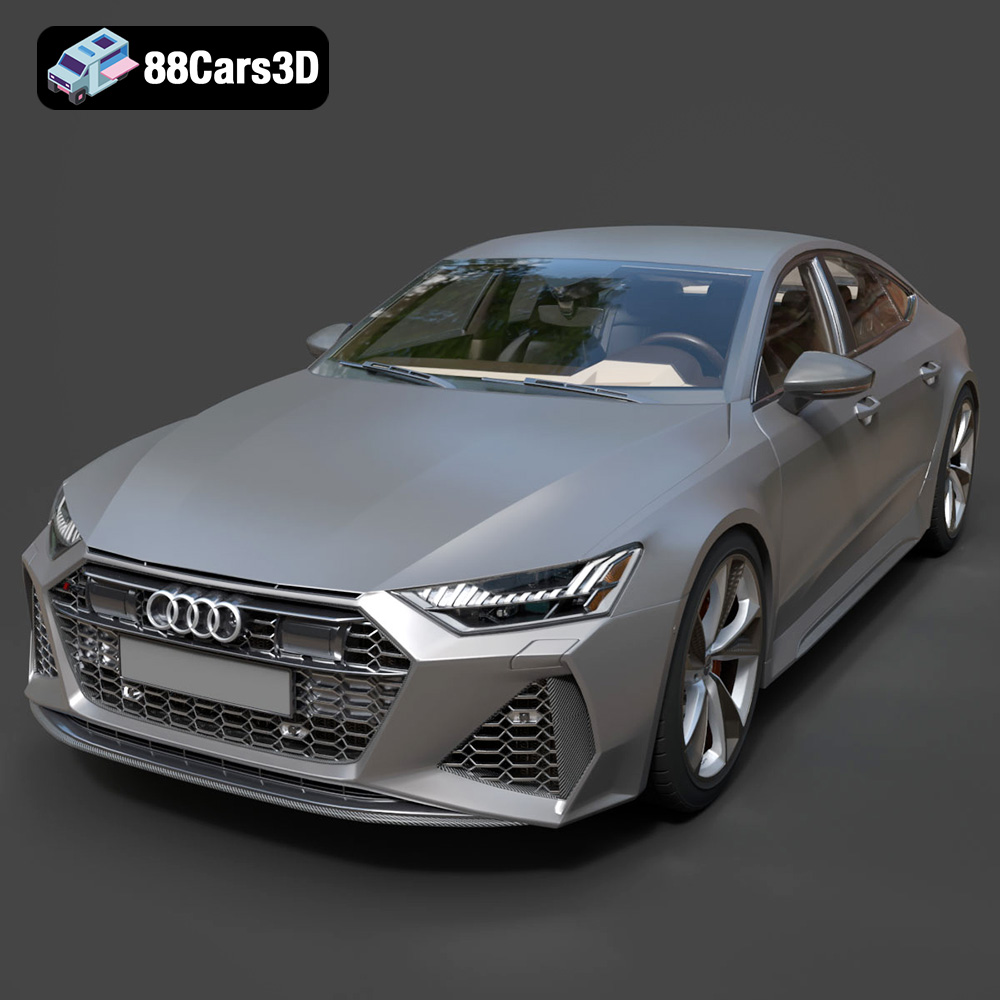
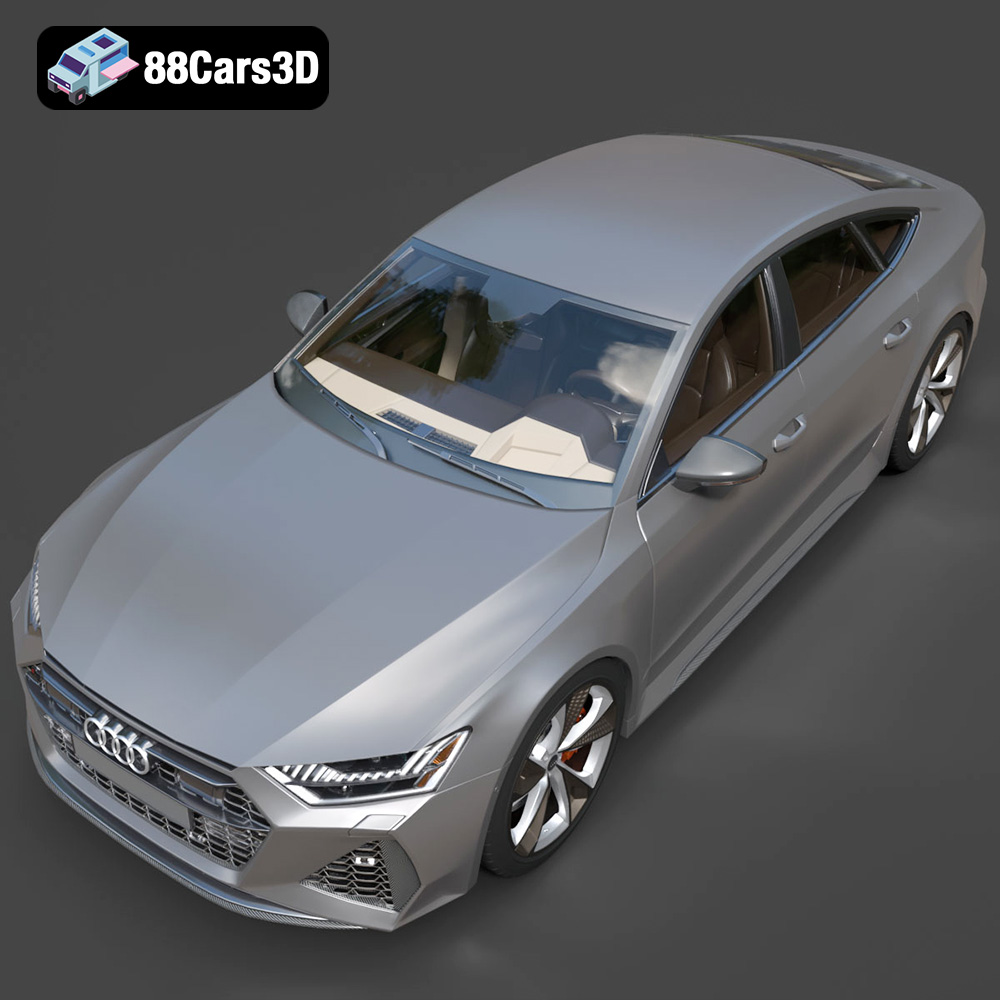
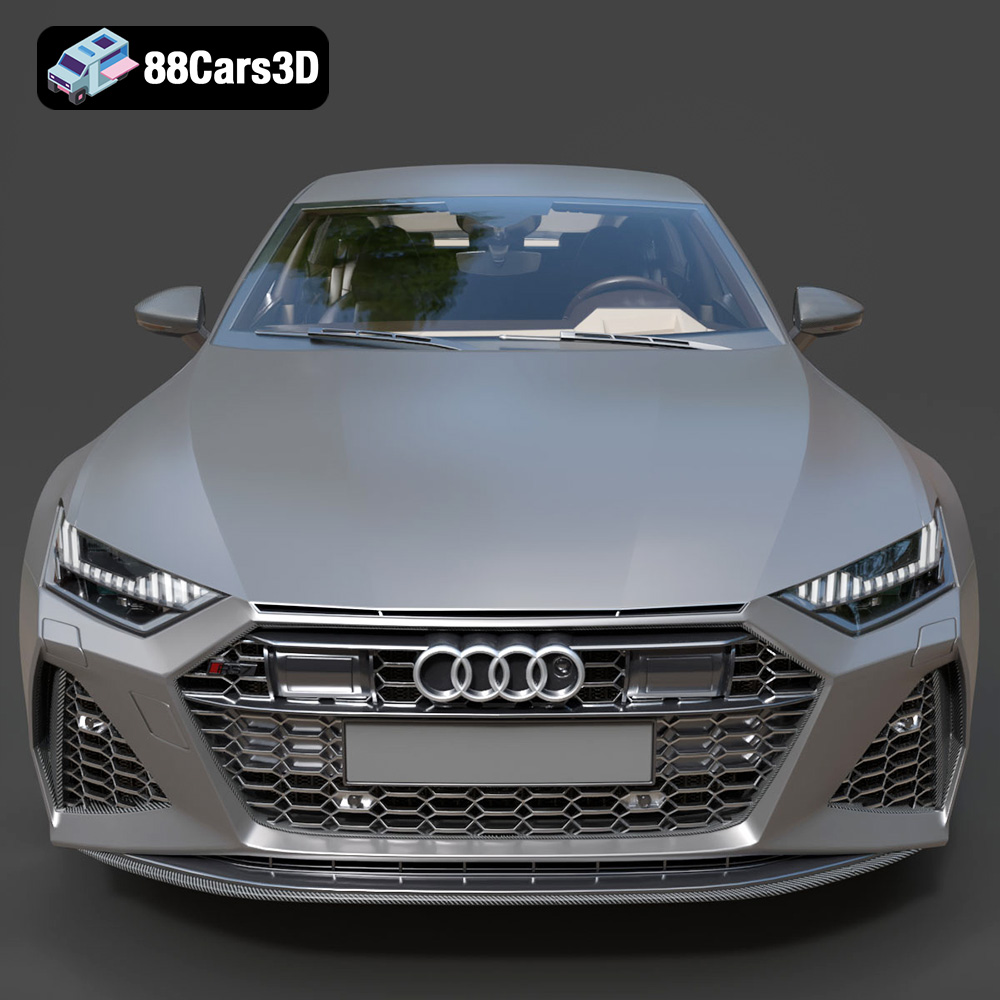
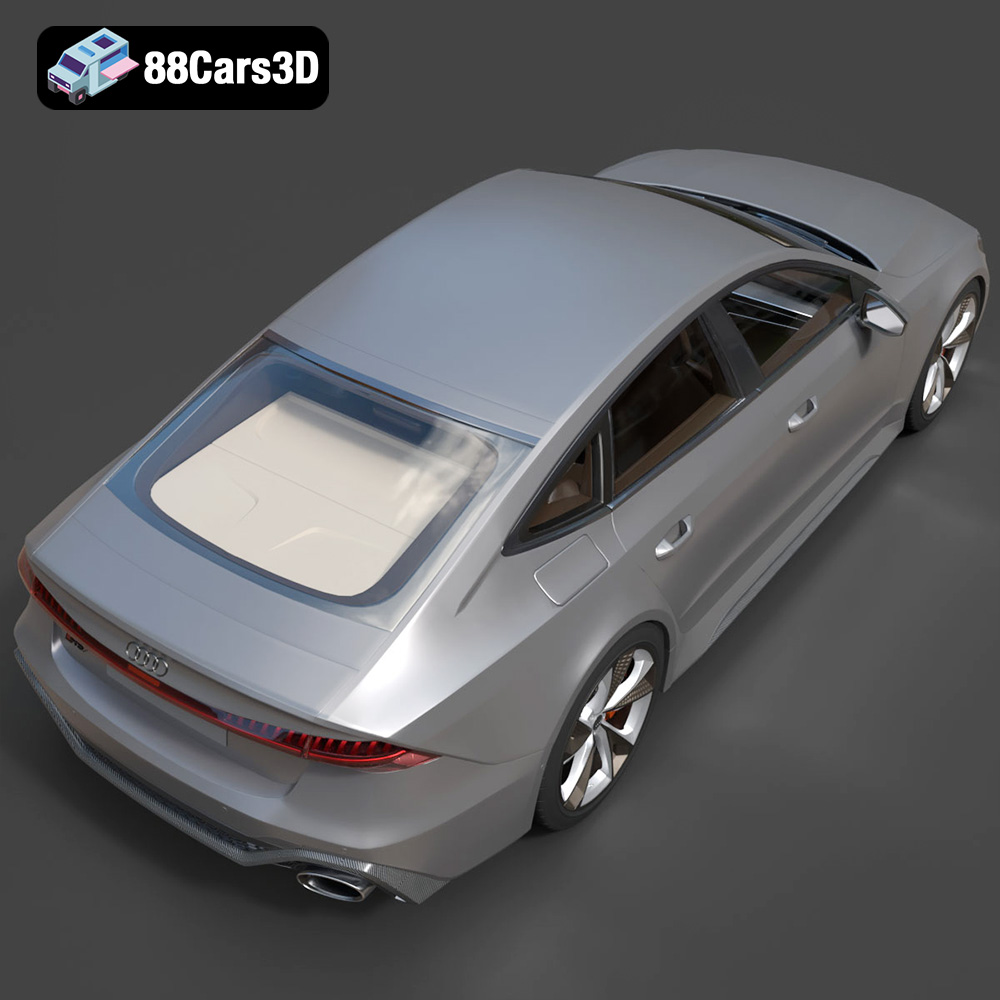
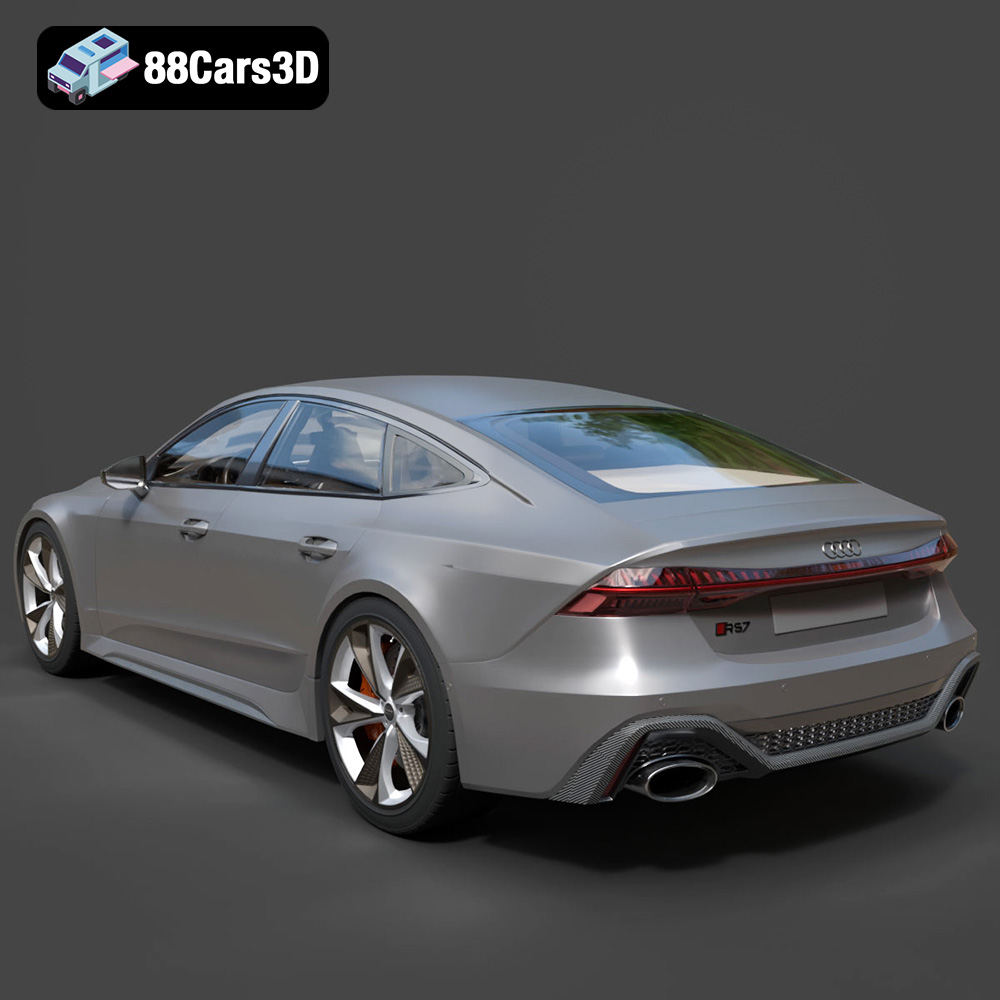
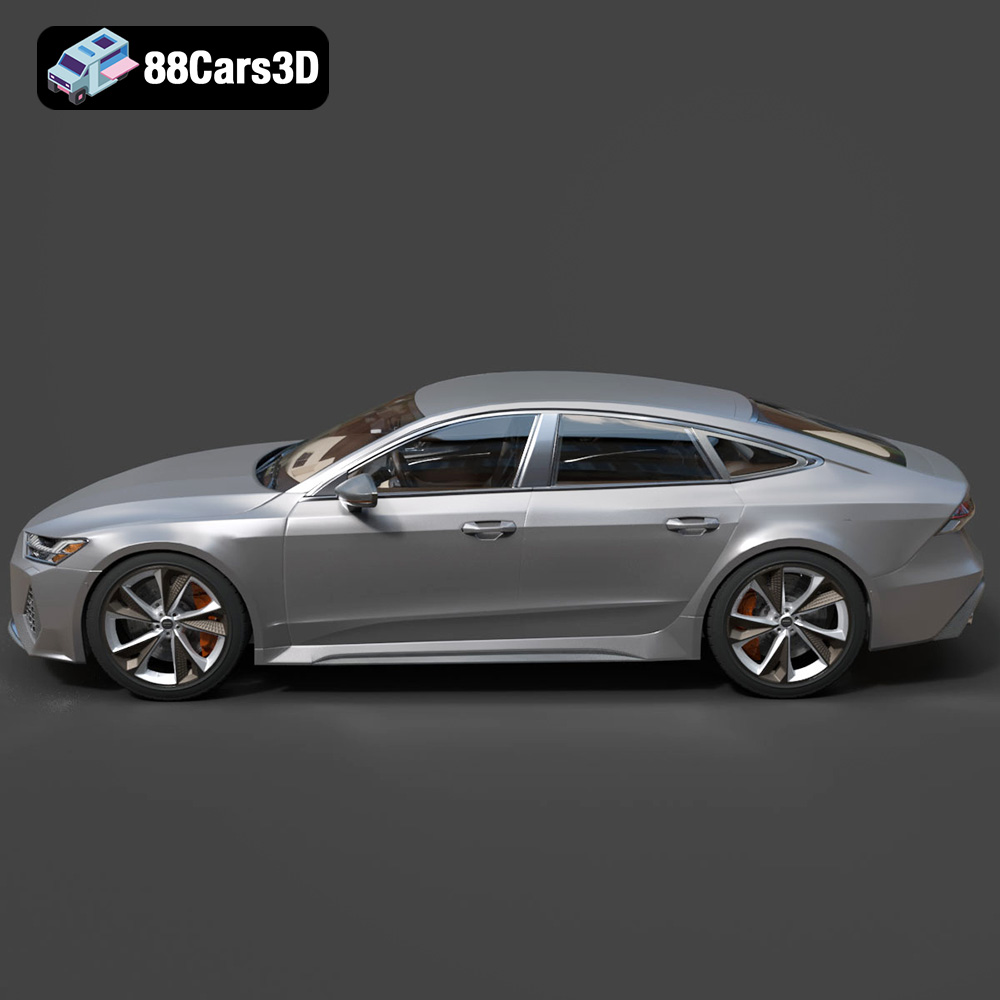
The exterior of the Audi RS7 Sportback 2020 is instantly recognizable, and its 3D counterpart must reflect this with pinpoint accuracy. The model boasts accurate frame geometry, widebody proportions, and the sleek fastback silhouette that defines the RS7. Crucially, the devil is in the details: the intricate HD Matrix LED headlights with their distinct laser light aesthetics, the signature RS-specific honeycomb front grille, and the enormous air intakes are all replicated with precision. Even the performance brake calipers, drilled rotors, and suspension details are modeled, providing visual integrity even in close-up shots or highly dynamic scenes. This level of granular detail, combined with the separate components for wheels, suspension, and steering, ensures maximum flexibility for animators and visual effects artists.
A truly comprehensive automotive model extends its realism to the interior. The Audi RS7 Sportback 2020 3D model delivers a highly detailed cockpit, essential for first-person views in gaming, virtual showrooms, or cinematic sequences. Key features like the RS Valcona leather sport seats with their signature honeycomb stitching, the perforated flat-bottom RS sport steering wheel with paddle shifters, and the precise reproduction of the Audi Virtual Cockpit digital instrument cluster are all present. The dual MMI touch response screens, climate controls, and minimalist gear selector further enhance the feeling of immersion, allowing for truly believable digital experiences.
The stated 5,668,210 triangles for the Audi RS7 Sportback 2020 model strikes an excellent balance. This polycount is high enough to capture the necessary visual realism for high-end rendering and detailed close-ups, yet it’s “game-ready & optimized” for real-time engines like Unreal and Unity. This optimization isn’t just about the number of polygons but also about clean geometry, efficient UV layouts, and well-structured material ID assignments. Real-world scale accuracy, proper pivot setups for animation (steering, wheel rotation, suspension travel), and compatibility across major 3D software platforms are technical advantages that streamline professional workflows and reduce setup time, making this asset a robust choice for any project.
High-quality 3D car models like the Audi RS7 Sportback 2020 are more than just static objects; they are versatile tools that power innovation across various industries. From driving simulations to immersive marketing, their applications are vast and continuously expanding.
The “game-ready & optimized” nature of the Audi RS7 Sportback 2020 3D model makes it an exceptional asset for game development. Its balanced polycount is ideal for integrating into demanding real-time environments without excessively taxing system resources. In racing games and simulators, accurate vehicle geometry, fully rigged components (wheels, steering, suspension), and detailed interiors for first-person camera perspectives are paramount. The model’s real-world scale and proper pivot setups allow developers to implement realistic physics and driving mechanics with ease. For open-world titles, having such a detailed, optimized vehicle significantly elevates environmental realism and player immersion. Developers can quickly integrate this asset into engines like Unreal and Unity, accelerating production cycles for next-generation gaming experiences.
Beyond interactive entertainment, the Audi RS7 Sportback 2020 model is a powerful tool for architectural visualization (ArchViz) and product rendering. Placing a photorealistic car within an architectural scene adds life, scale, and a sense of luxury. For automotive brands, this model is invaluable for creating stunning marketing campaigns, high-resolution lifestyle scenes, and studio-lit renders that showcase the vehicle’s design and features in the best possible light. Its detailed exterior and interior mean it can hold up under intense scrutiny, from wide-angle shots to extreme close-ups, making it perfect for broadcast commercials, print advertisements, and online configurators. The ability to customize colors, materials, and lighting further enhances its utility for these demanding visualization tasks.
The rise of Augmented Reality (AR) and Virtual Reality (VR) has opened new avenues for engaging with 3D content. The Audi RS7 Sportback 2020 3D model is perfectly suited for immersive virtual showrooms, configurators, and mobile AR experiences. Its optimized geometry and comprehensive file format support, including .glb, make it efficient for real-time interactive applications. Imagine customers exploring the car’s interior in a VR headset, changing paint colors with a gesture, or seeing a full-scale Audi RS7 Sportback appear in their driveway via AR on a smartphone. These applications provide unprecedented levels of engagement, offering a richer, more interactive experience than traditional marketing materials.
The utility of 3D models extends beyond the digital screen into the physical world through 3D printing. The Audi RS7 Sportback 2020 3D model, convertible to .stl format, allows enthusiasts and professionals to create tangible replicas. Whether for display-scale hobbyists, prototyping, or educational purposes, printing a physical model offers a unique connection to the digital asset. The detailed product description even provides specific 3D print settings, recommending resin printing for fine details, specific layer heights, wall thicknesses, and infill percentages. Guidance on supports, print orientation, and post-processing (sanding, primer, authentic factory colors) ensures that even novice printers can achieve impressive results, transforming a digital file into a miniature masterpiece.
The longevity and versatility of a 3D model depend heavily on its adaptability. A truly premium asset like the Audi RS7 Sportback 2020 3D model is designed with customization in mind, ensuring it can evolve with project requirements and creative visions.
The ability to change body and tank colors, modify tire textures, and adjust material finishes (matte, gloss, metallic) is invaluable. This allows artists to quickly adapt the model to specific branding guidelines, seasonal themes, or artistic directions without having to remodel or re-texture from scratch. Whether replicating factory colors with metallic clear coats or experimenting with unique custom finishes, the underlying material setup of a high-quality model makes these aesthetic changes efficient. This flexibility is particularly important in advertising and visualization, where nuanced material properties can significantly impact the emotional resonance of an image or animation.
Beyond static beauty, the Audi RS7 Sportback 2020 model is built for motion. Its separate, rigged components for wheels, suspension, and steering, combined with proper pivot setups, mean it’s ready for complex animation sequences. This could range from subtle suspension compression as the car turns, to full-blown cinematic chase scenes. The optimized geometry ensures smooth deformation, while the clean topology supports advanced rigging techniques. This “animation-ready” state streamlines workflows for character animators, VFX artists, and game developers who need to tell dynamic stories with their automotive assets.
In the dynamic landscape of 3D content creation, the demand for high-quality, technically robust 3D car models is ever-increasing. The Audi RS7 Sportback 2020 3D model stands as a prime example of an asset that marries breathtaking realism with unparalleled technical flexibility. From its meticulously recreated exterior and immersive interior to its optimized geometry and broad file format support, it is engineered for professional pipelines across game development, architectural visualization, AR/VR, and even 3D printing.
Investing in such a premium asset empowers creators to deliver projects of exceptional quality, saving valuable time and resources while unleashing their creative potential. Whether you’re crafting the next generation of racing simulators, designing compelling marketing campaigns, or building interactive virtual experiences, the Audi RS7 Sportback 2020 3D model provides a solid foundation. Explore this exceptional asset and many more at 88cars3d.com, your premier destination for high-fidelity 3D car models that drive innovation.
The Audi RS7 Sportback 2020 is a masterclass in high-performance engineering and aggressive styling, effortlessly blending the sleek elegance of a luxury coupe with the sheer brutality of a twin-turbo V8. This iconic vehicle is instantly recognizable by its sweeping roofline, dramatic widebody stance, and signature RS-specific honeycomb front grille. Key visual elements such as the enormous air intakes, HD Matrix LED headlights, and the distinctive oval twin-exhaust system define its muscular presence on the road. This premium 3D model boasts an ultra-detailed topology of 5,668,210 triangles, ensuring photorealistic visual fidelity while remaining meticulously structured for modern production pipelines. Crafted with precise game-ready optimization principles in mind, it provides unmatched exterior and interior realism ideal for high-end game development, interactive AR/VR showcases, cinematic animations, and professional automotive visualization.
$90.00
.audi
.blend
.fbx
.glb
.max
.obj
.ply
.rendering
.sedan
.sports car
.stl
.unreal
car-3d-model
game asset
game-ready
low-poly
luxury car
optimized
rs7-sportback
rs7-sportback-2020
VR/AR