Get 20% OFF All Premium 3D & STL Models!

In the rapidly evolving landscape of digital content creation, the demand for hyper-realistic and meticulously optimized 3D assets is at an all-time high. From the intricate worlds of AAA video games to groundbreaking virtual reality experiences and cinematic automotive visualizations, the quality of a 3D model can significantly impact a project’s overall success and immersion. For professionals and enthusiasts alike, sourcing a high-fidelity 3D car model is not just about aesthetics; it’s about technical precision, compatibility, and a streamlined workflow that delivers exceptional results without compromise.
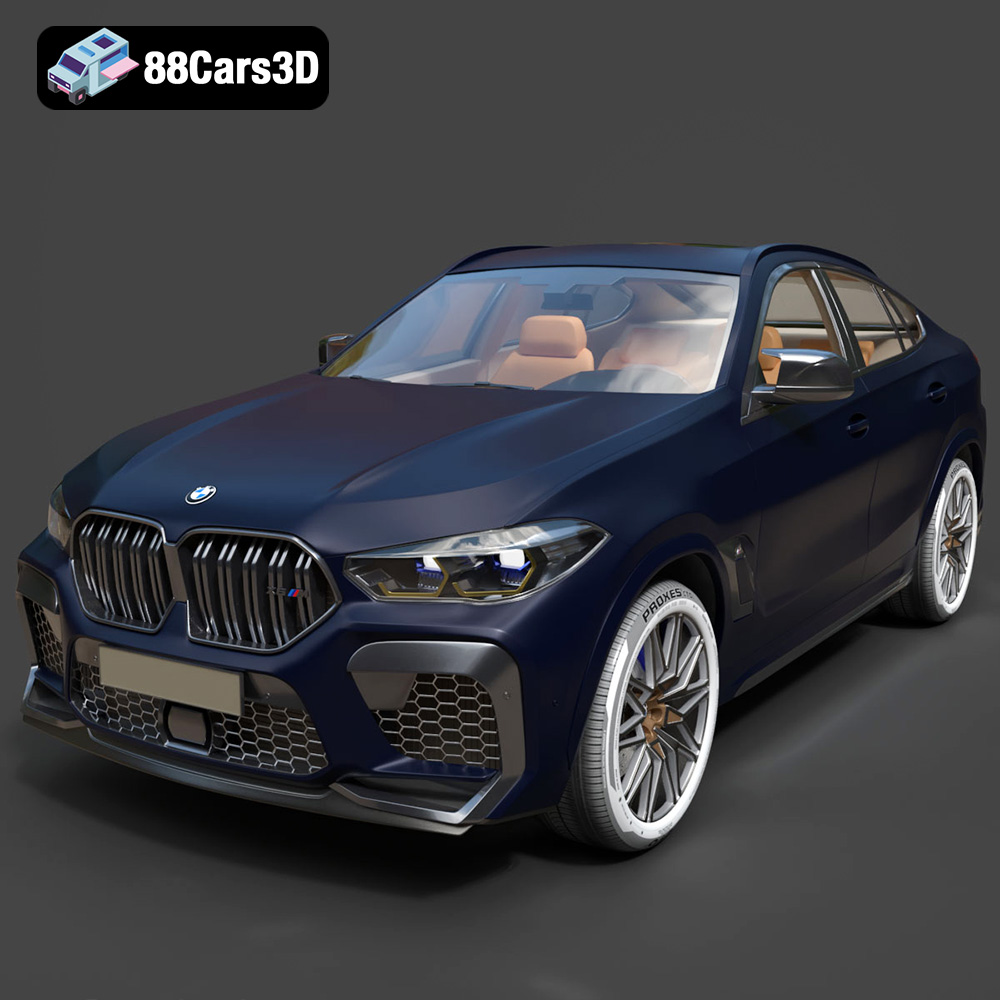
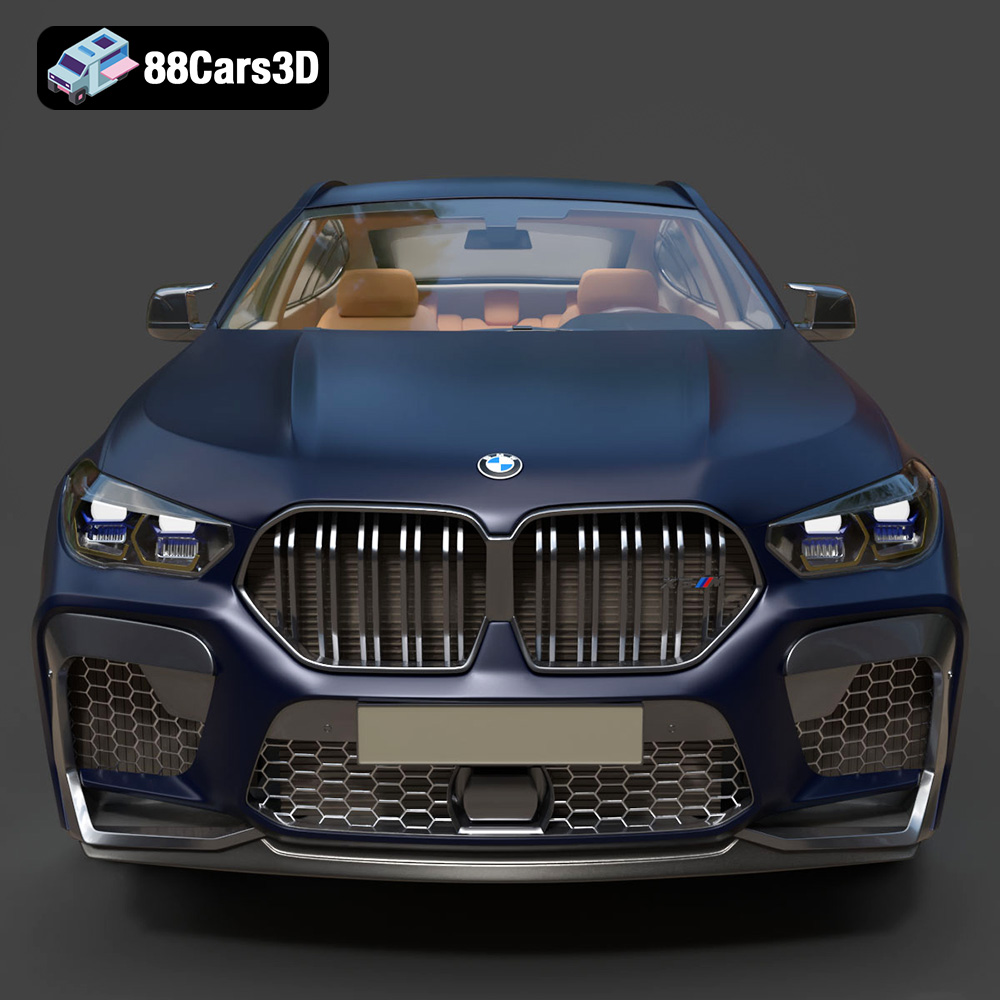
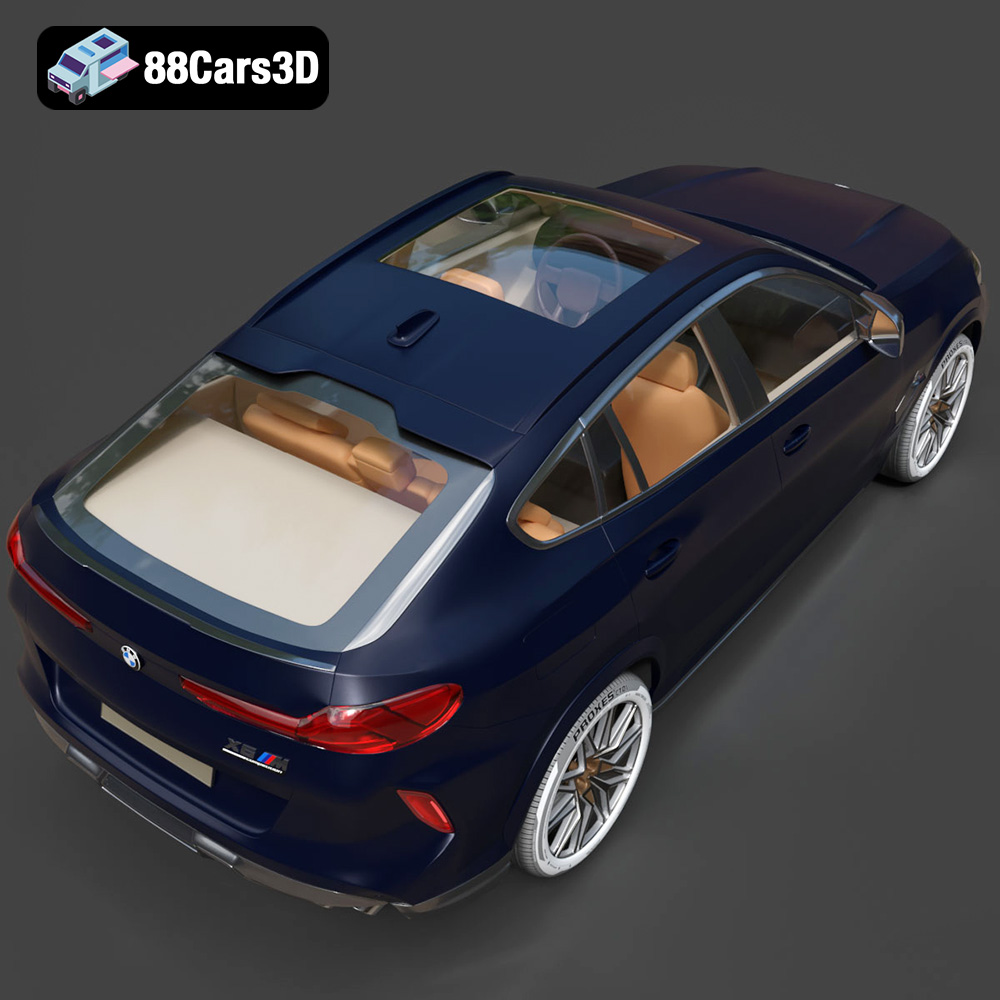
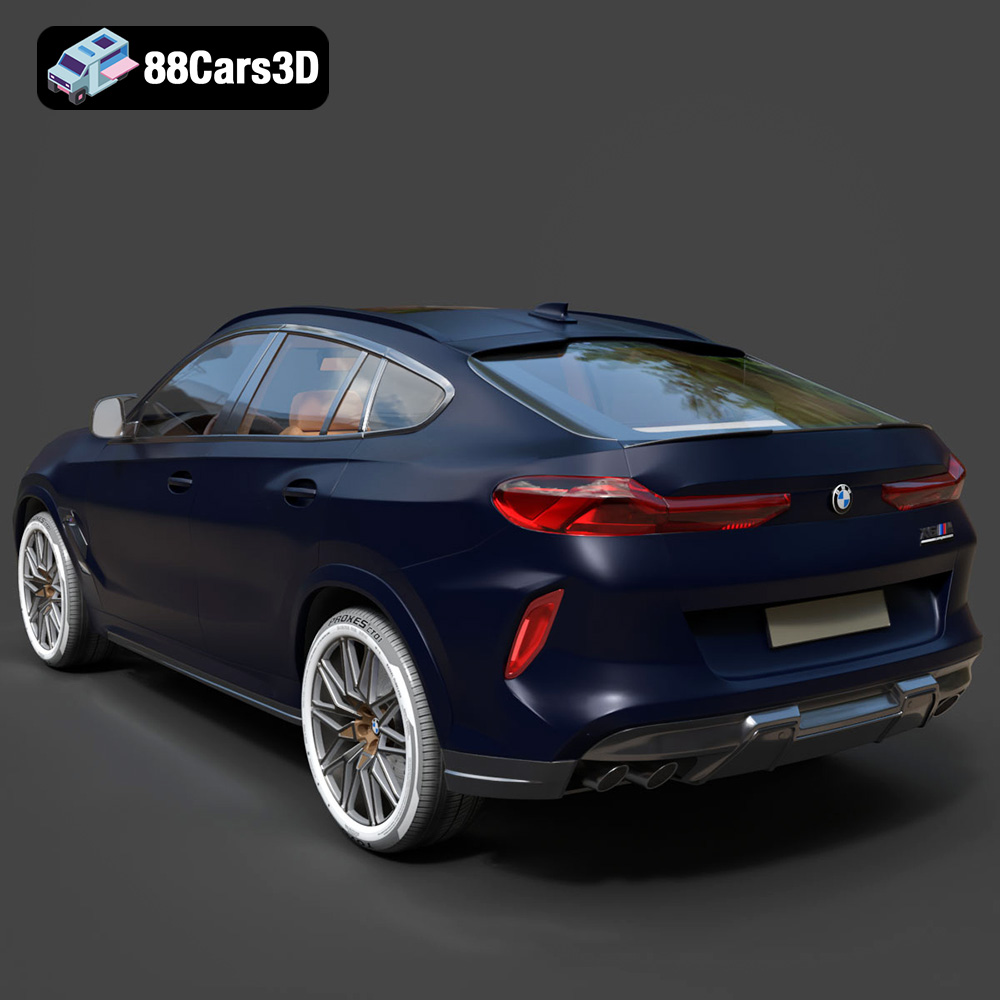
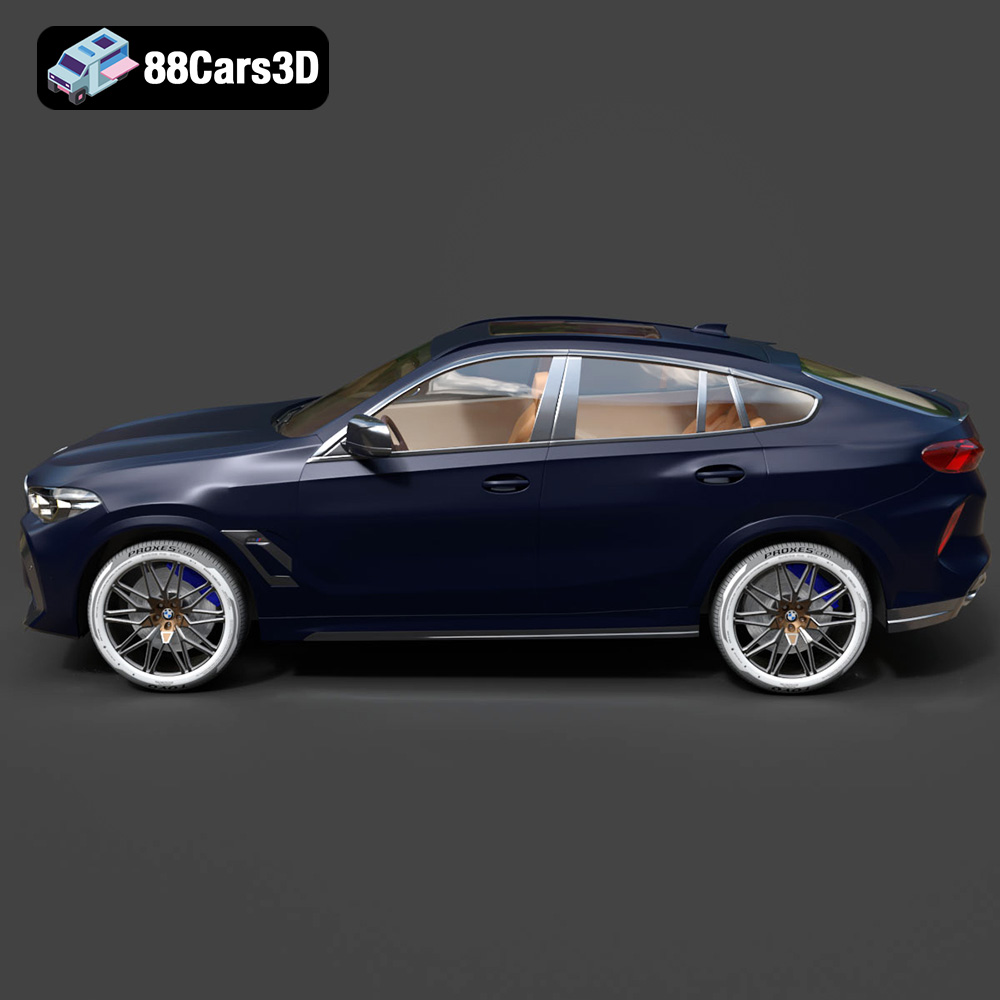
Consider the iconic presence of the BMW X6 M 2008. A pioneer in the Sports Activity Coupe segment, it blends aggressive M-series sports car styling with the versatility of a luxury SUV, powered by a formidable twin-turbo V8. Recreating such an automotive legend in the digital realm requires an unparalleled attention to detail, from its commanding front fascia and signature kidney grilles to the sweeping roofline and distinctive quad-pipe M exhaust system. A premium 3D model of the BMW X6 M 2008, like those found on 88cars3d.com, encapsulates this spirit, providing a game-ready asset that balances breathtaking visual fidelity with optimal performance for demanding digital environments.
Creating a truly exceptional 3D car model is a fusion of artistic vision and rigorous technical engineering. It goes far beyond simply replicating a vehicle’s shape; it involves capturing its essence, its mechanical intricacies, and ensuring its digital counterpart is versatile enough for diverse applications.
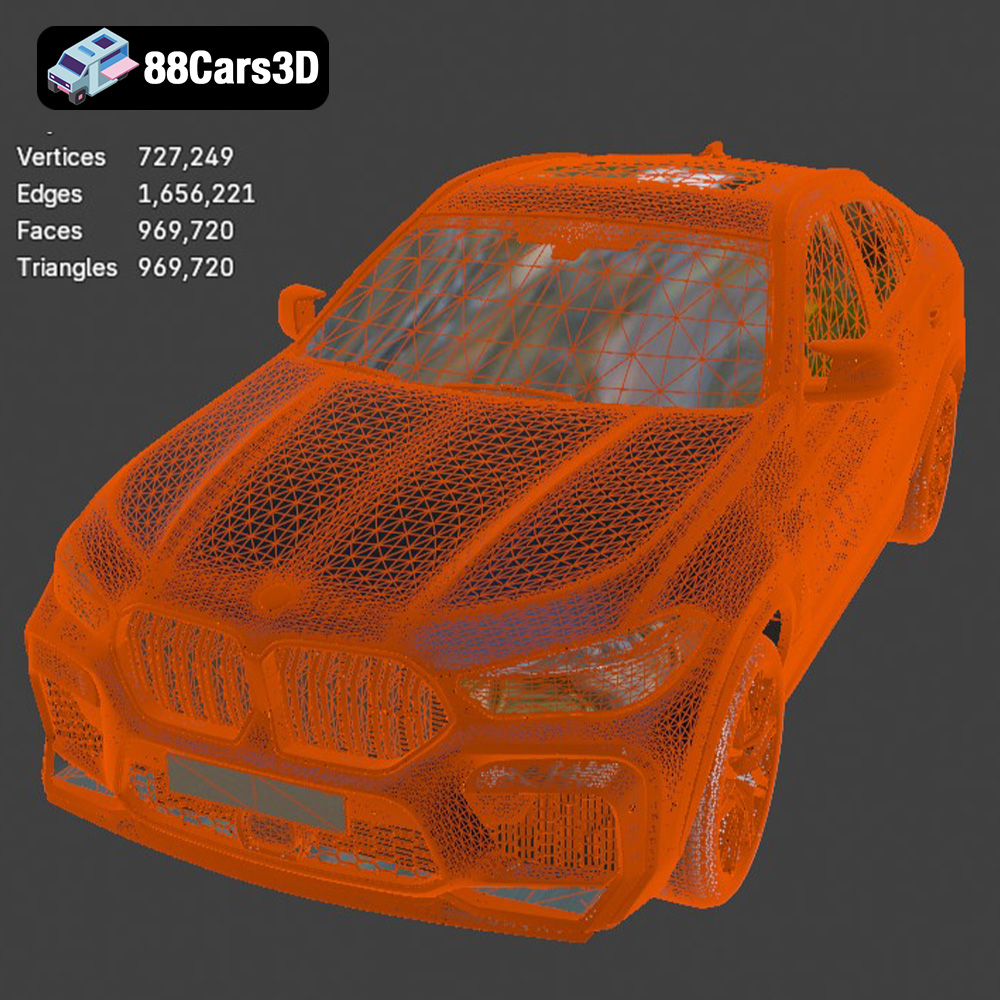
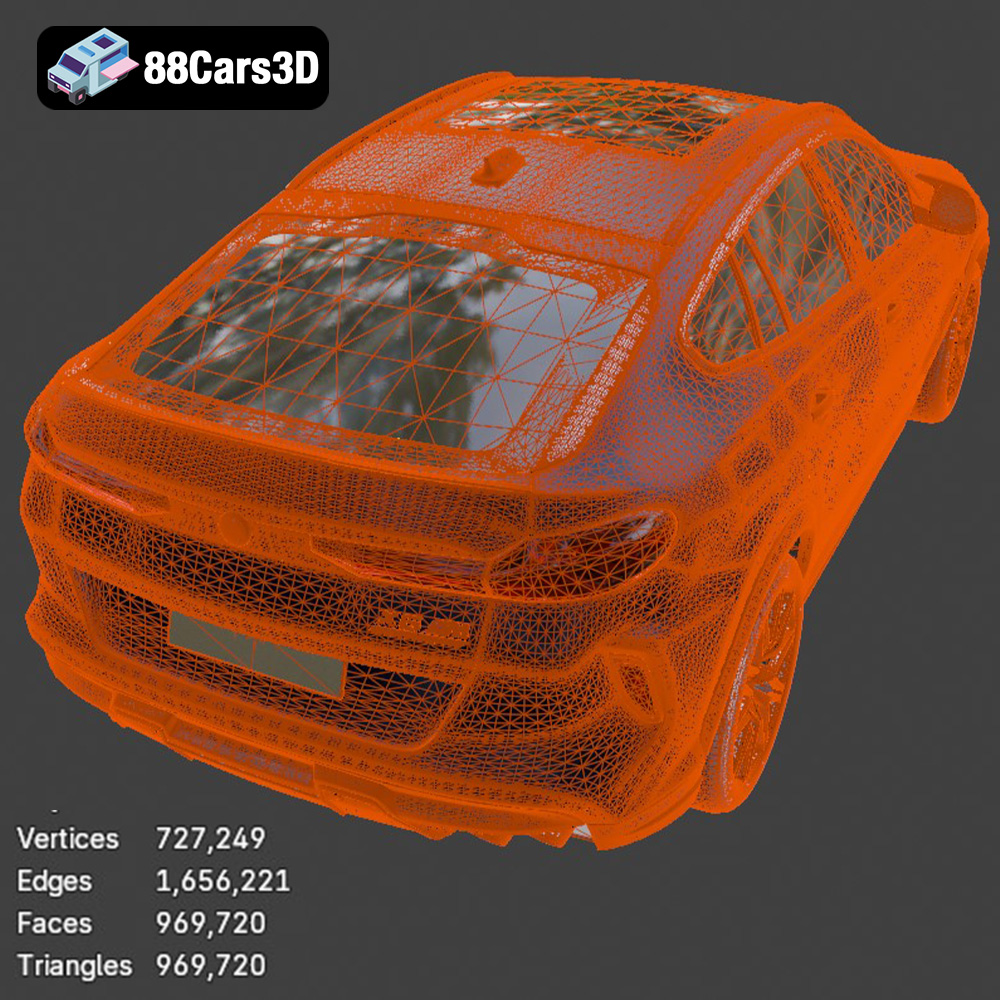
The core challenge in 3D modeling, especially for vehicles, is striking the perfect balance between visual realism and technical performance. A model designed for photorealistic cinematic rendering might have millions of polygons, while a game-ready asset needs to be significantly optimized to run smoothly in real-time engines. The key is intelligent geometry and texturing. For instance, the BMW X6 M 2008 3D model, with its refined 969,720 triangle count, demonstrates this balance perfectly. It offers high visual fidelity for close-up shots and detailed renders, yet remains optimized for real-time applications like open-world games and AR/VR experiences, where every frame counts.
This optimization extends to meticulous details such as separated wheels, suspension, and steering components, all set up with proper pivots for realistic animation. This foresight in design allows for dynamic movement, whether it’s navigating a virtual race track or showcasing a vehicle’s turning radius in a configurator.
Accuracy is paramount. Premium 3D car models are built to real-world scale, based on actual vehicle chassis and blueprints. This ensures that when integrated into architectural visualizations, product configurators, or even simulated environments, the vehicle maintains its correct proportions and presence. Beyond the external shell, the attention to detail extends to the engine block, based on the formidable twin-turbo V8, and the intricate cockpit features. From the premium M-sport bucket seats with accurate stitching to the high-fidelity instrument cluster and detailed center console, every element is designed to contribute to an immersive and authentic experience, crucial for first-person POV in gaming or detailed marketing visuals.
The choice of file format for a 3D model is not merely a technicality; it’s a strategic decision that dictates compatibility, functionality, and the overall efficiency of your digital workflow. Understanding the strengths and specific use cases of each format is crucial for any professional working with 3D car models.
The .blend format is Blender’s native file type, encompassing an entire scene with all its data: meshes, materials, textures, animations, cameras, lighting, and even custom scripts. This makes it an incredibly powerful and self-contained package. For users deeply integrated into the Blender ecosystem, a .blend file offers maximum editability and flexibility. You can easily modify geometry, adjust materials, refine textures, or tweak animations without losing any original scene data. It’s ideal for artists who primarily work in Blender for modeling, rendering, and even game asset preparation, providing a fully editable project ready for deep customization.
.fbx (Filmbox) is arguably the most widely adopted format for exchanging 3D data between different software applications, especially prominent in game development. Developed by Autodesk, it supports a vast array of data including geometry, materials, textures, rigging, skinning, and animations. Its strength lies in its ability to efficiently transfer complex animated scenes while maintaining crucial hierarchical information. This makes it the go-to format for importing 3D car models into game engines like Unreal Engine and Unity, or into other 3D applications like 3ds Max and Maya for further refinement. For a game-ready asset like the BMW X6 M 2008 model, .fbx is essential for its seamless integration into real-time pipelines.
The .obj (Wavefront OBJ) format is a classic and highly compatible choice, known for its simplicity and universality. It primarily stores geometry (vertices, normals, texture coordinates, and faces) and can reference external material (.mtl) files for color and basic shading information. While it doesn’t typically support animation or rigging, its widespread support across virtually all 3D software makes it excellent for static mesh exchange. When you need to move a raw mesh with its basic UVs and materials between different programs without concern for advanced features, .obj is a reliable option. It’s often used as a fallback for cross-software compatibility when .fbx encounters issues or for simpler scene setups.
.glb (GL Transmission Format Binary) is the binary version of glTF, a royalty-free specification for the efficient transmission and loading of 3D scenes and models by applications. .glb packages all necessary data (geometry, materials, textures, animations) into a single, self-contained binary file. This makes it incredibly efficient for web-based 3D viewers, AR (Augmented Reality), VR (Virtual Reality), and mobile applications due to its optimized file size and rapid parsing capabilities. For showcasing 3D car models in virtual showrooms or interactive web configurators, .glb offers an excellent balance of quality and performance, ensuring smooth, real-time interaction.
The .stl (Stereolithography) format is the de facto standard for 3D printing. It represents 3D surfaces as a series of connected triangles, essentially describing the outer geometry of an object. While it carries no color, texture, or material information, its simplicity makes it universally readable by 3D printers and slicing software. When preparing a 3D car model like the BMW X6 M 2008 for physical fabrication, converting it to .stl is the crucial step. The model’s optimized geometry ensures a clean conversion, allowing hobbyists and professionals to produce accurate physical replicas with recommended settings for scale, layer height, and supports.
The .ply (Polygon File Format) is another format primarily used for storing 3D data from 3D scanners, CAD software, and other applications requiring high precision. It can store a wider range of properties than .obj or .stl, including color, transparency, surface normals, and even data about the “confidence” of each point. While less common for general 3D asset exchange in entertainment, it’s valuable in scientific visualization, reverse engineering, and applications where precise geometric and attribute data is critical for analysis or manufacturing processes. For highly technical interpretations of a 3D car model, .ply can offer a richer dataset.
While not a traditional file format in the same vein as .fbx or .obj, the term .unreal often refers to assets specifically prepared and packaged for direct import into Unreal Engine. This typically means an .fbx file that has been meticulously optimized, textured, and sometimes even pre-rigged or given basic collision meshes, ready to be dropped into an Unreal Engine project. These “engine-ready” assets often come with specific material setups compatible with Unreal’s Physically Based Rendering (PBR) pipeline, saving developers significant time in asset preparation and ensuring optimal performance within the engine’s real-time environment.
The .max format is the native file type for Autodesk 3ds Max, a powerful 3D modeling, animation, and rendering software widely used in architectural visualization, product design, and game development. A .max file stores the entire 3ds Max scene, including all geometry, modifiers, materials, textures, lighting, cameras, animation data, and plugin-specific information. It offers the most comprehensive editing capabilities for users working within 3ds Max, allowing for deep customization, complex rigging, and advanced rendering setups. For professionals who use 3ds Max as their primary tool, a .max file of a 3D car model provides maximum control and flexibility for creating stunning visuals and intricate animations.
The BMW X6 M 2008 3D model available on 88cars3d.com serves as an exemplary case study for what constitutes a high-quality, versatile digital asset. It embodies the blend of automotive passion with technical prowess.
The real BMW X6 M 2008 made a significant impact by combining luxury SUV practicality with sports car performance. Translating this unique presence into a 3D model requires meticulous attention to its defining characteristics. The model accurately represents the vehicle’s aggressive stance, the distinct M quad-exhaust system, the intricate design of the headlights and LED taillights, and the powerful M-sport alloy wheels with detailed tire treads. Every curve and line is faithfully recreated, ensuring that its digital counterpart evokes the same sense of power and athleticism as the real vehicle.
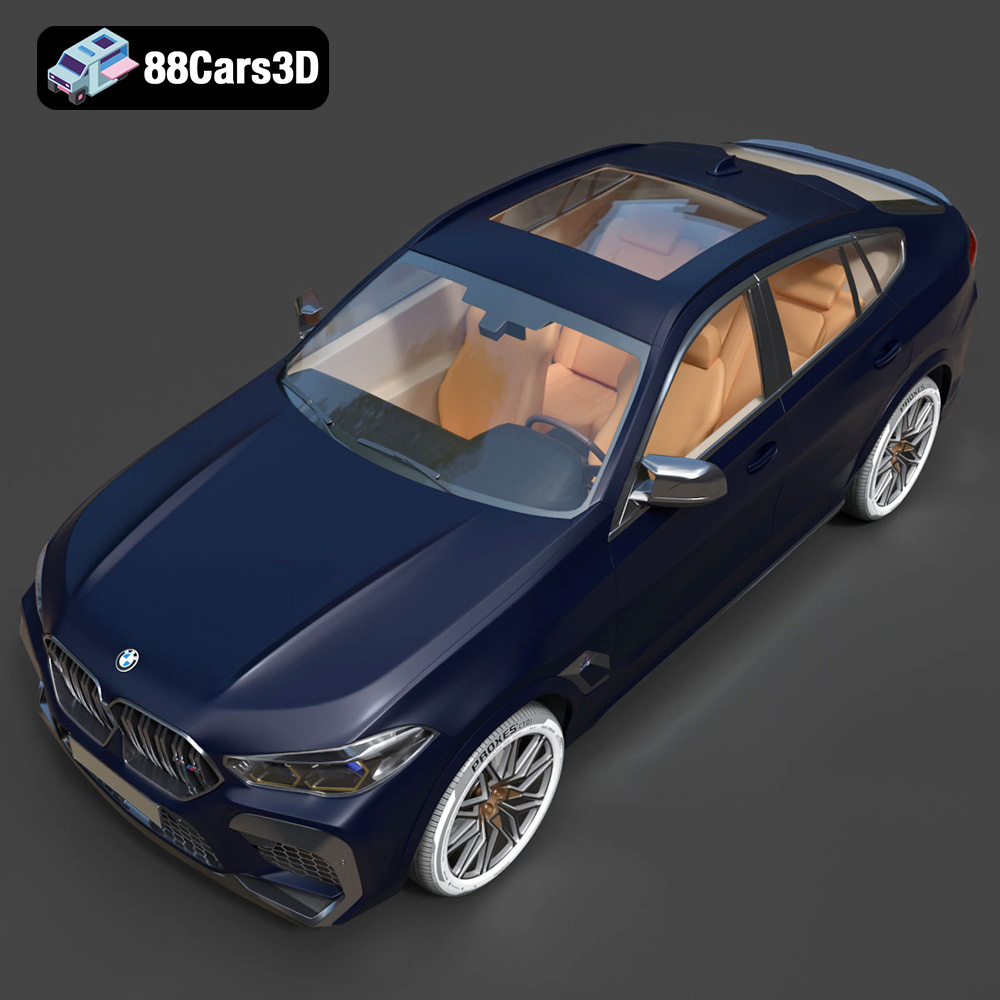
The model’s exterior features are comprehensive. Beyond the accurate frame geometry and proportions, it includes a detailed engine block, hinting at the twin-turbo V8’s spirit, and a sophisticated sport-tuned suspension and braking system. These details are not just superficial; they are often separate components, facilitating realistic animations for wheel rotation, suspension travel, and steering. Inside, the cockpit is equally impressive. Premium M-sport bucket seats, accurate stitching, a sport steering wheel with paddle shifters, a high-fidelity instrument cluster, and a detailed center console are all meticulously modeled. This level of interior detail is crucial for first-person perspectives in games and for creating immersive virtual showroom experiences, where users might freely explore the vehicle’s cabin.
One of the standout technical advantages of this BMW X6 M 2008 model is its “game-ready” optimization. With 969,720 triangles, it achieves a perfect balance for real-time engines like Unreal and Unity, offering high visual realism without bogging down performance. This ensures smooth frame rates in demanding scenarios like open-world racing games or mobile AR applications. Furthermore, its real-world scale accuracy, based on the actual vehicle chassis, guarantees seamless integration into various digital environments, from architectural visualization scenes to detailed brand campaigns. The proper pivot setup for crucial components like steering, wheels, and suspension further solidifies its utility for animation and interactive experiences.
High-quality 3D car models are more than just pretty pictures; they are fundamental building blocks for diverse digital productions. Understanding how to integrate them effectively across different platforms is key to unlocking their full potential.
For photorealistic stills and cinematic animations, 3D applications like 3ds Max and Blender are indispensable. A .max or .blend file of the BMW X6 M 2008 allows artists to fully leverage these powerful renderers. Users can customize every aspect: change body colors to authentic factory finishes or exotic custom paints, modify tire textures for off-road or street variants, adjust material finishes from matte to gloss or metallic, and adapt lighting for different environments—from a sun-drenched showroom to a moody night scene. The detailed geometry ensures that reflections are accurate, shadows are precise, and the overall visual output is indistinguishable from reality, making it excellent for brand campaigns and lifestyle scenes.
The “game-ready” nature of the BMW X6 M 2008 model, with its optimized polycount and included .fbx and .unreal formats, makes it a prime candidate for integration into Unreal Engine or Unity. Game developers can directly import the asset, utilizing its proper pivot setups for realistic physics simulations and animation. Its balanced detail allows for inclusion in open-world environments without significant performance hits, while still providing enough fidelity for close-up vehicle damage or interior shots. This greatly accelerates development, allowing teams to focus on gameplay mechanics rather than extensive asset optimization.
The rise of Augmented Reality (AR) and Virtual Reality (VR) has opened new avenues for showcasing products. The .glb format, optimized for web and immersive experiences, makes the BMW X6 M 2008 model ideal for virtual showrooms and interactive configurators. Imagine a customer exploring the vehicle in full 3D, changing colors, inspecting the interior, or even placing it in their driveway via AR, all rendered in real-time on a mobile device or VR headset. The model’s clean geometry and optimized textures ensure smooth performance and a truly immersive user experience.
For enthusiasts or designers looking for a tangible representation, the BMW X6 M 2008 model is convertible to .stl format for 3D printing. This opens up possibilities for display-scale hobbyists or even professional rapid prototyping. Detailed recommendations for 3D print settings, such as recommended scale (1:12, 1:18, 1:24), layer height (0.04–0.12 mm), wall thickness (1.2–2.0 mm), and infill, ensure successful prints. Resin printing is often recommended for capturing the fine details, and clear instructions for supports and print orientation are provided to ensure structural integrity and a high-quality final product. Post-processing with sanding, primer, and authentic factory colors can result in a stunning physical replica.
Beyond the visible aesthetics, the true value of a professional 3D car model lies in its underlying technical structure. Understanding these elements is crucial for developers and artists alike.
The stated 969,720 triangle count for the BMW X6 M 2008 model is a carefully chosen figure. For high-end cinematic renders, models can easily exceed several million triangles. However, for interactive applications like games or AR/VR, excessive polygons lead to performance bottlenecks. This model strikes an optimal balance, providing enough geometric detail for realistic reflections and intricate contours without overburdening the GPU. This “game-ready” optimization means less time spent on decimation and re-topology by the end-user, allowing for faster integration into projects. It’s a testament to the expertise behind the assets available on 88cars3d.com.
Clean UV (U-V coordinates) mapping is as critical as polygon count. UVs define how a 2D texture wraps around a 3D object. A poorly unwrapped model will suffer from stretched or distorted textures, regardless of the texture resolution. A premium 3D car model ensures professional, non-overlapping UV layouts, which are essential for applying high-resolution textures, normal maps, ambient occlusion maps, and other PBR (Physically Based Rendering) textures. This guarantees that details like paint reflectivity, tire tread patterns, and interior stitching appear crisp and realistic across all rendering engines.
For animated sequences or interactive vehicle controls, a model’s rigging is paramount. The BMW X6 M 2008 model includes separate components for wheels, suspension, and steering, along with proper pivot setups. This isn’t a minor detail; it means the model is prepped for immediate animation. Artists can easily rotate wheels, simulate suspension compression, or articulate steering, drastically reducing the setup time for driving mechanics in games or sophisticated car commercials. This level of pre-preparation underscores the model’s professional-grade design.
Investing in a high-quality 3D car model is an investment in efficiency, quality, and versatility. The ability to customize and adapt the asset ensures its longevity across various projects and evolving technologies.
The provided customization options for the BMW X6 M 2008 model are extensive. The ability to change body colors, modify tire textures, and adjust material finishes gives artists and developers immense creative freedom. Whether a project requires a classic factory look or a completely bespoke aesthetic, these options allow the model to seamlessly integrate into any visual narrative. This flexibility means a single premium asset can serve multiple purposes, providing greater value over time.
The inclusion of multiple file formats—.blend, .fbx, .obj, .glb, .stl, .ply, .unreal, and .max—is a significant advantage. This ensures maximum compatibility across the widest range of 3D software and platforms. Whether you’re a Blender artist, a 3ds Max professional, a game developer using Unreal Engine, or preparing for a 3D print, the appropriate format is readily available. This multi-format support future-proofs the asset, allowing it to adapt to new workflows and technological advancements without requiring re-purchases or extensive conversion efforts. It exemplifies the comprehensive approach to digital assets provided by platforms like 88cars3d.com.
The world of digital content creation thrives on quality and efficiency. For automotive enthusiasts, game developers, visualization artists, and AR/VR pioneers, the right 3D car model can be the cornerstone of a successful project. The BMW X6 M 2008 3D model stands as a testament to what a premium asset should embody: meticulous detail, robust optimization, and versatile file format support, all designed to integrate seamlessly into professional workflows.
From its accurate exterior and interior features to its game-ready polycount and suitability for 3D printing, this model offers a comprehensive solution for a multitude of applications. Understanding the nuances of file formats, the balance between detail and performance, and the potential for customization empowers creators to make informed decisions that elevate their projects. By choosing expertly crafted 3D car models, like those available at 88cars3d.com, you’re not just acquiring a digital object; you’re investing in a foundation for innovation, realism, and creative freedom.
Experience the sheer power and athletic presence of the BMW X6 M 2008, a pioneer in the high-performance Sports Activity Coupe segment. Blending the aggressive stance of an M-series sports car with the versatility of a luxury SUV, this vehicle boasts a commanding front fascia, iconic kidney grilles, a sweeping roofline, and the signature quad-pipe M exhaust system. Underneath its muscular exterior lies the spirit of a twin-turbo V8, making it an unmistakable icon of automotive engineering. This premium 3D model delivers exceptional quality with a refined 969,720 triangle count, offering breathtaking visual fidelity while remaining structured for optimal use in demanding digital environments. Whether you are developing high-end racing games, crafting immersive AR/VR showrooms, or generating photorealistic animations, this game-ready asset provides the perfect balance of detail and efficiency. Perfect for open-world street racing games, luxury car dealership configurators, architectural visualization scenes, and high-octane cinematic renders.
$60.99
.2008
.blend
.bmw
.fbx
.glb
.max
.obj
.ply
.rendering
.sports car
.stl
.unreal
car-3d-model
coupe-suv
game asset
game-ready
low-poly
luxury car
optimized
SUV
VR/AR
x6-m