Get 20% OFF All Premium 3D & STL Models!

In the dynamic worlds of automotive design, high-end rendering, immersive game development, and cutting-edge AR/VR experiences, the quality of your 3D assets is paramount. A truly exceptional project demands nothing less than meticulously crafted 3D car models that capture every nuance of real-world vehicles. From the subtle reflections on a polished fender to the intricate stitching of an interior, fidelity and precision are the hallmarks of professional-grade work. These digital masterpieces serve as the foundation for breathtaking visualizations, realistic simulations, and compelling interactive content that capt resonates deeply with audiences.
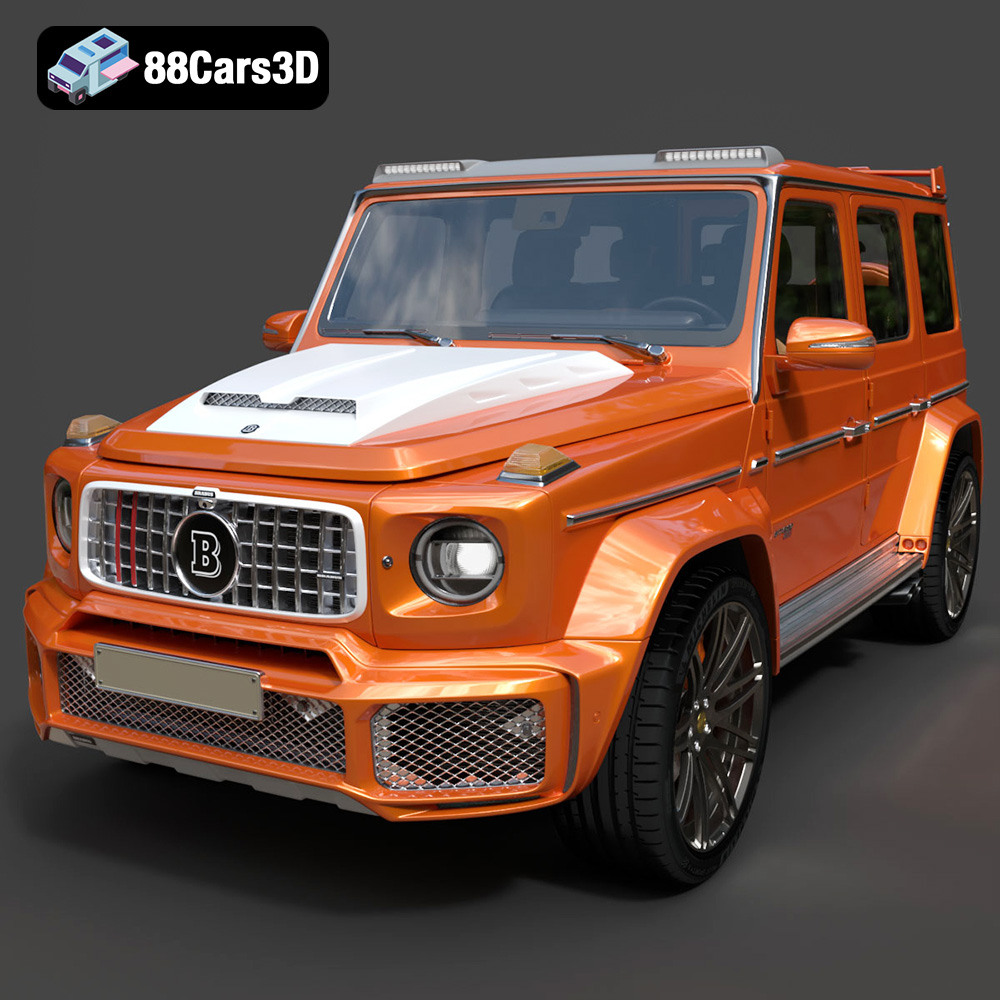
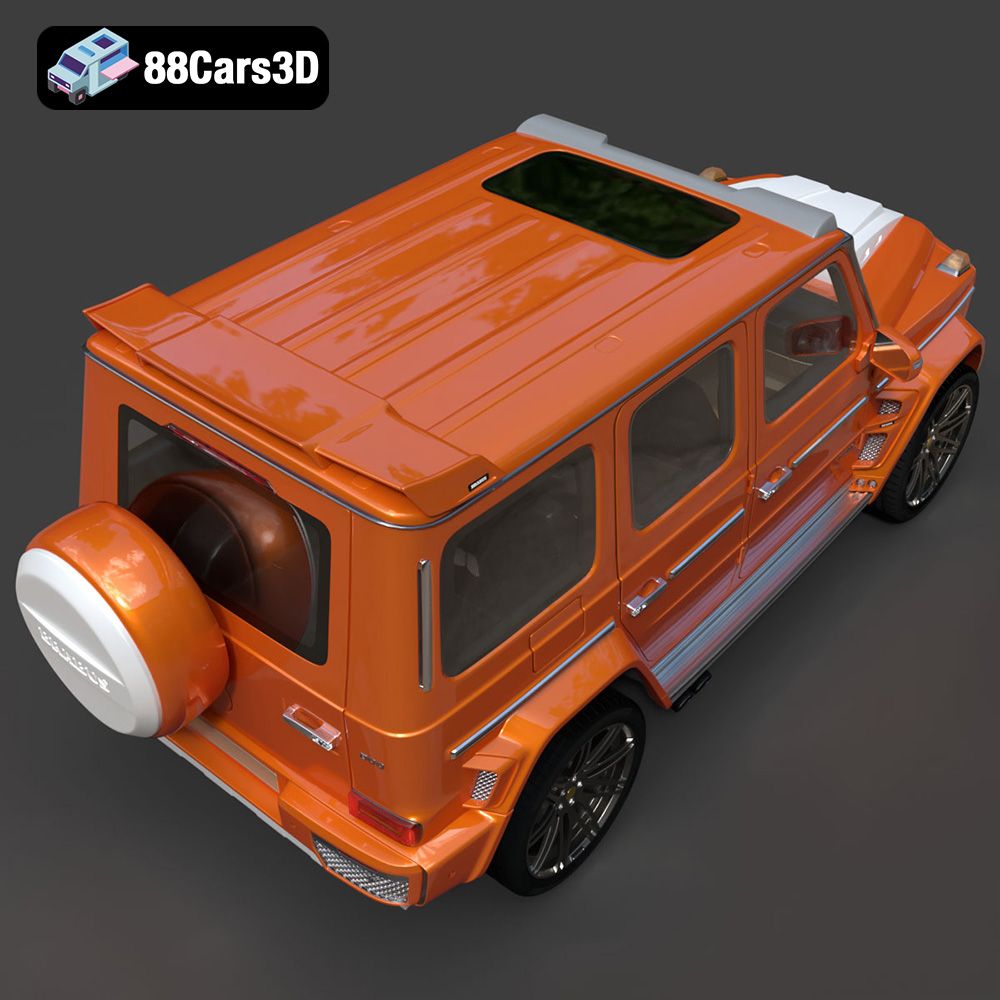
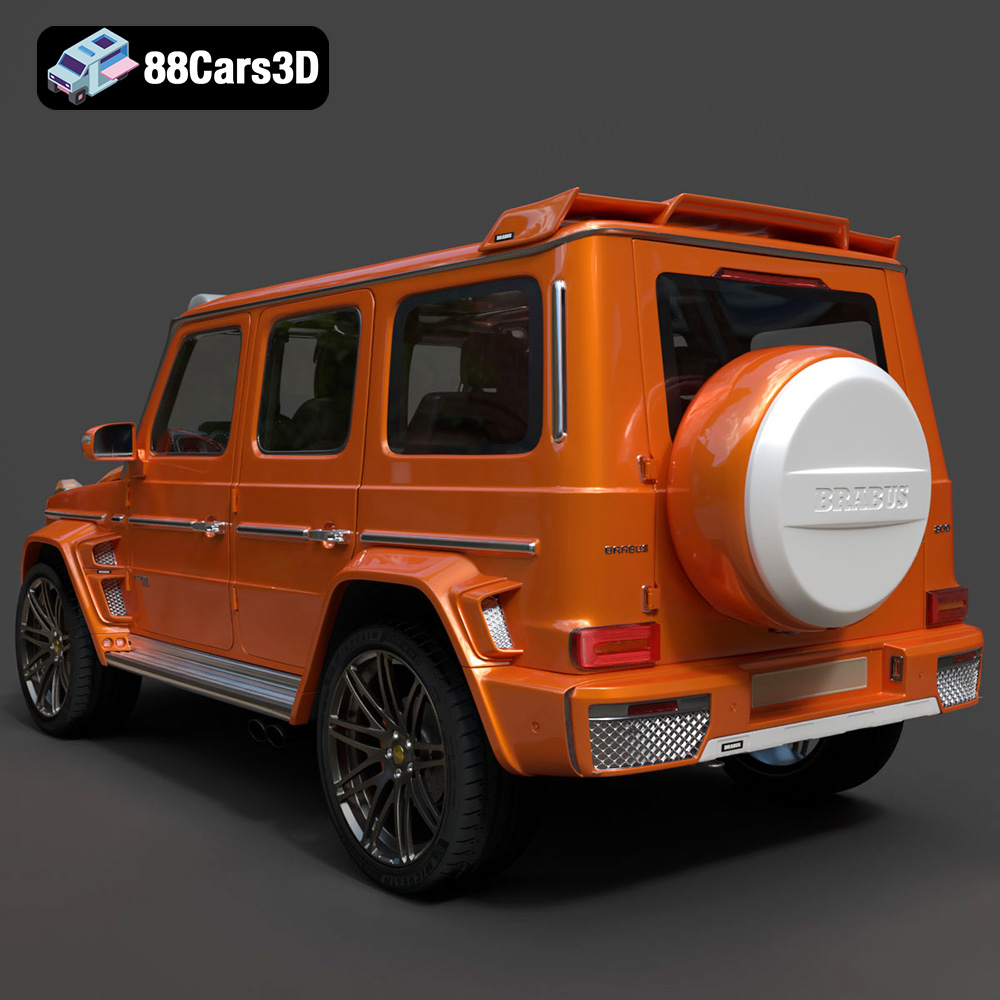
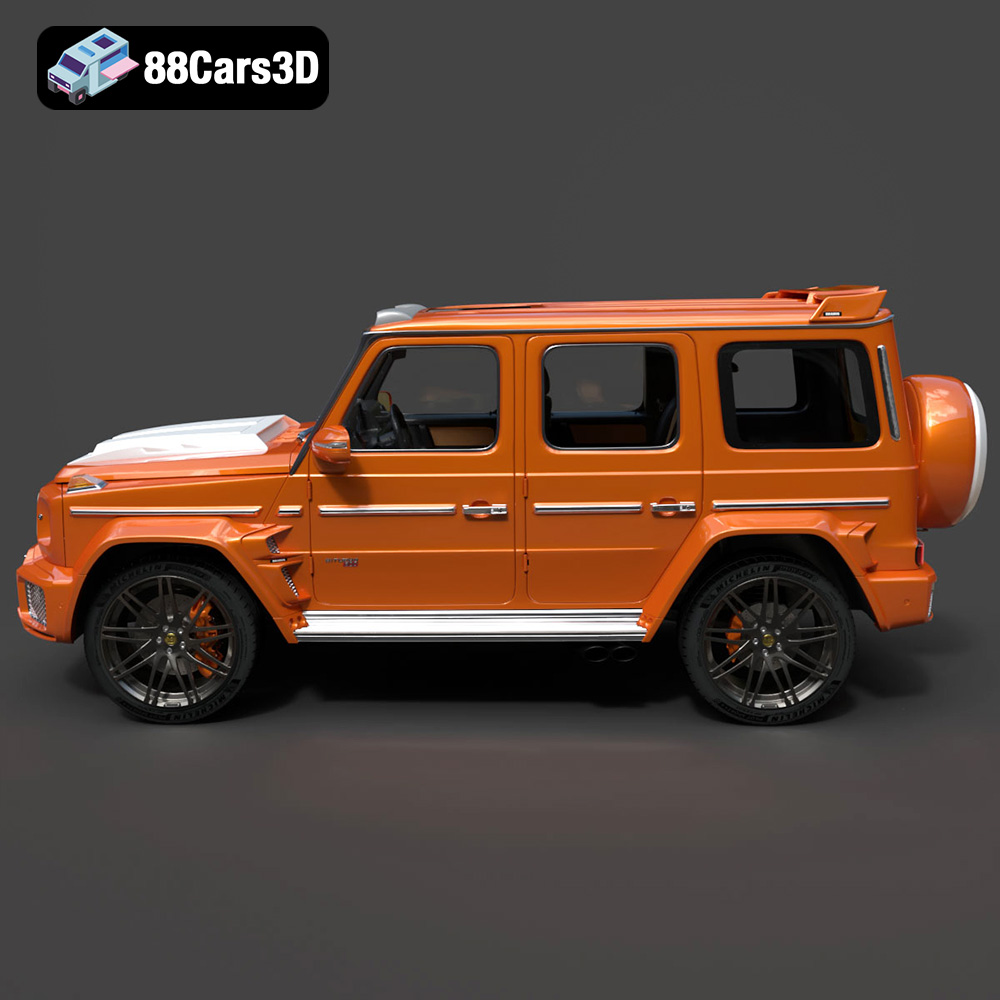
The pursuit of photorealism and interactive performance often leads professionals to seek out assets that blend intricate detail with robust optimization. This is where models like the Brabus G 800 3D Model truly shine. Representing the pinnacle of luxury and raw power, the Brabus G 800 is a vehicle that commands attention. Its digital counterpart, available at 88cars3d.com, is engineered to meet the stringent demands of top-tier creative pipelines. This isn’t just a model; it’s a meticulously recreated digital twin, ready to be dropped into your most ambitious projects, from cinematic renders to the most demanding real-time environments.
This article will delve into the technical intricacies and creative potential unlocked by high-fidelity 3D car models, exploring how they empower professionals across various industries. We’ll examine the critical role of file formats, explore advanced workflows in leading software, and illustrate how a premium asset like the Brabus G 800 can elevate your digital automotive endeavors.
The versatility of a 3D model often lies in its compatibility and the range of file formats it offers. Each format is designed with specific use cases in mind, carrying different types of data and offering varying degrees of flexibility across software. Understanding these distinctions is crucial for seamless integration into your workflow and for achieving optimal results, whether for rendering, real-time applications, or 3D printing. The Brabus G 800 model, for instance, comes with a comprehensive suite of formats, ensuring broad applicability.
The .blend file format is the native project file for Blender, the powerful open-source 3D creation suite. When you receive a .blend file, you’re not just getting a mesh; you’re getting a complete, fully editable Blender scene. This includes all geometry, materials (with their node setups), textures, lighting, camera settings, animation data, and even scene organization (collections, layers). For Blender users, this is the most flexible format, allowing for direct modification, retexturing, re-rigging, and integration with Blender’s powerful rendering engines, Cycles and Eevee. It’s ideal for artists who intend to deeply customize or animate the model within Blender.
.fbx (Filmbox) is a proprietary file format developed by Autodesk and has become the de facto standard for exchanging 3D data between different software applications, especially within game development and animation pipelines. An FBX file can store not only geometry but also materials, textures, animations (skeletal and blend shapes), cameras, and lights. It’s exceptionally robust for transferring complex animated rigs and is the preferred format for importing assets into game engines like Unreal Engine and Unity due to its efficient handling of animation and hierarchical data. While it can carry material information, specific shader setups often need to be recreated in the target software or engine.
The .obj (Wavefront Object) format is one of the oldest and most universally supported 3D file formats. It’s primarily used for exchanging pure geometric data (vertices, normals, UV coordinates, and faces). While it can reference external material files (.mtl) for basic color and texture assignments, it doesn’t store complex material properties, animation, or scene hierarchy. Its simplicity makes it highly compatible across virtually all 3D software, making it an excellent choice for basic mesh exchange, especially when high fidelity for just the model’s shape is crucial. For the Brabus G 800, the .obj provides a clean mesh for foundational work.
.glb (GL Transmission Format Binary) is the binary version of glTF, an open-standard format designed for efficient transmission and loading of 3D scenes and models by engines and applications. It’s particularly optimized for AR, VR, and browser-based display because it packages all assets (geometry, materials, textures, animations) into a single, self-contained file. This reduces load times and simplifies deployment on web platforms and mobile AR/VR devices. For interactive virtual showrooms or product configurators featuring the Brabus G 800, a .glb file is invaluable.
.stl (Stereolithography) is the most common file format used for 3D printing. It represents a 3D model as a series of connected triangles, forming the surface geometry. Unlike other formats, .stl files do not contain color, texture, or material information; they are purely about shape. For successful 3D printing, the mesh must be “manifold” (watertight, without holes or intersecting geometry). The Brabus G 800’s inclusion of an .stl option means it’s been prepared or is easily convertible for physical fabrication, adhering to recommended print settings.
The .ply (Polygon File Format) is another format primarily used for storing 3D data, often from 3D scanners or for scientific and engineering applications. It can store a wider range of properties than .obj, including color, transparency, normals, texture coordinates, and data reliability for each vertex. It’s a robust format for transferring precise mesh data and is frequently used in CAD, reverse engineering, and 3D reconstruction pipelines where accuracy and additional vertex data are important.
While not a native file extension in the traditional sense, “.unreal” in this context typically refers to an asset that has been meticulously prepared and optimized for direct import and use within Unreal Engine. This often means the model is provided as an FBX or a similar interchange format, but with specific material setups, texture maps, and possibly collision meshes or LODs (Levels of Detail) pre-configured to align with Unreal Engine’s PBR (Physically Based Rendering) workflow and performance requirements. The geometry is clean, UVs are properly unwrapped, and pivots are correctly set for engine-specific functionalities like animation or vehicle physics. For developers using the Brabus G 800, this signifies a significant head-start in their Unreal Engine projects.
The .max file format is the native project file for Autodesk 3ds Max, a leading 3D modeling, animation, rendering, and compositing software. Similar to .blend, a .max file encapsulates an entire 3ds Max scene, including all geometry, materials (with their complex shader networks like V-Ray or Corona), textures, lighting, cameras, animation keyframes, and modifiers. For 3ds Max users, this format offers the highest level of control and editability, allowing full access to the original model’s construction and settings, making it perfect for high-end rendering and complex animation tasks.
Automotive visualization is an intricate blend of technical precision and artistic flair, transforming raw 3D models into captivating photorealistic images and animations. For luxury vehicles like the Brabus G 800, the stakes are even higher, demanding perfection in every render to convey prestige and performance. High-fidelity 3D car models are the bedrock of this process, providing the necessary detail to withstand intense scrutiny.
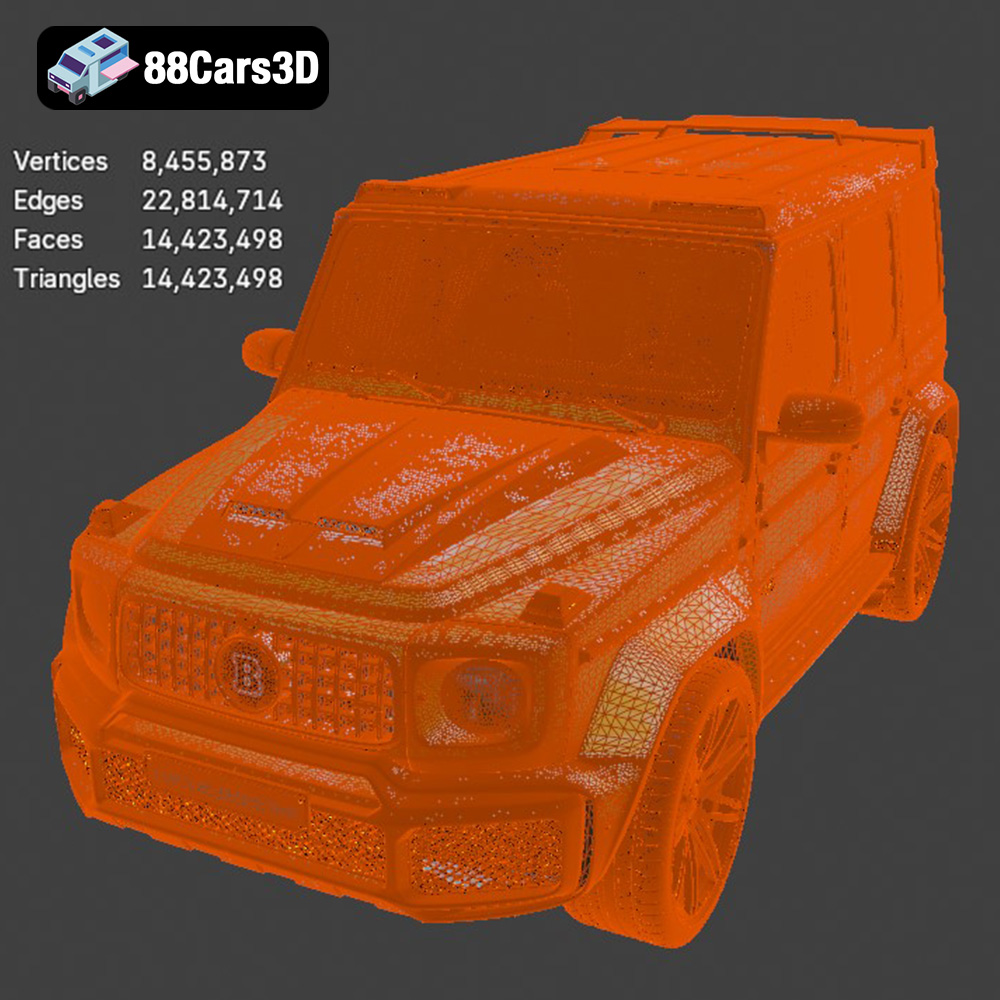
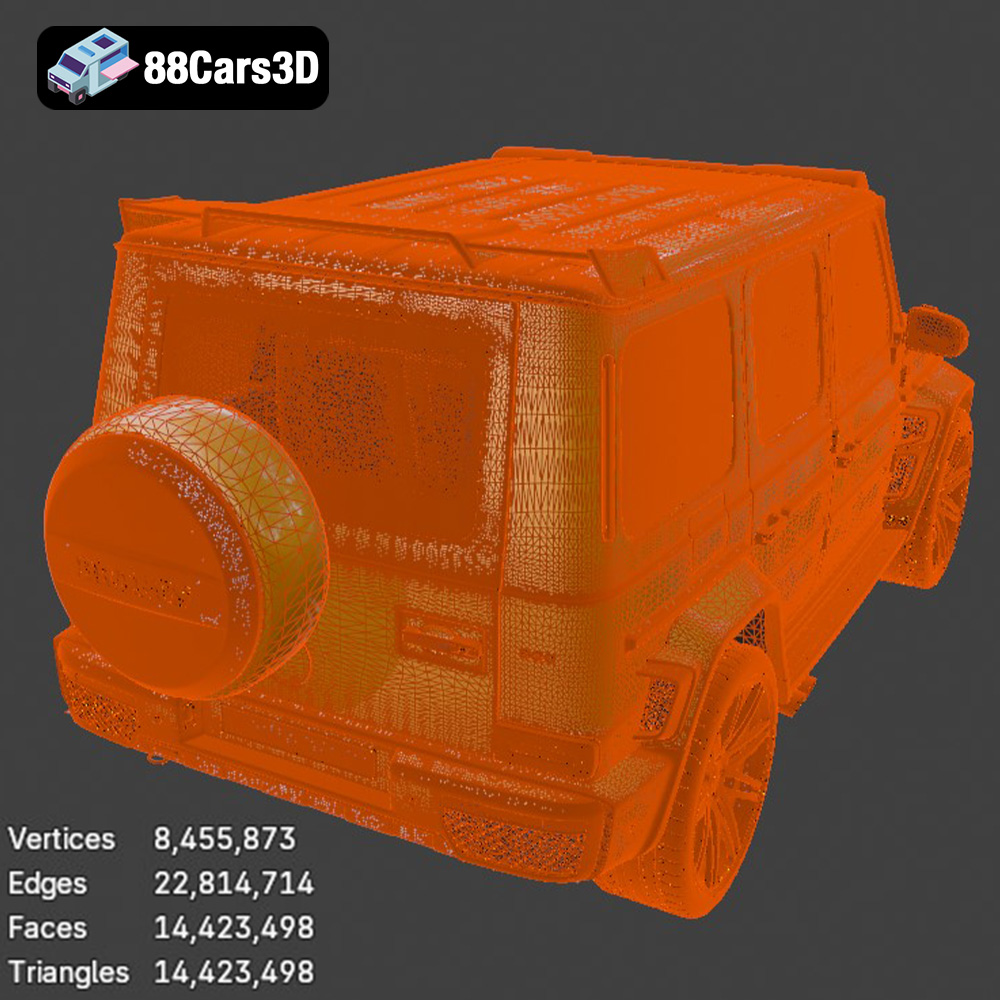
Achieving photorealism in automotive rendering hinges on several critical factors: accurate geometry, realistic materials, sophisticated lighting, and a keen eye for composition. A model like the Brabus G 800, with its impressive 14,423,498 triangles, offers an unparalleled foundation. This high polygon count is not a burden but an asset for high-end rendering. It allows for smooth, nuanced curves, sharp edges, and the faithful representation of intricate details without relying on excessive normal mapping or displacement, leading to cleaner, more accurate reflections and refractions.
Beyond traditional car commercials, high-quality 3D car models are indispensable in architectural visualization (ArchViz) and product rendering. Imagine an opulent mansion render where a Brabus G 800 is parked in the driveway, instantly elevating the scene’s luxury appeal. Or consider a lifestyle product campaign featuring high-end watches or fashion, where the vehicle serves as a sophisticated backdrop. In these scenarios, the car isn’t just a prop; it’s a character that complements and enhances the primary subject.
The demands of game development are unique, requiring a delicate balance between visual fidelity and real-time performance. Modern game engines, particularly Unreal Engine and Unity, are increasingly capable of handling complex assets, making high-fidelity 3D car models like the Brabus G 800 not just desirable but often essential for AAA titles, racing simulators, and open-world experiences.
The statement “Game-Ready & Optimized: 14,423,498 triangles strikes perfect balance for real-time engines (Unreal, Unity) while maintaining high-end visual realism” might seem contradictory at first glance. Traditionally, 14 million triangles would be considered extremely high for a single game asset. However, with advancements like Unreal Engine 5’s Nanite virtualized micropolygon geometry system, managing such high-detail meshes in real-time is becoming increasingly feasible, allowing unprecedented visual quality without sacrificing performance. Even without Nanite, modern engines handle complex assets through intelligent optimization strategies:
For racing games, open-world adventures, or realistic driving simulators, the fidelity of the vehicle directly impacts player immersion. The Brabus G 800’s detailed exterior and interior features contribute significantly to this experience:
Augmented Reality (AR) and Virtual Reality (VR) are revolutionizing how we interact with digital content, offering unparalleled immersion. For the automotive industry, this means virtual showrooms, interactive configurators, and mobile AR experiences that bring vehicles directly to consumers, sometimes literally into their living rooms. High-quality 3D car models are the bedrock of these interactive applications.
Imagine being able to explore the Brabus G 800 in a fully interactive VR environment, opening doors, sitting inside, and even customizing its colors and finishes in real-time. Or viewing the car superimposed on your driveway via AR on your smartphone. These experiences are made possible by optimized 3D models and formats like .glb.
Mobile AR allows users to place 3D models into their real-world environment using a smartphone or tablet. For a luxury SUV like the Brabus G 800, this could mean placing the virtual vehicle in a garage, comparing its size to other cars, or simply admiring its design from any angle. The challenge with mobile AR is balancing visual fidelity with mobile device performance limitations.
While the digital realm offers endless possibilities, there’s a unique satisfaction in holding a physical manifestation of a digital design. 3D printing allows artists, enthusiasts, and even professional designers to create tangible models from their virtual assets. The Brabus G 800 3D model, with its inclusion of the .stl format, caters to this burgeoning segment.
The .stl format is the universal language of 3D printing. Converting a complex automotive model like the Brabus G 800 into a printable .stl requires careful consideration to ensure a successful physical output. The detailed product description provides clear guidance for enthusiasts and hobbyists:
For automotive designers, 3D printing offers a rapid prototyping solution, allowing them to test physical ergonomics or aesthetic proportions before committing to costly full-scale prototypes. For collectors, printing a highly detailed model like the Brabus G 800 offers a unique, personalized piece of automotive art. The accuracy of the digital model translates directly to the precision of the physical print, creating a faithful representation of the iconic vehicle.
In today’s fast-paced creative industries, time is a valuable commodity. Building highly detailed 3D car models from scratch can consume hundreds, if not thousands, of hours. This is where investing in premium, pre-made 3D car models becomes not just a convenience, but a strategic advantage for studios and individual artists alike. Platforms like 88cars3d.com specialize in providing these high-quality assets, ensuring that professionals can focus on their creative vision rather than repetitive modeling tasks.
Acquiring a professionally made 3D model like the Brabus G 800 offers immediate returns:
The strength of a premium model lies not just in its initial quality but also in its adaptability. The Brabus G 800 model explicitly highlights its customization options, making it a versatile asset for diverse projects:
By leveraging assets from a trusted source like 88cars3d.com, creators can streamline their workflows, achieve higher levels of realism, and deliver exceptional results efficiently. The Brabus G 800 model is a prime example of such an asset, empowering professionals to bring their most ambitious automotive visions to life.
The digital frontier of automotive design and visualization is continually expanding, driven by an insatiable demand for realism, immersion, and interactivity. High-fidelity 3D car models are not merely digital representations; they are pivotal tools that empower professionals across diverse industries to innovate and excel. From crafting stunning photorealistic renders for advertising campaigns to building immersive virtual worlds for gaming and AR/VR, the quality of your 3D assets directly correlates with the impact and success of your projects.
The Brabus G 800 3D Model stands as a testament to what is achievable with meticulous craftsmanship in the digital domain. Its intricate detail, robust optimization, and wide array of included file formats make it an invaluable resource for any serious professional. Whether you’re a seasoned game developer pushing the boundaries of real-time graphics, an architectural visualizer adding a touch of luxury to your scenes, or a 3D printing enthusiast bringing iconic vehicles to life, this model offers the foundation for excellence. By choosing premium 3D car models from reputable sources like 88cars3d.com, you invest in quality, efficiency, and the undeniable power to create truly unforgettable digital experiences.
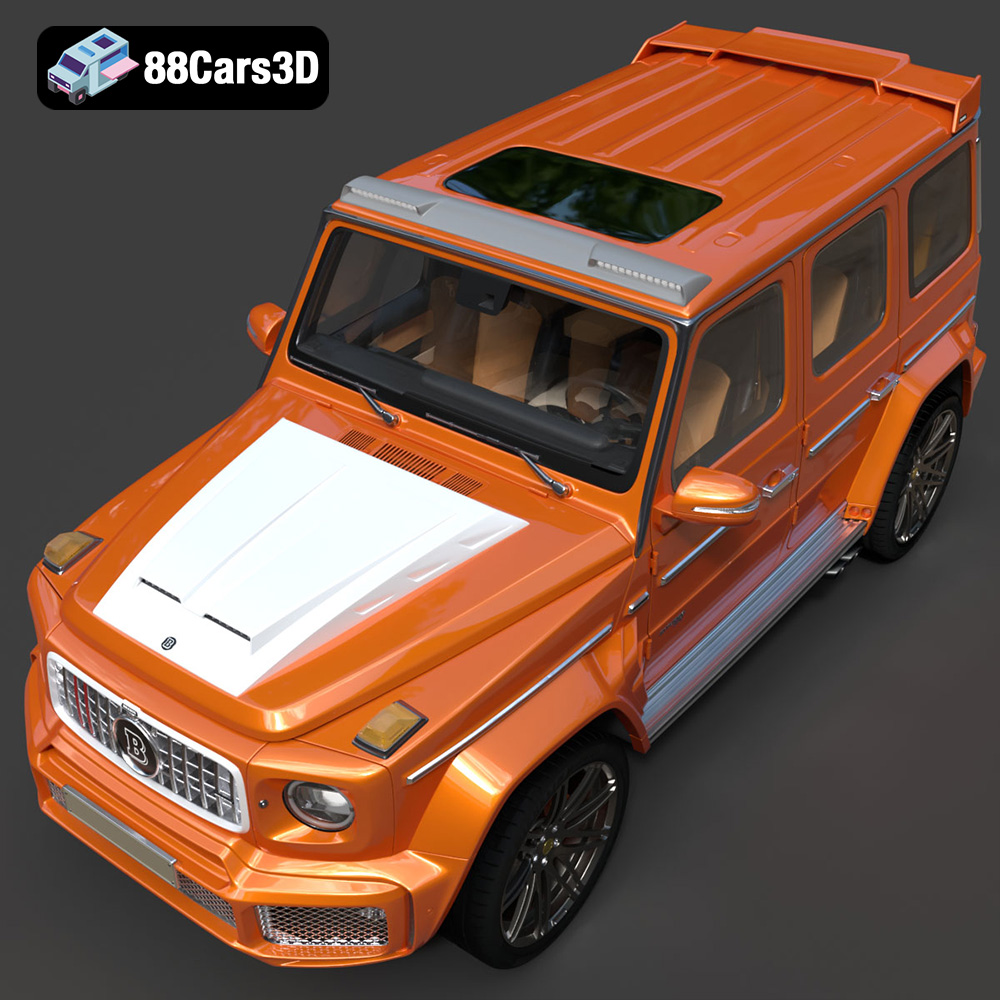
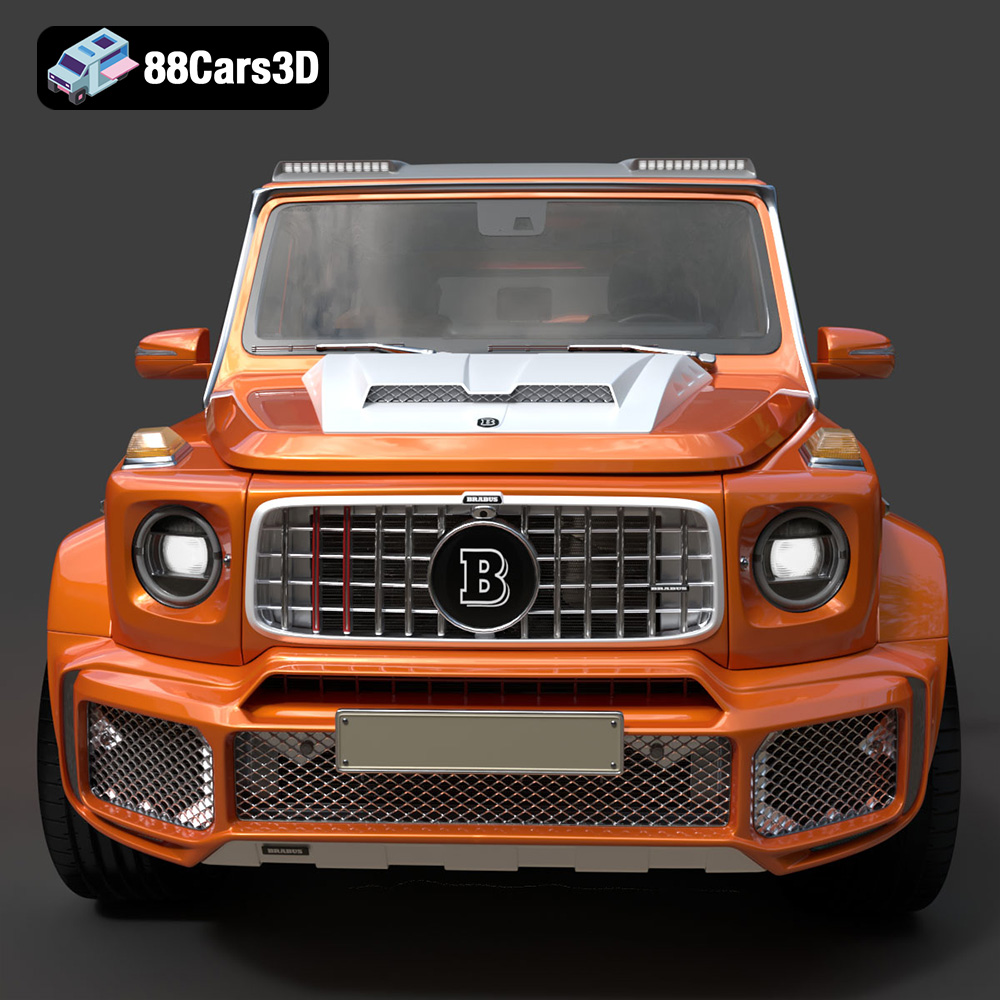
Experience the ultimate expression of luxury and raw power with the Brabus G 800. Based on the legendary G-Class, this masterpiece of automotive engineering features an aggressive widebody kit, signature carbon fiber aerodynamic elements, and iconic side-exit sports exhausts. Known for its imposing boxy stance and twin-turbo V8 powerplant, the G 800 blends off-road heritage with hypercar-level performance aesthetics.
This premium 3D model boasts an incredibly detailed topology of 14,423,498 triangles, delivering unparalleled visual fidelity. Despite its high polygon count, the geometry is meticulously structured for high-end rendering, AAA game development, architectural visualization, and immersive AR/VR experiences. Every curve, carbon weave, and interior stitch has been faithfully recreated.
Perfect for high-end automotive visualizations, luxury lifestyle rendering scenes, interactive VR showrooms, and cinematic animations.
.blend, .fbx, .obj, .glb, .stl, .ply, .unreal, .max
Tags:
brabus, g-800, g-class, luxury-suv, suv, off-road, game-ready, car-3d-model, game-asset, rendering, vr-ar, blend, fbx, obj, glb, stl, ply, unreal, max
$90.00
.blend
.brabus
.fbx
.glb
.luxury suv
.max
.obj
.ply
.rendering
.stl
.unreal
car-3d-model
g-800
g-class
game asset
game-ready
off-road
SUV
VR/AR