Get 20% OFF All Premium 3D & STL Models!

In the dynamic world of 3D visualization, where photorealism meets interactive experience, the demand for high-quality, authentic digital assets is constantly growing. From cinematic automotive rendering to immersive game development and detailed product visualization, creators rely on meticulously crafted models to tell compelling stories and build engaging environments. Among the most sought-after categories are classic vehicles, whose timeless designs and rich history resonate deeply with enthusiasts and designers alike.
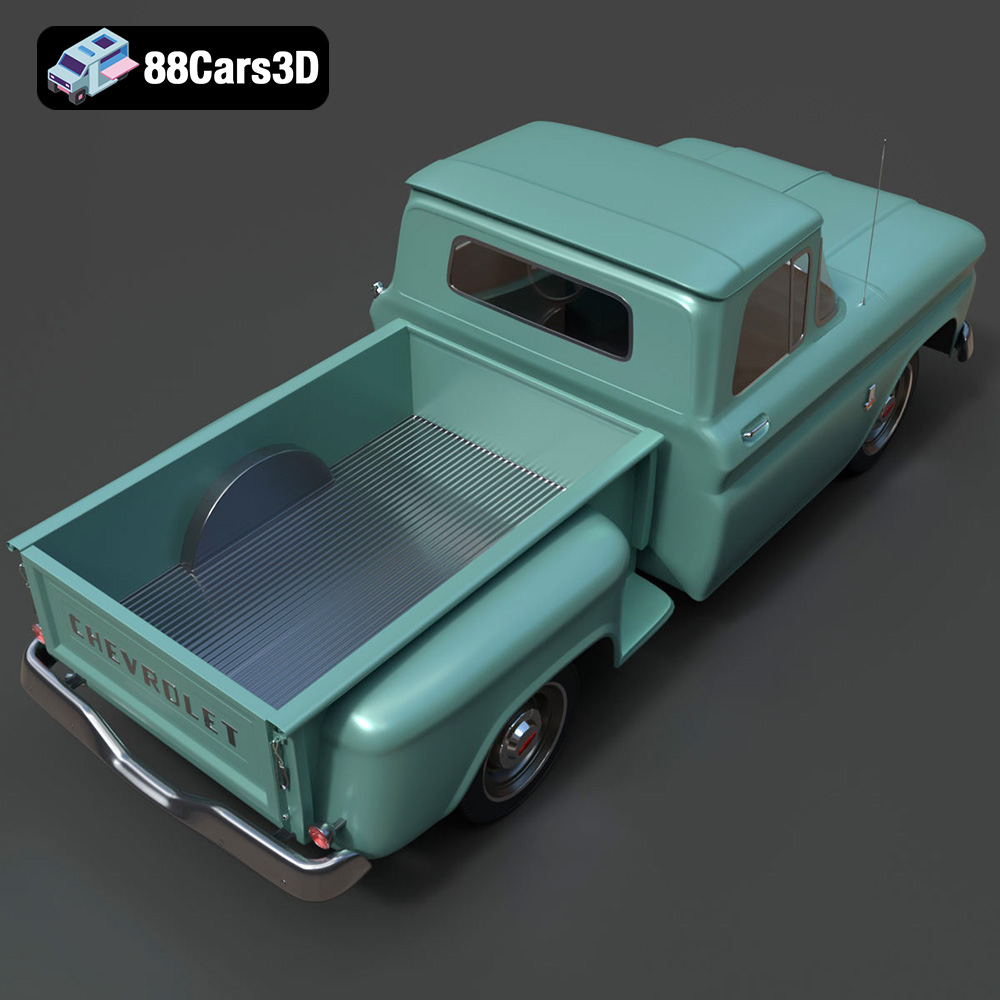
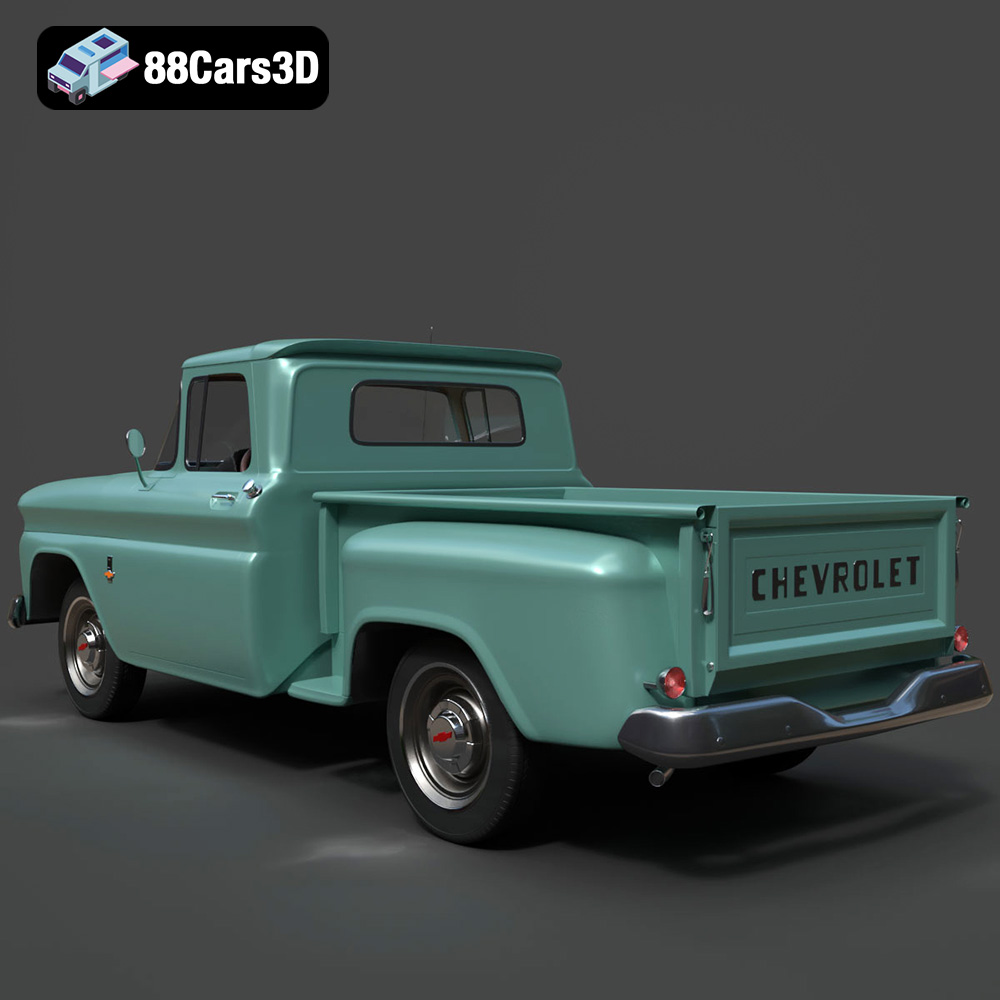
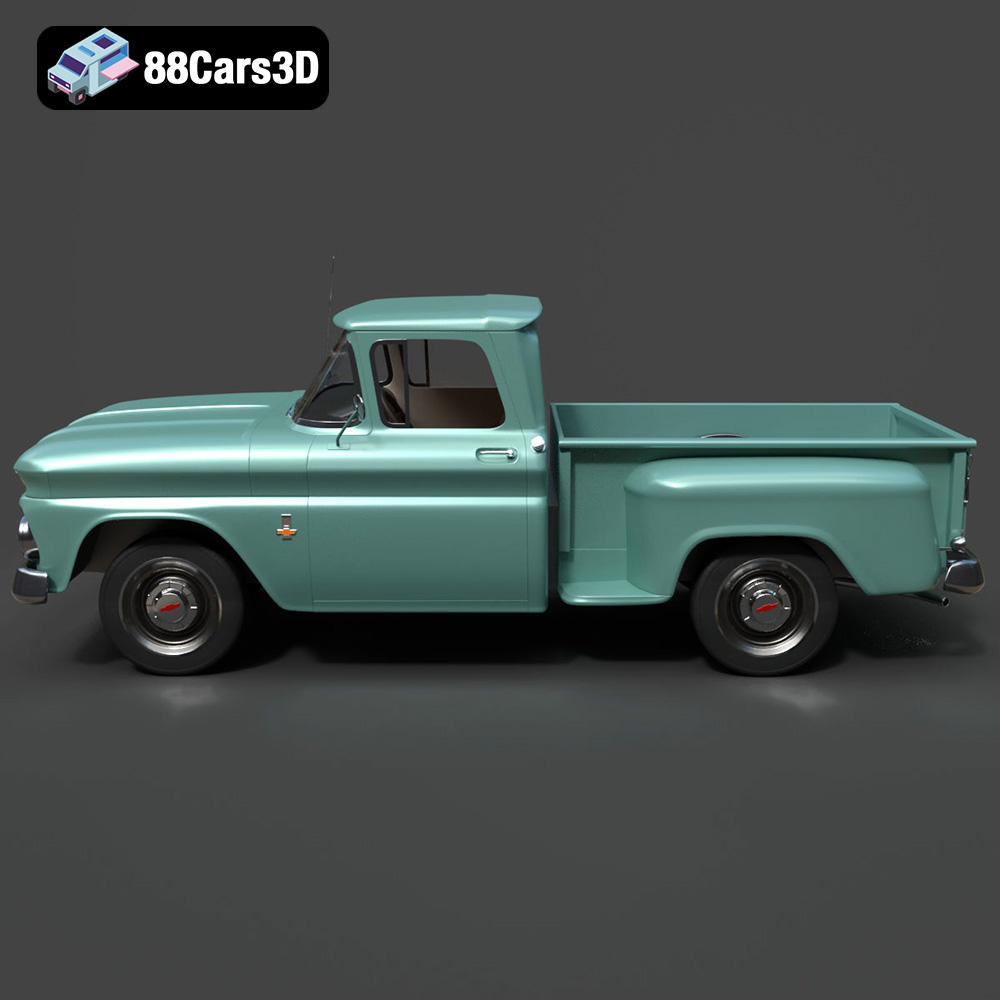
Today, we’re diving deep into an exemplary asset that embodies this blend of history and technical excellence: the Chevrolet C10 (C14) 1963 3D Model. This iconic American pickup truck, celebrated for its distinctive styling and utilitarian charm, has been digitally resurrected with incredible fidelity, offering a versatile foundation for a multitude of professional applications. Whether you’re a game developer seeking authentic game assets, an architect visualizing a classic garage scene, or an artist crafting a nostalgic rendering, this model from 88cars3d.com provides an unparalleled level of detail and optimization.
The first step in leveraging any 3D asset effectively is understanding the various file formats available and when to use them. The Chevrolet C10 (C14) 1963 3D model is provided in an impressive array of formats, ensuring maximum compatibility and flexibility across different software and pipelines. Choosing the right format is crucial for maintaining data integrity, optimizing performance, and achieving your project goals.
The .blend format represents a fully editable Blender scene. For artists and studios primarily operating within Blender, this is often the preferred choice. It encapsulates not just the mesh geometry, but also materials, textures, lighting setups, animations, and even physics simulations, if present. For the C10 model, receiving it as a .blend file means immediate access to its well-structured materials, proper scaling, and potentially even camera setups used during its creation. This allows for deep customization, tweaking shaders, modifying geometry, or easily integrating it into an existing Blender project without loss of information.
.fbx (Filmbox) is a proprietary file format developed by Autodesk, widely recognized as the industry standard for 3D data exchange, especially between content creation software and game engines. Its robust support for geometry, hierarchies, materials, textures, and animations makes it ideal for pipelines involving Unreal Engine, Unity, 3ds Max, Maya, and Cinema 4D. For the C10 model, an .fbx file ensures that the optimized mesh, pivot setups for wheels and suspension, and material assignments transfer seamlessly into a real-time environment, making it a true game-ready asset.
The .obj (Wavefront Object) format is one of the oldest and most universally supported 3D file types. It’s a simple, text-based format that primarily stores mesh geometry (vertices, normals, UVs, faces) and can reference external material (.mtl) files. While it doesn’t support advanced features like animation or scene hierarchies, its widespread compatibility makes it an excellent fallback or starting point for cross-software workflows. If you need to import the C10 into a less common application, or simply want the raw mesh data, .obj is a reliable choice.
.glb (GL Transmission Format Binary) is the binary version of glTF, an open-standard, royalty-free format for 3D scenes and models. Designed for efficient transmission and loading of 3D models in web and mobile applications, it’s increasingly popular for AR, VR, and browser-based 3D viewers. A .glb file of the C10 model is highly optimized, containing the model, textures, and materials in a single, compact file, perfect for showcasing the truck in a virtual showroom or integrating it into an augmented reality experience.
.stl (STereoLithography) is the de facto standard file format for 3D printing. It represents a 3D model as a collection of unconnected triangular facets, defining only the surface geometry without color, texture, or other CAD attributes. For hobbyists and professionals looking to physically manifest the C10, the .stl format is essential. The product description highlights recommended print settings, making the C10 a fantastic candidate for display-scale 3D models, with resin printing recommended for capturing its fine details.
The .ply (Polygon File Format, or Stanford Triangle Format) is another format for storing 3D data, particularly from 3D scanners. It’s designed to be flexible, capable of storing a variety of properties for each vertex, face, or edge, including color, transparency, and normal vectors. While less common for direct asset creation, it’s valuable for precision mesh analysis, CAD applications, or when dealing with highly accurate scanned data. For specialized engineering or simulation tasks involving the C10’s geometry, the .ply format offers a robust option.
While not a traditional standalone file format in the same vein as .fbx or .obj, the inclusion of .unreal implies a pre-packaged asset specifically tailored for direct import or integration into Unreal Engine projects. This often means the asset has already undergone specific optimization, material setup, and possibly even collision mesh generation within an Unreal context, significantly accelerating workflow for game developers and real-time visualization artists. It suggests a “plug-and-play” experience for those working within Epic Games’ powerful engine.
The .max format is the native file type for Autodesk 3ds Max. Similar to .blend, it contains the complete scene data, including geometry, materials, textures, lights, cameras, and animation. For users of 3ds Max, this provides the most comprehensive and editable version of the C10 model, allowing for deep modifications, rigging, animation, and high-fidelity rendering within a familiar environment. This is particularly beneficial for automotive rendering professionals who often rely on 3ds Max for its robust modeling and V-Ray/Corona rendering capabilities.
This extensive range of formats ensures that the Chevrolet C10 (C14) 1963 3D model is not just a high-quality asset, but also an incredibly versatile one, ready to integrate into almost any professional pipeline, making it a valuable investment from 88cars3d.com.
The appeal of classic vehicles lies in their unique character and history. To successfully translate this into a 3D model requires meticulous attention to detail and a deep understanding of automotive design. The Chevrolet C10 (C14) 1963 3D model excels in this regard, offering a digital recreation that captures the true essence of this vintage workhorse.
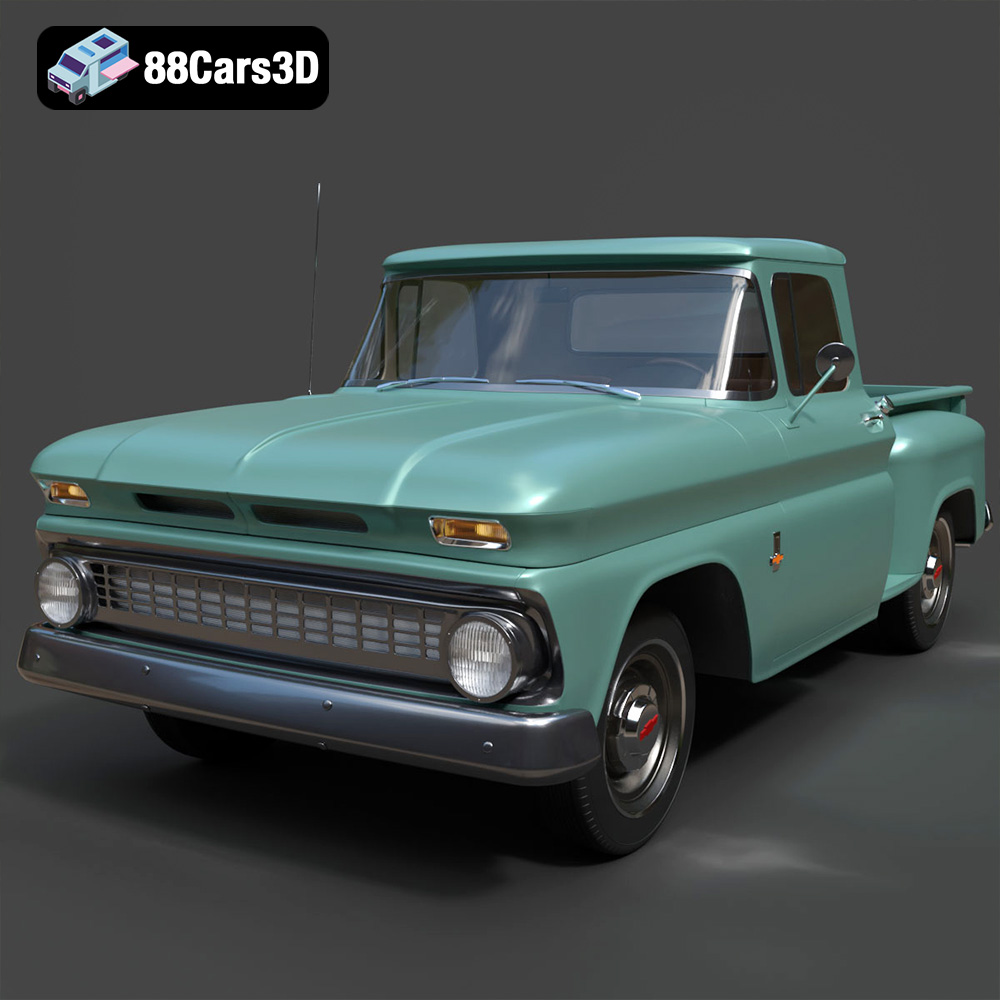
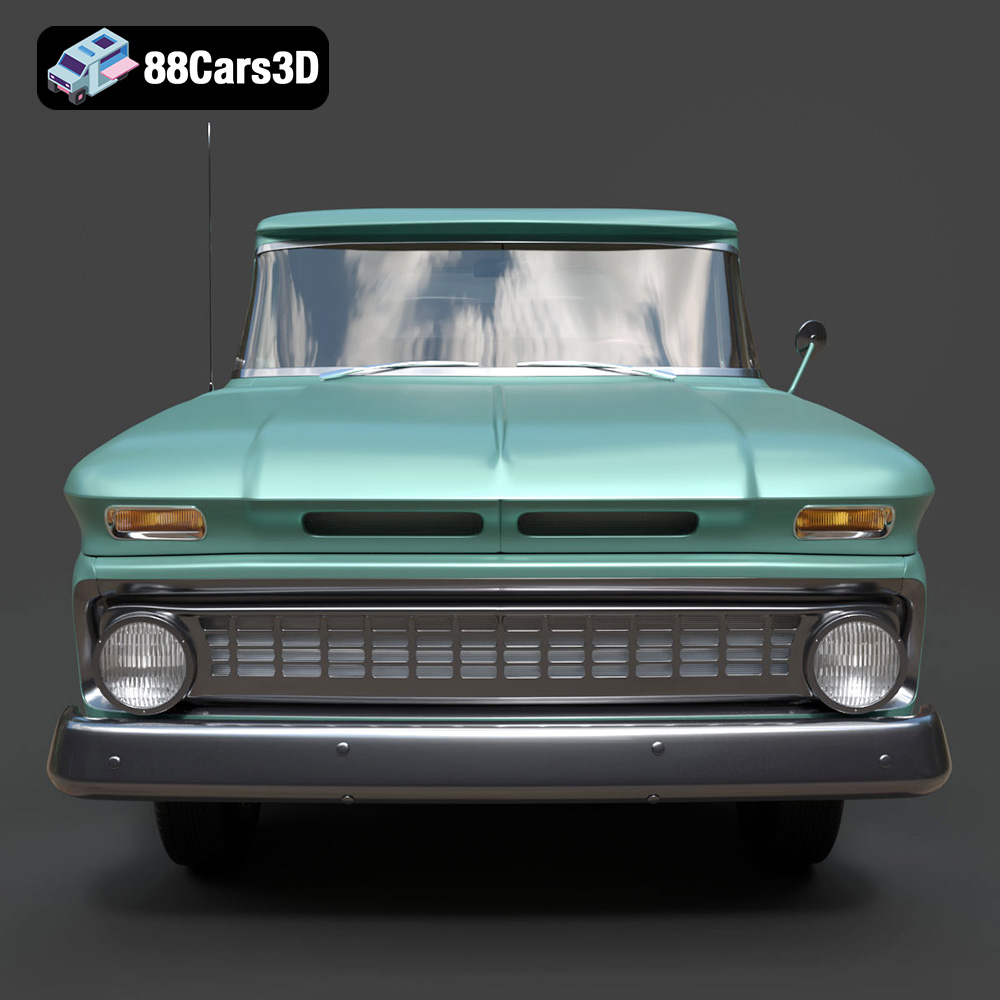
The exterior of the C10 is instantly recognizable, and this 3D model leaves no stone unturned in its accurate portrayal. From the distinctive front grille to the classic step-side or fleet-side body lines, every curve and panel reflects the original design. The model accurately reproduces the ’63 C10’s frame geometry and classic pickup proportions, crucial for maintaining authenticity. Period-correct features such as the round headlights, vintage taillight assemblies, and authentic steel wheels with chrome hubcaps complete the look, making it perfect for photorealistic automotive rendering.
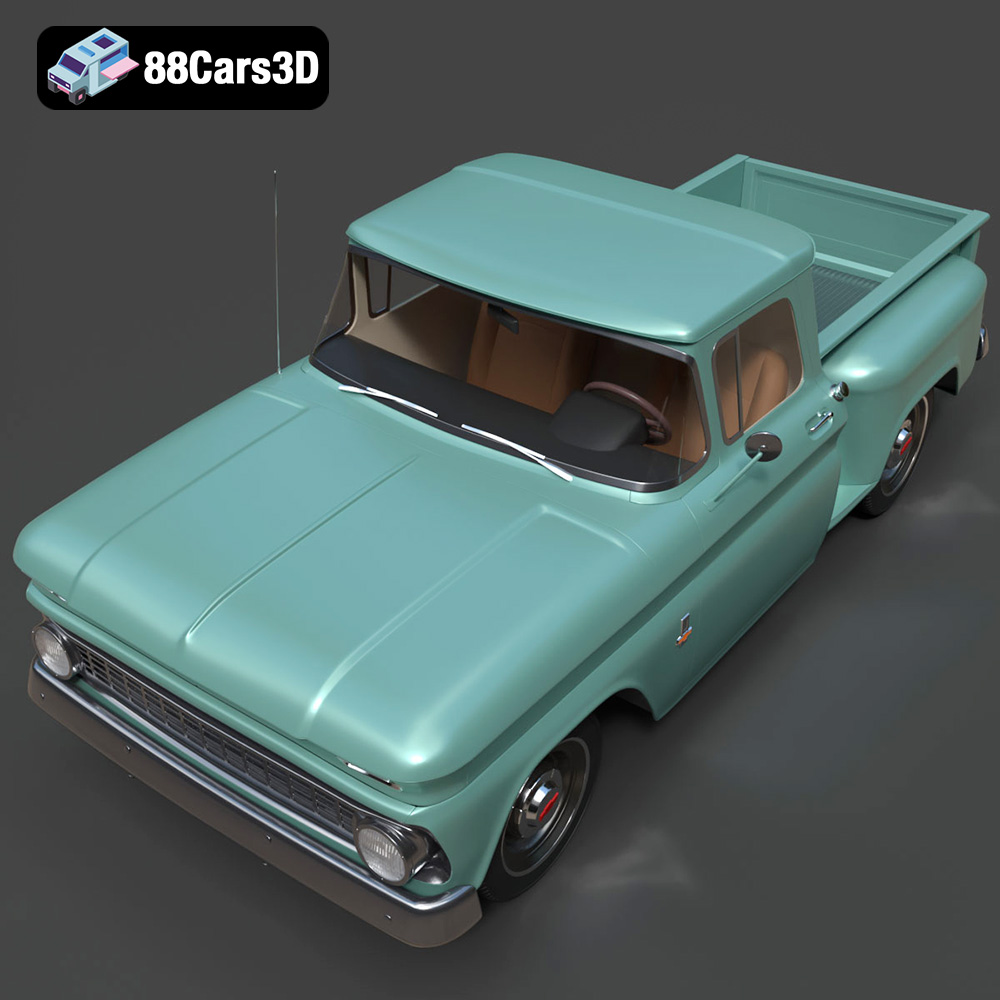
Stepping inside (virtually, of course), the model continues to impress with its detailed cockpit and interior features. The classic vinyl bench seat, complete with authentic stitching, evokes a sense of nostalgia. The vintage large-diameter steering wheel with its horn ring, the accurate instrument cluster displaying classic analog gauges, and detailed dashboard controls all contribute to an immersive experience. For game developers, the optimized geometry ensures it’s suitable for first-person POV, allowing players to truly feel like they’re driving a piece of history.
Beyond the visible surfaces, the C10 model boasts historically accurate mechanical components. This includes a detailed engine block based on classic Chevrolet configurations, an authentic dual or single exhaust system routing, and meticulously modeled leaf spring and independent front suspension components. The inclusion of separate wheels, suspension, and steering components with proper pivot setups is a significant advantage for animators and game developers, allowing for realistic wheel rotation, suspension travel, and dynamic steering. This level of mechanical detail is invaluable for simulations, close-up renders, and interactive experiences where authenticity is paramount.
In the world of 3D, striking the right balance between visual fidelity and performance is a constant challenge, especially for real-time applications. The Chevrolet C10 1963 3D model from 88cars3d.com is a testament to expert optimization, designed to excel in both high-end rendering and demanding game environments.
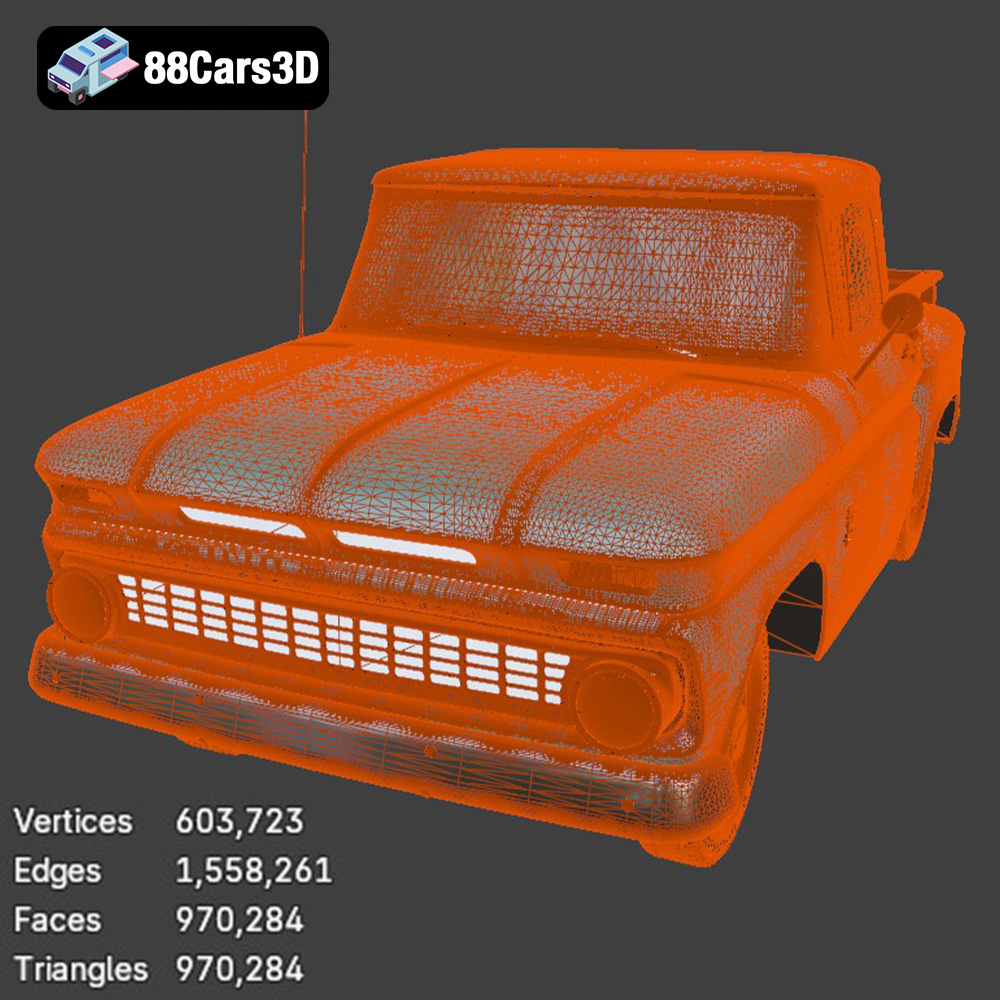
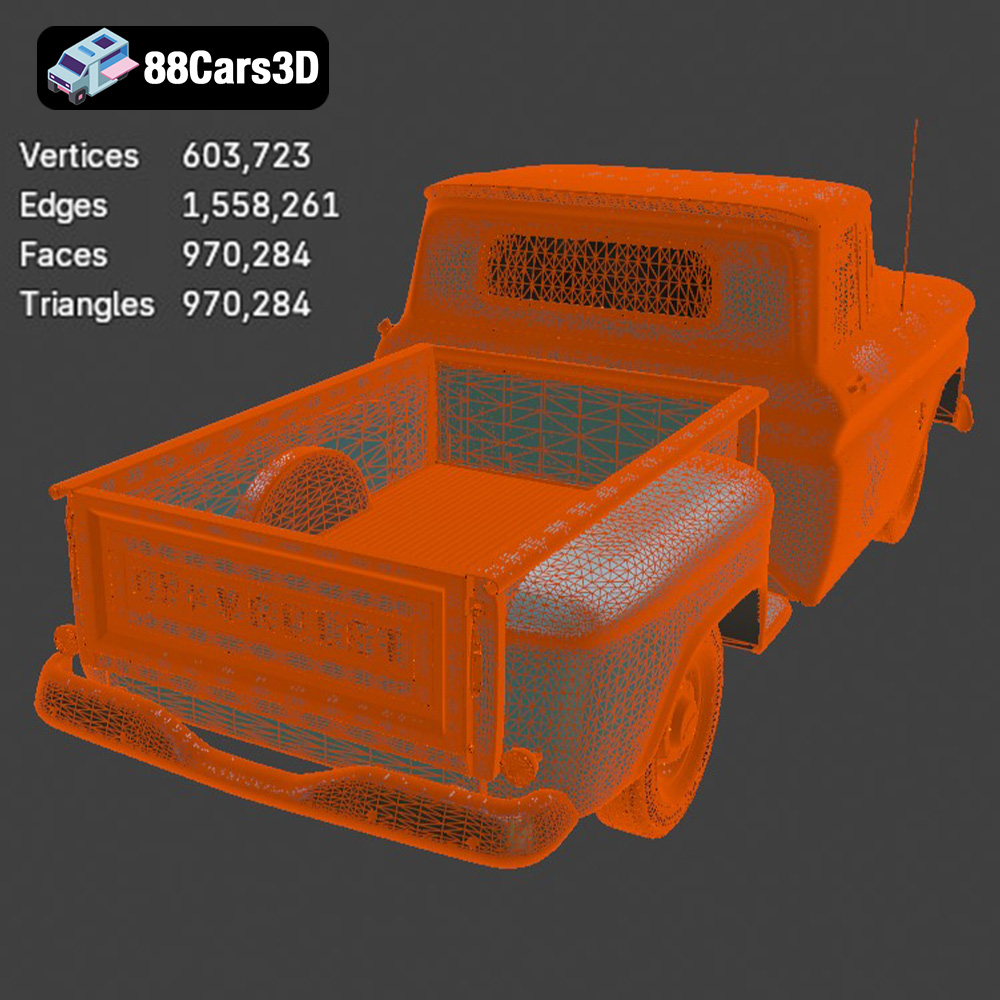
With a highly detailed topology boasting 970,284 triangles, this model occupies a sweet spot for modern 3D asset pipelines. This polycount is substantial enough to deliver exceptional visual realism, capturing the intricate details of the C10’s exterior, interior, and mechanical components without relying heavily on normal maps for primary forms. Simultaneously, it is expertly optimized to prevent unnecessary geometry, ensuring it remains performant enough for real-time engines. This balance means artists don’t have to spend precious time decimating or re-topologizing the model for game use, nor does it look overly simplistic for cinematic renders.
The “game-ready” designation is not merely a marketing term; it reflects practical design choices made for seamless integration. Its accurate geometry and well-structured materials mean it can be dropped directly into popular real-time engines like Unreal Engine and Unity with minimal effort. Developers will find the proper pivot setup for steering, wheel rotation, and suspension travel to be a significant time-saver, eliminating the need for complex rigging from scratch. The provided .fbx and .unreal formats are specifically tailored for these environments, accelerating the development of open-world games, racing titles, and virtual reality experiences where smooth performance and high visual quality are essential.
A truly versatile 3D asset is one that transcends a single purpose, adapting to a wide array of professional needs. The Chevrolet C10 (C14) 1963 3D model’s technical specifications and comprehensive file formats make it suitable for an impressive range of applications, demonstrating its value across multiple industries.
The primary target for many optimized 3D car models, the C10 is an ideal candidate for game development. Its balanced polycount and game-ready optimization make it perfect for integration into open-world games where performance is critical, allowing for dense environments without frame rate drops. In racing titles, the detailed suspension and steering components enable realistic physics simulations, enhancing player immersion. Furthermore, the model’s historical accuracy makes it perfect for period-specific games or simulation titles where authenticity is a key selling point. Imagine this classic truck cruising through a digitally recreated 1960s American landscape or tearing up a dirt track in a vintage racing simulator.
The rise of augmented reality (AR) and virtual reality (VR) has opened new avenues for showcasing products and creating interactive experiences. The C10 model, especially in the optimized .glb format, is perfect for immersive virtual showrooms or configurators. Clients can interact with the vehicle, change colors, view details, and even “sit inside” in a VR environment, experiencing the classic appeal firsthand. For mobile AR experiences, its optimized geometry ensures smooth performance on a range of devices, bringing this American icon directly into users’ real-world surroundings.
Beyond the digital realm, the C10 model offers the exciting possibility of physical creation through 3D printing. The inclusion of the .stl format caters directly to this application, allowing hobbyists and professionals to produce tangible scale models. The product description even provides detailed 3D print settings, recommending resin printing for fine details and specific layer heights and wall thicknesses. This capability allows for creating display pieces, prototypes, or even custom parts, bridging the gap between digital design and physical craftsmanship. Imagine a finely detailed, post-processed model gracing a collector’s shelf.
For professional 3D artists, designers, and developers, efficiency and flexibility are paramount. A premium 3D model like the Chevrolet C10 1963 from 88cars3d.com isn’t just a static asset; it’s a dynamic component that streamlines various production pipelines, offering significant value and saving invaluable time.
Consider a typical workflow involving the C10 model. An artist might start in Blender, using the provided .blend file to customize the model’s materials, perhaps adding a unique paint shader or adjusting the chrome reflections for a specific visual style. Once the aesthetic is dialed in, the model can be exported as an .fbx file, ensuring all necessary mesh data, material assignments, and pivot points are preserved. This .fbx is then imported into Unreal Engine, where the “game-ready” optimization truly shines. Collision meshes can be automatically generated or fine-tuned, and the vehicle can be easily integrated into a vehicle blueprint, ready for driving mechanics and interactive elements in a game or real-time configurator. This seamless transition, supported by multiple robust file formats, minimizes friction and accelerates project timelines.
While the C10 model is highly detailed and accurate out-of-the-box, its structured design also allows for extensive customization. Artists can easily modify body and tank colors to match factory specifications or experiment with custom two-tone finishes. Tire textures can be swapped between off-road and street variants to suit different scenarios. Material finishes can be adjusted, from matte to gloss, metallic, or even an aged patina, adding character and uniqueness. Adapting the lighting for different environments—be it a moody studio setup or a bright outdoor scene—is straightforward, given the clean geometry and material separation. This adaptability means the single C10 model can serve countless unique project requirements without needing to start from scratch.
The true professional value of a model like the Chevrolet C10 1963 lies in its pre-optimization and readiness. The time saved by not having to model a classic vehicle from scratch, research its historical accuracy, or painstakingly optimize its polycount for real-time performance is enormous. When you purchase such an asset from a reputable marketplace like 88cars3d.com, you’re not just buying a mesh; you’re investing in a production-ready solution that empowers your creative process, allowing you to focus on artistic direction and project-specific innovations rather than foundational asset creation. This translates directly into faster project completion, higher quality outputs, and ultimately, greater success in your professional endeavors.
The Chevrolet C10 (C14) 1963 is more than just a classic pickup; it’s an icon, and its digital rendition as a high-quality 3D model offers immense potential for professionals across various disciplines. From its meticulously crafted exterior and interior details to its historically accurate mechanical components, this asset delivers unparalleled authenticity.
The careful optimization, boasting 970,284 triangles, strikes a perfect balance between visual fidelity and real-time performance, making it an ideal choice for demanding applications like game development and immersive AR/VR experiences. Furthermore, its comprehensive suite of file formats – including .blend, .fbx, .obj, .glb, .stl, .ply, .unreal, and .max – ensures seamless integration into virtually any professional workflow, from advanced automotive rendering in 3ds Max to 3D printing for physical models. This versatility, combined with the ease of customization and the inherent time-saving benefits of using a pre-optimized asset, makes the Chevrolet C10 1963 3D model a highly valuable investment.
For anyone seeking to elevate their projects with a truly iconic and technically robust 3D car model, the Chevrolet C10 (C14) 1963 from 88cars3d.com is an exceptional choice. It’s not just a model; it’s a gateway to bringing history to life in stunning detail and performance.
Experience the timeless appeal of the Chevrolet C10 (C14) 1963, a true icon of American automotive history. This legendary pickup truck is celebrated for its distinctive front grille, classic step-side or fleet-side body lines, and rugged utilitarian heritage. Our meticulously crafted 3D model captures the essence of this vintage workhorse, featuring authentic exterior styling cues, a detailed engine bay, and historically accurate mechanical components that made the ’63 C10 a favorite among truck enthusiasts.
Boasting a highly detailed topology with 970,284 triangles, this model is expertly optimized to deliver exceptional visual fidelity without compromising performance. Whether you’re creating a realistic virtual environment, building a high-octane racing game, or producing photorealistic cinematic renders, this game-ready asset provides the perfect foundation. Its accurate geometry and well-structured materials ensure seamless integration into modern real-time engines like Unreal Engine and Unity.
Perfect for open-world games, vintage car configurators, cinematic animations, and virtual reality showroom experiences.
.blend, .fbx, .obj, .glb, .stl, .ply, .unreal, .max
Tags:
chevrolet, c10-c14, 1963, pickup-truck, classic-truck, classic-car, game-ready, optimized, car-3d-model, game-asset, rendering, vr-ar, blend, fbx, obj, glb, stl, ply, unreal, max
$60.99
.1963
.blend
.chevrolet
.fbx
.glb
.max
.obj
.ply
.rendering
.stl
.unreal
c10-c14
car-3d-model
classic-car
classic-truck
game asset
game-ready
optimized
pickup-truck
VR/AR