Get 20% OFF All Premium 3D & STL Models!

In today’s rapidly evolving digital landscape, the demand for high-quality 3D assets is insatiable. From photorealistic automotive rendering for marketing campaigns to immersive game environments and groundbreaking AR/VR experiences, the need for meticulously crafted 3D models stands at the forefront of innovation. Automotive design, in particular, thrives on precision and visual fidelity, where every curve, reflection, and material finish contributes to the overall realism and user engagement. This is where expertly engineered 3D car models become indispensable tools for professionals across various industries.
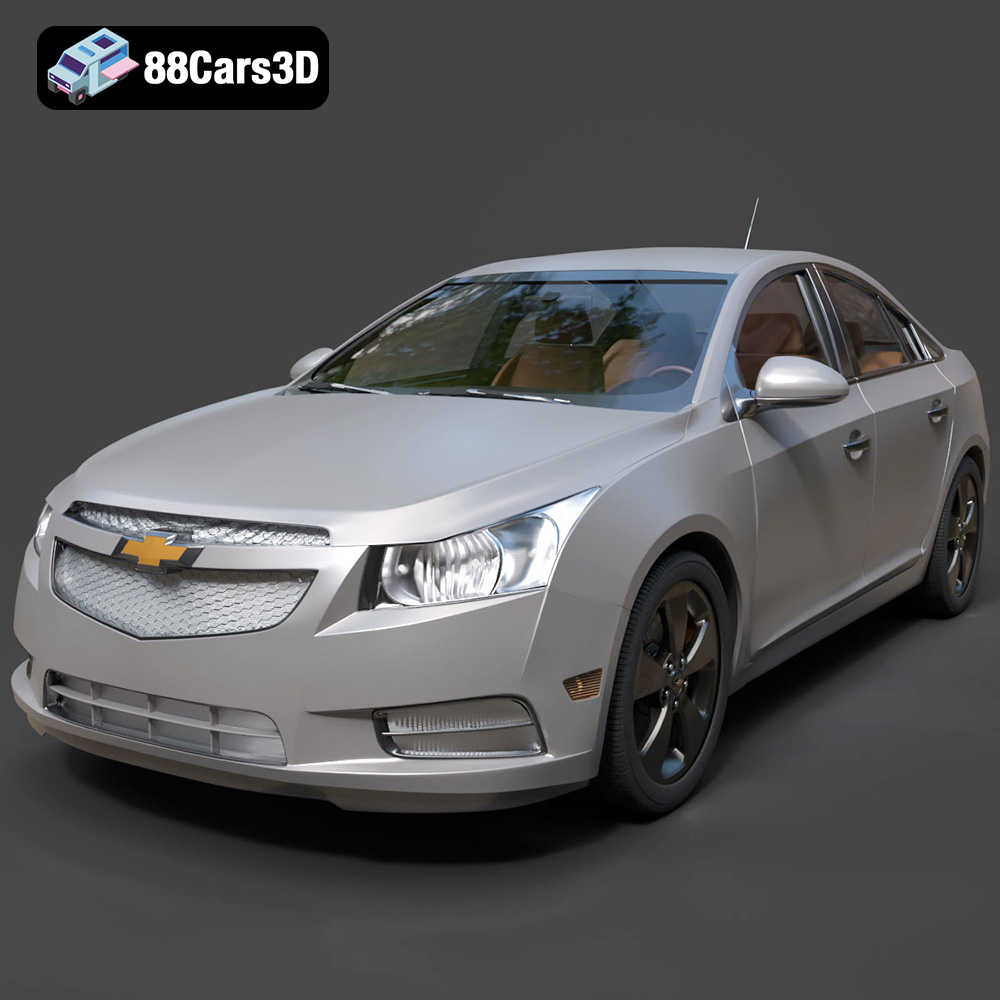
At 88cars3d.com, we understand this critical need, offering a curated selection of premium 3D vehicle assets designed to elevate any project. Take, for instance, the Chevrolet Cruze 2011 3D Model – a prime example of a versatile, game-ready asset that combines intricate detail with optimal performance. This model doesn’t just represent a car; it embodies a commitment to technical excellence, ready to be deployed in a myriad of applications, from driving simulations in Unreal Engine to detailed architectural visualizations and even physical 3D prints.
The journey of a 3D model from creation to implementation often involves navigating a diverse ecosystem of file formats. Each format is designed with specific use cases and software environments in mind, offering unique advantages in terms of compatibility, data preservation, and optimization. Understanding these differences is crucial for any professional working with 3D assets, ensuring smooth workflows and maximum project efficiency.
The .blend format is native to Blender, the popular open-source 3D creation suite. A .blend file is a comprehensive package, storing not just the mesh geometry but also materials, textures, lighting setups, animations, physics simulations, and even scene layouts. This makes it an ideal choice for artists who primarily work within Blender, as it preserves all editable elements of the scene. For the Chevrolet Cruze 2011 model, having a .blend file means you get a fully editable project, allowing for deep customization of everything from material properties to internal rigging and animation controls. It’s the ultimate format for artists seeking full creative freedom and direct access to the model’s construction.
.fbx (Filmbox) is arguably the most widely adopted interchange format in the 3D industry, especially prevalent in game development and animation pipelines. Developed by Autodesk, .fbx excels at preserving a wide range of data, including geometry, animation, skinning, blend shapes, cameras, and lights, making it highly compatible across different 3D software packages like 3ds Max, Maya, and Blender, as well as game engines like Unreal Engine and Unity. Its robust nature makes it ideal for transferring complex animated scenes and rigged characters. For game-ready assets like the Chevrolet Cruze 2011, an .fbx file ensures that the optimized mesh, correctly set pivots, and any pre-rigged components for wheels and suspension are seamlessly integrated into your engine of choice, making it a cornerstone for real-time applications.
The .obj (Wavefront Object) format is a venerable and highly universal standard for 3D geometry. It’s an excellent choice for basic mesh data, including vertices, faces, UV coordinates, and normals. While it doesn’t typically store advanced features like animation or complex material setups directly (materials are usually handled by an accompanying .mtl file), its widespread support makes it an indispensable format for cross-software compatibility. If you need to import the Chevrolet Cruze 2011 into almost any 3D application, .obj will likely be supported, offering a reliable bridge for static mesh data, making it a versatile option for archival or basic scene assembly.
.glb (GLB format, derived from glTF, Graphics Language Transmission Format) is an increasingly important format optimized for efficient transmission and loading of 3D scenes and models, particularly in web-based applications, augmented reality (AR), and virtual reality (VR). It packages 3D model data (geometry, materials, textures, animations) into a single file, making it incredibly streamlined for quick deployment and real-time display. For AR/VR projects featuring the Chevrolet Cruze 2011, a .glb file ensures that the model loads quickly and displays accurately in mobile AR apps or web-based 3D viewers, providing an excellent user experience without sacrificing visual quality.
.stl (STereoLithography) is the de facto standard for 3D printing. It represents a 3D model as a series of connected triangles, describing only the surface geometry of an object without color, texture, or other CAD attributes. While simple, its universal acceptance by 3D printers and slicing software makes it essential for physical output. The inclusion of an .stl format for the Chevrolet Cruze 2011 means hobbyists, product designers, or educators can easily prepare the model for physical fabrication, producing scale models for display or prototyping. This directly opens up avenues for tangible interaction with the digital asset.
.ply (Polygon File Format) is a versatile format capable of storing a wide range of 3D data, including geometry, color, transparency, and sometimes even texture coordinates and normal information. It’s often used for scanned data, point clouds, and models requiring precise geometric representation, frequently found in scientific visualization, CAD, and advanced analysis software. For highly accurate reproductions or detailed inspections of the Chevrolet Cruze 2011’s mesh structure, the .ply format can be beneficial, especially for applications where data integrity and precision are paramount.
The .unreal format, while not a standalone file type in the same vein as .fbx or .obj, refers to assets specifically prepared and optimized for direct import into Unreal Engine projects. This often means the model has already been processed with appropriate materials, LODs (Levels of Detail), collision meshes, and pivot points configured to Unreal Engine’s specifications. For game developers or architectural visualizers working in Unreal Engine, a .unreal-ready Chevrolet Cruze 2011 model means significantly reduced setup time and immediate integration into their real-time environments, bypassing common import hurdles and accelerating project timelines.
Similar to .blend for Blender, the .max format is the native file type for Autodesk 3ds Max, a powerful 3D modeling, animation, rendering, and visualization software package. A .max file contains a complete 3ds Max scene, encompassing geometry, materials, lighting, cameras, animations, and various modifiers and plugins applied within the software. This format offers maximum flexibility for professionals who use 3ds Max as their primary tool, allowing them to access and modify every aspect of the Chevrolet Cruze 2011 model with all its native setup intact, making it ideal for high-end rendering and complex animation tasks.
Creating a truly exceptional 3D car model is a delicate balance between artistic interpretation and rigorous technical execution. It requires an eye for aesthetic detail combined with a deep understanding of polygon budgets, topology, and material physics. The Chevrolet Cruze 2011 3D model from 88cars3d.com exemplifies this philosophy, showcasing a meticulous approach to automotive digital asset creation.
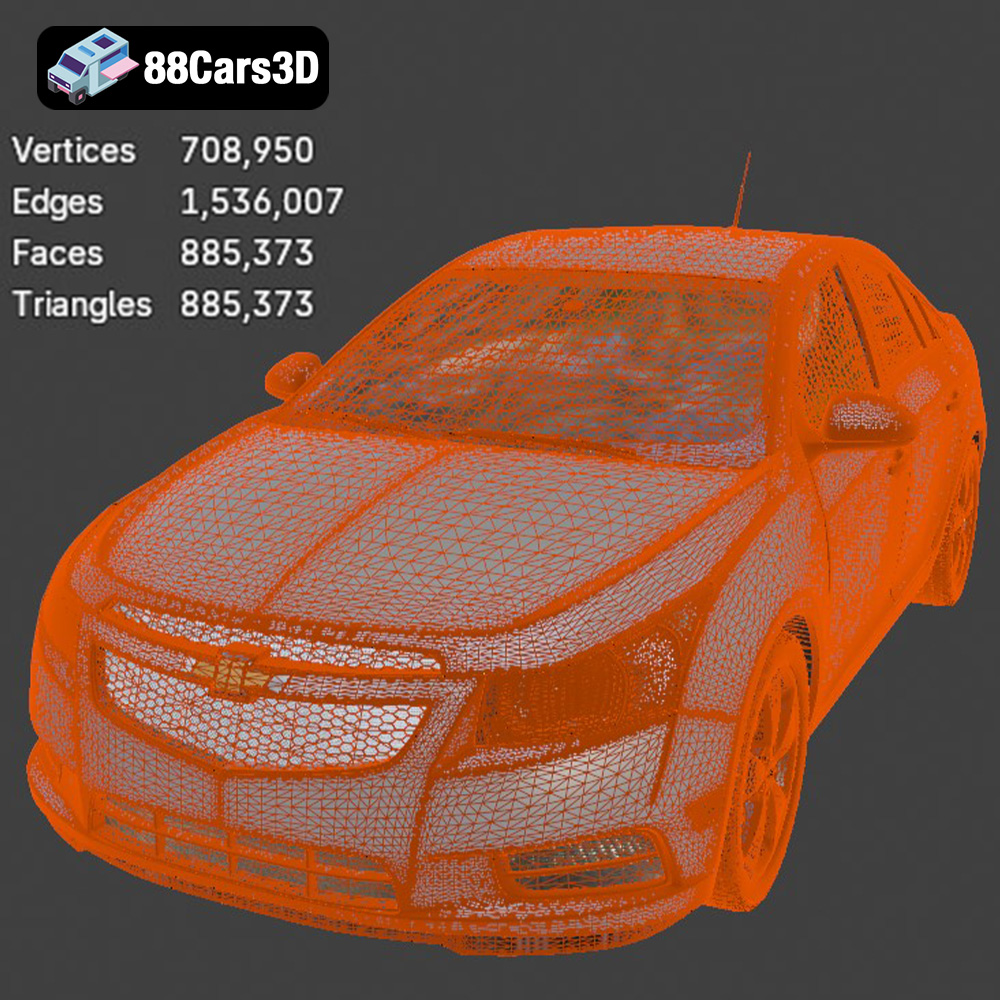
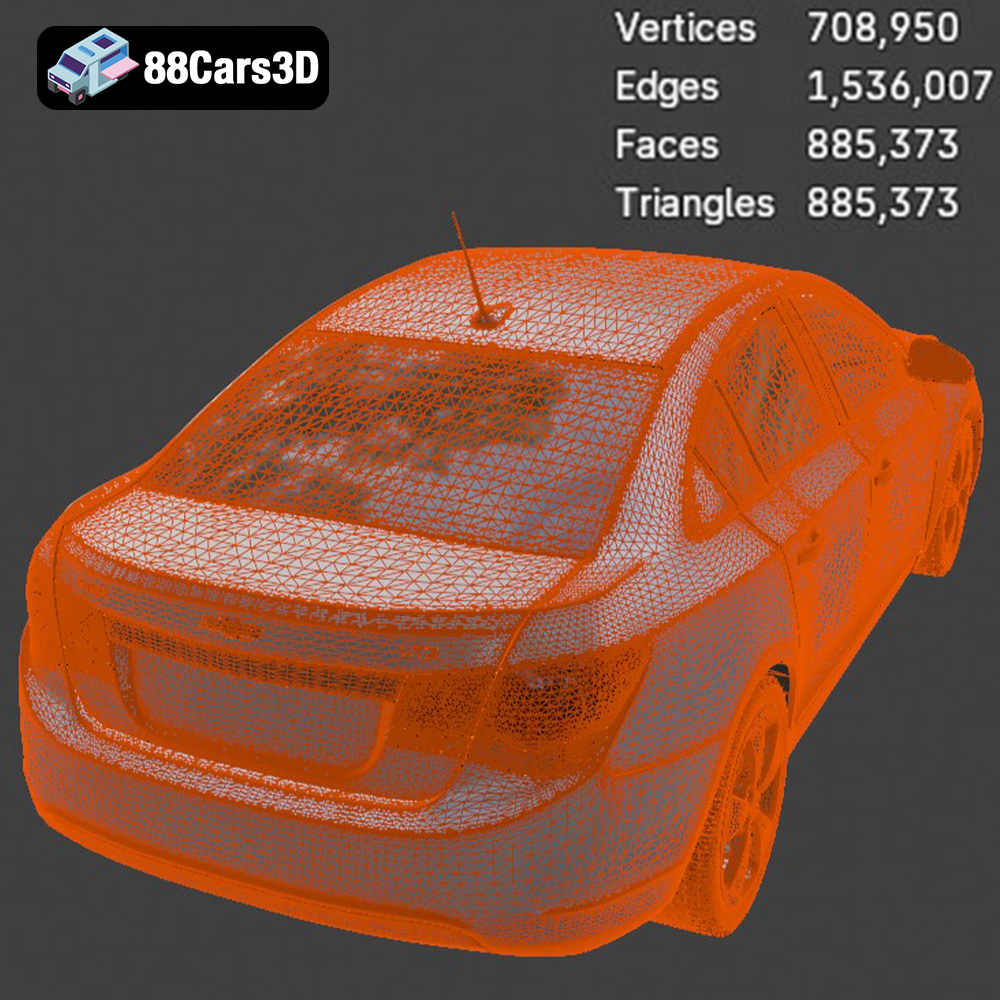
At the heart of any high-quality 3D model is its topology – the arrangement of vertices, edges, and faces that form the mesh. The Chevrolet Cruze 2011 model boasts a finely tuned topology of 885,373 triangles. This polycount strikes a crucial balance: it’s high enough to capture the subtle curves and sharp lines of the actual vehicle without being overly dense, which could hinder real-time performance. The “pristine edge loops” mentioned in its description are vital for smooth subdivision, clean deformations during animation, and preventing visual artifacts. These careful considerations ensure that the model looks breathtaking, whether it’s bathed in the ray-traced glory of an offline render or interacting with dynamic real-time lighting in a game engine.
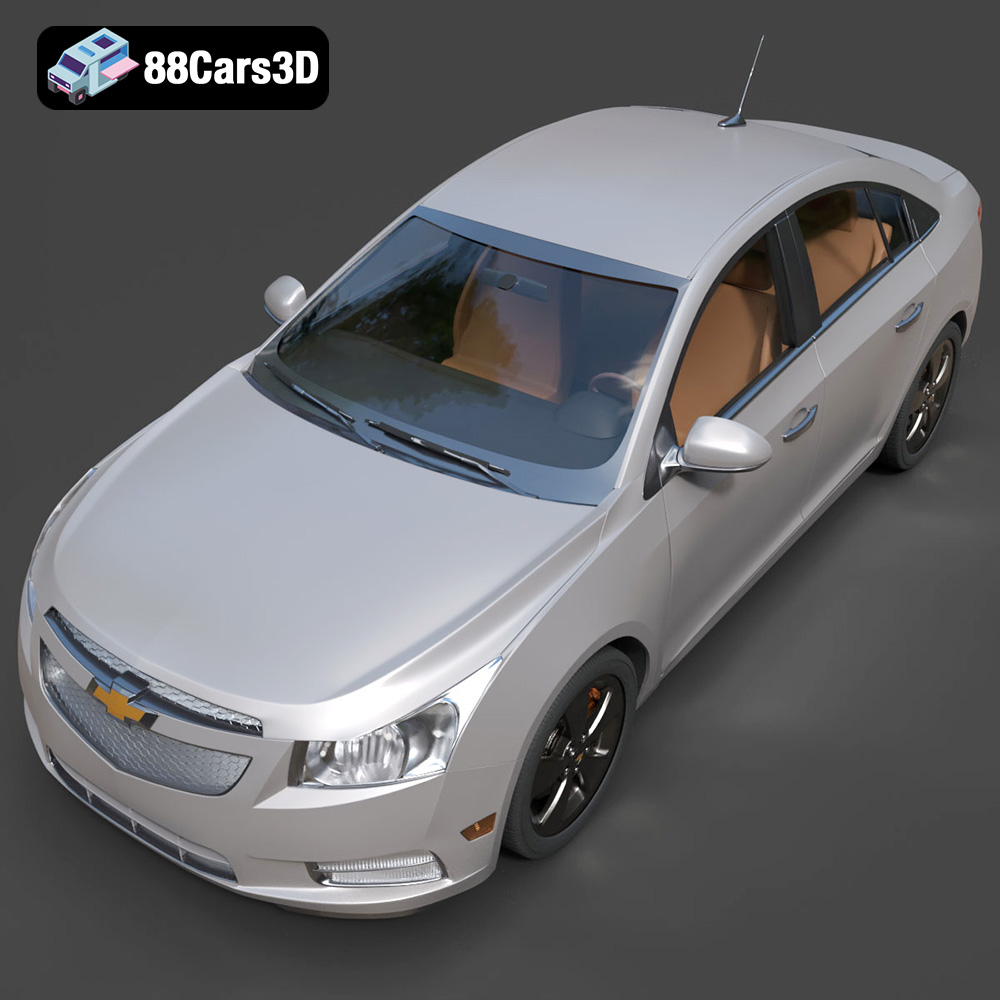
The realism doesn’t stop at the exterior. The Chevrolet Cruze 2011 model extends its fidelity to the interior, featuring a detailed twin-cockpit design with cloth and leather textured seats. The accurate multi-function steering wheel, instrument cluster with twin-binnacle gauges, intricate center console controls, infotainment unit, and gear shifter are all modeled with precision. This level of interior detail is crucial for applications demanding a first-person perspective, such as virtual reality driving simulations or immersive open-world games.
The versatility of a well-crafted 3D car model like the Chevrolet Cruze 2011 allows it to seamlessly integrate into diverse professional pipelines, offering significant value across multiple industries.
For game developers, performance is king, but visual quality is a close second. The Chevrolet Cruze 2011 model’s “Game-Ready & Optimized” status makes it an invaluable asset. Its 885,373 triangle count strikes an ideal balance, ensuring it can be used effectively in demanding real-time environments without excessively taxing system resources. It’s perfect for:
Augmented Reality (AR) and Virtual Reality (VR) are transforming how we interact with digital content. High-quality 3D models are the backbone of these immersive experiences. The Chevrolet Cruze 2011 is ideally suited for:
Beyond interactive experiences, high-fidelity 3D car models are essential for static renders and cinematic sequences. The Chevrolet Cruze 2011 model’s pristine topology and smooth surface reflections are designed to excel in these scenarios:
The utility of a robust 3D model extends beyond the digital realm. With advancements in 3D printing technology, digital assets can be transformed into tangible objects, offering new avenues for prototyping, display, and educational purposes. The Chevrolet Cruze 2011 3D model is designed with this capability in mind, offering an .stl file format specifically for additive manufacturing.
Converting a high-detail rendering model into a 3D printable object requires careful consideration of physical constraints. The .stl format provided is tailored for this purpose, representing the model’s geometry in a triangulated mesh format universally recognized by 3D slicing software.
The journey from a raw 3D print to a display-worthy model involves diligent post-processing. The suggestion of sanding, priming, and applying authentic factory colors with metallic finishes allows enthusiasts to replicate the real-world aesthetic of the Chevrolet Cruze 2011, blurring the lines between digital fidelity and physical reality. This aspect opens up the 3D model to a broader audience, including model kit builders, educators, and anyone interested in bringing their digital assets into the physical world.
One of the significant advantages of purchasing a professional-grade 3D car model from a source like 88cars3d.com is the inherent flexibility it offers for customization and iterative design. A high-quality base model serves as a robust foundation upon which endless variations can be built, saving immense amounts of time and resources compared to modeling from scratch.
The Chevrolet Cruze 2011 model comes with several customization options, allowing artists and designers to adapt its appearance to suit specific project requirements:
A static 3D model is just the beginning. Its true power lies in its adaptability. The Chevrolet Cruze 2011 model can be seamlessly integrated into various environments:
This level of flexibility transforms the Chevrolet Cruze 2011 3D model into a dynamic asset, capable of evolving with project needs and creative visions. It underscores the value of investing in a well-constructed base model that offers both visual fidelity and practical adaptability.
In the dynamic worlds of game development, architectural visualization, AR/VR, and cinematic rendering, the foundation of any compelling visual experience is the quality of its 3D assets. A high-fidelity, meticulously optimized 3D car model is more than just a digital object; it’s a critical tool that empowers artists and developers to realize their creative visions with precision and efficiency. The detailed exploration of the Chevrolet Cruze 2011 3D Model underscores the technical excellence and versatility demanded by today’s professional workflows.
From its finely tuned topology and game-ready optimization to its comprehensive interior detailing and broad range of included file formats (.blend, .fbx, .obj, .glb, .stl, .ply, .unreal, .max), this model exemplifies what a premium digital asset should offer. It streamlines development for real-time engines, enhances immersion in AR/VR, elevates the realism of renders, and even bridges the gap to physical reality through 3D printing. Investing in such a robust asset minimizes production hurdles, maximizes creative freedom, and ensures that your projects stand out in a competitive digital landscape.
For professionals seeking to integrate unparalleled realism and performance into their projects, high-quality 3D car models like the Chevrolet Cruze 2011 are indispensable. Explore this and many other exceptional 3D car models that drive digital excellence at 88cars3d.com, where quality meets innovation.
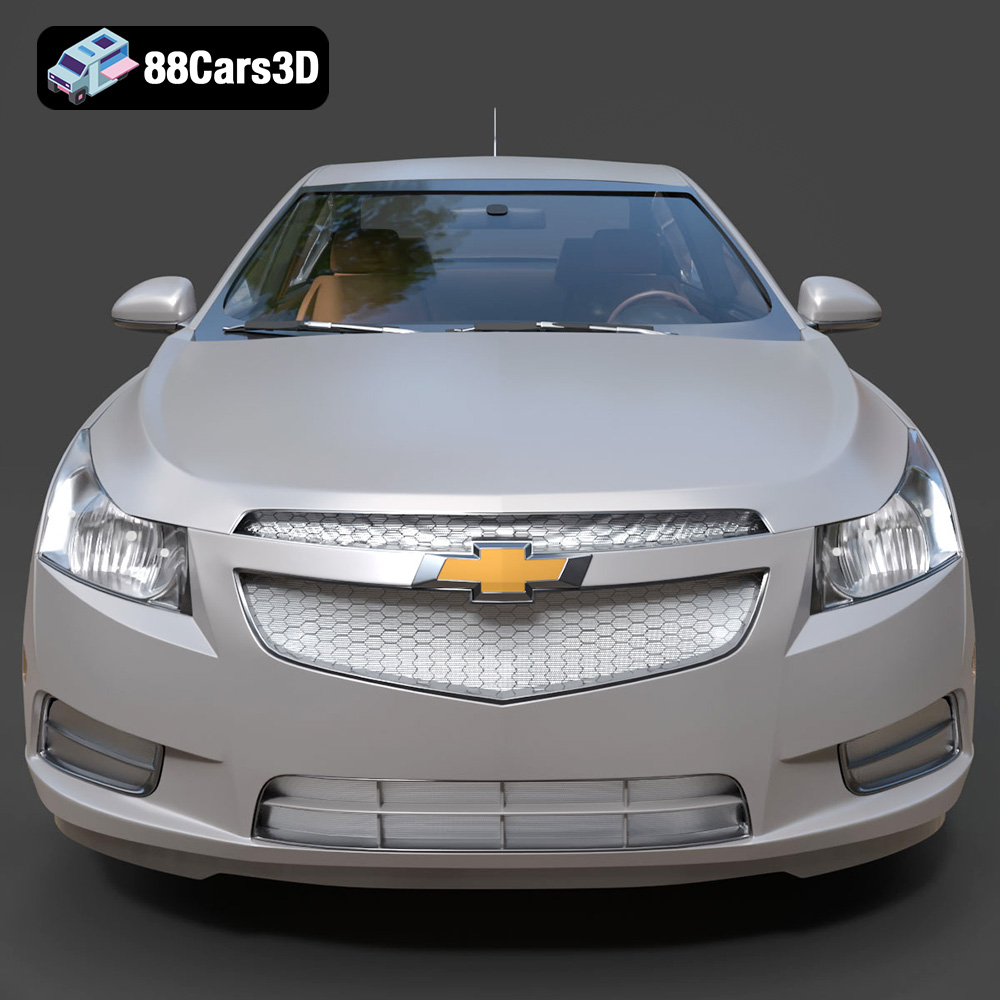
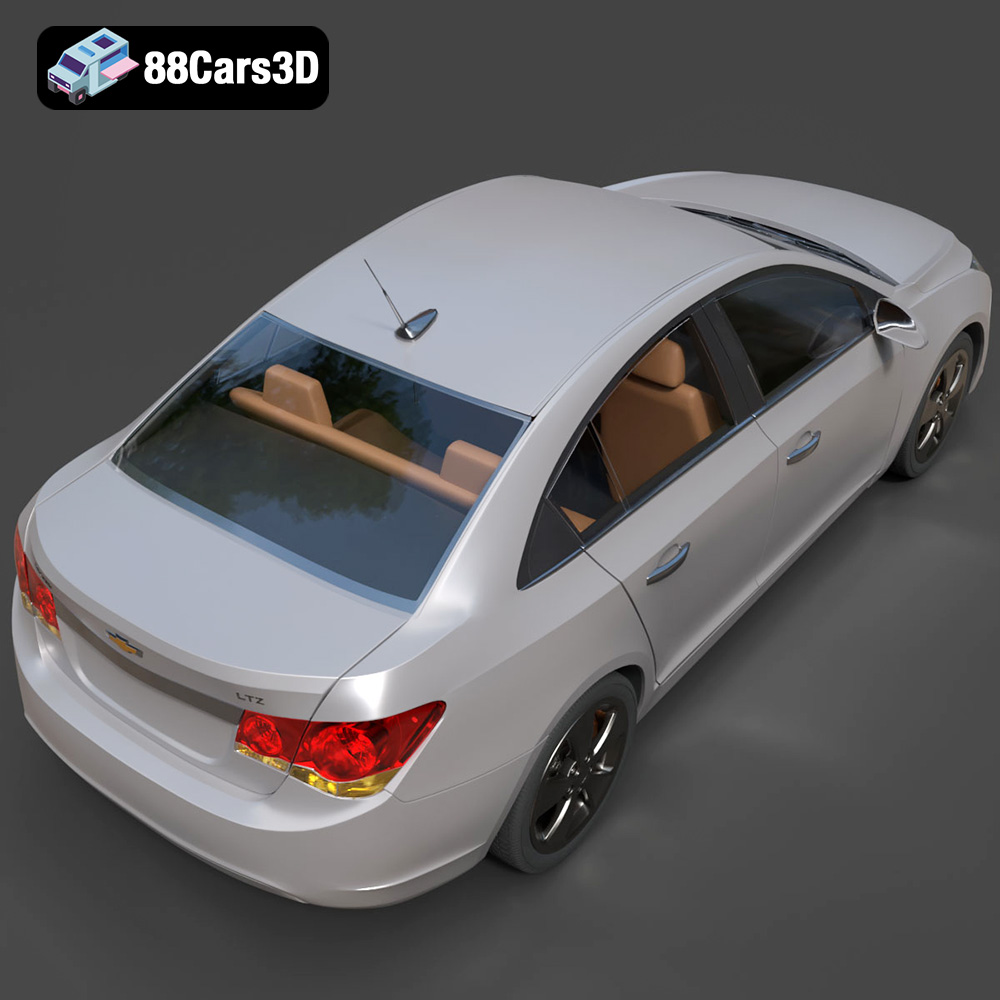
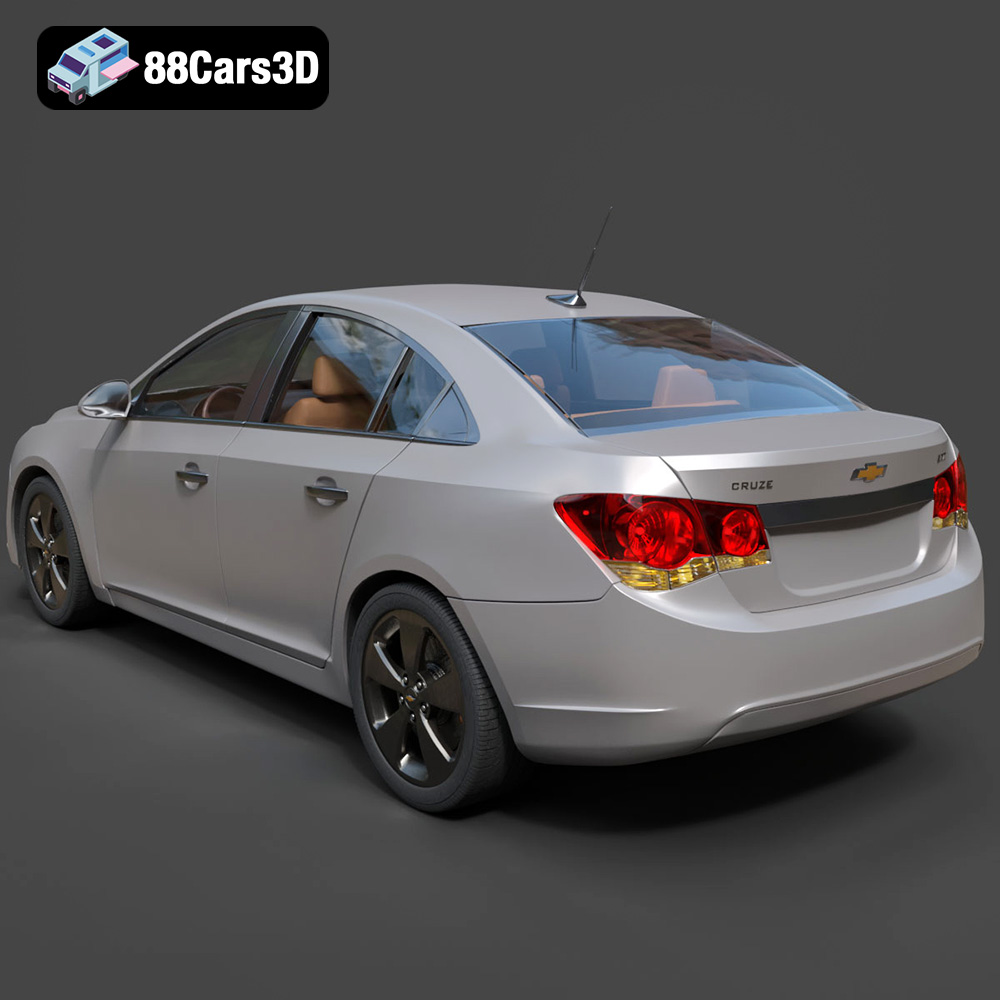
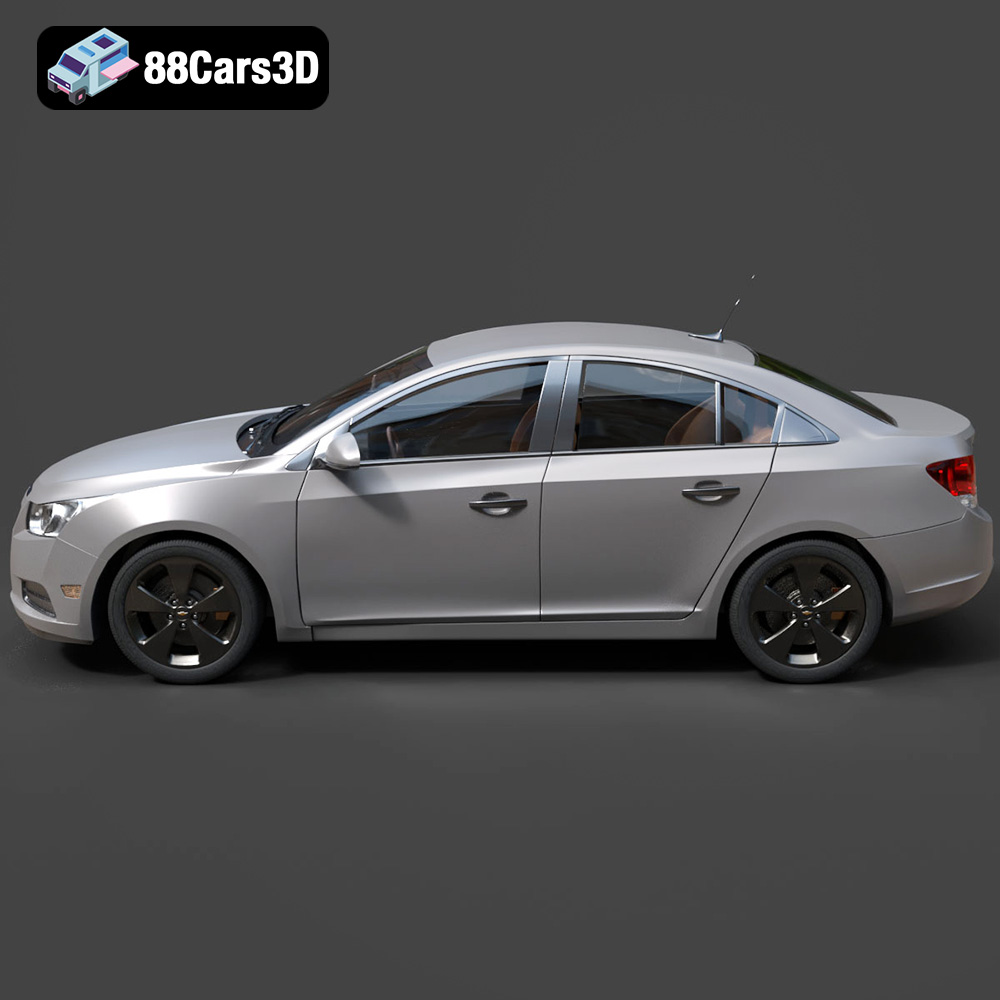
The Chevrolet Cruze 2011 represents a pivotal shift in the compact sedan market, boasting sharp styling, solid build quality, and a well-appointed interior. Key visual elements include the signature Chevrolet dual-port front grille, sweeping halogen headlights, an aerodynamic roofline, and well-proportioned rear styling that gives it an assertive, planted stance. This 3D model features exceptional quality with a finely tuned topology of 885,373 triangles. It is meticulously optimized for game engines while preserving high visual fidelity. The pristine edge loops and smooth surface reflections ensure the model looks breathtaking in real-time lighting scenarios and offline rendering setups alike. It is the perfect digital asset for game development, AR/VR projects, cinematic animation, and architectural visualization.
$58.50
.2011
.blend
.chevrolet
.cruze
.fbx
.glb
.max
.obj
.ply
.rendering
.sedan
.stl
.unreal
car-3d-model
compact-car
game asset
game-ready
low-poly
optimized
VR/AR