Get 20% OFF All Premium 3D & STL Models!

In the rapidly evolving landscape of digital content creation, the demand for high-fidelity 3D car models is more pronounced than ever. From blockbuster video games and immersive virtual reality experiences to photorealistic architectural visualizations and cinematic rendering, vehicles serve as critical elements that bring digital environments to life. Achieving true realism requires meticulously crafted assets that not only look authentic but are also technically optimized for performance across a myriad of platforms.
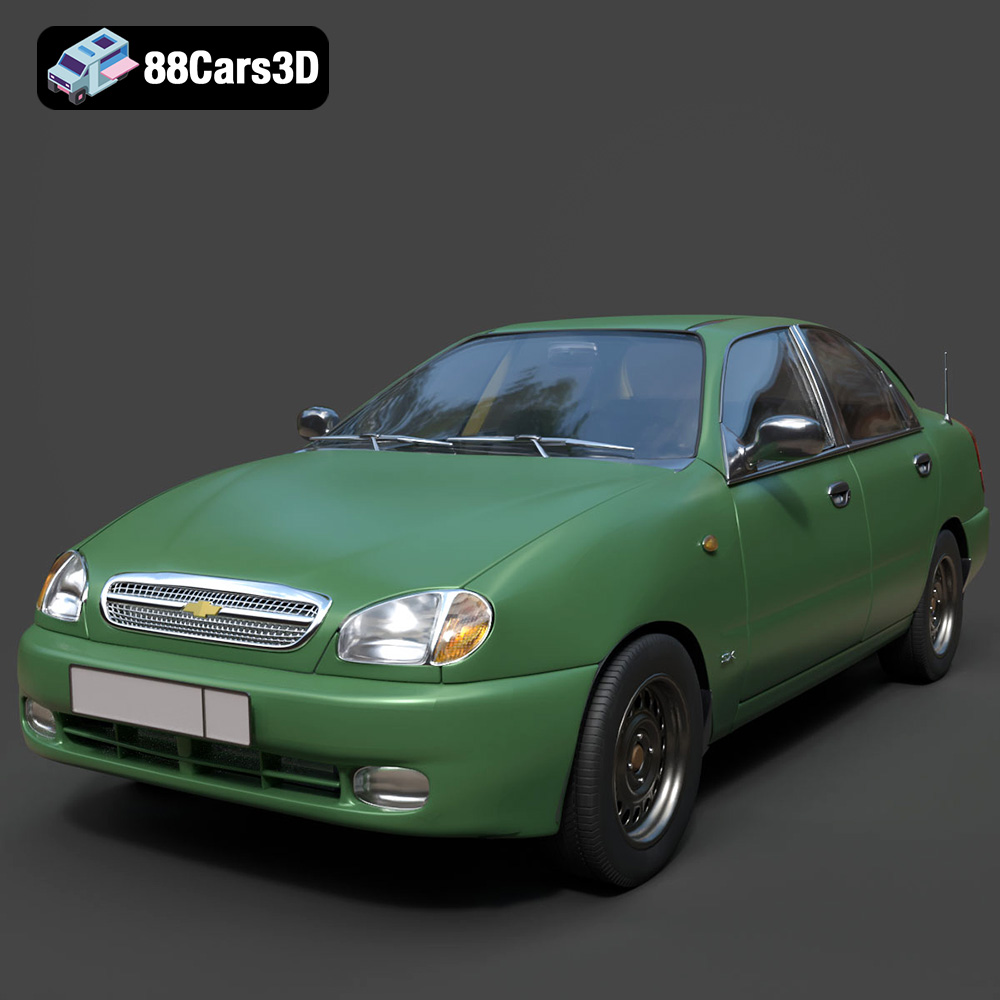
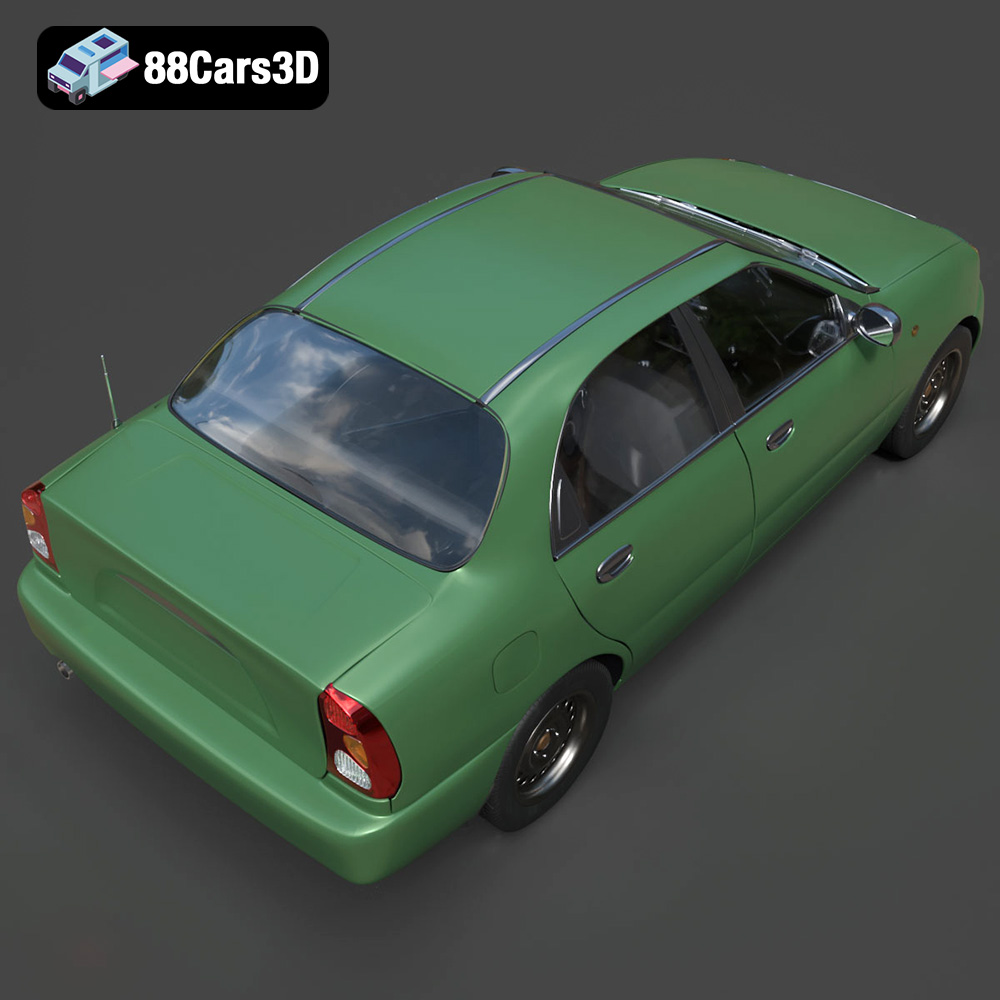
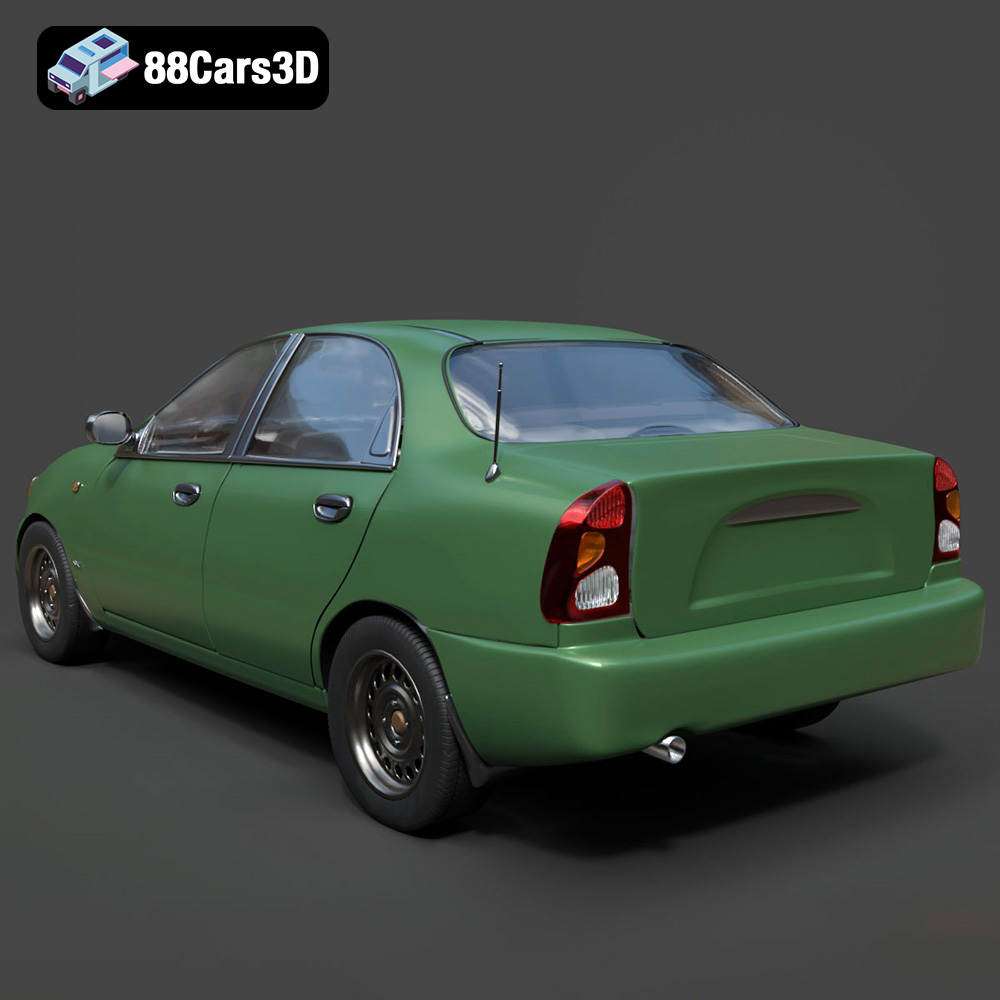
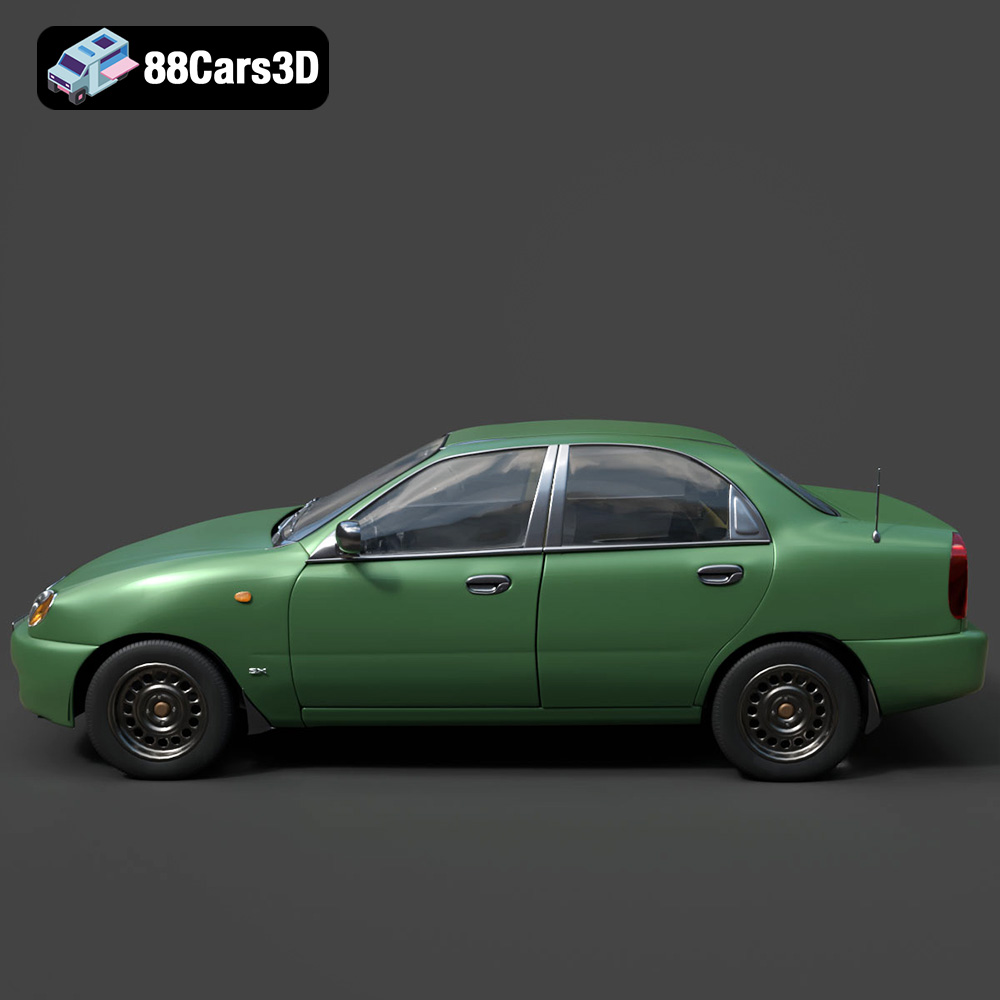
Understanding this critical need, platforms like 88cars3d.com specialize in providing artists, developers, and designers with top-tier 3D models. These assets are engineered to meet the stringent demands of professional production pipelines, offering a blend of aesthetic precision and technical efficiency. A prime example of such an asset is the Chevrolet Lanos 2008 3D Model, a versatile and highly detailed representation of a common urban vehicle. This model exemplifies how a well-constructed asset can effortlessly transition between various digital applications, enriching projects with its authentic presence.
Modern game engines and rendering software push the boundaries of visual fidelity, and with it, the expectations for individual assets have skyrocketed. Generic placeholders no longer suffice for projects aiming for a photorealistic or deeply immersive feel. Whether it’s a protagonist’s hero car, traffic populating an open-world city, or a vehicle subtly enhancing an architectural render, each model must withstand close scrutiny. This necessitates models built with accurate proportions, detailed surface features, and optimized geometry.
For automotive designers, marketing agencies, and product configurator developers, 3D car models bridge the gap between abstract concepts and tangible digital representations. They allow for rapid iteration, visualization of different finishes, and placement within diverse environments without the expense and time constraints of physical prototypes. The ability to manipulate and present a vehicle like the Chevrolet Lanos 2008 in a digital space offers unparalleled flexibility and cost-effectiveness in design and marketing.
The world of 3D modeling relies heavily on a diverse array of file formats, each serving specific purposes and catering to different software ecosystems or application types. Choosing the correct format is paramount for ensuring compatibility, preserving data integrity, and optimizing performance in your intended workflow. The Chevrolet Lanos 2008 3D Model offers a comprehensive suite of formats, ensuring maximum flexibility for any project.
Creating a high-quality 3D car model is a sophisticated blend of artistic intuition and technical precision. The Chevrolet Lanos 2008 3D Model from 88cars3d.com is a testament to this philosophy, meticulously designed to be both visually compelling and highly functional across various digital environments. It captures the utilitarian charm of the original vehicle while ensuring it’s ready for demanding production pipelines.
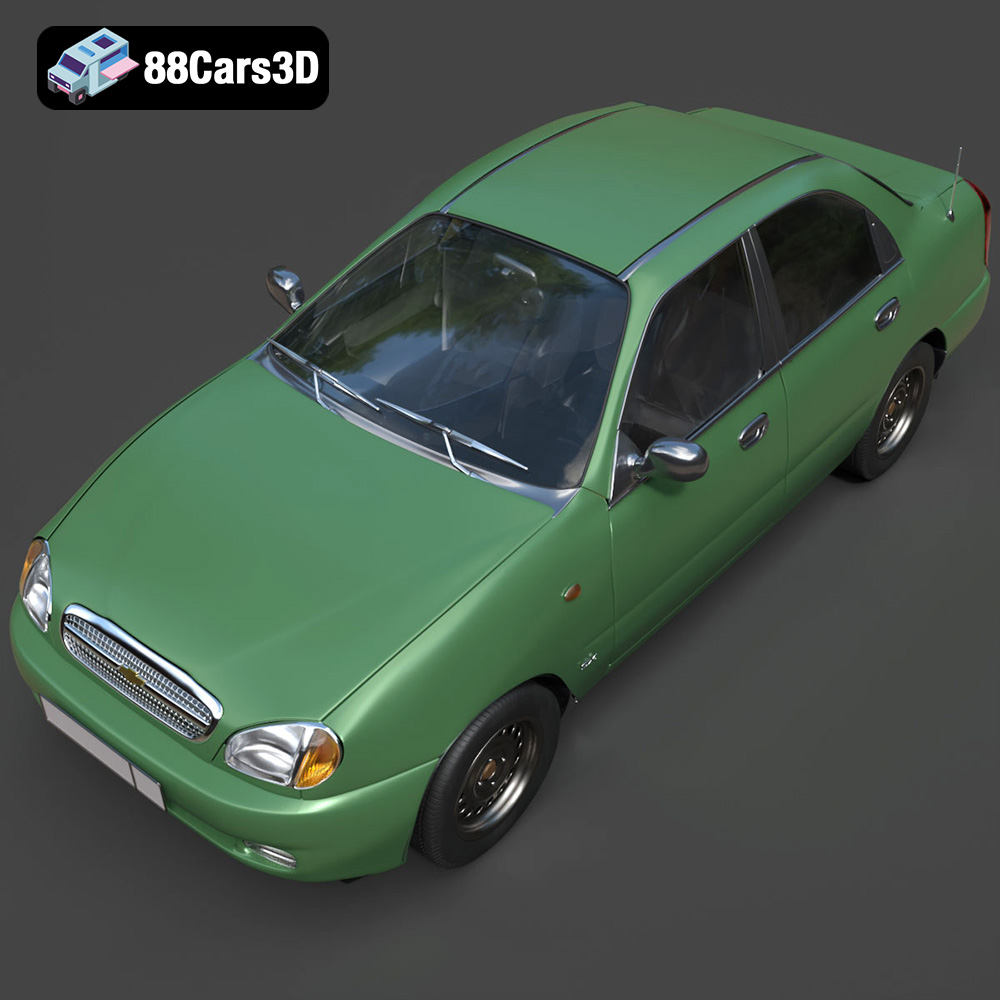
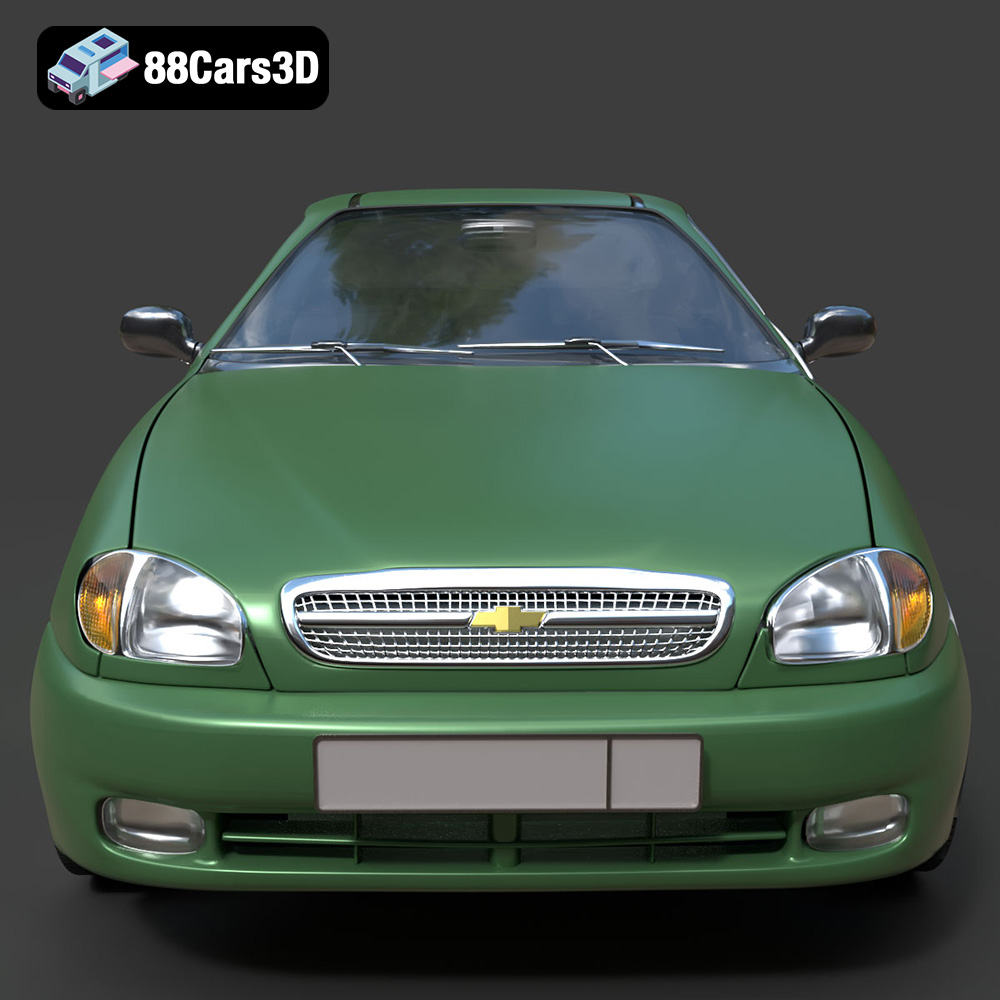
The model faithfully recreates the smooth aerodynamic lines and modest front grille that define the Lanos. Every curve and panel gap is accurately represented, giving the vehicle an authentic presence. Beyond the primary bodywork, the model extends its detail to include a precisely modeled 4-cylinder inline engine block and a standard factory exhaust system, complete with undercarriage routing. The headlight and taillight housings feature internal reflectors, enhancing realism in rendering. Factory-spec wheels, hubcaps, and realistic tire treads complete the exterior, ensuring the car looks convincing from every angle, even in close-up shots.
The attention to detail isn’t limited to the exterior. The cockpit and interior features are equally impressive, making the model suitable for first-person perspectives in games or detailed interior shots in visualizations. Standard cloth seat details with authentic stitching provide a tactile feel, while the accurate steering wheel and column design invite interaction. A detailed instrument cluster, complete with speed, tachometer, and fuel gauges, adds to the realism. Precise control details, including pedals, the gear shifter, and the center console, further enhance the immersive experience, ensuring the Lanos is ready for virtual driving simulators or interactive configurators.
Technical considerations are at the forefront of this model’s design. The included detailed strut and rear beam suspension system, along with separate wheels, suspension, and steering components, are not merely aesthetic additions. These elements are designed for animation, featuring proper pivot setups for realistic steering, wheel rotation, and suspension travel. This ensures that the Lanos can be seamlessly integrated into driving simulations or animated sequences without extensive rigging or modification, saving invaluable production time.
The true value of a premium 3D asset lies in its ability to integrate seamlessly into diverse professional workflows. The Chevrolet Lanos 2008 3D Model is designed with this principle in mind, offering compatibility with industry-standard software and real-time engines, thereby streamlining production for artists and developers.
For modelers and animators, direct compatibility with software like Blender and 3ds Max is crucial. The availability of native .blend and .max files means that artists can immediately open the Chevrolet Lanos 2008 model in their preferred application, with all materials, textures, and structural data intact. This eliminates time-consuming import/export issues and allows for immediate customization or incorporation into larger scenes. For instance, an architect using 3ds Max for a sprawling urban visualization can quickly populate their scene with realistic traffic using the Lanos, adjusting its colors and materials to fit the desired aesthetic without starting from scratch.
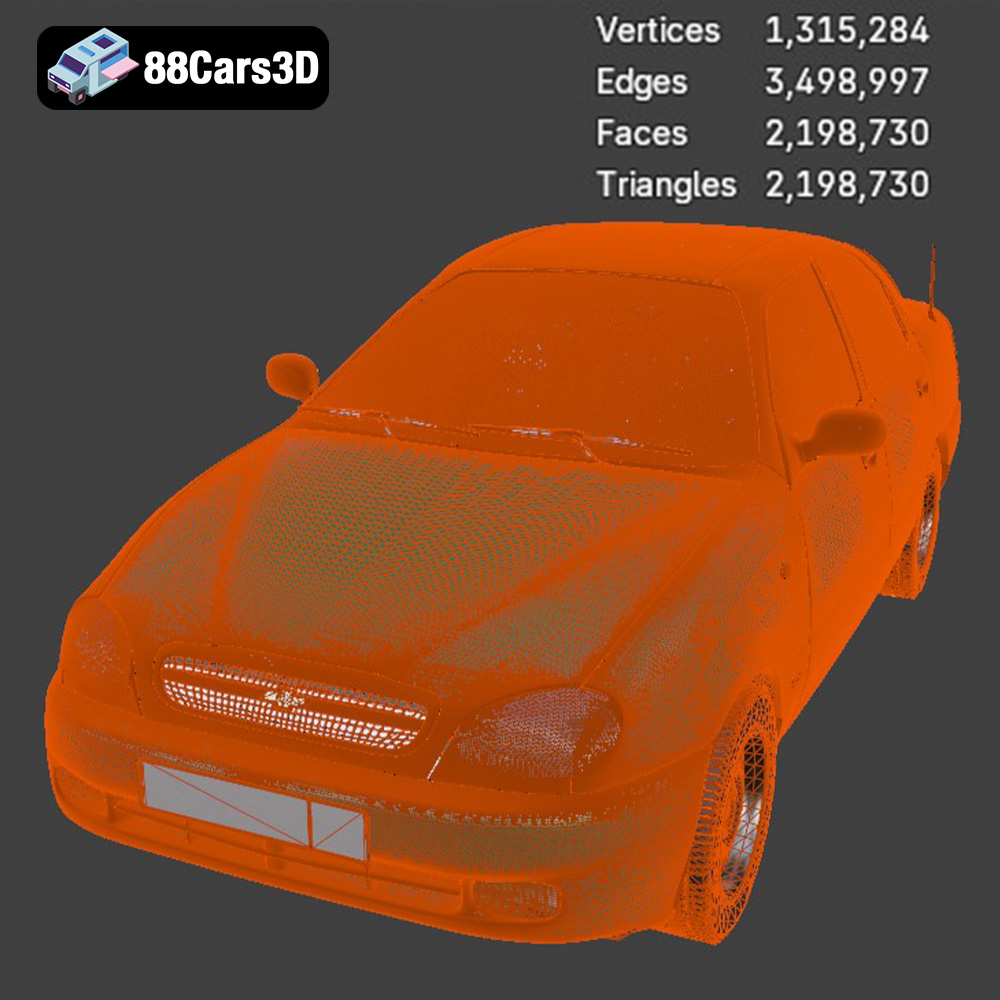
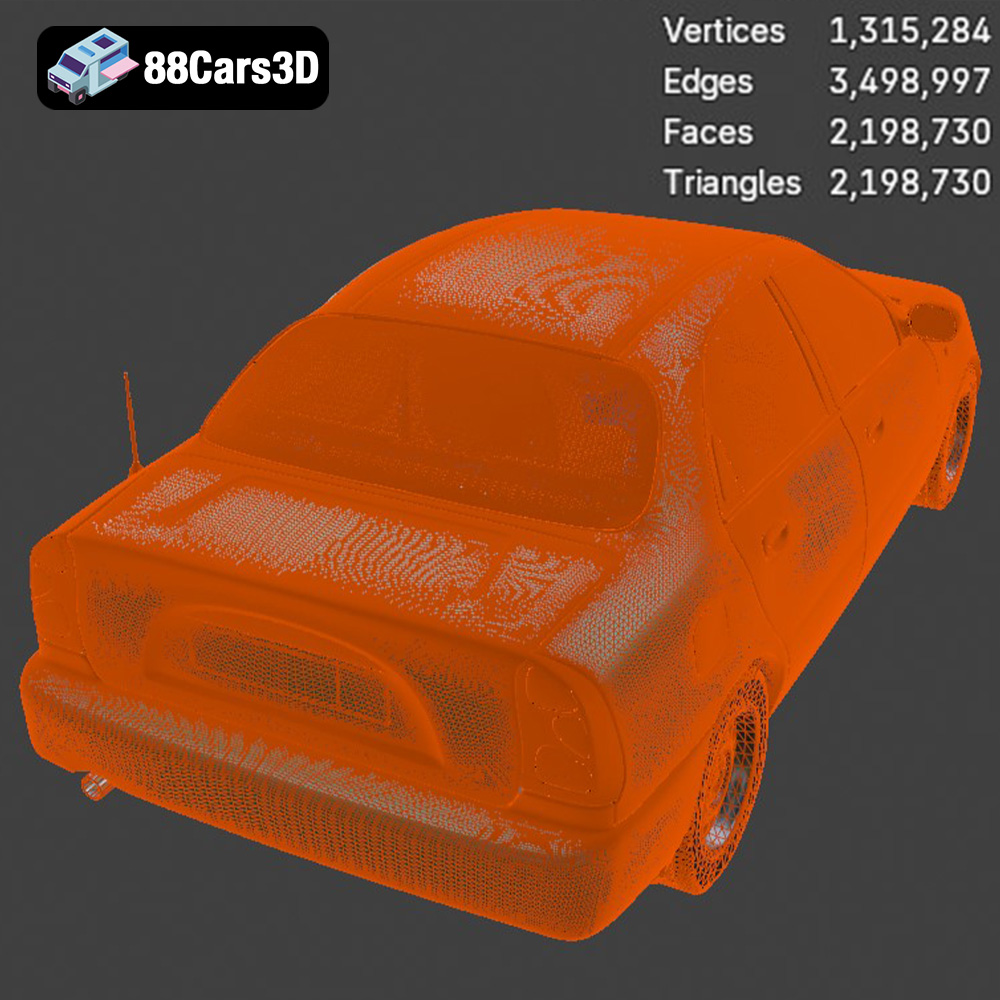
In the realm of game development and interactive experiences, real-time performance is paramount. The Lanos model’s optimized topology of 2,198,730 triangles strikes a perfect balance, providing exceptional visual fidelity without overburdening modern game engines like Unreal Engine or Unity. The inclusion of .fbx and .unreal formats ensures that developers can drag-and-drop the asset into their projects, leveraging its game-ready optimizations. This makes it an ideal choice for populating open-world environments, serving as a player vehicle in racing titles, or even being used in training simulations where realistic vehicle physics and interaction are required.
Architectural visualization (ArchViz) relies heavily on contextual realism. A meticulously rendered building loses credibility if the surrounding environment, including vehicles, appears generic or low-quality. The Chevrolet Lanos 2008, with its authentic styling and high detail, provides a convincing element for urban street scenes. Whether it’s parked outside a new development or driving down a digitally rendered street, its presence adds a layer of believability and scale, helping clients visualize the project in a real-world context. The model’s realism extends to its interior, allowing for compelling fly-throughs or street-level shots.
The utility of a robust 3D car model like the Chevrolet Lanos 2008 extends far beyond traditional rendering. Its ‘game-ready’ status signifies an optimization level that makes it suitable for a broad spectrum of cutting-edge digital applications, from immersive interactive experiences to tangible physical outputs.
For game developers, the Chevrolet Lanos 2008 is a highly valuable game asset. Its optimized polycount of 2,198,730 triangles means it can be rendered efficiently in real-time environments without causing significant performance drops. This makes it ideal for populating open-world games with realistic traffic, creating background vehicles for racing titles, or integrating into driving simulators where an authentic common car experience is desired. The pre-rigged components for steering, wheel rotation, and suspension travel further reduce development time, allowing teams to focus on gameplay mechanics rather than asset preparation.
Augmented Reality (AR) and Virtual Reality (VR) platforms demand highly optimized assets that can maintain fluid frame rates in real-time. The .glb format included with the Lanos model is specifically optimized for these applications, enabling creators to deploy the car in immersive virtual showrooms, interactive configurators, or even mobile AR experiences. Imagine a customer exploring a virtual street with AR, and the Chevrolet Lanos 2008 appears, allowing them to walk around it, change its color, or even peer into its detailed interior – all without ever stepping foot in a physical dealership. This level of interaction offers unparalleled engagement.
The advent of 3D printing has opened new avenues for digital assets, allowing them to transcend the screen and become physical objects. The Chevrolet Lanos 2008 3D Model is provided with an .stl format, making it directly convertible for 3D printing. This capability is perfect for hobbyists looking to create scale models for display, designers prototyping vehicle concepts, or educators demonstrating automotive engineering principles. The product description provides clear recommendations for print settings, including recommended scales (1:12, 1:18, 1:24), layer height, infill, and support requirements, ensuring a successful print and a high-quality physical replica.
A truly versatile 3D model offers more than just detailed geometry; it provides a foundation for endless creative possibilities. The Chevrolet Lanos 2008 3D Model is built with customization and long-term utility in mind, empowering users to adapt it to their specific project needs and ensuring its relevance for years to come.
The model comes with inherent flexibility for artistic adjustments. Users can easily modify body and tank colors, choosing from authentic factory hues or experimenting with custom finishes like matte, gloss, or metallic. This customization extends to material finishes, allowing for diverse visual styles to match specific scenes or brand aesthetics. Furthermore, adjusting tire textures—perhaps swapping street variants for off-road treads in a custom scenario—adds another layer of narrative potential. The ability to adapt lighting for different environments is also crucial, enabling the Lanos to appear realistic under any digital sun or studio setup.
The technical specifications of the Chevrolet Lanos 2008 3D Model highlight its strategic design. With 2,198,730 triangles, the model strikes an optimal balance. This polycount is high enough to deliver exceptional visual fidelity, making it suitable for close-up renders and detailed shots where clarity is paramount. Simultaneously, the geometry is structured and optimized, ensuring it performs well in real-time environments like game engines. This thoughtful optimization means you don’t have to compromise between visual quality and performance, a crucial advantage in professional production where efficiency and realism must coexist.
Investing in high-quality 3D car models like the Chevrolet Lanos 2008 from 88cars3d.com is an investment in a future-ready asset library. The inclusion of multiple industry-standard file formats (.blend, .fbx, .obj, .glb, .stl, .ply, .unreal, .max) ensures that the model will remain compatible with evolving software versions and emerging technologies. This versatility protects your creative assets, allowing them to be repurposed and integrated into new projects without needing to rebuild or re-optimize from scratch, providing significant long-term value and efficiency.
The journey of bringing digital worlds to life is paved with meticulously crafted assets, and 3D car models stand as cornerstones of realism and immersion. From bustling urban simulations to interactive AR/VR experiences, the demand for high-quality, technically optimized vehicles is constant. The Chevrolet Lanos 2008 3D Model embodies this perfect synergy of aesthetic detail and practical application, offering a versatile solution for a wide range of creative and technical endeavors.
Its comprehensive file format support, game-ready optimization, and intricate detailing—from its accurate exterior and animated components to its immersive interior—make it an indispensable asset for game developers, visualization artists, and designers alike. Whether you’re enhancing an architectural render, populating a virtual city, or even 3D printing a physical replica, this model provides the precision and flexibility required for professional-grade results. Explore the possibilities and elevate your projects with exceptional 3D car models available at 88cars3d.com.
The Chevrolet Lanos represents the essence of practical, everyday driving. With its straightforward and recognizable subcompact sedan silhouette, this economic vehicle is a staple in many urban landscapes around the world. The model faithfully recreates the smooth aerodynamic lines, signature modest front grille, and classic utilitarian styling that defines the Lanos. This highly detailed 3D model boasts a topology of 2,198,730 triangles, delivering exceptional visual fidelity suitable for close-up renders while offering a structured geometry that performs well in modern environments. Designed with game development, AR/VR, animation, and high-end visualization in mind, it provides a highly realistic automotive asset for any digital project. Perfect for urban street scenes, driving simulators, open-world traffic population, and architectural visualization.
$86.50
.2008
.blend
.chevrolet
.fbx
.glb
.lanos
.max
.obj
.ply
.rendering
.sedan
.stl
.unreal
car-3d-model
compact-car
game asset
game-ready
low-poly
optimized
VR/AR