Get 20% OFF All Premium 3D & STL Models!

In the dynamic world of 3D visualization, game development, and virtual experiences, the demand for exceptionally detailed and technically sound 3D car models continues to accelerate. Whether you’re an automotive designer showcasing a new concept, a game developer populating an open-world environment, or an architect adding realism to a street scene, the quality of your digital assets can make or break a project. Precision, optimization, and versatility are paramount, ensuring your models not only look stunning but also perform flawlessly across various platforms and applications.
Today, we’re diving deep into an exemplary asset that embodies these very principles: the Chrysler Grand Voyager 2008 3D Model. This model isn’t just a static representation; it’s a meticulously crafted digital twin designed to integrate seamlessly into professional pipelines, offering both the visual fidelity for high-end automotive rendering and the optimization required for demanding real-time game assets. Let’s explore how such a comprehensive asset can transform your creative endeavors and what goes into making it a truly invaluable tool.
One of the most crucial aspects of acquiring a professional 3D car model, such as the Chrysler Grand Voyager 2008, is understanding the array of file formats it comes with. Each format serves a specific purpose, offering unique advantages for different stages of a project, from initial modeling to final rendering or real-time deployment. Knowing when and why to use each one is key to a smooth and efficient workflow.
The .blend format is the native file type for Blender, a powerful and increasingly popular open-source 3D creation suite. When you receive a .blend file, you’re getting a fully editable Blender scene. This typically includes the complete 3D model with its hierarchy, materials, textures (packed or linked), lighting setups, camera positions, and even animation data if present. For artists working primarily in Blender, this is the most flexible format, allowing for direct manipulation of the mesh, node-based material adjustments, and scene modifications without any conversion artifacts. It’s ideal for in-depth customization, rendering within Blender’s Cycles or Eevee engines, and further development of the asset.
.fbx (Filmbox) is a proprietary file format developed by Autodesk, widely recognized as the industry standard for 3D data interchange. Its strength lies in its ability to store not just geometry, but also materials, textures, animations, rigging, and even entire scene graphs in a single file. This makes .fbx incredibly versatile for transferring assets between different 3D software (like 3ds Max, Maya, Blender) and, crucially, into game engines such as Unreal Engine and Unity. For game development, .fbx is often the go-to choice due to its robust support for animation and skeletal data, ensuring that the Chrysler Grand Voyager 2008’s separate wheels, suspension, and steering components can be correctly imported and animated in a real-time environment.
The .obj (Wavefront Object) format is one of the oldest and most universally supported 3D file formats. It’s primarily used for storing 3D geometry—vertices, faces, normals, and UV coordinates. While it can reference external material files (.mtl) for basic color and texture information, it doesn’t typically store advanced material properties, lighting, or animation data internally. Its simplicity makes it highly compatible across virtually all 3D software. When maximum compatibility is required, especially for a clean mesh export, .obj is an excellent choice for the Chrysler Grand Voyager 2008, ensuring its core structure can be easily accessed and manipulated in any package.
.glb (GL Transmission Format Binary) is a modern, optimized format specifically designed for efficient transmission and loading of 3D scenes and models in web-based applications, augmented reality (AR), and virtual reality (VR) experiences. It packages 3D model data (geometry, materials, textures, animations) into a single, self-contained binary file, which significantly reduces file size and parsing time. For interactive virtual showrooms or mobile AR applications featuring the Chrysler Grand Voyager 2008, .glb offers superior performance and ease of integration into browser-based environments like Three.js or A-Frame.
.stl (Stereolithography) is the de facto standard format for 3D printing. It represents a 3D model as a collection of unconnected triangular facets, defining only the surface geometry of an object without color, texture, or material information. While this makes it unsuitable for rendering, it is precisely what 3D printers need to understand the shape of an object for fabrication. The Chrysler Grand Voyager 2008 3D model includes this format, making it directly convertible for hobbyists and professionals looking to produce physical scale models, complete with the provided print settings for optimal results.
.ply (Polygon File Format, or Stanford Triangle Format) is another format for storing 3D data, particularly useful for scan data and scientific applications. It can store a wider range of properties than .obj, including color, transparency, normals, texture coordinates, and even confidence values for scanned points. While less common for general 3D asset transfer, it offers a robust solution for precision mesh data, often used in CAD environments, reverse engineering, or detailed analysis where exact geometric fidelity is paramount.
The .unreal format signifies an asset specifically prepared and often pre-configured for direct import and optimal performance within the Unreal Engine. This often means the model has already been processed with appropriate collision meshes, material setups tailored to Unreal’s PBR (Physically Based Rendering) system, LODs (Levels of Detail), and potentially even Blueprint integrations. For a game developer needing to quickly drop the Chrysler Grand Voyager 2008 into an Unreal project, this format offers the most streamlined workflow, minimizing setup time and ensuring engine compatibility right out of the box.
Finally, the .max format is the native scene file for Autodesk 3ds Max, a leading software for 3D modeling, animation, and rendering in architectural visualization, product design, and game development. Similar to .blend, a .max file provides the full scene with all its components—geometry, materials, textures, lights, cameras, modifiers, and animation. For users of 3ds Max, this file offers complete control and flexibility for further refinement, complex animation, or integration into existing 3ds Max projects, perfect for highly detailed automotive rendering scenarios or cinematic sequences.
The inclusion of all these diverse file formats with the Chrysler Grand Voyager 2008 3D model underscores its exceptional versatility and readiness for any professional pipeline, providing creators with the right tool for every specific task.
The true value of a premium 3D car model lies in its technical foundation. It’s not just about surface appeal; it’s about the underlying structure that dictates performance, flexibility, and ultimate realism. The Chrysler Grand Voyager 2008 3D Model exemplifies this dedication to technical excellence, balancing high visual fidelity with optimal performance metrics.
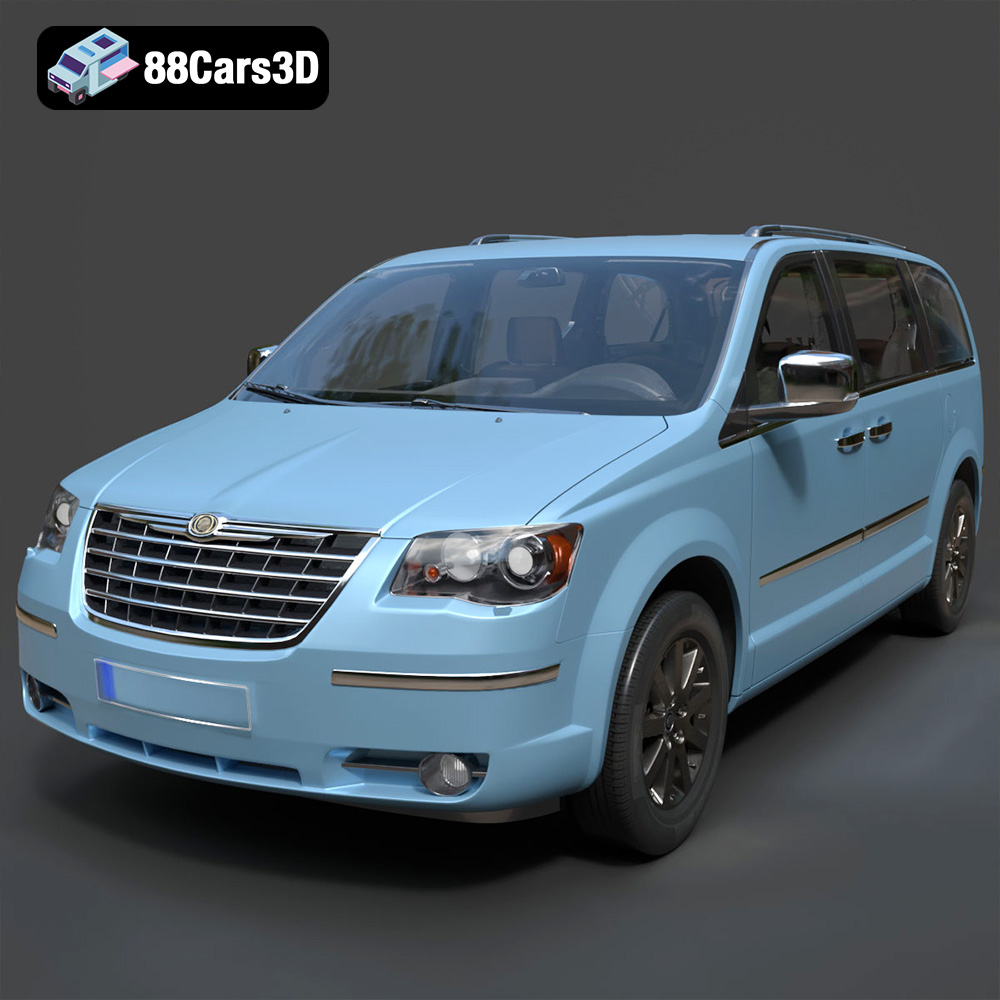
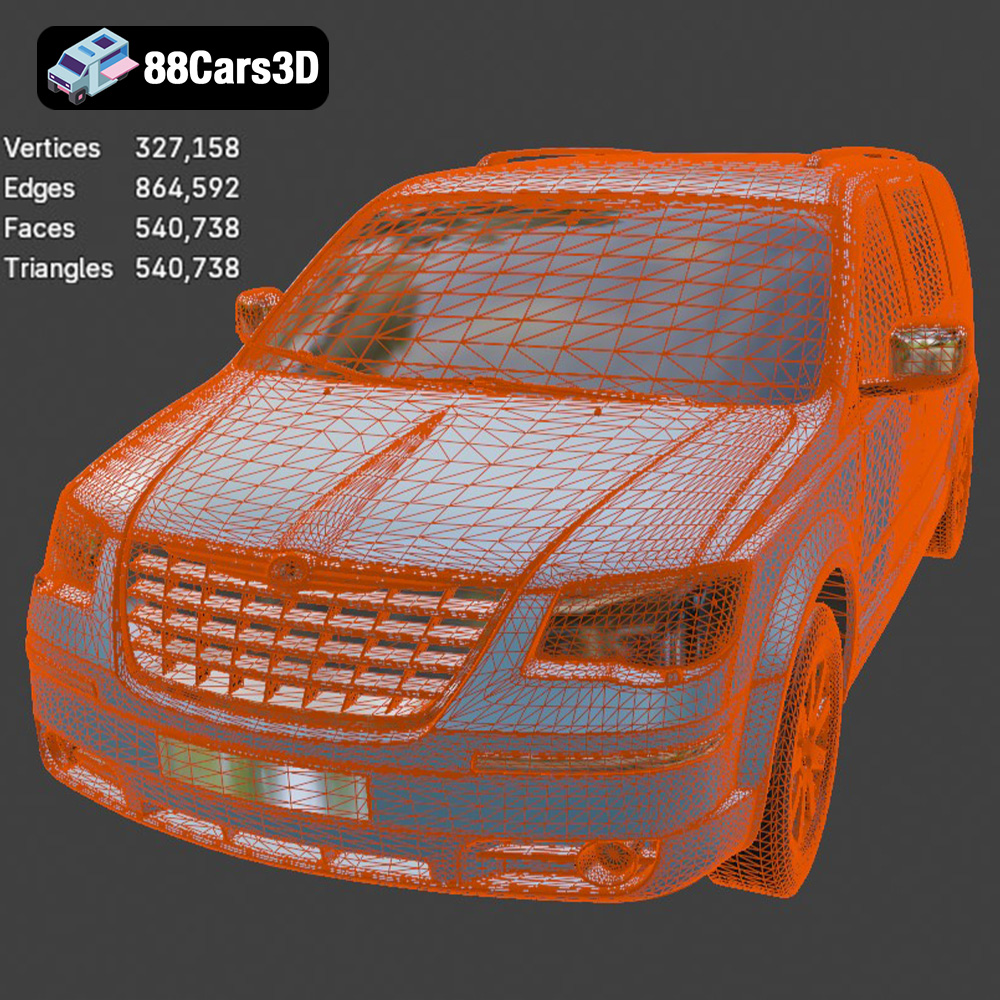
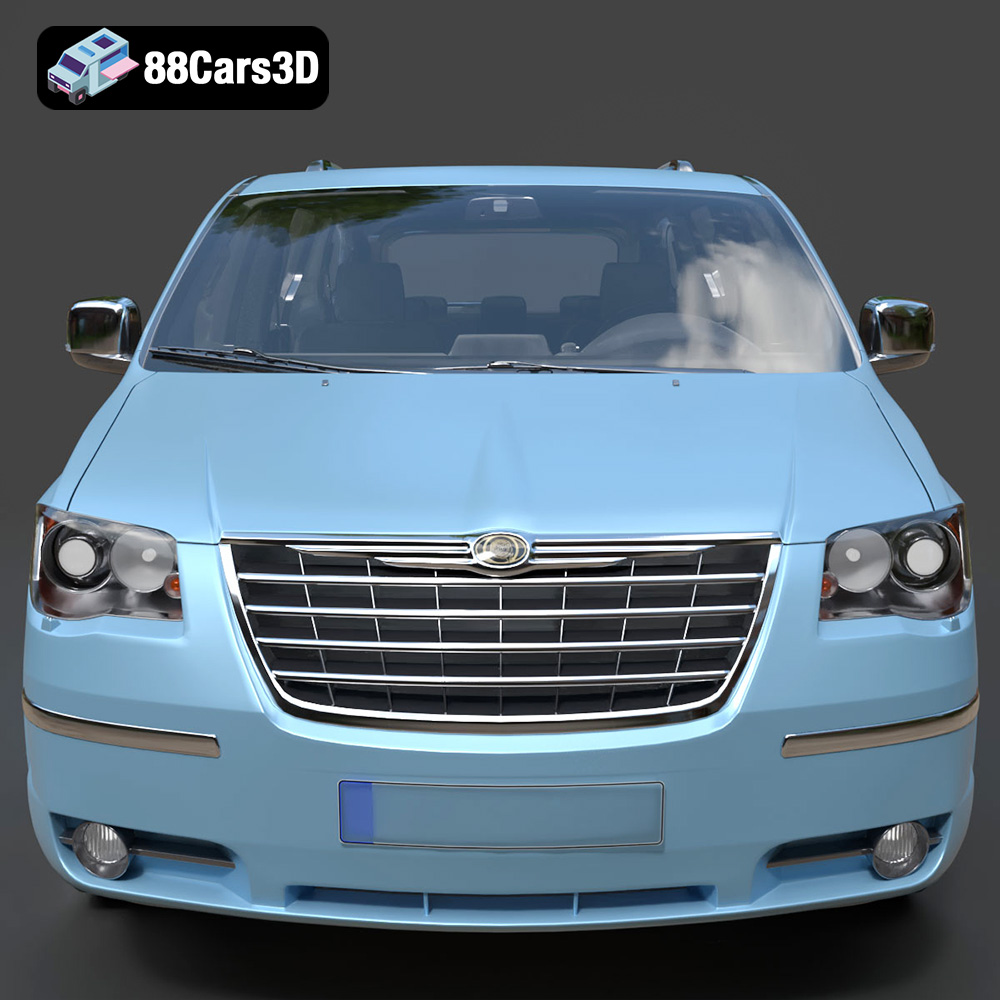
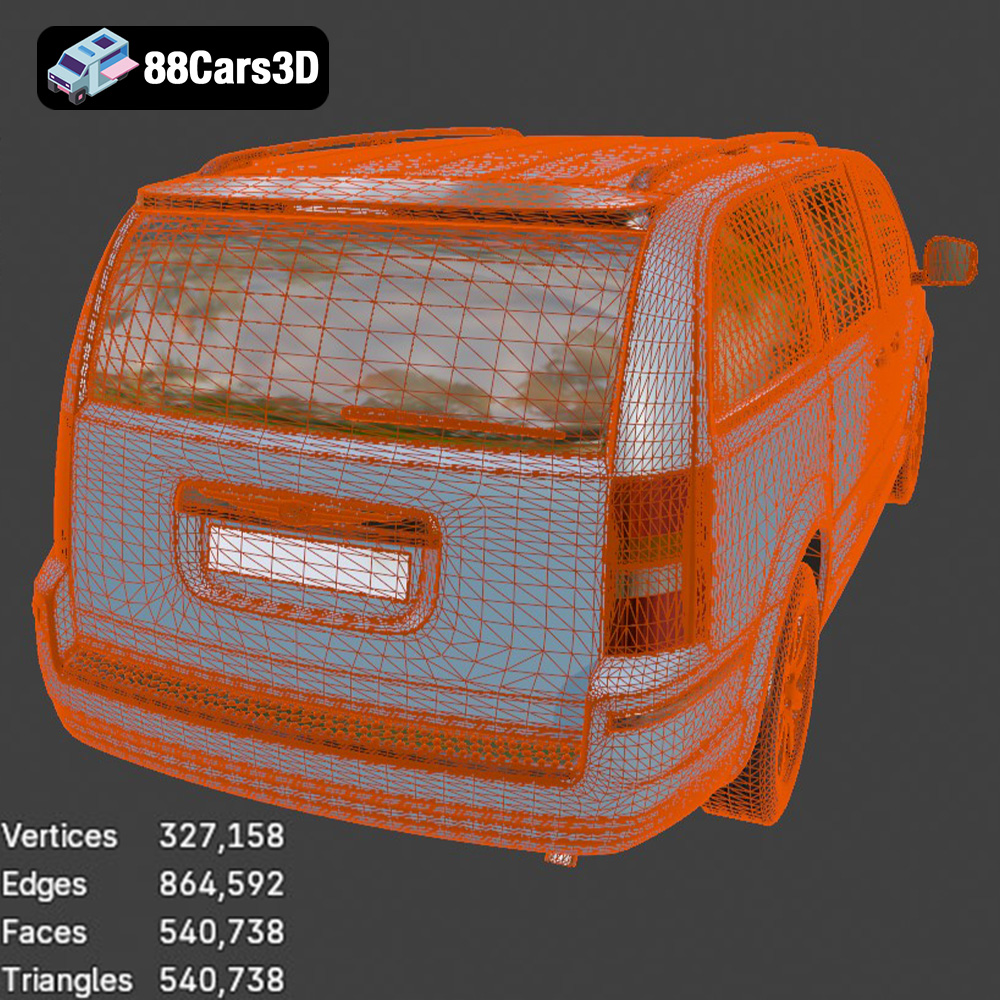
A critical metric for any 3D model, especially one intended for diverse applications, is its polygon count. The Chrysler Grand Voyager 2008 model boasts a “detailed yet optimized triangle count of 540,738.” This figure is carefully chosen: it’s high enough to capture intricate details like the vehicle’s signature wide front grille, prominent headlight housings, and subtle curves of the rear tailgate, preventing a blocky or unrealistic appearance. At the same time, it’s sufficiently optimized to be “game-ready,” meaning it won’t unduly burden real-time engines like Unreal or Unity. This balance is crucial for maintaining smooth frame rates in interactive experiences while still delivering a visually rich asset. Furthermore, the “clean topology” ensures flawless reflections and shading, preventing unsightly artifacts that can detract from realism, especially under dynamic lighting conditions.
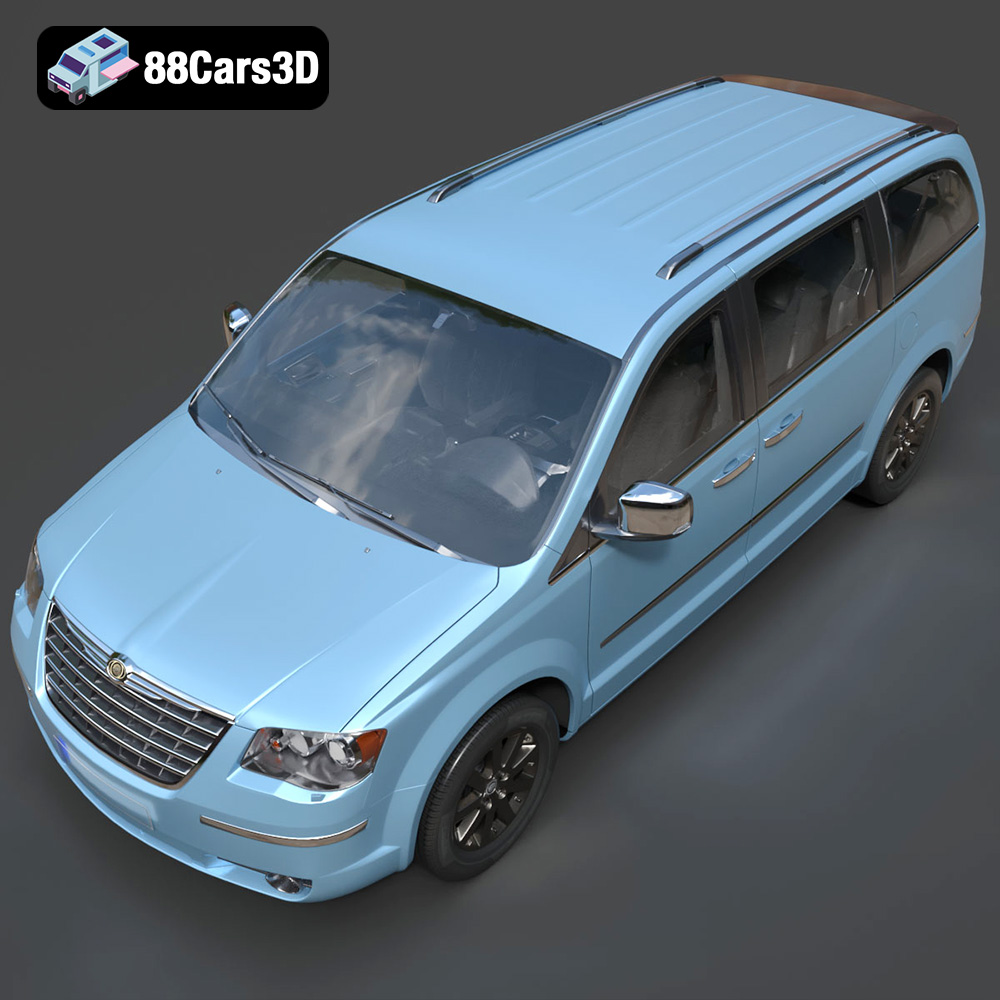
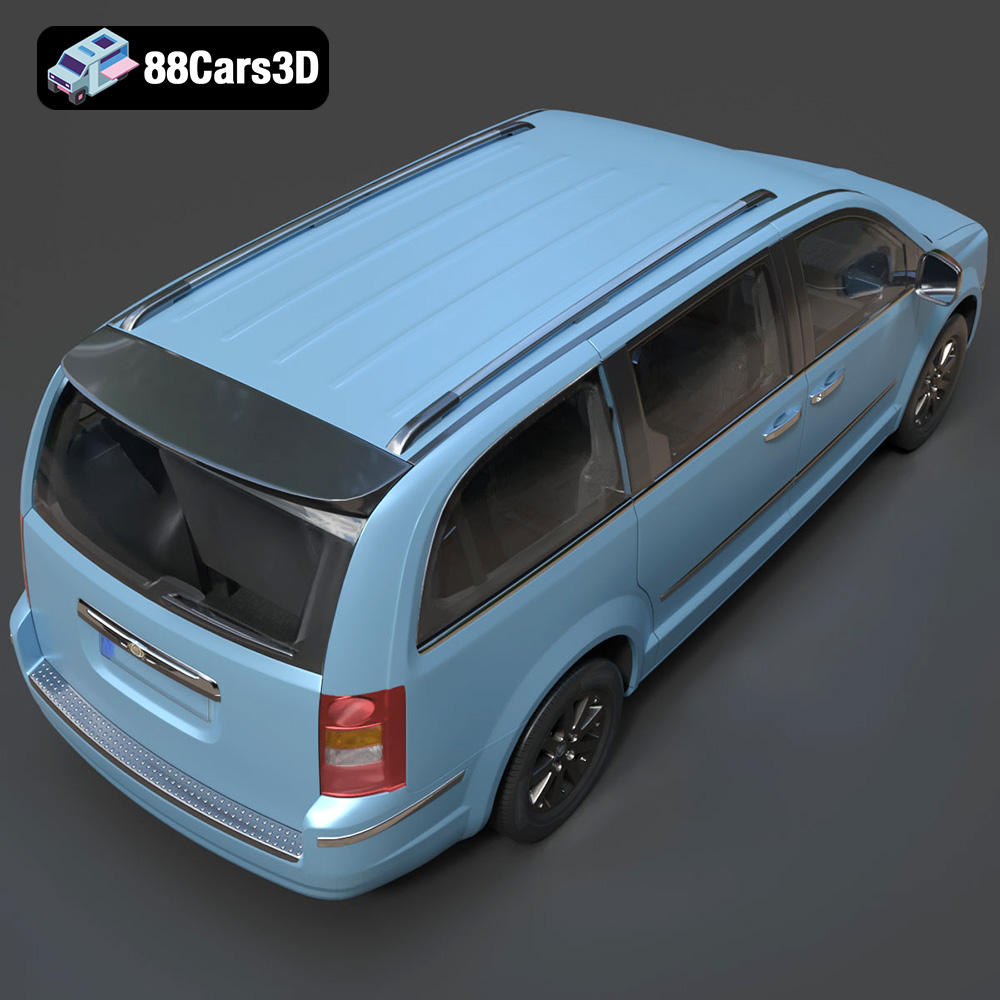
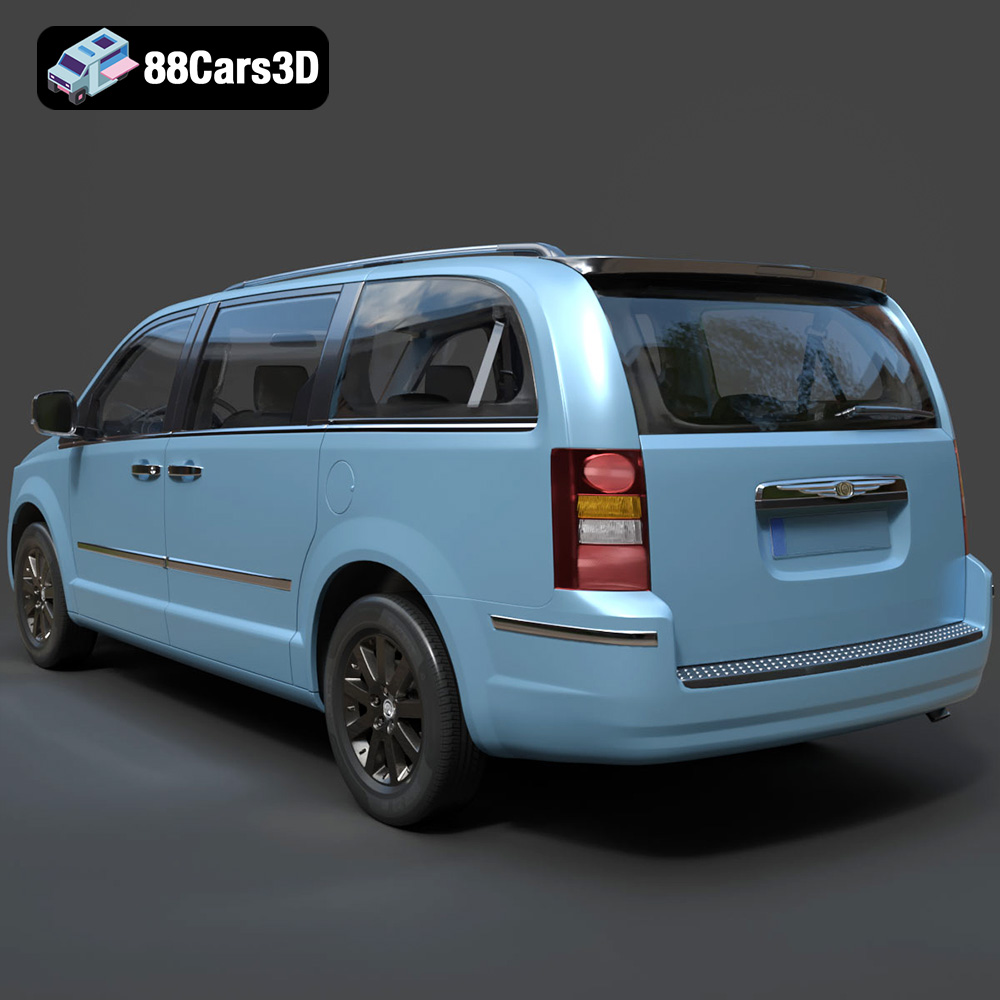
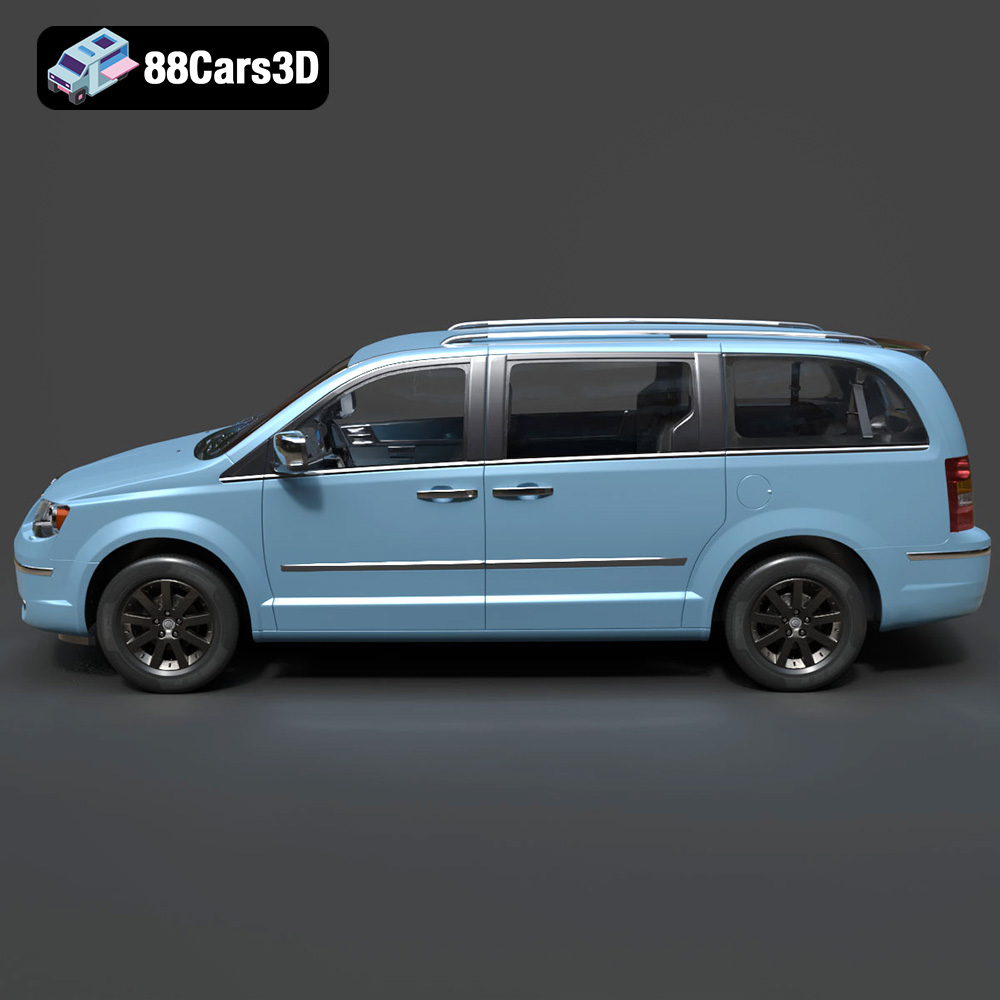
Authenticity is paramount in automotive visualization. This model delivers “accurate Chrysler Grand Voyager 2008 frame geometry and MPV proportions,” derived from real-world scale accuracy based on actual vehicle chassis dimensions. Every exterior feature has been meticulously recreated: the “detailed front grille and lower bumper fascia,” “authentic exhaust system layout and undercarriage details,” and “highly detailed lighting clusters including headlights, turn signals, and taillights.” Even the “accurate multi-spoke wheel design and realistic tire tread patterns,” along with “precisely modeled suspension components and wheel wells,” contribute to an unparalleled level of exterior realism. The separation of “wheels, suspension, and steering components” is a vital technical advantage, providing the necessary hooks for complex animations and physics simulations in game engines or cinematic renders.
For applications demanding interior views, such as first-person driving simulations, virtual showrooms, or detailed lifestyle renders, the interior’s quality is just as important as the exterior. The Chrysler Grand Voyager 2008 model does not disappoint, featuring a “detailed multi-row seating arrangement and distinctive upholstery patterns.” The cockpit is fully realized with an “accurate multi-function steering wheel and steering column,” a “highly detailed instrument cluster and center infotainment console,” and “complete control details including pedals, gear selector, and climate controls.” Crucially, this “optimized interior geometry” is explicitly designed to be “ideal for first-person POV in gaming and VR,” ensuring that immersive experiences are not compromised by overly heavy geometry or lacking detail where it matters most to the user.
The true measure of a high-quality 3D car model lies in its adaptability and seamless integration into various professional workflows. The Chrysler Grand Voyager 2008 3D Model, with its comprehensive file formats and technical specifications, is engineered to be a cornerstone asset across multiple creative industries.
For game developers, performance and versatility are non-negotiable. The Chrysler Grand Voyager 2008 model shines as a prime example of a game-ready asset. Its optimized triangle count of 540,738 strikes the perfect balance for real-time engines like Unreal Engine and Unity. Developers can leverage the included .fbx or .unreal formats for direct import, benefiting from proper pivot setups for steering, wheel rotation, and suspension travel—essential for realistic vehicle physics and animation. Imagine populating an open-world urban landscape with authentic traffic, or integrating it into a racing title for a unique minivan challenge. Its detailed interior is also optimized for first-person camera perspectives, making it perfect for driving simulators or interactive narrative experiences where players might enter the vehicle. With this model from 88cars3d.com, game designers can rapidly prototype and deploy realistic automotive elements without sacrificing performance or visual quality.
When photorealism is the goal, whether for brand campaigns, product visualization, or cinematic sequences, the raw quality of the 3D model is paramount. The inclusion of .max and .blend files means artists working in 3ds Max or Blender have full access to an editable project. This allows for advanced material creation using PBR workflows, sophisticated lighting setups to highlight the car’s contours, and detailed camera animations. Artists can easily customize body and trim colors to match specific brand palettes or client requirements, modify tire textures for different seasons, and adjust material finishes (matte, gloss, metallic, chrome) to achieve precise visual effects. The clean topology ensures flawless reflections and shading, which is absolutely critical for presenting the vehicle in studio-quality renders or dynamic lifestyle scenes.
The burgeoning fields of Augmented Reality (AR) and Virtual Reality (VR) demand models that are both visually rich and incredibly efficient. The Chrysler Grand Voyager 2008 3D Model is ideally suited for these applications. The .glb format, optimized for web and mobile, makes it perfect for interactive virtual showrooms where customers can explore the vehicle in a browser, or for mobile AR experiences where the minivan can be placed realistically in a user’s driveway. For more complex, dedicated VR applications, the .fbx format ensures all necessary data, including hierarchy and materials, can be imported into engines like Unity or Unreal for robust, immersive experiences. This model enables creators to build captivating configurators, educational tools, or unique marketing experiences that push the boundaries of digital interaction.
A truly versatile 3D asset goes beyond mere rendering on a screen. The Chrysler Grand Voyager 2008 3D Model extends its utility into tangible realms and offers profound customization capabilities that enhance its value across numerous project types.
For enthusiasts, designers, or even engineers needing a physical prototype, the inclusion of the .stl format is a significant advantage. The Chrysler Grand Voyager 2008 model can be converted and prepared for 3D printing, allowing for the creation of display-scale models. The product description provides excellent guidance for 3D print settings, recommending scales like 1:12, 1:18, or 1:24, and suggesting resin printing for fine details. Specific advice on layer height, wall thickness, infill, and crucial support placement for intricate parts like exhausts, mirrors, and the steering wheel ensures successful prints. Post-processing steps like sanding, priming, and applying authentic factory colors with metallic finishes allow for hobbyists to create incredibly realistic miniature versions of this classic MPV, bridging the gap between digital and physical.
Flexibility is a cornerstone of professional 3D asset creation. The Chrysler Grand Voyager 2008 3D Model offers extensive customization options, enabling artists to tailor the vehicle to specific project requirements without starting from scratch. Users can easily “change body/trim colors” to match specific brand aesthetics or unique client requests, replicating anything from factory finishes to bespoke custom paints. The ability to “modify tire textures” allows for adapting the vehicle to different environments, switching between all-season and winter variants for environmental realism. Adjusting “material finishes (matte, gloss, metallic, chrome)” provides granular control over the vehicle’s appearance under various lighting conditions, while adapting “lighting for different environments and times of day” ensures the model always looks its best, whether bathed in sunlight or streetlights. This level of adaptability ensures the model remains relevant and invaluable across a spectrum of projects.
While often associated with automotive rendering, high-quality 3D car models are indispensable for architectural visualization and environmental dressing. The Chrysler Grand Voyager 2008, with its authentic representation of a quintessential family MPV, is perfect for populating urban environment renders, adding a touch of realism and life to street scenes, parking lots, or driveways in arch-viz projects. It’s ideal for creating “family lifestyle renders,” depicting everyday scenarios that resonate with audiences. Furthermore, for traffic simulation scenarios, an optimized model like this is crucial for maintaining performance while providing visual diversity. Including such a realistic vehicle elevates the credibility and immersion of any architectural or environmental scene, moving beyond generic placeholders to genuinely enhance visual storytelling.
Choosing where to source your 3D car models is as important as the models themselves. 88cars3d.com stands as a reliable marketplace, committed to providing high-quality 3D assets that meet the rigorous demands of professional production pipelines. The Chrysler Grand Voyager 2008 3D Model is a testament to this commitment.
Every model featured on 88cars3d.com is meticulously crafted with attention to detail, ensuring technical accuracy, clean topology, and optimal performance across various applications. The inclusion of a comprehensive suite of file formats—from .blend and .max for editable scene control, to .fbx and .unreal for game engines, .glb for web AR/VR, and .stl for 3D printing—demonstrates a deep understanding of industry needs. This multi-format approach saves artists invaluable time and effort, as they don’t have to spend resources converting or optimizing models themselves. When you download a model like the Chrysler Grand Voyager 2008 from 88cars3d.com, you’re not just getting a static mesh; you’re acquiring a versatile, production-ready asset designed to empower your creative vision from the outset.
The journey through the intricacies of the Chrysler Grand Voyager 2008 3D Model reveals the profound impact a well-crafted digital asset can have on any project. From its meticulously recreated exterior and immersive interior to its optimized polycount and extensive range of file formats, this model is a powerhouse of versatility and technical excellence. Whether you’re aiming for cinematic realism in automotive rendering, seamless integration into a high-performance game engine, or an engaging interactive experience in AR/VR, this asset provides the foundation you need.
Understanding the nuances of file formats like .blend, .fbx, .obj, .glb, .stl, .ply, .unreal, and .max is critical for maximizing efficiency and unlocking creative potential. This model’s adaptability, coupled with its support for 3D printing and extensive customization options, truly makes it an invaluable addition to any professional’s toolkit. By investing in such high-quality 3D car models from platforms like 88cars3d.com, creators can streamline their workflows, elevate their visual outputs, and deliver compelling experiences across a multitude of digital and physical applications.
The Chrysler Grand Voyager 2008 stands as a quintessential icon of modern family transport, renowned for its spaciousness, practicality, and unmistakable road presence. This 3D model captures the essence of the classic MPV, featuring the vehicle’s signature wide front grille, prominent headlight housings, and the elongated, aerodynamic body that defined a generation of minivans. From the meticulously crafted dual exhaust styling to the subtle curves of the rear tailgate, every defining styling cue has been faithfully recreated to deliver an authentic visual experience. Crafted with a detailed yet optimized triangle count of 540,738, this model perfectly balances high-end visual fidelity with game-ready performance. The clean topology ensures flawless reflections and shading, making it an exceptionally versatile asset for game development, AR/VR applications, architectural visualization, and cinematic animations. The geometry has been structured to maintain high realism without bogging down real-time engines. Perfect for urban environment dressing, family lifestyle renders, traffic simulation scenarios, and interactive virtual showrooms.
$42.50
.2008
.blend
.chrysler
.fbx
.glb
.max
.minivan
.mpv
.obj
.ply
.rendering
.stl
.unreal
car-3d-model
family-car
game asset
game-ready
grand-voyager
low-poly
optimized
VR/AR