Get 20% OFF All Premium 3D & STL Models!

In the dynamic realm of 3D visualization, from the meticulously crafted environments of cutting-edge video games to the immersive training simulations of virtual reality, the demand for highly detailed and technically sound assets has never been greater. Whether you’re an architect planning a complex industrial site, a game developer constructing a realistic open-world environment, or a product designer visualizing manufacturing processes, the authenticity of your digital models dictates the credibility of your entire project. This is particularly true for heavy machinery, where every hydraulic hose, every pivot point, and every track link must convey both form and function.
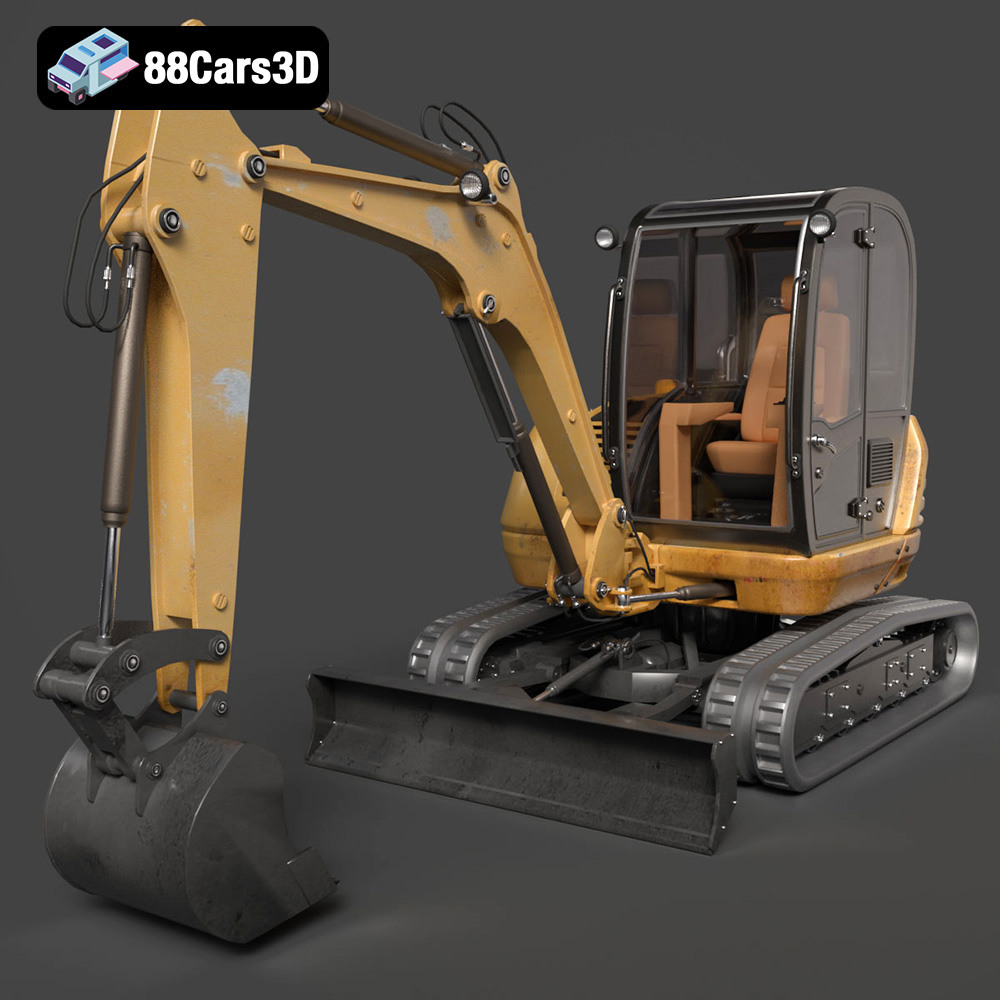
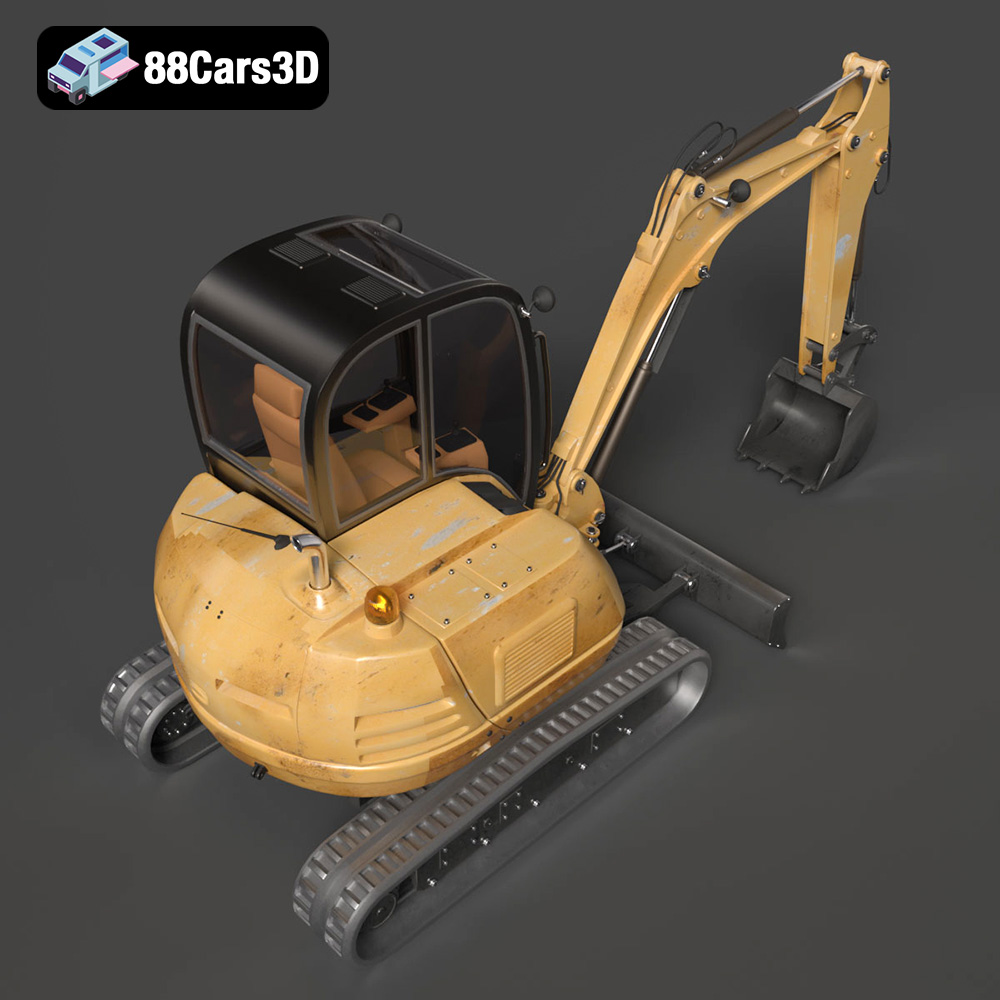
Today, we delve into the world of industrial-grade 3D assets, specifically examining a prime example that stands out for its versatility and precision: the Compact Track Excavator 3D Model. Available for download from 88cars3d.com, this model isn’t just a static representation; it’s a meticulously engineered digital twin, ready to be deployed across a spectrum of professional applications. Its detailed design, ranging from the robust track system to the highly articulated hydraulic boom and reinforced operator cabin, makes it an ideal cornerstone for any digital construction site, visualization, or simulation.
The choice of a 3D model’s file format is far more than a technicality; it’s a strategic decision that dictates compatibility, workflow efficiency, and ultimately, the success of your project. Professional 3D assets, like the Compact Track Excavator from 88cars3d.com, are often provided in multiple formats to ensure maximum utility across diverse software and pipelines. Understanding each format’s strengths and ideal applications is crucial for any 3D artist or developer.
Imagine acquiring a beautifully crafted 3D model, only to find it’s incompatible with your primary software or lacks the necessary data for your intended use, such as animation or 3D printing. This scenario is precisely why a comprehensive understanding of file formats is non-negotiable. Each format carries specific types of data – geometry, materials, textures, animations, rigging, scene setup – and is optimized for particular workflows, whether it’s real-time rendering, high-fidelity visualization, or physical fabrication.
The provision of the Compact Track Excavator 3D Model in all these diverse formats truly underscores its professional-grade quality and the foresight of its creators. This multi-format availability ensures that regardless of your software preference or project requirements, you have the right tool for the job, minimizing conversion headaches and maximizing creative potential.
Creating compelling 3D models, especially of complex industrial equipment like excavators, demands a harmonious blend of artistic vision and rigorous technical execution. The goal is to achieve visual realism without sacrificing performance, a delicate balance particularly crucial for game development and real-time simulations. The Compact Track Excavator model exemplifies this balance, offering both aesthetic fidelity and practical optimization.
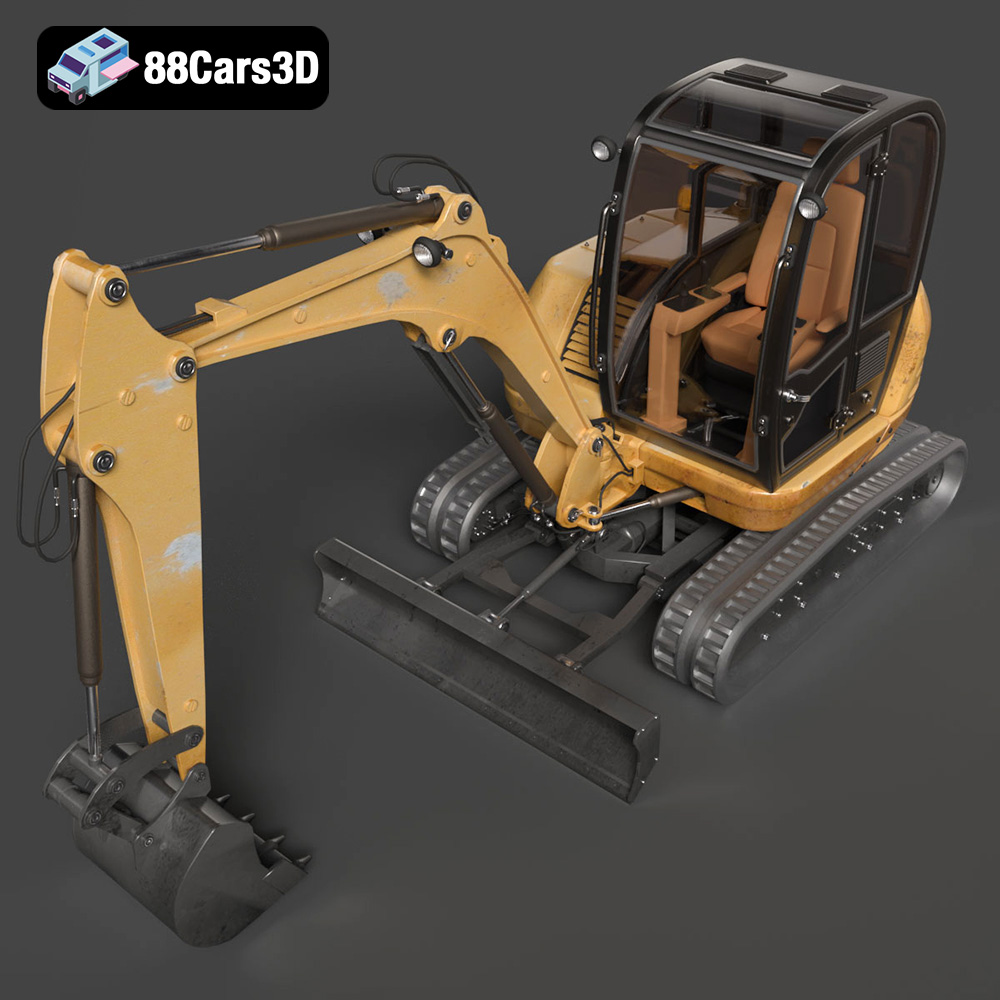
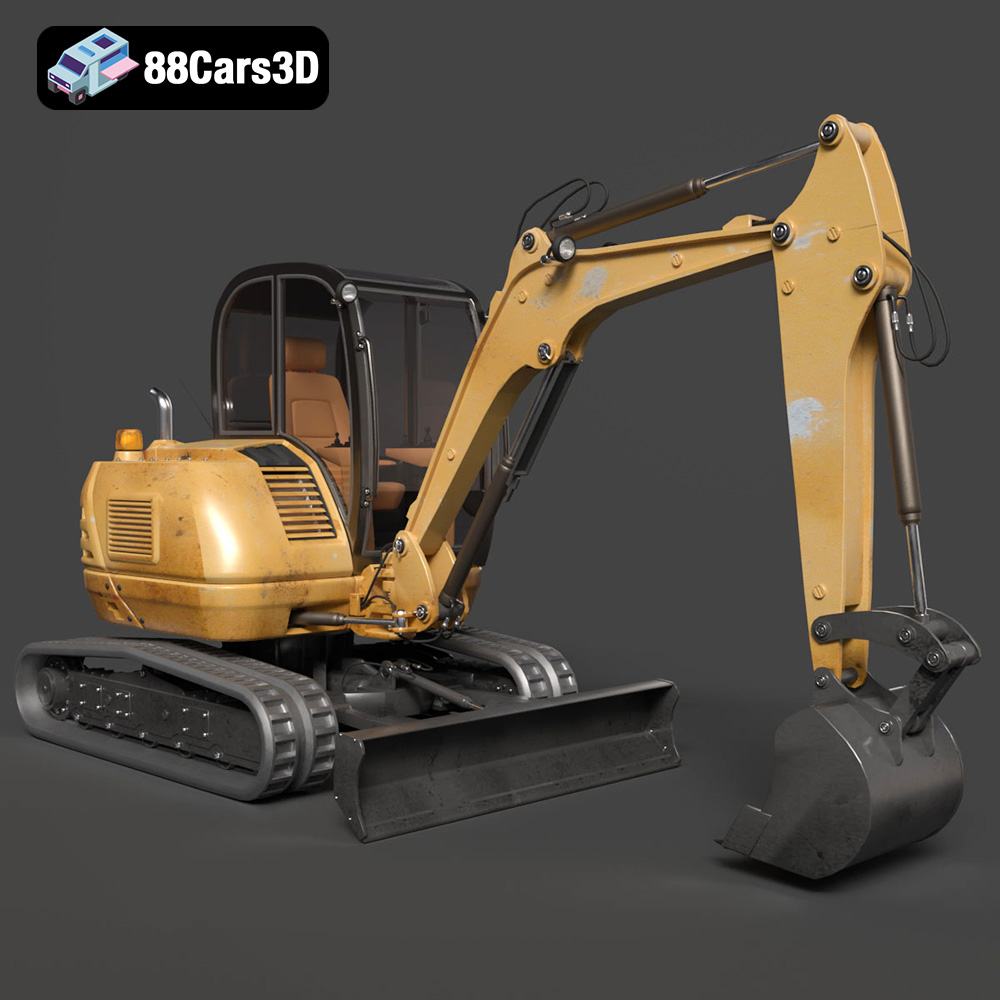
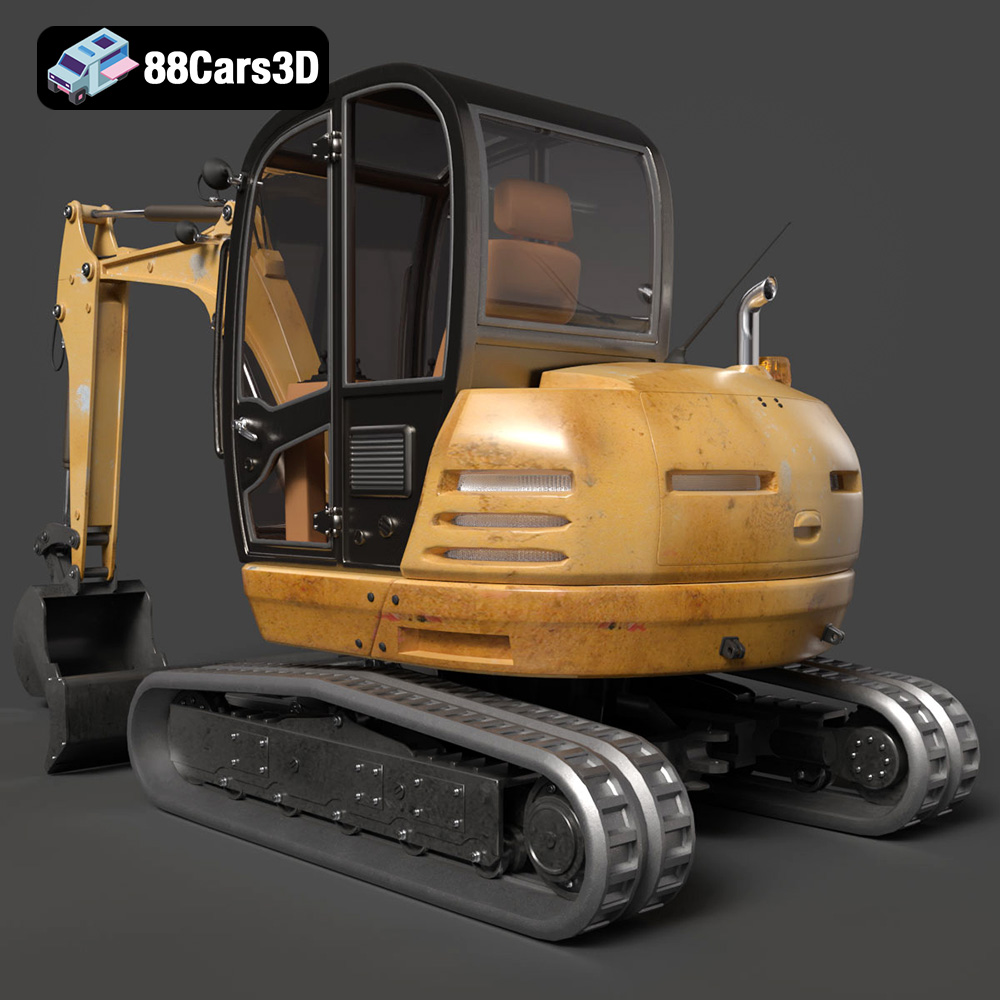
Authenticity begins with accurate representation. For heavy machinery, this means meticulous attention to real-world proportions, mechanical functions, and intricate details. The Compact Track Excavator 3D Model showcases this through its “Accurate Compact Track Excavator frame geometry and industrial proportions” and “Real-world scale accuracy.” Every component, from the robust undercarriage with its highly detailed continuous tracks and drive sprockets to the industrial work lighting and warning beacons, is modeled with precision.
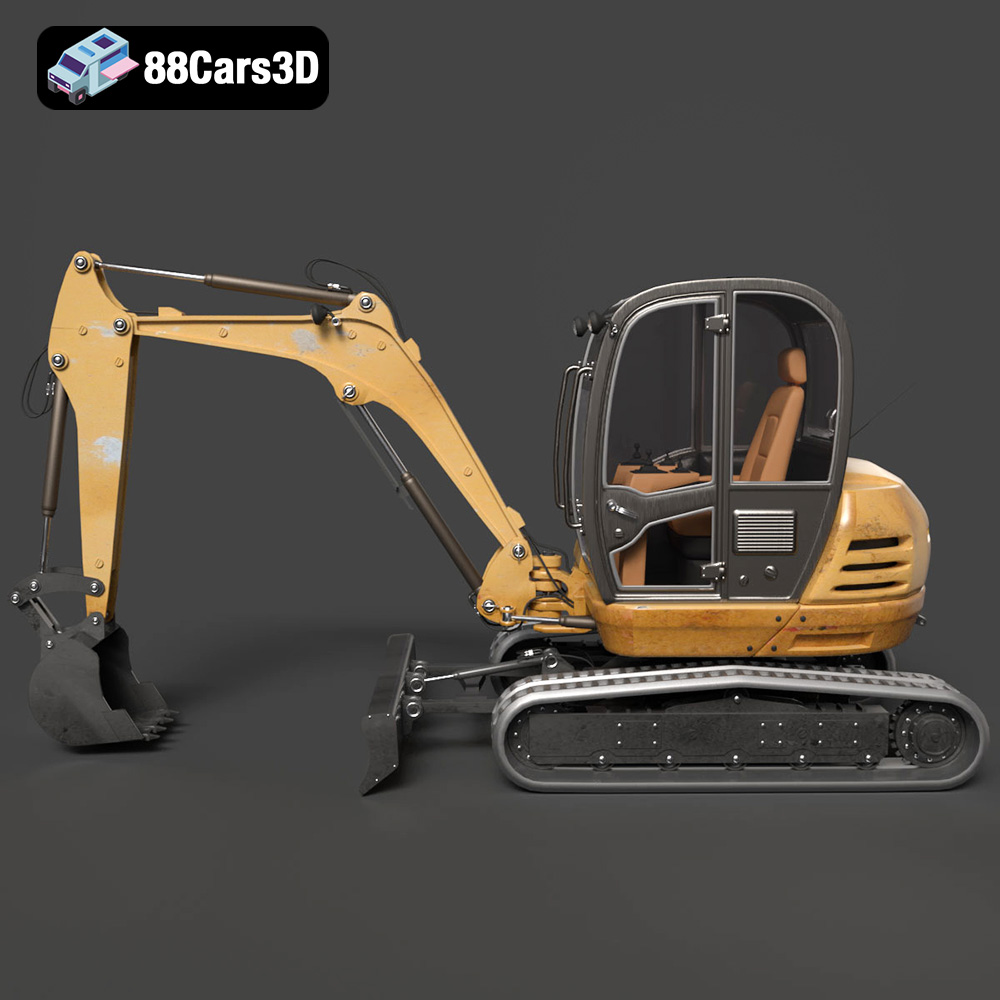
The detailed hydraulic system, including visible cylinders, pistons, and routing hoses, adds a layer of believability that is often overlooked in less professional assets. Furthermore, the heavy-duty digging bucket, complete with realistic teeth and reinforced plating, is not merely a visual element but a functional component, ready for dynamic interaction within a simulated environment. The reinforced operator cabin with its safety cage detailing completes the exterior, giving the model a formidable and authentic presence. This level of detail is paramount for projects where realism is key, such as industrial demonstrations or virtual training.
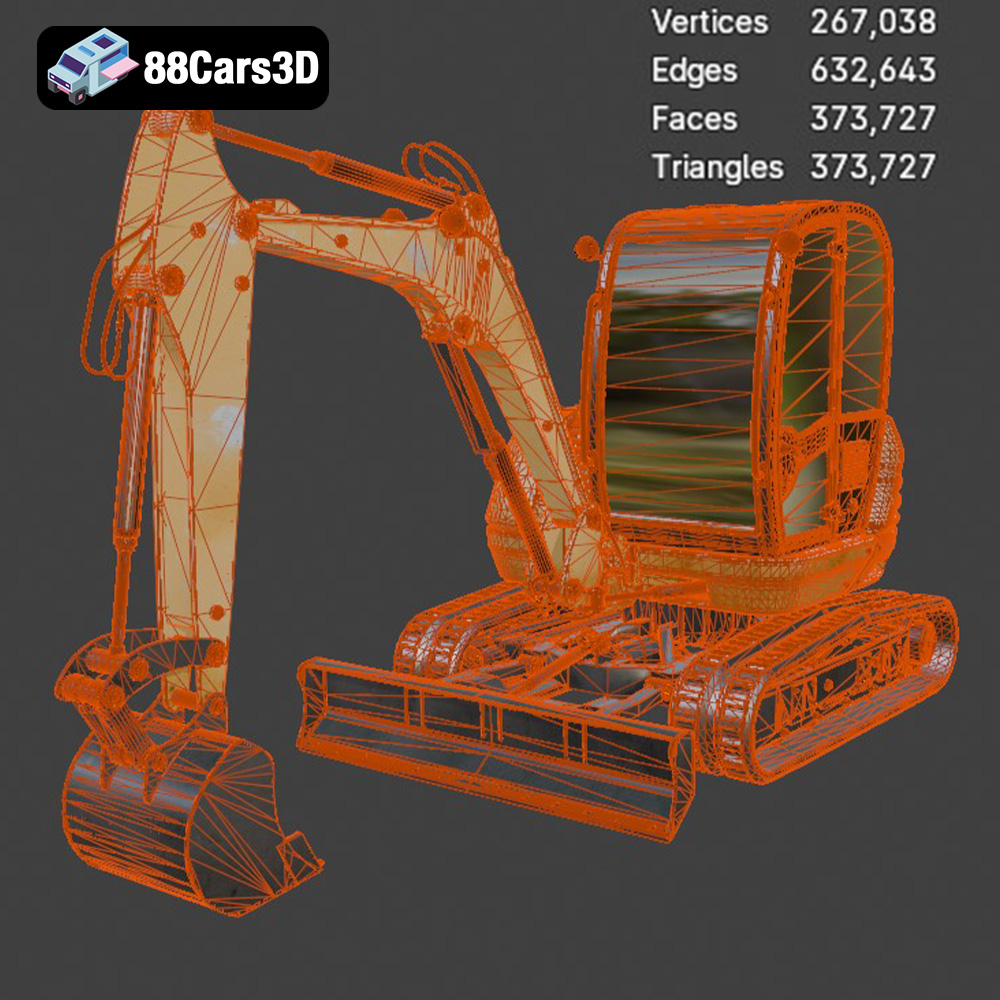
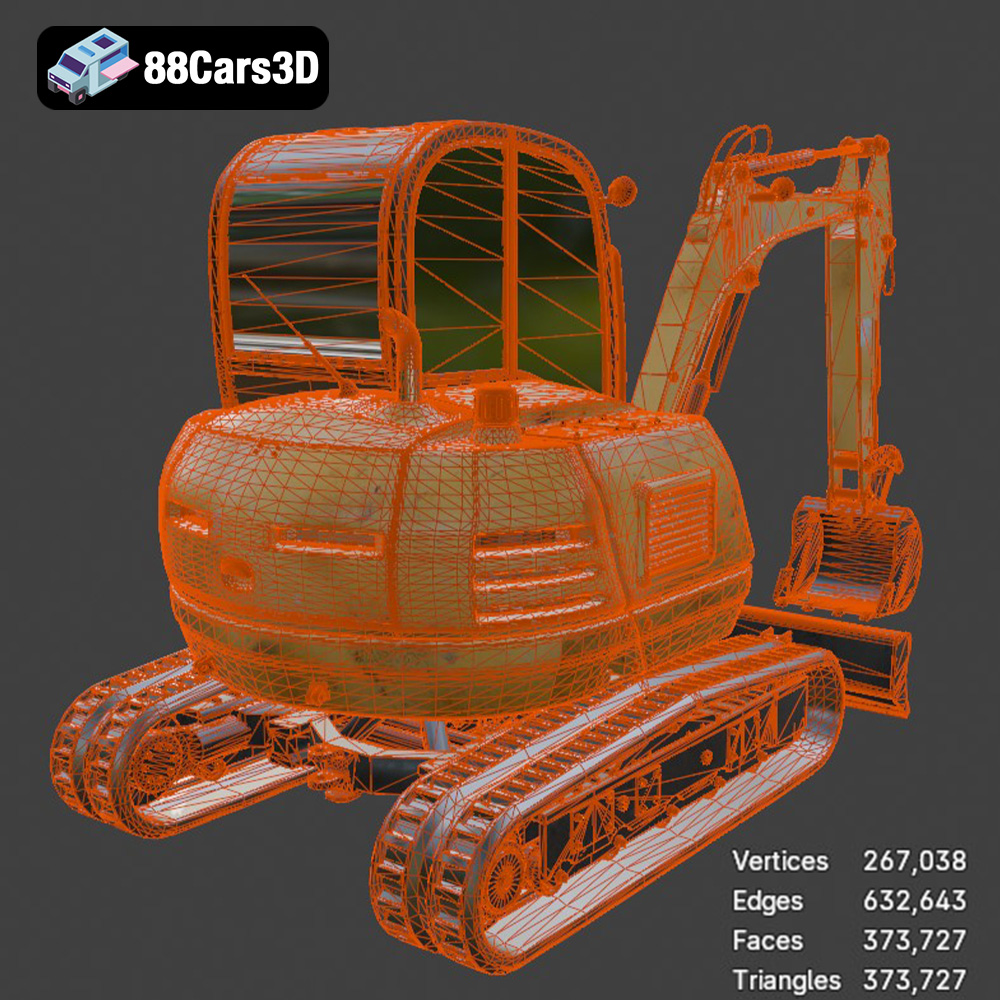
High detail can come at the cost of performance, especially in real-time applications. The Compact Track Excavator addresses this challenge head-on with its “well-optimized topology” boasting 373,727 triangles. This polycount strikes a critical balance: it’s rich enough to deliver “uncompromising visual fidelity” for close-up renders and detailed animations, yet efficient enough to remain “game-ready” for demanding real-time engines like Unreal and Unity. Effective UV mapping (implied by its game-ready status) ensures that textures are applied without distortion, contributing to a clean and professional appearance. The model’s optimized geometry ensures smooth frame rates, preventing lag and delivering a fluid user experience whether in an AR/VR application or a high-action game.
The true power of a high-quality 3D asset lies in its ability to transport users into immersive, interactive environments. The Compact Track Excavator 3D Model is engineered precisely for this purpose, making it an invaluable asset for game developers and AR/VR content creators seeking to build compelling and realistic experiences.
Construction simulators are a niche yet critical application in both entertainment and vocational training. The Compact Track Excavator is designed from the ground up to excel in such scenarios. Its “Separate track, turret, boom, stick, and bucket components engineered for animation” provide the fundamental structure needed for realistic rigging. This means that each part can be independently controlled, allowing for complex, multi-stage boom articulation, 360-degree turret rotation, and authentic track movement. The “Proper pivot setup” ensures that these movements are mechanically accurate, providing a truly immersive operator experience.
Beyond external movement, the “Cockpit & Interior Features” elevate the simulation experience significantly. An ergonomic operator suspension seat, detailed dual joystick controls, driving pedals, and a digital instrument cluster contribute to an environment suitable for a first-person POV in gaming and VR simulators. Imagine a player or trainee stepping into this virtual cockpit, feeling the weight and responsiveness of the machine as they manipulate the controls – this level of detail is what transforms a simple game into a powerful training tool.
Augmented Reality (AR) and Virtual Reality (VR) are revolutionizing industrial training, maintenance, and virtual showrooms. The optimized nature of the Compact Track Excavator makes it a perfect candidate for these platforms. Its availability in formats like .glb (optimized for web, AR, and VR) and efficient .fbx files ensures smooth integration into various AR/VR engines and frameworks. For instance, in a VR heavy equipment training program, new operators could safely learn to maneuver the excavator, practice digging techniques, and understand the machine’s operational controls without the risks or costs associated with real-world machinery. The detailed interior, with its realistic visibility structure and operational control panels, is especially beneficial here, providing an accurate representation of the operator’s perspective.
Beyond training, the model can be used in virtual showrooms, allowing potential clients to explore the excavator from every angle in a photorealistic virtual space, or in AR applications where the digital model can be overlaid onto a real-world construction site, aiding in planning and visualization. The flexibility of this 3D model allows developers to push the boundaries of immersive industrial applications.
For architectural visualization artists, product designers, and animation studios, the goal is often to produce breathtaking, photorealistic imagery and animations. The Compact Track Excavator 3D Model offers the detail and flexibility required to achieve these high standards, seamlessly integrating into professional rendering pipelines.
When working with industry-leading software like 3ds Max or Blender, artists demand assets that are not only visually rich but also highly customizable. The inclusion of native .max and .blend files for the Compact Track Excavator provides precisely this. Artists can leverage the full power of advanced rendering engines such as V-Ray, Corona Renderer (for 3ds Max), or Cycles and Eevee (for Blender) to create stunning visuals. The model’s “optimized geometry” and “well-optimized topology” translate directly into cleaner renders and faster render times, even with complex lighting setups.
Workflows might involve importing the .max file, applying sophisticated PBR (Physically Based Rendering) materials using the included textures, setting up an HDRI (High Dynamic Range Image) for realistic lighting, and then rendering out photorealistic stills or cinematic animations. The model’s “Customization Options,” such as changing chassis colors, applying dirt and mud textures for weathered site realism, or adjusting material finishes (matte metal, gloss paint, rubber tracks), empower artists to tailor the excavator to perfectly match their scene’s aesthetic and narrative. This makes it an “Excellent for architectural site plans, industrial demonstrations, and studio lighting setups.”
In the realm of architectural and engineering visualization, the inclusion of realistic heavy machinery can dramatically enhance the impact and credibility of a project. A construction site render, for instance, gains immense realism when populated with accurately modeled equipment like this compact track excavator. Architects can integrate the model into their site plans to illustrate logistical considerations, operational zones, or simply to add a sense of scale and activity to their visualizations. Engineers can use it to demonstrate equipment interaction within a proposed infrastructure project, showcasing safety protocols or construction phases. The model’s “Real-world scale accuracy” ensures that it fits seamlessly into these technical representations, providing valuable context and visual information that goes beyond mere aesthetics. Its quality makes it a versatile asset for anyone looking to elevate their industrial or infrastructure-related visualizations, whether for internal review or client presentations.
The utility of high-quality 3D models extends beyond purely digital realms. With the advent of accessible 3D printing technology, these digital assets can be transformed into tangible objects, opening up new avenues for prototyping, display, and educational tools. The Compact Track Excavator is also designed with this physical manifestation in mind.
The inclusion of the .stl format is crucial for 3D printing, enabling users to materialize the digital design. The provided “3D Print Settings” offer a practical guide for achieving optimal results. Recommended scales (1:35, 1:48, 1:50) cater to popular hobbyist and diorama scales, ensuring compatibility with existing collections. Specifics like layer height (0.04–0.12 mm, with resin printing recommended for fine details), wall thickness (1.2–2.0 mm), and infill (20–30%) provide a solid starting point for any 3D printing enthusiast. The mention of required supports for delicate parts like hydraulic hoses and bucket teeth, along with suggested print orientation for the main body and separate components, demonstrates a practical understanding of the 3D printing process.
Post-processing recommendations, such as sanding, priming, and applying authentic industrial yellow/orange with weathering effects, guide users towards creating a truly realistic physical model. This capability is perfect for display-scale hobbyists, diorama builders, or even for creating physical prototypes for industrial design reviews. The ability to hold a tangible representation of a complex machine offers a unique perspective that digital views sometimes cannot fully convey.
While .stl is the workhorse for general 3D printing, the .ply format offers capabilities that are more aligned with precision and analytical applications. Though the Compact Track Excavator is a pre-made digital model, its availability in .ply means it can be readily integrated into workflows that might involve analyzing mesh integrity, performing precise measurements, or even acting as a reference for reverse engineering tasks if a real-world counterpart were being scanned. The .ply format’s ability to store color per vertex can be particularly useful for scientific visualization or when detailed surface properties are critical for analysis. This caters to a more specialized user base, such as engineers or researchers, who require high-fidelity mesh data for more technical applications beyond simple visual rendering or printing.
In the complex and ever-evolving landscape of 3D content creation, the value of a meticulously crafted, versatile, and technically robust 3D model cannot be overstated. The Compact Track Excavator 3D Model exemplifies this gold standard, serving as an indispensable asset for professionals across game development, AR/VR, high-fidelity rendering, and even 3D printing. Its optimized topology, real-world accuracy, and detailed mechanical components provide the foundation for truly immersive and convincing digital experiences.
From the precise rigging potential for dynamic animations in a construction simulator to its seamless integration into Unreal Engine projects via the .unreal format, and its physical manifestation through .stl for hobbyists, this model offers unparalleled utility. The extensive range of included file formats ensures that artists and developers, regardless of their preferred software or specific project demands, can integrate this high-quality asset into their workflows with ease.
Whether you are designing the next generation of industrial simulations, populating a sprawling open-world game, or creating stunning architectural visualizations, the Compact Track Excavator 3D Model is ready to elevate your project. Discover this exceptional asset and other premium 3D car models and industrial equipment by visiting 88cars3d.com today, and unlock the full potential of your digital creations.
The Compact Track Excavator represents the pinnacle of modern construction and heavy machinery engineering. Designed for versatility and power in confined spaces, this machine is characterized by its robust track system, highly articulated hydraulic boom, and heavy-duty digging bucket. Its distinctive industrial styling is complemented by exposed hydraulic hoses, a reinforced operator cabin, and an aggressive stance that makes it a staple on any digital construction site. This meticulously crafted 3D model features a well-optimized topology with 373,727 triangles, delivering uncompromising visual fidelity while remaining efficient for real-time applications. Whether deployed in game development, industrial simulations, AR/VR training programs, or high-end architectural visualizations, the asset is structured to provide maximum realism. The meticulously modeled undercarriage and boom pivot points ensure seamless rigging and animation.
$36.50
.blend
.excavator
.fbx
.glb
.max
.obj
.ply
.rendering
.stl
.unreal
compact-track-excavator
construction-equipment
game asset
game-ready
heavy-machinery
low-poly
optimized
vehicle-3d-model
VR/AR