Get 20% OFF All Premium 3D & STL Models!

The automotive world, both physical and digital, thrives on passion, precision, and an unwavering attention to detail. From the sleek curves of a concept car to the roar of a turbocharged engine, every element contributes to an experience. In the realm of 3D visualization, this pursuit of realism is paramount. Creating stunning digital vehicles for games, cinematic renders, or immersive virtual reality experiences demands not just artistic flair but also deep technical understanding. It’s a challenging endeavor, requiring countless hours of modeling, texturing, and optimization to bring a vehicle to life.
Imagine capturing the raw energy and iconic styling of a legendary hot hatch – the Fiat 500 Abarth 695 – and making it available as a perfectly crafted 3D asset. This is precisely where professional 3D car models from platforms like 88cars3d.com redefine what’s possible. These assets aren’t just pretty pictures; they are robust, technically sound foundations for a myriad of applications. Whether you’re a game developer needing accurate vehicles, an architectural visualizer populating a street scene, or an automotive designer showcasing a concept, the quality and versatility of your 3D car models can make or break a project. The Fiat 500 Abarth 695 3D Model is an exceptional example, offering an unparalleled level of detail and optimization for a vast array of digital creative pipelines.
The world of 3D modeling is incredibly diverse, not just in terms of artistic styles and software, but also in the myriad of file formats used to store and exchange digital assets. Understanding these formats is crucial for any professional working with 3D car models, as each serves a specific purpose, offering unique advantages depending on the project’s requirements. High-quality asset providers like 88cars3d.com go to great lengths to offer their products, such as the Fiat 500 Abarth 695 3D Model, in a comprehensive range of formats to ensure maximum compatibility and utility.
The .blend file format is native to Blender, the popular open-source 3D creation suite. When you download a .blend file, you’re not just getting a mesh; you’re receiving a complete Blender scene. This includes the model’s geometry, materials, textures, lighting setups, cameras, animation data, and even modifiers. It’s fully editable, allowing artists to delve deep into the asset’s construction, adjust topology, tweak materials, or re-rig components with ease. For those deeply integrated into the Blender workflow, the .blend file provides the most flexibility for iterative design and customization.
FBX (Filmbox) is a proprietary file format owned by Autodesk and has become an industry standard for 3D data interchange. It’s incredibly versatile, supporting not just geometry and materials but also complex scene hierarchies, animations, rigging, and even light and camera information. Its widespread adoption makes it ideal for transferring assets between different 3D software applications (like 3ds Max, Maya, Blender) and, critically, into real-time game engines such as Unreal Engine and Unity. For game development and film VFX, .fbx is often the go-to format for its robust feature set and reliability.
OBJ (Wavefront Object) is one of the oldest and most universally supported 3D file formats. It’s a simple, text-based format primarily used for exchanging 3D geometry data – vertices, normals, UV coordinates, and polygonal faces. While it can reference external material files (.mtl), it doesn’t store animation, rigging, or scene information. This simplicity makes it highly compatible across virtually all 3D software. It’s excellent for static meshes, arch-viz models, and when a clean, geometry-focused transfer is needed, especially when compatibility is a higher priority than complex scene data.
GLB (GL Transmission Format Binary) is an increasingly important format, especially for web-based 3D, augmented reality (AR), and virtual reality (VR) applications. It’s a binary version of the glTF (GL Transmission Format) and packages all necessary data – model, textures, animations, and materials – into a single, self-contained file. This optimization makes .glb files incredibly efficient for streaming and displaying 3D content in browsers, mobile devices, and immersive environments, ensuring fast loading times and smooth performance.
STL (Stereolithography) is almost exclusively used for 3D printing. It represents 3D surfaces as a collection of triangular facets, completely disregarding color, texture, or other advanced properties. While it’s excellent for manufacturing, it’s not suitable for rendering or animation workflows. If your goal is to physically produce a model of the Fiat 500 Abarth 695, converting it to an optimized .stl format is the crucial step, ensuring the mesh is manifold and ready for fabrication.
PLY (Polygon File Format) is another format for storing 3D data, particularly useful for applications involving 3D scanning, scientific visualization, and CAD. Unlike .stl, .ply can store a wider range of properties, including color, transparency, normals, texture coordinates, and even reliability information for each vertex and face. It’s often used when precision and additional data attributes beyond pure geometry are required, making it valuable for analytical or research-oriented projects.
While not a standard file extension in the same way as .fbx or .obj, “unreal” typically signifies an asset package specifically prepared and optimized for direct import and use within Unreal Engine. This often means the model has been rigorously checked for proper scaling, material setup (PBR), collision meshes, LODs (Levels of Detail), and pivot points, ensuring it performs flawlessly within the engine’s ecosystem. Such assets drastically reduce development time for game designers and simulation creators.
The .max format is the native file type for Autodesk 3ds Max, one of the most powerful and widely used 3D modeling, animation, and rendering software packages in the industry. A .max file contains the entire 3ds Max scene, including geometry, modifiers, materials (V-Ray, Corona, Physical), lighting, cameras, animations, and scene settings. For professionals working within 3ds Max, this format provides the fullest range of editing capabilities and is ideal for complex architectural visualization, character animation, and high-end automotive rendering projects.
This extensive selection of formats ensures that a premium asset like the Fiat 500 Abarth 695 3D Model from 88cars3d.com can seamlessly integrate into virtually any professional pipeline, delivering versatility alongside exceptional quality.
Creating a truly exceptional 3D car model is a delicate balance between artistic interpretation and rigorous technical engineering. It’s about more than just replicating shapes; it’s about capturing the essence, the spirit, and the mechanical integrity of the original vehicle. The Fiat 500 Abarth 695 3D Model exemplifies this synergy, showcasing how intricate detailing and smart optimization combine to deliver a top-tier digital asset.
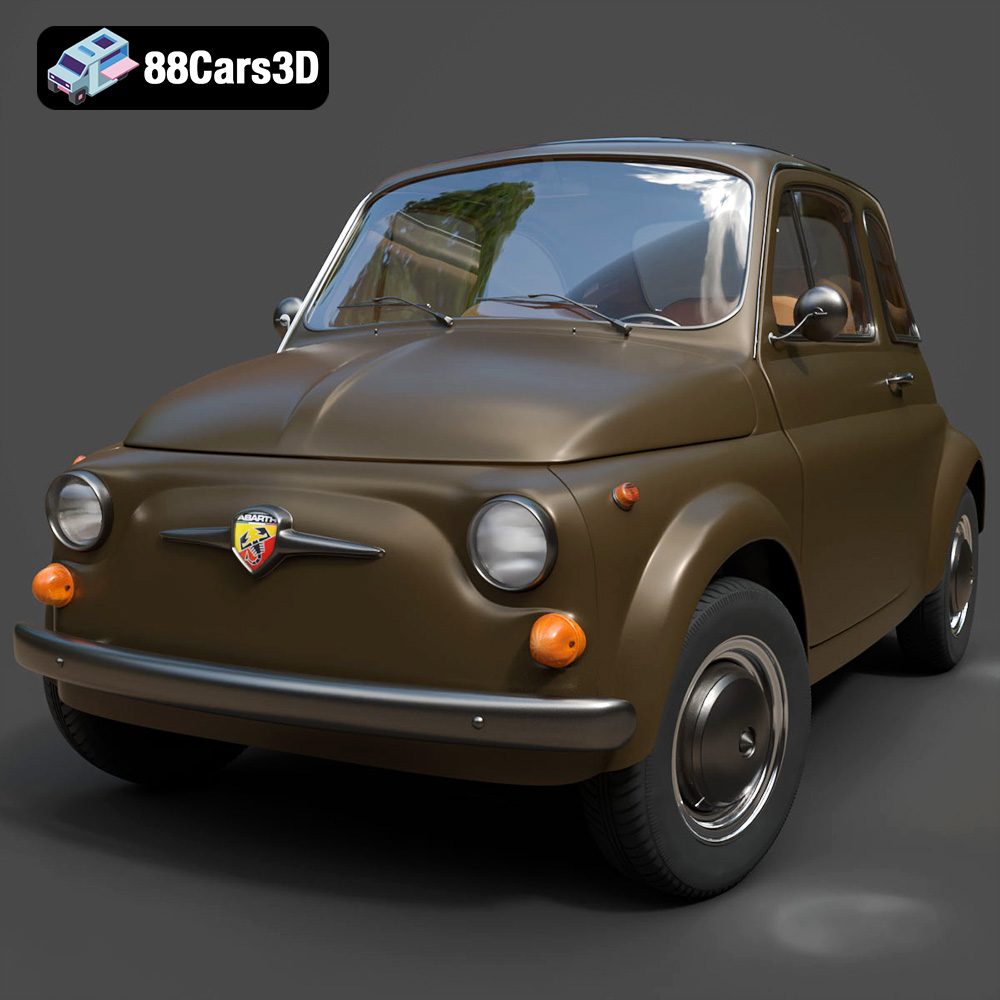
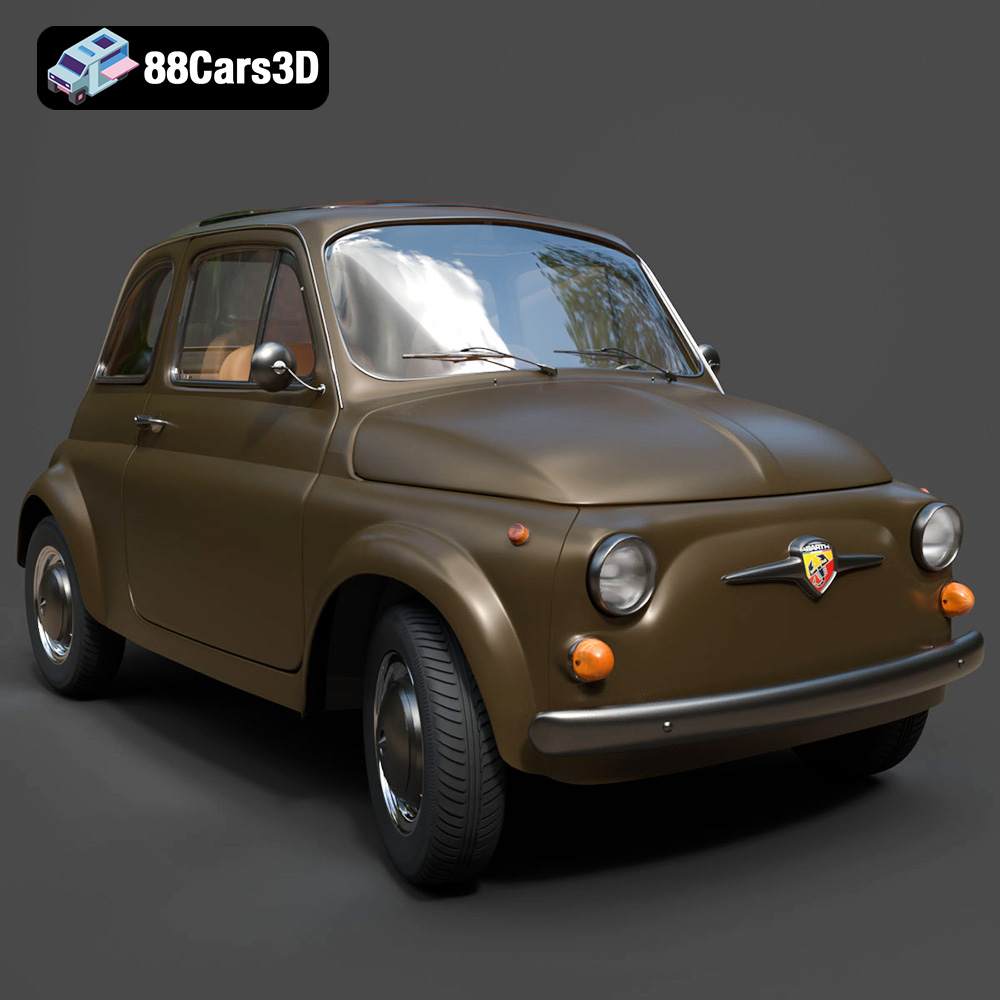
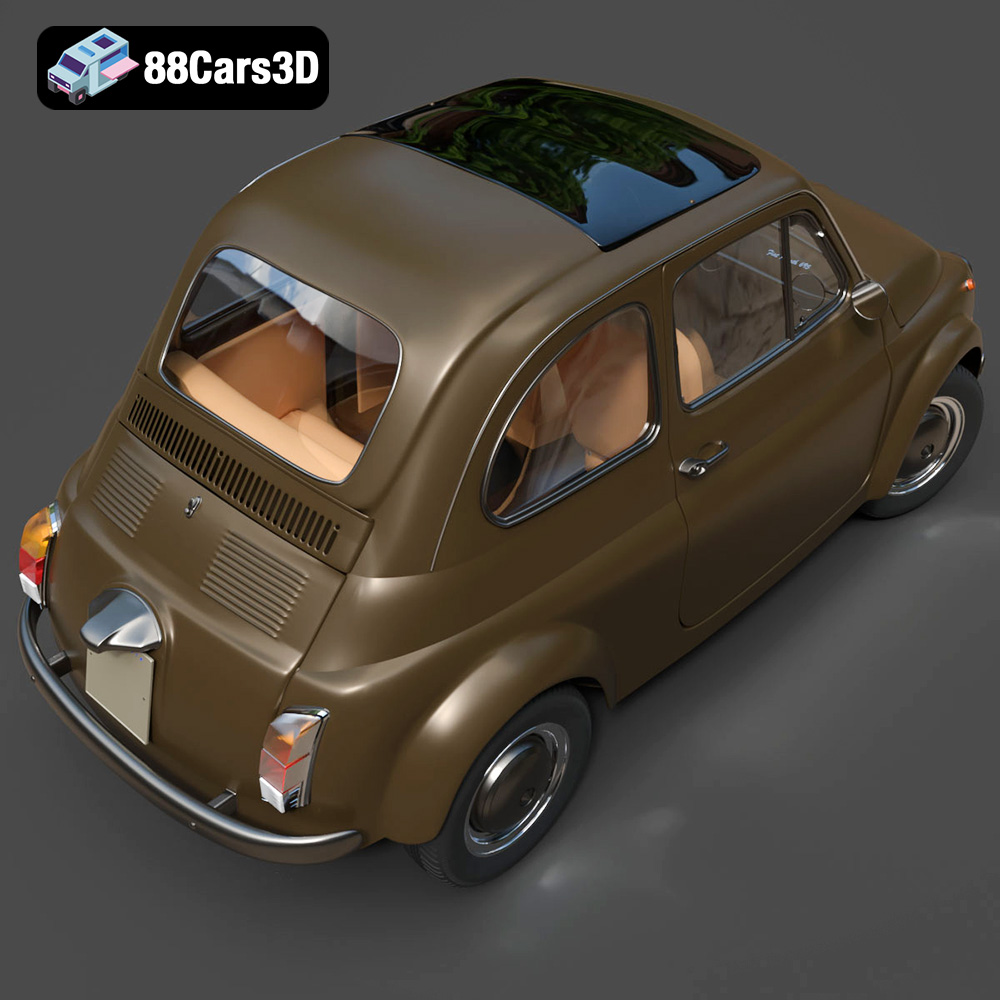
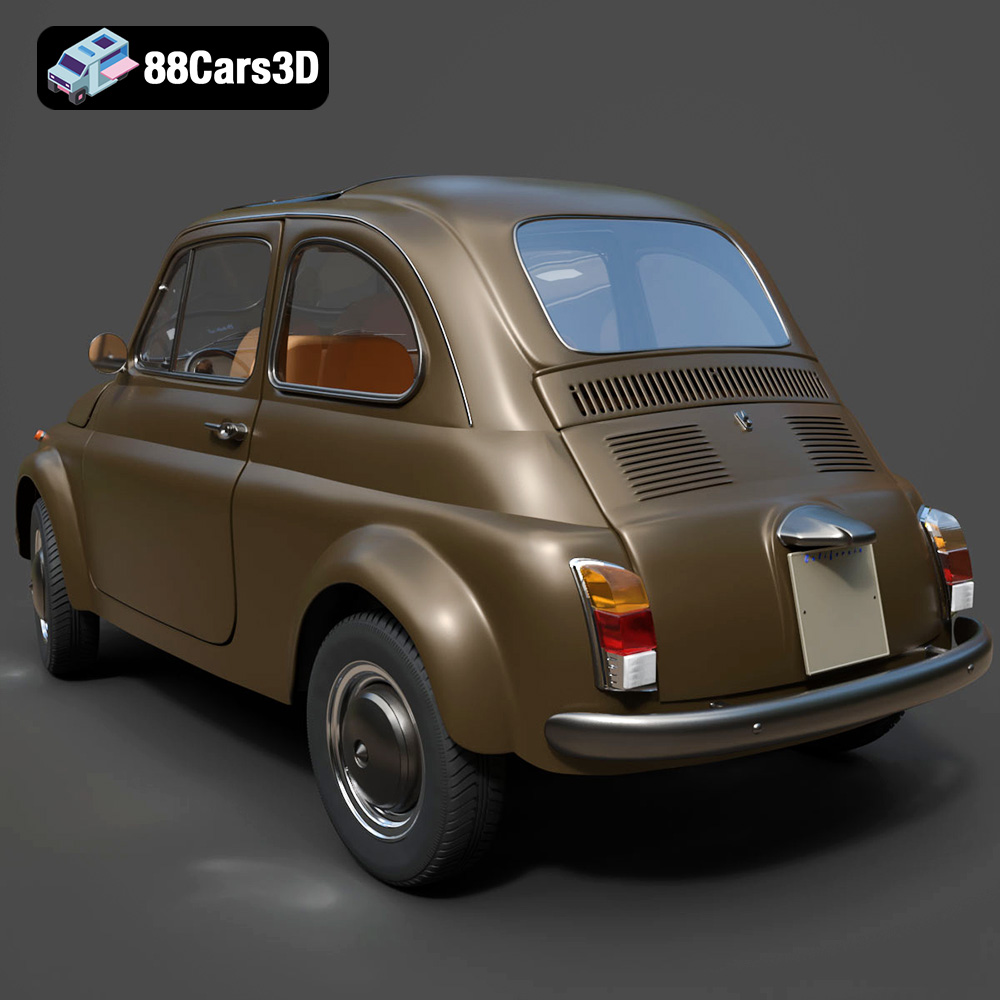
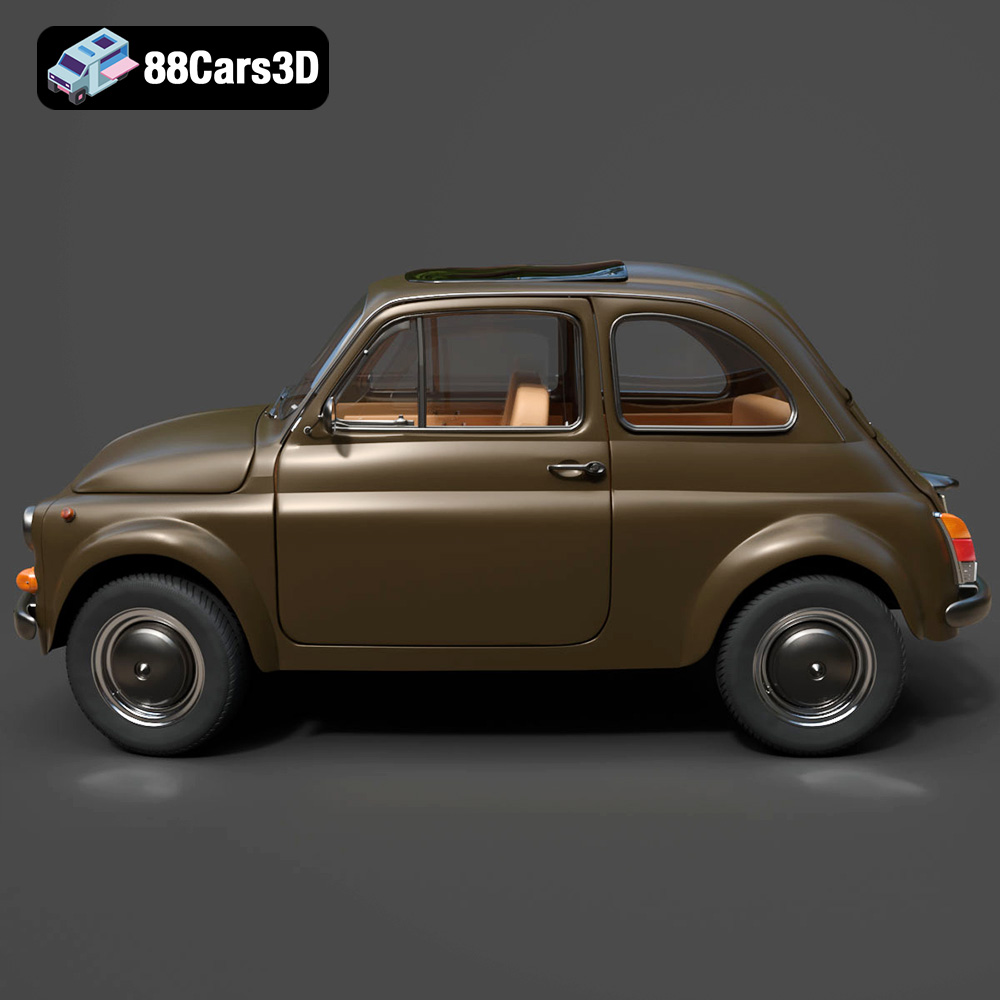
The foundation of any great automotive 3D model lies in its exterior accuracy. For the Fiat 500 Abarth 695, this means a meticulous recreation of its distinctive features. The model perfectly captures the car’s aggressive stance, characterized by its widened track and the carefully sculpted aerodynamic body kit. Crucial identifiers like the signature Record Monza quad-tailpipe exhaust system are faithfully reproduced, right down to their individual pipes and mounting points. The front fascia boasts precisely modeled projector headlights and LED daytime running lights, reflecting the actual vehicle’s lighting configuration. Even the authentic Abarth-styled multi-spoke alloy wheels, wrapped in low-profile performance tires, are rendered with incredible fidelity, showcasing detailed brake calipers and rotors behind them. The sport-tuned lowered suspension setup is not merely visual but accurately structured, with separate components for animation, underscoring a commitment to both visual appeal and functional flexibility. Every curve, vent, and panel gap reflects real-world scale accuracy, based on the actual vehicle chassis, ensuring that renders and game implementations are indistinguishable from photographs.
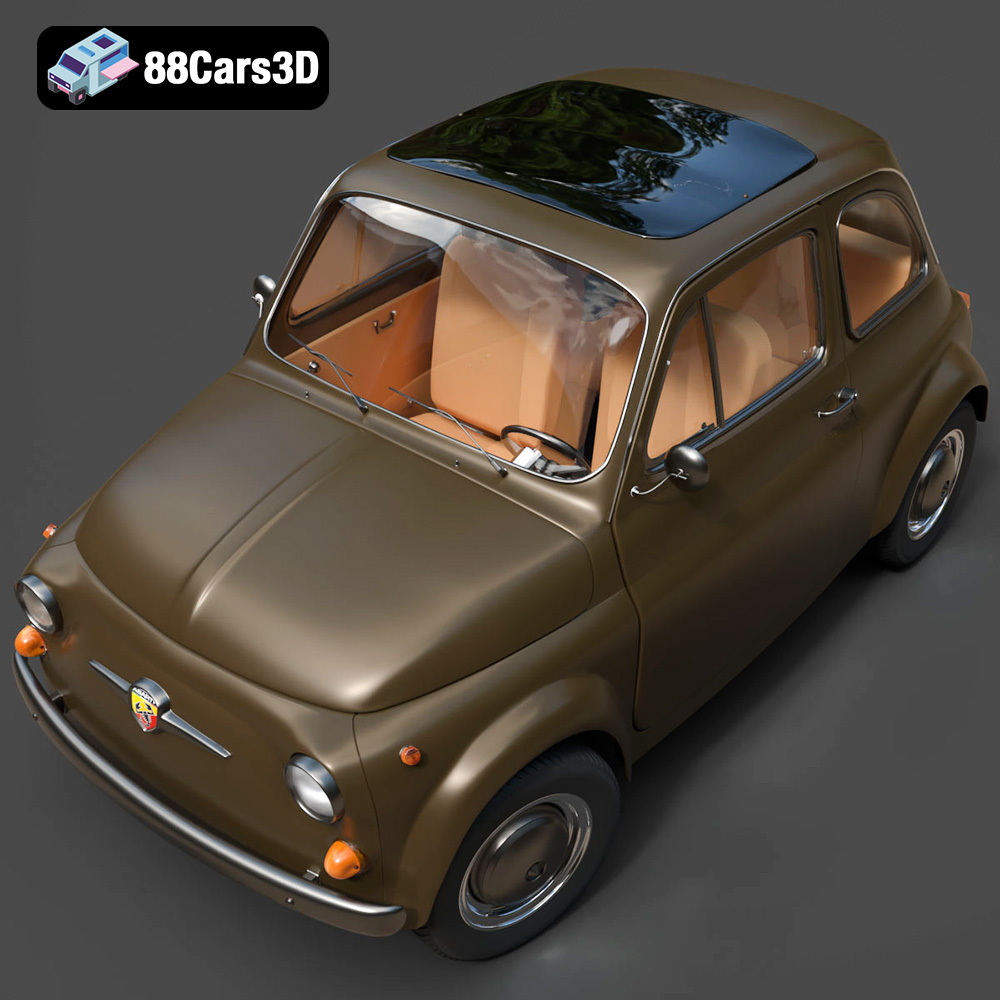
The experience of a performance car extends beyond its exterior, deep into its cockpit. The Fiat 500 Abarth 695 3D Model delivers a highly detailed interior, designed for immersive experiences. The iconic Sabelt racing seats feature authentic stitching and contours, inviting virtual occupants. The sport-contoured steering wheel, complete with precise Abarth badging, is a focal point of realism. Even the digital TFT instrument cluster and boost gauge are modeled with intricate detail, providing a true sense of the car’s technological prowess. Control details like aluminum sport pedals, the gear shifter, and tactile dashboard switches are carefully crafted to provide an authentic first-person perspective, making the model ideal for gaming and virtual reality simulations.
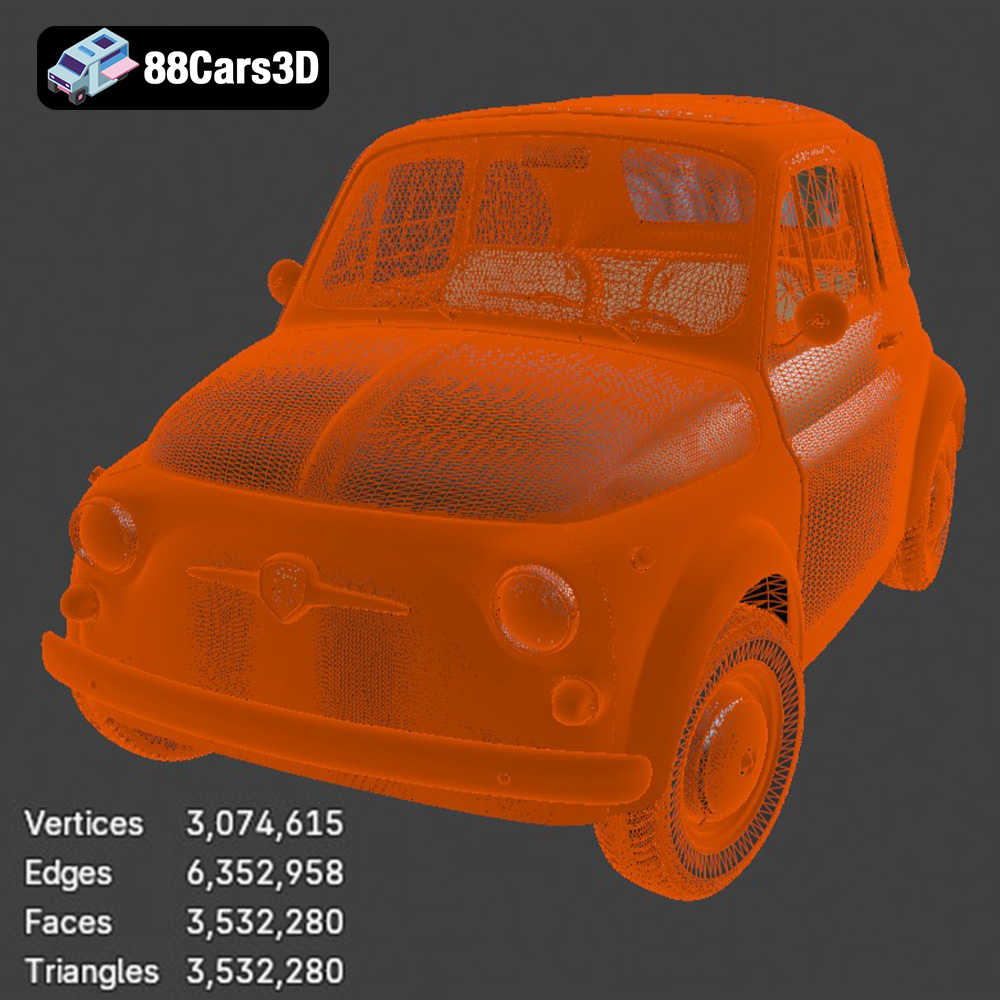
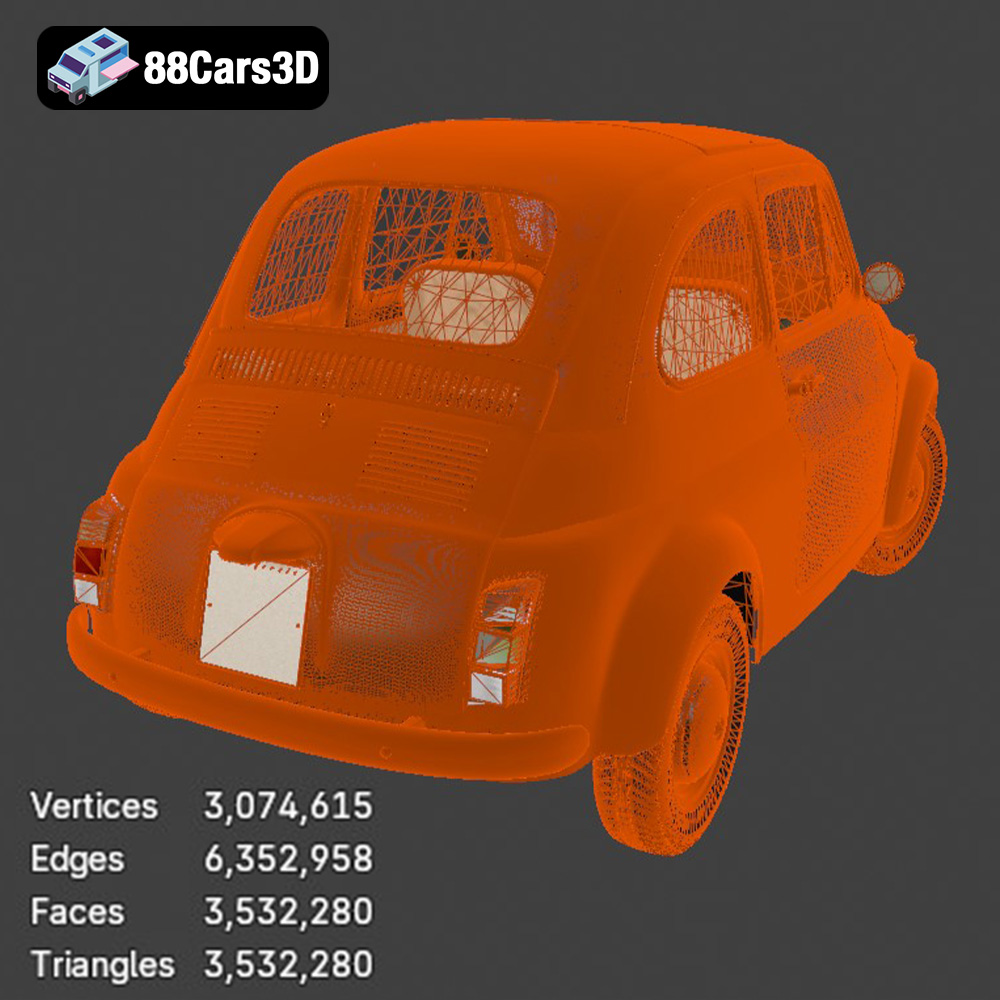
Despite this extraordinary level of detail, boasting a comprehensive topology of 3,532,280 triangles, the model is expertly structured for optimal use in modern game engines. This high polycount strikes a perfect balance: it’s robust enough for cinematic close-ups and high-resolution renders, yet it’s also organized with game-ready principles in mind. This typically involves efficient UV mapping, clean topology for deformation, and the potential for easy creation of Levels of Detail (LODs) to manage performance across different distances in real-time environments. Such careful optimization is a hallmark of professional 3D car models found on platforms like 88cars3d.com.
The true value of a meticulously crafted 3D car model, such as the Fiat 500 Abarth 695, lies in its seamless integration into diverse professional pipelines. Its versatility allows creators across multiple industries to elevate their projects with photorealistic and performant automotive assets.
For game developers, the Fiat 500 Abarth 695 3D Model is a prime example of a game-ready asset. Its optimized polycount, coupled with real-world scale accuracy, makes it ideal for open-world games, racing titles, and vehicle simulators. The inclusion of separate wheels, suspension, and steering components, along with proper pivot setups for rotation and travel, are critical features. This allows developers to easily animate the vehicle’s mechanics, creating dynamic and believable driving physics in engines like Unreal Engine and Unity. Furthermore, the model’s design for first-person POV in gaming ensures that interior shots and immersive driving experiences are highly detailed and engaging. A well-constructed 3D car model like this accelerates production, allowing development teams to focus on gameplay and interaction rather than asset creation from scratch.
In the world of automotive rendering and visualization, stunning visuals are paramount. The high-fidelity Fiat 500 Abarth 695 3D Model excels in this arena, providing the necessary detail for compelling brand campaigns, lifestyle scenes, and studio lighting setups. Using software like 3ds Max or Blender, artists can leverage the intricate geometry and PBR (Physically Based Rendering) materials to produce photorealistic images and animations. Imagine a sleek commercial showcasing the Fiat 500 Abarth 695 tearing through an urban landscape, or a detailed product configurator allowing customers to explore every angle and customize colors and finishes. The robustness of the model, especially in formats like .max or .blend, allows for advanced rendering techniques, complex lighting scenarios, and high-resolution output demanded by advertising agencies and automotive marketing teams.
The burgeoning fields of Augmented Reality (AR) and Virtual Reality (VR) demand highly optimized, yet visually rich 3D assets. The Fiat 500 Abarth 695 3D Model is perfectly suited for immersive virtual showrooms, configurators, and mobile AR experiences. With formats like .glb specifically designed for efficient web and mobile deployment, designers can create interactive virtual spaces where users can explore the vehicle in a truly engaging way. Businesses can offer virtual test drives or allow potential buyers to “place” the car in their driveway using AR, blurring the lines between the digital and physical worlds. The high level of detail, combined with careful optimization, ensures that these experiences are not only visually impressive but also perform smoothly on a wide range of devices.
While the primary applications of high-quality 3D car models often reside within digital realms, their utility extends profoundly into the physical world through 3D printing. The ability to translate a complex digital asset into a tangible object opens up exciting possibilities for hobbyists, designers, and manufacturers alike. The Fiat 500 Abarth 695 3D Model, with its detailed geometry, is a fantastic candidate for physical fabrication.
Converting a model for 3D printing requires specific considerations that go beyond digital rendering. The inclusion of the .stl format specifically caters to this. When preparing the Fiat 500 Abarth 695 for physical production, recommended settings guide users through the process. Scales like 1:12, 1:18, or 1:24 are advised, offering a balance between detail and manageable print size. A layer height of 0.04–0.12 mm is crucial for capturing fine details, with resin printing often recommended over FDM for its superior precision. Critical structural considerations include wall thickness (1.2–2.0 mm) and infill (20–30%) for durability. Supports are often required for intricate parts like the exhaust system, mirrors, and specific undercarriage components to prevent print failure. Even print orientation is important; printing the main frame angled enhances structural integrity, while wheels are typically printed separately for optimal quality. This detailed guidance ensures that hobbyists and professionals can successfully translate the digital excellence of this 3D car model into a high-quality physical replica.
The journey from a digital file to a physical collectible is incredibly rewarding. For enthusiasts of the Fiat 500 Abarth 695, this means the opportunity to own a perfectly scaled and detailed model, created with their own hands (or printer). Beyond personal hobbies, this capability is invaluable for rapid prototyping in design and engineering. Automotive designers can quickly print out physical iterations of components or entire vehicle shells to assess ergonomics, aesthetics, and fit before committing to expensive manufacturing processes. Museums or collectors might use these models for display, replicating rare vehicles that are otherwise inaccessible. The provision of formats like .stl and .ply, coupled with practical printing advice, transforms a versatile digital asset into a powerful tool for tangible creation, further extending the value of high-quality 3D car models available on platforms like 88cars3d.com.
The true power of a professionally developed 3D asset lies not just in its initial quality but also in its inherent flexibility and potential for customization. A well-structured 3D car model, such as the Fiat 500 Abarth 695 from 88cars3d.com, is designed to be a springboard for creativity, allowing artists and developers to tailor it precisely to their project’s unique vision.
One of the most immediate customization options is the ability to change body and material colors. The Fiat 500 Abarth 695 3D Model allows users to easily switch between factory colors, apply custom paint jobs, or experiment with various finishes like matte, gloss, or metallic. This is crucial for branding, thematic consistency in a game, or creating specific moods in an automotive rendering. Beyond paint, tire textures can be modified, perhaps swapping performance street variants for off-road treads in a specific simulation. The underlying material properties, accessible in formats like .blend or .max, provide deep control over reflectivity, roughness, and other PBR attributes. Furthermore, adapting the lighting for different environments – from a sun-drenched coastal road to a moody night-time city street – drastically alters the perception of the vehicle and is easily achieved within modern 3D software. This level of adaptability ensures that the model can be seamlessly integrated into diverse scenes and narratives without compromising visual fidelity.
The ability to customize and adapt a 3D car model significantly maximizes its long-term value. Instead of being a static, single-use asset, the Fiat 500 Abarth 695 3D Model becomes a versatile component in an artist’s toolkit. It can be re-used across multiple projects, saving considerable time and resources on asset creation. For example, a single base model can be configured to represent different trim levels or special editions of the Abarth 695, each with unique visual characteristics. This flexibility also supports creative freedom, allowing designers to experiment with concepts, explore “what if” scenarios, and push the boundaries of their digital environments. The thoughtful design and comprehensive file format support offered by platforms like 88cars3d.com are instrumental in providing assets that are not only high-quality but also inherently future-proof and adaptable to evolving creative demands.
In the dynamic landscape of 3D visualization, the demand for high-quality, versatile 3D car models is ever-present. The Fiat 500 Abarth 695 3D Model stands as a testament to the meticulous craftsmanship and technical expertise required to meet these demands. From its faithfully reproduced exterior and intricately detailed interior to its game-ready optimization and comprehensive file format support, this model is engineered for excellence across every application.
Whether you are developing a AAA racing game, crafting cinematic automotive renders, building an immersive AR/VR experience, or even preparing a physical model for 3D printing, this asset provides an unparalleled foundation. Its balance of high fidelity and technical efficiency ensures it performs beautifully in real-time engines while offering the detail necessary for stunning offline renders. The availability of formats like .blend, .fbx, .obj, .glb, .stl, .ply, .unreal, and .max ensures seamless integration into virtually any professional workflow, empowering creators with flexibility and choice.
For professionals seeking premium 3D car models that deliver both visual realism and robust technical performance, 88cars3d.com remains a trusted source. The Fiat 500 Abarth 695 3D Model is more than just a digital car; it’s a gateway to accelerating your creative projects with precision, detail, and unparalleled versatility.
The Fiat 500 Abarth 695 represents the pinnacle of Italian hot hatch performance, boasting a legendary racing heritage and an unmistakable aggressive stance. This 3D model meticulously captures the vehicle’s iconic styling cues, including its widened track, aerodynamic body kit, signature Record Monza dual exhaust system, and the formidable T-Jet engine. Every curve and detail has been carefully recreated to reflect the car’s dynamic personality and track-ready capabilities. With a comprehensive topology of 3,532,280 triangles, this high-fidelity 3D model delivers unparalleled visual realism while remaining structured for optimal use in modern game engines and high-end visualization workflows. Whether utilized for AAA game development, immersive AR/VR experiences, animation, or cinematic rendering, the model guarantees stunning visual fidelity across all platforms. Perfect for urban racing simulations, high-end automotive configurators, virtual showrooms, and cinematic street scenes.
$90.00
.blend
.fbx
.fiat
.glb
.hot-hatch
.max
.obj
.ply
.rendering
.sports car
.stl
.unreal
500-abarth-695
car-3d-model
game asset
game-ready
optimized
VR/AR