Get 20% OFF All Premium 3D & STL Models!

In the demanding world of 3D visualization, game development, and architectural rendering, the quality of your assets can make or break a project. Achieving photorealism and seamless integration requires meticulously crafted models that balance detail with optimization. This is particularly true for vehicle assets, which often serve as focal points or crucial environmental elements. Whether you’re populating an urban street scene, creating an immersive simulation, or designing a cutting-edge virtual showroom, having access to high-fidelity, production-ready 3D car models is paramount.
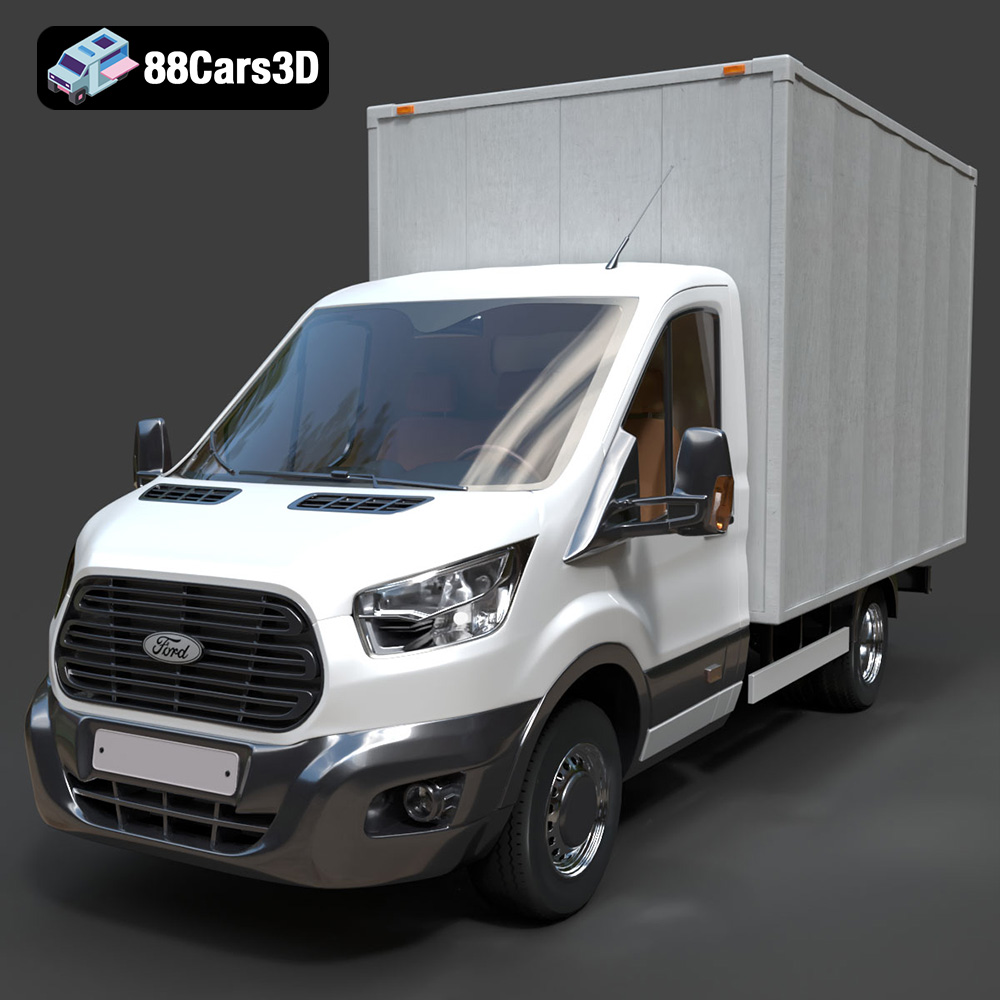
Today, we delve into a prime example of such an asset: the Ford Transit Camion 2008 3D Model. This isn’t just any commercial vehicle; it’s a digital recreation engineered for versatility and visual impact, ready to be deployed across a spectrum of professional applications. Its robust utility and iconic styling make it an indispensable addition to any artist’s or developer’s library, embodying the reliability and character of a true workhorse. Let’s explore how this specific model, and professional 3D assets in general, can elevate your creative endeavors.
Navigating the landscape of 3D modeling often begins with understanding the myriad of file formats available, each tailored for specific workflows, software, and applications. The Ford Transit Camion 2008 3D Model exemplifies versatility by being offered in a comprehensive suite of formats. Knowing when and why to use each one is crucial for efficient production.
The .blend format is native to Blender, a powerful open-source 3D creation suite. When you download a .blend file, you’re getting a fully editable Blender scene, complete with materials, textures, lighting, cameras, and even animation data. This format is ideal for users who primarily work in Blender and require complete control over the model’s structure, shaders, and rigging. Artists can easily modify geometry, adjust materials, or integrate the model into existing Blender projects without losing any scene information. It offers the deepest level of flexibility for customization within its native environment.
Autodesk’s .fbx (Filmbox) format has become the de facto standard for exchanging 3D data between different software applications and particularly for real-time engines like Unreal Engine and Unity. It supports geometry, materials, textures, animation, and even skeletal rigs. The .fbx format is highly optimized for game development pipelines due to its efficient handling of complex scene data. When working with the Ford Transit Camion 2008 for a game, an .fbx export ensures that all critical components like separate wheels, suspension, and steering information are preserved for animation setup and integration into the engine.
The .obj (Wavefront OBJ) format is one of the most widely supported and universal 3D file formats. It primarily stores geometric data—vertices, normals, texture coordinates, and faces—and references external material files (.mtl) for appearance information. While it doesn’t support animation or rigging, its simplicity and widespread compatibility make it excellent for cross-software transfers, especially when the primary focus is on static mesh geometry. The Ford Transit Camion 2008 in .obj format is perfect for users needing to import the base mesh into virtually any 3D application for rendering or further sculpting.
The .glb (GLB Transmission Format) is a binary version of the glTF (GL Transmission Format), designed for efficient transmission and loading of 3D scenes and models by applications. It packages geometry, materials, textures, and animation into a single file, making it incredibly suitable for AR, VR, and browser-based 3D displays. Its compact size and optimized structure ensure quick loading times and smooth performance, making the Ford Transit Camion 2008 in .glb format an excellent choice for interactive web experiences or mobile augmented reality applications.
The .stl (stereolithography) format is the standard for 3D printing. It represents a 3D model as a series of connected triangles, essentially describing the surface geometry without color or texture information. While simple, it’s universally recognized by 3D slicing software. The Ford Transit Camion 2008, when converted to .stl, provides hobbyists and professionals with a robust mesh for physical production, allowing them to bring the digital model into the real world. Precise wall thickness and infill considerations become crucial here.
The .ply (Polygon File Format) is another common format for storing 3D data, particularly from 3D scanners. It supports a wider range of properties than .obj, including color per vertex, normal information, and even material properties. It’s often used in scientific, engineering, and CAD applications where precise mesh data and attribute storage are important. For highly analytical or reverse-engineering tasks related to the Ford Transit Camion 2008, the .ply format offers a robust data structure.
While not a universal file extension in the traditional sense, a `.unreal` labeled file often indicates an asset specifically packaged or optimized for direct import into Unreal Engine projects. This usually means the FBX has been prepared with appropriate scale, pivot points, material slots, and potentially even collision meshes, adhering to Unreal Engine’s best practices. For developers working with the Ford Transit Camion 2008 in Unreal, this format promises a smoother, more direct path to integration, minimizing setup time and potential conversion issues, allowing immediate deployment in real-time environments.
Similar to .blend, the .max format is native to Autodesk 3ds Max, a leading software for 3D modeling, animation, and rendering in architectural visualization, design, and game development. A .max file contains the complete scene data, including geometry, modifiers, materials, lights, cameras, and animation. For professionals using 3ds Max, this format offers the highest level of editability and allows for direct integration into complex studio pipelines, providing full control over the Ford Transit Camion 2008 for detailed animation sequences or advanced rendering setups.
At the heart of any exceptional 3D project lies an exceptional model. The Ford Transit Camion 2008 3D Model from 88cars3d.com stands out as a high-fidelity asset that seamlessly blends realism with practical application. It’s designed to deliver significant impact, whether as a background element or a central character in your scene.
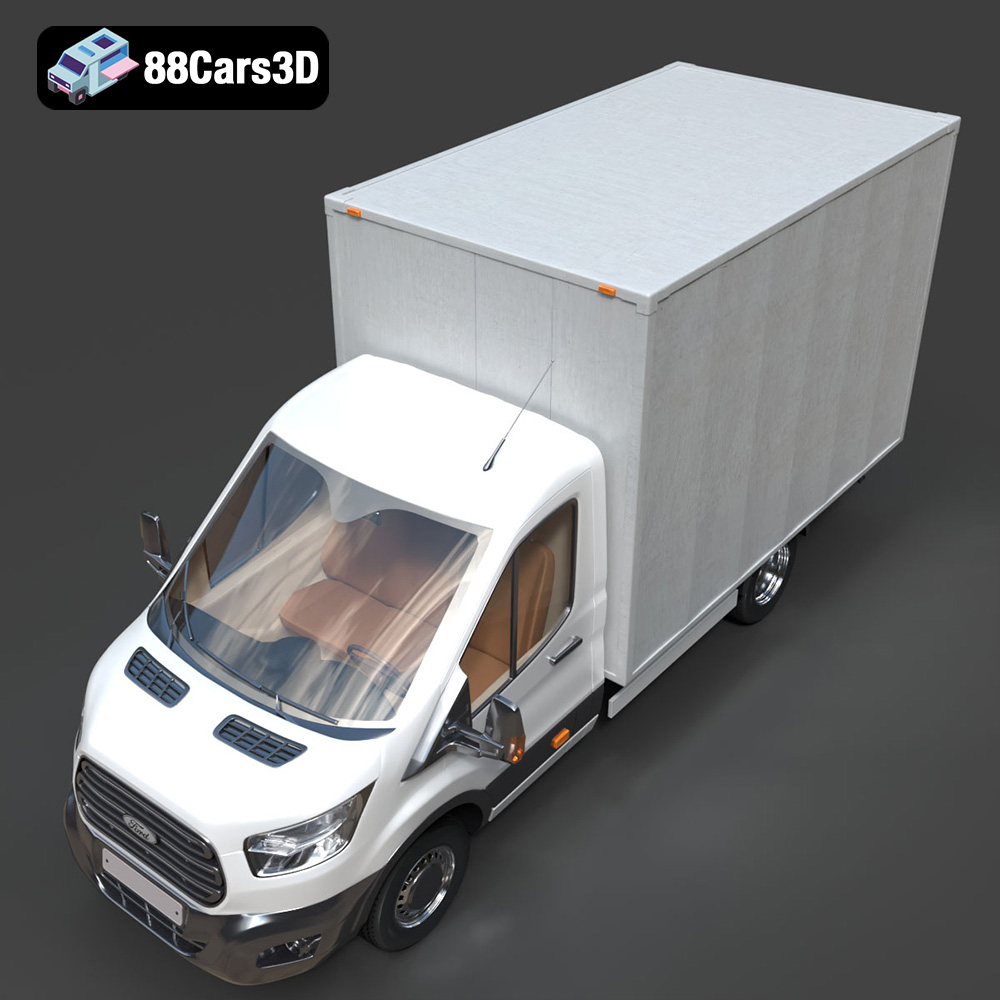
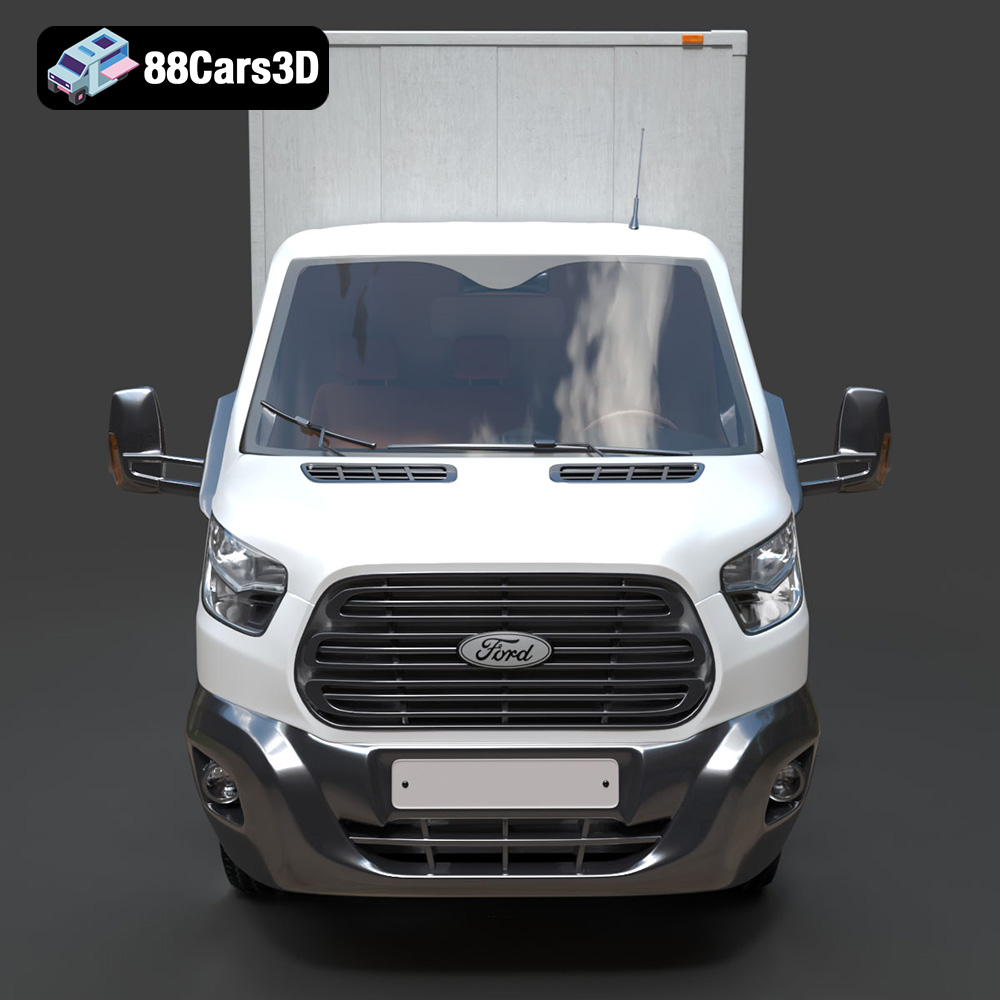
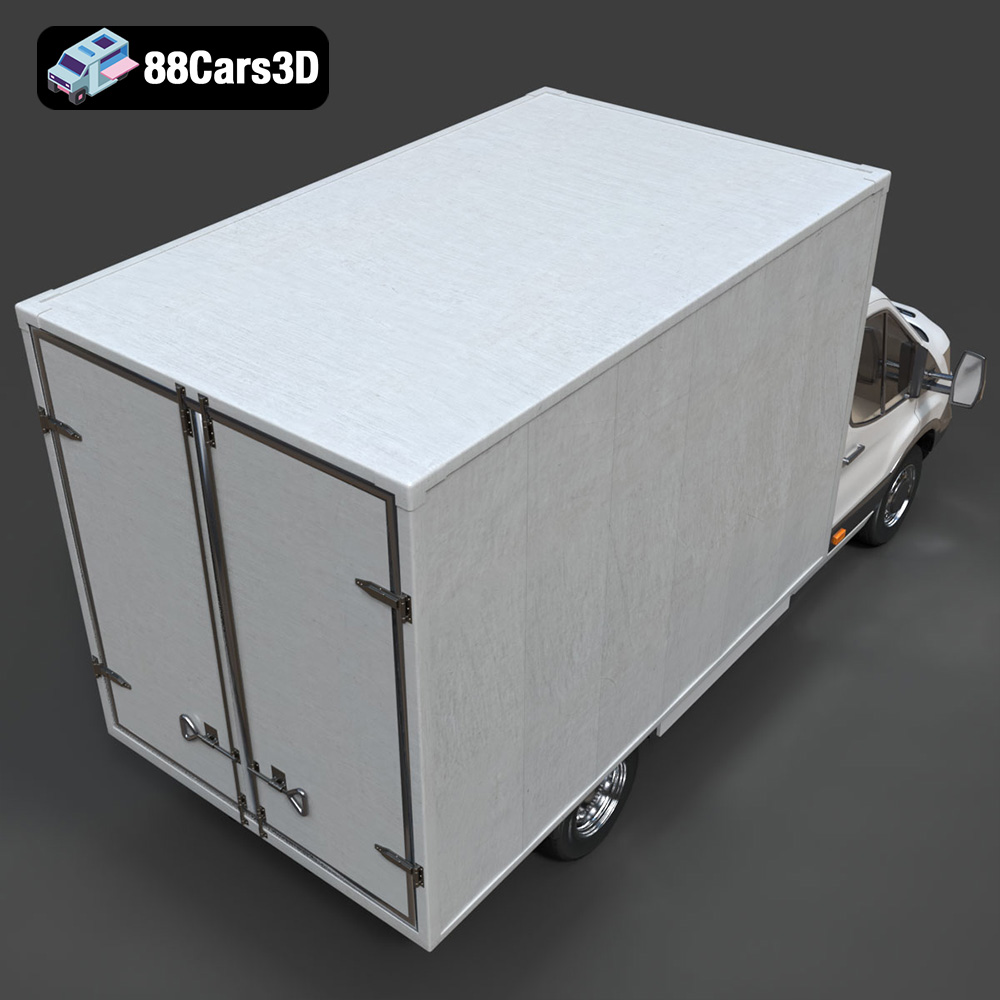
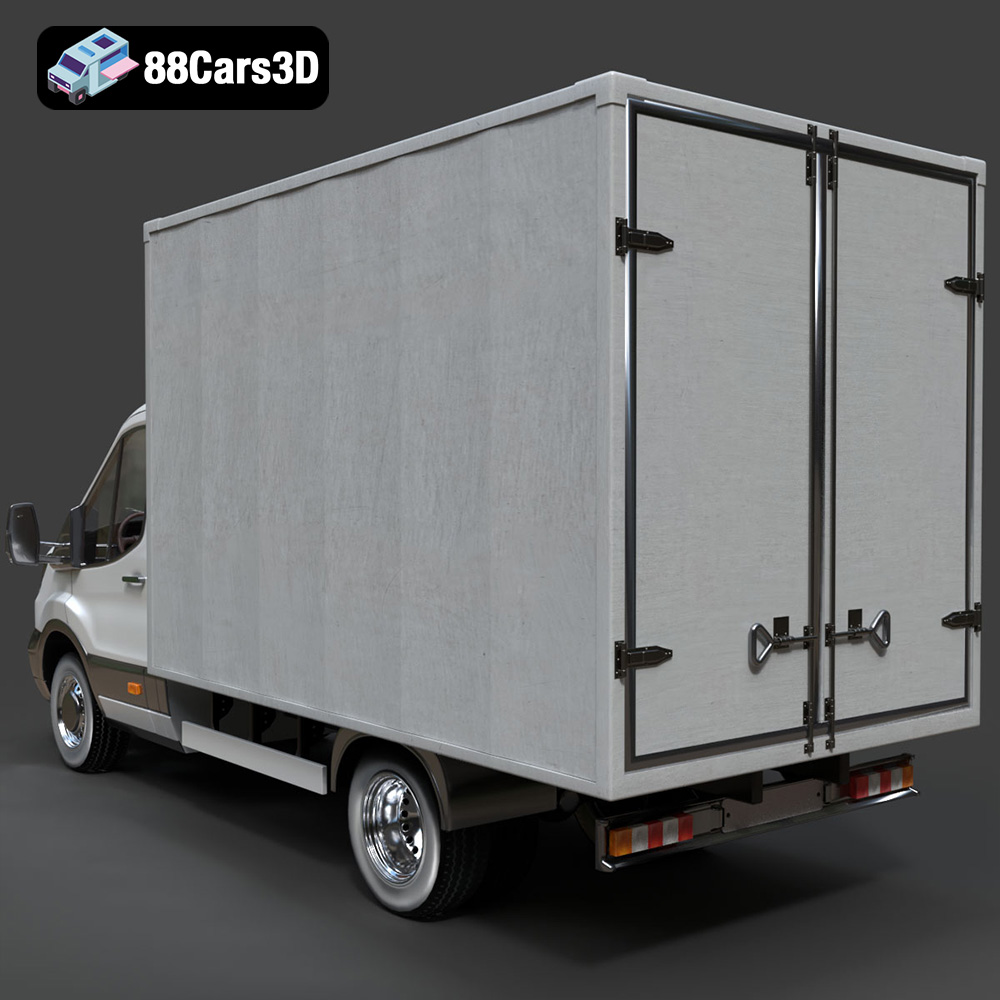
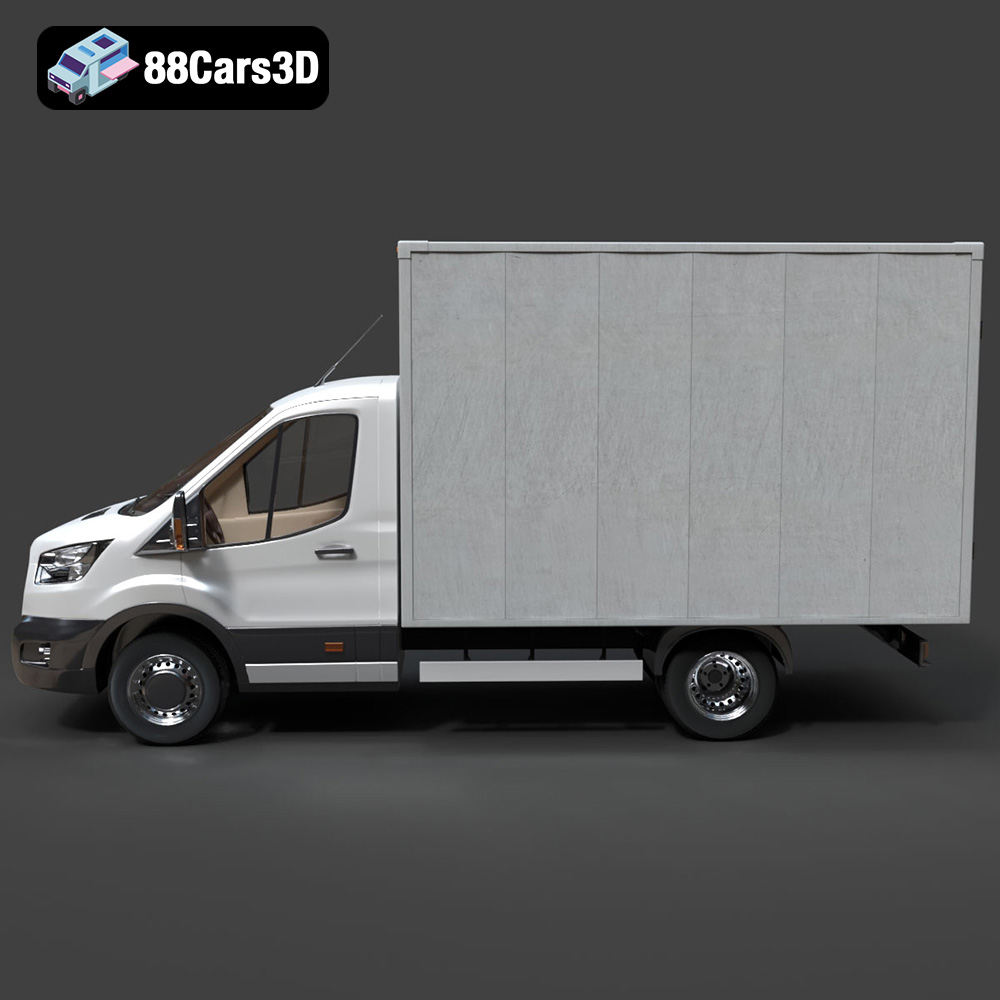
The creation of compelling automotive 3D models demands an obsessive attention to real-world details, and this Ford Transit Camion delivers. Its accurate frame geometry and proportions immediately convey authenticity. From the unmistakable front fascia of the Transit series to the classic commercial truck bed configuration, every aspect has been meticulously replicated. The model boasts a detailed chassis framework, a realistic commercial exhaust system, and intricate undercarriage details, which are often overlooked but crucial for close-up shots and immersive environments. Features like accurately modeled headlights, taillights, roof-mounted indicators, and high-resolution heavy-duty wheel, tire, and hubcap details ensure that the vehicle holds up to scrutiny from any angle. Even the leaf spring suspension, vital for a commercial load-bearing vehicle, has been carefully simulated, providing a solid foundation for realistic physics and animation.
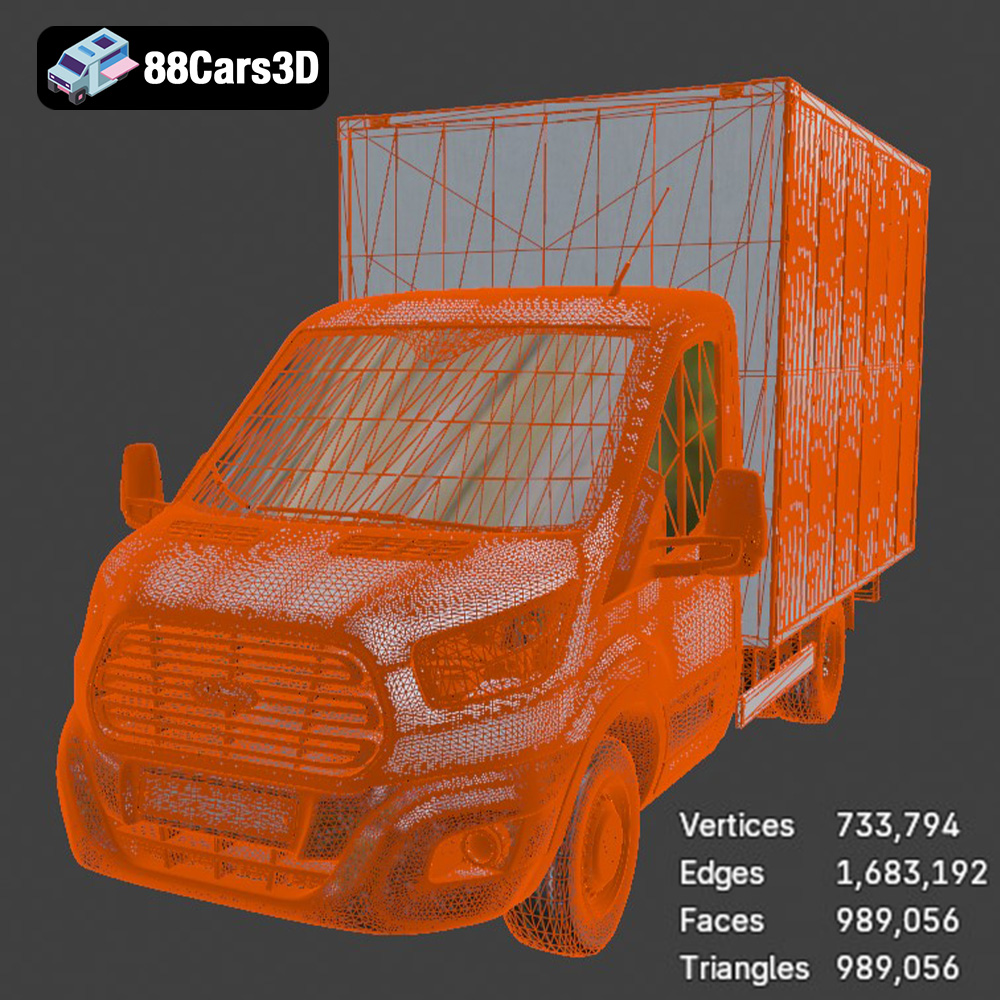
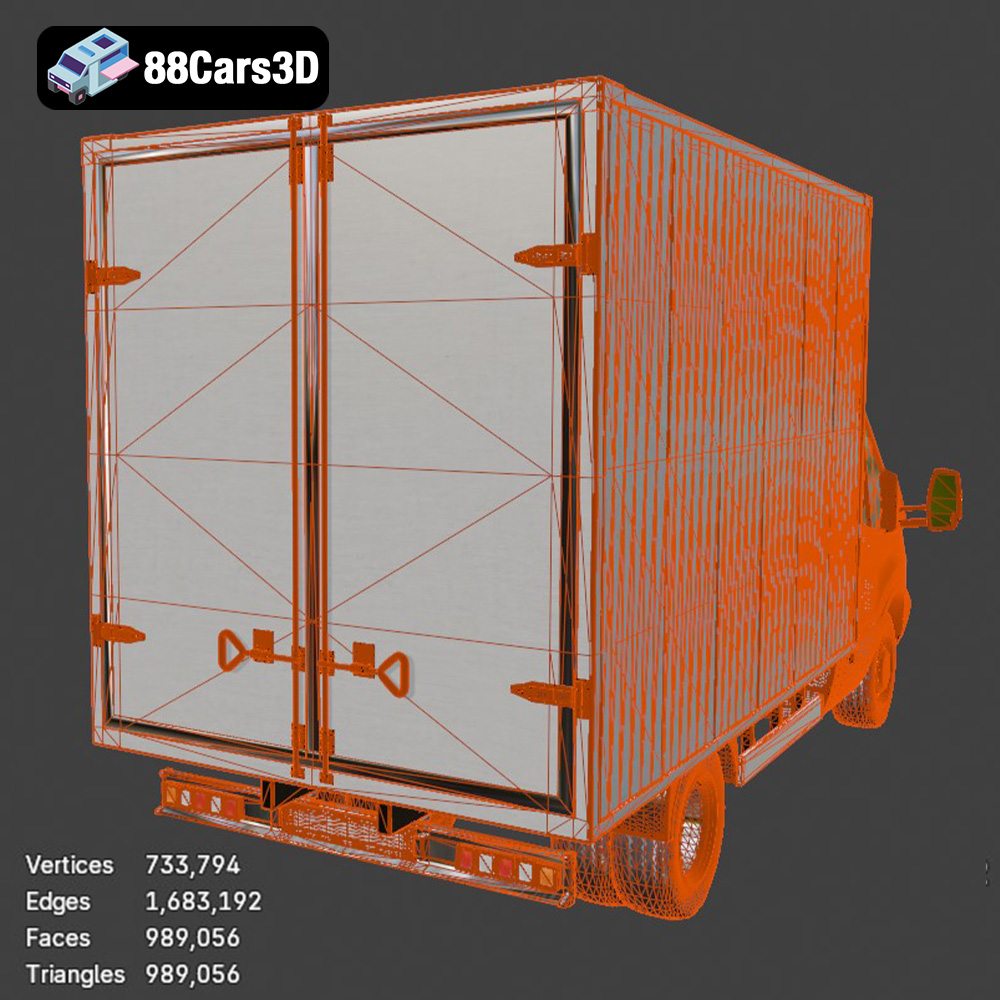
The impressive 989,056 triangles, while substantial, are judiciously distributed to ensure exceptional visual realism without becoming unwieldy. This optimized geometry allows for stunning visual output in renders while remaining performant enough for real-time applications.
The level of detail doesn’t stop at the exterior. The cockpit and interior features of the Ford Transit Camion 2008 are equally comprehensive, designed to enhance realism for first-person perspectives or interior renders. Authentic commercial driver and passenger seating sets the stage, complemented by a detailed steering wheel and column setup. The dashboard features an accurate, utility-focused instrument cluster, along with a modeled gear shifter, heavy-duty pedals, and detailed door panels. This level of interior fidelity is invaluable for game developers looking to create immersive driving experiences or for architectural visualization artists integrating the vehicle into a realistic street scene where the interior might be visible through windows. The optimized geometry ensures that even with this level of detail, the model remains “game-ready,” striking a perfect balance for real-time engines.
A truly versatile 3D model isn’t just about aesthetic appeal; it’s about technical robustness and adaptability across various creative pipelines. The Ford Transit Camion 2008 excels in this regard, engineered to meet the stringent demands of modern 3D production.
For game developers, the keyword is “optimization.” The Ford Transit Camion 2008 is specifically designed to be game-ready, boasting a polycount of 989,056 triangles. This count is a carefully considered balance, high enough to deliver exceptional visual realism without over-burdening real-time engines like Unreal Engine or Unity. The model’s structured topology ensures smooth deformation during animation and efficient UV mapping for texture application. Key features for game integration include real-world scale accuracy, which is vital for consistent gameplay environments, and proper pivot setups. These pivots are crucial for realistic steering, individual wheel rotation, and suspension travel animations, allowing developers to implement dynamic vehicle physics with ease. Whether it’s for open-world games, racing titles, or industrial simulators, this asset provides the performance and visual fidelity required for immersive gameplay.
Consider a scenario in an open-world logistics game: the Ford Transit Camion 2008 could be a player-controlled delivery vehicle, requiring complex physics and interaction, or a static background prop that needs to look convincing even up close. Its optimized nature ensures it can fulfill both roles effectively, maintaining frame rates while enhancing visual quality.
When it comes to high-end rendering and visualization, precision and detail are paramount. The Ford Transit Camion 2008 3D Model provides the necessary fidelity for stunning static renders and cinematic animations. Its high-resolution textures and finely modeled geometry capture the nuances of a real commercial vehicle, making it ideal for brand campaigns, lifestyle scenes, and studio lighting setups. The model’s compatibility with major 3D software platforms like 3ds Max and Blender, facilitated by the inclusion of formats like .max, .blend, and .obj, means artists can effortlessly integrate it into their preferred rendering workflows. Whether you’re using V-Ray, Corona Renderer, Arnold, or Cycles, the detailed materials and robust mesh structure allow for physically accurate lighting and reflection, resulting in breathtaking photorealistic output. Imagine using this model in an architectural visualization project, adding a touch of realism to a bustling urban street scene, or in a commercial for a logistics company, highlighting their fleet in pristine detail.
The utility of high-quality 3D car models extends far beyond traditional rendering and game engines. Technologies like Augmented Reality (AR), Virtual Reality (VR), and 3D printing are opening new avenues for digital assets, and the Ford Transit Camion 2008 is perfectly equipped for these emerging applications.
AR and VR demand models that are not only visually rich but also highly optimized for real-time, often mobile, environments. The Ford Transit Camion 2008’s balance of detail and performance makes it an excellent candidate for immersive experiences. In AR, the model can be used to visualize commercial fleets in real-world settings, offering virtual showrooms where potential buyers can explore the vehicle in their driveway. For VR, it can populate virtual training simulations for logistics companies, allowing drivers to familiarize themselves with the vehicle’s layout and functionality in a safe, controlled environment. The inclusion of the .glb format is particularly beneficial here, as it’s optimized for web and mobile AR/VR platforms, ensuring quick loading times and smooth interactions without compromising visual quality. This enables developers to create compelling, interactive experiences that bring the Ford Transit Camion 2008 to life in entirely new dimensions.
The ability to transform a digital model into a tangible object is a powerful testament to its design integrity. The Ford Transit Camion 2008 is convertible to .stl format, making it suitable for 3D printing. This opens up possibilities for hobbyists to create display-scale models or for professionals to produce prototypes or physical representations for presentations. While the digital model boasts nearly a million triangles, a conversion for 3D printing would typically involve careful decimation and optimization to ensure printability while retaining key features. The product description provides excellent guidance for 3D print settings: recommended scales (1:12, 1:18, 1:24), layer height (0.04–0.12 mm for resin printing), wall thickness (1.2–2.0 mm), infill (20–30%), and the necessity of supports for delicate parts. Printing the frame angled and wheels separately is a common practice to ensure structural integrity and detail fidelity. Post-processing, including sanding, primer, and authentic factory colors, can bring a truly exceptional physical model to life. This fusion of digital and physical showcases the model’s versatility, offering a tangible connection to the meticulous work invested in its creation.
In the fast-paced world of 3D production, time is a precious commodity. Creating a vehicle model of the caliber of the Ford Transit Camion 2008 from scratch can take hundreds of hours of expert-level work. This is where marketplaces like 88cars3d.com become invaluable resources, providing ready-to-use, professional-grade assets that integrate seamlessly into diverse projects, saving significant development time and resources.
While the Ford Transit Camion 2008 comes highly detailed and ready for use, professional 3D models from 88cars3d.com also offer ample customization options, ensuring they can be tailored to fit specific project requirements. Artists can easily change cabin colors to match brand guidelines or specific commercial fleet liveries. Modifying tire textures to switch between off-road and street variants allows for quick adaptation to different scene environments. Adjusting material finishes—from matte to gloss or metallic—can significantly alter the vehicle’s appearance and mood. Furthermore, adapting lighting for different environments allows for integration into a wide range of scenes, from bright sunny days to dramatic night settings. This adaptability ensures that while you start with a high-quality base, you retain creative freedom to make the model uniquely yours.
The true power of purchasing pre-made, high-quality game assets like this Transit Camion lies in the ability to skip the laborious modeling and texturing phases, dedicating more time to creative direction, scene assembly, animation, and final polish. It’s a strategic investment that accelerates project timelines without compromising on visual quality.
The decision to acquire professional 3D car models like the Ford Transit Camion 2008 is a strategic one for any serious 3D artist or studio. These assets are not merely pretty meshes; they are products of expert craftsmanship, optimized for performance and designed for practical application. They often come with clean topology, proper UV mapping, and a suite of file formats for maximum compatibility, eliminating the hidden costs and frustrations associated with low-quality or poorly optimized models. The comprehensive package, including .blend, .fbx, .obj, .glb, .stl, .ply, .unreal, and .max formats, ensures that no matter your software or intended use, you have the right tool for the job. By leveraging assets from reputable sources like 88cars3d.com, you ensure that your projects are built on a foundation of quality, efficiency, and professional-grade realism, giving you a competitive edge in any visualization or game development endeavor.
The Ford Transit Camion 2008 3D Model is a testament to what professional-grade 3D assets can bring to the table. Its meticulous detail, technical precision, and broad compatibility make it an invaluable resource for anyone working in automotive rendering, game development, AR/VR experiences, or even 3D printing. From its highly accurate exterior and interior features to its optimized geometry and extensive file format support, this model is engineered for excellence across diverse applications. By integrating such high-quality 3D car models into your workflow, you’re not just acquiring an asset; you’re investing in efficiency, realism, and the ability to elevate your projects to professional heights. Explore this and other exceptional 3D models at 88cars3d.com to unlock new possibilities for your creative endeavors.
The Ford Transit Camion represents a pinnacle of commercial vehicle reliability, offering robust utility and iconic styling tailored for heavy-duty logistics and transport. This 2008 model features the classic commercial truck bed configuration, detailed chassis framework, and the unmistakable front fascia of the Transit series, making it an essential asset for realistic urban and industrial scenes. Boasting an impressive 989,056 triangles, this high-fidelity 3D model delivers exceptional visual realism while maintaining structured topology for seamless integration.
$61.00
.2008
.blend
.fbx
.ford
.glb
.max
.obj
.ply
.rendering
.stl
.truck
.unreal
car-3d-model
commercial-vehicle
game asset
game-ready
high poly
optimized
transit-camion
truck-3d-model
VR/AR