Get 20% OFF All Premium 3D & STL Models!

In the vibrant world of digital creation, where realism converges with boundless imagination, the demand for high-quality 3D assets is ever-growing. For automotive enthusiasts, game developers, architectural visualizers, and VR/AR pioneers alike, a meticulously crafted 3D car model isn’t just a component; it’s the heart of their project. These assets bring static scenes to life, elevate interactive experiences, and enable photorealistic renders that are virtually indistinguishable from reality.
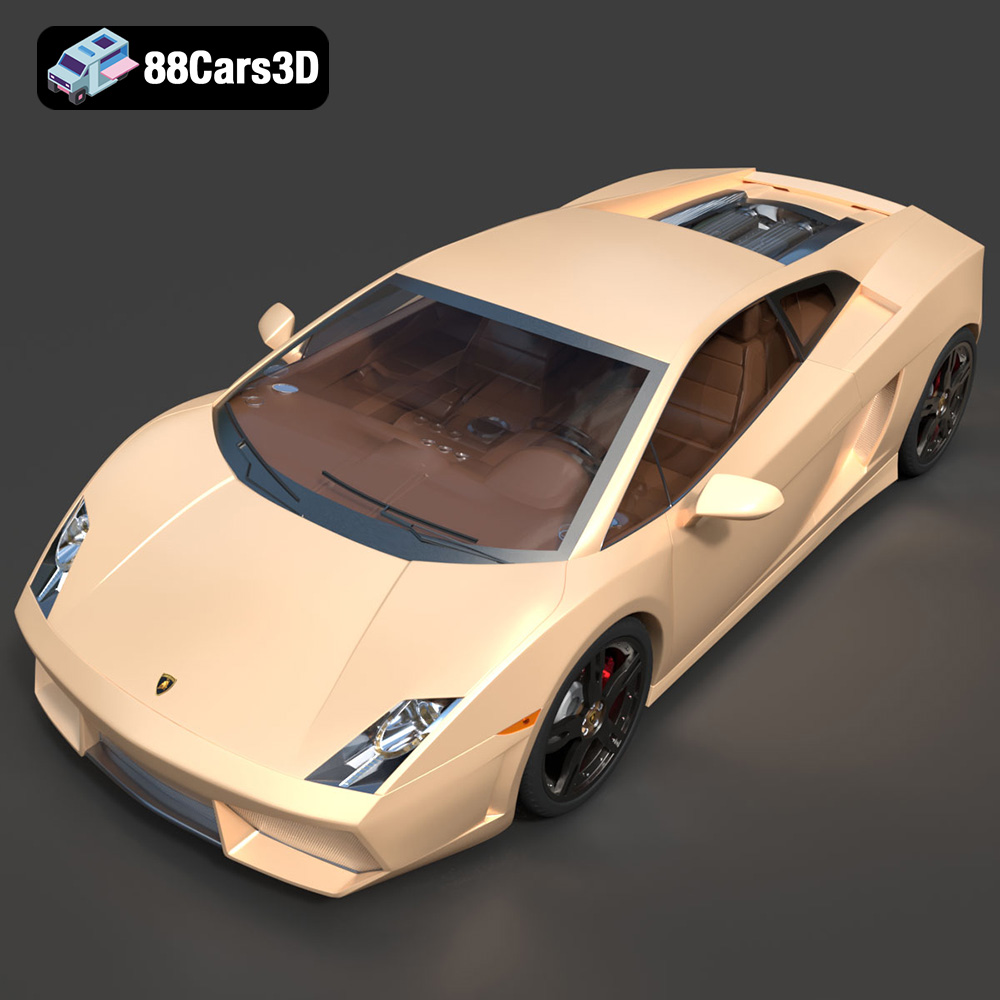
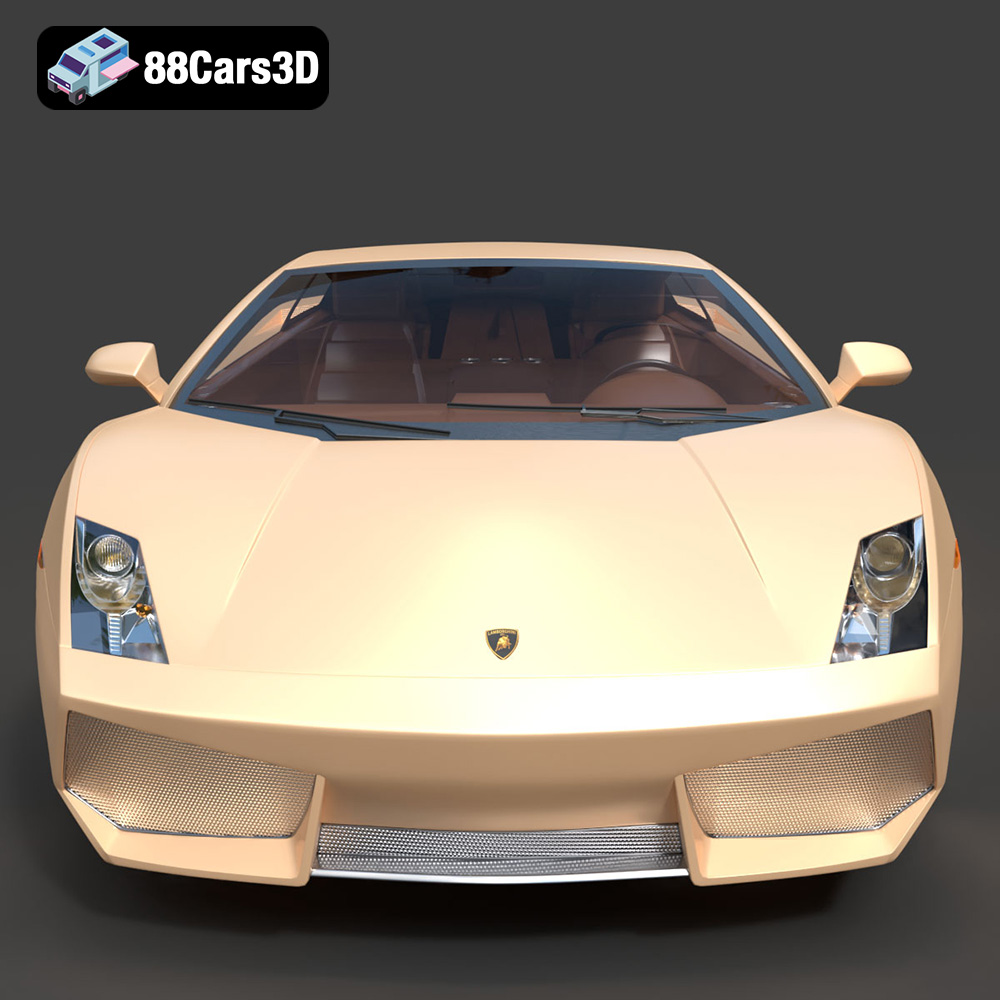
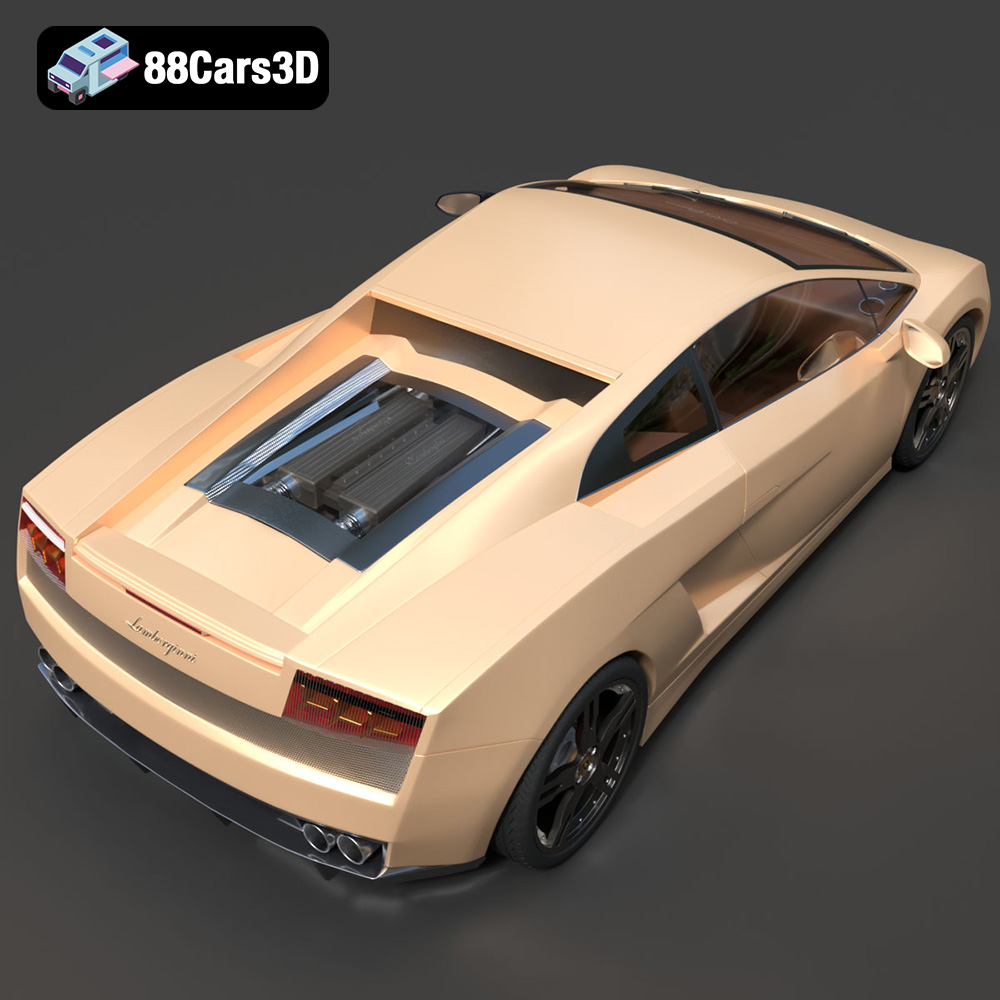
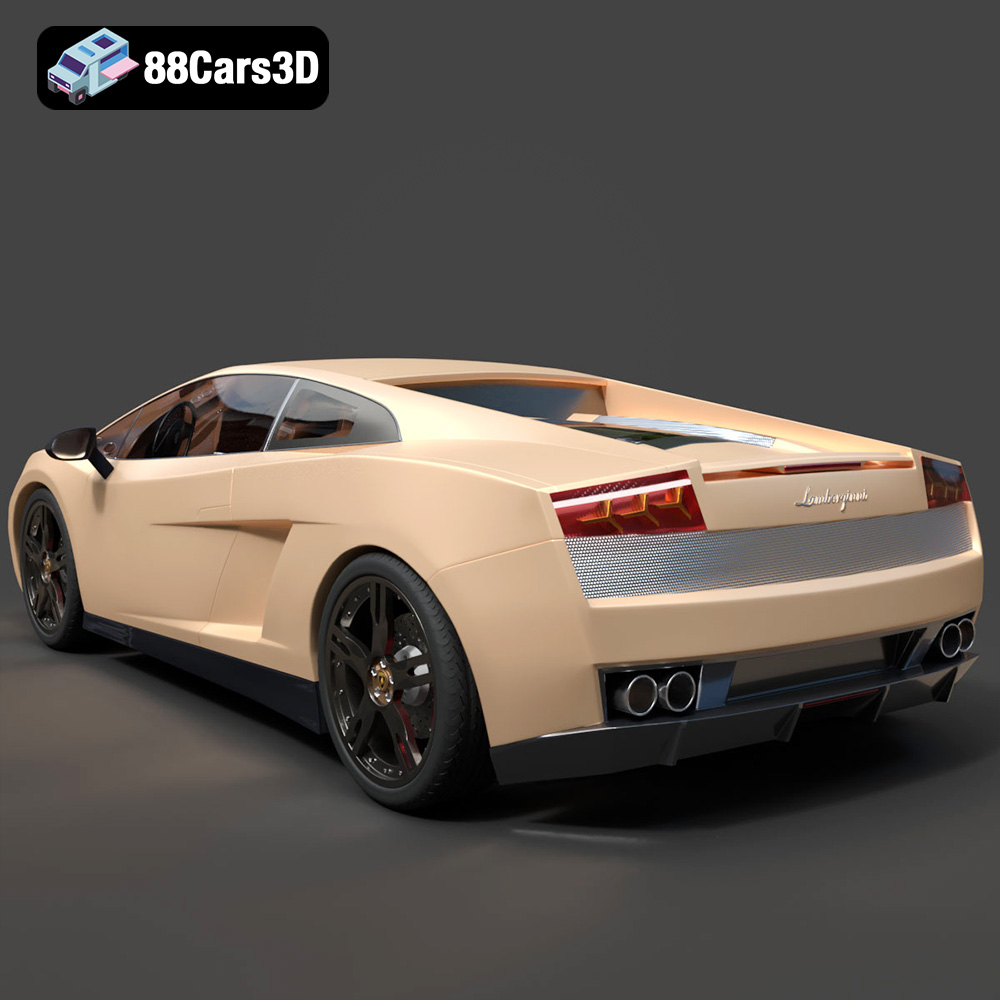
Today, we’re taking a closer look at what goes into creating and utilizing such premium digital vehicles, using the exceptional Lamborghini Gallardo LP560-4 2008 3D Model as our prime example. This specific model, available at 88cars3d.com, encapsulates the thrilling essence of Italian automotive engineering, offering an unparalleled level of detail and versatility for professional pipelines. From its aggressive redesigned front fascia to its sleek Y-shaped LED taillights and quad exhaust system, every iconic detail has been captured with precision, making it an invaluable asset for any project demanding authenticity and visual fidelity.
Crafting a 3D car model that stands up to professional scrutiny requires a unique blend of artistic vision and rigorous technical execution. It’s about more than just replicating shapes; it’s about understanding automotive design principles, material science, and the specific demands of diverse digital environments.
The journey begins with accurate blueprints and photographic references, which serve as the foundation for meticulous modeling. Every curve, panel gap, and intricate component—from the detailed 5.2L V10 engine block visible through the transparent engine cover to the signature quad-pipe exhaust system—must be carefully constructed. This process involves not just geometric accuracy but also an understanding of how light interacts with surfaces. A true premium asset, like the Lamborghini Gallardo LP560-4 2008 3D Model, features accurate frame geometry, proportions, and highly detailed elements like bi-xenon headlights, Y-shaped LED daytime running lights, authentic 19-inch Apollo alloy wheels, high-performance tire treads, and precision-modeled brake calipers and cross-drilled carbon-ceramic rotors. Inside, luxurious leather-stitched sport bucket seats, a detailed flat-bottom steering wheel with paddle shifters, and an intricate center console replicate the real-world experience, ensuring the model’s integrity whether viewed from afar or in a close-up cockpit perspective.
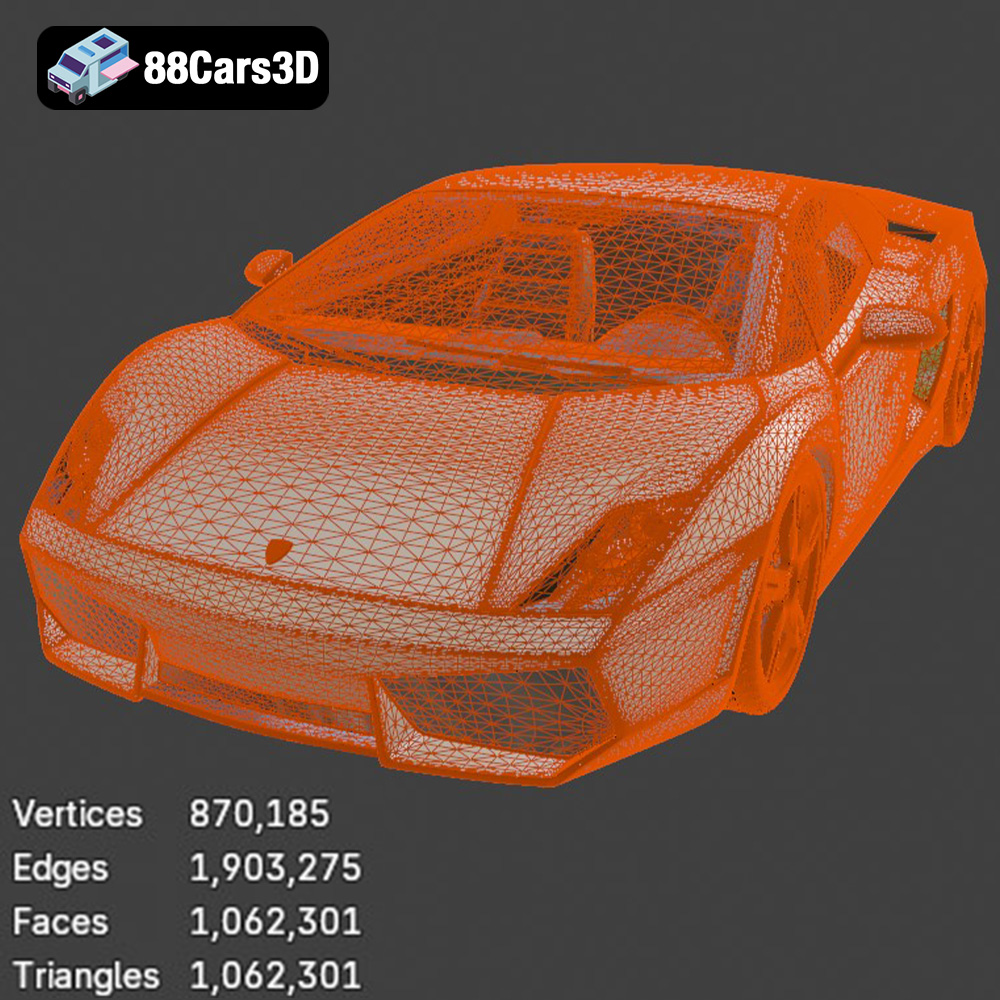
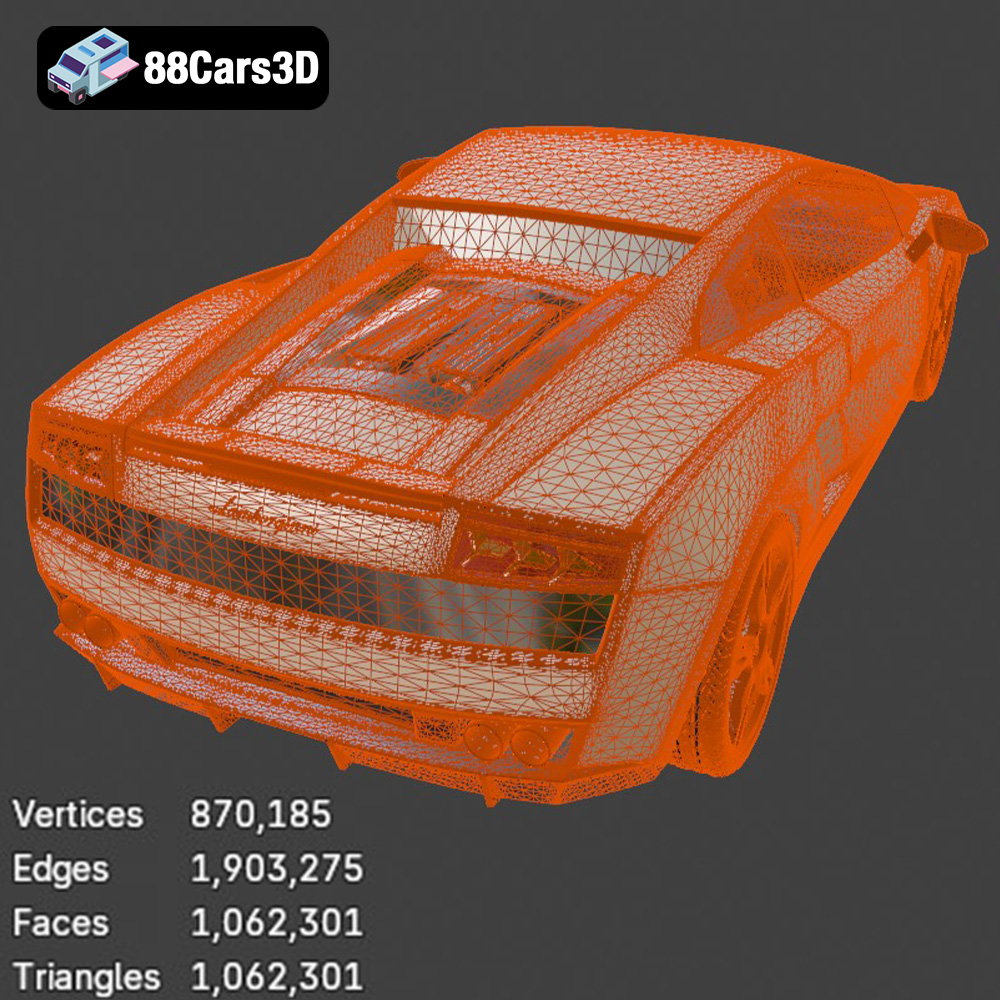
While detail is paramount, it must be balanced with performance considerations. High-fidelity models often boast millions of polygons, which can be taxing on real-time engines. A masterfully crafted 3D asset finds the sweet spot. The Lamborghini Gallardo LP560-4 2008 3D model, for instance, boasts a highly detailed topology of 1,062,301 triangles. This specific poly count is a deliberate choice, striking a perfect balance for real-time engines like Unreal and Unity, ensuring exceptional visual fidelity without bogging down performance. This optimization is crucial for applications like game development, cutting-edge AR/VR experiences, and interactive visualizations, where smooth frame rates are as important as stunning visuals. The mesh ensures flawless reflections and precise ambient occlusion across all surfaces, even under dynamic lighting conditions, making it truly game-ready and optimized.
The versatility of a 3D model often lies in its compatibility across various software and platforms. Professionals in 3D modeling, game development, and visualization rely on a range of file formats, each with its own strengths and ideal applications. The Lamborghini Gallardo LP560-4 2008 3D model, recognizing this need for adaptability, comes bundled with an impressive array of formats, ensuring it integrates seamlessly into virtually any workflow.
The .blend file format is native to Blender, the popular open-source 3D creation suite. When you receive a .blend file, you’re not just getting the model; you’re getting the entire Blender scene. This includes the complete mesh geometry, all materials and textures meticulously set up with Blender’s node-based shader editor, lighting setups, camera positions, and any scene-specific settings. For artists primarily working in Blender, this format offers the highest level of flexibility and editability. You can dissect the model, modify its topology, adjust materials on the fly, animate components, or integrate it into existing Blender projects with minimal effort. It’s ideal for deep customization, advanced rendering with Cycles or Eevee, and complex animation sequences where native Blender features are leveraged.
The .fbx (Filmbox) format is arguably the industry standard for 3D asset exchange, particularly in game development and animation pipelines. Developed by Autodesk, FBX is highly robust and supports a wide array of data beyond just geometry, including animation, rigging, skinning, materials (often as placeholders or basic properties), cameras, and lights. Its widespread adoption means it’s natively supported by major game engines like Unreal Engine and Unity, as well as most 3D animation software. For the Lamborghini Gallardo LP560-4 model, the .fbx format ensures that all separate components like wheels, suspension, doors, and steering can be imported with their pivot points correctly set, ready for animation within a game engine or external animation software. It’s the go-to choice for real-time applications where efficient data transfer and animation support are critical.
The .obj (Wavefront Object) format is a universal standard, highly compatible across virtually all 3D software. It primarily stores geometric data—vertices, normals, texture coordinates, and faces—making it a very clean and widely supported option. While it supports basic material definitions (.mtl file), it generally doesn’t carry complex shader networks or animation data. Its strength lies in its simplicity and ubiquity. If you need to import the Lamborghini Gallardo LP560-4 model into a less common 3D application, or simply require the raw mesh data for specific operations, .obj is an excellent choice for reliable cross-software compatibility. It’s a foundational format often used for archival purposes or when robust mesh data transfer is the sole requirement.
.glb is the binary version of the GL Transmission Format (.gltf), an open-standard format for 3D scenes and models. It’s specifically designed for efficient transmission and loading of 3D content, making it perfect for web-based AR/VR experiences, mobile applications, and browser-based 3D viewers. A .glb file packages all necessary data—geometry, textures, animations, and materials—into a single, compact file, reducing load times and simplifying distribution. For showcasing the Lamborghini Gallardo LP560-4 in an interactive web configurator or an augmented reality app on a smartphone, the .glb format provides an optimized and streamlined solution, enabling rich 3D content to be delivered seamlessly across various digital platforms.
The .stl (Stereolithography) format is the de facto standard for 3D printing. It represents the surface geometry of a 3D object using a collection of interconnected triangles, essentially defining the outer shell of the model without any color or texture information. When preparing the Lamborghini Gallardo LP560-4 for physical reproduction, converting it to .stl is the first step. The product description even includes recommended 3D print settings, like layer height, infill, and support requirements, highlighting its suitability for display-scale hobbyists. This format is crucial for transitioning a digital asset into a tangible object, perfect for creating physical prototypes, collectibles, or educational models.
The .ply (Polygon File Format) is another widely supported format, often used for storing 3D data from 3D scanners, CAD systems, and other sources that require high precision. It can store a variety of properties beyond just geometry, including color, transparency, and even specific data for each vertex or face. While less common than .fbx or .obj for general asset exchange, .ply is valuable when fidelity of scanned data or detailed geometric analysis is required. For the Lamborghini Gallardo LP560-4, the .ply format could be used in engineering or design review pipelines where precise mesh information and additional data attributes are important for CAD integration or specific analytical tasks.
While .fbx is often used for importing into Unreal Engine, an .unreal file (or specific Unreal asset types like .uasset) implies an asset that is already optimized and packaged specifically for direct integration into an Unreal Engine project. This could mean the model has already been processed with Unreal’s import settings, potentially including LODs (Levels of Detail), collision meshes, material instances, and even blueprint configurations. For game developers using the Lamborghini Gallardo LP560-4, having an .unreal format means a significantly faster and smoother workflow, bypassing much of the initial setup and optimization required for generic formats. It’s an “out-of-the-box” solution tailored for Unreal’s real-time environment, making deployment exceptionally efficient.
Similar to .blend for Blender, the .max file format is native to Autodesk 3ds Max, a powerhouse in professional 3D modeling, animation, and rendering. An included .max file grants users full access to the original project scene, including all modifiers, material setups (e.g., V-Ray, Corona), lighting rigs, animation data, and scene organization specific to 3ds Max. For studios and artists entrenched in the 3ds Max ecosystem, this format offers the ultimate level of control for further customization, complex rendering setups, and integrating the Lamborghini Gallardo LP560-4 into larger animated sequences or architectural visualizations. It’s the most comprehensive option for those who require deep editing capabilities within 3ds Max.
The inclusion of all these formats with the Lamborghini Gallardo LP560-4 2008 3D model from 88cars3d.com demonstrates a profound understanding of professional needs, providing unparalleled flexibility for any digital creative challenge.
A premium 3D car model’s true value is realized when it integrates effortlessly into various professional pipelines, serving distinct purposes across industries.
For high-end automotive rendering and visualization, software like 3ds Max or Blender are the workhorses. Artists can import the .max or .blend files of the Lamborghini Gallardo LP560-4, leveraging the complete scene data. In 3ds Max, this might involve fine-tuning V-Ray or Corona materials, adjusting studio lighting setups for photorealistic studio shots, or placing the vehicle within a detailed environment for a lifestyle render. Blender users benefit from the native .blend file, enabling rapid iteration with Cycles or Eevee, experimenting with different body colors (e.g., Arancio Borealis, Bianco Monocerus), or creating dynamic car configurators. The model’s “flawless reflections and precise ambient occlusion” are critical here, ensuring the glossy surfaces and intricate details of the Gallardo catch the light realistically, making it perfect for brand campaigns and virtual showrooms.
The demands of game development are unique, requiring a delicate balance between visual quality and performance. The Lamborghini Gallardo LP560-4 2008 3D model is explicitly designed as “Game-Ready & Optimized,” boasting 1,062,301 triangles—a polycount that strikes a perfect balance for real-time engines. Developers can import the .fbx or the engine-specific .unreal file directly into Unreal Engine. The separate wheels, suspension, doors, and steering components, along with properly set pivot points, are crucial for animating the car in racing titles or open-world games. Developers can implement realistic physics, damage models, and interactive features, confident that the underlying asset is robust and performant. Its optimized geometry is also suitable for first-person POV experiences in gaming and VR simulations, offering a truly immersive drive.
Beyond traditional rendering and gaming, 3D car models are revolutionizing AR/VR and 3D printing. For immersive virtual showrooms or mobile AR experiences, the .glb format of the Gallardo is ideal, offering optimized delivery for web and mobile platforms. Imagine potential buyers exploring the vehicle’s exterior and interior in their driveway via AR, or taking a virtual test drive in VR. For physical applications, the model can be converted to .stl for 3D printing. Hobbyists and professionals can create highly detailed display models, with recommendations for resin printing to capture fine details and post-processing steps like sanding and authentic factory colors to achieve a miniature masterpiece. The versatility offered by 88cars3d.com ensures that this single asset can bridge the gap between digital display and physical fabrication.
Behind every stunning render or smooth real-time experience is a foundation of technical excellence. For 3D car models, this means more than just a high poly count; it encompasses a suite of best practices that define a truly professional asset.
Clean topology is fundamental. It refers to the arrangement of polygons (quads, ideally) that make up the mesh. Good topology ensures smooth deformations during animation, predictable subdivision for higher detail, and prevents rendering artifacts. The Lamborghini Gallardo LP560-4 model’s topology, for instance, allows for precise ambient occlusion and clean reflections, critical for realistic surfaces. Equally important are UVs (Unwrapped Coordinates), which map the 2D textures onto the 3D surface. Well-organized UVs prevent stretching, optimize texture resolution, and allow for efficient PBR (Physically Based Rendering) material workflows. PBR materials, based on real-world physics, accurately simulate how light interacts with different surfaces, from the metallic paint finishes and carbon fiber elements to the luxurious leather interior, ensuring consistent realism across various lighting conditions and rendering engines.
A truly professional 3D car model is built with animation in mind. The Lamborghini Gallardo LP560-4’s design, featuring separate wheels, suspension, doors, and steering components, is a testament to this. Crucially, it includes proper pivot setups for steering, wheel rotation, and suspension travel, enabling animators to quickly and accurately rig the vehicle for dynamic sequences. This “real-world scale accuracy” further enhances the realism of animations. Beyond animation, scalability comes from the ability to customize the model. Users can easily change body colors, modify tire textures (track slicks vs. street variants), and adjust material finishes (matte, gloss, metallic) to suit specific project needs, making it a highly adaptable asset for diverse creative briefs.
The applications for high-quality 3D car models are vast and continue to expand as technology evolves. They are no longer just tools for artists but strategic assets for businesses across multiple sectors.
In the automotive industry, 3D car models have become indispensable for marketing and advertising. Studios can create stunning, photorealistic commercials, print ads, and online campaigns without the exorbitant costs and logistical challenges of physical car shoots. Imagine showcasing the Lamborghini Gallardo LP560-4 in a breathtaking virtual landscape, dynamically changing its environment and color schemes to appeal to different target demographics. These digital assets also power advanced online configurators and virtual showrooms, allowing potential customers to explore every detail of a car, customize it to their liking, and even “see” it in their driveway using AR. This level of engagement significantly enhances the pre-sales experience and reduces time-to-market for new vehicle models. The precision and realism of the Gallardo model make it an ideal choice for such high-stakes marketing efforts.
The gaming and immersive technology sectors are constantly pushing boundaries, and premium 3D car models are at the forefront of this innovation. The Lamborghini Gallardo LP560-4 2008 3D model is perfectly suited for high-octane racing games, offering the visual fidelity and optimization needed for an exhilarating player experience. Beyond traditional gaming, it’s invaluable for professional-grade simulators used for driver training, virtual events, and even autonomous vehicle development. In the realm of AR/VR, the model can form the centerpiece of immersive virtual tours, allowing users to “step inside” and interact with a luxury vehicle in ways previously impossible without physical access. For luxury brands, creating such interactive experiences with assets from 88cars3d.com is a powerful way to engage a tech-savvy audience and demonstrate product excellence.
The digital age has transformed how we interact with and perceive automotive design. High-fidelity 3D car models are no longer a luxury but a fundamental requirement for professionals across game development, architectural visualization, AR/VR, and marketing. They represent a fusion of artistic skill, technical precision, and forward-thinking optimization, enabling creators to push the boundaries of realism and interactivity.
The Lamborghini Gallardo LP560-4 2008 3D Model stands as a prime example of what a premium automotive asset should be. Its meticulous detailing, robust technical specifications, and comprehensive file format support make it an incredibly versatile tool for any project aiming for excellence. Whether you’re a seasoned developer needing game assets, an artist crafting automotive rendering masterpieces, or an innovator building the next AR/VR experience, this model provides the foundation for success. For those seeking top-tier 3D car models that deliver on quality and versatility, we encourage you to explore the extensive collection at 88cars3d.com and elevate your digital creations to the next level.
Experience the thrilling essence of Italian automotive engineering with the Lamborghini Gallardo LP560-4 2008 3D model. Renowned for its naturally aspirated 5.2-liter V10 engine and striking wedge-shaped profile, the LP560-4 represents the evolution of Lamborghini’s best-selling supercar. This meticulously crafted model captures every iconic detail, from the aggressive redesigned front fascia with larger air intakes to the sleek Y-shaped LED taillights and quad exhaust system that define its powerful stance. Boasting a highly detailed topology of 1,062,301 triangles, this premium 3D model delivers exceptional visual fidelity while maintaining optimization for advanced real-time applications. Whether deployed in high-end game development, cutting-edge AR/VR experiences, or photorealistic automotive visualizers, the mesh ensures flawless reflections and precise ambient occlusion across all surfaces. Perfect for high-octane racing games, luxury virtual showrooms, automotive commercial animations, and hyper-realistic still renderings.
$62.99
.blend
.fbx
.gallardo
.glb
.lamborghini
.max
.obj
.ply
.rendering
.sports car
.stl
.supercar
.unreal
car-3d-model
gallardo-lp560-4
game asset
game-ready
italian-car
low-poly
optimized
VR/AR