Get 20% OFF All Premium 3D & STL Models!

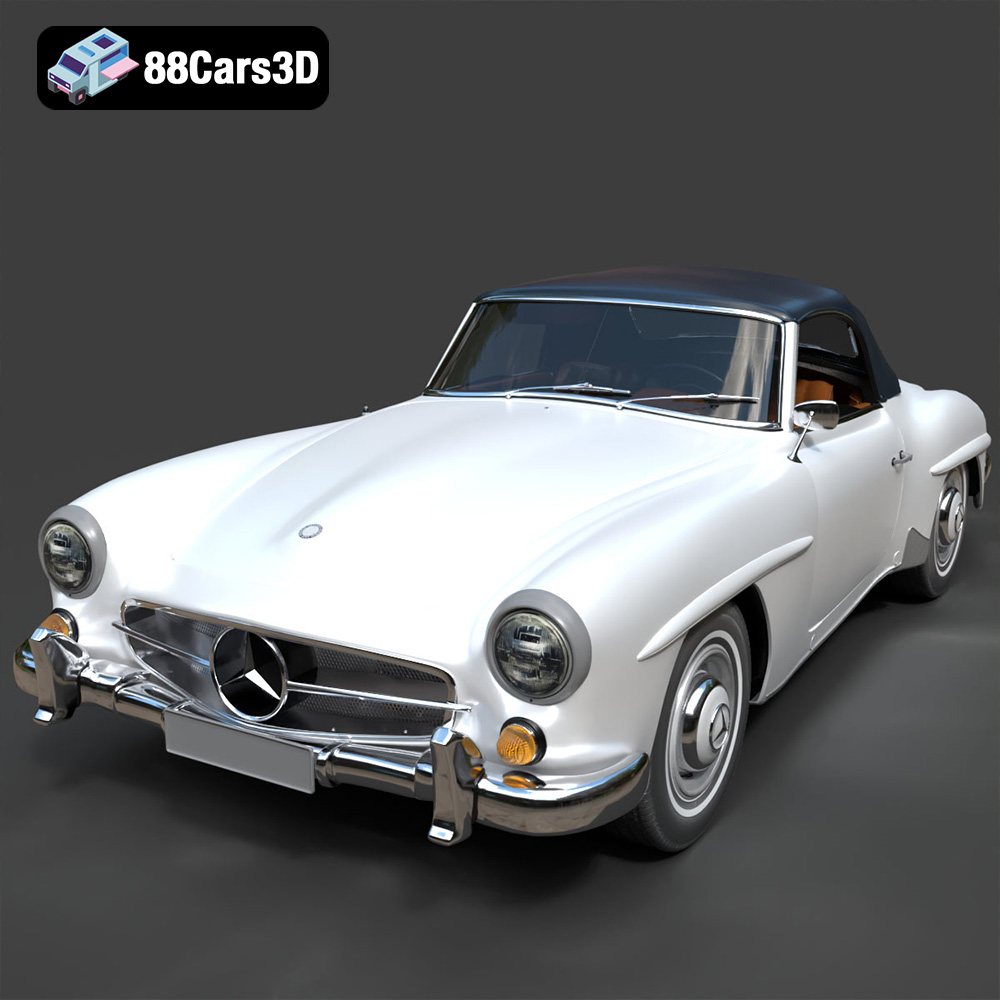
There are few automobiles that capture the essence of post-war glamour and engineering prowess quite like the Mercedes Benz 190SL. A legendary classic roadster, it perfectly embodies the sophistication and design sensibilities of the 1950s. Its sweeping curves, iconic front grille, and luxurious open-top styling have cemented its status as a timeless symbol of vintage motoring. For automotive enthusiasts, designers, and game developers alike, bringing such an icon into the digital realm with impeccable accuracy is a pursuit of passion. This pursuit culminates in premium 3D car models that serve as foundations for stunning visualizations, immersive game experiences, and realistic simulations.
Today, we’re diving deep into an exceptional digital representation of this very classic: the Mercedes Benz 190SL 3D Model. This isn’t just any digital asset; it’s a meticulously crafted, game-ready masterpiece designed for high-end rendering, demanding game development, cutting-edge AR/VR applications, and cinematic animation. Whether you’re a seasoned 3D artist, an aspiring game developer, or a visualization specialist, understanding the nuances of such a complex asset and its versatile applications is key to unlocking its full potential. The model available on 88cars3d.com stands as a testament to the blend of artistic skill and technical precision required to replicate a piece of automotive history with unparalleled fidelity.
The versatility of a high-quality 3D model, such as the Mercedes Benz 190SL, is largely defined by the file formats it supports. Each format serves a specific purpose, catering to different software environments, workflows, and end applications. Knowing which format to choose is crucial for optimizing your project and ensuring seamless integration. For the Mercedes Benz 190SL 3D Model, a comprehensive suite of formats is provided, ensuring compatibility across a vast spectrum of professional uses.
The .blend file format is the native file type for Blender, the popular open-source 3D creation suite. When a 3D car model is provided in .blend format, it means you’re getting the fully editable Blender scene, complete with materials, textures, lighting setups, and often, any existing rigging or animation data. This format is ideal for artists who primarily work in Blender, allowing for direct access to every component, modifier, and node network used in the model’s creation. It offers maximum flexibility for customization, material adjustments, animation rigging, or even re-topology if specific project requirements demand it. For the Mercedes Benz 190SL, the .blend file is your gateway to deep customization within Blender’s powerful ecosystem.
.fbx (Filmbox) is arguably one of the most widely supported 3D file formats in the industry. Developed by Autodesk, it excels at transferring 3D model data, including geometry, materials, textures, animations, and skeletal rigging, between different 3D software applications and game engines. It is an ideal format for bringing 3D car models into real-time pipelines like Unreal Engine and Unity. Its robust support for animation makes it perfect for dynamic game assets where wheels need to spin, doors need to open, or suspension needs to react. When integrating the Mercedes Benz 190SL into a game or a complex animation scene, .fbx is often the go-to choice due to its broad compatibility and rich feature set for data transfer.
The .obj (Wavefront OBJ) format is a universal standard for storing 3D geometry data. It’s a simple, widely supported format that describes the vertices, faces, normals, and UV coordinates of a model. While it doesn’t typically store animation or rigging data, it’s excellent for cross-software compatibility, making it a reliable choice for transferring static meshes between virtually any 3D application. For artists needing the raw geometry of the Mercedes Benz 190SL for sculpting, retopology, or integrating into software with limited import options, .obj offers a clean, foundational mesh.
.glb is the binary version of the glTF (Graphics Language Transmission Format) format, specifically optimized for efficient transmission and loading of 3D scenes and models in AR, VR, and browser-based applications. It packages geometry, materials, textures, and even animation into a single, compact file, making it incredibly suitable for real-time web experiences and mobile AR/VR viewers. For showcasing the Mercedes Benz 190SL in an interactive virtual showroom or a mobile augmented reality experience, the .glb format provides the necessary optimization and integration ease.
The .stl (Stereolithography) format is the de facto standard for 3D printing. It represents a 3D model as a collection of unconnected triangles, describing only the surface geometry of an object without color, texture, or material information. While not suitable for rendering or animation, it’s essential for manufacturing physical objects. The availability of the Mercedes Benz 190SL in .stl format means enthusiasts can bring this digital classic into the physical world, creating scale models for display or prototyping. This bridges the gap between digital design and tangible creation.
The .ply (Polygon File Format) is another popular format for storing 3D data, particularly noted for its ability to store properties beyond just geometry, such as color, transparency, and sometimes even normals and texture coordinates for each vertex. It’s often used for scanned data, point clouds, and precision meshes, making it suitable for CAD, reverse engineering, or detailed analysis. For highly specific applications where detailed mesh integrity and potentially per-vertex data are critical for the Mercedes Benz 190SL, the .ply format offers a robust solution.
While not a universal file format in the traditional sense, providing an .unreal file (often a Uasset or a structured Unreal project export) signifies an asset specifically prepared and optimized for the Unreal Engine. This typically means the model has been imported, materials have been set up using Unreal’s physically based rendering (PBR) system, textures are correctly linked, and collision meshes, LODs (Levels of Detail), and potentially Blueprints for interactivity are in place. This greatly streamlines the workflow for game developers and real-time visualization artists working within the Unreal ecosystem, making the Mercedes Benz 190SL truly “engine-ready” for immediate deployment.
The .max file format is the native scene file for Autodesk 3ds Max, a powerful and widely used 3D modeling, animation, and rendering software. Similar to .blend for Blender, a .max file offers the complete 3ds Max project, including all geometry, materials, textures, lights, cameras, modifiers, and animation data. This format is invaluable for professionals who use 3ds Max for architectural visualization, automotive rendering, or character animation, providing full control and editability over the Mercedes Benz 190SL model within their preferred environment.
The true value of a premium 3D asset lies not just in its availability across formats, but in the meticulous detail and technical craftsmanship embedded within its design. The Mercedes Benz 190SL 3D Model exemplifies this, offering a blend of artistic fidelity and practical optimization crucial for professional projects.
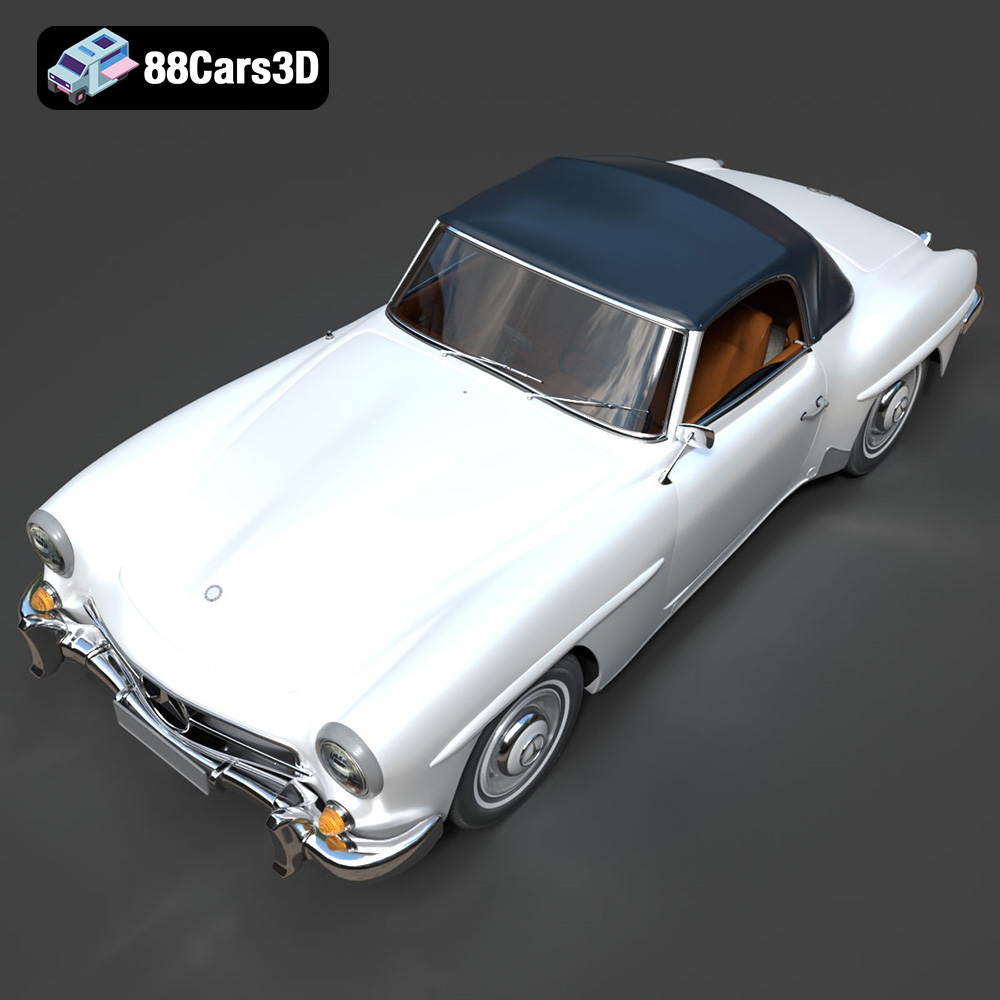
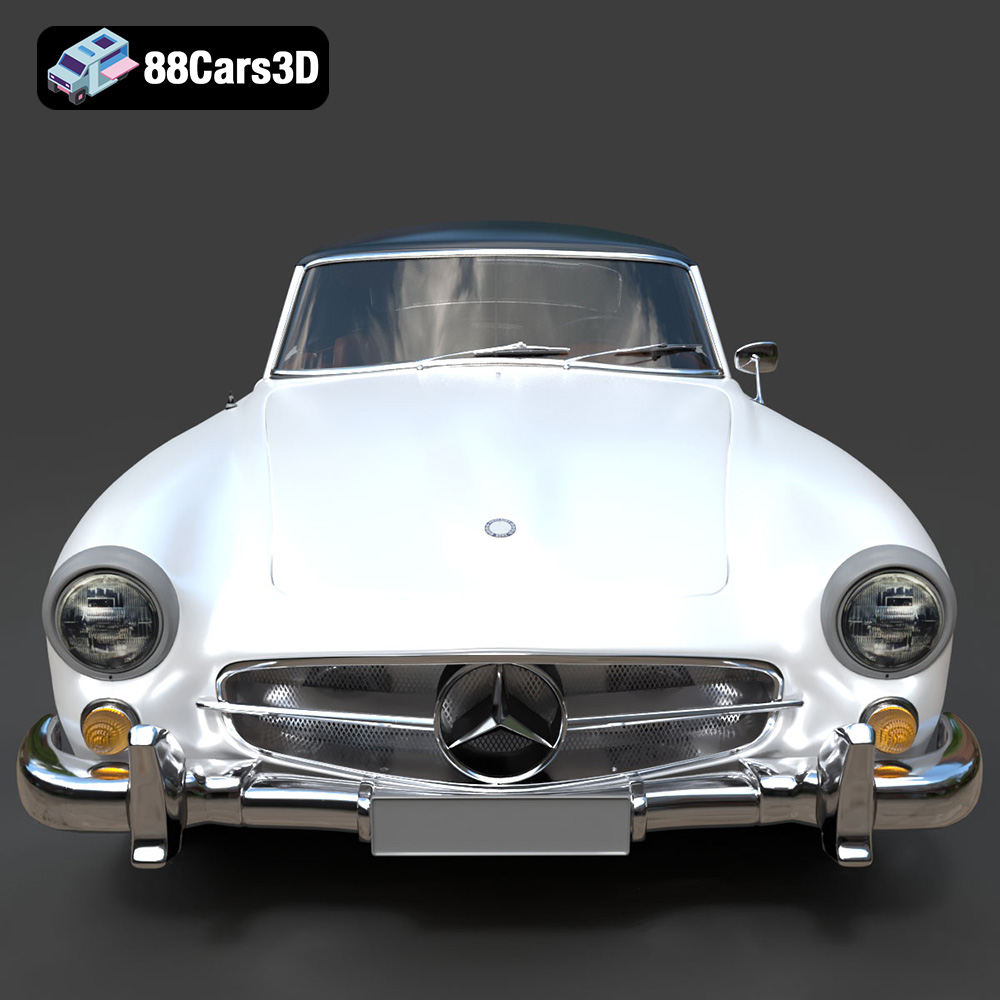
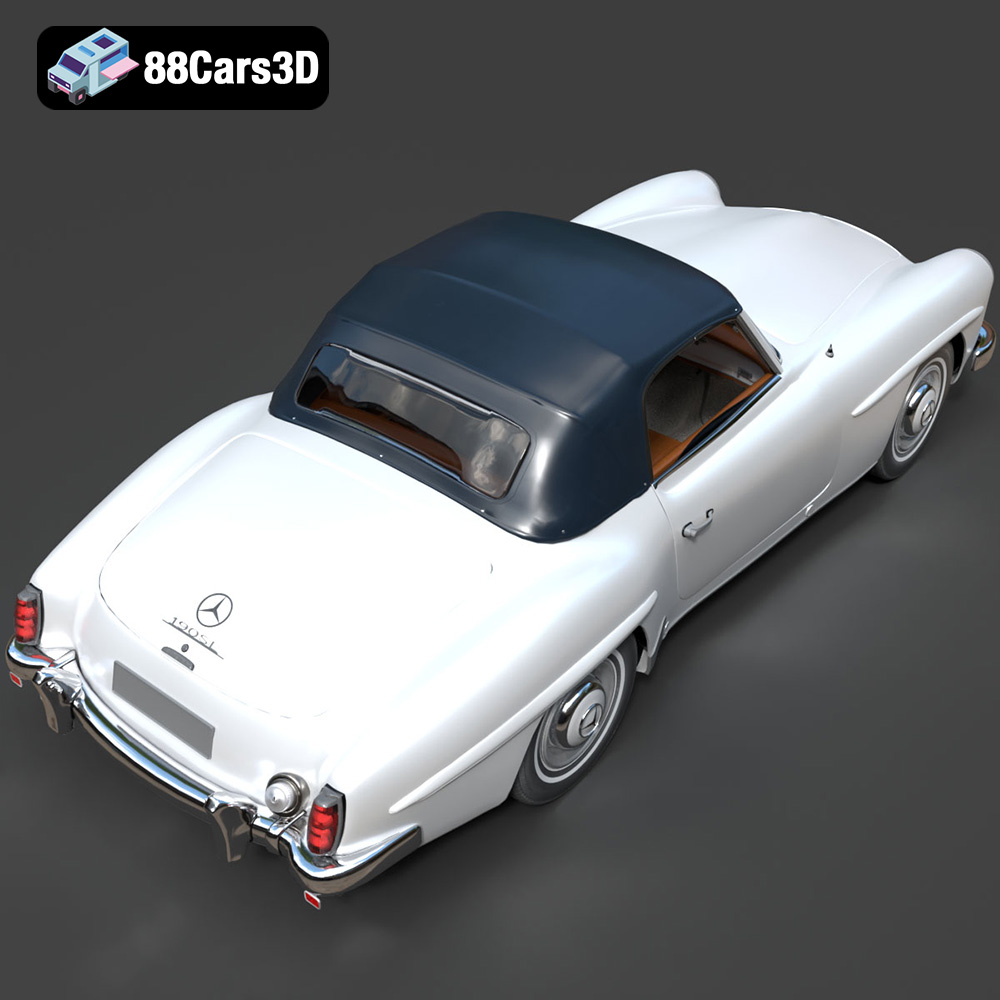
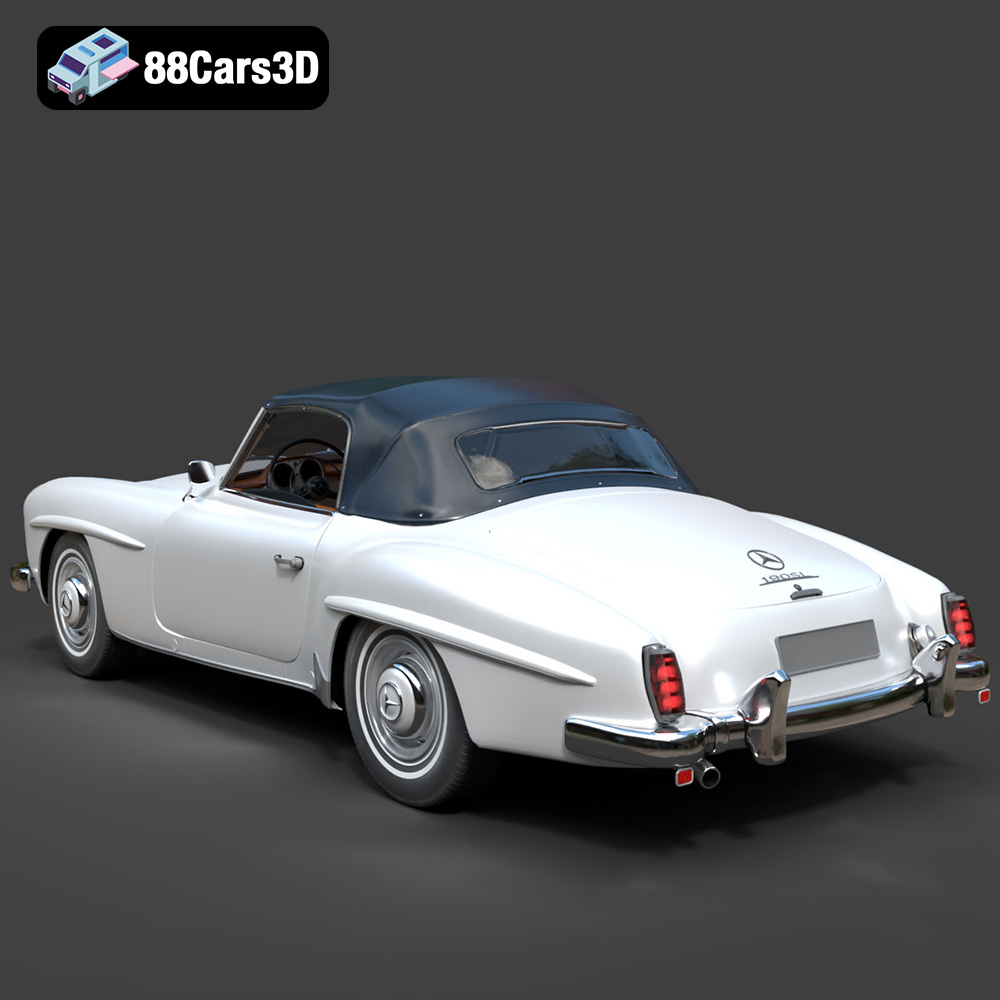
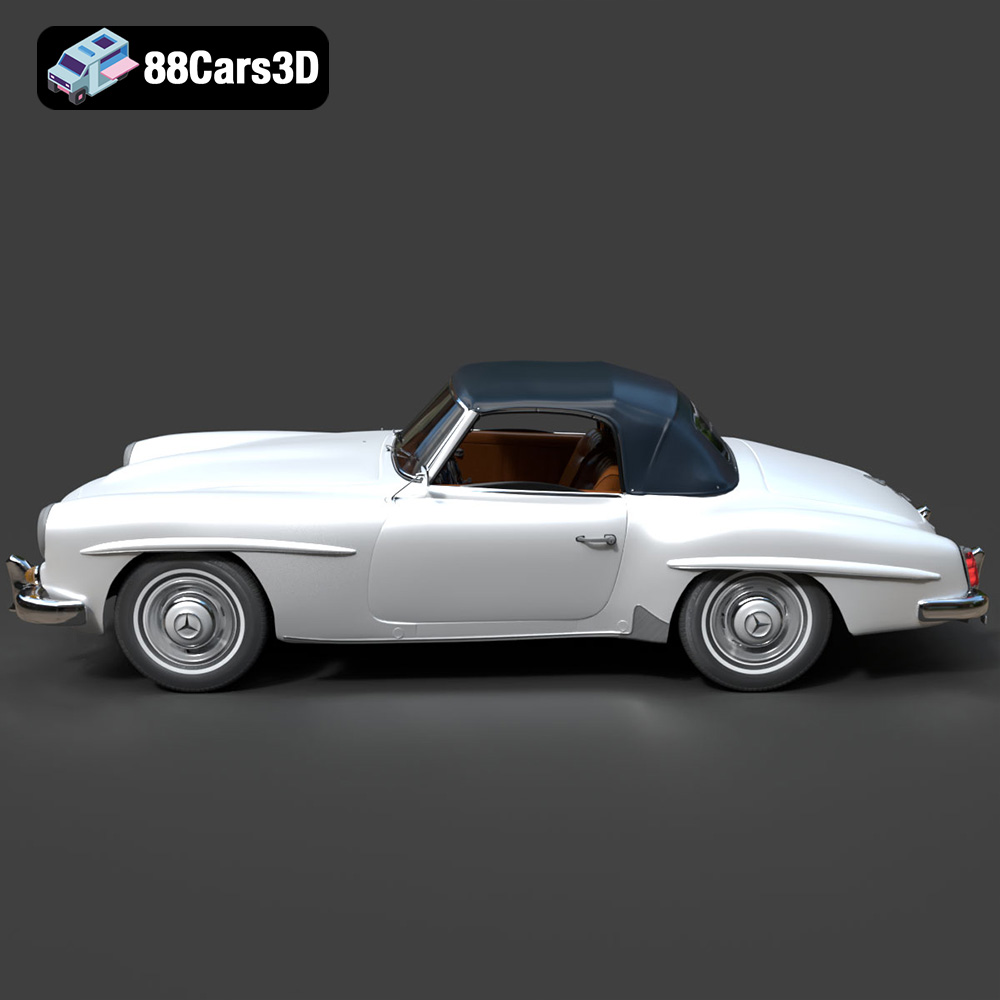
The allure of the Mercedes Benz 190SL begins with its iconic aesthetic, and this 3D model captures it flawlessly. Every sweeping curve, the distinctive upright front grille with its prominent three-pointed star, and the elegant chrome bumpers are replicated with precise geometry and proportions. From the classic round headlights to the gracefully integrated chrome taillight bezels, the exterior details scream period authenticity. A significant highlight is the detailed 1.9L M121 inline-four engine block, providing a level of realism that extends beyond superficial appearances, making it suitable for close-up shots or even animated hood reveals. Period-correct steel wheels with chrome hubcaps and whitewall tires complete the classic stance, while a vintage dual-exhaust system with chrome tips adds to the authenticity.
The interior is equally impressive, offering a faithful recreation of the 190SL’s luxurious cockpit. Details include plush leather-textured bucket seats, a classic ivory-colored steering wheel with its distinctive chrome horn ring, and a meticulously crafted analog instrument cluster with legible dials. The authentic manual shifter and floor-mounted pedals contribute to an immersive experience, especially critical for first-person viewpoints in gaming or virtual reality simulations. This attention to both external grandeur and internal sophistication makes the model incredibly versatile for various visualization needs.
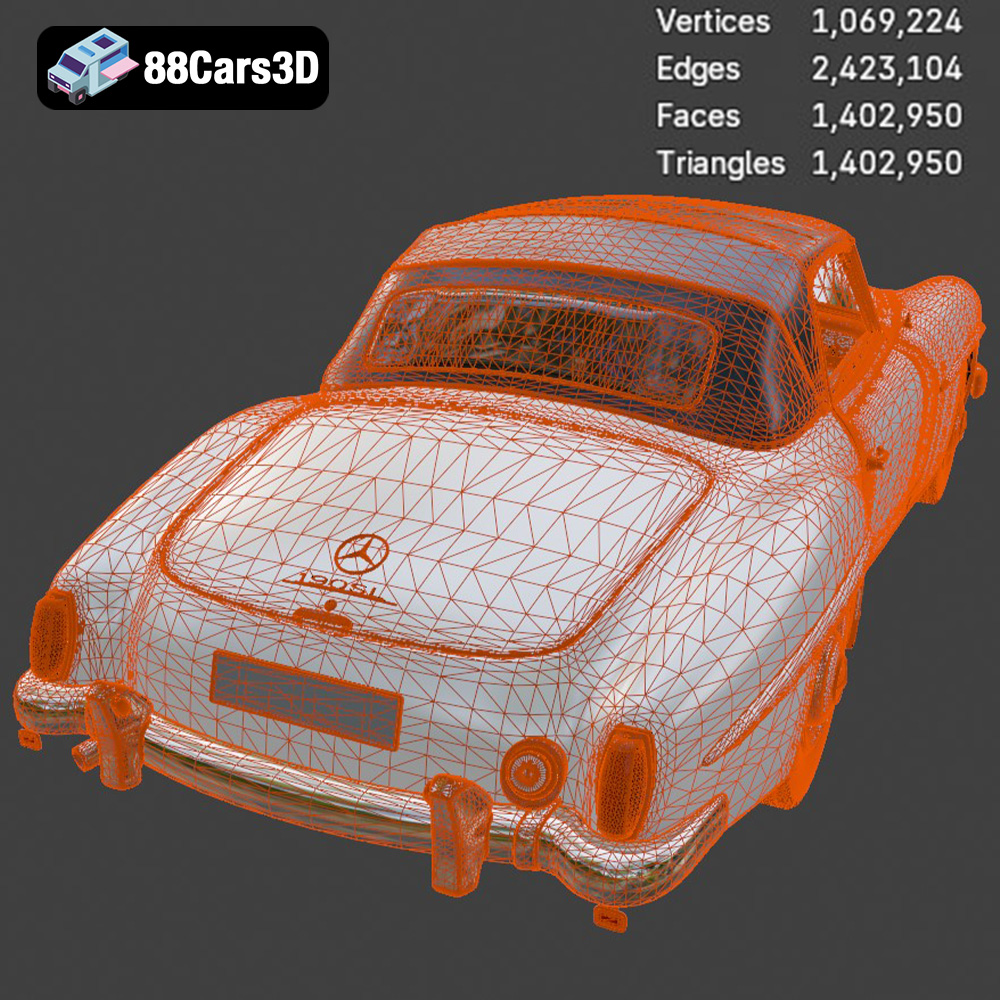
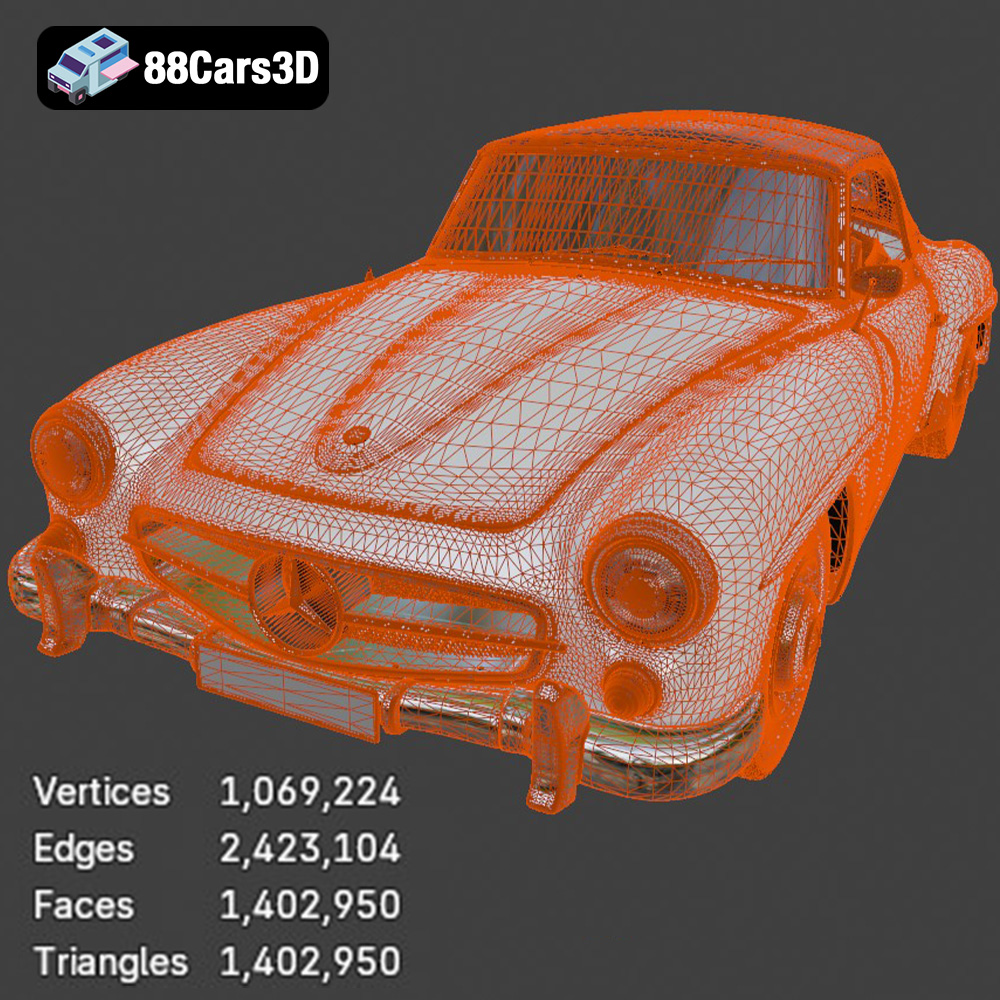
In the world of 3D modeling, achieving visual realism often comes at the cost of performance, especially for real-time applications. The Mercedes Benz 190SL 3D Model strikes an impressive balance, boasting a highly detailed topology of 1,402,950 triangles. This polycount is sufficiently high to ensure unparalleled visual fidelity for close-up renders and detailed cinematics, yet it remains optimized enough to be considered “game-ready” for demanding real-time engines like Unreal and Unity. This careful optimization means artists and developers don’t have to sacrifice detail for smooth performance.
Beyond polycount, the model adheres to real-world scale accuracy, based on actual vehicle chassis specifications. This is critical for seamless integration into existing scenes or for maintaining realism in simulations. Furthermore, crucial technical advantages include proper pivot setups for steering, wheel rotation, and suspension travel. These pre-configured pivots significantly reduce setup time for animators and game developers, allowing for quick implementation of realistic vehicle dynamics without extensive rigging work. The model’s compatibility with major 3D software platforms and real-time rendering engines ensures it can be dropped into virtually any professional pipeline.
The Mercedes Benz 190SL 3D Model is more than just a static object; it’s a dynamic asset capable of enhancing a multitude of professional projects. Its versatility allows for integration into diverse creative workflows, from high-fidelity rendering to interactive game environments.
For automotive artists and visualization specialists, this 3D model is a goldmine. Using software like 3ds Max or Blender with powerful renderers such as V-Ray, Corona, or Cycles, artists can create breathtaking photorealistic images and animations. The detailed geometry of the 190SL allows for intricate studio lighting setups, where reflections on the chrome and bodywork can be meticulously controlled. Artists can experiment with various environments – from sun-drenched coastal roads to sophisticated urban backdrops – to tell compelling visual stories. The model’s accurate materials, often PBR-ready, react realistically to light, enabling stunning representations of metallic paints, leather interiors, and reflective glass. Imagine a luxury car advertisement showcasing the 190SL cruising along a scenic route, or a museum exhibit render highlighting its historical significance. The provided .max and .blend files facilitate immediate access to these rendering capabilities, allowing for deep customization of materials, textures, and even the addition of environmental effects like dust or rain for added realism.
Game developers seeking to inject a touch of classic elegance into their titles will find the Mercedes Benz 190SL 3D Model an invaluable asset. Its optimized polycount of approximately 1.4 million triangles strikes the perfect balance for real-time engines, ensuring smooth frame rates without compromising visual detail. The .fbx and .unreal formats are specifically designed for this purpose. Importing into Unreal Engine or Unity is straightforward: the .fbx file brings in the mesh, materials, and pivot points, while an .unreal asset (if provided as part of a project) would offer a pre-configured, engine-ready setup. Developers can then set up realistic physics, integrate the separate wheels, suspension, and steering components for authentic vehicle dynamics, and even create interactive elements within the cockpit. For open-world games, racing titles, or historical simulators, the 190SL can serve as a prime vintage vehicle, capable of being driven by players or appearing as environmental dressing. Its optimized geometry ensures that even with multiple instances in a scene, performance remains robust, delivering a truly immersive classic driving experience.
The versatility of the Mercedes Benz 190SL 3D Model extends far beyond traditional rendering and game development, opening doors to cutting-edge immersive experiences and tangible physical creations.
The world of Augmented Reality (AR) and Virtual Reality (VR) demands highly optimized 3D assets that can be rendered in real-time on a variety of devices, from high-end VR headsets to mobile smartphones. The Mercedes Benz 190SL model, particularly in its .glb format, is perfectly suited for these applications. Imagine an interactive virtual showroom where potential buyers can walk around, examine, and even “sit inside” the classic 190SL, changing body colors and interior finishes in real-time. For mobile AR experiences, users could place a virtual 190SL directly onto their driveway or living room floor, scaled to life size, allowing for unprecedented interaction with the vehicle. The optimized geometry and well-structured materials ensure that these experiences are fluid and visually stunning, making the model ideal for brand campaigns, educational tools, or immersive virtual configurators.
For hobbyists, collectors, or even automotive designers looking to create physical prototypes, the availability of the Mercedes Benz 190SL 3D Model in .stl format is a significant advantage. The .stl file is specifically designed for additive manufacturing (3D printing), converting the detailed digital mesh into a printable format. Enthusiasts can print the 190SL at various scales, such as 1:12, 1:18, or 1:24, creating a tangible representation of this automotive icon. For best results and to capture the fine details like the chrome bumpers and engine bay elements, resin printing is often recommended with a layer height between 0.04–0.12 mm. Specific print settings, such as requiring supports for intricate parts like the exhaust and mirrors, and printing the frame angled for structural integrity, are crucial for a successful outcome. Post-processing, including sanding, priming, and applying authentic factory colors with metallic finishes, allows for a truly display-worthy scale model that bridges the gap between digital artistry and physical craftsmanship.
A truly professional 3D asset provides not just fidelity, but also flexibility. The Mercedes Benz 190SL 3D Model is designed with customization in mind, empowering artists to tailor it precisely to their project’s requirements.
The inherent structure of this 3D car model, with properly separated material IDs and PBR-ready textures, allows for extensive customization of its appearance. Artists can easily change the body color to any of the period-correct factory colors, or experiment with custom finishes like vibrant metallics, deep pearls, or subtle matte tones to evoke a unique mood. The luxurious leather-textured bucket seats can be re-colored to match specific interior themes, while tire textures can be swapped between classic whitewalls, performance-oriented street variants, or even custom sidewall designs. Adjusting the material properties, such as roughness, metallic, and normal maps, can dramatically alter the perception of the surface, allowing for anything from a pristine showroom finish to a well-worn, vintage patina.
Beyond aesthetic changes, the modular nature of the Mercedes Benz 190SL 3D Model facilitates its integration into diverse environments. Its real-world scale and pivot setups make it effortless to place into existing architectural visualizations, game levels, or cinematic scenes. Artists can adapt the lighting to match the environment, whether it’s the harsh midday sun of a desert road, the soft glow of a sunset boulevard, or the focused spotlights of an indoor exhibition. The separate components – wheels, suspension, and steering – provide the foundation for dynamic animation, allowing the car to realistically navigate terrain or pose in a striking manner for still renders. This high degree of customizability ensures that the 190SL is not just a model, but a versatile tool for storytelling and visual creation across any medium.
The Mercedes Benz 190SL is more than just a car; it’s a piece of automotive art and history. Bringing such an iconic vehicle into the digital realm with the precision and versatility offered by this 3D model is a significant achievement. From its meticulously recreated exterior and detailed engine bay to its luxurious cockpit, every aspect has been carefully considered to deliver unparalleled visual fidelity. The model’s optimized geometry, at 1,402,950 triangles, ensures it’s perfectly balanced for both high-end automotive rendering and demanding real-time game development, serving as a premium asset for professionals across industries.
With comprehensive support for essential file formats like .blend, .fbx, .obj, .glb, .stl, .ply, .unreal, and .max, this 3D asset is ready for any pipeline. Whether you are crafting photorealistic marketing visuals, developing an immersive racing game, designing virtual showrooms for AR/VR, or even 3D printing a physical collectible, the Mercedes Benz 190SL 3D Model provides the technical foundation and artistic detail you need. It represents not just a vehicle, but an opportunity to integrate a legendary classic into your next project with ease and confidence. Explore this exceptional model and many other high-quality 3D car models at 88cars3d.com, where digital automotive excellence awaits.
The Mercedes Benz 190SL is a legendary classic roadster that defines 1950s automotive elegance. Known for its sweeping curves, iconic front grille, and luxurious open-top styling, it remains a timeless symbol of vintage motoring. This model accurately captures the beautiful chrome bumpers, distinct inline-four engine bay details, and the classic rear taillights that made it an icon of its era. Boasting a highly detailed topology of 1402950 triangles, this 3D model offers unparalleled visual fidelity while retaining essential game-ready optimization principles. It is a premium asset meticulously crafted for high-end rendering, game development, AR/VR applications, and cinematic animation. Perfect for classic car showcases, vintage racing games, luxury lifestyle renders, and immersive virtual showrooms.
$71.99
.190sl
.blend
.fbx
.glb
.max
.obj
.ply
.rendering
.roadster
.stl
.unreal
car-3d-model
classic-car
game asset
game-ready
low-poly
luxury car
mercedes-benz
optimized
vintage-car
VR/AR