Get 20% OFF All Premium 3D & STL Models!

In the fast-evolving landscape of digital content creation, the demand for exceptionally detailed and accurate 3D car models is higher than ever. From cinematic visual effects and immersive game environments to cutting-edge AR/VR experiences and precise automotive visualization, the quality of a 3D asset can make or break a project. Capturing the essence of a vehicle, especially an iconic classic, requires not just technical skill but also a deep appreciation for automotive history and design.
Today, we’re diving into the meticulous craft behind creating such assets, focusing on a true masterpiece of engineering and design from a bygone era: the Mercedes-Benz 540K Roadster 1936. This legendary automobile, renowned for its sweeping lines, supercharged engine, and undeniable presence, presents a unique challenge and opportunity for 3D artists. A high-quality digital rendition of such a vehicle, like the one available on 88cars3d.com, doesn’t just replicate its form; it preserves its legacy for future generations of digital storytellers and experience creators. We’ll explore the technical intricacies, workflow considerations, and diverse applications of such a model, revealing why it stands as a prime example of professional-grade 3D car models.
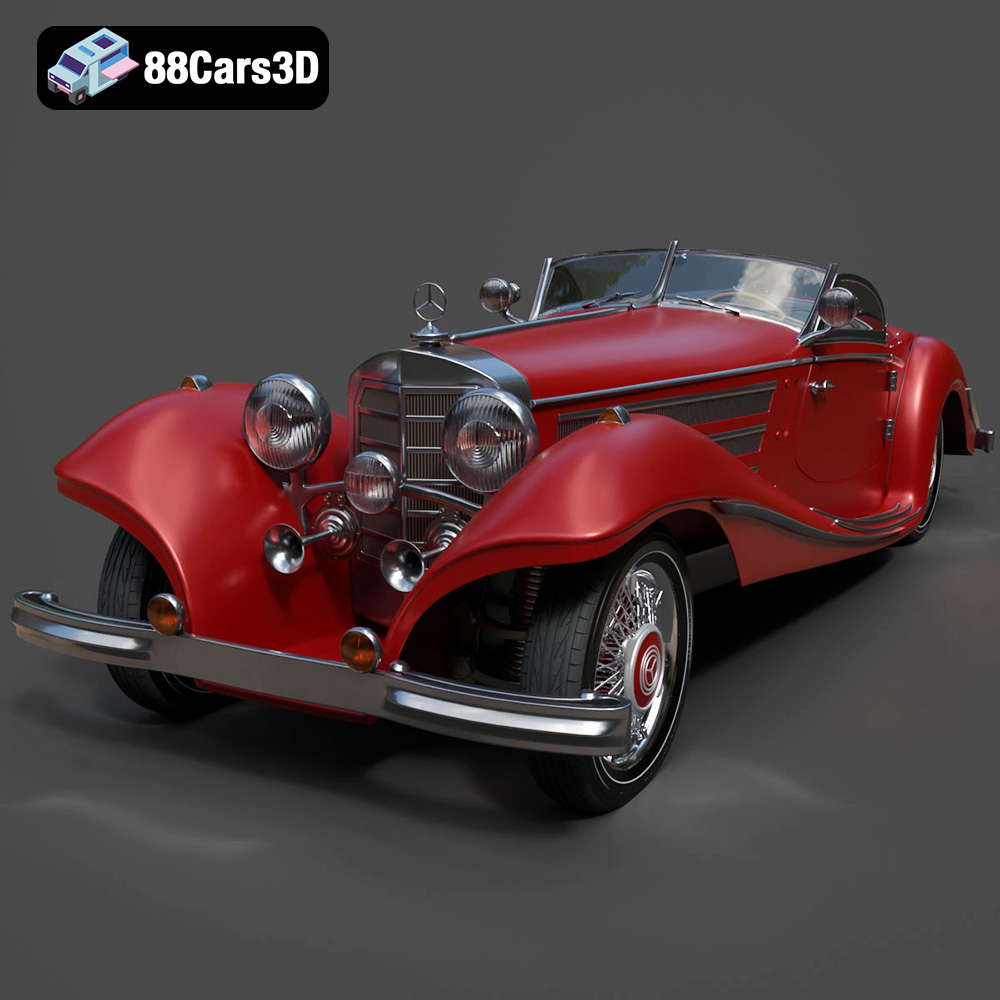
The Mercedes-Benz 540K Roadster 1936 is more than just a car; it’s a statement of pre-war luxury and engineering prowess. Recreating such an icon in the digital realm demands an obsessive commitment to detail, ensuring that every curve, component, and material finish resonates with the original’s majestic presence. The featured 3D model embodies this dedication, offering a digital asset that is both historically accurate and technically robust.
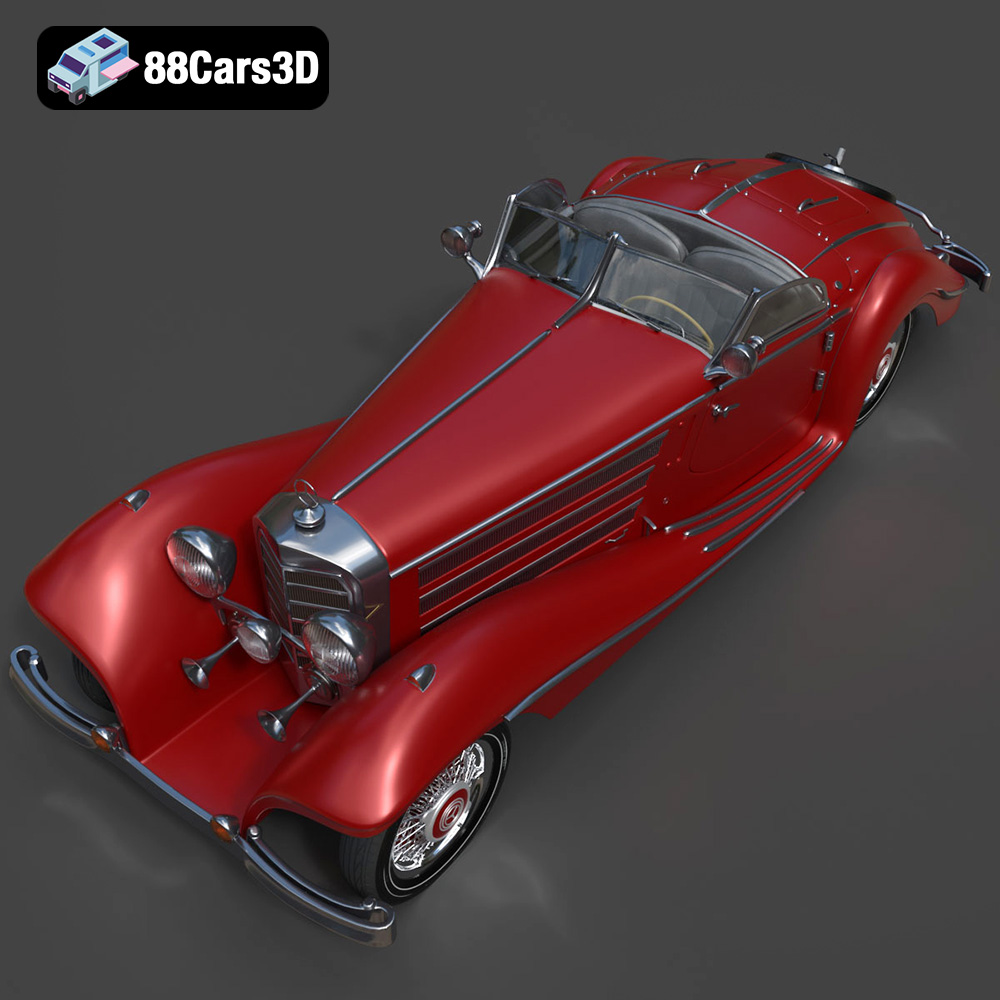
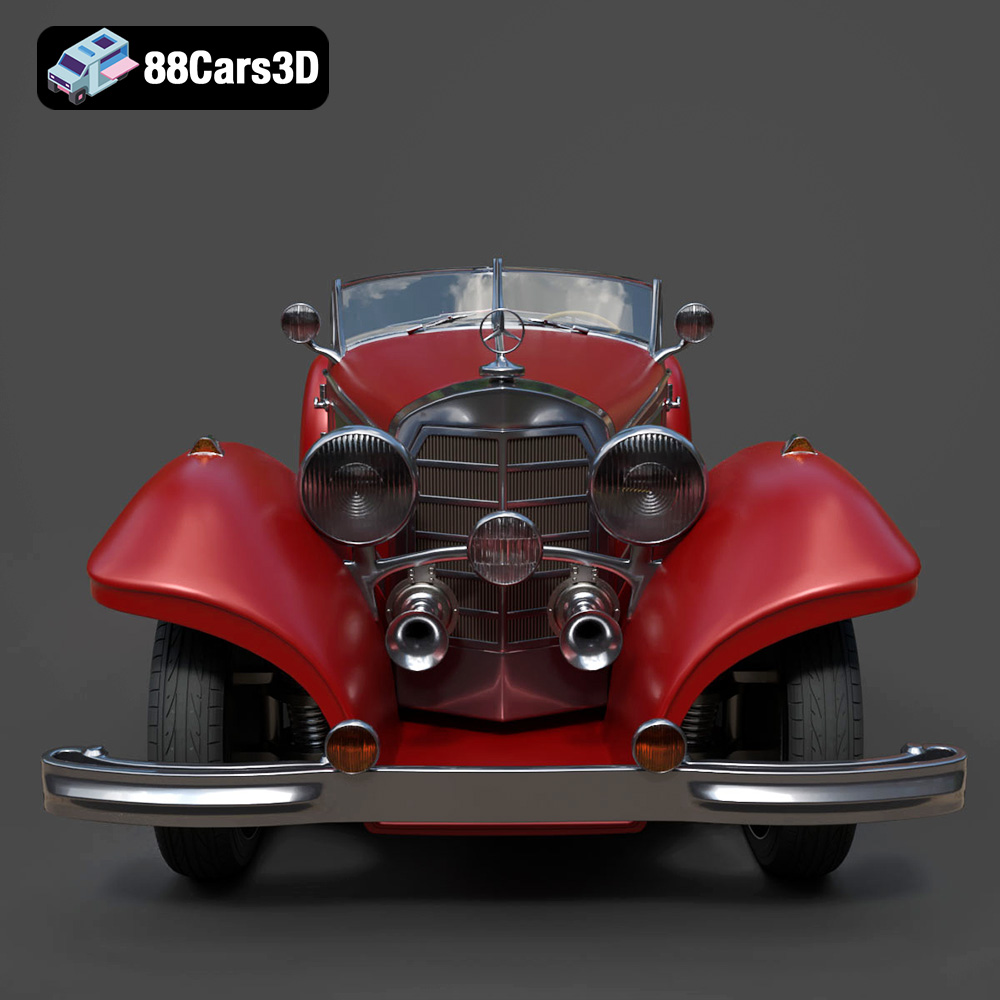
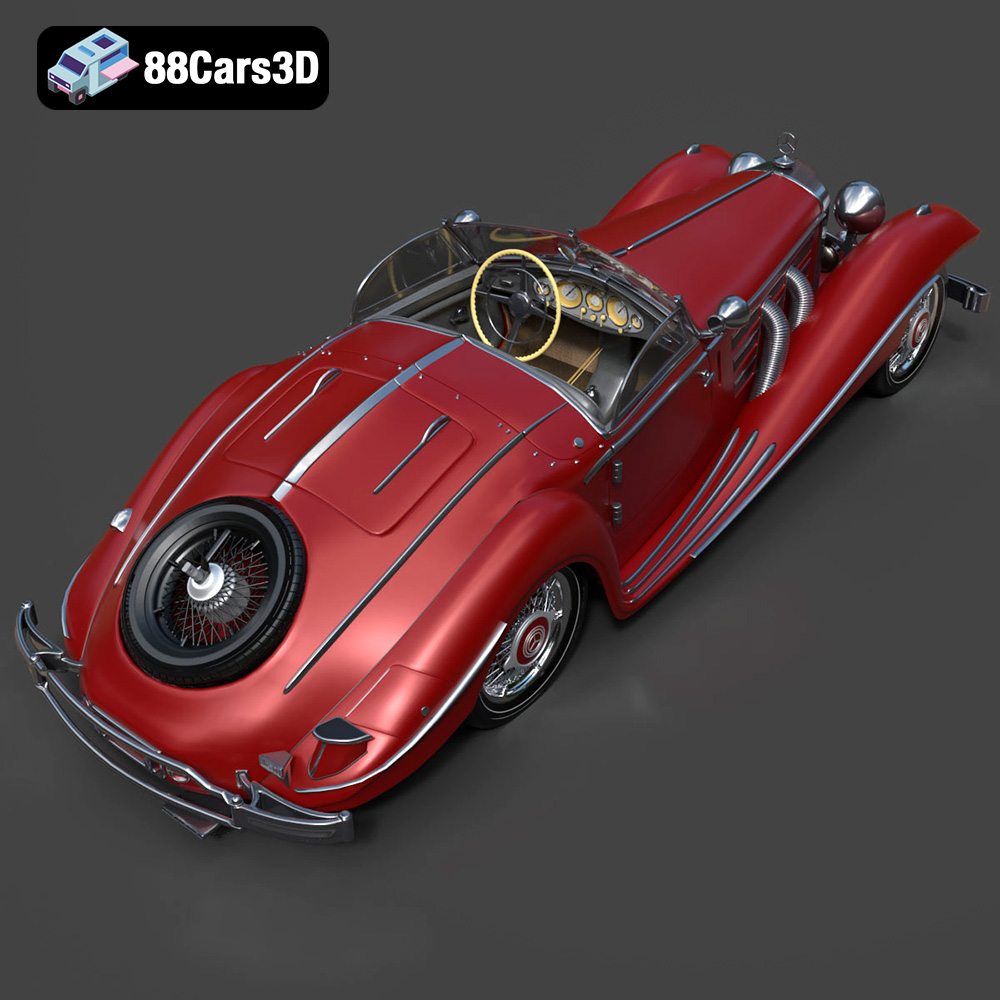
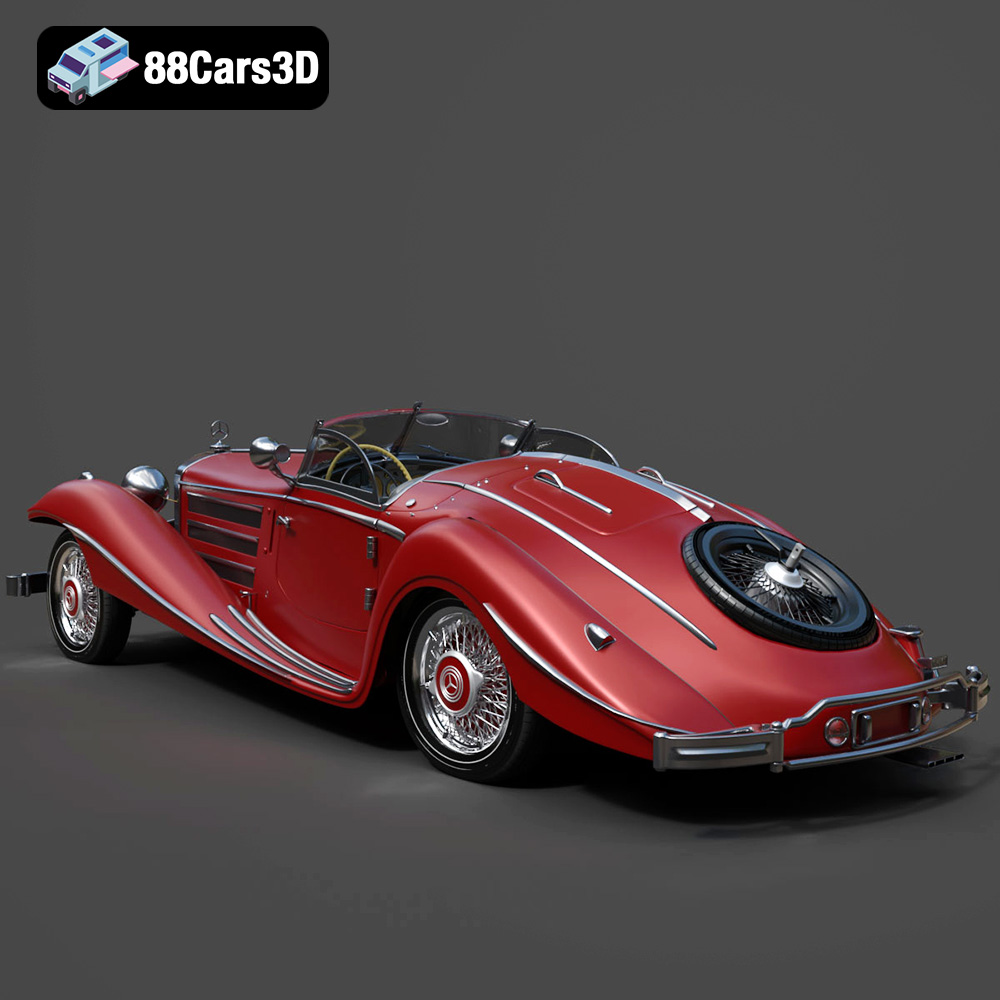
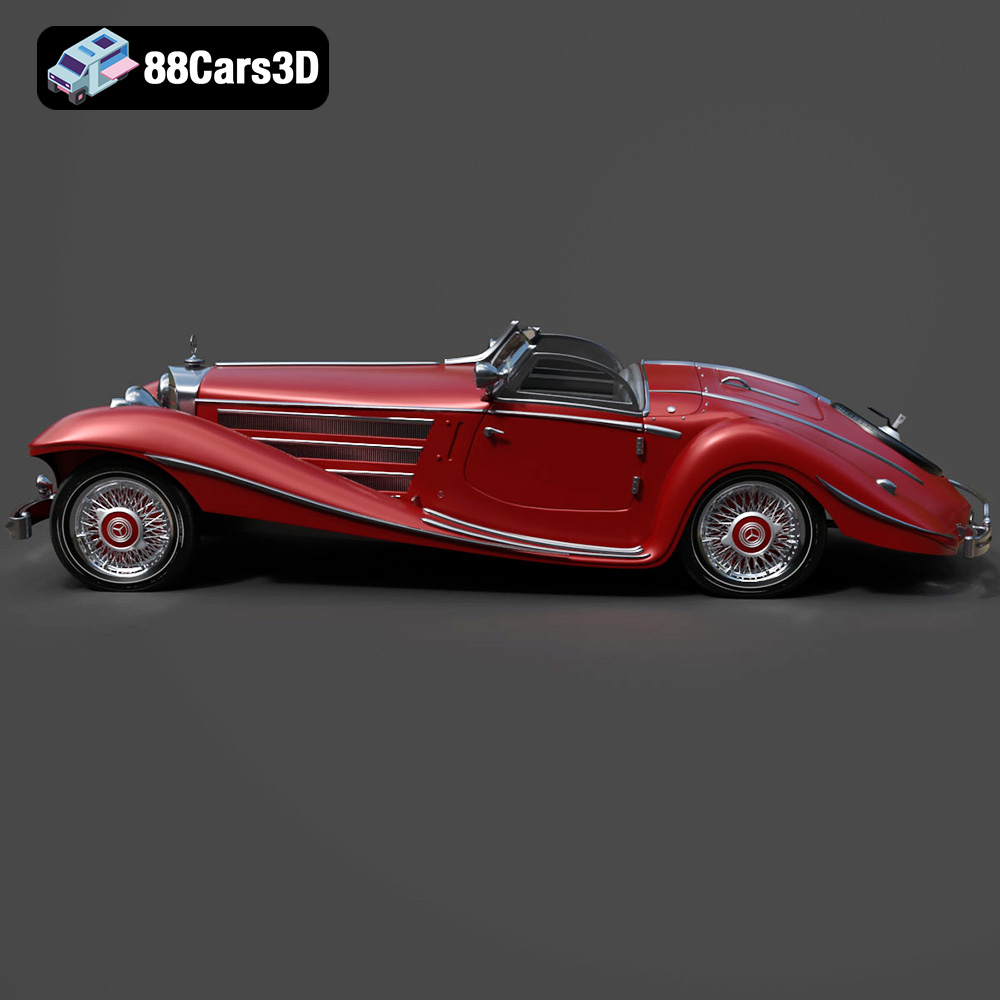
The journey begins with extensive research, studying blueprints, historical photographs, and archival footage to understand the vehicle’s exact proportions and intricate design language. For the Mercedes-Benz 540K Roadster, this means meticulously recreating its sweeping, majestic fenders that flow seamlessly into the elongated hood. The iconic external exhaust pipes, cascading from the hood, are not just ornamental but a signature styling cue, and their precise rendition is crucial. From the prominent chrome radiator grille, which serves as the car’s unmistakable face, to the intricate wire-spoke wheels fitted with period-correct whitewall tires, every element is designed to reflect the original’s grandeur. Even the detailed straight-eight engine block, complete with its legendary supercharger elements, is carefully modeled to provide authenticity, whether it’s fully visible or merely hinted at through the exterior.
While the exterior captures immediate attention, the interior is where true immersion is forged, especially for applications demanding a first-person perspective. The Mercedes-Benz 540K Roadster 3D model doesn’t shy away from this, offering a luxurious and historically accurate cockpit. Features like the tufted leather bench seating, with its rich textures and authentic stitching patterns, transport viewers back in time. The large-diameter, vintage-style steering wheel, complete with precise spoke detailing, feels tangible even in a virtual space. The analog instrument cluster, with its classic dial faces and legible gauges, provides a faithful representation of the original’s dashboard. Furthermore, the authentic floor-mounted shifter, handbrake, and mechanical pedal assembly are all carefully modeled to allow for realistic animation and interaction, critical for simulators and interactive experiences where the user might virtually “drive” the car.
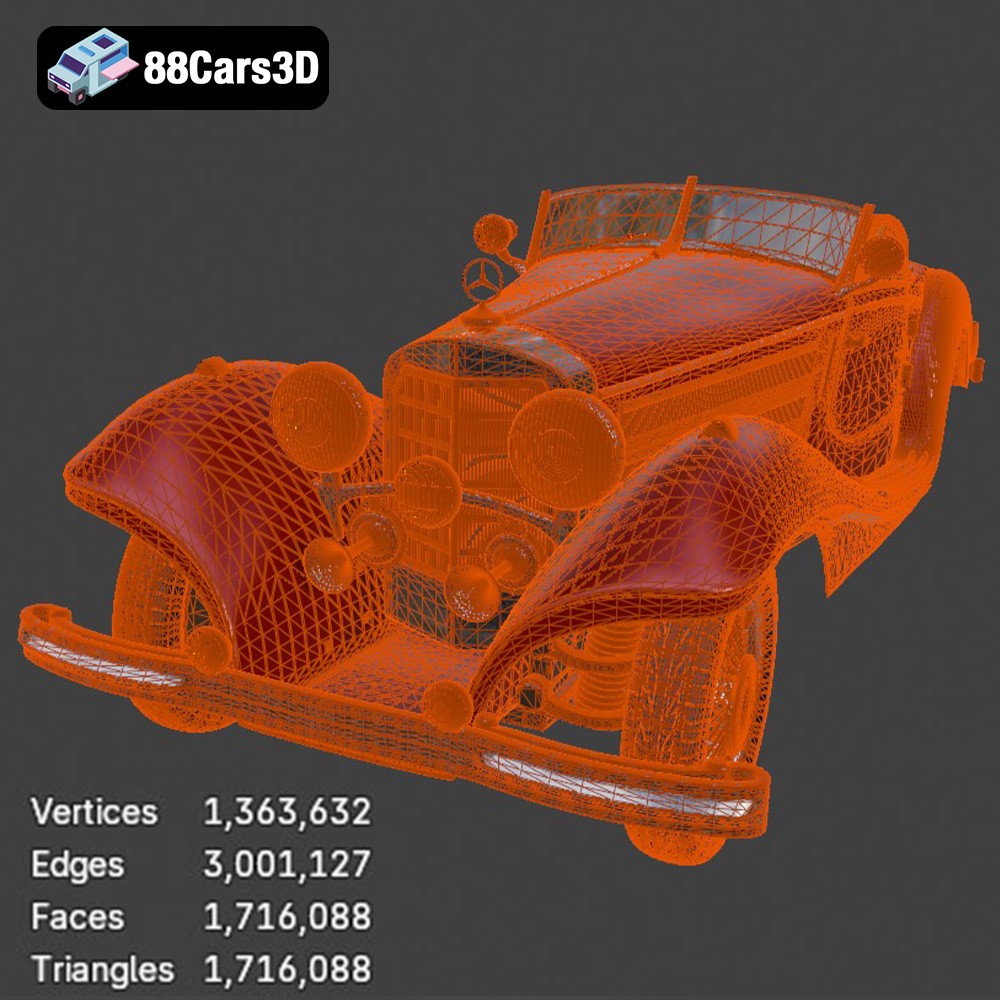
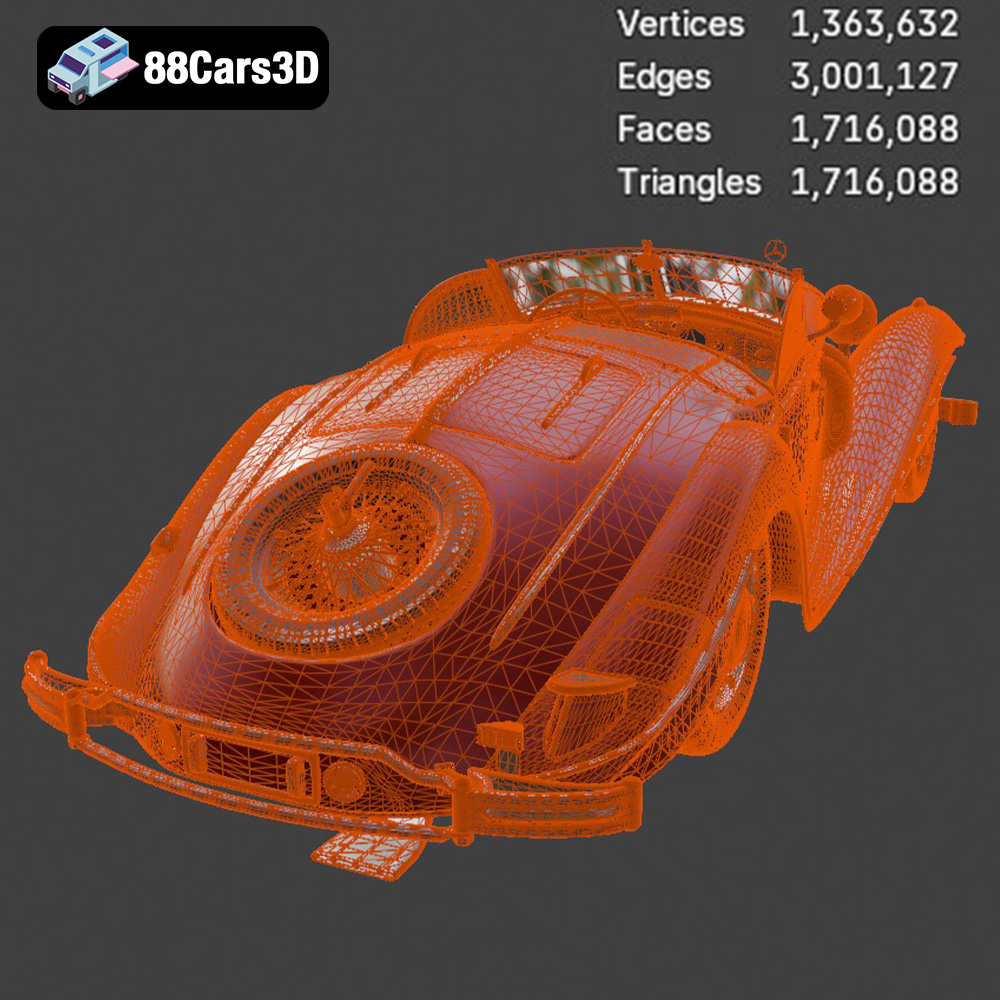
Beyond its visual fidelity, the true value of a professional 3D car model lies in its underlying technical structure. The Mercedes-Benz 540K Roadster model boasts 1,716,088 triangles. This polycount strikes an impressive balance, delivering unparalleled visual realism suitable for high-end cinematic rendering while remaining optimized enough for real-time engines like Unreal and Unity, especially when leveraging modern virtualized geometry techniques. This careful optimization ensures the asset is not only beautiful but also highly functional across a wide spectrum of digital applications, making it a versatile choice for game developers, animators, and visualization specialists.
Navigating the world of 3D modeling often involves choosing the right file format for your specific needs. Each format has its strengths, weaknesses, and intended applications. A truly versatile 3D car model, such as the Mercedes-Benz 540K Roadster from 88cars3d.com, is often provided in multiple formats to ensure maximum compatibility and utility across various professional pipelines. Understanding these formats is crucial for optimizing your workflow, whether you’re focused on automotive rendering, game assets, or 3D printing.
The .blend file format is native to Blender, the popular open-source 3D creation suite. When you receive a model in .blend format, it’s typically a fully editable Blender scene. This means it includes not just the mesh data but also materials (often PBR setups using Blender’s node-based shaders), lighting, camera setups, and even animation rigs if present. For artists working primarily in Blender, this format offers the most flexibility for customization, material adjustments, or integrating the model seamlessly into existing Blender projects. It’s ideal for those who want to dive deep into the model’s construction, make significant modifications, or render directly within Blender’s Cycles or Eevee engines.
FBX is an incredibly popular proprietary file format developed by Autodesk, serving as a de facto standard for 3D data exchange, especially between different 3D software and game engines. It’s highly versatile and can store a wide range of data, including geometry (meshes), materials, textures, animations, bones/skeletons, and lights. For projects destined for Unreal Engine, Unity, or other real-time pipelines, .fbx is often the go-to choice due to its robust support for embedded data and its ability to maintain scene hierarchy and animation integrity. The Mercedes-Benz 540K Roadster in .fbx format is therefore perfect for game developers looking to integrate a high-quality vehicle asset with minimal fuss.
The .obj format is one of the oldest and most widely supported 3D file formats. It’s a simple, text-based format primarily used for transferring geometric data (vertices, normals, texture coordinates, and faces). While it’s excellent for basic mesh exchange between virtually any 3D software, it typically doesn’t store advanced features like animation, rigging, or complex material definitions (though it can link to external .mtl files for basic material properties). For users who need to import the Mercedes-Benz 540K Roadster model into a niche 3D application or simply require the raw mesh data, .obj provides unparalleled cross-software compatibility.
GLB is the binary version of the GL Transmission Format (glTF), a royalty-free specification for the efficient transmission and loading of 3D scenes and models by applications. GLB files package all assets (geometry, textures, animations, PBR materials) into a single, compact file, making them incredibly efficient for web-based 3D, augmented reality (AR), virtual reality (VR), and mobile applications. Its optimization for real-time rendering and smaller file sizes makes the Mercedes-Benz 540K Roadster .glb perfect for immersive virtual showrooms or mobile AR experiences where performance and rapid loading are paramount.
STL is the standard file format for 3D printing. It represents a 3D model as a series of connected triangles, describing only the surface geometry of an object without any color, texture, or material information. When preparing the Mercedes-Benz 540K Roadster for physical manifestation, converting it to .stl is the first step. This format is recognized by virtually all 3D printers and slicing software. The model’s inclusion in .stl format directly addresses hobbyists and professionals looking to create physical scale models or prototypes, offering a tangible connection to this automotive legend.
The .ply format, or Polygon File Format, is often used for storing 3D data from 3D scanners or for more complex mesh data, including attributes like color, transparency, and sometimes even normal vectors per vertex or face. It’s particularly useful in applications requiring high precision or for transferring raw scan data. While less common for general animation or game development than FBX, its ability to store detailed mesh information makes it valuable for certain CAD, scientific visualization, or archival purposes where the exact geometric properties of the Mercedes-Benz 540K Roadster are critical.
While .fbx is excellent for importing into Unreal Engine, some asset providers, like 88cars3d.com, may offer a native .unreal asset. This implies the model has already been imported, configured, and optimized within Unreal Engine itself. An .unreal asset can come pre-setup with materials, LODs (Levels of Detail), collision meshes, and sometimes even blueprints or basic interactive elements. This significantly accelerates the integration process for Unreal Engine developers, offering an engine-ready asset that performs optimally within the real-time environment, making the Mercedes-Benz 540K Roadster immediately deployable.
Autodesk 3ds Max is a venerable software in the world of 3D modeling, animation, and rendering, particularly strong in architectural visualization, product design, and cinematic production. A .max file provides the complete 3ds Max scene, including geometry, complex material setups (using V-Ray, Corona, or Arnold renderers), lighting environments, and any animation rigs. For professionals whose primary workflow revolves around 3ds Max, having the Mercedes-Benz 540K Roadster in its native .max format offers maximum control for high-end automotive rendering, creating sophisticated studio setups, or integrating it into elaborate animated sequences.
The true measure of a high-quality 3D car model lies in its adaptability and performance across diverse professional pipelines. The Mercedes-Benz 540K Roadster 3D model is designed with this versatility in mind, offering technical advantages that streamline its integration into demanding production environments.
For game developers, the blend of visual fidelity and optimized performance is paramount. The Mercedes-Benz 540K Roadster model, with its 1,716,088 triangles, strikes this balance perfectly. It’s categorized as “game-ready” due to its structured topology and PBR-friendly material setup.
* Import and Optimization: Leveraging the .fbx or .unreal formats, developers can seamlessly import the model into Unreal Engine or Unity. Modern engines can efficiently handle this polycount, especially with features like virtualized geometry and Level of Detail (LOD) systems. While the model is highly detailed, savvy developers can further optimize it by generating lower-resolution LODs for distant views, ensuring smooth frame rates in open-world games or racing titles.
* Material Setup and Collision: The model’s materials are typically set up for Physically Based Rendering (PBR), allowing for realistic reflections, refractions, and surface interactions. Developers can quickly integrate these PBR textures. Crucially, proper collision meshes can be generated or utilized from the model to ensure realistic physics interactions within the game engine, whether the car is driven, crashed, or simply part of the environment.
* Animation and Rigging: The model includes separate wheels, suspension, and steering components, facilitating realistic animation. With proper pivot setups, developers can easily rig the car for steering, wheel rotation, and authentic suspension travel, enhancing the driving experience in racing games or simulators. Imagine this classic roaring through a virtual period-piece world, its suspension reacting accurately to every bump.
When the goal is breathtaking photorealism for advertising campaigns, historical documentaries, or virtual showrooms, the Mercedes-Benz 540K Roadster model excels. Its intricate detailing truly shines in high-end renderers.
* High-Fidelity Rendering: Using software like 3ds Max (with V-Ray or Corona), Blender (with Cycles), or Maya (with Arnold), artists can achieve stunning visuals. The model’s detailed geometry, from the intricate wire-spoke wheels to the delicate chrome accents and the luxurious tufted leather interior, allows for highly realistic material definition.
* Lighting and Environment: Artists can place the 540K in sophisticated studio lighting setups, dramatic outdoor scenes, or even historical backdrops. The interaction of light with the meticulously crafted car paint, reflective chrome, and soft leather materials creates unparalleled visual depth, perfect for brand campaigns or lifestyle scenes.
* Cinematic Sequences: For animated sequences, the model’s well-defined components allow for complex camera movements and dynamic interactions. Showcase the legendary supercharged engine, reveal the detailed cockpit, or capture the car cruising down a scenic road, all rendered with cinematic quality. This model is an ideal asset for any project demanding premium automotive rendering.
The rise of augmented and virtual reality demands 3D assets that are not only high-quality but also optimized for interactive, real-time experiences.
* Immersive Showrooms: Using formats like .glb, the Mercedes-Benz 540K Roadster can be deployed in virtual showrooms, allowing users to explore the car from every angle, inside and out, in a fully immersive VR environment. Imagine walking around this vintage masterpiece as if it were physically present.
* Interactive Configurators: The model’s customization options—changing body colors, modifying tire textures, and adjusting material finishes (matte, gloss, metallic)—make it perfect for interactive configurators. Users can personalize their dream classic car in real-time, experimenting with different looks before rendering.
* Mobile AR: For mobile AR applications, the optimized geometry and .glb format enable users to place a virtual Mercedes-Benz 540K Roadster in their real-world environment through their smartphone or tablet, a powerful tool for marketing and engagement.
Underneath the polished surfaces and historical accuracy of the Mercedes-Benz 540K Roadster 3D model lies a foundation of solid technical design, crucial for its versatility and high performance across various applications.
The model’s stated 1,716,088 triangles represent a carefully considered polycount. For game assets, this is often considered a high-poly count, but with modern GPU capabilities and engine optimizations like virtualized geometry, such detailed models can be handled efficiently. The key is in the “structured for modern workflows” aspect:
Although not explicitly detailed in poly count, high-quality 3D car models like this one invariably feature clean and efficient UV mapping.
Accuracy in scale and articulation is critical for seamless integration into any project, particularly for simulations and animation.
These technical specifications underscore why a model from a reputable source like 88cars3d.com isn’t just a pretty picture, but a robust, production-ready asset.
The versatility of a well-crafted 3D car model extends beyond digital screens. The Mercedes-Benz 540K Roadster model also offers the exciting possibility of physical manifestation through 3D printing, allowing enthusiasts and collectors to hold a tangible piece of automotive history.
The process of 3D printing begins with converting the digital model into a format suitable for additive manufacturing, most commonly .stl. While the original model boasts a high polycount for visual fidelity, this resolution translates well into fine detail for 3D printing. However, specific adjustments are often necessary to ensure the model prints successfully and durably. This includes ensuring all surfaces are watertight (manifold) and checking for any non-manifold geometry or inverted normals that could cause printing errors.
For a detailed model like the 540K Roadster, specific print settings are crucial to achieve the best results:
Once printed, the physical model undergoes a transformation to truly bring it to life.
This tangible output from the Mercedes-Benz 540K Roadster 3D model highlights the incredible versatility of high-quality digital assets, bridging the gap between virtual artistry and physical craftsmanship.
The journey from a historical masterpiece like the Mercedes-Benz 540K Roadster 1936 to a meticulously crafted 3D model is a testament to the dedication and skill involved in modern digital asset creation. We’ve explored how such a model, rich in historical authenticity and technical precision, serves as an invaluable resource across diverse creative industries. From providing game developers with optimized, game-ready assets for immersive experiences to empowering automotive rendering artists with the fidelity needed for cinematic visualizations and enabling hobbyists to 3D print tangible replicas, the applications are as vast as the imagination.
The flexibility offered by a comprehensive package of file formats, including .blend, .fbx, .obj, .glb, .stl, .ply, .unreal, and .max, ensures that regardless of your software preference or project requirements, this iconic vehicle can be seamlessly integrated into your workflow. It’s a prime example of how high-quality 3D car models accelerate production, enhance realism, and ultimately elevate the standard of digital content.
For professionals and enthusiasts alike seeking exceptional automotive assets, platforms like 88cars3d.com are indispensable. The Mercedes-Benz 540K Roadster 1936 3D model stands as a shining example of the caliber of products available, designed to meet the rigorous demands of modern digital production. Whether your next project involves crafting compelling game assets, producing stunning automotive rendering, or creating interactive AR/VR experiences, investing in such a detailed and versatile 3D model will undoubtedly propel your creative vision forward. Discover this legendary model and many other premium 3D car models to drive your projects to success.
Experience the epitome of pre-war automotive luxury with our Mercedes-Benz 540K Roadster 3D model. A true masterpiece of 1930s engineering and design, the 540K is renowned for its sweeping, majestic fenders, elongated hood housing the legendary supercharged straight-eight engine, and iconic external exhaust pipes. Every signature styling cue, from the prominent chrome radiator grille to the elegant wire-spoke wheels, has been meticulously recreated to capture the majestic presence of this historical classic. Boasting a highly detailed topology with 1,716,088 triangles, this 3D model delivers unparalleled visual fidelity while remaining structured for modern workflows. Designed to leverage the power of advanced real-time engines utilizing virtualized geometry, it serves as a top-tier asset for high-end game development, cinematic animation, immersive AR/VR experiences, and photorealistic automotive visualization.
$81.00
.blend
.fbx
.glb
.max
.obj
.ply
.rendering
.stl
.unreal
540k-roadster
car-3d-model
classic-car
game asset
game-ready
high poly
luxury car
mercedes-benz
optimized
vintage-car
VR/AR