Get 20% OFF All Premium 3D & STL Models!

In the dynamic world of 3D visualization, automotive design, and real-time interactive experiences, the demand for exceptionally detailed and technically robust 3D car models has never been higher. From photorealistic marketing campaigns to immersive gaming environments and intricate AR/VR applications, the quality of a vehicle asset can make or break a project. Artists, developers, and designers constantly seek models that not only capture aesthetic perfection but also offer the underlying technical precision required for seamless integration into diverse pipelines.
Today, we’re diving deep into what makes a premium 3D car model truly stand out, using a stellar example from 88cars3d.com: the Mercedes Benz AMG GLA 35 4MATIC 2020 3D Model. This particular asset embodies the pinnacle of detailed topology, optimized geometry, and multifaceted compatibility, serving as an excellent case study for understanding the comprehensive requirements of modern 3D automotive projects.
The Mercedes-Benz AMG GLA 35 4MATIC (2020) is a vehicle that commands attention in the real world, blending SUV practicality with AMG’s renowned performance DNA. Its aggressive Panamericana-style grille, sporty front splitter, aerodynamic roof spoiler, and signature dual exhaust system create a distinctive presence. Translating this real-world presence into a digital asset demands meticulous attention to every curve, every reflection, and every interior detail. This blog post will explore how such a high-quality model is not just a visual treat but a versatile tool, compatible across various software and applications, and crucial for pushing the boundaries of digital content creation.
The versatility of a 3D model is often defined by the array of file formats it supports. Each format serves a specific purpose, catering to different software, engines, and project requirements. Understanding these distinctions is paramount for any professional working with 3D car models. The Mercedes Benz AMG GLA 35 4MATIC 2020 3D Model exemplifies this flexibility by being available in a comprehensive suite of formats, ensuring its utility across virtually any professional workflow.
The .blend format is the native file type for Blender, an incredibly powerful and increasingly popular open-source 3D creation suite. A .blend file typically contains the entire scene, including mesh data, materials, textures, lighting, cameras, animation, and even physics simulations. For artists primarily working in Blender, this format offers the most flexibility. It allows for full editing of the model’s topology, modification of shader networks, scene rearrangement, and seamless integration into existing Blender projects. Its editable nature makes it perfect for studios with Blender-centric pipelines, allowing for deep customization and iteration on the Mercedes Benz AMG GLA 35 model.
.fbx (Filmbox) is arguably the most widely adopted interchange format in the 3D industry, particularly for game development, film VFX, and animation. Developed by Autodesk, FBX is highly versatile, capable of storing complex scene data like geometry, materials, textures, rigging, animation, and even camera information. It’s the go-to format for exporting assets between different 3D software packages (e.g., from 3ds Max or Blender to Maya, or into game engines like Unreal Engine and Unity). When using the Mercedes Benz AMG GLA 35 in .fbx, developers can expect robust support for PBR materials, skeletal animation if present, and reliable transfer of scene hierarchy, making it ideal for real-time pipelines.
The .obj (Wavefront OBJ) format is a simple, universal geometry definition file. It stores mesh data (vertices, normals, texture coordinates, and faces) and can reference an external .mtl (material template library) file for basic material properties and texture maps. While .obj is highly compatible across almost all 3D software, its simplicity means it typically does not support advanced features like animation, rigging, or complex PBR materials directly embedded. It’s excellent for basic model transfer and archival purposes, ensuring that the core geometry of the GLA 35 is accessible in any 3D environment, even if material setup needs to be redone.
.glb (GL Transmission Format Binary) is an optimized, self-contained format designed for efficient transmission and loading of 3D scenes and models in web and immersive applications. It’s essentially a binary version of glTF, which has become the “JPEG of 3D.” A .glb file embeds all necessary assets—geometry, materials, textures, animations—into a single file, making it incredibly convenient for AR, VR, and browser-based displays. For virtual showrooms, interactive car configurators, or mobile AR experiences featuring the Mercedes Benz AMG GLA 35, the .glb format offers a streamlined, high-performance solution with PBR material support.
.stl (Stereolithography) is the most common file format for 3D printing. It represents a 3D model as a series of connected triangles, defining only the surface geometry without color, texture, or other CAD attributes. While simple, its ubiquity makes it essential for physical prototyping. When converting the Mercedes Benz AMG GLA 35 to .stl, ensuring a manifold (watertight) mesh is crucial for successful 3D printing. This format allows hobbyists and professionals to bring the digital GLA 35 into the physical realm, creating display models or functional prototypes.
The .ply (Polygon File Format) is another format used to store 3D data, particularly from 3D scanners or for CAD applications where precise mesh data, including vertex colors, normals, and additional properties, is important. While less common for general asset exchange than FBX or OBJ, .ply can be valuable for specific scientific, engineering, or detailed reverse-engineering workflows. It provides a robust, often more descriptive alternative to OBJ for complex mesh data, ideal for scenarios demanding high precision for the GLA 35 model beyond simple visualization.
The term .unreal refers to an asset specifically prepared and often packaged for direct import into the Unreal Engine. While typically an .fbx file is imported and then processed by Unreal, an “unreal” specific asset implies it comes pre-configured with Unreal-ready materials, potentially LODs (Level of Detail), collision meshes, and proper scaling, saving significant setup time. For game developers leveraging the Mercedes Benz AMG GLA 35 4MATIC in Unreal Engine, this pre-optimized format means less time on import configuration and more time on gameplay integration and environmental design.
The .max format is the native scene file for Autodesk 3ds Max, a leading 3D modeling, animation, and rendering software. A .max file contains every detail of a 3ds Max project, including geometry, materials, textures, lighting, cameras, modifiers, and animation data. For professionals using 3ds Max, this format offers the highest level of editability and access to the original scene setup. It allows for advanced rendering with V-Ray or Corona, complex animation sequences, and seamless integration into architectural visualization or product configurator pipelines where 3ds Max is the primary tool. The GLA 35 in .max format ensures complete artistic control within this powerful platform.
The creation of a truly high-fidelity 3D car model goes far beyond simply mimicking shapes. It involves a deep understanding of automotive design, meticulous attention to detail, and a strategic approach to topology and material representation. The Mercedes Benz AMG GLA 35 4MATIC 2020 3D Model from 88cars3d.com exemplifies this craftsmanship, delivering an asset that excels in visual authenticity and technical performance.
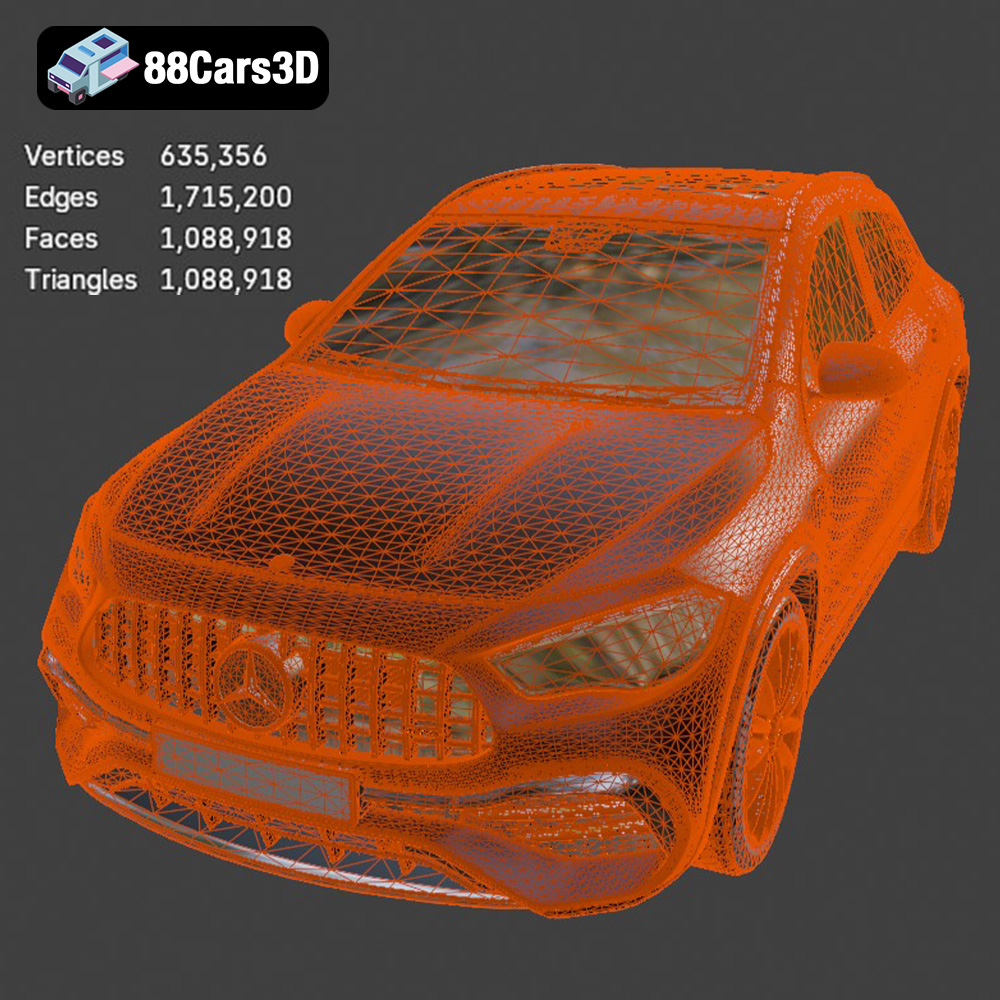
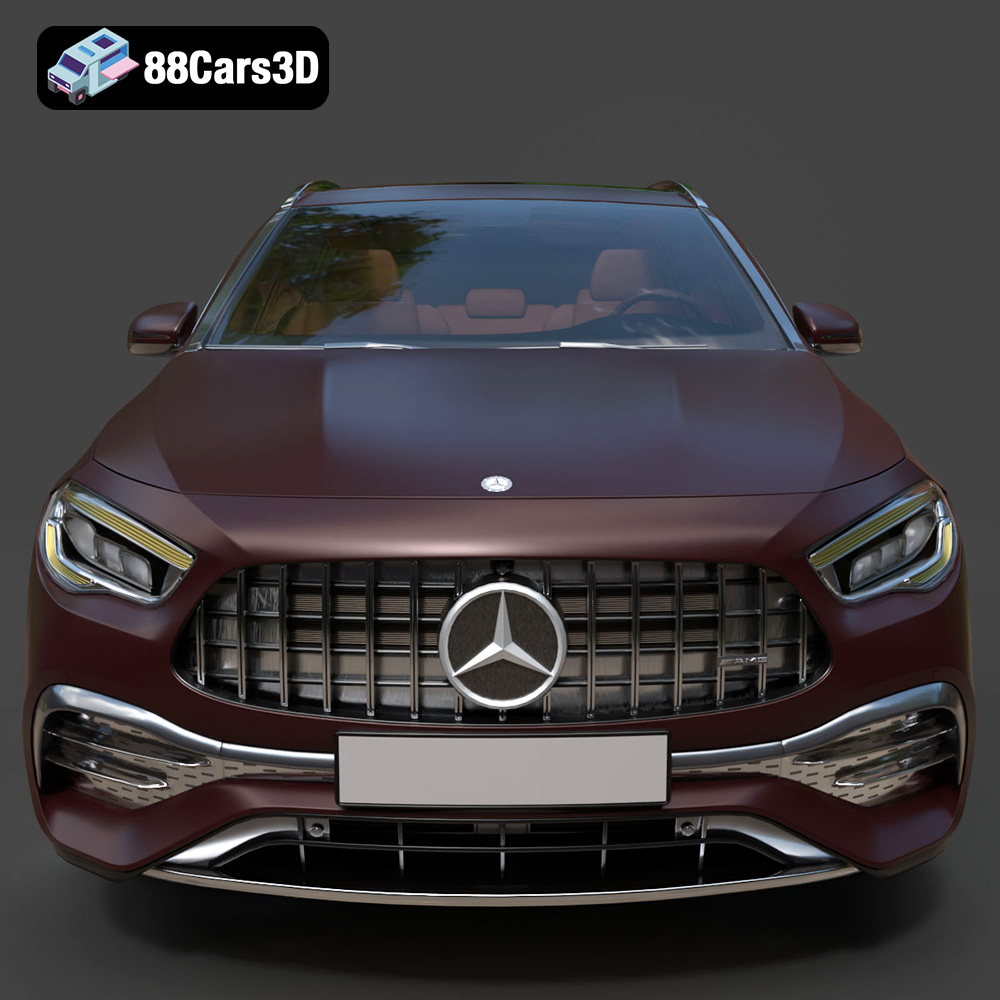
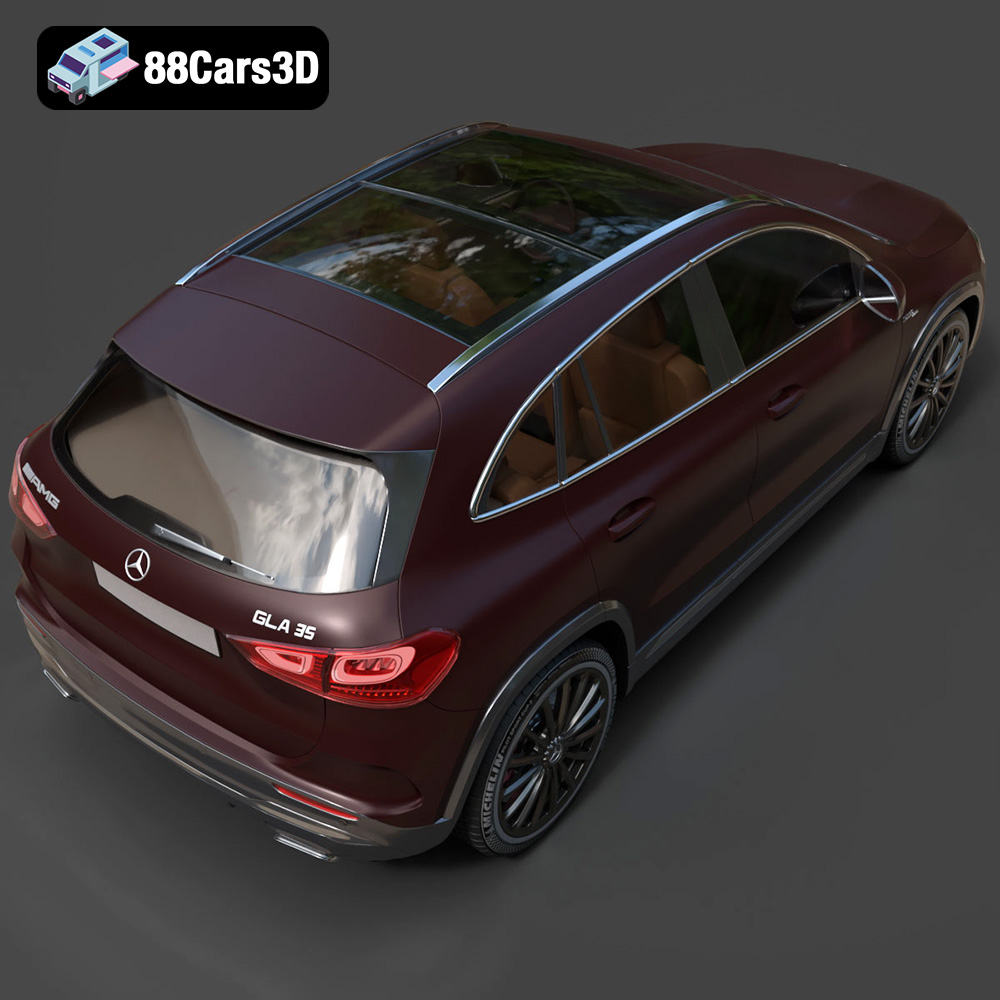
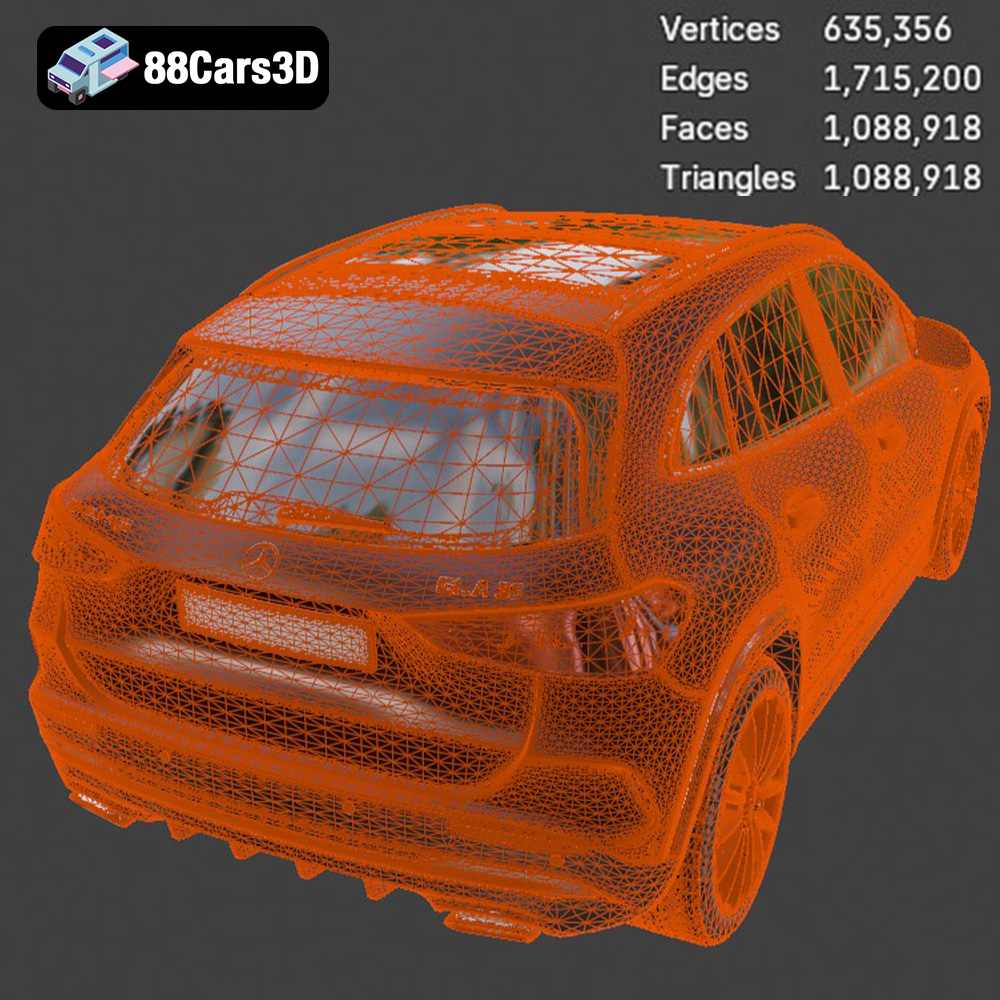
The first impression of any vehicle comes from its exterior, and the digital GLA 35 does not disappoint. Its aggressive Panamericana-style grille, a signature AMG element, is rendered with precision, as are the sporty front splitter and aerodynamic roof spoiler. The model accurately captures the vehicle’s dynamic styling and road presence, down to the signature dual exhaust system. Key features like the high-resolution LED High Performance headlights and adaptive taillights are faithfully reproduced, ensuring accurate light distribution and design nuances. The distinctive AMG light-alloy wheels and high-performance tires are not just textures but carefully modeled components, complete with detailed suspension and AMG high-performance brake calipers. Crucially for animators and riggers, the wheels, suspension, and steering components are separated, allowing for realistic animation of movement and interaction with terrain. With a detailed topology of 1,088,918 triangles, this model strikes an exceptional balance: it offers outstanding visual fidelity for high-end rendering while maintaining an efficient geometry suitable for real-time applications.
Beyond the gleaming exterior, the interior of the GLA 35 3D model offers an equally immersive experience. The sporty AMG performance seats are meticulously modeled, showcasing detailed stitching and ergonomic contours. The multifunction AMG sport steering wheel and paddle shifters are accurately represented, inviting virtual interaction. The high-resolution MBUX dual-screen instrument cluster representation captures the essence of modern Mercedes-Benz technology, displaying intricate details that are crucial for first-person perspectives. Accurately mapped center console, pedals, and gear selector complete the cockpit, ensuring that the model is ready for close-up renders and provides an optimized geometry for first-person POV in gaming. This level of interior detail transforms the model from a simple external shell into a complete, believable vehicle environment.
Technical precision is paramount for integrating 3D car models into professional pipelines. The Mercedes Benz AMG GLA 35 model boasts real-world scale accuracy, based on actual vehicle chassis dimensions, which is critical for consistent scene integration across architectural visualizations, simulations, and game environments. Proper pivot setup for steering, wheel rotation, and suspension travel is a fundamental requirement for any vehicle asset intended for animation or interactive use. This model includes these essential technical considerations, allowing for straightforward rigging and animation. Its “game-ready & optimized” status with 1,088,918 triangles is a testament to its thoughtful design, finding the perfect balance between high-end visual realism for cinematic rendering and efficient performance for demanding real-time engines like Unreal and Unity. This careful optimization ensures that developers don’t have to sacrifice visual quality for frame rate, making it a truly versatile asset.
The true value of a high-quality 3D asset like the Mercedes Benz AMG GLA 35 4MATIC 2020 3D Model lies in its seamless integration into diverse professional workflows. Whether it’s for breathtaking visual effects, interactive experiences, or precise simulations, the model’s technical specifications and multi-format availability ensure it can be leveraged effectively.
For studios focused on automotive rendering for marketing, product visualization, or architectural visualization, the Mercedes Benz AMG GLA 35 3D model is an invaluable resource. When utilizing the .max or .blend formats, artists gain full access to the scene structure. The workflow typically begins with importing the model, followed by fine-tuning materials. This involves a physically based rendering (PBR) workflow, meticulously crafting metallic paint shaders, realistic glass for windows and headlights, and accurate rubber textures for tires. Advanced lighting setups are then employed, often combining high dynamic range images (HDRIs) for realistic environmental illumination with area lights to emphasize form and generate subtle reflections. Caustics can be added for dramatic glass effects. For animated sequences, artists can utilize the model’s separate components to simulate door openings, realistic wheel rotations, and subtle suspension bounces, adding a layer of authenticity to any animation. Finally, post-production in image editing software enhances realism, color grading, and atmospheric effects, transforming raw renders into stunning visual masterpieces for brand campaigns or lifestyle scenes.
Game developers constantly seek assets that are both visually appealing and performant. The Mercedes Benz AMG GLA 35 4MATIC 2020 3D Model is perfectly suited for game development, particularly for open-world games, racing titles, and vehicle simulators. The availability of .fbx and specific .unreal formats streamlines the import process into engines like Unreal Engine and Unity. The optimized polycount of 1,088,918 triangles is critical here, striking an ideal balance that allows for high visual fidelity without excessive performance overhead. Once imported, developers set up PBR materials within the engine, often using instanced materials for efficient customization of color, roughness, and metallic properties. Crucial for real-time performance, developers would implement Level of Detail (LOD) systems, creating progressively simpler versions of the model that swap in based on camera distance. Collision meshes are essential for realistic physics interactions, and the model’s proper pivot setups facilitate accurate vehicle physics and handling characteristics. This makes the GLA 35 an excellent candidate for interactive car configurators or as a drivable asset in high-speed racing simulations, ensuring smooth gameplay and stunning visuals.
The immersive nature of Augmented Reality (AR) and Virtual Reality (VR) demands highly optimized assets that can run smoothly on various devices, from powerful headsets to mobile phones. The .glb format of the Mercedes Benz AMG GLA 35 3D model is a perfect fit for these applications. This compact, self-contained format is optimized for web and mobile delivery, making it ideal for creating virtual showrooms where customers can explore the vehicle in 3D, or for interactive car configurators that allow real-time customization of colors and features. For mobile AR experiences, users could place a virtual GLA 35 in their driveway, examining it from every angle. Performance considerations are paramount in AR/VR; thus, the model’s balanced triangle count ensures a responsive and fluid interactive experience, minimizing load times and maintaining high frame rates across different platforms. The ability to quickly adapt lighting and materials in real-time allows for dynamic environment changes, further enhancing the immersion.
The utility of a comprehensive 3D car model extends beyond digital screens. For many enthusiasts and professionals, the ability to bring a digital asset into the physical world, or to deeply personalize it, is a significant advantage. The Mercedes Benz AMG GLA 35 4MATIC 2020 3D Model caters to these needs with its specialized formats and inherent flexibility.
The inclusion of the .stl format opens up exciting possibilities for 3D printing. Hobbyists, collectors, and designers can transform the digital Mercedes Benz AMG GLA 35 into a tangible display model or a scaled-down prototype. The recommended scales – 1:12, 1:18, or 1:24 – provide options for different levels of detail and print size. For optimal results, especially with fine details like the aggressive grille, resin printing is often recommended over FDM, allowing for layer heights as low as 0.04–0.12 mm. Critical technical considerations for successful 3D printing include ensuring a wall thickness of 1.2–2.0 mm for structural integrity and setting an infill of 20–30%. Supports will be required for intricate parts such as the exhaust system, mirrors, and other overhangs. Proper print orientation, with the frame angled, maximizes structural integrity, and printing wheels separately facilitates better detail and easier post-processing. After printing, post-processing steps like sanding, applying primer, and painting with authentic factory colors or metallic finishes can elevate the printed model to a truly museum-quality piece.
A premium 3D model like the Mercedes Benz AMG GLA 35 isn’t a static asset; it’s a foundation for boundless creativity. Artists and designers can easily tap into a range of customization options to tailor the vehicle to specific project needs. This includes changing body colors, experimenting with factory finishes, or creating entirely custom paint jobs. Modifying tire textures to represent off-road variants versus sleek street versions can drastically alter the vehicle’s character. Adjusting material finishes – from matte to gloss, or introducing unique metallic flakes – allows for bespoke visual effects. Furthermore, adapting lighting for different environments, such as a moody urban night scene or a bright, sunny showroom, dramatically impacts the model’s presentation. This inherent flexibility ensures that the GLA 35 can be integrated into diverse creative visions, from a gritty post-apocalyptic game to a luxurious advertising campaign, all while maintaining its core high-quality design.
In a competitive digital landscape, the choice of 3D assets can significantly impact project timelines, budget, and overall quality. Sourcing premium 3D car models, such as those found on 88cars3d.com, offers distinct strategic advantages for professionals across various industries.
Developing a high-fidelity 3D car model from scratch is an incredibly time-consuming and resource-intensive endeavor. It requires specialized skills in modeling, sculpting, UV mapping, texturing, and often rigging and animation. By leveraging pre-made, high-quality assets like the Mercedes Benz AMG GLA 35 4MATIC 2020 3D Model, studios and individual artists can drastically reduce development time and associated costs. Instead of dedicating hundreds of hours to modeling a vehicle, resources can be reallocated to more creative aspects of a project, such as scene composition, animation, storytelling, or gameplay development. This efficiency allows for faster project turnaround times and ensures that deadlines can be met without compromising on the visual standard, providing a significant competitive edge.
When clients expect nothing less than perfection, relying on professionally crafted 3D assets becomes a necessity. Premium models undergo rigorous quality control, ensuring accurate proportions, clean topology, optimized geometry, and high-resolution textures. This level of quality is immediately apparent in the rendered output or real-time experience, lending credibility and professionalism to any project. The Mercedes Benz AMG GLA 35 model, with its meticulous detailing and broad format compatibility, is a prime example of such an asset. Its versatility means it can seamlessly transition between high-end cinematic renders, demanding game engine environments, and interactive AR/VR applications. This multi-purpose utility ensures that a single investment can serve numerous project needs, delivering consistent, top-tier visuals across the board. For any professional seeking to elevate their digital automotive projects, 88cars3d.com provides a trusted source for such uncompromising quality.
The world of 3D visualization and interactive media continues to evolve at a rapid pace, and at its heart lies the demand for truly exceptional 3D assets. The Mercedes Benz AMG GLA 35 4MATIC 2020 3D Model stands as a testament to what is possible when precision modeling meets thoughtful optimization. From its meticulously crafted exterior and interior to its robust technical specifications and broad file format compatibility, this model offers unparalleled value for professionals in automotive rendering, game development, AR/VR experiences, and even 3D printing.
Understanding the nuances of various file formats—from the editable depth of .blend and .max to the industry-standard interoperability of .fbx, the web-readiness of .glb, and the physical tangibility of .stl—is crucial for maximizing an asset’s potential. This model’s availability across these diverse formats, coupled with its game-ready optimization and real-world accuracy, ensures it integrates seamlessly into any demanding pipeline. By choosing premium 3D car models like the Mercedes Benz AMG GLA 35, available through platforms like 88cars3d.com, artists and developers gain not only stunning visual fidelity but also the invaluable advantages of time efficiency, cost savings, and the creative freedom to push boundaries. Investing in such high-quality assets is an investment in the future of compelling digital experiences.
The Mercedes-Benz AMG GLA 35 4MATIC (2020) combines the versatility of a premium compact SUV with the exhilarating performance of AMG. Featuring its aggressive Panamericana-style grille, sporty front splitter, aerodynamic roof spoiler, and signature dual exhaust system, this vehicle embodies dynamic styling and road presence. This high-quality 3D model boasts a detailed topology of 1,088,918 triangles, offering exceptional visual fidelity while maintaining efficient geometry. Meticulously modeled to accurately represent the real-world dimensions and sleek contours of the GLA 35, it provides an outstanding asset for high-end rendering, game development, and VR/AR applications. Perfect for architectural visualizations, high-speed racing simulations, modern urban lifestyle scenes, and interactive car configurators.
$63.99
.2020
.4matic
.amg
.blend
.fbx
.glb
.max
.obj
.ply
.rendering
.stl
.unreal
car-3d-model
compact-suv
game asset
game-ready
gla-35
high poly
mercedes-benz
optimized
performance suv
SUV
VR/AR