Get 20% OFF All Premium 3D & STL Models!

In the rapidly evolving landscape of digital creation, the demand for exceptionally detailed and technically robust 3D assets has never been higher. From breathtaking cinematic visualizations to hyper-realistic gaming environments and immersive AR/VR experiences, the quality of a 3D model is paramount. When it comes to automotive design, this need is amplified. Artists, developers, and engineers require not just a likeness, but an intricate digital twin that captures every curve, reflection, and mechanical nuance of a real-world vehicle.
The pursuit of such digital perfection often begins with sourcing premium 3D car models. It’s a foundational step that can either accelerate a project to new heights or bog it down in endless optimization and rework. This is where assets like the Porsche Macan Turbo 3D Model from 88cars3d.com shine. Representing a pinnacle of detailed engineering and artistic craftsmanship, this model serves as an excellent case study for understanding what constitutes a truly professional-grade 3D car asset and how it integrates into diverse digital workflows. Whether you’re an automotive designer, a game developer, an architect, or a visualization specialist, the ability to seamlessly incorporate such a high-quality model is a game-changer.
The cornerstone of any compelling digital automotive project is the underlying 3D model. Its quality dictates everything from visual fidelity and performance to the ease of integration into complex pipelines. A poorly constructed model, no matter how appealing at first glance, can lead to endless headaches in rigging, texturing, rendering, and real-time application. Conversely, a meticulously crafted 3D car model, such as those found on 88cars3d.com, provides a solid foundation, empowering creators to focus on artistic expression and technical innovation rather than troubleshooting mesh errors.
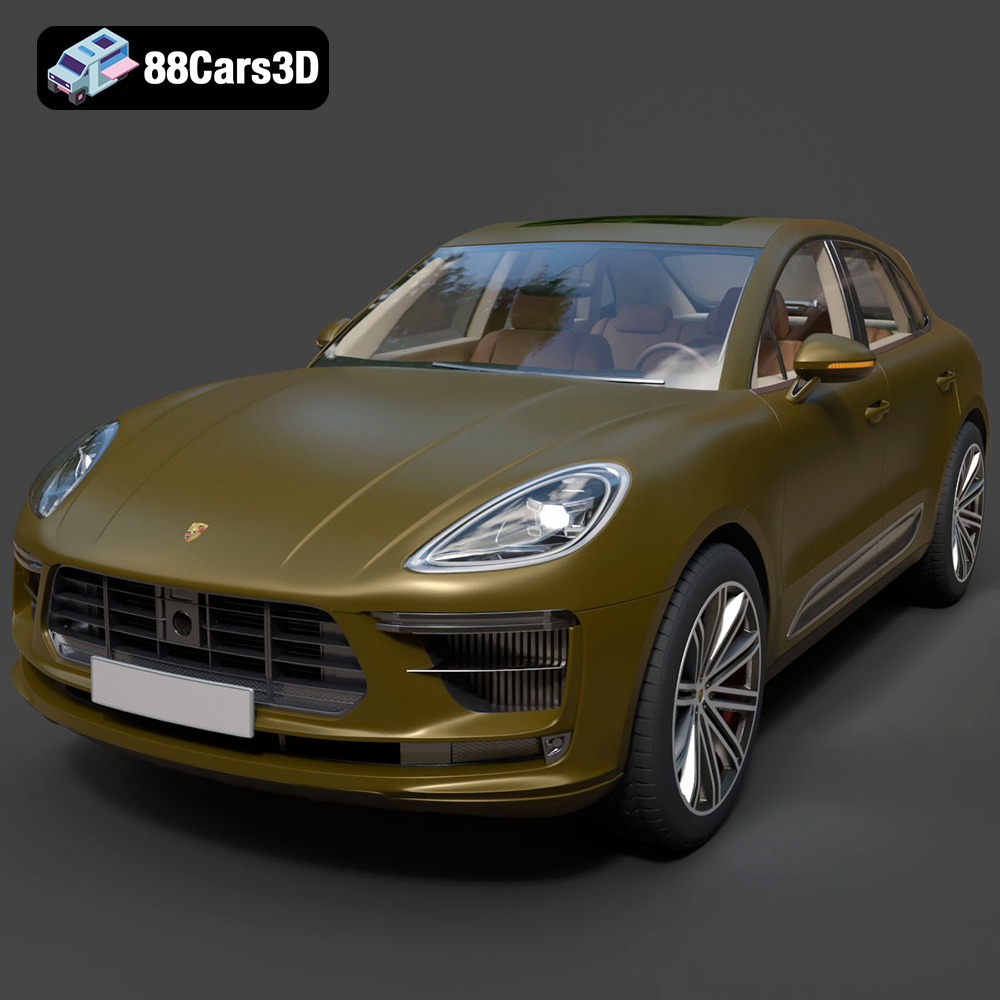
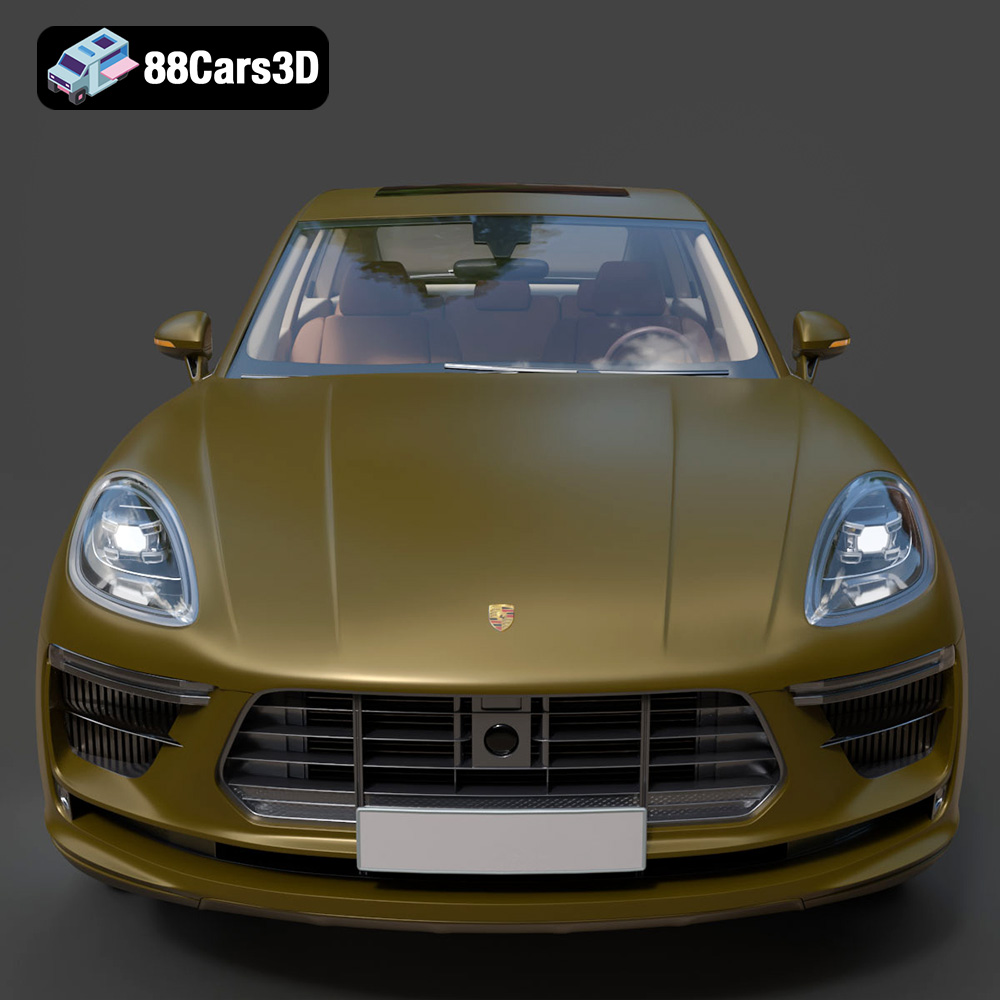
For automotive rendering and visualization, realism is the ultimate goal. Clients, from luxury car manufacturers to advertising agencies, demand imagery that is indistinguishable from photography. This requires 3D car models with accurate geometry, precise proportions, and intricate surface details. The Porsche Macan Turbo 3D model exemplifies this with its accurate frame geometry, detailed front grille, signature quad exhaust system, and iconic LED matrix headlights. These elements are not merely aesthetic; they provide the essential data for physically based rendering (PBR) workflows, allowing light to interact realistically with surfaces, creating believable reflections, refractions, and shadows. Every panel gap and subtle curvature must be precise to achieve that “showroom finish” under various lighting conditions. Without this foundational accuracy, no amount of sophisticated rendering software can truly save an image.
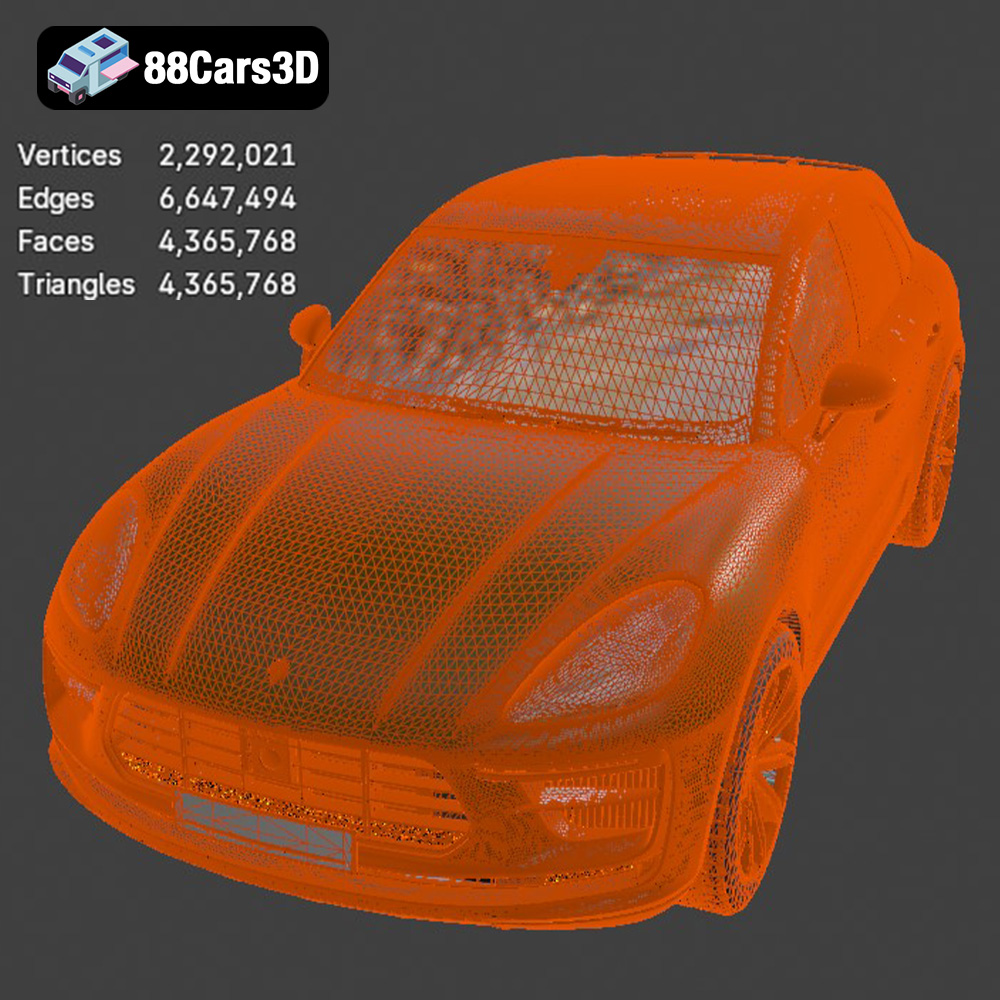
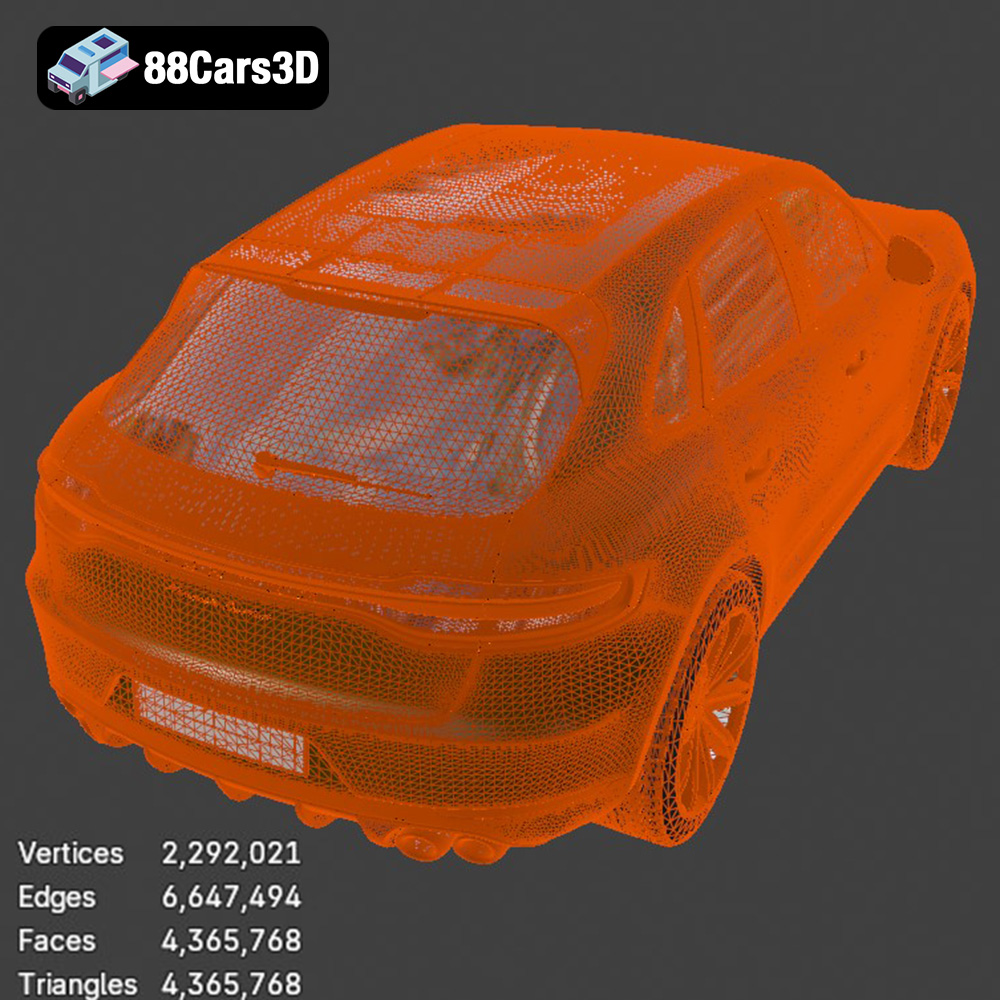
In game development, the challenge is two-fold: achieving visual fidelity while maintaining optimal performance. Game-ready 3D car models must strike a delicate balance between detail and polycount. The Porsche Macan Turbo model, with its 4,365,768 triangles, is a testament to this optimization. This polycount is substantial enough to capture intricate details like premium sport seats, an authentic GT sports steering wheel, and advanced digital instrument clusters for close-up shots and first-person perspectives, yet it remains manageable for real-time engines like Unreal and Unity. Effective UV mapping, material instancing, and proper pivot setups for animated components (like wheels, suspension, and steering) are critical for smooth integration and efficient rendering within the game engine. These technical considerations are pre-addressed in high-quality assets, saving developers countless hours of optimization work.
Augmented Reality (AR) and Virtual Reality (VR) push the boundaries of immersion, placing digital objects directly within or around our physical world. For an AR/VR experience to be convincing, the 3D models must be incredibly detailed and optimized for real-time rendering on potentially less powerful hardware (e.g., mobile devices). A high-fidelity model, like the Macan Turbo, allows for immersive virtual showrooms or configurators where users can walk around, inspect the vehicle from all angles, and even “sit” inside. The meticulous interior detailing, from detailed stitching on sport seats to the accurate center console with haptic buttons, becomes crucial for truly believable first-person experiences. Optimized geometry, efficient texture atlases, and carefully constructed PBR materials ensure that the model looks stunning without causing performance bottlenecks or motion sickness in AR/VR environments.
Choosing the right 3D model file format is as critical as selecting the model itself. Each format is designed with specific use cases, compatibilities, and technical advantages in mind. Understanding these distinctions is fundamental for any professional working with 3D car models, ensuring a smooth workflow and optimal results across various software platforms and applications. The Porsche Macan Turbo 3D model is notably versatile, being offered in a comprehensive array of formats, including .blend, .fbx, .obj, .glb, .stl, .ply, .unreal, and .max, catering to virtually every professional need.
The .blend format is the native file type for Blender, the popular open-source 3D creation suite. When you download a .blend file, you’re getting a fully editable Blender scene, complete with materials, textures, lighting, cameras, and even animations, all within a single package. This is ideal for artists who primarily work in Blender, offering maximum flexibility for customization, rigging, and rendering within their preferred environment. It ensures that all scene settings and relationships are preserved, making it perfect for delving deep into the model’s construction and making bespoke modifications, such as changing body colors or adjusting material finishes as offered by the Macan Turbo model.
.fbx (Filmbox) is arguably the most widely adopted proprietary file format for 3D data exchange, especially prevalent in game development (Unreal, Unity), animation, and visual effects pipelines. Developed by Autodesk, FBX supports geometry, materials, textures, animations, and rigs in a robust, interoperable package. It’s the go-to choice for transferring complex animated models between different software applications while maintaining as much fidelity as possible. For the Porsche Macan Turbo, an .fbx file would be ideal for import into Unreal Engine or Unity, preserving its separate wheels, suspension, and steering components for animation, making it truly “game-ready.”
The .obj (Wavefront OBJ) format is a universal, open-standard format primarily used for transferring 3D geometry data. It’s incredibly versatile due to its simplicity and wide support across virtually all 3D software. An .obj file stores vertex positions, UV coordinates, normals, and face information, often accompanied by an .mtl (Material Template Library) file for basic material definitions. While it doesn’t support animation or rigging as comprehensively as FBX, its cross-software compatibility makes it an excellent choice for static mesh exchange, especially when you need to bring a model into an unfamiliar application or simply need the core geometry for further processing.
.glb (GL Transmission Format Binary) is a modern, compact, and efficient format optimized for web, AR, and VR applications. It encapsulates a 3D model, its materials, textures, and animations into a single binary file, making it incredibly easy to load and render quickly in browser-based viewers, mobile AR experiences, and light-weight VR applications. Its focus on efficiency makes it perfect for sharing interactive 3D content online without extensive load times or complex setups, aligning perfectly with the AR/VR applications suggested for the Porsche Macan Turbo model.
The .stl (Stereolithography) format is the de facto standard for 3D printing. It represents a 3D model as a collection of unconnected triangles (facets) that define its surface geometry. STL files do not contain color or texture information; they are purely about the physical form. For hobbyists or professionals looking to bring the Porsche Macan Turbo into the physical realm, the .stl format is essential, allowing for the creation of display-scale models after setting parameters like layer height, infill, and supports, as detailed in the product description.
.ply (Polygon File Format) is another format for storing 3D data, often used in scientific and technical applications, particularly for scanned 3D data. It can store a wider range of properties than .obj, including color, transparency, and even properties per vertex or face, which can be useful for precision mesh analysis or more complex data visualization. While less common for general 3D car models, its inclusion indicates the model’s suitability for specialized engineering or CAD workflows.
The .unreal format signifies an asset specifically prepared and packaged for the Unreal Engine ecosystem. This often means the model has already been imported, optimized, and set up within Unreal Engine itself, potentially including blueprints, material instances, and collision meshes. This provides a plug-and-play experience for developers, drastically reducing the setup time required to get the Porsche Macan Turbo running smoothly in an Unreal-powered game or simulation.
Finally, the .max format is the native file type for Autodesk 3ds Max, a leading 3D modeling, animation, and rendering software. Similar to .blend, a .max file provides a fully editable project scene, preserving all aspects of the model’s construction, including modifiers, animation keys, specific render settings (like V-Ray or Corona setups), and intricate material networks. This is invaluable for professionals whose primary workflow revolves around 3ds Max, offering the most comprehensive access for advanced animation, complex scene integration, and high-fidelity rendering projects.
Bringing a 3D car model to life in a static render requires a deep understanding of lighting, materials, and composition. A premium asset like the Porsche Macan Turbo from 88cars3d.com provides the ideal starting point, offering the technical foundation needed to produce stunning photorealistic results. The goal is to create imagery that evokes emotion and communicates the vehicle’s essence, whether for marketing campaigns or design showcases.
For professional automotive rendering, 3ds Max combined with renderers like V-Ray or Corona is a common choice. The process begins by importing the .max or .fbx version of the Porsche Macan Turbo into the scene. A standard studio setup often involves a curved backdrop (cyclorama) and a combination of area lights, dome lights (for image-based lighting, IBL), and sometimes spot lights to emphasize specific features. Using HDRI (High Dynamic Range Image) maps for the dome light is crucial for realistic reflections and global illumination, mimicking real-world studio or outdoor environments. The model’s real-world scale accuracy is vital here, ensuring that lights and cameras interact appropriately, preventing disproportionate reflections or incorrect depth of field.
The detailed geometry of the Macan Turbo is only half the story; its materials complete the illusion of realism. Modern rendering relies heavily on Physically Based Rendering (PBR) workflows. This means defining materials based on real-world physical properties like roughness, metallicness, albedo (base color), and normal maps. For the Macan Turbo, this would involve crafting complex car paint shaders with multiple layers (base coat, metallic flakes, clear coat), realistic tire rubber with subtle displacement, chromed accents, and intricate interior materials like leather, fabric, and digital screen textures. The ability to customize body colors, adjust material finishes (matte, gloss, metallic), and modify tire textures (off-road vs. street variants) directly impacts the versatility of the PBR setup, allowing for diverse visual narratives.
Achieving photorealism extends beyond basic studio lighting. Advanced techniques include employing light linking (to illuminate specific parts without affecting others), using gobos for intricate shadow patterns, and volumetric lighting to create atmospheric effects like haze or fog. For automotive renders, particular attention is paid to reflections – ensuring they are sharp, clean, and reflect an appropriate environment. Integrating the model into a backplate (a photograph of a real-world environment) and matching the lighting and perspective is another advanced technique, often referred to as “backplate integration” or “HDRi matching,” where the 3D car looks seamlessly placed within a real photograph. The high fidelity of the Porsche Macan Turbo model allows these subtle lighting interactions to fully develop, resulting in breathtakingly realistic images.
For game developers, integrating a detailed 3D car model like the Porsche Macan Turbo requires a systematic approach to ensure both visual quality and optimal performance within the demanding real-time environment of a game engine. This involves more than just importing a file; it’s about preparing the asset for dynamic gameplay, physics, and animation.
When bringing the Macan Turbo into Unreal Engine, the `.fbx` or the dedicated `.unreal` format is the preferred choice. While the model boasts a high polycount of 4,365,768 triangles for stunning detail, careful optimization steps are still essential. This might involve creating Level of Detail (LOD) meshes for distant views to reduce the rendering burden, or using material instancing to efficiently manage variations in colors and finishes. Setting up the PBR materials in Unreal’s material editor, utilizing texture maps for albedo, normal, roughness, metallic, and ambient occlusion, will ensure the car reacts realistically to the game world’s lighting. Proper UV mapping is critical here, allowing for texture streaming and avoiding visual artifacts.
A static car model is not enough for a game. The Porsche Macan Turbo model is specifically engineered with “separate wheels, suspension, and steering components for animation.” This is a crucial feature. In Unreal Engine, this means importing the model as a skeletal mesh or a collection of static meshes parented correctly within a Blueprint. Rigging the wheels to rotate based on speed, connecting the steering wheel to the front wheels’ turning, and implementing dynamic suspension travel based on terrain or vehicle physics are all vital. Proper pivot setup, mentioned in the product’s technical specifications, dramatically simplifies this rigging process, ensuring that rotations and translations occur around the correct points, leading to believable in-game vehicle dynamics.
Beyond visual animation, a game-ready vehicle requires robust collision detection and physics simulation. Simple box collisions are often sufficient for basic interactions, but for a high-fidelity asset like the Macan Turbo, more complex convex hull collision meshes are often generated (either automatically by the engine or manually by the artist) to accurately represent the vehicle’s shape during impacts. Integrating a car into a physics system (like Unreal’s Chaos Vehicle system) involves setting up wheel colliders, suspension parameters, engine torque curves, and braking forces. The accurate real-world scale of the model ensures that these physics parameters translate correctly, contributing to a realistic driving experience in open-world games, racing titles, and simulators where the Macan Turbo would truly excel.
The versatility of high-quality 3D car models extends far beyond traditional screens, opening doors to interactive experiences in augmented and virtual reality, and even tangible physical objects through 3D printing. The Porsche Macan Turbo 3D model, with its comprehensive file format support, is perfectly positioned for these emerging and established applications.
For AR/VR, particularly on mobile devices or web browsers, efficiency and immediate accessibility are key. The `.glb` format, included with the Macan Turbo model, is ideal for these applications. It’s a single, self-contained file optimized for quick loading and rendering, making it perfect for virtual showrooms, interactive configurators, or even mobile AR experiences where the Macan Turbo can appear on your driveway. Alongside GLB, Apple’s USDZ format (a compressed, zero-footprint package for USD assets) is another prominent player in mobile AR. While not explicitly listed as an included format, a high-quality FBX or OBJ model can typically be converted to USDZ with relative ease, enabling seamless integration into iOS AR Quick Look and similar platforms. The optimized geometry and detailed interior are crucial for these experiences, as users often view the model from every angle, even stepping inside virtually.
The inclusion of the `.stl` format with the Porsche Macan Turbo model signifies its readiness for 3D printing, a fascinating application that bridges the digital and physical worlds. Hobbyists and enthusiasts can transform the digital model into a tangible collectible or display piece. The product description provides excellent 3D print settings: recommended scales (1:12 / 1:18 / 1:24), layer height (0.04–0.12 mm for resin printing), wall thickness, infill, and crucial advice on supports and print orientation. Printing the frame angled for structural integrity and wheels separately are expert tips that ensure a successful and high-quality physical output. While an STL model doesn’t carry color or texture, the intricate geometry itself is faithfully reproduced.
Once printed, the physical Porsche Macan Turbo model enters a new phase of customization: post-processing. This typically involves sanding to smooth layer lines, applying primer to create a uniform surface, and then painting. To achieve an authentic look, hobbyists can use automotive-grade paints, metallic finishes, and clear coats, replicating factory colors or exploring custom finishes. This hands-on process allows for a unique level of personal connection with the digital asset, transforming it into a bespoke physical artifact. The detailed components, like the quad exhaust system or intricate alloy wheels, translate well, allowing for fine painting details that mimic the real vehicle.
In the competitive world of 3D content creation, access to reliable, high-quality assets is a significant advantage. 88cars3d.com positions itself as a premier marketplace for such resources, offering meticulously crafted 3D car models that cater to a wide spectrum of professional needs. The Porsche Macan Turbo 3D model is a prime example of the caliber of products available, designed to empower artists and developers to achieve their creative visions without compromising on technical excellence.
What sets 88cars3d.com apart is its commitment to curated quality. Each model, including the Macan Turbo, undergoes rigorous development to ensure accurate geometry, optimal topology, and robust technical specifications. The 4,365,768 triangles of the Macan Turbo strike that perfect balance for real-time engines while retaining high-end visual realism. Details such as real-world scale accuracy, proper pivot setups for animation, and comprehensive file format support (blend, fbx, obj, glb, stl, ply, unreal, max) are hallmarks of professional-grade assets. This attention to detail means less time spent on clean-up and optimization, and more time focused on creative output.
The diverse range of included file formats for the Porsche Macan Turbo ensures seamless integration into virtually any professional workflow. Whether you’re working in 3ds Max for cinematic rendering, Blender for artistic freedom, Unreal Engine for game development, or need an STL for 3D printing, 88cars3d.com provides the right format. This multi-format availability is crucial for studios and freelancers working across different software ecosystems, eliminating compatibility headaches and streamlining the asset pipeline. It ensures that the investment in a premium 3D car model pays dividends across all your projects.
Ultimately, a high-quality 3D car model like the Porsche Macan Turbo from 88cars3d.com is more than just a digital file; it’s a gateway to endless creative possibilities. It enables game developers to build immersive racing experiences, allows architectural visualizers to populate scenes with realistic vehicles, empowers AR/VR creators to develop interactive configurators, and provides automotive designers with powerful tools for conceptualization and presentation. By providing a solid, technically sound foundation, 88cars3d.com allows creators to push boundaries and deliver stunning results that resonate with their audience.
The journey from concept to compelling digital visualization, immersive game, or tangible 3D print relies heavily on the quality of your foundational assets. As we’ve explored, a truly professional 3D car model must excel in both artistic detail and technical robustness. The Porsche Macan Turbo 3D Model stands as an exemplary product, embodying the meticulous craftsmanship and technical foresight required for modern digital workflows.
With its exceptional topology, accurate real-world scale, detailed interior and exterior features, and comprehensive range of included file formats, this model is a versatile powerhouse. Whether you’re aiming for photorealistic renders in 3ds Max, optimized game assets for Unreal Engine, engaging AR/VR experiences via GLB, or a detailed physical replica through 3D printing, the Macan Turbo is engineered to meet and exceed professional expectations. Investing in such high-fidelity 3D car models from trusted sources like 88cars3d.com is not just about acquiring an asset; it’s about investing in efficiency, quality, and the boundless potential of your creative projects. Elevate your next automotive endeavor by starting with the very best.
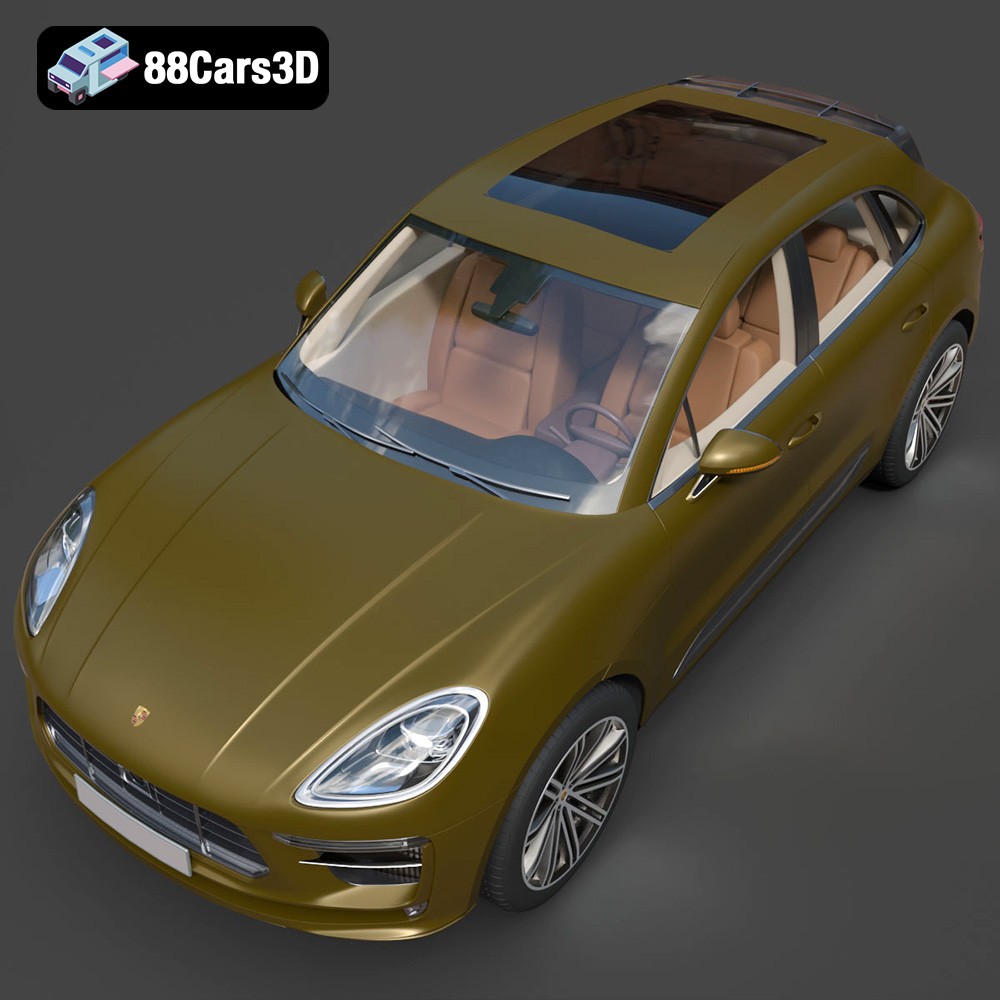
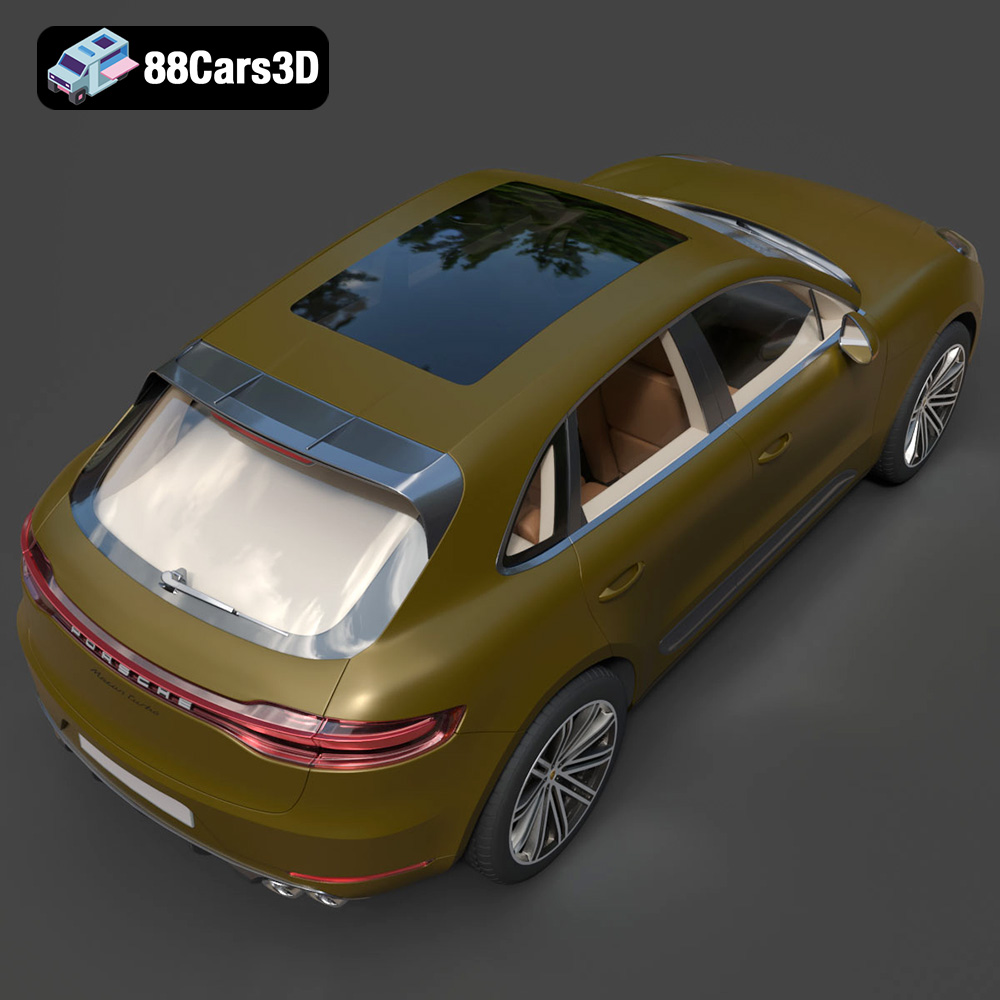
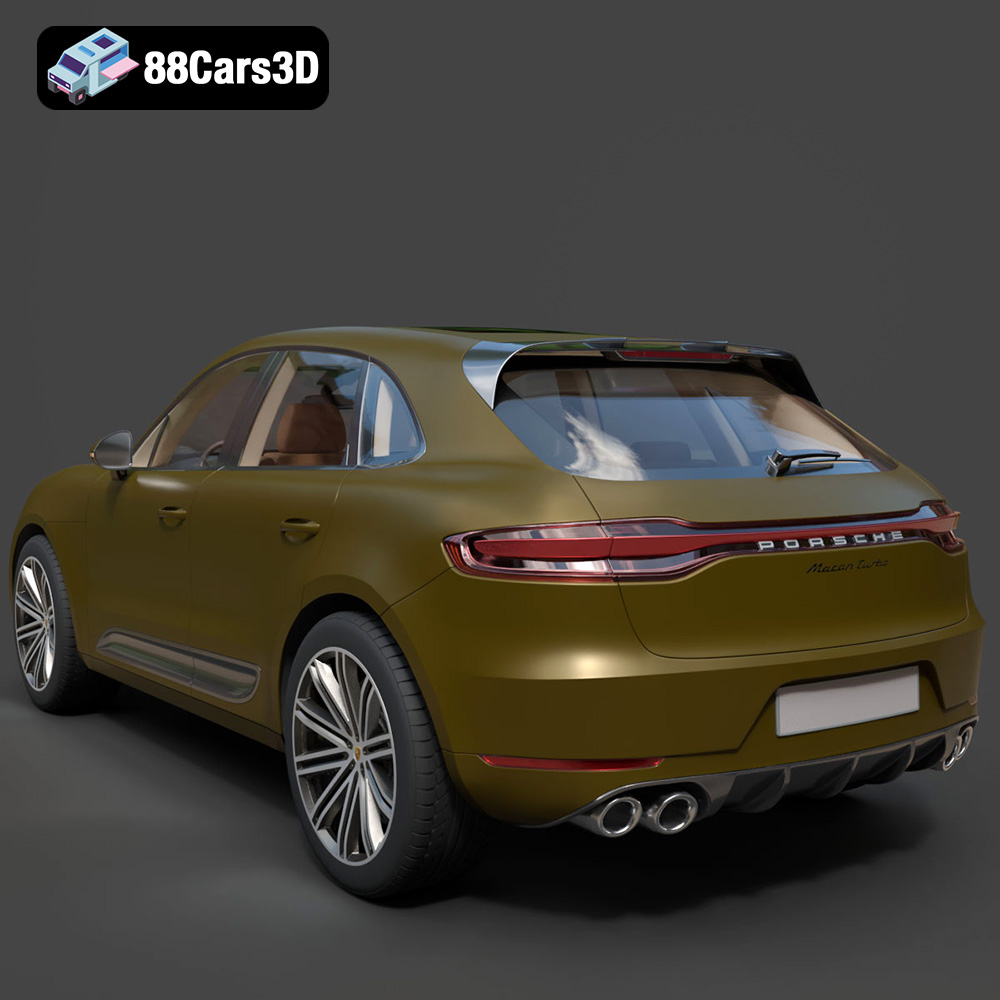
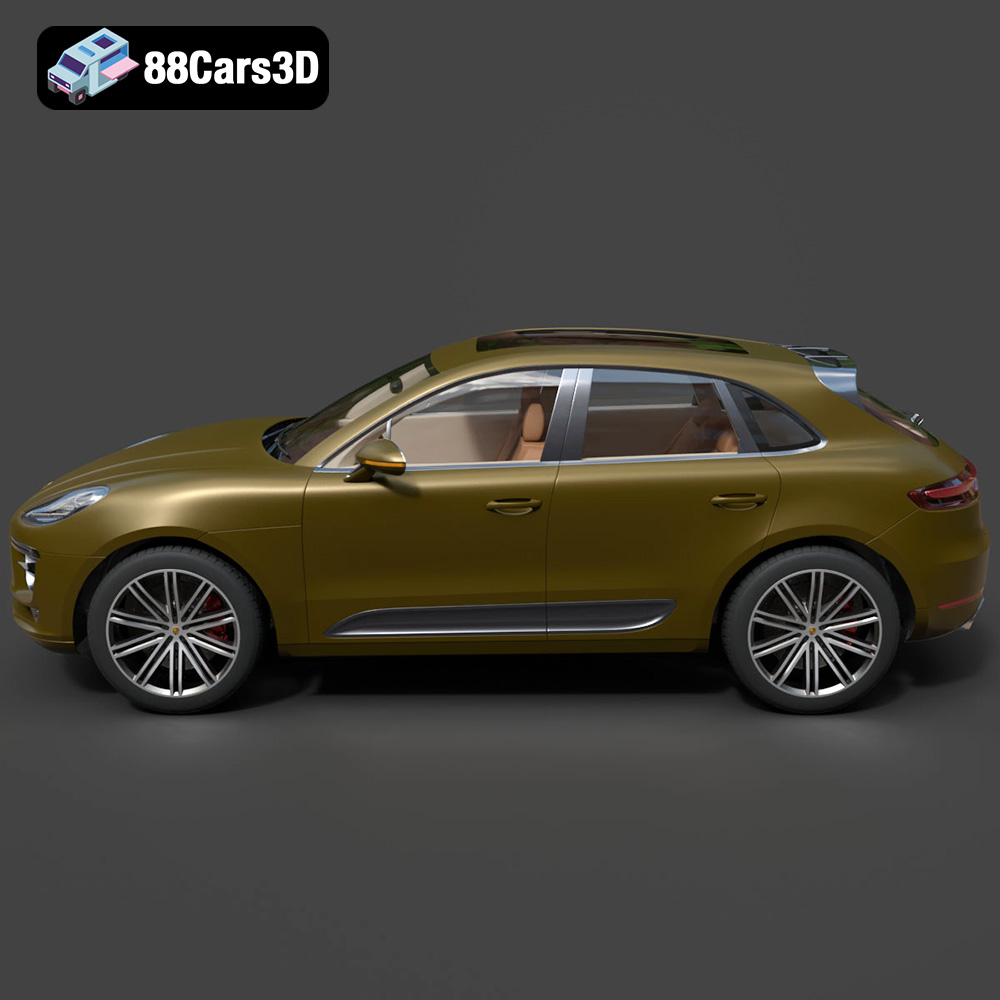
Experience the thrill of high-performance luxury with this stunning 3D model of the Porsche Macan Turbo. Known for bridging the gap between a versatile compact SUV and a true sports car, the Macan Turbo boasts iconic Porsche styling cues, an aggressive front fascia, and a muscular stance. This model perfectly captures its aerodynamic exterior, signature quad exhaust system, and distinctive LED light signature that defines modern Porsche design. Engineered with an exceptional topology of 4,365,768 triangles, this 3D model delivers unparalleled visual fidelity while remaining optimized for high-end digital environments. Every curve, panel gap, and interior detail has been meticulously crafted to provide maximum realism. It is fully prepped for advanced game development, automotive configurators, immersive AR/VR experiences, and cinematic visualization.
$90.00
.blend
.fbx
.glb
.luxury suv
.max
.obj
.ply
.porsche
.rendering
.stl
.unreal
car-3d-model
game asset
game-ready
macan-turbo
optimized
porsche-macan
SUV
VR/AR