Get 20% OFF All Premium 3D & STL Models!

In the expansive and ever-evolving landscape of 3D visualization, the demand for highly detailed, accurately rendered assets is insatiable. From photorealistic architectural walkthroughs and immersive virtual reality training simulations to dynamic game environments and compelling marketing materials, the foundation of any successful project lies in its digital components. This holds especially true for specialized assets like heavy machinery, where precision, functionality, and visual authenticity are paramount. Imagine a sprawling construction site in an upcoming game, or a critical infrastructure project visualized for stakeholders – without convincing, true-to-life equipment, the illusion quickly breaks.
Today, we delve deep into the technical intricacies and boundless applications of such an asset: the Road Roller Vibratory Tandem 3D Model. This isn’t just any digital object; it’s a meticulously crafted representation designed to seamlessly integrate into diverse professional pipelines. Whether you’re a game developer seeking realistic vehicles for your virtual worlds, an architect visualizing a new urban development, or an engineer crafting a training simulation, understanding the nuances of a high-quality 3D asset like this road roller is key to unlocking new levels of realism and efficiency in your projects. At 88cars3d.com, assets like these are developed with a focus on both visual fidelity and technical optimization, ensuring they meet the rigorous demands of modern 3D production.
The flexibility and utility of any 3D model are largely determined by the file formats it supports. Each format is a digital container, optimized for specific purposes, software compatibility, and data types. For a professional-grade asset like the Road Roller Vibratory Tandem 3D Model, a comprehensive suite of formats ensures maximum versatility across various industries and workflows. Understanding these formats is crucial for any 3D artist, game developer, or visualization specialist.
The .blend format is Blender’s native file type. It’s an all-encompassing package, storing not just the mesh data, but also materials, textures, lighting, cameras, animations, rigging, and even scene settings. For users deeply integrated into the Blender ecosystem, a .blend file offers unparalleled editability and flexibility. It allows artists to dive directly into the model’s construction, modify its topology, adjust its materials with Blender’s powerful node editor, or even re-rig components for custom animations. For the Road Roller model, this means access to the original project file, enabling detailed customization and iteration without losing any source data.
.fbx (Filmbox) is arguably the most widely adopted interchange format in the 3D industry, particularly favored for game development and real-time pipelines like Unreal Engine and Unity. Developed by Autodesk, FBX excels at preserving a broad range of data, including geometry, materials, textures, animations, and skeletal deformation, across different software platforms. Its robustness and widespread support make it ideal for transferring animated 3D car models or heavy machinery from a modeling package to an engine, ensuring that all crucial elements of the Road Roller’s articulated chassis and rotating drums are retained during export and import.
The .obj (Wavefront Object) format is a venerable and highly compatible format primarily focused on storing geometry data (vertices, normals, UVs, faces). While it’s excellent for mesh transfer across virtually any 3D software, it typically handles materials and textures through separate accompanying files (like .mtl for material definitions). OBJ files are renowned for their simplicity and universality, making them a safe bet when cross-software compatibility is the absolute priority. For the Road Roller, the OBJ version provides a clean geometric base that can be easily imported into any application for fresh material assignments and rendering.
.glb (GL Transmission Format Binary) is a relatively newer format gaining significant traction, especially in augmented reality (AR), virtual reality (VR), and browser-based 3D applications. It’s essentially a self-contained, binary version of glTF, bundling all necessary assets – geometry, materials, textures, animations – into a single file. This optimization makes GLB files incredibly efficient for rapid loading and display in real-time web viewers, mobile AR apps, and VR experiences, making the Road Roller model an excellent candidate for interactive product showcases or mobile training simulations.
.stl (Stereolithography) is the dominant file format for 3D printing. It describes only the surface geometry of a 3D object as a collection of unconnected triangles, without any color, texture, or material information. While simplistic, its universality in additive manufacturing means that the Road Roller model can be easily prepared for physical fabrication, allowing hobbyists and professionals to create tangible scale models or prototypes. The provided Road Roller model explicitly supports this, even offering recommended print settings.
.ply (Polygon File Format) is another format for storing 3D data, particularly useful for scanned data, CAD applications, and scientific visualization. It can store various properties beyond just geometry, such as color, transparency, and normal vectors per vertex or face. While not as universally used for game assets as FBX, PLY offers a precise and detailed mesh format suitable for certain engineering or analytical workflows where the Road Roller’s robust structure might be subjected to simulations or detailed analysis.
The .unreal format signifies an asset specifically optimized and often pre-configured for direct use within the Unreal Engine. This often implies proper scaling, collision setups, and sometimes even basic material assignments tailored for Unreal’s PBR (Physically Based Rendering) system. An Unreal-ready asset like the Road Roller Vibratory Tandem saves considerable development time, allowing artists and designers to drop the heavy machinery directly into their scene and focus on scene building rather than asset preparation.
Like .blend for Blender, .max is the native file format for Autodesk 3ds Max. It stores a complete 3ds Max scene, including geometry, materials, textures, lighting, camera setups, and animation data. For professionals operating within the 3ds Max ecosystem, the .max file provides the highest degree of editability and allows for leveraging Max’s powerful modeling, rigging, animation, and rendering capabilities. This means full control over the Road Roller model’s components, making it ideal for high-end rendering projects, custom animations, or integration into existing 3ds Max workflows for complex visualizations.
The availability of the Road Roller Vibratory Tandem in such a comprehensive array of formats from 88cars3d.com underscores its design as a truly versatile and professional asset, ready for any challenge across the digital spectrum.
Creating a 3D model that genuinely captures the essence of heavy construction machinery is a delicate balance of artistic skill and technical precision. It’s not enough to simply replicate the form; one must also convey the function, the texture of its materials, and the robust engineering behind it. The Road Roller Vibratory Tandem 3D Model exemplifies this philosophy, showcasing how careful attention to detail can transform a digital asset into a convincing component of any virtual scene.
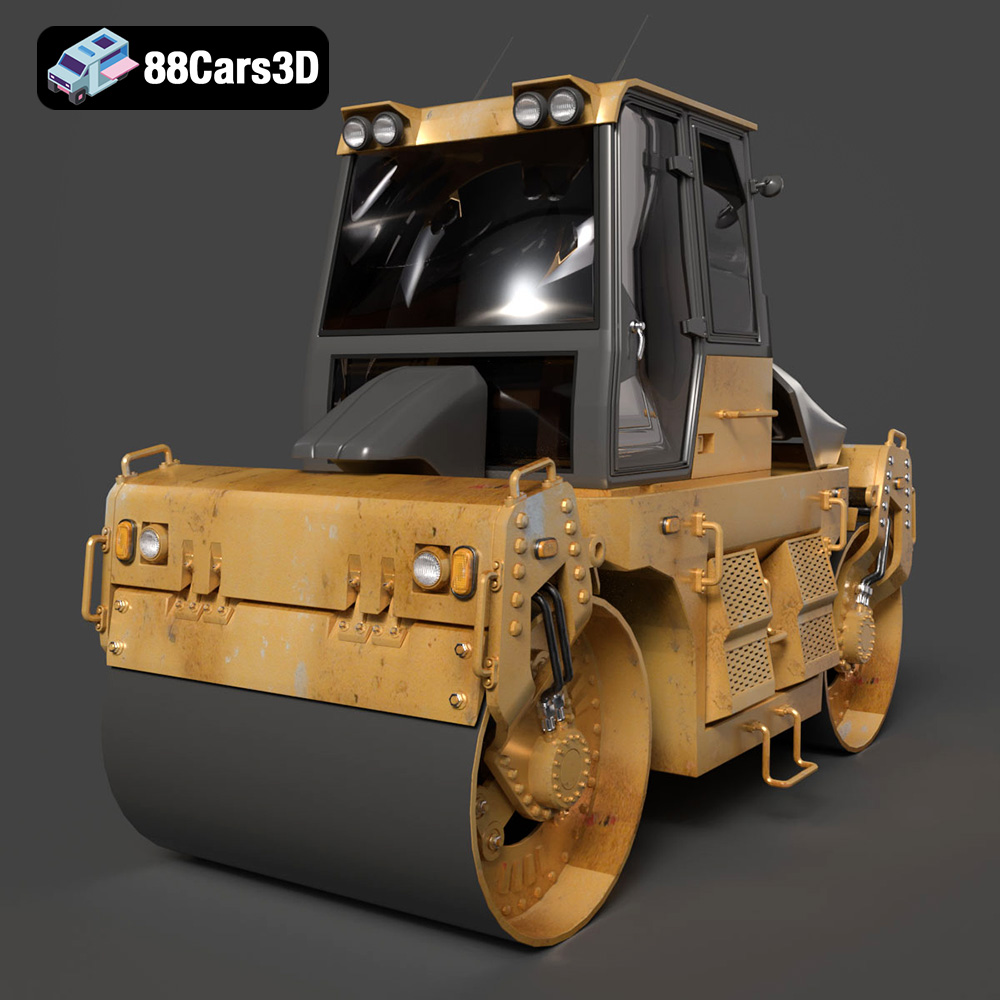
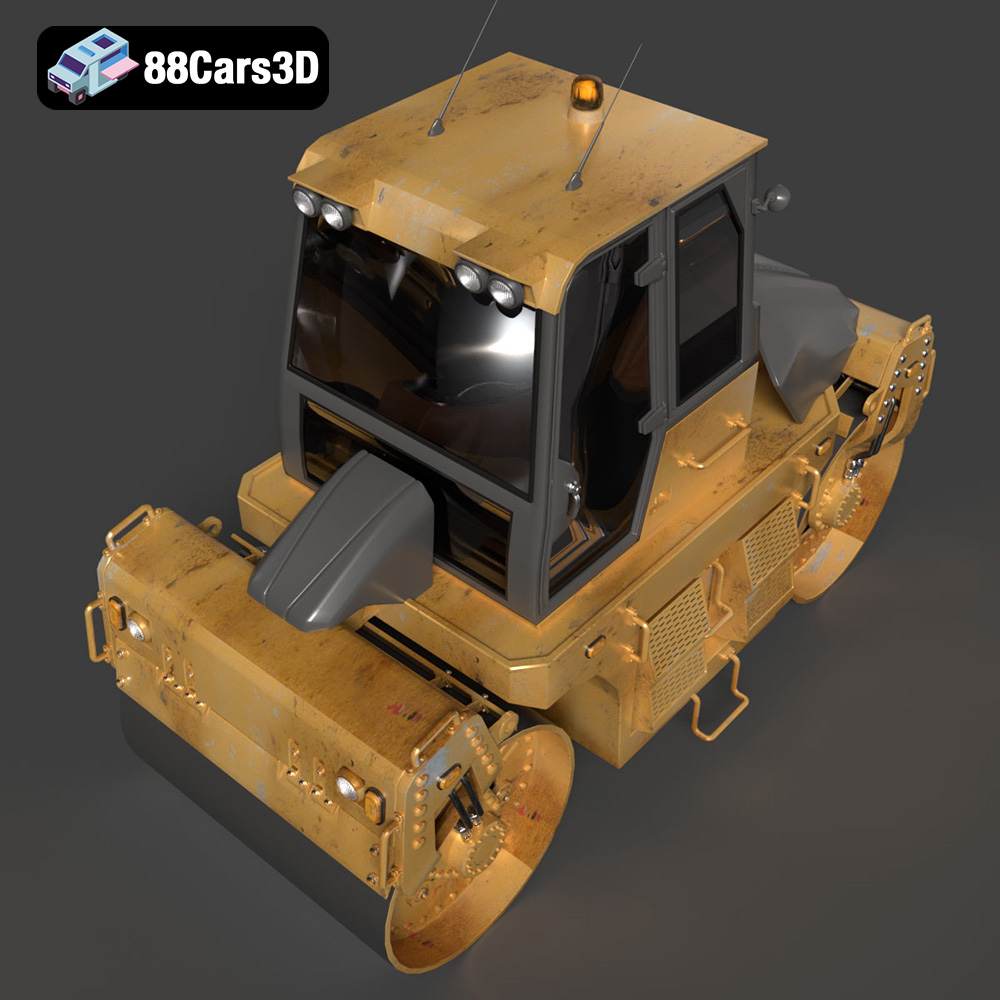
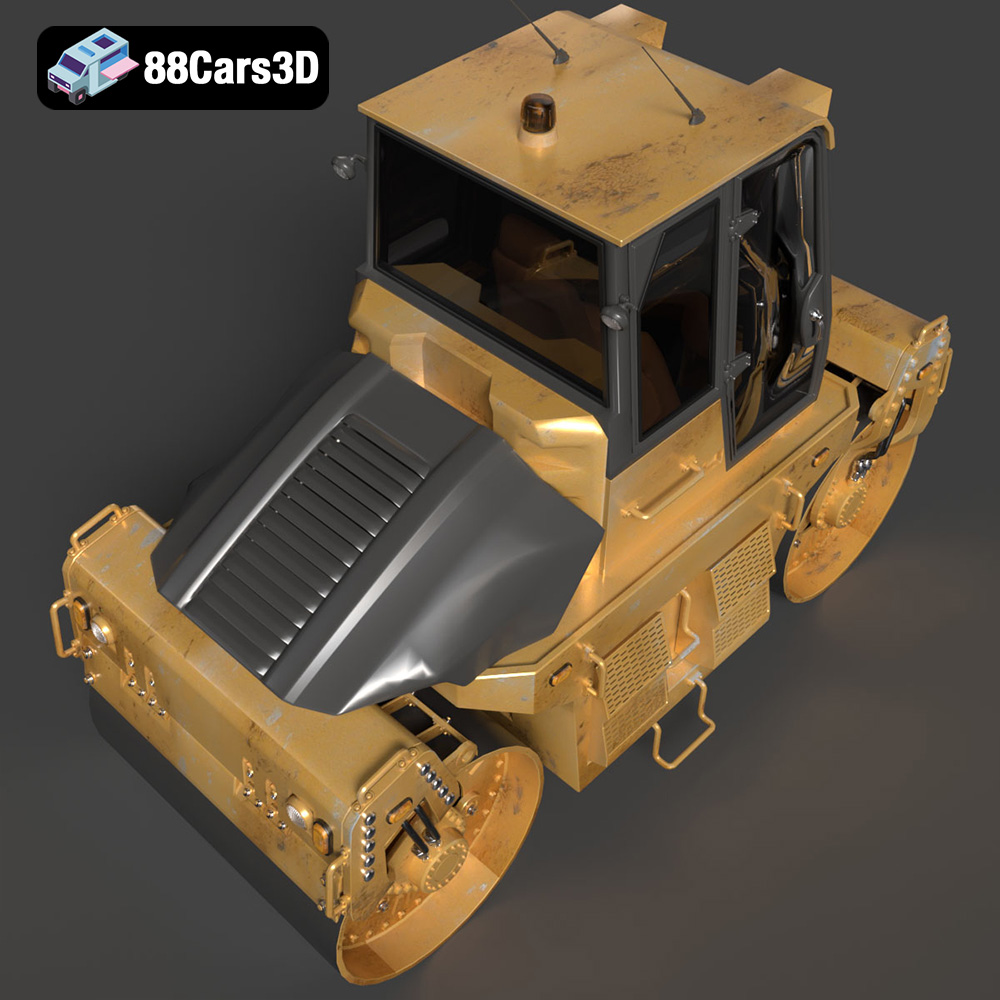
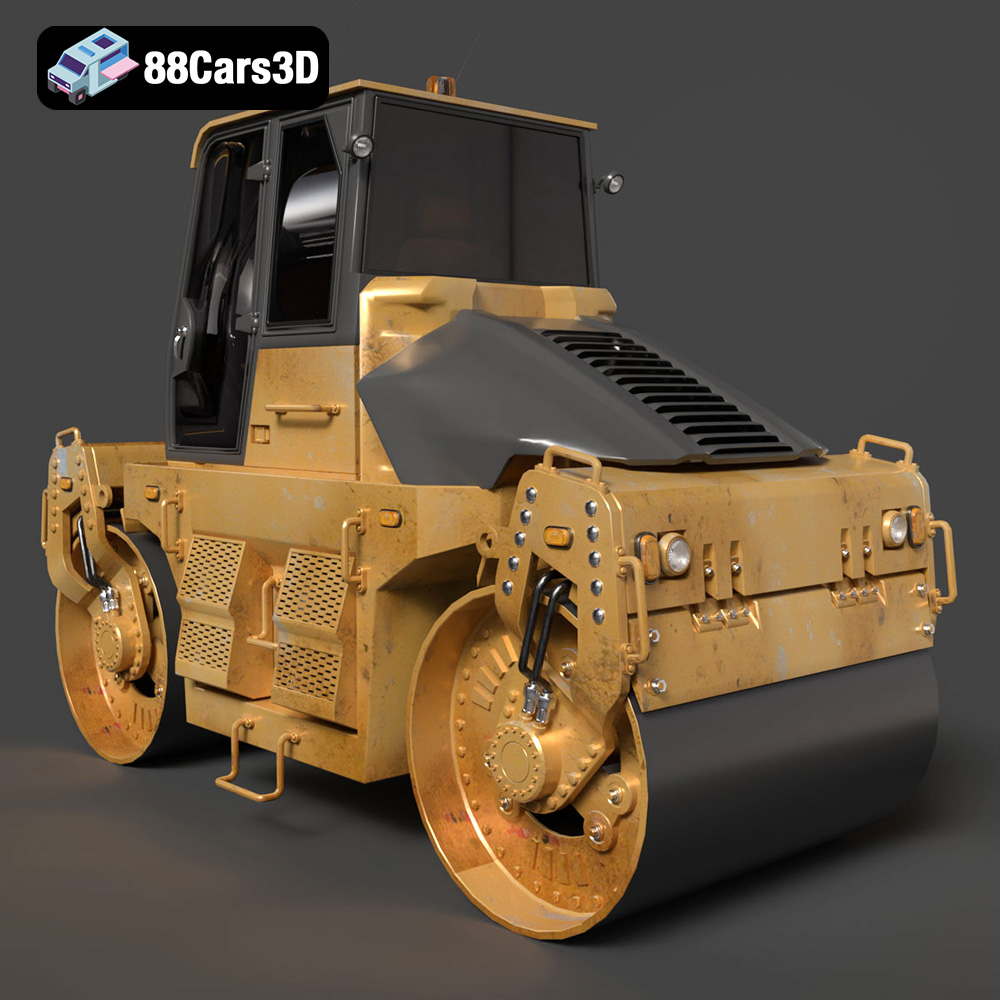
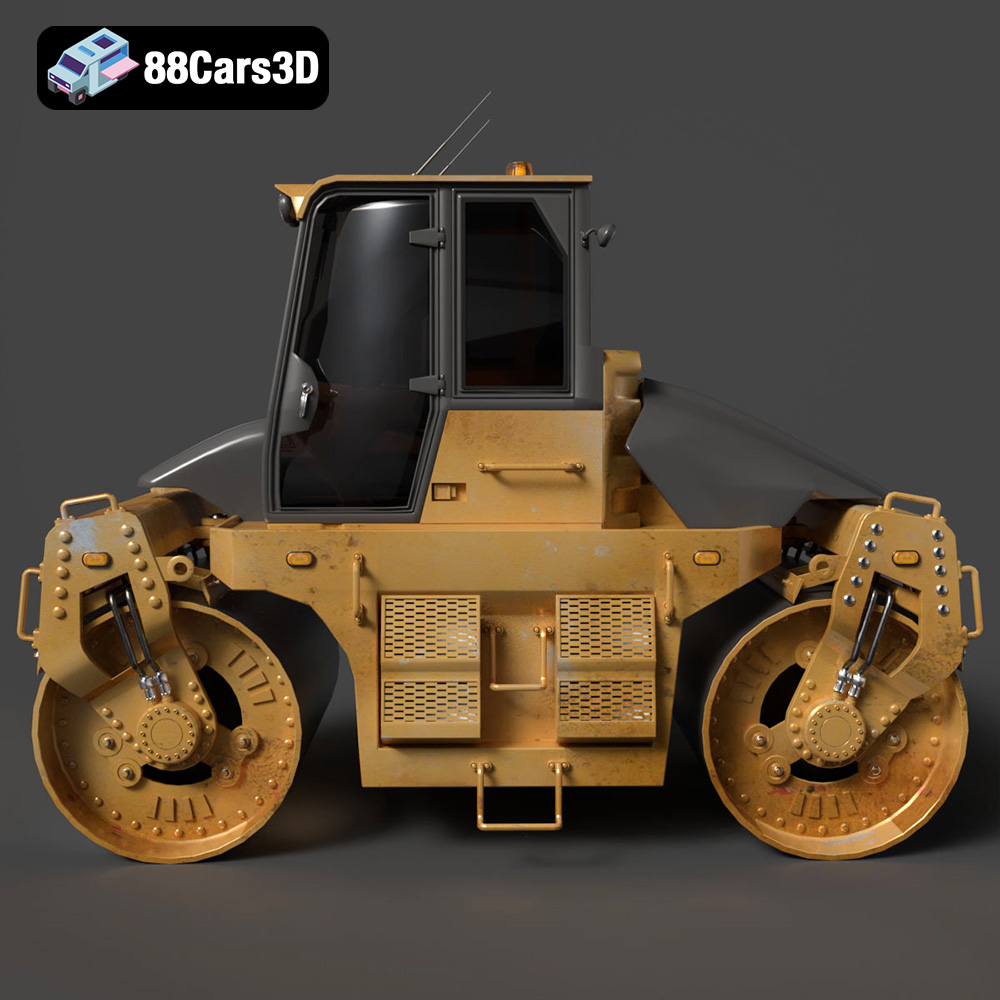
The foundation of any realistic model is accurate proportions and geometry. This road roller model meticulously recreates the distinctive industrial styling and robust double steel drums that define its real-world counterpart. Every aspect, from the heavy-duty diesel engine housing and its ventilation grilles to the intricate scraper mechanisms on the drums, is faithfully represented. This level of accuracy is critical for applications where believability is paramount, whether it’s an architectural visualization depicting a new road or an immersive VR training simulation for operators.
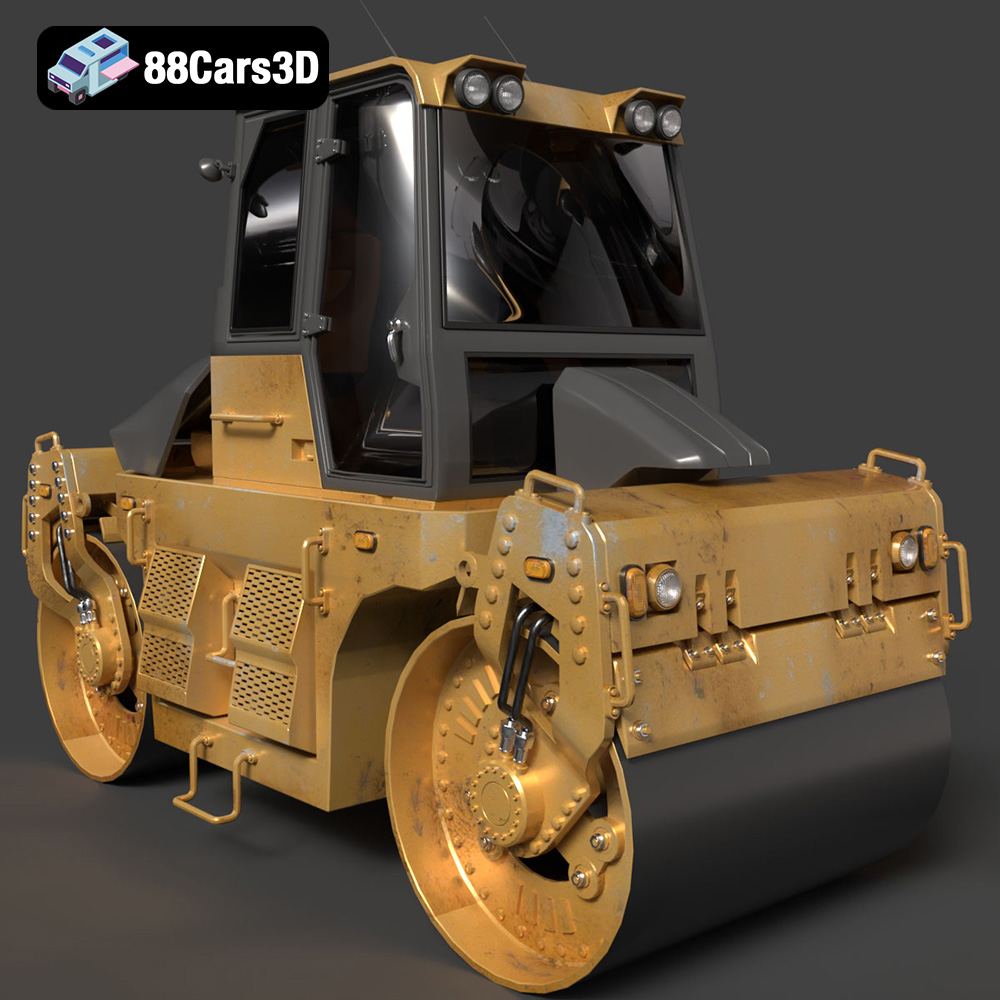
Beyond static appearance, the model’s design considers its functionality. The articulated center steering joint, complete with hydraulic cylinder details, is not merely ornamental; it’s designed with proper pivot setup, making the model animation-ready. This means components like the drums, articulation joints, and steering mechanisms are separated, allowing for realistic movement and interaction. For game developers or animators, this ‘out-of-the-box’ animation readiness is a significant time-saver, streamlining the process of bringing the heavy machinery to life within a virtual environment.
A high-quality 3D asset, especially one as specialized as a Road Roller Vibratory Tandem, finds its utility across a surprisingly broad spectrum of industries. Its inherent detail and optimization make it a versatile tool for various digital endeavors, extending its reach far beyond mere architectural rendering.
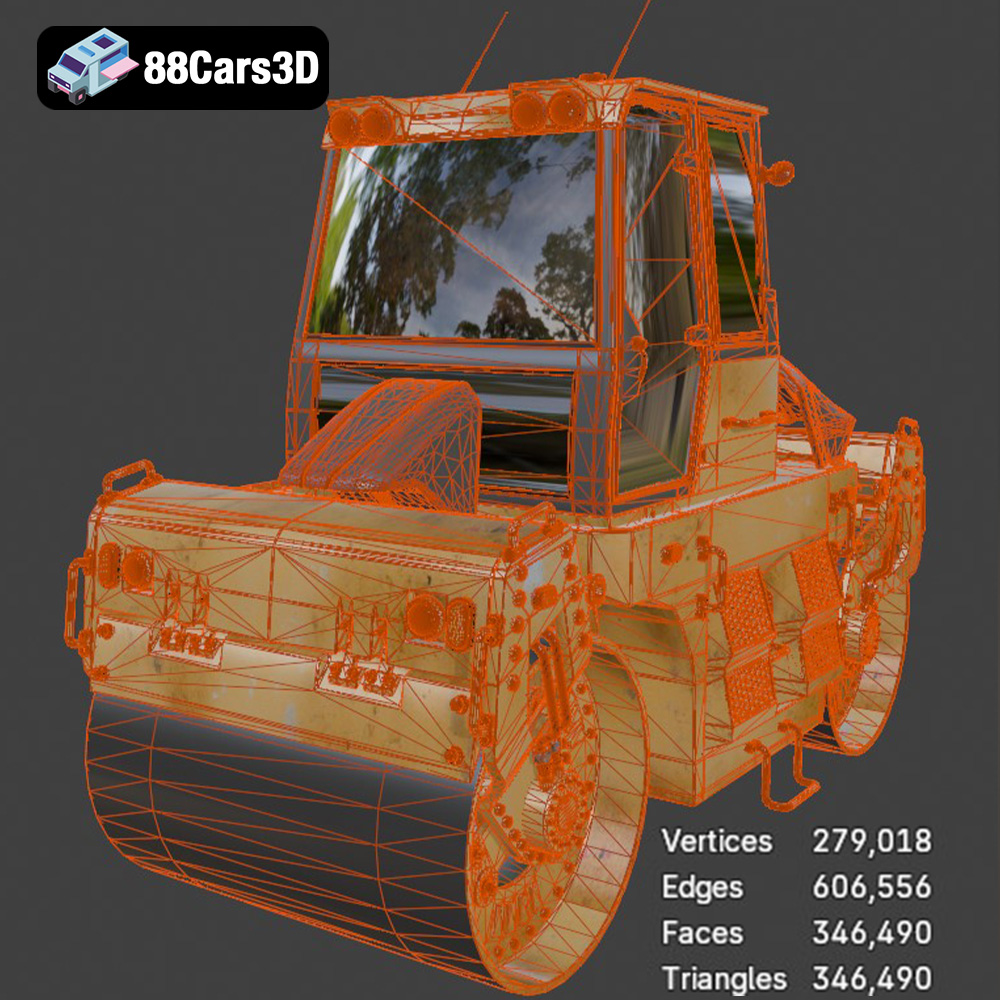
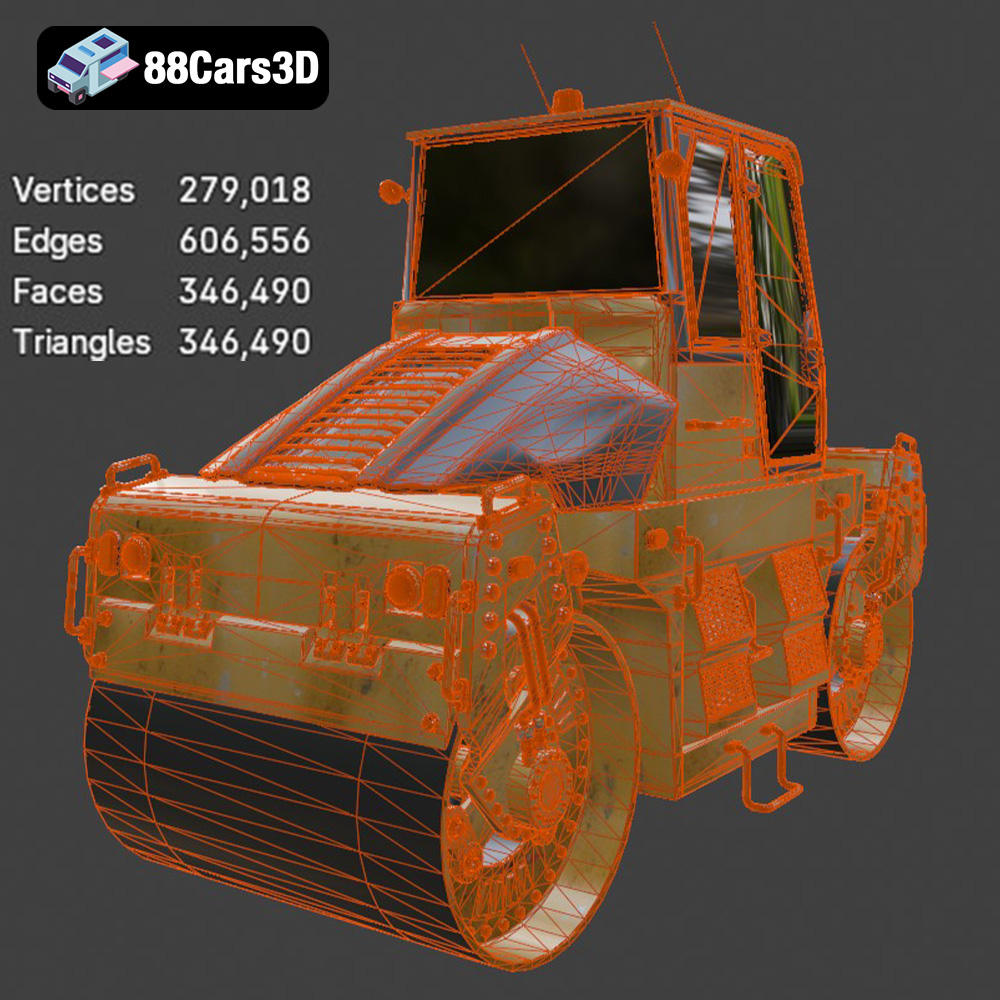
For game developers, the Road Roller Vibratory Tandem is an invaluable “game asset.” With an optimized topology of exactly 346,490 triangles, it strikes a perfect balance between high-end visual realism and efficient performance in real-time engines like Unreal and Unity. This makes it ideal for open-world games, construction simulators, or city-building titles where players might operate, interact with, or simply observe heavy machinery. Its detailed cockpit and interior features, including an ergonomic operator seat, industrial gauges, and control levers, offer an immersive first-person POV, crucial for realistic simulator experiences.
The world of Augmented and Virtual Reality thrives on realistic assets. This road roller model is perfect for immersive virtual training scenarios, allowing aspiring operators to familiarize themselves with complex machinery in a safe, controlled digital environment. Beyond training, it can be used in AR applications for on-site visualization, safety configurators, or even mobile AR experiences, allowing users to “place” the heavy machinery in their real-world space. Its optimized geometry and the availability of formats like .glb are perfectly suited for these demanding real-time applications.
Architects, urban planners, and industrial designers frequently require realistic context for their projects. Integrating a high-fidelity 3D car model, even a construction vehicle, into an architectural render of a new road, a large-scale infrastructure project, or an industrial park, adds an unparalleled layer of realism. The model’s precise geometry and realistic material separation make it an excellent choice for studio lighting setups and cinematic renders, helping to tell a more compelling visual story about development and progress.
The availability of the Road Roller Vibratory Tandem 3D model in .stl format opens up possibilities for physical creation. Hobbyists and diorama creators can leverage the detailed geometry to print display-scale replicas. With recommended print settings provided—such as scale (1:24, 1:35, 1:50), layer height, and support requirements—even complex parts like the cabin frame and articulation joints can be accurately reproduced. This blend of digital and physical creation further expands the model’s utility for both personal projects and professional prototyping.
In the realm of 3D, “high quality” doesn’t just mean visual appeal; it also implies technical efficiency and adherence to industry best practices. The Road Roller Vibratory Tandem 3D Model demonstrates a clear understanding of these principles, offering a robust asset that is both visually rich and performant.
A critical technical specification for any 3D asset is its polygon count, specifically its triangle count. The Road Roller Vibratory Tandem model features an optimized topology with exactly 346,490 triangles. This figure is not arbitrary; it represents a carefully considered balance. For game-ready assets, excessively high polycounts can cripple real-time performance, while too few triangles can result in a blocky, unrealistic appearance. This model’s count delivers remarkable visual fidelity, allowing for intricate details on the engine housing, drums, and cabin, while remaining efficient enough for demanding real-time applications in game engines and AR/VR experiences. This strategic polycount ensures the model loads quickly and renders smoothly, even in complex scenes.
Accuracy extends beyond visual appearance to the underlying data. The model boasts real-world scale accuracy, based on actual vehicle chassis dimensions. This is crucial for applications like architectural visualization, vehicle simulators, and even some game genres where environmental interaction and proportional correctness are vital. Furthermore, a significant advantage for animators and game developers is the “proper pivot setup.” Components like the steering articulation, drum rotation, and other mechanical movements have their pivot points correctly defined. This streamlines the animation process, allowing for realistic rotation and transformation without complex manual adjustments, directly contributing to more believable simulations and animations of this heavy machinery.
While not explicitly listed in the polycount details, the phrase “realistic material separation” implies thoughtful UV mapping and material application. Proper UVs are essential for applying high-resolution textures without distortion, and for allowing customization options like changing body colors or adding weathering effects. For a game-ready asset, multiple material IDs or well-organized UV sets allow for efficient texture atlasing and PBR material setup within game engines, ensuring that different parts of the road roller—metal, plastic, glass, rubber—respond correctly to light and shadows.
The true test of a professional 3D asset lies in how easily and effectively it can be integrated into diverse production pipelines. The Road Roller Vibratory Tandem 3D Model, with its comprehensive file format support and optimized structure, is designed for a seamless experience across major 3D software and real-time engines.
For users of Autodesk 3ds Max, the inclusion of the native .max file format is a significant advantage. This allows artists to open the original project file, granting full access to the model’s hierarchy, modifiers, and potentially even lighting setups. In a 3ds Max workflow, the Road Roller can be effortlessly integrated into complex architectural visualizations, animated for cinematic sequences, or used for high-resolution product rendering. Artists can easily customize materials using V-Ray or Corona renders, apply custom rigging for complex hydraulic movements, or even use Max’s powerful PFlow system to simulate dust and debris effects during compaction operations.
The .blend file for Blender users offers a similar level of flexibility. Blender artists can leverage the robust modeling tools to further refine or modify the heavy machinery, adapt its textures using Cycles or Eevee, or create custom animations. Blender’s comprehensive rigging tools make it straightforward to create advanced control setups for the articulated steering and drum rotation, enabling nuanced and realistic animation for game cinematics or product demonstrations. The open-source nature of Blender, combined with this high-quality asset, provides an incredibly powerful toolkit for independent artists and studios alike.
For game developers and real-time visualization specialists, the .fbx and .unreal formats are critical. Importing the Road Roller into Unreal Engine is typically a straightforward process. The .fbx file brings in the mesh, animations, and basic material slots. Developers can then apply Unreal’s powerful PBR material system to create realistic wear and tear, mud splatters, or reflections on the steel drums. The proper pivot setup translates directly, making it easy to set up blueprints for interactive controls – allowing players to steer the road roller, engage its vibratory mechanism, or animate its water spray system. For VR training scenarios, this direct integration and optimization ensure smooth framerates and a highly immersive experience.
Investing in a high-quality 3D asset is not just about its immediate utility; it’s also about its longevity and adaptability. The Road Roller Vibratory Tandem 3D Model offers excellent customization options, ensuring it can evolve with your project’s needs and remain a valuable asset for years to come.
The ability to customize the model’s appearance is crucial. Artists can easily change body colors, from standard construction yellow or orange to custom fleet finishes that match a specific brand identity. Furthermore, drum textures can be modified to reflect different levels of wear, from clean, new steel to heavily worn, asphalt-coated surfaces that tell a story of hard work. Adjusting material finishes—matte, gloss, or heavy weathering—allows for precise control over the model’s visual age and environmental context. This adaptability ensures the road roller can fit seamlessly into any scene, whether it’s a pristine product showcase or a gritty, active construction site.
Beyond surface aesthetics, the model can be adapted for various lighting and environmental conditions. Artists can adjust its integrated lights for daytime or nighttime construction scenarios, enhancing the realism of a busy night paving operation. The modular nature of its components (e.g., separate drums and articulation joints) provides a foundation for future modifications, such as adding specific attachments, custom branding, or even developing destructible meshes for advanced game physics. This level of customizability extends the lifecycle of the asset, making it a valuable long-term investment for any studio or individual artist.
In the demanding world of 3D content creation, the difference between good and great often lies in the quality and versatility of your core assets. The Road Roller Vibratory Tandem 3D Model stands as a prime example of a meticulously engineered digital component designed to meet the rigorous standards of modern production. Its accurate geometry, optimized topology, and comprehensive file format support ensure that it’s not just a visually appealing model, but a truly functional tool for a wide array of applications.
From enriching game environments and providing immersive AR/VR training experiences to grounding architectural visualizations in reality and enabling detailed 3D prints, this heavy machinery asset offers unparalleled value. Its game-ready optimization and animation-friendly setup save invaluable development time, allowing artists and developers to focus on creativity rather than remedial asset preparation. When you invest in an asset of this caliber, you’re not just acquiring polygons and textures; you’re acquiring a cornerstone for digital realism and efficiency.
For those seeking to elevate their projects with high-quality 3D car models and heavy machinery assets, 88cars3d.com provides a curated selection of models built to professional standards. The Road Roller Vibratory Tandem is a testament to the blend of detail and optimization that enables creators to build truly compelling digital worlds.
The Road Roller Vibratory Tandem is an essential piece of heavy construction machinery, universally recognized for its robust double steel drums and articulated chassis. Designed to compact asphalt, gravel, and soil, this vehicle features distinctive industrial styling, a powerful diesel engine housing, and a specialized vibratory mechanism built for high-efficiency paving operations. This highly detailed 3D model boasts an optimized topology with exactly 346,490 triangles, delivering remarkable visual fidelity while remaining efficient for real-time applications. Whether used in high-end game development, architectural visualization, or immersive VR training simulations, the model’s precise geometry and realistic material separation provide an exceptional asset for developers and 3D artists alike. Perfect for construction site environments, city building games, heavy machinery simulators, and industrial visualizations.
$35.50
.blend
.fbx
.glb
.max
.obj
.ply
.rendering
.stl
.unreal
car-3d-model
construction-equipment
game asset
game-ready
heavy-machinery
optimized
road-roller
vibratory-tandem
VR/AR