Get 20% OFF All Premium 3D & STL Models!

In the vast landscape of 3D production, from hyper-realistic architectural visualizations to immersive game worlds and advanced AR/VR training simulations, the demand for highly detailed and technically accurate models is paramount. Complex machinery, in particular, presents unique challenges, requiring a delicate balance of polygon optimization, authentic design, and animatability. Today, we delve into the intricate world of heavy machinery 3D modeling, using a standout example – the Skid Steer Loader 3D Model available for download on 88cars3d.com – to illustrate best practices and professional applications.
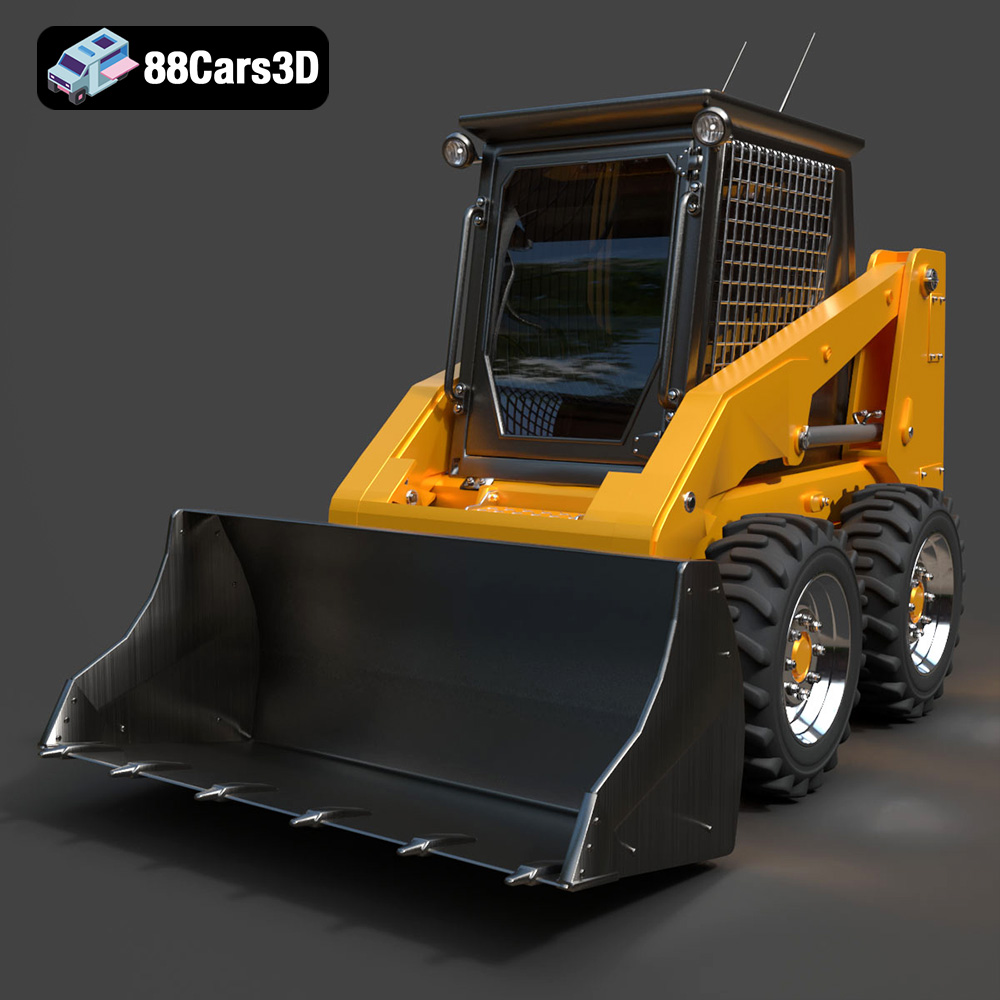
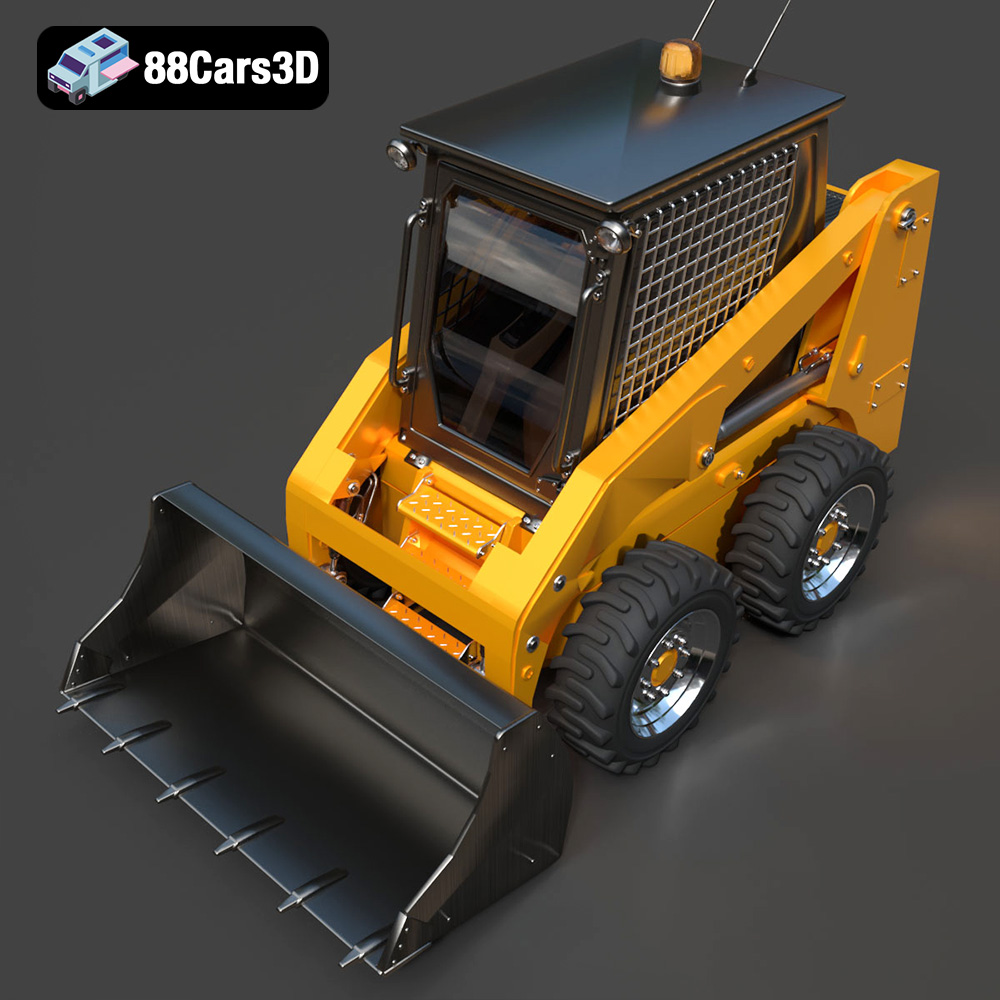
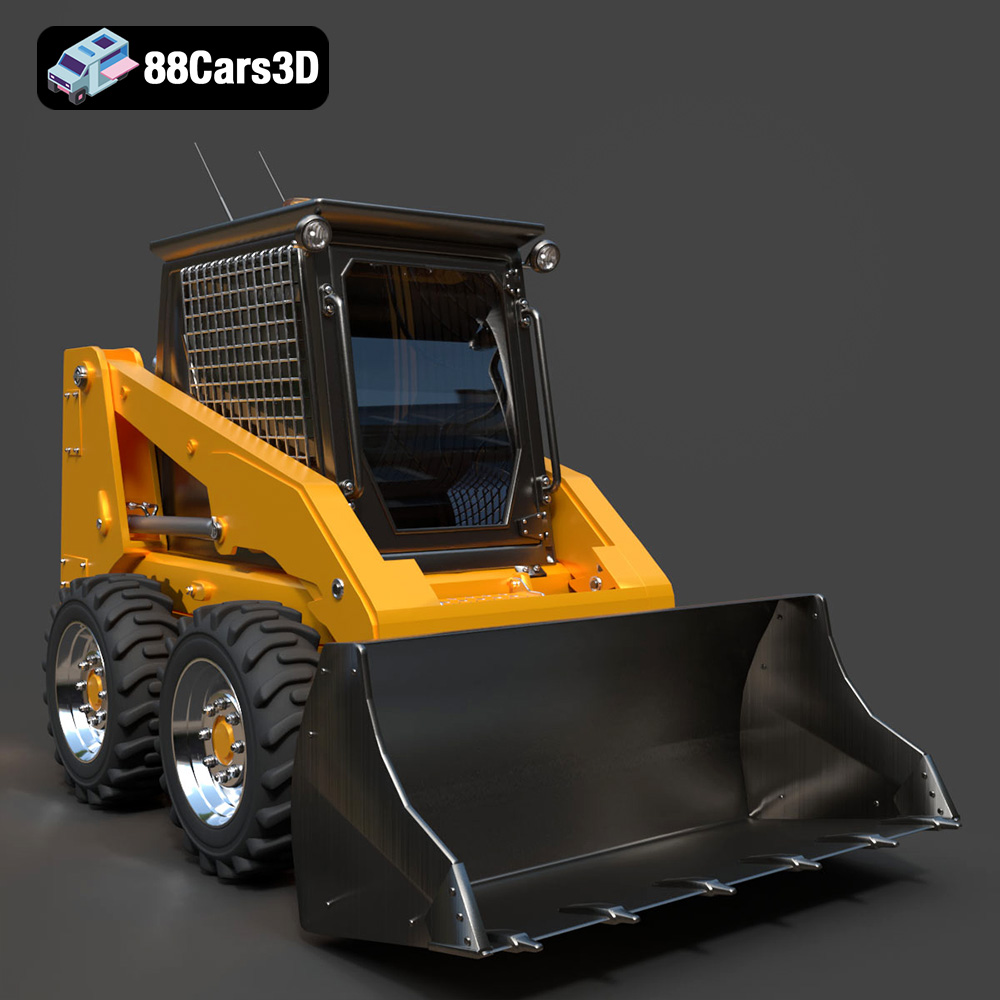
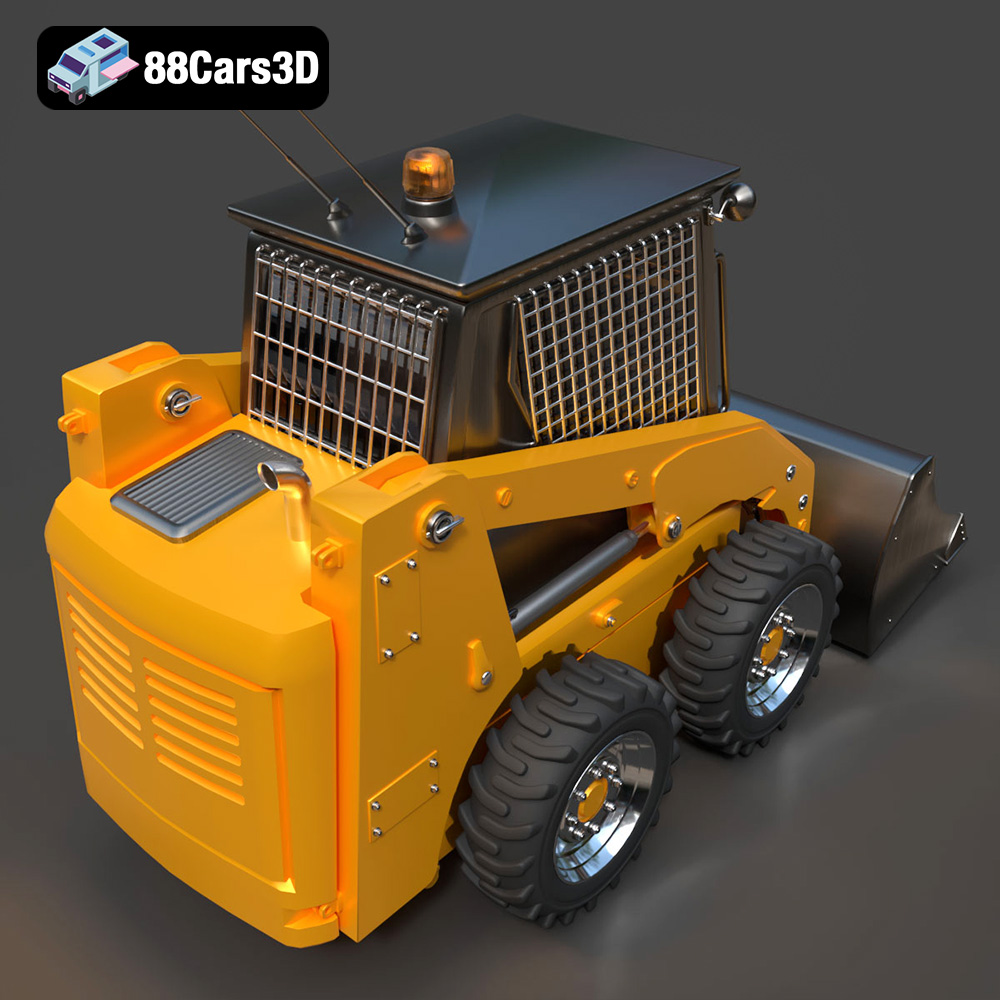
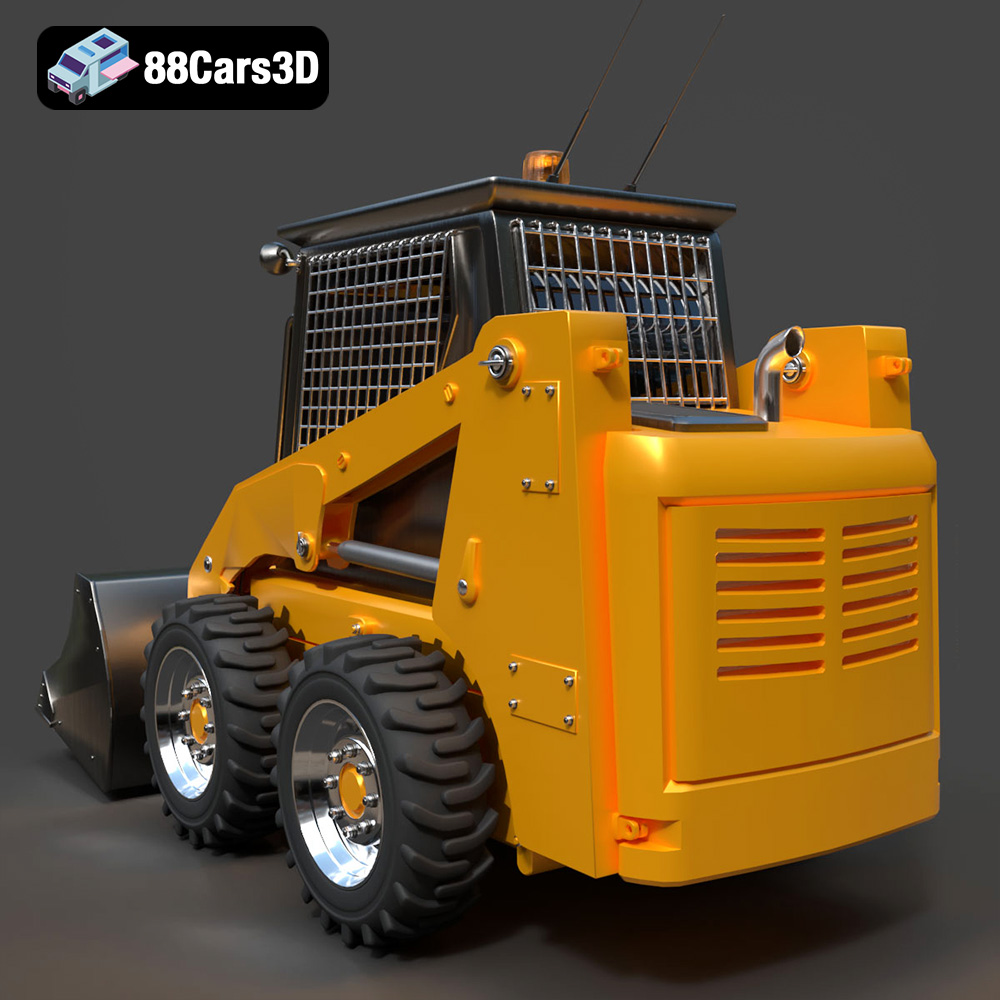
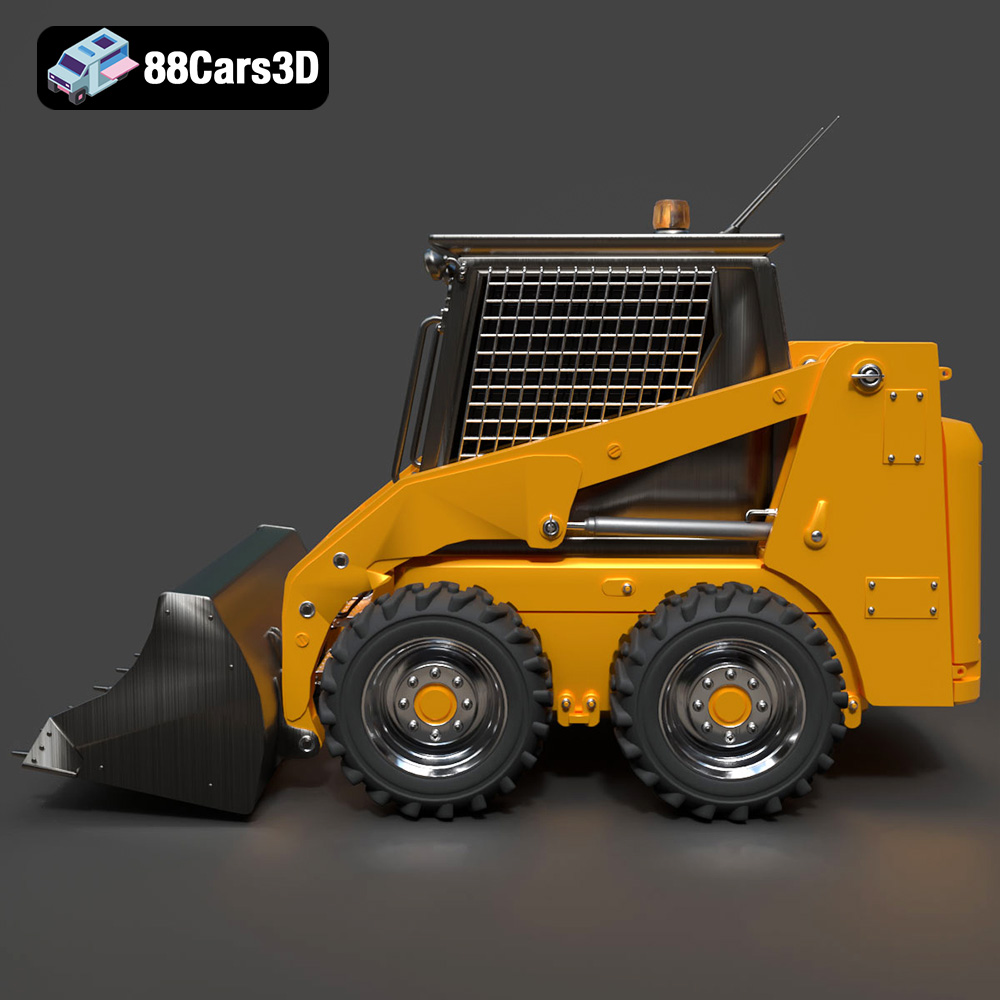
The Skid Steer Loader is an undeniable workhorse, a compact powerhouse integral to construction, landscaping, and agriculture. Recreating such an iconic piece of equipment in 3D demands not just visual fidelity but also underlying technical robustness. This particular model captures the rugged versatility of its real-world counterpart, boasting robust lifting arms, a reinforced front bucket, and a protective roll cage, all meticulously modeled. It’s an asset designed not just to look the part but to perform flawlessly across diverse digital environments, from high-end rendering projects to demanding real-time engines, providing an exceptional balance between high-end visual fidelity and real-time engine performance.
The choice of file format is a foundational decision in any 3D project, dictating compatibility, feature retention, and the efficiency of your workflow. Professionals working with 3D car models, automotive rendering, and game assets need a clear understanding of what each format offers. The Skid Steer Loader 3D Model from 88cars3d.com is provided in a comprehensive range of formats, ensuring maximum flexibility for any pipeline.
The `.blend` format is Blender’s native file type. When you download a `.blend` file, you’re getting a fully editable Blender scene. This means all the model’s components, materials, textures, lighting, cameras, and even animation data are preserved within a single file. For artists heavily integrated into the Blender ecosystem, this format offers the most direct and uncompromised access to the original model’s structure, allowing for deep customization and seamless integration into ongoing Blender projects. It’s ideal for those who want to dissect the model, learn from its construction, or make significant modifications without losing any original properties.
FBX (Filmbox) is arguably the most widely used 3D interchange format, developed by Autodesk. It excels in transferring not just geometry but also animation, cameras, lights, and skeleton data between different 3D software applications and game engines. For developers creating game assets for Unreal Engine or Unity, `.fbx` is the go-to format due to its robust support for real-time pipelines. It’s highly compatible, making it an excellent choice for collaborative workflows where team members might be using different primary 3D packages.
The Wavefront `.obj` format is a universal standard, highly compatible across almost all 3D software. While it primarily stores geometric data (vertices, normals, texture coordinates, and faces), it can also reference external material files (.mtl) for basic shading information. Its simplicity makes it incredibly stable and reliable for transferring basic mesh data. If you need a clean, unadulterated mesh that can be imported into virtually any 3D application without fuss, `.obj` is an excellent choice, though it might require manual setup of materials and textures in the target software.
GLB (GL Transmission Format Binary) is a modern, royalty-free format designed for efficient transmission and loading of 3D scenes and models in web and AR/VR applications. It’s a binary container that bundles textures, animations, and PBR (Physically Based Rendering) materials directly into a single file, making it very compact and fast to load. For interactive web experiences, augmented reality filters, or lightweight VR presentations, `.glb` offers optimized performance and a streamlined user experience, making it perfect for demonstrating the Skid Steer Loader in a virtual showroom or an interactive product viewer.
STL (Stereolithography) is the most common file format for 3D printing. It represents a 3D model as a series of connected triangles, forming the outer surface geometry of an object. While it doesn’t carry color or texture information, its simplicity and widespread adoption make it indispensable for additive manufacturing. The Skid Steer Loader 3D Model, when converted to `.stl`, is ready for physical production, allowing hobbyists and professionals to create tangible replicas of this heavy machinery, as detailed later in this article.
PLY (Polygon File Format) is often used for storing 3D data from 3D scanners, CAD applications, or scientific data visualization. It can store a wider range of properties than `.obj`, including color, transparency, and sometimes even confidence values for each vertex or face. It’s a precision mesh format, excellent for detailed models where accuracy is paramount, and can be useful in engineering simulations or reverse engineering processes for heavy equipment.
While not a standalone file format in the traditional sense, a `.unreal` asset implies a package specifically prepared for Unreal Engine. This typically means the model, materials, textures, and even blueprints or other engine-specific configurations have been optimized and packaged for direct import into an Unreal Engine project. This saves significant time in asset preparation, as it often includes proper UVs, collision meshes, LODs (Levels of Detail), and PBR material setup, making it genuinely “engine-ready” for immediate deployment in real-time environments.
Similar to `.blend` for Blender, `.max` is the native file format for Autodesk 3ds Max. It stores a complete 3ds Max scene, including geometry, materials, textures, lighting, cameras, animation, and any modifiers or plug-in data. For users of 3ds Max, this format provides full editability and access to all parameters used during the model’s creation, making it ideal for high-end rendering, complex animations, and integrating into existing 3ds Max pipelines, especially for automotive rendering and architectural visualization projects.
Understanding these formats empowers you to select the right tool for the job, ensuring that assets like the Skid Steer Loader 3D Model seamlessly integrate into your creative workflow, regardless of your chosen software or end application.
Creating 3D models of heavy machinery, such as a Skid Steer Loader, for professional use requires more than just artistic flair. It demands a deep understanding of technical specifications that ensure the asset performs optimally across various platforms, from game engines to high-fidelity renderers. The Skid Steer Loader 3D Model exemplifies this technical prowess.
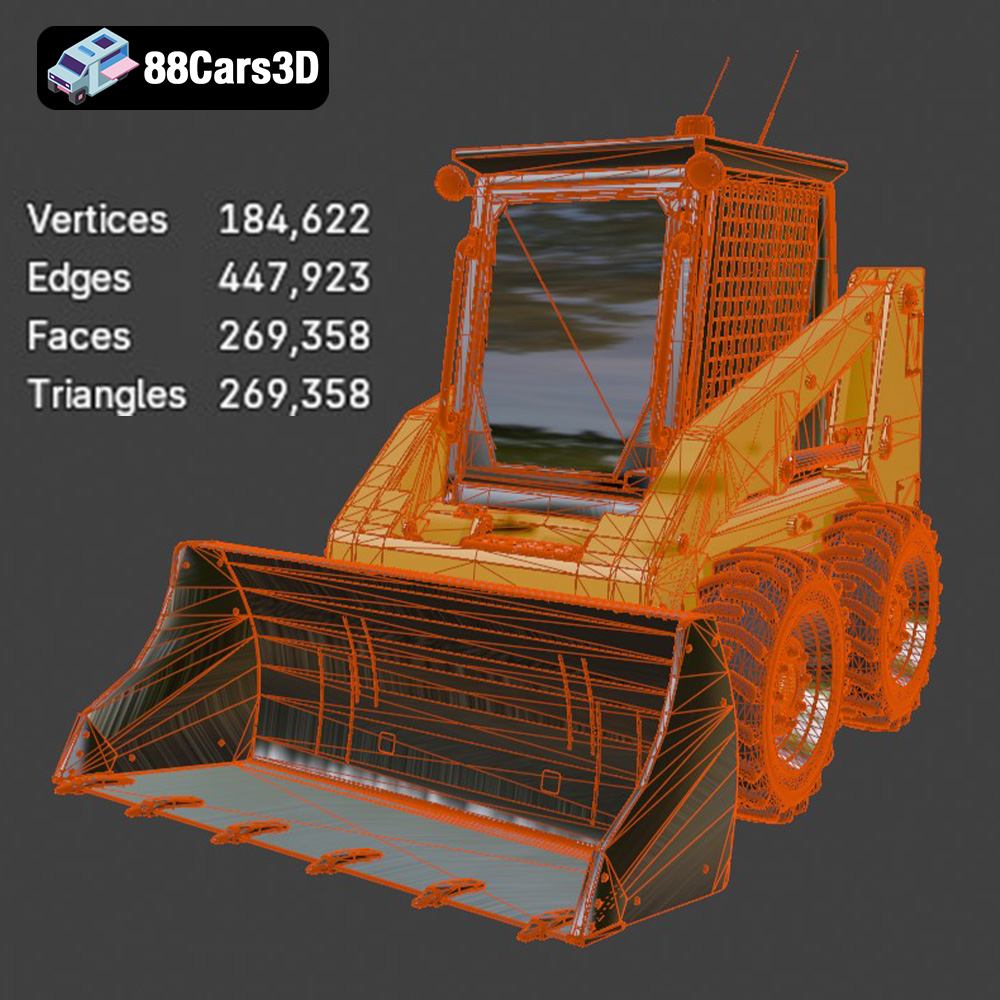
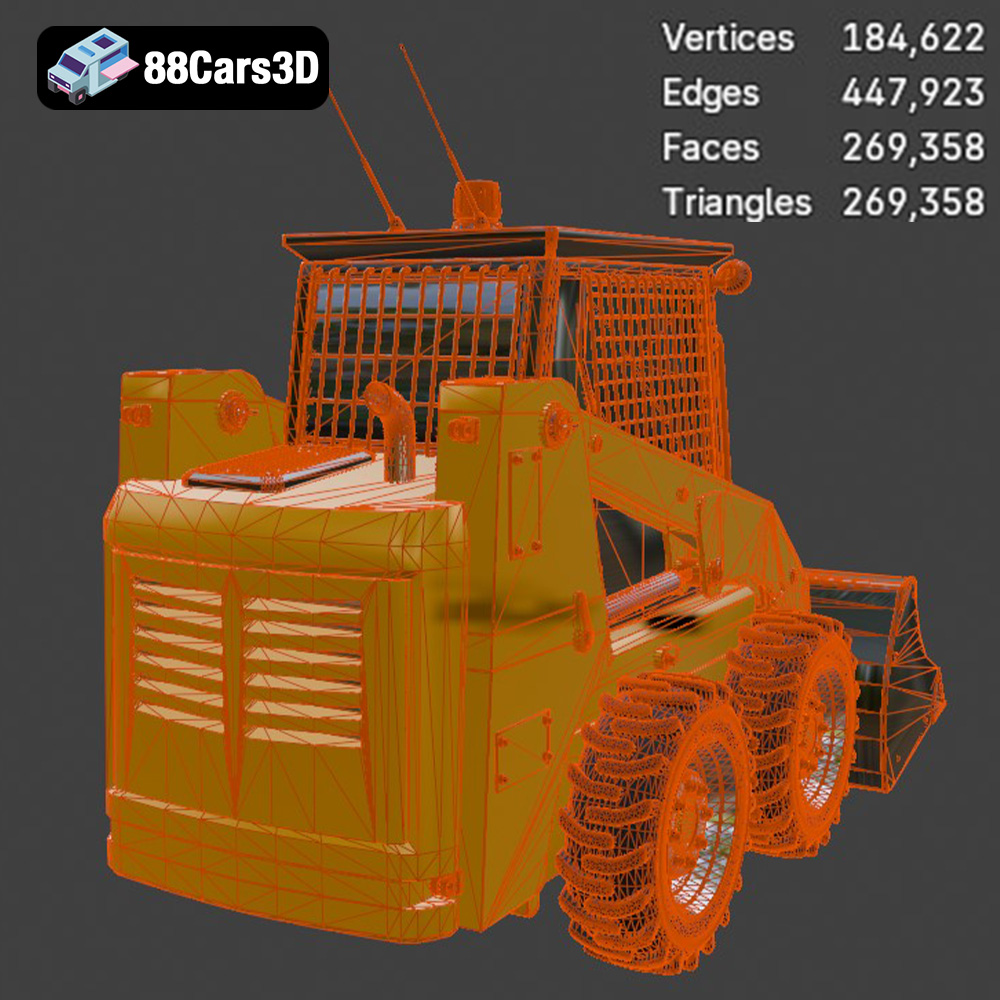
One of the most critical aspects of a professional-grade 3D model, especially for real-time applications, is its topology. The Skid Steer Loader model boasts a triangle count of 269,358. This isn’t just a number; it represents a carefully considered balance. For game assets and AR/VR applications, maintaining a manageable polycount is crucial for frame rates and overall performance. Too many polygons can bog down even powerful systems, leading to stuttering and a poor user experience. Conversely, too few can result in a blocky, unrealistic appearance.
This model’s optimized topology ensures it remains lightweight enough for smooth integration into demanding real-time engines like Unreal and Unity, while still retaining the high visual realism expected in industrial simulators or architectural visualizations. The geometry is clean, often consisting of quads where possible before triangulation, which is a hallmark of good modeling practice, making it easier to edit, unwrap, and rig. This balance means developers and artists get a model that looks fantastic without compromising on interactivity or render speed.
Beyond the raw polycount, the true quality of a heavy machinery model lies in its attention to detail and adherence to real-world accuracy. The Skid Steer Loader 3D Model meticulously recreates both exterior and cockpit features:
The model’s real-world scale accuracy, based on actual heavy machinery chassis, further enhances its utility, ensuring it fits seamlessly into scenes designed with real-world dimensions.
For any moving vehicle or piece of machinery, correct pivot point setup is non-negotiable for animation. The Skid Steer Loader 3D Model excels here, with proper pivot setup for steering, wheel rotation, arm lifting, and bucket tilting. This technical foresight significantly streamlines the animation process:
The separation of wheels, lift arms, bucket, and hydraulic components into distinct, animatable parts provides maximum flexibility for creating dynamic scenes and interactive experiences. This attention to mechanical detail makes the Skid Steer Loader a truly versatile asset for any professional 3D project.
The true value of a high-quality 3D asset like the Skid Steer Loader lies in its seamless integration into diverse professional workflows. Whether it’s crafting immersive game assets, generating stunning automotive rendering visuals, or developing critical AR/VR training programs, this model provides a robust foundation.
For game developers, the Skid Steer Loader 3D Model is a prime example of a game-ready asset. Its optimized triangle count (269,358) ensures it runs efficiently without sacrificing visual fidelity, a critical factor for maintaining high frame rates in complex game environments. The included .fbx and .unreal formats are specifically tailored for leading game engines.
For projects demanding photorealistic results, such as architectural renderings, product showcases, or film-quality animations, the Skid Steer Loader 3D Model excels. The availability of .max and .blend formats allows artists using 3ds Max or Blender to leverage the full power of their preferred rendering engines like V-Ray, Corona, or Cycles.
Augmented Reality (AR) and Virtual Reality (VR) are transforming industrial training and simulation. The Skid Steer Loader 3D Model is an ideal asset for these cutting-edge applications, thanks to its optimization and detailed interior.
The versatility of this 3D model, coupled with its technical readiness, makes it an invaluable asset for professionals seeking to enhance their projects across gaming, visualization, and immersive technologies.
While the digital realm offers endless possibilities for visualization and interaction, sometimes a tangible, physical representation is desired. The Skid Steer Loader 3D Model’s inclusion of the .stl format, alongside detailed print recommendations, opens up exciting avenues for 3D printing hobbyists and professionals alike. This allows for the creation of display-scale heavy machinery models, perfect for collectors, educators, or as prototypes.
The `.stl` (Stereolithography) format is the industry standard for 3D printing because it describes only the surface geometry of a 3D object using a mesh of triangles. The Skid Steer Loader 3D Model, provided directly in `.stl`, simplifies the process, eliminating the need for complex conversions from other formats that might introduce errors. However, scaling remains a critical consideration:
Achieving a high-quality 3D print goes beyond just having a good model; it also involves meticulous print settings and careful post-processing.
By following these guidelines, the Skid Steer Loader 3D Model transcends its digital form, becoming a tangible piece of art or a functional prototype, demonstrating the full spectrum of its utility.
One of the most powerful advantages of working with high-quality 3D car models and general vehicle assets from sources like 88cars3d.com is the inherent flexibility for customization. The Skid Steer Loader 3D Model is not just a static representation; it’s a versatile foundation that can be adapted to perfectly fit the specific needs and aesthetic demands of virtually any project, from a pristine showroom render to a battle-worn game asset.
The underlying clean geometry and well-defined UVs of this model are crucial for extensive material and texture customization. Artists and developers can:
These modifications allow the same core 3D model to serve dramatically different roles and visual styles without requiring a complete re-model.
The adaptability of the Skid Steer Loader extends to how it integrates into various environmental and narrative scenarios:
Ultimately, the Skid Steer Loader 3D Model from 88cars3d.com isn’t just a static asset; it’s a dynamic canvas for creative expression and technical adaptation. Its robust build, optimized topology, and detailed features empower professionals to tailor it precisely to their vision, ensuring maximum impact and utility across all their digital and physical projects.
In the demanding world of 3D production, the creation and acquisition of high-quality, technically sound assets are crucial for success. The Skid Steer Loader 3D Model stands as a testament to this principle, offering an exceptional blend of visual fidelity, technical optimization, and incredible versatility. Whether your project involves crafting immersive game assets, generating photorealistic automotive rendering visuals, developing cutting-edge AR/VR training simulations, or even producing intricate 3D prints, this model provides an unparalleled foundation.
Its meticulously optimized topology, boasting 269,358 triangles, strikes the perfect balance for performance in real-time engines without compromising the rich detail required for high-end rendering. The precise articulation of its hydraulic arms, the authentic detailing of its cockpit, and the provision of multiple industry-standard file formats (including .blend, .fbx, .obj, .glb, .stl, .ply, .unreal, and .max) ensure it integrates effortlessly into any professional workflow. This model isn’t just a representation; it’s a ready-to-deploy component designed to streamline your production pipeline and elevate your projects.
For those seeking to equip their digital worlds with reliable, high-performing 3D assets, the Skid Steer Loader 3D Model from 88cars3d.com is an invaluable resource. It’s a prime example of how expert craftsmanship in 3D modeling can meet diverse industry needs, providing a robust solution for game developers, visualization artists, and simulation engineers alike. Invest in quality, and watch your creative visions come to life with unparalleled realism and efficiency.
Explore the rugged versatility of this Skid Steer Loader, a highly accurate 3D model representing the workhorse of modern construction, landscaping, and agriculture. Known for its compact frame, tight turning radius, and formidable lifting power, this model captures the heavy-duty aesthetics perfectly, from its robust lifting arms and reinforced front bucket to its protective roll cage and hydraulic cylinders. This 3D model features a well-optimized topology with a triangle count of 269,358, providing an exceptional balance between high-end visual fidelity and real-time engine performance. Designed to be game-ready, the model ensures smooth integration into various platforms, making it an outstanding asset for game development, AR/VR industrial training applications, and realistic architectural visualizations. Perfect for construction site simulations, industrial animations, heavy machinery games, and VR operator training modules.
$27.99
.blend
.fbx
.glb
.max
.obj
.ply
.rendering
.stl
.unreal
construction-equipment
game asset
game-ready
heavy-machinery
loader
low-poly
optimized
skid-steer-loader
vehicle-3d-model
VR/AR