Get 20% OFF All Premium 3D & STL Models!

The automotive world has always been a beacon of design, engineering, and passion. From the roar of an engine to the sleek lines of a chassis, cars evoke emotion and inspire creativity. In the digital realm, this passion translates into an ever-growing demand for exceptionally detailed 3D car models, assets that power everything from photorealistic marketing campaigns and immersive game experiences to cutting-edge AR/VR applications. Professionals across various industries require not just aesthetic appeal, but technical precision, optimization, and versatility from their digital automotive assets. This pursuit of perfection is precisely what drives the creation of models like the remarkable BMW M5 2008, a true icon faithfully recreated for the digital age.
The BMW M5 2008 (E60 generation) is more than just a car; it’s a legendary super saloon, celebrated for its high-revving, Formula 1-inspired V10 engine and its distinctive, aggressive styling. Capturing such an automotive legend in 3D requires a blend of artistic skill and technical mastery. A meticulously crafted digital representation allows designers, developers, and visual artists to leverage this iconic vehicle in countless scenarios, offering a powerful tool for visual storytelling and interactive experiences. Whether you’re a game developer looking for a hero vehicle, an architect integrating a luxury car into a visualization, or a marketing specialist creating stunning renders, the right 3D car model is the foundation of your success.
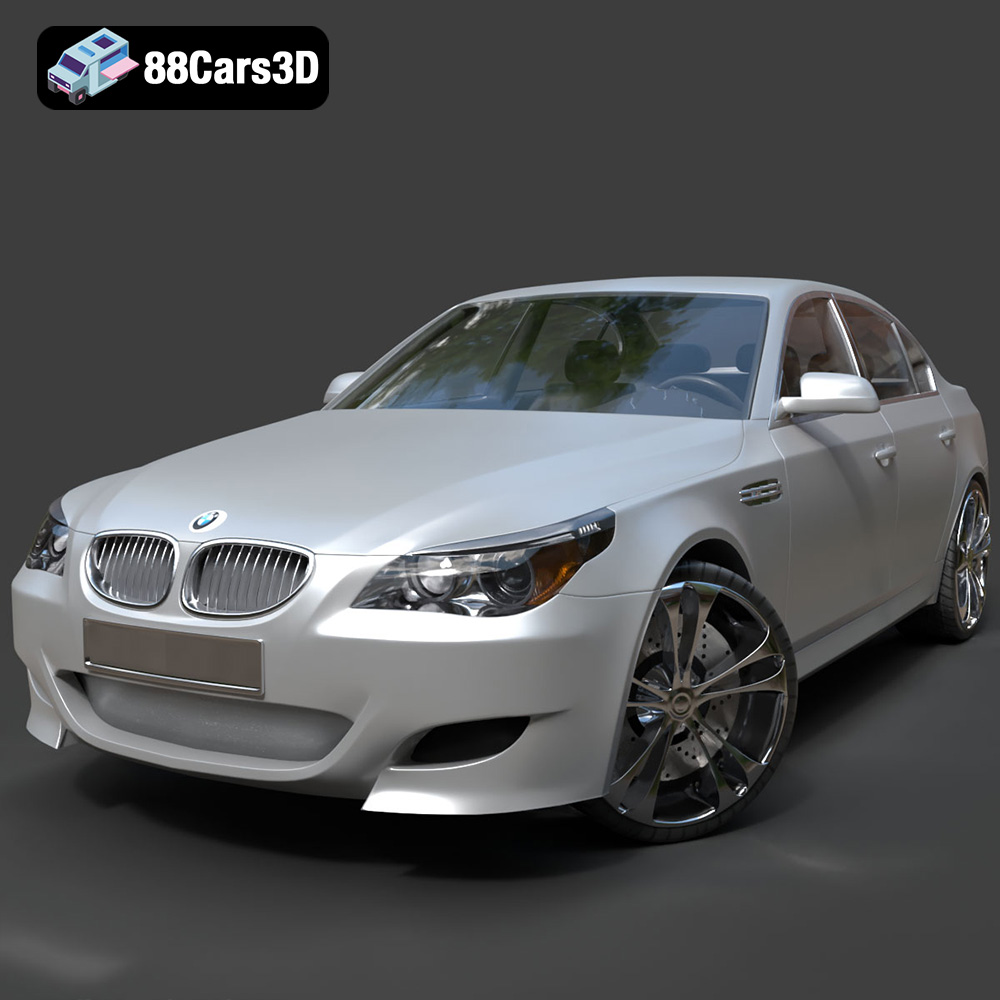
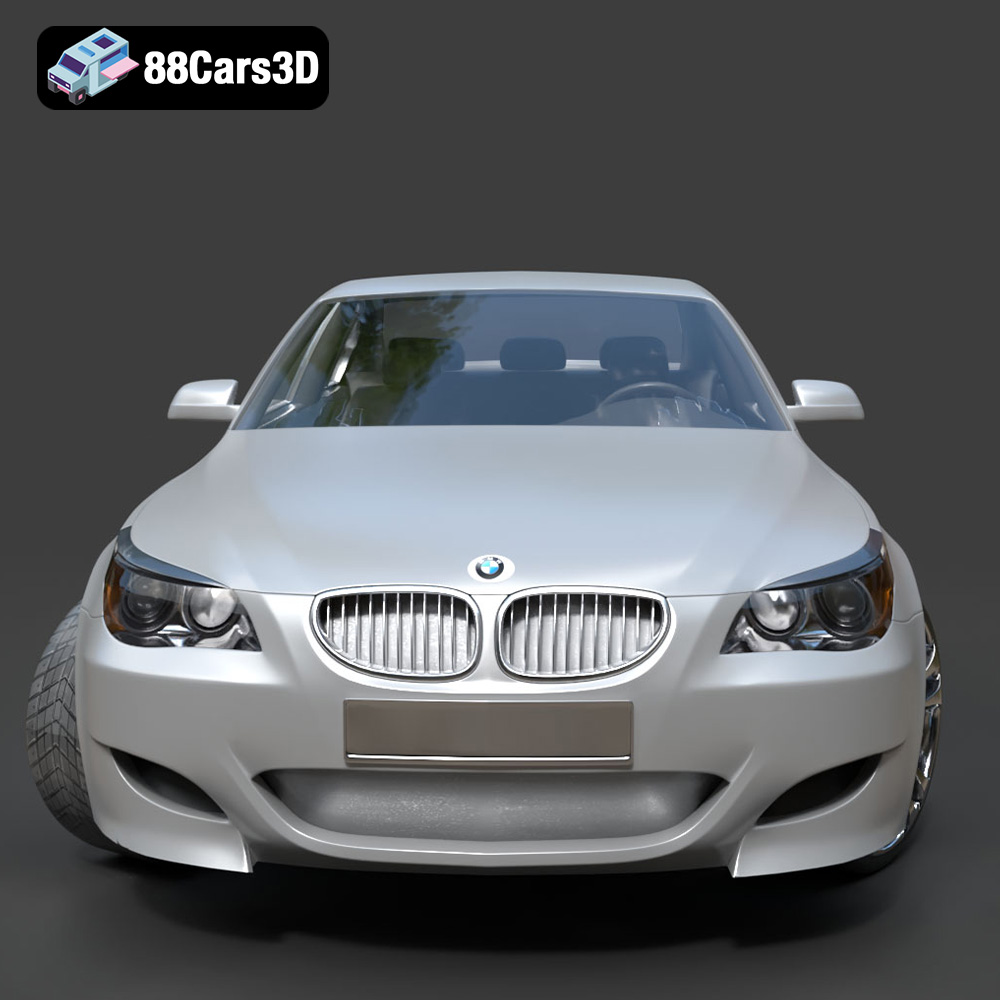
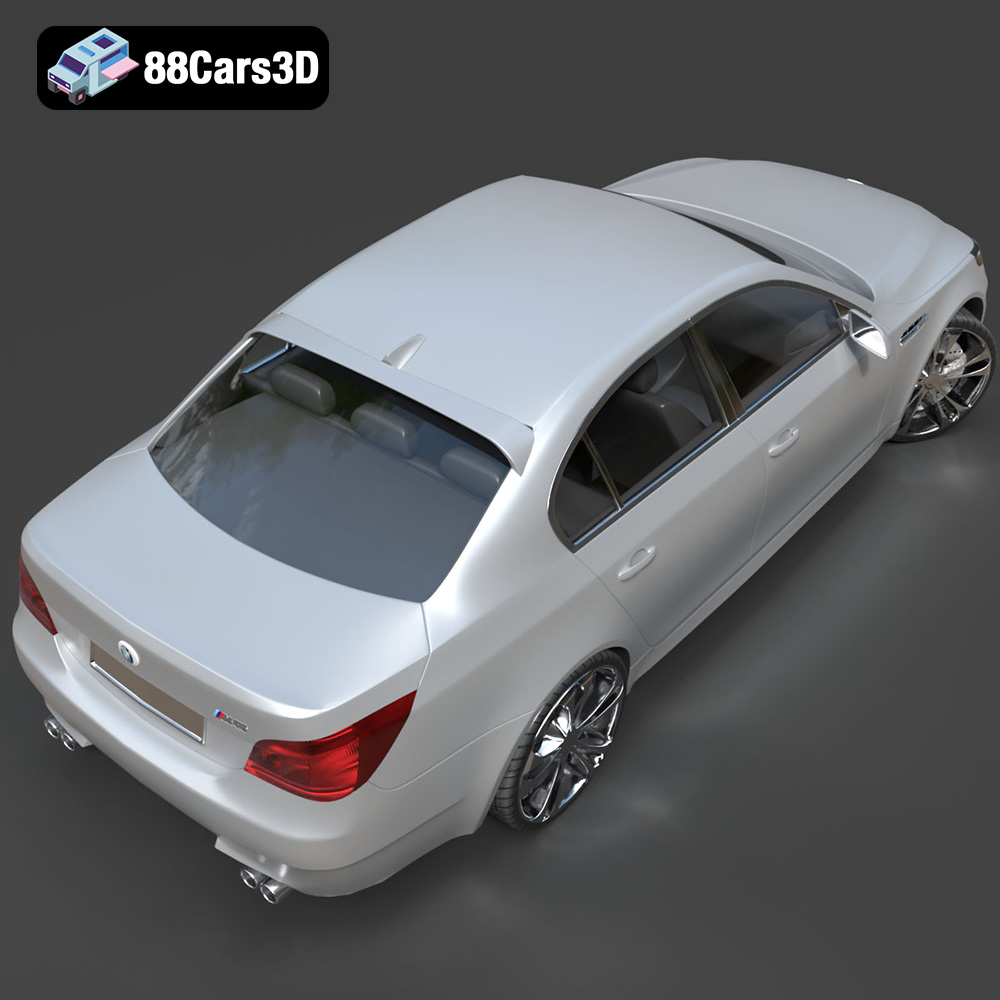
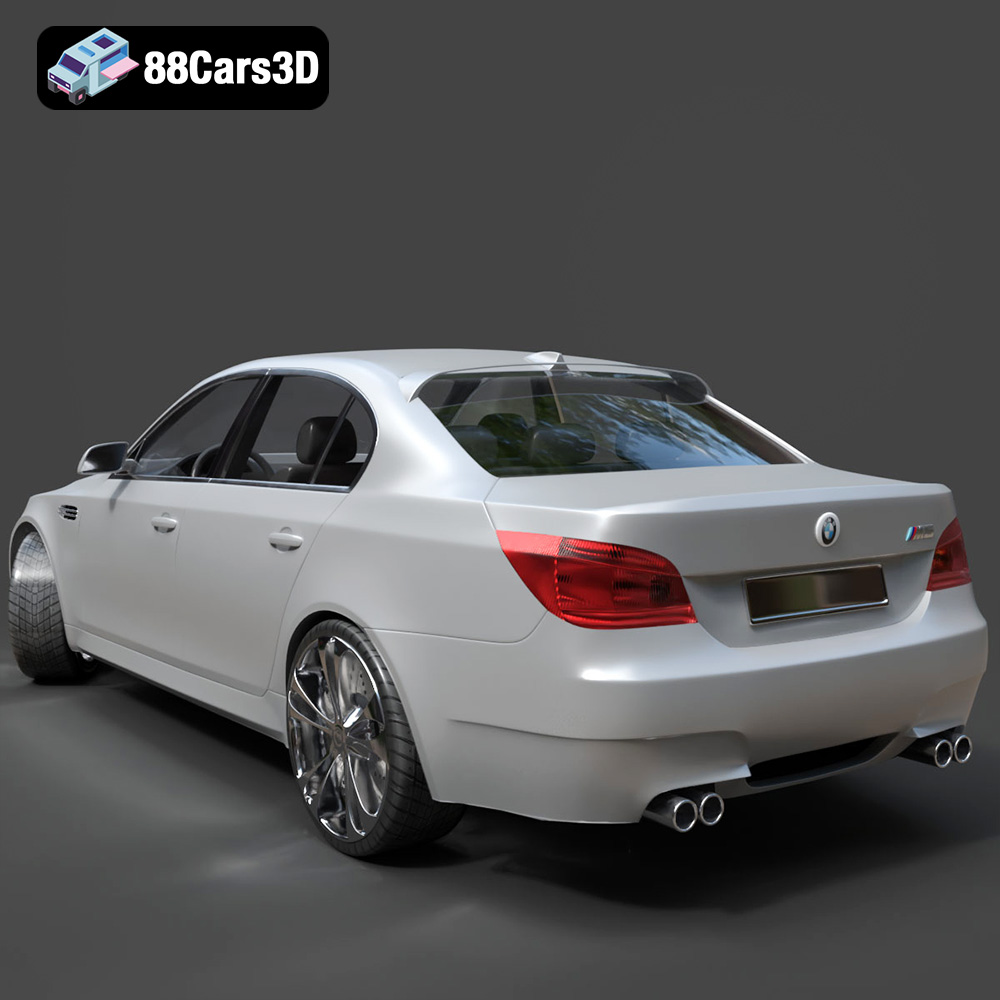
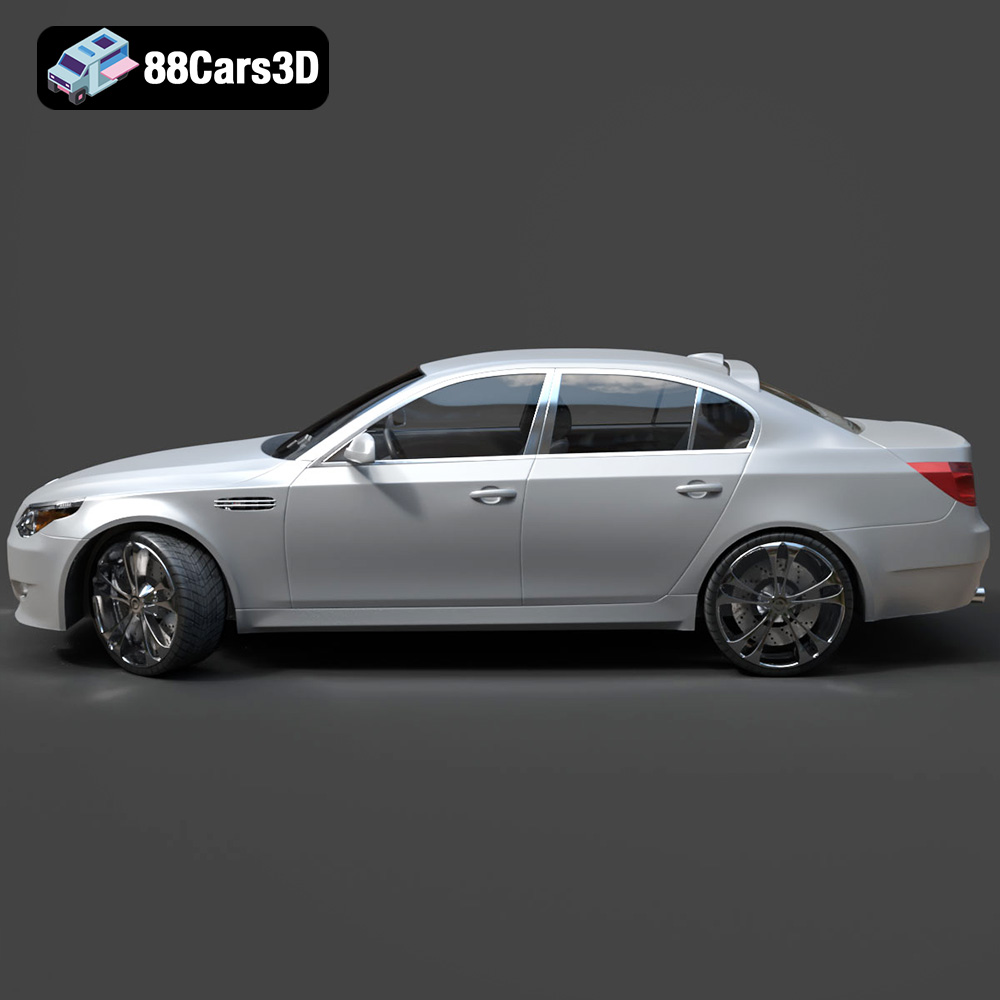
Creating a truly convincing 3D car model is a complex undertaking, blending artistic interpretation with strict technical requirements. It’s about more than just replicating shapes; it’s about conveying the spirit, the engineering, and the presence of the original vehicle. For a car like the BMW M5 2008, this means meticulously detailing its aggressive front fascia, the iconic kidney grilles, the flared wheel arches, and the signature quad exhaust system that hints at the power beneath the hood. Every curve, every panel gap, and every light fixture must be precisely modeled to achieve authenticity.
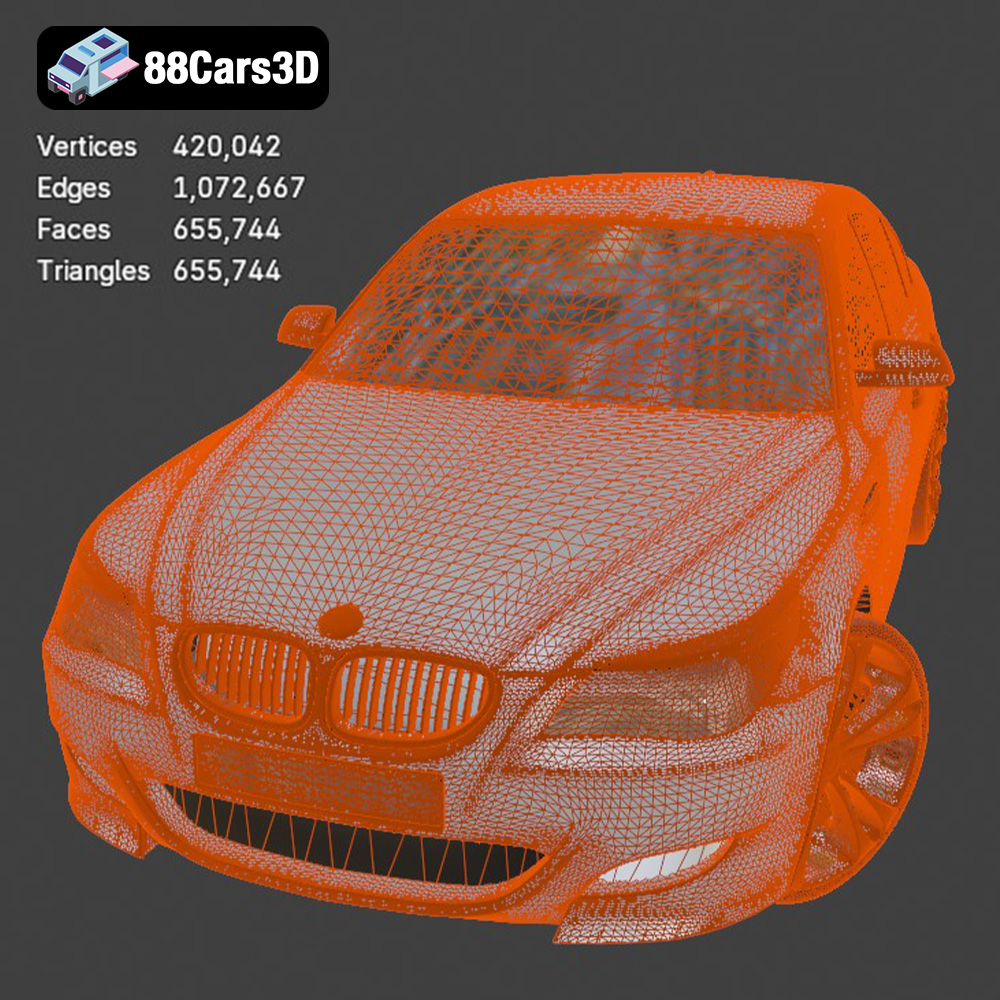
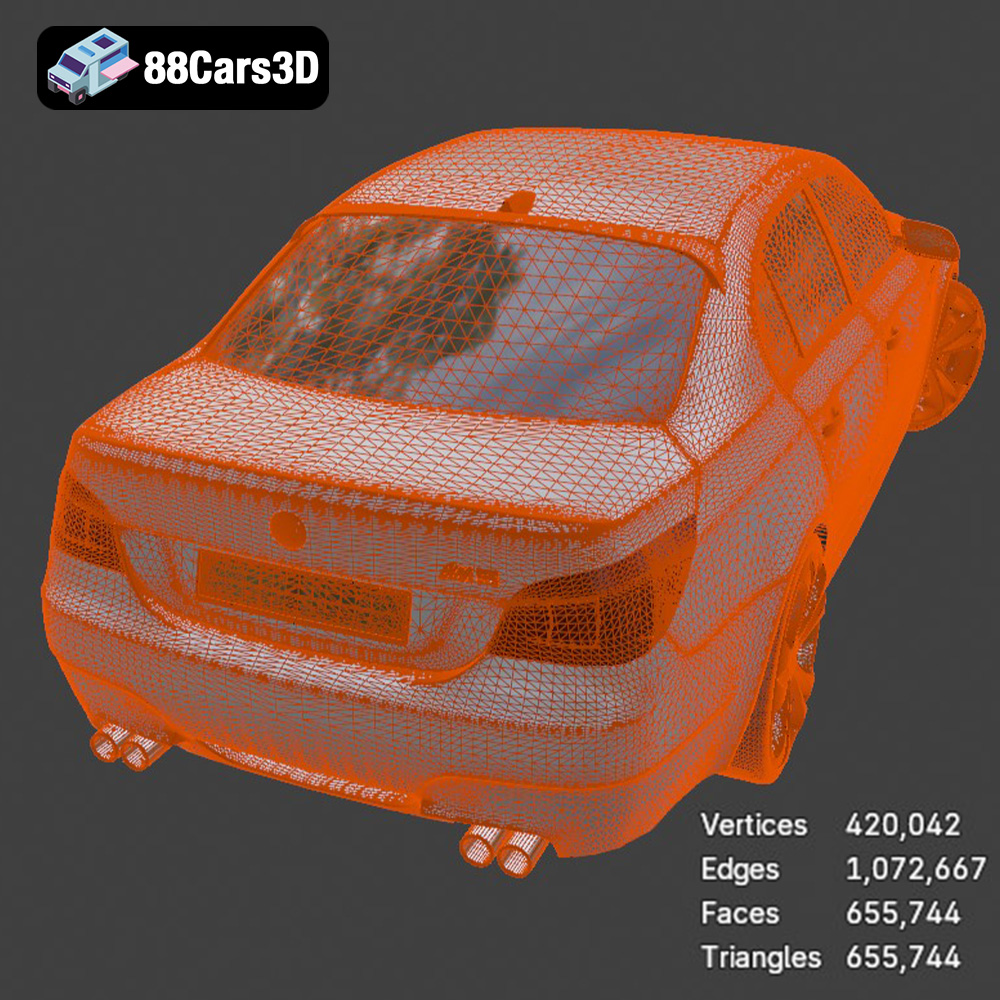
The foundation of any high-quality 3D model lies in its geometric accuracy. For automotive models, this means adhering to real-world scale and proportions, ensuring that the car looks and feels correct from every angle. Beyond mere shape, the underlying topology – the arrangement of polygons (triangles and quads) that form the mesh – is crucial. A clean, optimized topology ensures smooth deformation during animation, efficient rendering, and robust performance in real-time engines. For an asset intended for diverse uses, from cinematic rendering to game development, balancing polygon count with visual fidelity is a delicate art. The BMW M5 2008 model, with its 655,744 triangles, exemplifies this balance, providing exceptional detail without overwhelming real-time engine budgets.
A truly comprehensive 3D car model goes beyond the exterior shell. For enthusiasts and professionals alike, the details under the hood and within the cockpit are just as important. The BMW M5 2008 model faithfully includes a detailed 5.0L S85 V10 engine block, allowing for detailed close-ups or even animated engine bays. Inside, the heavily bolstered M sport leather seats, the thick-rimmed M multi-function steering wheel with paddle shifters, and the authentic instrument cluster are all meticulously replicated. These interior details are vital for first-person perspective gameplay, virtual showroom experiences, and any scenario where the user might interact with or explore the vehicle’s interior. Furthermore, separate components for wheels, suspension, and steering are critical for realistic animation, enabling accurate demonstrations of driving dynamics or suspension articulation.
Navigating the diverse world of 3D modeling often means understanding a multitude of file formats, each with its own strengths, limitations, and ideal use cases. Choosing the correct format is paramount for seamless integration into various software environments and achieving specific project goals. The BMW M5 2008 3D model offered on 88cars3d.com provides an extensive array of formats, ensuring maximum compatibility and flexibility for any professional workflow.
The `.blend` file format is the native format for Blender, a powerful and increasingly popular open-source 3D creation suite. A `.blend` file typically contains a complete Blender scene, including the 3D mesh data, materials, textures, lighting setups, cameras, animations, and even physics simulations. This makes it an ideal choice for users who work primarily in Blender, offering full editability and access to all the original scene settings. When you download a `.blend` file, you’re getting the full, uncompressed project, allowing for deep customization and immediate iteration within Blender’s comprehensive environment. For the BMW M5 2008, the `.blend` file allows artists to easily modify colors, adjust materials, or integrate the model into existing Blender scenes with minimal effort.
`.fbx` (Filmbox) is a proprietary file format developed by Autodesk, but it has become an unofficial industry standard for exchanging 3D data between different software applications. Its strength lies in its ability to store a wide range of 3D data, including geometry (meshes), materials, textures, animations, skinning, and camera information. This robust data handling makes `.fbx` particularly ideal for game development pipelines using engines like Unreal Engine and Unity, as well as for animation and VFX workflows. When transferring the BMW M5 2008 model via `.fbx`, you can expect consistent results across platforms, retaining crucial animation data for elements like wheels and suspension, making it a go-to for real-time applications.
`.obj` (Wavefront OBJ) is one of the oldest and most widely supported 3D file formats. It primarily stores geometric data – vertices, normals, UV coordinates, and faces – along with references to external material files (`.mtl`). While it doesn’t typically store animation or complex scene data, its simplicity and widespread compatibility make it an excellent choice for basic mesh exchange between virtually any 3D software. For the BMW M5 2008, the `.obj` file is perfect for situations where you need to import the raw geometry into a software that might not support more complex formats, or if you plan to rebuild materials and lighting from scratch in your target application.
`.glb` (GL Transmission Format Binary) is the binary version of the `.gltf` format, specifically designed for efficient transmission and loading of 3D scenes and models on the web and in AR/VR applications. It’s an open standard that packs textures, materials, and mesh data into a single, self-contained file, making it highly optimized for real-time display and deployment on platforms like mobile AR viewers, virtual reality environments, and interactive web experiences. The `.glb` version of the BMW M5 2008 is perfect for developers building virtual showrooms, automotive configurators on websites, or creating compelling AR experiences that place the M5 directly in the real world via a smartphone.
`.stl` (Stereolithography) is the de facto standard file format for 3D printing. It represents a 3D model as a collection of unconnected triangles, describing only the surface geometry without color, texture, or material information. While not ideal for rendering or animation, its simplicity makes it universally compatible with 3D printers and slicing software. The BMW M5 2008, available in `.stl`, can be brought to life as a physical scale model. Users can slice the model, add supports, and print it, allowing hobbyists and professionals to create tangible prototypes or display pieces.
`.ply` (Polygon File Format, or Stanford Triangle Format) is a versatile format for storing 3D data, often used in CAD, 3D scanning, and scientific applications. It can store not only geometry but also color, transparency, normals, texture coordinates, and even reliability information for each polygon. Its flexibility allows for precise representation of complex meshes, making it suitable for applications requiring high fidelity data beyond just rendering. For the BMW M5 2008, the `.ply` format might be chosen for detailed analysis, reverse engineering projects, or integration into engineering and simulation software.
The `.unreal` format, often referring to assets packaged specifically for Unreal Engine, implies an asset that is pre-configured and optimized for direct import and use within Unreal Engine projects. This can mean a `.uasset` or a similar package that includes not just the mesh, but also Unreal-specific materials (PBR setups), textures, collision meshes, LODs (Levels of Detail), and sometimes even basic animation blueprints. Having the BMW M5 2008 available in an Unreal-ready format significantly streamlines the workflow for game developers and real-time visualization artists, minimizing setup time and ensuring optimal performance within the engine.
`.max` is the native file format for Autodesk 3ds Max, a powerful and widely used software for 3D modeling, animation, and rendering. Similar to `.blend`, a `.max` file contains the complete scene information, including geometry, materials, lighting, camera setups, and animations specific to 3ds Max. This format is invaluable for professionals who use 3ds Max as their primary tool, offering full control over all aspects of the model and scene. The `.max` file for the BMW M5 2008 enables extensive customization, complex animation sequences, and high-end rendering using renderers like V-Ray or Corona, leveraging 3ds Max’s robust toolset.
The availability of the BMW M5 2008 in such a wide array of formats on 88cars3d.com underscores a commitment to versatility, ensuring that designers and developers can seamlessly integrate this exceptional model into virtually any project, regardless of their preferred software or target application.
The true value of a premium 3D car model lies in its meticulous execution, a quality clearly evident in the BMW M5 2008 digital representation. It’s not enough for a model to simply look good in a static render; it must perform under various technical demands, from real-time game engines to detailed cinematic animations. This model delivers on all fronts, providing a robust and flexible asset for professional use.
A critical technical specification for any 3D asset is its polygon count. The BMW M5 2008 model boasts a triangle count of 655,744. This figure is a carefully chosen sweet spot. It’s high enough to capture the subtle curves, sharp edges, and intricate details of the M5’s design – from its distinctive headlights to the complex suspension components – ensuring high-end visual realism in renders. Simultaneously, it’s optimized to be “game-ready,” meaning it can be efficiently processed by real-time engines like Unreal and Unity without causing performance bottlenecks. This balance is crucial for applications ranging from fast-paced racing simulations to interactive AR/VR experiences, where every millisecond counts.
Beyond static beauty, the ability to animate a vehicle realistically is paramount for many projects. This BMW M5 2008 model is designed with animation in mind. Its separate wheels, suspension, and steering components are not merely detached parts; they are set up with proper pivots. This means the wheels will rotate accurately around their central axis, the suspension can compress and extend with realistic travel, and the steering mechanism can articulate credibly. Such attention to rigging readiness significantly reduces the setup time for animators and game developers, allowing for dynamic camera shots, believable driving sequences, and interactive vehicle controls.
The model’s “real-world scale accuracy” is another fundamental advantage. Based on actual vehicle chassis dimensions, it ensures that the M5 will integrate perfectly into architectural visualization scenes, virtual environments, or simulations without requiring tedious resizing or adjustments. This precision not only saves time but guarantees consistency across different project types, making it a reliable asset for serious professionals.
The versatility of a high-quality 3D car model is best demonstrated by its adaptability across diverse professional workflows. The BMW M5 2008 model, with its robust construction and multiple file formats, acts as a cornerstone asset for various creative pipelines.
For game developers and real-time visualization artists, the `.fbx` and `.unreal` formats are invaluable. In Unreal Engine, importing the M5 via `.fbx` or directly as an Unreal-ready package allows for immediate integration. Artists can then apply Physically Based Rendering (PBR) materials, leveraging Unreal’s sophisticated lighting system (Ray Tracing, Lumen, Nanite) to achieve stunning photorealism. Collision meshes can be generated or imported to ensure proper physical interaction in game environments. Furthermore, the pre-setup pivots for wheels and suspension greatly simplify the process of setting up vehicle physics and animation blueprints, enabling the M5 to be driven convincingly within an open-world game or a driving simulator. Similar integration benefits apply to Unity users, who can leverage the `.fbx` file for efficient asset deployment and scripting.
Traditional 3D software like 3ds Max and Blender remain the backbone for high-end cinematic rendering, animation, and extensive model customization. The `.max` and `.blend` files provide native access to the model within these respective programs.
In 3ds Max, artists can utilize the `.max` file to:
Similarly, Blender users benefit from the `.blend` file’s full scene data:
These native files offer unparalleled flexibility for artists who need to go beyond simple import and require deep creative control over the asset.
In architectural visualization, the presence of a high-quality 3D car model can elevate a scene from good to outstanding. Placing the BMW M5 2008 in front of a modern home, within a luxury garage, or cruising down a rendered street instantly adds a layer of realism, scale, and aspirational lifestyle. Its real-world scale and detailed exterior/interior ensure that it holds up under close scrutiny, whether for still renders or animated walkthroughs. For product showcases, the M5 can be the centerpiece of a luxury brand’s virtual showroom, allowing potential customers to interact with the vehicle in a controlled, immersive environment. The optimized geometry and clean topology ensure smooth performance even in complex visualization scenes.
The applications of a versatile 3D car model extend far beyond traditional rendering and gaming. The BMW M5 2008 model is designed to excel in emerging technologies like Augmented Reality (AR) and Virtual Reality (VR), and even in the tangible world of 3D printing.
The `.glb` format is a game-changer for AR/VR applications. Imagine a virtual showroom where potential buyers can walk around, sit inside, and even change the color and finishes of the BMW M5 2008 in real-time. With AR, the M5 can be projected onto a real-world driveway, allowing users to visualize it in their own environment using just a smartphone or tablet. The model’s optimized geometry and detailed interior are perfect for these immersive experiences, providing the visual fidelity needed for a convincing sense of presence. From educational tools to sophisticated sales configurators, the M5 model enables a new dimension of interaction.
For hobbyists, collectors, and prototyping professionals, the `.stl` format unlocks the potential for physical creation. The BMW M5 2008 can be transformed from a digital asset into a tangible scale model. The product description provides excellent guidelines for 3D printing, recommending scales like 1:12, 1:18, or 1:24, which are common for display models.
This fusion of digital design and physical manufacturing opens up a world of possibilities for custom collectibles, educational models, or even design prototypes.
In modern game development, the demand for both stunning visuals and fluid performance is constant. Game-ready assets like the BMW M5 2008 model are engineered to meet these challenging requirements, striking a delicate balance between high detail and efficient rendering.
The stated triangle count of 655,744 for the BMW M5 2008 is a prime example of strategic optimization. This level of detail is sufficient to maintain visual realism even in close-up shots within a game engine, where reflections, shadows, and material properties are paramount. However, it’s not so excessively high that it cripples frame rates. For critical assets like a hero vehicle, a slightly higher polycount is often justified to achieve the desired visual impact, with further optimization techniques applied at the engine level.
While the raw geometry is vital, the materials and textures are what truly bring a 3D model to life. High-quality game-ready assets typically utilize Physically Based Rendering (PBR) workflows. This involves texture maps such as Albedo (base color), Normal (for surface detail without extra geometry), Roughness (controlling shininess), Metallic (for reflective surfaces), and Ambient Occlusion (for soft shadows). When imported into Unreal, Unity, or other engines, these PBR textures ensure that the BMW M5 2008 reacts realistically to lighting, reflecting its environment and conveying the true nature of its paintwork, glass, and chrome elements.
Even with an optimized model, game developers often employ additional techniques to ensure peak performance:
These strategies, combined with the inherently optimized base model, make the BMW M5 2008 an ideal choice for high-fidelity game development and real-time interactive experiences.
The demand for superior 3D car models like the BMW M5 2008 stems from a broad range of professional applications, each benefiting from the precision, detail, and versatility offered by such an asset. From marketing to simulation, the impact is significant.
For car manufacturers or luxury brands, the ability to showcase vehicles in photorealistic settings without the expense of physical shoots is invaluable. High-quality 3D car models enable virtual photo studios, custom environments, and dynamic animations that highlight the car’s features in ways impossible with traditional photography. The BMW M5 2008 can be placed in aspirational lifestyle scenes, cityscapes, or even abstract studio setups, providing endless creative possibilities for advertising campaigns. The capacity for customization, such as changing body colors or material finishes, further enhances its utility for showcasing different configurations or special editions.
Beyond entertainment, accurate 3D car models are crucial for professional simulations. Driving simulators for driver training, engineering tests, or autonomous vehicle development rely heavily on physically accurate vehicle models. The BMW M5 2008, with its real-world scale, separate animated components, and optimized geometry, provides a strong foundation for such applications, allowing for realistic physics integration and interaction.
Museums, educational institutions, and automotive historians can utilize detailed 3D models to preserve and present iconic vehicles. An interactive 3D model allows for exploration from every angle, dissection of components, and an immersive understanding of the vehicle’s engineering and design heritage. The BMW M5 2008, as a significant model in BMW’s history, serves as an excellent digital archive for future generations.
The world of 3D modeling continues to evolve, pushing the boundaries of realism and interactivity. At the heart of this evolution lies the consistent demand for high-quality, versatile 3D assets that meet the exacting standards of professional workflows. The BMW M5 2008 3D model stands as a testament to this commitment, offering a meticulously detailed and technically optimized representation of an automotive icon.
From its carefully balanced 655,744 triangle count, ensuring both visual fidelity and game-readiness, to its comprehensive internal and external detailing, this model is built for performance. Its native file formats for 3ds Max and Blender provide deep customization capabilities, while the `.fbx` and Unreal-ready assets streamline integration into real-time engines. Furthermore, its `.glb` format opens doors to immersive AR/VR experiences, and the `.stl` file allows for tangible, 3D-printed replicas.
Whether you are a game developer crafting an open-world racing title, an architectural visualizer adding realism to a new development, a marketer creating stunning renders, or a hobbyist bringing a digital dream to life via 3D printing, the BMW M5 2008 3D model from 88cars3d.com offers an unparalleled foundation. It encapsulates the spirit of automotive excellence and provides the technical flexibility required to power your next groundbreaking project. Investing in such a high-quality 3D car model means investing in efficiency, versatility, and uncompromising visual impact.
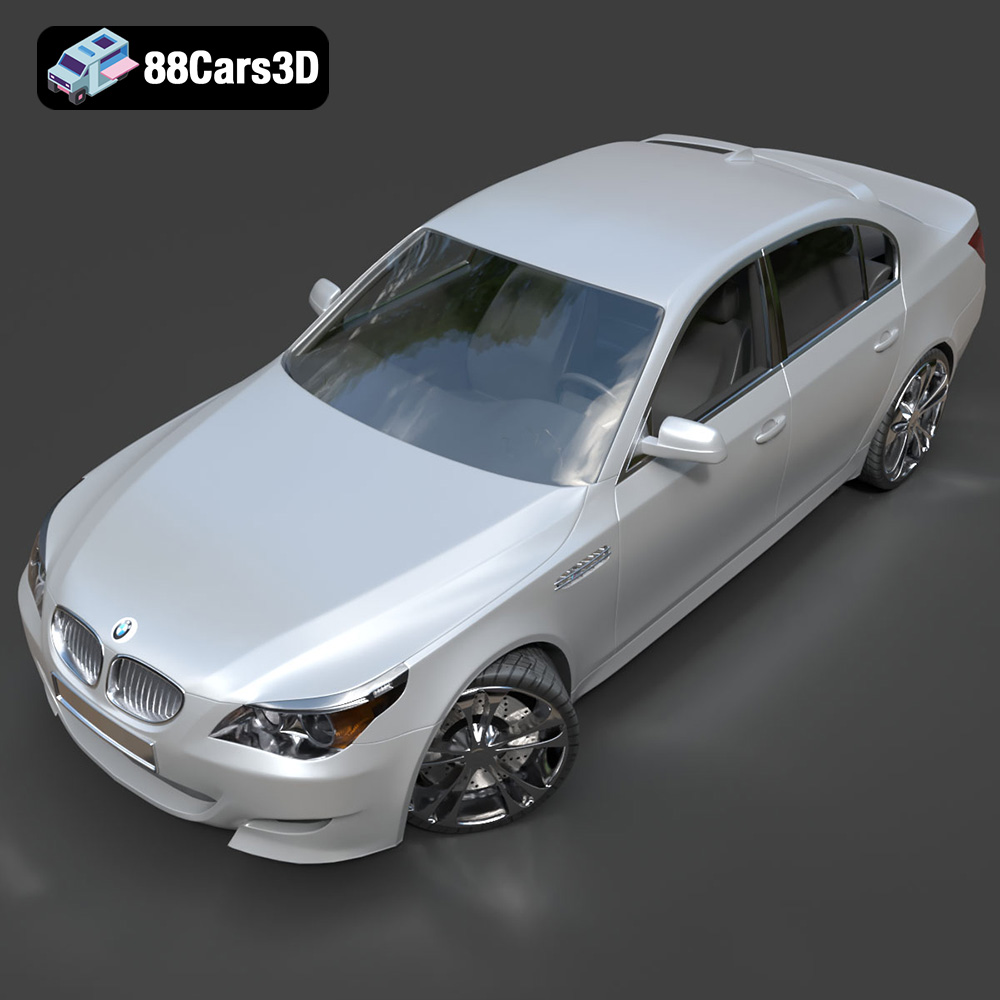
Experience the legendary BMW M5 2008 (E60 generation), a defining sports sedan famed for its Formula 1-inspired naturally aspirated V10 engine and striking aerodynamic styling. This 3D model faithfully captures the vehicle’s heritage, showcasing key visual elements like the aggressive front fascia, flared wheel arches, signature quad exhaust system, and iconic kidney grilles that make this super saloon truly special.
Designed with meticulous attention to detail, this 3D model features a well-structured topology with a triangle count of 655,744. It offers exceptional game-ready optimization and high-end visual fidelity, making it a premier asset for real-time applications, game development, AR/VR experiences, professional animation, and architectural visualization.
Perfect for high-speed racing simulations, urban open-world environments, luxury virtual showrooms, and photorealistic cinematic renderings.
.blend, .fbx, .obj, .glb, .stl, .ply, .unreal, .max
Tags:
bmw, m5, 2008, e60, sports-sedan, luxury-car, car-3d-model, game-ready, low-poly, optimized, game-asset, rendering, vr-ar, blend, fbx, obj, glb, stl, ply, unreal, max
$46.50
.2008
.blend
.bmw
.e60
.fbx
.glb
.m5
.max
.obj
.ply
.rendering
.stl
.unreal
car-3d-model
game asset
game-ready
low-poly
luxury car
optimized
sports-sedan
VR/AR