Get 20% OFF All Premium 3D & STL Models!

In the dynamic landscape of digital content creation, from high-fidelity game development to breathtaking architectural visualizations and immersive virtual reality experiences, the demand for exceptionally detailed and production-ready 3D assets has never been higher. At the heart of many ambitious projects lies the challenge of accurately representing real-world objects, none more captivating than the automobile. A meticulously crafted 3D car model can elevate a scene from merely functional to truly spectacular, serving as a cornerstone for engaging narratives and realistic simulations.
Whether you’re an independent game developer striving for authenticity, an automotive designer presenting a new concept, or an architect populating a sprawling urban render, the quality of your 3D car models directly impacts the final output. These aren’t just static objects; they are complex digital sculptures, engineered for performance and visual fidelity across diverse platforms. Today, we’ll delve deep into the technical intricacies and creative possibilities unlocked by professional-grade 3D car models, exemplified by a versatile asset like the Chevrolet Spark (Beat) 2010-08 3D Model available on 88cars3d.com, exploring how such a model serves as an indispensable tool for professionals.
The journey from a concept to a final digital product relies heavily on the quality of its foundational assets. In automotive design, rendering, and game development, a high-fidelity 3D car model is more than just a representation; it’s a critical component that influences performance, realism, and creative freedom. Investing in professional-grade models ensures that projects meet the rigorous demands of modern production pipelines.
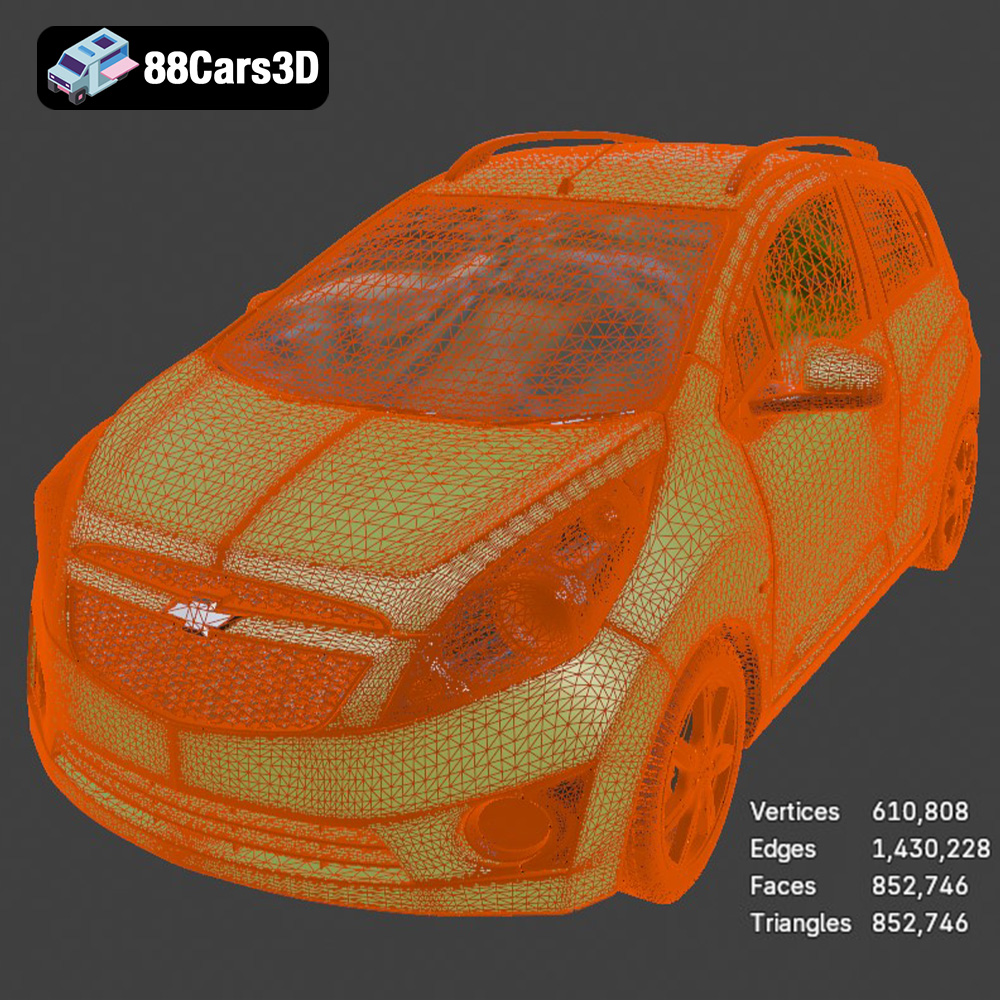
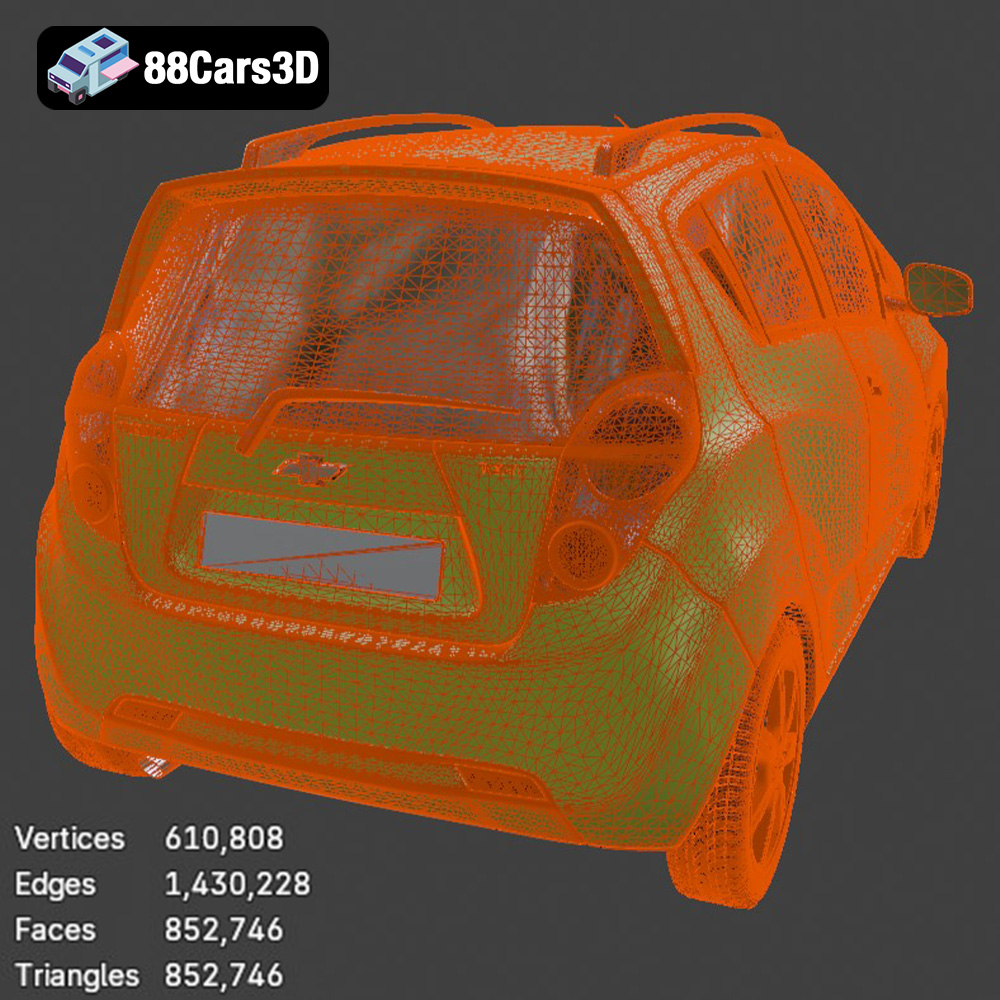
One of the primary challenges in 3D content creation is striking the perfect balance between visual realism and computational performance. A model that looks stunning but cripples your frame rate or render times is impractical. Conversely, an overly optimized model that lacks detail can break immersion. High-quality 3D car models are meticulously engineered to navigate this delicate equilibrium. This involves careful polygon count management, efficient UV mapping, and PBR (Physically Based Rendering) ready materials. For instance, a model like the Chevrolet Spark (Beat) 2010-08, with its optimized topology of 852,746 triangles, offers a sweet spot, providing outstanding visual fidelity without compromising efficient performance in real-time applications.
In a professional workflow, 3D assets don’t exist in isolation. They are part of a complex pipeline involving multiple software packages, team members, and stages of development. A high-quality 3D car model must be versatile and compatible across various platforms, from modeling software like 3ds Max and Blender to game engines like Unreal Engine and Unity, and even web-based AR/VR frameworks. This requires clean geometry, properly scaled dimensions, correctly set pivots for animation, and well-organized scene hierarchies. An asset that meets these criteria significantly streamlines production, reducing the need for costly rework and ensuring seamless integration.
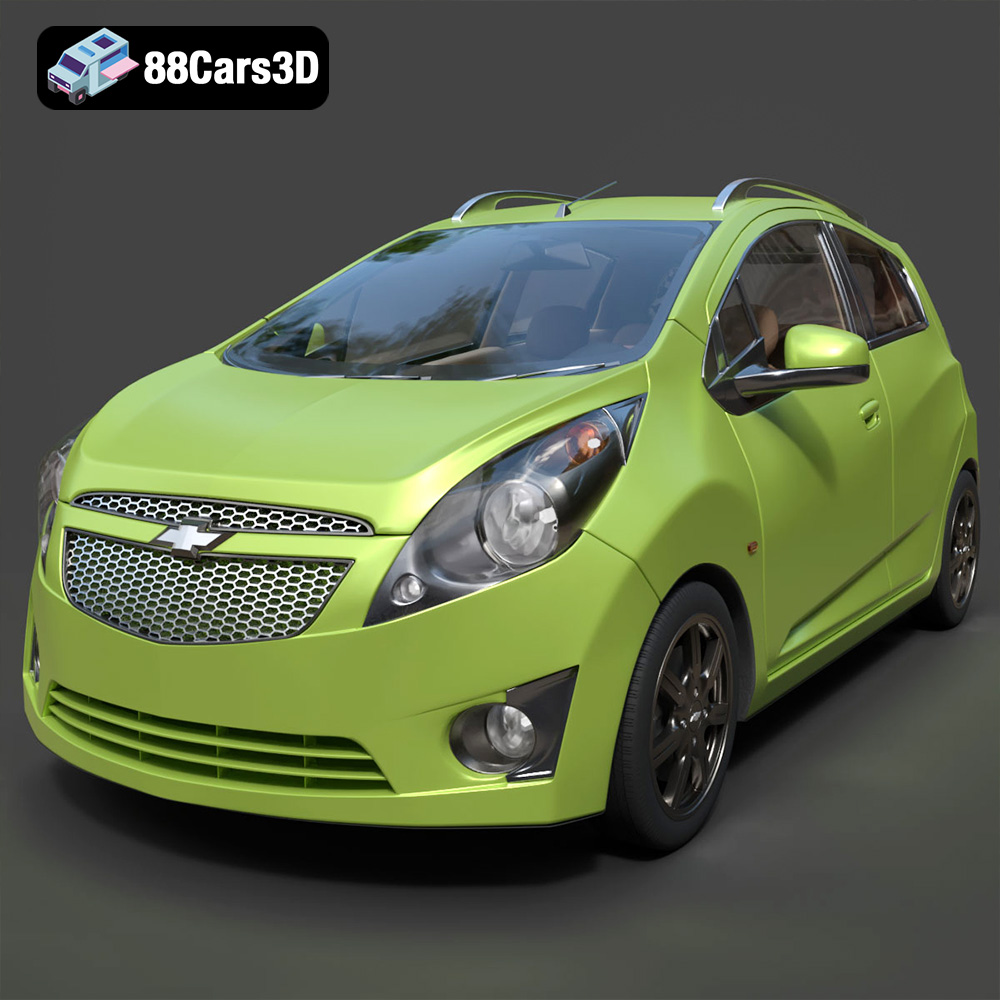
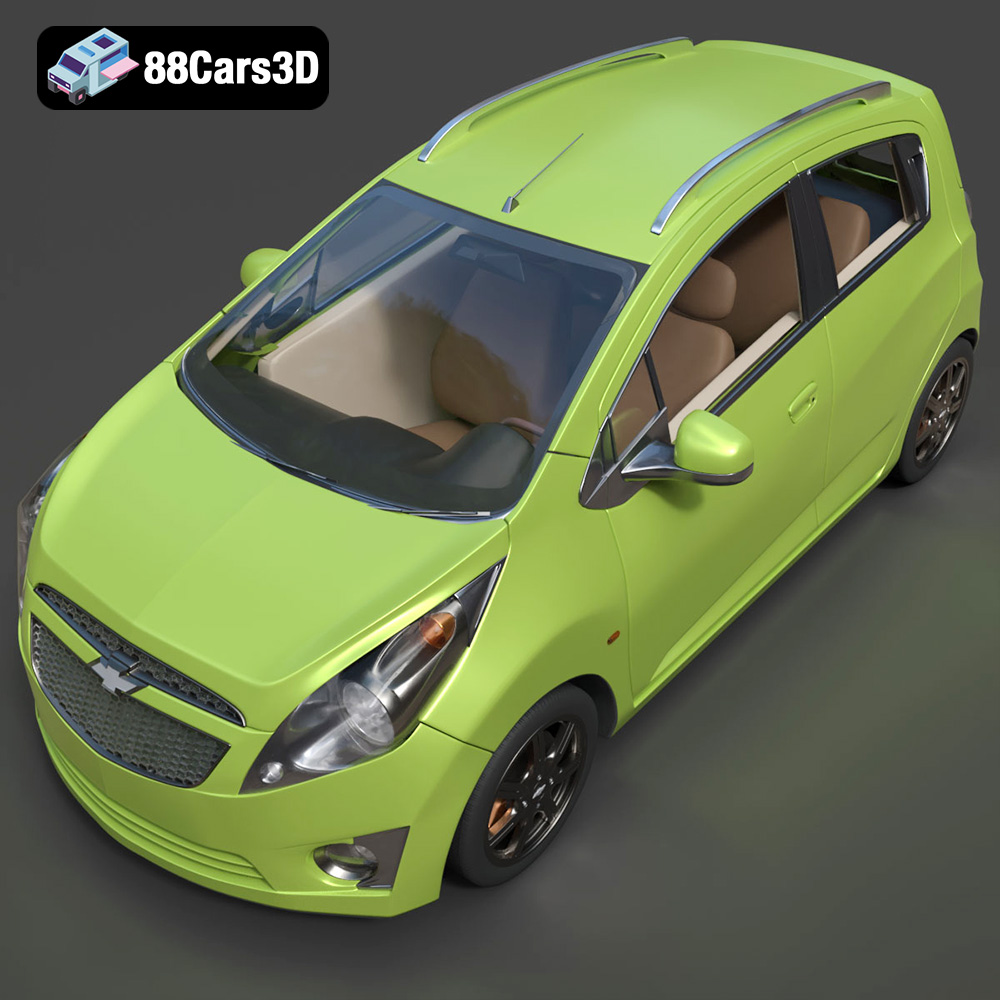
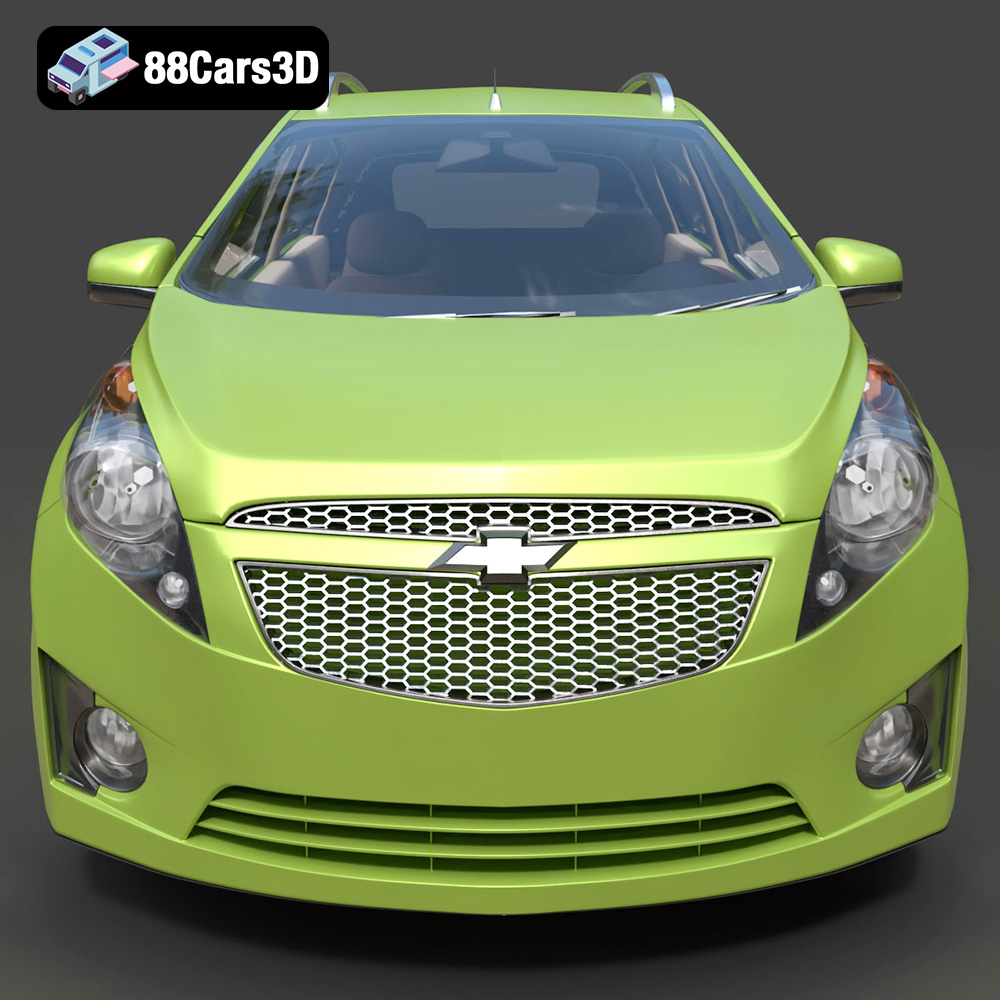
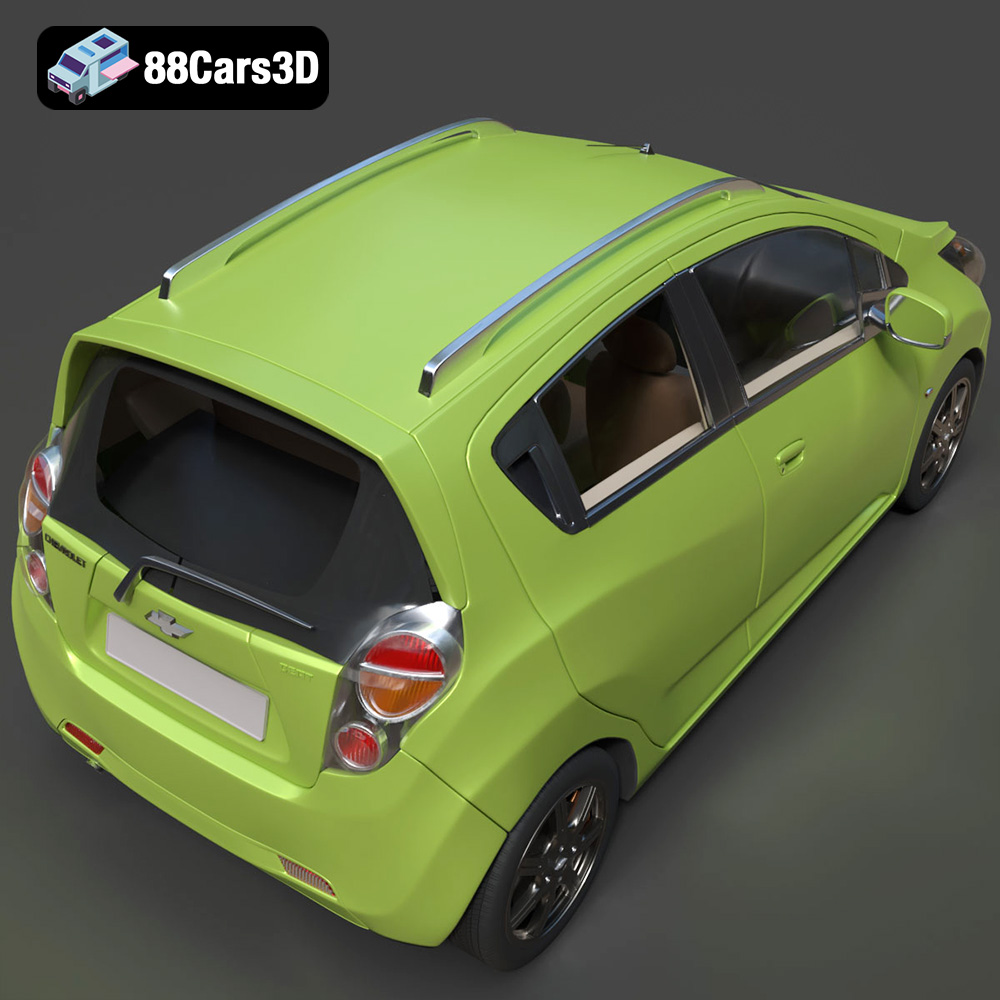
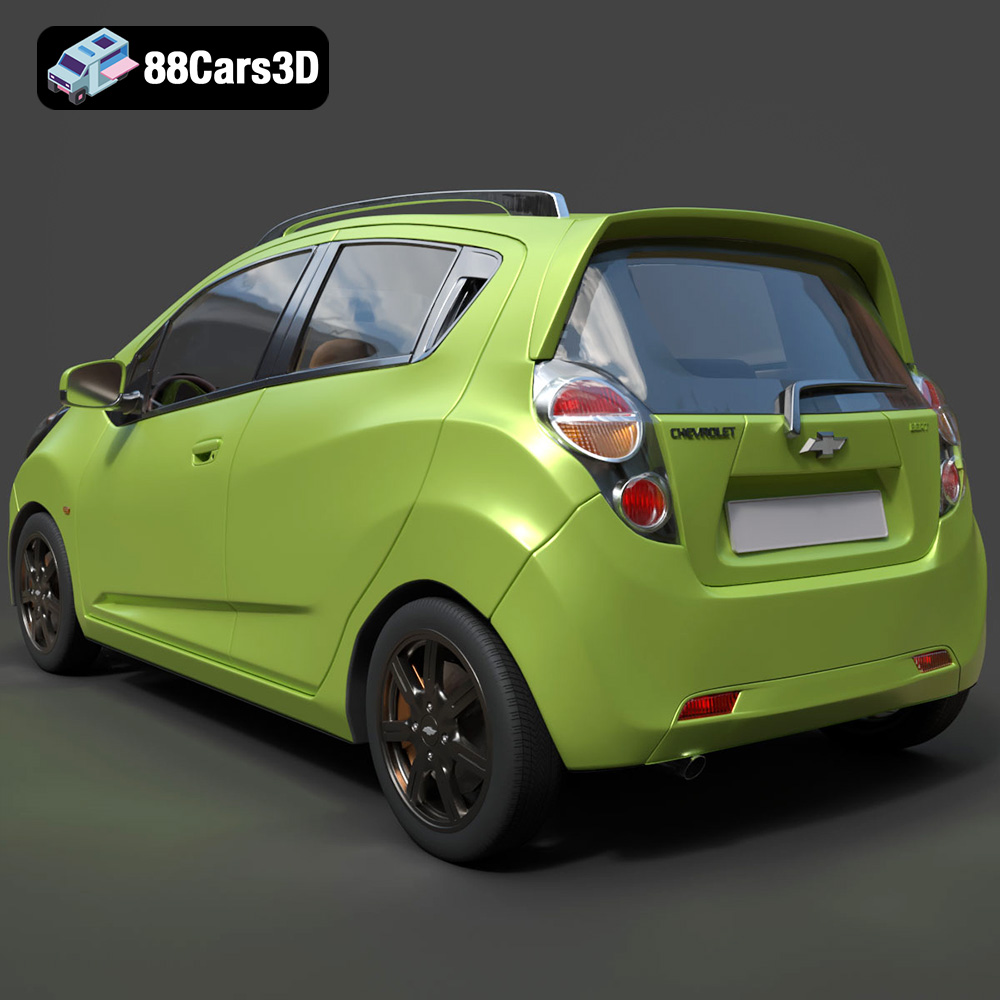
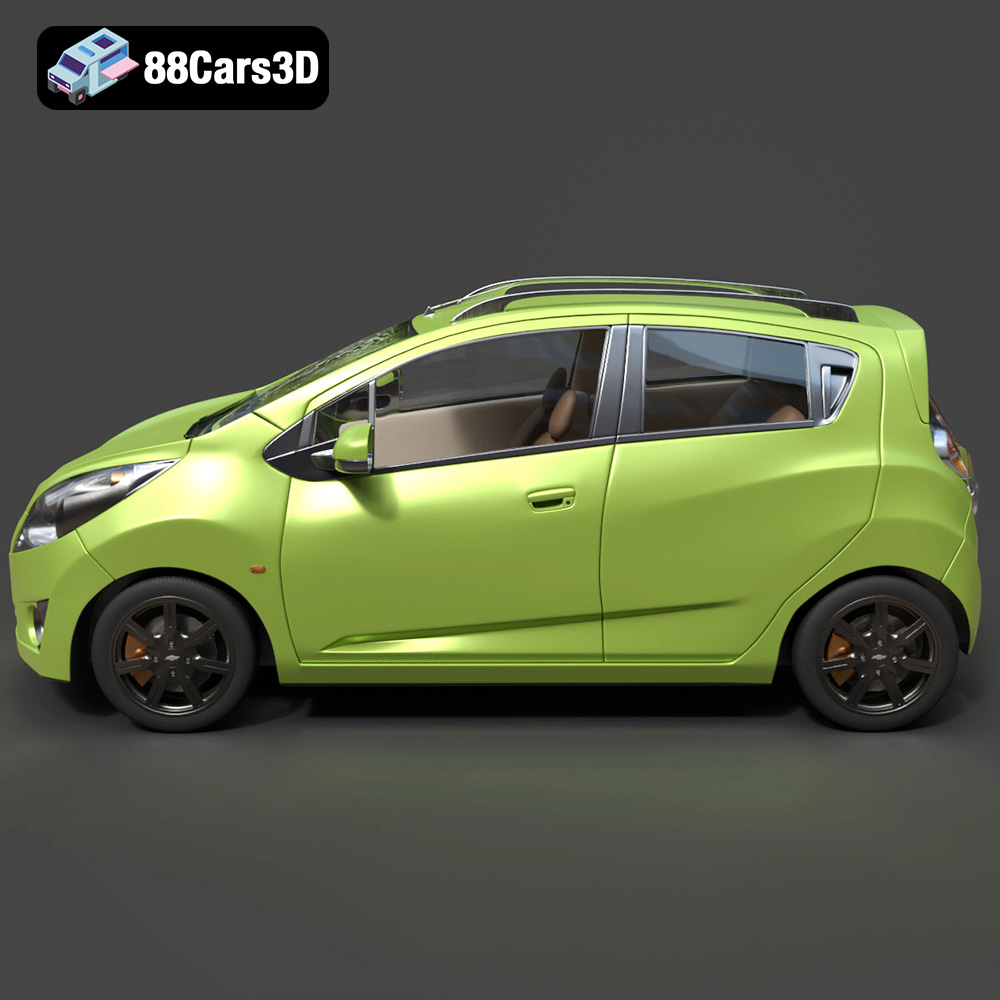
The Chevrolet Spark (Beat) 2010-08 3D model exemplifies the attributes of a professional-grade automotive asset. Its detailed topology, based on the compact city car known for its dynamic styling, ensures accurate geometry and proportions. From the aggressive front fascia to the signature swept-back headlights and cleverly hidden rear door handles, every exterior feature is replicated with precision. Inside, the model boasts a detailed cockpit with contoured seating, an accurate 3-spoke steering wheel, and the iconic motorcycle-inspired pod-style instrument cluster. These details make it perfect for urban driving games, realistic traffic simulations, or populating architectural visualizations. Its “game-ready & optimized” nature, coupled with real-world scale accuracy and proper pivot setups for animation, makes it an invaluable asset for a wide range of applications.
The choice of file format for a 3D model is far more critical than many realize. It dictates compatibility, workflow efficiency, data integrity, and ultimately, the success of a project across different platforms and applications. Professionals must understand the strengths and weaknesses of each format to select the most appropriate one for their specific needs. The Chevrolet Spark (Beat) 2010-08 3D model from 88cars3d.com offers a comprehensive suite of formats, ensuring maximum flexibility.
The .blend format is Blender’s native file type, offering a complete snapshot of a Blender project. This includes not just the mesh data but also materials, textures, lighting, cameras, animations, rigging, modifiers, and even custom scripts. It’s the ideal format when you need full editability within Blender, allowing artists to dissect and modify every aspect of the model, from topology adjustments to material tweaks and animation sequences. For the Chevrolet Spark model, the .blend file would provide the most comprehensive starting point for any Blender-centric workflow, offering granular control over its detailed components.
Autodesk’s .fbx (Filmbox) format has become an industry standard for exchanging 3D data between different software applications, especially within game development and animation pipelines. It supports geometry, materials, textures, animations, skinning, and blend shapes. Its robust support for animation and skeletal data makes it the go-to choice for importing animated characters, vehicles, and complex rigs into game engines like Unreal Engine and Unity. When integrating the Chevrolet Spark into a game, an .fbx file would be preferred for its ability to carry over wheel rotations, suspension travel, and steering pivot setups cleanly and efficiently.
The .obj (Wavefront OBJ) format is one of the oldest and most universally supported 3D file formats. It’s excellent for geometry transfer, supporting vertices, faces, normals, and UV coordinates. While it doesn’t typically store animation or rigging data, it’s highly compatible across virtually all 3D software. When you need to simply transfer the mesh and texture assignments of the Chevrolet Spark between different modeling packages without worrying about complex scene data, .obj is a reliable and lightweight choice, often accompanied by an .mtl (material) file for basic material definitions.
.glb (GL Transmission Format Binary) is a relatively newer format, gaining significant traction due to its efficiency and suitability for web-based 3D, AR (Augmented Reality), and VR (Virtual Reality) applications. It’s a self-contained, binary version of .gltf that embeds all necessary assets (geometry, materials, textures, animations) into a single file. This makes it incredibly easy to load and display 3D models in browsers, mobile AR apps, and immersive VR experiences. For showcasing the Chevrolet Spark in a virtual showroom or an AR car configurator, the .glb format provides an optimized, single-file solution.
The .stl (STereoLithography) format is the de facto standard for 3D printing. It represents a 3D model as a series of connected triangles, defining only the surface geometry without color, texture, or material information. While simpler than other formats, its universality in additive manufacturing workflows is unmatched. The Chevrolet Spark (Beat) model can be converted to .stl for display-scale hobbyists or for creating physical prototypes. Its precise geometry ensures that the printed model accurately reflects the digital design, with considerations for wall thickness and support structures being crucial during slicing.
The .ply (Polygon File Format, or Stanford Triangle Format) is often used for storing 3D data from 3D scanners, CAD software, and scientific applications. It can store not just geometry but also color per vertex, normal information, and even material properties. While less common for general asset exchange than FBX or OBJ, it’s valuable for applications requiring high precision or direct output from scanning processes. For analytical work or integrating the Chevrolet Spark into CAD environments, .ply could be a suitable format, especially if vertex colors or additional data are embedded.
The .unreal format refers to assets specifically packaged and optimized for Epic Games’ Unreal Engine. While not a standalone file format in the traditional sense, it signifies a model that has undergone the necessary processing (e.g., proper import settings, material setup, collision geometry, LODs) to function seamlessly within the Unreal Editor. The Chevrolet Spark model provided as ‘.unreal’ indicates that it’s truly game-ready, saving developers significant time on optimization and setup for their real-time environments, offering immediate deployment within the engine.
The .max format is Autodesk 3ds Max’s native file type, similar to Blender’s .blend. It encapsulates the entire 3ds Max scene, including geometry, materials, textures, lighting, cameras, animation, and scene setup. For users working within a 3ds Max pipeline for high-end rendering, animation, or architectural visualization, the .max file for the Chevrolet Spark offers complete creative control. It allows for advanced customization, integration into complex scenes, and leveraging 3ds Max’s powerful rendering capabilities with engines like V-Ray or Corona.
The gaming industry thrives on realism and performance, and 3D car models are central to delivering captivating virtual worlds. From open-world adventures to high-octane racing simulators, the quality and optimization of vehicle assets directly impact player immersion and game stability. The Chevrolet Spark (Beat) 2010-08 model is designed with these considerations at its core, making it an ideal game asset.
Game engines like Unreal Engine and Unity demand specific optimizations for 3D car models. Key aspects include polycount management, efficient UV layouts for texture baking, material setup using PBR workflows, and the implementation of Levels of Detail (LODs). The Chevrolet Spark model, with its 852,746 triangles, strikes a perfect balance. This topology is detailed enough for close-up views while remaining efficient for real-time rendering. Furthermore, its “game-ready” status implies optimized geometry and materials that respond realistically to lighting, a crucial factor for engines that utilize advanced rendering techniques. Developers can readily import such assets, confident in their performance without extensive manual optimization.
For a car in a game, static beauty isn’t enough; it needs to move realistically. This requires proper rigging and pivot setups. The Chevrolet Spark model includes separate wheels, suspension, and steering components, each with correctly placed pivots. This allows for straightforward animation of steering, wheel rotation, and suspension travel, essential for simulating realistic driving dynamics. Clean hierarchies within the model make it easy for animators to hook up physics-based systems or keyframe specific actions, from a simple parked car to a vehicle navigating complex terrain in an open-world environment.
Imagine the Chevrolet Spark (Beat) 2010-08 zipping through a bustling virtual city or serving as a common traffic vehicle in a sprawling urban simulation. Its optimized polycount and detailed interior geometry make it perfect for both first-person and third-person perspectives. The model’s real-world scale accuracy ensures it fits seamlessly within existing game environments. For mobile games, its efficient design translates to smoother performance on less powerful hardware. Its versatile file formats, particularly .fbx and .unreal, facilitate quick integration into Unreal Engine or Unity projects, enabling game developers to rapidly populate their digital worlds with a realistic and performance-friendly vehicle.
Beyond interactive entertainment, high-quality 3D car models are indispensable in creating stunning visual content for marketing, advertising, and architectural visualization. The ability to generate photorealistic imagery from a digital asset offers unparalleled flexibility and cost-effectiveness compared to traditional photography.
Photorealistic rendering demands precision in every aspect of a 3D model: accurate geometry, high-resolution textures, and PBR-compliant materials. The Chevrolet Spark (Beat) 2010-08 model’s detailed topology and accurate material setups are crucial here. When loaded into a powerful renderer like V-Ray or Corona (typically within 3ds Max or Blender), its surfaces will interact with virtual studio lighting in a physically accurate manner. The factory-accurate alloy wheels with realistic tire tread mapping, high-resolution headlights, and distinct taillight clusters all contribute to a believable final image, essential for automotive brand campaigns or product showcases. Customization options, such as changing body colors or material finishes, further enhance creative possibilities for diverse marketing visuals.
Architectural visualization relies on compelling environmental realism. Populating a scene with lifelike vehicles can breathe life into an otherwise sterile render, grounding the architecture in a believable context. The Chevrolet Spark, being a common city car, is an excellent choice for adding a touch of urban reality to architectural renders. Its accurate real-world scale ensures it doesn’t look out of place next to buildings and infrastructure. Used as a background element or a focal point in a driveway, it subtly communicates human presence and scale, making the visualization more engaging and relatable. The detailed exterior and interior mean it holds up to closer scrutiny, even in high-resolution stills or animated fly-throughs.
For brands and advertisers, 3D car models offer incredible agility. Instead of expensive photoshoots, product shots can be generated digitally, allowing for infinite variations in lighting, environment, and vehicle configuration at a fraction of the cost. The Chevrolet Spark model can be rendered in various factory colors, with different wheel options, or even customized finishes to match specific campaign themes. Its detailed engine block components and exhaust system can be highlighted in exploded views or close-up renders, showcasing engineering details without needing a physical car. This digital flexibility empowers marketing teams to create diverse, high-impact visuals rapidly and efficiently.
Beyond traditional rendering and gaming, 3D car models are at the forefront of emerging technologies like Augmented Reality (AR), Virtual Reality (VR), and 3D printing, enabling new forms of interaction and physical creation.
AR and VR experiences demand extreme optimization for real-time performance. The goal is often seamless interaction and immersion without lag or visual glitches. The Chevrolet Spark (Beat) model, with its “game-ready & optimized” characteristics and manageable polycount, is ideally suited for virtual showrooms and configurators. In a VR environment, customers could explore the car’s interior in full 360 degrees, customize colors and trims, and even ‘sit’ inside the vehicle. For AR applications, the model could be overlaid onto a real-world scene via a smartphone or tablet, allowing users to visualize the car in their driveway or office. The inclusion of the .glb format directly supports these web and mobile-centric interactive experiences, providing a single, optimized file for deployment.
The tactile nature of 3D printing offers a unique bridge between the digital and physical realms. While typically used for visualization, a robust 3D car model can also serve as the basis for physical prototypes or display models. The Chevrolet Spark (Beat) model is convertible to .stl format, making it compatible with 3D printers. The product description provides specific print settings—recommended scale, layer height, wall thickness, infill, and support requirements—highlighting the attention to detail for physical output. Hobbyists can print detailed miniatures, while designers can create scaled models for presentation or functional testing, exploring the car’s form in a tangible way. Resin printing is recommended for capturing the fine details, ensuring high-fidelity physical replicas.
Consider the potential for the Chevrolet Spark model in future applications. Imagine an interactive museum exhibit where visitors can view a holographic Spark, exploring its history and features through gesture controls. Or an educational tool where students can disassemble the virtual engine piece by piece. The model’s clean topology and detailed features make it a versatile asset for these innovative uses. Its inclusion of formats like .glb also future-proofs it for integration into evolving web3 and metaverse platforms, positioning it as a foundational asset for the next generation of interactive digital experiences.
The true power of a professional 3D model lies in its seamless integration across various software platforms, enabling artists and developers to work within their preferred ecosystems. The Chevrolet Spark (Beat) 2010-08 model’s diverse file format offerings ensure broad compatibility and streamlined workflows.
For artists working with 3ds Max, the included .max file provides native access to the model, complete with all its scene data, materials, and potential rigging. This is ideal for high-end rendering projects where precise control over lighting, camera angles, and material properties is paramount. Users can easily modify textures, apply advanced shaders, or integrate the Spark into complex architectural scenes with other assets. If starting from another format like .fbx or .obj, 3ds Max offers robust import options, allowing for clean integration and further customization, from fine-tuning geometry to setting up sophisticated V-Ray or Corona renders.
Blender users benefit from the native .blend file, which provides the most comprehensive starting point. This allows immediate access to the model’s structure, materials, and any pre-configured elements, facilitating rapid scene assembly. Artists can leverage Blender’s powerful Eevee or Cycles render engines to produce stunning visuals, utilizing the Spark model for lifestyle renders, game cinematics, or even as a prop in short animations. The clean topology of the Spark also makes it amenable to further sculpting or detailing within Blender, should a project require even higher levels of customization.
For real-time applications and game development, Unreal Engine is a dominant force. The Chevrolet Spark model, supplied in .fbx and specific .unreal formats, is tailored for this environment. Importing the .fbx file allows Unreal Engine to recognize geometry, UVs, and PBR materials, often with minimal setup required. The ‘game-ready’ optimization ensures that the model performs efficiently within the engine’s rendering pipeline. Developers can drag-and-drop the Spark into levels, set up physics, implement vehicle controllers, and even use it to bake lighting or contribute to global illumination solutions. The inclusion of engine-specific files streamlines the process even further, making the Spark model a true plug-and-play asset for Unreal projects.
The landscape of 3D content creation is continuously evolving, but the fundamental need for high-quality, versatile, and technically sound assets remains constant. A premium 3D car model, such as the Chevrolet Spark (Beat) 2010-08 3D Model, serves as a testament to the power of meticulously crafted digital content. From empowering game developers with optimized assets to enabling architectural visualizers to create believable urban scenes and opening new avenues in AR/VR and 3D printing, such models are indispensable tools in the modern creative workflow.
Understanding the nuances of various file formats and the technical specifications required for different applications allows professionals to make informed decisions that drive efficiency and elevate project quality. Whether you’re aiming for photorealistic renders, smooth real-time performance, or tangible prototypes, the right 3D car model can significantly impact your success. For those seeking reliable, high-fidelity 3D car models to accelerate their projects and achieve exceptional results, resources like 88cars3d.com offer a curated selection of assets designed to meet professional demands across industries.
The Chevrolet Spark (also known globally as the Beat) 2010-08 is a renowned compact city car celebrated for its dynamic, edgy styling and exceptional urban agility. Standing out with its aggressive front fascia, signature swept-back headlights, and cleverly hidden rear door handles that give it a sporty three-door coupe appearance, the Spark perfectly blends practicality with youthful energy. Its efficient inline-4 engine and compact dimensions make it an iconic vehicle of modern urban mobility.
This premium 3D model boasts a detailed topology of 852,746 triangles, delivering outstanding visual fidelity while maintaining efficient performance for real-time applications. Whether you are developing an interactive mobile game, creating an immersive virtual reality showroom, or producing high-end architectural visualizations, this highly optimized asset guarantees smooth rendering and realistic lighting responses across all major platforms.
Perfect for urban driving games, realistic city traffic simulations, architectural visualization backgrounds, and VR showrooms.
.blend, .fbx, .obj, .glb, .stl, .ply, .unreal, .max
Tags:
chevrolet, spark, beat, 2010, 2008, hatchback, city-car, compact-car, game-ready, low-poly, optimized, car-3d-model, game-asset, rendering, vr-ar, blend, fbx, obj, glb, stl, ply, unreal, max
$57.99
.2008
.2010
.blend
.chevrolet
.fbx
.glb
.hatchback
.max
.obj
.ply
.rendering
.stl
.unreal
beat
car-3d-model
city-car
compact-car
game asset
game-ready
low-poly
optimized
spark
VR/AR