Get 20% OFF All Premium 3D & STL Models!

The world of 3D modeling stands at the intersection of art and engineering, particularly when it comes to replicating the intricate beauty and mechanical prowess of iconic automobiles. For designers, game developers, architects, and visual effects artists, access to meticulously crafted 3D car models is not just a convenience; it’s a fundamental requirement for delivering photorealistic results and immersive experiences. These digital assets form the backbone of everything from cinematic car chases and cutting-edge racing games to interactive virtual showrooms and precision architectural visualizations.
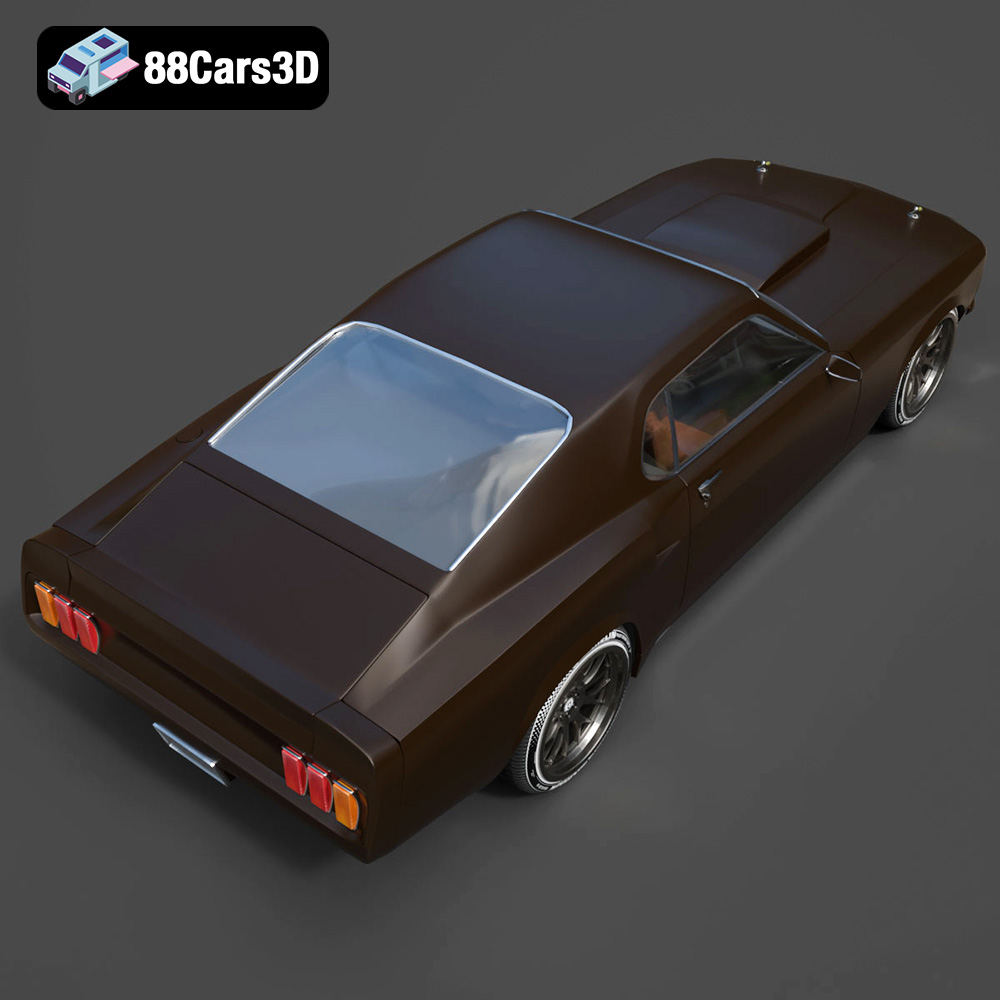
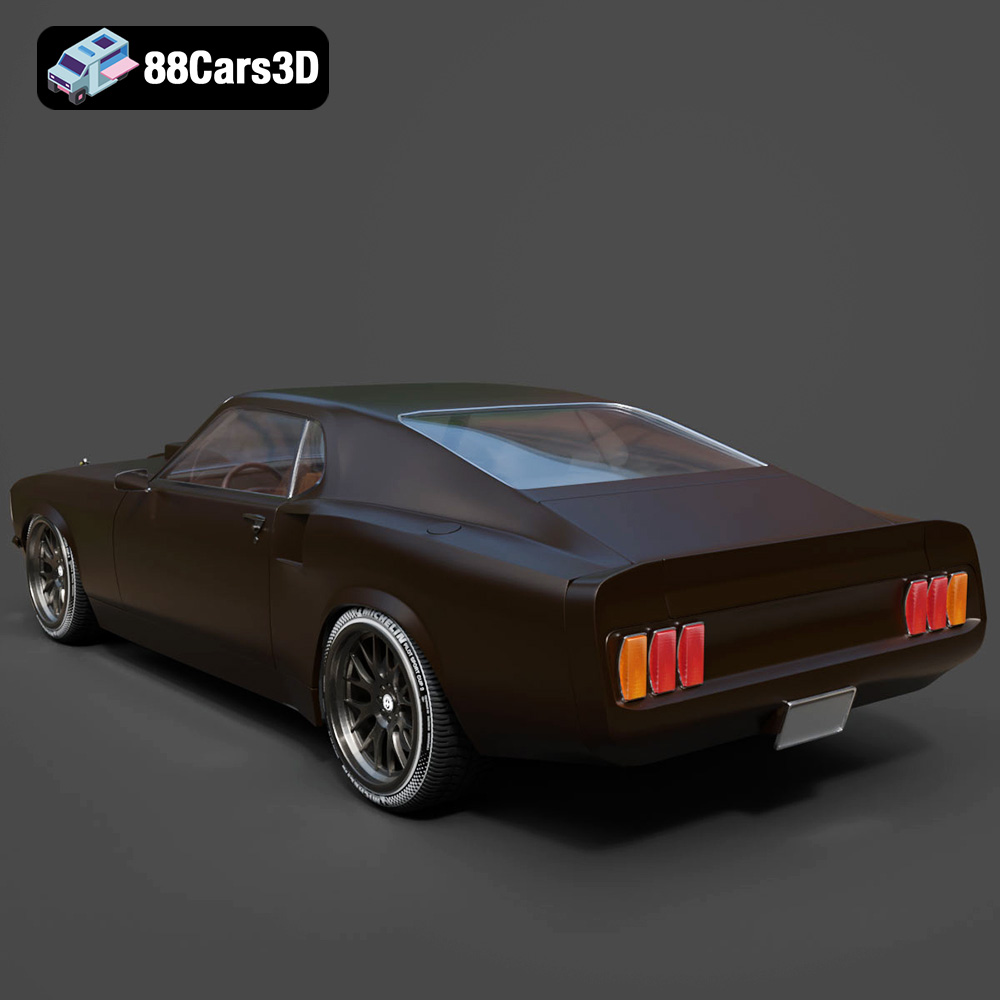
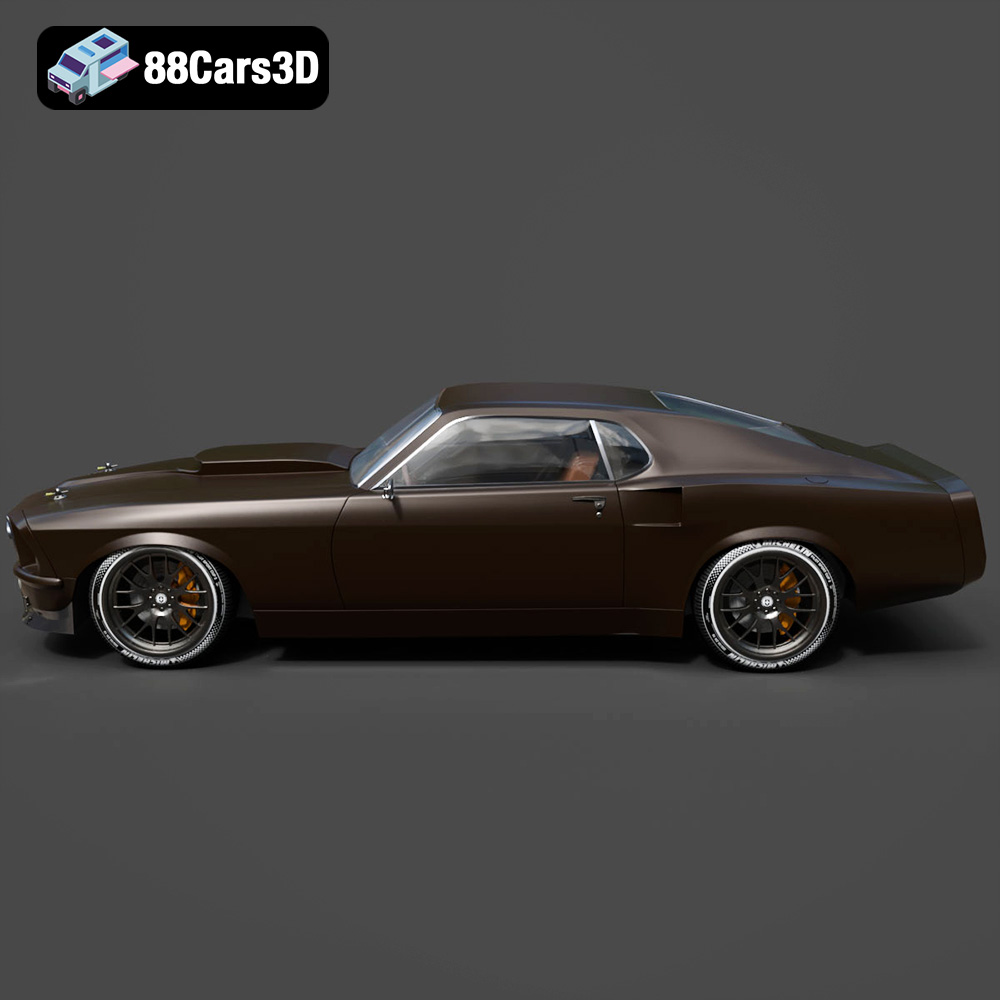
Among the pantheon of classic American muscle cars, the 1969 Ford Mustang Mach 1 holds a special, revered place. Its aggressive stance, distinctive sportsroof design, and a lineage steeped in high-performance V8 heritage make it an irresistible subject for digital recreation. Crafting such a legend in 3D demands an unparalleled attention to detail, a deep understanding of automotive design, and technical mastery to ensure it performs flawlessly across various professional pipelines. This article will explore the technical nuances involved in utilizing premium 3D car models, with a particular focus on how the extraordinary 1969 Ford Mustang Mach 1 3D model available at 88cars3d.com exemplifies the pinnacle of digital automotive artistry, ready for rendering, game development, AR/VR, and even 3D printing.
Creating a truly exceptional 3D car model is a multi-faceted process that marries artistic vision with rigorous technical standards. It’s about more than just replicating shapes; it’s about capturing the essence, the performance, and the history of a vehicle.
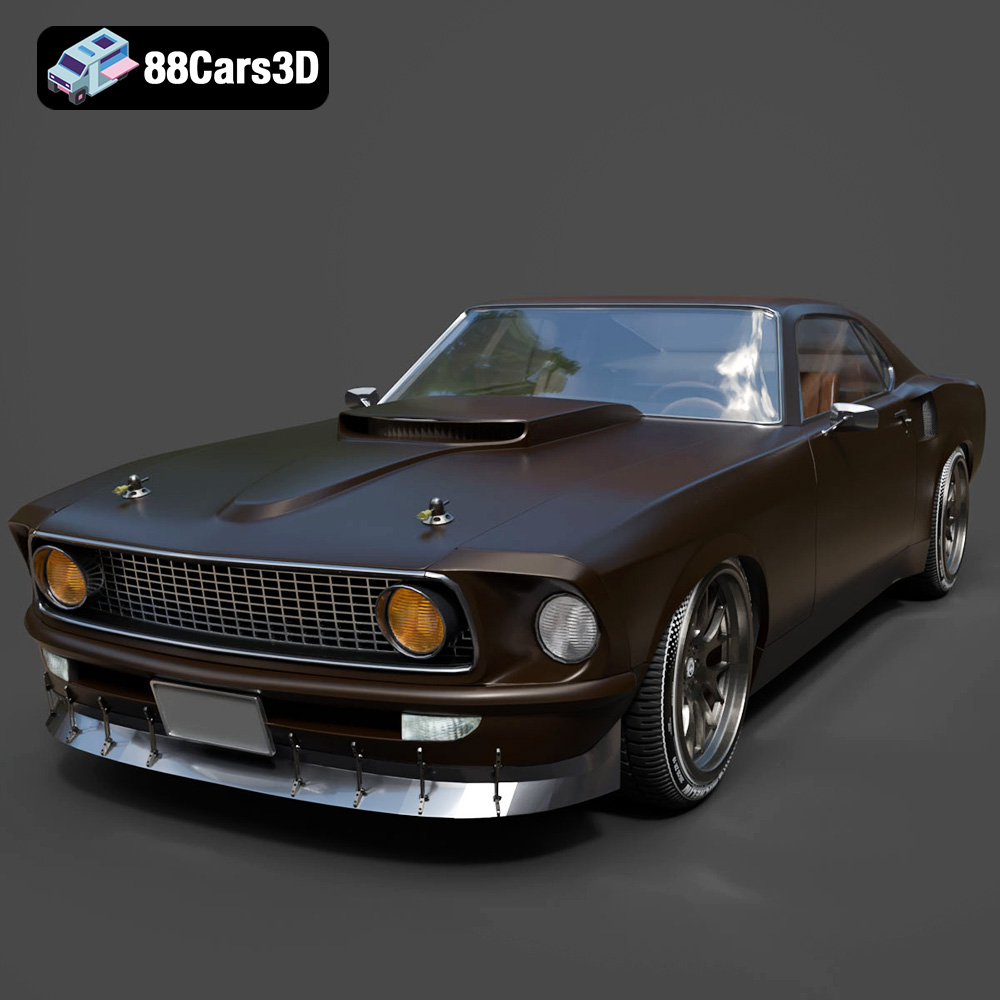
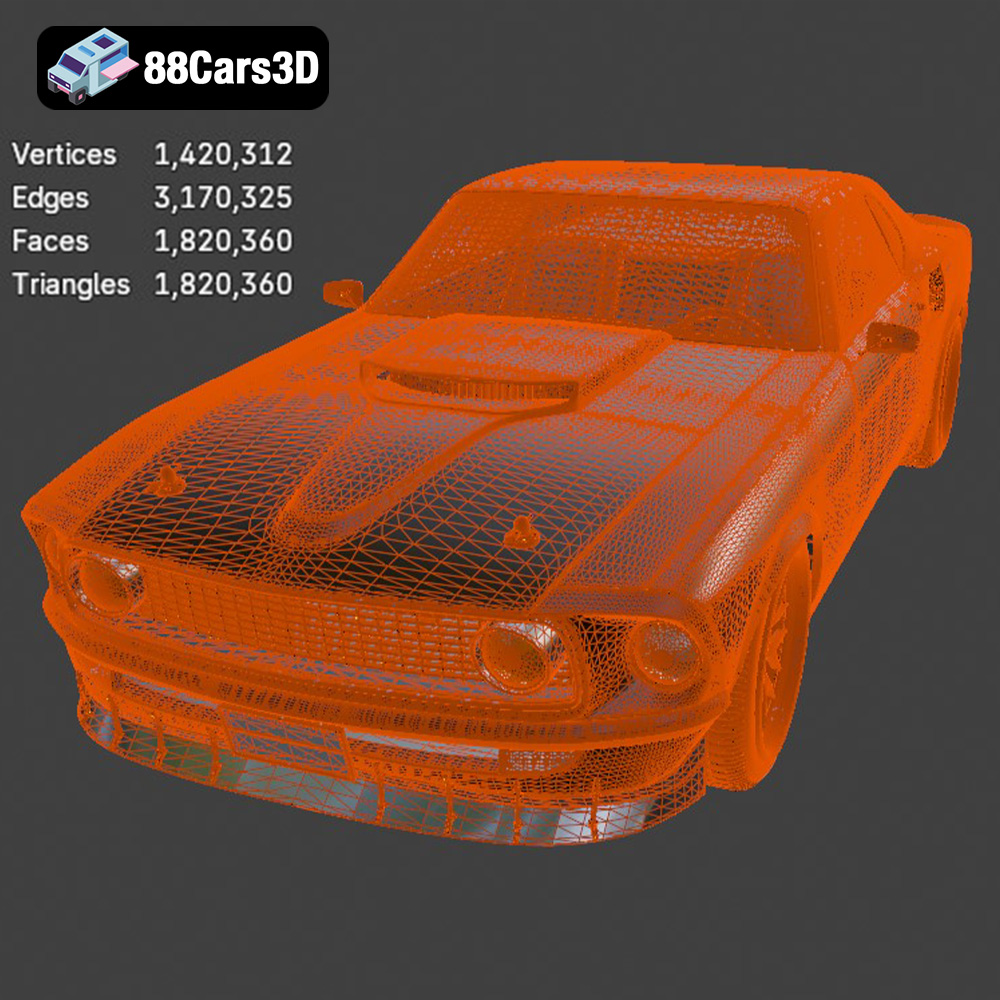
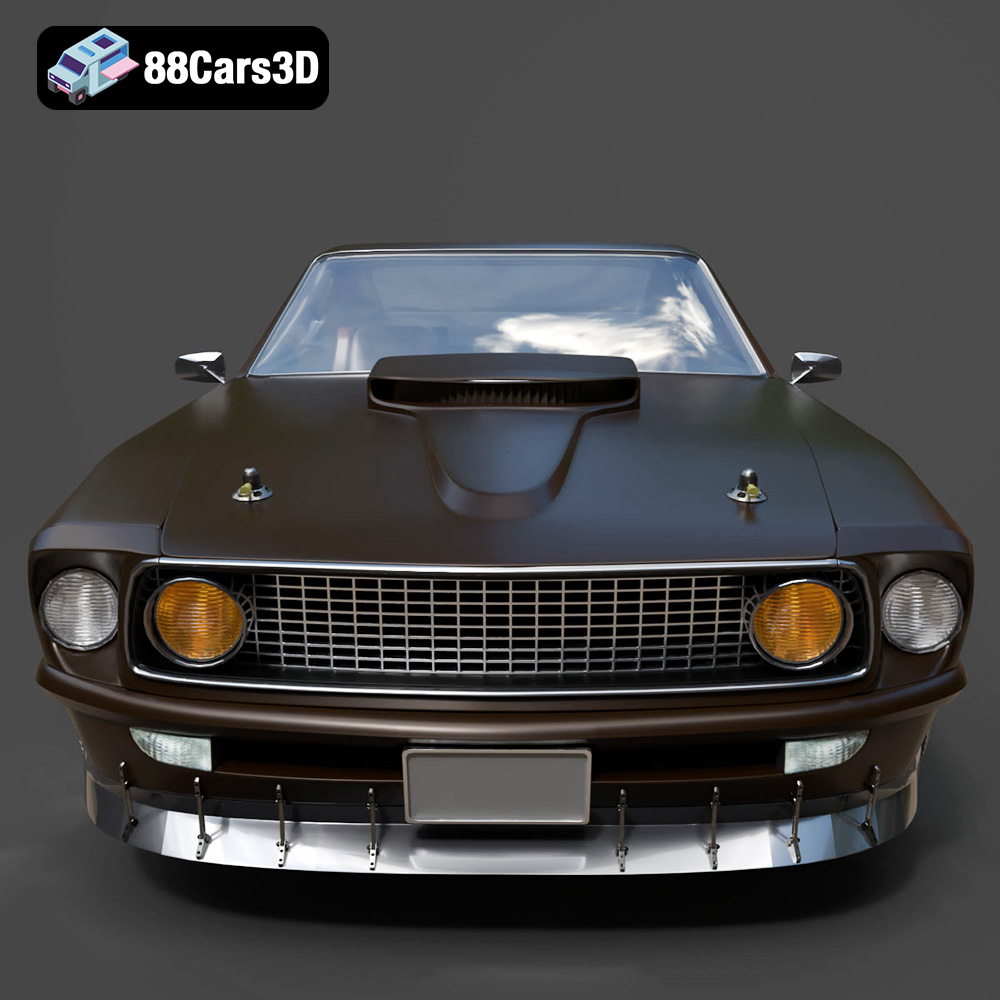
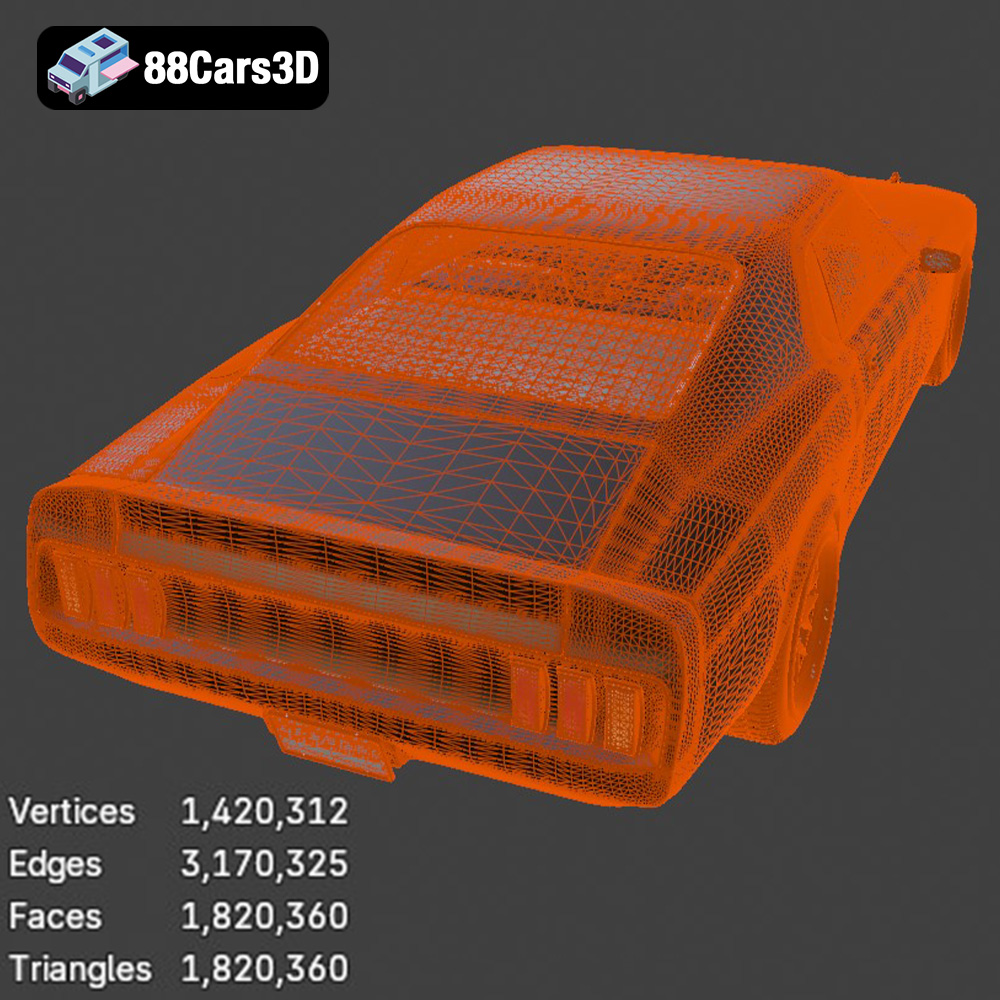
A high-quality 3D car model begins with an unwavering commitment to accuracy. This means meticulously referencing blueprints, historical photographs, and physical measurements to ensure every curve, panel gap, and proportion aligns with the real-world counterpart. For a vehicle like the 1969 Ford Mustang Mach 1, this includes the iconic fastback proportions, the aggressive front grille with its quad headlights, the signature hood scoop, and the muscular rear haunches. Our featured model boasts a highly detailed topology of 1,820,360 triangles, a figure that strikes an optimal balance between visual fidelity and performance efficiency. This polycount ensures that whether you’re rendering a close-up in a studio environment or integrating it into a real-time game, the model retains its sharp details without unnecessarily burdening your system.
True fidelity extends beyond the exterior. The interior, or cockpit, is where the driver interacts with the vehicle, and its digital representation must convey the same level of realism. This includes detailed high-back bucket seats with classic vinyl upholstery, an authentic wood-grain trimmed three-spoke steering wheel, and a multi-dial instrument cluster. For scenarios requiring first-person perspectives, such as driving simulators or VR experiences, an optimized and accurate interior is crucial for immersion. Furthermore, the engine bay components, including a detailed V8 engine block, demonstrate a commitment to completeness often overlooked in lesser models. Even the undercarriage and classic leaf-spring suspension details are meticulously replicated, ensuring authenticity from every angle, which is vital for high-end visualizations and precise simulations.
Technical specifications are paramount. The model is built to real-world scale accuracy, directly correlating to the actual vehicle chassis. This is not just for aesthetic realism but also for seamless integration into existing scenes or game environments where scale consistency is critical. Crucially, the model features a proper pivot setup for steerable wheels, animated wheel rotation, and realistic suspension travel. This pre-rigging significantly streamlines the animation process for cinematic sequences, game physics, or interactive demonstrations, saving countless hours for professional animators and developers.
The versatility of a professional 3D car model is often defined by the range of file formats it supports. Each format serves specific purposes, optimized for different software, engines, or applications. Understanding these distinctions is crucial for selecting the right asset for your project. The 1969 Ford Mustang Mach 1 3D model from 88cars3d.com offers an extensive suite of formats, ensuring maximum compatibility across diverse professional workflows.
The `.blend` file is native to Blender, a powerful open-source 3D creation suite. When you receive a `.blend` file, it’s a complete Blender scene, containing not just the mesh data but also materials, textures, lighting, camera setups, and even animations if present. This format is ideal for Blender users who want full control over the model, allowing for easy modifications to topology, materials, rigging, or even re-rendering with Blender’s Cycles or Eevee engines. Artists can quickly customize the vehicle’s appearance or integrate it into complex scenes without needing to re-import and re-assign attributes.
The Filmbox (`.fbx`) format is an industry standard for interoperability between 3D software applications and game engines. It supports not only mesh data but also animations, rigs, skinning, blend shapes, and materials. For game developers working with Unreal Engine or Unity, `.fbx` is the go-to format. It efficiently transfers complex hierarchies, ensuring that the Mustang’s separate wheels, suspension, and steering components maintain their relationships for animation. This format is designed for performance in real-time environments, making it crucial for game-ready assets.
The Wavefront Object (`.obj`) format is a truly universal 3D data format, widely supported across virtually all 3D software packages. It primarily stores geometric data (vertices, normals, texture coordinates, faces) and can reference external `.mtl` (material library) files for basic material properties. While it doesn’t support animation or rigging, its widespread compatibility makes it an excellent choice for straightforward mesh transfer between different programs or for archiving. It’s a reliable fallback when other formats encounter compatibility issues.
The GL Transmission Format (`.glb`) is a relatively newer, royalty-free open standard for 3D scenes and models. It’s often referred to as the “JPEG of 3D” because it’s designed to be a compact, efficient, single-file format that includes geometry, materials, textures, and even animations. `.glb` is highly optimized for web-based applications, AR/VR experiences, and mobile platforms due to its small file size and quick loading times. This makes it perfect for interactive virtual showrooms, online configurators, or augmented reality apps displaying the 1969 Mustang Mach 1.
Stereolithography (`.stl`) is the standard file format for 3D printing. It represents a 3D model as a collection of unconnected triangular facets, defining the surface geometry of an object without color, texture, or other CAD attributes. For hobbyists and professionals looking to physically manifest the Mustang Mach 1, the `.stl` format is indispensable. The product description provides detailed 3D print settings, recommending specific scales, layer heights, infill percentages, and support requirements, making it ready for production on FDM or resin printers.
The Polygon File Format (`.ply`), also known as the Stanford Triangle Format, is primarily used to store 3D data from 3D scanners. It can store a variety of properties including color, transparency, surface normals, and range data in addition to geometry. While less common for direct artistic exchange than `.fbx` or `.obj`, `.ply` files are often used in scientific visualization, CAD, and specific engineering applications where precise mesh information and additional per-vertex data are critical for analysis or manufacturing processes.
While `.unreal` isn’t a universally recognized external file format like `.fbx`, it signifies that the model is provided as an Unreal Engine project or specifically pre-prepared for seamless import and optimal performance within Unreal Engine. This often means the model has already been imported, scaled, had materials set up with Unreal’s physically based rendering (PBR) system, and potentially even includes blueprints for interaction or animation. This pre-packaging saves immense setup time for Unreal developers, providing an “out-of-the-box” experience for integrating the Mach 1 into their projects.
The `.max` file is native to Autodesk 3ds Max, another industry-leading 3D modeling, animation, and rendering software. Similar to `.blend` files for Blender, a `.max` file contains the complete scene data, including all geometry, textures, materials, lighting, cameras, and animations created within 3ds Max. This format is essential for 3ds Max users who require full editability, allowing them to leverage the software’s powerful modeling tools, robust rendering capabilities (like V-Ray or Corona), and extensive animation toolsets for highly customized projects.
The quest for photorealism in digital imagery is a constant drive for visualization artists. When it comes to automotive subjects, the challenge is amplified by complex reflections, intricate surface details, and the inherent allure of metallic finishes. A high-fidelity 3D car model like the 1969 Ford Mustang Mach 1 provides an exceptional foundation for achieving breathtaking renders.
Both 3ds Max and Blender offer powerful rendering engines that can transform a raw 3D model into a stunning visual masterpiece. With the Mustang Mach 1 model, artists can import the `.max` or `.blend` files and immediately begin setting up their scene.
In 3ds Max, users might leverage renderers like V-Ray or Corona, famous for their ability to produce physically accurate lighting and materials. The model’s detailed geometry, from the chrome-tipped dual exhaust to the Magnum 500 style wheels, reacts realistically to light. Artists can experiment with various studio lighting setups, backplates, and HDRI environments to showcase the vehicle’s form. The ability to change body/panel colors and adjust material finishes (matte, gloss, metallic) provides endless creative possibilities for advertising campaigns or virtual photoshoots.
Blender users benefit from the Cycles and Eevee renderers. Cycles excels at photorealistic ray-tracing, perfect for close-up detail shots, while Eevee offers real-time rendering capabilities for rapid iteration. The detailed V8 engine block and engine bay components can be highlighted in exploded views or cutaway renders, providing an educational and visually engaging experience.
Consider a marketing agency tasked with creating a campaign for classic car enthusiasts. The 1969 Ford Mustang Mach 1 3D model becomes an indispensable asset. It can be placed into various digital environments: cruising down a virtual highway at sunset, parked in front of a modern architectural marvel, or showcased in an elegant virtual showroom. The model’s accuracy ensures that product shots are indistinguishable from real photography, allowing brands to tell compelling stories without the expense and logistical challenges of physical photoshoots.
In architectural visualization, the presence of a classic car often adds a layer of depth, realism, and storytelling to a scene. Imagining a meticulously rendered Mach 1 parked in the driveway of a sleek, contemporary home instantly elevates the visualization, adding character and a sense of lifestyle that resonates with viewers. The model’s optimized topology ensures it integrates smoothly into large architectural scenes without causing performance bottlenecks.
The demand for realistic vehicle assets in interactive environments, from racing simulators to open-world games and immersive AR/VR experiences, is constantly growing. A truly “game-ready” 3D car model like the Mach 1 offers the ideal blend of visual fidelity and performance optimization.
The inclusion of `.fbx` and `.unreal` formats specifically caters to the needs of game developers. When integrated into Unreal Engine or Unity, the Mustang Mach 1 model is designed for optimal performance. Its 1,820,360 triangles strike a perfect balance, providing enough detail for high-quality visuals without excessively burdening the game engine’s resources.
The model’s technical advantages, such as real-world scale and proper pivot setup for steering, wheel rotation, and suspension travel, are critical for realistic vehicle physics and animation within game engines. Developers can quickly implement car controllers, assign physics assets, and animate suspension systems to respond dynamically to terrain, creating a truly immersive driving experience. Imagine the Mach 1 as a customizable vehicle in a classic car racing game, where players can modify tire textures (off-road vs. street variants) and adjust material finishes to personalize their ride.
Augmented Reality (AR) and Virtual Reality (VR) applications push the boundaries of immersion, and high-quality 3D models are at their core. The `.glb` format, optimized for AR/VR and browser-based display, makes the 1969 Ford Mustang Mach 1 an excellent candidate for virtual showrooms and mobile AR experiences. Users could interact with the car in a VR environment, opening doors, peering into the detailed cockpit, or even lifting the hood to inspect the V8 engine. In AR, the Mustang could appear life-sized in a user’s driveway, allowing them to walk around it, admire its details, and even change its color in real-time. This level of interaction is invaluable for automotive brands looking to engage potential customers or for educational purposes.
The utility of a robust 3D model extends far beyond digital screens. For enthusiasts and collectors, the ability to physically manifest a digital creation through 3D printing offers a unique way to own a tangible piece of automotive history. The 1969 Ford Mustang Mach 1 3D model provides dedicated support for this, with the `.stl` format and comprehensive print recommendations.
The `.stl` file format is the universal standard for 3D printing. The Mustang Mach 1 model, prepared for `.stl` export, allows users to bring this classic muscle car into the physical world. The detailed product description includes crucial 3D print settings, such as recommended scales (1:12, 1:18, 1:24), layer height (0.04–0.12 mm), wall thickness (1.2–2.0 mm), and infill (20–30%). These guidelines are essential for ensuring a successful print, whether on a desktop FDM printer or a high-resolution resin printer.
For achieving the finest details, resin printing is explicitly recommended, which is particularly important for delicate components like the exhaust system, mirrors, and steering components that require supports. The suggested print orientation, with the frame printed angled for structural integrity and wheels printed separately, highlights the thoughtful preparation for physical production. Post-processing is a critical final step, involving sanding, priming, and applying authentic factory colors with metallic finishes to truly bring the miniature Mach 1 to life, making it a proud display piece for any classic car aficionado. This demonstrates the model’s versatility for digital display *and* tangible creation.
A premium 3D model should serve as a dynamic foundation, not a static asset. The 1969 Ford Mustang Mach 1 3D model from 88cars3d.com offers a robust platform for extensive customization, empowering artists to tailor the vehicle to specific project requirements.
The ability to change body and panel colors is a fundamental customization, allowing artists to render the Mach 1 in its various factory colors or apply unique custom finishes. Beyond color, modifying tire textures from street variants to off-road options can drastically alter the vehicle’s character and suitability for different scenes. Adjusting material finishes—from a high-gloss show car sheen to a more subdued matte or subtle metallic—adds another layer of realism and artistic control. Furthermore, adapting the lighting for different environments is key to integrating the model seamlessly, whether it’s bathed in the warm glow of a sunset or stark studio lighting.
The comprehensive range of included file formats (.blend, .fbx, .obj, .glb, .stl, .ply, .unreal, .max) ensures that the Mustang Mach 1 seamlessly integrates into virtually any professional 3D workflow. For animators, the inclusion of separate wheels, suspension, and steering components, coupled with a proper pivot setup, means less time spent on rigging and more time on creative animation. Imagine simulating realistic suspension compression over bumps or intricate steering movements in a cinematic sequence. This level of preparation significantly accelerates production timelines for game studios, animation houses, and visualization firms, making the model an invaluable time-saving asset. For instance, a studio working on a new racing game could drop this optimized Ford Mustang Mach 1 3D model directly into their environment, knowing that its technical specifications meet industry standards and its detail will impress players.
The 1969 Ford Mustang Mach 1 remains an automotive icon, a testament to an era of unbridled power and distinctive style. Translating such a legend into a high-fidelity 3D model requires a blend of artistic precision and rigorous technical execution. The 1969 Ford Mustang Mach 1 3D model available on 88cars3d.com stands as a prime example of this synthesis, offering an exceptionally detailed, game-ready, and versatile asset for a broad spectrum of professional applications.
From photorealistic automotive rendering and immersive game development to interactive AR/VR experiences and physical 3D prints, this model provides the foundational quality and technical flexibility demanded by today’s leading artists and developers. Its optimized topology, accurate geometry, detailed interior, and engine bay, combined with comprehensive file format support, ensure it’s not just a visual spectacle but a robust tool for any creative pipeline. Whether you’re crafting a cinematic masterpiece, building the next generation of racing games, or visualizing architectural grandeur, the Ford Mustang Mach 1 3D model from 88cars3d.com offers an unparalleled asset to elevate your projects to new heights of realism and engagement.
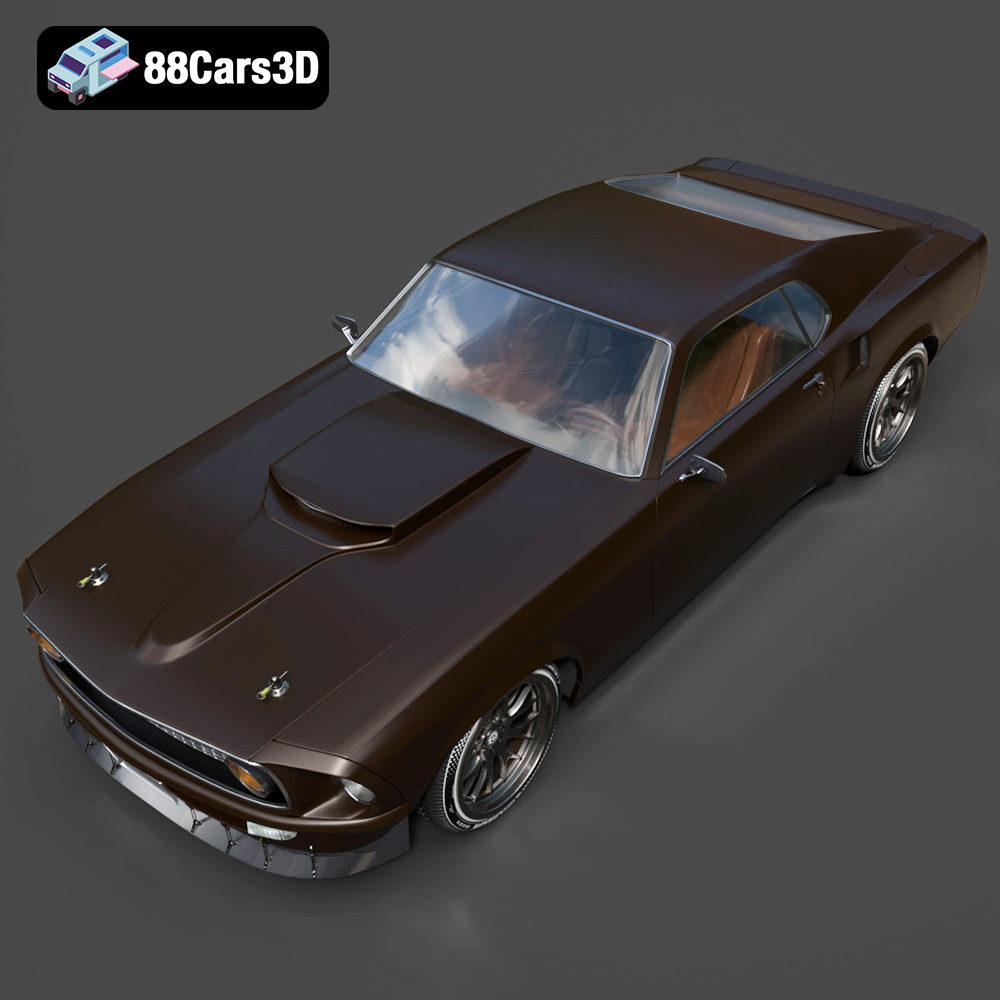
The 1969 Ford Mustang Mach 1 stands as a defining pillar of American muscle car heritage. This legendary fastback is celebrated for its aggressive stance, signature sportsroof styling, and high-performance V8 pedigree. Our 3D model meticulously captures its iconic visual elements, from the menacing front grille and quad headlights to the muscular rear haunches, distinctive hood scoop, and classic dual exhaust system.
Boasting a highly detailed topology of 1,820,360 triangles, this 3D model is crafted for maximum visual fidelity while maintaining optimized structures for modern rendering engines. It is designed to deliver photorealistic results for high-end rendering, game development, cinematic animation, and interactive AR/VR applications.
Perfect for virtual showrooms, classic car racing games, architectural visualizations, and automotive brand campaigns.
.blend, .fbx, .obj, .glb, .stl, .ply, .unreal, .max
Tags:
ford, mustang-mach-1, 1969, muscle-car, classic-car, game-ready, optimized, car-3d-model, game-asset, rendering, vr-ar, blend, fbx, obj, glb, stl, ply, unreal, max
$82.50
.1969
.blend
.fbx
.ford
.glb
.max
.obj
.ply
.rendering
.stl
.unreal
car-3d-model
classic-car
game asset
game-ready
muscle-car
mustang-mach-1
optimized
VR/AR