Get 20% OFF All Premium 3D & STL Models!

In the dynamic realm of digital design, the ability to accurately and efficiently represent complex machinery like automobiles has become paramount. From blockbuster visual effects to immersive game worlds and sophisticated product configurators, high-quality 3D car models are the bedrock of countless professional applications. As technology advances, so does the demand for assets that not only look stunning but are also technically robust, optimized for diverse platforms, and ready to integrate into demanding pipelines. This evolution underscores a critical need for precision, detail, and flexibility in 3D assets – qualities that define excellence in automotive visualization.
Today, we delve into the intricacies of creating and utilizing premium 3D car models, exploring how they empower designers, developers, and artists across various industries. We will highlight key technical considerations, professional workflows, and the unparalleled value these assets bring to a project. A prime example of such an asset is the Mercedes Benz AMG GLA 35 4MATIC 2020 3D Model, a meticulously crafted digital twin that embodies the pinnacle of detail and optimization for a multitude of applications, available for download at 88cars3d.com.
The choice of file format for a 3D model is far more than a technicality; it dictates compatibility, functionality, and the efficiency of your workflow. Different formats are optimized for distinct purposes, from full scene preservation to real-time engine integration or manufacturing. Understanding these distinctions is crucial for anyone working with 3D car models, ensuring your assets can seamlessly transition between software, pipelines, and end-use applications.
The .blend format is Blender’s native file type, offering a comprehensive package of an entire 3D scene. This includes not just the mesh geometry but also materials, textures, lighting setups, camera positions, animations, rigging, physics simulations, and modifiers. For Blender users, a .blend file is the ultimate source of truth, providing full editability and flexibility. It’s ideal for projects where Blender is the primary DCC (Digital Content Creation) tool, allowing for intricate adjustments and iterative design. When you acquire a .blend file of a detailed 3D car model like the Mercedes Benz AMG GLA 35 4MATIC 2020, you gain access to the complete project environment, enabling advanced customization of its components, textures, and even its internal structure.
Autodesk’s .fbx format is arguably the most ubiquitous interchange format in the 3D industry. Its strength lies in its ability to carry a vast amount of 3D data across different software applications and game engines. An .fbx file can encapsulate geometry, materials, textures, skeletal animation, rigging, blend shapes, cameras, and lights. This makes it ideal for pipelines involving multiple software, such as modeling in 3ds Max, texturing in Substance Painter, and then exporting to Unreal Engine or Unity. For game development, .fbx is often the go-to format for importing complex assets like high-fidelity 3D car models, ensuring all animation data and material assignments are preserved during the transfer. The Mercedes Benz AMG GLA 35 4MATIC 2020 3D Model in .fbx format is perfectly suited for direct import into game development environments, ready for real-time applications.
The Wavefront .obj format is a long-standing, universal standard primarily for exchanging pure geometry data. It stores vertex positions, normals, UV coordinates, and face definitions. While it doesn’t natively support animations or rigging, it is incredibly robust for static meshes and highly compatible with almost every 3D software on the market. Material information is typically stored in a separate .mtl file referenced by the .obj. This format is excellent when you need a clean mesh for sculpting, texturing, or as a base for further modeling in a different application. It serves as a reliable fallback for cross-software compatibility, ensuring the core structure of your 3D car model is accessible anywhere.
GL Transmission Format Binary (.glb) is a relatively newer format designed specifically for the efficient transmission and loading of 3D scenes and models in web-based applications, AR/VR experiences, and mobile platforms. A key advantage of .glb is that it bundles all necessary assets (geometry, materials, textures, animations) into a single, compact binary file. This makes it incredibly efficient for streaming and display without the need for multiple file requests. For interactive car configurators on websites or immersive virtual showrooms in AR/VR, the .glb format of the Mercedes Benz AMG GLA 35 4MATIC 2020 3D Model provides a streamlined, high-performance solution.
The Stereolithography (.stl) format is the industry-standard file type for 3D printing. It represents the surface geometry of a 3D object using a tessellated mesh of interconnected triangles. Crucially, .stl files do not contain color, texture, or material information – they only define the shape. For a 3D car model intended for physical reproduction, ensuring a “watertight” mesh (meaning no holes or gaps in the surface) is vital for successful printing. The Mercedes Benz AMG GLA 35 4MATIC 2020 3D Model, convertible to .stl, allows hobbyists and professionals to bring the digital design into the physical world, creating display-scale replicas with remarkable fidelity, especially when using resin printing for fine details.
The Polygon File Format (.ply) is particularly well-suited for storing 3D data obtained from 3D scanners or for applications requiring high precision. Unlike .stl, .ply can store a wider range of properties, including color, transparency, normals, texture coordinates, and even reliability information, per vertex or per face. This makes it valuable for scientific visualization, CAD applications, or when working with highly detailed point cloud data that needs to be accurately preserved. For certain analytical or reverse-engineering tasks related to a detailed automotive model, a .ply export can provide a richer dataset.
While ‘.unreal’ isn’t a native file extension in the same way .fbx or .blend are, it signifies an asset package specifically prepared and optimized for direct integration into Unreal Engine projects. This often means the model (likely originating as .fbx) has been imported, had its materials set up with Unreal-specific shaders, collision meshes generated, Levels of Detail (LODs) created, and pivot points correctly configured for engine interaction. An ‘.unreal’ asset for the Mercedes Benz AMG GLA 35 4MATIC 2020 3D Model implies a ready-to-use asset, minimizing setup time for game developers and real-time visualization artists.
Similar to .blend for Blender, .max is the native file format for Autodesk 3ds Max. It stores a complete 3ds Max scene, including all geometry, modifiers, materials, textures, lights, cameras, and animation data specific to the software. For users of 3ds Max, this format offers the highest degree of editability and allows access to every aspect of the original project. It’s indispensable for professional studios primarily using 3ds Max for animation, rendering, or architectural visualization, providing the ultimate control over the Mercedes Benz AMG GLA 35 4MATIC 2020 3D Model within that environment.
The Mercedes Benz AMG GLA 35 4MATIC 2020 is a vehicle that embodies dynamic styling and formidable performance. Translating such a complex, high-performance machine into a digital asset requires not just artistic skill but also deep technical understanding. The 3D model available at 88cars3d.com exemplifies this synthesis, offering a remarkable balance between visual fidelity and practical optimization.
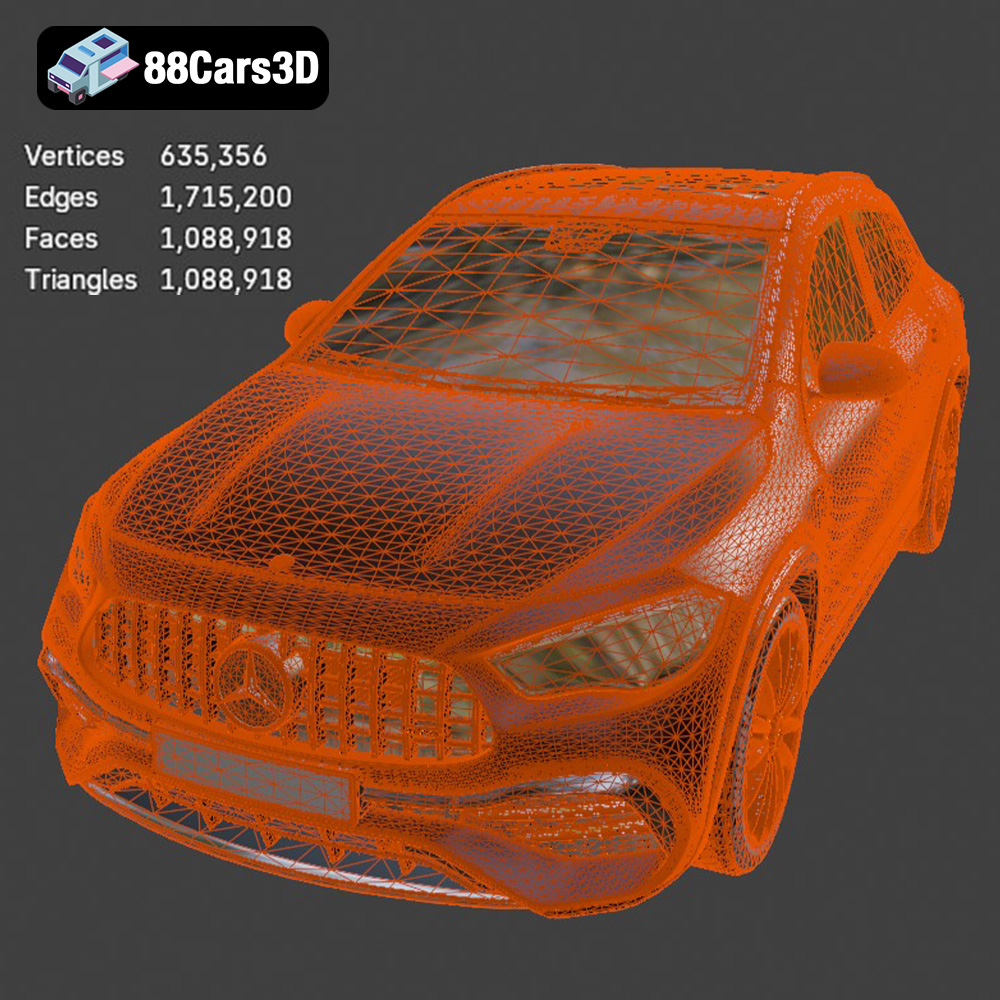
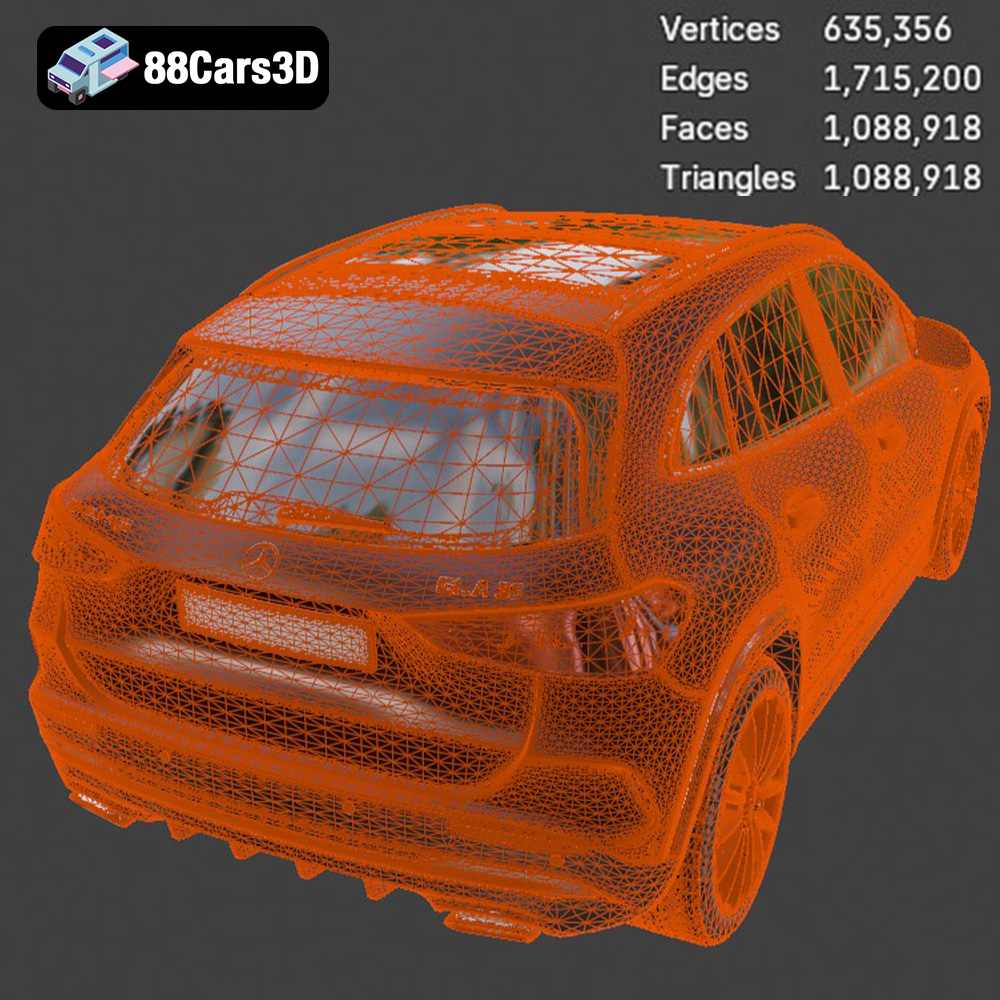
At the core of any exceptional 3D car model is its geometry. This Mercedes-AMG GLA 35 model boasts a detailed topology of 1,088,918 triangles. This polycount strikes a critical balance: it’s high enough to capture the aggressive Panamericana-style grille, the sleek contours, and the intricate details of the bodywork and interior without becoming overly burdensome for real-time applications. Meticulous modeling ensures real-world scale accuracy, based on the actual vehicle chassis, making it perfect for integration into architectural visualization scenes or simulations where precise spatial relationships are critical.
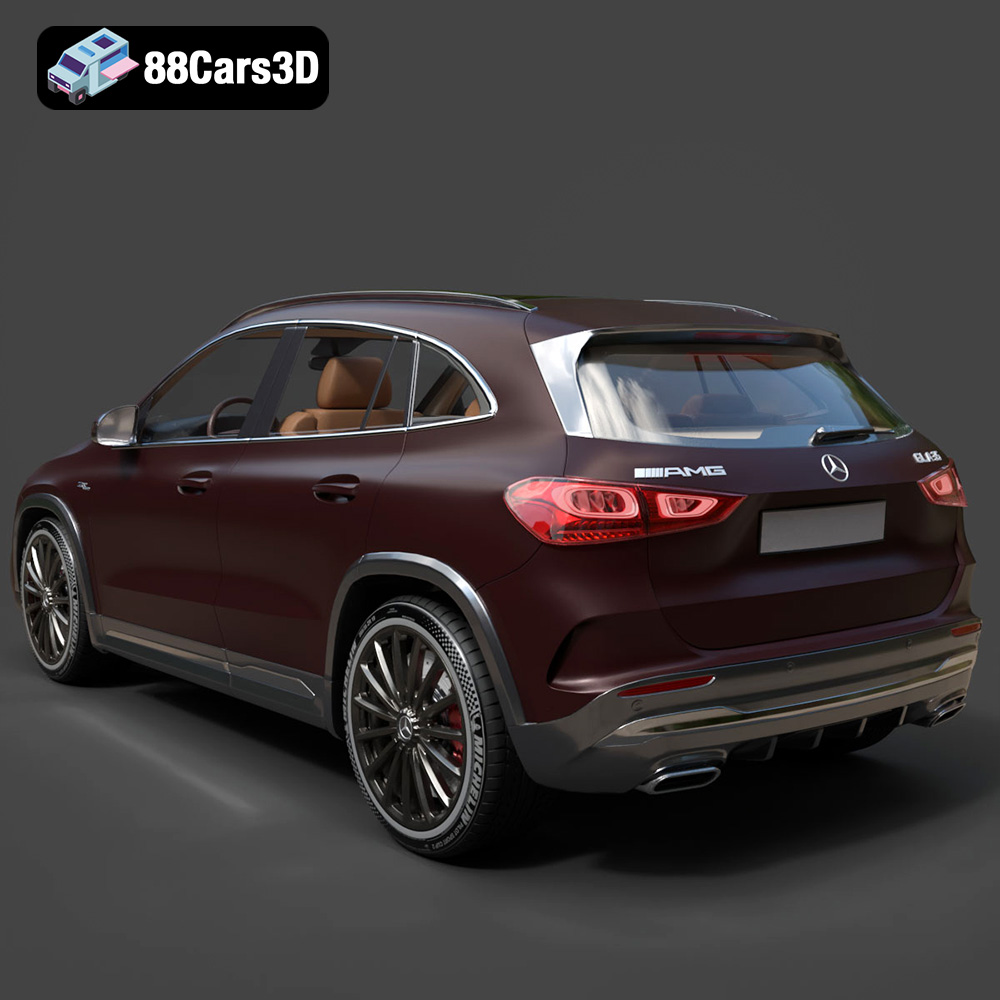
The model’s attention to detail extends to both its exterior and interior. Exterior features include accurate frame geometry, a detailed 2.0L turbocharged inline-4 engine block representation (crucial for close-up renders or exploded views), AMG-specific twin tailpipes, high-resolution LED High Performance headlights, and distinctive AMG light-alloy wheels with high-performance tires. Crucially, components like wheels, suspension, and steering are separated, allowing for realistic animation and interactive control. Inside, the model doesn’t falter. Sporty AMG performance seats with detailed stitching, a multifunction AMG sport steering wheel, paddle shifters, and a high-resolution MBUX dual-screen instrument cluster are all accurately represented. This level of interior detail is optimized even for first-person POV in gaming, making it suitable for immersive cockpit experiences.
Beyond raw polygon count, the model is designed with performance in mind. Its geometry is optimized for real-time engines like Unreal and Unity, ensuring smooth frame rates without sacrificing visual realism. Proper pivot setup for steering, wheel rotation, and suspension travel is pre-configured, drastically reducing setup time for animators and game developers. This “game-ready” attribute means the model isn’t just a static display piece; it’s a dynamic asset capable of functioning within complex interactive environments.
High-quality 3D car models are more than just pretty pictures; they are fundamental tools that streamline and enhance professional workflows across various industries. The Mercedes Benz AMG GLA 35 4MATIC 2020 3D Model, with its diverse file formats and detailed construction, is a prime example of an asset built for seamless integration.
In ArchViz, cars are often crucial elements that breathe life and realism into renderings of buildings and urban landscapes. A high-fidelity model like the AMG GLA 35 adds a sense of luxury, modernity, and scale. Artists using 3ds Max or Blender can easily import the respective .max or .blend files, or an .fbx, and seamlessly integrate the vehicle into their scene. They can then customize the body color, adjust material finishes (matte, gloss, metallic), and adapt the lighting to match the environment. The detailed suspension and brake calipers, visible even in subtle angles, contribute to a compelling sense of realism, elevating the overall visual impact of any architectural presentation or lifestyle advertisement.
For game developers, the challenge is always balancing visual quality with real-time performance. The Mercedes Benz AMG GLA 35 4MATIC 2020 3D Model is “game-ready” with its optimized polycount of 1,088,918 triangles, striking that perfect balance. The included .fbx and .unreal formats are specifically tailored for engines like Unreal and Unity. Developers can import the model, apply physics, set up collision meshes, and utilize the pre-set pivot points for realistic steering and suspension. The optimized geometry for first-person POV in the cockpit is invaluable for racing titles or open-world games where players spend significant time inside the vehicle. This asset significantly reduces the development cycle by providing a polished, ready-to-use car model that adheres to industry best practices for real-time environments.
Automotive brands and marketing agencies constantly seek cutting-edge visuals to showcase new vehicles or promote lifestyle concepts. High-quality 3D car models offer unparalleled flexibility for creating stunning renders, animations, and interactive experiences without the cost and logistical challenges of physical photography or videography. With this AMG GLA 35 model, agencies can rapidly generate diverse scenarios – from sleek studio shots to dynamic urban pursuits – customize every aspect from paint finish to tire variants, and adapt lighting for various moods. The ability to produce high-resolution visuals for print, web, and video from a single digital asset makes it an indispensable tool for impactful brand storytelling.
The pursuit of hyper-realism in digital environments, especially in video games and interactive experiences, is a constant drive. However, raw detail often comes at a performance cost. The art lies in optimization – making assets look spectacular while running smoothly in real-time. The Mercedes Benz AMG GLA 35 4MATIC 2020 3D Model is engineered precisely for this demanding equilibrium.
A “game-ready” asset isn’t just about polycount; it’s about intelligent design. The 1,088,918 triangles of the AMG GLA 35 are judiciously distributed, focusing detail where it matters most (exterior body, wheels, interior elements visible from the player’s perspective) while maintaining efficiency elsewhere. This balance prevents bottlenecks in real-time rendering. Furthermore, a truly game-ready asset often includes pre-calculated Levels of Detail (LODs), though not explicitly mentioned for this product, is a common practice for such models, which swap out higher-poly versions for simpler ones as the object moves further from the camera, significantly boosting performance.
The inclusion of .fbx and specific ‘.unreal’ formats underscores its suitability for the industry’s leading game engines. When importing into Unreal Engine or Unity, the model’s clean topology and proper UV mapping facilitate the straightforward application of physically based rendering (PBR) materials. PBR workflows ensure that surfaces react to light in a physically accurate manner, crucial for achieving photorealism. The correct pivot setup for wheels and steering means developers don’t have to spend valuable time manually adjusting these fundamental elements, allowing them to focus on game mechanics and player experience rather than asset preparation.
Beyond traditional games, the demand for interactive automotive experiences is soaring. Virtual showrooms and online car configurators allow potential buyers to explore vehicles in unprecedented detail, customize features, and even “drive” them virtually. The Mercedes Benz AMG GLA 35 4MATIC 2020 3D Model is perfectly suited for these applications. Its separated components enable real-time customization – users can change body colors, switch between different tire textures (e.g., street vs. off-road variants), and adjust material finishes interactively. The optimized geometry and clean UVs facilitate dynamic material swaps and efficient loading, crucial for smooth web-based or mobile AR/VR experiences, especially when utilizing the compact .glb format.
The utility of a high-quality 3D car model extends far beyond conventional screen-based rendering and gaming. It forms the backbone for innovative applications that bridge the digital and physical worlds, offering immersive experiences and tangible results.
Augmented Reality (AR) and Virtual Reality (VR) are transforming how we interact with digital content. For the automotive industry, AR/VR offers unparalleled opportunities for virtual showrooms, interactive training simulations, and even virtual test drives. The Mercedes Benz AMG GLA 35 4MATIC 2020 3D Model is an ideal candidate for such experiences. Its optimized polycount and detailed interior make it perfect for mobile AR apps, allowing users to place a life-sized virtual car in their driveway. In VR, the high-resolution MBUX dual-screen instrument cluster representation and detailed cockpit offer an immersive first-person perspective, letting users “sit” inside the car and explore its features as if they were physically present. The .glb format is particularly beneficial here, ensuring efficient delivery and rendering across various AR/VR platforms.
For product visualization, advertising, and cinematography, unparalleled visual fidelity is non-negotiable. The detailed topology and accurate real-world scale of the AMG GLA 35 model ensure it holds up under close-up scrutiny and studio lighting conditions. Artists can leverage its robust geometry and clean UVs in renderers like V-Ray, Corona, or Cycles, utilizing the .max, .blend, or .fbx formats. The ability to customize body colors, material finishes, and tire textures provides endless creative possibilities for crafting stunning marketing imagery, brand videos, or compelling portfolio pieces. From dramatic cinematic sequences to static, photorealistic glamour shots, this 3D car model delivers the quality demanded by high-end visualization projects.
One of the most exciting advancements in 3D modeling is the ability to physically manifest digital designs through 3D printing. The Mercedes Benz AMG GLA 35 4MATIC 2020 3D Model, convertible to the .stl format, opens up this realm to enthusiasts and professionals alike. Whether for creating scale models for display, rapid prototyping, or hobbyist projects, the detailed geometry provides an excellent foundation. The product description provides crucial 3D print settings: recommended scales (1:12 / 1:18 / 1:24), layer height (0.04–0.12 mm for fine detail, with resin printing recommended), wall thickness, infill, and essential support structures. The guidance on print orientation and post-processing (sanding, primer, authentic factory colors) empowers users to achieve professional-grade physical replicas, a testament to the model’s inherent accuracy and structural integrity.
In today’s fast-paced digital production environment, time is a precious commodity. Creating a truly high-fidelity 3D car model from scratch is an incredibly labor-intensive process, demanding hundreds, if not thousands, of hours from skilled artists and technical directors. This includes extensive blueprint research, meticulous modeling, precise UV unwrapping, detailed texturing, and rigorous optimization for various platforms.
Acquiring a professionally pre-made asset, like the Mercedes Benz AMG GLA 35 4MATIC 2020 3D Model from 88cars3d.com, represents a significant investment in efficiency and quality. It provides immediate access to an asset that has already undergone this painstaking process, saving development teams immense amounts of time and resources. Rather than reinventing the wheel, artists can focus on integrating the model into their specific projects, customizing it to their needs, and elevating the overall visual experience. This allows for faster iteration, quicker delivery of projects, and a consistently high standard of output.
88cars3d.com stands out as a marketplace offering such meticulously crafted 3D car models, ensuring that designers, game developers, and visualization artists have access to assets that are not only visually striking but also technically sound and versatile enough for demanding professional workflows. The breadth of file formats provided with the Mercedes Benz AMG GLA 35 4MATIC 2020 3D Model further exemplifies this commitment to adaptability and user convenience, making it a truly valuable addition to any professional library.
The world of 3D modeling continues to push the boundaries of realism and interactivity, with high-quality automotive assets playing a pivotal role. As we’ve explored, the technical specifications, diverse file formats, and meticulous attention to detail embedded in models like the Mercedes Benz AMG GLA 35 4MATIC 2020 3D Model are critical for success across game development, architectural visualization, AR/VR, and even 3D printing. Understanding the nuances of each file format and how an optimized asset fits into professional workflows is key to unlocking its full potential.
Whether you’re crafting the next generation of racing games, designing a stunning automotive configurator, or creating photorealistic marketing campaigns, the availability of pre-made, high-fidelity 3D car models significantly accelerates your progress while ensuring exceptional visual quality. The Mercedes Benz AMG GLA 35 4MATIC 2020 3D Model from 88cars3d.com is a testament to what’s achievable in digital automotive design – an asset that is not just a model, but a versatile foundation for innovation and creativity in any digital medium.
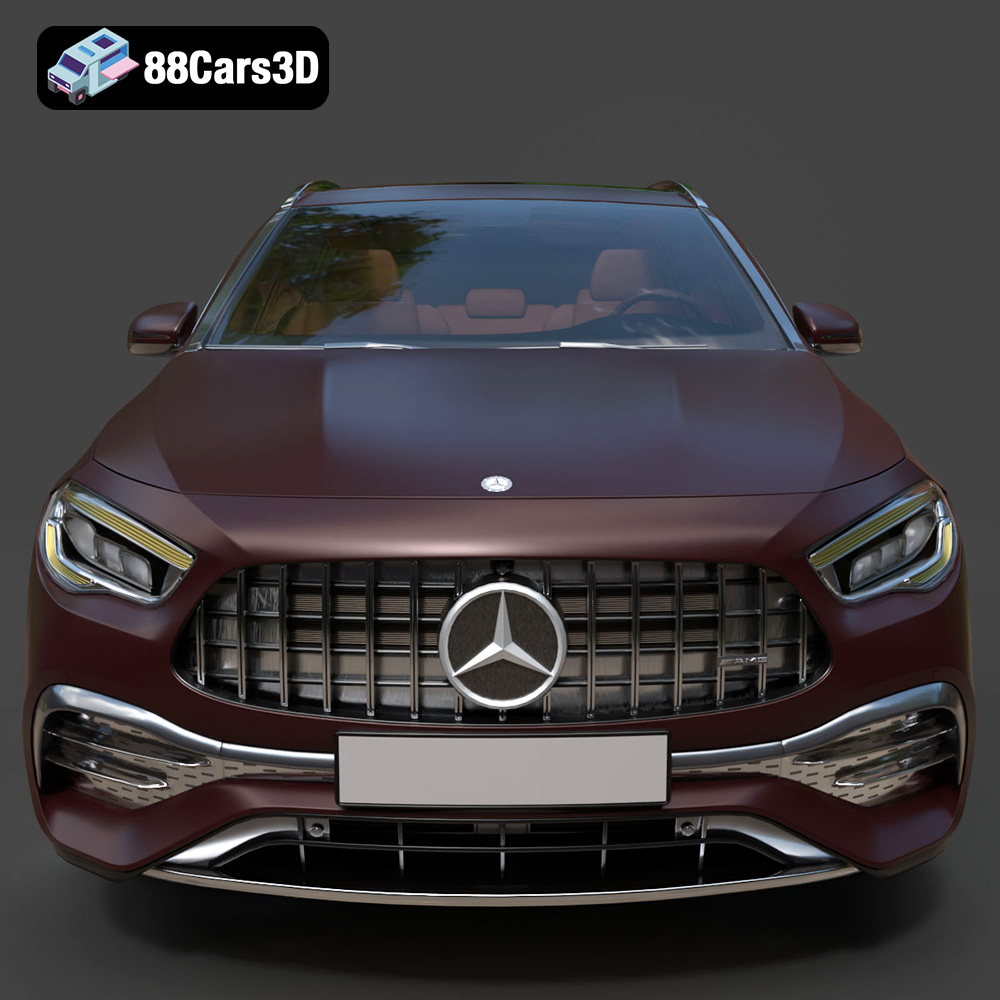
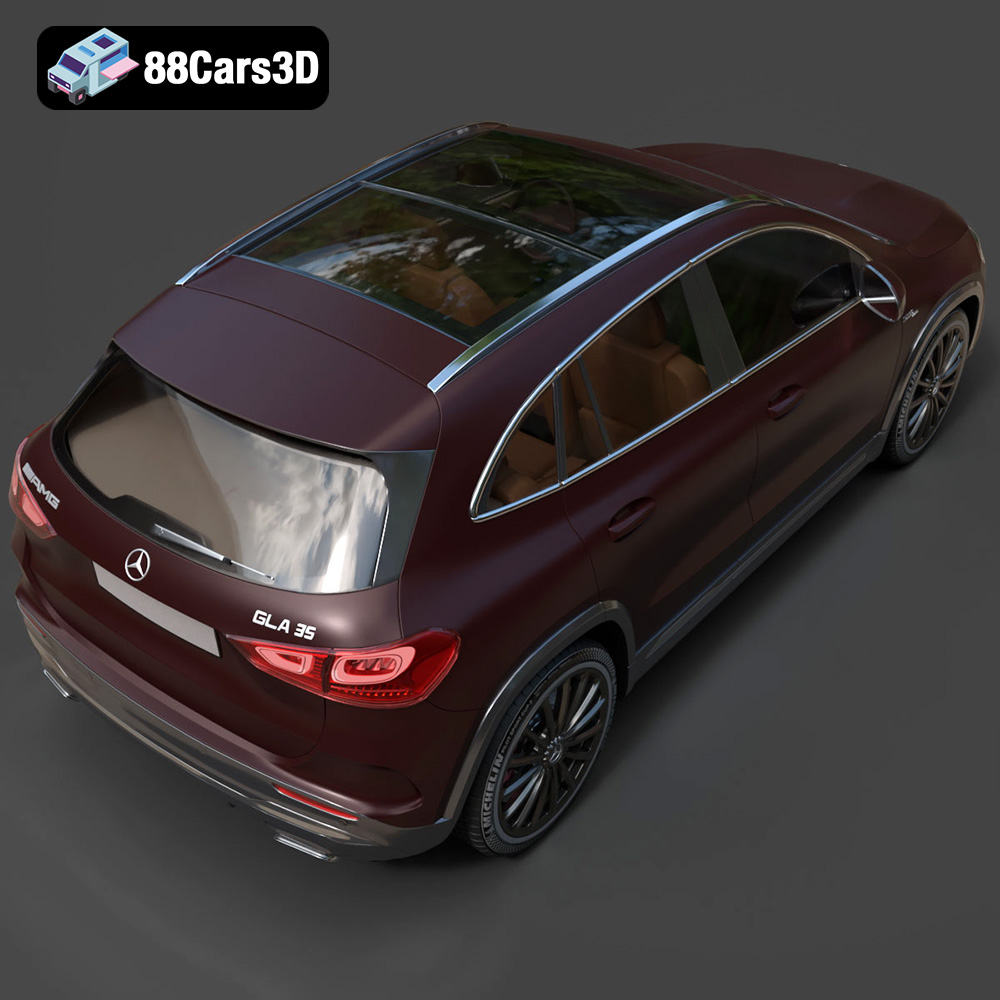
The Mercedes-Benz AMG GLA 35 4MATIC (2020) combines the versatility of a premium compact SUV with the exhilarating performance of AMG. Featuring its aggressive Panamericana-style grille, sporty front splitter, aerodynamic roof spoiler, and signature dual exhaust system, this vehicle embodies dynamic styling and road presence. This high-quality 3D model boasts a detailed topology of 1,088,918 triangles, offering exceptional visual fidelity while maintaining efficient geometry. Meticulously modeled to accurately represent the real-world dimensions and sleek contours of the GLA 35, it provides an outstanding asset for high-end rendering, game development, and VR/AR applications. Perfect for architectural visualizations, high-speed racing simulations, modern urban lifestyle scenes, and interactive car configurators.
$63.99
.2020
.4matic
.amg
.blend
.fbx
.glb
.max
.obj
.ply
.rendering
.stl
.unreal
car-3d-model
compact-suv
game asset
game-ready
gla-35
high poly
mercedes-benz
optimized
performance suv
SUV
VR/AR