Get 20% OFF All Premium 3D & STL Models!

In the dynamic world of 3D visualization, the demand for realistic and impeccably detailed automotive models continues to grow. From blockbuster game titles and cinematic animations to cutting-edge AR/VR experiences and sophisticated architectural renderings, high-quality 3D car models are the bedrock of immersive digital content. These assets aren’t just decorative elements; they are complex digital sculptures that convey brand identity, demonstrate engineering prowess, and enhance storytelling.
The journey from concept sketch to a fully realized digital vehicle is a meticulous process, requiring expertise in modeling, texturing, rigging, and optimization. Professional artists and developers constantly seek assets that not only look stunning but are also technically robust and versatile enough for various pipelines. It’s in this pursuit of excellence that models like the Mercedes-Benz C-Class 2019 3D Model truly shine, offering a blend of aesthetic fidelity and technical readiness for a multitude of applications. This particular model, representing the pinnacle of compact executive luxury, provides an exceptional foundation for any project demanding premium automotive representation.
Navigating the landscape of 3D modeling often begins with understanding the myriad of file formats available. Each format serves a specific purpose, offering unique advantages in terms of compatibility, data retention, and optimization for particular workflows. Choosing the right format is crucial for maintaining model integrity, streamlining collaboration, and ensuring seamless integration into your chosen software or engine. The Mercedes-Benz C-Class 2019 3D Model, for instance, offers a comprehensive suite of formats, catering to virtually every professional need.
The .blend format is the native file type for Blender, the popular open-source 3D creation suite. A .blend file encapsulates an entire Blender scene, including all mesh data, materials, textures, lighting, cameras, animation data, and even Grease Pencil drawings. It’s fully editable, making it the ideal choice for artists who primarily work within Blender and require full control over the model’s structure and properties. For the Mercedes-Benz C-Class 2019, the .blend file would provide the most comprehensive starting point for detailed modifications, shader adjustments, or animation setups within Blender itself.
.fbx (Filmbox) is arguably the most widely adopted proprietary file format for 3D data exchange, especially within game development and animation pipelines. Developed by Autodesk, it supports a vast array of 3D data, including geometry, materials, textures, animations, and skeletal data. Its robust nature makes it ideal for transferring assets between different software packages like 3ds Max, Maya, Blender, and directly into real-time engines such as Unreal Engine and Unity. For a game-ready asset like our featured Mercedes-Benz C-Class 2019, the .fbx is often the go-to for importing into game projects, ensuring that all crucial elements like pivot points, hierarchy, and basic material assignments are preserved.
The .obj (Wavefront Object) format is one of the oldest and most universally supported 3D file formats. It’s a simple, text-based format that primarily stores geometry (vertices, normals, texture coordinates, and faces) and can reference external material files (.mtl). While it doesn’t support animation or advanced scene data, its widespread compatibility makes it an excellent choice for cross-software transfers when only mesh data is required. When working with the Mercedes-Benz C-Class 2019 model, .obj ensures that virtually any 3D software can open and work with the core geometric structure of the car.
.glb (GL Transmission Format Binary) is a relatively newer format optimized for efficient transmission and loading of 3D scenes and models, particularly in web-based applications, augmented reality (AR), and virtual reality (VR) experiences. It’s a binary version of glTF, embedding all assets like textures and animations directly into a single file, reducing HTTP requests and load times. For deploying the Mercedes-Benz C-Class 2019 into a web-based configurator, a mobile AR app, or a lightweight VR showroom, the .glb format offers superior performance and ease of integration.
The .stl (Stereolithography) format is the standard file type for 3D printing. It represents a 3D model as a collection of unconnected triangles, forming the surface geometry. While it lacks color, texture, or animation data, its simplicity makes it universally compatible with 3D printers and slicing software. The Mercedes-Benz C-Class 2019, when provided in .stl, becomes ready for physical production, enabling hobbyists and professionals alike to print detailed scale models for display or prototyping, requiring careful attention to print settings like layer height and supports.
.ply (Polygon File Format) is another common format for storing 3D data, often used in scientific and engineering applications, as well as by 3D scanners. It can store not only geometry but also color and other properties for each vertex or face. It’s particularly useful when precision mesh data is paramount, such as in CAD workflows or for detailed analysis of scanned objects. For applications where a highly accurate mesh representation of the Mercedes-Benz C-Class 2019 is needed for simulation or measurement, .ply can be a valuable asset.
The .unreal format refers to assets specifically prepared and optimized for direct use within Unreal Engine. This typically implies an .fbx import that has been carefully configured within Unreal, potentially including collision meshes, LODs (Levels of Detail), materials, and possibly even Blueprints for interactivity. Receiving a model like the Mercedes-Benz C-Class 2019 already in an .unreal state significantly streamlines the integration process for game developers and real-time visualization artists, minimizing setup time and maximizing engine performance.
The .max format is the native file type for Autodesk 3ds Max, a powerful software widely used for modeling, animation, and rendering in architectural visualization, product design, and cinematic production. A .max file contains all scene data, including geometry, modifiers, materials, lights, cameras, and animation keyframes, offering full editability within 3ds Max. For users whose primary workflow revolves around 3ds Max for high-end automotive rendering or detailed animation sequences, the .max version of the Mercedes-Benz C-Class 2019 provides an uncompromised starting point for their projects.
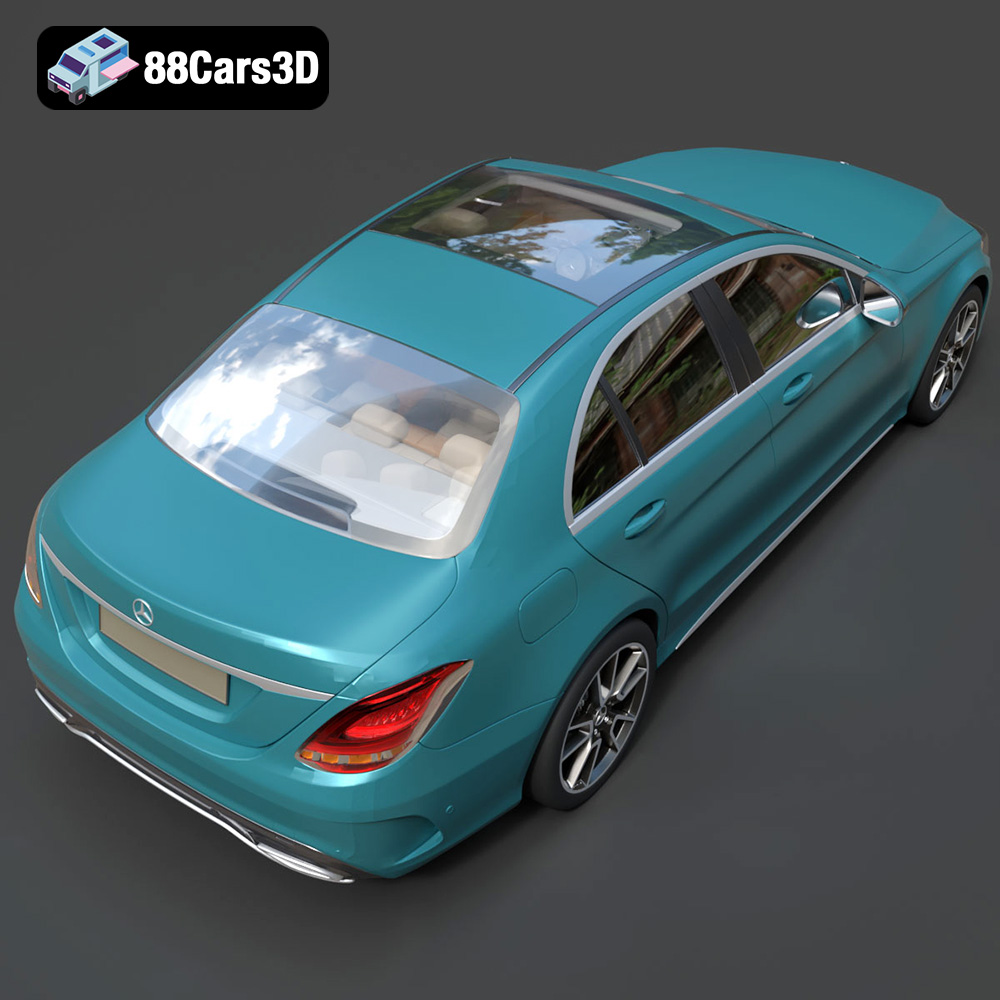
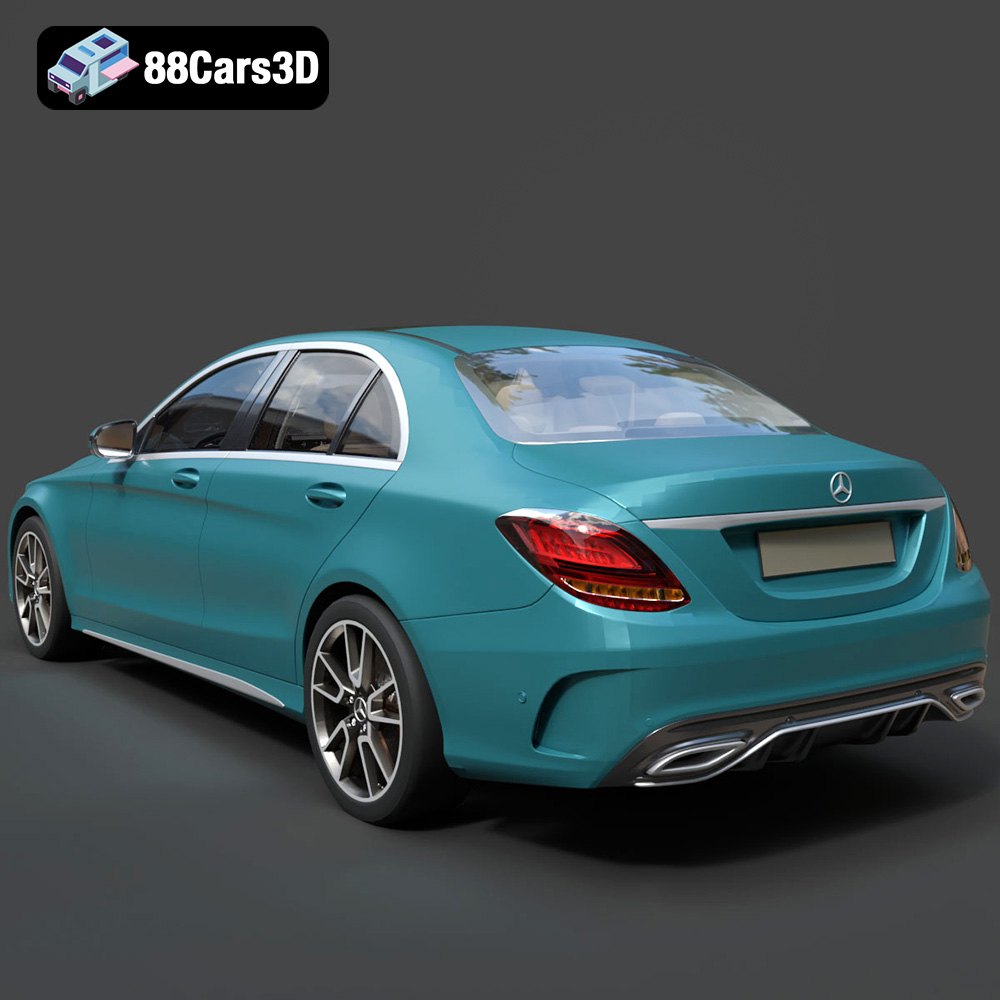
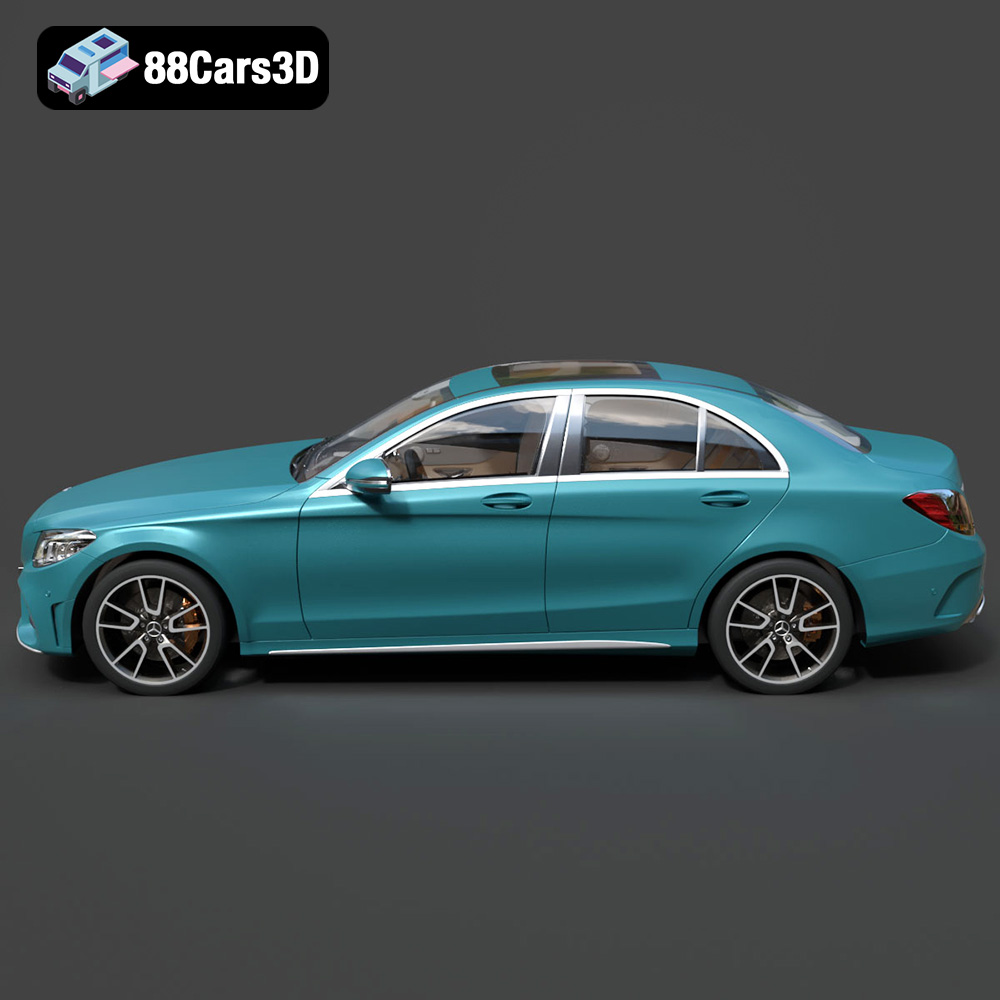
The Mercedes-Benz C-Class 2019 3D Model available on 88cars3d.com stands as a prime example of a meticulously crafted automotive asset. Its design reflects a deep understanding of the vehicle’s real-world counterpart, translating complex aesthetics into a highly optimized digital form. This isn’t just a generic car model; it’s a specific, recognizable vehicle rendered with professional-grade precision.
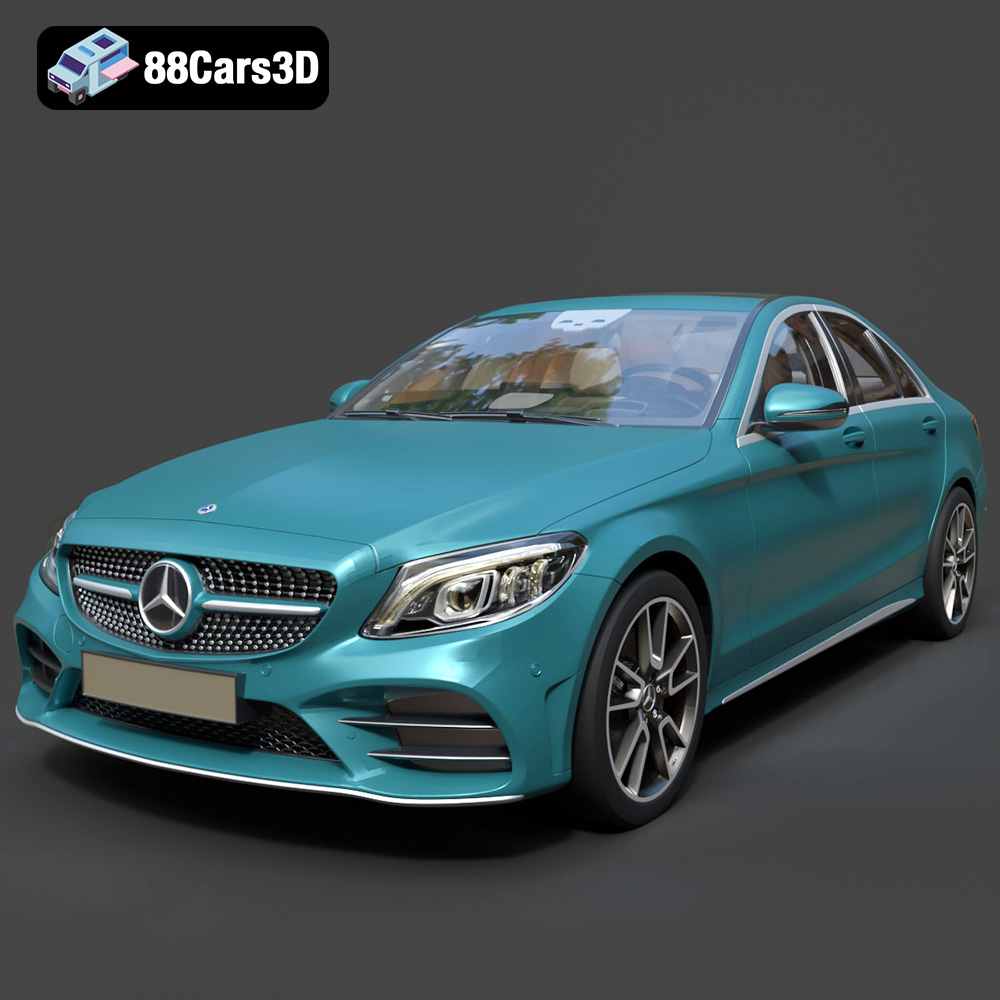
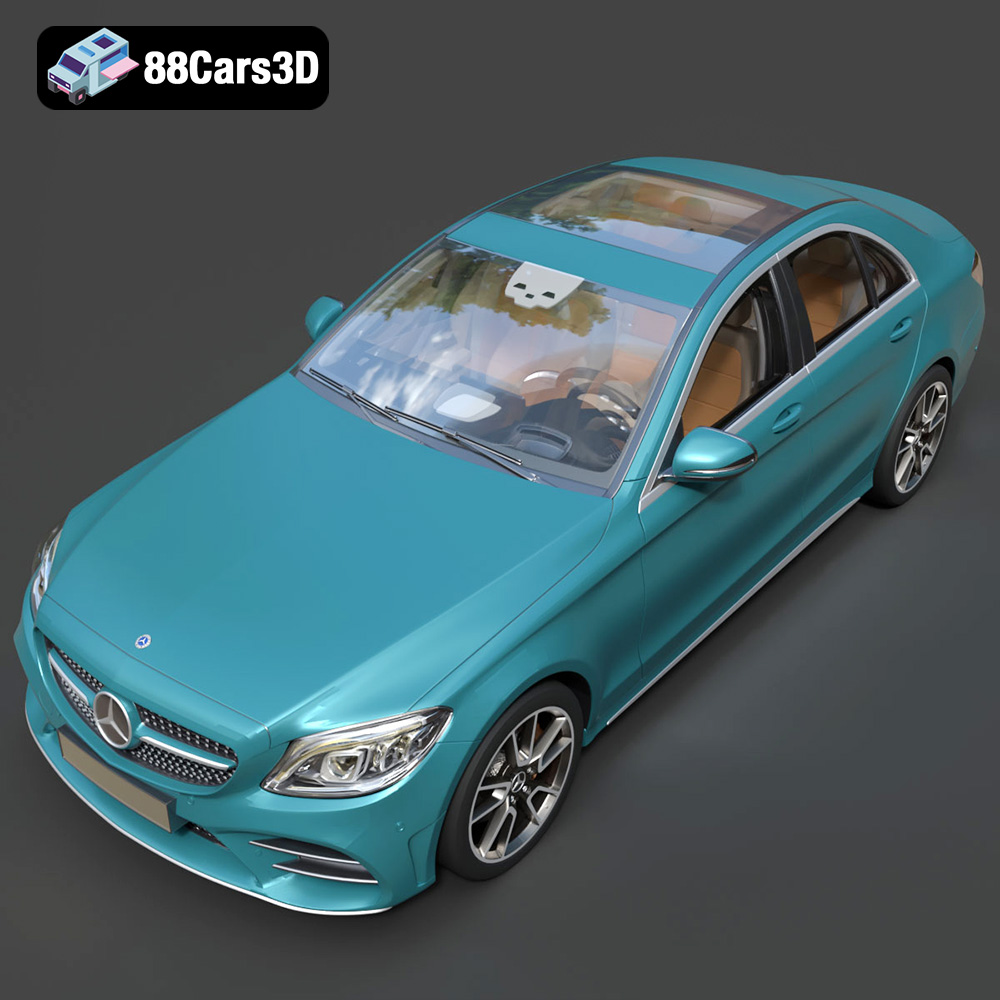
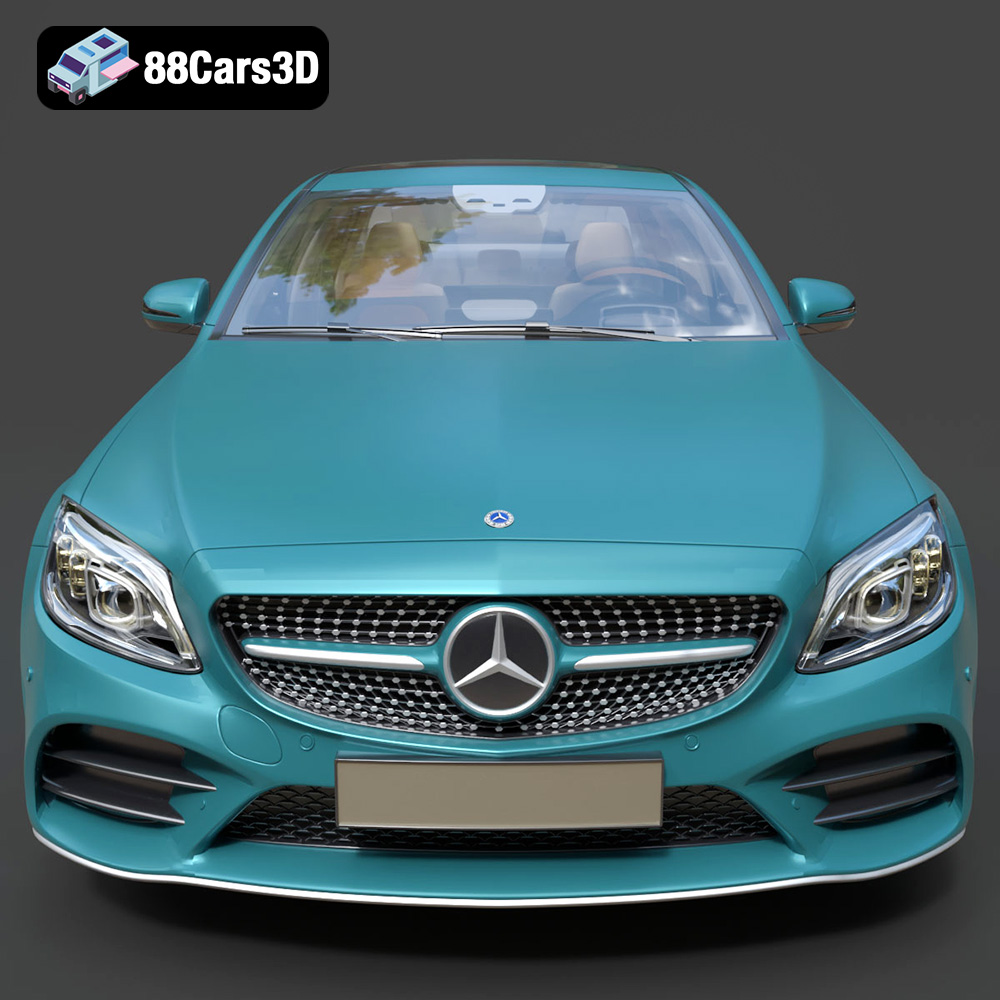
Every curve, vent, and panel of the C-Class 2019’s exterior has been carefully replicated. From the sophisticated diamond-block grille and the iconic Mercedes-Benz star emblem to the sleek LED High-Performance headlamps and the refined body contours, the attention to detail is evident. The model features a detailed front fascia, a twin-pipe exhaust system, and a rear diffuser setup, ensuring authenticity from every angle. Crucially, elements like the multi-spoke alloy wheels are not merely textures but precisely modeled geometry with realistic tire tread patterns. Even the suspension and brake calipers are highly detailed, offering a level of realism often reserved for high-end rendering projects. The separation of wheels, suspension, and steering components is a technical advantage, enabling realistic animation and dynamic simulations.
Beyond the impressive exterior, the model offers a fully realized and highly detailed interior. The cockpit boasts luxurious leather-stitched seat detailing, an authentic multi-function steering wheel with accurate badging, and a meticulously crafted digital instrument cluster and infotainment screen. Refined center console controls, climate vents, and a gear selector complete the immersive experience. This level of interior detail is crucial for projects requiring first-person views, such as game development or virtual showroom experiences, where users can interact with or view the inside of the vehicle up close.
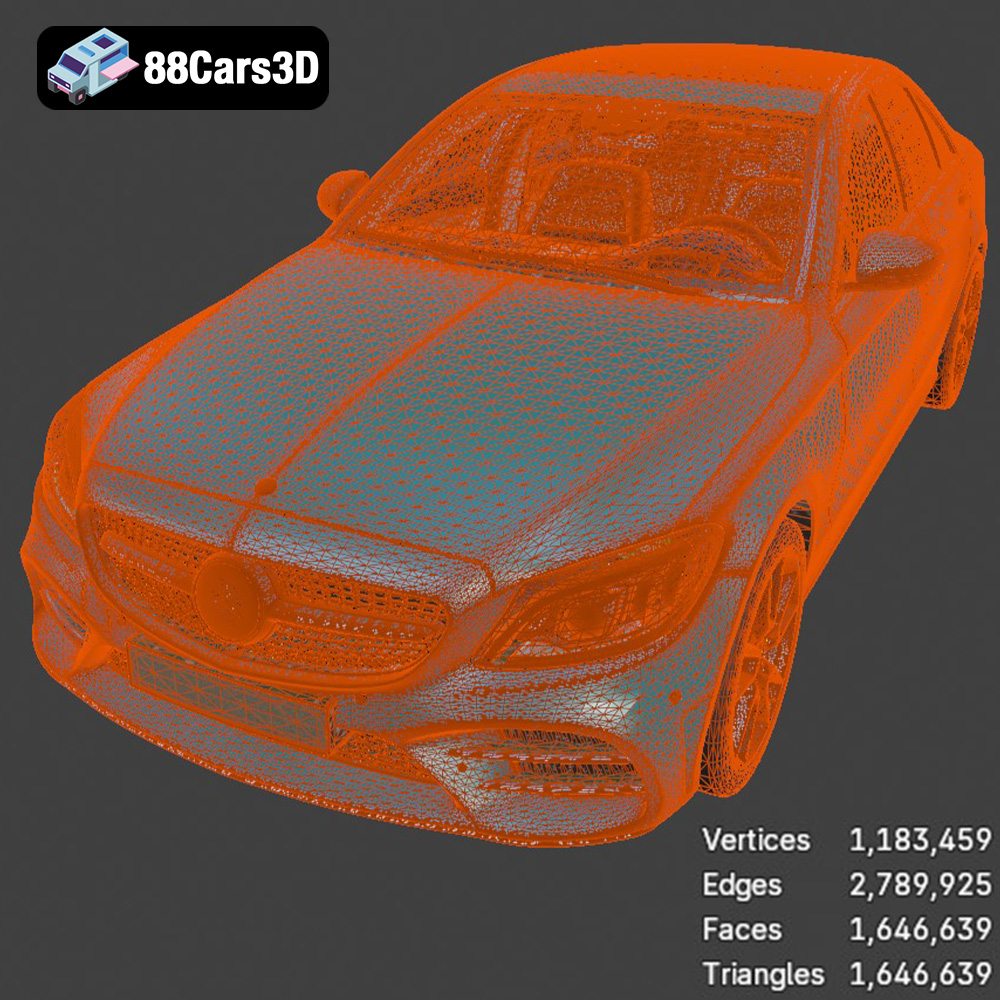
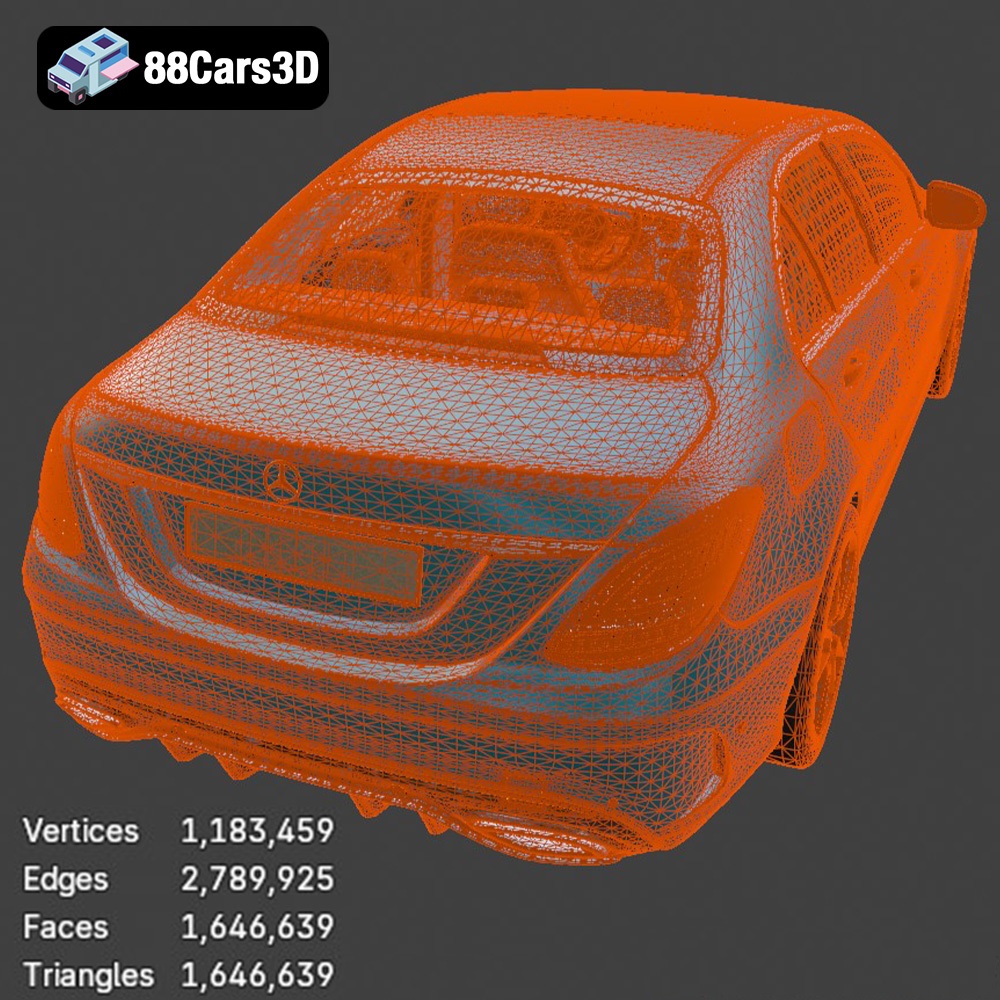
Technically, this 3D model is built for performance and visual fidelity. With a triangle count of 1,646,639, it strikes a perfect balance: high enough for breathtaking visual realism in photorealistic studio rendering, yet optimized for real-time engines like Unreal and Unity. The game-ready nature of the asset is a significant advantage, allowing for smooth integration without extensive re-topology or simplification. Furthermore, the model adheres to real-world scale accuracy, based on actual vehicle chassis dimensions, which is vital for architectural visualizations and accurate scene integration. Proper pivot setups for steering, wheel rotation, and suspension travel are included, greatly simplifying animation and rigging processes.
The versatility of a well-crafted 3D car model like the Mercedes-Benz C-Class 2019 extends across numerous professional domains. Its balanced polycount and meticulous detailing make it adaptable to both demanding real-time environments and high-fidelity offline rendering pipelines.
For game developers, the Mercedes-Benz C-Class 2019 3D Model is an ideal asset for open-world games, racing titles, and vehicle simulators. Its optimized polycount of 1,646,639 triangles ensures it can run efficiently in real-time engines without sacrificing visual quality. The separate components for wheels, suspension, and steering allow for advanced physics integration and realistic animation, crucial for authentic driving mechanics. The detailed interior also supports first-person camera views, enriching player immersion in a racing cockpit or an interactive garage scene. Having a game-ready asset from 88cars3d.com significantly reduces development time, allowing teams to focus on gameplay rather than asset creation.
Architects and visualization artists often rely on high-fidelity vehicle models to populate their scenes and give a sense of scale, lifestyle, and realism. The C-Class 2019 model, with its accurate proportions and stunning visual details, can elevate any architectural rendering, portraying a sense of luxury and modernity. In cinematic rendering, its intricate exterior and interior details, combined with carefully crafted materials, allow for breathtaking close-ups and dramatic lighting setups, perfect for brand campaigns or high-end product showcases. The inclusion of formats like .max and .blend makes it readily usable in leading rendering packages like V-Ray, Corona, and Cycles.
The future of retail and customer engagement lies in augmented and virtual reality. High-quality 3D car models are central to creating immersive virtual showrooms, interactive configurators, and mobile AR experiences. Imagine a potential buyer exploring the Mercedes-Benz C-Class 2019 in a virtual environment, changing colors and finishes in real-time, or even placing it in their driveway using AR. The model’s optimized geometry and the availability of the .glb format make it perfectly suited for these demanding, performance-sensitive applications, delivering a smooth and responsive user experience.
Beyond digital displays, the Mercedes-Benz C-Class 2019 3D model also serves the growing community of 3D printing enthusiasts and prototypers. Provided in the .stl format, it becomes a blueprint for physical creation. Hobbyists can print highly detailed scale models (recommended scales: 1:12, 1:18, 1:24) using resin printers for superior detail. This opens up possibilities for personalized display models, educational tools, or even early physical prototypes of vehicle concepts, demonstrating the bridge between digital asset creation and tangible manufacturing.
The true value of a premium 3D asset like the Mercedes-Benz C-Class 2019 is realized through its seamless integration into established professional workflows. Whether you prefer the open-source power of Blender, the industry-standard capabilities of 3ds Max, or the real-time prowess of Unreal Engine, this model is designed for efficiency and high performance.
Blender users will find the native .blend file exceptionally convenient. Upon opening, the model is typically presented with a clean hierarchy and organized meshes, ready for immediate use. Artists can leverage Blender’s powerful Eevee and Cycles renderers for stunning photorealistic output. The separated components (wheels, suspension, steering) allow for easy rigging using Blender’s armature system, enabling complex animations. For shading, artists can fine-tune the PBR (Physically Based Rendering) materials, adjusting metallic, roughness, and normal map parameters to achieve specific looks, from showroom gleam to weathered realism. This flexibility makes the C-Class 2019 a robust foundation for intricate scene assembly, character integration, and advanced visual effects within Blender.
For those entrenched in Autodesk’s ecosystem, the .max file provides a complete and editable project within 3ds Max. This format allows access to all scene data, including the precise geometry, material assignments, and potential scene organization established by the model creator. 3ds Max users can quickly integrate the vehicle into existing architectural scenes using V-Ray or Corona Renderer for photorealistic visualization. The pre-set pivot points for animation greatly simplify the rigging process, allowing animators to focus on keyframing realistic wheel rotations, suspension compression, and steering movements without starting from scratch. Advanced users can also apply modifiers, simulate physics, or integrate the car into complex fluid simulations for high-impact cinematic sequences.
Unreal Engine developers will appreciate the game-ready optimization and the availability of the .unreal (or highly optimized .fbx) format. Importing the Mercedes-Benz C-Class 2019 model into Unreal Engine involves creating PBR materials using the engine’s powerful material editor, applying textures, and setting up appropriate collision meshes. The model’s optimized triangle count ensures excellent performance, while its detailed geometry allows for the use of advanced rendering features like Lumen and Nanite (for higher poly counts, if desired) to achieve cinematic quality in real-time. For interactive experiences, Blueprints can be used to control door openings, interior lighting, or custom driving mechanics, leveraging the model’s separated components for realistic vehicle dynamics. This level of preparation ensures that the asset can be rapidly deployed into interactive games, virtual training simulations, or real-time configurators.
Investing in a high-quality 3D car model like the Mercedes-Benz C-Class 2019 from 88cars3d.com is not just about acquiring an asset; it’s about gaining a versatile tool that can be adapted and re-purposed across countless projects, ensuring long-term value and creative flexibility.
One of the primary benefits of a well-structured 3D model is its customizability. Artists can effortlessly change body colors, applying authentic factory shades or creating bespoke custom finishes. Modifying tire textures from performance variants to street-legal designs is straightforward. Material finishes—matte, gloss, metallic—can be adjusted to suit different visual styles or brand requirements. Furthermore, the model can be dynamically lit to adapt to various environments, from a sunny outdoor scene to a dramatic studio setup, allowing for endless creative permutations without needing to remodel. This adaptability is key for marketing campaigns requiring variations or for tailoring the vehicle to specific scene contexts.
The fact that the Mercedes-Benz C-Class 2019 model features separate wheels, suspension, and steering components is a testament to its professional design. This modularity is crucial for animation, physics simulations, and even minor structural modifications. A well-organized asset hierarchy simplifies the rigging process, reduces animation headaches, and makes troubleshooting significantly easier. This thoughtful construction not only saves valuable artist time but also extends the model’s utility for complex interactive applications, ensuring that it remains a flexible and manageable resource.
In a rapidly evolving digital landscape, future-proofing your assets is essential. By choosing a high-quality, meticulously optimized 3D model like the C-Class 2019, you ensure that your projects remain visually competitive and technically sound for years to come. The comprehensive range of included file formats means you’re prepared for diverse pipelines and emerging technologies, from traditional rendering to the latest AR/VR innovations. 88cars3d.com is committed to providing assets that meet these rigorous standards, empowering professionals to create stunning visuals and immersive experiences with confidence.
The world of 3D visualization thrives on detail, realism, and efficiency. High-fidelity 3D car models like the Mercedes-Benz C-Class 2019 3D Model are indispensable tools for professionals across game development, architectural visualization, cinematic rendering, and AR/VR. This particular model exemplifies how aesthetic precision, technical optimization, and versatile file format support converge to create an asset that is both beautiful and highly functional. Its detailed exterior, immersive interior, and game-ready topology make it a standout choice for any project demanding premium automotive representation.
Understanding the nuances of various 3D file formats, from the native power of .blend and .max to the interoperability of .fbx and the AR/VR readiness of .glb, is crucial for maximizing asset utility. By leveraging expertly crafted 3D car models from trusted sources like 88cars3d.com, artists and developers can streamline their workflows, achieve unparalleled visual quality, and push the boundaries of digital realism. Investing in such quality ensures that your projects are not only stunning today but also resilient and adaptable for the challenges and opportunities of tomorrow.
The Mercedes-Benz C-Class 2019 represents the pinnacle of compact executive luxury, blending elegant design heritage with modern aerodynamic styling. Known for its sophisticated diamond-block grille, sleek LED High-Performance headlamps, and refined body contours, this vehicle embodies premium automotive engineering and class-leading aesthetics.
This premium 3D model boasts an exceptional topology with a triangle count of 1,646,639, ensuring breathtaking visual fidelity. It is perfectly optimized for both high-end real-time game engines and photorealistic studio rendering, making it a versatile asset for game development, AR/VR experiences, animation, and high-end automotive visualization.
Perfect for architectural visualizations, next-gen racing games, virtual showrooms, and high-end cinematic animations.
.blend, .fbx, .obj, .glb, .stl, .ply, .unreal, .max
Tags:
mercedes-benz, c-class, 2019, sedan, luxury-car, game-ready, optimized, car-3d-model, game-asset, rendering, vr-ar, blend, fbx, obj, glb, stl, ply, unreal, max
$80.50
.2019
.blend
.fbx
.glb
.max
.obj
.ply
.rendering
.sedan
.stl
.unreal
c-class
car-3d-model
game asset
game-ready
luxury car
mercedes-benz
optimized
VR/AR