Get 20% OFF All Premium 3D & STL Models!

In the dynamic world of 3D visualization, automotive design stands as a pinnacle of technical artistry. From breathtaking cinematic renders that blur the lines between virtual and reality, to the seamless integration of vehicles into next-generation gaming environments, the demand for high-quality 3D car models has never been greater. These aren’t just pretty pictures; they are complex digital assets that drive innovation across industries, empowering designers, developers, and marketers to bring their visions to life with unparalleled precision and impact.
The journey from concept to a fully realized digital car is intricate, requiring a deep understanding of geometry, materials, optimization, and software ecosystems. Every curve, every reflection, and every subtle detail contributes to the overall authenticity that professional projects demand. At the forefront of this digital automotive revolution is the availability of meticulously crafted models, such as the Mercedes Benz GLE 3D Model from 88cars3d.com. This model exemplifies the blend of luxury, performance, and technical excellence required for today’s most demanding applications, offering a ready-to-use solution for an array of creative and technical challenges.
This comprehensive guide delves into the essential aspects of working with advanced 3D car models, exploring the technical intricacies, workflow considerations, and diverse applications that define the cutting edge of automotive 3D. We will uncover how assets like the Mercedes Benz GLE 3D Model serve as foundational elements for stunning visualizations, immersive interactive experiences, and even tangible 3D prints, pushing the boundaries of what’s possible in digital creation.
The versatility and utility of a 3D model are often defined by the file formats it supports. Each format is designed with specific use cases, software compatibilities, and data structures in mind. Knowing which format to use and when is crucial for efficient workflows, preserving model integrity, and achieving optimal performance. The Mercedes Benz GLE 3D Model, for instance, comes equipped with a comprehensive suite of formats, ensuring broad compatibility across various professional applications.
The `.blend` file format is Blender’s native project file. It encapsulates not just the 3D mesh data but an entire scene, including materials, textures, lighting, cameras, animations, physics simulations, and even custom scripts. This makes it an incredibly powerful format for artists working within the Blender environment, offering full editability and a complete, ready-to-render setup. When you download a `.blend` file, you’re essentially getting the artist’s original working file, allowing for deep customization and iteration without losing any scene information. It’s ideal for those who plan to modify the model extensively, integrate it into a complex Blender scene, or leverage Blender’s powerful rendering engines like Cycles or Eevee.
FBX (Filmbox) is a proprietary file format developed by Autodesk, widely recognized as the industry standard for exchanging 3D data between various software applications. It supports geometry, materials, textures, animation, and rigging, making it perfect for pipelines involving multiple software packages like 3ds Max, Maya, Blender, Unity, and Unreal Engine. For real-time applications such as game development or interactive experiences, `.fbx` is often the go-to format due to its robust support for animation and scene hierarchy. Its binary nature typically results in smaller file sizes compared to `.obj` for complex scenes, and it generally offers better preservation of scene data during transfers.
OBJ (or .obj) is one of the most widely supported and simplest 3D geometry definitions. It’s a universal format for pure mesh data, often accompanied by a `.mtl` (material library) file for basic material properties. While it doesn’t support animation or rigging, its simplicity and widespread compatibility make it an excellent choice for static mesh exchange between virtually any 3D software. If your primary goal is to import geometry for sculpting, texturing, or static rendering in a program that might not support `.fbx` or `.blend` fully, `.obj` is a reliable fallback. It’s also often preferred for tasks where geometry integrity is paramount, as it’s less prone to interpretation issues between different software.
GLB (GL Transmission Format Binary) is the binary version of glTF, an open-standard 3D file format for scenes and models. Designed for efficient transmission and loading of 3D scenes and models by applications, it bundles 3D models, textures, and PBR (Physically Based Rendering) materials into a single file. This makes `.glb` highly optimized for web-based 3D viewers, augmented reality (AR), virtual reality (VR), and mobile applications. Its compact size and single-file nature streamline deployment, making it perfect for virtual showrooms, online configurators, and immersive browser experiences.
STL (STereoLithography) is the de facto standard file format for 3D printing and CAD software. It describes only the surface geometry of a 3D object using a mesh of triangular facets. While it doesn’t store color, texture, or material information, its simplicity makes it universally compatible with 3D printers and slicing software. When preparing a model like the Mercedes Benz GLE for physical fabrication, converting it to `.stl` is an essential step, requiring careful consideration of scale, wall thickness, and print orientation to ensure a successful print.
PLY (Polygon File Format or Stanford Triangle Format) is a file format for storing 3D data, particularly from 3D scanners. It can store a wide range of properties, including color, transparency, surface normals, texture coordinates, and reliability information, often per vertex or per face. While less common for general artistic exchange than `.fbx` or `.obj`, `.ply` is often used in scientific visualization, CAD, and applications where precise geometric data from scans or detailed mesh analysis is required. Its versatility in storing diverse mesh attributes makes it valuable for specialized data handling.
While not a direct file extension in the traditional sense, `.unreal` signifies an asset specifically prepared and optimized for direct integration into the Unreal Engine. This often implies an `.fbx` file that has been meticulously set up with appropriate scales, collision meshes, LODs (Levels of Detail), materials using Unreal’s PBR workflow, and sometimes even pre-configured blueprints or animations. An “Unreal-ready” asset like the Mercedes Benz GLE means less setup time for game developers and real-time artists, as it adheres to engine-specific best practices for performance and visual fidelity.
The `.max` file format is the native scene file for Autodesk 3ds Max. Similar to Blender’s `.blend` file, it contains all scene data, including geometry, materials, textures, lighting, animation, and modifiers. It provides full editability within 3ds Max, making it the preferred format for users who rely on 3ds Max for high-end rendering with V-Ray or Corona, complex animation, or architectural visualization. It offers the most control and flexibility for artists deeply embedded in the 3ds Max ecosystem.
The extensive format support for the Mercedes Benz GLE 3D Model highlights its adaptability, allowing professionals to select the optimal file for their specific software and project requirements, from high-fidelity rendering to real-time game development and even physical prototyping.
Achieving true photorealism in 3D automotive models is a testament to meticulous craftsmanship and technical prowess. It involves more than just capturing shapes; it’s about replicating the subtle nuances of light interaction, material properties, and the inherent character of the vehicle. The Mercedes Benz GLE 3D Model stands as a prime example of this dedication, offering a level of detail that meets the rigorous demands of professional visualization.
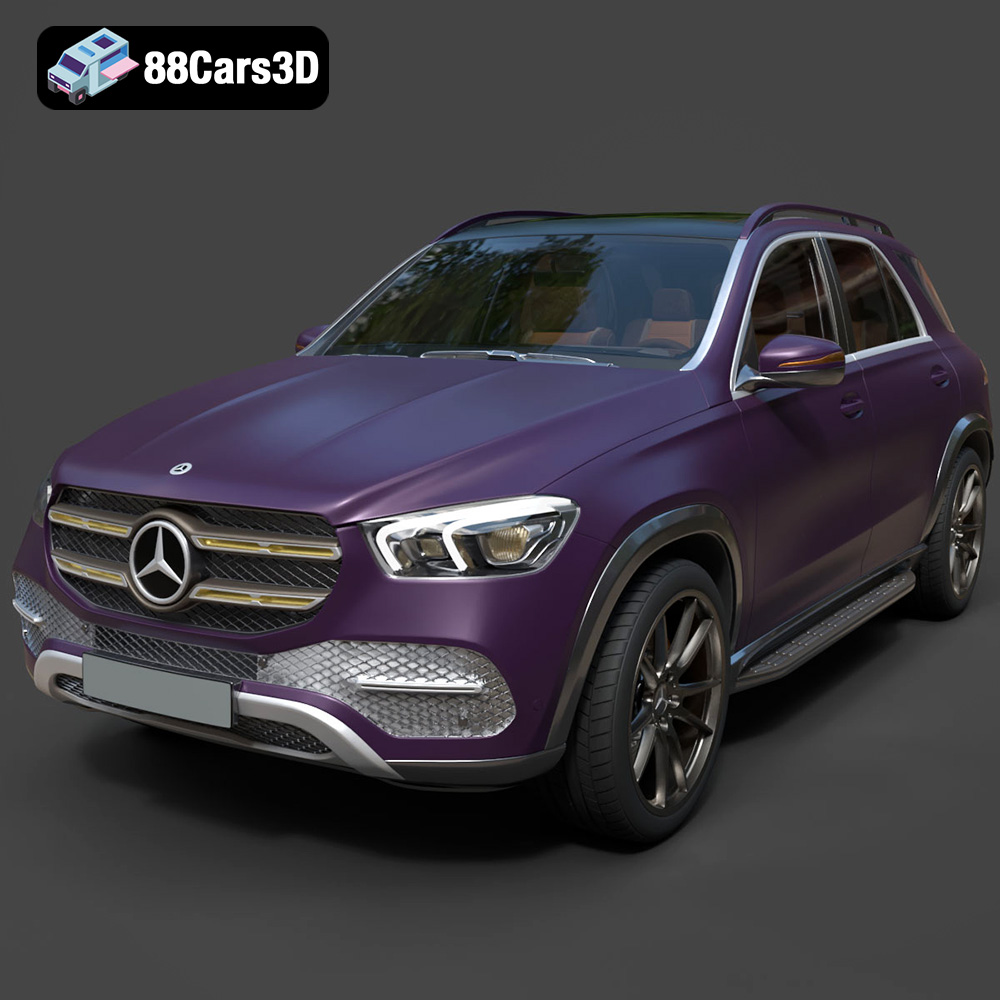
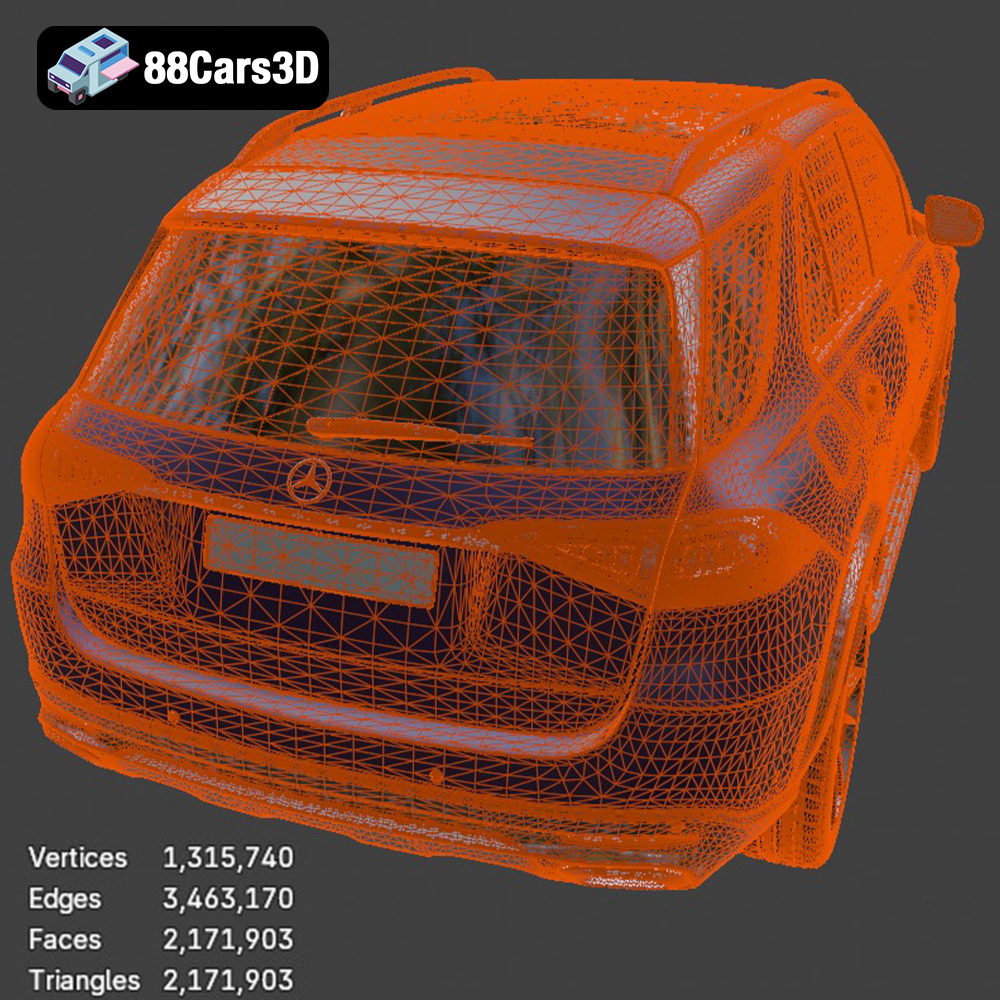
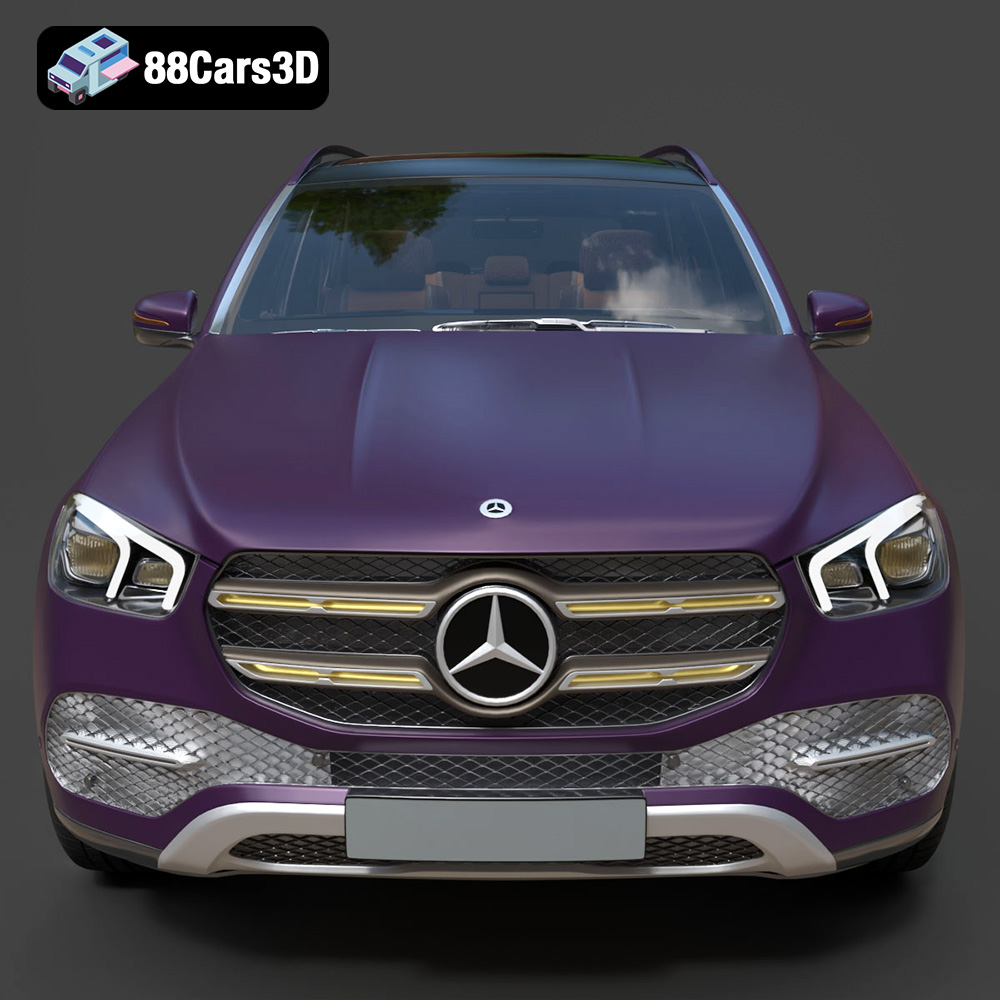
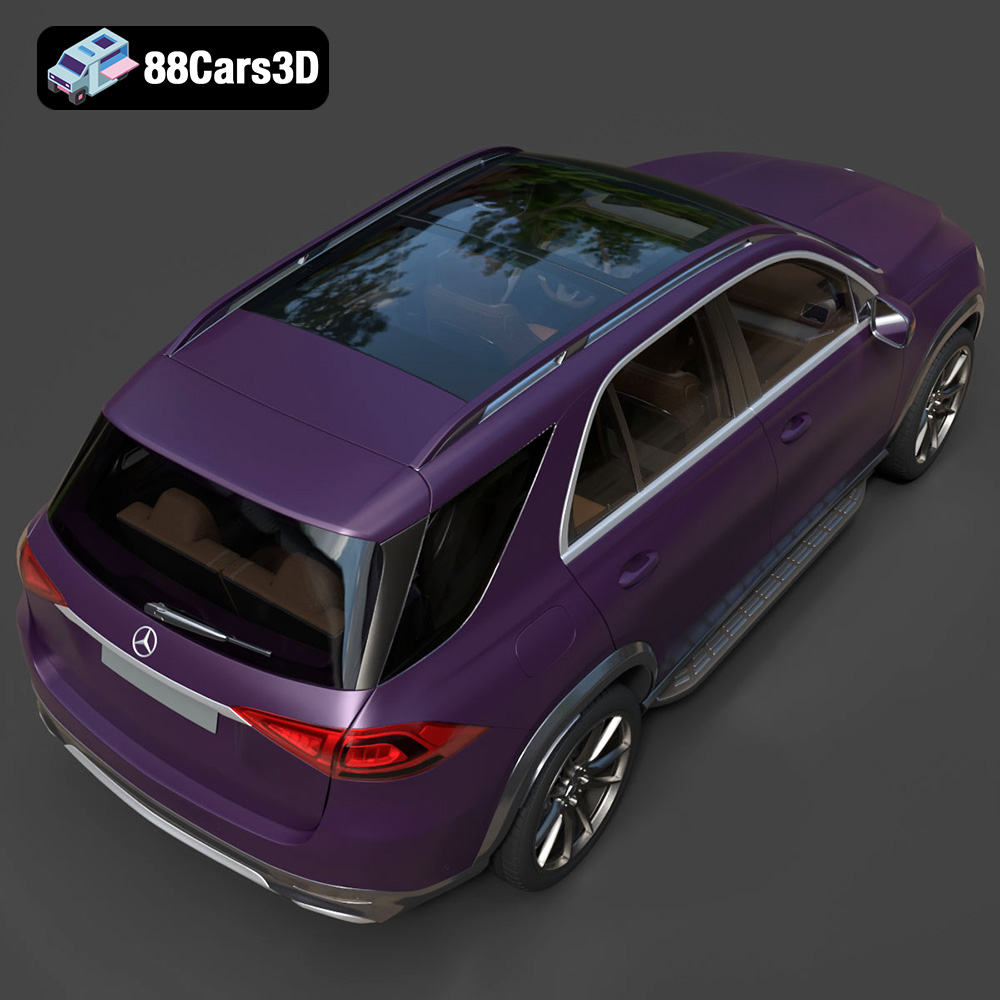
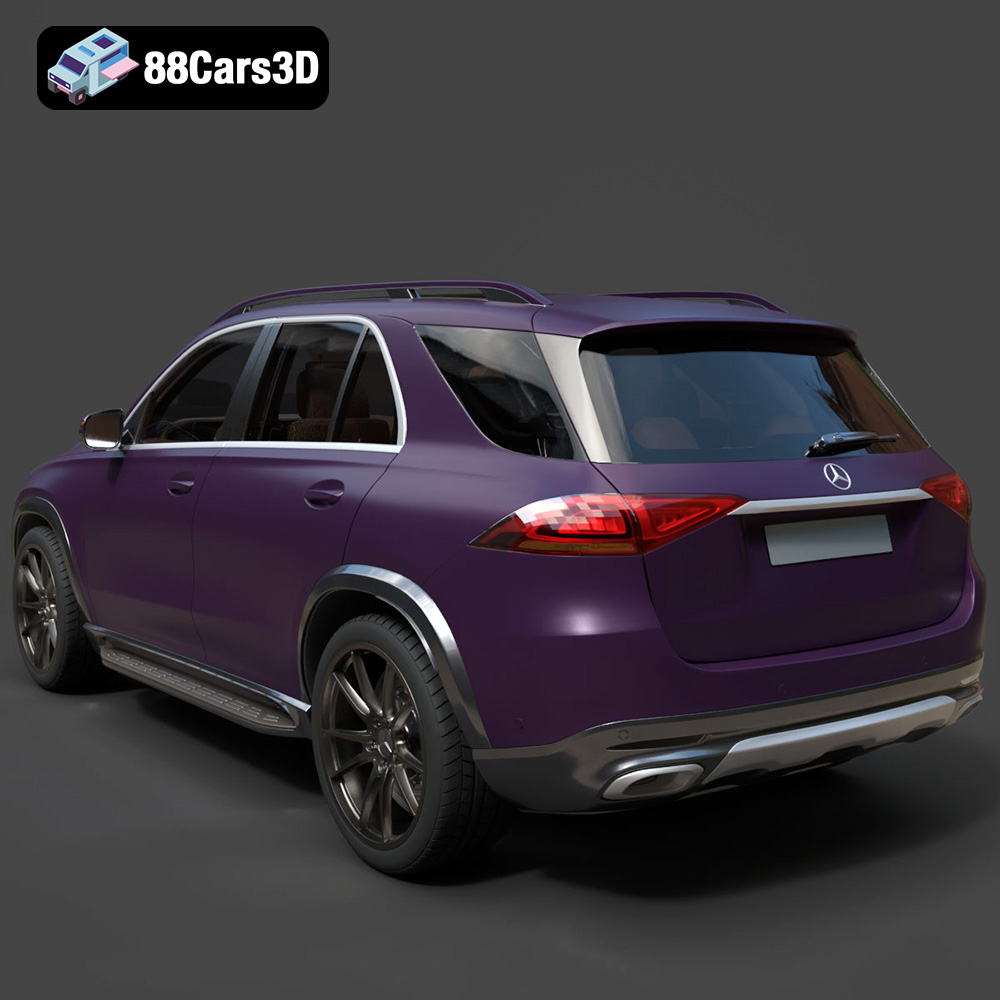
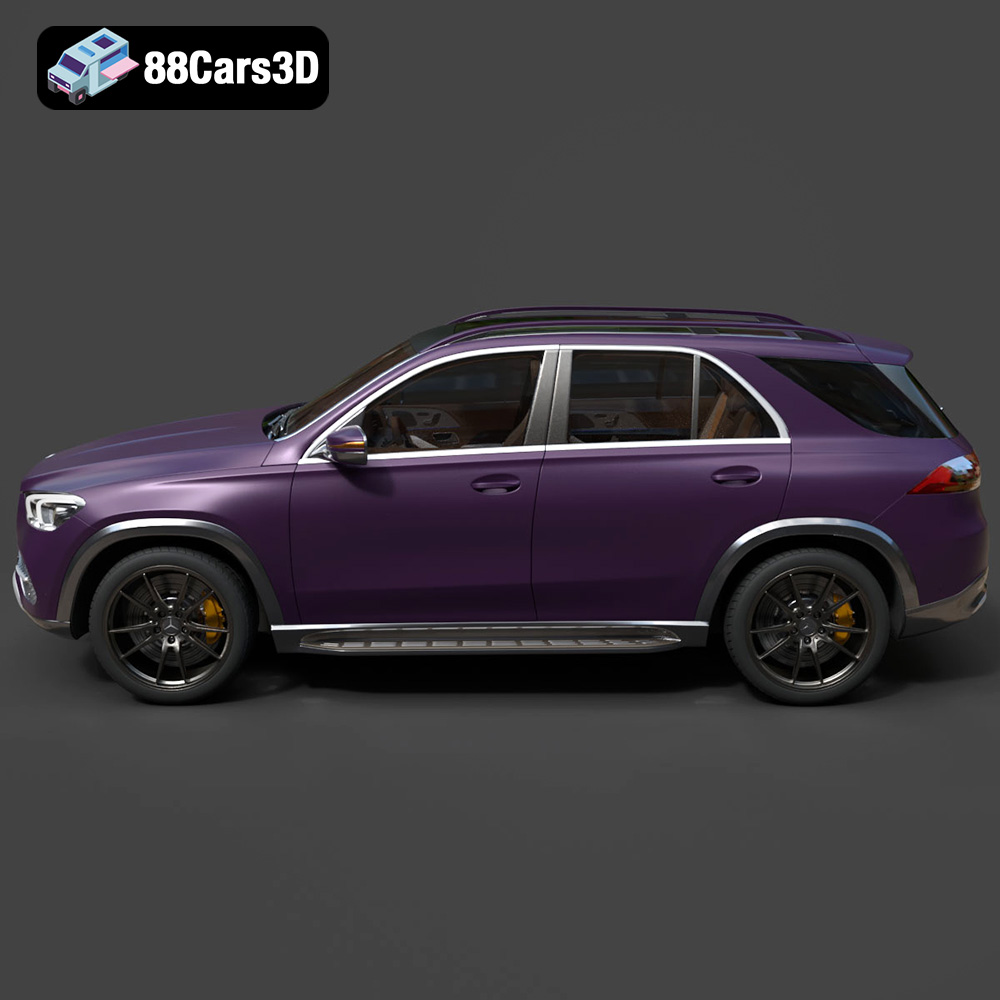
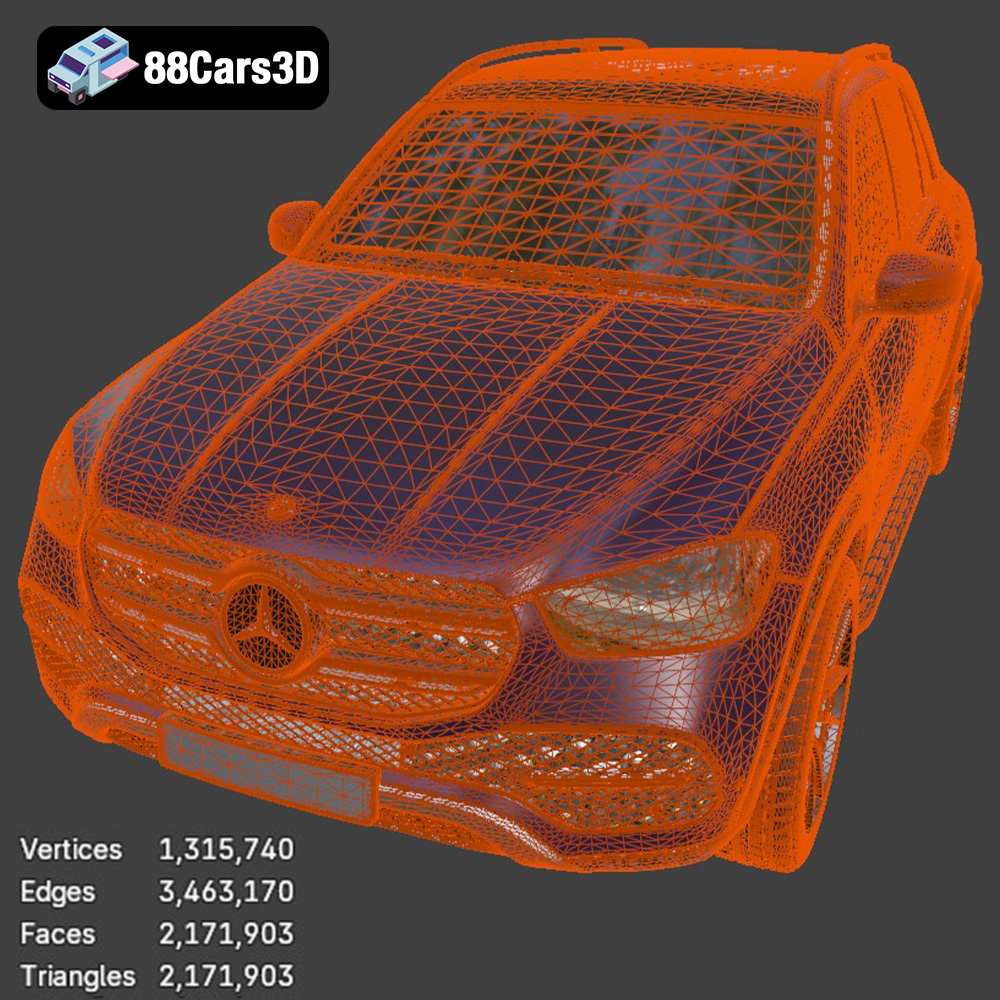
The exterior of any luxury SUV is its statement, and the Mercedes Benz GLE’s imposing signature front grille, aerodynamic sweeping lines, and muscular stance are faithfully translated into this 3D asset. Every aspect, from the intricate housing of the dynamic LED headlights to the integrated dual exhaust system and sporty rear diffuser, has been meticulously crafted. The high-fidelity topology, boasting 2,171,903 triangles, ensures that curves are smooth, edges are sharp, and reflections behave precisely as they would on a physical car. This level of detail is crucial for close-up shots in marketing materials or for conveying a sense of presence in a virtual showroom. Furthermore, the accurate frame geometry and exterior proportions, based on actual vehicle chassis dimensions, guarantee an authentic representation, making it perfect for everything from architectural visualizations to next-gen racing games where realism is paramount.
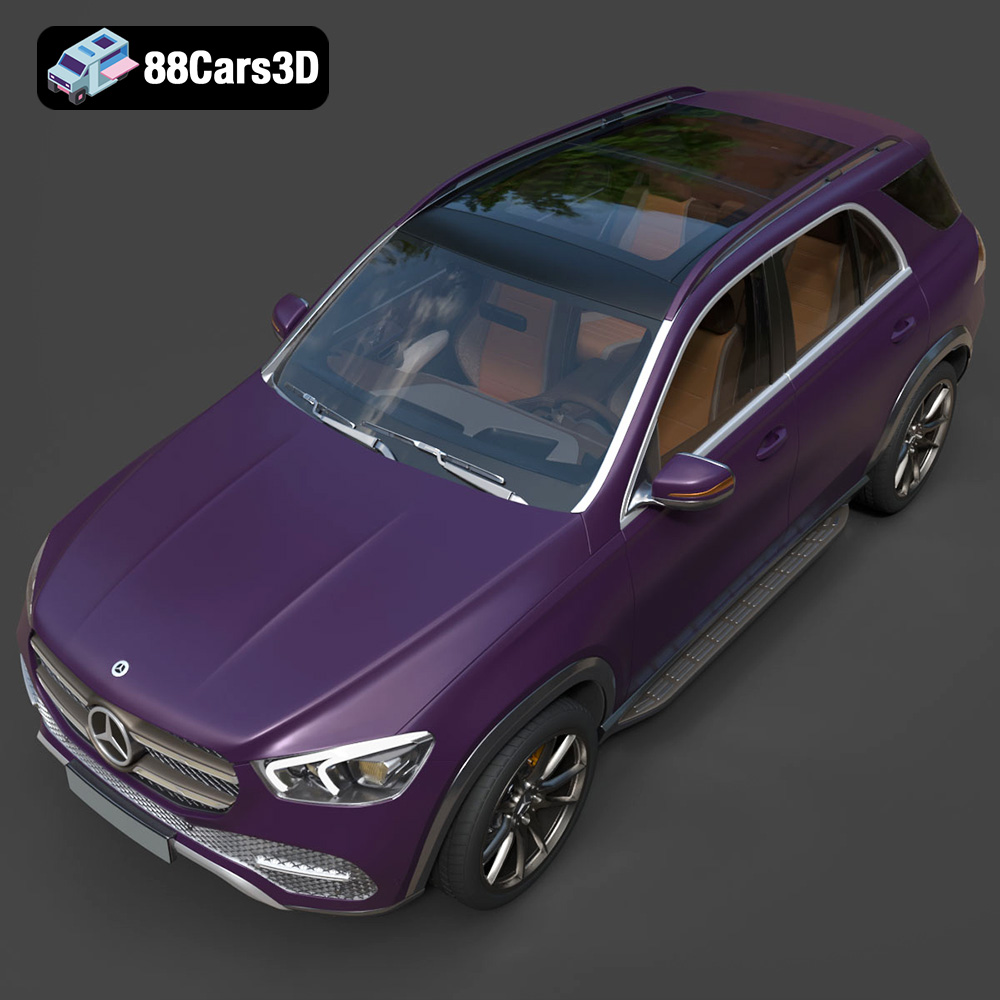
Beyond the impressive exterior, the interior of a luxury vehicle is where the immersive experience truly takes hold. The Mercedes Benz GLE 3D Model extends this attention to detail into its cockpit, featuring luxurious contoured seating with highly detailed upholstery stitching. The multifunction steering wheel with paddle shifters, the accurate dual-screen digital instrument cluster and infotainment system, and the precisely modeled center console, climate controls, pedals, and gear selector are all present. This level of interior detail is not just for show; it’s optimized geometry for first-person POV in gaming and virtual test drives, allowing for truly immersive experiences where users can virtually sit inside and interact with the vehicle. The fidelity here ensures that whether the camera is outside admiring the lines or inside exploring the luxurious cabin, the visual quality remains consistently high.
The true strength of a professional 3D car model lies in its technical foundation. The Mercedes Benz GLE 3D Model exemplifies this with several key advantages: its “Game-Ready & Optimized” nature means the 2,171,903 triangles strike a perfect balance for next-gen real-time engines while maintaining high-end visual realism. This optimization is critical for smooth performance in interactive applications like AR/VR or video games. Real-world scale accuracy is maintained, ensuring seamless integration into diverse scenes without needing tedious adjustments. Crucially, the model features a proper pivot setup for steering, wheel rotation, and suspension travel. This seemingly small detail is vital for animating the vehicle realistically, making it a powerful asset for cinematic animations, game development, and simulations where dynamic movement is required. Its compatibility with major 3D software platforms and real-time rendering engines further underscores its versatility, offering a robust foundation for any project.
The true value of a premium 3D car model, such as the Mercedes Benz GLE from 88cars3d.com, is realized when it seamlessly integrates into professional creative and technical pipelines. From architectural visualization to blockbuster game development, these assets streamline production, enhance realism, and enable artists to focus on storytelling and innovation rather than foundational modeling tasks.
In architectural visualization (archviz), the environment is paramount, but the addition of realistic elements like cars can elevate a scene from a static rendering to a vibrant, lived-in space. The Mercedes Benz GLE 3D Model, with its high-fidelity exterior and interior, is an ideal candidate for such scenarios. Imagine a luxury condominium complex rendering where a GLE is parked prominently, reflecting the sleek lines of the building, or cruising down a meticulously rendered street. The model’s stunning reflections and accurate light behaviors ensure it blends perfectly with complex lighting setups. Artists can use 3ds Max or Blender to place the model, adjust materials for various lighting conditions (e.g., golden hour, overcast day), and then render with engines like V-Ray, Corona, or Cycles to achieve photorealistic results that captivate potential buyers or stakeholders. For brand campaigns, this model can be positioned in studio lighting setups or dynamic lifestyle scenes, showcasing the vehicle’s luxurious appeal without the expense of a physical photoshoot.
The demands of modern game development are immense, balancing visual fidelity with performance optimization. The Mercedes Benz GLE 3D Model is explicitly designed to be “Game-Ready,” striking an optimal balance with its 2,171,903 triangles. For Unreal Engine, leveraging technologies like Nanite can handle this high poly count with remarkable efficiency, rendering intricate details without significant performance drops. In a typical workflow, the `.fbx` or a pre-optimized `.unreal` file would be imported. Separate components like wheels, suspension, and steering, along with their proper pivot setups, are crucial for implementing realistic physics and animation systems. Developers can then apply custom PBR materials, set up collision meshes, and integrate the vehicle into an open-world environment or racing title. For Unity, a similar process applies, importing the `.fbx`, setting up materials, and potentially using custom shaders for advanced effects. The optimized geometry ensures that the vehicle can be part of a bustling urban environment or a high-speed chase without taxing the engine, delivering an immersive and performant player experience.
For high-end cinematic productions, commercials, or even personal animation projects, the Mercedes Benz GLE 3D Model offers the detail and flexibility required for close-up shots and dynamic sequences. In software like 3ds Max or Maya, animators can leverage the separate wheels, suspension, and steering components to create incredibly realistic driving sequences. Keyframe animation can be used to simulate suspension compression over bumps, precise steering inputs, and wheel rotations. Advanced rigging might be applied for more complex deformations or interaction with environment assets. The model’s meticulously modeled surfaces ensure stunning reflections and accurate light behaviors, which are critical for achieving cinematic quality in renderers like Arnold, V-Ray, or Redshift. From an epic chase scene to a serene beauty shot, this model provides the visual foundation for compelling storytelling.
The utility of high-quality 3D car models extends far beyond traditional screen-based rendering and games. They are foundational assets for cutting-edge immersive experiences in Augmented Reality (AR) and Virtual Reality (VR), and even for tangible creation through 3D printing. The Mercedes Benz GLE 3D Model is engineered to excel in these emerging applications, opening new avenues for interaction and visualization.
Augmented Reality (AR) and Virtual Reality (VR) are transforming how consumers interact with products, particularly in the automotive industry. Imagine prospective buyers exploring the Mercedes Benz GLE in their driveway via AR on a smartphone, scaling it to real size, and walking around it as if it were physically present. Or, donning a VR headset to step into a luxurious virtual showroom, open the car doors, sit inside the detailed cockpit, and even customize its features in real-time. The Mercedes Benz GLE 3D Model is perfect for such applications due to its optimized geometry and support for formats like `.glb`. The `.glb` format is specifically tailored for efficient transmission and loading in web-based AR/VR viewers and mobile experiences, bundling textures and materials into a single, compact file. This allows for fluid, high-fidelity experiences, letting users engage with the vehicle in unprecedented ways, from changing body colors and rim designs to exploring the intricate interior details as if they were physically there.
The ability to convert a digital 3D model into a physical object through 3D printing is a fascinating application of digital assets. While the Mercedes Benz GLE 3D Model is highly detailed, its conversion to the `.stl` format makes it suitable for display-scale hobbyists. However, successful 3D printing requires careful preparation and an understanding of the model’s structure. The recommended scale (1:12 / 1:18 / 1:24) ensures that fine details are preserved. Crucial print settings include layer height (0.04–0.12 mm, with resin printing recommended for superior detail), adequate wall thickness (1.2–2.0 mm), and appropriate infill (20–30%) for structural integrity. Supports are almost always required for complex overhangs like mirrors, exhaust tips, and the steering wheel, and proper print orientation (e.g., frame angled, wheels printed separately) is vital to minimize issues. Post-processing, including sanding, priming, and painting with authentic factory colors, can bring the printed model to life, creating a beautiful desktop display or a reference piece for designers. This tangible output from a digital asset showcases the comprehensive versatility of 88cars3d.com’s offerings.
Beyond entertainment and marketing, high-fidelity 3D car models play a significant role in professional simulation and training. For instance, in driver training simulators, emergency response training, or even autonomous vehicle research, accurate vehicle models are critical. The real-world scale accuracy, proper pivot setup for animated components (steering, wheels, suspension), and detailed interior of the Mercedes Benz GLE 3D Model make it an excellent choice for these demanding environments. Developers can integrate the model into a physics-based simulation engine, allowing trainees or researchers to experience realistic vehicle dynamics and interactions. This not only provides a safe and cost-effective training platform but also enables iterative development and testing in a controlled virtual environment, accelerating progress in areas like vehicle safety and performance.
In the fast-paced world of digital content creation, especially for real-time applications, raw detail is only one piece of the puzzle. Performance optimization is equally critical, ensuring that high-fidelity assets run smoothly across various platforms without compromising visual quality. The Mercedes Benz GLE 3D Model exemplifies how to achieve this delicate balance, delivering stunning visuals that are also game-ready and efficient for demanding visualization tasks.
The term “high-fidelity” often conjures images of excessively complex models, but for real-time applications, an intelligent approach to geometry is paramount. The Mercedes Benz GLE 3D Model achieves this with 2,171,903 triangles. This count is meticulously chosen to strike a perfect balance, offering exceptional visual realism for close-ups and cinematic rendering while remaining optimized for next-generation real-time engines like Unreal (especially with features like Nanite) and Unity. This isn’t merely about having “enough” polygons; it’s about efficient polygon distribution, ensuring details are concentrated where they matter most (e.g., body curves, headlight intricacies) and optimized where they have less visual impact. This thoughtful topology minimizes rendering overhead, allowing for higher frame rates and a smoother interactive experience, whether in a game, a VR configurator, or a live architectural walkthrough.
A static, single-mesh model severely limits its utility in dynamic environments. The Mercedes Benz GLE 3D Model addresses this through a modular design and proper pivot setup. Its separate wheels, suspension, and steering components are not just aesthetic details; they are functional elements for animation. Each component has its pivot point accurately placed, allowing for realistic rotation of wheels, compression and extension of suspension, and precise steering movements. This technical advantage is crucial for game developers implementing vehicle physics systems, animators creating driving sequences, and simulation engineers building accurate vehicle dynamics. Without correctly placed pivots, animating these elements would be a time-consuming and often inaccurate process, highlighting the foresight in the model’s construction.
Beyond geometry, materials play an enormous role in visual fidelity and performance. Modern real-time engines rely heavily on Physically Based Rendering (PBR) workflows, which mimic how light interacts with real-world materials. A high-quality 3D car model, like the GLE, is designed with PBR in mind. This means its textures (albedo, normal, roughness, metallic, ambient occlusion, etc.) are crafted to work seamlessly with PBR shaders, ensuring accurate reflections, convincing metallic finishes, and realistic surface details. Proper material setup is not just about looks; it’s also about performance. Optimized material instances and efficient texture packing can significantly reduce draw calls and memory usage, making the model render more efficiently in real-time environments. The ability to customize material finishes (matte, gloss, chrome, carbon fiber) allows for broad creative flexibility without sacrificing performance when leveraging PBR pipelines.
A high-quality 3D car model is not just a static representation; it’s a versatile foundation for boundless creativity. The Mercedes Benz GLE 3D Model from 88cars3d.com offers extensive customization options, allowing artists and developers to tailor its appearance to specific project needs, ensuring its relevance and utility across a wide range of applications, now and in the future.
The ability to customize a 3D model is crucial for fitting it into diverse visual narratives and branding requirements. The Mercedes Benz GLE model provides ample opportunities for aesthetic adjustments:
These customization options empower creators to transform a base model into a unique asset that perfectly aligns with their vision, whether for a commercial, a game, or a virtual showroom.
Investing in high-fidelity 3D assets is a long-term commitment, and their future-proofing is a significant consideration. The Mercedes Benz GLE 3D Model’s robust construction and comprehensive format support contribute significantly to its longevity. Its high poly count, while optimized, also means it has enough geometric detail to hold up to future rendering technologies and closer scrutiny. As software and hardware evolve, demanding even greater realism, this model will likely require less re-work compared to lower-fidelity alternatives. The inclusion of native files like `.blend` and `.max` ensures that artists working in those ecosystems have the ultimate flexibility for future modifications and compatibility with upcoming software versions. Furthermore, its game-ready optimization for next-gen engines means it’s built to perform in the immersive, real-time environments that are increasingly becoming the standard, ensuring it remains a valuable asset for years to come.
By providing a versatile, highly detailed, and customizable asset, 88cars3d.com equips professionals with the tools needed to not only meet current project demands but also to anticipate and adapt to future technological advancements in the ever-evolving landscape of 3D visualization.
The journey through the intricate world of automotive 3D modeling reveals a blend of artistic vision and technical precision. From the foundational understanding of diverse file formats that dictate a model’s utility to the meticulous crafting of every curve and component, creating high-fidelity 3D cars is an art form in itself. We’ve explored how these advanced digital assets power everything from photorealistic architectural visualizations and cinematic animations to immersive AR/VR experiences and the adrenaline-fueled worlds of next-generation video games.
The Mercedes Benz GLE 3D Model stands as a testament to this pursuit of excellence. Its detailed exterior and interior, optimized geometry (2,171,903 triangles), real-world scale, and thoughtful pivot setups make it an exceptionally versatile tool for professionals. Whether you are a game developer leveraging its “game-ready” attributes for Unreal Engine, an architect populating a scene with a luxurious vehicle in 3ds Max, or a designer bringing a physical prototype to life through 3D printing, this model provides the quality and flexibility needed to elevate your projects.
In a landscape where visual fidelity and performance are paramount, choosing the right assets is critical. The Mercedes Benz GLE 3D Model from 88cars3d.com offers a comprehensive solution, delivering not just a car, but a gateway to endless creative possibilities, ensuring your projects stand out with unparalleled realism and technical prowess. Investing in such a meticulously crafted asset empowers you to push the boundaries of your digital creations and captivate your audience with stunning automotive visuals.
The Mercedes Benz GLE represents the pinnacle of luxury mid-size SUVs, seamlessly blending aggressive styling, premium comfort, and dominant road presence. This 3D model captures the vehicle’s iconic heritage, featuring its imposing signature front grille, aerodynamic sweeping lines, and muscular stance. Every visual element has been meticulously crafted, from the intricate housing of the dynamic LED headlights to the integrated dual exhaust system and sporty rear diffuser. Boasting a high-fidelity topology with 2,171,903 triangles, this model delivers unparalleled visual realism for high-end rendering and next-generation real-time engines. Its meticulously modeled surfaces ensure stunning reflections and accurate light behaviors. The geometry is intelligently structured for advanced game development, high-end cinematic animation, architectural visualization, and premium AR/VR configurators.
$86.50
.blend
.fbx
.glb
.gle
.luxury suv
.max
.obj
.ply
.rendering
.stl
.unreal
car-3d-model
game asset
game-ready
high poly
mercedes-benz
optimized
SUV
VR/AR