Get 20% OFF All Premium 3D & STL Models!

The automotive industry has always been a beacon of innovation, not just in engineering, but also in design and aesthetic appeal. From sleek sports cars to robust utility vehicles, the visual language of automobiles captivates audiences worldwide. In the digital realm, capturing this essence requires highly detailed and technically accurate 3D models, crucial for everything from cutting-edge marketing campaigns to immersive gaming experiences. Modern electric vehicles, with their minimalist lines and futuristic features, present a unique challenge and opportunity for 3D artists. One such vehicle, the Tesla Model X, with its revolutionary falcon-wing doors and distinctive silhouette, stands as a prime example of design innovation.
For professionals seeking to integrate such iconic vehicles into their projects, readily available, high-fidelity 3D car models are invaluable. They serve as the foundation for stunning visualizations, interactive applications, and even physical prototypes. This article will explore the intricate world of premium 3D car models, dissecting their technical characteristics, diverse applications, and the sophisticated workflows they enable. We will specifically highlight the exceptional Tesla Model X 3D Model from 88cars3d.com, a stellar example of an asset engineered for peak performance across multiple creative disciplines.
Creating a digital twin of a real-world vehicle like the Tesla Model X is a meticulous process that blends artistic vision with rigorous technical standards. It’s not merely about replicating shapes; it’s about capturing the engineering, the materials, and the spirit of the original design. This involves careful consideration of geometry, texture, and optimization.
The fundamental challenge in 3D modeling, especially for complex subjects like automobiles, is to strike a perfect balance between visual realism and computational performance. High-fidelity models, intended for close-up renders and detailed animations, demand a significant poly count to accurately represent curves, panel gaps, and intricate components. However, for real-time applications such as video games or AR/VR experiences, an excessively high poly count can severely impact frame rates and overall performance. This necessitates smart topology, efficient UV mapping, and often, the implementation of Level of Detail (LOD) systems. The goal is to ensure that the model looks stunning from every angle without bogging down the rendering engine. Materials, too, play a crucial role, often leveraging physically based rendering (PBR) workflows to simulate how light interacts with surfaces in the real world, from the metallic sheen of the paint to the subtle reflections on the glass and the texture of interior fabrics.
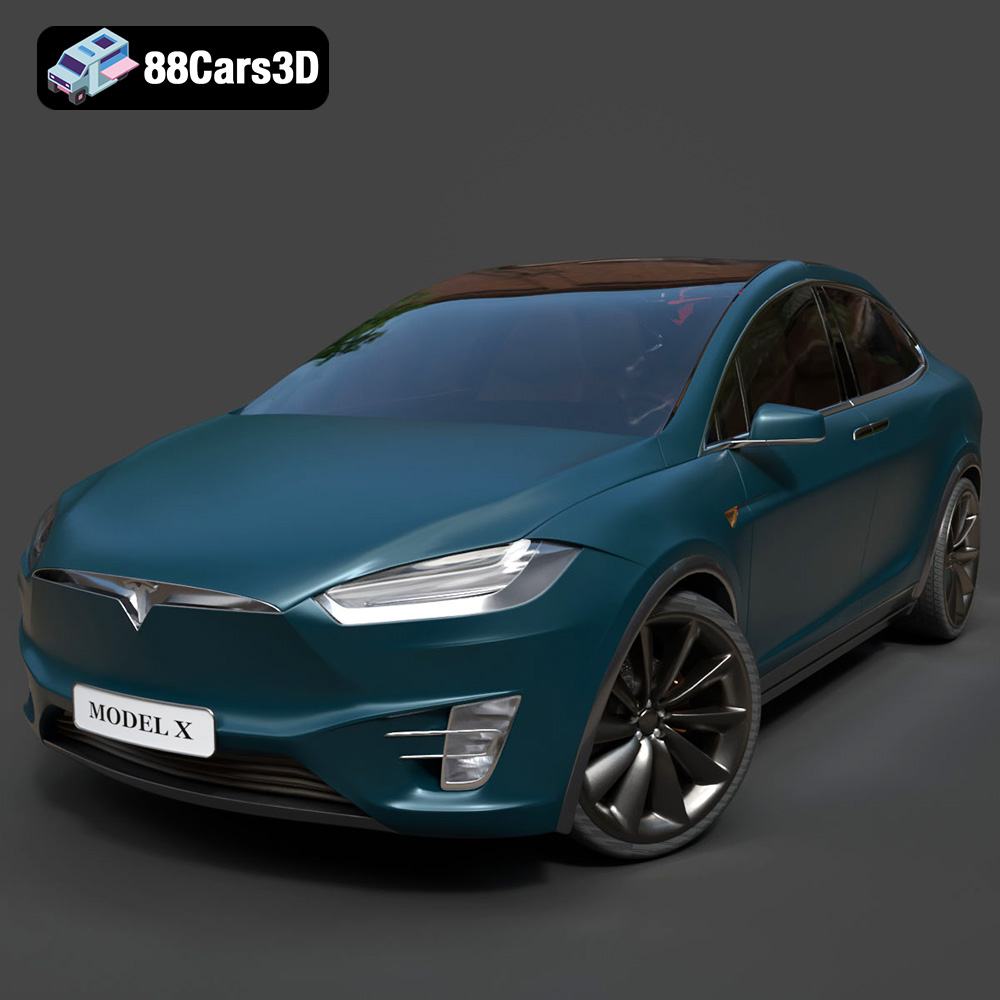
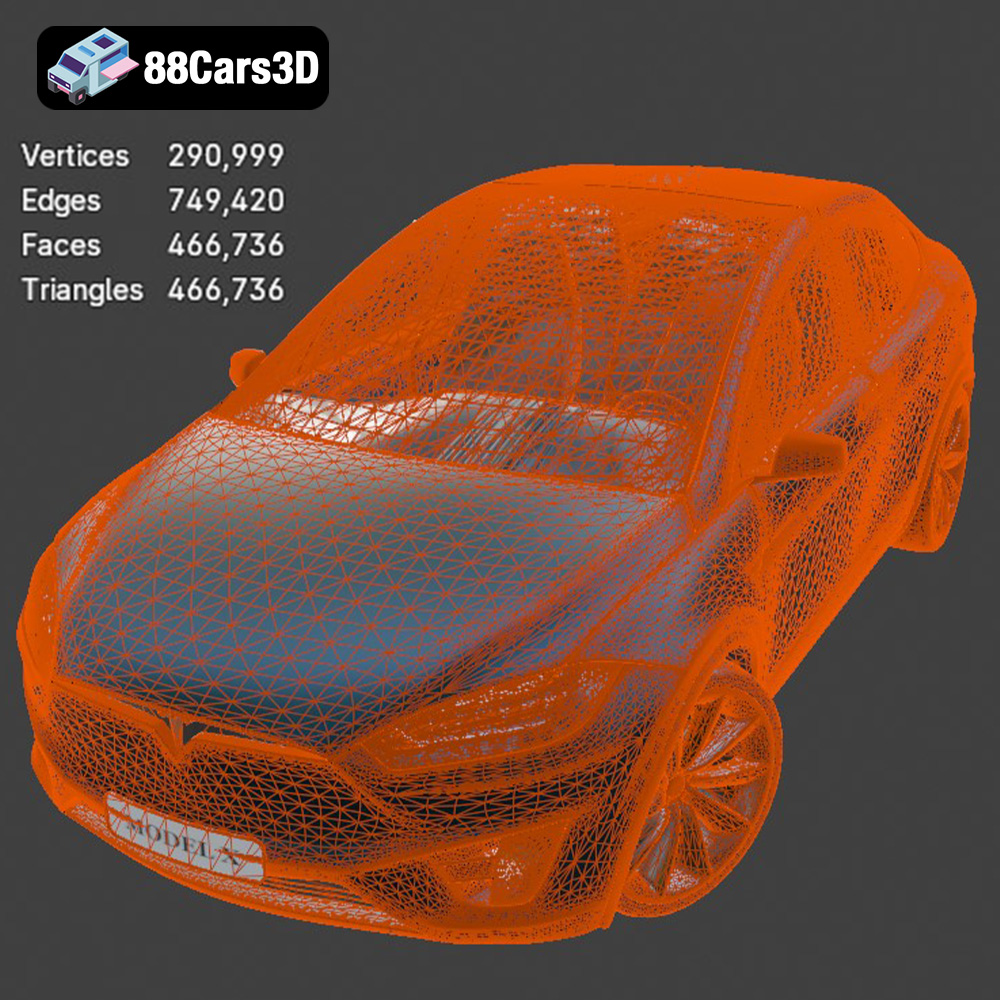
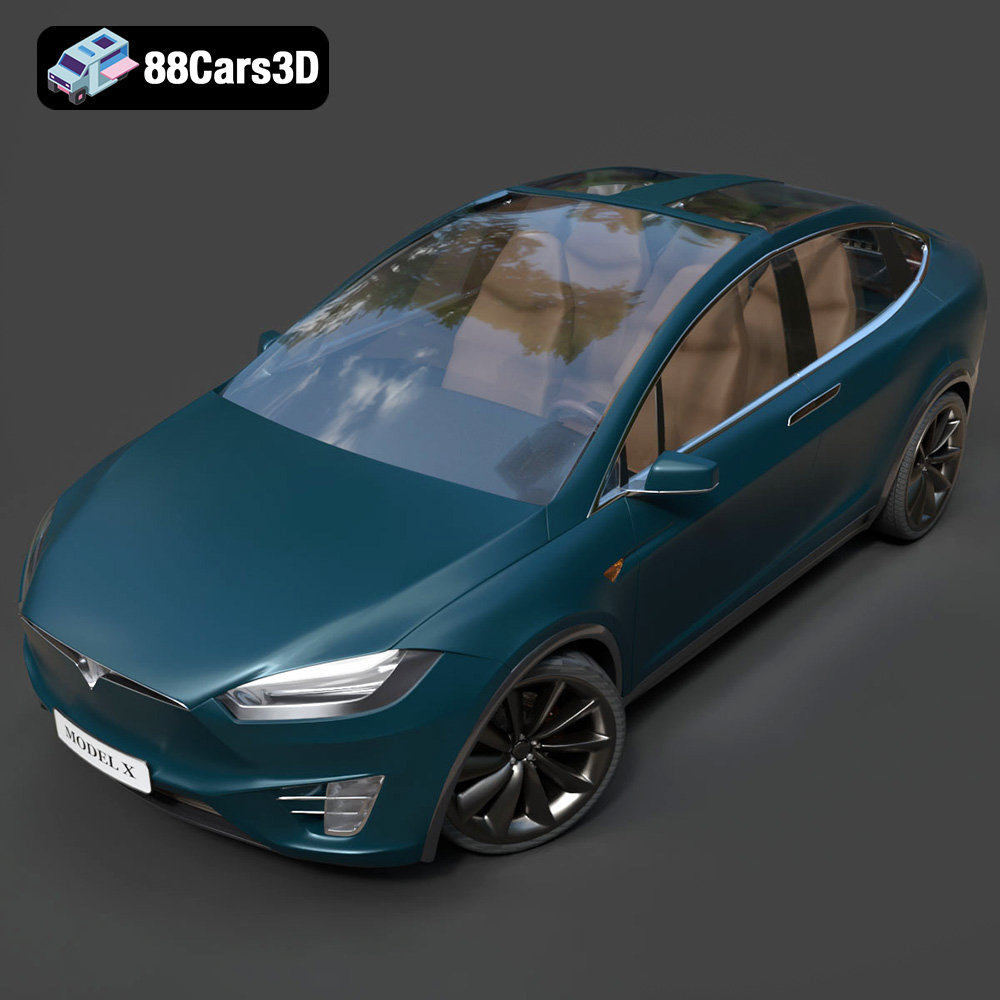
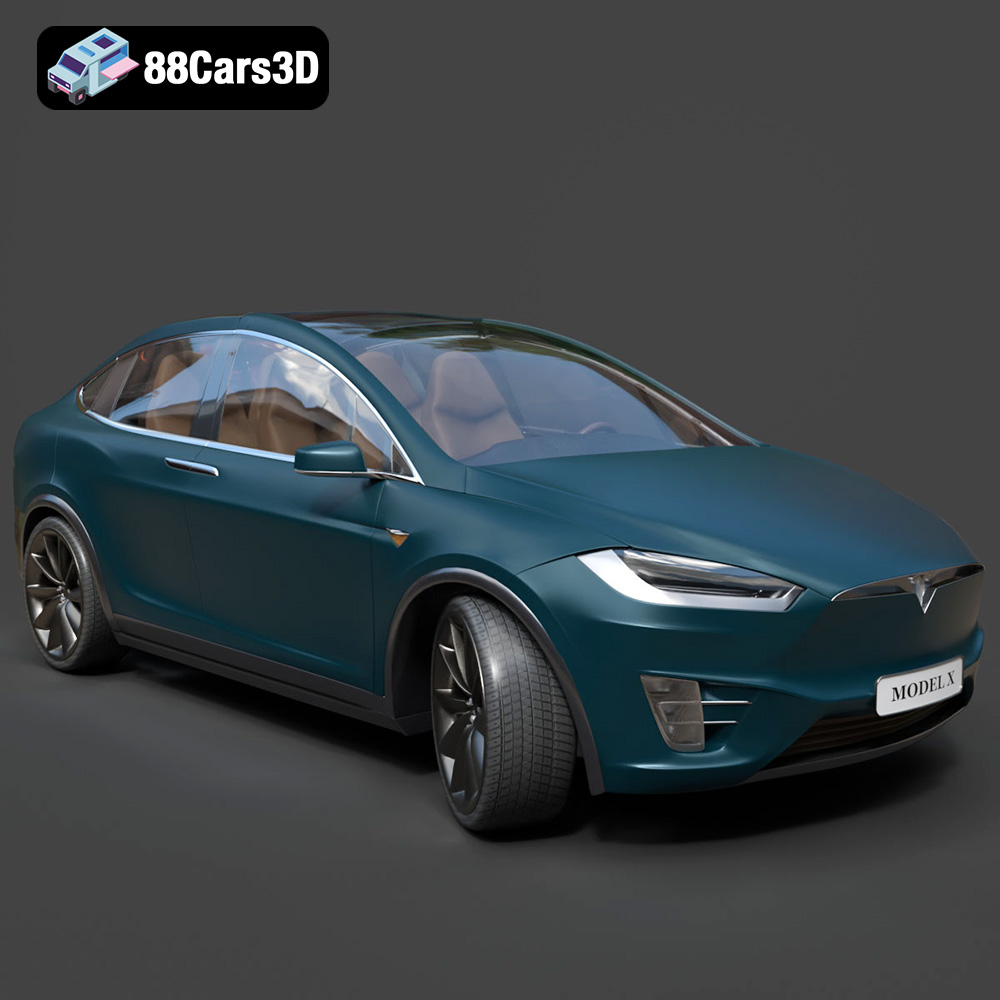
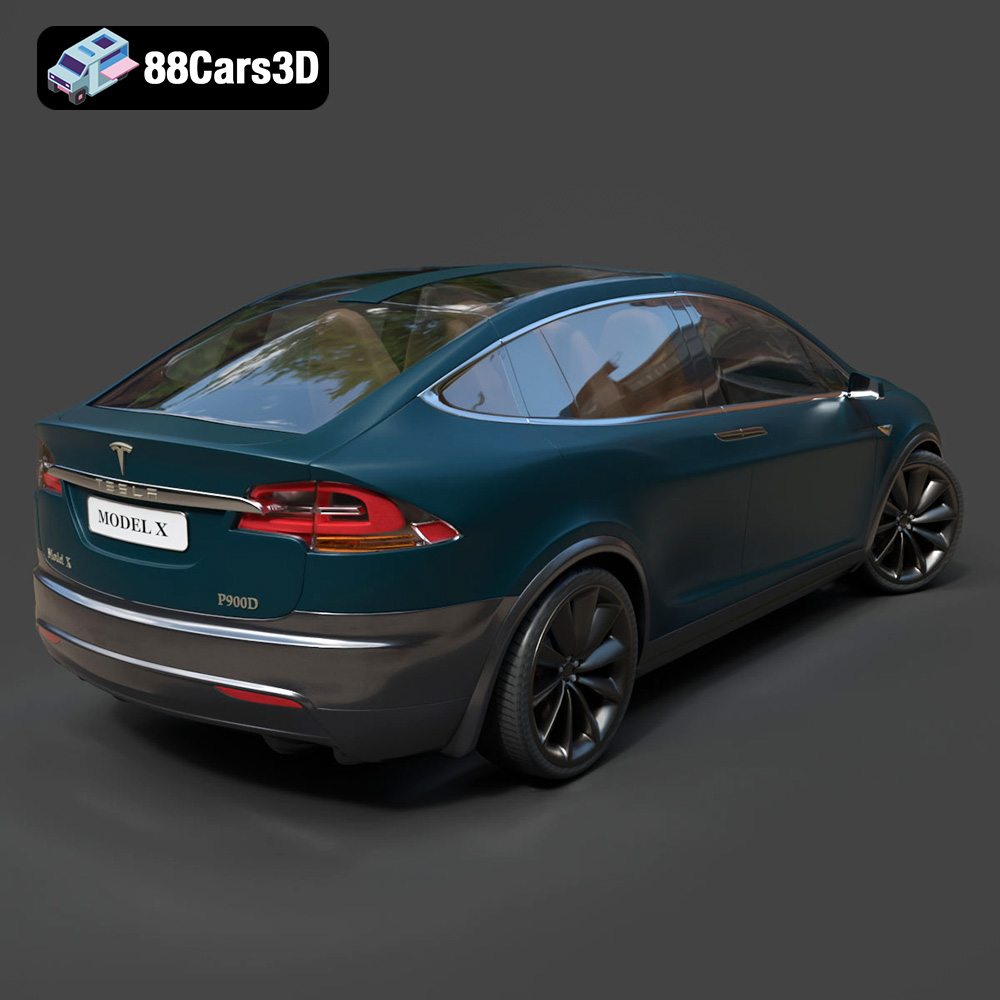
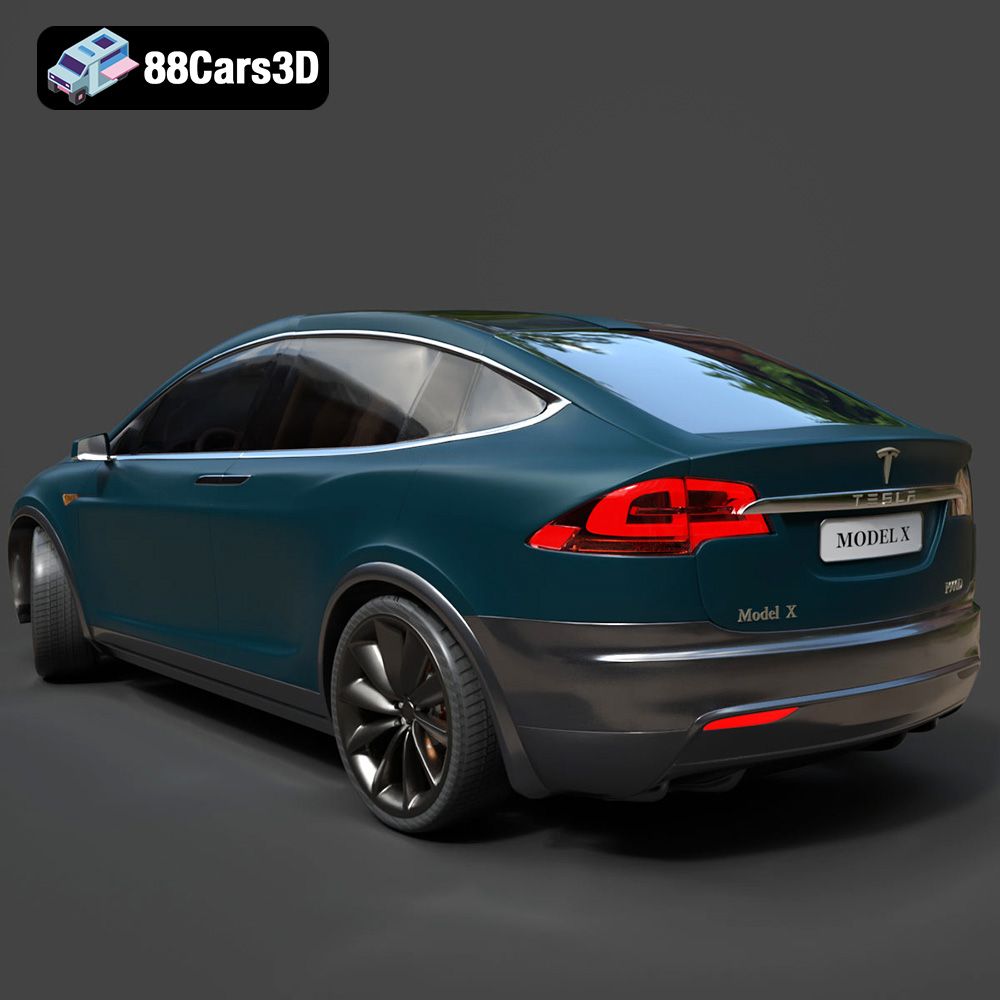
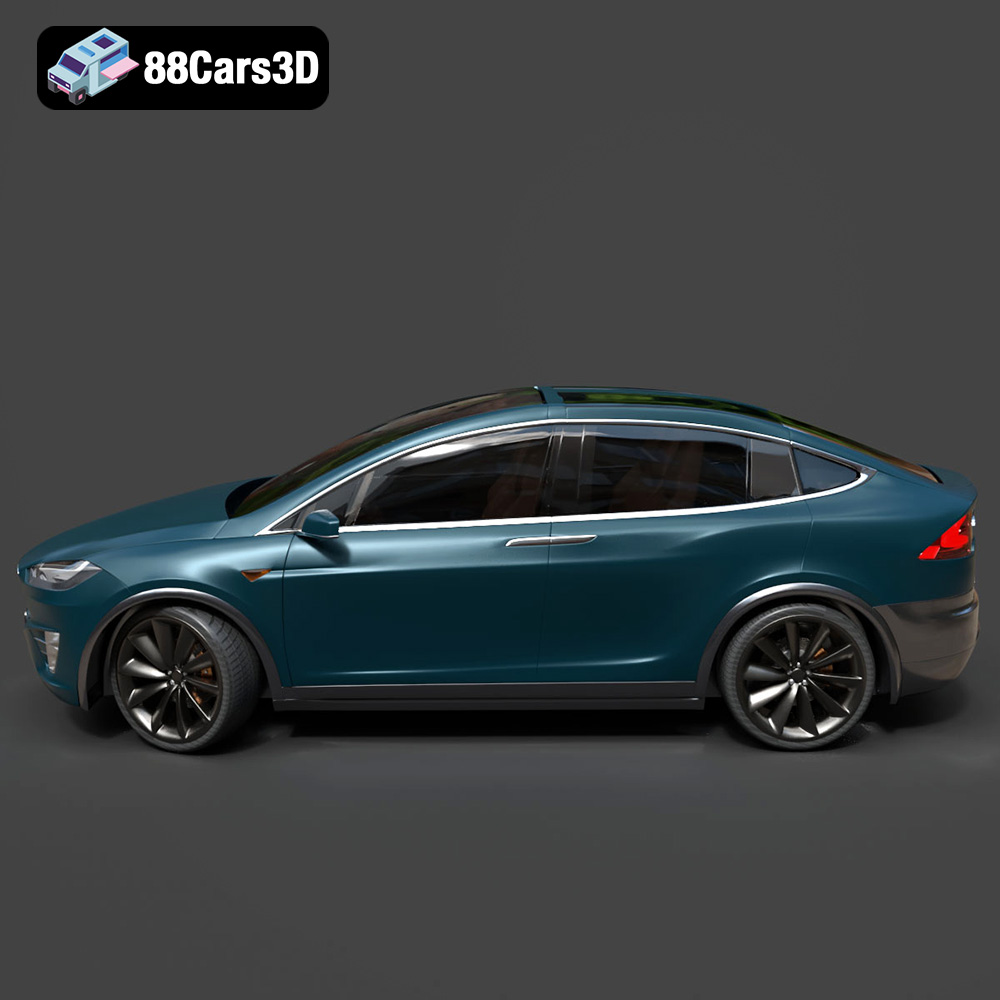
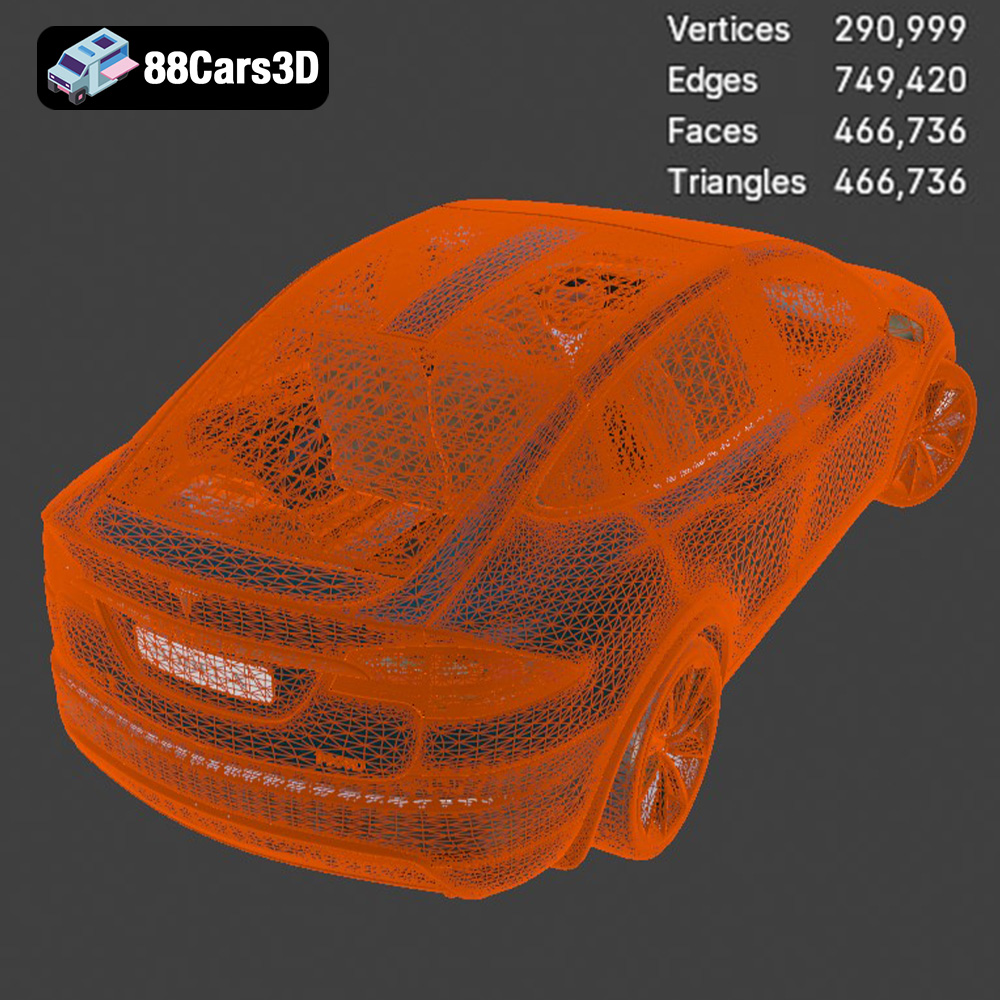
The Tesla Model X 3D Model exemplifies this balance. With 466,736 triangles, it achieves a premium level of detail suitable for stunning close-up renders while maintaining an optimized topology that makes it “game-ready.” Every curve, from its sleek aerodynamic profile to its distinctive LED headlights and continuous taillight strip, has been meticulously crafted. Key features like the iconic falcon-wing doors are not just static geometry; they come with articulated hinges, ready for animation. The interior, often overlooked in external car models, is equally detailed, featuring premium vegan leather seat detailing with realistic stitching, the signature steering yoke, and the central 17-inch touchscreen infotainment display. The undercarriage even includes accurate dual-motor EV drivetrain and battery pack details. This level of comprehensive detail, combined with separate wheels, suspension, and steering components, ensures maximum versatility for animators and developers alike, truly making it a comprehensive digital asset.
The world of 3D modeling is vast, and a critical aspect of working with digital assets is understanding the various file formats available. Each format is designed with specific use cases and software compatibility in mind. Choosing the right format is essential for a smooth workflow and optimal results, whether you’re performing automotive rendering, developing game assets, or preparing for 3D printing. The Tesla Model X 3D Model from 88cars3d.com is provided in a comprehensive array of formats, ensuring broad compatibility for virtually any project.
The .blend format is the native file type for Blender, the powerful open-source 3D creation suite. When you receive a .blend file, you’re getting a complete Blender scene, often including all geometry, materials, textures, lighting setups, cameras, and even animations. This format is ideal for users who primarily work in Blender, offering full editability and access to all modifiers, node-based materials, and scene properties. For the Tesla Model X, the .blend file allows artists to delve deep into its construction, easily modifying colors, adjusting material finishes (matte, gloss, metallic), or even adapting lighting for different environments directly within Blender.
.fbx (Filmbox) is one of the most widely adopted proprietary file formats for 3D content exchange, particularly favored in the animation, game development, and VFX industries. Developed by Autodesk, FBX supports not only geometry but also materials, textures, animations, skinning, and camera data, making it incredibly versatile for transferring complex scenes between different 3D software packages (like 3ds Max, Maya, Blender) and game engines (Unreal, Unity). Its robust nature and widespread support make it an ideal choice for integrating the Tesla Model X into a real-time pipeline, preserving crucial animation pivots and hierarchy.
.obj (Wavefront OBJ) is a much simpler, older, but incredibly universal format. It primarily stores geometry (vertices, normals, texture coordinates, and faces) and can reference external .mtl (material) files for basic material properties and texture maps. While it doesn’t support animation or complex scene data, its widespread compatibility across virtually every 3D software makes it a reliable “fallback” format for simple mesh exchange. For basic rendering or static visualization of the Tesla Model X in a variety of lesser-known or proprietary renderers, .obj remains a solid choice.
.glb (GL Transmission Format Binary) is the binary version of glTF, an open-standard, royalty-free specification for 3D scenes and models. Designed by the Khronos Group, glTF is often called the “JPEG of 3D” due to its efficiency and optimization for web-based applications, AR/VR, and mobile platforms. A .glb file encapsulates all assets (geometry, textures, materials, animations) into a single, self-contained binary file, making it incredibly easy to share and load quickly. For creating immersive virtual showrooms or AR experiences with the Tesla Model X, the .glb format is indispensable due to its small file size and excellent PBR material support.
.stl (Stereolithography) is the de facto standard file format for 3D printing. It represents a 3D model as a series of connected triangles, describing only the surface geometry without color, texture, or other properties. While simple, its ubiquity in the 3D printing world is unmatched. The Tesla Model X 3D model, when converted to .stl, becomes a blueprint for physical creation, allowing hobbyists and professionals to 3D print miniature replicas or prototypes.
.ply (Polygon File Format or Stanford Triangle Format) is a format designed to store 3D data from 3D scanners. It can store a variety of properties including color, transparency, surface normals, and range data, making it more comprehensive than STL for capturing detailed scan data. While less common for direct artistic output, its inclusion for the Tesla Model X demonstrates a robust commitment to diverse applications, particularly in fields requiring precise mesh data for CAD or analytical purposes.
The inclusion of .unreal signifies an asset that has been specifically optimized and prepared for seamless integration into the Unreal Engine ecosystem. While not a standalone file extension in the same way FBX is, “unreal” typically refers to an FBX or other supported file format that adheres to Unreal Engine’s strict asset pipeline requirements, often with specific material setups, collision meshes, and LODs configured for optimal real-time performance within the engine. This makes the Tesla Model X a truly “drop-in” asset for developers using Unreal.
Finally, .max is the native file format for Autodesk 3ds Max, one of the leading 3D modeling, animation, and rendering software packages. Like .blend, a .max file contains the complete scene, including all models, lights, cameras, materials, and modifiers. For professional studios and artists working in 3ds Max, having the Model X available in this format means direct access to a fully editable project, facilitating complex animations, architectural visualizations, and high-fidelity rendering projects without any conversion overhead.
The true power of a high-quality 3D car model lies in its ability to integrate seamlessly into diverse professional workflows. The Tesla Model X 3D Model from 88cars3d.com is engineered for this versatility, providing artists and developers with a robust foundation for their projects.
For cinematic quality renders and architectural visualizations, 3ds Max and Blender are industry staples. With the Tesla Model X available in both .max and .blend formats, artists have full flexibility. In either software, the workflow typically involves importing the model, setting up realistic lighting (often using HDRI maps for environmental reflections), and refining PBR materials. The Model X’s detailed geometry, coupled with accurate UVs, allows for precise texture application, from the metallic paint finishes to the intricate interior stitching. Because the model features separate components like wheels, suspension, and steering, animators can easily rig and articulate these parts to create dynamic sequences—a car driving down a virtual street, the falcon-wing doors gracefully opening, or the suspension compressing as it navigates a turn. Customization options, such as changing body colors (e.g., Pearl White Multi-Coat, Solid Black, Deep Blue Metallic) or modifying tire textures, are easily implemented through material adjustments, enabling artists to create bespoke visualizations for specific branding or scenario needs.
Game development demands efficiency without sacrificing visual appeal. The Tesla Model X 3D Model is “game-ready” with 466,736 triangles, striking an excellent balance. When integrating into Unreal Engine or Unity, the .fbx or optimized .unreal files are the preferred choices. Developers can import the model, which already has proper pivot setups for steering, wheel rotation, and suspension travel, significantly reducing setup time. Implementing the Model X into an open-world game or racing title involves setting up collision meshes, optimizing material instances for real-time performance, and potentially creating Levels of Detail (LODs) to ensure smooth gameplay across varying distances from the player. Its optimized geometry means less strain on the engine, allowing for more detailed environments or higher frame rates, providing players with a truly immersive and visually rich experience.
The utility of a premium 3D car model extends far beyond traditional screen-based rendering and gaming. Emerging technologies like Augmented Reality (AR), Virtual Reality (VR), and 3D printing open up new frontiers for how these assets can be experienced and utilized.
AR and VR are transforming how consumers interact with products, especially in the automotive sector. Imagine a virtual showroom where potential buyers can explore the Tesla Model X in full 3D, changing colors, opening falcon-wing doors, and examining the interior from any angle. Or an AR application that lets them place a life-size Model X in their driveway using just a smartphone. For these immersive experiences, highly optimized models are paramount. The .glb format included with the Tesla Model X is specifically tailored for AR/VR and web-based applications, ensuring quick loading times and smooth interactions on various devices, from high-end VR headsets to mobile phones. The model’s accurate real-world scale makes these virtual representations feel truly authentic and impactful.
For hobbyists, designers, or educators, the ability to convert a digital model into a physical object is incredibly exciting. The Tesla Model X 3D Model comes with a dedicated .stl file, along with recommended 3D print settings, making this transition straightforward. Whether you’re aiming for a 1:12, 1:18, or 1:24 scale replica, the guidance on layer height (0.04–0.12 mm, with resin printing recommended for fine details), wall thickness, infill, and supports ensures a successful print. Detailed parts like mirrors, wheels, and suspension components often require careful support structures and print orientation. Post-processing, including sanding, priming, and painting with authentic factory colors and metallic finishes, can transform a raw print into a stunning display piece, bringing the revolutionary design of the Model X into the physical world.
The tangible benefits of using professionally crafted 3D car models like the Tesla Model X are evident across various industries. They streamline workflows, elevate visual quality, and provide unparalleled flexibility for diverse creative and technical challenges.
Leading automotive marketing agencies frequently leverage high-fidelity 3D car models to create compelling campaigns. Instead of costly and time-consuming physical photoshoots, a digital Model X can be rendered in countless virtual environments—from bustling cityscapes to serene natural landscapes—with perfect lighting and camera angles every time. Agencies can produce stunning brochures, interactive online configurators, and dynamic video advertisements without ever needing to transport a physical vehicle. The ability to easily change body colors, adjust material finishes, and adapt lighting for different moods makes the Tesla Model X 3D model an indispensable tool for rapid iteration and creative exploration, offering clients precise visualizations that match their brand’s aesthetic.
In the competitive world of video games and advanced simulation, realism is key to immersion. Game studios developing open-world racing titles or futuristic driving simulators rely heavily on optimized, high-detail assets. The Tesla Model X 3D Model is perfectly suited for this, its game-ready topology ensuring smooth performance while its detailed exterior and cockpit enhance player experience. For serious simulation developers, such as those creating autonomous vehicle training environments, accurate real-world scale and properly separated components (like suspension and steering) are crucial for realistic physics and interaction. This model provides the foundational accuracy needed for such demanding applications, allowing developers to focus on gameplay and simulation logic rather than asset creation from scratch.
While the Tesla Model X is a finished product, the principles applied to its 3D model are fundamental in product design and prototyping for new vehicles or components. Designers can use such detailed models for virtual design reviews, assessing aesthetics, ergonomics, and even assembly sequences in a digital environment. Furthermore, the inclusion of the .stl format allows for rapid physical prototyping. Before committing to expensive tooling for new car parts or accessories, a high-quality 3D print of a concept can provide tangible feedback, accelerating the design cycle and reducing development costs. The Model X model, with its precise geometry and separated components, embodies the level of detail required for such technical applications.
In a saturated market of digital assets, discerning professionals seek not just models, but meticulously engineered solutions that integrate seamlessly into their workflows. 88cars3d.com prides itself on offering such premium assets, exemplified by the Tesla Model X 3D model.
Every 3D model from 88cars3d.com, including the Tesla Model X, undergoes rigorous quality assurance to ensure technical fidelity and accuracy. This means you’re not just getting geometry, but a thoughtfully constructed asset with clean topology, proper real-world scale, accurate pivot setups for animation, and optimized polycount for its intended uses. The detailed exterior features, fully modeled cockpit, and separate animated components of the Model X reflect a commitment to providing a truly professional-grade product. This attention to detail saves countless hours of cleanup and rework, allowing artists and developers to focus on their creative tasks.
Time is a valuable commodity in any creative project. By providing models that are “game-ready” and compatible with major 3D software platforms and real-time rendering engines, 88cars3d.com significantly streamlines the production pipeline. The comprehensive range of included file formats (.blend, .fbx, .obj, .glb, .stl, .ply, .unreal, .max) means you have the right tool for every job, minimizing conversion issues and maximizing efficiency. Whether you’re an individual artist, a small studio, or a large enterprise, investing in high-quality, pre-optimized assets from 88cars3d.com allows you to accelerate your projects, achieve superior results, and deliver compelling visuals without compromise.
The digital representation of modern automobiles like the Tesla Model X has become an indispensable element across a myriad of industries. From captivating automotive rendering for marketing campaigns to providing immersive experiences in gaming and AR/VR, and even enabling tangible creations through 3D printing, the demand for technically robust and visually stunning 3D car models continues to grow. The Tesla Model X 3D Model from 88cars3d.com stands as a testament to what a premium digital asset should be: a high-fidelity, game-ready, and incredibly versatile product, meticulously crafted for professional use. By understanding the nuances of different file formats, integrating these assets into powerful workflows, and recognizing their broad application potential, creators can unlock new levels of creativity and efficiency in their projects. Elevate your next automotive visualization or game development endeavor by leveraging the exceptional quality available at 88cars3d.com.
The Tesla Model X is a revolutionary electric SUV known for its falcon-wing doors, sleek aerodynamic profile, and unparalleled performance. As a pioneering vehicle in the luxury EV market, it boasts a minimalist yet futuristic design, characterized by its smooth curves, distinctive LED headlights, and expansive panoramic windshield. This high-fidelity 3D model features 466,736 triangles, delivering a premium level of detail suitable for close-up renders while maintaining an optimized topology for game engines. The geometry is meticulously crafted to ensure visual fidelity, making it highly versatile for game development, AR/VR configurators, high-end animation, and architectural visualization.
$39.99
.blend
.fbx
.glb
.max
.obj
.ply
.rendering
.stl
.tesla
.unreal
car-3d-model
electric-suv
game asset
game-ready
low-poly
luxury-ev
model-x
optimized
VR/AR