Get 20% OFF All Premium 3D & STL Models!

In the expansive realm of 3D design and digital content creation, few objects capture the imagination quite like meticulously crafted automotive models. From high-octane supercars to rugged off-roaders, the demand for realistic, high-fidelity 3D car models is consistently high across industries such as game development, cinematic rendering, architectural visualization, and even augmented reality (AR) and virtual reality (VR) experiences. These assets are not merely decorative; they are foundational elements that define environments, propel narratives, and immerse audiences.
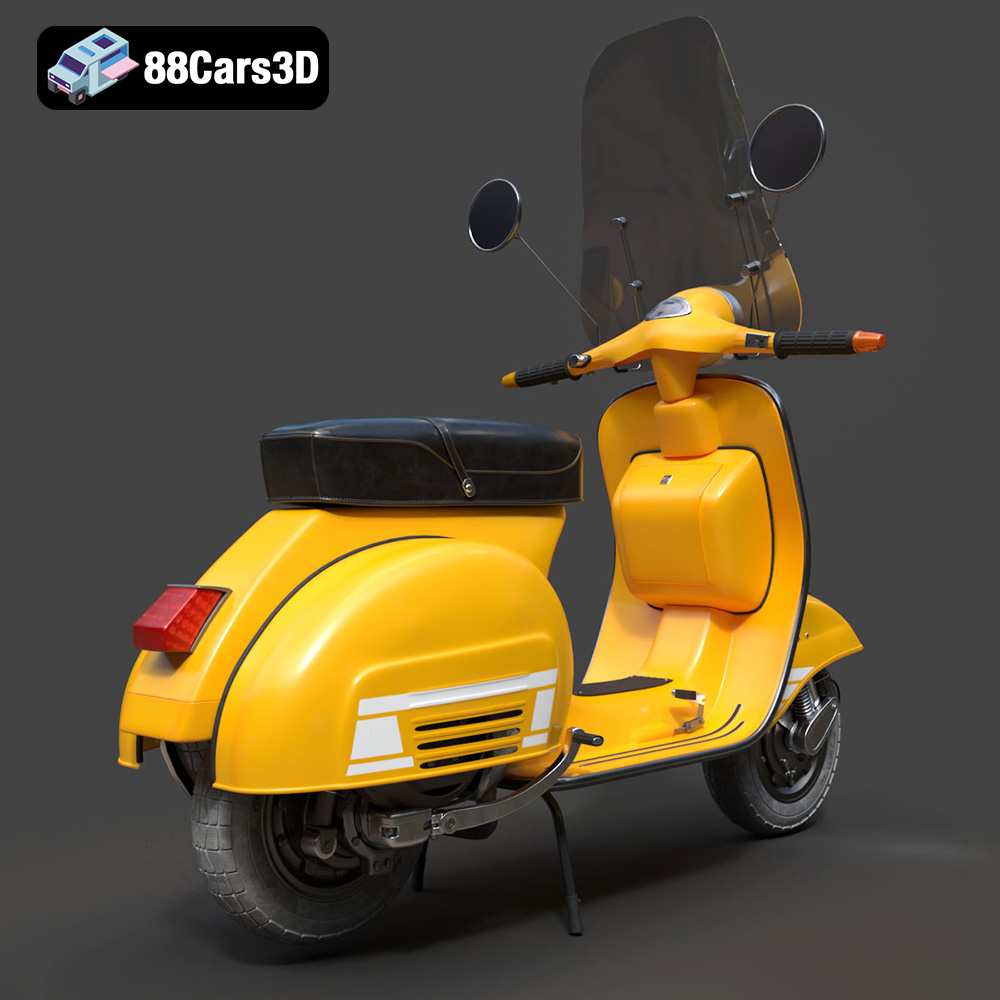
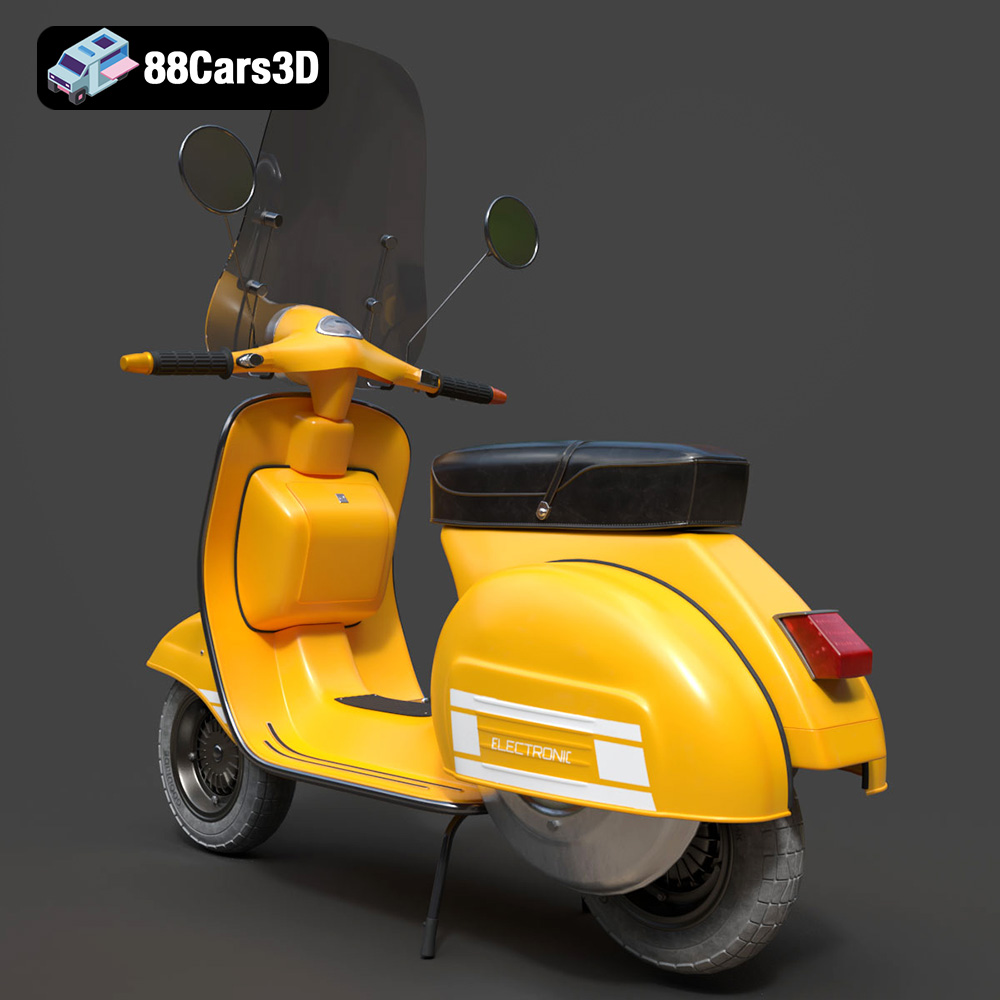
Among the vast array of vehicles, the scooter holds a unique place, embodying a spirit of urban freedom, classic style, and efficient mobility. And when we speak of scooters, one name stands above all: Vespa. The iconic Italian brand has transcended its function to become a global symbol of elegance and timeless design. Imagine capturing that essence, that unmistakable silhouette, in a digital format that is both visually stunning and technically robust. This is precisely what the Vespa 3-08 3D Model offers – a meticulously detailed representation of this classic vehicle, ready to elevate any project it becomes a part of.
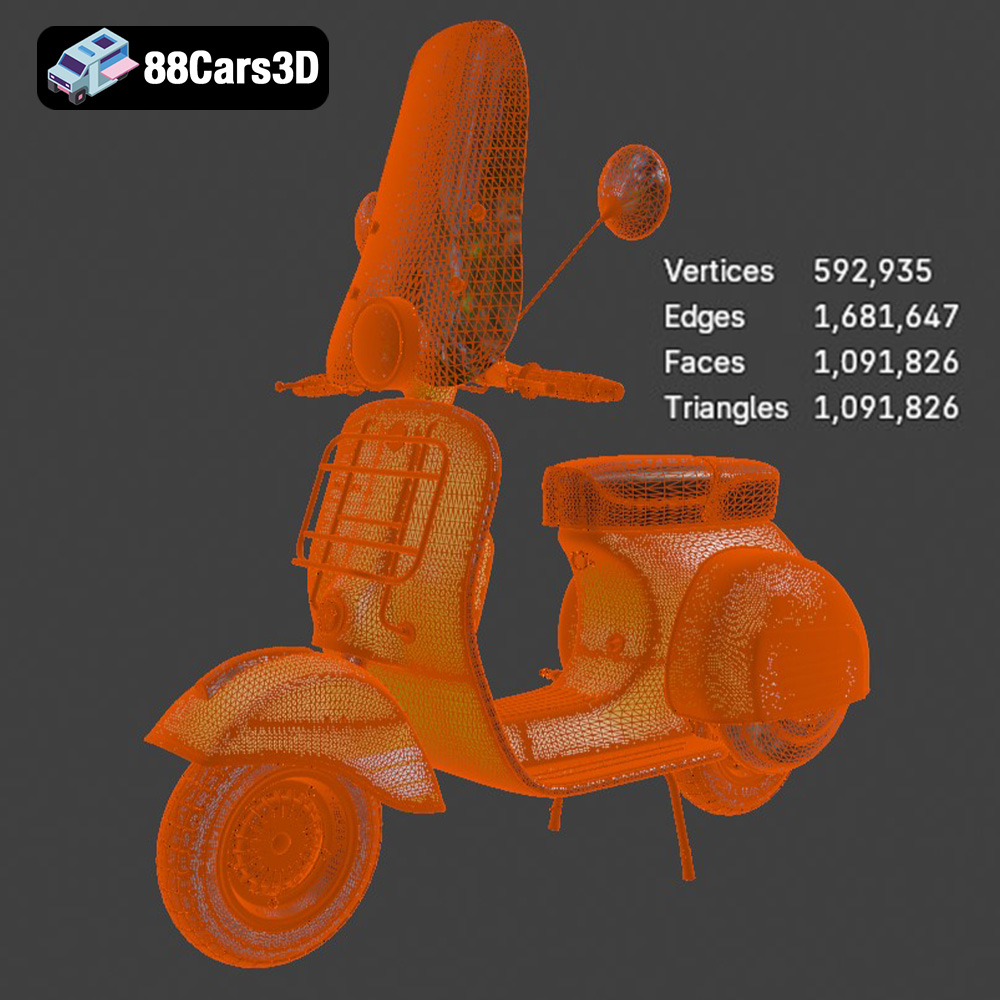
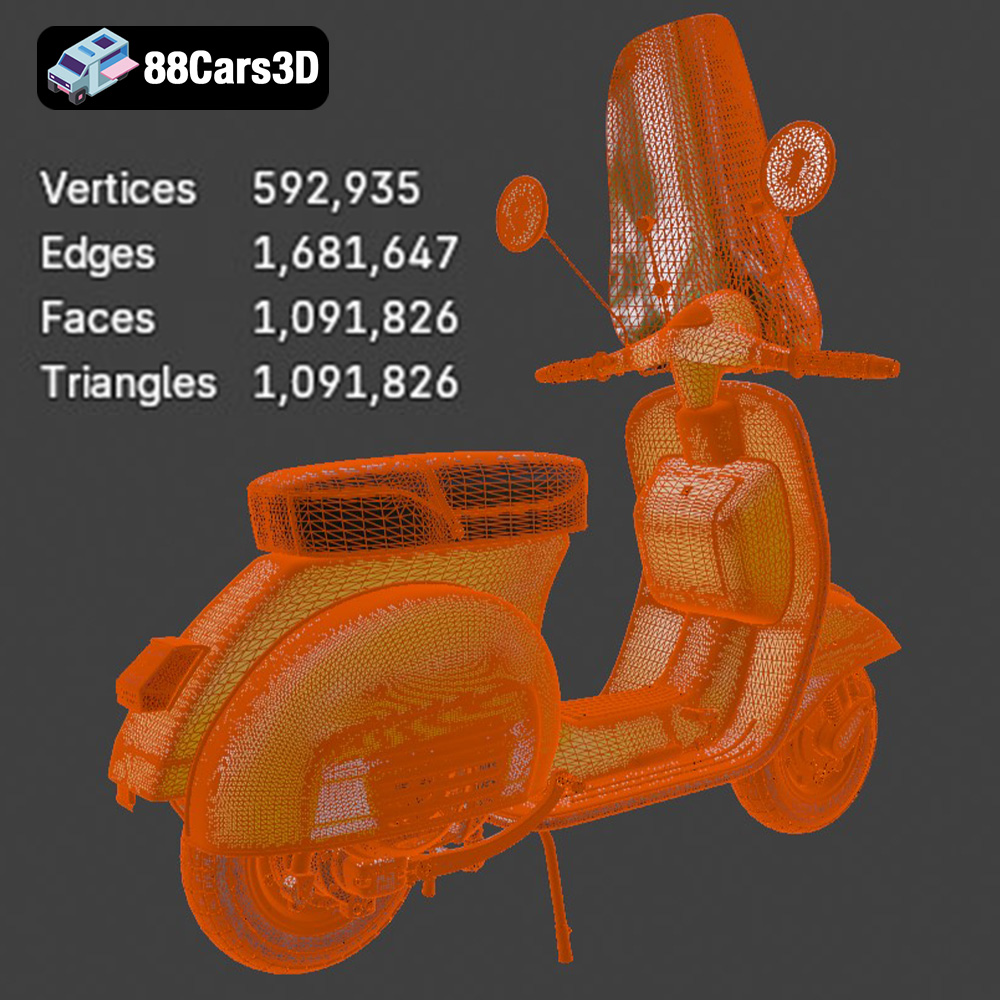
This particular model, available on 88cars3d.com, is more than just a static replica; it’s a versatile game asset designed for performance and aesthetic excellence. Boasting a well-optimized triangle count of 1091826, it strikes an impressive balance between breathtaking visual fidelity and real-time application efficiency. Whether you’re animating a bustling European street scene, integrating it into an open-world game, or crafting an immersive VR configurator, the Vespa 3-08 3D model provides the necessary precision and flexibility.
The versatility of any high-quality 3D car model, such as the Vespa 3-08, is significantly enhanced by its availability in multiple file formats. Each format serves distinct purposes, catering to different software ecosystems, production pipelines, and end-use applications. Understanding these formats is crucial for any professional working with 3D assets, as it dictates compatibility, feature preservation, and overall workflow efficiency. The Vespa 3-08 model is a prime example of an asset offered with comprehensive format support, ensuring it fits seamlessly into virtually any project.
The .blend file format is the native file type for Blender, the powerful open-source 3D creation suite. When you acquire a 3D model in this format, you gain access to the complete Blender project file. This means all the original scene data, including the mesh geometry, materials, textures, lighting setups, cameras, animation data, and even modifiers, are preserved and fully editable. For the Vespa 3-08, the .blend file is invaluable for artists who wish to delve deep into its construction, modify its materials, re-rig components, or adapt it for specific animation sequences directly within Blender. It offers unparalleled creative freedom and is often preferred by those who intend to customize the asset extensively before export.
.fbx (Filmbox) is an industry-standard proprietary file format developed by Autodesk, widely recognized for its robust support for 3D model data, including geometry, materials, textures, animations, and skeletal data. It acts as an excellent interchange format between various 3D applications and is the go-to format for game engines like Unreal Engine and Unity. When importing the Vespa 3-08 as an .fbx, developers can expect a smooth transition of the model’s mesh, UV maps, basic material assignments, and crucially, any pre-set pivot points for parts like wheels and steering, which are essential for animating a vehicle in real-time environments. Its efficiency and widespread adoption make it a cornerstone for game assets.
.obj (Wavefront OBJ) is one of the oldest and most universally supported 3D file formats. It’s a simple, text-based format that primarily stores geometry data (vertices, normals, UVs, faces) and references external material files (.mtl). While it doesn’t support animation or rigging, its widespread compatibility makes it an excellent choice for basic mesh interchange between virtually any 3D software. For the Vespa 3-08, an .obj file ensures that users of niche or legacy software can still access the core geometric data of the model, allowing them to rebuild materials or use it as a base for further development.
.glb (GLB file format) is the binary version of the .gltf (GL Transmission Format), a relatively newer, open-standard file format designed for the efficient transmission and loading of 3D scenes and models by engines and applications. .glb files embed textures and other assets directly within the single file, making them incredibly convenient for web-based 3D viewers, AR/VR applications, and mobile environments where performance and file size are critical. The Vespa 3-08 in .glb format is perfectly suited for showcasing the model in a virtual configurator on a website or deploying it quickly into a mobile AR experience, offering a compact and performant solution.
.stl (Standard Tessellation Language or Stereolithography) is the most common file format used for 3D printing. It describes only the surface geometry of a 3D object using a mesh of triangular facets, without any color, texture, or material information. The Vespa 3-08, when converted to .stl, becomes a physical possibility. This format is crucial for hobbyists and professionals looking to create a tangible replica of the digital model. The provided 3D print settings further guide users to achieve high-quality physical prints, enabling everything from display models to prototyping.
.ply (Polygon File Format or Stanford Triangle Format) is another format used to store 3D data, particularly from 3D scanners or for scientific and engineering applications. It can store a variety of properties including color, transparency, surface normals, and range data, and is often favored for its ability to handle complex point clouds and polygonal models with precision. While less common for direct rendering, the Vespa 3-08 in .ply format could be valuable for those conducting mesh analysis, reverse engineering workflows, or integration into CAD-centric environments where mesh integrity and specific attribute data are paramount.
The .unreal format (often implying a packaged Unreal Engine asset or scene file) is specifically tailored for direct integration into Unreal Engine projects. While not a standalone file format in the same way as FBX or OBJ, its inclusion implies that the model is provided in a way that minimizes setup time for Unreal Engine users. This could mean pre-configured materials, Blueprints for interactivity, or optimized meshes that adhere to Unreal’s performance guidelines. For the Vespa 3-08, this direct compatibility significantly accelerates the workflow for game developers and real-time visualization artists operating within the Unreal ecosystem, saving countless hours on material setup and asset configuration.
The .max file format is the native file type for Autodesk 3ds Max, one of the most widely used 3D modeling, animation, and rendering software packages in the industry, especially for architectural visualization and high-end rendering. Similar to the .blend file for Blender, the .max file for the Vespa 3-08 provides the complete scene data, including geometry, materials, textures, lighting, cameras, and animation keyframes. This format is ideal for professionals who rely on 3ds Max for their rendering pipelines, offering full flexibility to modify, animate, or render the Vespa 3-08 model with the software’s powerful tools.
The availability of the Vespa 3-08 in such a comprehensive range of file formats underscores its versatility and quality, making it a valuable asset for almost any 3D professional seeking high-quality automotive rendering and game assets from 88cars3d.com.
Creating a compelling 3D car model, particularly one with the distinctive character of a Vespa, demands a blend of artistic vision and technical precision. It’s not just about replicating shapes; it’s about capturing the soul of the design, ensuring every curve, every component, and every surface finish contributes to an authentic representation. The Vespa 3-08 3D model stands as a testament to this meticulous approach.
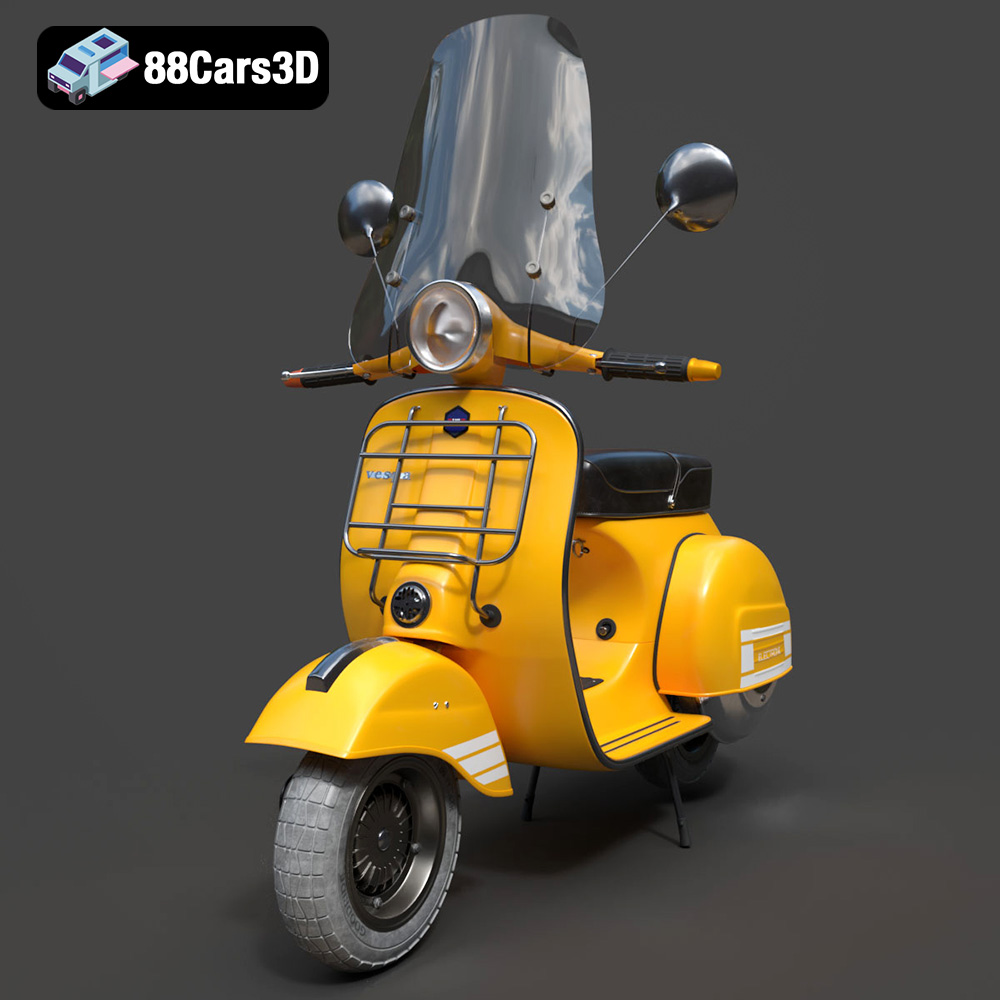
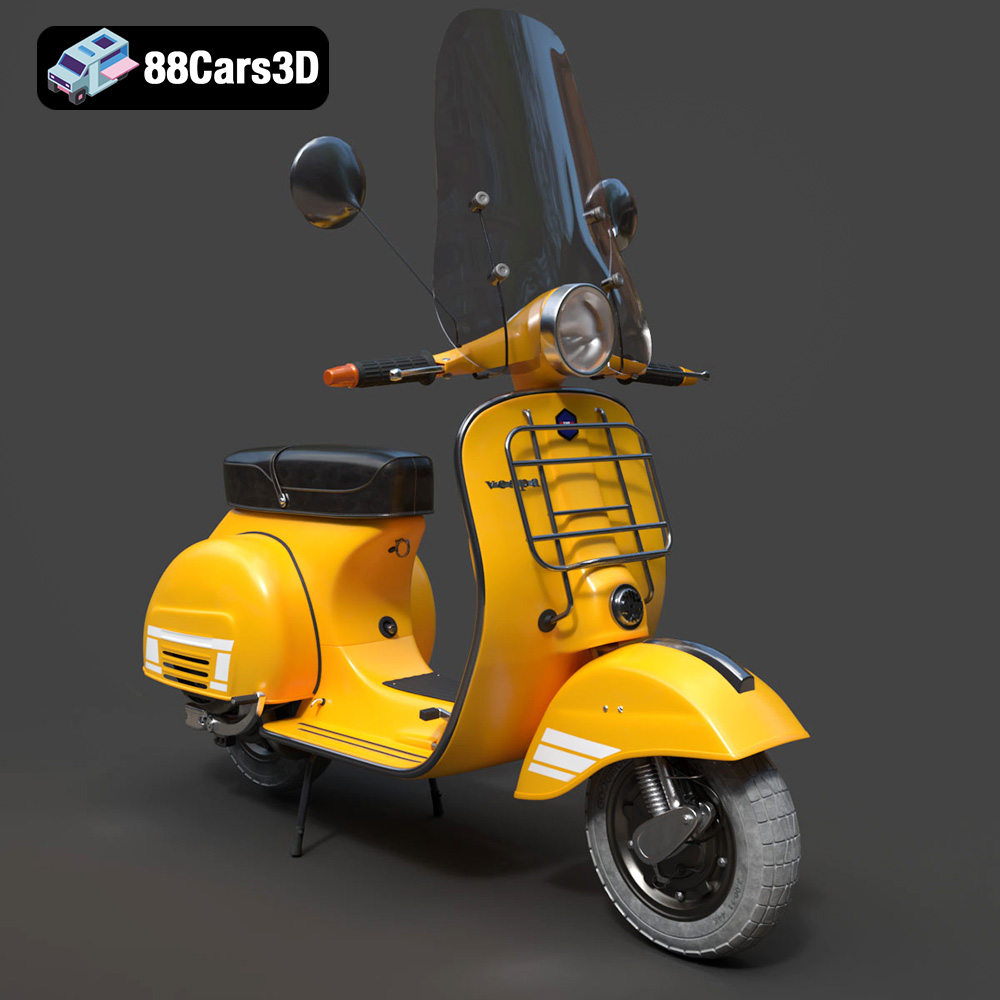
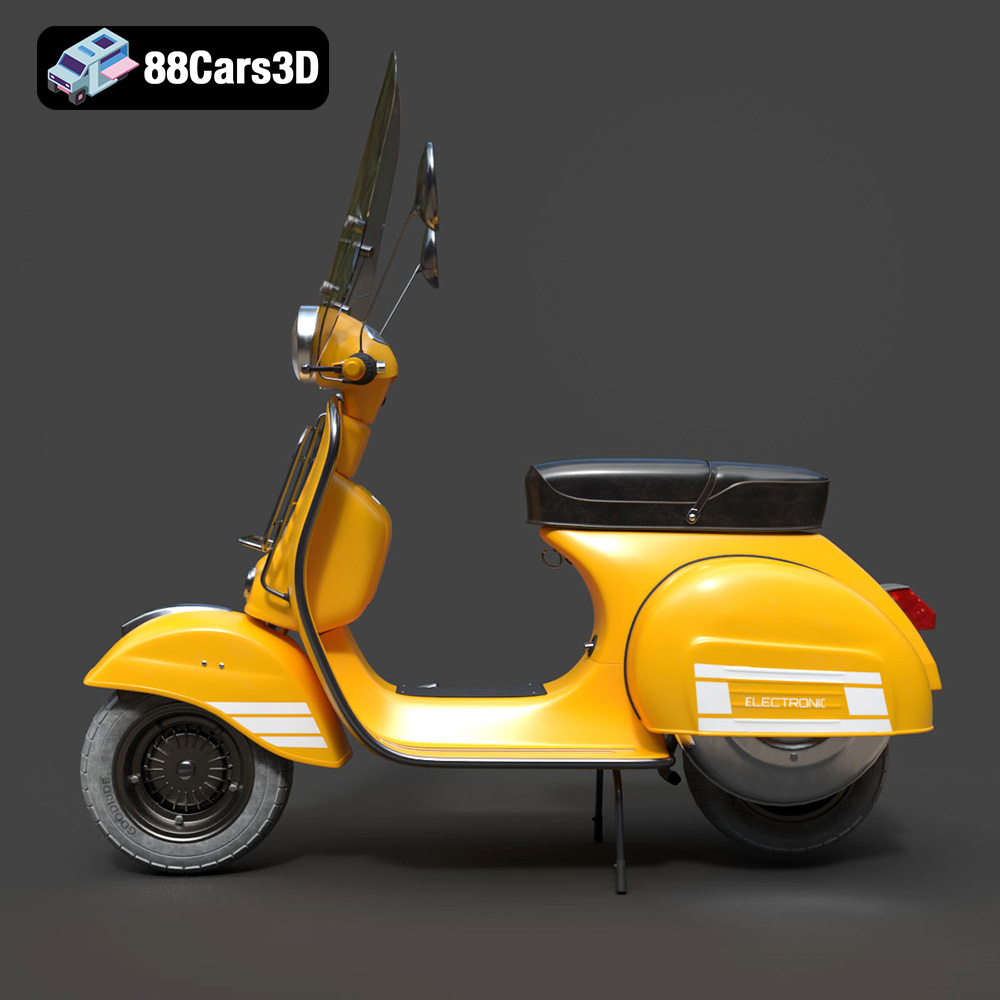
The Vespa’s exterior is its most recognizable feature – from its classic step-through frame to the distinctive front shield fairing. An accurate 3D model must perfectly translate these elements. The Vespa 3-08 model excels here, featuring an “accurate Vespa 3-08 step-through frame geometry and proportions” that define its classic stance. Details like the “beautifully sculpted single-cylinder engine casing” and the “sleek side-mounted exhaust system” are crucial. These are not just visual elements; they contribute to the overall realism and allow for breathtaking close-up renders. The inclusion of “authentic scooter alloy wheels and treaded urban commuting tires,” along with “classic single-sided front trailing link suspension details,” ensures that the model holds up under intense scrutiny from any angle.
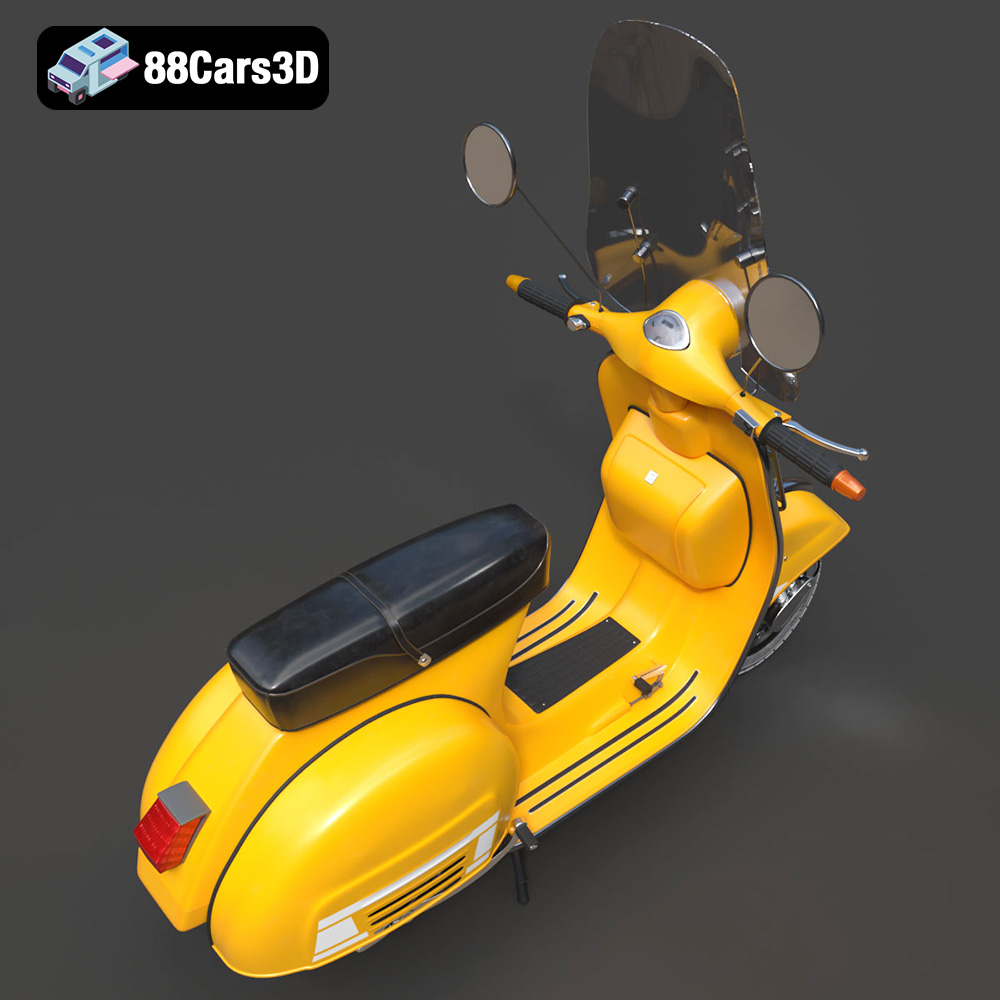
While often viewed externally, the interior of a vehicle, even a scooter, plays a vital role in immersion, especially for applications like AR/VR and gaming where first-person perspectives are common. The Vespa 3-08 model addresses this with an “ergonomically sculpted, richly textured dual-seat saddle” and an “authentic handlebar setup with integrated mirrors and grips.” The “detailed retro-modern instrument cluster and speedometer” and “accurate hand controls, brake levers, and switchgear” provide the necessary visual cues for a convincing user experience. This level of detail ensures that whether you’re creating a cinematic shot or designing a virtual ride, the cockpit feels genuine and interactive, living up to the standards of high-quality game assets.
A high-quality 3D model must be beautiful, but for modern applications, it must also be performant. This is where topology and optimization come into play. The Vespa 3-08 model boasts a “meticulous topology with a triangle count of 1091826.” This number isn’t arbitrary; it represents a “perfect balance” for real-time engines like Unreal and Unity while simultaneously maintaining the high-end visual realism required for professional rendering and visualization. Good topology ensures clean deformations during animation, efficient UV mapping for texturing, and predictable performance across different platforms. The “game-ready & optimized” nature means it has been structured to minimize computational overhead without sacrificing the detailed aesthetics that define premium 3D car models.
The true value of a versatile 3D asset like the Vespa 3-08 lies in its adaptability across a multitude of professional applications. Its design and technical specifications have been carefully considered to ensure it excels whether it’s powering a game, enhancing an immersive experience, or starring in a high-resolution advertisement.
For game developers, the Vespa 3-08 3D model is an exceptional asset. Its optimized polycount makes it “ideal for open-world games, racing titles, and simulators.” In an open-world environment, performance is paramount; every asset must be efficient to maintain smooth frame rates. The model’s “proper pivot setup for steering, wheel rotation, and suspension travel” is particularly critical for vehicle dynamics in gaming. This means developers can easily integrate it into vehicle systems, apply physics, and create realistic driving experiences without extensive re-rigging. Imagine the Vespa zipping through a virtual European city, adding authentic character and interactive elements to the game world. Its clean topology also supports efficient creation of Level of Detail (LOD) models, further enhancing real-time performance.
Augmented Reality (AR) and Virtual Reality (VR) demand highly optimized yet visually compelling assets. The Vespa 3-08 is “perfect for immersive virtual showrooms, configurators, and mobile AR experiences.” In a virtual showroom, users can walk around the Vespa, inspect its details from every angle, or even change its colors in real-time. For a configurator, the model’s separate components and customization options allow users to personalize their virtual scooter experience. Its availability in the .glb format is a significant advantage here, offering a compact, efficient package for rapid deployment on web or mobile AR platforms, bringing the iconic design into interactive, real-world overlays.
When it comes to professional rendering and visualization, absolute realism is often the goal. The Vespa 3-08 3D model is “excellent for brand campaigns, lifestyle scenes, and studio lighting setups.” Marketing agencies can utilize this model for stunning advertisements, product showcases, or interactive web presentations. Architectural visualization studios can populate their exterior scenes with this stylish vehicle, adding a touch of realism and a sense of scale to their environments. The meticulous detail, from the “signature sweeping body lines” to the “high-detail taillight and indicators,” ensures that even in close-up, high-resolution renders, the model maintains its breathtaking quality. Paired with advanced rendering engines, it can achieve photorealistic results that are indistinguishable from real photography.
The true measure of a high-quality 3D asset is its seamless integration into professional workflows. The Vespa 3-08 3D model, with its comprehensive file format support and optimized structure, is designed to be a plug-and-play solution for artists and developers using industry-standard tools.
For artists working in 3ds Max or Blender, the provided .max and .blend files offer the ultimate flexibility. These native project files come with the model fully assembled, often with initial materials and textures applied, ready for advanced customization. In 3ds Max, an artist might import the Vespa 3-08 to set up complex studio lighting, animate it riding through a city street, or integrate it into a larger architectural visualization scene. The ability to modify existing materials, create custom shaders, or even re-texture specific parts like the saddle or wheels is straightforward. Similarly, in Blender, users can leverage its powerful Eevee or Cycles renderers for stunning visuals, add dynamic animations to the suspension, or sculpt additional details if required. The “separate wheels, suspension, and steering components for animation” are particularly useful here, allowing artists to rig and animate the scooter with realistic movement.
The journey from a digital model to an interactive real-time experience is streamlined with the Vespa 3-08’s “game-ready & optimized” design. Game developers typically import the .fbx or the specific .unreal format into engines like Unreal Engine. Once imported, the model’s clean mesh and UVs facilitate quick material setup, often utilizing physically based rendering (PBR) workflows. The “proper pivot setup” is a huge time-saver for vehicle animation systems; developers can directly assign wheel rotation and steering inputs without complex manual adjustments. Collision meshes can be easily generated, and LODs (Levels of Detail) can be automatically or manually created to ensure optimal performance from varying distances. Imagine populating a vast open-world game with these iconic scooters, contributing to the rich tapestry of the virtual environment. The model’s robustness ensures it can handle high player counts and diverse interactions within the game world.
While digital visualization is the primary use for 3D car models, the ability to transition from a virtual asset to a tangible object opens up entirely new avenues. The Vespa 3-08 3D model, available in .stl format, bridges this gap, offering hobbyists and professionals alike the chance to hold a physical representation of this classic scooter.
The .stl format is the standard for 3D printing, translating the model’s geometry into a series of interconnected triangles that a 3D printer can interpret. The provided “3D Print Settings” for the Vespa 3-08 are invaluable here, guiding users through the process to achieve optimal results. Recommended scales like “1:12 / 1:18 / 1:24” allow for various display sizes, while specific parameters like “Layer height: 0.04–0.12 mm (Resin printing recommended for fine details)” and “Wall thickness: 1.2–2.0 mm” directly impact the print quality and structural integrity. The advice on “Supports: Required for detailed parts like exhaust, mirrors, handlebars” and “Print orientation: Frame printed angled for structural integrity; wheels printed separately” demonstrates the thoughtful consideration given to ensuring a successful print.
3D printing the Vespa 3-08 can serve several purposes. For enthusiasts, it’s an opportunity to create highly detailed display models, customizing them with authentic paint schemes and finishes. Imagine a collection of 3D printed Vespas, each meticulously painted to replicate classic factory colors. For designers or product developers, 3D printing offers a rapid prototyping solution. Before committing to expensive manufacturing processes, a physical model can be evaluated for ergonomics, aesthetics, and overall design appeal. This tactile feedback is invaluable in the design iteration process, proving that a digital asset’s utility extends far beyond the confines of a screen.
A truly professional 3D car model, especially one intended for diverse applications, must offer significant room for customization. The Vespa 3-08 3D model is built with this flexibility in mind, empowering artists and developers to tailor it to their specific project requirements, ensuring unique and compelling results.
The ability to modify a model’s appearance is paramount. With the Vespa 3-08, users can “change body/tank colors (e.g., factory colors, custom finishes).” This allows for recreating historical color schemes, matching brand identities, or inventing entirely new aesthetics. Beyond color, the option to “modify tire textures (off-road vs. street variants)” and “adjust material finishes (matte, gloss, metallic)” opens up a world of possibilities. Imagine a vintage matte-finish Vespa for a nostalgic scene, or a sleek metallic-gloss variant for a futuristic advertisement. These customizations allow the model to adapt seamlessly to different visual styles and narrative contexts, ensuring it never looks out of place.
Beyond static renders, the Vespa 3-08 is designed for dynamic animation. The technical specification highlighting “separate wheels, suspension, and steering components for animation” is a crucial feature. This means an animator can easily articulate these parts, creating realistic wheel spins, responsive steering, and natural suspension compression. Whether it’s a gentle lean into a turn or a bump over an uneven surface, the model’s structure supports fluid, believable motion. Combined with the “proper pivot setup for steering, wheel rotation, and suspension travel,” this model is ready for complex cinematic sequences, interactive game mechanics, or engaging product animations that showcase the Vespa’s agility and charm.
The quality of a 3D car model is also judged by how well it responds to different lighting conditions. The Vespa 3-08, with its clean topology and presumably well-defined material zones, will react realistically to various lighting setups. Artists can “adapt lighting for different environments,” whether it’s the harsh midday sun of a Mediterranean city, the soft glow of a twilight street lamp, or the controlled environment of a studio photoshoot. This adaptability makes the Vespa an ideal asset for integrating into diverse scene contexts, ensuring it always looks its best and enhances the overall realism of the project.
The creation and deployment of high-quality 3D car models are fundamental to pushing the boundaries of digital content across various industries. The Vespa 3-08 3D Model exemplifies what a premium asset should be: a meticulously crafted, technically robust, and highly versatile digital twin of an iconic vehicle. From its accurate exterior and interior details to its optimized topology and comprehensive file format support, it is engineered for excellence in every application.
Whether you’re a game developer building an immersive open-world, an AR/VR designer crafting interactive experiences, a visualization artist striving for photorealistic renders, or even a hobbyist looking to 3D print a classic collectible, this model provides the foundation for success. Its availability in formats like .blend, .fbx, .obj, .glb, .stl, .ply, .unreal, and .max ensures seamless integration into virtually any professional pipeline, providing creative freedom and efficiency.
Investing in such high-fidelity automotive rendering and game assets from platforms like 88cars3d.com not only streamlines production but also elevates the quality and realism of your projects. The Vespa 3-08 isn’t just a 3D model; it’s a testament to timeless design brought to life in the digital realm, ready to inspire and empower your next creative endeavor.
The Vespa 3-08 embodies the ultimate spirit of iconic Italian scooter heritage, blending timeless retro design with modern commuting efficiency. Unmistakable with its classic step-through frame and distinctive front shield fairing, this model captures the essence of elegant urban mobility. Key visual elements include a beautifully sculpted single-cylinder engine casing, a sleek side-mounted exhaust system, and the signature sweeping body lines that make the Vespa an enduring symbol of style. Boasting a meticulous topology with a triangle count of 1091826, this 3D model delivers unparalleled visual fidelity while remaining structured for high-end rendering and advanced real-time applications. The geometry is crafted to provide breathtaking close-up details without compromising overall performance, making it the ultimate asset for game development, AR/VR experiences, professional animation, and architectural visualization. Perfect for bustling urban street scenes, European lifestyle animations, immersive virtual configurators, and modern open-world city environments.
$63.99
.blend
.fbx
.glb
.max
.moped
.obj
.ply
.rendering
.scooter
.stl
.unreal
.vespa
3-08
classic-scooter
game asset
game-ready
italian-scooter
low-poly
motorcycle-3d-model
optimized
VR/AR