Get 20% OFF All Premium 3D & STL Models!

The automotive world, both real and virtual, thrives on power, precision, and visual appeal. From the roar of an engine in a racing simulator to the gleaming reflections in a luxury car configurator, the quality of 3D car models is paramount. These digital representations are the building blocks for immersive experiences, critical marketing tools, and invaluable design assets across a multitude of industries. Today, we’re taking an in-depth look at what makes a truly exceptional 3D car model, using the compelling example of the BMW X6 M 2008 3D Model available at 88cars3d.com. This pioneer in the Sports Activity Coupe segment, known for its aggressive stance and twin-turbo V8 spirit, offers a fantastic case study for understanding the blend of artistry and engineering required in premium 3D asset creation.
In this comprehensive guide, we’ll explore the technical intricacies, practical applications, and strategic advantages of leveraging high-quality 3D car models. Whether you’re a game developer seeking realistic vehicles, an architect visualizing a luxury garage, or a product designer crafting immersive AR/VR experiences, understanding the nuances of these digital assets is key to unlocking their full potential. The BMW X6 M 2008 model perfectly exemplifies a game-ready asset that combines breathtaking visual fidelity with the efficiency needed for demanding digital environments, bridging the gap between artistic vision and technical performance.
The world of 3D modeling is incredibly diverse, and a critical aspect of working with digital assets like 3D car models is understanding the various file formats. Each format serves a specific purpose, offering different levels of compatibility, optimization, and data retention. For a comprehensive asset like the BMW X6 M 2008 3D Model, having multiple formats available is a testament to its versatility and value. Let’s break down the key formats you’ll encounter and why they matter for your projects.
The `.blend` file format is native to Blender, the popular open-source 3D creation suite. When you download a `.blend` file, you’re getting a fully editable Blender scene, complete with materials, textures, lighting setups, and even animation data if present. This is ideal for artists and studios that use Blender as their primary DCC (Digital Content Creation) tool. For the BMW X6 M 2008 model, the `.blend` file allows for direct manipulation of the mesh, modification of materials, adjustment of rigging, and integration into existing Blender projects without any loss of data that might occur during conversion. It’s the most flexible option for deep customization within the Blender environment.
`.fbx` (Filmbox) is a proprietary file format owned by Autodesk, but it has become an industry-standard format for 3D data exchange, especially in game development and animation pipelines. It excels at storing models, animations, cameras, lights, and skeleton information. The `.fbx` format is ideal for exporting models to game engines like Unreal Engine and Unity, or for transferring assets between different 3D software packages (e.g., from Blender to 3ds Max). Its robust support for skeletal animation and hierarchical structures makes it perfect for game-ready assets where components like wheels, doors, and suspension need to be animated independently. For the BMW X6 M, the `.fbx` ensures that the model, its materials, and its pivotal structures are preserved for seamless integration into real-time environments.
`.obj` (Wavefront OBJ) is one of the oldest and most widely supported 3D file formats. It’s a simple, text-based format that stores mesh geometry (vertices, normals, texture coordinates, and faces) and references material files (`.mtl`). While it doesn’t support animation or complex scene data, its universal compatibility makes it an excellent choice for cross-software compatibility. Almost every 3D application can import and export `.obj` files. If you need a clean mesh to work with in a new environment or a backup format, `.obj` is a reliable choice. The BMW X6 M 2008 model in `.obj` format provides a clean, raw mesh for general 3D work.
`.glb` (GL Transmission Format Binary) is the binary version of glTF, an open-standard, royalty-free format for 3D assets designed for efficient transmission and loading of 3D scenes and models by applications. It packages the model data (geometry, materials, textures, animations) into a single file. This optimization makes `.glb` ideal for AR (Augmented Reality), VR (Virtual Reality), and browser-based display, where fast loading times and smaller file sizes are crucial. For showcasing the BMW X6 M 2008 in an interactive web viewer or an AR experience on a mobile device, the `.glb` format is the go-to.
`.stl` (Stereolithography) is almost exclusively used for 3D printing. It represents a 3D model as a series of connected triangles (a triangulated surface mesh) without any color, texture, or material information. Its simplicity makes it universally compatible with 3D printers and slicing software. When preparing the BMW X6 M 2008 for a physical print, the `.stl` file provides the precise geometry required for manufacturing. As the product description suggests, converting the model to `.stl` allows hobbyists to bring this digital icon into the tangible world.
`.ply` (Polygon File Format or Stanford Triangle Format) is another format that describes 3D objects as a list of polygons, often used for storing 3D data from 3D scanners. It can store a variety of properties including color, transparency, and normals, making it more robust than `.stl` for certain applications. While less common for general 3D modeling exchange than `.fbx` or `.obj`, `.ply` can be useful for precision mesh applications, scientific visualization, or specific CAD workflows where detailed surface information is critical.
The `.unreal` format, often referring to asset packages or specific UAssets within an Unreal Engine project, signifies an asset that is directly configured and optimized for use within the Unreal Engine. This isn’t a single file format in the traditional sense, but rather a collection of files and settings that define how the asset behaves within the engine. It implies that the BMW X6 M 2008 model has been properly imported, potentially had its materials set up with Unreal-specific shaders, and might include collision meshes or LODs (Levels of Detail) tailored for Unreal Engine’s real-time rendering pipeline. This makes it a true “plug-and-play” solution for developers working in Unreal.
`.max` is the native file format for Autodesk 3ds Max. Similar to `.blend` for Blender, a `.max` file contains an entire 3ds Max scene, including geometry, materials, lighting, cameras, animations, and any plugins used. This format offers full editability within 3ds Max, making it indispensable for professionals who rely on this powerful software for high-end rendering, animation, and architectural visualization. The BMW X6 M 2008 `.max` file allows for comprehensive adjustments and ensures fidelity for complex rendering setups, leveraging 3ds Max’s robust toolset.
Understanding these formats empowers you to choose the right tool for the job, ensuring your 3D car models, like the exceptional BMW X6 M 2008 from 88cars3d.com, are utilized to their maximum potential across diverse projects and platforms.
Creating a truly high-quality 3D car model is an intricate process, demanding a keen eye for detail and a deep understanding of technical optimization. The BMW X6 M 2008 3D Model exemplifies this balance, providing stunning visual fidelity while remaining exceptionally structured for demanding digital environments. Its design ethos reflects the real vehicle’s blend of raw power and sophisticated engineering, translated perfectly into a digital asset.
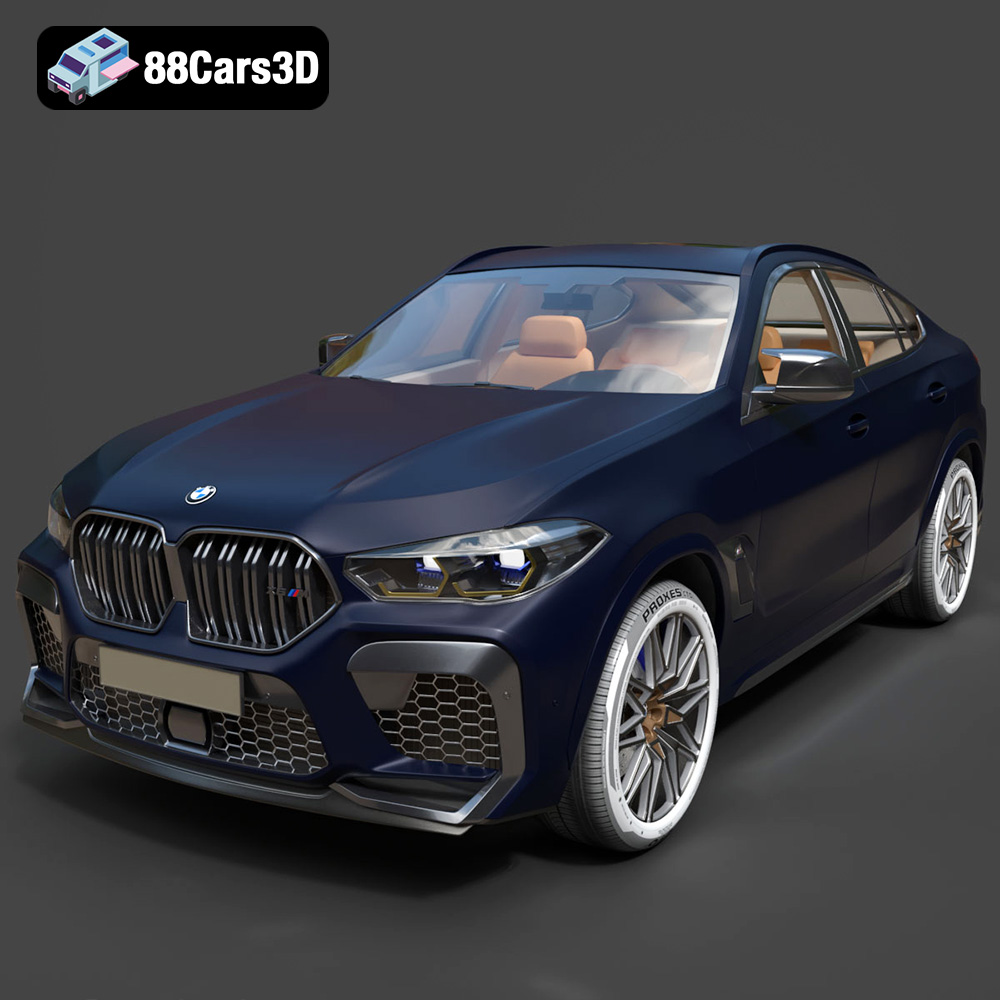
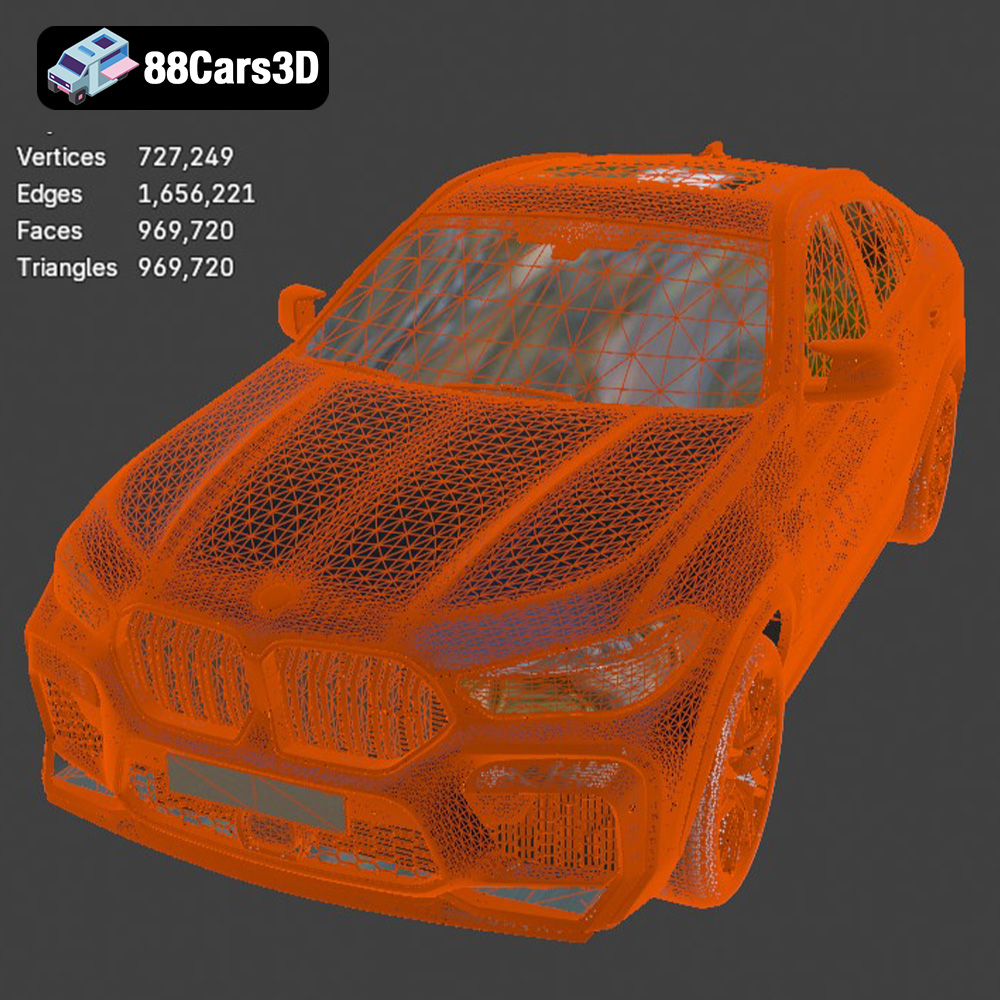
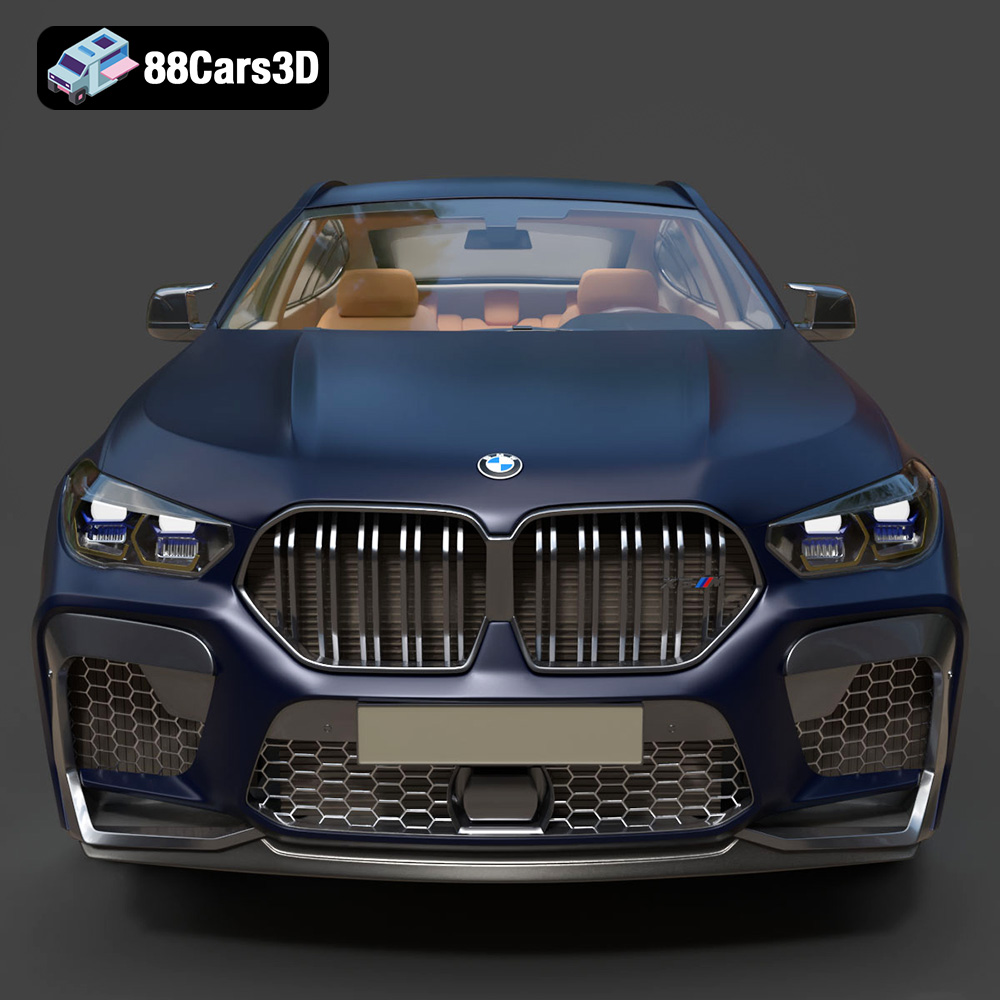
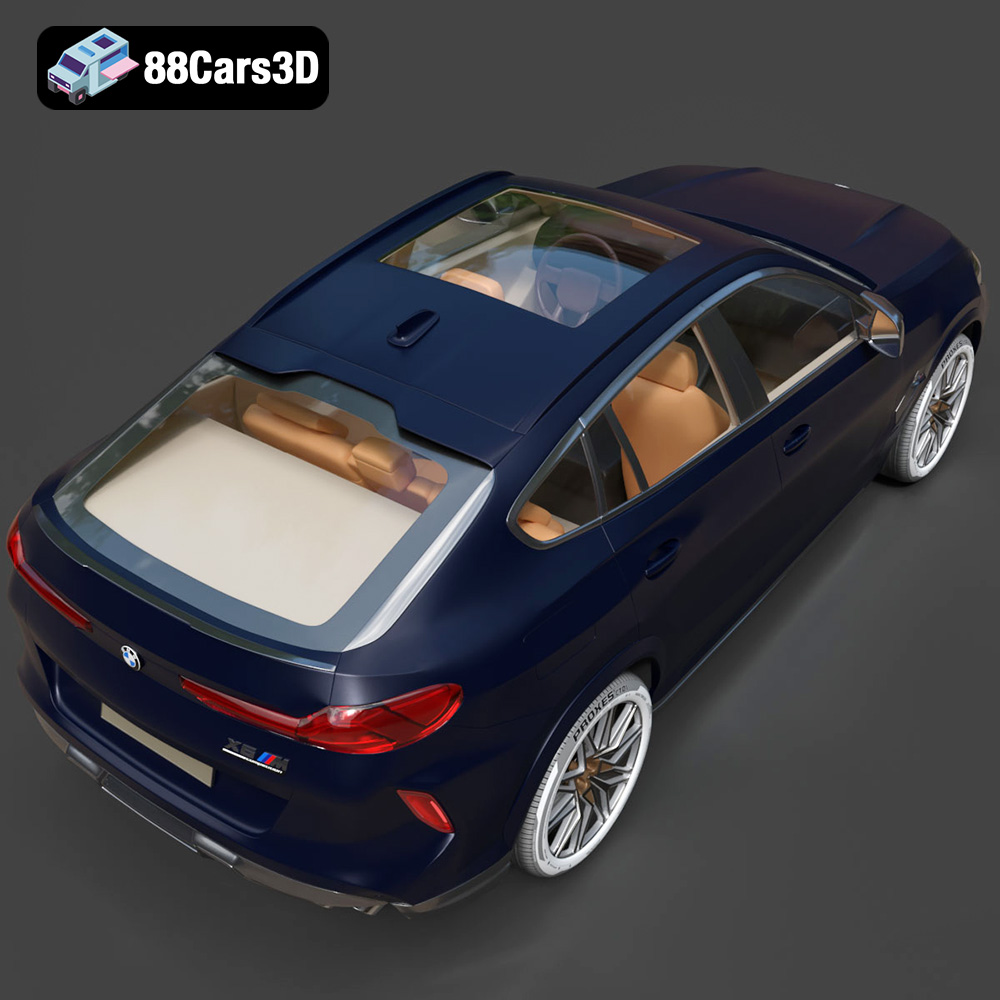
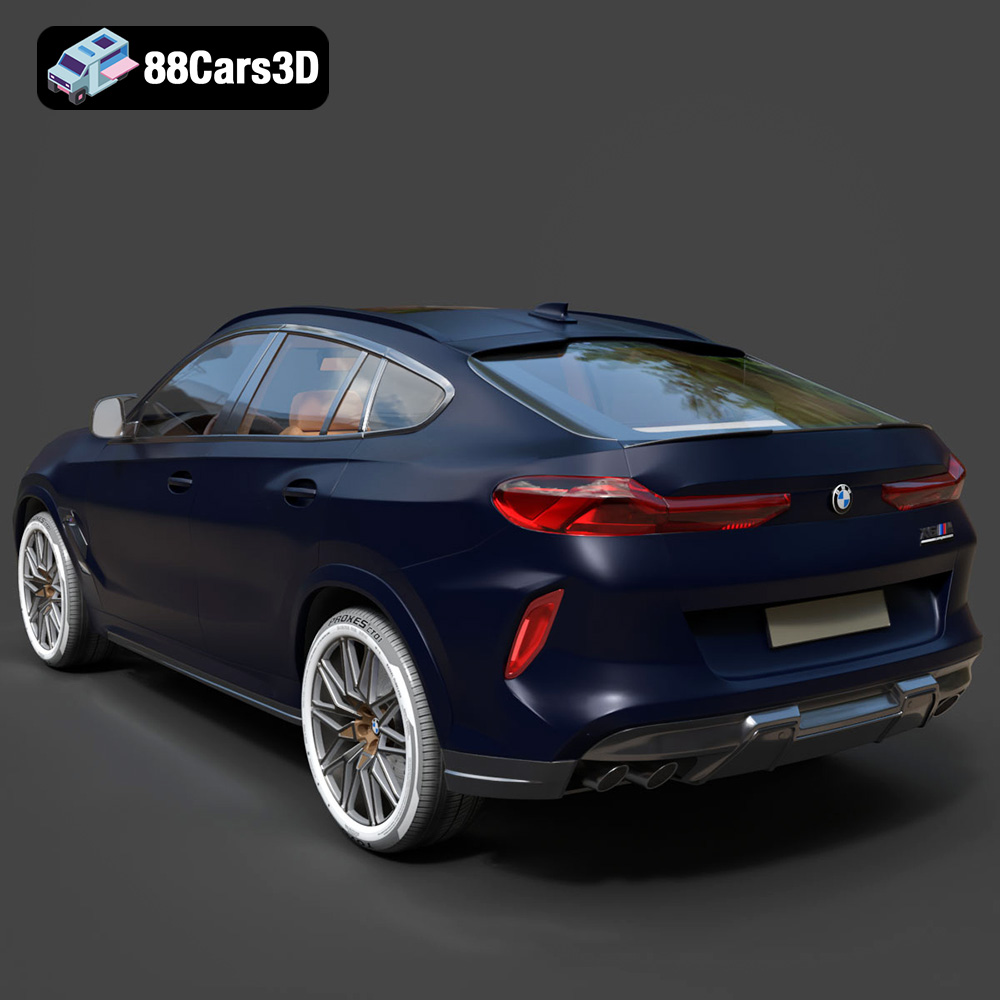
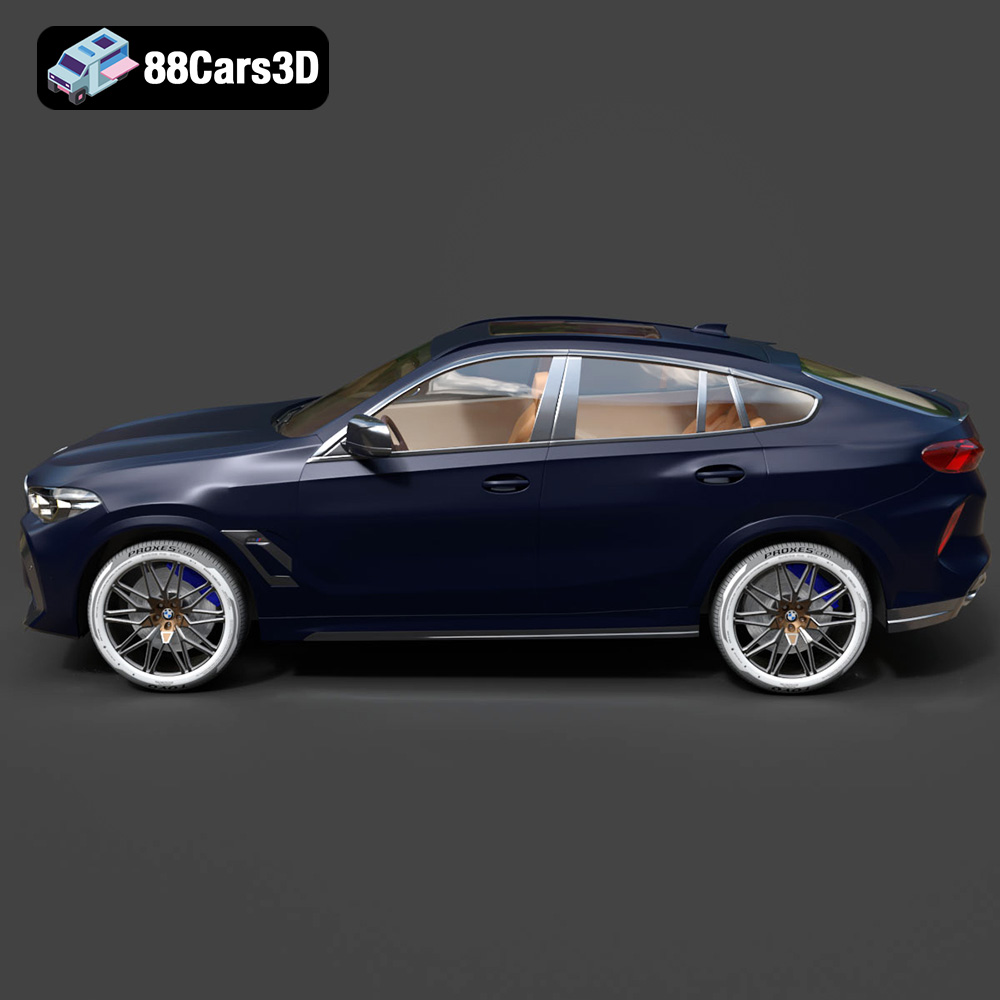
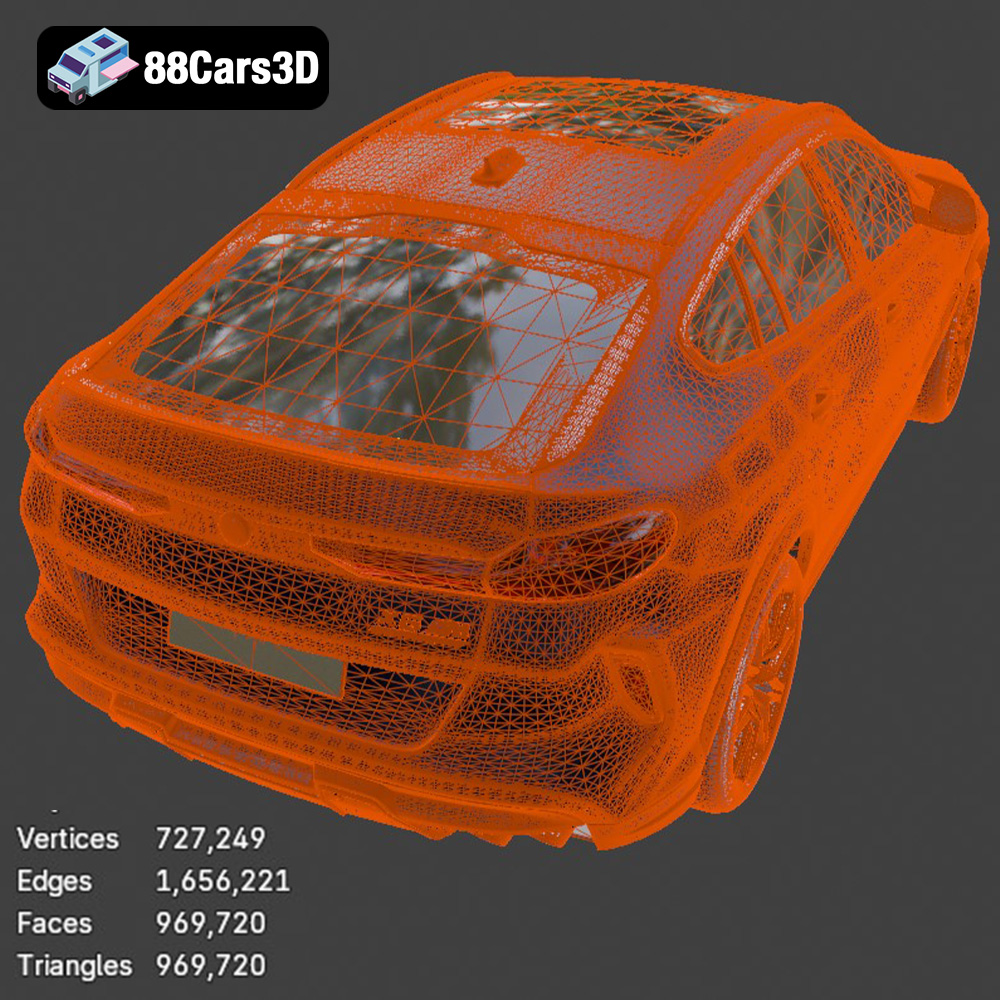
The exterior of the BMW X6 M 2008 3D model is a masterclass in accurate replication. With a refined 969,720 triangle count, it strikes a superb balance for real-time engines, offering detailed curves and sharp lines without overburdening the rendering pipeline. Every aspect, from the commanding front fascia and iconic kidney grilles to the sweeping roofline and signature quad-pipe M exhaust system, is meticulously modeled. The model features intricately designed headlights and distinct LED taillights, ensuring realism in all lighting conditions.
Beyond static beauty, the model is engineered for dynamic interaction. Its aggressive M-sport alloy wheels and high-performance tire treads are not just visually accurate but are also prepared for animation. Critical components like the sport-tuned suspension and braking system are separately modeled, and the proper pivot setup for steering, wheel rotation, and suspension travel is established. This attention to detail means the vehicle can be immediately integrated into racing games, simulators, or cinematic sequences where complex mechanical movements are required, making it a valuable asset for any professional workflow focused on realistic *automotive rendering*.
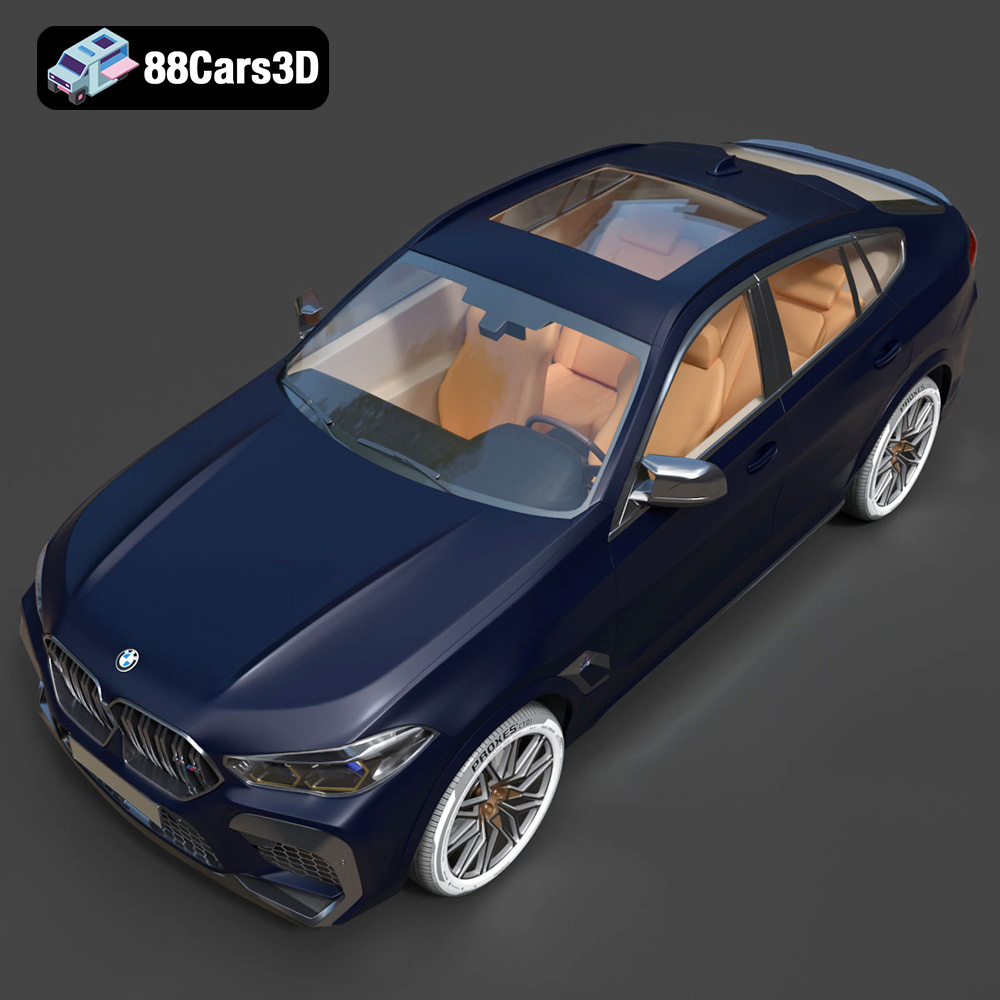
The experience of a high-performance vehicle isn’t complete without its interior, and the BMW X6 M 2008 3D model doesn’t disappoint. The cockpit boasts premium M-sport bucket seats with accurate stitching details, a sport steering wheel with paddle shifters and M branding, and a high-fidelity instrument cluster. The central infotainment display, detailed center console, gear selector, pedals, and door panels are all precisely replicated.
This level of interior detail is crucial for projects requiring first-person perspectives, such as driving simulators, virtual reality tours, or even game levels where players can enter and interact within the vehicle. The optimized geometry ensures that even these intricate interior elements perform efficiently in real-time engines. For developers building immersive experiences, a fully detailed interior like this significantly enhances player immersion and interaction, making the *game asset* truly versatile.
In the realm of advertising, product visualization, and architectural visualization, photorealistic *automotive rendering* is often the centerpiece. A high-quality 3D car model can drastically accelerate these workflows, providing a solid foundation that requires minimal cleanup and maximum creative potential. The BMW X6 M 2008 3D Model, with its precise geometry and optimized structure, is an ideal candidate for such demanding projects.
For many professional studios, Autodesk 3ds Max remains a cornerstone for high-end rendering. Coupled with render engines like V-Ray or Corona Renderer, it’s capable of producing breathtakingly photorealistic results. When importing the BMW X6 M 2008 model into 3ds Max using the native `.max` file or the versatile `.fbx` format, artists gain immediate access to a meticulously detailed base.
The workflow typically begins with setting up realistic materials. The model’s clean UV mapping (essential for any high-quality asset, ensuring textures wrap correctly) allows for easy application of PBR (Physically Based Rendering) materials, including metallic paints, rubber for tires, chrome for trim, and various interior finishes. Lighting is paramount; artists can quickly establish studio lighting setups – often using HDRI (High Dynamic Range Imaging) maps combined with targeted area lights – to highlight the X6 M’s aggressive contours and luxurious details. Post-processing within 3ds Max or external compositing software can then add final touches like depth of field, motion blur, and color grading, transforming the digital asset into a stunning marketing visual or a compelling scene in an architectural walkthrough. The pre-prepared nature of the 88cars3d.com model significantly cuts down on initial setup time, allowing artists to focus on creative lighting and composition.
Blender, with its powerful Cycles and real-time Eevee render engines, offers an equally compelling platform for *automotive rendering*. The included `.blend` file for the BMW X6 M 2008 makes integration instantaneous. Artists can directly dive into modifying materials, utilizing Blender’s extensive node-based shader system to create custom paint jobs, intricate fabric textures for the interior, and realistic glass effects.
Blender’s intuitive lighting tools, from simple sun lamps to complex mesh lights and HDRI environments, allow for rapid iteration on lighting scenarios, whether it’s a moody night scene or a bright showroom display. Eevee, Blender’s real-time renderer, is perfect for quick previews and animations, allowing artists to make adjustments on the fly, while Cycles provides the ultimate in unbiased photorealistic quality. The ability to quickly experiment with different body colors, adjust material finishes (matte, gloss, metallic), and adapt lighting for various environments, as highlighted in the product’s customization options, makes this *3D car model* a flexible tool for designers and visualizers working within the Blender ecosystem.
For game developers, the quality and optimization of *game assets* directly impact performance and player experience. A premium 3D car model, such as the BMW X6 M 2008, designed with real-time engines in mind, is an invaluable resource for creating compelling racing titles, open-world environments, and interactive simulators.
Unreal Engine is a powerhouse for creating visually stunning and highly interactive experiences. The BMW X6 M 2008 3D Model’s inclusion of `.fbx` and `.unreal` formats makes it exceptionally well-suited for this engine. Importing the `.fbx` file into Unreal typically involves setting up materials, creating PBR shader instances for realistic reflectivity and surface properties, and applying textures. If a `.unreal` package is provided, much of this work is already done, allowing for immediate placement and interaction.
A key aspect of vehicle integration in Unreal is setting up a robust physics system. The model’s proper pivot setup for steering, wheel rotation, and suspension travel is critical here. Developers can easily configure a “Chaos Vehicle” or “Physics Asset” in Unreal, linking the skeletal mesh to accurate physics constraints. This allows the car to react realistically to terrain, collisions, and player input. Furthermore, collision meshes (often simplified versions of the main mesh) are essential for performance, preventing complex polycounts from slowing down physics calculations. The optimized 969,720 triangle count of the BMW X6 M 2008 model ensures it performs efficiently even within dense open-world environments, contributing to smooth gameplay and high frame rates.
Real-time performance is not just about raw polycount; it’s also about efficient use of textures, materials, and LODs (Levels of Detail). While not explicitly detailed for this product, high-quality *game assets* typically include LODs – simplified versions of the mesh that are swapped in at greater distances to save rendering resources. The optimized polycount of the BMW X6 M 2008 implies it’s already structured for efficient rendering, and developers can further optimize it if needed for specific platforms.
For AR/VR applications and mobile games, where hardware resources are more constrained, the `.glb` format comes into its own. This format is highly optimized for lightweight transmission and rendering, making it perfect for immersive virtual showrooms, configurators, and mobile AR experiences where the BMW X6 M 2008 can be virtually placed in a real-world environment. The ability to modify tire textures, switch body colors, and adapt lighting within the engine further enhances its utility for customization in real-time interactive applications, allowing users to personalize their virtual X6 M experience.
The utility of a high-quality 3D car model extends far beyond digital rendering and gaming. It can serve as a foundation for physical fabrication through 3D printing, or as an anchor for architectural and product visualization projects, bringing a touch of realism and luxury to various scenes.
The inclusion of the `.stl` format for the BMW X6 M 2008 3D Model highlights its potential for physical output. 3D printing allows designers, enthusiasts, and model makers to transform a digital asset into a tangible display piece. The recommended scales (1:12, 1:18, 1:24) are popular for collectible models, offering a good balance between detail and manageable print size.
Successful 3D printing requires careful preparation. The product’s advice on layer height (0.04–0.12 mm for fine details), wall thickness (1.2–2.0 mm), and infill (20–30%) are crucial for achieving structural integrity and a smooth finish. Resin printing is often recommended for automotive models due to its ability to capture intricate details like the M quad-exhaust system, headlights, and interior elements more accurately than filament-based FDM printers. Printing parts like the frame, wheels, and suspension separately, with proper orientation and supports, ensures optimal results and easier post-processing. Post-processing – including sanding, priming, and painting with authentic factory colors and metallic finishes – is where the model truly comes to life, mirroring the real BMW X6 M. This process showcases the incredible versatility of a meticulously prepared *3D car model*.
In architectural visualization, the presence of realistic vehicles can significantly enhance the credibility and aesthetic appeal of a scene. Placing the BMW X6 M 2008 within a luxury garage, a modern driveway, or an urban streetscape instantly elevates the visual impact, adding a sense of scale, lifestyle, and dynamic movement. Architects and designers can seamlessly integrate this model into their scenes, using its precise dimensions and high visual fidelity to convey a premium atmosphere.
Furthermore, for product configurators or interactive brand campaigns, 3D car models are invaluable. Imagine a virtual showroom where potential buyers can rotate the BMW X6 M 2008, change its body color, open doors, and even explore the interior in real-time. The optimized nature and flexibility of formats like `.glb` and `.fbx` make this entirely feasible. The ability to customize colors, modify tire textures, and adjust material finishes allows for a fully interactive experience that engages customers and provides a deeper understanding of the product, showcasing the power of detailed *automotive rendering* in marketing.
One of the most compelling advantages of investing in a high-quality 3D car model from a reputable source like 88cars3d.com is the efficiency it brings to professional workflows. The BMW X6 M 2008 model is not just a static representation; it’s a dynamic asset designed for extensive customization and seamless integration.
Every project has unique requirements, and the ability to customize a 3D model without compromising its quality is paramount. The BMW X6 M 2008 offers excellent flexibility in this regard. Artists and developers can easily change body colors, experimenting with factory hues or entirely custom finishes to match specific branding or artistic visions. The material finishes can be adjusted from matte to gloss or metallic, altering how light interacts with the vehicle’s surfaces and dramatically changing its perceived character.
Beyond aesthetics, the model supports modifications to elements like tire textures, allowing for differentiation between off-road and street variants, further expanding its applicability. The comprehensive and well-structured nature of the included files, particularly the fully editable `.blend` and `.max` formats, means that deeper customizations – such as adding unique decals, modifying specific components, or even creating custom animations – are straightforward for experienced users. This level of adaptability ensures that the model can serve a vast array of creative and technical needs.
Time is a critical resource in any production pipeline. Developing a complex, high-fidelity 3D car model from scratch can take hundreds of hours, demanding specialized skills in modeling, UV mapping, texturing, and optimization. By leveraging a pre-made, professional-grade asset like the BMW X6 M 2008, studios and individual artists can save an immense amount of time and effort.
This efficiency translates directly into cost savings and accelerated project timelines. Instead of focusing on foundational modeling, teams can dedicate their resources to creative tasks such as scene composition, advanced lighting, animation, or interactive programming. The “game-ready & optimized” nature of this model, with its balanced polycount and proper pivot setups, means it’s designed to be integrated swiftly into real-time engines with minimal post-import tweaking. This makes the BMW X6 M 2008 an intelligent investment for anyone looking to enhance their projects with premium *3D car models* without the extensive development overhead.
The journey through the intricacies of high-quality 3D car models reveals a fascinating intersection of art, engineering, and digital innovation. From the detailed polygons that form its muscular exterior to the sophisticated file formats that dictate its utility, a premium asset like the BMW X6 M 2008 3D Model is far more than just a digital representation – it’s a versatile tool capable of elevating a multitude of projects.
We’ve explored how such a model facilitates breathtaking *automotive rendering* in software like 3ds Max and Blender, creates immersive experiences in game engines like Unreal, and even crosses into the physical realm through 3D printing. The comprehensive range of included file formats (.blend, .fbx, .obj, .glb, .stl, .ply, .unreal, .max) ensures maximum compatibility and flexibility across different workflows and applications. The technical specifications, including its optimized 969,720 triangle count and meticulously modeled features, underscore its suitability as a true *game asset* and a powerful visualization tool.
Ultimately, whether your goal is to craft photorealistic animations, develop an engaging racing game, design an interactive AR showroom, or even produce a scale model, the BMW X6 M 2008 3D Model from 88cars3d.com provides the robust foundation needed for success. It stands as a testament to the value of professional-grade digital assets in an ever-evolving digital landscape, empowering creators to bring their most ambitious visions to life with unparalleled quality and efficiency.
Experience the sheer power and athletic presence of the BMW X6 M 2008, a pioneer in the high-performance Sports Activity Coupe segment. Blending the aggressive stance of an M-series sports car with the versatility of a luxury SUV, this vehicle boasts a commanding front fascia, iconic kidney grilles, a sweeping roofline, and the signature quad-pipe M exhaust system. Underneath its muscular exterior lies the spirit of a twin-turbo V8, making it an unmistakable icon of automotive engineering.
This premium 3D model delivers exceptional quality with a refined 969,720 triangle count, offering breathtaking visual fidelity while remaining structured for optimal use in demanding digital environments. Whether you are developing high-end racing games, crafting immersive AR/VR showrooms, or generating photorealistic animations, this game-ready asset provides the perfect balance of detail and efficiency.
Perfect for open-world street racing games, luxury car dealership configurators, architectural visualization scenes, and high-octane cinematic renders.
.blend, .fbx, .obj, .glb, .stl, .ply, .unreal, .max
Tags:
bmw, x6-m, 2008, suv, coupe-suv, sports-car, luxury-car, game-ready, low-poly, optimized, car-3d-model, game-asset, rendering, vr-ar, blend, fbx, obj, glb, stl, ply, unreal, max
$60.99
.2008
.blend
.bmw
.fbx
.glb
.max
.obj
.ply
.rendering
.sports car
.stl
.unreal
car-3d-model
coupe-suv
game asset
game-ready
low-poly
luxury car
optimized
SUV
VR/AR
x6-m