Get 40% OFF All Premium 3D & STL Models!

In the dynamic world of 3D visualization, automotive rendering, and game development, the foundation of any successful project often lies in the quality of its assets. A truly exceptional 3D model isn’t just a collection of polygons; it’s a meticulously crafted digital sculpture that breathes life into virtual environments. This is particularly true for iconic vehicles, where every curve, every reflection, and every detail contributes to an authentic and immersive experience. Imagine bringing the raw power and timeless elegance of a classic American muscle car into your next project. This is where a masterpiece like the Ford Cobra 3D Model from 88cars3d.com becomes an indispensable tool for professionals and enthusiasts alike.
The Ford Cobra represents an era of unparalleled automotive design and performance, a legend on and off the track. Capturing its essence in three dimensions requires precision, passion, and a deep understanding of digital artistry. Whether you’re aiming to create breathtaking cinematic renders, build a hyper-realistic racing simulator, or design an interactive AR/VR experience, a high-fidelity model is paramount. This comprehensive guide will delve into the technical intricacies, versatile applications, and workflow benefits of integrating premium 3D car models, with a special focus on how a finely tuned asset like the Ford Cobra model elevates projects across various industries.
The versatility of a 3D model is often defined by the range of file formats it supports. Different formats are optimized for different purposes, software ecosystems, and pipelines. Understanding their strengths and weaknesses is crucial for any 3D artist or developer. The Ford Cobra 3D Model is a prime example of an asset offered in a wide array of formats, ensuring maximum compatibility and utility.
The .blend format is the native file type for Blender, one of the most popular open-source 3D content creation suites. When you download a .blend file, you’re getting a fully editable Blender scene, complete with materials, textures, lighting, camera setups, and often rigging or animation data. For the Ford Cobra 3D Model, this means artists working within Blender can immediately open the model, inspect its topology, modify materials, apply custom shaders, or integrate it into existing Blender projects with minimal setup. It offers unparalleled flexibility for further artistic customization and is ideal for users deeply embedded in the Blender pipeline.
Autodesk’s .fbx (Filmbox) format has long been the gold standard for 3D model interchange across different software applications and game engines. It’s incredibly robust, capable of storing not just mesh data but also materials, textures, animations, skinning, and camera information. For projects involving the Ford Cobra, an .fbx file is perfect for transferring the model from its creation software into Unity, Unreal Engine, 3ds Max, Maya, or Cinema 4D, among others. Its widespread adoption makes it essential for collaborative projects and real-time pipelines, ensuring that the model’s integrity and features are preserved during asset transfer.
The .obj (Wavefront OBJ) format is a venerable and highly compatible format, often considered a universal standard for raw 3D geometry. It stores vertex positions, UV coordinates, normals, and face information, typically with associated .mtl (material) files defining basic color and texture references. While it doesn’t support animation or rigging as robustly as .fbx, its simplicity and widespread support make it an excellent choice for cross-software compatibility. When you need to import the Ford Cobra into virtually any 3D application without worrying about proprietary issues, .obj is a reliable fallback, though some material setup might be required in the target application.
.glb (GLB format) is the binary version of glTF (GL Transmission Format), designed for efficient transmission and loading of 3D scenes and models by applications. It’s particularly optimized for AR, VR, and browser-based display due to its compact size and single-file structure (embedding textures and other data). For presenting the Ford Cobra in a web configurator, a mobile AR application, or a lightweight VR showroom, the .glb format offers excellent performance and ease of deployment, making it critical for immersive web experiences and interactive visualization.
The .stl (STereoLithography) format is the ubiquitous standard for 3D printing. It represents a 3D model as a collection of unconnected triangular facets, defining only the surface geometry of an object without color, texture, or material information. When artists or hobbyists wish to bring the Ford Cobra 3D Model into the physical world, an .stl file is what your 3D printer slicing software will use. The model’s optimized topology makes it an excellent candidate for conversion to .stl, enabling physical replicas, prototypes, or collectible display pieces, albeit with careful consideration for print settings and scale.
The .ply (Polygon File Format) is another popular format, often used for storing 3D scanner data and general-purpose 3D geometry. It can store a wider range of properties than .obj, including color, transparency, normals, texture coordinates, and even reliability information for each vertex and face. For precision mesh analysis, CAD applications, or scenarios where more detailed vertex-level data is crucial for the Ford Cobra model, .ply offers a robust solution for preserving rich geometrical attributes.
While not a standalone file extension in the traditional sense, the term .unreal in this context implies an asset specifically prepared and optimized for direct import or even provided as an Unreal Engine project package. This means the Ford Cobra 3D Model comes with PBR (Physically Based Rendering) materials set up, proper collision meshes, LODs (Levels of Detail) if applicable, and possibly blueprints for interactive elements, ready for immediate use in Unreal Engine. This greatly streamlines development for game artists and cinematic creators working within Epic’s powerful real-time environment.
The .max format is the native file type for Autodesk 3ds Max, a leading software for 3D modeling, animation, and rendering, particularly strong in architectural visualization and product design. A .max file of the Ford Cobra means that artists working in 3ds Max gain access to the original project file, allowing for complete control over the model. This includes inspecting modifiers, rigging setups, scene organization, and rendering settings, making it ideal for those who wish to deeply integrate the model into advanced rendering and animation pipelines within 3ds Max.
A truly premium 3D automotive asset, like the Ford Cobra 3D Model available at 88cars3d.com, is defined by its meticulous attention to detail and intelligent optimization. It’s not just about looking good; it’s about being functional and efficient across a spectrum of applications.
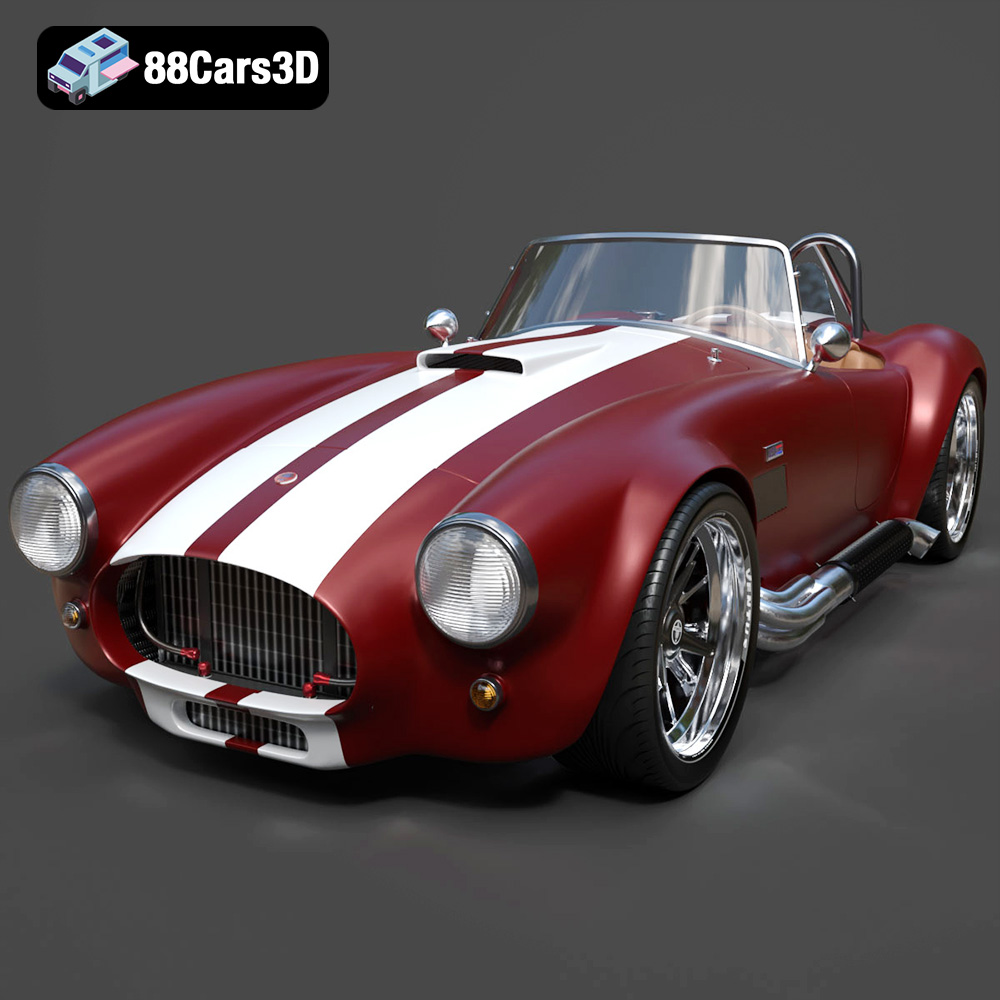
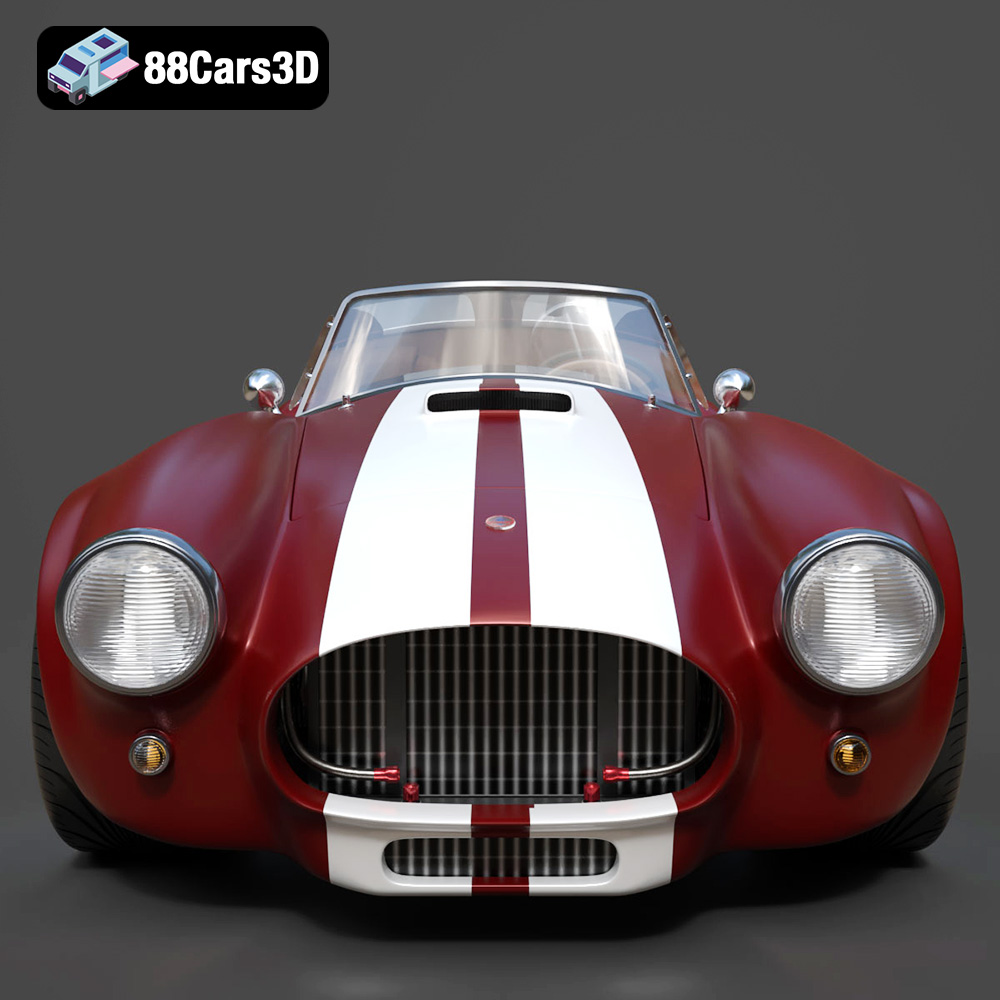
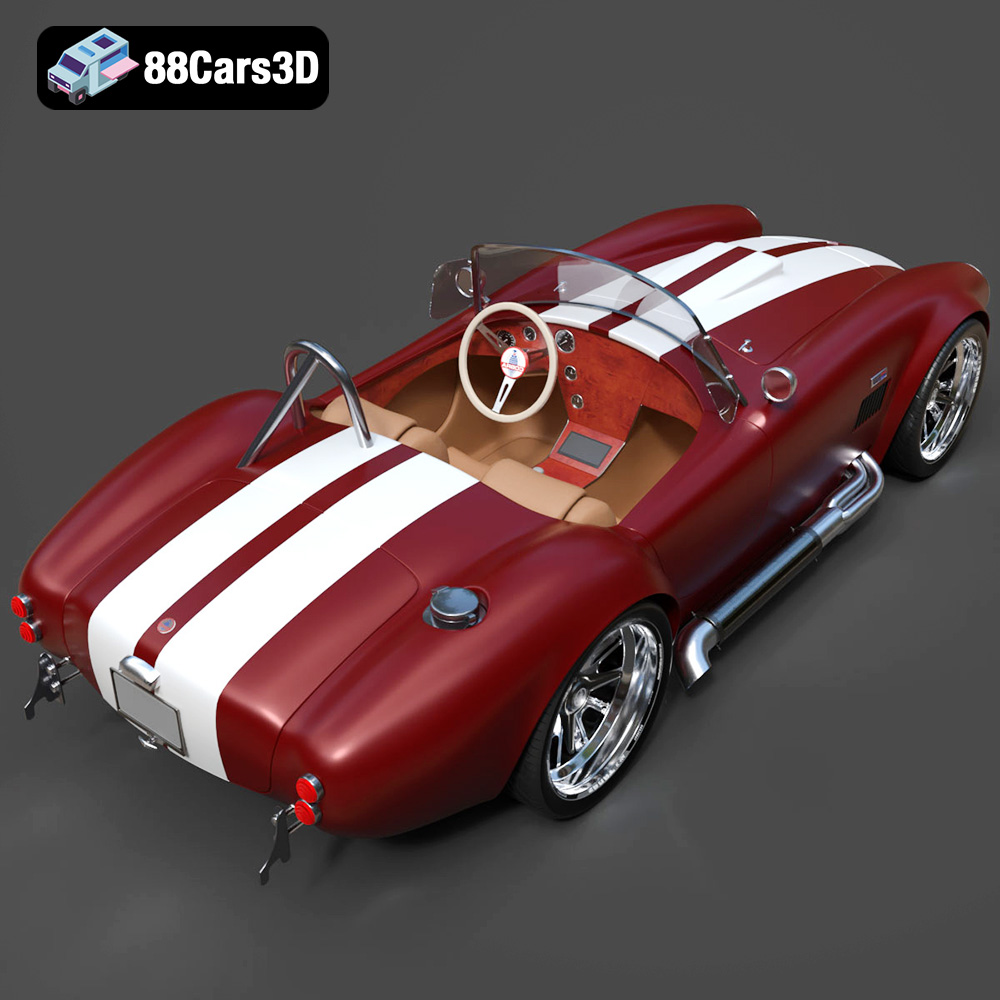
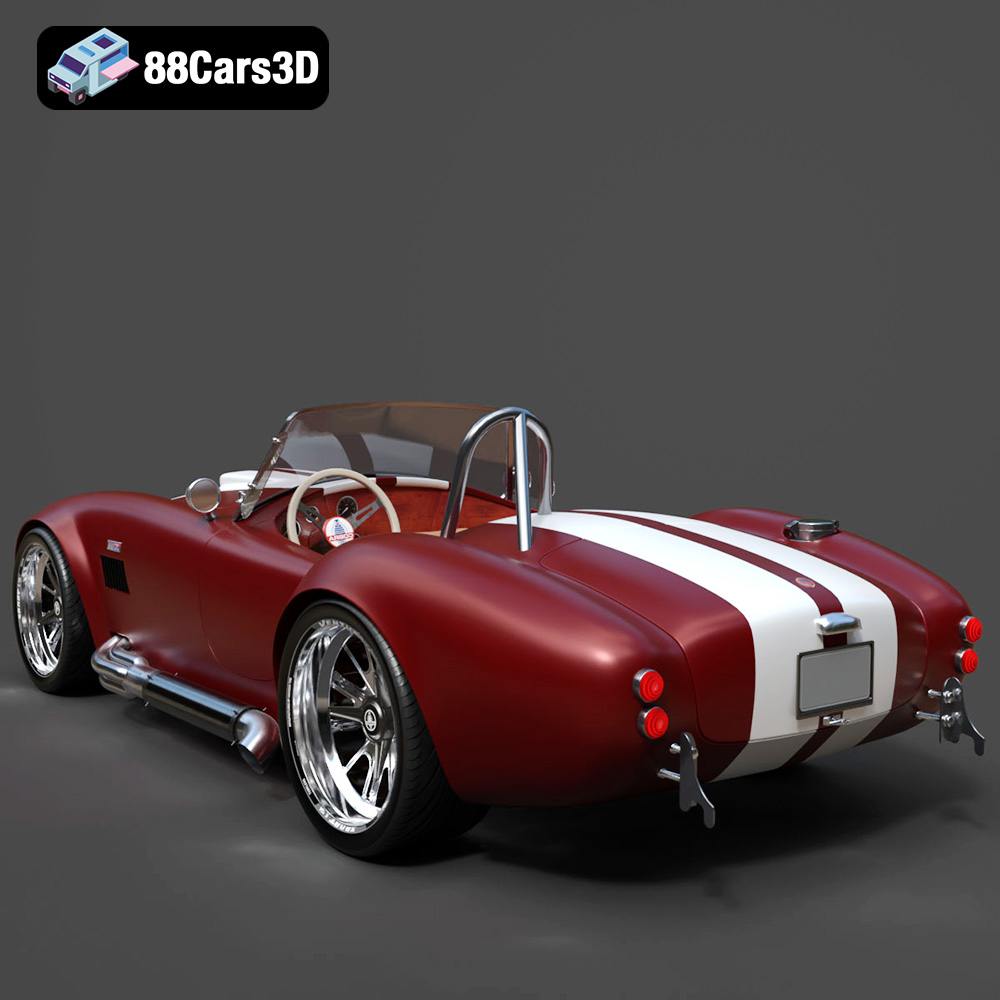
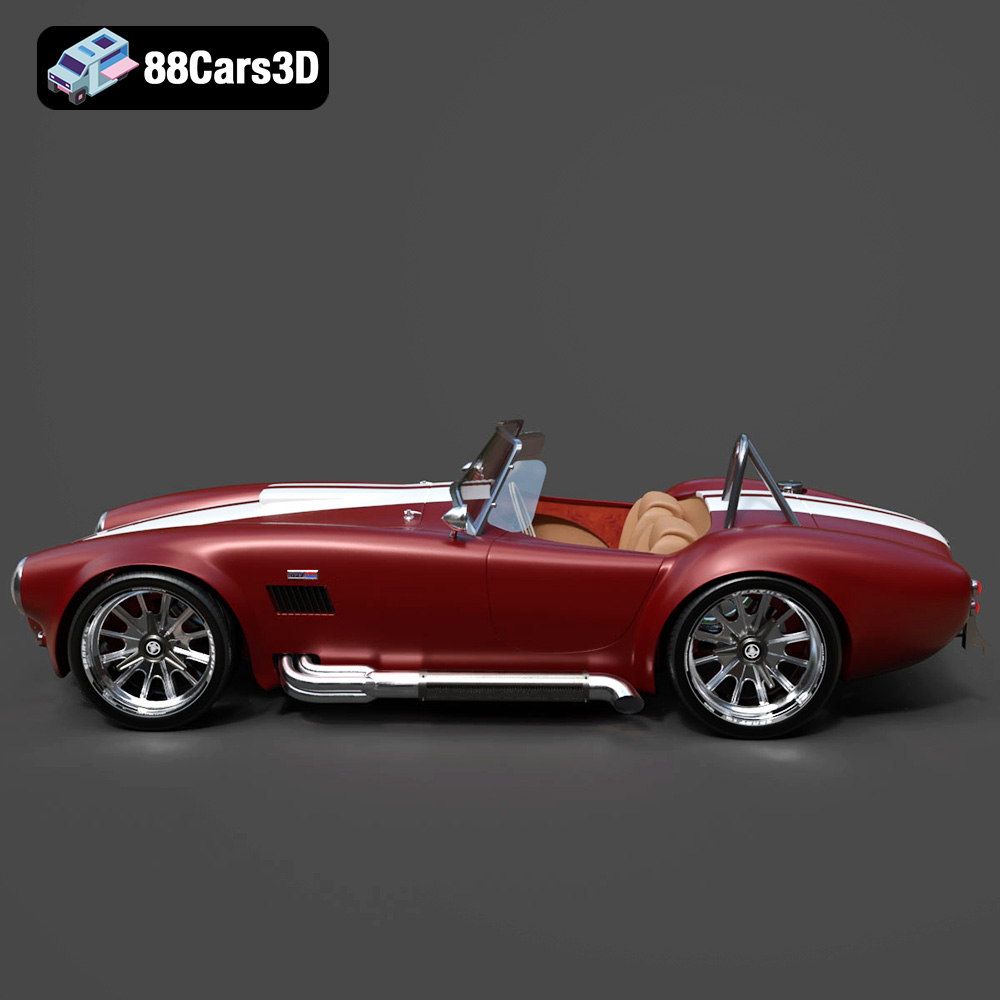
The exterior of any car model is its most recognizable feature, and for a legend like the Ford Cobra, capturing its iconic silhouette is paramount. This model features accurate Ford Cobra frame geometry and iconic flared bodywork, ensuring that the aggressive stance and timeless curves are perfectly replicated. Details like the detailed V8 engine block with prominent air cleaners and the signature chrome side-exit exhaust system aren’t just cosmetic; they add depth and authenticity, visible even from a distance or through transparent elements. The inclusion of classic round headlights and vintage taillight assemblies, along with authentic knock-off style wheels and wide performance tires, completes the period-correct look. Crucially, the model boasts detailed suspension and undercarriage components, and critically, separate wheels, suspension, and steering components for animation. This level of separation is vital for creating realistic driving dynamics, cinematic camera movements, and interactive vehicle systems in games or simulations.
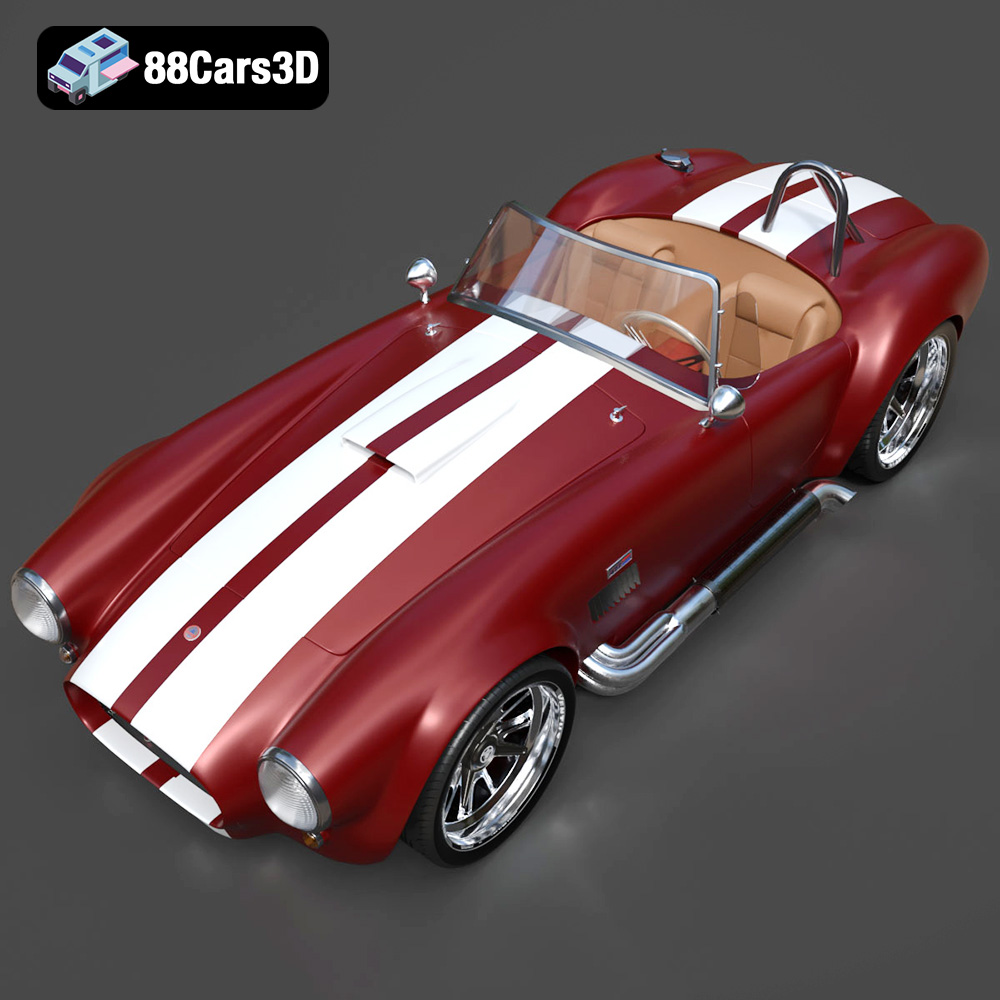
For any project that involves a first-person perspective, virtual showrooms, or even just opening doors for a detailed shot, the interior must stand up to scrutiny. The Ford Cobra 3D Model doesn’t disappoint, featuring a cockpit designed for immersion. It includes vintage leather-textured bucket seats, a classic wood-rimmed steering wheel, and a period-correct analog instrument cluster and dashboard layout. Small but critical elements like authentic control details including pedals, gear shifter, and dashboard switches are present, making the interior feel tangible. The geometry is optimized for first-person POV in gaming, striking that delicate balance between visual fidelity and real-time performance, allowing players or viewers to truly feel “inside” the classic machine.
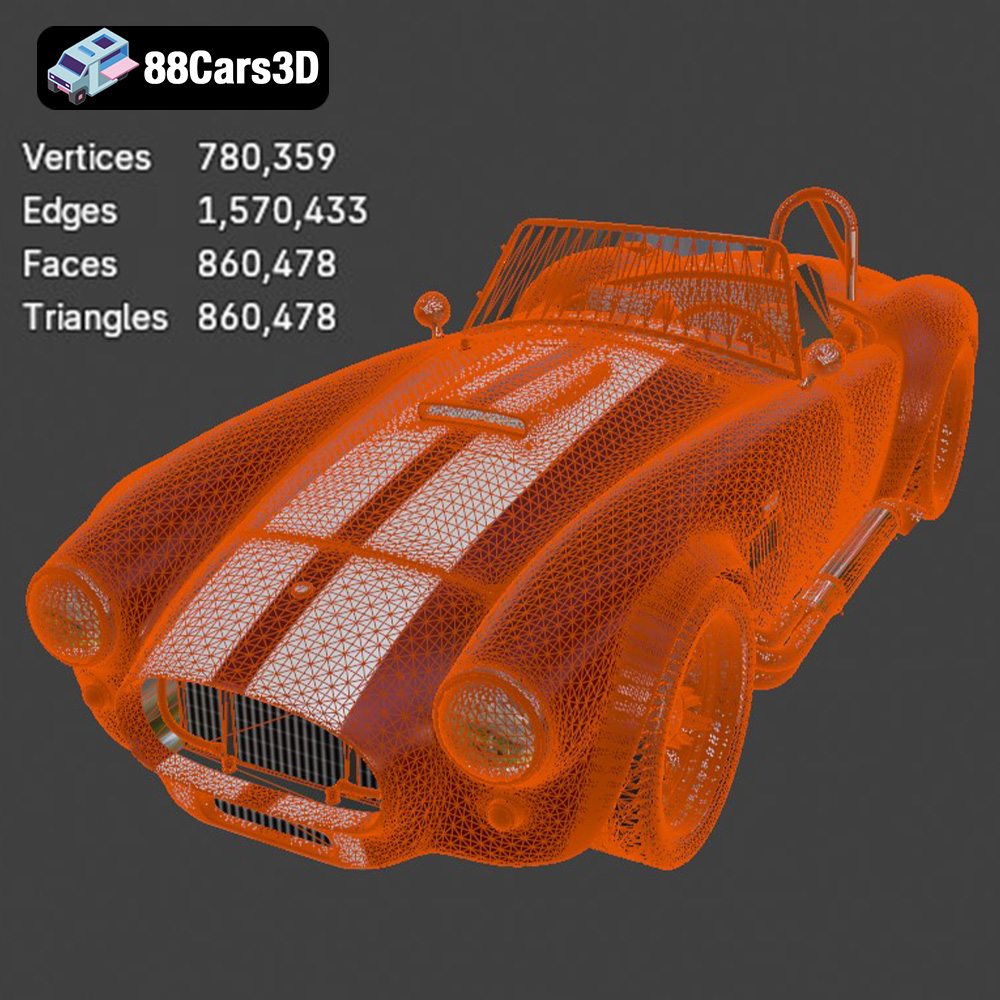
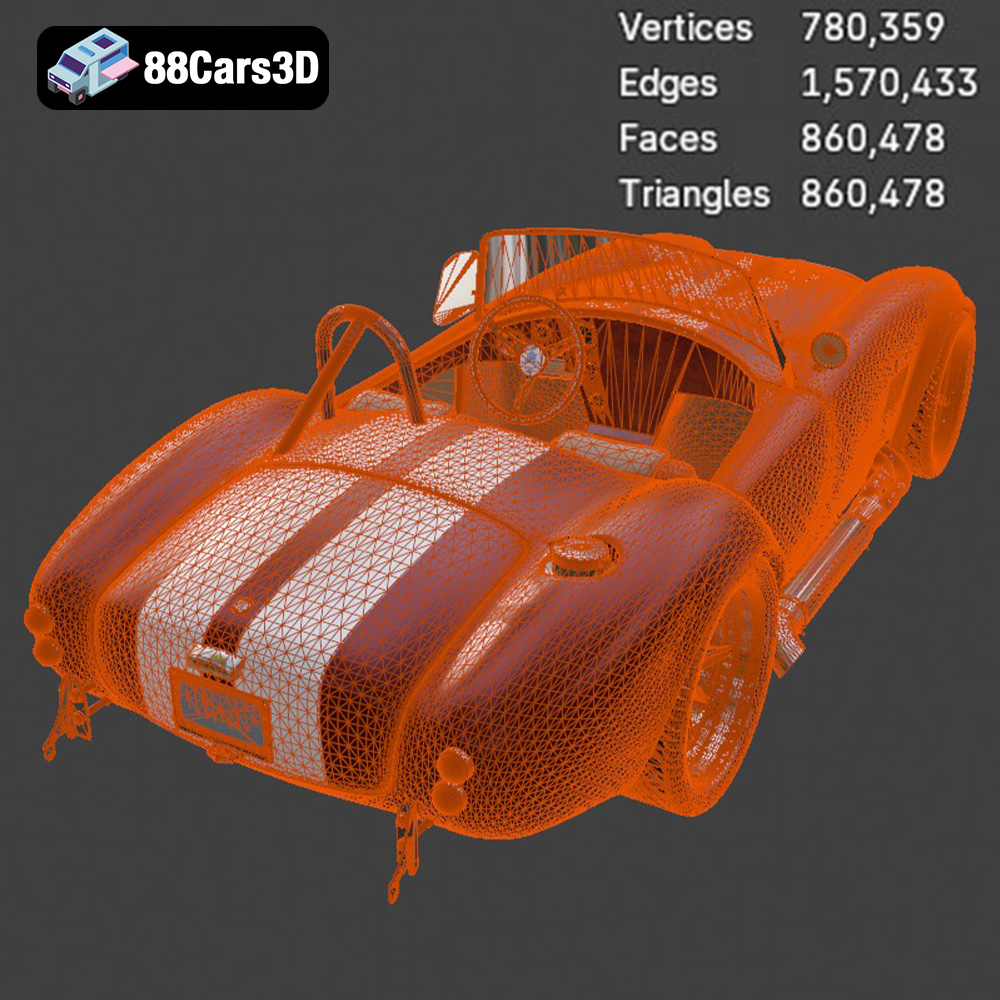
One of the standout technical advantages of this Ford Cobra 3D Model is its game-ready and optimized topology. With 860,478 triangles, it achieves a perfect balance for real-time engines like Unreal and Unity while maintaining high-end visual realism. This polycount is sufficiently detailed for close-up renders and cinematics, yet efficient enough to be integrated into complex game environments without crippling performance. Furthermore, its real-world scale accuracy based on actual vehicle chassis ensures correct proportions and seamless integration into scenes, whether for design visualization or accurate physics simulations. The proper pivot setup for steering, wheel rotation, and suspension travel further solidifies its utility for animation and interactive systems, drastically reducing setup time for developers.
The true value of a high-quality 3D asset lies in its seamless integration into diverse professional workflows. The Ford Cobra 3D Model, with its comprehensive features and multiple file formats, is designed to be a versatile workhorse for various creative and technical industries.
For game developers, the Ford Cobra model is an ideal asset. Its optimized polycount (860,478 triangles) makes it perfectly suited for modern game engines. In open-world games, it can serve as a stunning collectible, a quest objective, or a background prop that enhances realism. For racing titles and simulators, its accurate geometry, separate animation components (wheels, suspension, steering), and optimized interior for first-person POV are invaluable. Developers can quickly integrate it, set up physics, and animate its moving parts to create a believable and engaging driving experience. Its “game-ready” nature significantly reduces the time and resources typically spent on optimizing complex automotive models.
When it comes to automotive rendering and visualization, the Ford Cobra 3D Model excels. Its meticulous detailing, from the V8 engine block to the textured leather seats, allows for breathtaking renders in studio lighting setups or realistic environmental scenes. This makes it an excellent choice for brand campaigns, lifestyle scenes, and product showcases. Advertising agencies, car manufacturers, and architectural visualization studios can leverage this model to create compelling marketing materials, showcase virtual concepts, or enhance the realism of a scene by placing an iconic vehicle within a luxurious setting. The ability to customize colors, materials, and lighting allows artists to tailor the model to specific project requirements, achieving photorealistic results that resonate with audiences.
The demand for immersive content in AR/VR is rapidly expanding, and the Ford Cobra model is perfectly poised to meet this need. Its optimization for real-time engines and inclusion of the .glb format make it an excellent candidate for immersive virtual showrooms, configurators, and mobile AR experiences. Imagine a customer exploring a virtual Ford Cobra in an AR app on their phone, walking around it, changing colors, and even peeking inside. In a VR environment, they could sit in the driver’s seat, interact with the controls, and experience the car in a truly spatial way. These applications are not just novelties; they offer powerful new ways for businesses to engage with customers and for educational institutions to provide interactive learning tools about automotive design and history.
Beyond its technical specifications, the Ford Cobra 3D Model from 88cars3d.com offers immense potential for compelling digital storytelling. Its iconic status and detailed recreation provide a rich canvas for narratives across various media.
In cinematic production, whether for film, television, or online media, a high-fidelity car model can serve as a central character. Imagine the Ford Cobra roaring through a scenic landscape in a commercial, or being the prize possession in a dramatic scene. Its detailed engine, interior, and animated components allow for dynamic camera work and close-up shots that convey power and heritage. The ability to render it with advanced lighting and effects means it can seamlessly blend into live-action footage or stand alone in fully CG animated sequences. For automotive advertising, it provides a cost-effective alternative to physical cars, allowing for impossible shots and rapid iteration on design and presentation.
The Ford Cobra 3D Model can be transformed into an interactive learning or sales tool. For automotive design schools or historical preservation projects, students or enthusiasts can disassemble the virtual model, explore its suspension, engine, and interior, understanding its mechanics in a way static images cannot convey. Furthermore, businesses can use it in virtual configurators, allowing potential buyers to customize their dream Cobra with different paint schemes, racing stripes, or wheel options, seeing the changes in real-time. This interactive capability enhances engagement and aids in decision-making.
Classic cars are often fragile and expensive to maintain. Digitizing them with high fidelity, as seen with the Ford Cobra model, offers a powerful way to preserve their heritage for future generations. Museums can create virtual exhibits where visitors can explore these vehicles in detail, without the limitations of physical barriers. Educational platforms can use these models to teach about automotive history, engineering, and design. This digital preservation ensures that the legacy of legendary vehicles like the Ford Cobra remains accessible and engaging for years to come, transcending the physical limitations of time and wear.
The journey of a 3D model doesn’t always end on a screen. For many enthusiasts and professionals, the ultimate goal is to bring a digital asset into the physical world. The Ford Cobra 3D Model is not just for virtual realms; it’s also designed to be convertible for 3D printing, allowing hobbyists and collectors to create tangible replicas.
When preparing the Ford Cobra for 3D printing, the .stl format is key. This format defines the surface geometry as a series of triangles, which is what 3D slicers read. While the model’s clean topology is a great starting point, successful 3D printing often requires specific considerations. It’s crucial to ensure that the model is “watertight” (i.e., has no open edges or non-manifold geometry) to prevent printing errors. Scaling is also vital; the recommended scales of 1:12, 1:18, or 1:24 offer a good balance between detail and printability on most desktop machines. Larger scales will capture more intricate details but require more material and print time, while smaller scales might lose some of the finer nuances.
Achieving a high-quality physical print of the Ford Cobra requires careful attention to 3D print settings. For fine details and smooth surfaces, resin printing is strongly recommended over FDM (Fused Deposition Modeling). Resin printers can achieve much finer layer heights, typically between 0.04–0.12 mm, which is essential for rendering the intricate bodywork, interior features, and small components like exhaust pipes. Proper supports are required for overhangs and detailed parts, such as the side-exit exhausts, mirrors, and potentially even thin fender flares. Printing the frame angled for structural integrity and printing wheels separately are smart strategies for better results. After printing, post-processing including sanding, priming, and applying authentic factory colors with metallic finishes will transform the raw print into a stunning miniature replica of the classic muscle car. This tangible connection to the digital model adds another layer of appreciation for the craftsmanship involved.
The Ford Cobra 3D Model is more than just a digital asset; it’s a testament to meticulous craftsmanship and a powerful tool for a multitude of creative and technical applications. From its accurately modeled exterior and immersive interior to its game-ready optimization and comprehensive file format support, this model offers unparalleled value for professionals in game development, automotive rendering, AR/VR, and even 3D printing. It empowers artists and developers to bring the iconic spirit of the Ford Cobra to life in stunning detail, streamlining workflows and enhancing visual fidelity across the board. For anyone seeking a premium 3D car model that delivers on both quality and versatility, the Ford Cobra 3D Model from 88cars3d.com is an exceptional choice, ready to accelerate your next project.
The Ford Cobra represents the pinnacle of classic American muscle, combining lightweight roadster design with immense V8 performance. Known for its iconic flared fenders, aggressive wide stance, signature side-exit exhausts, and legendary racing heritage, this vehicle is a true automotive masterpiece that captures the essence of 1960s sports cars. This meticulously crafted 3D model features a highly detailed topology with 860,478 triangles. It ensures stunning visual fidelity and game-ready optimization, making it an exceptional asset for high-end rendering, game development, AR/VR environments, and detailed animation work. Perfect for classic car racing simulators, vintage automotive showcases, cinematic animations, and virtual reality garage experiences.
$57.99
.blend
.cobra
.fbx
.ford
.glb
.max
.obj
.ply
.rendering
.roadster
.sports car
.stl
.unreal
car-3d-model
classic-car
game asset
game-ready
low-poly
muscle-car
optimized
VR/AR