Get 40% OFF All Premium 3D & STL Models!

In the world of automotive history, few vehicles command as much respect and admiration as the Mercedes-Benz 540K Roadster of 1936. A symbol of pre-war luxury, unparalleled engineering, and breathtaking design, its sweeping fenders, legendary supercharged straight-eight engine, and iconic external exhaust pipes define an era of automotive artistry. For designers, game developers, visual artists, and enthusiasts who wish to immortalize or integrate such a masterpiece into their digital realms, a high-quality 3D model is indispensable.
Today, the demand for photorealistic and game-ready 3D car models is at an all-time high. Whether it’s for cinematic sequences, immersive virtual reality experiences, cutting-edge game development, or detailed product visualizations, the foundation of any successful project lies in the fidelity and technical robustness of its assets. This is precisely where the Mercedes-Benz 540K Roadster 1936 3D model excels. Available at 88cars3d.com, this digital recreation offers an extraordinary level of detail and optimization, making it a versatile tool for a myriad of professional applications. Let’s delve into the intricate world of this classic car model and explore how it empowers digital creators.
Recreating a historical icon like the Mercedes-Benz 540K Roadster in the digital space is a testament to both artistic skill and technical precision. It’s not merely about capturing the shape, but about embodying the spirit and the intricate details that made the original so special.
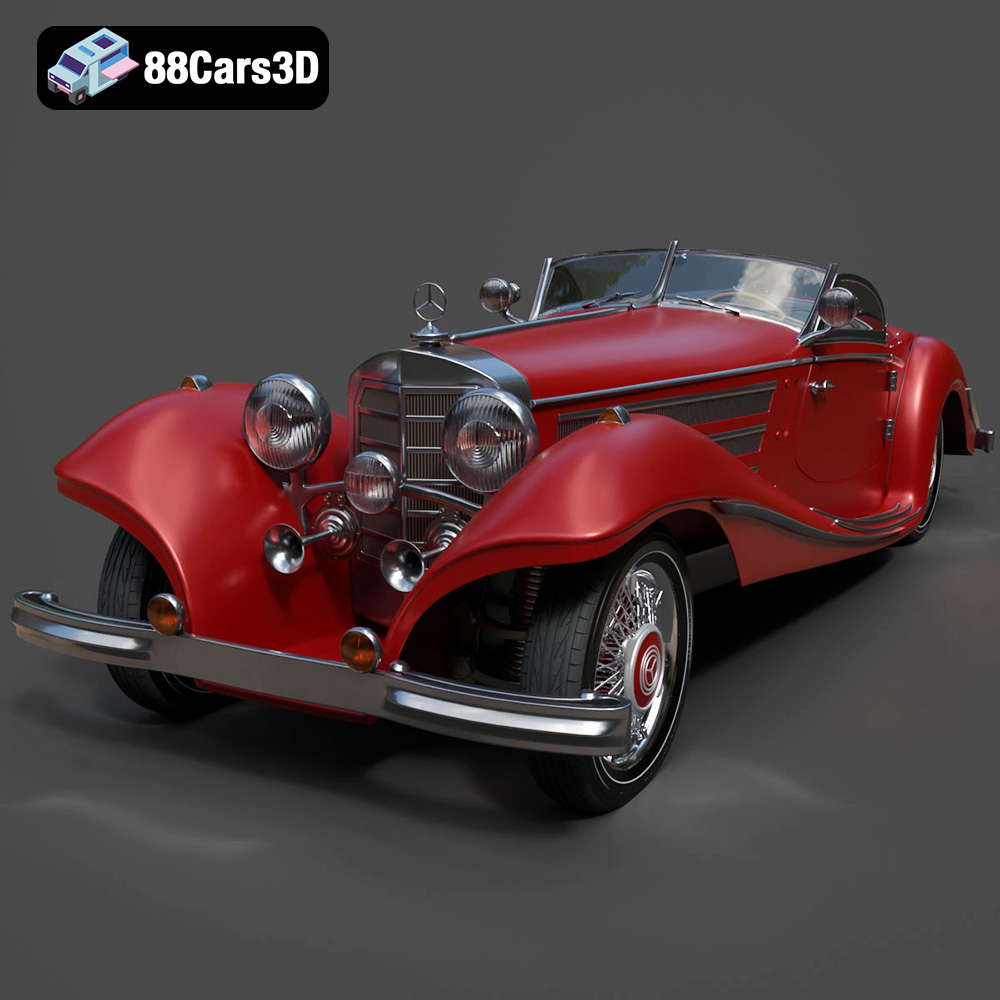
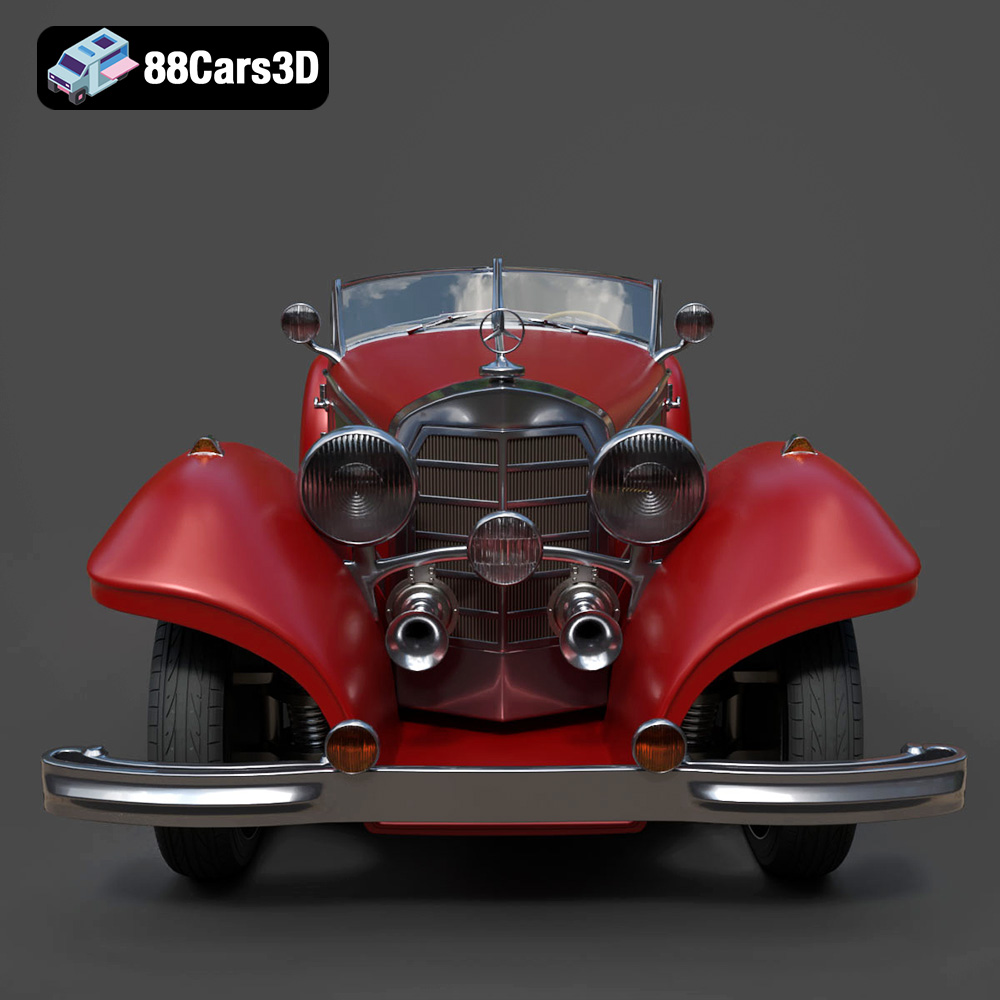
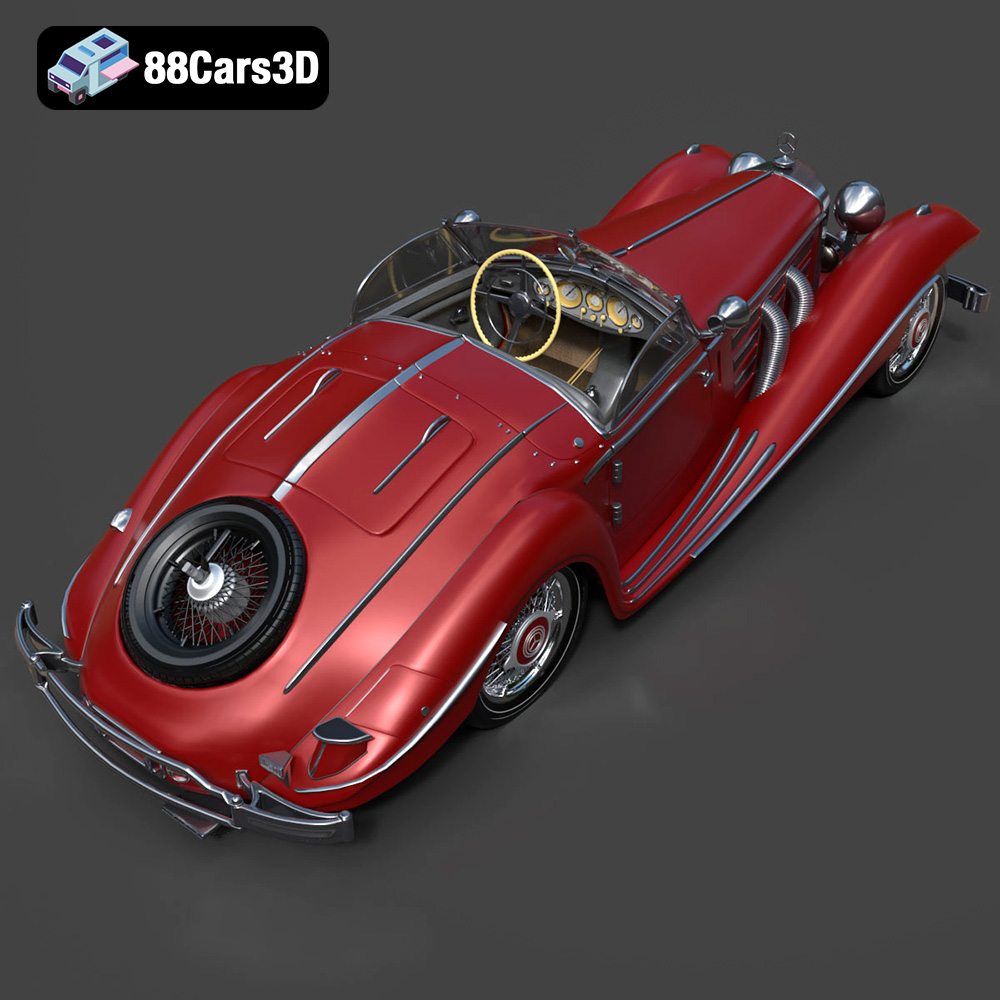
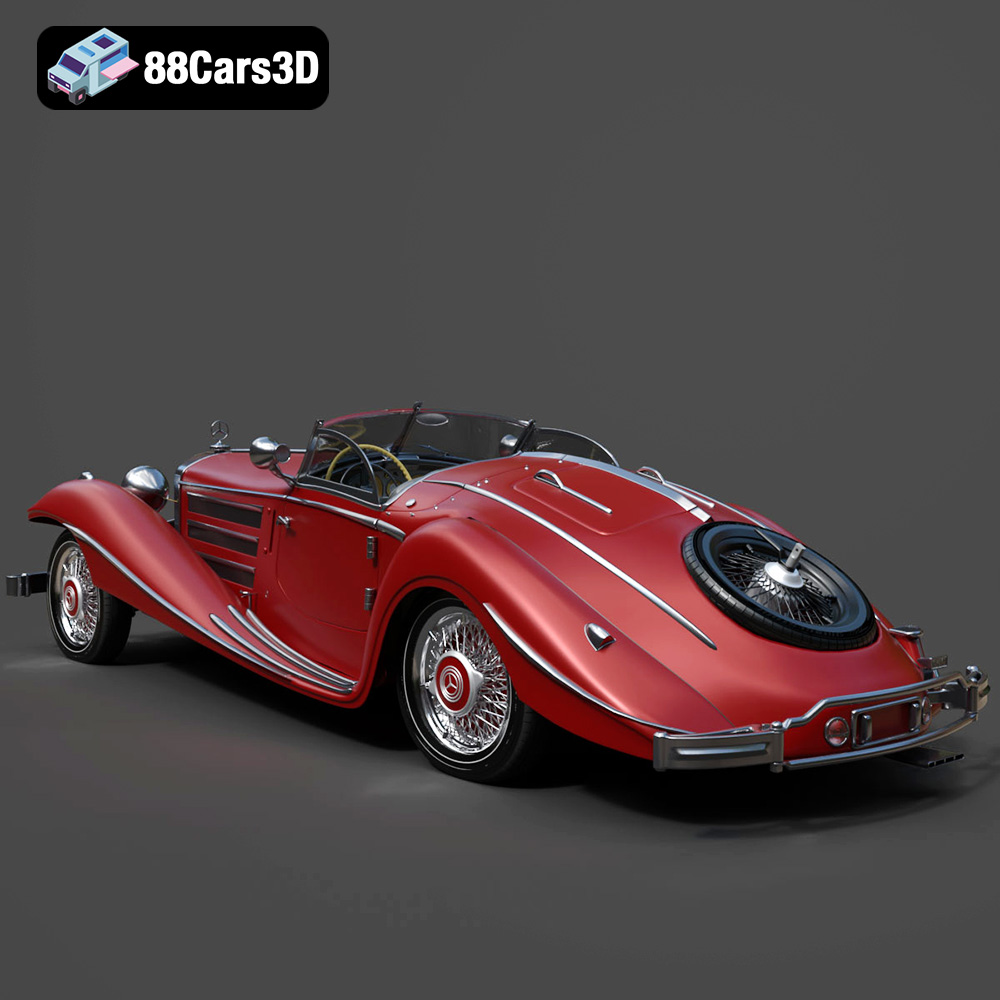
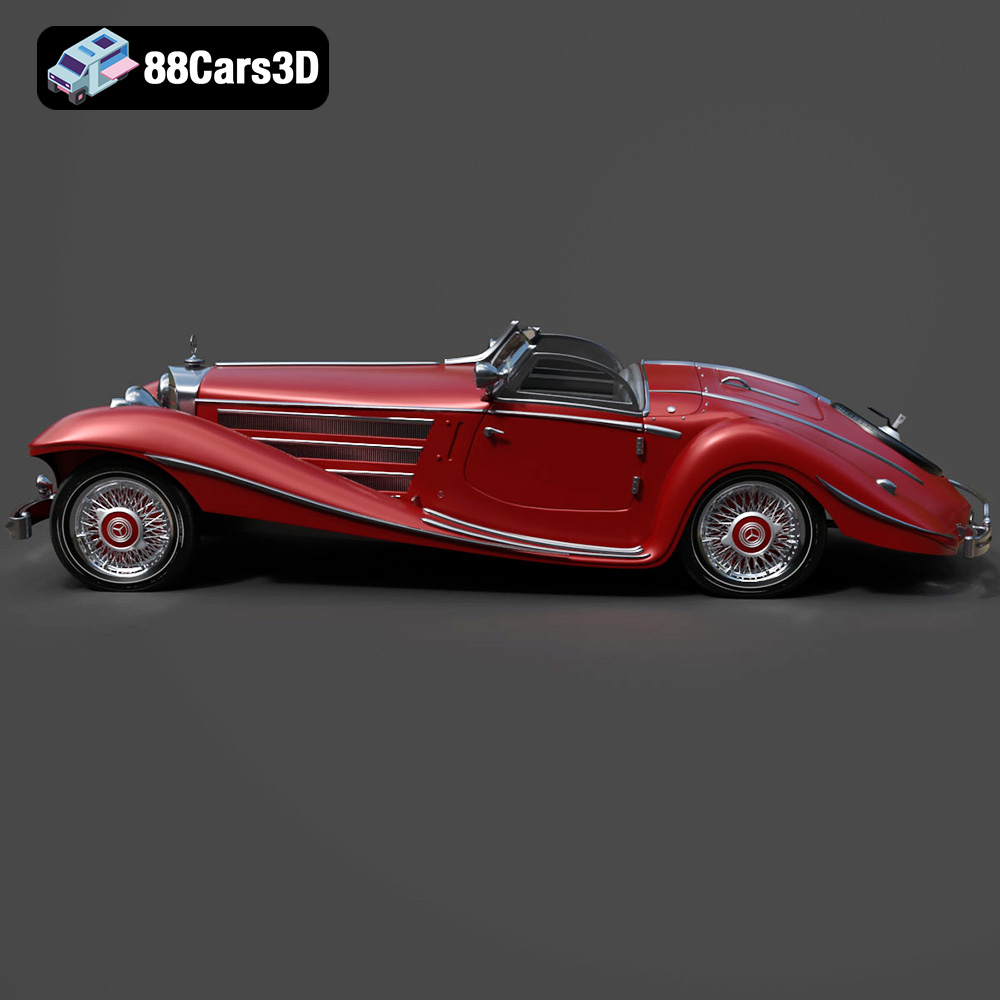
The Mercedes-Benz 540K Roadster 1936 3D model stands as a prime example of meticulous digital craftsmanship. Every signature styling cue, from the prominent chrome radiator grille that exudes power and prestige to the elegant wire-spoke wheels that speak of an era of sophisticated design, has been painstakingly recreated. The model accurately represents the vehicle’s majestic presence, featuring the elongated hood that once housed its legendary supercharged straight-eight engine and the distinctive external exhaust pipes cascading gracefully from its side. Even subtle elements, such as the authentic period-correct lighting with large classic headlamps and delicate taillights, contribute to its unparalleled visual fidelity.
This attention to detail extends to the underlying structure, with accurate frame geometry and elegant proportions that mirror the real-world vehicle. Such faithfulness to the source material is paramount for projects demanding historical accuracy, ensuring that the digital representation is as compelling and authentic as the physical car itself.
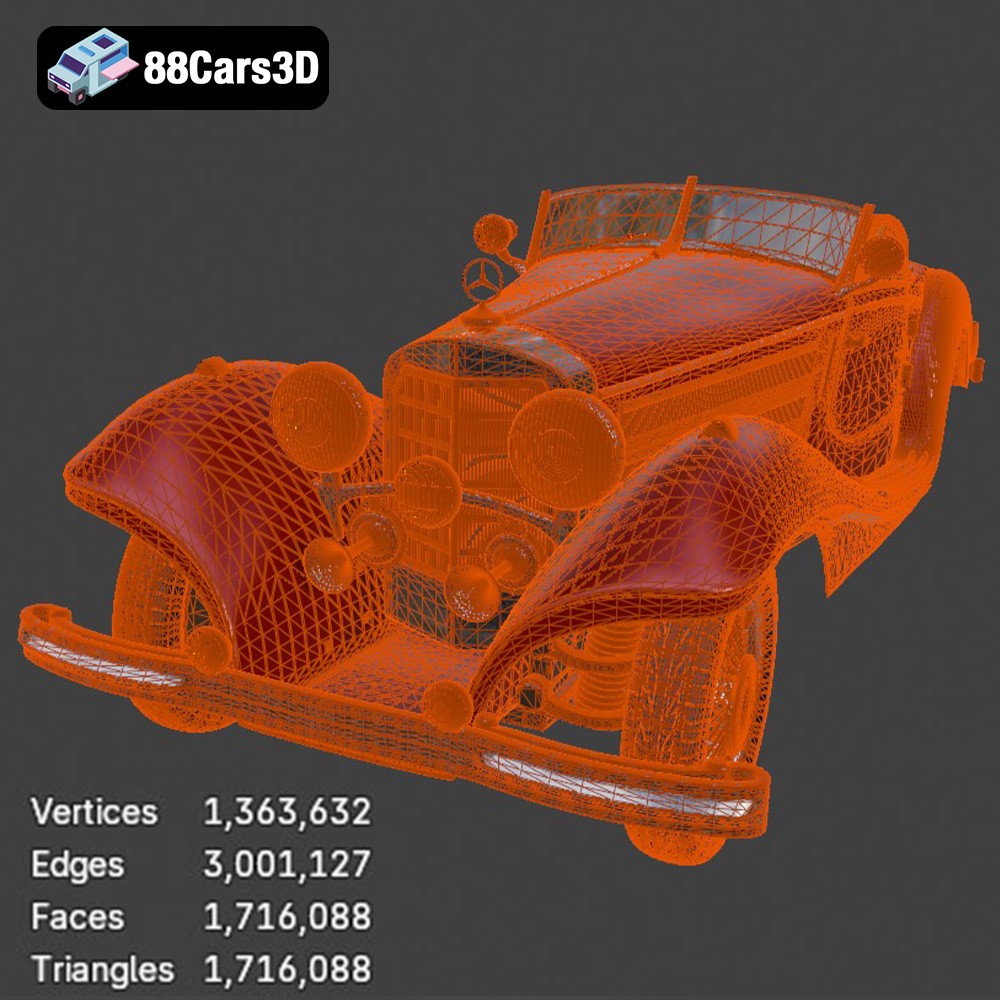
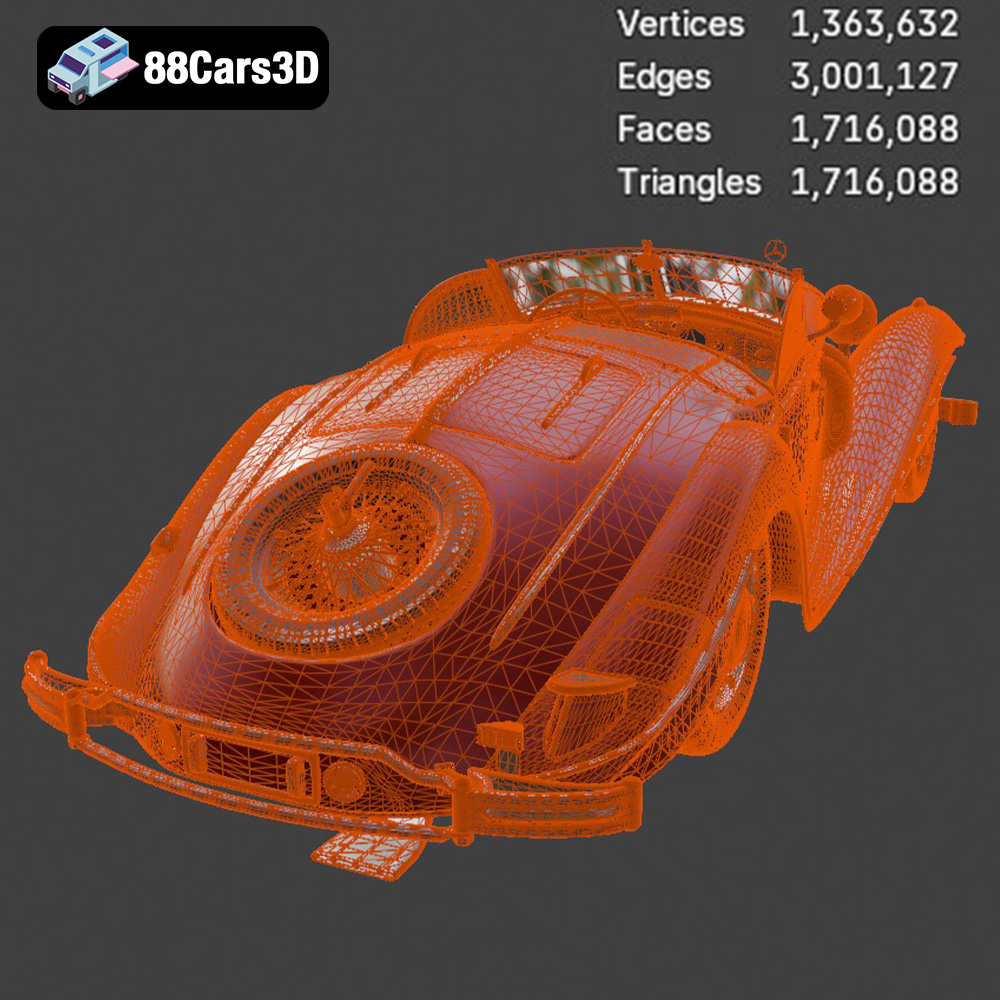
The journey from reference images and blueprints to a fully realized 3D model is a complex one. It involves extensive research to gather historical data, followed by precise polygon modeling to block out the primary forms. Artists then refine the mesh, ensuring clean topology that allows for smooth deformations and efficient rendering. For a model of this caliber, specialized techniques are employed to optimize polygon count without sacrificing visual quality. The Mercedes-Benz 540K Roadster 3D model boasts 1,716,088 triangles, striking a perfect balance between high-end visual realism and performance efficiency, particularly crucial for real-time applications.
This process also involves the intricate creation of materials and textures to simulate various surfaces, from the glossy paintwork to the chrome accents and the luxurious tufted leather interior. The result is a digital asset that not only looks stunning but is also engineered for optimal performance across diverse platforms, making it a truly versatile game asset or rendering element.
One of the most crucial aspects of working with 3D models, especially when acquiring premium assets like the Mercedes-Benz 540K Roadster 1936 from 88cars3d.com, is understanding the various file formats available. Each format serves a specific purpose, offering unique advantages depending on your software, workflow, and final application. The Mercedes-Benz 540K Roadster 3D model download includes an extensive suite of formats, ensuring maximum compatibility and flexibility for professionals.
The provision of the Mercedes-Benz 540K Roadster 3D model in such a wide array of formats underscores its versatility and ensures that artists and developers, regardless of their preferred software or end-use application, can integrate this exceptional 3D car model seamlessly into their projects.
A truly professional 3D asset is one that integrates effortlessly into established workflows, streamlining production and enhancing creative output. The Mercedes-Benz 540K Roadster 1936 3D model is engineered with this principle in mind, making it an invaluable addition to various pipelines.
For game developers, performance is paramount, but visual fidelity cannot be compromised, especially for hero vehicles. The Mercedes-Benz 540K Roadster 3D model strikes this critical balance with its 1,716,088 triangles. This optimized polycount is perfectly suited for modern real-time engines like Unreal Engine and Unity, allowing for stunning detail without bogging down frame rates. The inclusion of the .fbx and .unreal (optimized FBX for Unreal) formats makes integration incredibly straightforward.
In a game development workflow, artists can import the FBX directly into their engine. The model’s “proper pivot setup for steering, wheel rotation, and suspension travel” is a significant advantage, saving countless hours of manual rigging. Developers can then assign physically based rendering (PBR) materials, set up collision meshes for realistic physics, and integrate the vehicle into driving mechanics. This model is an ideal game asset for open-world games requiring historically accurate vehicles, immersive racing titles, or even detailed simulators where players can experience the nuances of a classic car.
When the goal is photorealism for advertising, film, or architectural visualization, the Mercedes-Benz 540K Roadster 3D model shines. Its meticulous detail, from the engine block to the cockpit, ensures that it holds up under close-up shots and high-resolution renders. Artists working in 3ds Max can utilize the native .max file, providing full access to the scene hierarchy, editable geometry, and pre-configured elements.
Similarly, Blender users can leverage the .blend file for a complete scene. In either software, the process involves setting up advanced materials using renderers like V-Ray, Corona, or Cycles, which can perfectly simulate the metallic gleam of chrome, the deep sheen of classic paint, and the rich texture of leather. Lighting is crucial here, with techniques like HDRI (High Dynamic Range Imaging) and studio lighting setups bringing out the model’s exquisite details. For cinematic projects, the separate wheels, suspension, and steering components enable realistic animations, such as driving sequences, product showcases, or period-piece animations where the 540K becomes a starring element.
Beyond traditional rendering and game development, the versatility of the Mercedes-Benz 540K Roadster 1936 3D model extends into emerging technologies and physical creation.
Augmented Reality (AR) and Virtual Reality (VR) are transforming how we interact with digital content, offering immersive experiences that blur the lines between the real and virtual. The Mercedes-Benz 540K Roadster 3D model is perfectly suited for these platforms, especially with its inclusion of the .glb format, which is optimized for web, AR, and VR applications. Imagine a virtual classic car museum where visitors can walk around, inspect every detail of the 540K, and even enter its luxurious cockpit in VR.
For AR applications, users could project the 540K into their real-world environment, scaling it to life-size or placing it on a tabletop for a unique interactive experience. The model’s “optimized geometry for first-person POV in gaming” also translates perfectly to VR, allowing users to sit virtually inside the vehicle and explore its historically accurate analog instrument cluster, vintage steering wheel, and authentic mechanical pedal assembly.
For enthusiasts, collectors, or model makers, the ability to transform a digital model into a physical object is incredibly exciting. The .stl format provided with the Mercedes-Benz 540K Roadster 3D model is the gateway to 3D printing. This format strips away textures and materials, leaving only the precise geometric mesh data required by 3D printers.
The detailed product description thoughtfully includes comprehensive 3D print settings, recommending scales like 1:12, 1:18, or 1:24, and suggesting resin printing for optimal fine detail. Specific advice on layer height, wall thickness, infill, and crucially, support requirements for intricate parts like the exhaust and mirrors, guides users toward a successful print. Furthermore, guidance on print orientation for structural integrity and post-processing techniques like sanding, priming, and applying authentic factory colors ensures that the printed model truly captures the essence of this historical classic. This makes the model not just a digital asset but also a blueprint for a tangible collectible.
A closer look at the technical specifications of the Mercedes-Benz 540K Roadster 1936 3D model reveals the underlying quality and thoughtful design that makes it a top-tier asset.
The model’s robust topology, represented by 1,716,088 triangles, is a carefully chosen figure. It provides enough geometric detail to capture the intricate curves of the sweeping fenders, the delicate wire-spoke wheels, and the complex mechanics of the straight-eight engine block with supercharger elements, while remaining manageable for real-time applications. This “game-ready & optimized” approach ensures excellent visual fidelity that scales well across different uses. Furthermore, the model is built to “real-world scale accuracy,” based on actual vehicle chassis dimensions, guaranteeing that it will fit correctly into any scene or environment without manual scaling adjustments.
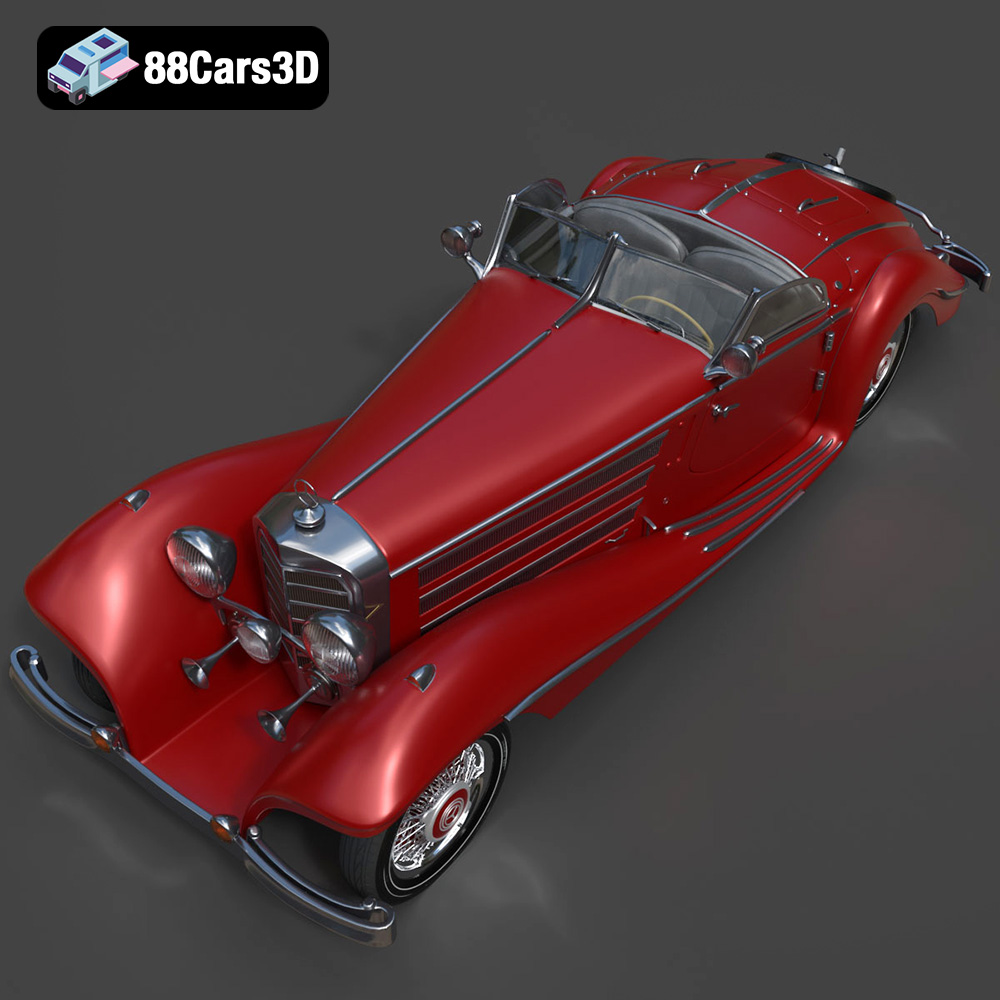
The exterior features are meticulously detailed: from the signature external chrome exhaust pipes to the classic suspension chassis setup. Interior elements are equally impressive, boasting luxurious tufted leather bench seating, a large-diameter vintage-style steering wheel, an accurate analog instrument cluster, and authentic floor-mounted controls. The separation of components like wheels, suspension, and steering further enhances animation possibilities, providing individual control over these critical parts.
While the base model provides exceptional detail, the true power of a versatile 3D asset often lies in its customization options. The Mercedes-Benz 540K Roadster 3D model is designed to be highly adaptable. Artists can easily “change body/tank colors” to match factory authentic colors or create custom finishes, allowing for brand-specific or artistic interpretations. The ability to “modify tire textures” (e.g., between off-road and street variants) and “adjust material finishes” (matte, gloss, metallic) provides complete control over the vehicle’s aesthetic.
Moreover, the model allows for “adapting lighting for different environments.” This flexibility is crucial for rendering studios that need to present the vehicle in various settings—from a sun-drenched coastal road to a moody, cinematic garage scene. This level of customization ensures that the model can be tailored to meet virtually any creative vision or project requirement, extending its lifespan and utility in a professional production pipeline.
In a competitive digital landscape, the choice of assets can significantly impact project quality and production efficiency. Sourcing premium 3D car models from reputable marketplaces like 88cars3d.com offers distinct advantages.
Starting with a professionally crafted 3D model like the Mercedes-Benz 540K Roadster 1936 saves invaluable time and resources. Rather than investing hundreds of hours in modeling, texturing, and optimizing a vehicle from scratch, artists can immediately jump into integration, rendering, and animation. The “unparalleled visual fidelity” and “meticulously recreated” details of models found on 88cars3d.com ensure that the foundational asset is of the highest standard, leading to superior final output.
This precision extends to technical advantages too. Features like “real-world scale accuracy,” “proper pivot setup,” and “game-ready & optimized” geometry mean fewer headaches during integration and better performance, directly contributing to project success. Whether for an urgent client presentation or a long-term game development cycle, the quality of your assets dictates the quality of your final product.
88cars3d.com distinguishes itself as a premier online marketplace specializing in high-quality 3D car models. The platform understands the diverse needs of professionals in automotive rendering, game development, AR/VR, and visualization. By offering models like the Mercedes-Benz 540K Roadster in such a comprehensive array of file formats (.blend, .fbx, .obj, .glb, .stl, .ply, .unreal, .max), 88cars3d.com ensures that artists and developers have the tools they need, regardless of their preferred software or specific application.
The focus on detailed topology, real-world accuracy, and optimization for various workflows highlights a commitment to providing assets that are not just visually appealing but also technically sound and production-ready. For anyone seeking to elevate their digital automotive projects, exploring the carefully curated collection at 88cars3d.com is a worthwhile investment.
The Mercedes-Benz 540K Roadster 1936 is more than just a classic car; it’s a testament to automotive heritage. Its digital counterpart, the Mercedes-Benz 540K Roadster 1936 3D model, captures this essence with extraordinary fidelity, making it an indispensable asset for a wide range of creative and technical endeavors. From powering next-generation game experiences and delivering photorealistic automotive rendering for advertising to enabling immersive AR/VR applications and facilitating detailed 3D prints, this model demonstrates the versatility and power of premium digital assets.
With its optimized geometry, extensive file format support, and meticulous attention to historical detail, this 3D model provides a robust foundation for professionals across industries. It streamlines workflows, enhances visual quality, and unlocks new creative possibilities. To explore this exceptional model and discover other high-quality 3D car models that can accelerate your projects, visit 88cars3d.com today. Elevate your digital dreams with assets built for excellence.
Experience the epitome of pre-war automotive luxury with our Mercedes-Benz 540K Roadster 3D model. A true masterpiece of 1930s engineering and design, the 540K is renowned for its sweeping, majestic fenders, elongated hood housing the legendary supercharged straight-eight engine, and iconic external exhaust pipes. Every signature styling cue, from the prominent chrome radiator grille to the elegant wire-spoke wheels, has been meticulously recreated to capture the majestic presence of this historical classic. Boasting a highly detailed topology with 1,716,088 triangles, this 3D model delivers unparalleled visual fidelity while remaining structured for modern workflows. Designed to leverage the power of advanced real-time engines utilizing virtualized geometry, it serves as a top-tier asset for high-end game development, cinematic animation, immersive AR/VR experiences, and photorealistic automotive visualization. Perfect for historic racing games, virtual classic car museums, cinematic period-piece animations, and high-end luxury configurators.
$81.00
.blend
.fbx
.glb
.max
.obj
.ply
.rendering
.stl
.unreal
540k-roadster
car-3d-model
classic-car
game asset
game-ready
high poly
luxury car
mercedes-benz
optimized
vintage-car
VR/AR