Get 20% OFF All Premium 3D & STL Models!

In the rapidly evolving landscape of digital creation, the demand for exceptionally detailed and versatile 3D car models has never been higher. From crafting photorealistic cinematic sequences to engineering immersive game environments and precise architectural visualizations, a high-quality vehicle asset is often the centerpiece. These digital marvels don’t just look good; they are engineered for performance, designed for flexibility, and built to integrate seamlessly into diverse professional pipelines. Today, we’re diving deep into what makes a premium 3D car model indispensable, using the exquisite Mercedes Benz A H-08 3D Model, available on 88cars3d.com, as our benchmark for excellence.
The journey from a designer’s vision to a fully realized 3D asset is complex, requiring meticulous attention to detail, topological efficiency, and broad compatibility. Whether you’re a game developer seeking assets optimized for next-generation engines like Unreal Engine 5’s Nanite, an automotive design studio presenting a new concept, or an architect populating a sprawling urban scene, the quality of your 3D vehicles can make or break the visual impact. This article will explore the technical nuances, workflow considerations, and expansive applications that define the pinnacle of automotive 3D modeling, demonstrating how a finely crafted model like the Mercedes Benz A H-08 can elevate your projects.
Creating a truly professional 3D car model is a blend of artistic vision and engineering precision. It’s about more than just matching a reference image; it’s about capturing the essence of a vehicle, its proportions, its reflections, and its intricate mechanical details, all while ensuring it performs flawlessly within various digital environments. High-fidelity models are the bedrock of compelling visuals across industries, delivering the authenticity that audiences and clients demand.
For automotive designers and marketers, high-fidelity 3D models are critical tools for bridging the gap between a conceptual design and its tangible representation. Before a single physical prototype is built, detailed 3D models allow for exhaustive visualization, ergonomic studies, and marketing presentations. This digital twin approach enables rapid iteration, cost savings, and the ability to showcase a vehicle in an infinite array of settings and lighting conditions. The precision in geometry, materials, and internal components ensures that the digital model is a true and accurate reflection of the real-world vehicle, providing an invaluable asset for every stage of development.
Authenticity is paramount in today’s digital automotive content. Consumers and enthusiasts can easily spot inaccuracies, making highly detailed and geometrically correct 3D models non-negotiable for professional applications. This authenticity extends beyond the exterior, delving into accurate chassis geometry, detailed engine compartments, realistic lighting assemblies, and fully realized interiors. A model that captures the subtle curves of a body panel, the intricate tread of a tire, or the fine stitching on a seat upholstery instills confidence and enhances immersion, whether in a game, a virtual showroom, or a marketing advertisement.
The choice of file format for a 3D car model is crucial, directly impacting compatibility, functionality, and performance across different software and platforms. Each format serves specific purposes, offering unique advantages for various stages of the 3D pipeline, from initial modeling and texturing to real-time rendering and physical output. Understanding these distinctions is key to a smooth and efficient workflow, especially when acquiring assets like the Mercedes Benz A H-08, which comes in a comprehensive suite of formats from 88cars3d.com.
The .blend format is Blender’s native file type, containing everything from geometry, materials, textures, animations, and scene settings within a single file. For users working primarily in Blender, this is the most convenient and powerful format. It ensures that all scene data is preserved exactly as intended by the creator, allowing for full editability, modification of lighting setups, material adjustments, and animation tweaks. When working with a .blend file for a car model, you gain complete control over every aspect, making it ideal for deep customization or integrating the asset into complex Blender-based projects.
.fbx (Filmbox) is one of the most widely adopted formats for 3D data exchange, particularly favored in game development and animation. Developed by Autodesk, FBX supports geometry, materials, textures, animations, rigs, and even camera data, making it incredibly versatile for transferring assets between applications like 3ds Max, Maya, Blender, Unity, and Unreal Engine. Its robust support for skeletal animation and PBR (Physically Based Rendering) materials makes it the go-to choice for game-ready assets.
.obj (Wavefront OBJ) is a universal standard, highly compatible with virtually all 3D software. While it primarily stores geometry (vertices, normals, UVs) and material references, it’s a solid choice for static models where broad compatibility is prioritized. OBJ files are often accompanied by a .mtl file that defines material properties. Its simplicity and widespread support make it excellent for archiving models or ensuring a baseline level of interoperability across different pipelines.
.ply (Polygon File Format or Stanford Triangle Format) is a precision mesh format primarily used for storing 3D data from 3D scanners, CAD applications, or for scientific analysis. It supports properties like color, transparency, normals, texture coordinates, and scalar values for each vertex or face. While not as common for general asset exchange as FBX or OBJ, its detailed mesh representation can be valuable for specific engineering, scientific, or highly precise visualization tasks.
.glb (GLB format) is the binary version of glTF (Graphics Language Transmission Format), designed for efficient transmission and loading of 3D scenes and models by engines and applications. It bundles all assets (geometry, materials, textures, animations) into a single, compact file, making it ideal for web-based 3D, AR (Augmented Reality), and VR (Virtual Reality) applications where quick loading and optimized performance are critical. For showcasing 3D car models interactively in a browser or on a mobile AR experience, GLB is the format of choice.
.unreal refers to an Unreal Engine-ready asset, typically an FBX imported and configured within the engine, or potentially a native Unreal asset format if exported from an Unreal project. These assets are pre-optimized, have correct material setups, LODs (Levels of Detail), and are ready to be dropped directly into an Unreal Engine project. This significantly streamlines the workflow for game developers and real-time visualization artists, minimizing setup time and ensuring optimal engine performance.
.stl (STereoLithography) is the standard file format for 3D printing. It represents a 3D model as a series of connected triangles (a triangulated surface mesh), defining only the surface geometry of an object without color, texture, or other CAD attributes. For hobbyists or professionals looking to 3D print a physical replica of a digital car model, an STL file is essential, providing the necessary data for slicing software to prepare the model for additive manufacturing.
.max is Autodesk 3ds Max’s native file format. Similar to .blend for Blender, it saves an entire 3ds Max scene, including geometry, modifiers, materials, lights, cameras, animations, and render settings. It offers full editability and control within 3ds Max, making it invaluable for animators, visualization artists, and architectural firms that rely on 3ds Max for high-end rendering and complex scene assembly.
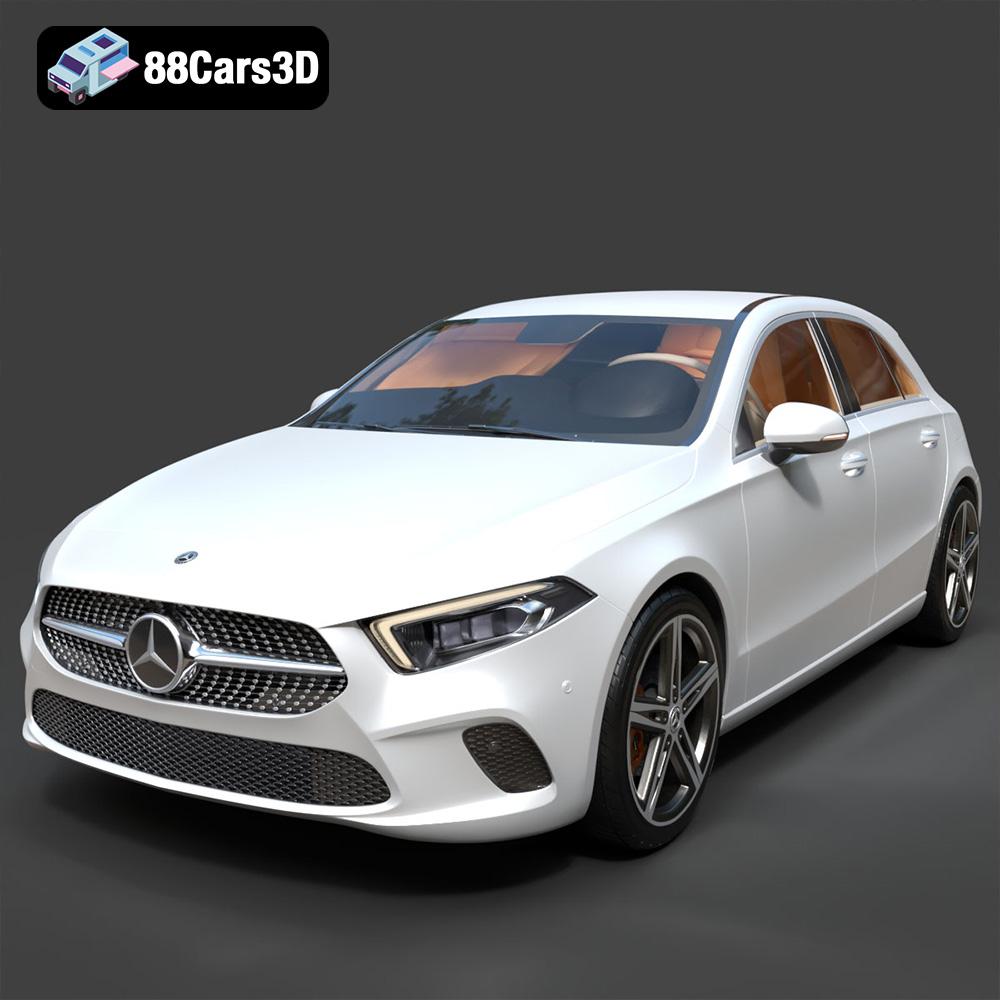
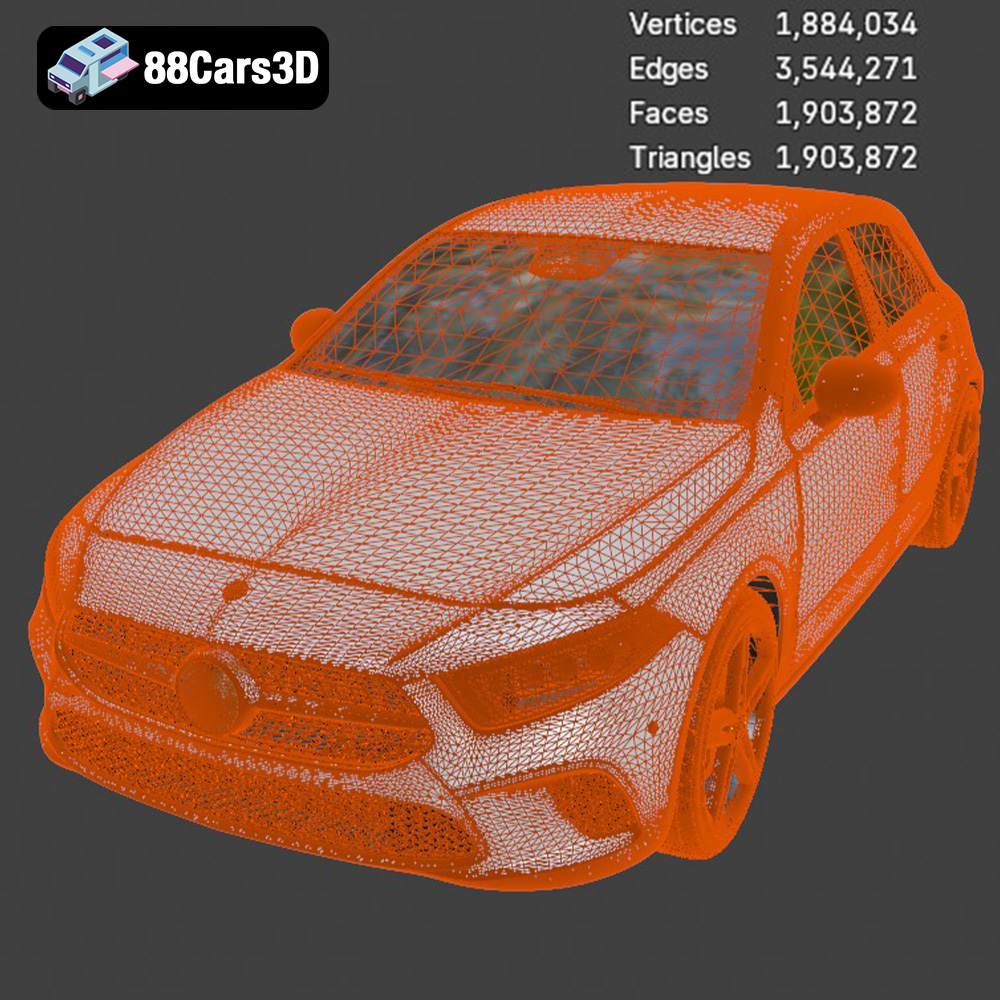
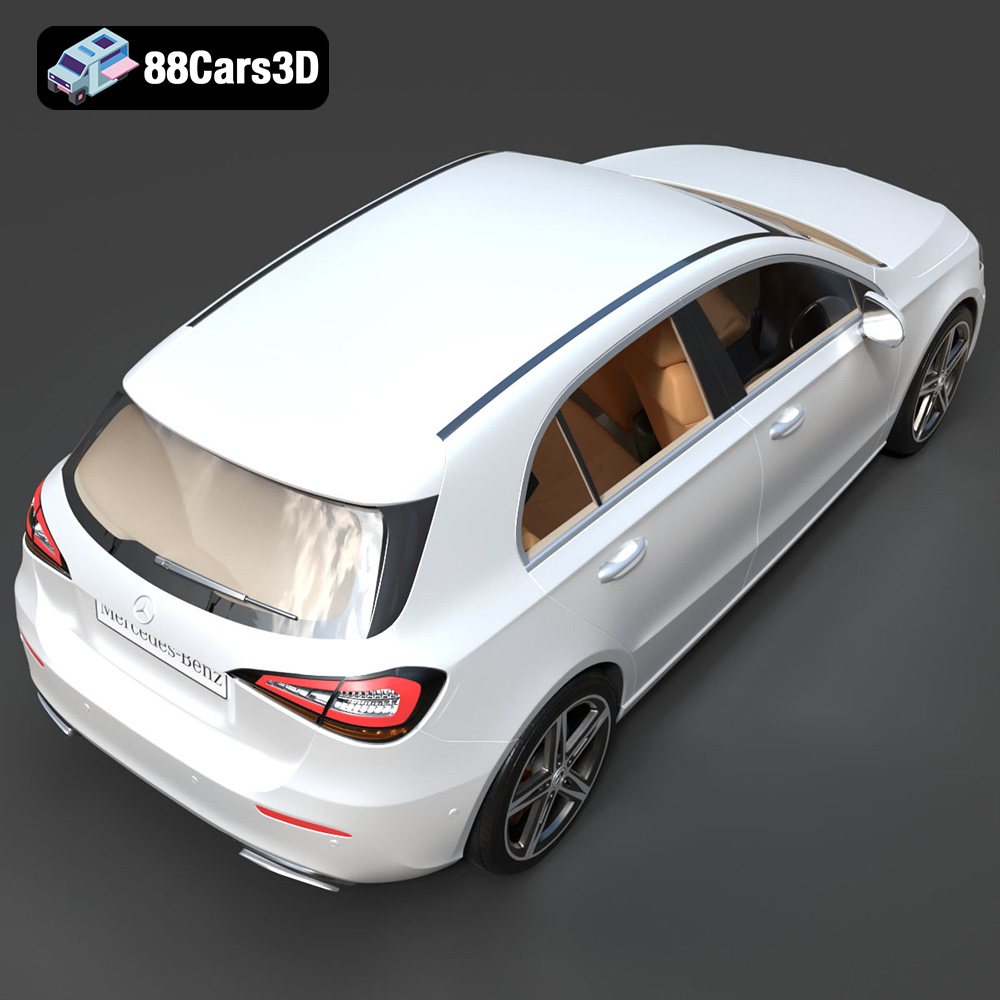
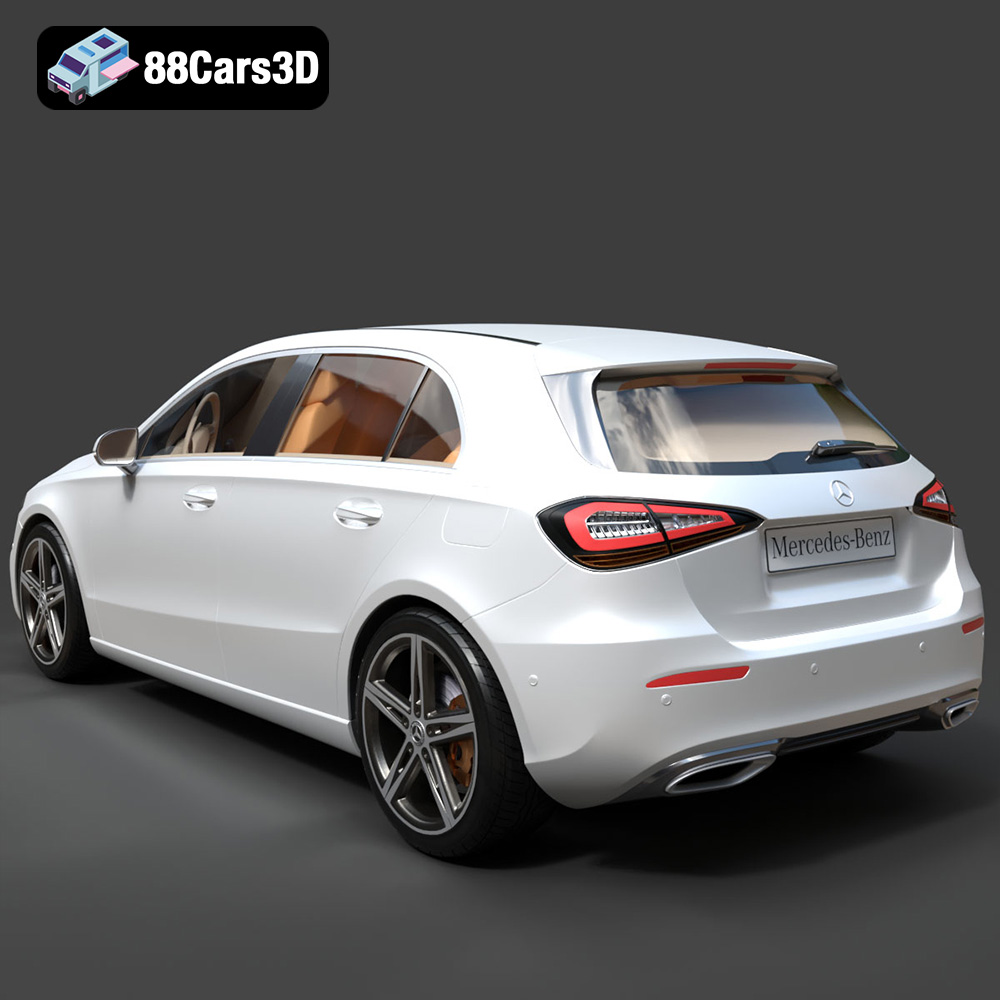
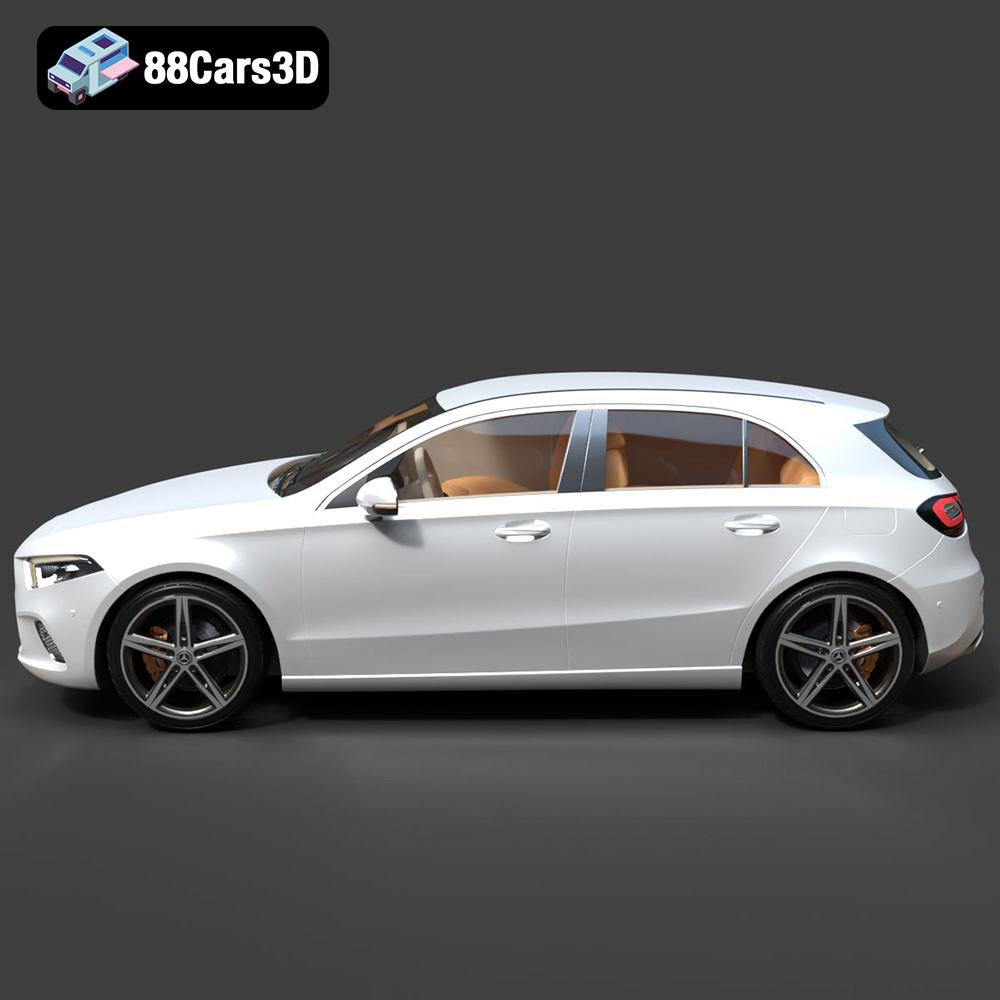
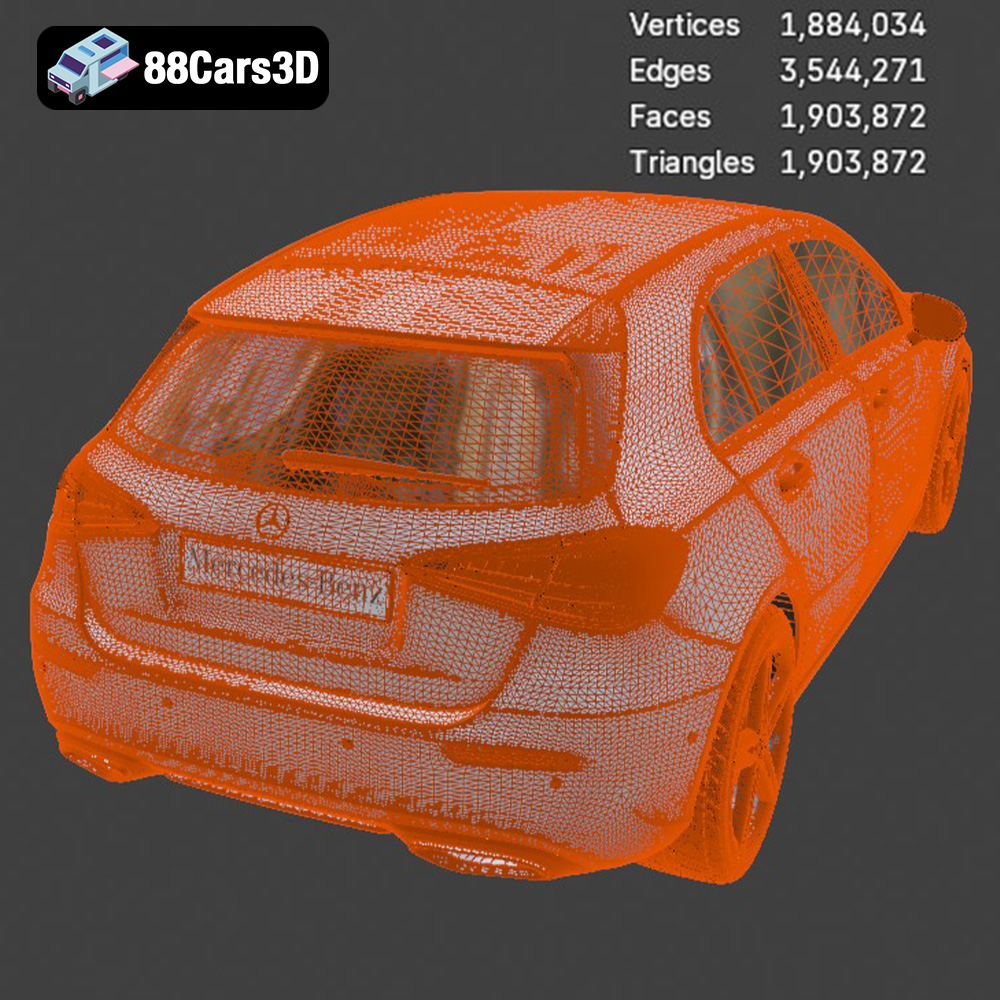
The Mercedes Benz A H-08 3D Model exemplifies the pinnacle of digital automotive craftsmanship. It is not merely a visual representation but a meticulously engineered asset, designed to meet the rigorous demands of professional production pipelines. This model, boasting a staggering 1,903,872 triangles, achieves a perfect equilibrium between high visual fidelity and performance optimization, making it an ideal choice for a vast array of applications from high-end rendering to real-time gaming.
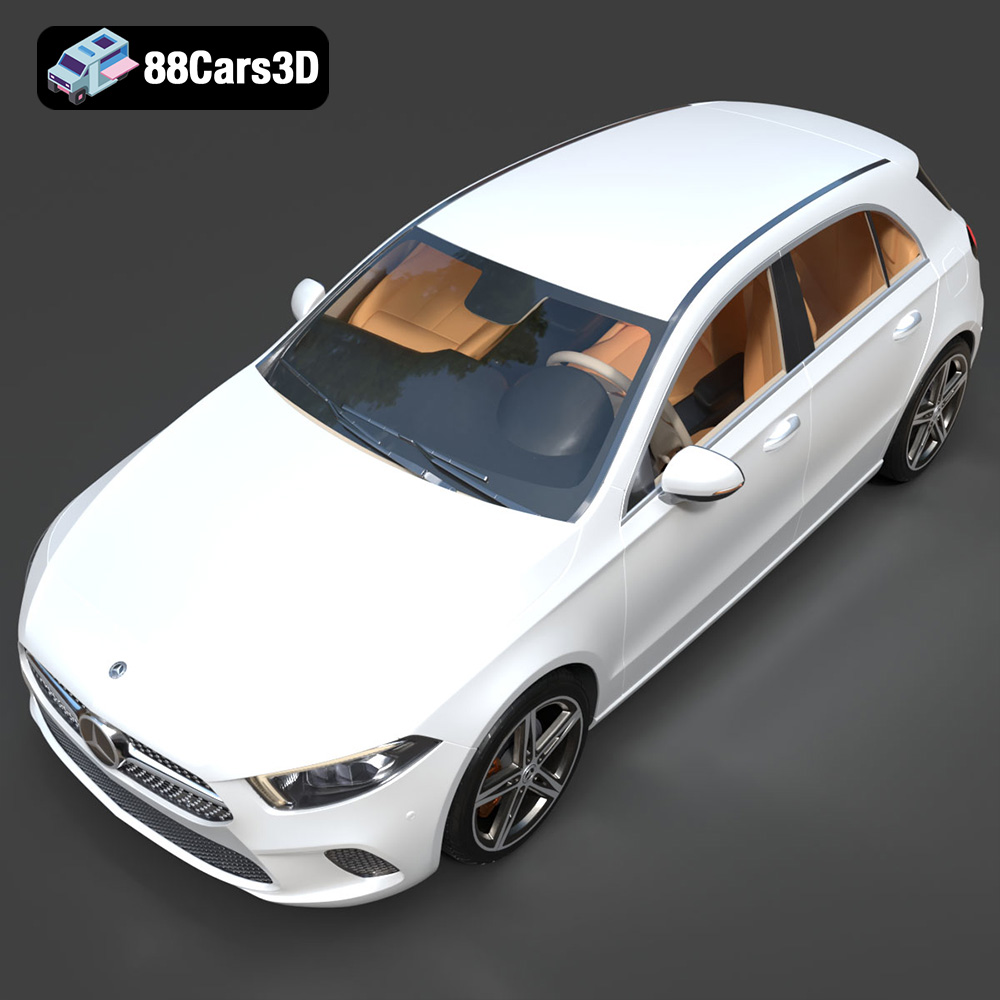
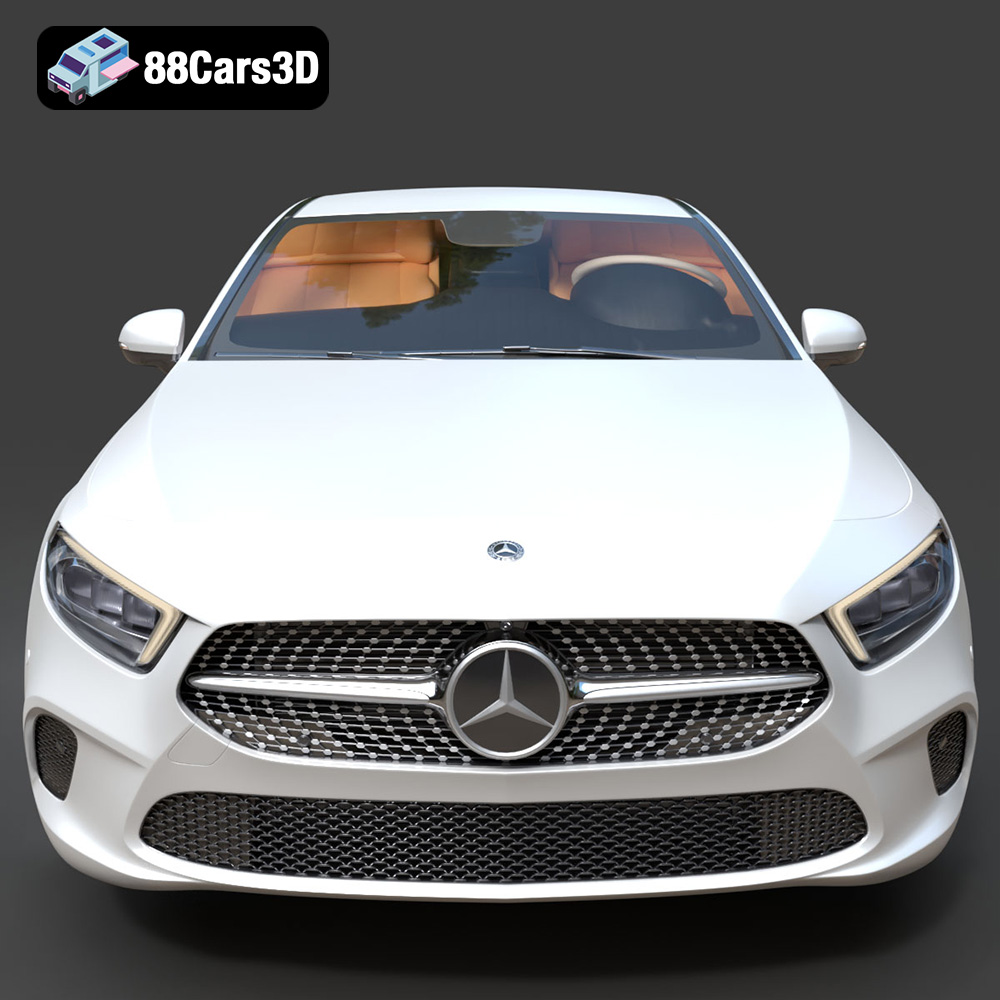
Every curve, line, and component of the Mercedes Benz A H-08 has been recreated with exceptional accuracy. The aerodynamic silhouette, the distinctive front grille, and the sophisticated LED lighting elements are faithfully reproduced, capturing the car’s contemporary aesthetic. Beyond the surface, details extend to the engine compartment and underlying structural elements, an authentic exhaust system, precisely modeled alloy wheels, and high-performance tires. Inside, the model continues to impress with premium sculpted seats, an accurate steering wheel, modern digital instrument clusters, and detailed center console components. This comprehensive detail ensures photorealistic output in renders and an immersive experience in first-person perspectives within games or VR.
Achieving visual realism while maintaining optimal performance, especially in real-time environments, is a delicate balance. The Mercedes Benz A H-08 3D model strikes this balance perfectly with its high-density topology. With 1,903,872 triangles, it’s optimized for cutting-edge real-time engines like Unreal Engine 5, fully utilizing features like Nanite to deliver stunning visual realism without compromising frame rates. Its real-world scale accuracy ensures correct proportions and seamless integration into virtual environments. This optimization makes it a truly game-ready asset, capable of elevating the visual quality of any interactive experience.
Beyond static beauty, the Mercedes Benz A H-08 is built for dynamic scenarios. Its design incorporates separate components for wheels, suspension, and steering, complete with proper pivot setups. This modularity is crucial for animators, allowing for realistic wheel rotation, independent suspension travel, and accurate steering movements without extensive rigging work. Such features are invaluable for creating dynamic cinematics, realistic driving simulations, or interactive configurators where vehicle movement and component interaction are essential.
Integrating a high-quality 3D car model like the Mercedes Benz A H-08 into various professional workflows requires an understanding of software capabilities and specific optimization techniques. Its availability in multiple formats, including .max, .blend, .fbx, and .unreal, ensures flexibility for diverse project needs.
For those specializing in high-end visualization and cinematic rendering, 3ds Max (.max file) and Blender (.blend file) offer powerful toolsets. In 3ds Max, the comprehensive scene file allows artists to dive directly into setting up studio lighting, adding environmental elements, and leveraging advanced renderers like V-Ray or Corona to achieve breathtaking photorealism. Artists can experiment with different material finishes—matte, gloss, metallic—and adjust body colors to match specific brand requirements or artistic visions. Similarly, Blender users can harness the full potential of Eevee or Cycles, utilizing the native .blend file to tweak every aspect from the paint shader to the intricate interior details, crafting bespoke marketing images or animation sequences. The precise geometry of the Mercedes Benz A H-08 ensures that reflections and refractions behave accurately, contributing significantly to the visual integrity of the final render.
The Mercedes Benz A H-08 is engineered to be a prime game asset, especially for modern engines like Unreal Engine. Using the .fbx or .unreal file, developers can swiftly import the model. Its high triangle count (1,903,872) is perfectly suited for Unreal Engine 5’s Nanite virtualized geometry system. Nanite intelligently handles complex meshes, allowing for incredibly detailed assets to be rendered in real-time without traditional polycount limitations or the need for manual LODs. This means the Mercedes Benz A H-08 can maintain its stunning visual realism even in demanding open-world games or high-stakes racing titles, offering unparalleled detail right down to the tire textures and brake calipers. The pre-setup pivots for wheels and suspension further streamline the integration process, making it ready for physics simulations and animation immediately.
The rise of Augmented Reality (AR) and Virtual Reality (VR) demands highly optimized yet visually rich 3D models. The .glb format included with the Mercedes Benz A H-08 is specifically designed for these applications, offering a compact and efficient single file for quick loading in web browsers, mobile AR apps, or dedicated VR experiences. Imagine a virtual showroom where potential buyers can explore the Mercedes Benz A H-08 in 360 degrees, customize its paint color and interior, or even place it in their driveway via AR. For architectural visualization, populating urban scenes with a high-detail vehicle like this adds a layer of realism and sophistication that boilerplate assets simply cannot match. Its accurate real-world scale makes it perfect for such immersive and interactive environments.
The versatility of a premium 3D car model extends beyond purely digital realms. For enthusiasts, collectors, or even professional designers who require a physical manifestation of their digital assets, the ability to 3D print is a significant advantage. The Mercedes Benz A H-08 offers this capability through its .stl file, opening doors for creating tangible models for display, prototyping, or scale model collecting.
The .stl file format is the industry standard for 3D printing. This triangulated mesh data provides the necessary surface information for a 3D printer’s slicing software to generate toolpaths. However, preparing a complex automotive model for printing involves more than just exporting to .stl. Considerations such as wall thickness, intricate overhangs, and the need for supports become crucial. The detailed product description for the Mercedes Benz A H-08 specifically addresses these, recommending suitable scales (1:12, 1:18, 1:24) and print settings, indicating that the model has been designed with physical production in mind.
For a model as detailed as the Mercedes Benz A H-08, using the right 3D print settings is paramount. Recommended layer heights of 0.04–0.12 mm, particularly with resin printers, ensure that fine details like the grilles, light assemblies, and interior elements are accurately reproduced. Wall thickness guidelines (1.2–2.0 mm) are crucial for structural integrity, especially for delicate parts. The advice to print frames angled and wheels separately, alongside requiring supports for complex components like the exhaust system and mirrors, highlights the practical considerations for achieving a high-quality physical model. Post-processing, involving sanding, priming, and applying authentic factory colors with metallic finishes, is where the printed model truly comes to life, mimicking the luxurious sheen of the real vehicle.
A truly professional 3D car model offers more than just fidelity; it provides the flexibility to adapt to a myriad of creative requirements. The Mercedes Benz A H-08 3D Model stands out with its thoughtful design that facilitates extensive customization, ensuring it can be perfectly tailored for any project, campaign, or interactive experience.
The ability to easily modify the aesthetics of a 3D model is invaluable. With the Mercedes Benz A H-08, artists can effortlessly change body colors, experimenting with factory shades, custom finishes, or even unique metallic sheens to match branding guidelines or artistic visions. Beyond the primary body, customization extends to tire textures, allowing for the swap between off-road and street variants to suit different environments or game scenarios. Adjusting material finishes—from matte to gloss to a highly reflective metallic—further enhances the model’s adaptability, ensuring it always looks its best, whether in a sleek studio render or a rugged outdoor scene.
The versatility of this model means it can serve many masters. For game developers, it can be textured and outfitted to represent various trims or custom builds within a racing game. For AR/VR configurators, the easy color and material changes allow users to personalize their dream car in real-time. Marketing agencies can leverage the model to create bespoke campaigns, positioning the Mercedes Benz A H-08 in diverse simulated environments, from bustling cityscapes to serene countryside drives. The modular nature, with separate wheels and steering components, also allows for dynamic animation and interactive elements, making it an indispensable asset for any project demanding a high level of control and visual excellence.
The world of 3D modeling demands precision, performance, and flexibility, especially when it comes to intricate assets like high-fidelity vehicles. The Mercedes Benz A H-08 3D Model exemplifies these qualities, offering an unparalleled blend of detailed design, technical optimization, and broad compatibility across various file formats and professional workflows. From crafting photorealistic renders in 3ds Max or Blender to powering immersive game experiences in Unreal Engine with Nanite, or enabling interactive AR/VR visualizations and even physical 3D prints, this model is built to excel.
Its robust topology, meticulous interior and exterior details, and animation-ready components make it a cornerstone asset for any professional serious about their digital automotive content. By understanding the nuances of different file formats and leveraging the model’s inherent customization options, creators can unlock its full potential to deliver stunning visuals and immersive experiences. For those seeking premium 3D car models that meet the highest industry standards, the Mercedes Benz A H-08, available on 88cars3d.com, stands as a testament to exceptional digital craftsmanship, ready to drive your projects forward.
The Mercedes Benz A H-08 represents a blend of compact luxury and modern automotive design. Characterized by its aerodynamic silhouette, prominent front grille, and sophisticated styling cues, this 3D model captures the essence of premium urban mobility. Attention has been given to the sleek body panels, integrated exhaust system, and distinctive LED lighting elements that define its contemporary aesthetic.
Boasting a dense topology with 1,903,872 triangles, this high-fidelity 3D model is optimized for high-end rendering, Unreal Engine 5 Nanite, and advanced visualizations. It delivers photorealistic visual fidelity, making it an exceptional asset for next-generation game development, AR/VR configurators, high-quality animation, and architectural visualization.
Perfect for luxury automotive renders, immersive virtual showrooms, high-end racing games, and urban environment simulations.
.blend, .fbx, .obj, .glb, .stl, .ply, .unreal, .max
Tags:
mercedes-benz, a-h-08, luxury-car, compact-car, car-3d-model, game-ready, high-poly, optimized, game-asset, rendering, vr-ar, blend, fbx, obj, glb, stl, ply, unreal, max
$83.50
.blend
.fbx
.glb
.max
.obj
.ply
.rendering
.stl
.unreal
a-h-08
car-3d-model
compact-car
game asset
game-ready
high poly
luxury car
mercedes-benz
optimized
VR/AR