Get 20% OFF All Premium 3D & STL Models!

In the vibrant world of digital visualization, the demand for exceptionally crafted 3D car models has never been higher. From breathtaking cinematic sequences to hyper-realistic game environments and immersive AR/VR experiences, premium automotive assets form the backbone of compelling visual narratives. Artists and developers constantly seek models that offer not just visual fidelity, but also technical robustness and adaptability across diverse platforms. This pursuit of excellence leads us to examine a prime example: the Mercedes-Benz S600 2008 3D model, a masterpiece of digital engineering available on 88cars3d.com, designed to elevate any project it touches.
The Mercedes-Benz S600, particularly the 2008 model, embodies a timeless elegance and a powerful presence that translates beautifully into the digital realm. Its legendary V12 engine, luxurious interior, and distinctive exterior styling make it a sought-after subject for automotive rendering specialists and game developers alike. This particular 3D model captures every nuance, offering a game-ready asset that doesn’t compromise on the intricate details expected from a flagship luxury sedan. Let’s delve into the technical specifications, versatile applications, and the underlying file formats that make such a high-quality asset indispensable for professional workflows.
The versatility of a 3D model is often defined by the array of file formats it supports. Each format is engineered for specific purposes, offering unique advantages in terms of compatibility, data retention, and optimization for various applications. For a premium 3D car model like the Mercedes-Benz S600 2008, having multiple formats is crucial for seamless integration into diverse professional pipelines, from high-end automotive rendering to real-time game development and even 3D printing.
The .blend format is native to Blender, the powerful open-source 3D creation suite. When you acquire a .blend file, you’re getting a fully editable Blender scene, complete with materials, textures, lighting setups, and even animation data. This is invaluable for artists who want to delve deep into the model’s structure, modify its topology, adjust materials, or reconfigure parts. For the Mercedes-Benz S600 model, the .blend file provides maximum flexibility for artists using Blender for their automotive rendering or game asset creation, allowing for complete control over customization and optimization within their preferred environment.
.fbx (Filmbox) is arguably the most widely adopted format for exchanging 3D data between different software applications. Developed by Autodesk, it excels in carrying complete scene information, including meshes, materials, textures, animations, and bone rigs. It is the go-to format for game engines like Unreal Engine and Unity, making it ideal for real-time pipelines. The .fbx version of the S600 ensures that the model, with its optimized geometry and proper pivot setups, can be dropped directly into a game engine project, retaining all its crucial data for immediate use as a high-fidelity game asset.
The .obj (Wavefront OBJ) format is a universal standard, prized for its simplicity and broad compatibility. It primarily stores geometric data—vertices, normals, texture coordinates, and faces—alongside references to external material files (.mtl). While it doesn’t support animation or rigging, its widespread support across virtually all 3D software makes it an excellent choice for cross-software compatibility. For the Mercedes-Benz S600, the .obj file serves as a reliable fallback, ensuring that the core mesh data is accessible to any artist, regardless of their primary 3D application, making it perfect for static renders or initial scene setups.
.glb (GLB format for glTF) is a relatively newer format rapidly gaining traction, especially for web-based 3D, AR, and VR applications. It’s a self-contained binary file that includes all necessary 3D model data (geometry, materials, textures, animations) within a single file, making it highly efficient for transmission and rendering on the web or in mobile AR/VR environments. The .glb version of the S600 is specifically optimized for interactive experiences, such as virtual showrooms or augmented reality presentations, delivering a lightweight yet visually rich representation of the luxury vehicle.
.stl (STereoLithography) is the standard file format for 3D printing. It represents a 3D model as a series of connected triangles, defining only the surface geometry without color or texture information. For enthusiasts and professionals looking to bring the digital Mercedes-Benz S600 into the physical world, the .stl format is essential. The product description highlights recommended scales (1:12, 1:18, 1:24) and print settings, indicating that the model has been pre-prepared or can be easily converted for physical fabrication, making it a versatile 3D car model beyond digital screens.
The .ply (Polygon File Format) is often used for storing 3D data from 3D scanners, CAD applications, or scientific analysis. It can store a wider range of properties than .obj, including color, transparency, and often more complex mesh structures. While less common for general asset exchange than .fbx or .obj, its inclusion for the S600 suggests a potential for use in more technical applications, perhaps for detailed surface analysis or integration with precision engineering workflows.
The inclusion of a dedicated .unreal file implies an asset specifically packaged and optimized for Unreal Engine. This could mean it comes as an Unreal Engine asset pack, containing not just the mesh but also pre-configured materials, textures, and blueprints ready to be imported directly into an Unreal project. This level of optimization saves significant development time, ensuring that the S600 functions as a true game asset, ready for real-time rendering with minimal setup.
Finally, the .max format is the native file type for Autodesk 3ds Max, a leading software for 3D modeling, animation, and rendering. Similar to .blend, a .max file contains a complete scene, offering full editability within 3ds Max. This is invaluable for professionals who rely on 3ds Max for high-fidelity automotive rendering, complex animation sequences, or detailed environmental setups. The .max file for the Mercedes-Benz S600 allows artists to leverage 3ds Max’s powerful rendering capabilities and extensive plugin ecosystem to achieve photorealistic results.
The availability of such a comprehensive suite of file formats underscores the premium quality and professional-grade nature of this Mercedes-Benz S600 3D model. It ensures that regardless of an artist’s software preference or project requirements, the model can be seamlessly integrated and utilized to its full potential.
What truly sets a high-quality 3D car model apart is its meticulous attention to detail and its ability to replicate the real-world counterpart with stunning accuracy. The Mercedes-Benz S600 2008 3D model excels in this regard, offering a benchmark for automotive rendering and game asset quality.
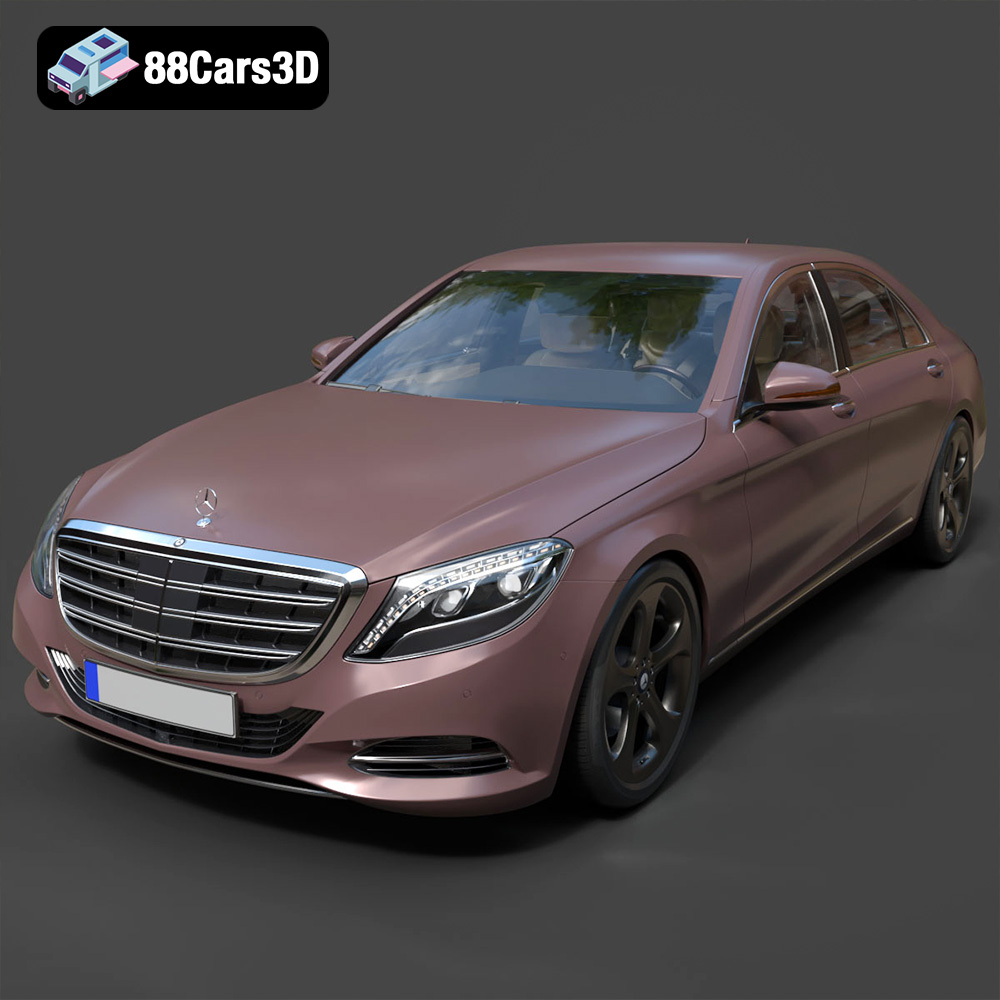
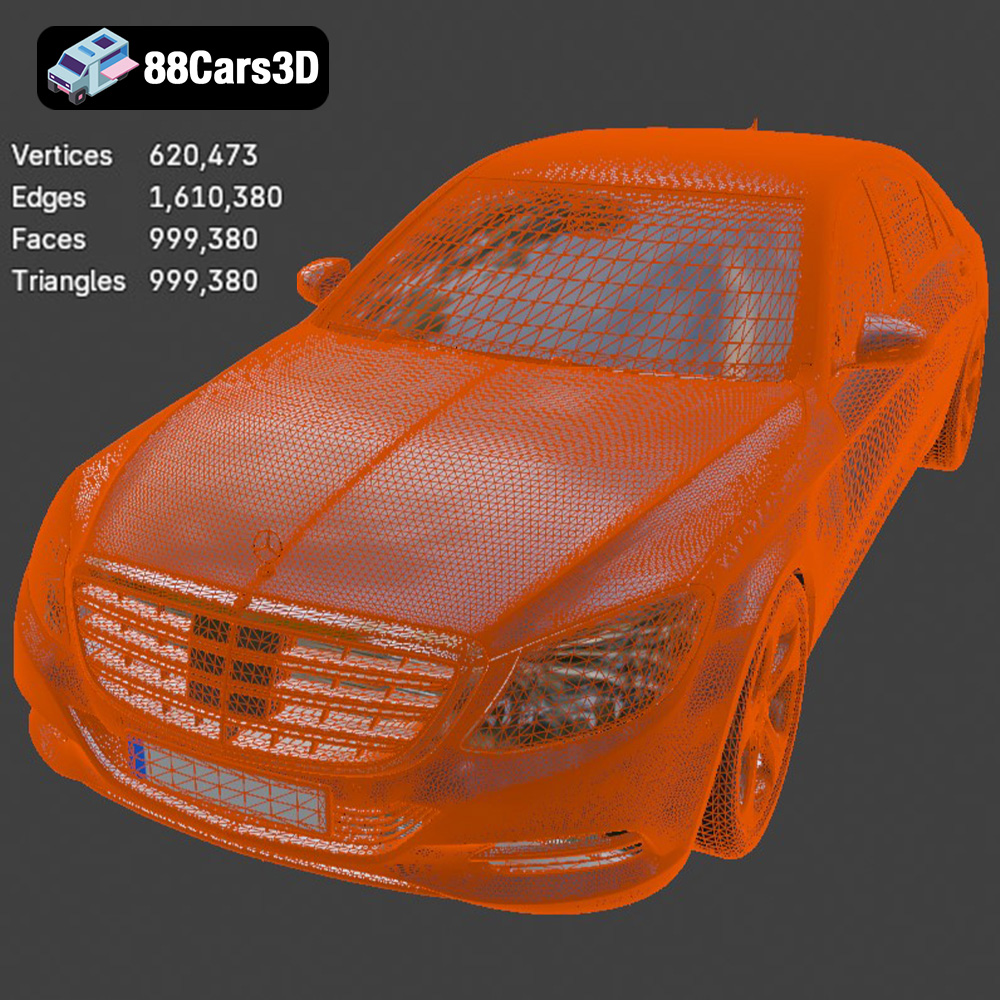
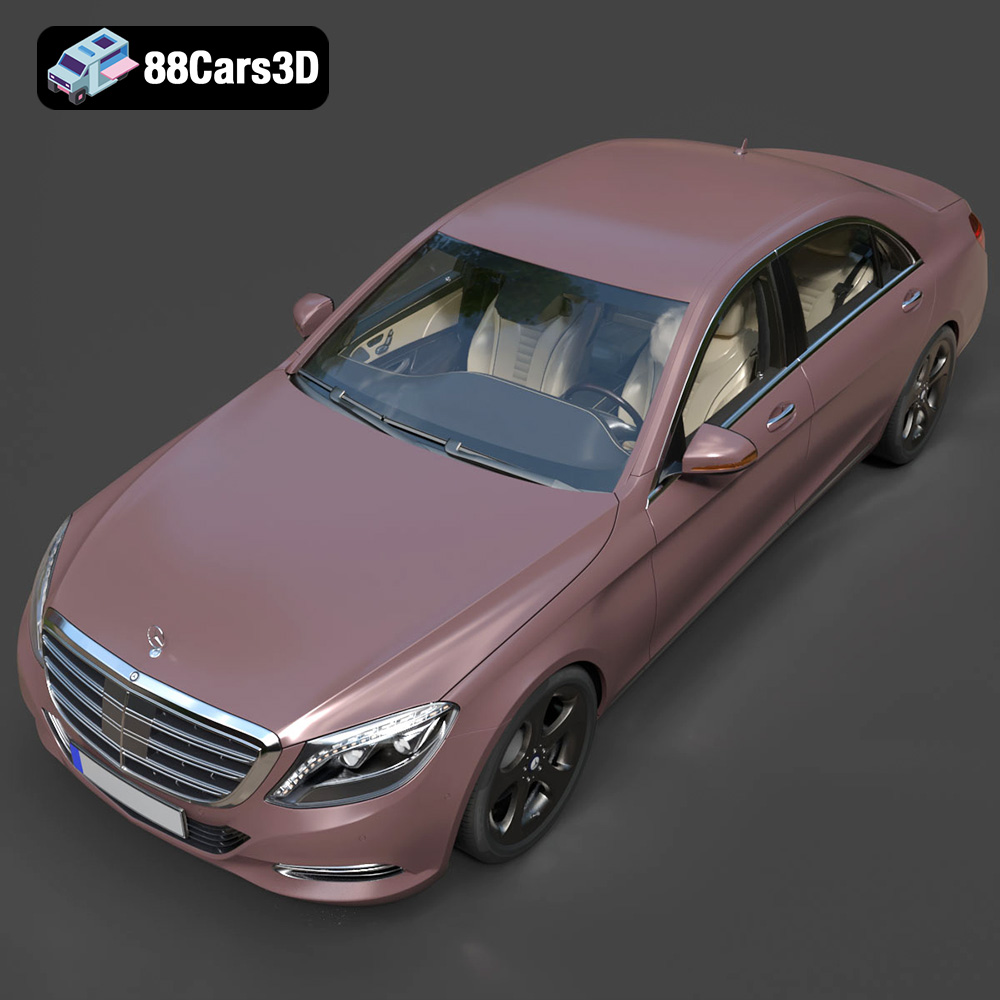
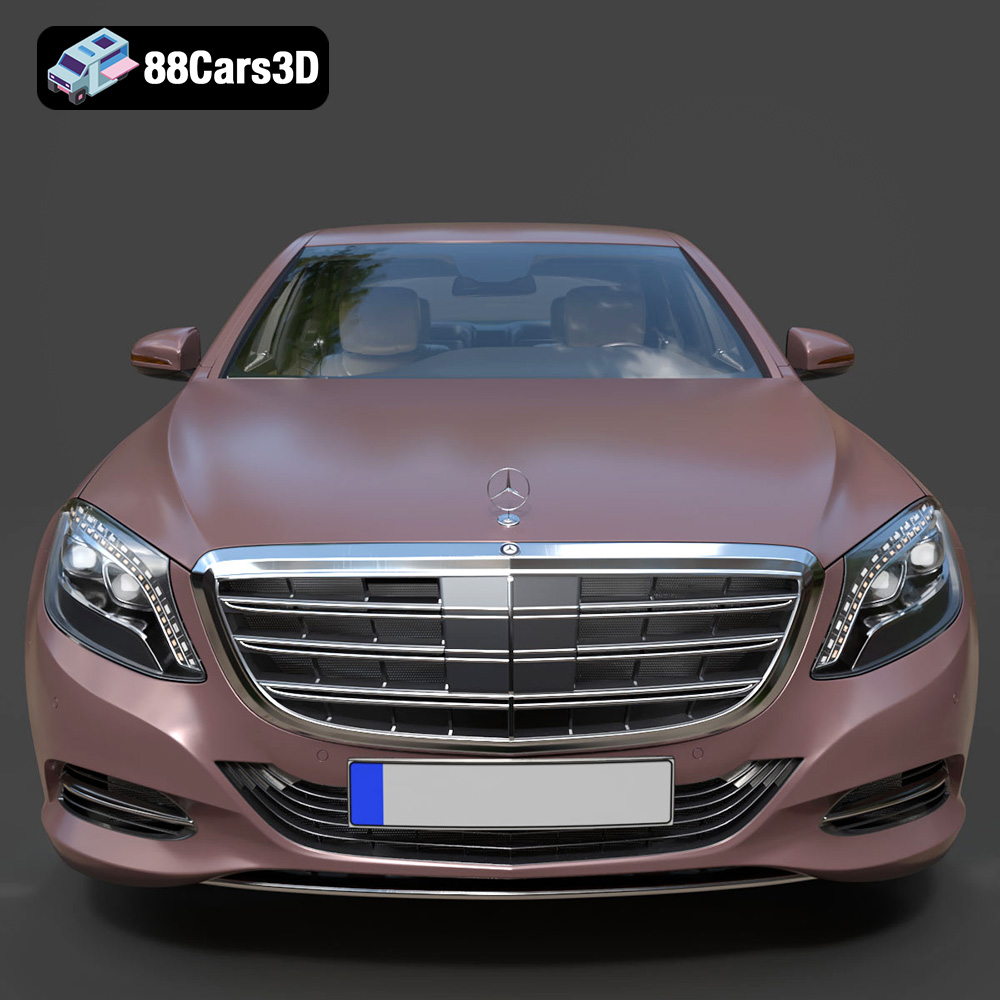
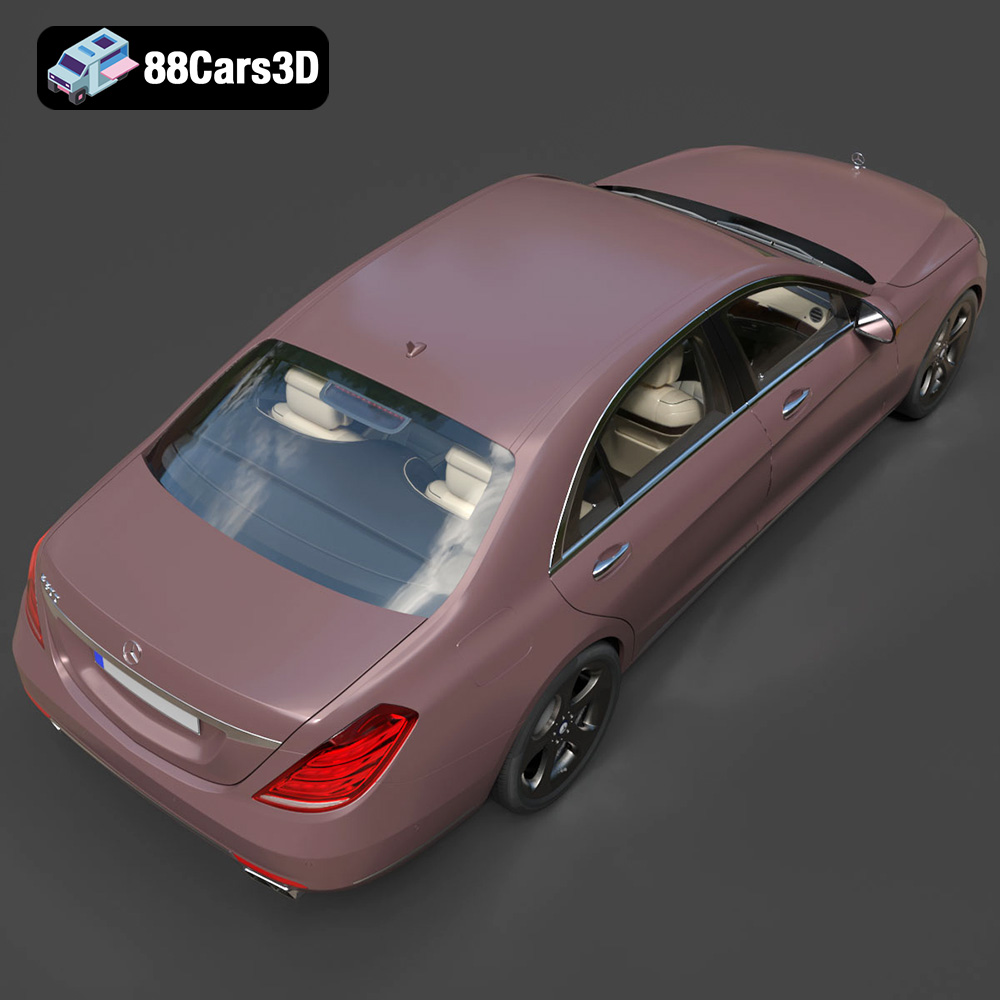
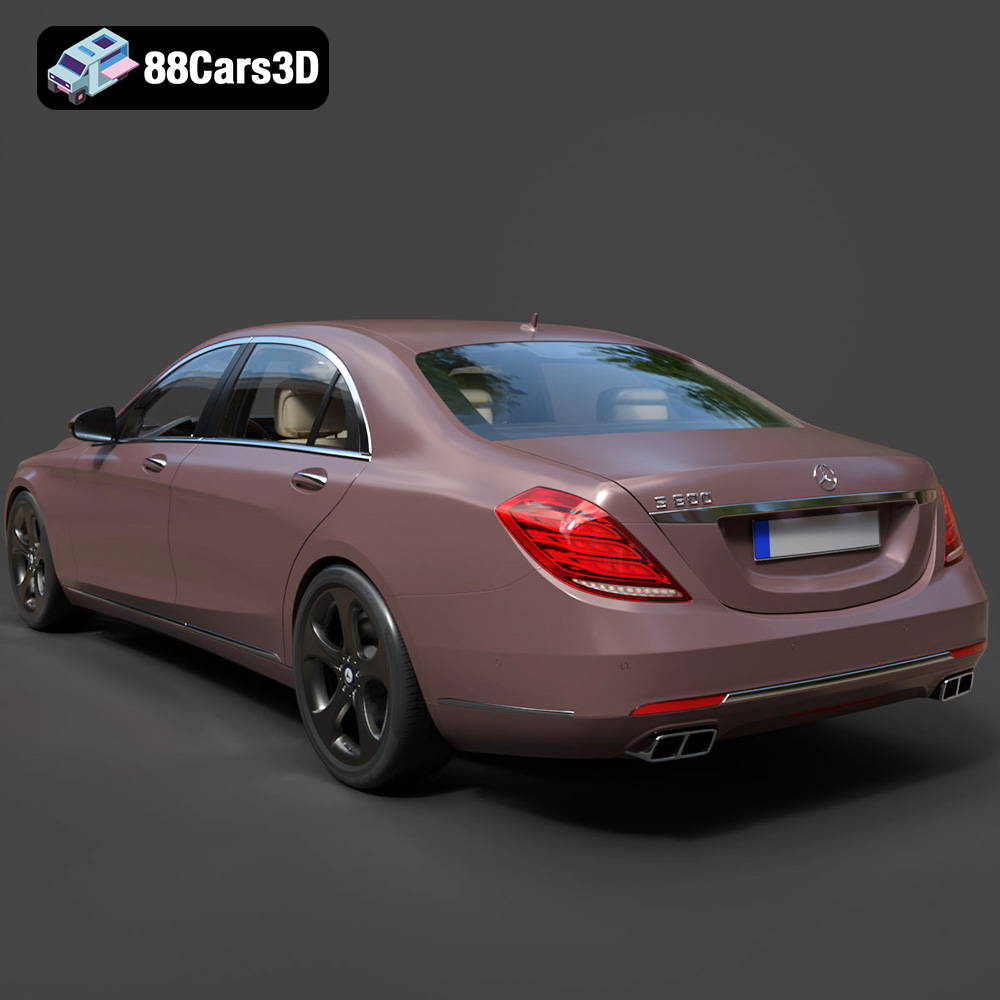
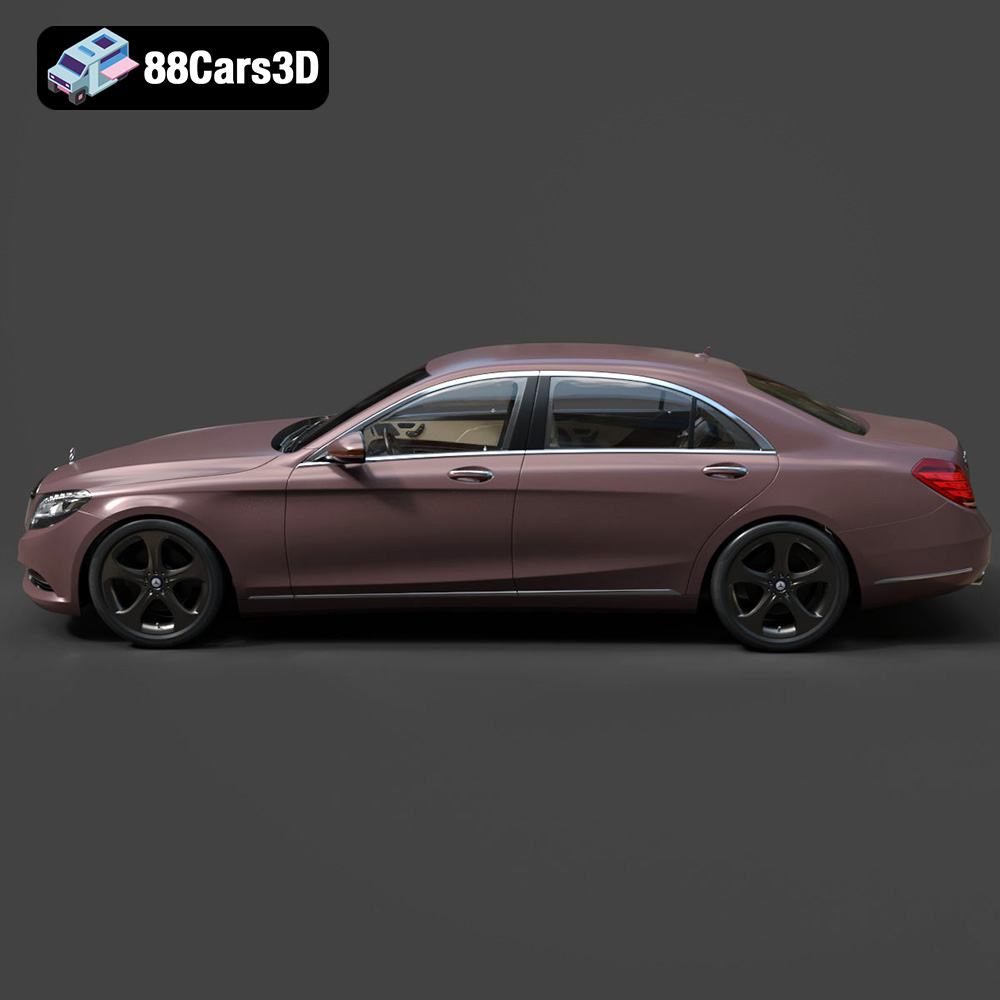
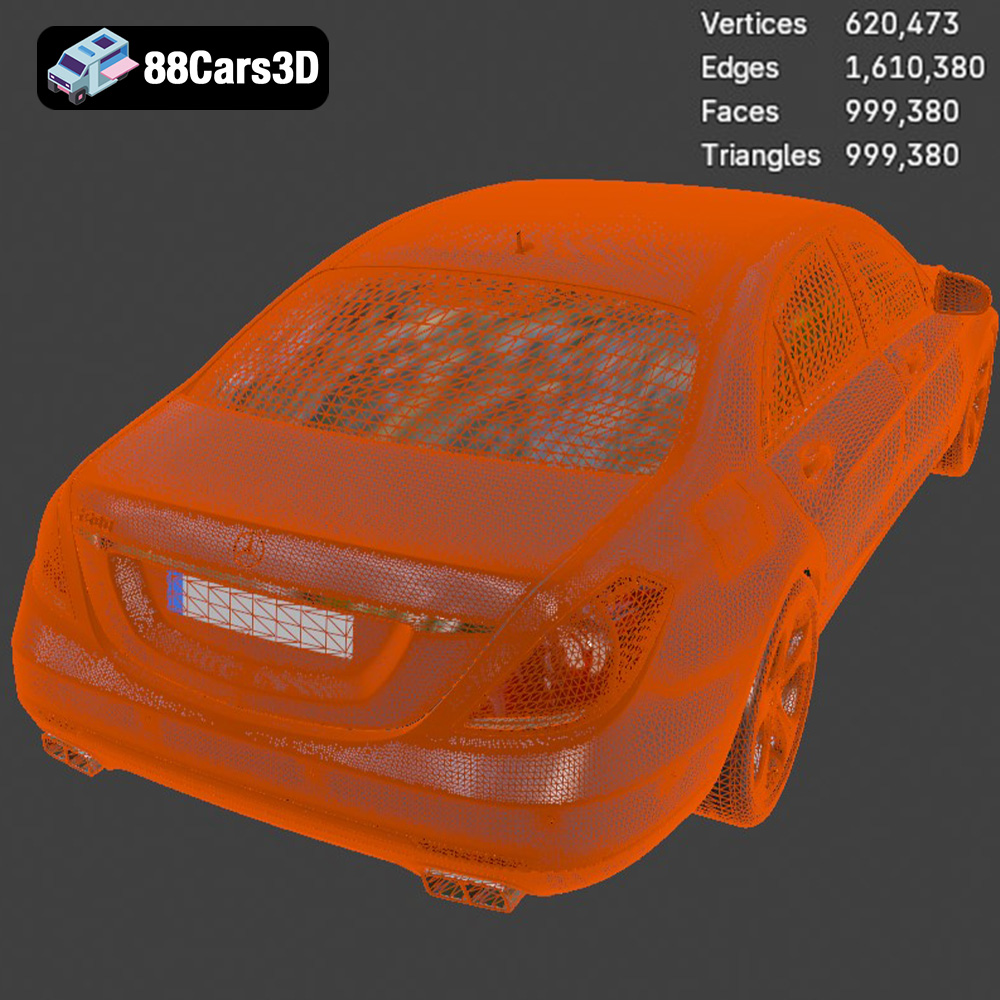
The first impression of any vehicle is its exterior, and this model does not disappoint. It meticulously captures the accurate Mercedes-Benz S600 frame geometry and elegant proportions, which are crucial for photorealistic rendering. Every curve, panel gap, and design element has been carefully replicated. Key features include the iconic chrome grille, the precisely modeled projector headlights and LED taillight assemblies, and the signature dual exhaust system integrated seamlessly into the rear bumper. Even typically unseen details, such as the V12 engine block and surrounding bay components, are rendered with precision, adding depth and credibility to close-up shots or transparent renders. The high-fidelity premium multi-spoke alloy wheels with realistic tire treads and advanced air suspension detailing within the wheel wells further enhance the visual realism, ensuring the vehicle looks impeccable from every angle. With an optimized topology of 999,380 triangles, the model strikes a perfect balance, delivering high-end visual fidelity without overwhelming real-time engine performance, making it an ideal game asset.
Beyond the impressive exterior, the interior of the S600 is where luxury truly comes alive, and this 3D model faithfully reproduces that experience. The cockpit features luxurious leather-appointed seating with accurate stitching details, a multi-function wood and leather steering wheel, and a detailed digital and analog instrument cluster. The center console, complete with the COMAND infotainment interface and climate controls, is rendered with clarity, making the interior suitable for even first-person perspectives in gaming. This level of interior detail is critical for projects requiring immersive experiences, such as AR/VR showrooms or driving simulators, where the user will be spending significant time inside the vehicle. The optimized geometry ensures that even with this richness, the model remains performant in real-time applications.
High-quality 3D car models like the Mercedes-Benz S600 are more than just digital sculptures; they are powerful tools that integrate into a multitude of professional pipelines, streamlining production and elevating output quality. For serious creators, investing in such a versatile game asset or rendering model from 88cars3d.com is a strategic move.
The game industry, with its continuous push for photorealism and immersive environments, relies heavily on optimized 3D car models. This Mercedes-Benz S600 model is explicitly designed to be “Game-Ready & Optimized,” boasting 999,380 triangles—a sweet spot for detailed visuals in modern game engines like Unreal Engine and Unity without causing performance bottlenecks. Its real-world scale accuracy and proper pivot setup for steering, wheel rotation, and suspension travel are critical for realistic vehicle physics and animation in racing titles, open-world games, or simulators. Developers can leverage its .fbx or .unreal formats for seamless import, quickly integrating it into their game worlds as a high-value game asset for player vehicles, NPC traffic, or even environmental props.
For automotive studios, marketing agencies, and architectural visualization firms, high-fidelity 3D car models are indispensable for creating compelling visuals. The S600 model, with its intricate details and precise proportions, is excellent for brand campaigns, lifestyle scenes, and studio lighting setups. Artists using 3ds Max or Blender can utilize the respective .max or .blend files to achieve unparalleled photorealism. They can experiment with various lighting scenarios, camera angles, and material finishes to produce stunning renders for advertisements, product configurators, or even virtual showrooms. The model’s inherent quality significantly reduces the time spent on modeling and allows artists to focus on artistic direction and rendering optimization, leading to superior automotive rendering outputs.
Beyond traditional rendering and games, the S600 model shines in emerging technologies. For AR/VR experiences, its .glb format is perfect for immersive virtual showrooms or mobile AR applications, allowing users to interact with the vehicle in new and exciting ways. Imagine walking around the S600 in an augmented reality app, exploring its interior, or seeing it parked virtually in your driveway. Furthermore, the model’s design lends itself to 3D printing, convertible to .stl format for display-scale hobbyists. With recommended print settings and post-processing guidelines, enthusiasts can produce a tangible representation of this luxury sedan, demonstrating the model’s versatility beyond purely digital applications.
The pursuit of quality in 3D car models is not merely aesthetic; it’s a fundamental requirement for professional-grade projects. The Mercedes-Benz S600 2008 model exemplifies this commitment, offering tangible technical advantages that benefit developers and artists alike.
The stated 999,380 triangles represent a carefully chosen polygon count. It’s high enough to retain the fine details necessary for close-up automotive rendering and cinematic shots, yet optimized enough to ensure smooth performance in real-time game engines. This balance is critical, as overly dense models can cripple frame rates, while overly simplified ones lack realism. The model’s adherence to real-world scale accuracy based on the actual vehicle chassis ensures correct proportions and seamless integration into scenes, preventing common visual anomalies. Furthermore, proper pivot setups for steering, wheel rotation, and suspension travel are not trivial details; they are fundamental for accurate animation and realistic physics simulation in game development, directly impacting the quality of the driving experience.
A truly professional 3D asset offers room for creative expression and adaptation. This S600 model provides excellent customization options. Artists can easily change body colors, experimenting with authentic factory colors or custom finishes to match specific branding or artistic visions. Modifying tire textures to switch between, for example, off-road or street variants, allows for environmental adaptation. Adjusting material finishes—from matte to gloss or metallic—can dramatically alter the vehicle’s appearance under different lighting conditions. The ability to adapt lighting for various environments means the model can convincingly appear in a sun-drenched cityscape, a moody studio setup, or an atmospheric night scene. This level of adaptability ensures the Mercedes-Benz S600 3D model remains relevant and versatile across a wide spectrum of creative projects, enhancing its value as a long-term game asset and rendering solution.
To truly appreciate the value of a high-quality 3D car model, it’s beneficial to envision its application in real-world scenarios. The Mercedes-Benz S600 2008 model provides a canvas for numerous professional and creative endeavors.
Imagine a cutting-edge virtual showroom where potential buyers can explore every detail of a luxury vehicle before it’s even manufactured. Using the S600 3D model, automotive brands can develop interactive configurators for their websites or physical dealerships. Customers could change exterior paint, interior leather options, and wheel designs in real-time, experiencing the car from every angle. The model’s optimized geometry and detailed interior make it perfect for this, especially when deployed in AR/VR, allowing for an immersive and personalized shopping experience that transcends traditional brochures or even physical showrooms.
In film, advertising, and virtual production, authentic vehicles are often costly and logistically challenging to acquire and shoot. A meticulously crafted 3D car model like the S600 becomes an invaluable substitute. Filmmakers and animators can integrate the model into CGI scenes, simulating chases, elegant drives through cityscapes, or close-up product shots for commercials. The model’s detailed V12 engine block and advanced suspension can be highlighted in dramatic camera moves. With its high-fidelity rendering capabilities, this asset allows for creative freedom previously limited by real-world constraints, enabling the creation of stunning cinematic sequences without ever touching a physical vehicle. It’s a powerful tool for automotive rendering specialists seeking to push visual boundaries.
The Mercedes-Benz S600 2008 3D model stands as a testament to the confluence of automotive design and digital craftsmanship. From its precise exterior geometry and luxurious interior details to its game-ready optimization and extensive file format support, it is a comprehensive asset for professionals across industries. Whether you are a game developer building an immersive open-world, an automotive rendering artist crafting a photorealistic advertisement, or an AR/VR designer creating the next generation of virtual showrooms, this model provides the technical foundation and visual fidelity you need.
Investing in such a high-quality 3D car model from a reputable source like 88cars3d.com significantly accelerates production workflows, allowing artists and developers to focus on creativity rather than tedious asset creation from scratch. It’s more than just a model; it’s a versatile tool that can adapt to virtually any project, ensuring your output is always at the pinnacle of digital excellence. For anyone seeking premium 3D car models or specialized game assets, the Mercedes-Benz S600 2008 offers an unparalleled blend of luxury, detail, and technical performance.
Experience the pinnacle of automotive luxury with this highly detailed 3D model of the Mercedes-Benz S600. Renowned for its unparalleled comfort, commanding road presence, and legendary V12 powertrain, the S600 stands as a benchmark in the flagship luxury sedan segment. This model meticulously captures the vehicle’s elegant exterior styling, iconic chrome grille, signature lighting arrays, and distinctive exhaust system, ensuring a photorealistic representation of the legendary German masterpiece. Crafted with precision, this model features an optimized topology of 999,380 triangles, striking the perfect balance between high-end visual fidelity and robust performance. Designed for seamless integration into leading real-time engines, this asset delivers uncompromising quality for close-up renders, cinematic animations, and interactive applications. Whether utilized in game development, immersive AR/VR experiences, or high-end architectural visualization, this model guarantees exceptional realism. Perfect for luxury showroom configurators, open-world city environments, cinematic rendering, and VIP transport simulations.
$61.50
.2008
.blend
.fbx
.glb
.max
.obj
.ply
.rendering
.s600
.stl
.unreal
car-3d-model
game asset
game-ready
low-poly
luxury car
luxury-sedan
mercedes-benz
optimized
VR/AR