Get 40% OFF All Premium 3D & STL Models!

In the realm of automotive history, few vehicles command the same reverence and admiration as the Porsche 959. A technological marvel of its era, this supercar transcended boundaries, blending groundbreaking engineering with an iconic aesthetic that still captivates enthusiasts today. For 3D artists, game developers, and visualization specialists, recreating such a legend in the digital space is both a challenge and an opportunity to deliver unparalleled realism. Today, we’re diving deep into an exceptional digital representation that brings this legend to life: the Porsche 959 1986 3D Model, available on 88cars3d.com.
This comprehensive asset goes beyond mere surface aesthetics, offering a meticulously crafted digital twin of the original masterpiece. Whether you’re aiming for a high-fidelity cinematic render, a responsive game asset, an immersive AR/VR experience, or even a detailed 3D print, this model is engineered to meet professional demands. We’ll explore its intricate details, technical specifications, and how it seamlessly integrates into various professional workflows, making it an indispensable tool for anyone working with 3D car models.
The versatility of a 3D model is often defined by the file formats it supports. Each format serves a specific purpose, catering to different software environments, rendering pipelines, and end-use applications. The Porsche 959 1986 3D Model includes an impressive array of formats, ensuring maximum compatibility and utility. Understanding these is crucial for optimizing your workflow and achieving the desired outcome.
The .blend file format is Blender’s native project file. When you download a .blend file for the Porsche 959, you’re receiving a fully editable Blender scene, complete with all materials, textures, lighting setups, and even camera configurations if they were part of the original artist’s scene. This is ideal for artists who primarily work within Blender, as it allows for direct manipulation, animation, and rendering without any loss of data during import/export. It’s perfect for detailed customizations, rigging, and leveraging Blender’s powerful Cycles or Eevee render engines.
.fbx (Filmbox) is a proprietary file format owned by Autodesk, but it has become an industry-standard format for 3D data interchange. It excels at preserving complex scene data, including meshes, materials, textures, animations, and bone rigs, making it the go-to choice for transferring assets between different 3D software and real-time game engines like Unreal Engine and Unity. For the Porsche 959 model, the .fbx variant is optimized for seamless integration into real-time pipelines, maintaining proper scaling, pivot points, and UV mapping necessary for efficient game asset development.
.obj (Wavefront OBJ) is one of the oldest and most widely supported 3D file formats. It’s a universal format for cross-software compatibility, containing mesh geometry (vertices, normals, texture coordinates), and often references a separate .mtl (material) file for basic material properties. While it doesn’t support animation or complex scene data, its simplicity and widespread acceptance make it invaluable for basic mesh transfer. If you need to import the Porsche 959 into less common 3D software or if you primarily work with static renders, .obj is a reliable choice.
.glb (GLB 3D format) is a binary representation of the glTF (GL Transmission Format) file format, designed for efficient transmission and loading of 3D scenes and models by applications. It’s particularly optimized for AR (Augmented Reality), VR (Virtual Reality), and browser-based display, making it perfect for virtual showrooms or online configurators of the Porsche 959. A single .glb file can contain the model, textures, and animations, making it highly portable and ideal for web-based interactive experiences without requiring external dependencies.
.stl (STereoLithography) is the de facto standard file format for 3D printing. It represents a 3D model as a collection of unconnected triangular facets, defining only the surface geometry of an object without color, texture, or other CAD attributes. The .stl version of the Porsche 959 is specifically prepared for physical fabrication, allowing hobbyists and professionals to bring the digital model into the real world. It’s crucial for ensuring watertight meshes and correct manifold geometry for successful printing.
.ply (Polygon File Format) is another format used to store 3D data, often derived from 3D scanners. It can store a variety of properties including color, transparency, surface normals, and range data, making it a precision mesh format suitable for CAD or analysis applications. While less common for direct rendering, its ability to carry detailed point cloud and polygonal data can be useful for advanced engineering or reverse-engineering workflows related to the Porsche 959’s geometry.
The inclusion of an .unreal file (often a Uasset or a project-ready import setup) signifies an asset specifically prepared for Unreal Engine. This means the model has likely undergone significant optimization, material setup, and potentially even collision mesh generation within Unreal. This format streamlines the integration process, allowing developers to quickly drop the Porsche 959 into their projects with minimal setup, ensuring it’s engine-ready for real-time environments, benefiting from Unreal’s advanced rendering capabilities.
Finally, the .max file format is the native project file for Autodesk 3ds Max. Similar to .blend for Blender, a .max file offers a fully editable 3ds Max scene. This is invaluable for artists who rely on 3ds Max for high-fidelity animation, rendering with V-Ray or Corona, and extensive modeling. It allows for complete control over all aspects of the Porsche 959 model, including modifiers, materials, and complex rigging setups, facilitating advanced customization and production-level work.
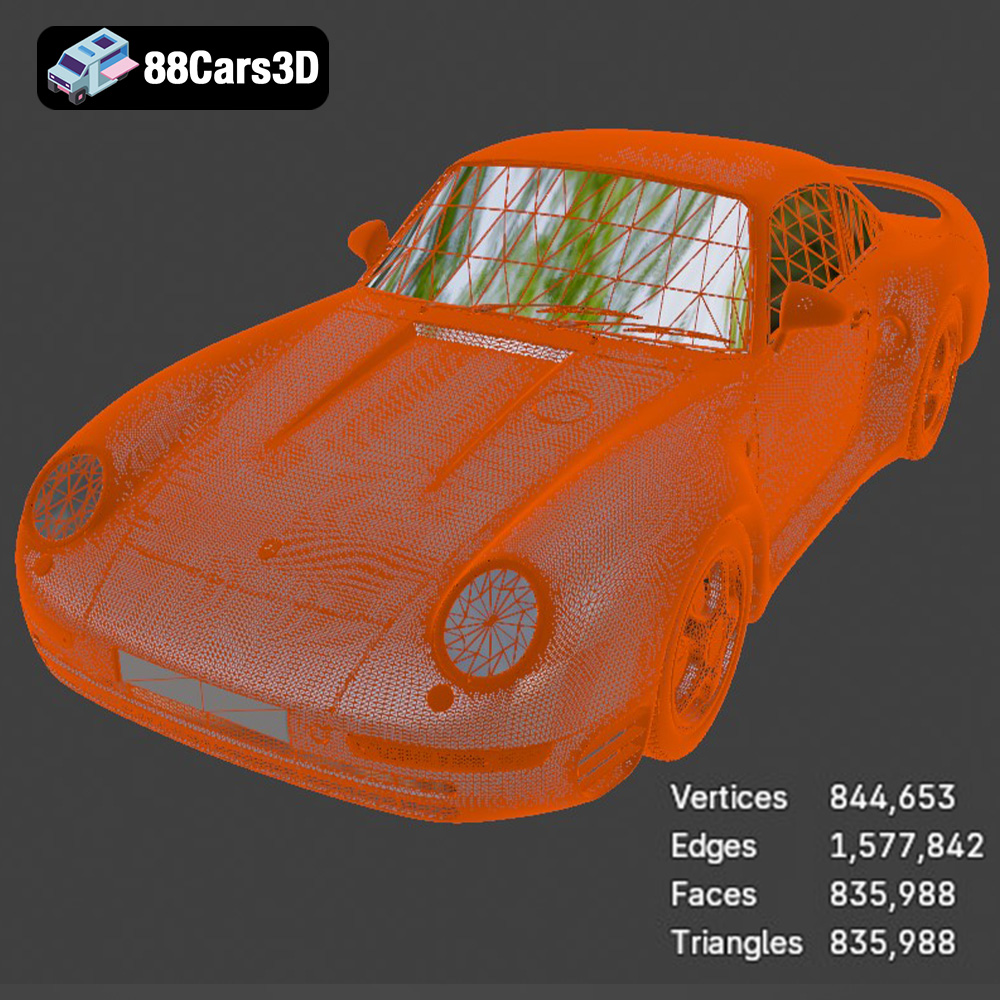
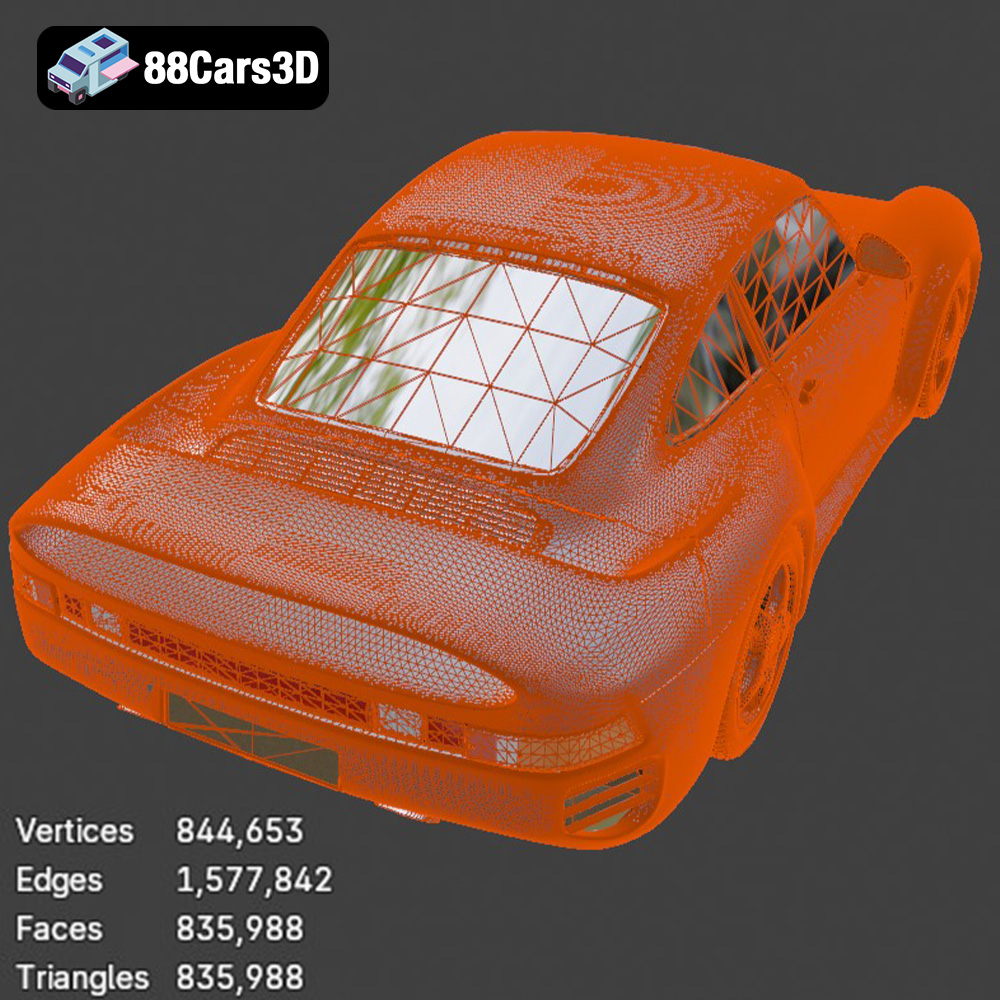
The true value of a premium 3D model lies in its meticulous attention to detail and technical accuracy. The Porsche 959 1986 3D Model exemplifies this, offering an unparalleled level of realism that transforms a digital asset into a virtual artifact. With an impressive 835,988 triangles, this model strikes an optimal balance, providing maximum visual fidelity without excessively burdening real-time engines, making it a stellar example of high-quality 3D car models.
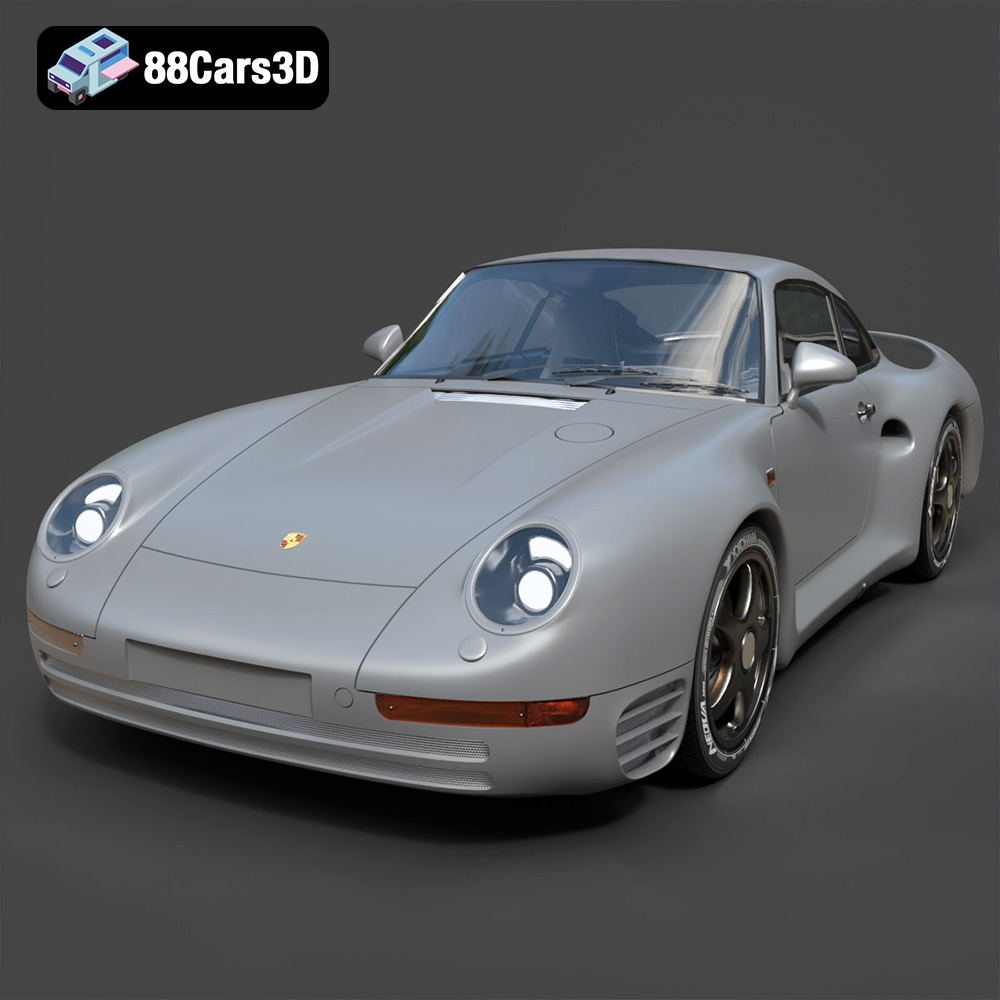
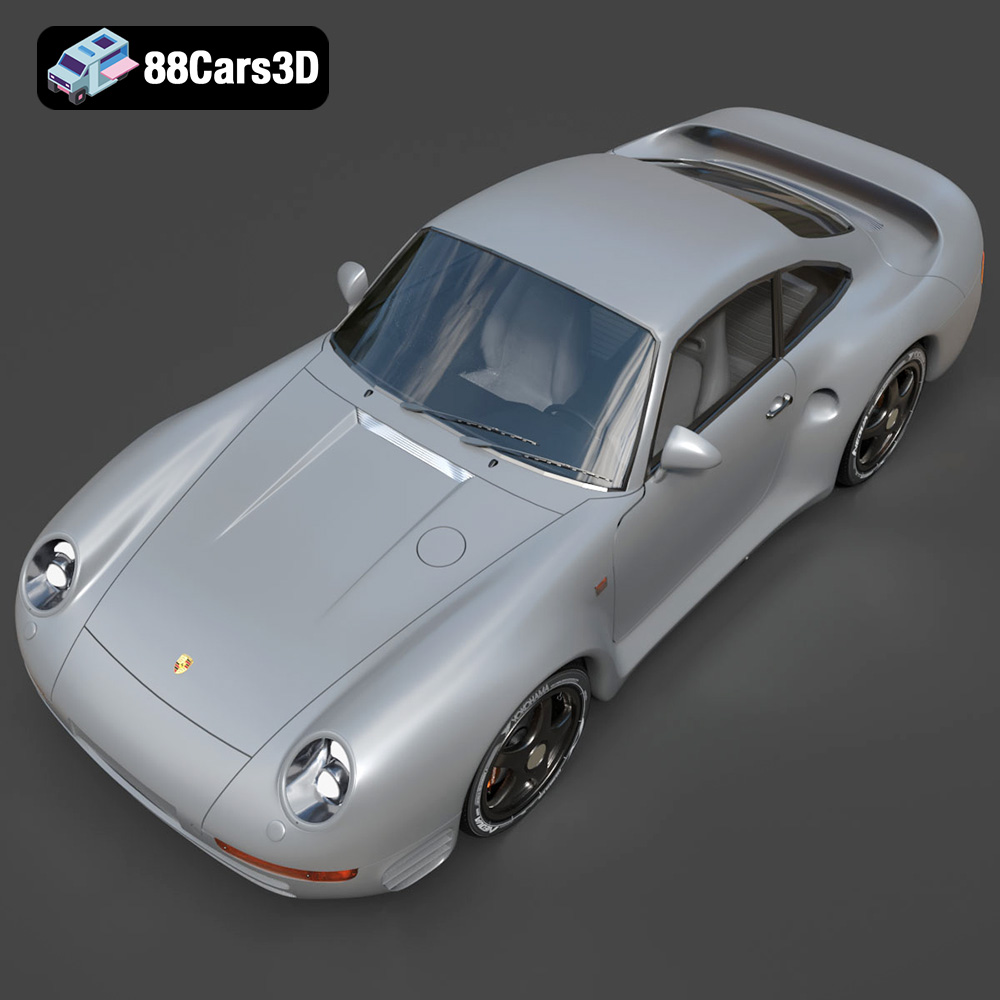
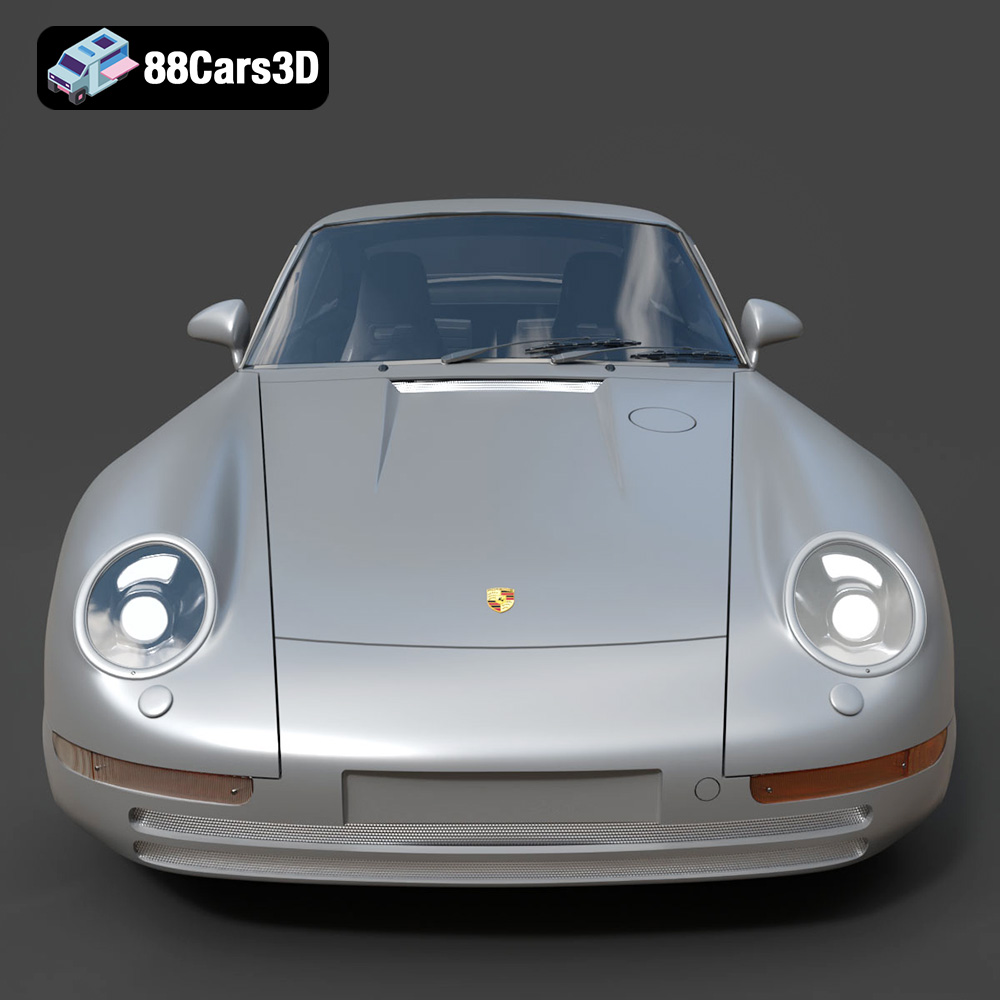
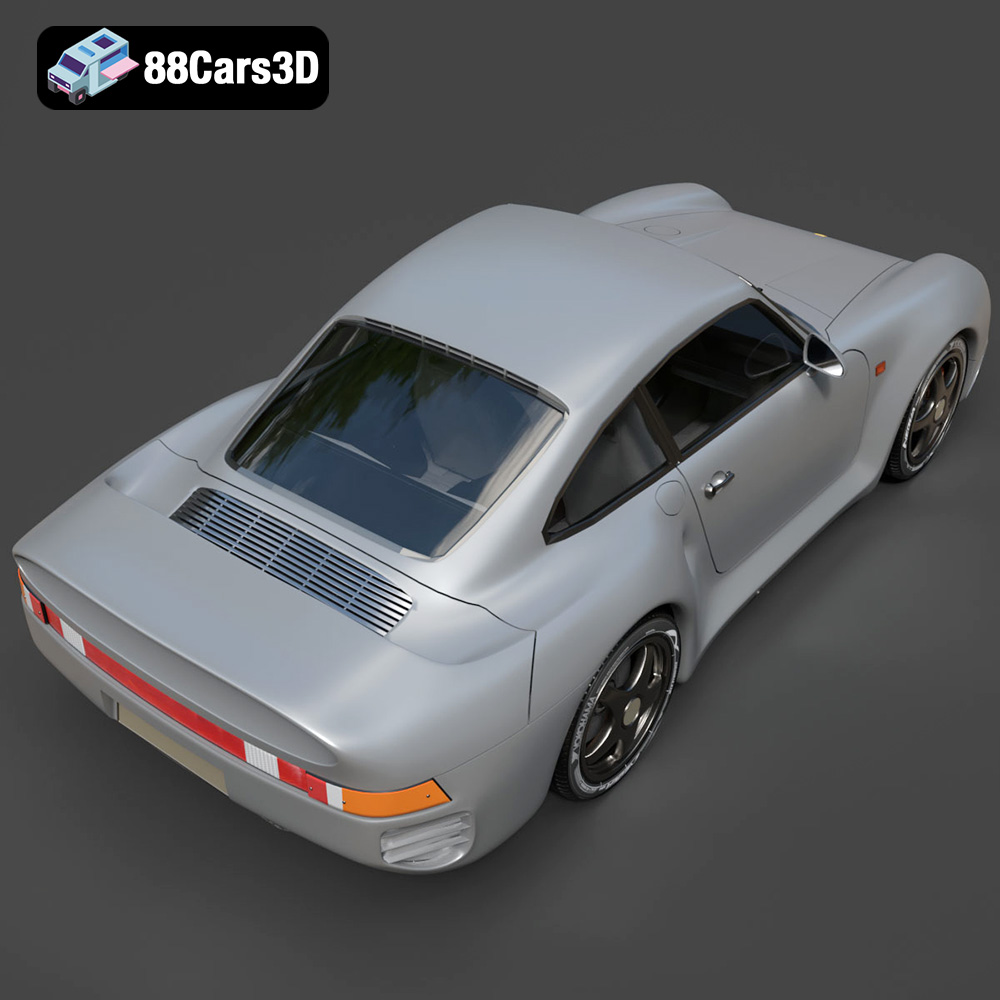
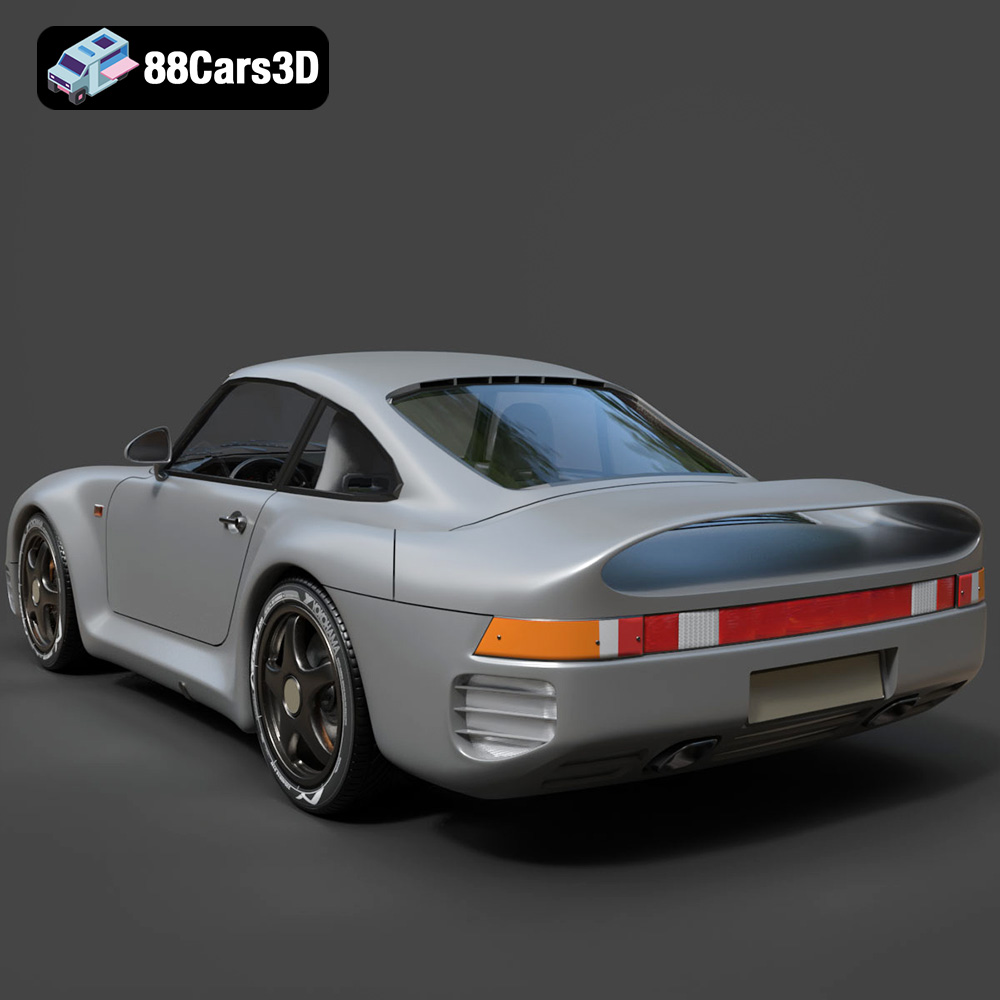
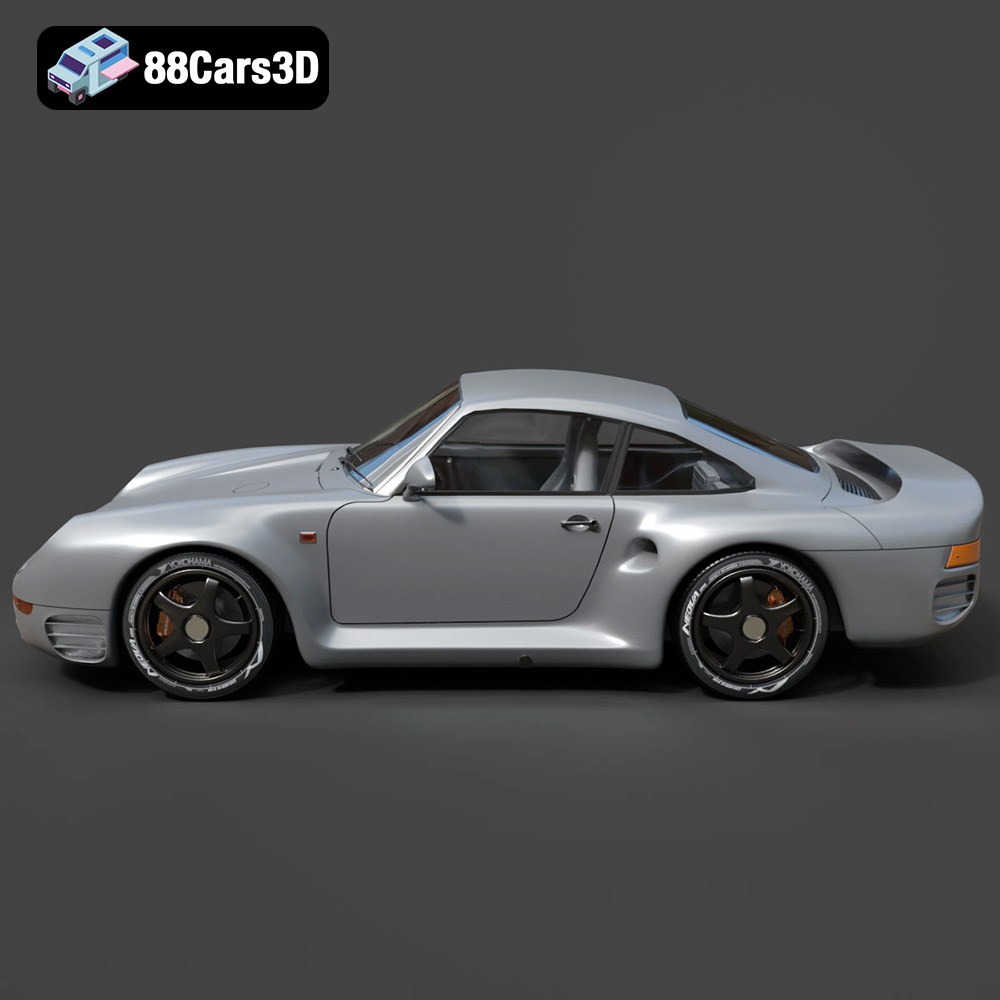
Every curve and panel of the Porsche 959’s iconic aerodynamic widebody has been faithfully recreated. From the distinctive flush headlights that seamlessly integrate into the front fascia to the full-width rear taillight reflector panel, the model captures the essence of the original. Crucially, the exterior isn’t just a shell; it includes accurate frame geometry and the integrated rear spoiler, ensuring proper light interaction and reflection for photorealistic renders. The signature hollow-spoke magnesium alloy wheels are rendered with intricate detail, complete with realistic tire treads, adding a crucial layer of authenticity that often gets overlooked in lower-quality models.
A car’s interior is just as important as its exterior, especially for immersive experiences like AR/VR or first-person game perspectives. The cockpit of this Porsche 959 model is a masterclass in interior detailing. Authentic leather-trimmed sport seats invite the viewer, while the accurate four-spoke steering wheel and classic Porsche 5-dial instrument cluster transport them directly into the 1980s supercar. Every control, including pedals, the shifter, and center console buttons, has been precisely modeled. This level of detail is particularly beneficial for game developers aiming to create an engaging and believable driving experience.
Beyond the visible aesthetics, the model delves into the mechanical heart of the 959. A detailed engine compartment reveals the iconic twin-turbo flat-six block, a testament to the original car’s advanced engineering. The accurate dual exhaust system configuration and intricate independent suspension and drivetrain details are all present. Furthermore, the inclusion of separate wheels, suspension, and steering components for animation opens up a world of possibilities for dynamic visualizations, realistic physics simulations in games, and detailed cinematic sequences where the car’s mechanics are highlighted.
High-quality 3D car models like the Porsche 959 from 88cars3d.com are invaluable assets for a myriad of professional applications. Their detailed construction and optimization allow them to seamlessly integrate into complex production pipelines, significantly reducing development time and elevating visual standards across the board.
For game developers, the challenge often lies in balancing visual fidelity with real-time performance. The Porsche 959 1986 3D Model strikes this perfect balance with its 835,988 triangles. This polycount is optimized for modern game engines like Unreal and Unity, allowing for stunning in-game visuals without crippling frame rates. Its “game-ready” status means proper pivot setups for steering, wheel rotation, and suspension travel are already in place, simplifying the rigging and animation process. Whether it’s for open-world games, high-stakes racing titles, or precision driving simulators, this model provides a solid foundation for an engaging gameplay experience.
In advertising, architectural visualization, and product design, photorealistic rendering is paramount. The meticulous detail of the Porsche 959 model makes it an excellent choice for high-end automotive rendering. Artists using software like 3ds Max (with its .max file) or Blender (with its .blend file) can leverage its accurate geometry and detailed materials to create breathtaking studio shots, dynamic lifestyle scenes, or immersive brand campaigns. The ability to customize body colors, adjust material finishes (matte, gloss, metallic), and adapt lighting for different environments allows for limitless creative expression, ensuring every render captures the essence of this classic supercar.
The burgeoning fields of Augmented Reality and Virtual Reality demand highly optimized yet visually rich assets. The Porsche 959 3D Model, particularly in its .glb and optimized game engine formats, is perfectly suited for creating immersive virtual showrooms or interactive configurators. Imagine a potential buyer exploring every angle of the 959 in a virtual space, inspecting its detailed interior, or even changing its exterior color in real-time. The model’s real-world scale accuracy enhances the sense of presence and realism, offering a compelling virtual experience that blurs the line between the digital and physical.
The versatility of a high-quality 3D model extends beyond digital screens. The Porsche 959 1986 3D Model is not only designed for rendering and real-time applications but also meticulously prepared for physical manifestation through 3D printing. This capability opens doors for hobbyists, collectors, and model makers to own a tangible piece of automotive history, scaled to their preference.
The inclusion of the .stl file format is specifically tailored for 3D printing. The model has been designed to ensure a watertight mesh and correct manifold geometry, which are crucial prerequisites for a successful print. For those looking to print their own Porsche 959, the .stl file ensures that there are no gaps or errors in the model’s surface, preventing issues during the slicing process. This allows for reliable conversion of the digital asset into a physical object, making it a truly multi-purpose 3D car model.
To achieve the best results, specific 3D print settings are recommended. For highly detailed parts like the exhaust, mirrors, or intricate interior elements, resin printing (SLA/DLP) is often preferred over FDM due to its superior resolution and ability to capture fine details with layer heights between 0.04–0.12 mm. Suggested scales of 1:12, 1:18, or 1:24 allow for various display options. The model should be printed with supports for overhangs, and printing the frame angled, with wheels separately, enhances structural integrity and detail. Post-processing, including sanding, priming, and painting with authentic factory colors and metallic finishes, transforms the raw print into a stunning display piece that truly honors the original Porsche 959.
Achieving a high-quality 3D model that performs well across diverse platforms requires careful optimization. The Porsche 959 1986 3D Model demonstrates a masterful understanding of these principles, providing an asset that is both visually rich and technically sound.
The 835,988 triangles represent a strategic choice. While some models might push for millions of polygons, this count is deliberately chosen to strike a “perfect balance” for real-time engines like Unreal and Unity. It’s high enough to maintain exceptional visual realism, even for close-up shots and high-resolution renders, but optimized enough to be integrated into interactive applications without causing significant performance bottlenecks. This makes the model an ideal game asset, capable of delivering cinematic quality within an interactive environment.
Accuracy is key in professional 3D work. The Porsche 959 3D Model adheres to real-world scale based on actual vehicle chassis dimensions. This not only aids in realistic scene composition but also simplifies integration into existing environments and ensures correct physics behavior in game engines. Furthermore, proper pivot setups for steering, wheel rotation, and suspension travel are pre-configured. This saves animators and game developers countless hours, allowing for immediate implementation of realistic car movements and interactions without needing to manually adjust origins and hierarchies. This level of preparation is a hallmark of high-quality automotive rendering assets.
The Porsche 959 is more than just a car; it’s a symbol of automotive innovation and design excellence. The Porsche 959 1986 3D Model truly encapsulates this legacy, delivering a digital asset that is as technically sophisticated as the vehicle it represents. From its meticulously recreated exterior and interior details to its robust optimization for real-time performance and its versatility across multiple professional formats, this model stands out as a premium offering for anyone working with 3D car models.
Whether you’re developing the next generation of racing games, crafting photorealistic architectural visualizations, designing immersive AR/VR experiences, or even printing a tangible piece of history, this model from 88cars3d.com provides an unparalleled foundation. Its diverse file format support, game-ready optimization, and exceptional fidelity make it an indispensable tool for artists and developers seeking to integrate a legendary automotive icon into their projects. Investing in such a high-quality asset is an investment in efficiency, realism, and ultimately, the success of your creative endeavors.
The Porsche 959 is a legendary supercar, originally developed as a Group B rally car and later becoming one of the most technologically advanced road cars of the 1980s. Known for its iconic aerodynamic styling, integrated rear spoiler, twin-turbo flat-six engine, and advanced all-wheel-drive system, it remains a masterpiece of automotive engineering.
This highly detailed 3D model boasts an impressive 835,988 triangles, ensuring maximum visual fidelity for close-up renders and high-end applications. Meticulously optimized for realism, it serves as a stunning asset for game development in modern engines, AR/VR experiences, cinematic animation, and high-resolution automotive visualization.
Perfect for virtual showrooms, classic car racing games, high-end architectural visualizations, and cinematic renderings.
.blend, .fbx, .obj, .glb, .stl, .ply, .unreal, .max
Tags:
porsche, 959, sports-car, classic-car, game-ready, low-poly, optimized, car-3d-model, game-asset, rendering, vr-ar, blend, fbx, obj, glb, stl, ply, unreal, max
$57.00
.blend
.fbx
.glb
.max
.obj
.ply
.porsche
.rendering
.sports car
.stl
.unreal
959
car-3d-model
classic-car
game asset
game-ready
low-poly
optimized
VR/AR