Get 20% OFF All Premium 3D & STL Models!

In the dynamic worlds of automotive design, game development, and architectural visualization, the demand for realistic and performant 3D assets has never been higher. From cinematic brand presentations to immersive virtual reality experiences, a meticulously crafted 3D car model can elevate a project from ordinary to extraordinary. These digital representations are far more than just pretty pictures; they are complex data structures that power everything from real-time simulations to photorealistic marketing campaigns.
At the heart of this digital transformation lies the need for accuracy, optimization, and versatility. Professionals across various industries rely on high-quality 3D car models to bring their visions to life, ensuring every curve, every reflection, and every texture contributes to an authentic experience. This article delves into the critical aspects of leveraging premium 3D models, exploring their technical intricacies, diverse applications, and the essential considerations for integrating them into professional workflows. As we navigate this landscape, we’ll specifically look at how a model like the Volkswagen Polo GTI 2022 3D Model exemplifies the blend of detail and performance sought after by industry experts, providing a robust foundation for a myriad of creative endeavors.
The choice of a 3D model file format is a critical decision that impacts compatibility, feature retention, and overall workflow efficiency. Each format is designed with specific use cases and technical considerations in mind, making it essential for designers, developers, and visualizers to understand their strengths and limitations. For premium 3D car models like the Volkswagen Polo GTI 2022, understanding these distinctions ensures seamless integration into various software and engines.
The .blend format is the native file type for Blender, one of the most powerful and widely used open-source 3D creation suites. A .blend file is a comprehensive package, containing not just the mesh data but also materials, textures, animations, rigging, lighting, camera setups, and even Python scripts. This makes it a fully editable Blender scene, offering unparalleled flexibility for artists who want to dive deep into customization. When you download a .blend file, you’re getting the entire project with all its dependencies organized within a single file. For users working within the Blender ecosystem, it provides the most direct and efficient way to access and modify an asset, making it ideal for detailed retopology, custom animation sequences, or extensive material overhauls.
.fbx (Filmbox) is arguably the most prevalent interchange format in the 3D industry, especially favored for game development and animation pipelines. Developed by Autodesk, FBX supports geometry, materials (with some limitations), textures, animations (including skeletal animation), cameras, and lights. Its robust support for animation data makes it indispensable for transferring rigged characters or vehicles, such as the Volkswagen Polo GTI 2022, into game engines like Unreal Engine and Unity. For automotive rendering and visualization, .fbx ensures that complex scene data, including parent-child hierarchies for articulated parts like wheels and suspension, is maintained during transfer, making it an excellent choice for dynamic simulations or interactive experiences.
The .obj (Wavefront OBJ) format is a classic and highly universal choice for exchanging 3D geometry. It primarily stores vertex positions, UV coordinates, normals, and face information, making it compatible with virtually every 3D software application. While .obj files are excellent for pure mesh data, they typically don’t store animation, rigging, or complex material networks directly. Materials are usually referenced via an accompanying .mtl file. Its simplicity and widespread compatibility make it a reliable choice for initial model transfer or for scenarios where only the raw geometry is needed, prior to applying specific materials or rigging in the target application.
.glb (GL Transmission Format Binary) is an increasingly vital format, especially in the burgeoning fields of Augmented Reality (AR), Virtual Reality (VR), and browser-based 3D applications. It’s a binary version of glTF (GL Transmission Format) that packages all necessary assets—geometry, materials, textures, animations—into a single, self-contained file. This makes .glb highly efficient for streaming and loading quickly on the web or mobile devices. Its optimization for real-time rendering ensures that high-fidelity models like the Polo GTI 2022 can be seamlessly integrated into interactive web configurators or mobile AR experiences with minimal overhead, delivering excellent performance without compromising visual quality.
.stl (STereoLithography) is the de facto standard format for 3D printing. It represents a 3D model as a collection of unconnected triangles, defining only the surface geometry without color, texture, or material information. While simplistic, this triangulated mesh is precisely what 3D printers need to interpret and build an object layer by layer. For hobbyists or professionals looking to create physical scale models of the Volkswagen Polo GTI 2022, an .stl export provides the direct input required by most slicing software, ensuring that the digital model can be accurately reproduced in the physical world.
The .ply (Polygon File Format or Stanford Triangle Format) is a versatile format capable of storing a wide range of properties, including color, transparency, normals, texture coordinates, and scalar values. It’s particularly common in scientific and engineering applications, as well as in contexts involving 3D scanning or precision CAD work. PLY files can be either ASCII or binary, and their flexibility in storing vertex and face attributes makes them suitable for detailed analysis, reverse engineering, or when a high degree of data integrity beyond basic geometry is required, often for more analytical rather than purely artistic workflows.
The .unreal designation often refers to assets that are specifically prepared and optimized for direct import and use within Unreal Engine. While not a standalone file format in the traditional sense like .fbx or .obj, it signifies a model that has undergone a preparation process (e.g., proper scaling, material setup, collision geometry, LODs) to be “engine-ready.” This means less time spent on setup and more time on creative iteration within the Unreal environment. For assets like the Volkswagen Polo GTI 2022, an .unreal file implies robust PBR material setup, optimized mesh, and correct pivot points, ensuring peak performance and visual fidelity within the powerful real-time renderer.
Similar to .blend for Blender, the .max format is the native file type for Autodesk 3ds Max. It encapsulates an entire 3ds Max scene, including all geometry, materials, textures, lighting, cameras, animations, and scene settings. For those working within the 3ds Max ecosystem, a .max file offers complete editability and access to all parameters and modifiers used in the creation of the model. It’s invaluable for studios that rely on 3ds Max for their primary automotive rendering and animation pipelines, providing the highest level of control and flexibility for complex projects.
When selecting a 3D car model for professional use, the level of detail and technical precision is paramount. The Volkswagen Polo GTI 2022 3D Model from 88cars3d.com stands out as an exemplary asset due to its impressive technical specifications and meticulous craftsmanship. This model isn’t just a visual representation; it’s a precisely engineered digital twin designed for high-end applications.
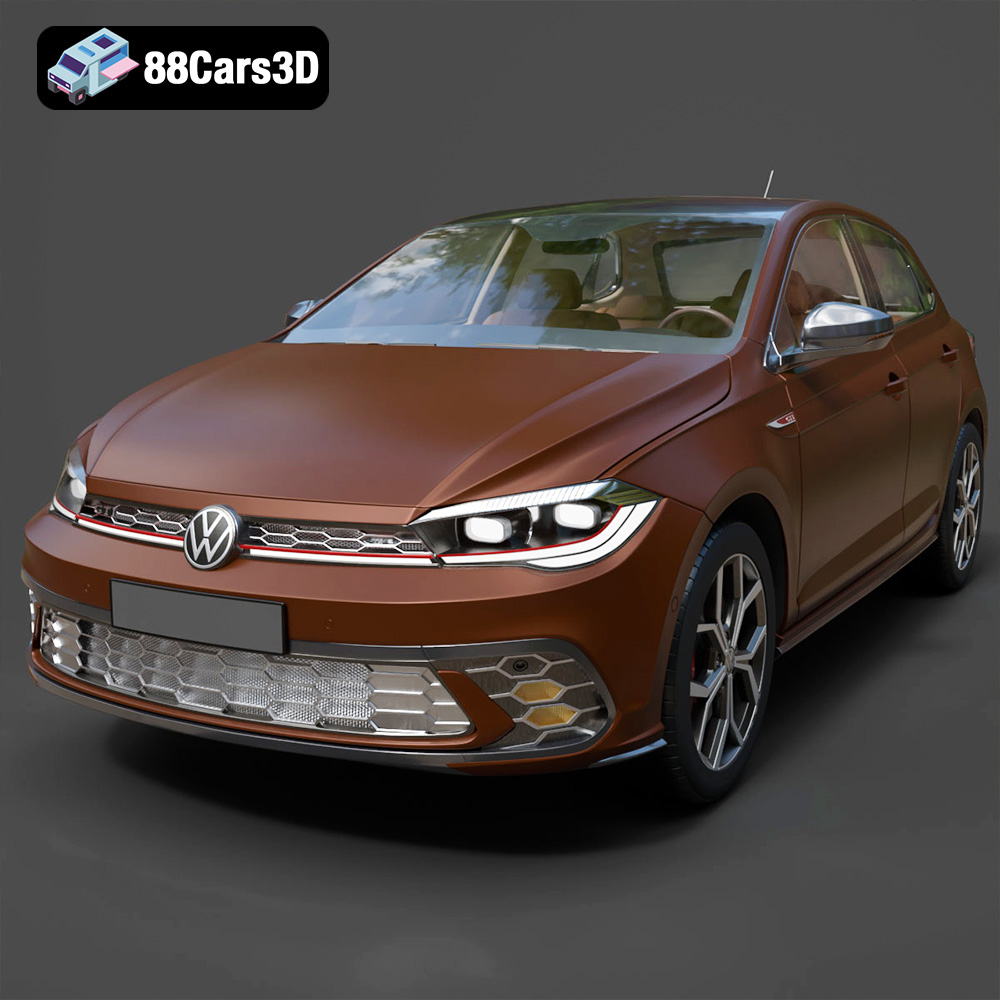
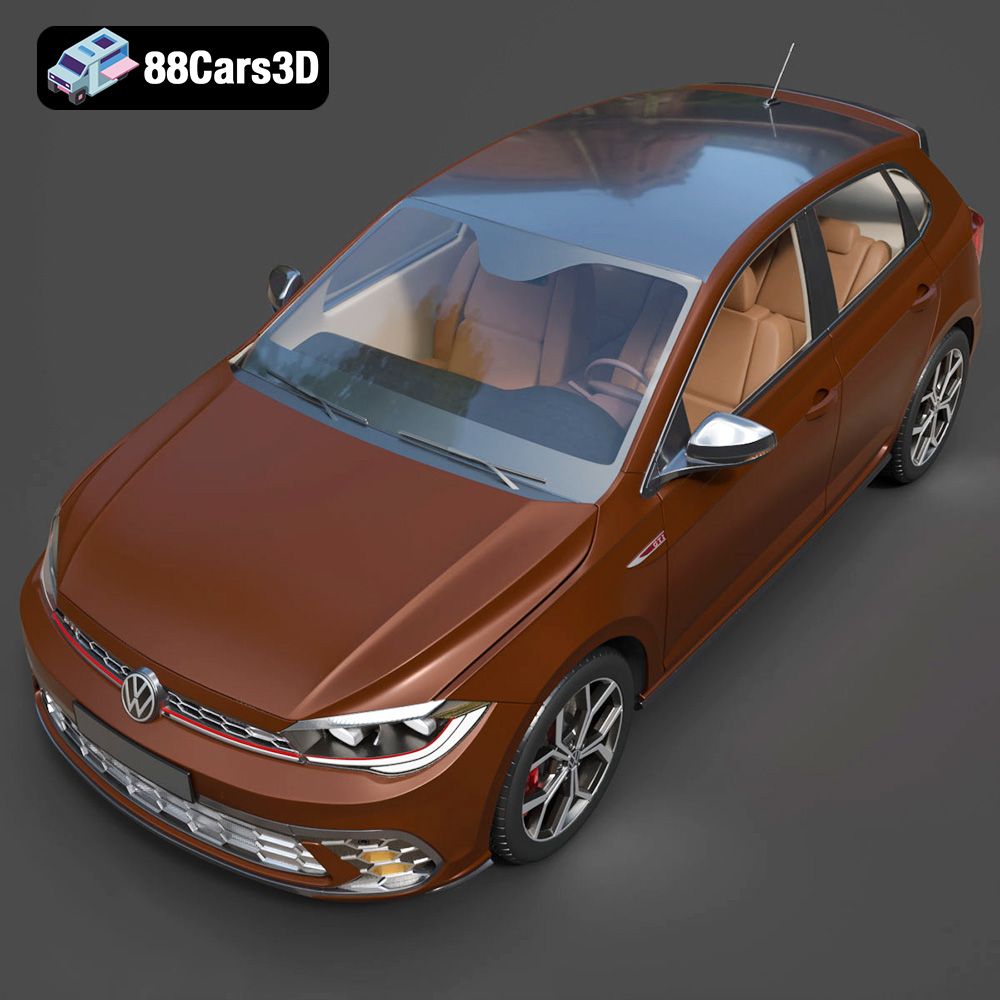
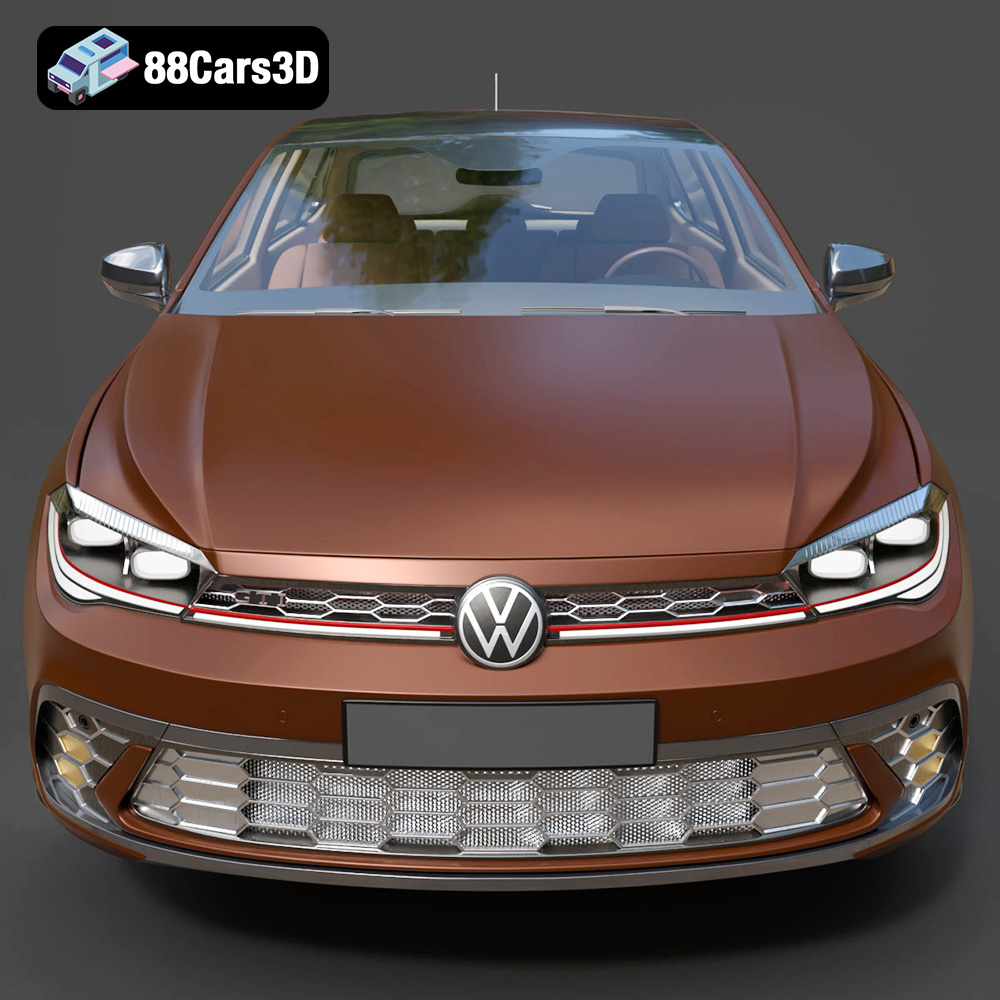
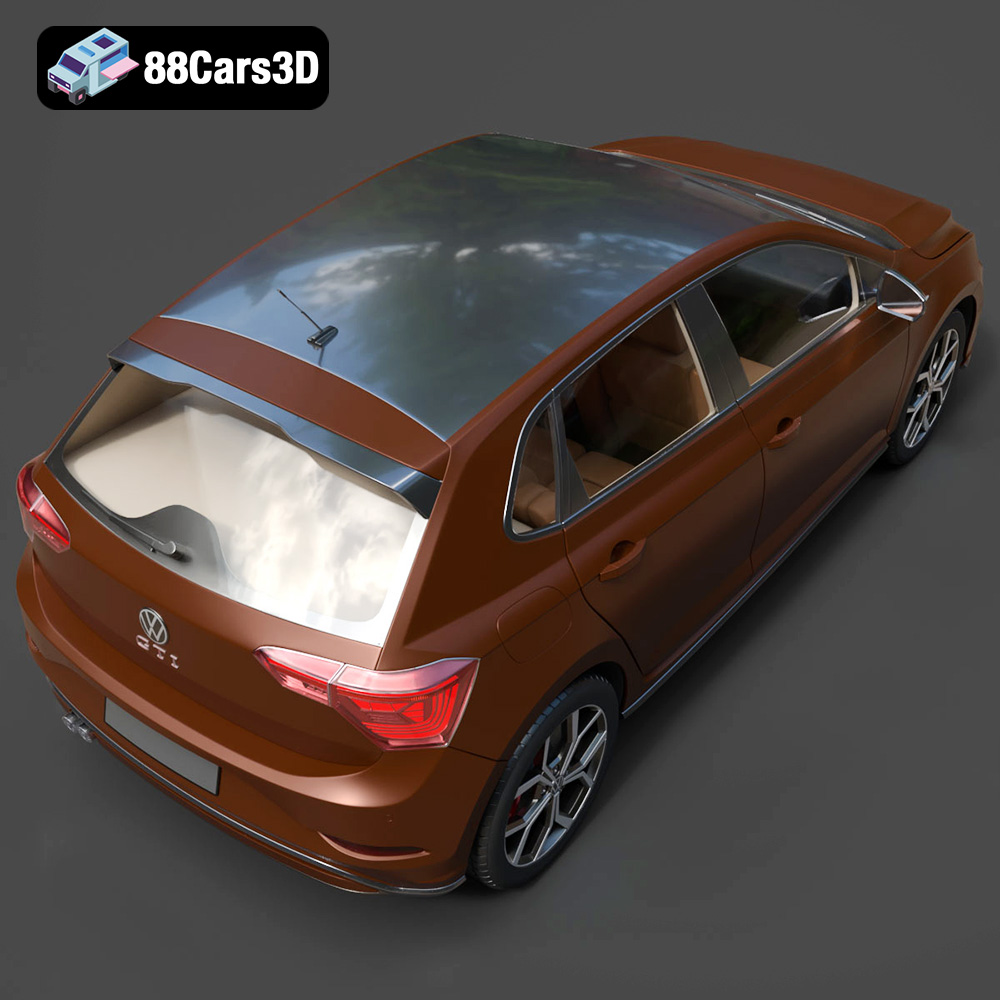
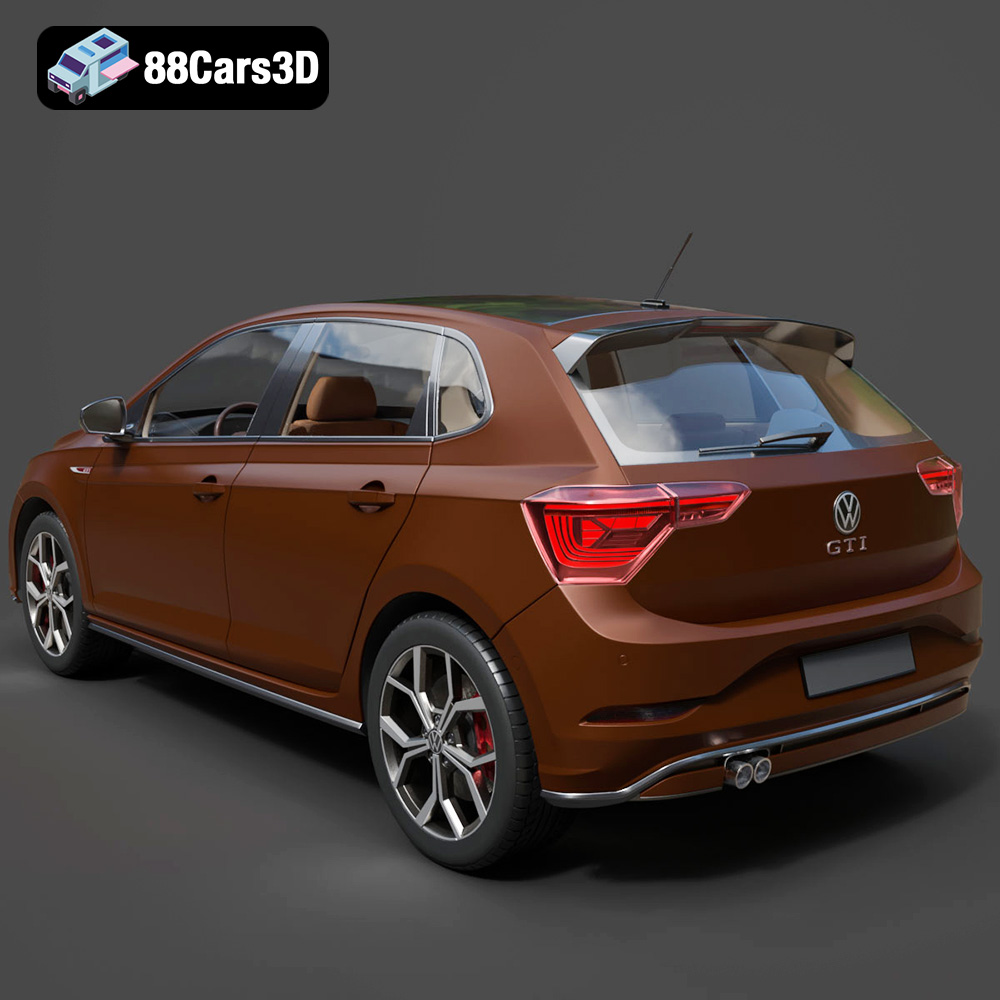
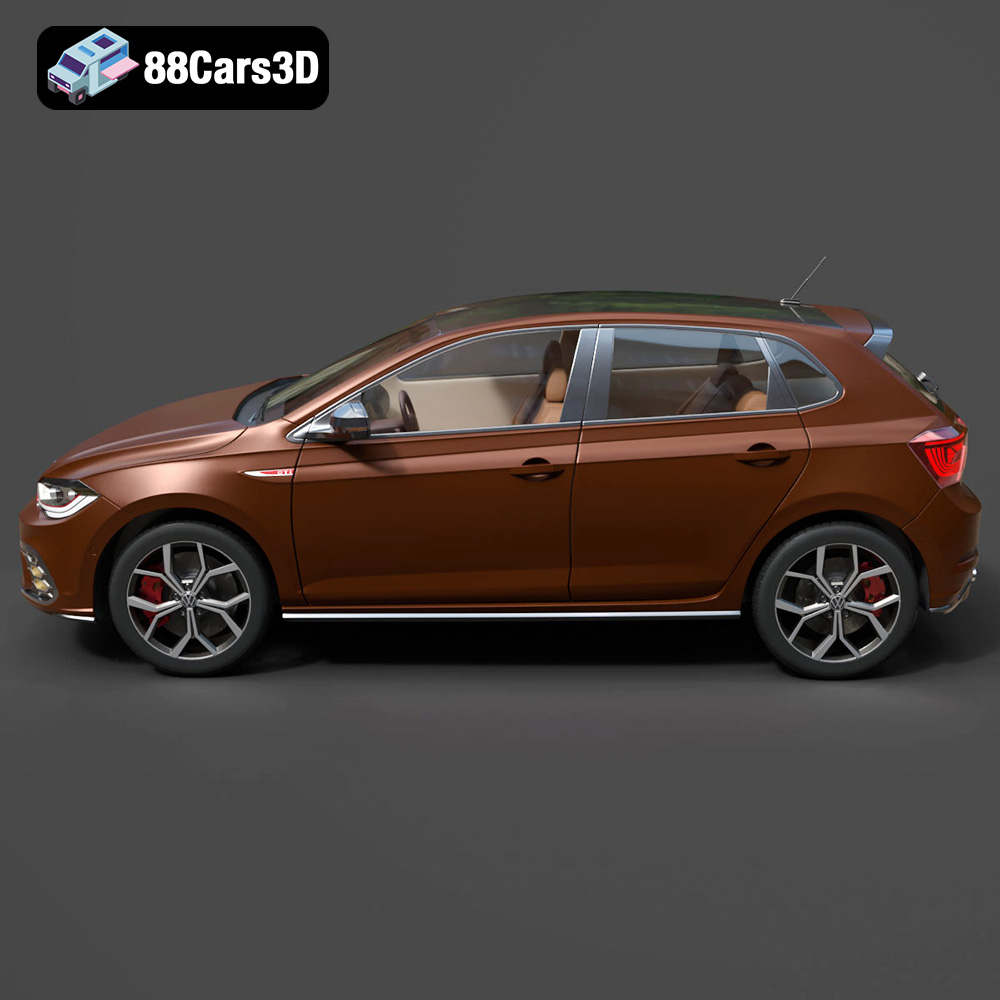
The exterior of this Polo GTI model is a testament to high-fidelity modeling. It accurately reproduces the signature red GTI accents, aggressive honeycomb grille, and dynamic matrix LED headlights that define the vehicle’s sporty aesthetic. The geometry captures the refined aerodynamic profile with precision, ensuring that reflections and highlights behave realistically under various lighting conditions. Crucially, components like the dual exhaust system with polished chrome tailpipes, IQ.LIGHT LED matrix headlights, and distinctive two-tone GTI alloy wheels with high-performance tire treads are all individually modeled. This level of detail extends to accurately modeled sport suspension stance and brake calipers, providing authenticity even in close-up shots. Furthermore, the inclusion of separate wheels, suspension, and steering components allows for dynamic animation, making it ideal for realistic driving simulations or interactive presentations.
Beyond the impressive exterior, the interior of the Volkswagen Polo GTI 2022 3D model maintains an equally high standard of detail. The iconic GTI sport seats are rendered with highly detailed stitching and bolsters, conveying a sense of premium craftsmanship. The leather-wrapped multi-function sports steering wheel, complete with GTI badging, adds to the authenticity. The Digital Cockpit Pro instrument cluster detailing and the center console, including the infotainment screen, pedals, and DSG gear selector, are all carefully modeled to provide a complete and immersive experience. This attention to interior detail is particularly crucial for applications like virtual showrooms, AR/VR walkthroughs, or even first-person perspectives in game development, where users expect a fully realized environment.
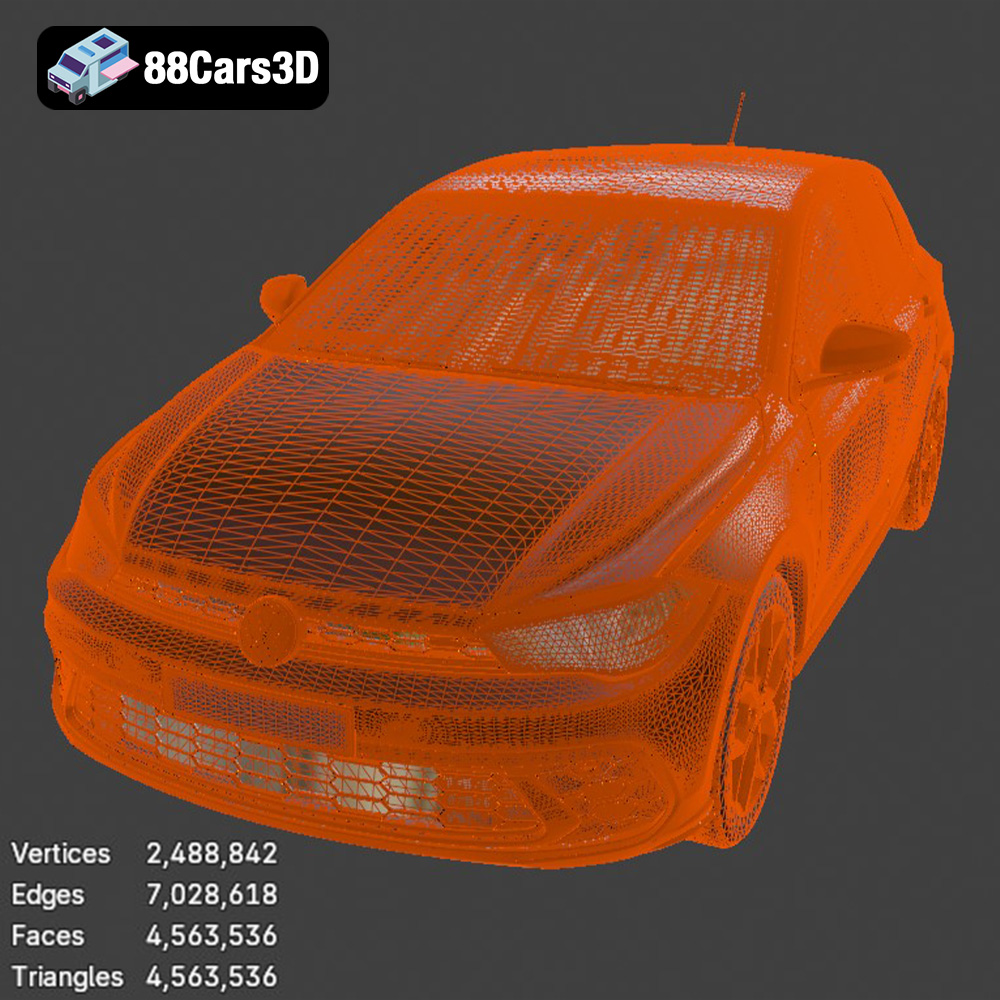
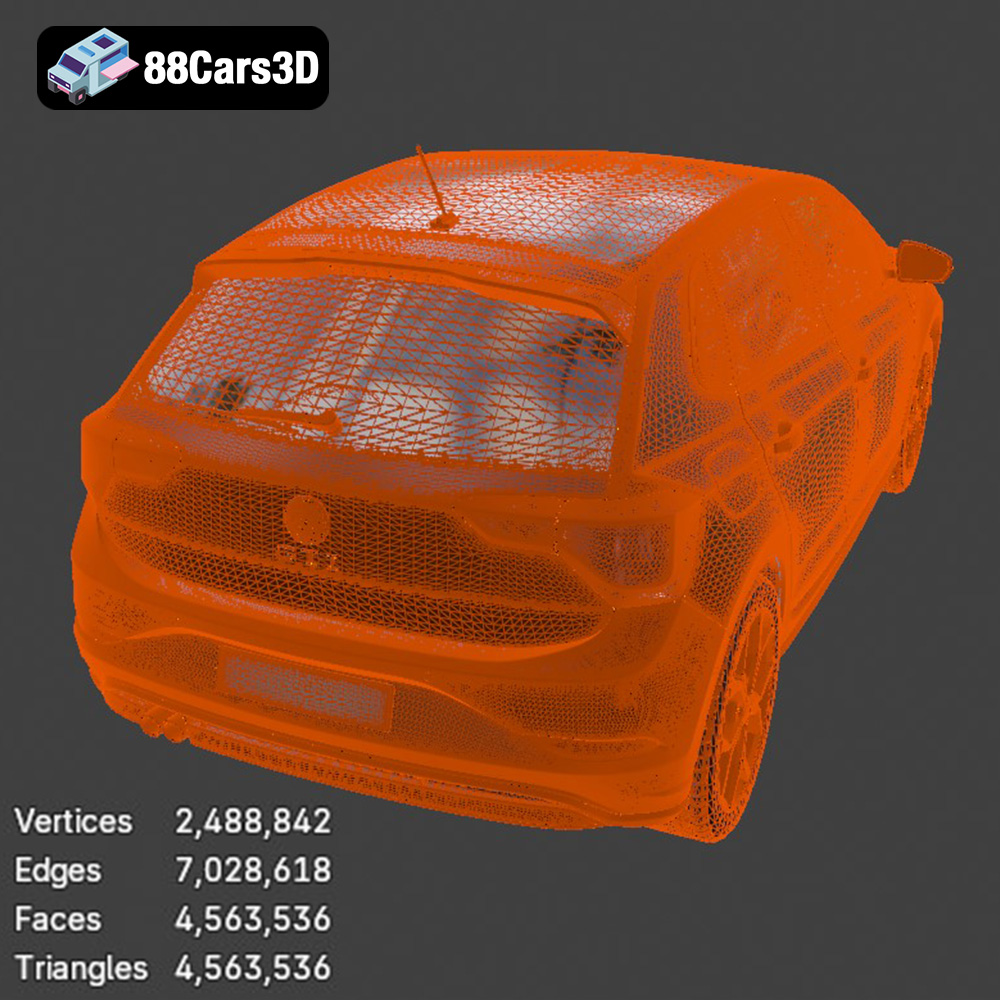
The core technical advantage of this 3D model lies in its optimized balance of visual fidelity and performance. Boasting an impressive 4,563,536 triangle count, it delivers uncompromising visual realism without becoming unwieldy for modern real-time engines. This “game-ready & optimized” polycount strikes a perfect balance, allowing for spectacular reflections and shading crucial for high-end rendering in Unreal Engine or Unity, while remaining manageable for interactive applications. The model’s real-world scale accuracy, based on actual vehicle chassis dimensions, ensures that it integrates seamlessly into existing scenes without scale discrepancies. Furthermore, proper pivot setups for steering, wheel rotation, and suspension travel are pre-configured, drastically reducing setup time for animators and game developers. This comprehensive technical foundation ensures that the Volkswagen Polo GTI 2022 model is not just visually appealing but also functionally robust for demanding professional projects.
The journey of a 3D car model from creation to deployment involves several stages, each demanding specific technical considerations. High-quality assets, such as the Volkswagen Polo GTI 2022 from 88cars3d.com, are designed to streamline these complex workflows, offering immediate value across various professional pipelines.
In architectural visualization (ArchViz) and cinematic projects, realism is paramount. A car model must seamlessly integrate into an environment, reflecting light accurately and casting realistic shadows. For these workflows, formats like .max (for 3ds Max users) or .blend (for Blender users) provide the most flexibility, allowing artists to adjust materials, lighting, and animation directly within their primary DCC (Digital Content Creation) application. The Volkswagen Polo GTI 2022 model, with its precise topology and detailed surface features, ensures spectacular reflections and shading, which are critical for achieving photorealistic results in V-Ray, Corona Renderer, Octane, or Cycles. Artists can leverage its game-ready optimization for quicker viewport navigation while retaining high-polygon detail for final renders, producing stunning visuals for marketing, presentations, or film.
For game developers, the blend of visual fidelity and performance is non-negotiable. The Volkswagen Polo GTI 2022 3D Model is explicitly designed with game development in mind, highlighted by its "Game-Ready & Optimized" tag and a triangle count that strikes a perfect balance. Using formats like .fbx or the specialized .unreal file, developers can directly import the model into Unreal Engine or Unity. The pre-configured pivot points for wheels, steering, and suspension significantly reduce setup time for vehicle physics and animation systems. Its clean topology and accurate real-world scale are essential for consistent collision detection and seamless integration into open-world environments or racing simulators. Furthermore, the model’s structure allows for easy implementation of LOD (Level of Detail) systems, ensuring optimal performance across different viewing distances without sacrificing visual quality up close.
The immersive nature of Augmented Reality (AR) and Virtual Reality (VR) demands highly optimized yet visually rich 3D car models. For these applications, the .glb format is particularly advantageous due to its single-file, optimized nature for web and mobile platforms. The Volkswagen Polo GTI 2022 model is perfect for creating virtual showrooms, interactive car configurators, or mobile AR experiences where users can explore the vehicle in real-time. Its detailed interior, including the Digital Cockpit Pro and GTI sport seats, makes it ideal for first-person VR tours, while the exterior fidelity shines in AR overlays. Developers can leverage its clean geometry to implement color customization, tire texture changes, and material adjustments (matte, gloss, metallic), offering users a truly interactive and personalized experience.
The utility of high-quality 3D car models extends far beyond traditional rendering. These versatile assets serve as fundamental building blocks across a spectrum of industries, enabling innovative solutions for design, engineering, and consumer engagement. The Volkswagen Polo GTI 2022 3D Model, with its robust construction and multiple file format offerings, is a prime example of an asset ready for diverse professional applications.
The automotive industry is rapidly embracing virtual showrooms and online configurators to enhance the customer experience. High-fidelity 3D car models are the cornerstone of these platforms. Customers can interact with a virtual representation of a vehicle, exploring every angle, opening doors, changing colors, and even customizing interior trims—all before visiting a physical dealership. The detailed exterior and cockpit features of the Polo GTI 2022 model make it an exceptional candidate for such applications, providing an engaging and realistic preview that can significantly influence purchasing decisions. The ability to modify body colors, adjust material finishes, and swap tire textures are critical customization options for these interactive experiences.
For designers, engineers, and passionate hobbyists, 3D printing offers a tangible connection to digital models. The Volkswagen Polo GTI 2022 model, convertible to the .stl format, opens up opportunities for creating physical scale models. This is invaluable for rapid prototyping in early design phases, educational purposes, or simply for enthusiasts to own a detailed replica of their favorite car. The provided 3D print settings, including recommended scales, layer height, wall thickness, and support requirements, offer a clear guide for successful printing, particularly recommending resin printing for capturing fine details like the exhaust and mirrors.
Automotive 3D models are increasingly utilized in educational settings and for professional training simulators. From teaching basic mechanics to simulating complex driving scenarios, these models provide a safe, repeatable, and cost-effective learning environment. The Volkswagen Polo GTI 2022 model, with its accurately detailed engine block, suspension components, and interactive elements, can be integrated into simulations for driver training, vehicle maintenance instruction, or even physics demonstrations. Its precise geometry and real-world scale make it an ideal asset for building realistic training modules.
One of the significant advantages of working with high-quality 3D car models is the degree of customization they offer. A well-built model serves as an excellent foundation, allowing artists and developers to adapt it to specific project requirements, branding guidelines, or creative visions. The Volkswagen Polo GTI 2022 3D Model is designed with this flexibility in mind, providing extensive opportunities for personalization.
The aesthetic appeal of any 3D model heavily relies on its materials and textures. With a premium asset like the Polo GTI, artists have the freedom to drastically alter its appearance. This includes changing body colors to match specific factory hues or experimenting with entirely custom finishes. Beyond color, the ability to adjust material properties—switching between matte, gloss, or various metallic finishes—allows for precise control over how the car interacts with light. Furthermore, modifying tire textures, perhaps from street variants to off-road or track-specific designs, can instantly change the vehicle’s context and intended use within a scene or game.
A 3D car model rarely exists in isolation; it’s always part of a larger scene or environment. The ability to adapt lighting is crucial for conveying different moods and contexts. Whether it’s integrating the Volkswagen Polo GTI 2022 into a bright, sunny cityscape, a dramatic studio setup, or a moody night scene, the model’s robust structure ensures consistent rendering. Artists can adjust environmental lighting, add volumetric effects, and fine-tune reflections to match the desired ambiance, making the car feel truly integrated into its surroundings. This flexibility extends to animating lights, creating dynamic sequences that showcase the vehicle in motion.
For interactive experiences, simulations, or cinematic sequences, animating the vehicle’s components is essential. The Volkswagen Polo GTI 2022 model excels here with its separate wheels, suspension, and steering components, all equipped with proper pivot setups. This allows for realistic wheel rotation, independent suspension travel, and accurate steering movements without complex rigging from scratch. Animators can quickly set up driving sequences, simulate impacts, or create dynamic vehicle shots, greatly enhancing the realism and engagement of the final output. The detailed engine block also presents opportunities for subtle animation, adding another layer of authenticity.
In the competitive landscape of 3D content creation, the difference between a good project and a great one often boils down to the quality of its assets. Investing in premium 3D car models like those found on 88cars3d.com is not merely a purchase; it’s a strategic decision that impacts efficiency, realism, and the overall professional polish of your work.
Creating a high-fidelity 3D car model from scratch is an incredibly time-consuming and labor-intensive process, requiring specialized skills in modeling, texturing, and optimization. By leveraging a pre-made, expertly crafted asset such as the Volkswagen Polo GTI 2022 3D Model, artists and studios can save hundreds, if not thousands, of hours of development time. This allows teams to focus on core creative tasks like scene composition, animation, or interactive logic, rather than the foundational asset creation. The "game-ready" optimization and inclusion of multiple common file formats further expedite integration, making the asset a true plug-and-play solution.
The visual quality of a 3D model directly translates to the perceived professionalism of a project. Generic or poorly optimized models often suffer from inaccurate proportions, low-resolution textures, or messy topology, leading to unrealistic reflections, jagged edges, and a general lack of authenticity. The Volkswagen Polo GTI 2022 model, with its impressive 4,563,536 triangle count, precise topology, and detailed components, guarantees uncompromising visual fidelity. This ensures that every render, every game frame, and every AR/VR experience showcases the vehicle with stunning realism, critical for brand reputation and user immersion.
A truly valuable 3D asset is one that can be adapted and reused across multiple projects and platforms. The inclusion of various file formats (.blend, .fbx, .obj, .glb, .stl, .ply, .unreal, .max) for the Volkswagen Polo GTI 2022 model demonstrates its exceptional versatility. This means the same asset can power a high-end cinematic rendering, an interactive game, a mobile AR application, and even be 3D printed, all from a single purchase. This multi-platform compatibility future-proofs your investment, ensuring the model remains relevant as technologies and project requirements evolve. Choosing quality assets is an investment in the long-term success and scalability of your creative endeavors.
The landscape of 3D visualization, game development, and interactive experiences is continuously evolving, placing increasing demands on the quality and performance of digital assets. High-fidelity 3D car models are no longer just supplementary elements; they are essential components that drive realism, facilitate immersive engagement, and accelerate creative workflows. From the meticulous detailing required for cinematic automotive rendering to the precise optimization crucial for real-time game assets, the technical intricacies of these models play a pivotal role in the success of any project.
As we’ve explored, models like the Volkswagen Polo GTI 2022 3D Model exemplify the pinnacle of digital craftsmanship. Its detailed geometry, accurate representation, and robust technical specifications—including a high poly count, precise topology, and multiple file format support—make it an invaluable asset for professionals across various sectors. Whether you’re an architect needing a realistic vehicle for an ArchViz scene, a game developer crafting the next racing sensation, or a marketer building an interactive product configurator, the right 3D model can be a game-changer.
Sourcing such high-quality assets from reputable platforms like 88cars3d.com ensures that you’re equipped with tools that not only meet industry standards but also push the boundaries of what’s possible. By understanding the nuances of file formats, the importance of detailed modeling, and the potential for customization, creators can unlock new levels of realism and efficiency in their projects, truly accelerating their creative vision.
The Volkswagen Polo GTI 2022 represents the pinnacle of compact performance… This premium 3D model boasts an impressive 4,563,536 triangle count, delivering uncompromising visual fidelity and exceptional surface detailing. Designed for seamless integration, it provides an exceptional foundation for advanced real-time rendering engines, high-end visualization projects, game development, AR/VR applications, and photorealistic virtual showrooms.
$90.00
.2022
.blend
.fbx
.glb
.hatchback
.hot-hatch
.max
.obj
.ply
.rendering
.sports car
.stl
.unreal
.volkswagen
car-3d-model
game asset
game-ready
low-poly
optimized
polo-gti
VR/AR