Get 20% OFF All Premium 3D & STL Models!

In the vibrant world of digital creation, the demand for authentic and highly detailed assets is ever-present. From crafting immersive game environments to producing breathtaking cinematic visualizations, the quality of your 3D models directly impacts the final output. Among the most sought-after categories are 3D car models, which serve as foundational elements for a vast array of projects. Today, we’re taking a closer look at an exceptional example that perfectly blends intricate detail with broad application: the Classic Ice Cream Truck 3D Model available at 88cars3d.com. This asset isn’t just a nostalgic nod to simpler times; it’s a meticulously crafted digital workhorse designed for peak performance across rendering, game development, AR/VR, and even 3D printing workflows.
This comprehensive guide will explore the technical nuances that make a 3D car model truly professional-grade, demonstrating how a versatile asset like the Classic Ice Cream Truck integrates seamlessly into diverse creative pipelines. We’ll delve into file formats, optimization strategies, rendering techniques, and real-world applications, showcasing how such a detailed model can elevate your projects to new heights of realism and engagement. Prepare to explore the technical excellence that transforms a simple idea into a stunning digital reality.
The choice of file format for a 3D model is far from trivial; it dictates compatibility, functionality, and ease of integration into various software and engines. A truly professional asset, like the Classic Ice Cream Truck 3D Model, provides a comprehensive suite of formats, ensuring maximum flexibility for any project. Understanding each format’s strengths and typical use cases is crucial for any 3D artist or developer.
The .blend format is native to Blender, the popular open-source 3D creation suite. When you download a .blend file, you’re getting a fully editable Blender scene, complete with materials, textures, lighting setups, and even animations. This format is ideal for artists who use Blender as their primary software, allowing them to directly open the model, inspect its topology, modify materials using Blender’s node editor, adjust geometry, or integrate it into existing Blender projects without any loss of data or fidelity. It’s the ultimate format for customization and in-depth artistic control within the Blender ecosystem.
Autodesk’s .fbx format has become a de facto industry standard for exchanging 3D data between different software applications. Its primary strength lies in its ability to encapsulate not just mesh geometry and UVs, but also hierarchical relationships, animation data (skeletal animations, blend shapes), PBR materials, and camera information. This makes it ideal for real-time pipelines like Unreal Engine and Unity, where efficient data transfer and animation support are paramount. While FBX is highly versatile, careful export settings are often required to ensure correct scale, axis orientation, and material translation across different programs.
The .obj (Wavefront OBJ) format is one of the oldest and most widely supported 3D file formats. It’s a universal format for cross-software compatibility, reliably storing geometry (vertices, normals, UVs) and basic material references. However, OBJ does not support animation, rigging, or complex PBR materials directly within the file, often requiring accompanying .mtl (material) files and separate texture maps. It’s an excellent choice for transferring static mesh data between virtually any 3D application, serving as a robust fallback when other formats encounter compatibility issues.
.glb (GL Transmission Format Binary) is an increasingly important format, particularly for modern web-based applications, augmented reality (AR), and virtual reality (VR) experiences. GLB files are highly optimized, self-contained packages that embed PBR materials, textures, and animation data directly within a single binary file. This efficiency makes them perfect for fast loading and rendering in browsers, mobile AR apps, and VR platforms, minimizing file sizes while maintaining visual quality. The Classic Ice Cream Truck’s .glb format is perfect for developers looking to integrate it into immersive online experiences.
The .stl (Stereolithography) format is the standard for 3D printing. Unlike other formats that store faces and polygons, STL represents a 3D model as a series of connected triangles that define the surface geometry, essentially describing the model’s outer shell. It does not carry color, texture, or material information, focusing purely on geometric fidelity for physical fabrication. The Classic Ice Cream Truck’s availability in STL means hobbyists and professionals can bring this digital asset into the physical world, creating detailed scale models.
The .ply (Polygon File Format) is another common format for storing 3D data, particularly popular in academic and research settings, as well as for models derived from 3D scanning. PLY can store not only vertices, faces, and normals, but also additional properties like color per vertex, transparency, and range data. It offers greater flexibility than OBJ in terms of storing diverse mesh attributes, making it suitable for high-precision applications like CAD, scientific visualization, or detailed mesh analysis.
While not a universal file extension in the same vein as FBX or OBJ, the inclusion of an .unreal file (often meaning an asset package or project file optimized for Unreal Engine) signifies that the Classic Ice Cream Truck model has been specifically prepared and tested for performance within Unreal Engine. This often means pre-configured materials, collision meshes, LODs (Level of Detail), and potentially even basic blueprints, providing an immediate, engine-ready asset that streamlines integration for game developers and real-time visualization artists.
Similar to .blend for Blender, the .max format is the native file type for Autodesk 3ds Max. This format contains the entire 3ds Max scene, including geometry, modifiers, materials, lights, cameras, animations, and render settings. It’s the ideal format for 3ds Max users who require full editability and access to all parameters used during the model’s creation. For those working within the 3ds Max ecosystem for high-end rendering or complex animations, the .max file offers unparalleled control.
The availability of such a comprehensive array of formats for the Classic Ice Cream Truck underscores its professional-grade status, catering to a broad spectrum of users and workflows. This foresight in asset packaging ensures that designers, animators, and developers can confidently integrate this model into their chosen creative pipeline without friction, maximizing both efficiency and creative potential.
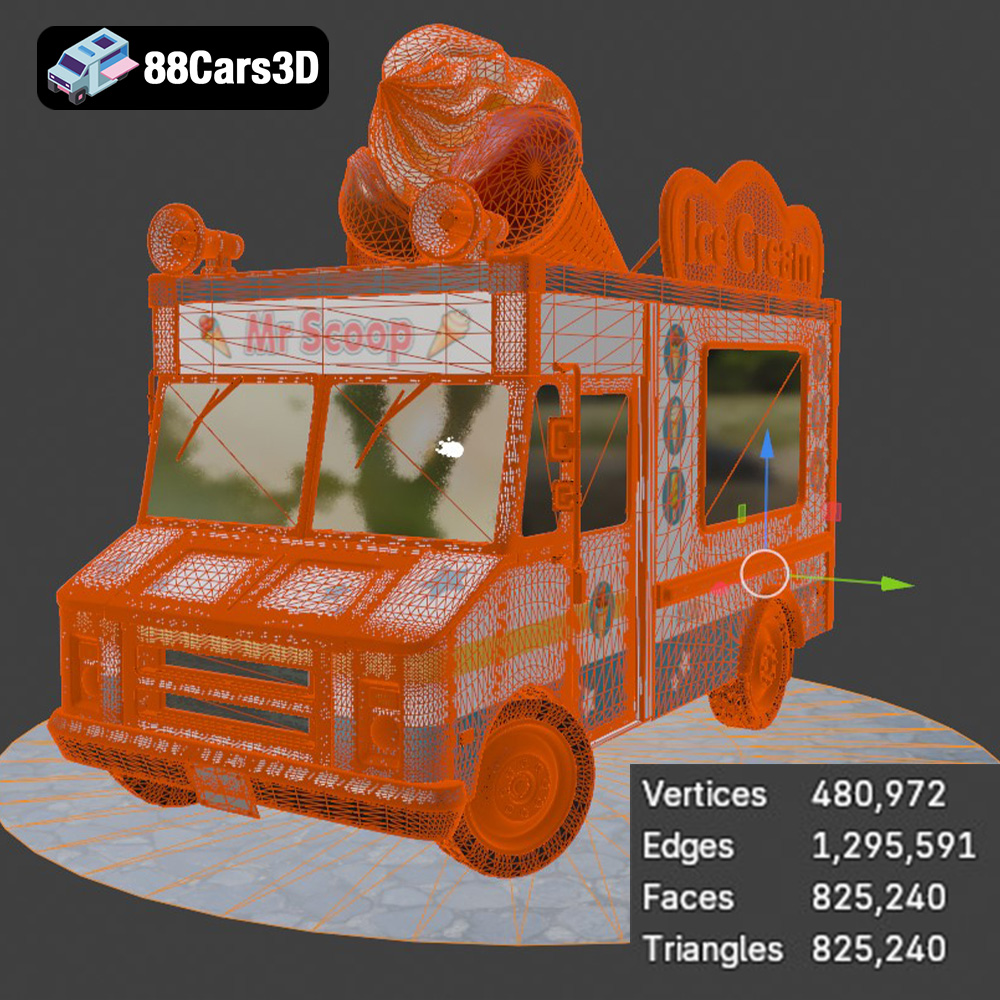
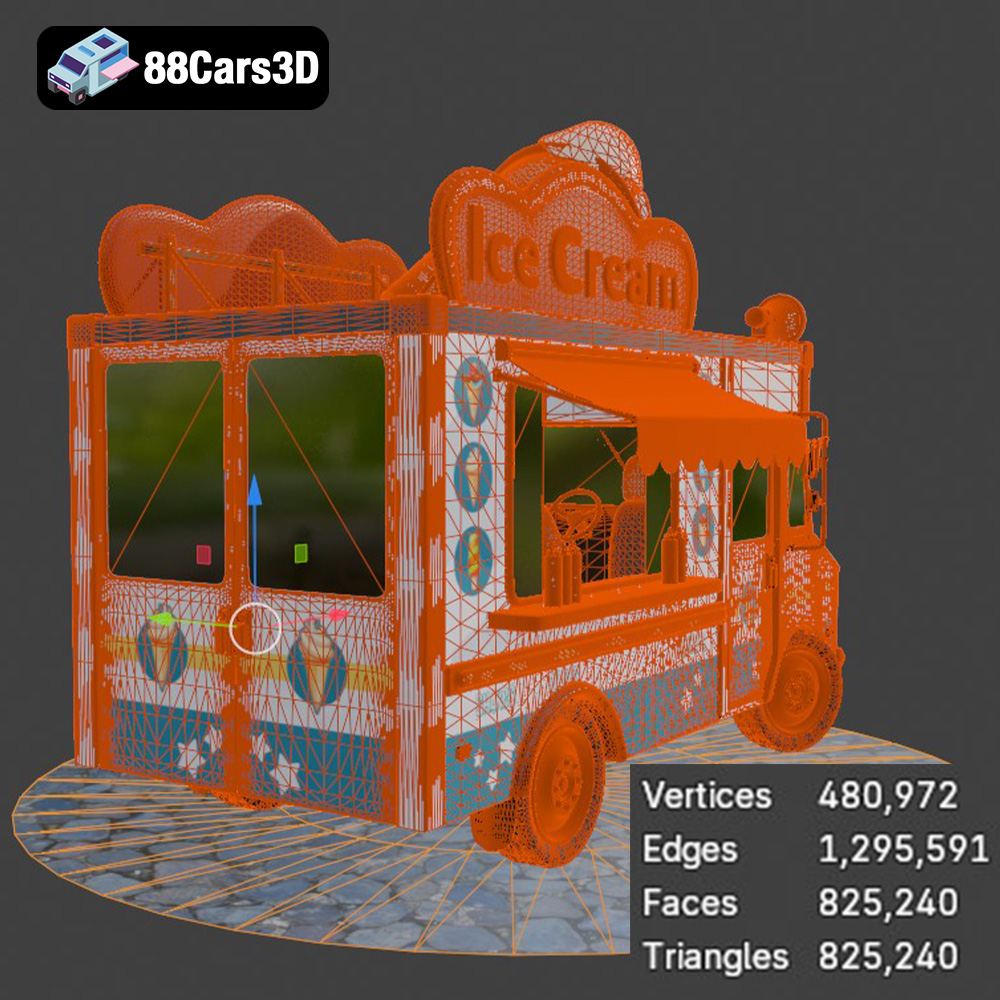
Automotive rendering stands as one of the most demanding disciplines in 3D visualization, requiring an exquisite balance of precise modeling, sophisticated material definition, and masterful lighting. The Classic Ice Cream Truck 3D Model, with its “comprehensive topology of 825,240 triangles” and “incredible visual fidelity,” is specifically engineered for high-end automotive rendering, bringing a level of realism that truly captivates.
Achieving photorealistic automotive rendering begins with the underlying geometry, but it is elevated by the intelligent application of Physically Based Rendering (PBR) materials and sophisticated lighting. The detailed exterior features of the Classic Ice Cream Truck, from its “accurate Classic Ice Cream Truck frame geometry” to “authentic lighting details,” provide a perfect canvas. PBR textures (Albedo, Normal, Roughness, Metallic, AO) are essential for accurately simulating how light interacts with different surfaces. Imagine the subtle sheen of the truck’s painted metal, the reflective quality of its chrome elements, the transparency of its glass windows, and the matte texture of its heavy-duty tires. Each material must be meticulously crafted and assigned to clean, non-overlapping UVs to ensure textures map correctly and without distortion.
Lighting is equally crucial. High Dynamic Range Images (HDRIs) are commonly used for realistic environmental lighting, providing natural reflections and global illumination. Supplementary area lights can be employed to highlight specific features, such as the “service window illumination” or the subtle reflections on the “detailed commercial steel wheels.” Understanding how light sculpts form and reveals surface imperfections is key to transforming a great 3D car model into a stunning rendered image.
The beauty of a high-quality 3D car model like this ice cream truck is its readiness for integration into diverse rendering scenarios. In software like 3ds Max or Blender, artists can quickly set up studio scenes for product visualization, placing the truck against a neutral backdrop to emphasize its design and features. For more elaborate compositions, such as “urban neighborhood scenes” or “summer beach environments,” the model serves as a central focal point. The “separate wheels, suspension, and steering components for animation” also allow for precise posing and staging, simulating realistic road conditions or dynamic parking scenarios.
Beyond static images, the model’s detailed construction makes it ideal for cinematic storytelling. Imagine a camera smoothly tracking alongside the truck, showcasing its “detailed engine block and undercarriage components” or revealing the “fully modeled rear service area with freezers, soft-serve machines, and storage.” Such attention to detail in a 3D car model from 88cars3d.com allows for incredible flexibility in camera work and narrative development, truly pushing the boundaries of what is possible in automotive rendering.
Game development places unique demands on 3D assets, balancing visual fidelity with performance efficiency. The Classic Ice Cream Truck 3D Model is described as “Game-Ready & Optimized” with “825,240 triangles,” striking a “perfect balance for real-time engines (Unreal, Unity) while maintaining high-end visual realism.” This specific polycount is a testament to its thoughtful design for interactive experiences.
When integrating 3D car models into game engines like Unreal Engine or Unity, performance is paramount. While 825,240 triangles represent a high level of detail, it’s optimized for key assets that will be prominently featured in a game. For larger open-world environments, developers typically employ Level of Detail (LOD) systems. This means creating progressively simpler versions of the model that automatically switch in based on the camera’s distance, significantly reducing rendering overhead. The high-fidelity base model serves as an excellent foundation for generating these LODs without sacrificing detail up close.
The “real-world scale accuracy” and “proper pivot setup for steering, wheel rotation, and suspension travel” are crucial for accurate physics and animation within the game engine. Collision meshes, which are simplified representations of the truck’s shape, are also essential for realistic interaction with the game world and other vehicles. The inclusion of .fbx and .unreal file formats indicates that the model is prepared for efficient import and configuration within these real-time environments, often with pre-configured materials and optimized UVs to minimize draw calls and maximize rendering speed.
Beyond static representation, a truly game-ready 3D car model needs to be animated. The Classic Ice Cream Truck’s “separate wheels, suspension, and steering components for animation” are a huge advantage. This allows game developers to easily rig the vehicle for realistic movement, including:
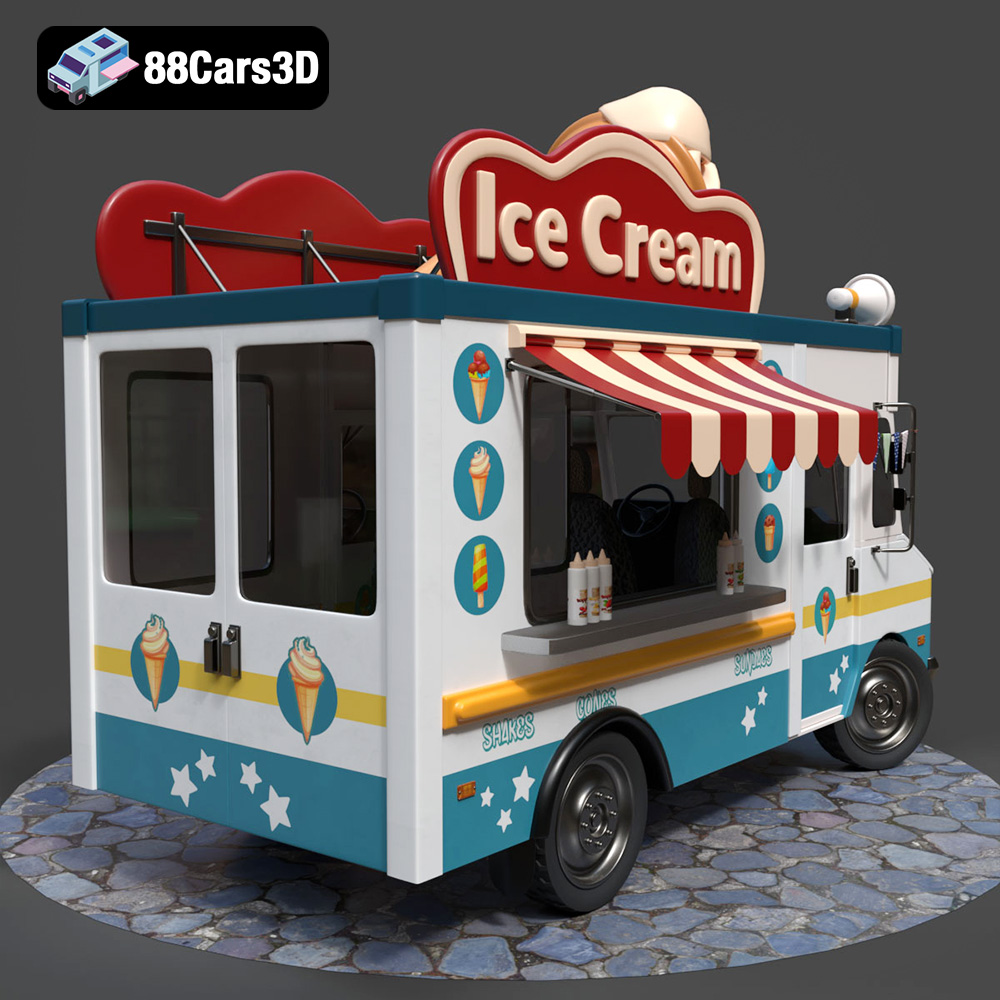
For immersive gaming, particularly in “first-person POV,” the “fully modeled rear service area with freezers, soft-serve machines, and storage” and “classic commercial driver’s seat and utilitarian cabin details” are vital. This interior fidelity allows players to enter the vehicle, offering a rich and believable experience. The “detailed control pedals, levers, and transmission shifter” further enhance this immersion, proving that this 3D car model is built not just for visuals, but for interactive gameplay.
The application of high-quality 3D car models extends far beyond traditional rendering and game development. With advancements in additive manufacturing and immersive technologies, assets like the Classic Ice Cream Truck 3D Model are finding exciting new uses in 3D printing and augmented/virtual reality.
The inclusion of the .stl format for the Classic Ice Cream Truck is a significant advantage for hobbyists and professionals interested in physical fabrication. STL, being a purely geometric format, simplifies the mesh into a collection of triangles, which is the universal language for 3D printers. However, successful 3D printing requires careful consideration of several factors, meticulously detailed in the product’s specifications:
This level of detail in 3D print settings makes the Classic Ice Cream Truck an accessible and rewarding project for those looking to transform a digital asset into a tangible collectible or prototype.
AR/VR applications demand optimized, real-world scale assets that can perform efficiently on diverse hardware, from powerful VR headsets to mobile phones. The Classic Ice Cream Truck’s “real-world scale accuracy” and its availability in the .glb format make it an outstanding candidate for immersive experiences.
In AR, users could “spawn” the ice cream truck into their real-world environment via a smartphone or tablet, interacting with it as if it were truly there. Imagine walking around the truck, peering into the “complete side serving window,” or even interacting with the “fully modeled rear service area.” For VR, the model could serve as a central object in a virtual showroom, a historical simulation, or an interactive educational experience. The optimized geometry ensures smooth frame rates, preventing motion sickness and enhancing immersion. Whether for “immersive virtual showrooms, configurators, and mobile AR experiences,” this 3D car model brings a touch of nostalgic reality to the bleeding edge of interactive technology.
The true value of a professional 3D car model lies not just in its initial detail and fidelity, but in its adaptability and ease of integration into diverse creative workflows. The Classic Ice Cream Truck 3D Model exemplifies this, offering extensive customization options and streamlining production processes for artists and developers.
No two projects are identical, and a high-quality 3D asset should provide the flexibility to adapt. The Classic Ice Cream Truck model offers several “Customization Options” that empower artists to tailor its appearance:
The included .blend and .max files are particularly valuable here, giving artists full access to the original project files where these customizations can be most effectively implemented at a granular level.
Time is a critical resource in any production pipeline. Starting with a pre-made, high-quality 3D car model like the Classic Ice Cream Truck from 88cars3d.com significantly streamlines production. Instead of dedicating hundreds of hours to modeling a complex vehicle from scratch, artists can immediately focus on scene composition, lighting, animation, or interactive development. The model’s “detailed engine block and undercarriage components” and “fully modeled rear service area” are not just visual flourishes; they represent countless hours of expert modeling that are now instantly available.
This level of detail ensures consistency and quality across projects, making it an invaluable “game-asset” for studios large and small. It reduces the risk of rework, accelerates iteration cycles, and allows creative teams to allocate their resources more efficiently to other aspects of their project, ultimately leading to higher quality results delivered on time. The investment in such a comprehensive and versatile 3D model pays dividends in efficiency and creative freedom.
The Classic Ice Cream Truck 3D Model is far more than just a digital representation of a vehicle; it’s a meticulously engineered asset designed to meet the rigorous demands of professional 3D production across various industries. From its comprehensive “825,240 triangles” optimized for both high-end “automotive rendering” and “game development,” to its extensive suite of file formats (including .blend, .fbx, .obj, .glb, .stl, .ply, .unreal, and .max), this model offers unparalleled versatility.
Whether you’re creating a nostalgic commercial, populating an open-world game, designing an interactive AR experience, or even 3D printing a collectible, this model provides the foundational quality and technical flexibility required. Its attention to detail, from the “accurate Classic Ice Cream Truck frame geometry” to the “fully modeled rear service area with freezers and service counters,” ensures authenticity and immersion in any context. By leveraging such a high-caliber asset, artists and developers can significantly enhance their creative output, saving valuable time and resources while achieving stunning results.
Explore the possibilities that a truly professional 3D car model can unlock for your next project. The Classic Ice Cream Truck 3D Model is a testament to the power of well-crafted digital assets, ready to bring its charming essence and technical prowess to your digital world. Discover this model and a wide array of other high-quality 3D car models for all your creative needs at 88cars3d.com.
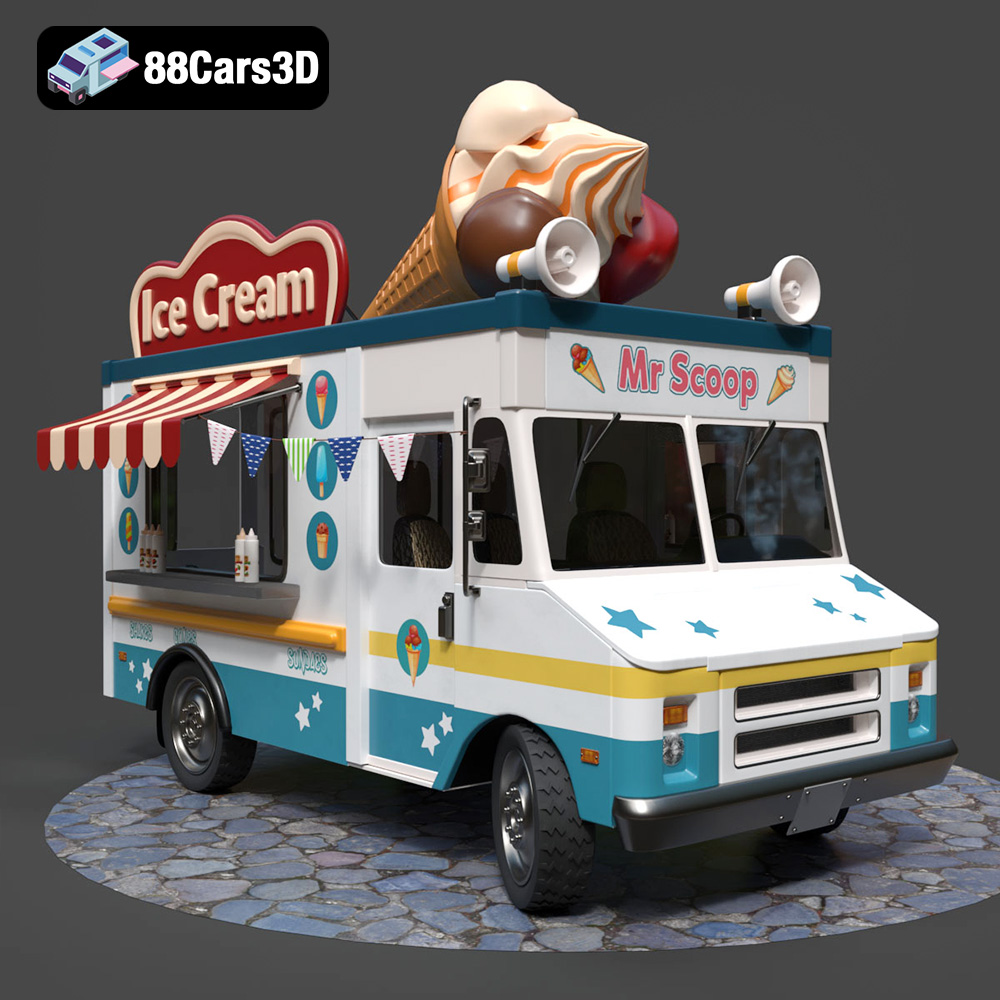
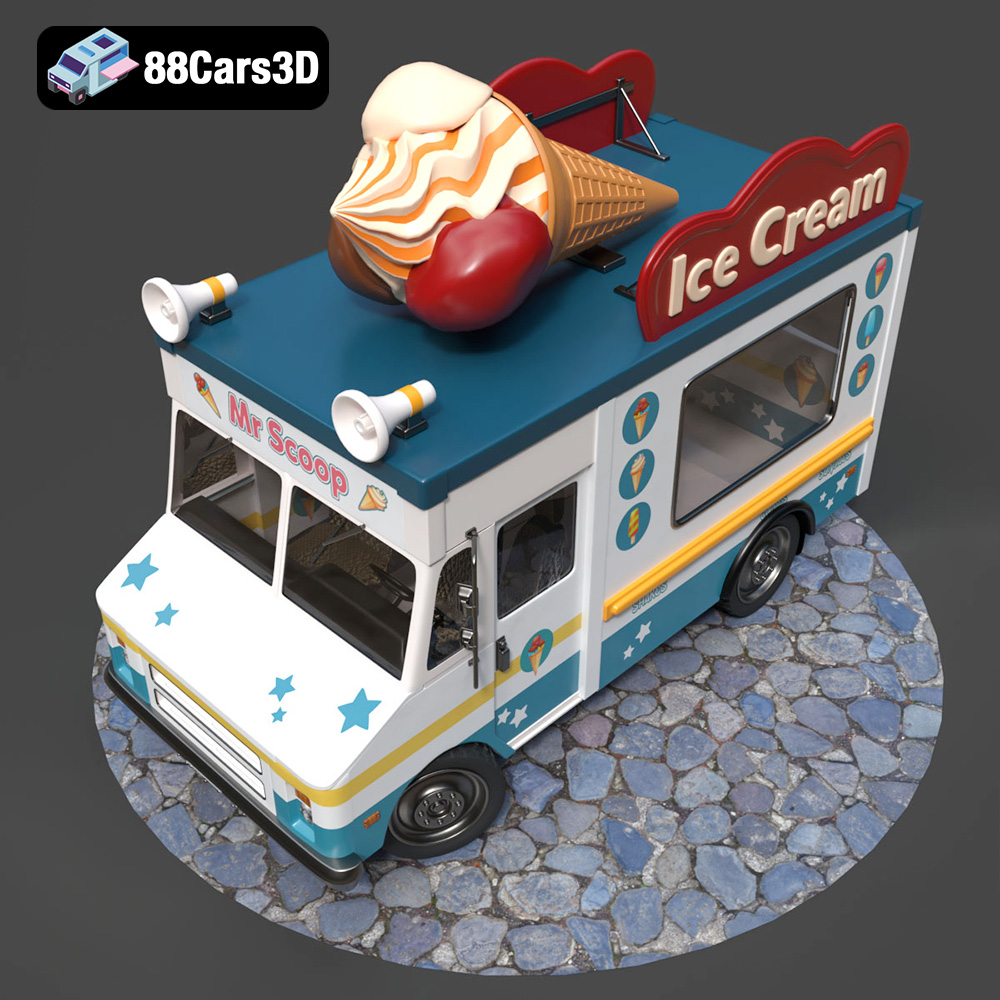
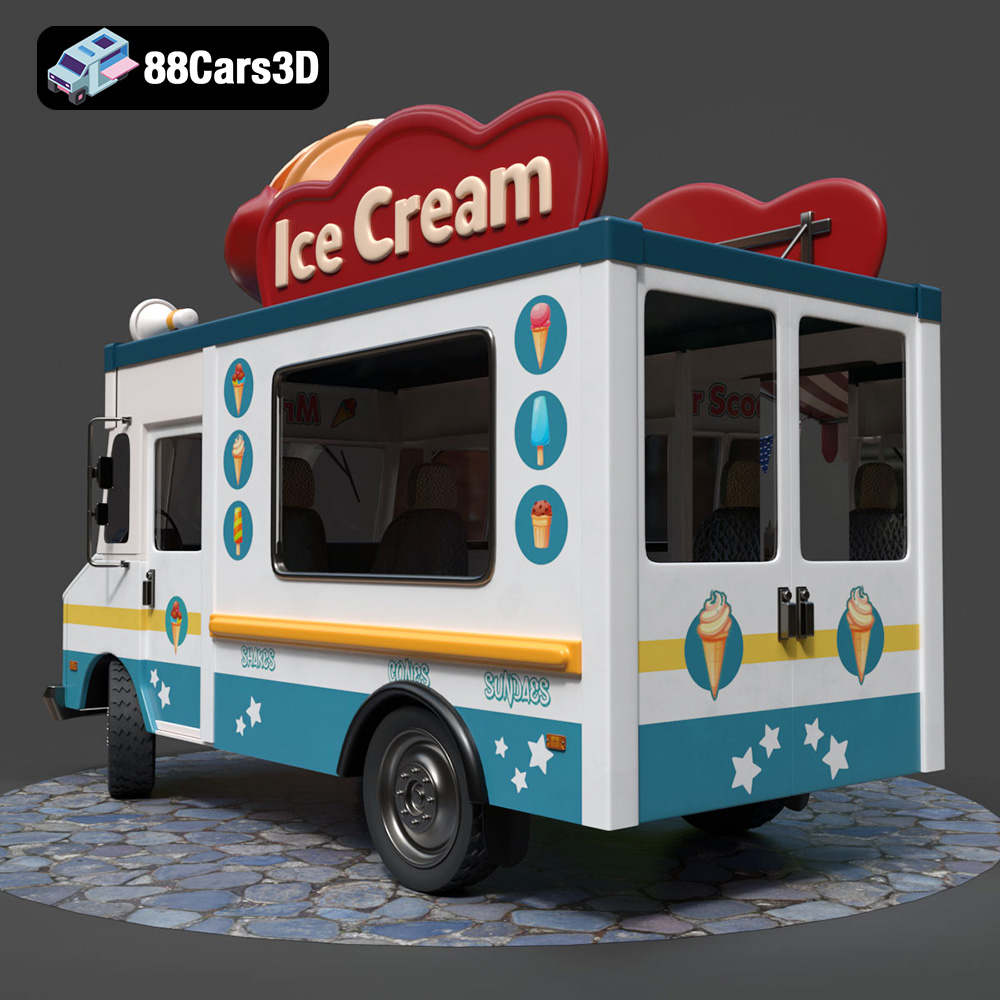
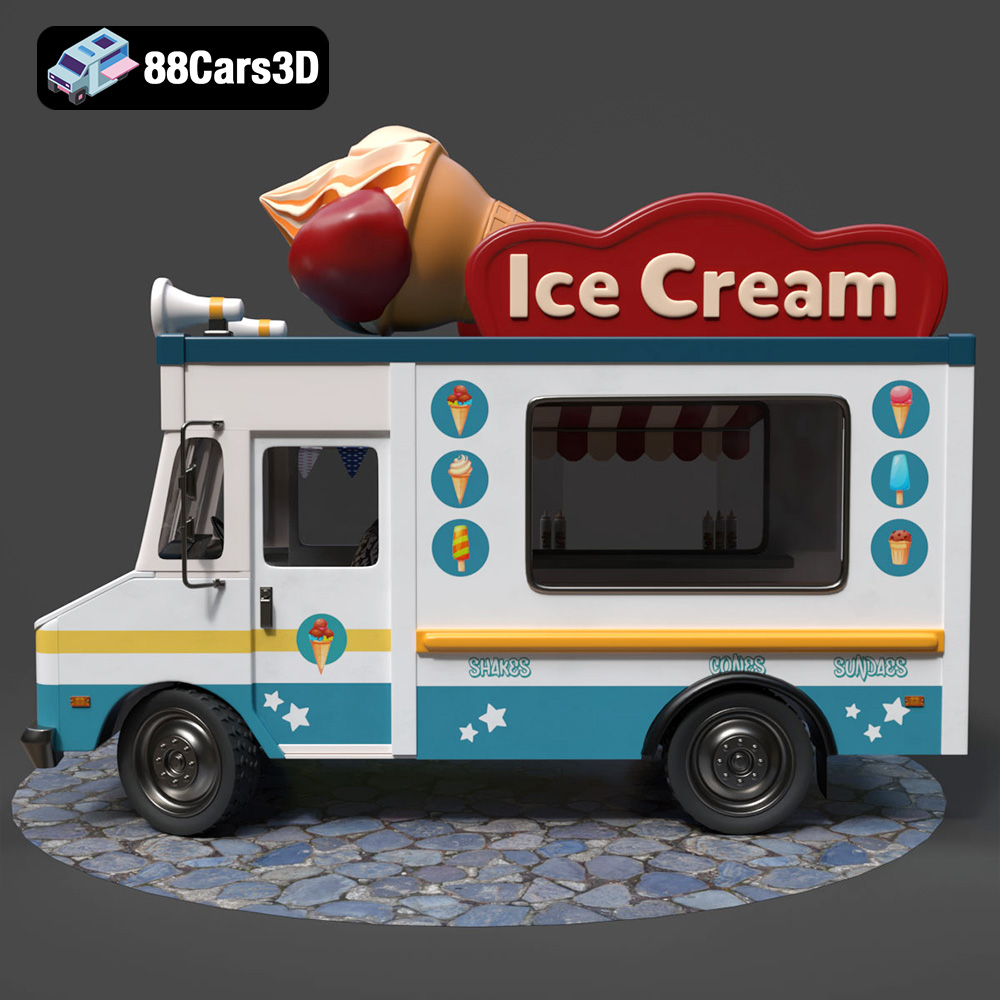
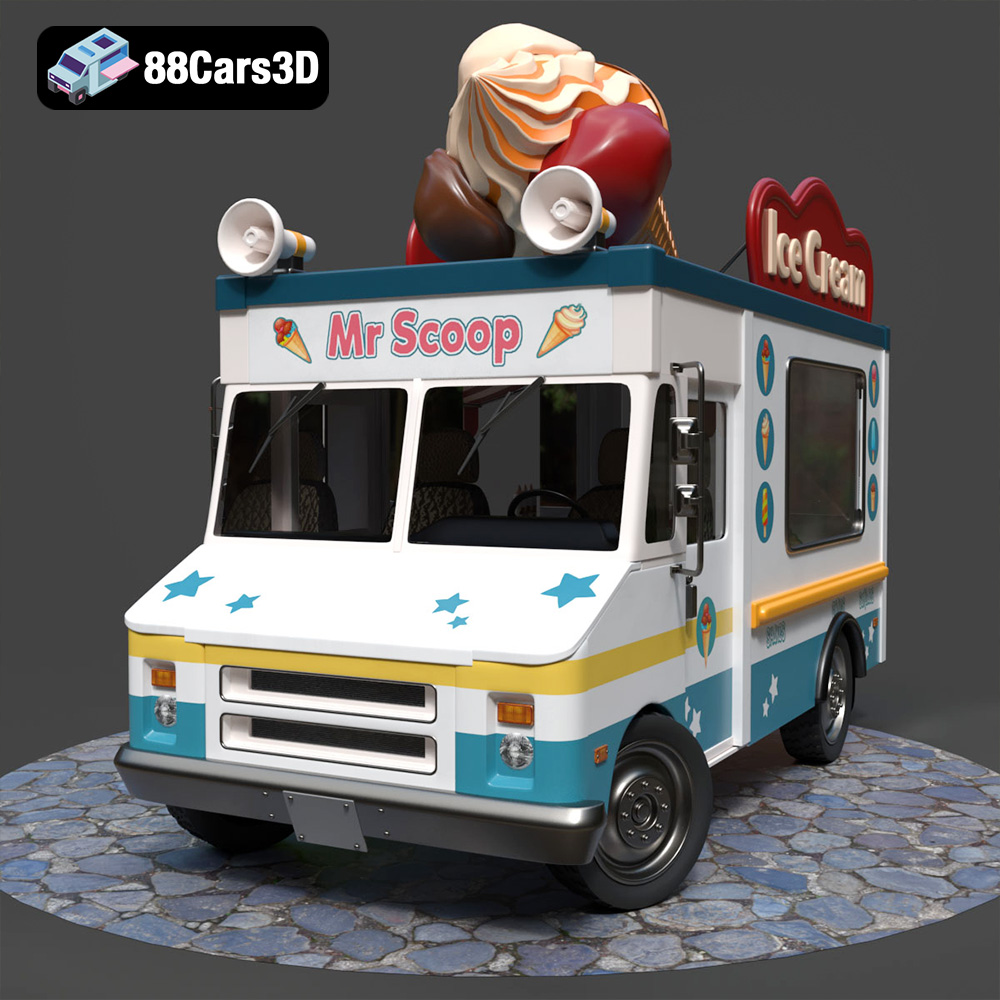
Bring nostalgic summer vibes to your digital projects with this highly detailed Classic Ice Cream Truck 3D model. Featuring the iconic boxy silhouette, recognizable side serving window, and roof-mounted promotional elements, this model captures the charming essence of neighborhood treats on wheels. Key visual elements include a fully modeled rear cabin equipped with freezers and service counters, realistic suspension, and classic commercial vehicle styling cues.With a comprehensive topology of 825,240 triangles, this model offers incredible visual fidelity for high-end rendering and detailed close-ups while maintaining optimized geometry for advanced real-time engines. It is an outstanding asset for game development, virtual reality environments, animation, and architectural visualization.Perfect for urban neighborhood scenes, summer beach environments, food truck festival visualizations, and cinematic storytelling.
$56.99
.blend
.fbx
.glb
.max
.obj
.ply
.rendering
.stl
.unreal
car-3d-model
classic-truck
commercial-vehicle
detailed
food-truck
game asset
game-ready
high poly
ice-cream-truck
VR/AR