Get 40% OFF All Premium 3D & STL Models!

In the dynamic world of 3D design and visualization, the demand for high-quality, technically sound automotive models is constant. From hyper-realistic architectural visualizations to immersive game environments and cutting-edge AR/VR experiences, a vehicle model often serves as a focal point, grounding a scene in reality or driving a user’s interaction. Crafting such assets from scratch is an immense undertaking, requiring countless hours of meticulous modeling, texturing, and optimization.
This is precisely where expertly pre-built 3D car models become indispensable. They offer a significant advantage, allowing professionals to bypass the foundational modeling phase and dive straight into implementation and creative refinement. Today, we’re diving deep into an exemplary asset that embodies this principle: the Hyundai Santa Fe 2019 3D model. This model, available on 88cars3d.com, is engineered to meet the rigorous demands of various industries, providing a versatile foundation for any project requiring a modern, detailed SUV.
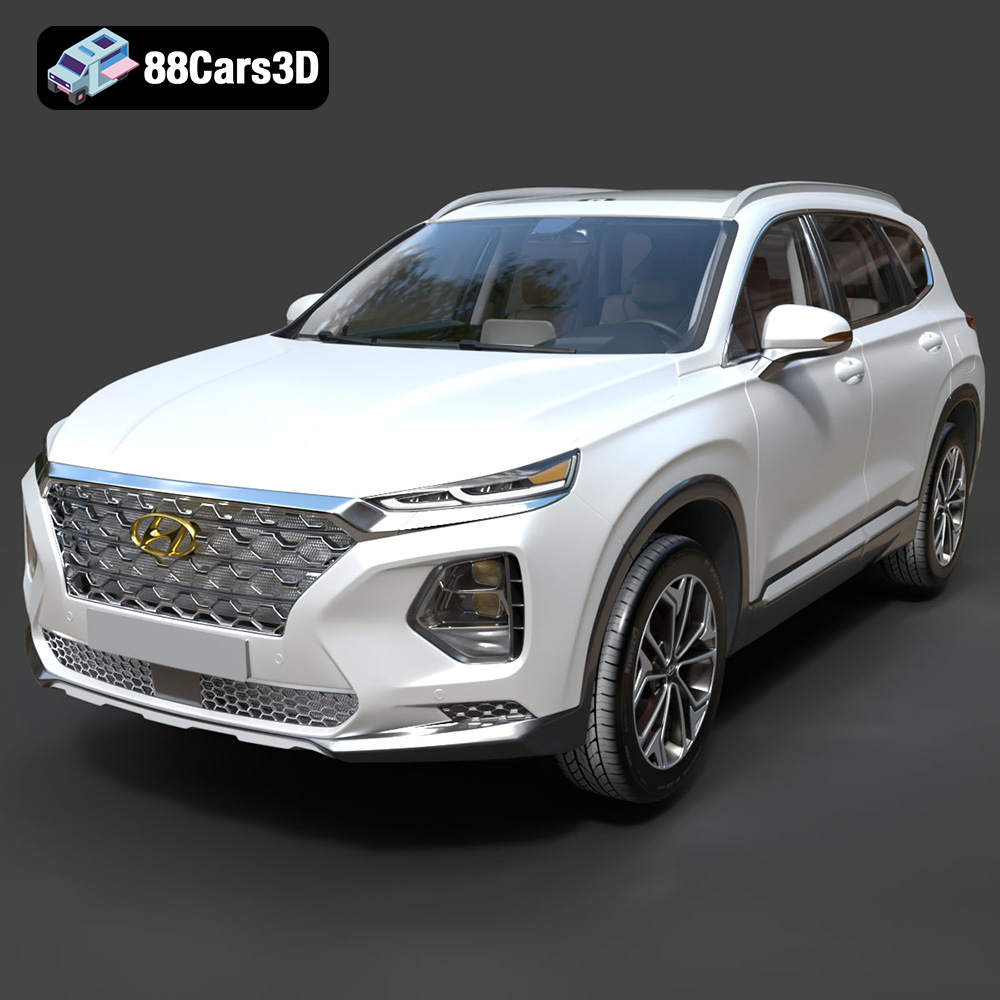
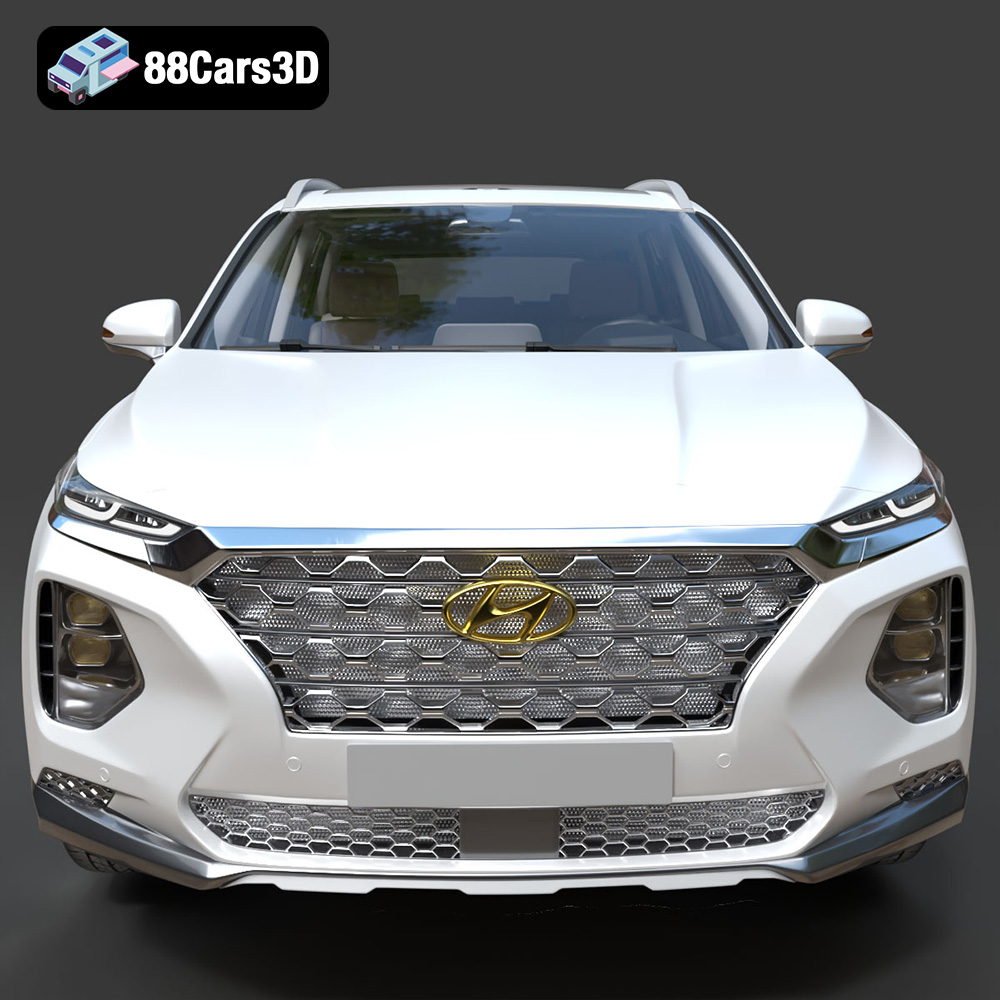
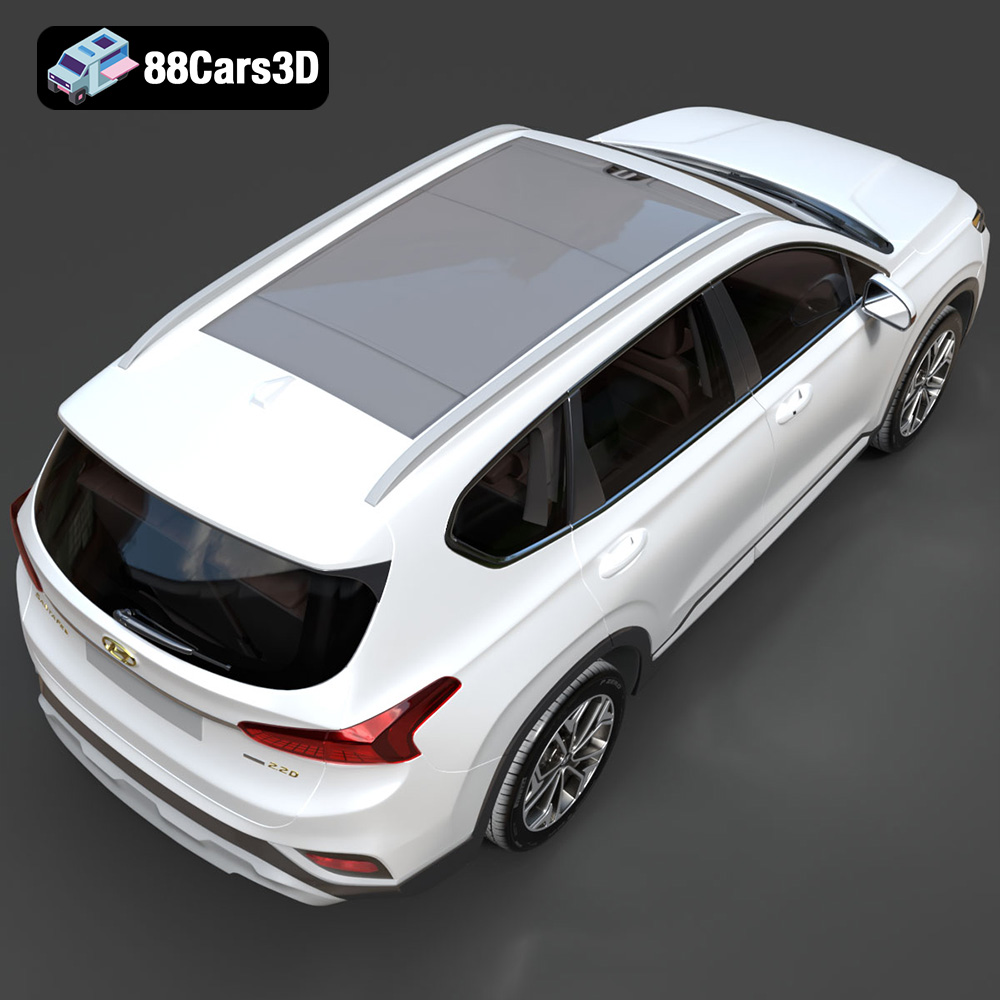
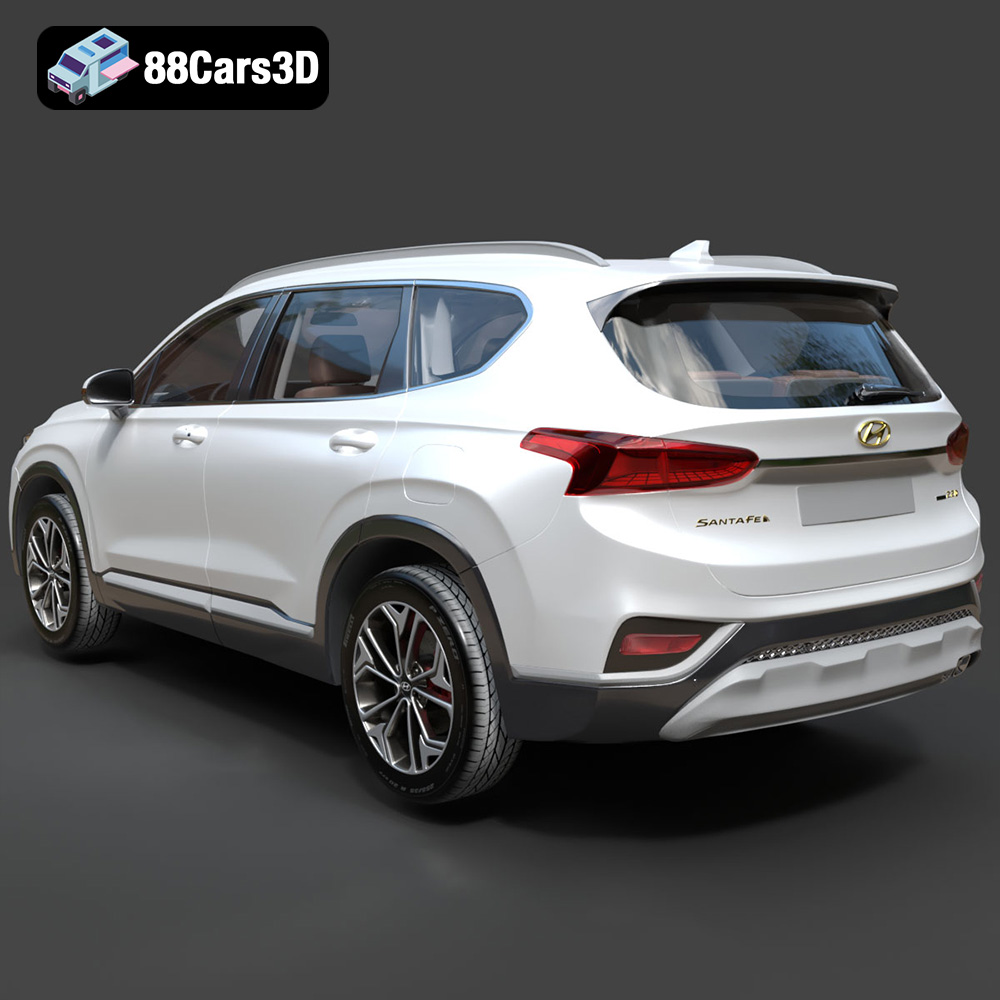
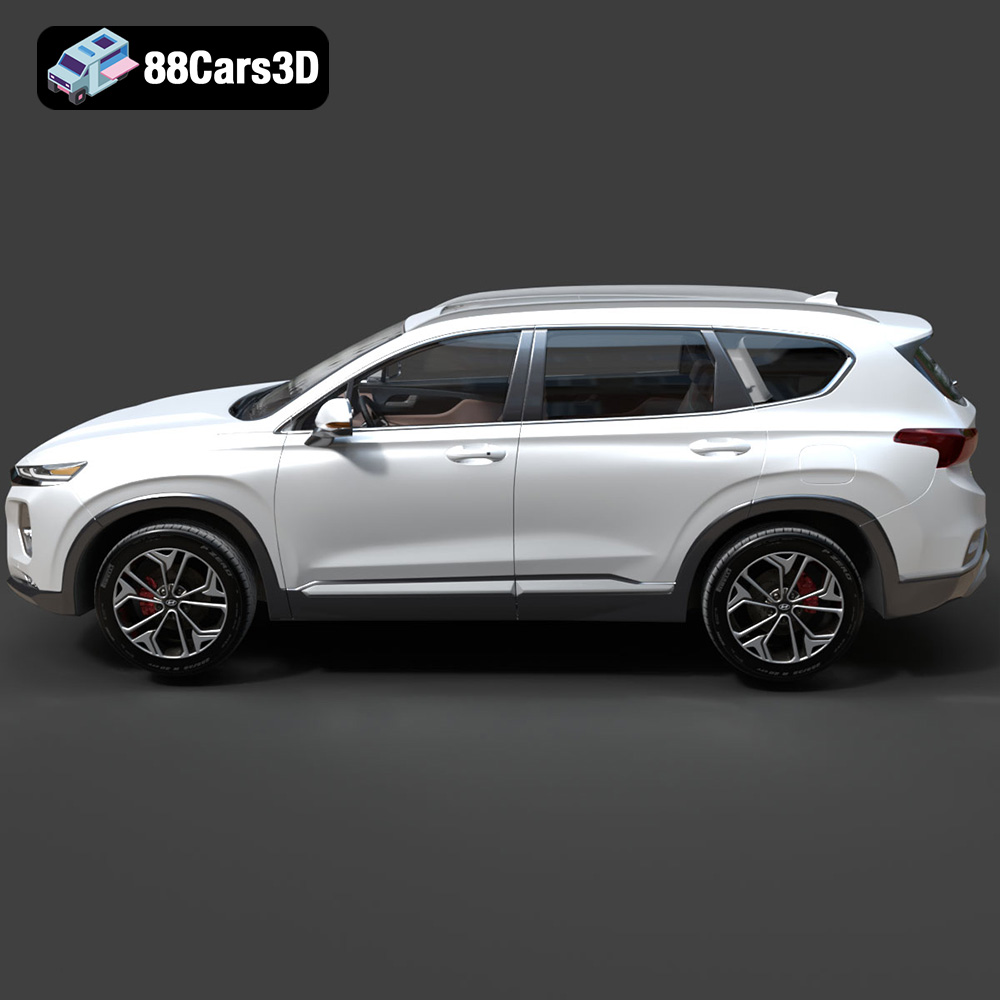
The 2019 Hyundai Santa Fe itself is a compelling subject, known for its bold design, family-friendly utility, and sophisticated styling. This 3D rendition captures every nuance, from its distinctive cascading grille and aggressive split-headlight design to its precisely sculpted body lines. It’s more than just a visual replica; it’s a meticulously optimized digital asset designed for seamless integration into diverse professional pipelines, ready to enhance your next project with uncompromising visual fidelity and robust performance.
Creating a truly authentic 3D car model involves a delicate balance of artistic vision and technical precision. It’s not enough to simply replicate a vehicle’s shape; every curve, panel gap, and material finish must be faithfully translated into the digital realm while adhering to strict performance budgets, especially for real-time applications.
The Hyundai Santa Fe 2019 3D model exemplifies meticulous attention to detail. Its accurate frame geometry and proportions are based on the actual vehicle chassis, ensuring that whether viewed up close in an automotive rendering or integrated into a virtual city, it looks absolutely correct. Key exterior features like the authentic dual exhaust system, intricate undercarriage details, and the signature split-lighting setup with sleek LED daytime running lights are all present and accounted for. Even the alloy wheels are high-fidelity, complete with deeply treaded SUV tires that add to the model’s realism. This level of detail is crucial for projects where visual authenticity is paramount, such as marketing campaigns, product showcases, or film and animation.
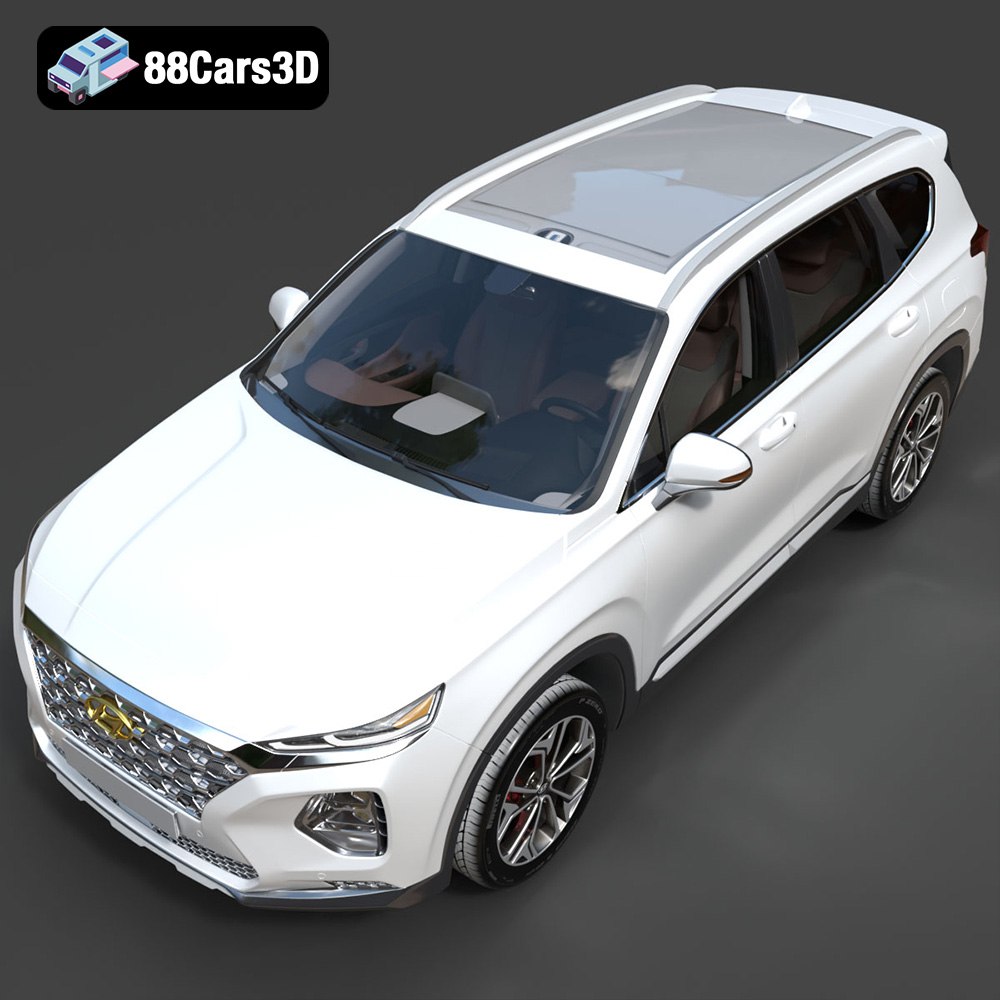
Beyond the exterior, the model extends its fidelity to the cockpit. Premium multi-contoured front and rear seats, an accurate multi-function steering wheel, a detailed digital instrument cluster, and a floating infotainment display are all meticulously recreated. Precision control details, including pedals, climate controls, and the gear shifter, enhance realism. For applications like game development, where a first-person perspective might be utilized, this interior optimization is invaluable. It allows for truly immersive experiences, putting the user directly inside a vehicle that feels tangible and real. This attention to both external and internal accuracy elevates the model far beyond a simple prop, transforming it into a fully explorable and interactive asset.
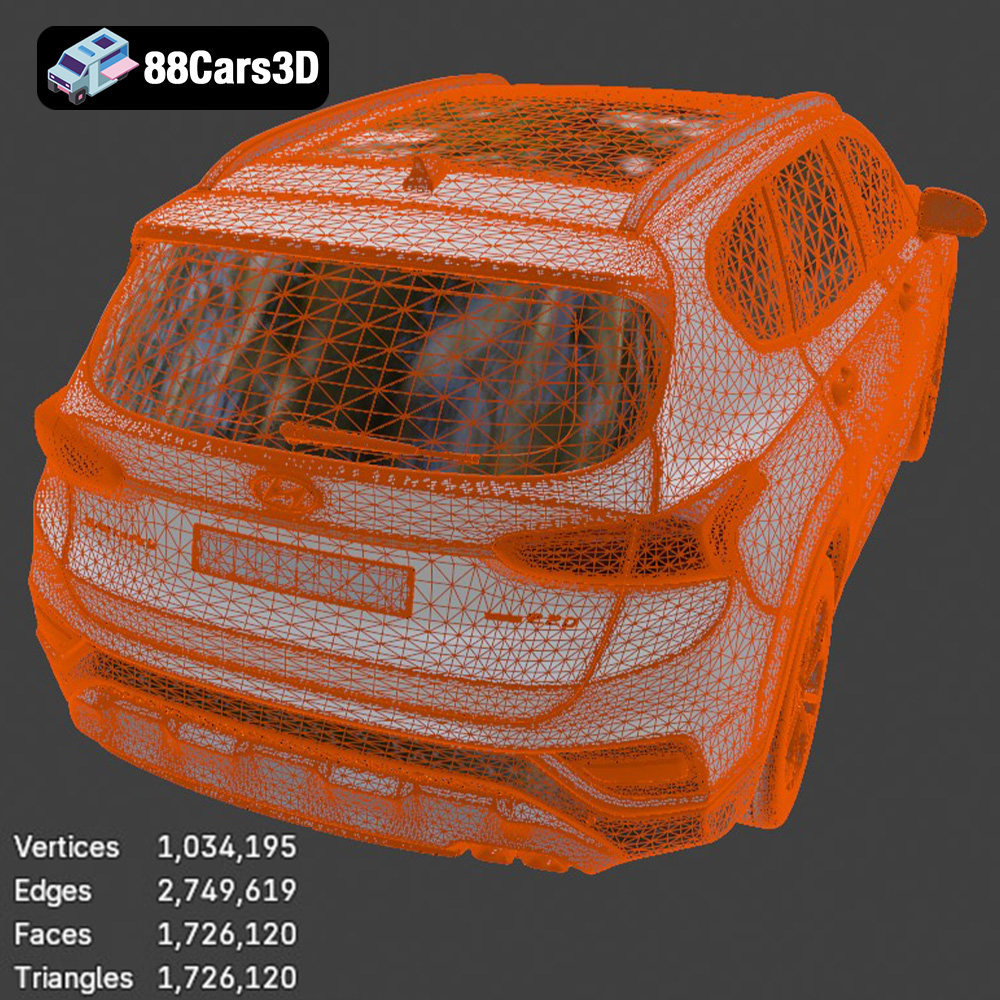
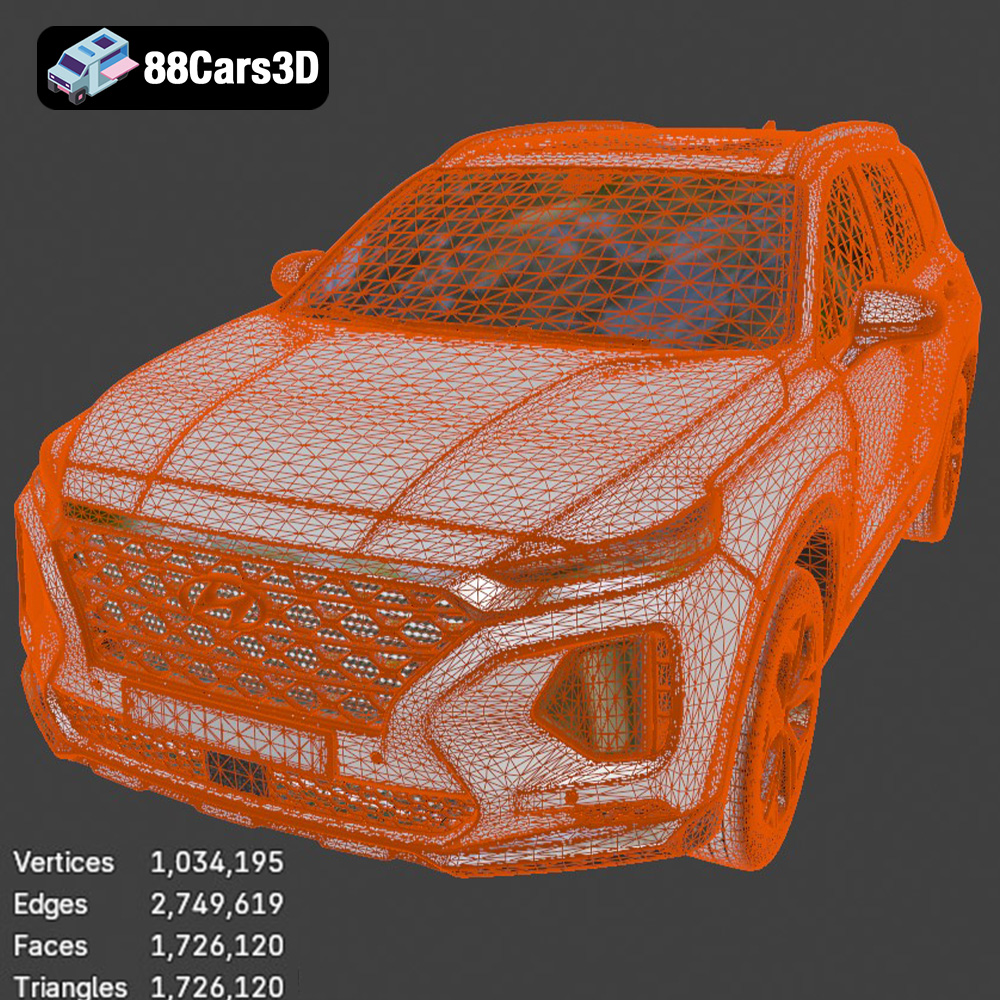
One of the most critical technical aspects of a professional 3D model is its polygon count, often expressed in triangles. The Hyundai Santa Fe 2019 3D model boasts 1,726,120 triangles. This figure represents a “sweet spot” in 3D asset creation: it’s high enough to convey exceptional visual fidelity and smooth curves without visible faceting, yet optimized enough to perform efficiently in real-time environments like game engines. This “game-ready” topology ensures seamless integration without causing significant performance bottlenecks. For high-end automotive rendering, this polycount provides ample detail for close-up shots and high-resolution output, while for AR/VR, it maintains a balance between visual quality and device performance. The proper pivot setup for steering, wheel rotation, and suspension travel further underlines its suitability for animation and dynamic simulations.
The versatility of a 3D car model is often defined by the range of file formats it supports. Each format serves a specific purpose, offering different levels of data retention, compatibility, and optimization for particular workflows. The Hyundai Santa Fe 2019 3D model from 88cars3d.com comes with an extensive array of formats, ensuring maximum utility for any professional endeavor.
The provision of these diverse formats ensures that the Hyundai Santa Fe 2019 model from 88cars3d.com is not just a high-quality asset, but also an incredibly flexible one, adaptable to almost any professional workflow or project requirement.
The real power of a well-designed 3D car model lies in its seamless integration into various professional pipelines. The Hyundai Santa Fe 2019 model is built with this versatility in mind, offering features that streamline its use across major software and engines.
For game developers, performance and visual quality are equally paramount. The Hyundai Santa Fe 2019 model’s “game-ready” topology, with its balanced 1,726,120 triangles, makes it ideal for open-world games, racing titles, and simulators. When importing the .fbx or .unreal formats into engines like Unreal Engine or Unity, developers will find pre-configured assets that minimize setup time. The separated wheels, suspension, and steering components, along with proper pivot points, are crucial for implementing realistic vehicle physics and animation. Imagine populating a virtual city with realistic traffic or creating a detailed car garage in a racing game – this model provides the fidelity and optimization required for such demanding game assets.
When it comes to creating stunning marketing visuals, high-resolution stills, or cinematic animations, the Hyundai Santa Fe 2019 model truly shines. Using the .max or .blend files in 3ds Max or Blender, artists can leverage the model’s detailed geometry to achieve photorealistic automotive rendering. The fidelity of the engine block, interior details, and realistic suspension components provides ample data for close-up shots. Artists can easily adjust materials for different lighting scenarios, from studio setups to dynamic outdoor environments, applying advanced shaders for paint, glass, and chrome to capture every reflection and highlight with precision. This makes it an excellent choice for brand campaigns, product launches, or architectural visualization scenes where a realistic vehicle is needed to bring an environment to life.
Augmented Reality (AR) and Virtual Reality (VR) applications demand highly optimized assets that can run smoothly on a variety of devices while maintaining visual quality. The .glb format, included with the Hyundai Santa Fe 2019 model, is specifically optimized for these use cases. Its compact nature and embedded textures make it perfect for immersive virtual showrooms, interactive configurators, and mobile AR experiences. Imagine a customer exploring the Santa Fe in 3D on their phone, changing colors, and opening doors in their own driveway – this model’s balanced polycount and GLB optimization enable such engaging, real-time interactions, driving powerful marketing and sales experiences.
A digital 3D car model isn’t just for on-screen display. The versatility of a well-constructed asset extends into the physical realm, offering opportunities for tangible creations and limitless artistic customization.
The inclusion of the .stl format, or the ability to convert the model to it, opens up the world of 3D printing for the Hyundai Santa Fe 2019. This allows designers, hobbyists, and engineers to transform the digital design into a physical object. The product description recommends specific print settings – scales of 1:12, 1:18, or 1:24, along with layer height recommendations (0.04–0.12 mm) and infill (20–30%). Crucially, it advises resin printing for fine details, indicating the model’s geometric richness. Understanding that parts like the exhaust and mirrors require supports, and suggesting separate printing for the frame and wheels, demonstrates a practical knowledge of manufacturing processes. This capability is fantastic for creating display models, educational tools, or even early physical prototypes, bridging the gap between virtual and tangible.
The provided Hyundai Santa Fe 2019 3D model is designed for extensive customization. Artists can easily change body colors to match factory specifications or explore custom finishes, from matte to gloss and various metallic effects. Tire textures can be swapped for off-road or street variants, adapting the vehicle’s character to different scenes. Adjusting material finishes allows for a range of appearances, from brand-new showroom shine to weathered realism. This level of control is paramount for artists who need to adapt the model to specific project requirements, ensuring it fits perfectly into any narrative or visual theme, making it a truly flexible game asset or rendering element.
Consider a design studio working on aftermarket accessories for the Santa Fe. They could start with this 3D model from 88cars3d.com, digitally modify the bumpers, add roof racks, or design custom wheels. Once the digital design is finalized, they could export specific components to .stl and 3D print them. This rapid prototyping allows them to test fit, check ergonomics, and visually evaluate the new parts in a tangible form before committing to expensive manufacturing processes. This workflow dramatically speeds up iteration cycles and reduces development costs, showcasing the practical utility of a versatile 3D asset beyond mere visualization.
The versatility and technical quality of the Hyundai Santa Fe 2019 3D model make it suitable for a wide array of professional applications, contributing significant value to diverse industries.
In architectural visualization, vehicles are essential for bringing scenes to life, providing scale, context, and a sense of realism. The Hyundai Santa Fe 2019 model is perfect for populating urban environments, driveway scenes, or suburban landscapes. Imagine a high-rise apartment complex render: placing a photorealistic Santa Fe in the parking lot immediately grounds the scene, making it relatable and realistic. Its detailed geometry holds up to close scrutiny, making it suitable for foreground elements in luxury property renderings or for illustrating traffic flow in city planning simulations. The ability to customize its color and materials means it can be tailored to fit the aesthetic of any architectural project, enhancing the overall visual narrative.
The “game-ready” optimization and detailed internal components of this model make it an excellent choice for driving simulators and training applications. Developers can integrate the Hyundai Santa Fe 2019 into virtual reality driving schools, emergency vehicle training scenarios, or even autonomous vehicle research simulations. The precise control details and separate animated parts (wheels, suspension, steering) allow for accurate physics integration and realistic user interaction. For instance, a logistics company could use a simulator featuring this model to train drivers on maneuvering in urban settings, or an automotive engineering firm could simulate new sensor placements and ADAS (Advanced Driver-Assistance Systems) functionalities within a highly realistic vehicle environment. This model serves as a robust foundation for building interactive and educational virtual experiences.
For automotive brands and advertising agencies, premium 3D car models are crucial for creating compelling marketing content. Before a physical vehicle is even produced, or for supplementary digital campaigns, the Hyundai Santa Fe 2019 model can be used for stunning automotive rendering. This allows for the creation of high-resolution images and animations for brochures, commercials, and online configurators. A virtual product launch, for example, could feature the Santa Fe in various photorealistic environments, showcasing its design and features without the logistical complexities and costs of physical photography shoots. This model provides the visual fidelity necessary to evoke desire and connect with potential customers, offering a powerful tool for modern marketing strategies.
The landscape of 3D modeling continues to evolve, pushing the boundaries of realism and efficiency. For professionals working in game development, architectural visualization, AR/VR, or high-end rendering, the ability to access premium, optimized 3D car models is a game-changer. The Hyundai Santa Fe 2019 3D model stands out as a prime example of such an asset.
From its meticulously recreated exterior and interior details to its expertly balanced polygon count and extensive file format support, this model is engineered for versatility and performance. Whether you’re integrating it into a real-time game engine like Unreal, producing a cinematic automotive rendering in 3ds Max or Blender, developing an interactive AR experience, or even planning a 3D print, the Hyundai Santa Fe 2019 model provides a robust and reliable foundation. Its comprehensive features and optimized structure ensure that it not only meets but exceeds the demands of modern 3D pipelines.
Investing in high-quality game assets and rendering models saves invaluable time and resources, allowing artists and developers to focus on creativity and innovation. The Hyundai Santa Fe 2019 3D model, available on 88cars3d.com, is more than just a digital replica; it’s a strategic asset designed to elevate your projects and bring your visions to life with unparalleled realism and efficiency.
The 2019 Hyundai Santa Fe represents a bold leap in mid-size SUV design, combining robust family-hauling capabilities with premium, sophisticated styling. This meticulously crafted 3D model captures the essence of the vehicle, highlighting its signature cascading grille, aggressive split-headlight design, and dynamic side profile. From its powerful stance to its elegantly sculpted body lines, every visual element of this modern SUV has been faithfully recreated.
$81.50
.blend
.fbx
.glb
.hyundai
.max
.obj
.ply
.rendering
.stl
.unreal
car-3d-model
family-suv
game asset
game-ready
low-poly
optimized
santa-fe
santa-fe-2019
SUV
VR/AR