Get 20% OFF All Premium 3D & STL Models!

In the dynamic world of digital design, the demand for highly detailed and technically accurate 3D models continues to grow exponentially. From blockbuster video games to cutting-edge architectural visualizations and immersive augmented reality experiences, a high-quality 3D asset forms the backbone of any successful project. Nowhere is this more apparent than in the automotive sector, where precision and realism are paramount. Professionals constantly seek models that not only look stunning but are also engineered for seamless integration into complex workflows.
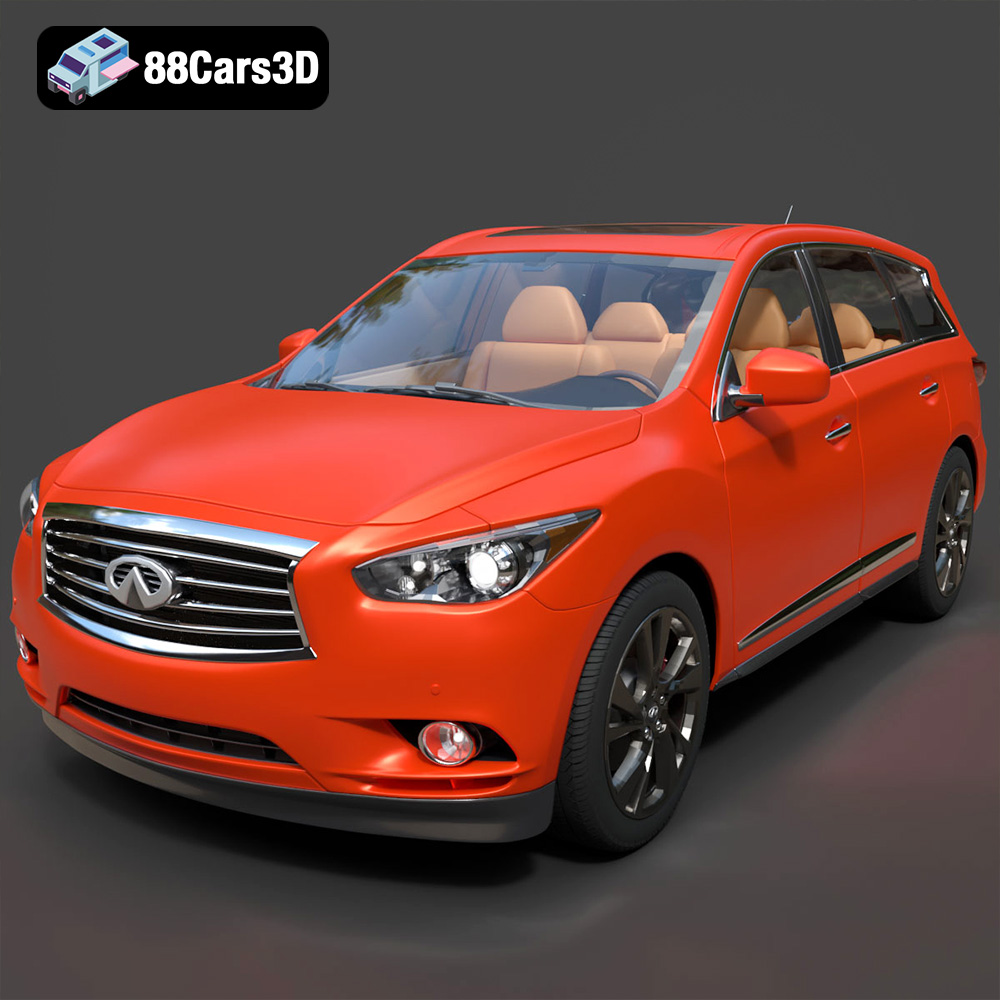
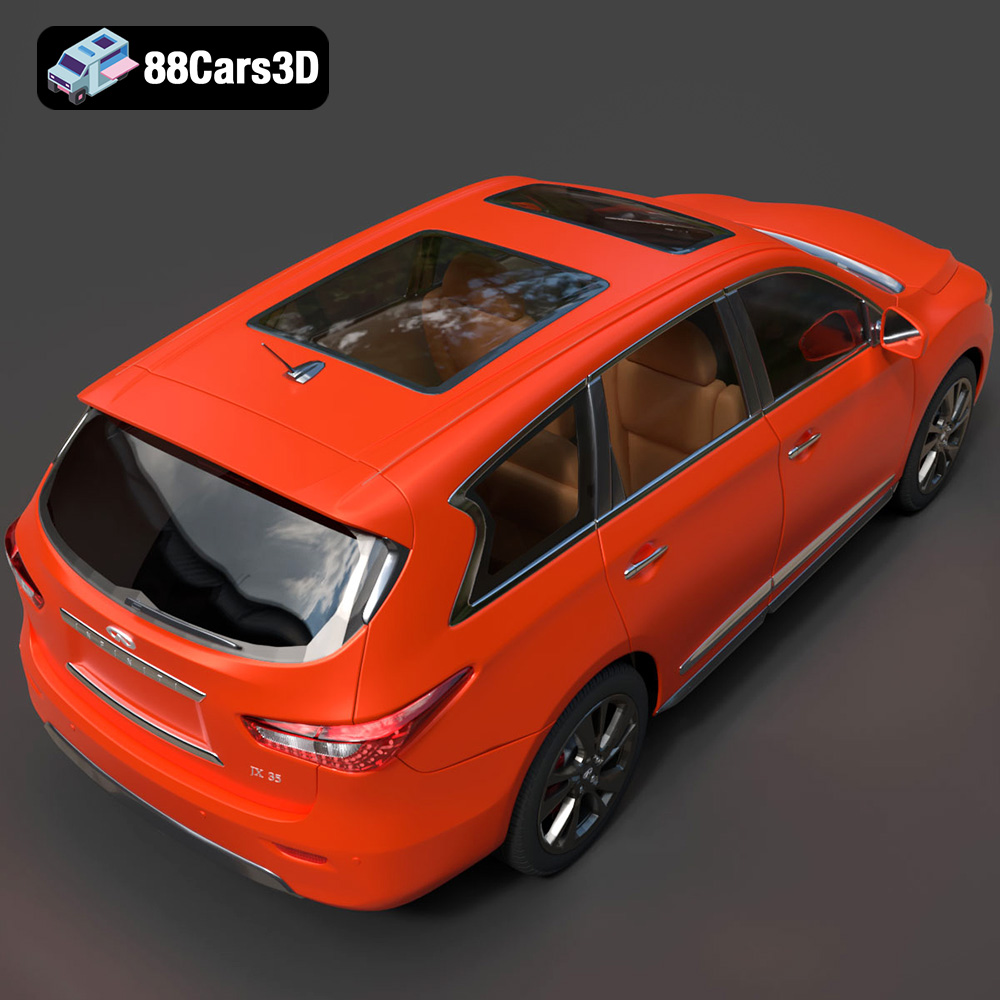
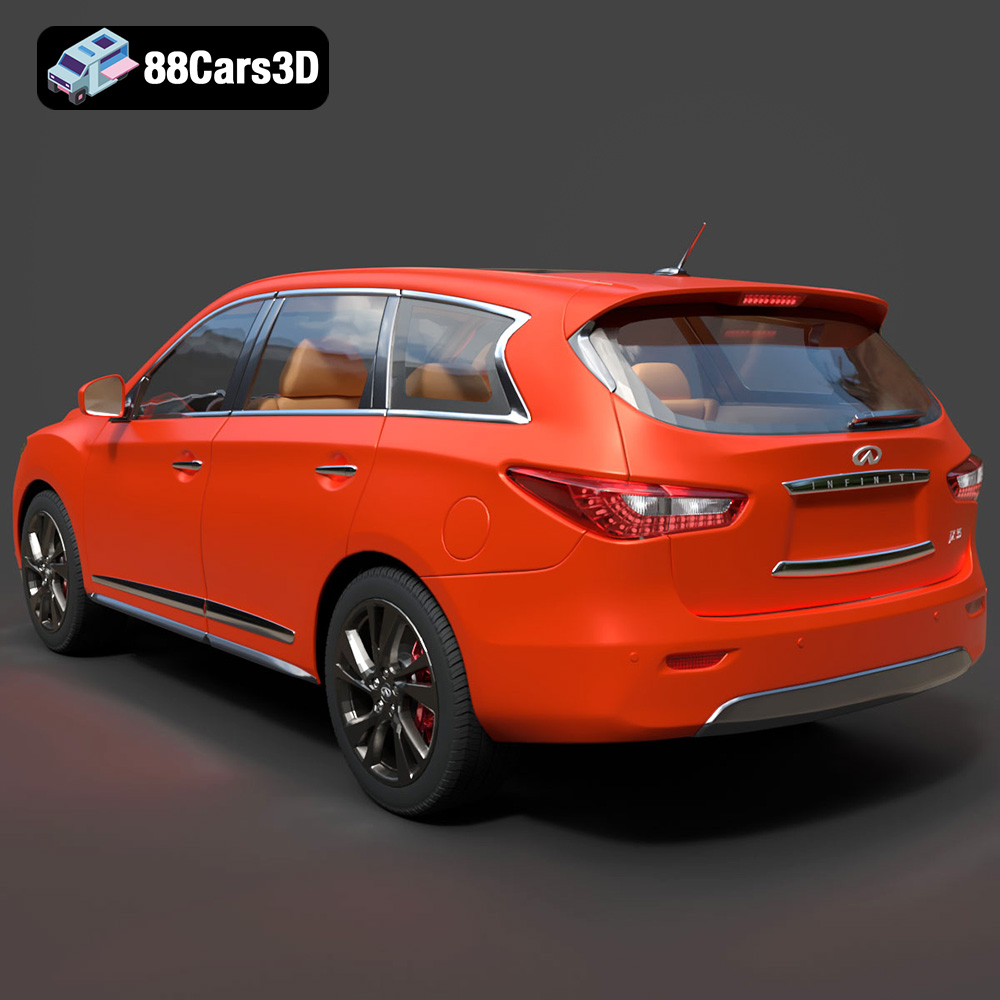
Enter the realm of premium 3D car models, where an exceptional asset can elevate an entire project. Today, we’re diving deep into an exemplar of digital automotive craftsmanship: the Infinity JX35 3D Model. This meticulously crafted luxury crossover SUV model is a testament to the blend of artistic flair and technical rigor required in modern 3D production. It’s an asset designed not just for visual appeal but for robust performance across a spectrum of digital applications, making it a valuable addition to any designer’s toolkit. Let’s explore the technical intricacies and creative possibilities that models like the Infinity JX35 bring to the table.
Navigating the landscape of 3D modeling often requires a deep understanding of various file formats, each tailored for specific purposes and software environments. The Infinity JX35 3D Model comes bundled with an impressive array of formats, offering unparalleled versatility for different pipelines. Choosing the right format is crucial for maintaining model integrity, optimizing performance, and ensuring compatibility.
The .blend format is Blender’s native file type, offering a complete and editable scene with all associated data. When you download the Infinity JX35 in .blend format, you gain access to the model’s full structure, materials, lighting setups, cameras, and even animations if present. This is invaluable for artists who wish to dissect the model, understand its topology, modify materials, or adapt it extensively within Blender. It ensures that all PBR (Physically Based Rendering) materials, textures, and UV maps are correctly linked and ready for rendering in Cycles or Eevee, providing a robust starting point for further customization or integration into a Blender-centric workflow.
FBX (Filmbox) is arguably the most widely adopted proprietary file format for 3D content exchange, developed by Autodesk. Its strength lies in its ability to store not just mesh data but also animations, skinning, camera settings, and lighting. For game developers working with Unreal Engine or Unity, the .fbx version of the Infinity JX35 is often the go-to choice. It efficiently transfers complex hierarchies, allowing for easy import of individual components like separate wheels and suspension parts for animation rigging. FBX supports PBR material properties, ensuring that the visual fidelity of the model transitions smoothly between different software packages, making it ideal for real-time pipelines where consistent data transfer is critical.
The OBJ (Wavefront Object) format is a widely supported, open-standard file format for 3D graphics. While it doesn’t typically store animations or advanced material properties directly within the file (it references external .mtl files for basic material definitions), its universal compatibility makes it incredibly valuable. The .obj version of the Infinity JX35 ensures that the core mesh geometry, UV mapping, and vertex normal data can be imported into virtually any 3D software application, from older versions to specialized renderers. It’s a reliable choice for archival, general-purpose mesh exchange, or when working in environments where simpler data structures are preferred.
GLB (GL Transmission Format Binary) is a relatively newer format gaining immense traction, particularly for web-based 3D, augmented reality (AR), and virtual reality (VR) applications. It’s a binary version of glTF, designed to be compact and efficient, embedding all textures and data directly into a single file. This “all-in-one” packaging makes the .glb version of the Infinity JX35 perfect for quick loading in browsers, mobile AR apps, or WebVR experiences. It supports PBR materials, skeletal animations, and scene graphs, making it an excellent choice for interactive virtual showrooms or product configurators where performance and ease of deployment are key.
STL (Stereolithography) is the de facto standard file format for 3D printing. It represents a 3D model as a series of connected triangles, defining only the surface geometry of an object without color, texture, or other CAD attributes. When aiming to bring the Infinity JX35 from the digital realm into a physical collectible, the .stl file is essential. It’s universally recognized by 3D slicers and printers, allowing hobbyists and professionals to prepare the model for fabrication at recommended scales like 1:12 or 1:18. While lacking visual data, its precision in defining the mesh ensures accurate physical reproduction.
PLY (Polygon File Format) is another format used for storing 3D data, particularly from 3D scanners. It’s known for its ability to store various properties like color, transparency, and normals per vertex or face, offering a more comprehensive dataset than STL for certain applications. While less common for general asset exchange than FBX or OBJ, the .ply version of the Infinity JX35 could be valuable for engineers or designers performing mesh analysis, reverse engineering workflows, or integrating with specialized CAD software where precise surface data with rich vertex attributes is required.
While not a standalone file extension in the traditional sense, the “.unreal” designation often implies an asset package or a specifically optimized FBX file configured for direct import into Unreal Engine. This version of the Infinity JX35 would typically feature optimized meshes, correctly set up materials (using Unreal’s PBR system), and perhaps pre-configured blueprints or skeletal meshes for easier integration into game projects. It signifies that the asset has been prepped for Unreal’s real-time rendering capabilities, often with appropriate collision meshes, LODs (Levels of Detail), and pivot points ready for immediate use in interactive environments.
Similar to .blend for Blender, the .max format is Autodesk 3ds Max’s native file format. It contains the entire scene information, including geometry, materials, lighting, cameras, animation data, and modifiers. For users entrenched in the 3ds Max ecosystem, the .max version of the Infinity JX35 offers the most complete and editable project. It allows for advanced rendering with engines like V-Ray or Corona, direct manipulation of modifiers, and precise animation setup, making it ideal for high-fidelity cinematic renders, complex visualizations, and detailed animation sequences.
Creating a compelling 3D car model is a delicate balance of artistic vision and technical precision. It’s not merely about replicating a vehicle’s silhouette but capturing its essence, performance, and underlying engineering in a digital format. The Infinity JX35 3D Model from 88cars3d.com exemplifies this philosophy, offering a wealth of detail that goes far beyond surface-level aesthetics.
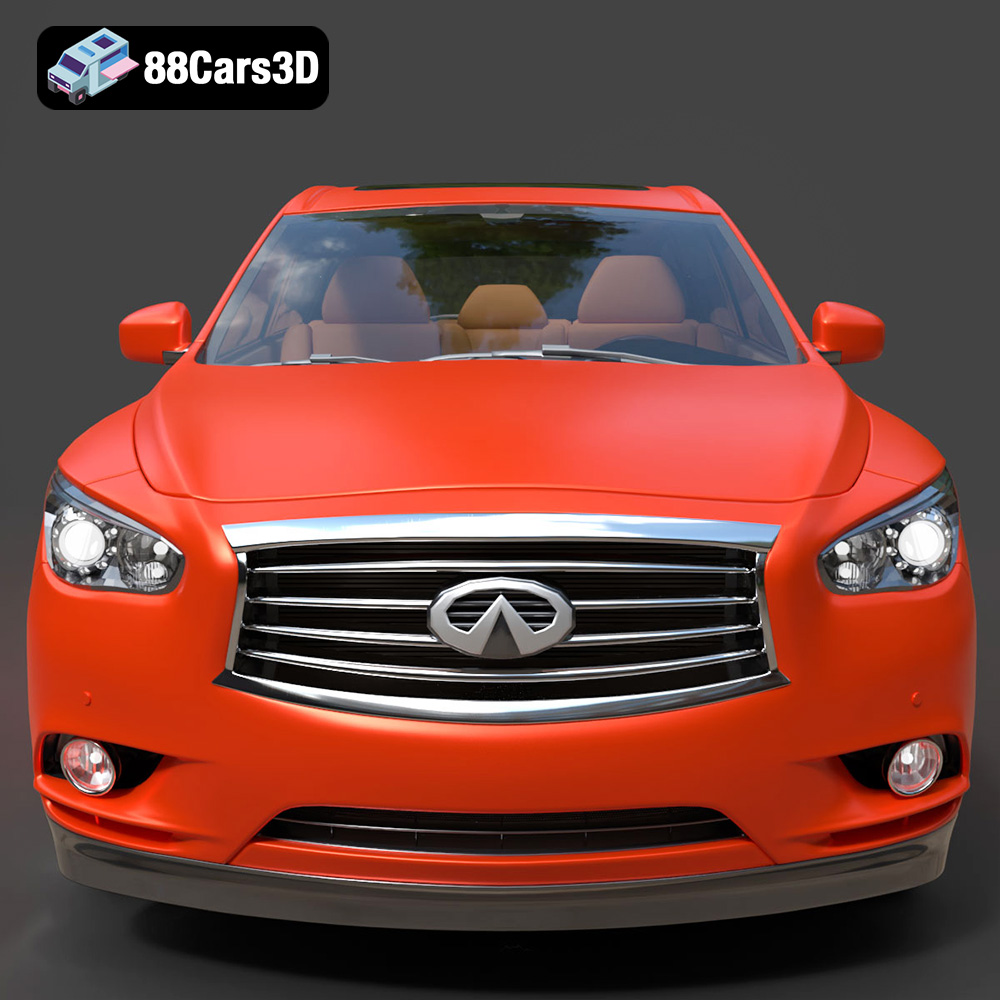
The true mark of a high-quality 3D car model lies in its foundational accuracy. The Infinity JX35 model boasts accurate frame geometry and crossover SUV proportions, meticulously scaled to real-world dimensions. This adherence to real-world scale is critical for any professional application, from architectural visualization, where the vehicle must fit realistically into a scene, to vehicle simulators where precise handling characteristics are derived from accurate dimensions. Details like the signature double-arch grille, iconic crescent-cut D-pillar, and the sleek aerodynamic profile are not just visually present but geometrically sound, ensuring authenticity from every angle. Even the detailed 3.5L V6 engine block representation and realistic dual exhaust system, though often unseen in typical renders, speak volumes about the model’s comprehensive approach to detail.
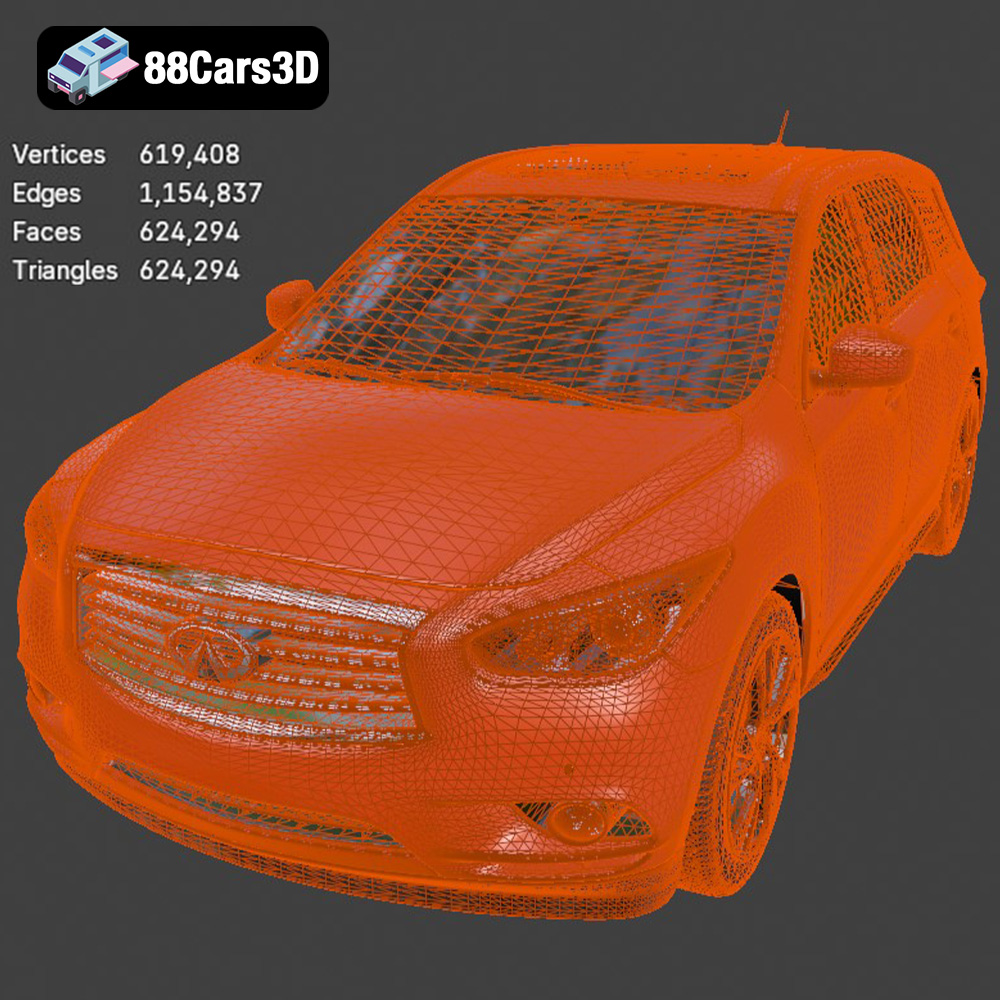
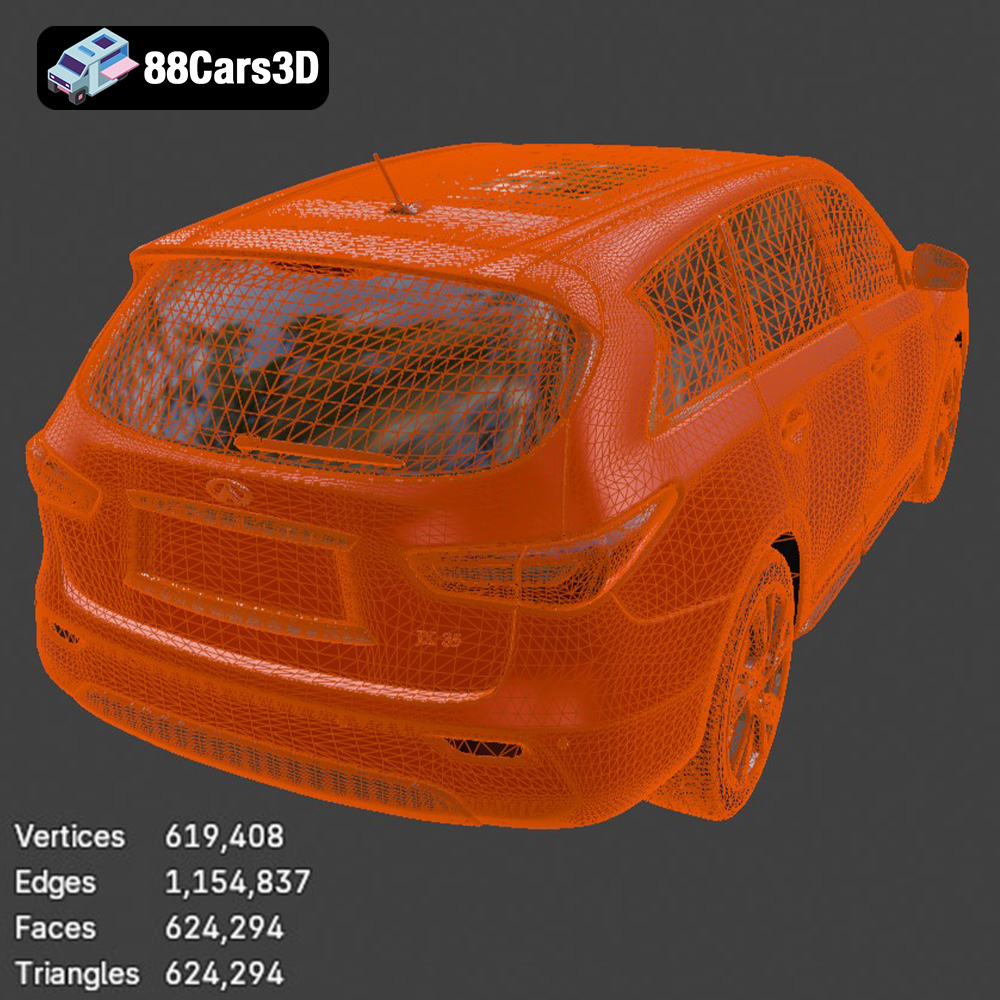
One of the most significant challenges in 3D modeling, especially for game development and real-time applications, is balancing visual fidelity with performance. A model that looks incredible but brings an engine to its knees is impractical. The Infinity JX35 model strikes this balance masterfully with an optimized topology of 624,294 triangles. This polycount is considered “game-ready,” meaning it’s efficient enough for real-time engines like Unreal and Unity while still providing exceptional detail for close-up shots and high-end cinematic renders. This optimization is crucial; it allows developers to populate virtual worlds with high-quality vehicles without compromising frame rates, making the Infinity JX35 a versatile asset for a wide range of projects.
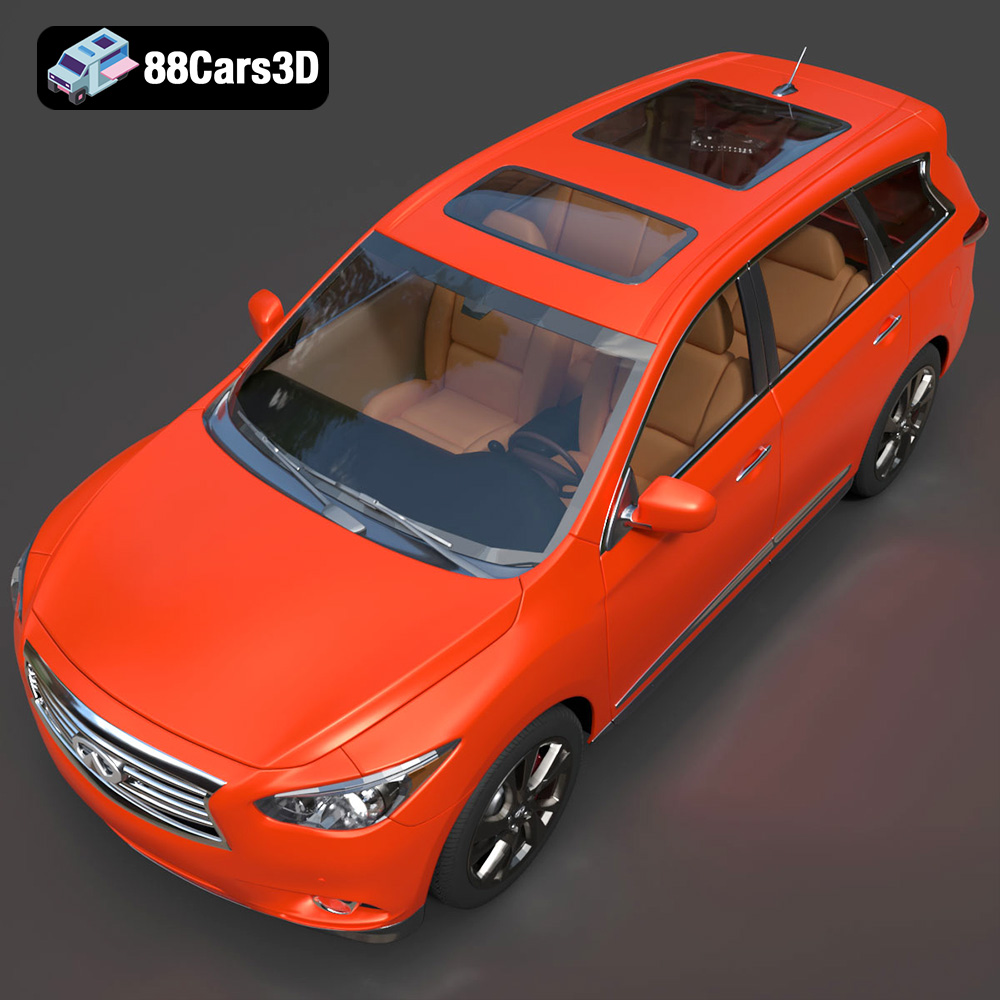
For many applications, particularly those involving first-person perspectives or virtual showrooms, the interior of a vehicle is as important as its exterior. The Infinity JX35 3D Model doesn’t disappoint, offering luxurious three-row leather-appointed seating details, a meticulously replicated leather-wrapped steering wheel with multifunction controls, and a premium instrument cluster. The center infotainment screen, console, shifter, and foot pedals are all accurately modeled, creating a believable and immersive cockpit experience. This level of interior detail is especially beneficial for gaming, where players might spend significant time inside the vehicle, or for AR/VR experiences, where users can virtually “sit” inside and explore the luxury and functionality of the SUV.
A high-quality 3D model is only as good as its usability within professional pipelines. The Infinity JX35 3D Model is engineered for seamless integration across various industry-standard software and engines, empowering artists and developers to achieve stunning results efficiently.
For cinematic quality renders and breathtaking visualizations, software like Autodesk 3ds Max and Blender are industry powerhouses. The Infinity JX35, available in both .max and .blend formats, is perfectly suited for these environments. In 3ds Max, artists can leverage advanced rendering engines like V-Ray or Corona Renderer, setting up intricate studio lighting, environmental HDRIs, and sophisticated material shaders to bring out the metallic finishes and reflections of the car’s body. Similarly, Blender users can utilize Cycles for unbiased path tracing or Eevee for real-time rendering, playing with the detailed PBR materials to achieve photorealistic results. The model’s high-resolution LED taillights and detailed HID xenon headlights are designed to react accurately to light, enhancing realism in night scenes or dramatic studio setups. This flexibility allows for stunning still images for marketing campaigns or high-fidelity animation sequences.
The gaming industry demands assets that are both visually rich and highly optimized for real-time performance. With its game-ready polycount of 624,294 triangles and .fbx / .unreal format availability, the Infinity JX35 is an ideal game asset. In Unreal Engine, developers can import the FBX with all its hierarchical data, including separate wheels, suspension, and steering components. This allows for straightforward rigging and animation, enabling realistic vehicle physics, steering dynamics, and suspension travel. The PBR materials translate effectively into Unreal’s material system, ensuring consistent visual quality. Similarly, Unity developers can leverage the FBX to create open-world driving simulators, racing titles, or even integrate it into elaborate cinematic cutscenes. The optimized geometry ensures that multiple instances of the vehicle can be rendered efficiently, a critical factor for large-scale virtual environments.
Augmented Reality (AR) and Virtual Reality (VR) are transforming how we interact with products, offering immersive experiences that were once unimaginable. The .glb format of the Infinity JX35 makes it perfectly suited for AR/VR applications and web-based configurators. Its optimized, single-file structure ensures fast loading times and smooth performance on mobile devices and VR headsets. Imagine a virtual car showroom where potential buyers can walk around the JX35, open its doors, and even “sit” inside, exploring the luxurious interior in full 3D. The model’s real-world scale and detailed cockpit features, including the instrument cluster and infotainment screen, create a highly engaging and convincing virtual experience, perfect for product launches or interactive marketing.
Beyond its core automotive and gaming applications, the Infinity JX35 3D Model serves as an excellent prop for architectural visualization and lifestyle renders. Placing this luxury crossover SUV within an architectural scene, be it a modern garage, a sprawling suburban driveway, or a bustling city street, instantly adds realism, scale, and a touch of aspirational lifestyle. Its elegant styling complements contemporary architecture, enhancing the overall aesthetic of a scene. Artists can adjust body colors to match specific brand aesthetics or environment lighting, allowing the vehicle to seamlessly integrate into various visual narratives, from real estate marketing to advertising campaigns.
While the Infinity JX35 3D Model arrives with exquisite detail and optimization, its true power for professionals lies in its inherent customizability. A premium asset allows for deep modification, ensuring it perfectly fits the unique demands of any project without starting from scratch.
One of the most impactful ways to customize a 3D car model is through its materials and textures. The Infinity JX35 is designed to facilitate easy modification of its visual properties. Artists can effortlessly change body colors, experimenting with a spectrum of factory colors, custom metallic finishes, or even matte and gloss variants. This is crucial for branding, allowing the vehicle to represent specific aesthetics or match client requirements. Beyond the body, tire textures can be modified to reflect different scenarios, from sleek street variants to more rugged off-road patterns, adapting the car’s visual story to its environment. High-quality UV maps ensure that any new textures applied will wrap seamlessly around the model, maintaining its realistic appearance.
For projects requiring movement, the model’s design with separate components offers significant advantages. The Infinity JX35 includes separate wheels, independent suspension geometry, and steering components, all set up with proper pivot points. This thoughtful segmentation is a game-changer for animators and game developers. It allows for realistic wheel rotation, accurate steering mechanisms, and believable suspension travel over uneven terrain. Imagine an animation showcasing the car navigating a challenging road, with each wheel reacting independently to bumps, or a game where the vehicle’s handling feels authentic due to precise suspension articulation. This built-in animatability saves countless hours in rigging and setup, allowing artists to focus on creative execution.
The ability to adapt a 3D model to its surrounding environment is key to achieving photorealism. The Infinity JX35 can be seamlessly integrated into diverse scenes by adjusting its materials to react differently to various lighting conditions. For instance, in a sunny daytime render, the metallic paint would glint and reflect bright skies, while in a moody night scene, the detailed HID xenon headlights and LED taillights would illuminate, casting realistic glows. Customization extends to modifying light emission from interior screens, adapting to different environments, and even adding dust or wear-and-tear effects for storytelling purposes. This flexibility ensures that the car always looks at home, whether it’s cruising through a vibrant city or parked serenely in a virtual showroom.
The digital realm no longer confines 3D models. The rise of affordable and sophisticated 3D printing technology means that assets like the Infinity JX35 can transcend the screen and become physical objects. This capability opens up new avenues for creators, from generating display-scale collectibles to producing prototypes for design review.
For those looking to bring the Infinity JX35 into the physical world, the included .stl file format is the critical starting point. STL, the standard for additive manufacturing, represents the model’s surface geometry as a triangulated mesh. Once acquired, this file is loaded into a ‘slicer’ software (e.g., Cura, PrusaSlicer, Chitubox). The slicer converts the 3D model into a series of thin layers, generating toolpaths (G-code) that the 3D printer follows. During this stage, important parameters are set, such as the recommended scale (e.g., 1:12, 1:18, 1:24), which dictates the final size of the printed model, and wall thickness, ensuring the physical model has adequate structural integrity.
Achieving a high-quality 3D print of the Infinity JX35 requires careful consideration of print settings and materials. For models with fine details, like the JX35’s sleek lines, detailed lighting fixtures, and exhaust system, resin printing (SLA/DLP/LCD) is highly recommended over FDM (Fused Deposition Modeling). Resin printers can achieve much finer layer heights (0.04–0.12 mm), capturing intricate curves and sharp edges with superior precision. Supports are almost always required for complex geometries such as the exhaust system, mirrors, and undercarriage details to prevent overhangs from collapsing during printing. Infill density, typically 20-30%, provides internal strength without excessive material usage. The print orientation is also crucial; for instance, the frame might be printed angled to optimize structural integrity, while wheels are often printed separately for better detail and articulation.
Once the Infinity JX35 model is printed, the journey to a polished physical replica often involves post-processing. This typically includes removing supports, curing resin prints, and then a series of sanding steps to smooth out layer lines and imperfections. Applying a primer coat is essential to reveal any remaining flaws and to create an even surface for painting. For an authentic factory look, the model can be painted with high-quality automotive-grade paints, including metallic finishes that mimic the original vehicle’s luster. This meticulous attention to detail in post-processing can transform a raw 3D print into a stunning, display-quality collectible, a testament to both the digital asset’s fidelity and the craftsman’s skill. This journey from a digital file on 88cars3d.com to a tangible object showcases the incredible potential of 3D modeling today.
The world of 3D modeling is constantly evolving, demanding assets that are not only visually captivating but also technically robust and versatile. The Infinity JX35 3D Model stands as a prime example of this paradigm, offering a comprehensive solution for professionals across various digital industries. From its meticulously accurate exterior and luxurious interior detailing to its optimized topology for game engines and broad file format compatibility, this model embodies excellence.
Whether you’re a game developer seeking realistic vehicles for an open-world environment, an architectural visualizer needing a sophisticated car to enhance a scene, an AR/VR creator building immersive experiences, or a hobbyist eager to 3D print a stunning collectible, the Infinity JX35 provides the foundation for success. Its thoughtful design, coupled with a full suite of customization options, ensures it can adapt to virtually any creative vision. Assets of this caliber significantly streamline workflows, allowing artists and designers to focus on innovation rather than wrestling with technical limitations.
For those who demand uncompromising quality and versatility in their 3D automotive assets, 88cars3d.com consistently delivers premium models like the Infinity JX35. Explore the possibilities and elevate your projects with assets that are truly built for the future of digital design.
The Infinity JX35 is a premium luxury crossover SUV renowned for its elegant styling, spacious three-row interior, and smooth V6 performance. This meticulously crafted 3D model captures the vehicle’s sophisticated lines, signature double-arch grille, iconic crescent-cut D-pillar, and commanding road presence. From the sleek aerodynamic profile to the detailed lighting fixtures and exhaust system, every element is designed to replicate the luxury and versatility of the original SUV.
Engineered with a highly optimized topology of 624,294 triangles, this model balances high-end visual fidelity with game-ready performance. It is tailored for demanding digital applications, providing exceptional detail for close-up shots while maintaining efficiency for real-time engines. Whether used in game development, augmented and virtual reality (AR/VR) environments, or high-end animation, this model delivers uncompromising quality.
Perfect for urban driving simulators, luxury lifestyle renders, architectural visualizations, and immersive virtual car showrooms.
.blend, .fbx, .obj, .glb, .stl, .ply, .unreal, .max
Tags:
infinity, infiniti, jx35, suv, luxury-suv, crossover, family-car, game-ready, low-poly, optimized, car-3d-model, game-asset, rendering, vr-ar, blend, fbx, obj, glb, stl, ply, unreal, max
$45.50
.blend
.crossover
.fbx
.glb
.infiniti
.luxury suv
.max
.obj
.ply
.rendering
.stl
.unreal
car-3d-model
family-car
game asset
game-ready
infinity
jx35
low-poly
optimized
SUV
VR/AR