Get 20% OFF All Premium 3D & STL Models!

In the rapidly evolving landscape of 3D visualization, from cinematic blockbusters to immersive game worlds and sophisticated architectural walkthroughs, the demand for hyper-realistic assets has never been higher. Automotive models, in particular, stand as a testament to the blend of artistic skill and technical precision required to capture the nuanced elegance and mechanical complexity of real-world vehicles. A truly exceptional 3D car model goes beyond mere aesthetics; it’s a meticulously engineered digital object ready for a myriad of professional applications.
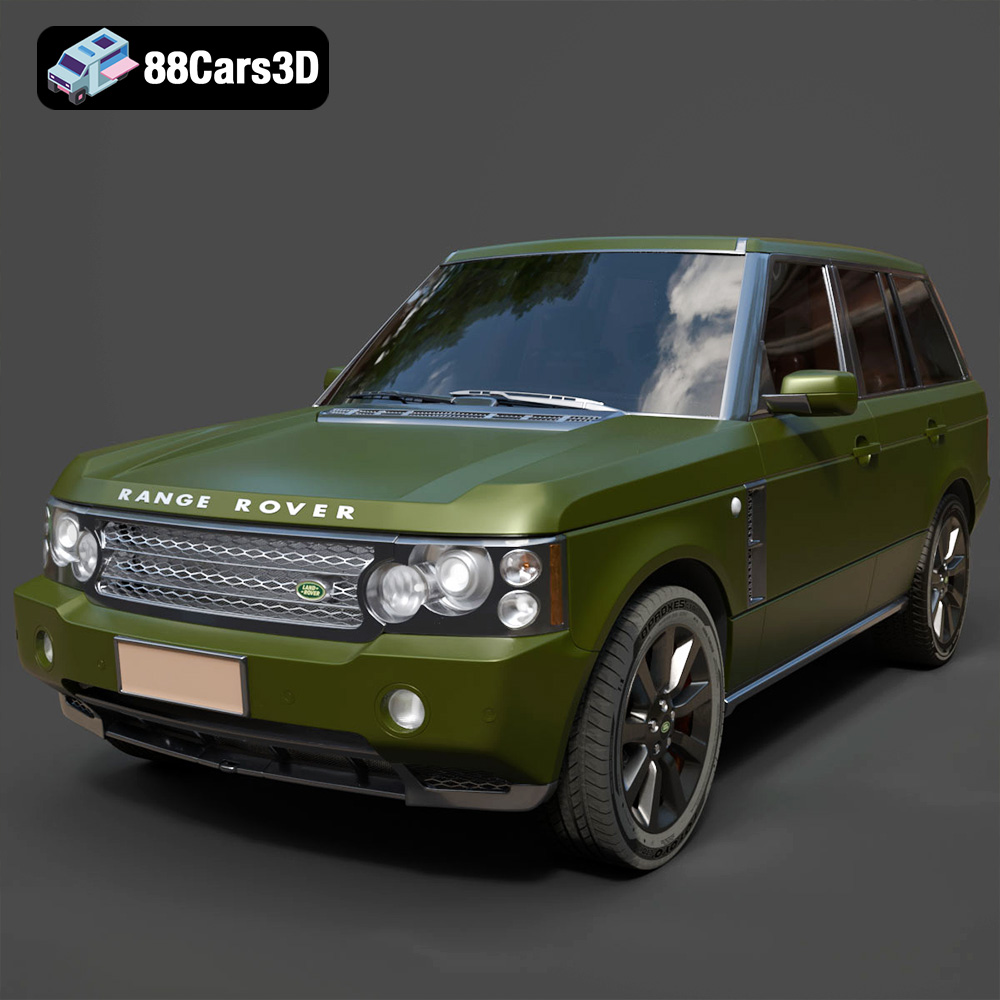
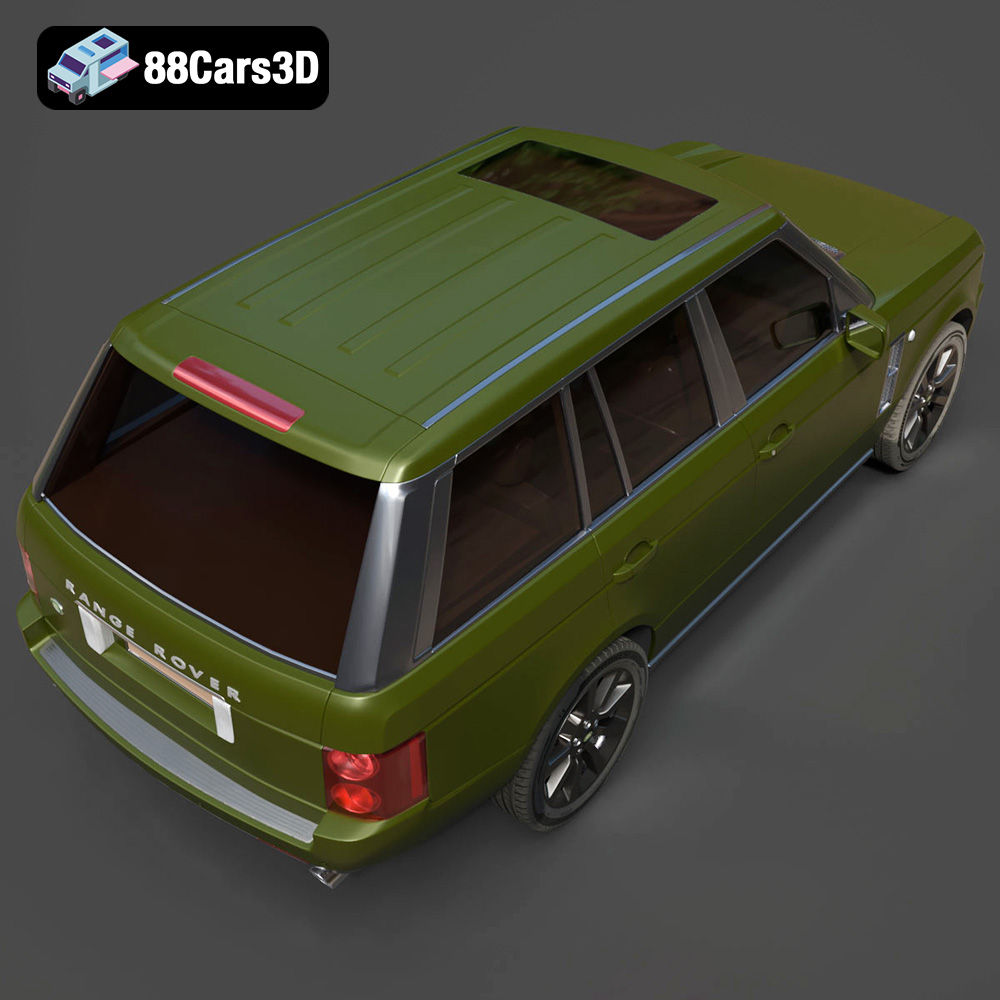
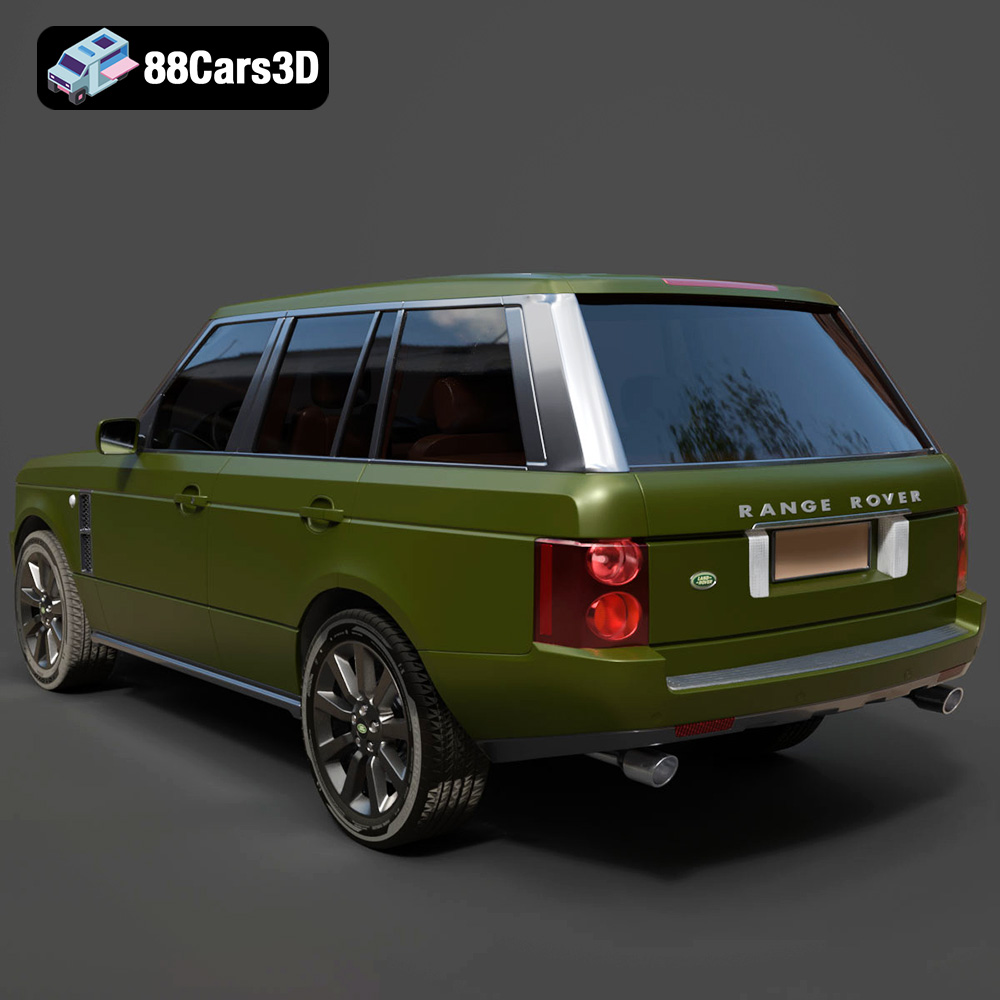
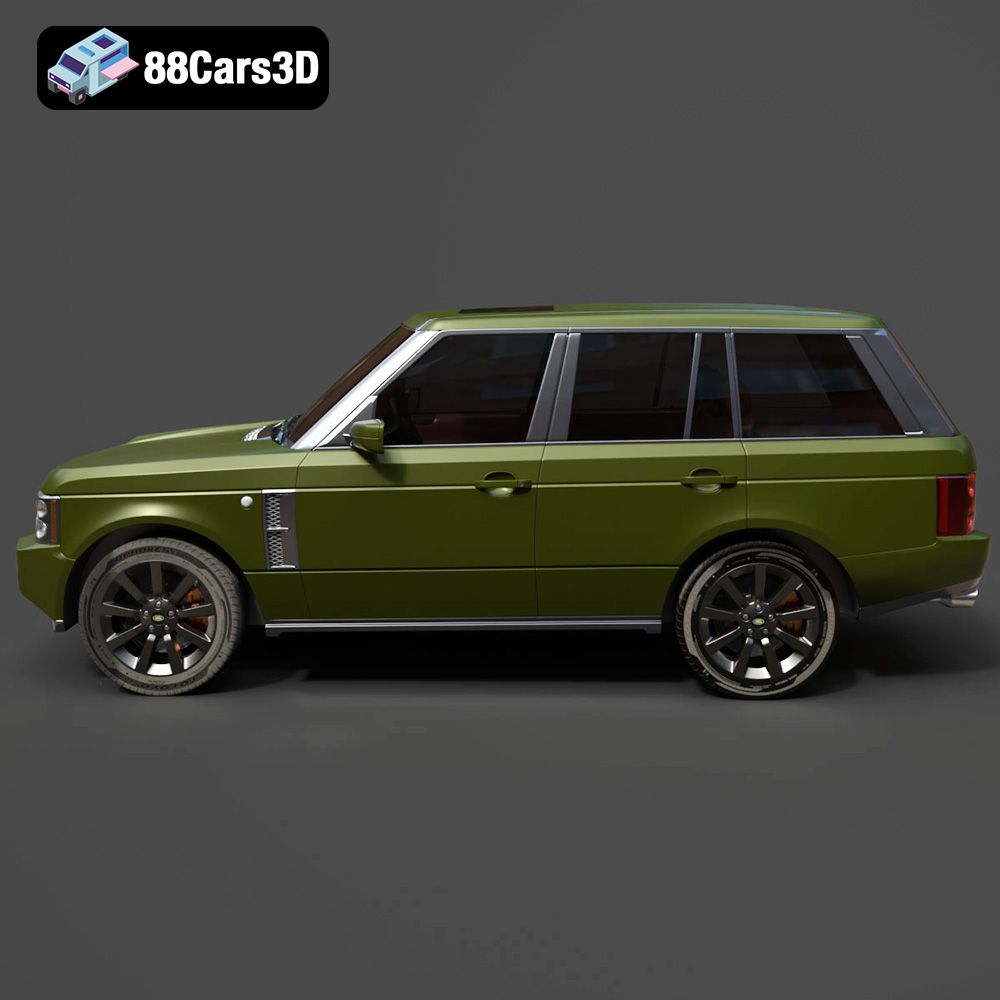
Imagine needing to populate a high-stakes automotive advertisement, build a compelling virtual reality showroom, or integrate a classic vehicle into a cutting-edge racing game. In each scenario, the quality of your 3D asset directly impacts the final output’s realism and professional credibility. This is where models like the Land Rover Range Rover HSE (2006-08) 3D model, available on 88cars3d.com, prove invaluable. Capturing the iconic British luxury SUV with remarkable fidelity, this particular asset offers a robust foundation for projects demanding both visual appeal and technical versatility.
High-quality 3D car models are the bedrock of realistic digital environments. They are not just static representations but dynamic assets that can be manipulated, animated, and rendered under various conditions to achieve specific artistic and functional goals. The difference between a mediocre model and a professional-grade one can be the distinction between a passable scene and a truly captivating experience.
For automotive designers, 3D models serve as critical tools throughout the entire design lifecycle, from initial concept sketches to final production visualization. Long before a physical prototype exists, a detailed 3D model allows designers to explore forms, iterate on ideas, and present concepts with stunning realism. This extends to architectural visualization, where an accurate vehicle can define the scale and lifestyle of a proposed development, or to product configurators that enable customers to customize their dream car virtually. The Land Rover Range Rover HSE (2006-08) model exemplifies this bridge, providing a ready-to-use representation of a classic vehicle that instantly adds character and credibility to any scene.
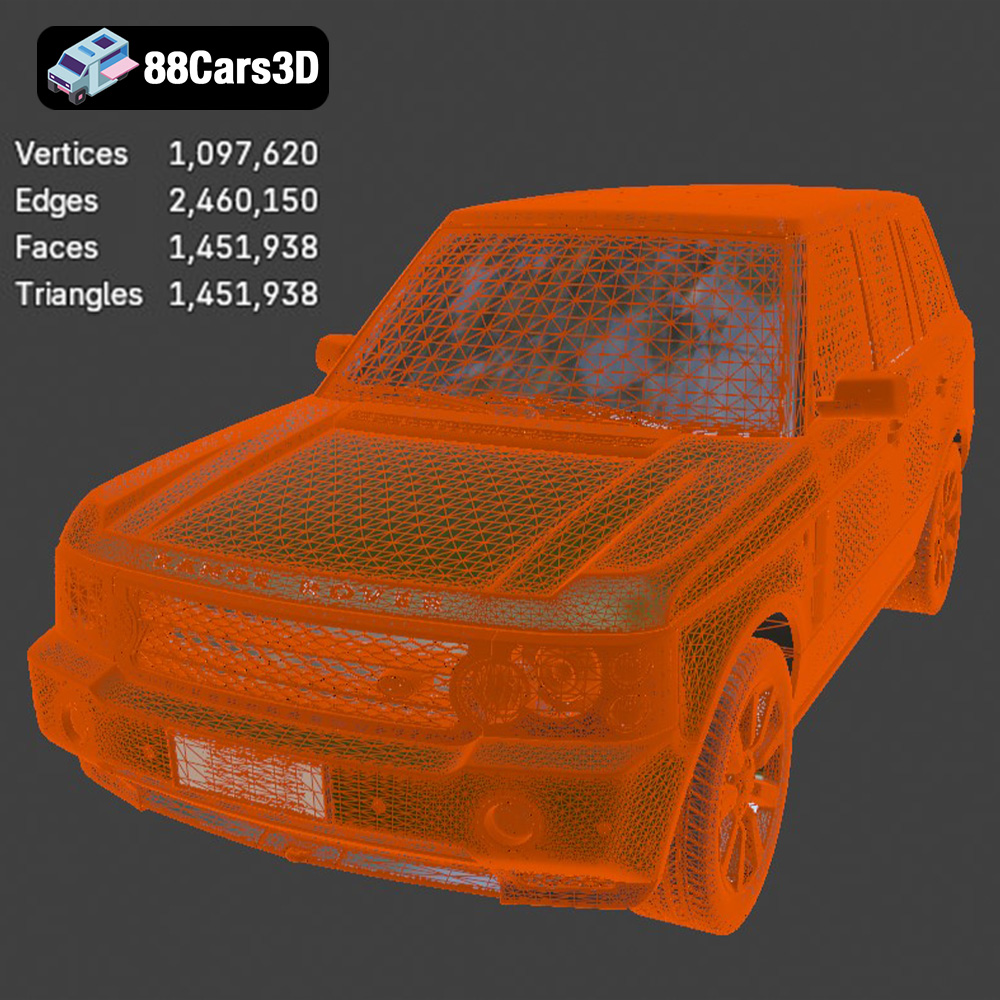
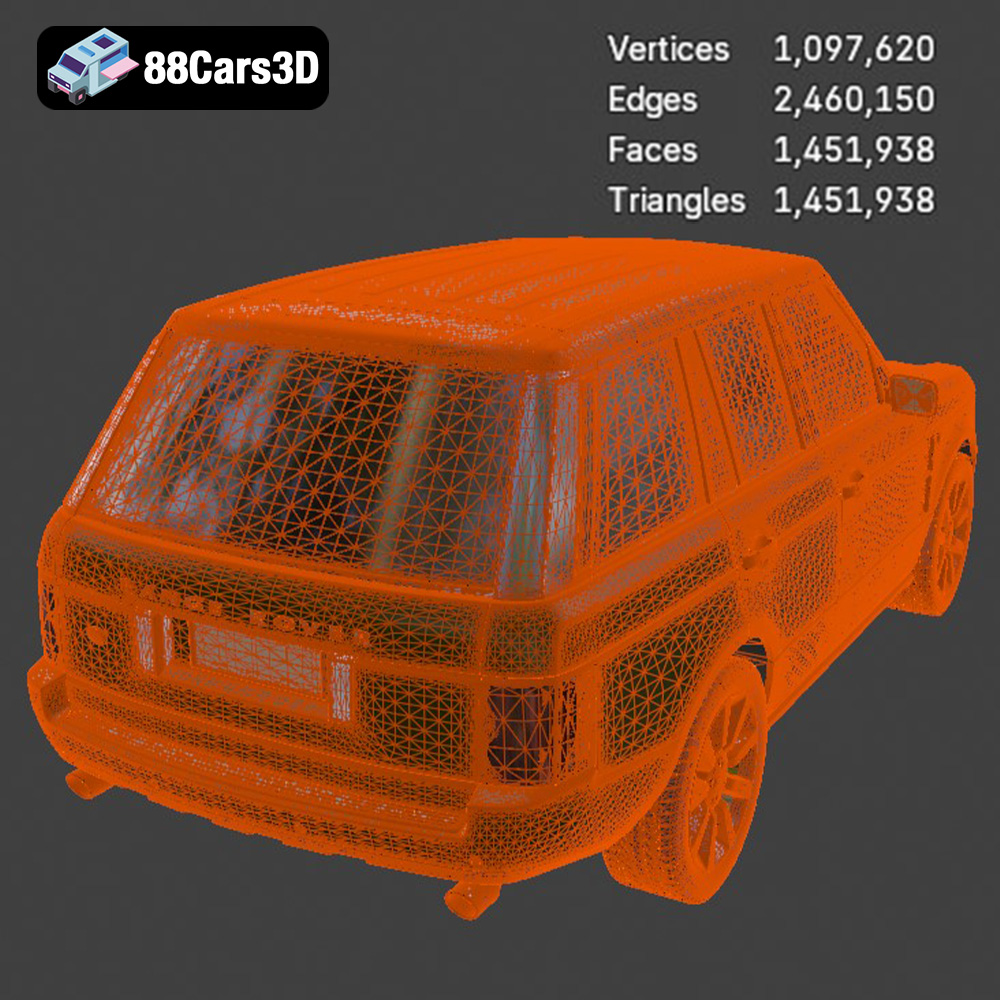
While free or low-cost 3D models might seem appealing for tight budgets, they often come with hidden costs. Issues like poor topology, non-existent UV mapping, excessive or insufficient polygon counts, and messy material setups can lead to endless hours of remediation, ultimately costing more in artist time than a premium asset would have initially. Professional-grade 3D models, such as those found on 88cars3d.com, are built with these considerations in mind. They are optimized for various pipelines, ensuring clean geometry, efficient UVs, and well-structured materials, saving valuable production time and guaranteeing superior results. The Land Rover Range Rover HSE model, with its 1,451,938 triangles, strikes an excellent balance, offering high detail without being overly burdensome for real-time applications.
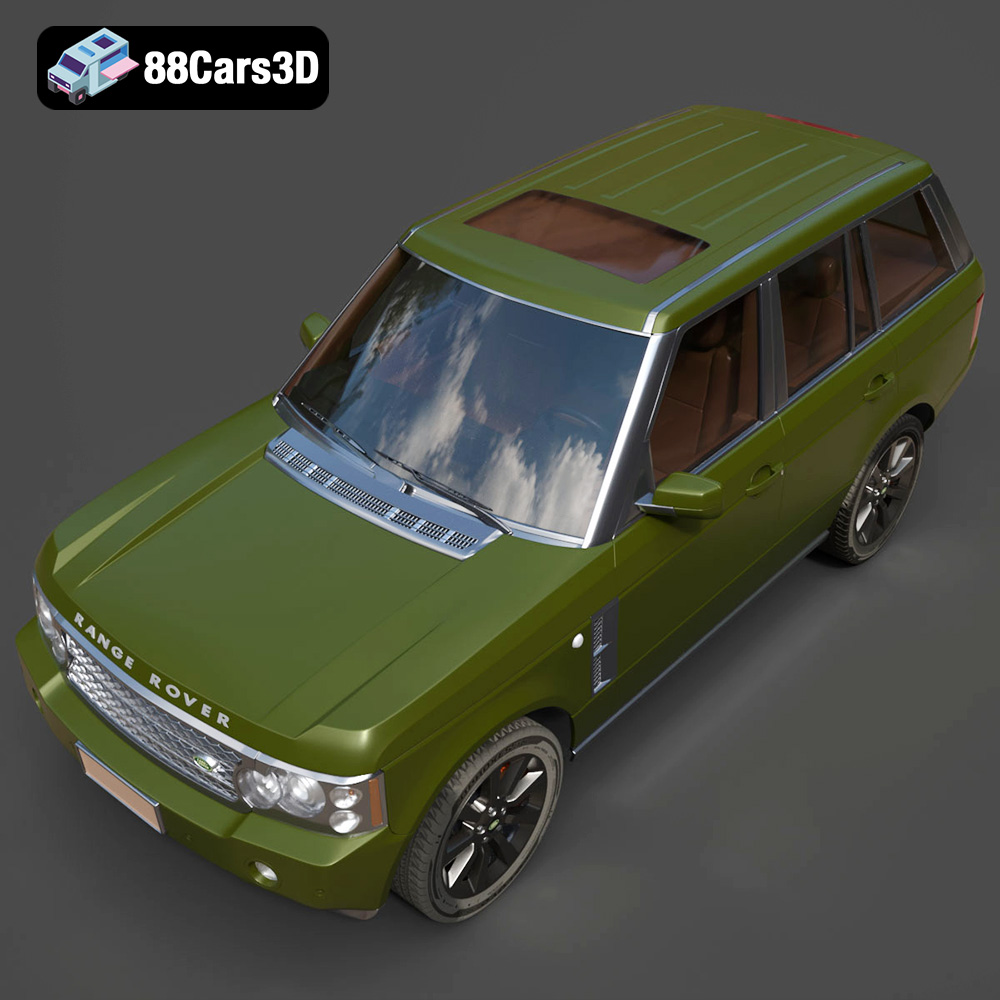
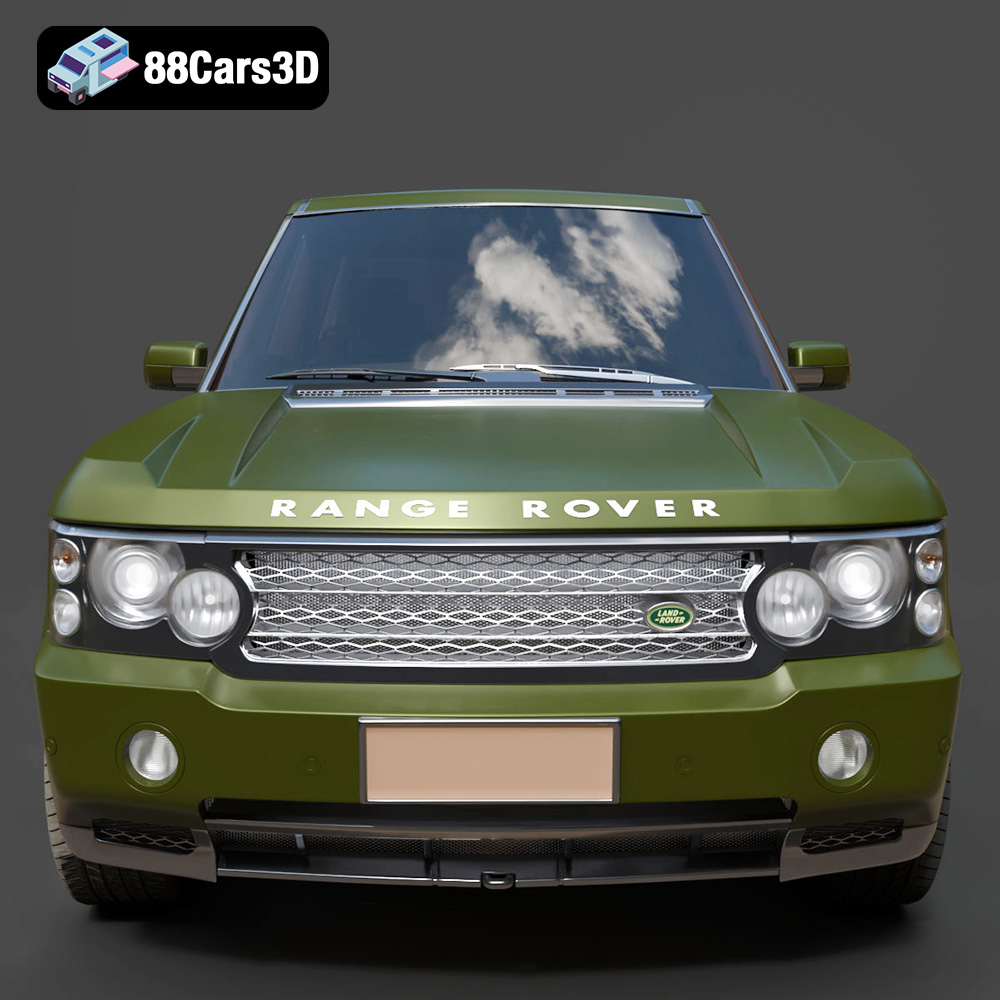
Let’s delve into the specific details that make the Land Rover Range Rover HSE (2006-08) 3D model an outstanding example of a high-quality asset. Its meticulous craftsmanship is evident in every aspect. From the accurate recreation of the iconic L322 generation’s robust stance and signature front grille to the detailed V8 engine block representation and intricate Bi-Xenon headlights, the model captures the essence of British luxury. The interior doesn’t fall short either, boasting premium leather-textured seating, an accurate steering wheel with integrated controls, and a refined center console. Such comprehensive detailing ensures that whether viewed from a distance or in a close-up cinematic shot, the model maintains its visual integrity, making it ideal for everything from game development to high-end automotive visualization.
The world of 3D modeling is rich with various file formats, each designed with specific purposes, advantages, and compatibility considerations. Understanding these formats is crucial for any professional working with 3D assets, as choosing the right one can significantly impact workflow efficiency, data integrity, and final project quality. The Land Rover Range Rover HSE (2006-08) 3D model offers an extensive range of these formats, ensuring maximum flexibility for diverse projects.
The `.blend` format is the native file type for Blender, the ubiquitous open-source 3D creation suite. A `.blend` file is a comprehensive package, containing not just the 3D mesh data but also materials, textures, lighting setups, cameras, animation data, scene settings, and even internal scripts. This makes it an incredibly powerful format for artists working entirely within the Blender ecosystem, as it preserves every aspect of their scene. For the Land Rover Range Rover HSE model, the included `.blend` file provides a fully editable scene, allowing users to dive deep into its construction, modify materials, adjust lighting, or even extend animations directly within Blender. Its self-contained nature ensures that all dependencies are present, making it easy to share Blender projects without worrying about missing files.
Developed by Autodesk, the `.fbx` format has become an industry standard for 3D data exchange, particularly prevalent in game development and animation pipelines. It excels at transferring comprehensive scene information, including geometry, materials (with some limitations on complex shader graphs), textures, cameras, lights, and crucially, animation data (skeletons, skinning, blend shapes). Its strength lies in its ability to facilitate seamless data transfer between different 3D applications like Maya, 3ds Max, Blender, and game engines such as Unreal Engine and Unity. The Land Rover Range Rover HSE’s `.fbx` file is specifically optimized for these real-time pipelines, ensuring that its clean topology and optimized materials translate effectively, making it a “game-ready” asset with proper pivot setups for animation.
The `.obj` format is one of the oldest and most universally supported 3D file formats. It’s a simple, text-based format primarily used for transferring geometric data (vertices, normals, texture coordinates, and faces). While it can reference external `.mtl` (material library) files for basic material properties, it doesn’t support advanced features like animation, rigging, or complex shader networks. Its universality is its greatest strength, making it an excellent fallback for cross-software compatibility when other formats encounter issues. For the Land Rover Range Rover HSE, the `.obj` file ensures that the core geometry of the vehicle can be imported into virtually any 3D software for further processing, texturing, or rendering, providing a reliable foundation for diverse projects.
The `.glb` format is the binary version of glTF (GL Transmission Format), designed specifically for efficient transmission and loading of 3D scenes and models on the web and in AR/VR applications. It’s a self-contained asset, embedding all necessary data—geometry, textures, materials, and animations—into a single file. This eliminates external dependencies and optimizes file size and parsing speed, making it ideal for interactive web experiences, mobile AR (Augmented Reality), and lightweight VR (Virtual Reality) environments. The Land Rover Range Rover HSE in `.glb` format is perfect for developers looking to integrate this luxury SUV into immersive virtual showrooms or online configurators, ensuring quick loading times and broad compatibility across modern browsers and AR platforms.
The `.stl` (stereolithography) format is the de facto standard for 3D printing. It represents 3D surfaces as a collection of unconnected triangular facets, without color, texture, or other CAD attributes. While it lacks the richness of other formats, its simplicity makes it universally compatible with 3D printers and slicing software. The Land Rover Range Rover HSE model’s inclusion of an `.stl` file specifically caters to hobbyists and professionals looking to create a physical replica. The product description even provides detailed 3D print settings, such as recommended scales (1:12, 1:18, 1:24), layer height, infill, and support requirements, ensuring a successful transition from digital asset to tangible model.
The `.ply` (Polygon File Format or Stanford Triangle Format) is primarily used for storing 3D data from 3D scanners, CAD software, and other scientific applications. It can store various properties beyond just geometry, including color, transparency, normals, texture coordinates, and even reliability information for each vertex or face. While not as common in general entertainment 3D workflows as FBX or OBJ, its precision and ability to store rich attribute data make it valuable for specific engineering, reverse engineering, or highly accurate visualization tasks. The `.ply` file for the Land Rover Range Rover HSE could be utilized for precise measurements, simulations, or detailed analysis of the vehicle’s form.
While not a universal file extension in the same vein as .fbx or .obj, the inclusion of “unreal” typically refers to an asset that is specifically packaged or pre-configured for direct import and optimal performance within the Unreal Engine ecosystem. This might mean it’s an `.uasset` file, or an `.fbx` that is perfectly scaled, has collision meshes, and materials already set up within an Unreal project structure, ready to be dropped into a scene. For the Land Rover Range Rover HSE, having an “unreal” optimized asset means developers can expect a smoother integration process, with proper material assignments, scale, and potentially LODs (Levels of Detail) already handled, saving significant development time when building realistic game environments or interactive experiences.
The `.max` format is the native file type for Autodesk 3ds Max, a leading software in architectural visualization, motion graphics, and game asset creation. Similar to Blender’s `.blend`, a `.max` file contains an entire scene, including geometry, complex material networks, lighting, cameras, animation, and various modifiers. It provides full editability within 3ds Max, making it ideal for users who wish to customize the Land Rover Range Rover HSE model extensively, integrate it into existing 3ds Max scenes, or leverage 3ds Max’s powerful rendering engines like V-Ray or Corona Renderer. This format guarantees that all intricate details and scene setups are preserved, offering maximum flexibility for high-fidelity rendering and animation projects.
Achieving photorealistic automotive rendering is an art form, demanding a deep understanding of lighting, materials, and post-processing. A high-quality 3D car model, such as the Land Rover Range Rover HSE from 88cars3d.com, is an indispensable starting point, but the true magic happens within the rendering workflow.
For many professionals, 3ds Max coupled with rendering engines like V-Ray or Corona Renderer is the go-to setup for achieving studio-quality automotive visuals. The `.max` file included with the Range Rover model allows direct integration. Within 3ds Max, artists can set up sophisticated lighting rigs, from classic three-point studio lights to complex HDR environments that mimic real-world locations. V-Ray and Corona offer advanced material editors to fine-tune paint reflectivity, tire rubber properties, glass refractions, and the subtle sheen of interior leather. The Range Rover’s detailed geometry, including the engine block, undercarriage, and intricate lighting clusters, truly shines under these conditions, allowing for breathtaking close-up renders that are indistinguishable from photographs.
Blender has emerged as a formidable alternative for high-end rendering. Its Cycles renderer, a physically based path tracer, can produce stunningly realistic results comparable to commercial renderers. The `.blend` file of the Range Rover offers a native and fully editable starting point. Artists can leverage Blender’s nodal material system to craft complex shaders for the vehicle’s metallic paint, chrome accents, and detailed interior fabrics. For faster, real-time rendering and interactive presentations, Blender’s Eevee renderer provides a powerful solution, offering incredible visual fidelity at interactive frame rates. This versatility allows artists to rapidly iterate on lighting and material choices for the Land Rover Range Rover HSE, accelerating the creative process without compromising quality.
A car model rarely exists in isolation. Integrating it seamlessly into a larger environment is key to creating compelling renders. This involves not only placing the Range Rover within a scene but also ensuring it interacts realistically with its surroundings. Accurate shadows, reflections, and ambient occlusion are critical. Using HDRI (High Dynamic Range Image) maps for environment lighting is a common technique, providing realistic lighting and reflections that conform to a real-world setting. Whether it’s a rugged off-road track or a polished urban street, the Range Rover model’s precise geometry and well-defined materials will accurately reflect its environment, grounding it firmly within the scene and enhancing the overall realism of the automotive rendering.
In game development, AR, and VR, the challenge is to achieve stunning visual fidelity while maintaining optimal performance. A game-ready 3D car model like the Land Rover Range Rover HSE is specifically designed to meet this challenge head-on, balancing polygon count with visual detail.
Unreal Engine is a powerhouse for real-time applications, and the Land Rover Range Rover HSE model, with its included “unreal” optimized assets and `.fbx` format, is an ideal candidate for integration. Developers can import the `.fbx` directly, which typically includes the geometry, materials, and UVs. The model’s 1,451,938 triangles are carefully managed to offer rich detail for close-up views without crushing performance in a modern game engine. Within Unreal, artists can convert its materials to physically based rendering (PBR) shaders, set up realistic lighting, and even implement advanced features like dynamic dirt or damage systems. Crucially, the model’s separate wheels, suspension, and steering components, along with proper pivot setups, are invaluable for implementing realistic vehicle physics and animation, essential for racing games or open-world adventures.
Unity, another dominant game engine, also benefits greatly from the Range Rover model’s optimized topology and `.fbx` compatibility. For mobile AR/VR experiences, where performance constraints are even tighter, the `.glb` format becomes incredibly useful. This format is lightweight and web-optimized, making it perfect for immersive virtual showrooms or mobile configurators where users can explore the Range Rover in real-time on their devices. Developers can use the base model and implement Level of Detail (LOD) systems to dynamically swap lower-poly versions of the vehicle when it’s further from the camera, ensuring smooth performance without sacrificing visual quality up close. The optimized interior geometry also makes it perfect for first-person POV in VR applications, offering an immersive experience within the luxurious cabin.
Beyond static representation, the Land Rover Range Rover HSE model is designed for dynamic, interactive experiences. Its structure, with separate components for wheels, suspension, and steering, facilitates the implementation of realistic vehicle physics. Game designers can simulate accurate suspension travel, steering responses, and tire deformation, bringing a true sense of realism to driving simulations. Furthermore, the model’s clean material setup allows for extensive customization. Developers can enable users to change body colors, modify tire textures, or adjust material finishes (matte, gloss, metallic) in real-time, creating personalized experiences for car configurators or in-game vehicle customization options.
The digital world can beautifully intersect with the physical through 3D printing. For enthusiasts, collectors, or even designers wanting a tangible prototype, the Land Rover Range Rover HSE (2006-08) 3D model offers an exciting pathway to creation.
The included `.stl` file is specifically tailored for 3D printing. However, preparing a complex 3D model for physical output often involves a few critical steps. Even with a pre-exported `.stl`, checking for manifold geometry (watertightness), wall thickness, and potential printing issues in a dedicated slicer software is good practice. The Range Rover model’s detailed geometry, while excellent for rendering, means that its `.stl` conversion needs careful consideration to ensure all fine details, like door handles, mirrors, and the distinctive grille, are preserved and structurally sound for printing. The recommendation for resin printing highlights the need for precision to capture the intricacies of the model.
The product description provides invaluable print settings, which are crucial for a successful print. Recommended scales (1:12, 1:18, 1:24) offer options for different display sizes. Layer heights of 0.04–0.12 mm are indicative of a resin printer’s capability to achieve fine detail, which is essential for an automotive model. Wall thickness guidelines (1.2–2.0 mm) ensure structural integrity, preventing fragile parts. Supports will be necessary for overhangs and delicate features, and strategic print orientation (frame angled, wheels separately) optimizes for strength and detail. Post-processing is where the model truly comes alive – sanding, priming, and applying authentic factory colors with metallic finishes can transform a raw print into a stunning miniature replica of the Land Rover Range Rover HSE.
While often used for display models, 3D printed versions of automotive assets can also serve practical purposes. Designers might use them for rapid prototyping, checking proportions, or even creating custom accessories for existing models. Hobbyists can modify the `.stl` file to create unique variations, such as custom off-road builds or personalized paint schemes, further extending the utility and creative potential of this versatile 3D asset.
A truly valuable 3D asset is one that offers not just high quality but also significant flexibility and adaptability. The Land Rover Range Rover HSE (2006-08) 3D model excels in this regard, providing extensive customization options that prolong its utility across various projects and future demands.
The ability to easily modify aspects of a 3D car model is paramount for interactive applications like automotive configurators or dynamic marketing campaigns. With the Range Rover model, designers can effortlessly change body colors, explore different factory finishes, or even apply custom paint jobs. The separate tire textures allow for swapping between realistic street tires and rugged off-road variants, instantly altering the vehicle’s character. Adjusting material finishes from matte to gloss or metallic opens up a world of visual possibilities, allowing the vehicle to seamlessly fit into diverse scenes and reflect different brand aesthetics. This level of dynamic control empowers artists to create bespoke visualizations tailored to specific client needs or promotional efforts.
Investing in a high-quality, well-structured 3D model is an investment in future-proofing your projects. Clean topology, proper UV mapping (implied for a professional asset), and logical object grouping ensure that the Land Rover Range Rover HSE model remains adaptable as software and rendering technologies evolve. Whether you’re moving from one game engine to another, upgrading your rendering pipeline, or exploring new formats like WebGL or NVIDIA Omniverse, a robust base model will integrate more smoothly. Its inherent detail means it can be baked down to lower poly versions for extreme optimization or scaled up for 8K renders, maintaining its quality across a spectrum of demands.
Ultimately, the true value of an asset like the Land Rover Range Rover HSE (2006-08) 3D model lies in its versatility. It’s not just a beautiful model; it’s a foundation for creativity across diverse industries. From game developers building expansive open worlds, to architectural visualization artists populating sophisticated renders, to AR/VR creators crafting immersive experiences, this model provides a reliable, high-fidelity solution. Its comprehensive file format support, from `.blend` for full editability to `.glb` for web deployment and `.stl` for 3D printing, underscores its adaptability, making it an invaluable addition to any professional’s 3D asset library. You can find this exceptional 3D car model and many more at 88cars3d.com, a trusted source for premium automotive assets.
The digital realm is increasingly demanding photorealism and technical precision, especially when it comes to automotive visualization. High-quality 3D car models are not just commodities; they are critical tools that empower artists and developers to create immersive, believable, and compelling experiences. As we’ve explored, the Land Rover Range Rover HSE (2006-08) 3D model stands as a prime example of an asset that marries exquisite detail with unparalleled versatility, making it suitable for a vast array of applications from high-end rendering to real-time game development and physical 3D printing.
Understanding the nuances of various 3D file formats, mastering complex rendering workflows, and optimizing assets for performance are all integral parts of modern 3D production. With assets like the Land Rover Range Rover HSE, available on 88cars3d.com, professionals gain access to a meticulously crafted model that streamlines these processes and elevates the final output. Investing in such a comprehensive and adaptable 3D car model is an investment in efficiency, quality, and the boundless potential of your creative projects. Whether you’re crafting a cinematic masterpiece, an engaging game, or a detailed physical replica, the right 3D asset makes all the difference.
Experience the perfect blend of British luxury and legendary off-road capability with this meticulously crafted 3D model of the Land Rover Range Rover HSE (2006-08). Renowned for its commanding road presence and iconic boxy yet refined styling, this L322 generation model captures the essence of the premium SUV segment. Key visual elements include the signature front grille, distinctive side vents, and robust stance that define the Range Rover lineage. Boasting a highly detailed geometry with a triangle count of 1,451,938, this model delivers unparalleled visual fidelity suitable for high-end rendering and close-up shots. Despite its intricate detailing, the topology is carefully structured to facilitate seamless integration into professional pipelines, making it an exceptional asset for game development, cinematic animation, virtual reality (VR), and automotive visualization. Perfect for luxury lifestyle renderings, rugged off-road game environments, architectural visualization parking scenes, and high-end automotive configurators.
$73.00
.blend
.fbx
.glb
.land-rover
.luxury suv
.max
.obj
.ply
.range-rover
.rendering
.stl
.unreal
car-3d-model
game asset
game-ready
low-poly
optimized
range-rover-hse
VR/AR