Get 40% OFF All Premium 3D & STL Models!

In the rapidly evolving world of digital visualization, the demand for hyper-realistic and functionally robust 3D assets has never been higher. From blockbuster video games and immersive virtual reality experiences to high-end automotive configurators and cinematic advertising, precision-engineered 3D models are the cornerstone of compelling visual content. Among the most coveted assets are detailed 3D car models, which present a unique challenge and opportunity for digital artists and developers. They must not only capture the aesthetic essence of a vehicle but also its intricate engineering, material properties, and dynamic potential.
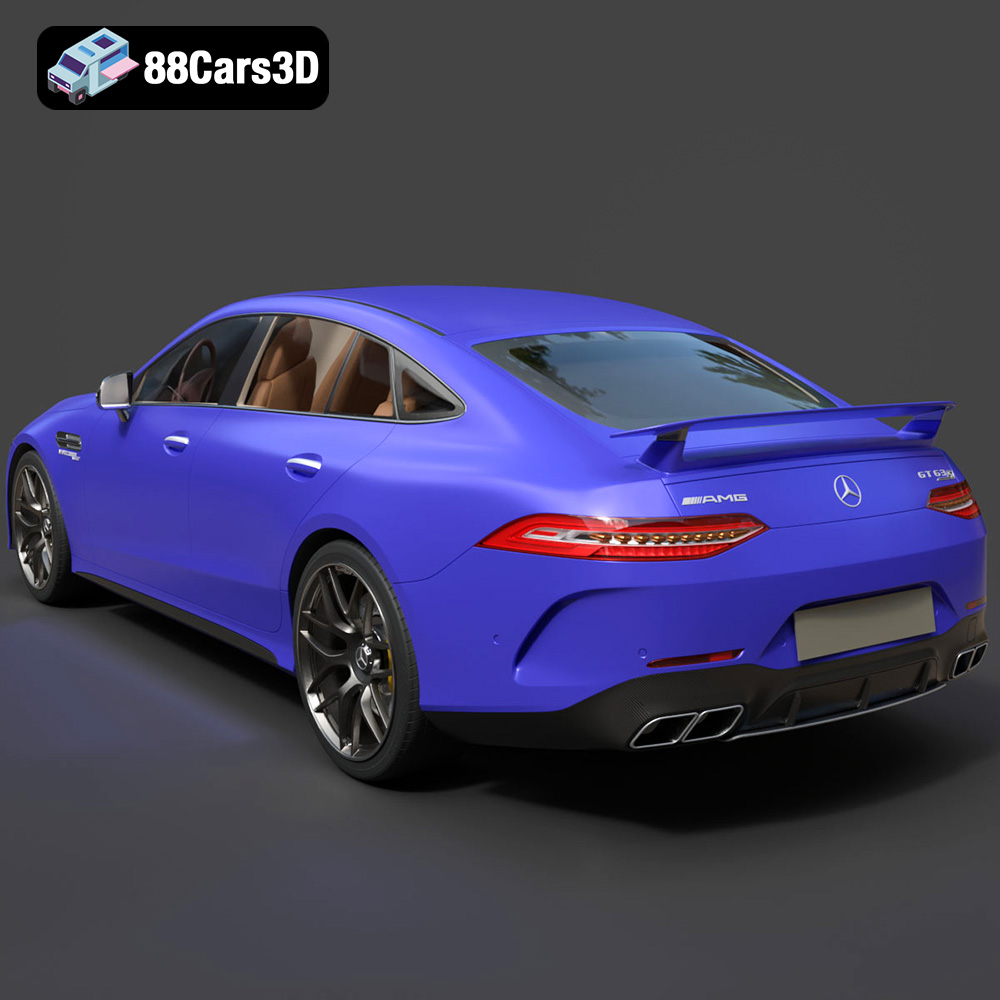
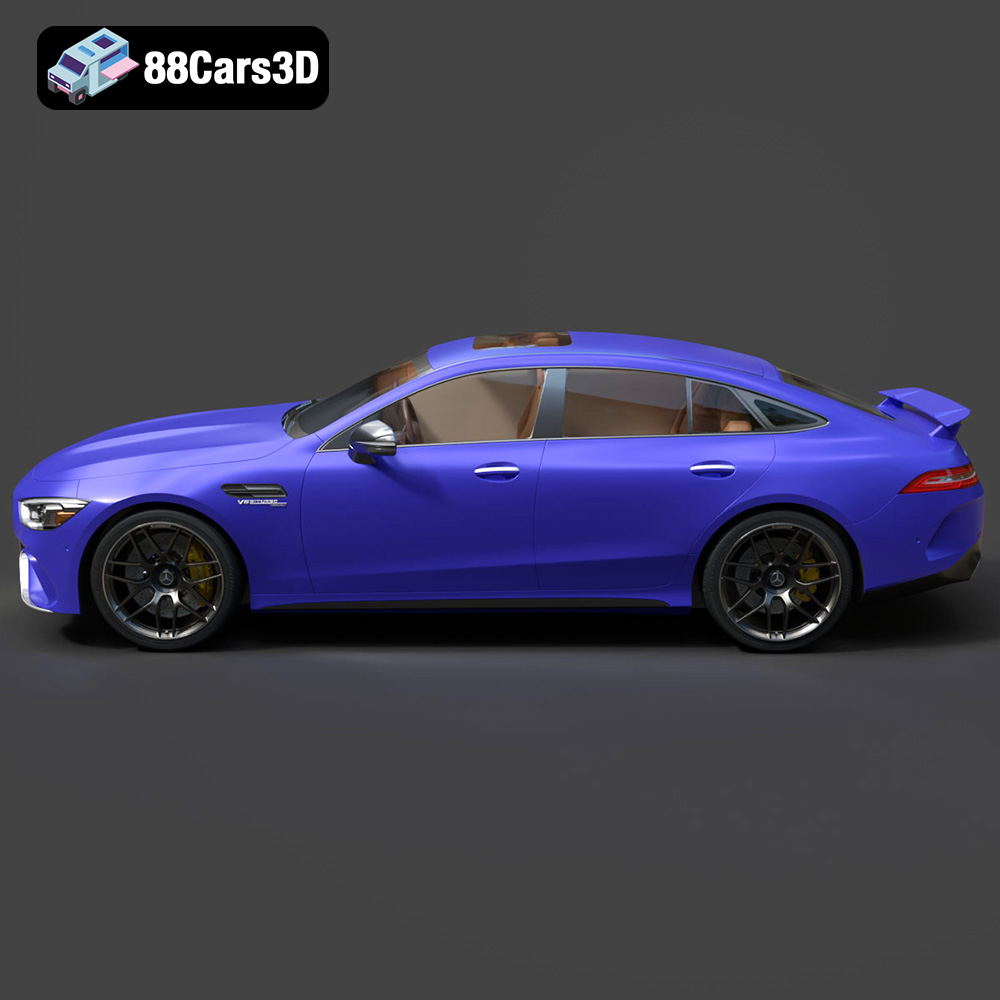
One prime example of a vehicle that demands such meticulous digital representation is the 2019 Mercedes-Benz AMG GT63. This four-door coupe embodies a harmonious blend of luxurious comfort and ferocious track-ready performance, a duality that must translate seamlessly into its digital counterpart. A high-quality 3D model of such an iconic car is more than just geometry; it’s a versatile tool that can power diverse creative and technical projects. Whether you’re an independent game developer, a professional automotive renderer, or an AR/VR innovator, acquiring a meticulously crafted asset like the Mercedes Benz AMG GT63 2019 3D Model can dramatically accelerate your workflow and elevate your project’s visual impact. This article will delve into the technical intricacies, diverse applications, and profound value of such premium 3D assets, highlighting how they empower creators across industries.
Creating a convincing 3D car model is an intricate art form, demanding a blend of artistic vision and technical prowess. It goes far beyond simply replicating shapes; it involves understanding automotive design principles, material science, and the specific requirements of the target application. A truly high-fidelity model, like the Mercedes Benz AMG GT63 2019 3D Model available at 88cars3d.com, is a testament to this complex process.
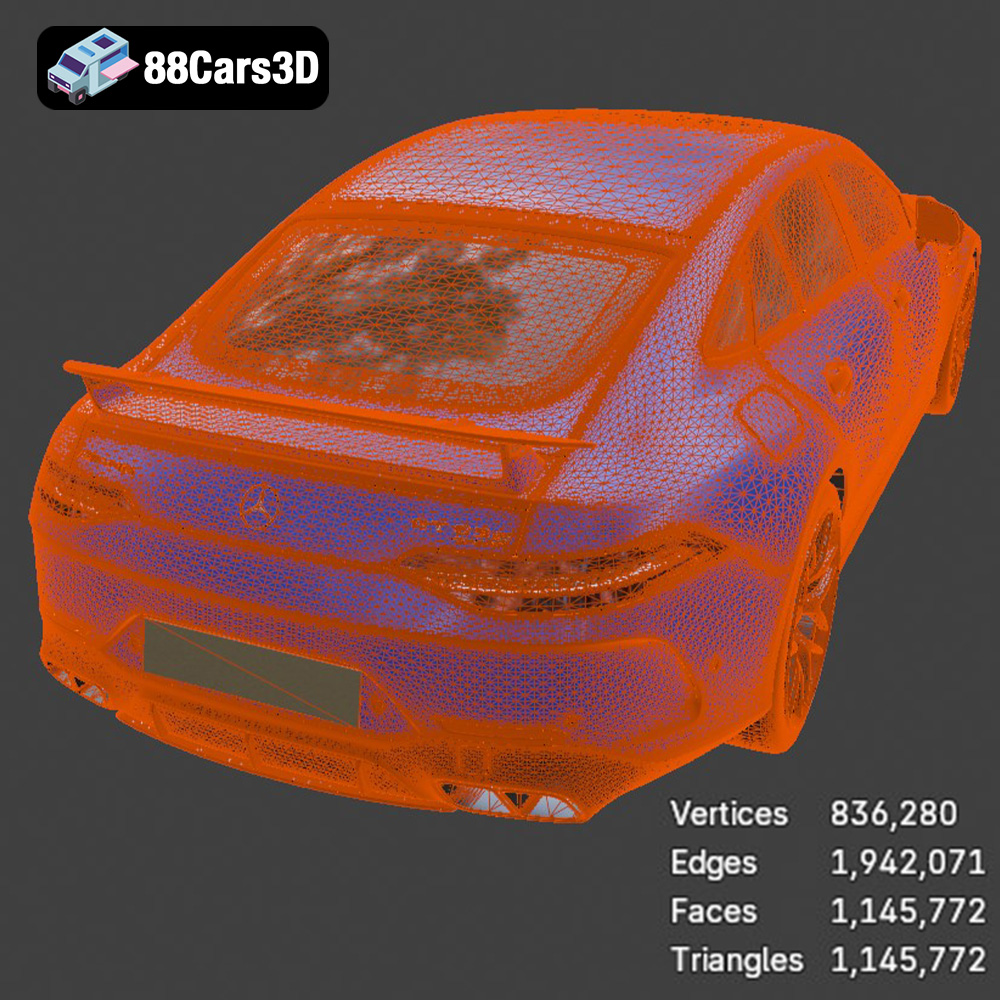
The foundation of any great 3D model is its topology – the arrangement of vertices, edges, and faces that define the object’s surface. For automotive rendering, impeccable topology is non-negotiable. Smooth, continuous surfaces are crucial for capturing the subtle reflections and contours of a car’s bodywork. Issues like pinched geometry, non-manifold edges, or excessive polygon density in non-critical areas can lead to visual artifacts, poor performance in real-time engines, and difficulties during animation or UV unwrapping. A model designed for extreme close-up shots, as specified for the AMG GT63, demands this level of precision, ensuring accurate Mercedes Benz AMG GT63 frame geometry and proportions, from the sweeping coupe-like roofline to the aggressive aerodynamics.
Beyond the mesh, materials and textures breathe life into a 3D car model. This involves recreating the intricate shaders for metallic paints, glass, rubber, leather, and chrome. Physically Based Rendering (PBR) workflows are standard, ensuring that materials react realistically to light, whether in a high-end offline renderer or a real-time game engine. This includes parameters like albedo (base color), roughness, metallicness, normal maps for fine surface details, and ambient occlusion. For a luxury vehicle like the AMG GT63, the nuanced interplay of light on its paintwork, the texture of its AMG sport seats, and the reflections on its multi-beam LED headlights are paramount to achieving photo-realism.
Accuracy to real-world scale is a critical yet often overlooked aspect. A 3D model must perfectly match the dimensions of its real-life counterpart to integrate convincingly into scenes, be it for architectural visualization, game environments, or AR experiences. Correct scaling ensures that environmental elements, characters, and other vehicles appear proportional, preventing visual disconnects. For professional automotive rendering and game development, real-world scale also facilitates accurate physics simulations and collision detection. The featured AMG GT63 model prides itself on real-world scale accuracy, based on actual vehicle chassis, ensuring seamless integration into any professional project.
The versatility of a 3D car model is significantly enhanced by its availability in multiple file formats, each tailored for specific workflows and applications. Knowing which format to use and when is crucial for any 3D professional. The Mercedes Benz AMG GT63 2019 3D Model comes packed with a comprehensive array of formats, ensuring maximum compatibility and utility.
The `.blend` file is Blender’s native format, containing an entire scene with models, materials, textures, lighting, cameras, animation data, and even physics simulations. It’s the ideal choice for Blender users, offering full editability and preserving all scene-specific settings and modifiers. If you plan to extensively modify the model, add custom animations, or integrate it into a complex Blender scene, starting with the `.blend` file provides the most comprehensive and flexible foundation. It ensures that all intricate details, from the engine block components to the pivot setups for steering and suspension, are readily accessible for adjustment.
The `.fbx` (Filmbox) format is an industry-standard format developed by Autodesk, widely adopted for transferring 3D data between various applications, especially for game development and animation. It efficiently supports mesh data, materials, textures, animations, and skeletal deformation. `.fbx` is particularly ideal for Unreal, Unity, and other real-time pipelines due to its robust support for game engine requirements. Its ability to encapsulate hierarchical data makes it excellent for models with separate components, like the AMG GT63’s wheels, suspension, and steering, enabling complex animation rigs.
The `.obj` (Wavefront Object) format is one of the oldest and most universally supported 3D file formats. It primarily stores geometric data (vertices, normals, texture coordinates, and faces) and can link to an accompanying `.mtl` (Material Template Library) file for basic material definitions. `.obj` is highly compatible across virtually all 3D software, making it an excellent choice for cross-software compatibility when complex animations or advanced material setups are not the primary concern. It’s a reliable format for static meshes or when you need to import the base geometry into a new software environment for further development.
The `.glb` (GL Transmission Format Binary) format is a compact, self-contained file format optimized for efficient transmission and loading of 3D scenes and models in web and immersive applications. It’s increasingly popular for AR, VR, and browser-based display due to its single-file nature (embedding textures and animations directly) and excellent performance. If your project involves web-based configurators, mobile AR experiences, or virtual showrooms, the `.glb` format for the Mercedes Benz AMG GT63 3D model offers superior performance and ease of deployment.
The `.stl` (Standard Tessellation Language) format is the de facto standard for 3D printing. It represents a 3D model as a series of connected triangles, defining only the surface geometry without color, texture, or material information. While not suitable for rendering or animation, it’s essential for converting digital models into physical objects. The AMG GT63 model can be converted to `.stl` for display-scale hobbyists, allowing enthusiasts to bring this digital masterpiece into the physical world, adhering to recommended print settings for optimal results.
The `.ply` (Polygon File Format) is another popular format for storing 3D data, particularly useful for scanned data and models with complex mesh properties. It can store a variety of information beyond just geometry, including color, transparency, and even normal vectors per vertex or face. `.ply` is often favored in scientific, engineering, and CAD applications where precision mesh data and additional attributes are critical for analysis or manufacturing.
The `.unreal` extension signifies an asset specifically prepared or packaged for direct import and optimal performance within the Unreal Engine. While often derived from `.fbx` files, an `.unreal` asset might include specific setup configurations, LODs (Levels of Detail), collision meshes, and material assignments optimized for the engine’s renderer. This engine-ready format significantly streamlines the workflow for game developers working within the Unreal ecosystem, providing an immediate advantage for integrating game assets like the AMG GT63 into high-speed track simulations.
The `.max` file is the native format for Autodesk 3ds Max, a leading software for 3D modeling, animation, and rendering. Similar to `.blend`, a `.max` file contains an entire 3ds Max scene, including all models, lights, cameras, materials, textures, and animation data. It’s the go-to format for users working in 3ds Max who require full access to the project’s editable components, modifiers, and rendering settings, making it perfect for high-end automotive visualization and studio lighting setups.
The true value of a premium 3D car model lies in its seamless integration into various professional pipelines. From advertising to entertainment, these assets serve as foundational elements.
For photo-realistic automotive rendering, 3ds Max paired with renderers like V-Ray or Corona remains an industry staple. The `.max` file format provided with the Mercedes Benz AMG GT63 2019 3D Model is invaluable here, offering an editable project where artists can fine-tune every aspect. This includes setting up complex studio lighting, crafting dynamic environments, and applying advanced material shaders to achieve stunning realism for brand campaigns or luxury lifestyle showcases. The detailed engine block and bay components, aggressive quad-tailpipe AMG exhaust, and intricate multi-beam LED headlights can all be brought to life with incredible fidelity, making the vehicle indistinguishable from its real-world counterpart.
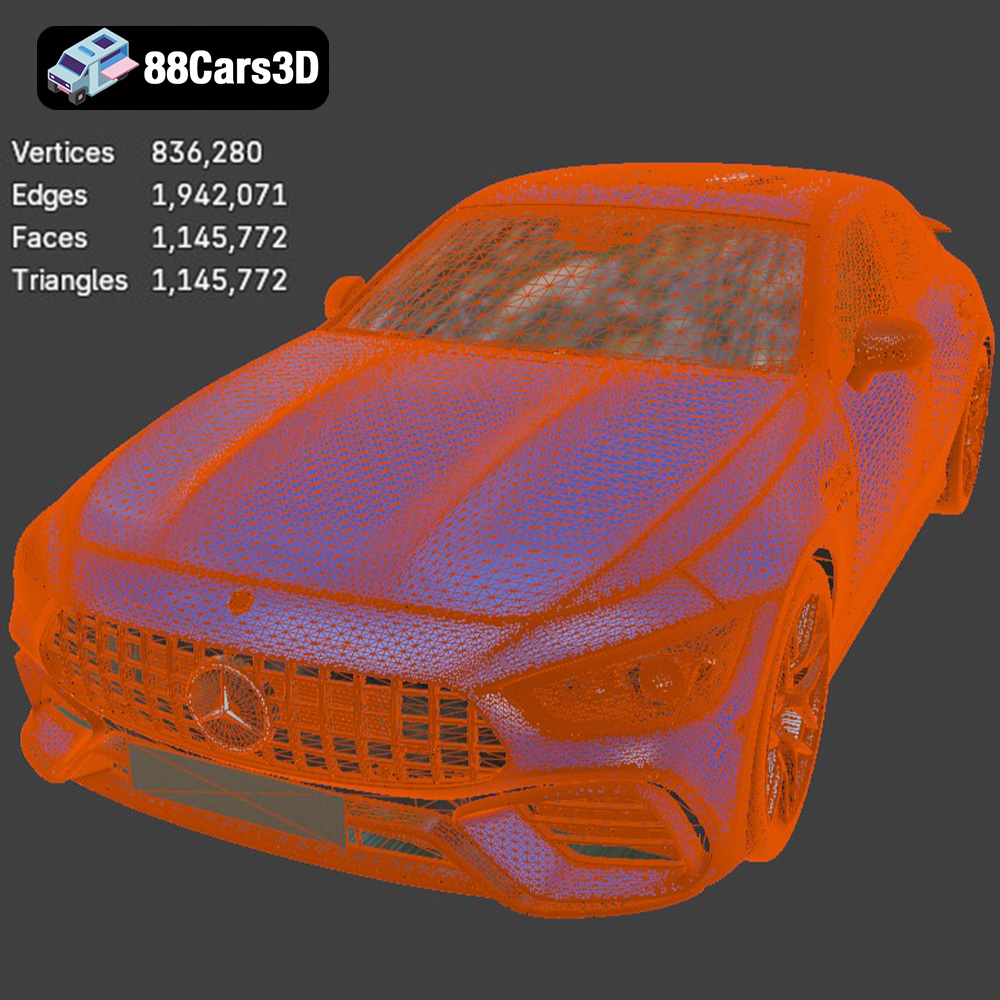
In game development, performance is as critical as visual quality. The AMG GT63’s optimized 1,145,772 triangles strike a perfect balance for real-time engines like Unreal and Unity. The `.fbx` and `.unreal` formats are crucial here, enabling efficient import with proper pivot setups for steering, wheel rotation, and suspension travel. Game developers can leverage this asset for open-world games, racing titles, and simulators, implementing realistic physics, detailed damage models, and immersive driving experiences. The optimized geometry for first-person POV in gaming ensures that the luxurious AMG sport seats and high-resolution dual-screen digital instrument cluster are perfectly rendered from the player’s perspective.
Blender’s rise as a powerful, open-source 3D suite makes the `.blend` file format particularly useful for independent artists and studios. The Mercedes Benz AMG GT63 3D Model can be easily imported into Blender for animation projects, short films, or cinematic sequences. With separate wheels, suspension, and steering components, animators can rig the vehicle for realistic movement, from high-speed chases to subtle turns. The detailed cockpit and interior features also allow for compelling camera work within the car, providing an immersive experience for viewers.
The utility of a robust 3D car model extends far beyond traditional screens, opening doors to interactive and tangible experiences.
The `.glb` format, tailored for web and mobile, makes the Mercedes Benz AMG GT63 model an ideal candidate for AR/VR applications. Imagine a virtual showroom where customers can explore the GT63 in 3D, changing colors, rims, and interior finishes in real-time. Or an AR application where the car appears on your driveway, allowing you to walk around and inspect its details as if it were truly there. These immersive experiences are transforming how consumers interact with products, and high-quality 3D car models are at the forefront of this revolution.
For hobbyists, collectors, or even designers needing a physical prototype, the ability to 3D print a digital model is invaluable. The `.stl` format provides the necessary data for 3D printers. The detailed print settings provided for the AMG GT63 model – recommended scale, layer height, wall thickness, infill, and support requirements – guide users in achieving a high-quality physical replica. Resin printing, in particular, is recommended for fine details, allowing enthusiasts to capture the intricate stitching of the AMG sport seats or the precise center console with fidelity.
Beyond entertainment and marketing, 3D car models serve vital roles in education and simulation. Engineering students can study complex vehicle mechanics, designers can prototype concepts, and drivers can train in realistic simulators. The detailed technical specifications and accurate component breakdown of the AMG GT63 model make it an excellent asset for understanding automotive design and engineering principles, facilitating learning and development in a virtual environment.
The Mercedes Benz AMG GT63 2019 3D Model is not just a generic car model; it’s a meticulously replicated digital twin of a highly specific, iconic vehicle. Its technical specifications and detailed features highlight the dedication to accuracy and optimization required for professional-grade 3D car models.
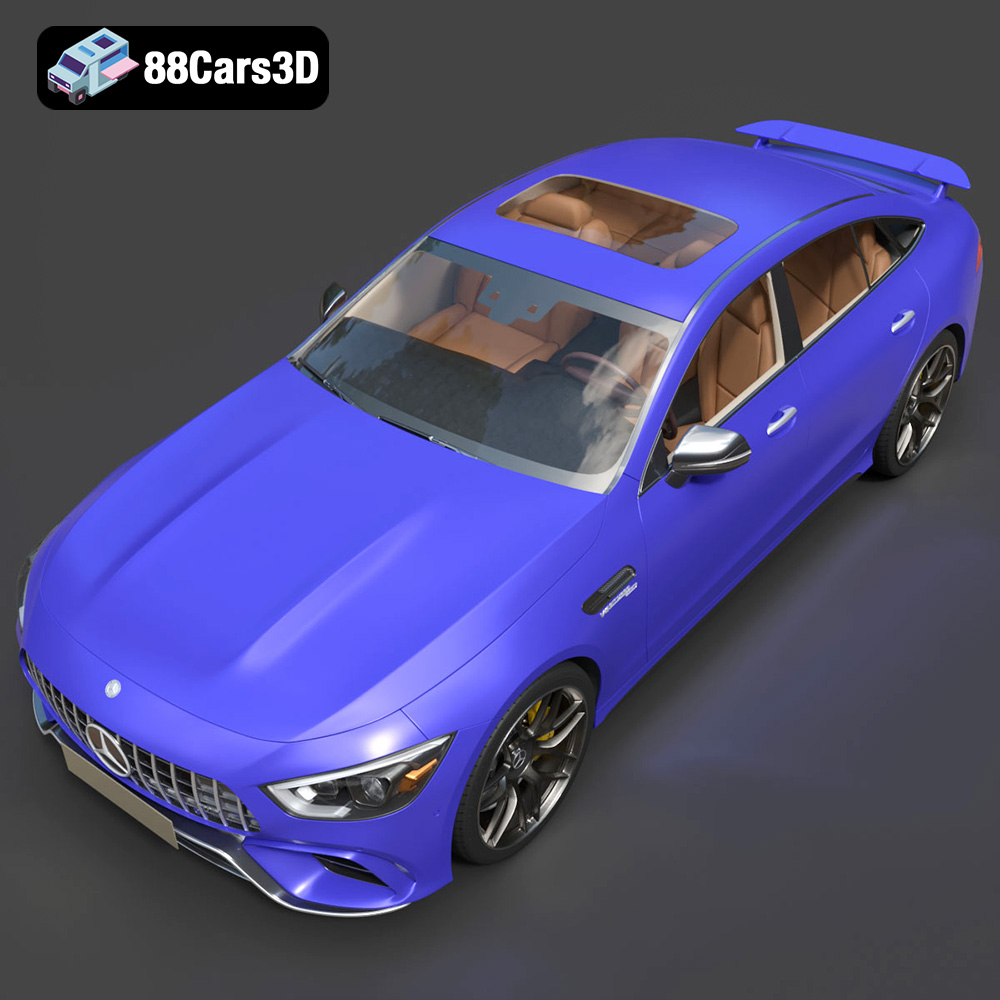
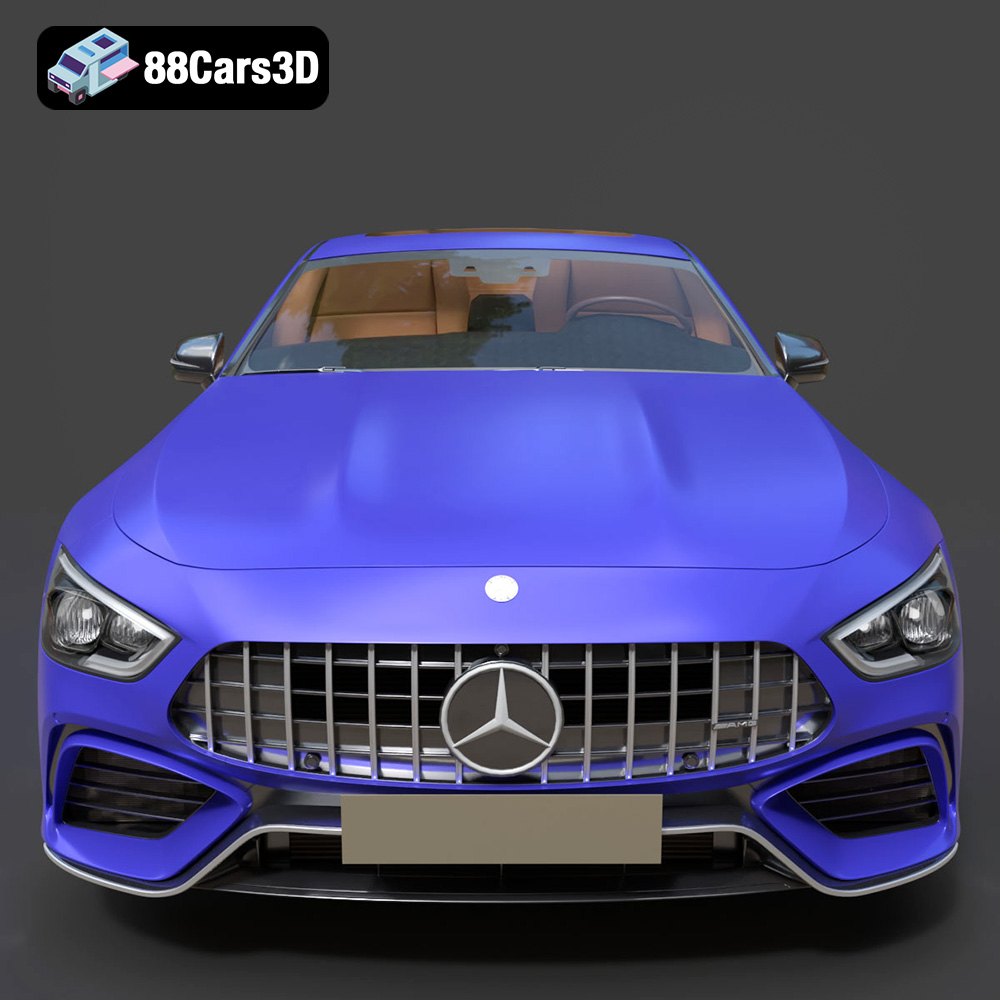
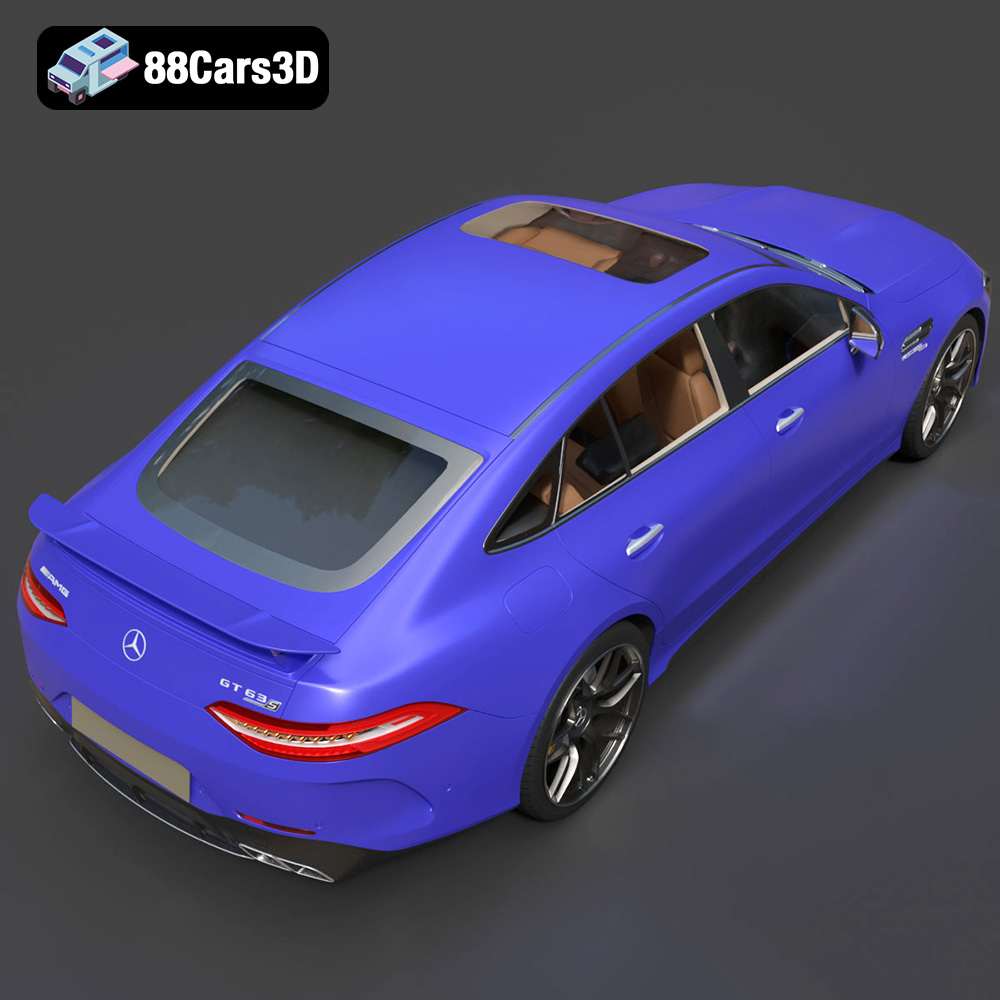
Every curve and component of the AMG GT63’s aggressive exterior has been faithfully recreated. This includes the accurate Mercedes Benz AMG GT63 frame geometry and proportions, which are crucial for rendering the vehicle’s dynamic stance and flowing lines. The model features a detailed engine block and bay components, an element often overlooked in lower-quality models but essential for realistic hood-open shots or cinematic sequences. The aggressive quad-tailpipe AMG exhaust system and rear active aero diffuser, the intricate multi-beam LED headlights, and the slim taillight clusters all contribute to the model’s stunning visual fidelity. Authentic AMG forged alloy wheels with low-profile performance tires and a high-performance braking system with drilled rotors and massive calipers further enhance its realism.
The attention to detail extends into the cockpit. The luxurious AMG sport seats with intricate stitching details, the performance flat-bottom steering wheel with paddle shifters, and the high-resolution dual-screen digital instrument cluster and infotainment system are all precisely modeled. The precise center console with its trackpad and dynamic control switches ensures that even first-person perspectives in gaming are immersive and believable. This level of interior fidelity is paramount for applications like virtual showrooms or AR experiences where users expect to interact with and explore every facet of the vehicle.
One of the standout advantages of this model is its engineering for dynamic applications. With separate wheels, suspension, and steering components, the model is perfectly set up for complex animation. Proper pivot setups for steering, wheel rotation, and suspension travel allow animators to create realistic driving sequences without extensive rigging work. This “game-ready” optimization, alongside a balanced polycount of 1,145,772 triangles, ensures that the model performs smoothly in real-time engines while maintaining high-end visual realism.
The journey from a high-poly sculpt to a game-ready asset is a complex process of optimization without sacrificing visual quality. The Mercedes Benz AMG GT63 2019 3D Model exemplifies this balance.
A common misconception is that higher polycount always equals better quality. While true for offline rendering, real-time applications require a careful balance. The 1,145,772 triangles in the AMG GT63 model represent a meticulously optimized polycount that delivers stunning visual fidelity for extreme close-up shots while remaining manageable for real-time engines like Unreal or Unity. This means developers don’t have to spend valuable time on manual retopology, enabling quicker integration and deployment.
Efficient UV mapping is crucial for applying textures without distortion and maximizing texture resolution. Clean, non-overlapping UVs are essential for realistic PBR material application and lighting. The refined topology of this model implicitly suggests careful UV unwrapping, leading to smooth reflections and accurate shading. Furthermore, the compatibility with major 3D software platforms and real-time rendering engines implies a well-structured material setup that can be easily adapted and optimized.
For truly scalable game assets, Levels of Detail (LODs) are often implemented. While not explicitly detailed as included, a professional-grade model like this is built with topology that facilitates easy generation of LODs, allowing the engine to swap to lower-polygon versions of the model when it is further away from the camera. This dynamic optimization is key to maintaining high frame rates in demanding real-time environments, ensuring that whether the Mercedes Benz AMG GT63 is a distant object or a hero vehicle, it performs efficiently.
A high-quality 3D model serves as a powerful canvas for creative expression. The Mercedes Benz AMG GT63 2019 3D Model offers extensive customization options, allowing artists and designers to tailor it to their specific project needs.
The ability to change body/tank colors, modify tire textures, and adjust material finishes (matte, gloss, metallic, carbon fiber) provides immense flexibility. This is crucial for automotive configurators, where customers can personalize their dream car, or for cinematic sequences where the car needs to match a specific brand aesthetic or mood. Artists can quickly experiment with different paint schemes, from factory colors to bespoke custom finishes, and swap between track or street variants for tires, showcasing the vehicle in various contexts.
Beyond the car itself, the model’s quality facilitates seamless integration into diverse environments. Whether it’s a bustling city street render, a high-speed track simulation, or a serene luxury lifestyle showcase, the GT63 can become the focal point of rich environmental storytelling. Adapting lighting for different environments, from a bright sunny day to a dramatic twilight setting, is made easier when the base model accurately reacts to light and shadow, enhancing the overall realism of the scene.
Investing in high-quality 3D car models like those found on 88cars3d.com is an investment in future-proof assets. The detailed geometry, clean topology, and multi-format availability ensure that these models will remain relevant and usable across new software versions, evolving rendering techniques, and emerging platforms like advanced AR/VR hardware. As technology progresses, having a robust and well-structured asset allows for easier updates and adaptations, maximizing its long-term value.
The world of 3D modeling for automotive design, game development, and visualization is driven by precision, realism, and versatility. A high-fidelity 3D car model, such as the Mercedes Benz AMG GT63 2019 3D Model, stands as a testament to the meticulous craftsmanship and technical expertise required to meet the demands of professional pipelines. From its accurately modeled exterior and interior details to its optimized geometry and extensive file format support, this model empowers creators to bring their visions to life with unparalleled realism.
Whether you’re crafting a cutting-edge racing game, designing an immersive virtual showroom, producing a stunning automotive advertisement, or even creating a physical replica through 3D printing, the right asset can dramatically enhance your project’s quality and efficiency. By understanding the intricacies of 3D modeling, the nuances of various file formats, and the specific applications across industries, professionals can harness the full potential of these digital masterpieces. For those seeking top-tier 3D car models that combine aesthetic excellence with technical robustness, exploring offerings like the Mercedes Benz AMG GT63 2019 3D Model on 88cars3d.com is a crucial step towards elevating your digital creations.
The 2019 Mercedes Benz AMG GT63 represents the pinnacle of German engineering, blending track-ready performance with four-door luxury. Known for its thunderous Biturbo V8 engine, striking Panamericana grille, and sweeping coupe-like roofline, this high-performance sedan commands attention. The vehicle features aggressive aerodynamics, a quad-exhaust system, and a muscular stance that highlights its undeniable racing heritage.
This 3D model boasts an impressive 1,145,772 triangles, delivering stunning visual fidelity suitable for extreme close-up shots while remaining highly optimized. Its refined topology ensures smooth reflections and accurate shading, making it perfect for game development, AR/VR experiences, animation, and high-end automotive visualization.
Perfect for bustling city street renders, high-speed track simulations, luxury lifestyle showcases, and immersive virtual showrooms.
$65.00
.2019
.blend
.fbx
.glb
.max
.obj
.ply
.rendering
.stl
.unreal
amg-gt63
car-3d-model
game asset
game-ready
low-poly
luxury car
mercedes-benz
optimized
sports-sedan
VR/AR