Get 40% OFF All Premium 3D & STL Models!

In the world of automotive design, few names evoke the same passion and admiration as Porsche. The 911 Targa, in particular, stands as an iconic masterpiece – a harmonious blend of open-top exhilaration and coupe-like rigidity. Its distinctive silhouette, signature round headlights, and the ingenious Targa roof mechanism have captivated enthusiasts for decades. But what happens when such a legend transcends the physical world and enters the digital frontier?
The answer lies in meticulously crafted 3D models, assets that power everything from blockbuster video games to cutting-edge virtual reality experiences and photorealistic architectural visualizations. This exploration delves into the technical intricacies and creative possibilities unlocked by a premium 3D representation of this automotive icon. Specifically, we’re examining the extraordinary Porsche 911 Targa 3D Model, a versatile asset available on 88cars3d.com, engineered to meet the highest demands of professional designers, game developers, and visualization artists. This model isn’t just a digital replica; it’s a gateway to limitless creative applications, offering unparalleled visual fidelity and technical optimization across various platforms and workflows.
The versatility of any professional 3D asset, especially complex ones like a detailed 3D car model, heavily relies on its availability in various file formats. Each format serves specific purposes, catering to different software ecosystems, project requirements, and end-user applications. Understanding these distinctions is crucial for seamless integration into your workflow, ensuring optimal performance and fidelity. The Porsche 911 Targa 3D Model exemplifies this versatility by offering a comprehensive suite of formats, each optimized for its intended use.
The .blend format is the native file type for Blender, the powerful open-source 3D creation suite. When you receive a .blend file, you’re getting a fully editable Blender scene, complete with all its associated data: mesh geometry, materials, textures, lighting, camera setups, and even animation data if present. This format is ideal for artists and studios whose primary DCC (Digital Content Creation) software is Blender. It allows for direct manipulation of the model’s components, material tweaks, animation rigging, and scene composition without any loss of fidelity or conversion artifacts. For the Porsche 911 Targa, the .blend file provides a solid foundation for any Blender-centric project, allowing artists to leverage Blender’s robust toolset to customize every aspect of the vehicle.
.fbx (Filmbox) is a proprietary file format owned by Autodesk and has become an industry-standard for 3D data exchange between various software applications. Its strength lies in its ability to store a wide range of 3D data, including geometry, materials, textures, animation, and rigging information, in a single, robust file. This makes .fbx ideal for pipelines involving multiple software packages, particularly for game development. Engines like Unreal Engine and Unity heavily rely on .fbx for importing assets. The Porsche 911 Targa 3D Model, provided as .fbx, ensures maximum compatibility and smooth transitions from modeling software to real-time environments, maintaining material assignments and pivot points crucial for animation.
The .obj (Wavefront Object) format is one of the oldest and most universally supported 3D file formats. It primarily stores geometric data (vertices, normals, texture coordinates, and faces) and can link to external .mtl (material) files for basic material properties. While it doesn’t support animation or rigging, its widespread compatibility makes it an excellent choice for static meshes and cross-software collaboration where basic geometry is paramount. For the Porsche 911 Targa, the .obj version offers a reliable fallback for virtually any 3D software, ensuring that the core geometry and UV mapping are accessible, even in simpler visualization or 3D printing preparation tools.
.glb (GL Transmission Format, binary) is rapidly gaining traction as the go-to format for web-based 3D, Augmented Reality (AR), and Virtual Reality (VR) applications. It’s a single-file, self-contained format that embeds all necessary data—geometry, materials, textures, and even animations—making it incredibly efficient for streaming and rapid loading. Its optimization for web and mobile environments means the Porsche 911 Targa in .glb format is perfect for interactive virtual showrooms, mobile AR experiences, or showcasing models directly in a web browser without extensive plugin requirements. It leverages Physically Based Rendering (PBR) materials for consistent visual quality across platforms.
The .stl (Stereolithography) format represents 3D surfaces as a collection of triangles, making it the de facto standard for 3D printing. It defines only the surface geometry of a 3D object, lacking color, texture, or material information. When preparing the Porsche 911 Targa for physical manifestation, the .stl file provides the pure, watertight mesh required by 3D printers. This format is essential for hobbyists and professionals looking to create a tangible replica of the digital model, allowing for precise control over print settings and scaling.
The .ply (Polygon File Format) is often used for storing 3D data from 3D scanners, CAD applications, or for scientific and engineering analysis. It can store a variety of properties beyond just geometry, including color, transparency, surface normals, and texture coordinates per vertex or per face. While less common for general artistic interchange than .fbx or .obj, its precision and ability to carry rich data make it valuable for specific technical applications or detailed inspections of the Porsche 911 Targa’s complex mesh, particularly in workflows involving reverse engineering or comparative analysis.
While not a standalone file format in the traditional sense, the inclusion of “.unreal” typically denotes an asset that has been specifically prepared and optimized for direct integration into Unreal Engine. This often means the core geometry (likely an FBX) has been imported, materials have been set up with Unreal’s PBR shaders, collision meshes generated, and potentially even an Unreal blueprint created for easy instantiation and manipulation within the engine. For a sophisticated model like the Porsche 911 Targa, an Unreal-ready package significantly streamlines the game development process, reducing the need for extensive setup and allowing developers to drop the asset directly into their projects, knowing it’s configured for optimal performance and visual fidelity within Unreal Engine.
Finally, the .max format is the native file type for Autodesk 3ds Max, another industry-leading DCC software. Similar to .blend for Blender, a .max file contains the entire scene data, including geometry, modifiers, materials, textures, lighting, cameras, and animation. This format is invaluable for studios and artists who build their pipelines around 3ds Max, providing full editability and access to all the original scene components of the Porsche 911 Targa. It allows for high-end rendering setups, complex animation sequences, and intricate customization directly within the familiar 3ds Max environment.
The comprehensive range of file formats offered with the Porsche 911 Targa 3D Model highlights its adaptability, ensuring that whether your project is focused on cinematic rendering, real-time game development, immersive AR/VR, or tangible 3D prints, you have the right tool for the job. This thoughtful provision of formats makes a significant difference in professional production pipelines.
Creating a 3D model of an iconic vehicle like the Porsche 911 Targa is a complex undertaking, blending artistic vision with rigorous technical precision. It’s about more than just replicating shapes; it’s about capturing the essence, the engineering, and the subtle nuances that define its character. The Porsche 911 Targa 3D Model available at 88cars3d.com stands as a testament to this delicate balance.
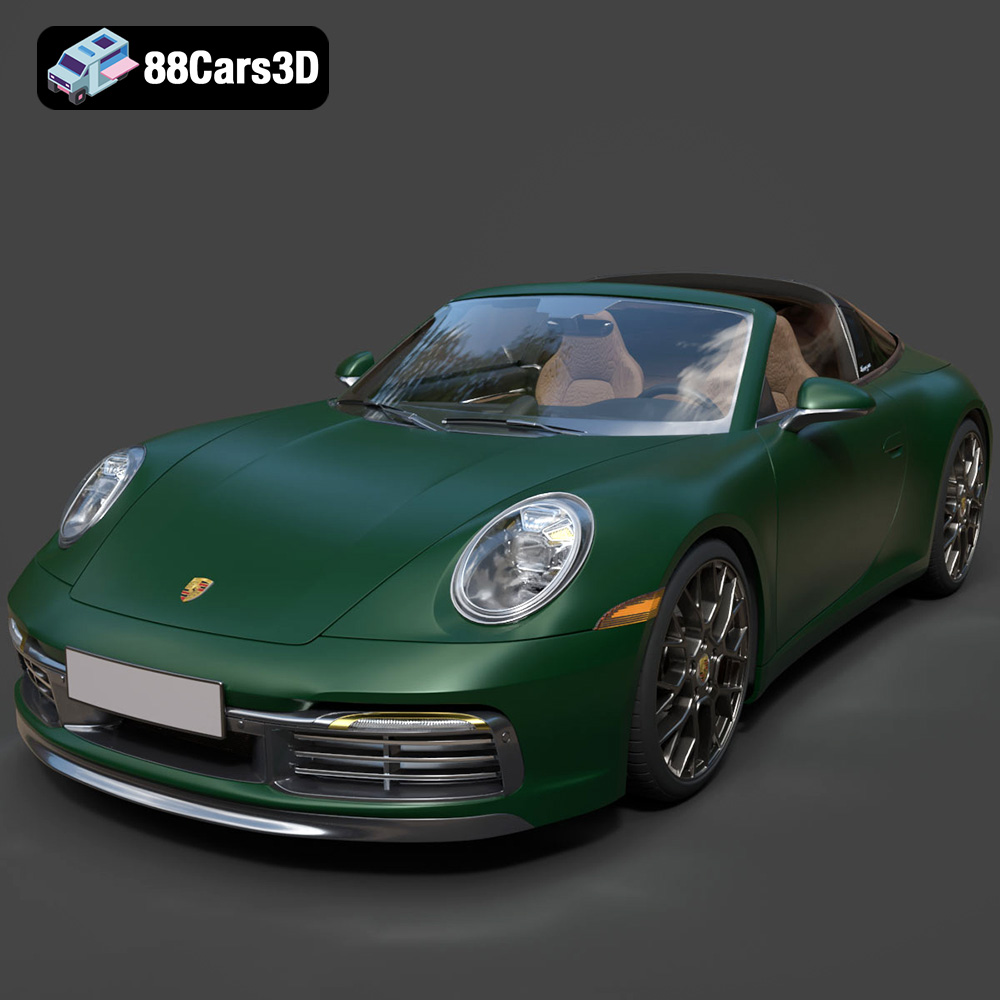
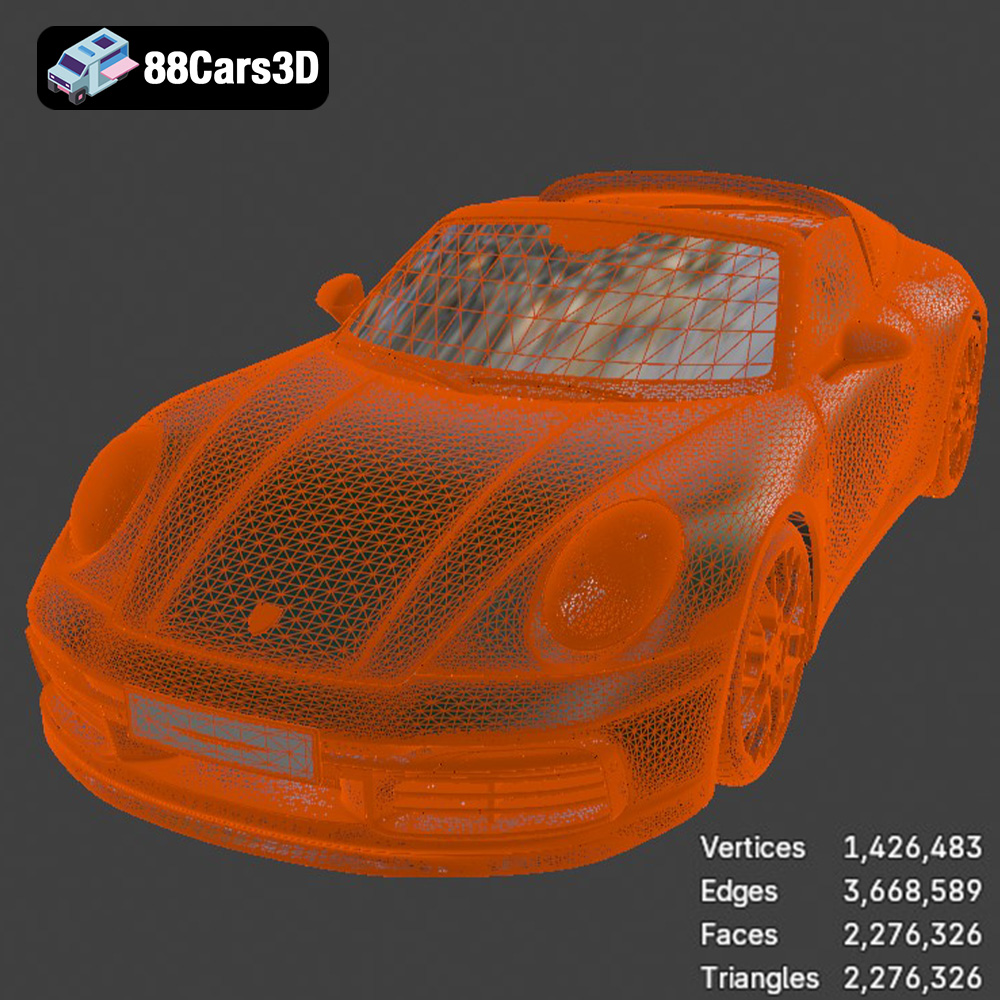
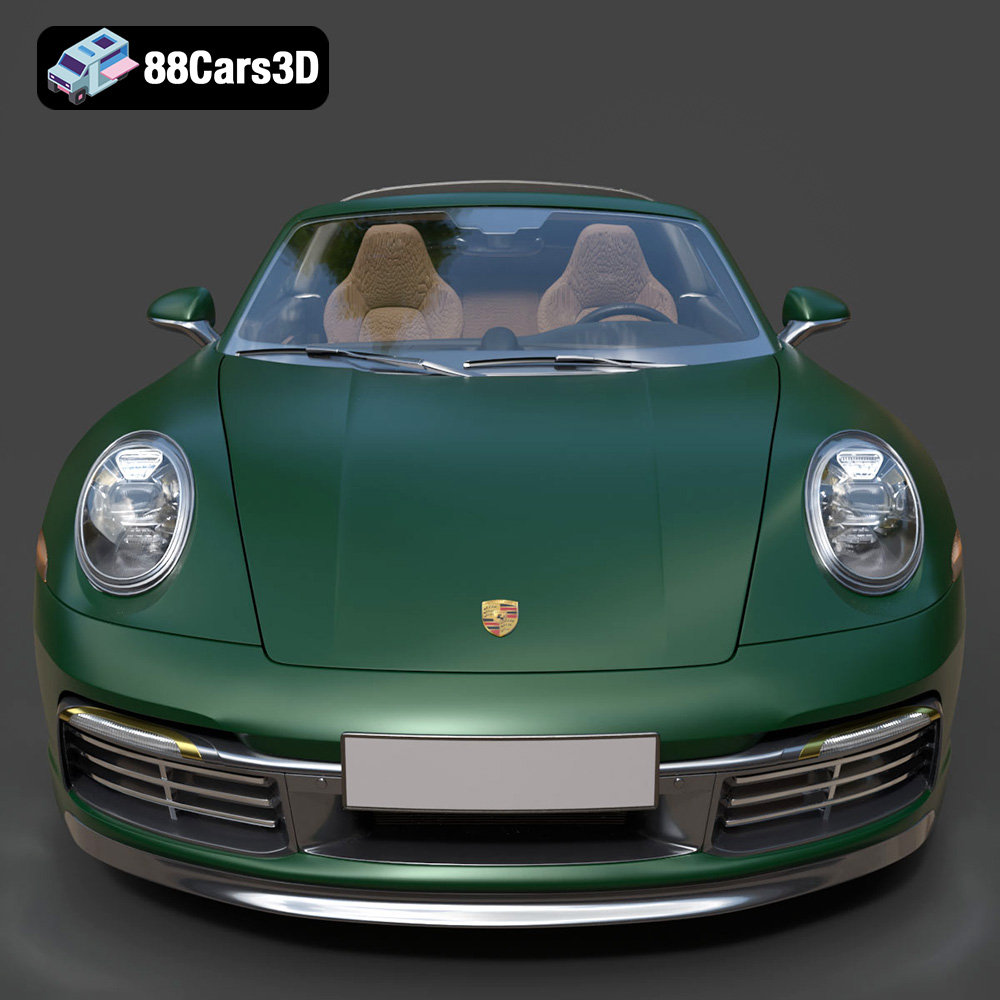
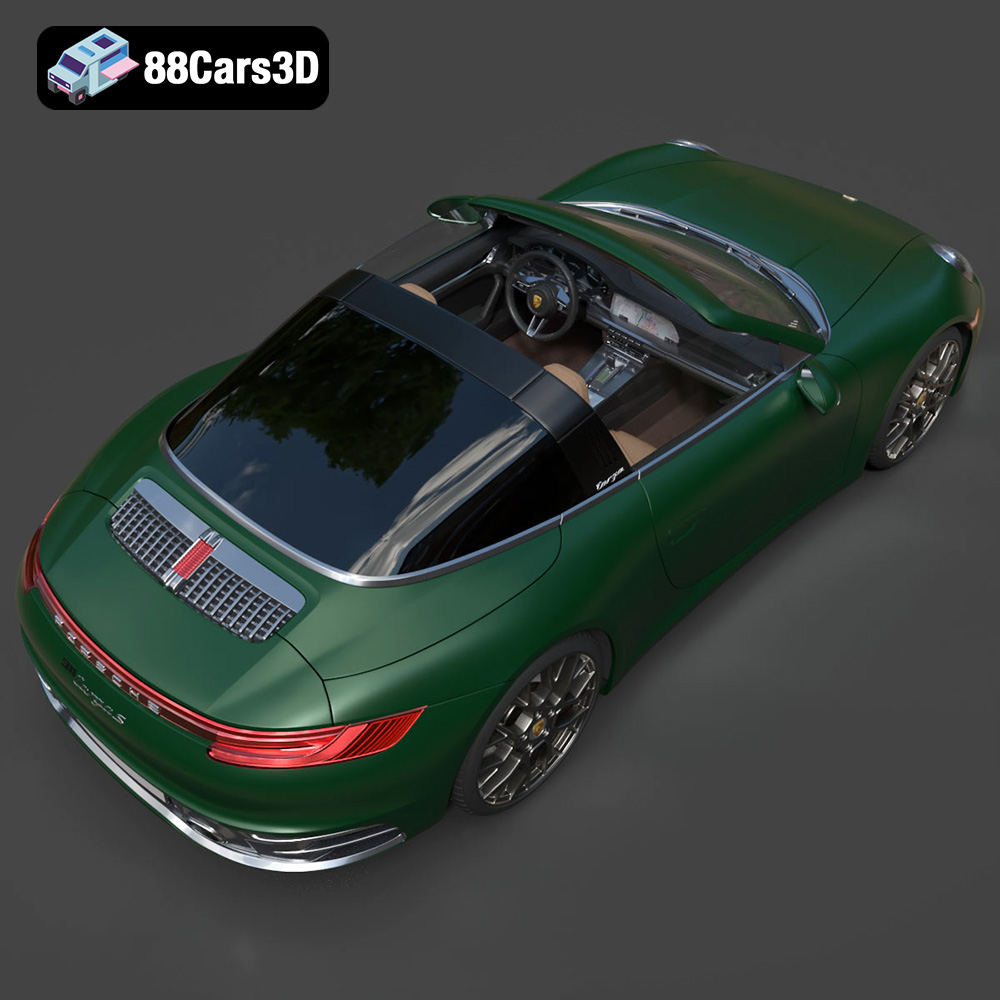
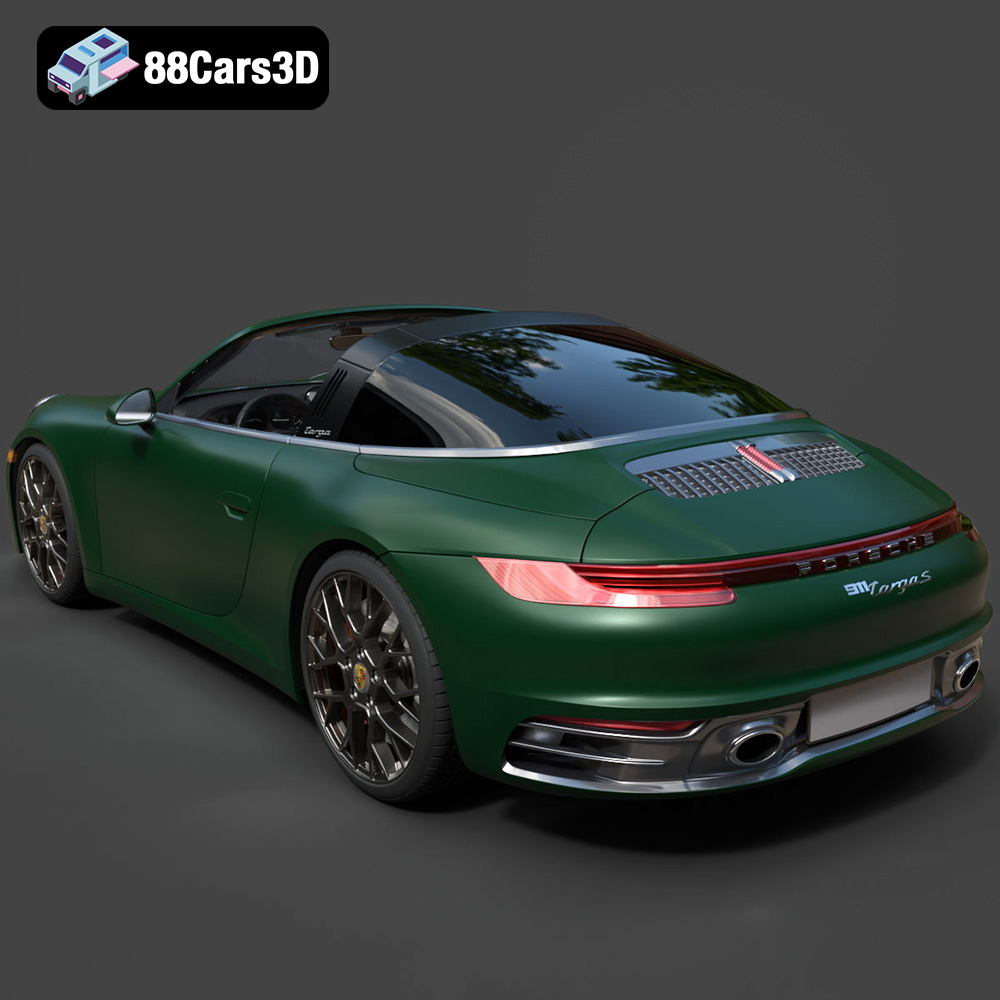
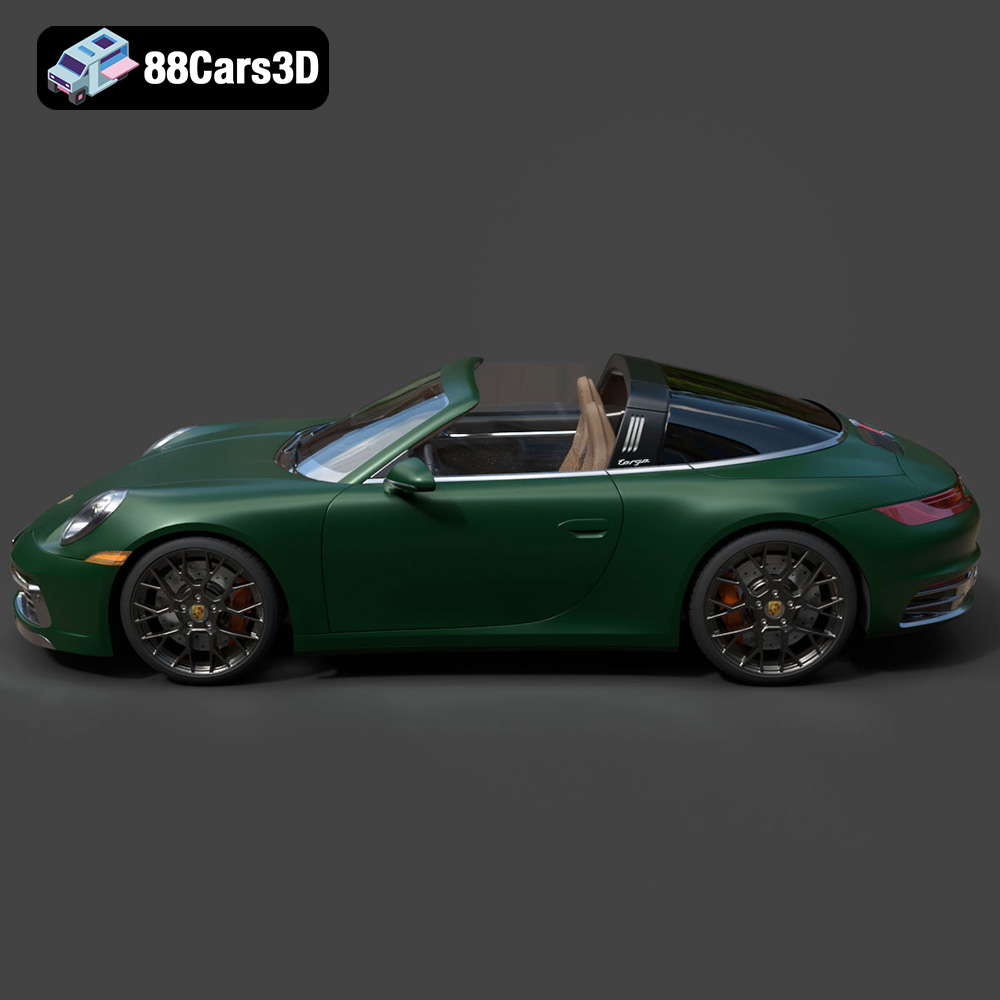
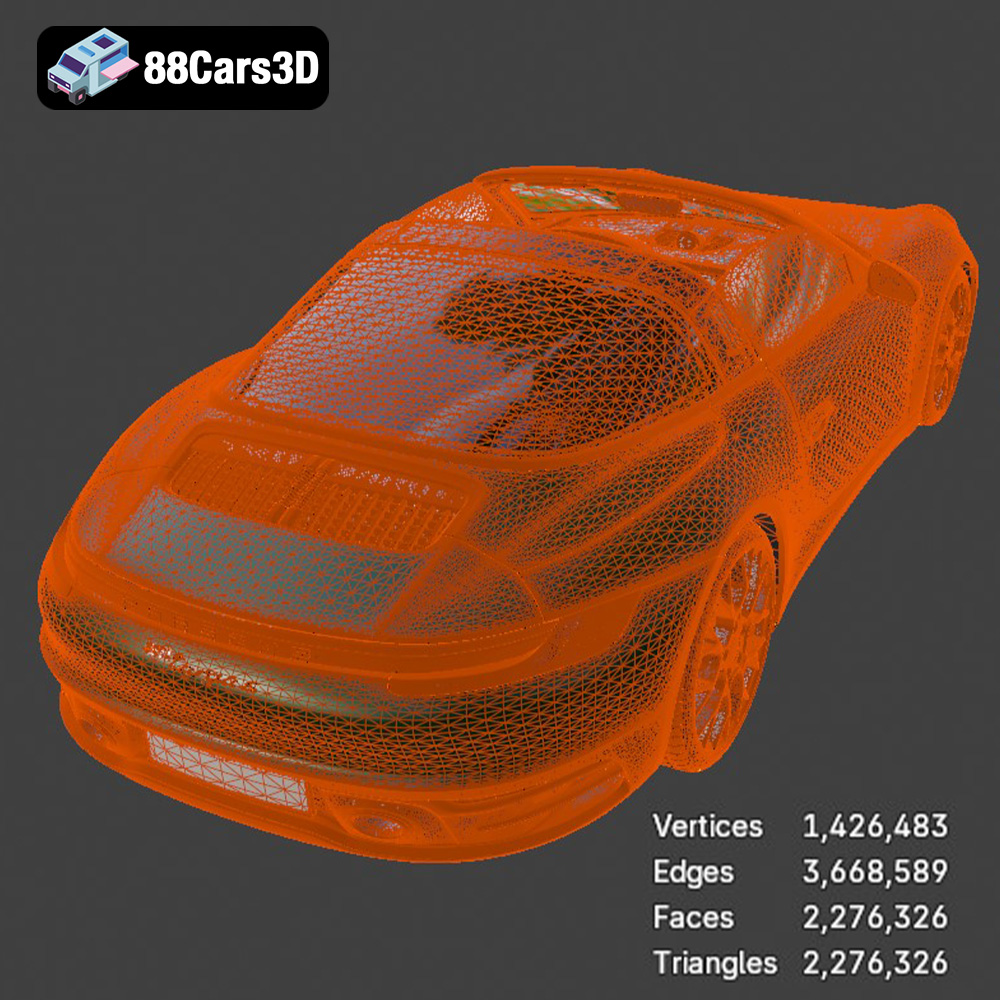
The challenge of modeling a classic like the Porsche 911 Targa lies in meticulously reproducing its unique design language. This includes the exact curvature of its sweeping rear fenders, the distinctive lines of its Targa bar, and the iconic round headlights that are instantly recognizable. This particular model boasts an exact triangle count of 2,276,326. While this might seem high, it’s a deliberate choice that allows for unparalleled visual fidelity, making it suitable for high-resolution rendering and close-up cinematic shots, while still being optimized for modern game engines when implemented with proper LOD (Levels of Detail) strategies. The topology is clean, ensuring smooth subdivision, realistic deformations, and seamless integration of textures and materials.
No detail is too small when aiming for automotive realism. The exterior of this Porsche 911 Targa model includes an accurate frame geometry, faithful proportions, and an intricately modeled flat-six engine block visible through its rear grille. The authentic dual exhaust system, rear diffuser, signature LED headlights, and continuous rear taillight strip are all rendered with stunning accuracy. Furthermore, premium alloy wheels with high-performance low-profile tires, detailed brake calipers, and precise suspension geometry elevate the realism. Crucially for animation, separate components for wheels, suspension, and steering are included, enabling dynamic and convincing motion.
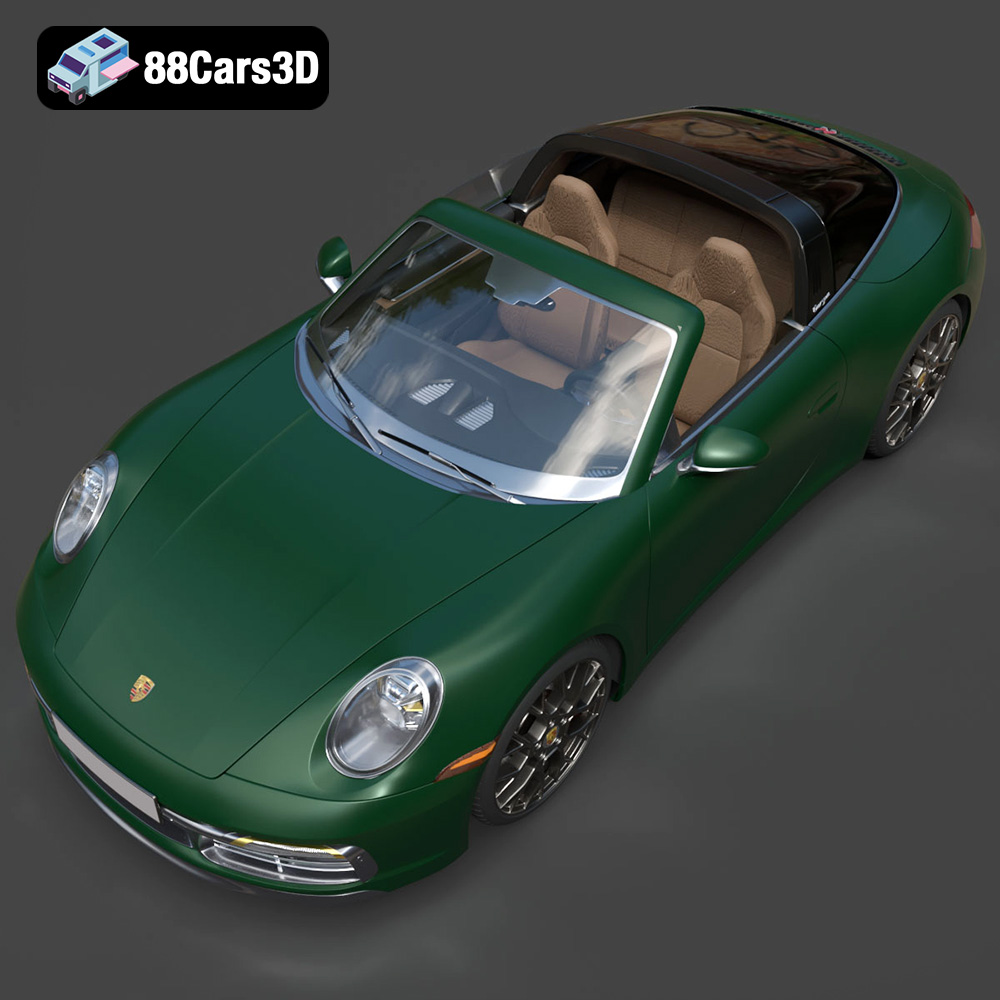
The interior is equally impressive. The cockpit features premium leather-trimmed sport seats with intricate stitching, the iconic 911 steering wheel with functional button layouts, and a classic five-dial analog/digital hybrid instrument cluster. A detailed center console, pedals, and shifter complete the immersive experience. This level of interior fidelity is vital for first-person POV (Point of View) shots in gaming or for creating luxurious virtual showroom experiences.
Beyond geometry, the lifelike appearance of any 3D car model hinges on its materials and textures. This model is designed for Physically Based Rendering (PBR) workflows, meaning its materials accurately simulate how light interacts with surfaces in the real world. Metallic paints shimmer correctly, glass reflects with realistic refractions, and leather interiors exhibit subtle imperfections. The model supports extensive customization options, allowing users to change body colors to authentic factory shades or custom finishes, modify tire textures for off-road or street variants, and adjust material finishes between matte, gloss, or metallic looks. This flexibility empowers artists to adapt the model to any desired visual style or environmental lighting condition.
The demand for highly realistic vehicles in video games and interactive simulations continues to grow. Developers need assets that not only look stunning but also perform flawlessly in real-time environments. The Porsche 911 Targa 3D Model is engineered precisely for this purpose, striking a balance between visual grandeur and technical efficiency.
With its 2,276,326 triangles, this 3D model is considered “game-ready” for modern engines like Unreal Engine and Unity. This polycount allows for an incredible level of detail, particularly for hero assets or close-up vehicle cinematics within a game. For broader application across different LODs, implementing a robust LOD system (Levels of Detail) is crucial. This involves creating simplified versions of the model that automatically swap in at further distances, ensuring that performance remains high without compromising visual quality up close. The model’s real-world scale accuracy is maintained, which is essential for consistent physics calculations and environmental interaction within game engines. Furthermore, proper pivot setups for steering, wheel rotation, and suspension travel are pre-configured, greatly simplifying the animation process for realistic vehicle dynamics.
Integrating a complex 3D car model into a game engine typically involves a streamlined workflow. Artists can begin with the .max or .blend files for any custom modifications or to set up specific animations within their preferred DCC software. The model is then exported as an .fbx file, which is the preferred format for import into Unreal or Unity. Upon import, materials are correctly assigned, often leveraging PBR texture sets (Albedo, Normal, Roughness, Metallic, AO) for realistic shading. The “game-ready” nature extends to thoughtful UV mapping, ensuring textures are applied efficiently and without distortion. For Unreal Engine users, the availability of an “.unreal” optimized version streamlines this process even further, often providing pre-configured assets ready for direct use, complete with collision meshes and vehicle blueprints for quick implementation into game mechanics.
Imagine a high-fidelity racing simulator where the Porsche 911 Targa is one of the featured vehicles. Its detailed exterior allows for breathtaking replays and realistic damage models. The highly detailed cockpit, optimized for first-person POV, places players directly behind the iconic 911 steering wheel, enhancing immersion. The accurate suspension geometry and properly set up pivots mean that vehicle physics can be tuned to simulate the real Targa’s handling characteristics with precision. Whether it’s showcasing the car in a cinematic intro, allowing players to explore it in a virtual garage, or engaging in intense track battles, the premium quality of this 3D car model ensures a truly exceptional user experience.
Beyond traditional gaming, the applications for high-quality 3D car models extend into burgeoning fields like Augmented Reality (AR), Virtual Reality (VR), and professional visualization, where photorealism and interactivity are paramount. The Porsche 911 Targa 3D Model is perfectly suited for these cutting-edge uses.
AR and VR offer revolutionary ways for consumers and enthusiasts to interact with products. With the Porsche 911 Targa 3D Model, automotive brands can create immersive virtual showrooms where potential buyers can explore the vehicle in a 360-degree environment. Users could “walk around” the car, inspect the detailed interior, and even open doors or activate lights. Using the optimized .glb format, this model can power web-based configurators or mobile AR experiences, allowing users to “place” the Porsche in their driveway via their smartphone, change its paint color in real-time, or swap out wheel designs, all before stepping into a physical dealership. This interactivity fosters a deeper connection with the product and significantly enhances the pre-purchase experience.
For advertising campaigns, marketing materials, and digital lifestyle scenes, photorealistic rendering is non-negotiable. The high polycount and meticulous detailing of this Porsche 911 Targa model make it an exceptional asset for cinematic automotive rendering. Within rendering software like 3ds Max (using renderers like V-Ray or Corona) or Blender (with Cycles or Eevee), artists can craft stunning visuals. This involves sophisticated studio lighting setups to highlight the car’s curves, dynamic reflections on its metallic paint, and atmospheric effects that convey mood and environment. The model’s ability to accept varied material finishes (matte, gloss, metallic) and custom lighting allows for limitless creative expression, producing breathtaking renders that are indistinguishable from professional photography.
Architectural visualization (ArchViz) often goes beyond showcasing buildings; it’s about selling a lifestyle. Incorporating realistic vehicles into architectural renders can elevate the scene dramatically. The Porsche 911 Targa 3D Model, with its real-world scale accuracy, is perfect for placing in luxury driveways, modern garages, or urban streetscapes within an ArchViz project. Its presence adds a touch of aspirational luxury and realism, helping clients envision themselves in the space. The model integrates seamlessly into these scenes, enhancing the overall composition and bringing a dynamic element to otherwise static architectural presentations.
The journey of a 3D model doesn’t always end on a screen. For many enthusiasts and professionals, the ultimate goal is to bring digital designs into the physical world. The Porsche 911 Targa 3D Model offers this exciting possibility through 3D printing, transforming intricate digital geometry into a tangible, collectible item.
The .stl format is the cornerstone for 3D printing. This triangulated mesh effectively defines the surface of the object, which 3D printers then interpret layer by layer. Preparing a high-fidelity model like the Porsche 911 Targa for 3D printing involves ensuring the mesh is “watertight” – meaning there are no holes or disconnected edges that could confuse the printer. While the digital model is optimized for rendering and real-time, minor adjustments or checks might be needed to guarantee a perfect print. The availability of the .stl file directly from 88cars3d.com simplifies this process for hobbyists and professionals alike, providing a clean base for physical production.
To achieve a high-quality physical replica of the Porsche 911 Targa, specific print settings are crucial. The recommended scales (1:12, 1:18, 1:24) offer a good balance between detail and print size. For fine details and smooth surfaces, resin printing is highly recommended over FDM (Fused Deposition Modeling), allowing for layer heights as low as 0.04–0.12 mm. Optimal wall thickness (1.2–2.0 mm) ensures structural integrity. Supports are generally required for overhangs and intricate parts such as the exhaust system, mirrors, and potentially the steering wheel or interior details, ensuring they print without sagging. Printing the frame angled and wheels separately often yields better results, preventing warping and maximizing detail retention. After printing, post-processing steps like sanding, applying primer, and painting with authentic factory colors, perhaps with metallic finishes, will bring the model to life, mirroring its digital counterpart’s exquisite appearance.
There’s a unique satisfaction in holding a physical model that you’ve admired on screen. A 3D printed Porsche 911 Targa becomes more than just a model; it’s a display piece, a conversation starter, and a testament to the convergence of digital design and manufacturing. Hobbyists can engage in custom paint jobs, create elaborate dioramas, or simply display it as a treasured part of their automotive collection. The ability to customize and adapt the model for 3D printing makes it an invaluable asset for anyone looking to bridge the gap between virtual and physical realms.
In today’s fast-paced digital landscape, the quality of your 3D assets can make or break a project. From the immersive worlds of game development to the persuasive visuals of advertising and the tangible joy of 3D printing, using professional-grade models is a cornerstone of success. The Porsche 911 Targa 3D Model is a prime example of an asset that delivers on all fronts.
By leveraging such a meticulously crafted 3D car model, professionals save invaluable time and resources that would otherwise be spent on modeling and texturing from scratch. This allows them to focus on creative direction, scene composition, animation, or integration, knowing that the foundational asset is already of the highest caliber. The comprehensive file format support, from .blend and .max for editable scene work to .fbx for universal exchange, .glb for web/AR/VR, and .stl for 3D printing, ensures maximum versatility across virtually any professional pipeline.
The premium quality and optimization of assets like this Porsche 911 Targa model, available on platforms like 88cars3d.com, represent a significant investment in your project’s visual integrity and overall success. They provide the fidelity needed for close-up renders, the optimization required for real-time applications, and the precision demanded by physical manufacturing.
The digital frontier continues to expand, offering unprecedented avenues for creativity and innovation in automotive design and visualization. The Porsche 911 Targa 3D Model exemplifies the pinnacle of modern 3D asset creation, seamlessly bridging the gap between iconic automotive engineering and cutting-edge digital application. We’ve explored its profound impact across diverse fields, from its intricate design fidelity and technical versatility in game development and real-time engines, to its crucial role in crafting immersive AR/VR experiences and cinematic visualizations, and finally, to its remarkable ability to manifest as a tangible object through 3D printing.
Whether you’re a game developer striving for unparalleled realism, an architectural visualizer adding a touch of luxury, a marketing professional creating captivating campaigns, or a hobbyist eager to print an automotive masterpiece, this Porsche 911 Targa model offers the tools and flexibility you need. Its comprehensive file format support, meticulous detailing, and thoughtful optimization make it an indispensable asset for any professional workflow. For those seeking to elevate their projects with high-quality 3D car models that stand the test of scrutiny, exploring the premium selection at 88cars3d.com is a definitive step towards achieving digital excellence.
The Porsche 911 Targa is an iconic masterpiece of automotive engineering, celebrated for its legendary rear-engine layout, unmistakable silhouette, and the classic Targa roof mechanism. Perfectly blending the thrill of open-top driving with the structural rigidity of a coupe, this model features signature round headlights, sweeping rear fenders, and a meticulously crafted dual exhaust system.
With an exact triangle count of 2,276,326, this highly detailed 3D model delivers unparalleled visual fidelity and exceptional topology. Optimized for both high-end rendering and detailed visualizations, it maintains the precise geometry needed for cinematic sequences, immersive VR/AR experiences, and next-gen game development.
Perfect for high-fidelity racing simulators, luxury virtual showrooms, architectural visualizations, and cinematic automotive animations.
.blend, .fbx, .obj, .glb, .stl, .ply, .unreal, .max
Tags:
porsche, 911-targa, sports-car, classic-car, game-ready, low-poly, optimized, car-3d-model, game-asset, rendering, vr-ar, blend, fbx, obj, glb, stl, ply, unreal, max
$87.50
.blend
.fbx
.glb
.max
.obj
.ply
.porsche
.rendering
.sports car
.stl
.unreal
911-targa
car-3d-model
classic-car
game asset
game-ready
low-poly
optimized
VR/AR