Get 20% OFF All Premium 3D & STL Models!

In the dynamic world of digital content creation, the demand for high-fidelity 3D models is constantly escalating. Whether you’re building an immersive open-world game, producing stunning architectural visualizations, or developing cutting-edge AR/VR experiences, the quality of your 3D assets can make or break a project. Automotive models, in particular, present a unique challenge, requiring a delicate balance between artistic accuracy, technical precision, and optimization for diverse platforms. A truly exceptional 3D vehicle model doesn’t just look good; it seamlessly integrates into complex workflows, offering flexibility and performance for artists and developers alike.
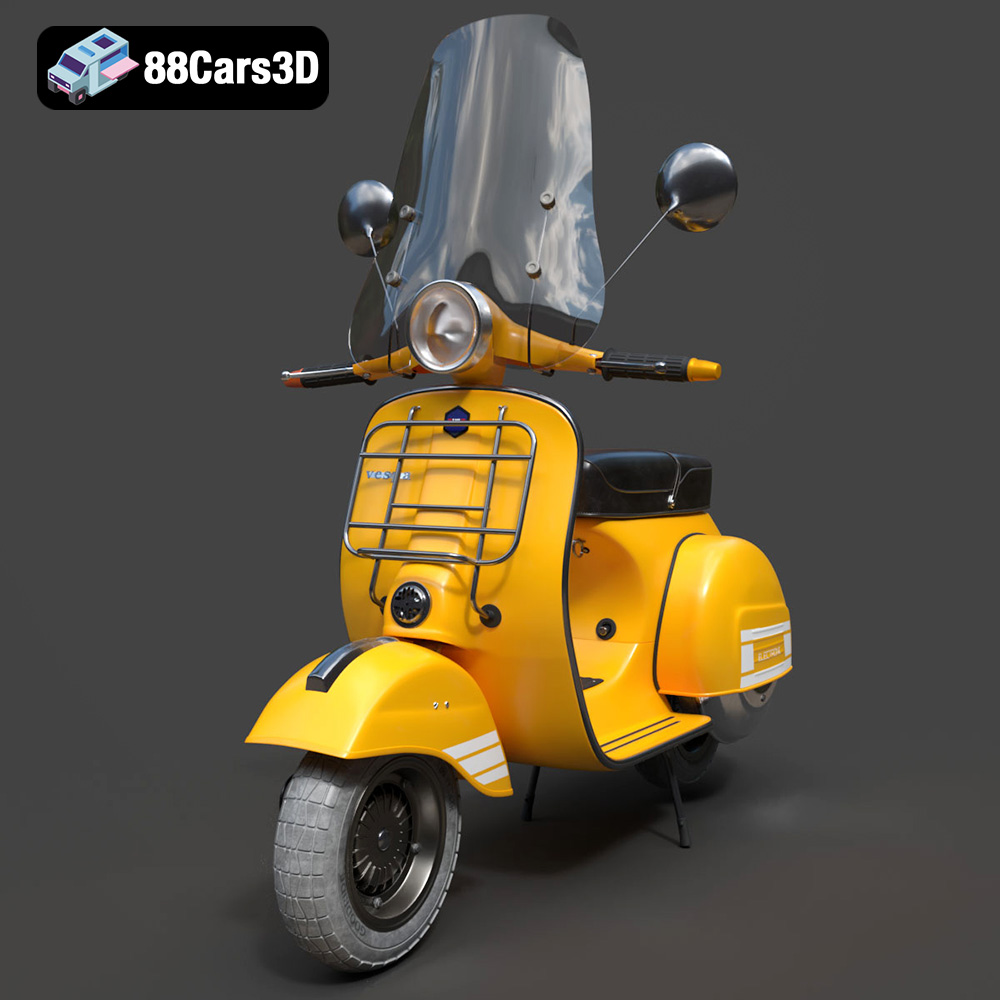
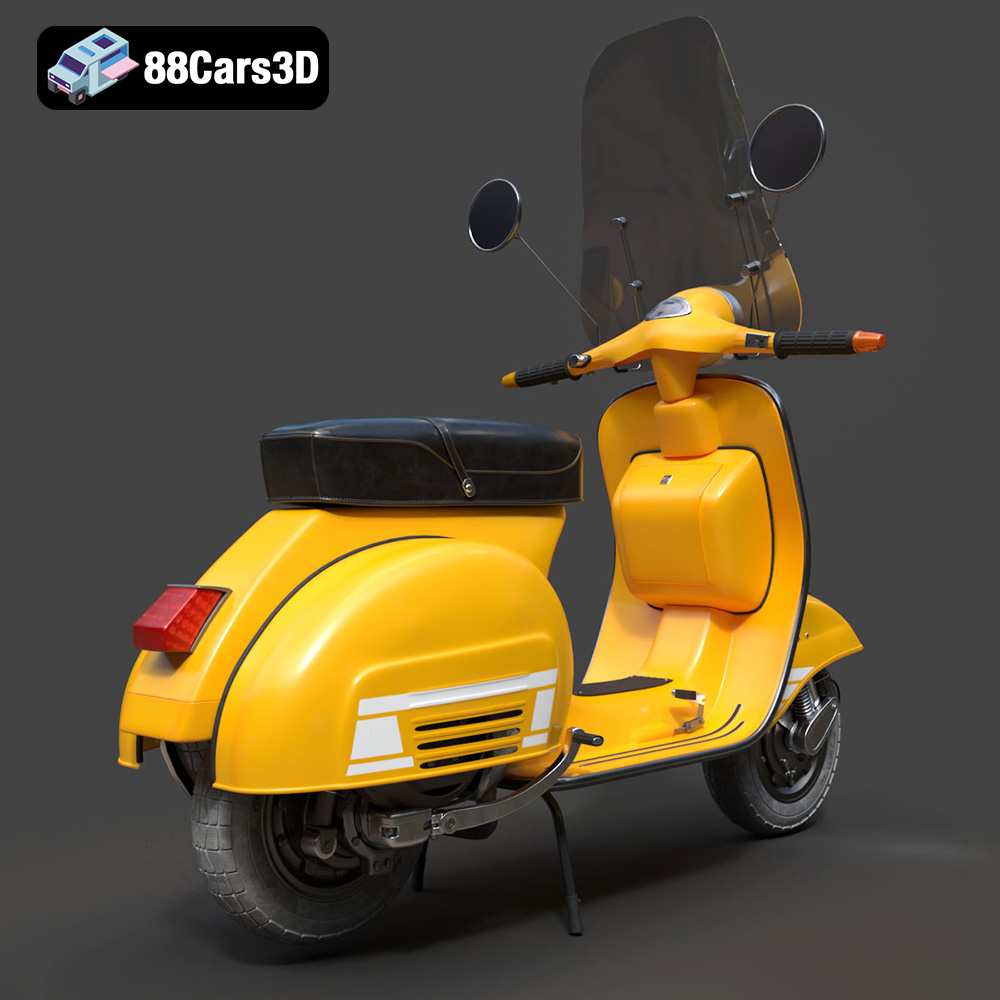
This pursuit of digital perfection brings us to a standout example that perfectly illustrates these principles: the Vespa 3-08 3D Model. This meticulously crafted asset, available for download at 88cars3d.com, encapsulates the iconic Italian scooter’s timeless design while providing the technical foundation for professional applications across various industries. From its detailed engine casing to its ergonomic saddle, every element is designed to elevate your project’s visual fidelity and technical performance. Let’s delve into the intricacies of automotive 3D modeling and explore how assets like the Vespa 3-08 empower creators.
Automotive design holds a special place in our cultural landscape, often embodying eras, aspirations, and breakthroughs in engineering and aesthetics. Translating this real-world significance into the digital realm requires more than just replicating shapes; it demands an understanding of form, function, and the emotional resonance a vehicle carries. High-quality 3D car models and vehicle assets are therefore indispensable tools for professionals across many sectors.
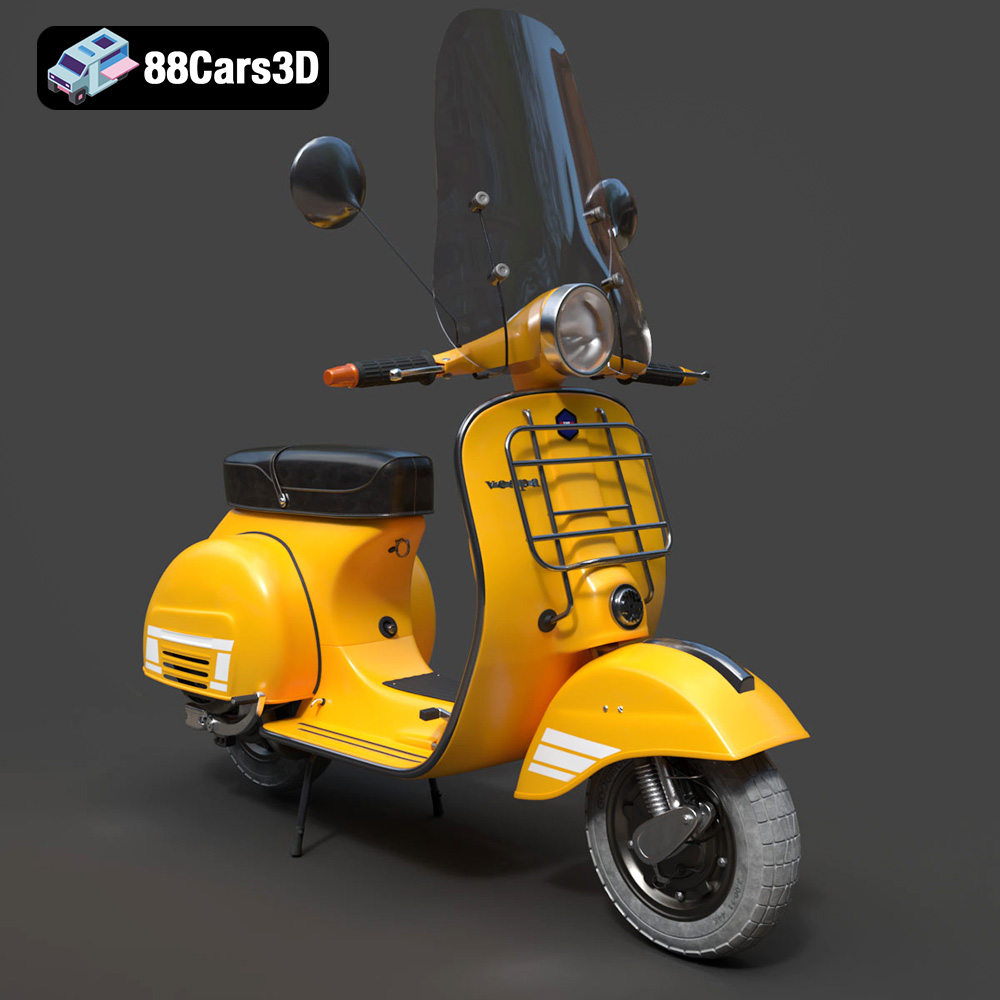
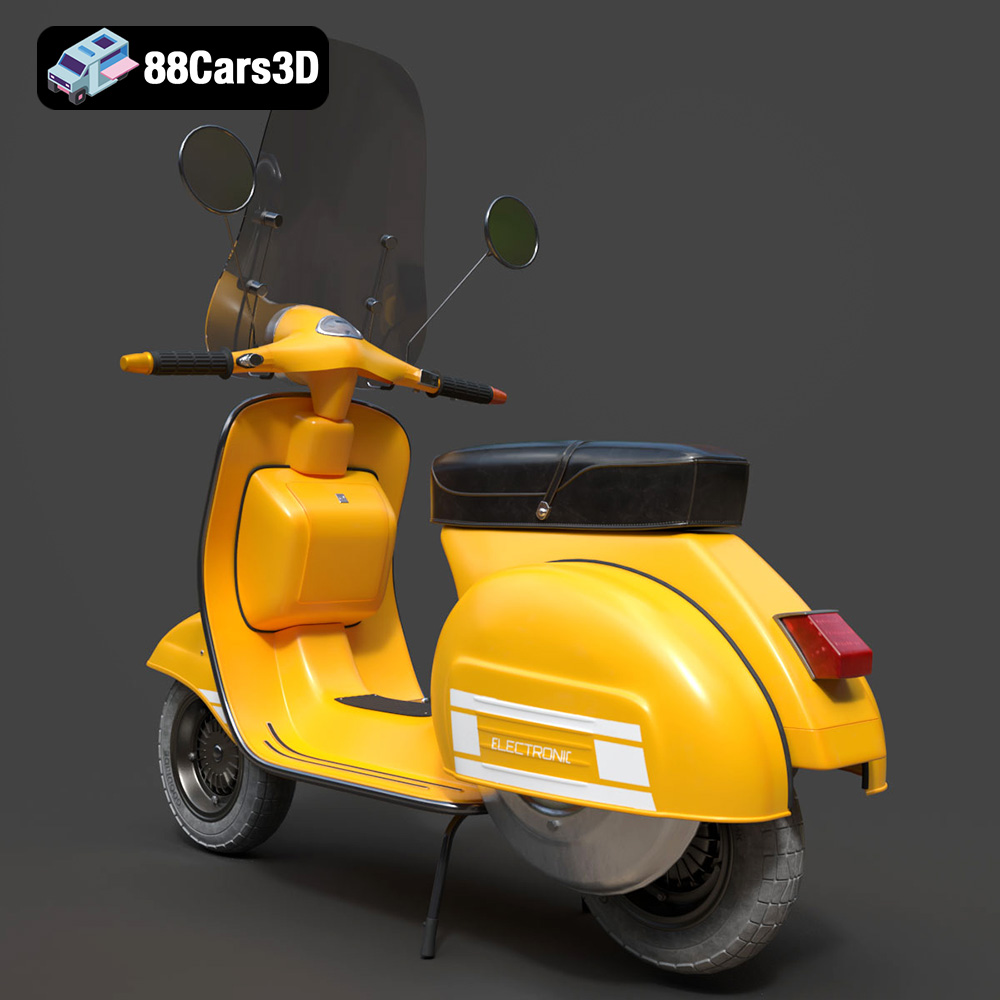
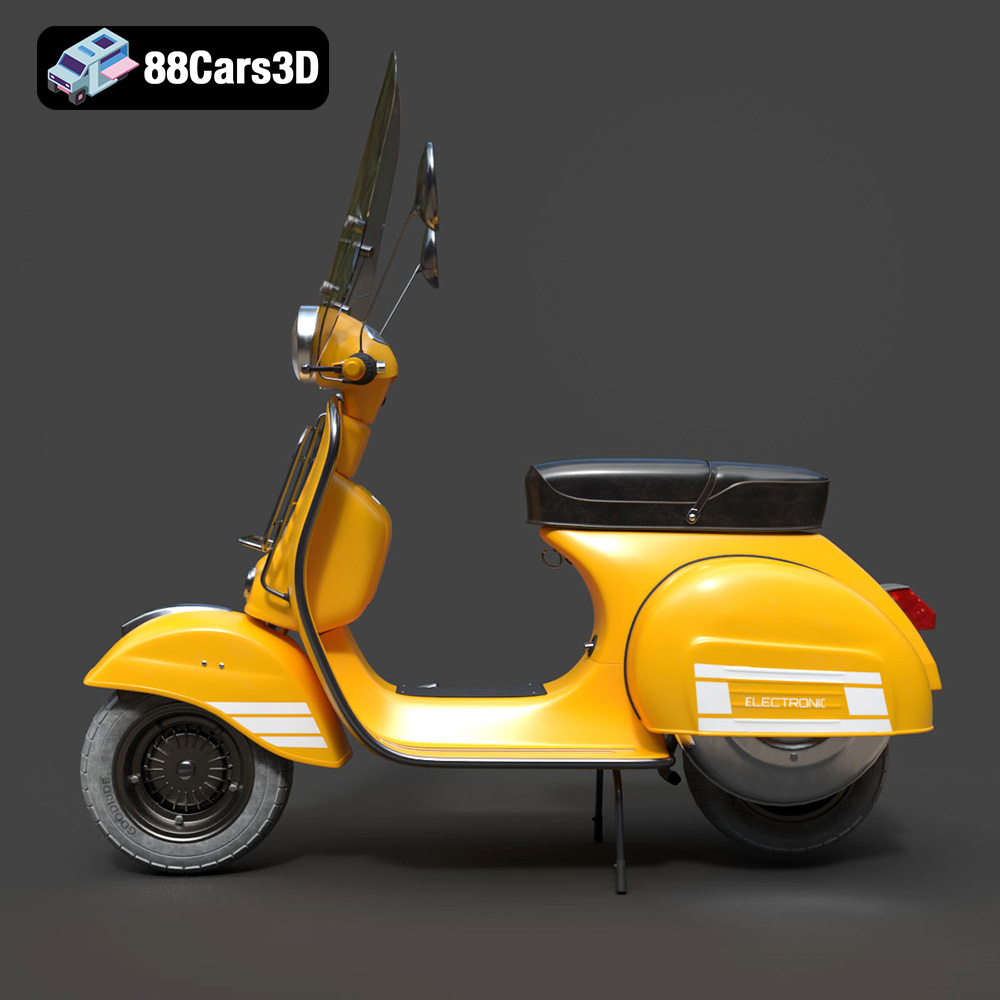
The Vespa 3-08 3D Model is a prime example of how to faithfully capture an iconic design. The real Vespa is more than just a scooter; it’s a symbol of Italian dolce vita, urban chic, and functional elegance. This 3D model meticulously reproduces these characteristics, starting with its accurate step-through frame geometry and distinctive front shield fairing. The detailed engine block, continuous variable transmission (CVT) casing, and sleek side-mounted exhaust system are all rendered with precision, providing a level of realism that stands up to close-up scrutiny. The iconic round headlight, authentic alloy wheels with treaded tires, and classic single-sided front trailing link suspension details further underscore the commitment to historical accuracy and visual fidelity. Such attention to detail is crucial when developing assets for brand campaigns or high-profile visualizations where authenticity is paramount.
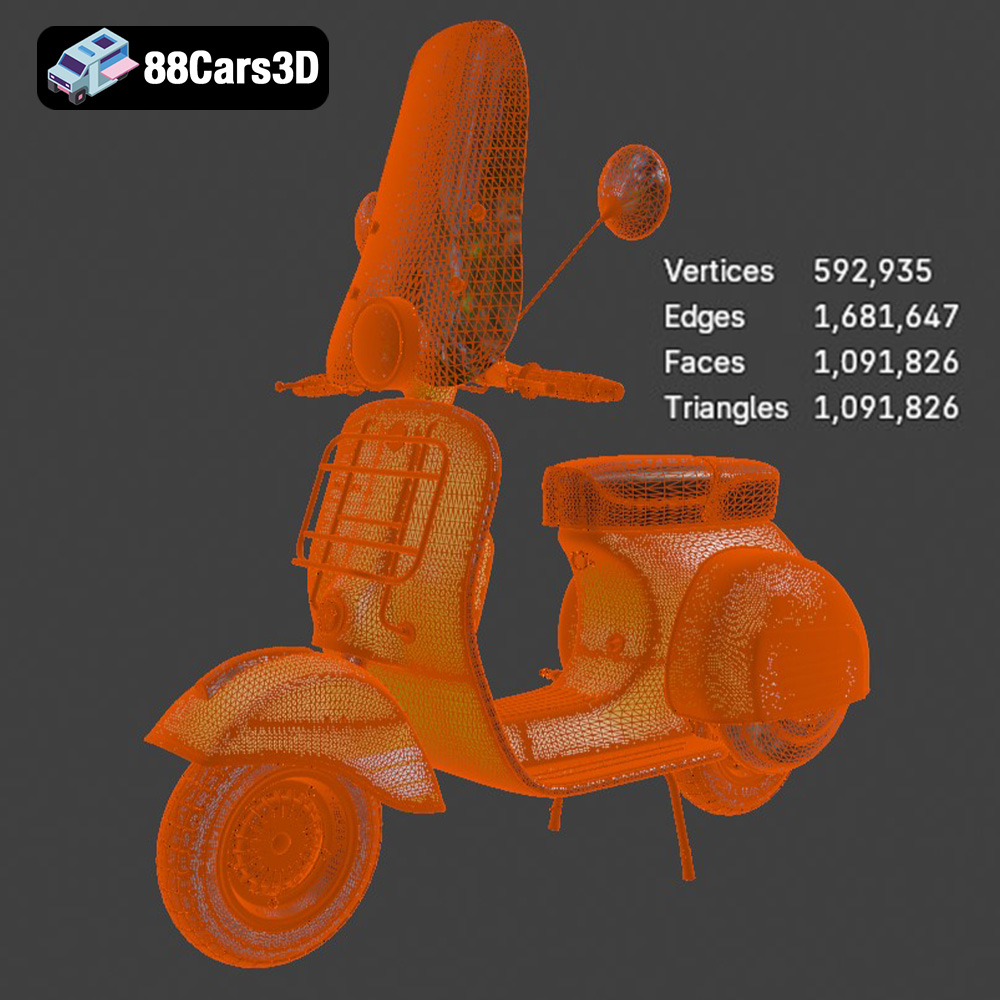
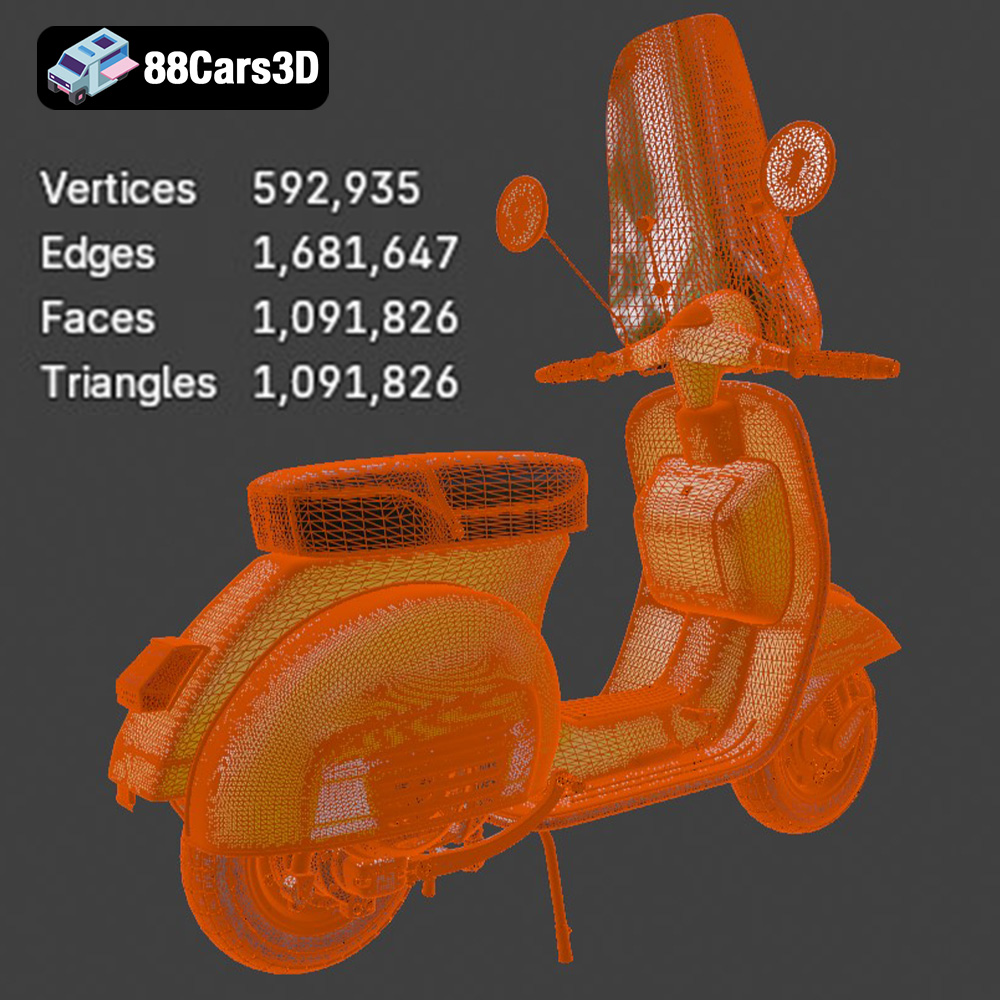
While visual appeal is critical, the true value of a professional 3D car model lies in its versatility across different applications. An asset like the Vespa 3-08 is not merely a static display piece; it’s engineered for performance in game development, immersive AR/VR experiences, and high-end cinematic rendering. Its optimized topology, with a triangle count of 1091826, strikes an excellent balance between intricate detail and real-time performance. This means it can be integrated into a bustling open-world game without significant performance overhead, or it can be used to populate realistic urban street scenes in an architectural visualization project, adding a layer of authenticity and narrative. The separated components for animation (wheels, suspension, steering) ensure that the model is ready for dynamic scenarios right out of the box, saving valuable development time.
One of the most crucial technical aspects when dealing with 3D car models, or any 3D asset, is understanding the various file formats available. Each format serves specific purposes, excels in different workflows, and offers unique advantages. The Vespa 3-08 3D Model generously provides eight distinct formats, ensuring maximum compatibility and utility for any project. Knowing when and why to choose a particular format is key to an efficient and successful 3D pipeline.
The .blend format is Blender’s native file type, offering a complete encapsulation of a Blender project. This includes not just the mesh geometry, but also materials, textures, lighting setups, cameras, animations, rigging, and even scene settings. For users deeply integrated into the Blender ecosystem, the .blend file provides the most comprehensive and editable version of the Vespa 3-08. It allows for full non-destructive editing, easy material adjustments, and direct access to all components and modifiers used in its creation. If you plan extensive modifications, animation work within Blender, or simply want to leverage Blender’s powerful rendering engines like Cycles or Eevee, this is your go-to format.
FBX (Filmbox) is arguably the most widely adopted interchange format in the 3D industry, particularly popular for game development and animation. It supports mesh geometry, materials, textures, animations, rigging, cameras, and lights. Its strength lies in its ability to transfer complex scene data between different 3D applications like Maya, 3ds Max, Blender, and directly into game engines such as Unreal Engine and Unity. The .fbx version of the Vespa 3-08 is ideal for those needing to import the model with its hierarchical structure and potential animation data, ensuring a smooth transition into a real-time pipeline or a traditional animation studio. It’s often preferred for its robust support for mesh integrity and animation keyframes.
OBJ (Wavefront Object) is one of the oldest and most universally supported 3D file formats. It primarily stores geometry data (vertices, normals, texture coordinates, and faces). While it doesn’t embed animations or complex scene data like .fbx, it’s incredibly reliable for transferring static mesh data between virtually any 3D software. Textures and material properties are typically referenced by a companion .mtl (Material Template Library) file. The .obj format for the Vespa 3-08 is excellent for cross-software compatibility, especially if you need to import the model into a less common application or simply require the raw mesh data for custom material setups in your preferred renderer.
.glb (GL Transmission Format Binary) is a modern, efficient, and increasingly popular format, especially for web-based 3D, augmented reality (AR), and virtual reality (VR) applications. It’s a binary version of the glTF standard, which is designed for efficient transmission and loading of 3D scenes and models. Critically, .glb files embed all necessary data—geometry, materials, textures, and even animation—into a single file, making them highly portable and fast to load. The .glb version of the Vespa 3-08 is perfectly optimized for interactive online showrooms, mobile AR experiences, or integrated into browser-based configurators, offering a lightweight yet visually rich representation of the scooter.
STL (Stereolithography) is the standard file format for 3D printing. It represents a 3D model’s surface geometry using a tessellation of triangles. Unlike other formats, .stl files do not contain color, texture, or material information; they are purely about the physical shape. The .stl version of the Vespa 3-08 allows enthusiasts and professionals to translate the digital model into a tangible object. As detailed in the product description, this format is suitable for display-scale hobbyists and can be sent directly to a 3D printer, enabling the creation of physical prototypes or collectibles, with specific recommendations for scale, layer height, and support structures to ensure a successful print.
PLY (Polygon File Format) is another format for storing 3D data, often used for data from 3D scanners, CAD software, and scientific applications. It supports both triangular meshes and point clouds, and can store a wider range of properties per vertex or face, such as color, transparency, and normals. While less common for general 3D asset exchange compared to FBX or OBJ, the .ply format for the Vespa 3-08 could be valuable for engineers or researchers needing highly accurate mesh data for analysis, reverse engineering, or integration into specialized CAD workflows where precision is paramount.
The .unreal format signifies a direct, optimized asset designed specifically for integration into Unreal Engine. This often means the model has been pre-processed, potentially including proper scaling, collision setups, material slots, and sometimes even basic blueprints for interactive elements, to ensure seamless drag-and-drop functionality within Unreal Editor. For game developers or real-time visualization artists working with Unreal Engine, the .unreal version of the Vespa 3-08 offers the quickest and most efficient path to getting the model up and running in their projects, minimizing import issues and accelerating development.
The .max format is the native file type for Autodesk 3ds Max, a powerful 3D modeling, animation, and rendering software widely used in architectural visualization, game development, and film. Similar to .blend for Blender, the .max file contains the complete scene, including all geometry, modifiers, materials, textures, lights, cameras, and animation data. For professionals whose primary workflow revolves around 3ds Max, this format provides full editability and control over every aspect of the Vespa 3-08. It’s ideal for those wanting to leverage 3ds Max’s advanced rendering capabilities with V-Ray or Corona, or for integrating the scooter into complex animated sequences.
The versatility of a well-designed 3D model truly shines when integrated into diverse professional pipelines. From the rigorous demands of game development to the artistic nuances of photorealistic rendering, the Vespa 3-08 3D Model demonstrates its adaptability.
For game developers, performance is paramount. Every asset must be optimized to contribute to a rich visual experience without bogging down frame rates. The Vespa 3-08 is explicitly listed as “Game-Ready & Optimized” with a triangle count of 1091826. This polycount is a critical sweet spot: detailed enough to look excellent in close-up cutscenes or first-person perspectives, yet efficient enough for real-time engines like Unreal and Unity. Proper pivot setups for steering, wheel rotation, and suspension travel are pre-configured, meaning developers can quickly implement realistic physics and animation without extensive rework. This significantly reduces development time and resources. Imagine populating a sprawling open-world city in a game with authentic, high-quality 3D car models from 88cars3d.com, bringing environments to life with dynamic elements like the Vespa 3-08.
Photorealistic rendering demands an even higher degree of fidelity and meticulous attention to materials, lighting, and reflections. Artists using software like 3ds Max (with V-Ray or Corona) or Blender (with Cycles) can leverage the high-detail geometry of the Vespa 3-08 to create stunning visual marketing materials. The model’s “breathtaking close-up details” ensure that surfaces like the engine casing, exhaust system, and instrument cluster hold up under intense scrutiny. Professional workflows would involve setting up sophisticated studio lighting, developing physically based rendering (PBR) materials for paint, chrome, rubber, and glass, and carefully positioning the scooter within an evocative scene. The ability to easily change body colors, modify tire textures, and adjust material finishes provides extensive customization options for bespoke renders, making it perfect for brand campaigns and product visualization.
Beyond traditional screen-based content, 3D models are revolutionizing how we interact with products and environments through augmented and virtual reality, and how we envision future spaces in architectural visualization.
AR/VR applications demand optimized assets that can be rendered smoothly on various devices, from high-end VR headsets to mobile AR platforms. The Vespa 3-08, with its “Game-Ready & Optimized” specifications and included .glb format, is an ideal candidate for immersive experiences. Companies can create virtual showrooms where customers can walk around, inspect, and even customize the scooter in real-time. Imagine a virtual configurator where users can cycle through different paint finishes, seat materials, and accessories, experiencing the product in a fully interactive 3D space before making a purchase decision. This level of immersion and interactivity is a powerful tool for marketing and sales.
Architectural visualization (ArchViz) relies on creating convincing, emotive representations of unbuilt spaces. Adding realistic props and context vehicles can dramatically enhance the believability and narrative of a scene. A beautifully rendered Vespa 3-08 parked outside a modern cafe, zipping down a European street scene, or simply positioned within a chic interior design concept, instantly adds character, scale, and a sense of lived-in reality. Its accurate real-world scale and detailed design make it an invaluable asset for conveying lifestyle and atmosphere in architectural renderings, providing that crucial layer of authentic detail that transforms a simple rendering into a compelling visual story.
The journey of a 3D model doesn’t always end on a screen. For many, the ability to translate a digital design into a tangible object opens up new avenues for prototyping, display, and artistic expression.
The inclusion of the .stl format for the Vespa 3-08 underscores its versatility for 3D printing. This capability allows designers, engineers, and hobbyists to create physical replicas of the iconic scooter. While a digital model offers endless possibilities for manipulation and rendering, a physical print allows for tactile interaction and real-world evaluation. The detailed 3D print settings provided – recommending scales like 1:12, 1:18, or 1:24, layer heights, wall thickness, infill, and support requirements – are crucial for a successful print. These guidelines help users achieve optimal results, especially for intricate parts like the exhaust, mirrors, and handlebars, ensuring that the digital precision is accurately translated into the physical form.
3D printing a model like the Vespa 3-08 is often just the beginning. The next stage involves post-processing, which can include sanding, priming, and painting to achieve a desired finish. The ability to customize the model, even in its physical form, allows for personal touches or the creation of accurate scale models. For instance, an artist might choose to paint the printed model with authentic factory colors, metallic finishes, or even custom liveries to create a unique display piece. This fusion of digital design and physical craftsmanship offers a powerful way to interact with and appreciate the intricacy of the 3D model, providing a tangible output for both professional and hobbyist endeavors.
Delivering a high-quality 3D model requires more than just aesthetic appeal; it demands a solid technical foundation. The Vespa 3-08 3D Model exemplifies this technical excellence, built to support a wide array of professional demands.
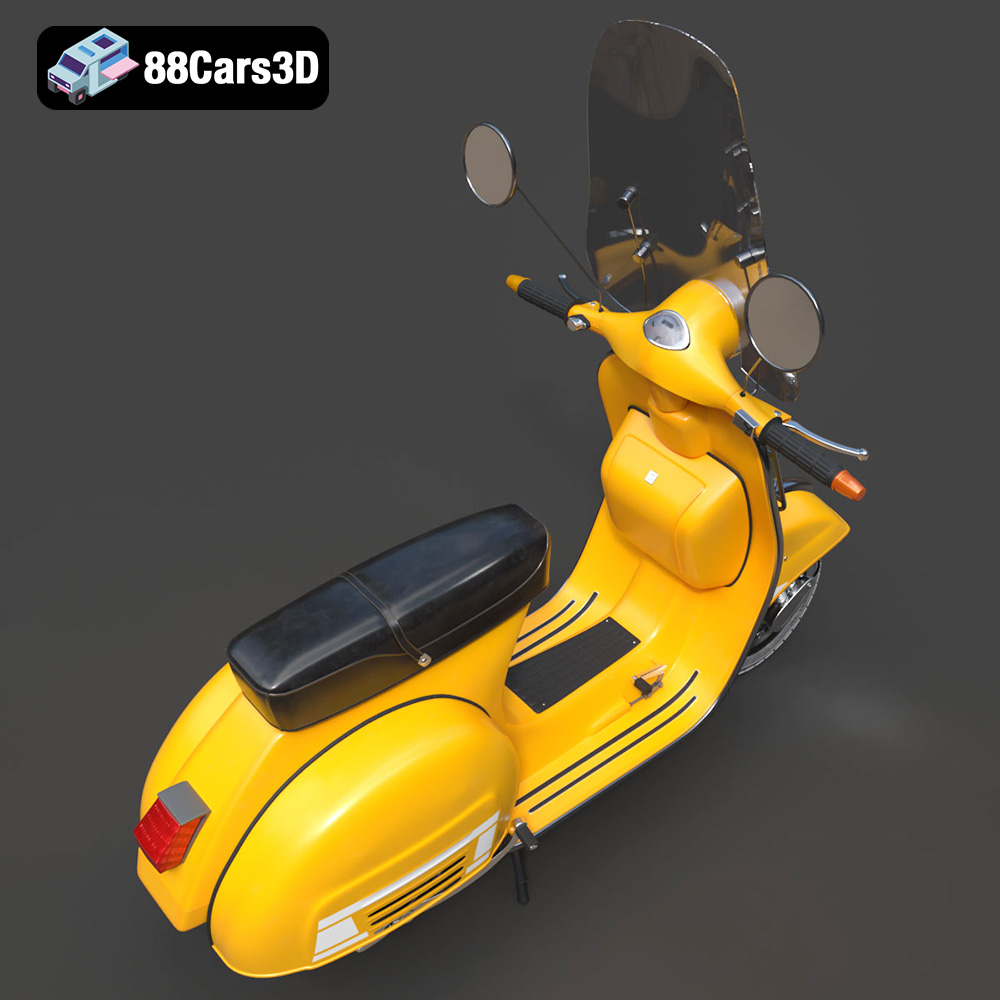
The description highlights “meticulous topology” and “unparalleled visual fidelity,” which are not just marketing buzzwords but refer to specific aspects of its construction. The triangle count of 1091826 is a carefully chosen figure, providing a rich surface detail without being excessively heavy. This allows for breathtaking close-up renders where the nuances of the engine block, the texture of the seat saddle, and the intricacies of the instrument cluster are all clearly visible. Exterior features such as the “historically accurate side-mounted exhaust system” and “authentic scooter alloy wheels and treaded urban commuting tires” ensure that the model is visually convincing from every angle. Similarly, the cockpit’s “ergonomically sculpted, richly textured dual-seat saddle” and “detailed retro-modern instrument cluster” ensure the model holds up even for first-person perspectives in gaming or detailed interior visualizations.
The “Game-Ready & Optimized” tag isn’t just about polycount; it signifies a model engineered for performance. Real-world scale accuracy is critical for integration into simulations and precise scene compositions. The “Proper pivot setup for steering, wheel rotation, and suspension travel” is a foundational element for any animated or interactive application, enabling realistic movement without complex rigging from scratch. Furthermore, the provided customization options—changing body colors, modifying tire textures, adjusting material finishes, and adapting lighting—offer immense flexibility. This means that whether you need a pristine factory-fresh scooter for a commercial, a grittier variant for a game, or a uniquely colored model for a custom project, the Vespa 3-08 3D Model provides the artistic and technical freedom to achieve your vision. This level of comprehensive preparation ensures that artists and developers can focus on creative execution rather than wrestling with foundational asset issues, making it a truly valuable investment from 88cars3d.com.
The world of 3D content creation is complex and demanding, requiring assets that are not only visually striking but also technically robust and versatile. As we’ve explored, high-quality 3D car models are indispensable tools across game development, photorealistic rendering, AR/VR experiences, and even 3D printing. The Vespa 3-08 3D Model stands as an exemplary product, encapsulating the essence of iconic design with meticulous detail and professional-grade optimization.
Its comprehensive file format support—ranging from .blend and .max for native software users, to .fbx and .unreal for game engines, and .glb for web/AR/VR, all the way to .stl for physical printing—underscores its adaptability for virtually any professional workflow. Whether you’re aiming for a bustling urban scene in an open-world game, a stunning automotive rendering for a marketing campaign, or a physical prototype on your desk, this model provides the foundation you need. Investing in such meticulously crafted assets from trusted sources like 88cars3d.com ensures that your projects benefit from both aesthetic excellence and technical reliability, allowing your creative vision to truly flourish.
The Vespa 3-08 embodies the ultimate spirit of iconic Italian scooter heritage, blending timeless retro design with modern commuting efficiency. Unmistakable with its classic step-through frame and distinctive front shield fairing, this model captures the essence of elegant urban mobility. Key visual elements include a beautifully sculpted single-cylinder engine casing, a sleek side-mounted exhaust system, and the signature sweeping body lines that make the Vespa an enduring symbol of style. Boasting a meticulous topology with a triangle count of 1091826, this 3D model delivers unparalleled visual fidelity while remaining structured for high-end rendering and advanced real-time applications. The geometry is crafted to provide breathtaking close-up details without compromising overall performance, making it the ultimate asset for game development, AR/VR experiences, professional animation, and architectural visualization. Perfect for bustling urban street scenes, European lifestyle animations, immersive virtual configurators, and modern open-world city environments.
$63.99
.blend
.fbx
.glb
.max
.moped
.obj
.ply
.rendering
.scooter
.stl
.unreal
.vespa
3-08
classic-scooter
game asset
game-ready
italian-scooter
low-poly
motorcycle-3d-model
optimized
VR/AR