Get 20% OFF All Premium 3D & STL Models!

In the dynamic worlds of game development, architectural visualization, and industrial animation, the demand for highly detailed, performant 3D assets is ever-increasing. From sprawling cityscapes to intricate mechanical designs, the realism and technical integrity of your models can be the deciding factor in a project’s success. Heavy machinery, in particular, presents a unique challenge, requiring not only accurate visual representation but also robust engineering details and optimized performance for real-time applications.
This pursuit of digital fidelity is where specialized assets truly shine. Imagine seamlessly integrating a meticulously crafted articulated road roller into your virtual construction site, complete with authentic weathering and functional components. This is precisely the kind of professional-grade asset that empowers creators. One such exceptional example is the Articulated Tandem Road Roller Dusty 3D Model available on 88cars3d.com, an asset engineered to meet the rigorous demands of modern 3D pipelines, offering unparalleled detail and versatility across multiple formats.
The journey of any 3D model, from creation to deployment, is intrinsically linked to its file format. Choosing the right format is paramount for compatibility, performance, and the preservation of crucial data. Each format serves distinct purposes, catering to different software ecosystems and end-use applications. Understanding these nuances is critical for any professional working with 3D car models, game assets, or intricate machinery like our featured Articulated Tandem Road Roller Dusty model.
The `.blend` format is Blender’s native file type, offering a complete encapsulation of a Blender scene. This includes not just the mesh geometry, but also materials, textures, lighting, cameras, animation data, modifiers, rigging, and even scripting. For users primarily working within Blender, the `.blend` file is the most robust option, providing full editability and access to all the procedural and non-destructive workflows Blender is renowned for. It’s the ideal choice when a project requires extensive modification or continued development within the Blender environment, ensuring no data loss during interchange.
Developed by Autodesk, the `.fbx` (Filmbox) format has become an undisputed industry standard for 3D data exchange between various software applications. It supports a comprehensive range of data, including geometry, materials, textures, cameras, lights, and crucially, animation data (skeletal animation, keyframe animation). This makes it indispensable for pipelines involving multiple software packages, such as exporting a model from 3ds Max or Blender to game engines like Unreal Engine or Unity. For game assets, cinematic rendering, and AR/VR applications, `.fbx` is often the go-to format for its balance of data fidelity and widespread compatibility.
The `.obj` (Wavefront OBJ) format is one of the oldest and most universally supported 3D file formats. It’s a simple, text-based format primarily used for transferring geometric data, including vertices, faces, normals, and UV coordinates. While it can reference external `.mtl` (Material Template Library) files for basic material properties, it doesn’t inherently support animation, rigging, or advanced shader networks. Its strength lies in its simplicity and unparalleled cross-software compatibility, making it an excellent choice for static mesh interchange when full scene data isn’t required, ensuring that almost any 3D software can import and interpret the model’s core geometry.
`.glb` (GL Transmission Format, binary version) is the binary equivalent of GLTF, specifically designed for efficient transmission and loading of 3D scenes and models on the web, in AR/VR applications, and mobile environments. It packages all model data—geometry, materials, textures, animations—into a single, compact file, reducing the number of requests and improving loading times. For interactive 3D experiences in browsers or lightweight AR/VR viewers, `.glb` offers a highly optimized and performant solution, making it ideal for presenting complex assets like the Articulated Tandem Road Roller Dusty on online platforms.
`.stl` (Stereolithography) is almost exclusively used for 3D printing. This format represents a 3D model as a series of connected triangles (a triangulated surface mesh) without any color, texture, or material information. Its simplicity makes it perfect for additive manufacturing, as 3D printers directly interpret this triangular data to build physical objects layer by layer. When preparing a detailed model like the road roller for physical output, converting it to `.stl` is the essential step, often requiring careful consideration of scale, wall thickness, and support structures.
The `.ply` (Polygon File Format, or Stanford Triangle Format) is another format designed to store 3D data, often originating from 3D scanners or CAD applications. Unlike `.stl`, `.ply` can store more complex attributes per vertex and face, including color, normals, texture coordinates, and even transparency. This makes it valuable for applications requiring high precision and richer data sets, such as reverse engineering, scientific visualization, or detailed surface analysis in engineering and design workflows.
While not a direct file extension like `.fbx`, the `.unreal` designation often implies a 3D asset that has been specifically prepared and optimized for direct integration into Unreal Engine. This typically means the model, usually imported via `.fbx`, has been processed within Unreal: materials are set up using Unreal’s physically-based rendering (PBR) system, textures are correctly packed, collision meshes are generated, and pivot points are adjusted for animation. An “unreal” designated file package ensures that the asset is ready for immediate use, saving significant time for game developers and real-time visualization specialists, making the Articulated Tandem Road Roller Dusty a plug-and-play solution for virtual environments.
The `.max` format is the native file type for Autodesk 3ds Max. Similar to Blender’s `.blend` file, it contains all the information about a 3ds Max scene, including geometry, materials, textures, lighting, cameras, animation, modifiers, and complex rendering setups (like V-Ray or Corona configurations). It’s the preferred format for users who work extensively within 3ds Max and require full control over the model’s structure, animation, and rendering pipeline. For professional rendering and architectural visualization, `.max` files provide the most comprehensive environment for refinement and production.
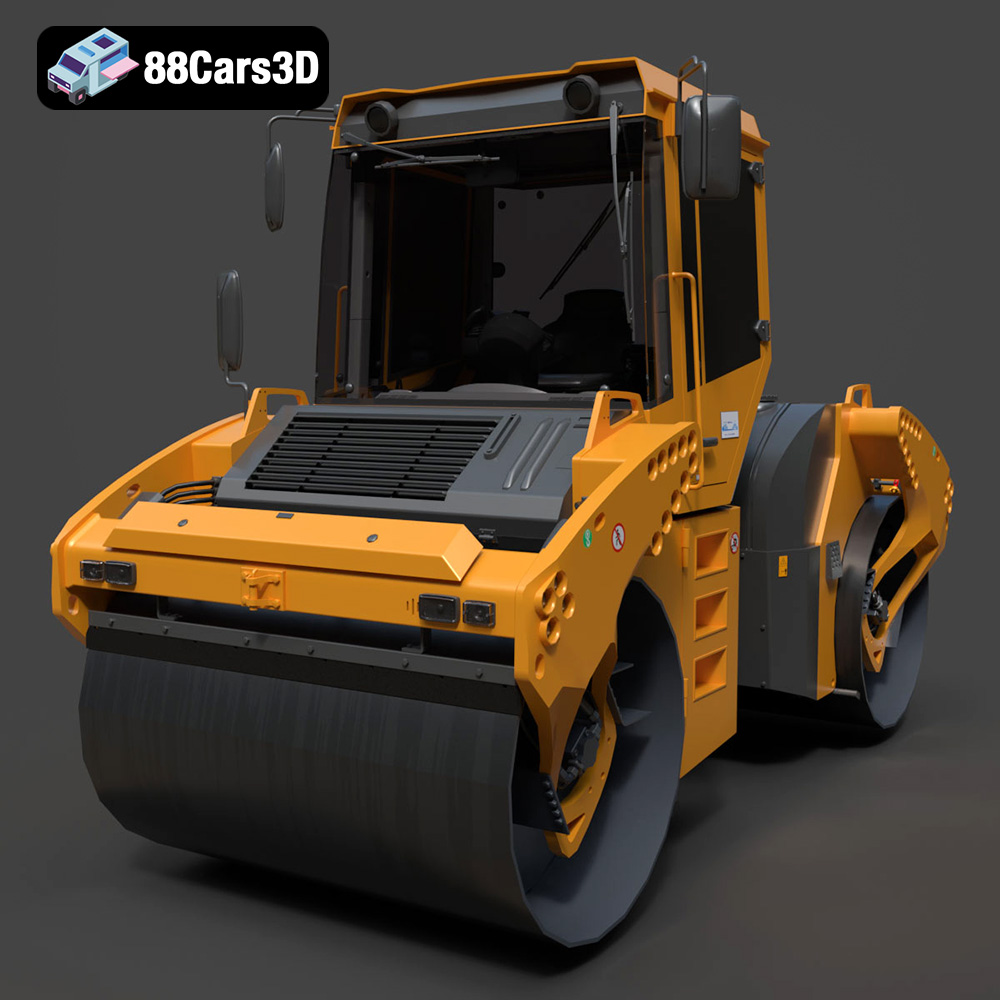
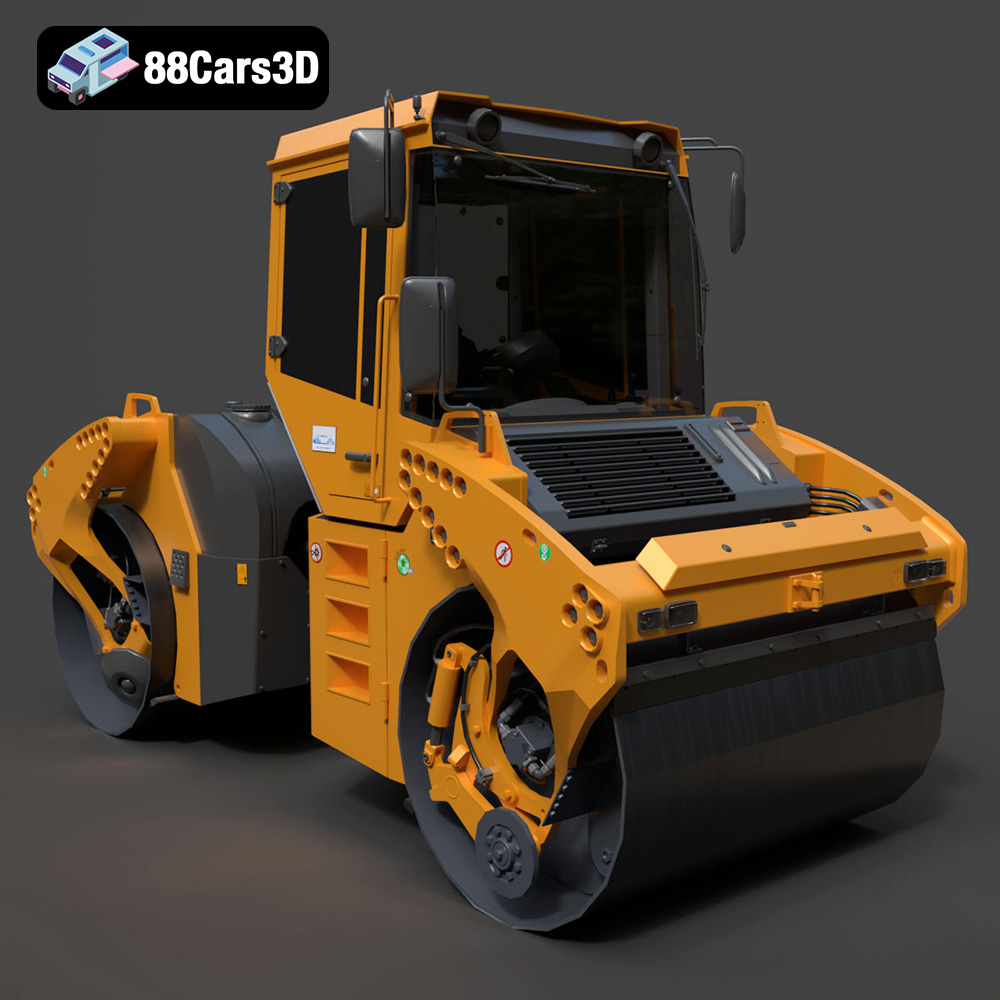
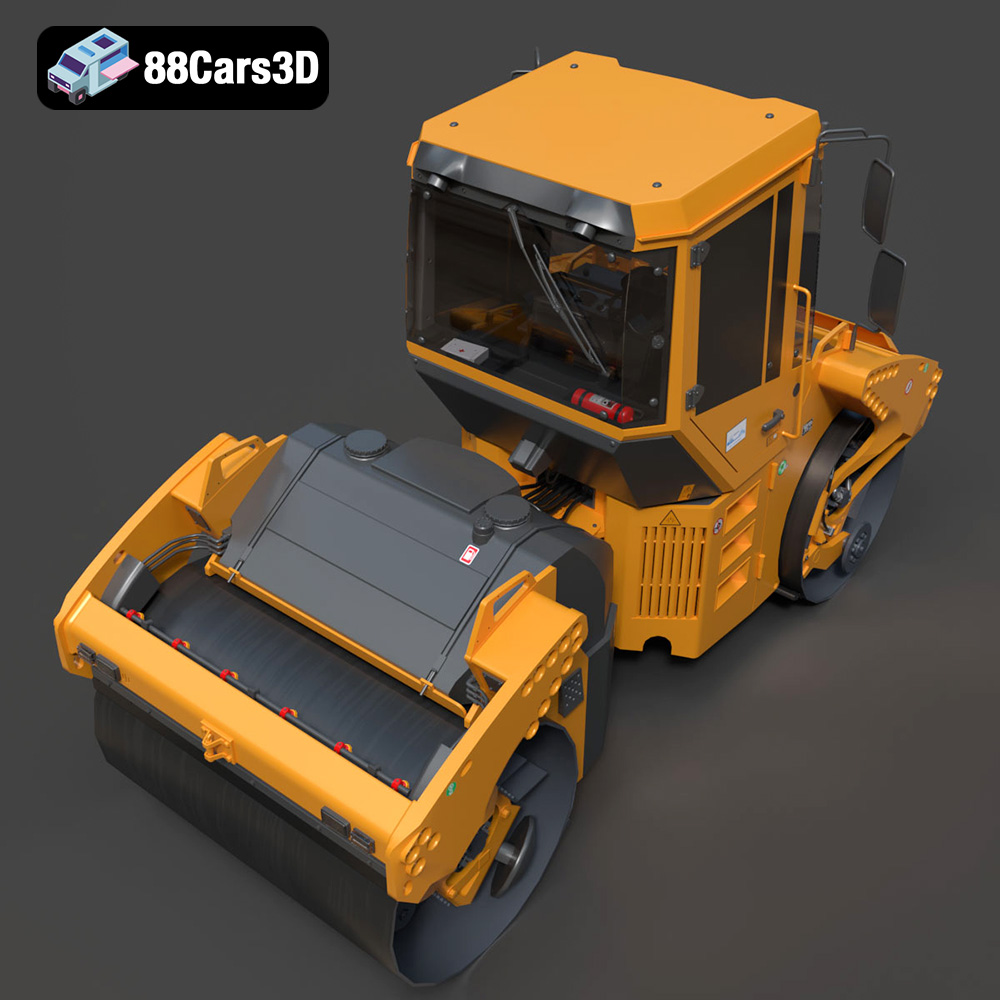
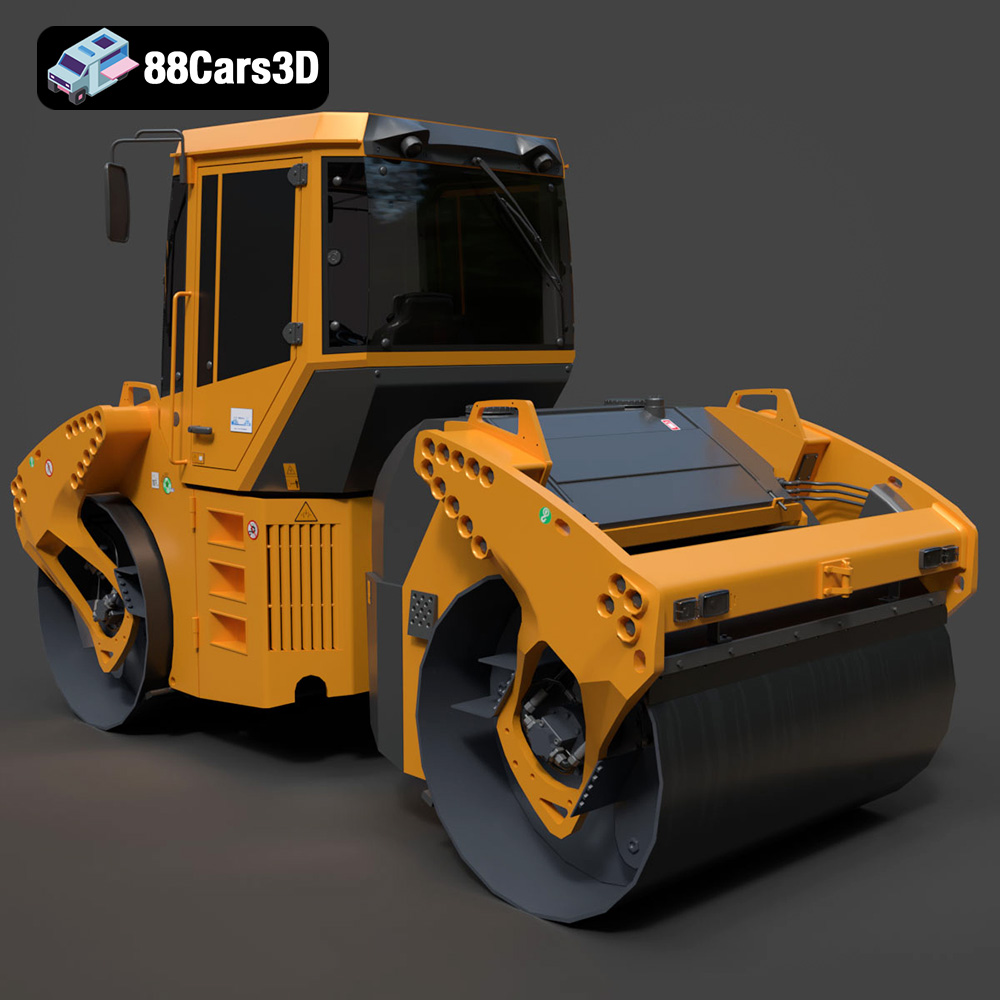
When it comes to creating convincing 3D environments, especially those involving heavy industry or construction, the quality of your assets can make or break the immersion. The Articulated Tandem Road Roller Dusty 3D Model from 88cars3d.com stands as a testament to meticulous digital craftsmanship, delivering a high-fidelity representation of a crucial piece of construction equipment.
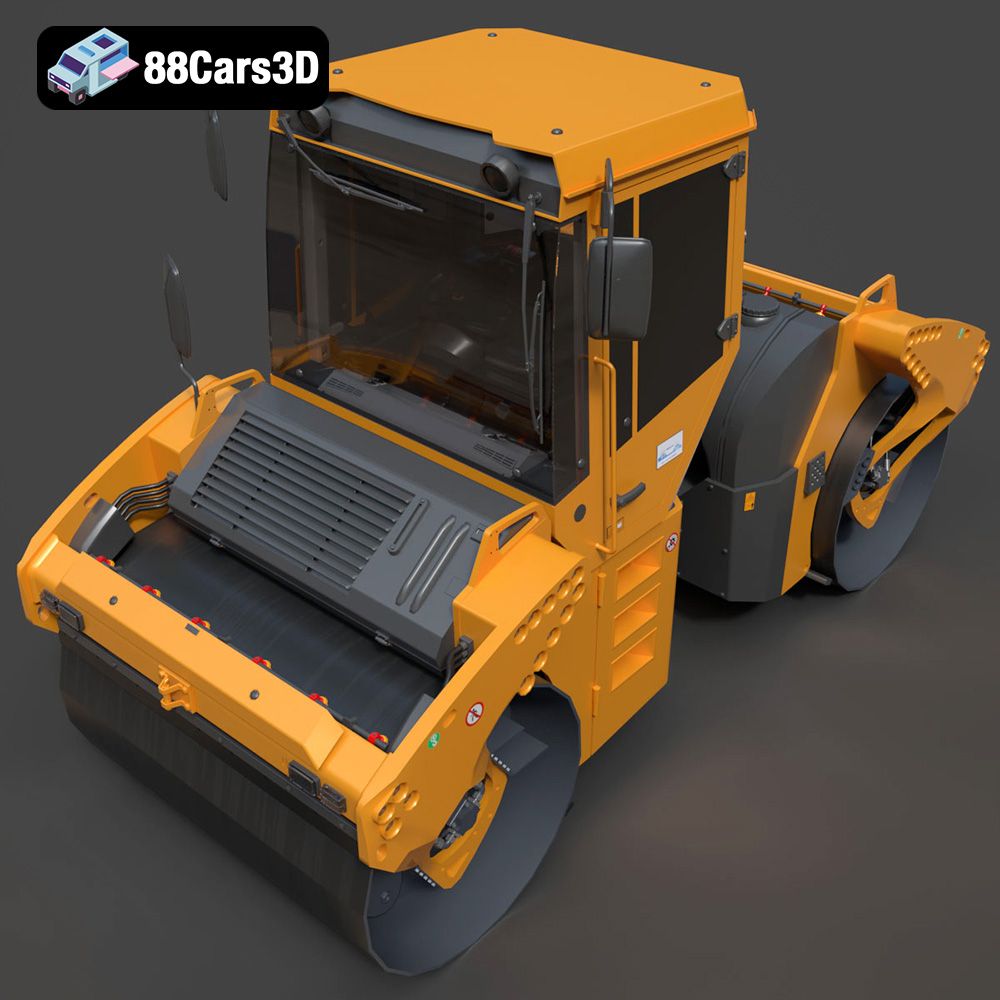
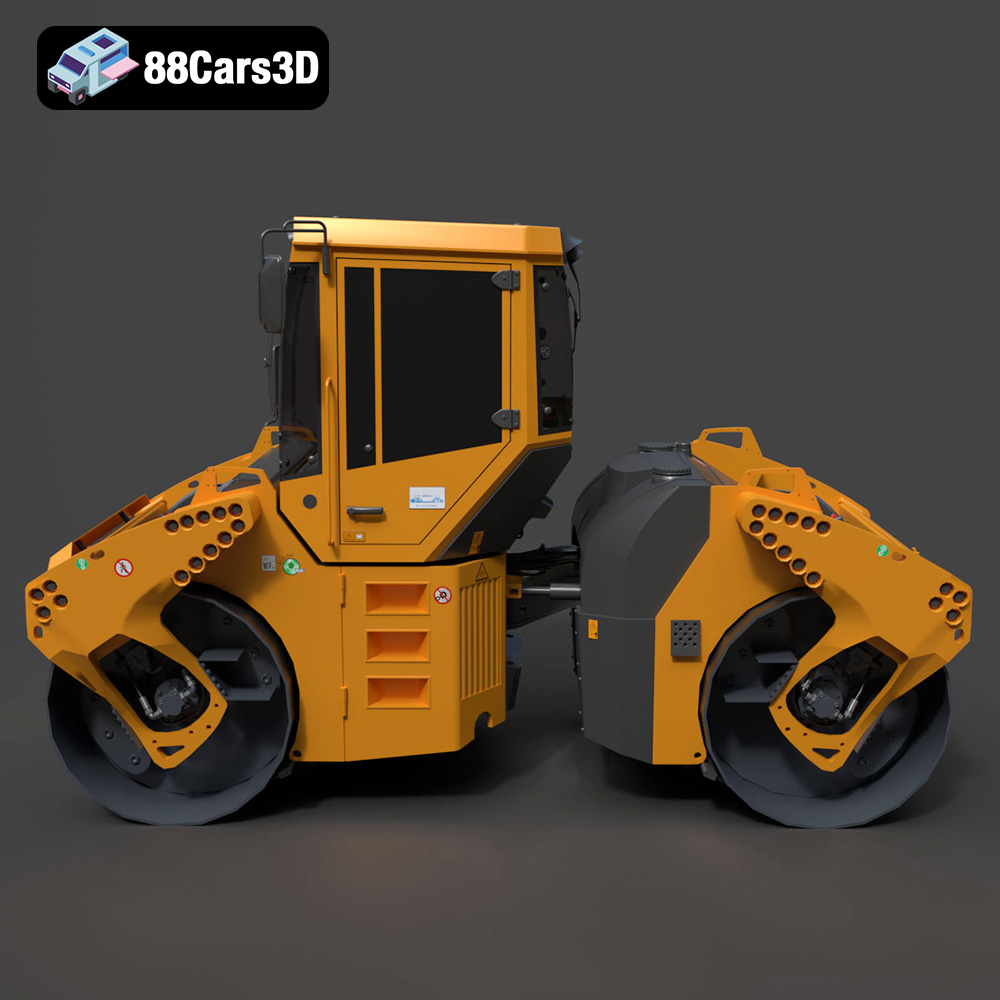
This model goes far beyond basic shape. Every exterior feature has been carefully considered to reflect the rugged reality of a working road roller. The frame geometry is accurately proportioned, mirroring real-world dimensions. Critical mechanical elements like the detailed hydraulic rams, hoses, and the articulating center joint are all present, allowing for realistic movement and visual storytelling. The dual steel compaction drums are not just geometrically accurate but also feature realistic weathered and dusty texturing, instantly grounding the model in a plausible operational context. Furthermore, authentic lighting details, including work lights, beacons, and safety indicators, are meticulously placed, ensuring the model is ready for diverse lighting scenarios, from bright daytime construction sites to dramatic twilight operations.
The attention to safety features like the robust roll-over protection structure (ROPS) and safety railings adds another layer of realism and professionalism. Even the chassis components and side-mounted engine access panels are rendered with high detail, hinting at the complex machinery within. A significant technical advantage is the proper pivoting setup for separate drums and steering articulation components, making the model animation-ready right out of the box for dynamic scenes.
The exterior tells one story, but the interior completes the narrative, especially for applications like simulators or first-person perspectives. The Articulated Tandem Road Roller Dusty model doesn’t neglect the operator’s environment. It features an ergonomic operator suspension seat, textured floor mats, and a detailed steering wheel, crucial for close-up shots or interactive experiences. The precise directional joysticks, accurate instrument cluster, and industrial control panel are all present, complete with safety switches, levers, and pedals. This level of interior detail is optimized for immersive first-person POV in heavy machinery simulators, offering players or trainees a truly authentic experience of operating the machine.
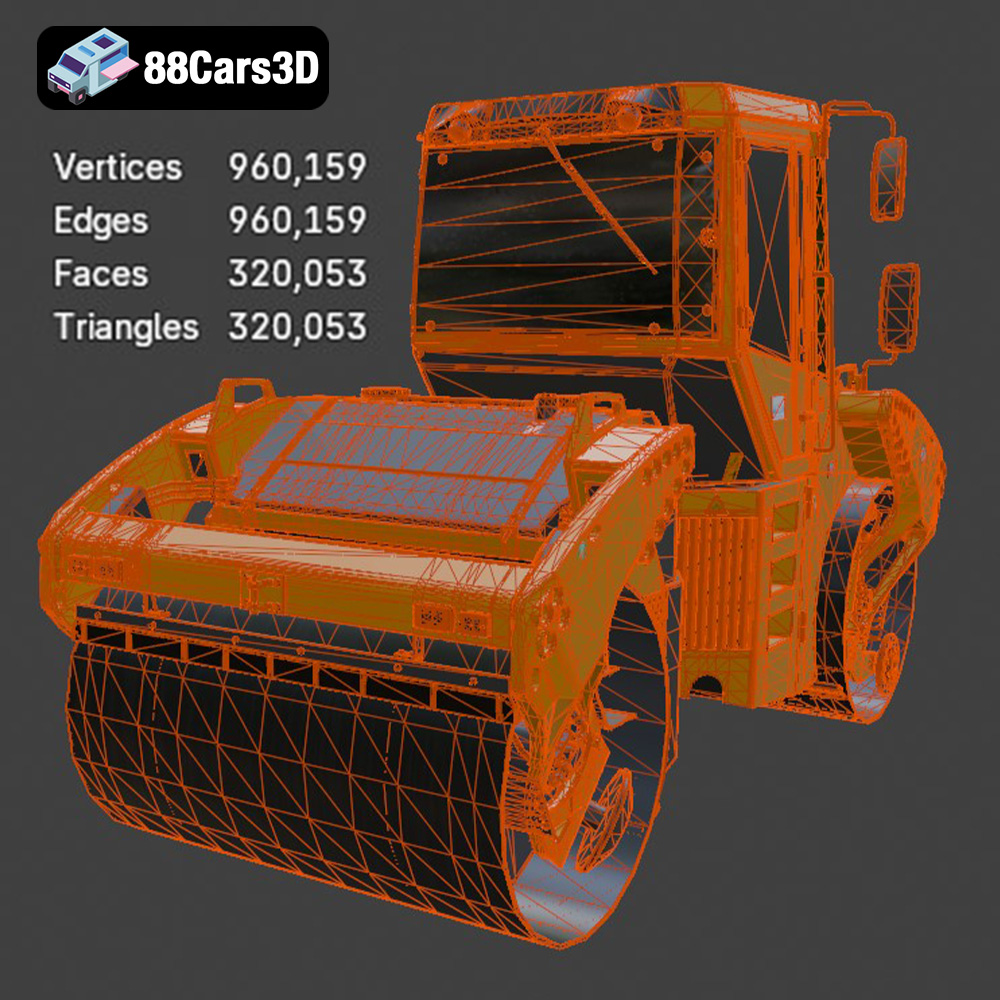
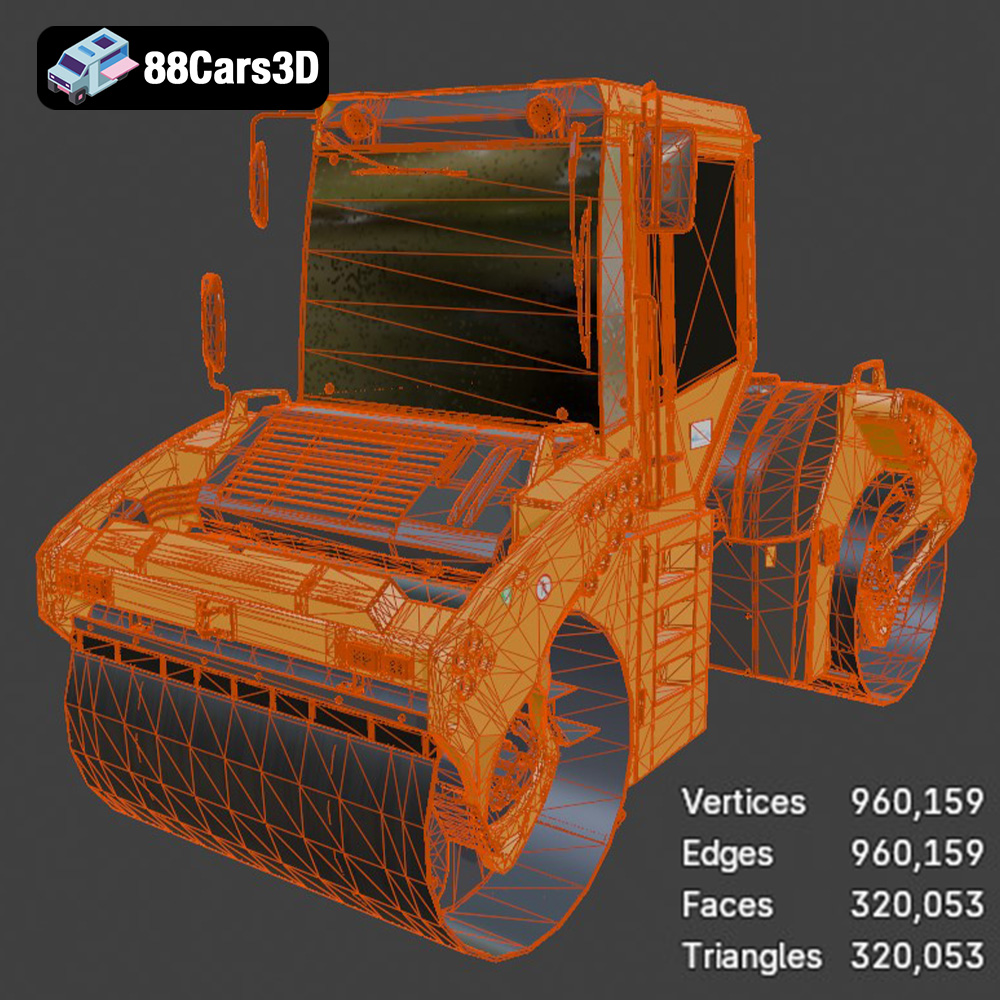
Beyond visual fidelity, the model boasts impressive technical specifications designed for peak performance. With a highly optimized yet detailed topology of 320,053 triangles, it strikes an excellent balance for real-time engines like Unreal and Unity while preserving high-end visual realism for pre-rendered cinematics. It adheres to real-world scale accuracy, ensuring seamless integration into existing scenes. The proper pivot setup for articulated steering, drum rotation, and chassis flex makes it immediately animatable, saving countless hours in production pipelines. This technical readiness across multiple software platforms and rendering engines solidifies its value as a premier game asset and visualization tool.
The true power of a versatile 3D asset lies in its ability to integrate smoothly into various professional pipelines. The Articulated Tandem Road Roller Dusty 3D Model, with its comprehensive file format support, is designed precisely for this purpose. Let’s explore how it fits into common workflows using industry-leading software.
For users of Autodesk 3ds Max, the inclusion of the native `.max` file format is invaluable. Importing the model directly allows full access to all scene data, including hierarchy, materials, and potentially even animation setups if they were created in Max.
Blender users benefit from the native `.blend` file, ensuring a seamless experience. This file contains the complete model, materials, and any pre-configured elements directly within Blender’s powerful environment.
For game developers and real-time visualization specialists, Unreal Engine is a primary destination. The availability of the `.unreal` (engine-ready) package and `.fbx` ensures a smooth transition.
The utility of a high-quality 3D asset like the Articulated Tandem Road Roller Dusty extends far beyond simple rendering. Its meticulous design and optimized topology make it suitable for a wide array of professional applications, demonstrating the broad impact of well-crafted 3D models in various industries.
In the realm of game development, authenticity and performance are key. This road roller model is an ideal game asset. Its optimized polycount of 320,053 triangles strikes a perfect balance, providing high visual fidelity without bogging down game engines.
Augmented and Virtual Reality are transforming industries, and 3D models are at the forefront of this revolution. The Articulated Tandem Road Roller is perfectly suited for these emerging technologies.
High-quality 3D models are indispensable tools for architects, engineers, and marketers seeking to visualize complex projects or products.
In real-time environments, performance is paramount. A beautiful model that causes frame rate drops is ultimately unusable. The Articulated Tandem Road Roller Dusty 3D Model has been engineered with these considerations firmly in mind, making it a truly “game-ready” asset.
The model’s triangle count of 320,053 is a carefully chosen sweet spot. It’s detailed enough to look excellent up close without being excessively heavy for current-generation game engines and AR/VR platforms. For extremely large scenes with many instances of heavy machinery or vehicles, developers can implement Level of Detail (LOD) systems. This involves creating simplified versions of the model that automatically swap in when the object is further from the camera, drastically reducing the rendered polycount and improving performance. For example, a distant view might use an LOD with only 20,000 triangles, while the full 320,000-triangle model is reserved for close-ups.
Efficient UV mapping is crucial for optimal texture sampling and reducing draw calls. While specific UV details are not explicitly listed, a professional asset like this typically features clean, non-overlapping UVs that are optimized for texture resolution. For performance in real-time, textures might be packed into atlases, grouping multiple smaller textures into one larger image. This reduces the number of texture lookups the GPU has to perform, further boosting rendering efficiency, especially important when dealing with multiple 3D car models or construction assets.
The model’s realistic weathered/dusty texturing is designed for physically based rendering (PBR) workflows, which are standard in modern game engines and renderers. PBR materials react accurately to light, creating believable reflections and shadows. This means the road roller will look authentic under any lighting condition, from harsh sunlight to subtle ambient occlusion. Optimizing these materials for real-time involves careful texture compression and shader complexity, ensuring that the visual quality doesn’t come at the cost of performance. Dynamic lighting setups for night-time construction environments are fully supported, adding to the realism.
In the complex landscape of 3D production, access to high-quality, technically sound assets is a game-changer. Whether you’re a game developer crafting the next immersive simulator, an architect visualizing a future construction site, or an animator bringing industrial processes to life, the choice of your 3D models profoundly impacts your project’s fidelity, efficiency, and overall success.
The Articulated Tandem Road Roller Dusty 3D Model exemplifies what a professional asset should be: detailed yet optimized, versatile across multiple platforms, and designed with real-world applications in mind. Its robust features, from the meticulously crafted exterior and interior to its game-ready polycount and broad file format support, make it an indispensable tool for any serious 3D artist or developer. By providing formats like `.blend`, `.fbx`, `.obj`, `.glb`, `.stl`, `.ply`, `.unreal`, and `.max`, 88cars3d.com ensures that this model seamlessly integrates into virtually any pipeline, offering a solid foundation for your creative endeavors. Investing in such quality assets means investing in the future and realism of your projects, elevating them to new professional heights.
Explore this model and other premium 3D car models and heavy machinery at 88cars3d.com to accelerate your creative vision.
The Articulated Tandem Road Roller Dusty edition captures the rugged essence and heavy-duty presence of essential construction machinery. Featuring its iconic dual steel compaction drums and a highly detailed articulated center pivot, this model showcases a realistic weathered, dusty finish that brings authentic industrial character to any scene. From the intricate hydraulic routing to the robust operator platform, every visual element is meticulously crafted to reflect the true nature of earthmoving and paving equipment. Boasting a highly detailed yet efficient topology of 320,053 triangles, this 3D model offers the perfect balance between high-end visual fidelity and game-ready optimization. The geometry is structured to support seamless integration into real-time engines and complex renders, making it an exceptional asset for game development, AR/VR experiences, industrial animation, and professional visualization.
$34.50
.blend
.fbx
.glb
.max
.obj
.ply
.rendering
.stl
.unreal
articulated-tandem-road-roller
car-3d-model
construction-vehicle
dusty
game asset
game-ready
heavy-machinery
low-poly
optimized
road-roller
VR/AR