Get 20% OFF All Premium 3D & STL Models!

Few vehicles command the same respect and admiration as the American muscle car, and among them, the 1969 Chevrolet Chevelle SS stands as an undeniable legend. Its aggressive stance, raw power, and distinctive styling have cemented its place in automotive history, capturing the hearts of enthusiasts for generations. For 3D artists, game developers, automotive designers, and visualization specialists, the challenge often lies in faithfully recreating such an icon with absolute precision and technical versatility.
Capturing the essence of a classic like the Chevelle SS requires more than just artistic skill; it demands meticulous attention to detail, optimized topology, and compatibility across a spectrum of professional software and real-time engines. Fortunately, the quest for such a high-fidelity asset often leads to specialized marketplaces like 88cars3d.com, where curated collections of 3D car models provide ready-to-use solutions. Today, we delve into the technical mastery behind the Chevrolet Chevelle SS 1969 3D Model, a digital masterpiece designed to elevate any project, from cinematic renders to immersive virtual experiences.
In the world of 3D content creation, selecting the correct file format is paramount. It dictates compatibility, level of detail, material integrity, and even performance across various software and platforms. The availability of multiple formats for a single asset, such as the Chevrolet Chevelle SS 1969 3D Model, is a significant advantage, ensuring that professionals can seamlessly integrate it into their specific workflows. Let’s break down the technical implications and ideal use cases for each format included with this exceptional model.
The .blend file is the native format for Blender, a powerful and increasingly popular open-source 3D creation suite. When you receive a .blend file, you gain access to the complete scene setup as it was created. This includes the full editable mesh, all materials and textures, lighting setups, cameras, and potentially any modifiers, rigging, or animation data. For Blender users, this offers unparalleled flexibility, allowing for deep customization, modification of the topology, tweaking of shader networks, and a complete understanding of the model’s construction without any conversion artifacts. It’s the ideal starting point for anyone planning extensive edits or integrating the model into a Blender-centric pipeline for automotive rendering or game asset preparation.
The .fbx (Filmbox) format, developed by Autodesk, is the undisputed industry standard for 3D data exchange, particularly crucial for game development and animation pipelines. Its robust capabilities allow it to store not just geometry but also materials (often as references or embedded), textures, animations, skinning information, camera data, and lighting. This makes the .fbx version of the Chevelle SS 1969 3D Model perfect for direct import into game engines like Unreal Engine and Unity, or animation software such as Maya and 3ds Max. It ensures that the model, along with its pivotal setups for steering, wheel rotation, and suspension, translates efficiently, minimizing setup time in real-time environments.
The .obj (Wavefront OBJ) format is one of the oldest and most widely supported 3D file formats. It’s highly universal for static geometry, meaning almost every 3D application can open and interpret an .obj file. While it excels at storing mesh data (vertices, normals, UVs, faces), its primary limitation is its inability to store complex data like animation, rigging, or advanced material properties directly within the file (materials are typically referenced via an accompanying .mtl file). For basic cross-software compatibility, archival, or when only the raw geometric data of the Chevrolet Chevelle SS 1969 is required, the .obj format is an excellent, reliable choice.
The .glb (GL Transmission Format Binary) is a relatively newer format rapidly gaining traction, especially for web-based 3D, Augmented Reality (AR), and Virtual Reality (VR) applications. It’s the binary version of glTF, designed to be a compact, self-contained, and efficient format for delivering 3D models. A single .glb file typically embeds all geometry, textures, and animation data, making it incredibly easy to load and display in browsers or mobile AR/VR viewers without needing external dependencies. For showcasing the Chevelle SS 1969 in an interactive online configurator, a mobile AR experience, or a lightweight VR showroom, the .glb format is indispensable due to its optimization for real-time, lightweight display.
The .stl (Stereolithography) format is the standard file type for 3D printing. It represents a 3D model as a series of connected triangles, essentially describing the surface geometry of an object without color, texture, or material information. While not suitable for rendering or animation, the .stl version of the Chevelle SS 1969 is crucial for hobbyists and professionals looking to produce a physical replica. The provided print settings (scale, layer height, supports) further enhance its utility for bringing this classic muscle car into the tangible world.
The .ply (Polygon File Format) is another robust format, often used for storing 3D scan data and models with complex geometric attributes, including vertex colors, normals, and even transparency. It’s commonly found in scientific and engineering applications, CAD workflows, and for models requiring high precision. For those working with advanced mesh analysis or integrating the Chevelle SS into a CAD environment, the .ply format offers a detailed and precise representation.
While not a traditional file extension, “.unreal” typically signifies an asset package specifically prepared and optimized for direct import into Unreal Engine. This often means the model has already undergone crucial steps like collision setup, LOD (Level of Detail) generation, proper material instancing, and potentially skeletal mesh rigging if it were a drivable vehicle. Having the Chevelle SS 1969 available in an “unreal” format suggests a streamlined workflow for game developers, significantly reducing the time and effort usually spent on preparing assets for engine integration. This makes it an invaluable resource for real-time projects and cinematic sequences within Unreal Engine.
The .max file is the native project format for Autodesk 3ds Max, one of the most widely used 3D modeling, animation, and rendering software packages in the industry. Like the .blend file, a .max file contains the complete scene, including geometry, materials, lighting, cameras, animation, and any scene-specific settings. For professionals working in 3ds Max, this format provides full editability and control over every aspect of the Chevelle SS 1969 model. It’s ideal for high-end visualization, detailed animation, and complex scene assembly where 3ds Max is the primary DCC (Digital Content Creation) tool.
The comprehensive array of file formats provided for the Chevrolet Chevelle SS 1969 3D Model underscores its versatility and value as a professional-grade asset. Whether your pipeline involves rendering in Blender, developing games in Unreal, or creating physical prototypes, this model is equipped to meet your demands.
The mark of a truly professional 3D car model lies in its ability to balance intricate detail with optimized performance. The Chevrolet Chevelle SS 1969 3D Model from 88cars3d.com exemplifies this balance, providing artists and developers with an asset that is both visually stunning and technically robust.
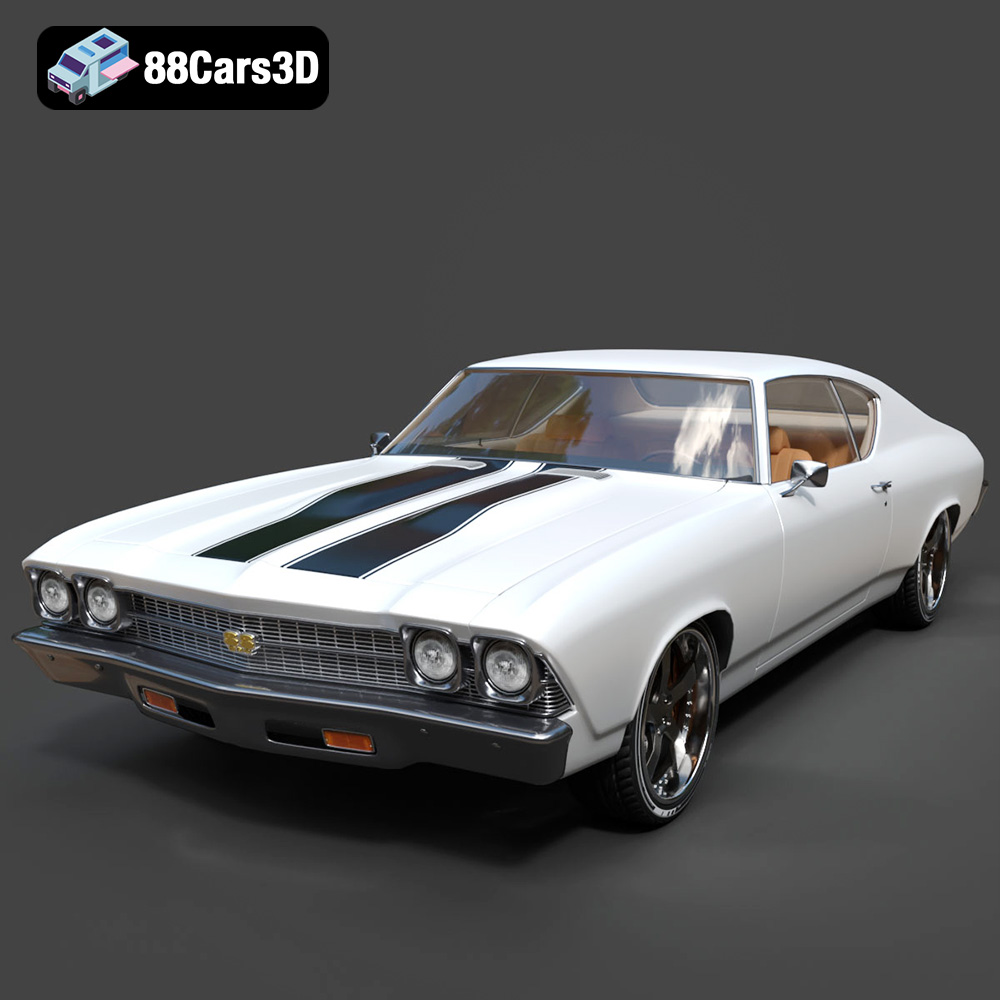
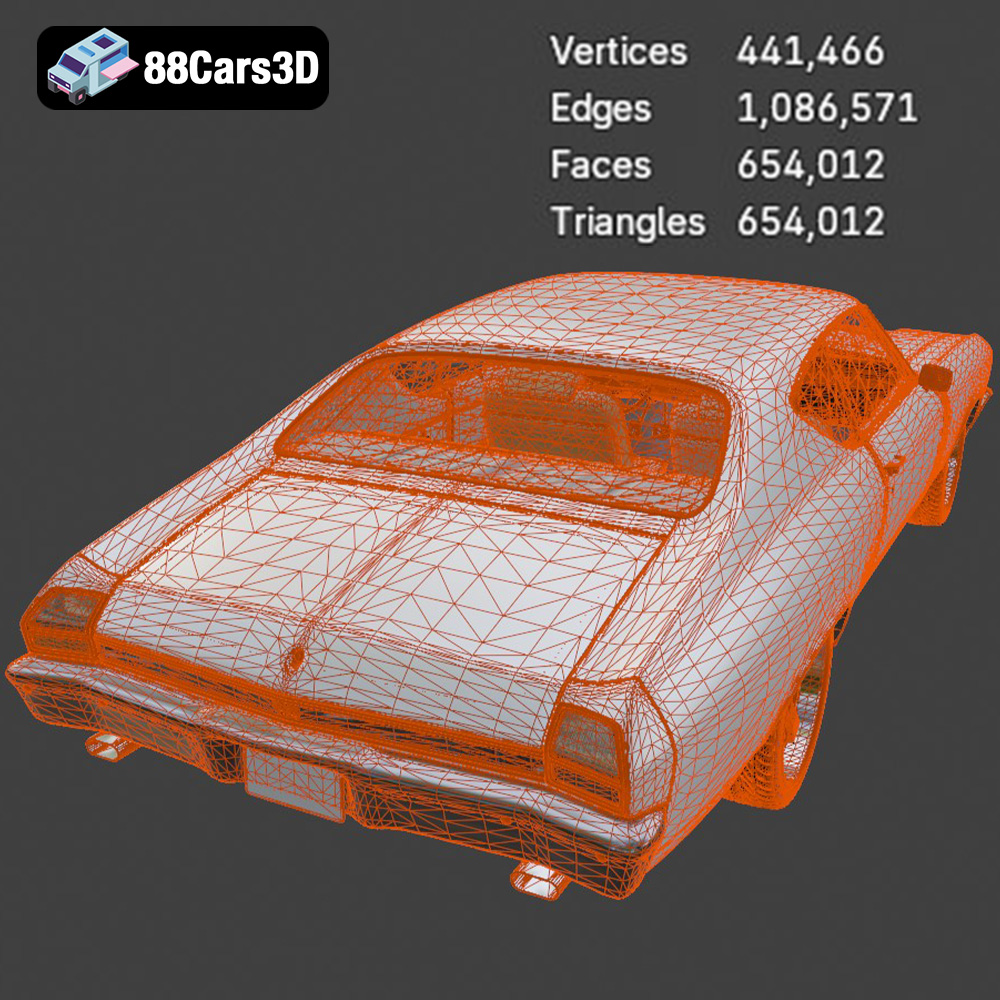
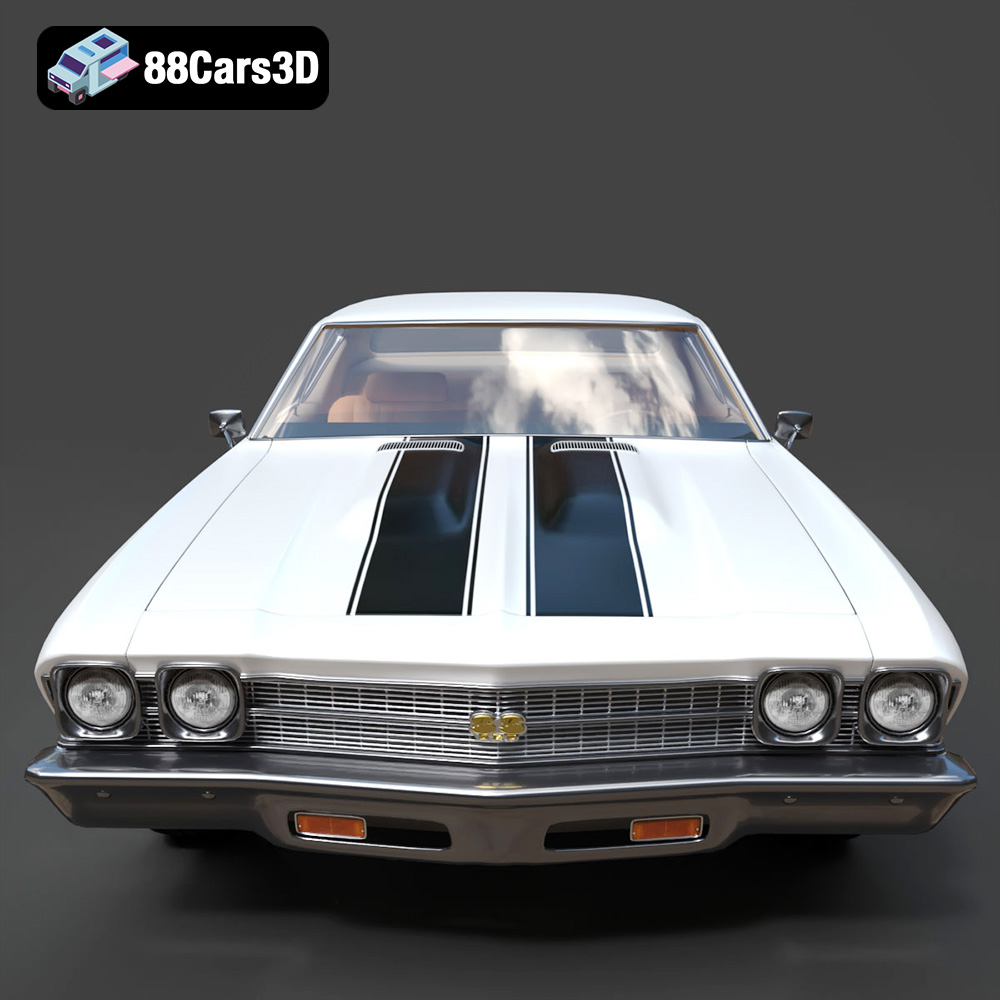
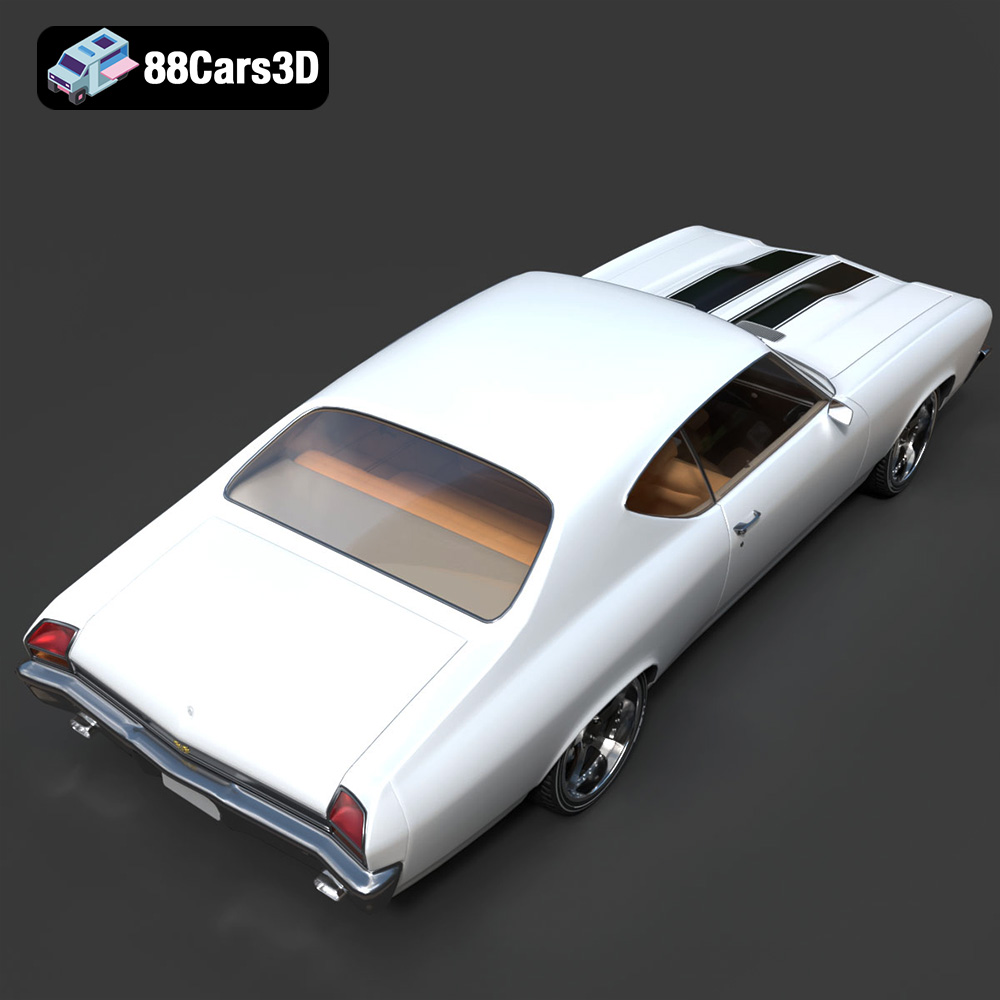
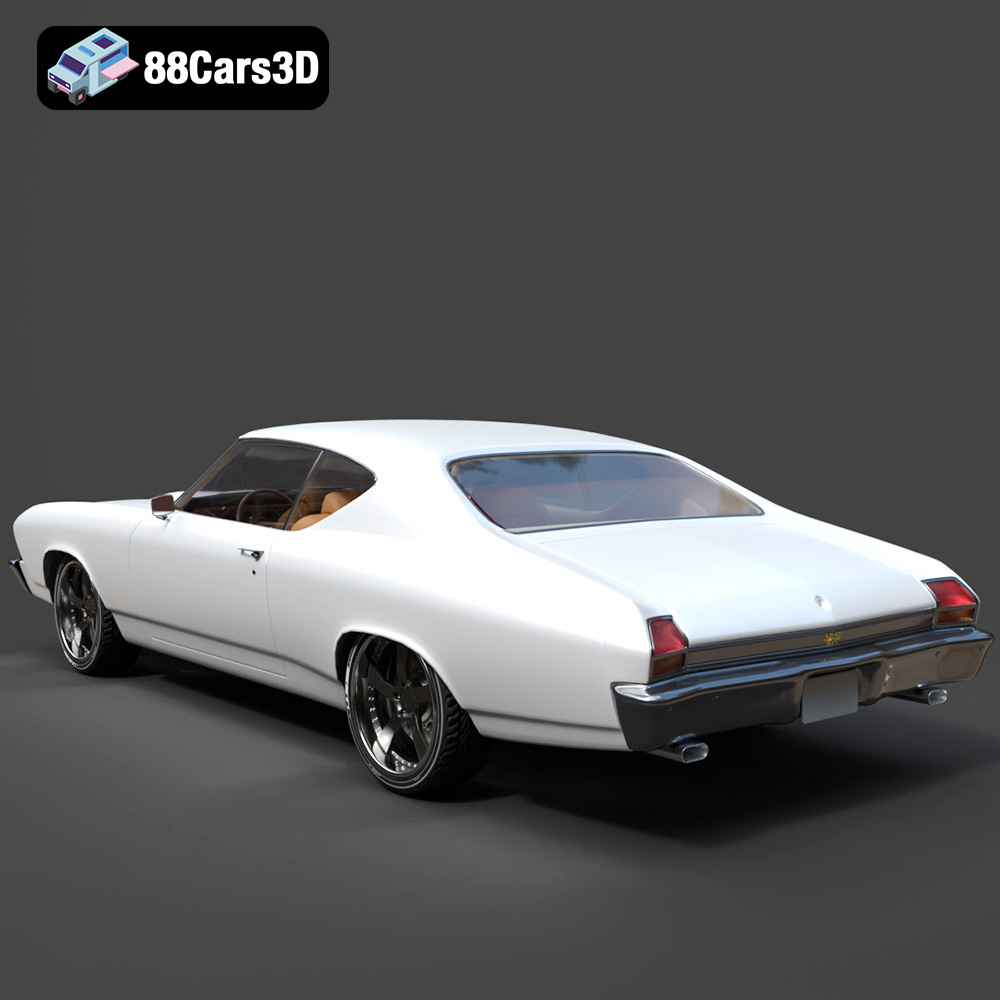
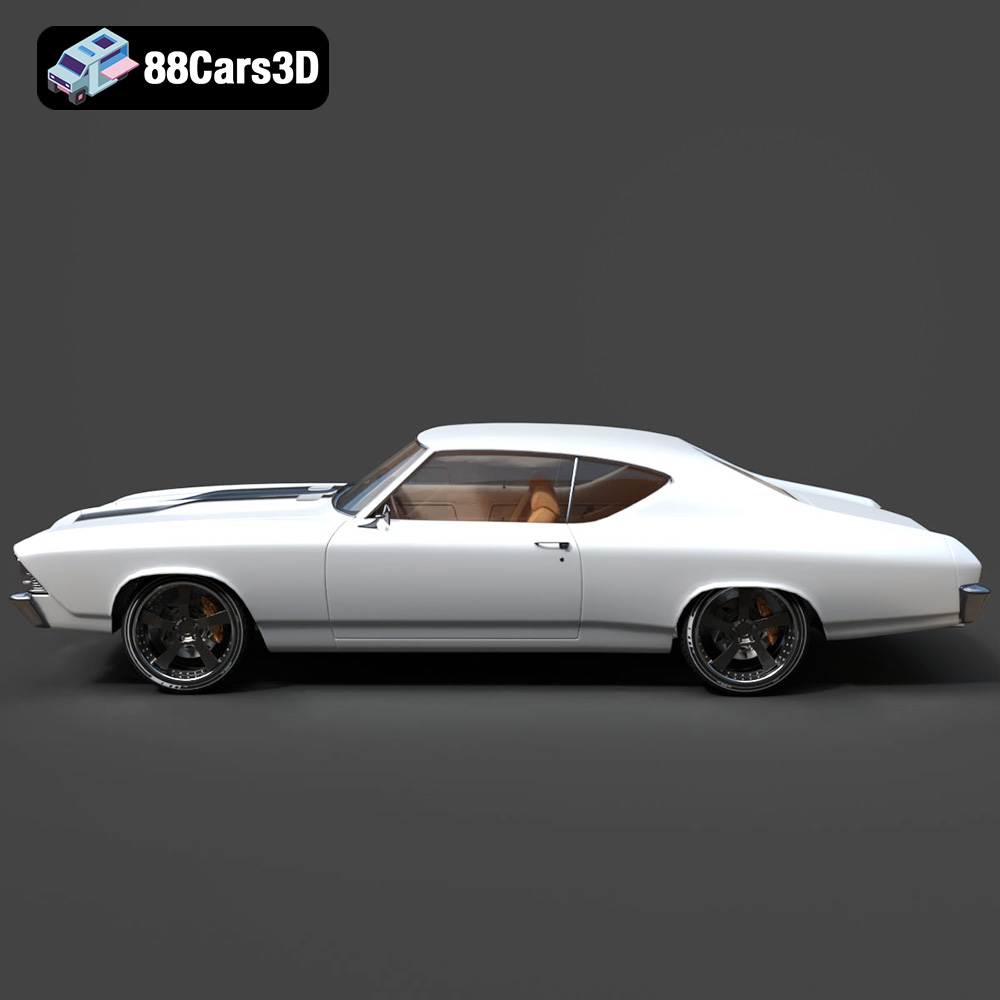
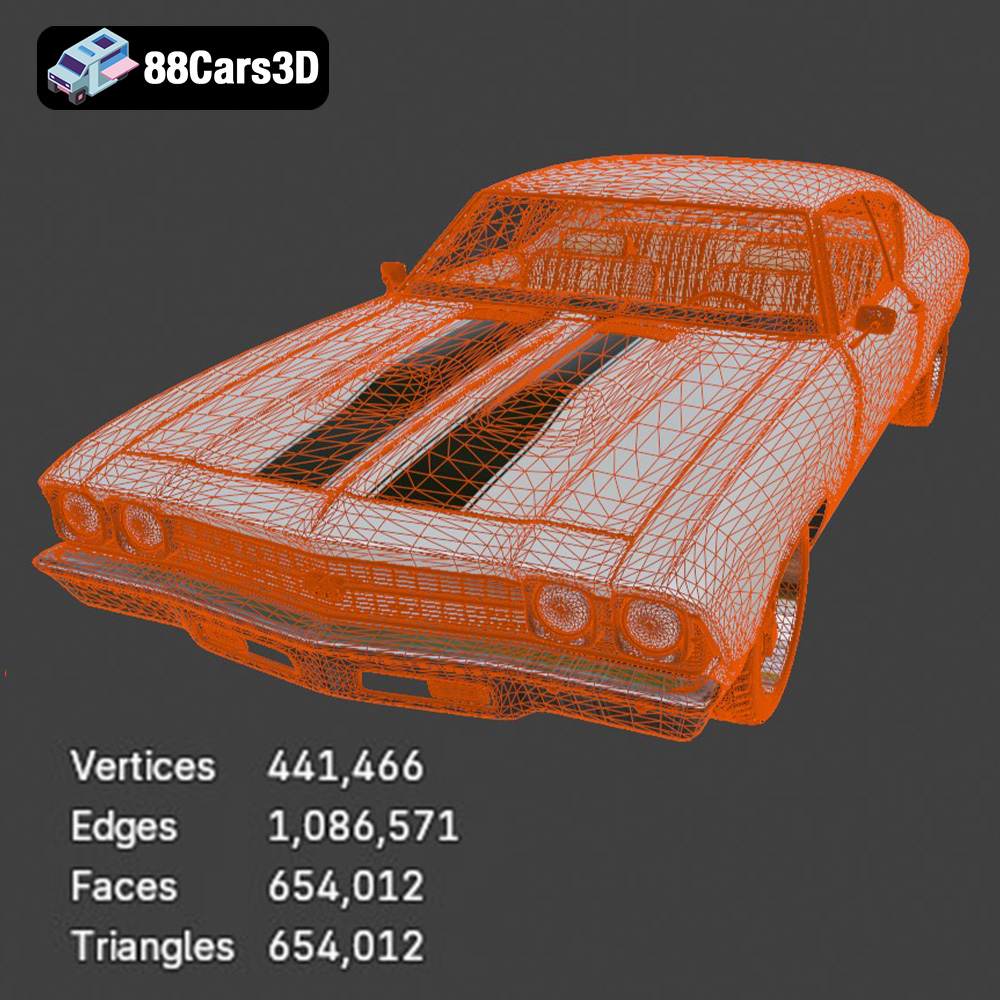
The exterior of the Chevelle SS 1969 is where its legendary muscle car status truly shines. This 3D model meticulously recreates every aggressive curve and distinctive feature, from the signature muscular body lines to the imposing quad-headlight front grille. The authenticity extends to the classic dual exhaust system with chrome-finished tips, the period-correct SS rally wheels, and wide-tread tires. Beyond aesthetics, the model boasts a highly detailed topology of 654,012 triangles. This polycount strikes a critical balance: it’s rich enough for extreme close-up shots in high-end automotive rendering, yet efficiently structured for real-time game development. The “game-ready” optimization ensures that it can be dropped into demanding environments without significantly impacting performance. Furthermore, the model includes separate wheels, suspension, and steering components, all with proper pivot setups, making it fully animatable for realistic driving sequences or interactive displays. The underlying suspension and undercarriage components are also detailed, crucial for dynamic shots or inspection views in virtual showrooms.
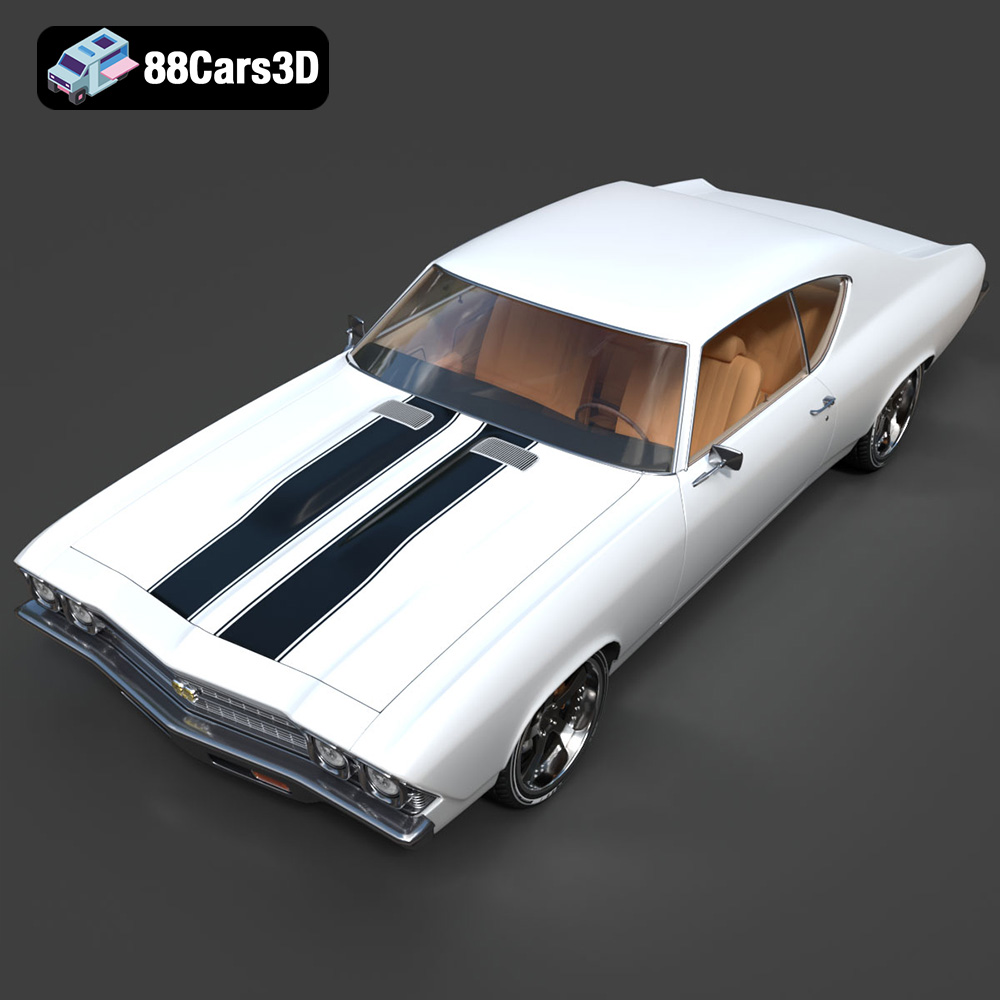
A truly comprehensive 3D car model doesn’t stop at the exterior; the interior must be equally convincing, especially for first-person perspectives in games or immersive VR experiences. The Chevrolet Chevelle SS 1969 3D Model excels here with an authentically crafted cockpit. Users will find detailed bucket seats, a classic center console, and an SS steering wheel with accurate column details. The instrument cluster and vintage dashboard gauges are meticulously recreated, along with precise control details like the classic floor shifter and foot pedals. This level of interior fidelity means the model isn’t just a static prop but a fully explorable environment, perfect for virtual reality tours, driver’s perspective shots in racing simulations, or showcasing the craftsmanship of a bygone era.
The true value of a versatile 3D asset lies in its seamless integration into diverse professional workflows. The Chevrolet Chevelle SS 1969 3D Model is designed to be a cornerstone asset for projects spanning across different software and disciplines.
For artists focused on photorealistic imagery, whether for marketing, advertising, or portfolio pieces, the native .max and .blend files offer maximum control and flexibility. In 3ds Max, professionals can leverage its robust rendering engines like V-Ray or Corona to create breathtaking studio lighting setups that highlight the Chevelle’s iconic lines and metallic finishes. The fully editable project file allows for fine-tuning of PBR materials, adjustments to scene composition, and the creation of complex camera animations for cinematic automotive rendering sequences. Similarly, Blender users can utilize Cycles or Eevee to achieve stunning visuals, taking advantage of Blender’s node-based material system for intricate shader creation. This model’s clean topology and accurate geometry mean less time spent on mesh cleanup and more time dedicated to artistic direction, making it an ideal choice for high-end visualization projects.
The “game-ready & optimized” nature of the Chevelle SS 1969 3D Model, with its 654,012 triangles, makes it perfectly suited for modern game development. The inclusion of the .fbx and specifically the .unreal format streamlines integration into real-time engines like Unreal Engine and Unity. Game developers can import the .fbx file, confident that the model’s proper pivot setups for steering, wheel rotation, and suspension travel will allow for realistic vehicle dynamics straight out of the box. In Unreal Engine, the .unreal package likely includes pre-configured materials, LODs, and possibly collision meshes, significantly accelerating the development process for racing titles, open-world games, or even interactive automotive experiences. This efficiency translates directly into faster iteration times and a higher quality final product for players.
The utility of high-quality 3D car models extends far beyond traditional screen-based rendering and gaming. With the rise of immersive technologies and accessible fabrication, models like the Chevelle SS 1969 find exciting new applications.
Augmented Reality (AR) and Virtual Reality (VR) are transforming how we interact with digital content, offering immersive experiences that blur the lines between virtual and physical. The .glb format included with the Chevrolet Chevelle SS 1969 3D Model is specifically optimized for these applications. Imagine a potential buyer using a mobile AR app to place a full-scale, highly detailed Chevelle SS in their driveway, rotating it, peering into its interior, and marveling at its classic design. Or consider a virtual showroom where users can explore the car in a fully interactive VR environment, opening doors, examining engine details, and even “sitting” inside. The .glb format ensures efficient loading and display performance on various AR/VR platforms, making this model an excellent candidate for virtual configurators, immersive educational tools, or groundbreaking marketing campaigns.
For enthusiasts who appreciate the tactile experience of owning a piece of automotive history, 3D printing offers an incredible avenue. The .stl format is the industry standard for additive manufacturing, allowing the Chevrolet Chevelle SS 1969 3D Model to be translated into a physical object. The detailed product description even provides specific 3D print settings, guiding hobbyists and professionals toward successful prints. Recommended scales like 1:12, 1:18, or 1:24 allow for various display options, while advice on layer height (0.04–0.12 mm, with resin printing recommended for fine details), wall thickness, infill, and crucial support placement ensures optimal results. Post-processing suggestions, such as sanding, priming, and applying authentic factory colors, enable users to create highly realistic display models. Additionally, the .ply format offers a precise mesh representation, potentially useful for professional prototyping or detailed analytical studies before physical fabrication.
A truly valuable 3D car model empowers artists with the freedom to adapt it to their unique creative vision. The Chevrolet Chevelle SS 1969 3D Model provides a solid foundation, built with customization in mind.
The clean topology and detailed material setup of the Chevelle SS 1969 allow for extensive customization. Artists can easily change body colors, transforming the iconic muscle car from a vibrant LeMans Blue to a fiery Hugger Orange, or even experiment with custom, futuristic finishes. Tire textures can be modified to switch between aggressive drag slicks for a race-day look and period-correct street variants. Material finishes, from the deep gloss of fresh paint to the subtle matte of a custom wrap, or the classic gleam of chrome, are all adjustable. Furthermore, adapting the lighting for different environments – be it a sun-drenched desert road or a neon-lit city street – will dramatically alter the car’s presence. This flexibility ensures that the Chevrolet Chevelle SS 1969 3D Model can serve multiple narrative purposes and fit seamlessly into diverse artistic compositions, all while maintaining its inherent authenticity.
The Chevrolet Chevelle SS 1969 remains a timeless symbol of American automotive prowess. Bringing such an iconic machine into the digital realm with authenticity, technical precision, and unparalleled versatility is a monumental task, one that the Chevrolet Chevelle SS 1969 3D Model flawlessly executes. From its meticulously recreated exterior and immersive interior to its optimized topology and comprehensive file format support, this model is a testament to high-quality 3D asset creation.
Whether you are an automotive renderer seeking cinematic realism, a game developer crafting the next great racing title, an AR/VR innovator building immersive experiences, or a hobbyist eager to 3D print a piece of history, this Chevelle SS model delivers. Its seamless integration into workflows involving Blender, 3ds Max, Unreal Engine, Unity, and even 3D printers, thanks to formats like .blend, .max, .fbx, .glb, and .stl, ensures that your creative vision is never constrained by technical limitations. For professional-grade 3D car models that stand the test of scrutiny, look no further than the curated collection available at 88cars3d.com, where quality and versatility drive innovation. This Chevelle SS 1969 model is truly an indispensable asset for any serious digital artist or developer.
The 1969 Chevrolet Chevelle SS stands as a pinnacle of the American muscle car golden era, bringing aggressive styling and legendary performance to the street. This highly accurate 3D model captures the imposing presence of the iconic ’69 model, featuring its signature muscular body lines, distinctive quad-headlight front grille, and classic dual exhaust system. Every curve of its storied chassis has been meticulously recreated to reflect the raw power and heritage that made the Chevelle SS a feared competitor on the drag strip and a beloved icon among automotive enthusiasts.
Boasting a highly detailed topology of 654,012 triangles, this model offers incredible visual fidelity while remaining efficiently structured for robust game development and high-end rendering workflows. Whether you need extreme close-up shots for automotive visualization or a reliable asset for modern racing titles, this model delivers unparalleled realism. Its precise optimization makes it a versatile choice for real-time game engines, VR/AR applications, and stunning cinematic animations.
Perfect for classic drag racing games, virtual automotive showrooms, cinematic cinematic renders, and high-quality vintage vehicle visualizations.
.blend, .fbx, .obj, .glb, .stl, .ply, .unreal, .max
Tags:
chevrolet, chevelle-ss, 1969, muscle-car, classic-car, game-ready, optimized, car-3d-model, game-asset, rendering, vr-ar, blend, fbx, obj, glb, stl, ply, unreal, max
$46.50
.1969
.blend
.chevrolet
.fbx
.glb
.max
.obj
.ply
.rendering
.stl
.unreal
car-3d-model
chevelle-ss
classic-car
game asset
game-ready
muscle-car
optimized
VR/AR