Ford Mustang Mach 1 1969 3D Model Download STL FBX OBJ GLB Blend – Mastering Automotive Digitalization: Bringing the Iconic 1969 Mustang Mach 1 to Life in 3D

Mastering Automotive Digitalization: Bringing the Iconic 1969 Mustang Mach 1 to Life in 3D

The roar of a V8 engine, the gleam of chrome, and the unmistakable silhouette of a classic muscle car – these are the elements that ignite passion in automotive enthusiasts worldwide. Among these legends, the 1969 Ford Mustang Mach 1 stands as an undisputed titan, a symbol of American power, speed, and timeless design. In the digital realm, recreating such an icon demands not just artistic skill but also meticulous technical precision. Whether you’re a game developer crafting the next racing sensation, an architect integrating realistic vehicles into visualizations, or a film studio demanding cinematic realism, the quality of your 3D assets is paramount. This is where truly exceptional 3D car models like the Ford Mustang Mach 1 1969 3D model from 88cars3d.com become indispensable. This article will delve deep into the technical intricacies, diverse applications, and advanced workflows associated with harnessing such a high-fidelity digital asset, ensuring your projects stand out with unparalleled authenticity.

The Enduring Legacy of the 1969 Mustang Mach 1

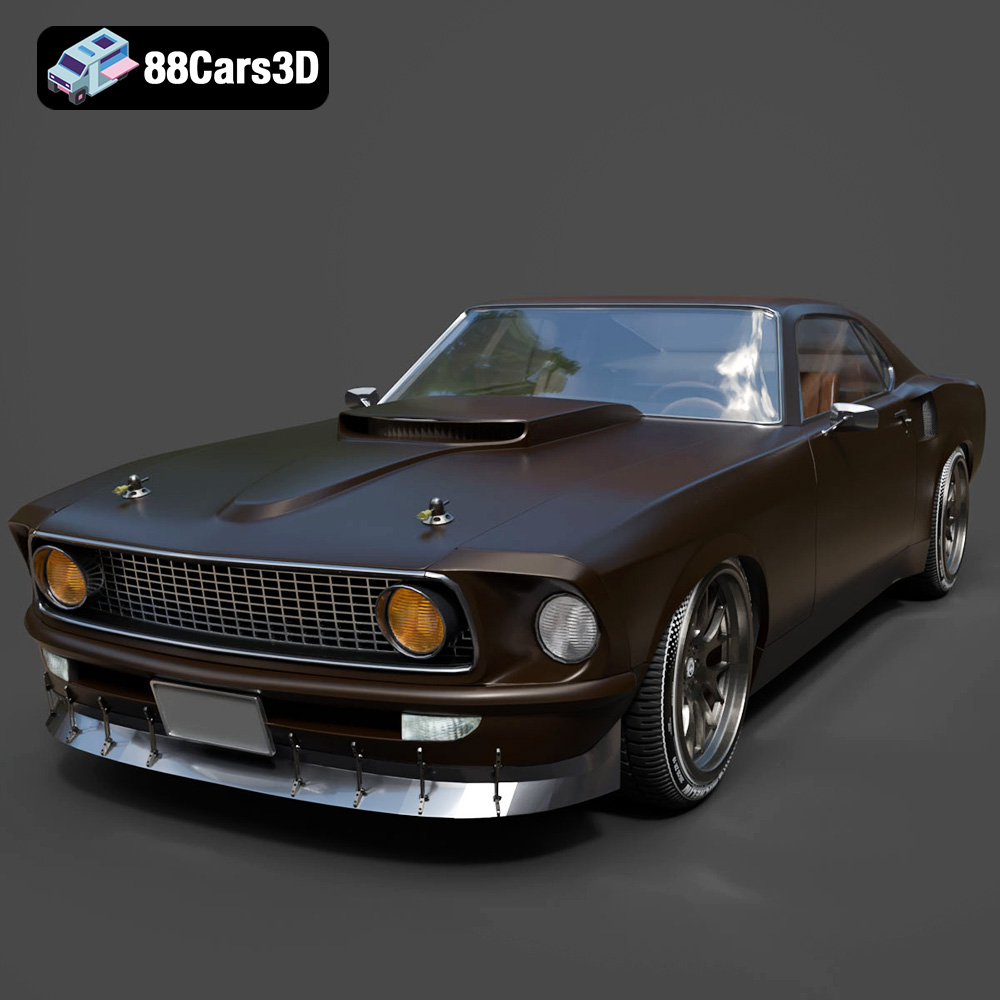
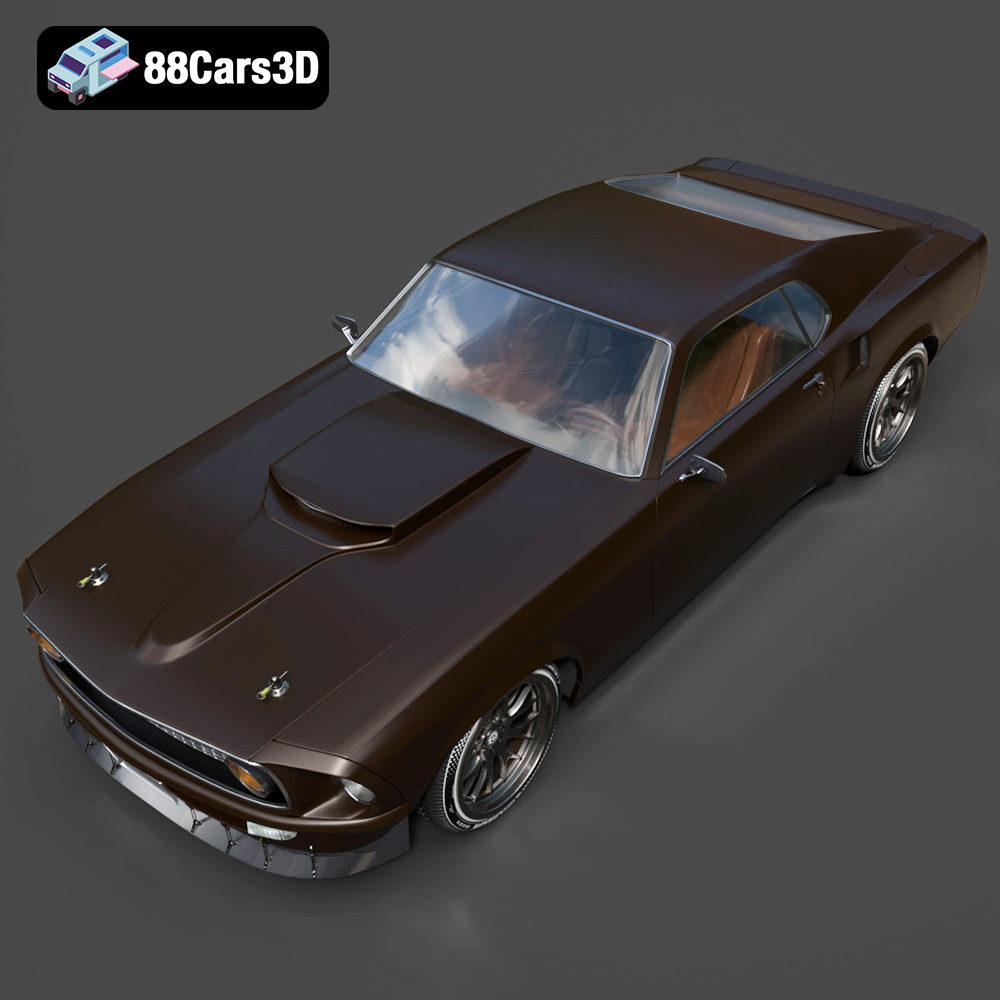
The year 1969 marked a pivotal moment for the Ford Mustang. The Mach 1 variant was introduced as a performance-oriented package, instantly captivating drivers with its aggressive sportsroof styling, potent engine options, and a distinct aesthetic that screamed raw power. It wasn’t just a car; it was a cultural phenomenon, embodying the spirit of an era defined by speed, rebellion, and iconic design. From its matte black hood with a functional scoop to its rear window louvers and prominent rear spoiler, every detail contributed to its legendary status.

Capturing Automotive Heritage in 3D

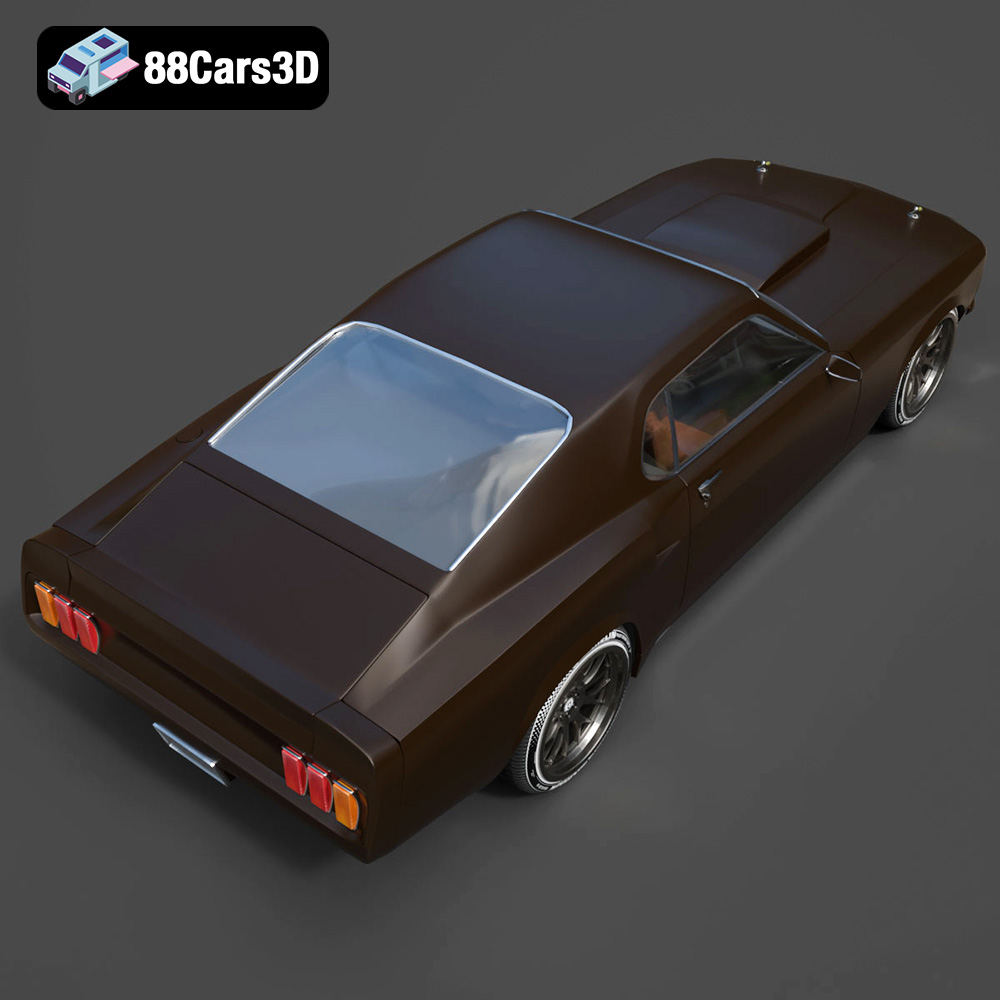
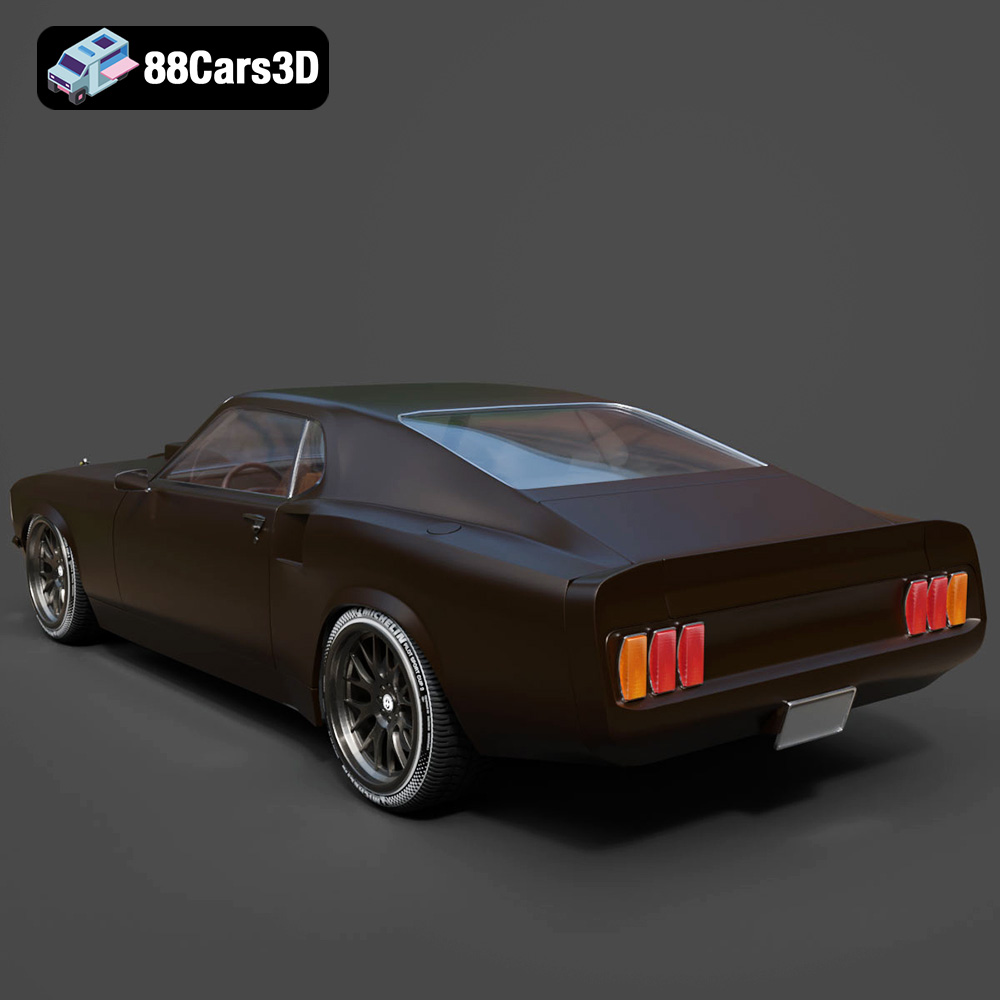
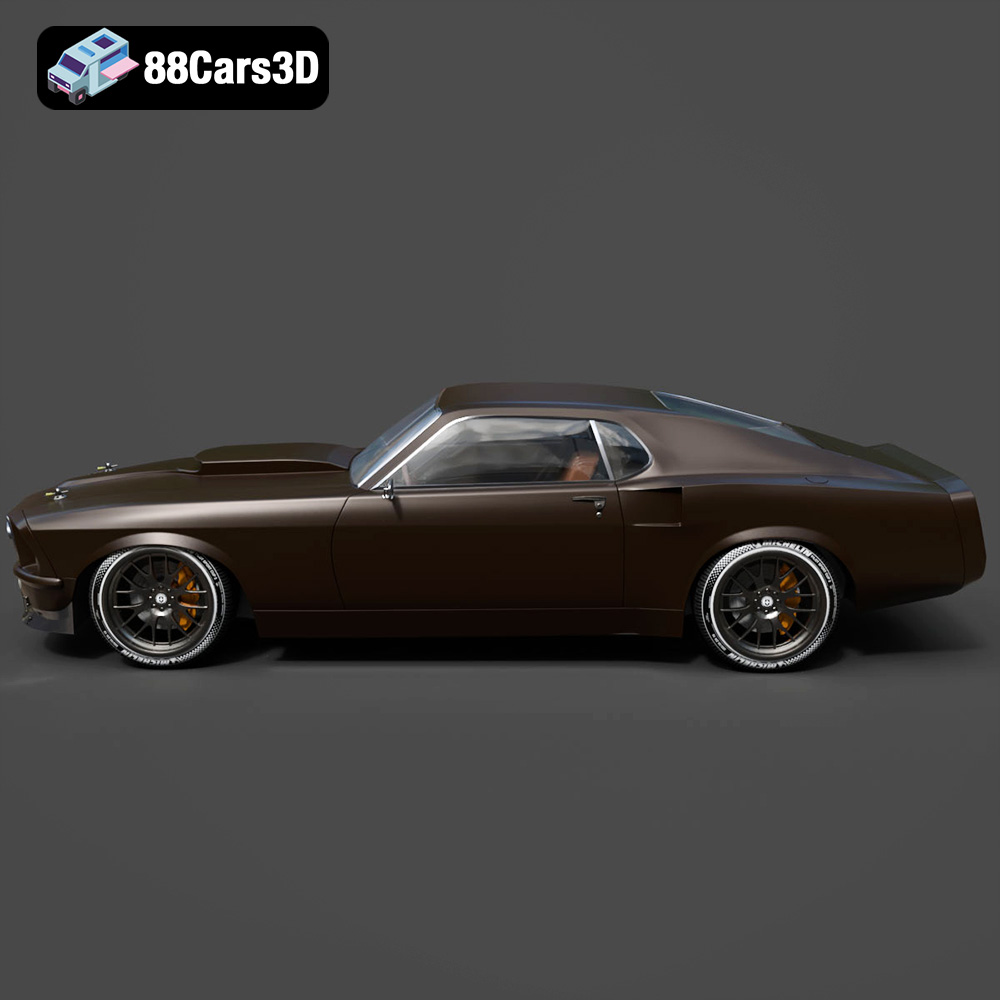
Translating such a revered piece of automotive history into a 3D model is a monumental task. It requires an unwavering commitment to accuracy, from the precise curvature of the fastback body to the intricate details of the Magnum 500 wheels. The 88cars3d.com Ford Mustang Mach 1 1969 3D model meticulously recreates these elements, ensuring that every angle and proportion aligns with the real-world counterpart. This attention to detail isn’t merely aesthetic; it’s fundamental for projects where authenticity is non-negotiable, whether it’s for historical accuracy in a documentary or for an immersive virtual reality experience where discrepancies would immediately break immersion. The model serves as a digital time capsule, preserving the legacy of this muscle car for future generations in an interactive and versatile format.

Understanding 3D Model File Formats

The world of 3D modeling relies on a diverse ecosystem of file formats, each optimized for specific purposes, software compatibility, and industry pipelines. Understanding these formats is crucial for any professional working with 3D car models, as the choice of format can significantly impact workflow efficiency, model fidelity, and final output. The Ford Mustang Mach 1 1969 3D model, recognizing this necessity, offers a comprehensive suite of formats to cater to virtually any professional need.

The Core Formats for Automotive Assets

  • .blend (Blender Scene): For users immersed in the Blender ecosystem, the `.blend` file is the native powerhouse. It encapsulates the entire scene, including not only the mesh data but also materials, textures, lighting setups, cameras, animation data, and even physics simulations. This makes it an ideal starting point for artists who prefer to work within Blender, allowing for full editability and seamless integration into existing Blender projects. Designers can effortlessly modify shaders, adjust UV maps, or even re-rig components like the steering and suspension, taking full advantage of Blender’s robust toolset.
  • .max (3ds Max Project): Similar to `.blend` for Blender, the `.max` file is the native project format for Autodesk 3ds Max. This format provides comprehensive scene data, including geometry, materials (especially V-Ray or Corona setups), lighting, animation, and scene hierarchies. For studios and professionals who use 3ds Max as their primary modeling and rendering platform, this format offers the highest level of flexibility and detail, enabling complex animations, high-fidelity renders, and advanced material customization using tools specific to 3ds Max.
  • .fbx (Filmbox): The `.fbx` format is arguably one of the most widely used and versatile interchange formats in the 3D industry, particularly popular in game development and animation pipelines. Developed by Autodesk, it excels at preserving complex scene data, including meshes, materials, textures, animations, rigging, and even blend shapes, across different software applications like Unreal Engine, Unity, Maya, and Cinema 4D. Its robustness and widespread support make it an excellent choice for exporting assets from their native creation software to real-time engines or other DCC (Digital Content Creation) tools. For game-ready assets like our Mustang Mach 1, `.fbx` ensures that all critical data, including proper pivot setups for animation (steering, wheel rotation, suspension), is carried over accurately.
  • .obj (Wavefront OBJ): The `.obj` format is a universal standard for 3D geometry. While it primarily stores mesh data (vertices, normals, UVs, and faces), it can reference external `.mtl` (material) files for basic material properties. Its simplicity and widespread compatibility mean it can be opened and imported into virtually any 3D software on the market. While it doesn’t store advanced data like rigging or animation, its reliability for basic mesh transfer makes it an invaluable fallback or a preferred choice for scenarios where only the raw geometry is needed for further processing or re-texturing.

Specialized Formats for Niche Applications

  • .glb (GL Transmission Format Binary): This format is the binary version of glTF (Graphics Library Transmission Format) and is rapidly gaining traction as the go-to format for AR (Augmented Reality), VR (Virtual Reality), and browser-based 3D applications. `.glb` files are self-contained, including all geometry, materials, textures, and animation data in a single file, making them highly efficient for web delivery and real-time viewing. Their optimization for quick loading and display on various devices makes them perfect for virtual showrooms, online configurators, and interactive 3D product showcases.
  • .stl (Stereolithography): The `.stl` format is the industry standard for 3D printing. It represents a 3D model as a collection of unconnected triangular facets, making it excellent for additive manufacturing. While it doesn’t carry color or texture information, its precise geometric representation is crucial for ensuring print accuracy. For hobbyists or professionals looking to bring the Ford Mustang Mach 1 into the physical world, an `.stl` export is essential, allowing for the creation of scale models with recommended settings like specific layer heights and support structures.
  • .ply (Polygon File Format): `.ply` is another mesh-centric format often used for storing 3D data from 3D scanners, CAD software, or for applications requiring high precision, such as scientific visualization or reverse engineering. It can store various properties beyond just geometry, including color per vertex, normal information, and even material properties, making it more robust than `.obj` for certain applications. While less common for general asset exchange, its use for precise mesh representation can be critical in specific engineering or analysis workflows.
  • .unreal (Unreal Engine Asset): While not a standalone file format in the traditional sense like `.fbx` or `.obj`, an “unreal” package typically implies an asset that has been specifically prepared and packaged for direct import into Unreal Engine. This could involve pre-configured material instances, proper collision meshes, LOD (Level of Detail) setups, and Blueprints for interactive elements. This level of optimization significantly streamlines the workflow for Unreal Engine developers, saving considerable time on asset preparation and ensuring optimal performance within the engine’s real-time environment.

By providing this comprehensive range of formats, the 88cars3d.com Ford Mustang Mach 1 1969 3D model ensures maximum compatibility and utility, enabling professionals to integrate this exceptional automotive asset into virtually any project pipeline.

Crafting Perfection: The Technical Excellence of 88cars3d.com’s Mach 1 Model

The true value of a premium 3D car model lies not just in its visual appeal but in its underlying technical craftsmanship. The Ford Mustang Mach 1 1969 3D model from 88cars3d.com exemplifies this, engineered to meet the stringent demands of professional production pipelines.

Precision in Geometry and Scale

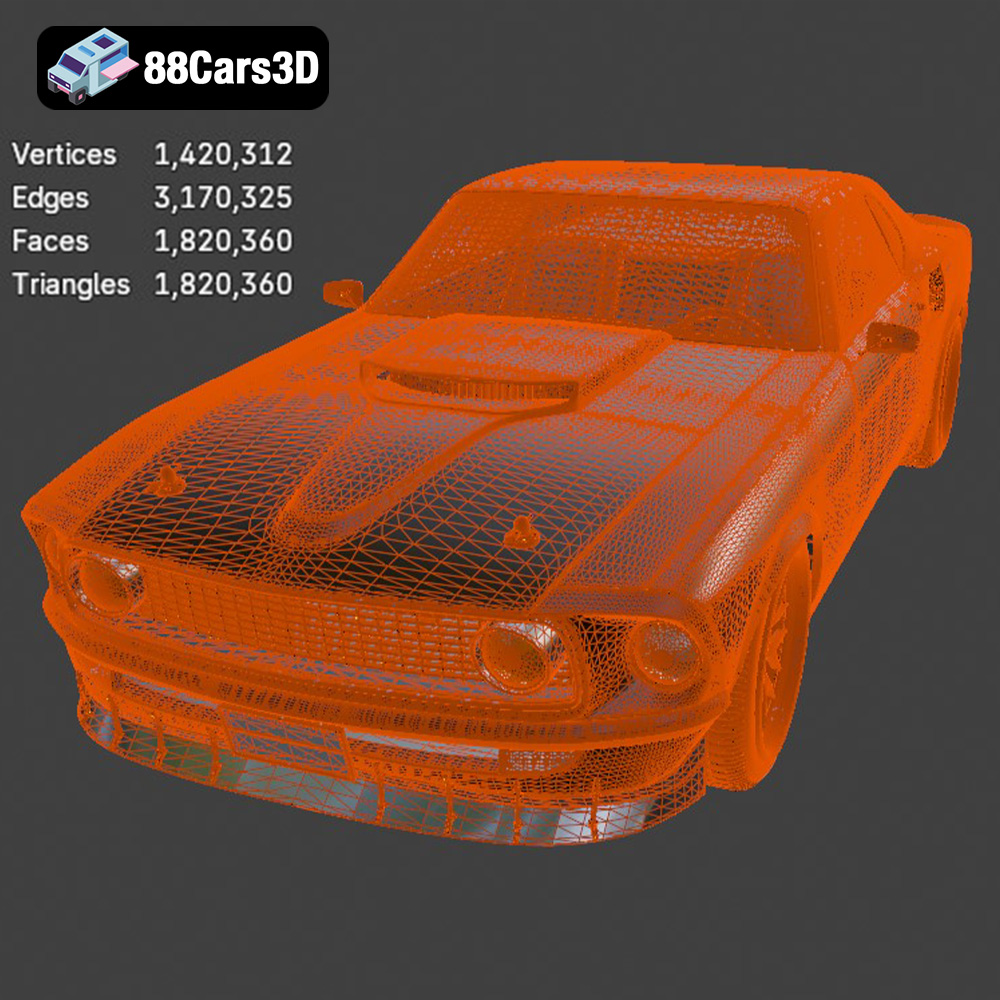
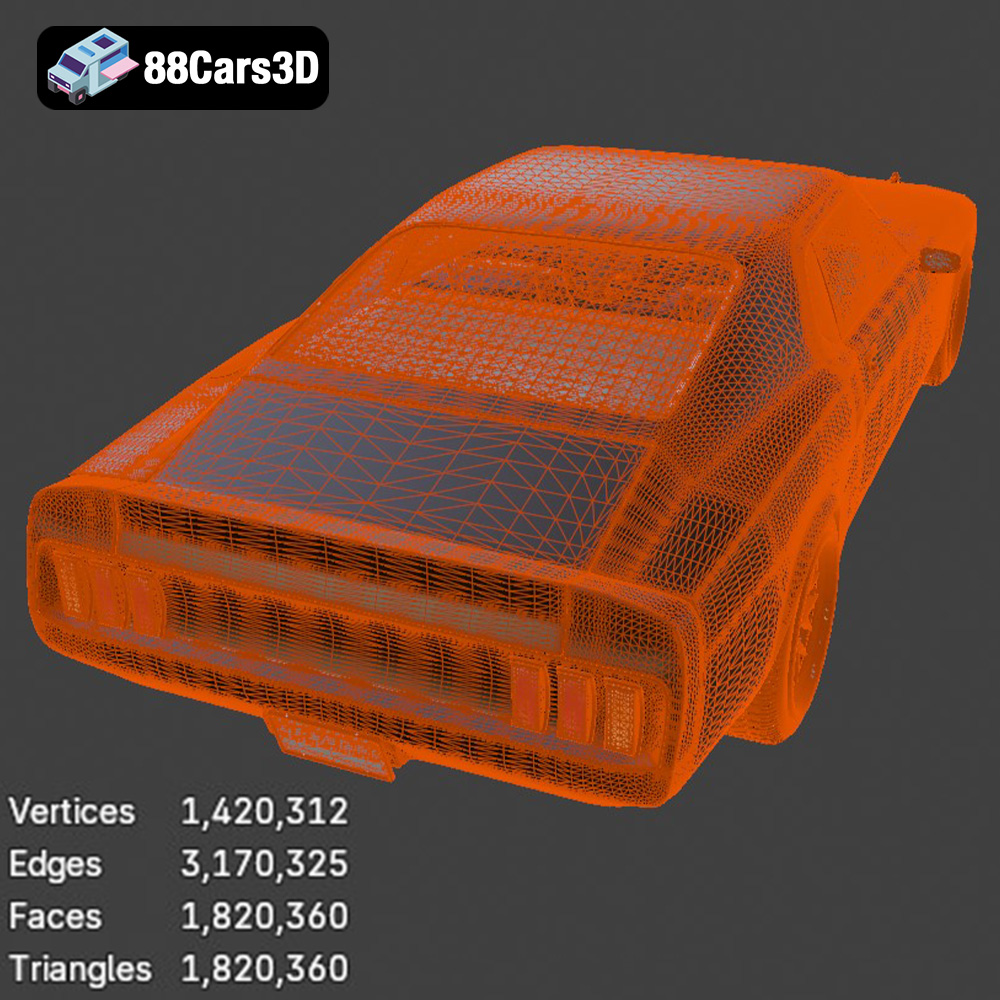
One of the most critical aspects of any realistic 3D vehicle model is its adherence to real-world scale. This model is built with precise dimensions, ensuring it integrates seamlessly into architectural visualizations, game environments, or cinematic scenes without requiring tedious scaling adjustments. The topology boasts 1,820,360 triangles, a carefully chosen polycount that strikes an optimal balance. This density allows for incredibly detailed and smooth surfaces, capturing the iconic curves and sharp lines of the Mach 1 with high fidelity, while remaining optimized enough for real-time engines like Unreal and Unity. This isn’t just a high-poly sculpt; it’s a meticulously structured mesh designed for both performance and visual realism.

Interior and Exterior Fidelity

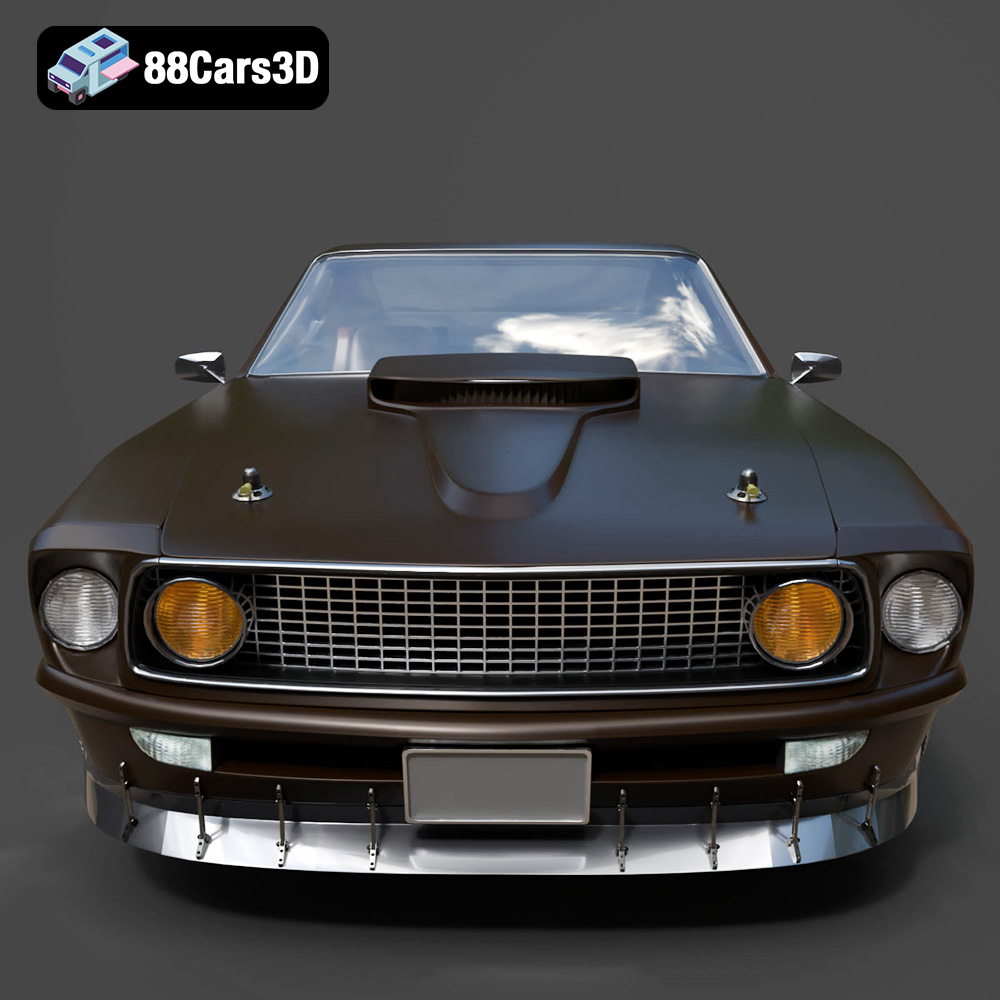
The level of detail extends beyond the stunning exterior. The model features an accurately rendered V8 engine block and engine bay components, a crucial detail for close-up shots or even under-the-hood inspections in a virtual configurator. The classic quad headlamp setup and signature tri-bar taillights are precisely modeled, alongside the authentic dual exhaust system with chrome-tipped tailpipes. The period-correct Magnum 500 style wheels and muscular tires further enhance its authenticity. Below the surface, the undercarriage and classic leaf-spring suspension details are also present, adding depth and realism often overlooked in lesser models.

Inside the cockpit, the attention to detail is equally impressive. High-back bucket seats with classic vinyl upholstery styling, an authentic wood-grain trimmed three-spoke steering wheel, and a detailed multi-dial instrument cluster create an immersive experience. Accurate control details, including pedals, levers, and the classic T-bar shifter, are included, making it perfect for first-person POV in gaming and VR applications. Furthermore, components like wheels, suspension, and steering are separated with proper pivot setups, enabling realistic animation of steering, wheel rotation, and suspension travel – a vital feature for dynamic simulations and interactive experiences.

Real-World Applications: Bringing the Mach 1 to Life Across Industries

The versatility of a high-quality 3D car model like the 88cars3d.com Ford Mustang Mach 1 1969 is immense, spanning a broad spectrum of professional applications. Its detailed design and optimized structure make it an invaluable asset across various digital industries.

Game Development and Immersive Experiences

For game developers, the pursuit of realism is constant. This 3D Mustang Mach 1 model is “game-ready,” meaning it’s designed to perform efficiently within real-time engines without sacrificing visual quality. Its optimized polycount allows for smooth frame rates in demanding racing titles, open-world adventures, or realistic driving simulators. Imagine a classic car racing game where players can truly feel the essence of the Mach 1, or an open-world environment where this iconic muscle car adds unparalleled authenticity to the digital landscape. Beyond traditional gaming, the model excels in AR/VR applications. Virtual showrooms can offer users a chance to interact with the Mach 1 in a fully immersive environment, rotating it, peering into its detailed interior, or even “driving” it in a simulated space. This level of interaction is vital for creating memorable and engaging virtual experiences.

High-End Visualization and Marketing

In the realm of rendering and visualization, photorealism is the ultimate goal. The detailed textures and accurate geometry of this 3D car model make it an excellent candidate for high-end rendering. Automotive brands can utilize it for compelling marketing campaigns, showcasing the Mach 1 in pristine studio lighting setups or dynamic lifestyle scenes. Architectural visualization artists can integrate the car into realistic streetscapes, adding a touch of classic American flair to their building renders. Whether it’s for print advertisements, digital media, or cinematic sequences, the model provides the foundation for stunning visuals that capture the imagination and convey a powerful brand message. The ability to customize body colors, adjust material finishes (matte, gloss, metallic), and adapt lighting further enhances its utility for diverse visualization projects.

Advanced Workflows: Integrating 88cars3d.com’s Mach 1 into Professional Pipelines

Integrating a complex 3D car model like the Ford Mustang Mach 1 1969 into a professional workflow requires a nuanced understanding of various 3D software and real-time engines. The asset’s comprehensive file format support simplifies this process considerably.

Mastering the Asset in Blender and 3ds Max

For artists and studios utilizing Blender, the `.blend` file offers a complete and editable scene. Upon opening, users will find the Mach 1 fully assembled, often with basic materials and UV maps pre-applied. The workflow typically involves:

  1. Material Refinement: Customizing the provided materials using Blender’s node editor. This could involve creating advanced PBR (Physically Based Rendering) shaders, adjusting metallic and roughness values, or integrating custom decals and paint jobs.
  2. Lighting and Rendering: Setting up studio-quality lighting or environmental HDRIs (High Dynamic Range Images) using Cycles or Eevee render engines to achieve photorealistic results.
  3. Animation: Utilizing the separated components (wheels, steering, suspension) with proper pivots to rig the vehicle for complex animations – from simple turns and rolls to full suspension compression and steering articulation.

Similarly, for 3ds Max users, the `.max` file provides an equally comprehensive starting point. The workflow in 3ds Max would involve:

  1. Material Assignment: Applying advanced materials using renderers like V-Ray or Corona. This often means converting default materials or enhancing them with custom textures and shader properties.
  2. Scene Integration: Merging the car model into existing 3ds Max scenes, ensuring correct scaling and positioning.
  3. Animation and Simulation: Using 3ds Max’s animation tools, potentially with controllers or even physics simulations, to bring the car to life for cinematic sequences or interactive presentations.

Both Blender and 3ds Max allow for extensive customization, from changing tire textures to modifying lighting setups for different environmental effects.

Real-Time Integration with Unreal Engine

The true power of a game-ready asset shines when integrated into real-time engines like Unreal Engine. The `.fbx` format is ideal here, ensuring that the mesh, UVs, materials (which will need to be re-created or re-linked within Unreal), and most importantly, the skeletal hierarchy and pivot points, are transferred accurately. If an `.unreal` specific file is provided, this often means much of the setup is already handled. The workflow in Unreal Engine typically involves:

  1. Importing the FBX: Importing the Mustang Mach 1 `.fbx` file into Unreal Engine, ensuring options for skeletal mesh, static mesh, and materials are correctly selected.
  2. Material Creation: Rebuilding or optimizing materials using Unreal’s powerful material editor. This involves setting up PBR values (Base Color, Metallic, Roughness, Normal, Ambient Occlusion maps) and ensuring consistent visual quality.
  3. Blueprint Setup: Creating a Blueprint class for the vehicle. This is where the separated components with correct pivots become invaluable. Developers can link wheel meshes to physics constraints, set up steering inputs, and implement realistic suspension behavior, turning a static model into a drivable, interactive asset.
  4. LODs and Optimization: Generating or importing Level of Detail (LOD) meshes to ensure performance across various hardware specifications, crucial for open-world games and VR experiences. Setting up collision meshes for realistic interaction with the environment is also a key step.

By following these advanced workflows, professionals can leverage the 88cars3d.com Mustang Mach 1 model to its full potential, creating stunning visuals and interactive experiences across a range of digital platforms.

The Art of 3D Printing: Physicalizing Digital Muscle

While digital applications are vast, the desire to hold a tangible representation of such an iconic vehicle remains strong. The Ford Mustang Mach 1 1969 3D model’s inclusion of the `.stl` format opens up the exciting possibility of 3D printing, transforming the digital asset into a physical collectible or display piece.

Preparing for Fabrication

3D printing requires specific considerations to ensure a successful output. The model’s topology, while optimized for digital rendering, needs to be robust for physical fabrication. The `.stl` file provides the triangulated mesh ready for slicing software. Key recommendations for printing this model include:

  • Scale: Recommended scales like 1:12, 1:18, or 1:24 offer a good balance between size and detail retention. Larger scales will allow for finer details but require more material and print time.
  • Print Technology: Resin printing (SLA/DLP) is highly recommended over FDM (Fused Deposition Modeling) for achieving the fine details inherent in a high-fidelity car model, such as the grille mesh, interior dashboard dials, and thin body lines.
  • Layer Height: A low layer height (e.g., 0.04–0.12 mm for resin) is crucial for smooth surfaces and minimizing visible layer lines.
  • Supports: Detailed parts like the exhaust system, side mirrors, and intricate steering components will absolutely require support structures during printing to prevent warping or collapse. Print orientation can minimize support needs and improve structural integrity, for instance, by angling the main frame.
  • Post-processing: After printing, post-processing is essential. This typically involves removing supports, curing resin prints, sanding surfaces to achieve smoothness, applying primer for an even base, and finally, painting with authentic factory colors, perhaps with metallic finishes, to truly bring the miniature Mach 1 to life.

The ability to print this model adds another dimension to its utility, catering to hobbyists, collectors, and automotive enthusiasts who appreciate both the digital and physical forms of this classic American muscle car.

Conclusion

The 1969 Ford Mustang Mach 1 remains an enduring symbol of automotive excellence, and its digital counterpart, the Ford Mustang Mach 1 1969 3D model from 88cars3d.com, is a testament to meticulous digital craftsmanship. From its precise geometry and meticulously recreated interior to its comprehensive file format support, this model is designed to empower professionals across game development, architectural visualization, cinematic rendering, and even 3D printing. It represents not just a static asset, but a versatile tool capable of elevating the realism and quality of any project. By understanding the technical specifications, file formats, and advanced workflows detailed in this article, artists and developers can fully leverage the power of this iconic 3D car model, bringing the legendary spirit of the Mach 1 to life in their own digital creations. For those seeking unparalleled quality and authenticity in their 3D car models, 88cars3d.com stands as a premier destination.

Featured 3D Model

Ford Mustang Mach 1 1969 3D Model Download STL FBX OBJ GLB Blend

Detailed Product Description:

The 1969 Ford Mustang Mach 1 stands as a defining pillar of American muscle car heritage. This legendary fastback is celebrated for its aggressive stance, signature sportsroof styling, and high-performance V8 pedigree. Our 3D model meticulously captures its iconic visual elements, from the menacing front grille and quad headlights to the muscular rear haunches, distinctive hood scoop, and classic dual exhaust system.

Boasting a highly detailed topology of 1,820,360 triangles, this 3D model is crafted for maximum visual fidelity while maintaining optimized structures for modern rendering engines. It is designed to deliver photorealistic results for high-end rendering, game development, cinematic animation, and interactive AR/VR applications.

Perfect for virtual showrooms, classic car racing games, architectural visualizations, and automotive brand campaigns.

Exterior Features:

  • Accurate Ford Mustang Mach 1 1969 frame geometry and fastback proportions
  • Detailed V8 engine block and engine bay components
  • Authentic dual exhaust system with chrome-tipped tailpipes
  • Classic quad headlamp setup and signature tri-bar taillights
  • Period-correct Magnum 500 style wheels and muscular tires
  • Detailed undercarriage and classic leaf-spring suspension details
  • Separate wheels, suspension, and steering components for animation

Cockpit & Interior Features:

  • High-back bucket seats with classic vinyl upholstery styling
  • Authentic wood-grain trimmed three-spoke steering wheel
  • Detailed multi-dial instrument cluster and dashboard fascia
  • Accurate control details including pedals, levers, and the classic T-bar shifter
  • Optimized geometry for first-person POV in gaming and VR applications

Technical Specifications & Advantages:

  • Game-Ready & Optimized: 1,820,360 triangles strikes perfect balance for real-time engines (Unreal, Unity) while maintaining high-end visual realism
  • Real-world scale accuracy based on actual vehicle chassis
  • Proper pivot setup for steering, wheel rotation, and suspension travel
  • Compatible with major 3D software platforms and real-time rendering engines

Applications:

  • Game Development: Ideal for open-world games, racing titles, and simulators due to optimized polycount
  • AR/VR: Perfect for immersive virtual showrooms, configurators, and mobile AR experiences
  • Rendering & Visualization: Excellent for brand campaigns, lifestyle scenes, and studio lighting setups
  • 3D Printing: Convertible to .stl format for display-scale hobbyists

3D Print Settings:

  • Recommended scale: 1:12 / 1:18 / 1:24
  • Layer height: 0.04–0.12 mm (Resin printing recommended for fine details)
  • Wall thickness: 1.2–2.0 mm
  • Infill: 20–30%
  • Supports: Required for detailed parts like exhaust, mirrors, steering components
  • Print orientation: Frame printed angled for structural integrity; wheels printed separately
  • Post-processing: Sanding, primer, and authentic factory colors with metallic finishes

Customization Options:

  • Change body/panel colors (e.g., factory colors, custom finishes)
  • Modify tire textures (off-road vs. street variants)
  • Adjust material finishes (matte, gloss, metallic)
  • Adapt lighting for different environments

Included File Formats:

.blend, .fbx, .obj, .glb, .stl, .ply, .unreal, .max

Tags:
ford, mustang-mach-1, 1969, muscle-car, classic-car, game-ready, optimized, car-3d-model, game-asset, rendering, vr-ar, blend, fbx, obj, glb, stl, ply, unreal, max

$82.50

View This Model

Product Image Gallery

Ford Mustang Mach 1 1969

Related Tags

.1969

.blend

.fbx

.ford

.glb

.max

.obj

.ply

.rendering

.stl

.unreal

car-3d-model

classic-car

game asset

game-ready

muscle-car

mustang-mach-1

optimized

VR/AR

Nick
Author: Nick

Lamborghini Aventador 001

🎁 Get a FREE 3D Model + 5% OFF

We don’t spam! Read our privacy policy for more info.

Leave a Reply

Your email address will not be published. Required fields are marked *