Get 20% OFF All Premium 3D & STL Models!

In the dynamic world of 3D visualization, game development, and real-time experiences, the quality of your assets dictates the success of your project. Automotive 3D models stand at the forefront of this demand, requiring an intricate balance of artistic precision and technical optimization. From the sweeping curves of a luxury coupe to the precise stitching on its interior, every detail contributes to an immersive and convincing digital experience.
For professionals seeking to elevate their projects, investing in high-quality, pre-built 3D car models is not just a convenience, but a strategic advantage. It saves countless hours of modeling, texturing, and rigging, allowing artists and developers to focus on scene composition, animation, and interactive elements. Today, we’re diving deep into what makes a premium 3D vehicle asset truly stand out, using the exceptional BMW 4 Series F32 Coupe 3D Model from 88cars3d.com as our prime example. This model embodies the perfect blend of dynamic performance and elegant design, meticulously captured to meet the rigorous demands of modern digital production.
Automotive rendering and game development demand an unparalleled level of realism. Audiences expect photorealistic reflections, accurate physics, and interiors so detailed they feel tangible. A high-fidelity 3D car model, such as the BMW 4 Series F32 Coupe, provides the foundational geometry needed to achieve these expectations. It’s not just about the exterior; the quality of the cockpit, the accuracy of the suspension components, and even the subtle nuances of panel gaps all contribute to the overall authenticity.
Developing a complex vehicle from scratch is an monumental undertaking. It requires specialized knowledge in hard-surface modeling, UV mapping, texturing, and rigging. For studios and individual creators on tight deadlines, sourcing production-ready 3D car models from reputable marketplaces like 88cars3d.com offers an invaluable shortcut. These assets are typically optimized for various workflows, come with clean topology, and are available in multiple file formats, ensuring seamless integration into diverse pipelines.
Navigating the world of 3D assets means understanding the various file formats available. Each format serves a specific purpose, offering unique advantages for different stages of the production pipeline, from initial design to real-time deployment and even physical fabrication. The BMW 4 Series F32 Coupe 3D Model exemplifies versatility by providing a comprehensive suite of these essential formats.
The `.blend` file format is native to Blender, a powerful and increasingly popular open-source 3D creation suite. When you download a `.blend` file, you’re getting a fully editable Blender scene. This includes the complete mesh geometry, materials, textures, lighting setups, cameras, and any animation data or modifiers applied. For artists deeply integrated into the Blender ecosystem, this format offers maximum flexibility for customization, rigging adjustments, and rendering within Blender’s Cycles or Eevee engines. It’s ideal for designers who want to tweak every aspect of the model or integrate it seamlessly into a Blender-centric project without conversion issues.
Autodesk’s `.fbx` (Filmbox) format is arguably the most widely adopted interchange format in the 3D industry. It’s a binary file format that supports almost all 3D data elements, including geometry, materials, textures, animations, bones, and even camera data. Its strength lies in its ability to transfer complex 3D scenes between different software applications like 3ds Max, Maya, Blender, Unity, and Unreal Engine, making it ideal for real-time pipelines. For game developers using Unreal or Unity, `.fbx` is often the go-to format for importing 3D car models due to its robust support for animation and scene hierarchy, ensuring assets like the BMW F32 Coupe are game-ready with proper pivots and material assignments.
The `.obj` (Wavefront Object) format is a universal standard, highly compatible across almost all 3D software. It primarily stores geometric data – vertices, normals, UV coordinates, and faces – along with references to external material files (.mtl). While `.obj` doesn’t typically carry animation, rigging, or complex material networks, its widespread support makes it an excellent choice for cross-software compatibility. If you need to import the BMW F32 Coupe into a niche renderer or a custom engine, `.obj` provides a reliable foundation for the model’s geometry.
`.glb` (GL Transmission Format Binary) is an increasingly important format, especially for web-based 3D applications, AR/VR experiences, and interactive configurators. It’s a compact, self-contained binary file that encapsulates 3D models, textures, animations, and PBR materials into a single file, making it efficient for streaming and rapid loading. Its optimization for real-time viewing means that the BMW F32 Coupe can be quickly deployed into a virtual showroom or an augmented reality app, providing an engaging experience with minimal overhead.
The `.stl` (Stereolithography) format is the de facto standard for 3D printing. It represents a 3D model as a series of connected triangles, describing only the surface geometry without color, texture, or material information. For hobbyists or professionals looking to physically manifest the BMW F32 Coupe, the `.stl` version is essential. It enables direct conversion for additive manufacturing, allowing for detailed physical prototypes or display models at various scales, as recommended with specific print settings.
The `.ply` (Polygon File Format, or Stanford Triangle Format) is another format for storing 3D data, often used in scientific applications, 3D scanning, and CAD. It supports a wider range of properties than `.stl`, including color per vertex, transparency, and even specific data like normal vectors for each face. While less common for everyday artistic workflows, `.ply` can be valuable for high-precision mesh analysis or specific engineering simulations, offering a robust representation of the BMW F32 Coupe’s complex geometry.
The `.unreal` format denotes assets specifically prepared and optimized for the Unreal Engine. While not a standalone file type like `.fbx`, it signifies an asset package that is pre-configured, tested, and often includes Unreal-specific materials, blueprints, and collision meshes. This means the BMW F32 Coupe, when provided in an Unreal-ready package, will integrate seamlessly, reducing setup time and ensuring optimal performance within the engine’s real-time environment. It’s a hallmark of professional-grade game assets.
The `.max` format is the native file type for Autodesk 3ds Max, a powerful 3D modeling, animation, and rendering software widely used in architectural visualization, product design, and cinematic pre-visualization. A `.max` file contains the complete scene data, including geometry, materials, textures, lighting, cameras, animation tracks, and any modifiers or plugins used. For professionals whose primary workflow revolves around 3ds Max, the `.max` version of the BMW F32 Coupe allows for full scene manipulation, advanced rendering with V-Ray or Corona, and intricate animation sequences without compatibility headaches.
The availability of such a diverse array of formats for the BMW 4 Series F32 Coupe model underlines its professional-grade versatility, ensuring it can be utilized across virtually any project or pipeline requirement.
The BMW 4 Series F32 Coupe 3D Model is a testament to meticulous digital craftsmanship. It goes beyond simple geometry, capturing the soul of the vehicle through careful attention to its iconic design and internal mechanics. This level of detail is crucial for any high-end automotive rendering or interactive experience.
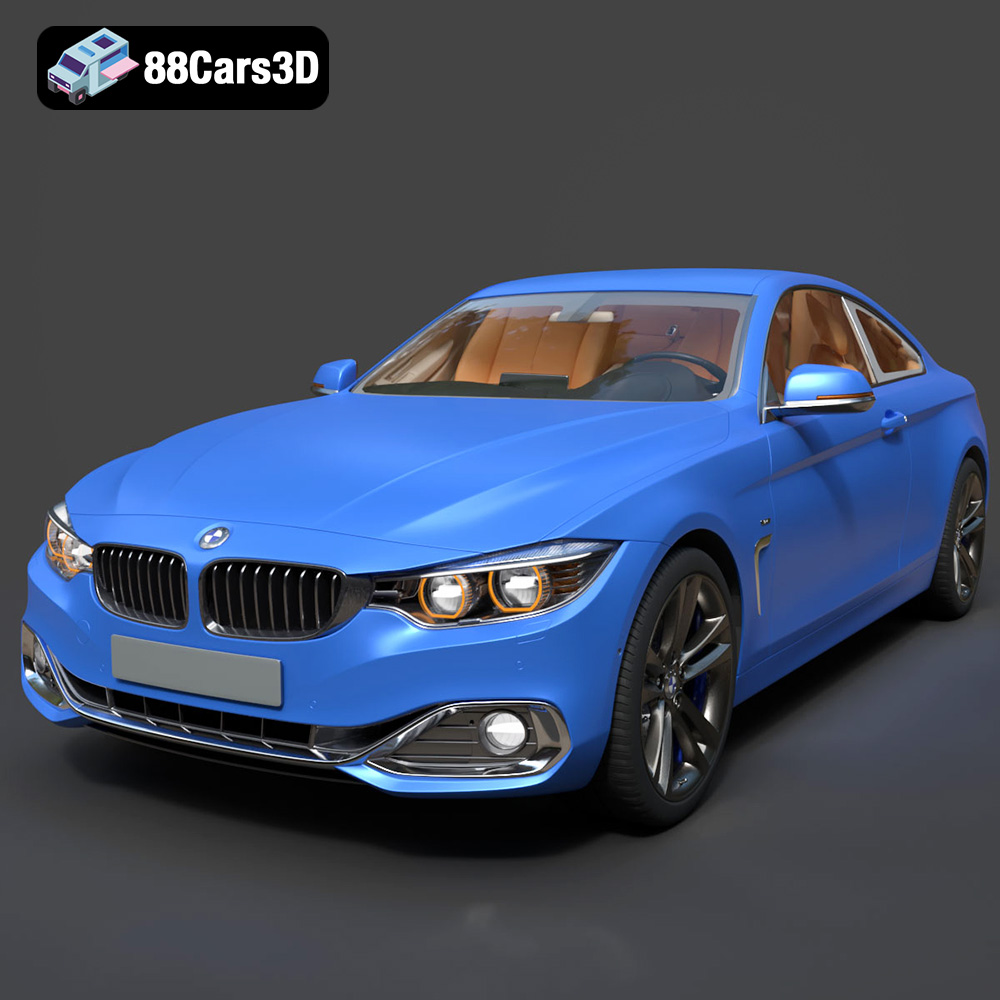
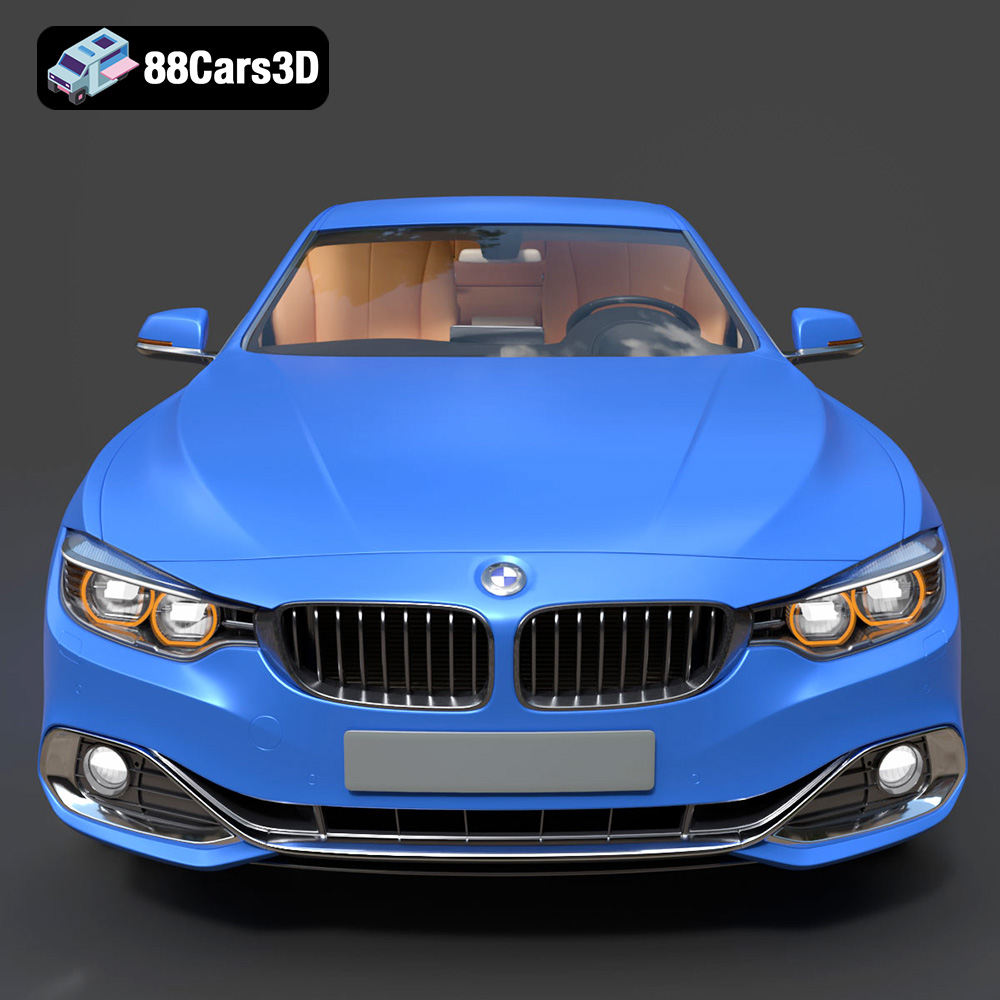
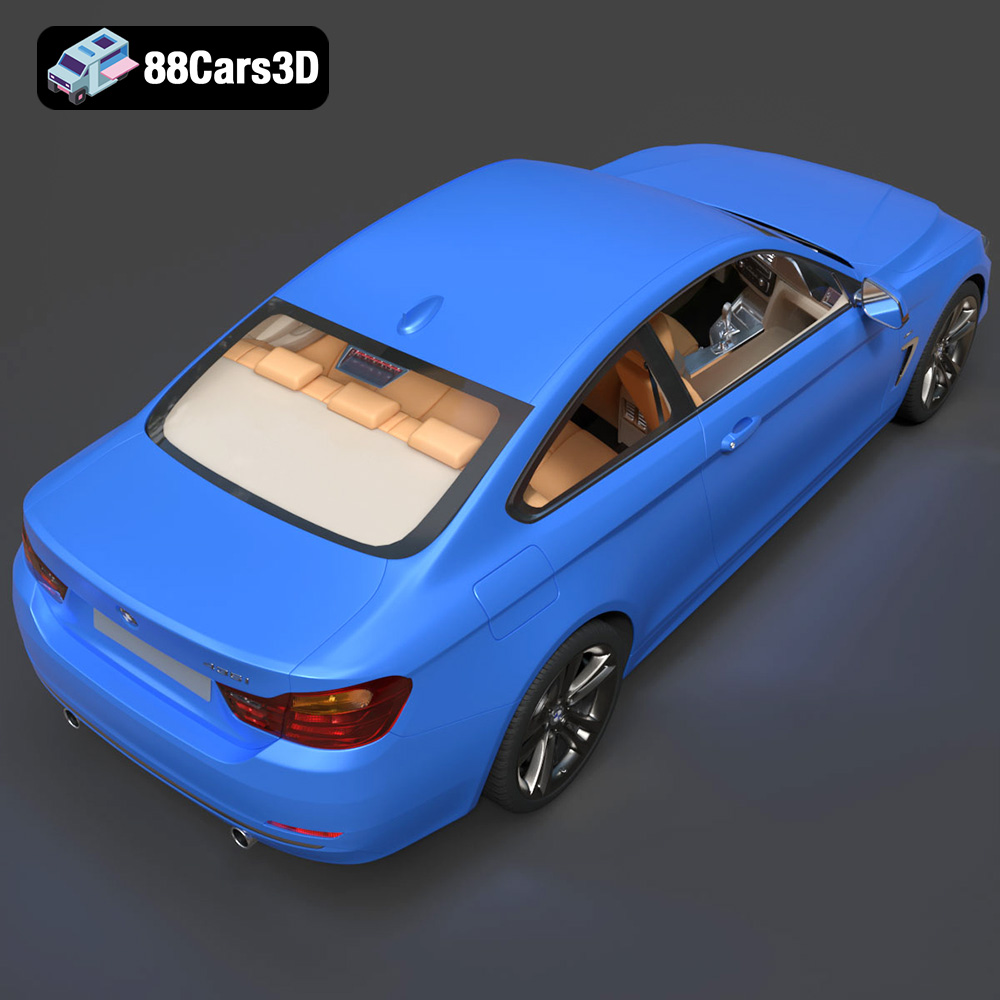
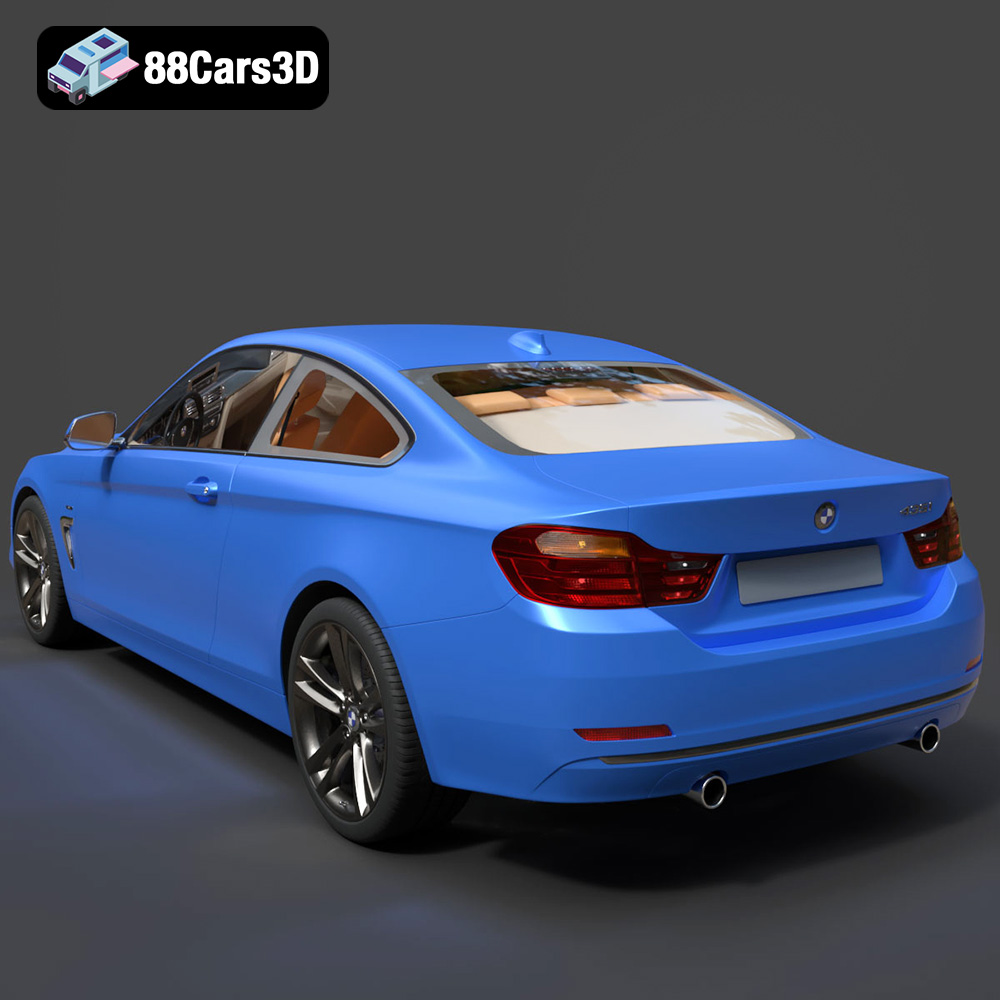
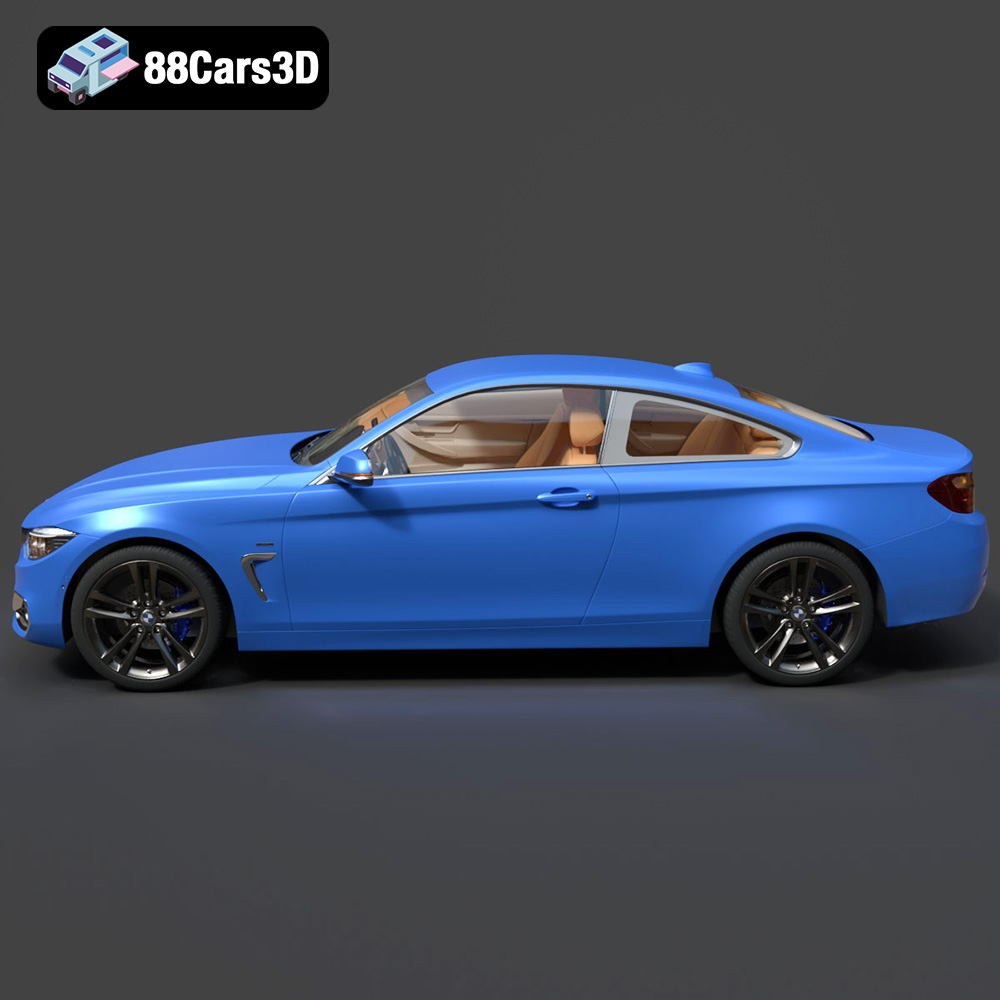
The first impression of any car model comes from its exterior, and the F32 Coupe doesn’t disappoint. The model precisely replicates the iconic twin-kidney grilles, aggressive front fascia, and signature LED headlight clusters that define the F32 generation. Every curve and crease along its sculpted side profile has been meticulously recreated to reflect the vehicle’s athletic stance and luxurious heritage. From the accurate BMW 4 Series F32 Coupe frame geometry to the subtle panel gaps, the attention to detail ensures photorealistic results in any rendering engine. The dual exhaust system with polished tailpipes and rear diffuser detailing adds another layer of realism, essential for close-up shots.
Furthermore, the high-resolution M-Sport style alloy wheels and textured performance tires are not just aesthetic additions; they are functional elements that contribute to the overall visual integrity. The accurate suspension geometry, complete with visible brake calipers and cross-drilled rotors, is critical for realistic animations and detailed undercarriage renders, especially in virtual reality environments where users can inspect the vehicle from every angle.
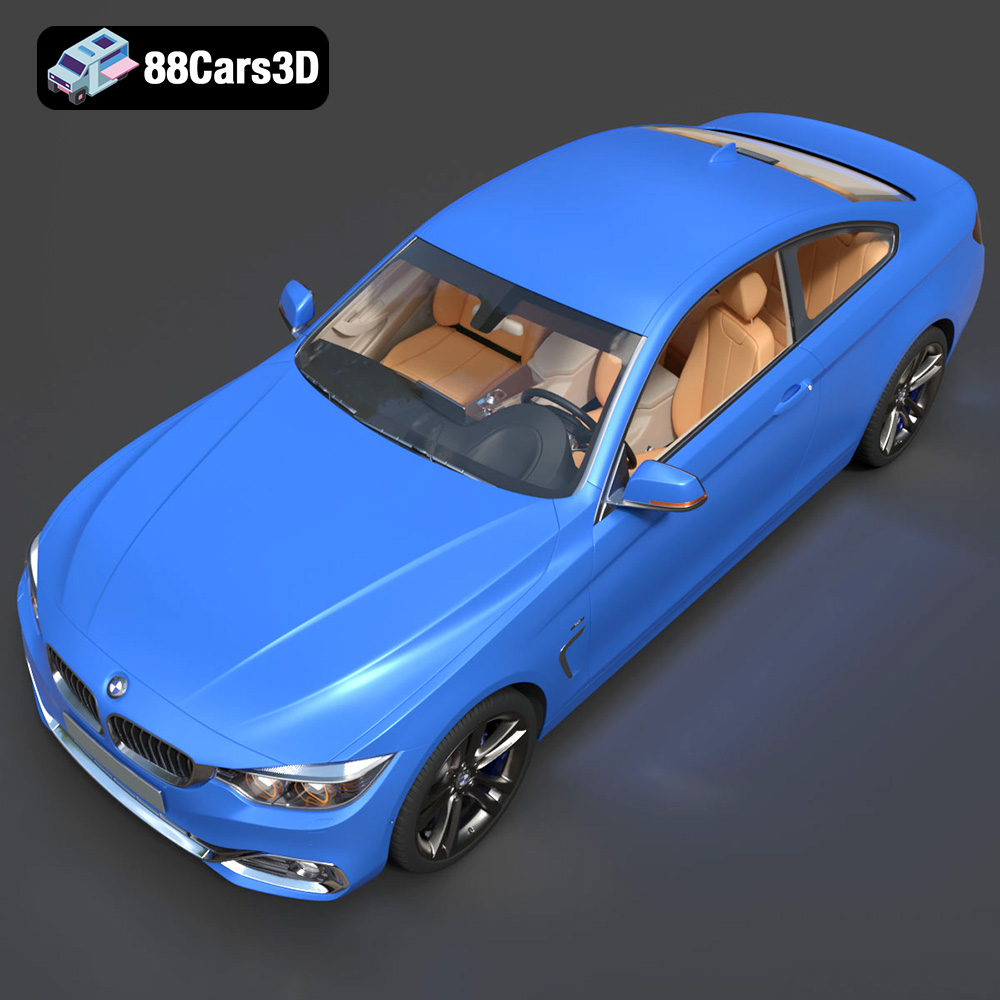
While often overlooked in basic models, a detailed interior is paramount for immersive experiences, especially in first-person view game development or virtual showrooms. The BMW 4 Series F32 Coupe model excels here with plush, anatomically correct sport bucket seats, complete with detailed stitching that adds a touch of luxury. The three-spoke leather-wrapped sport steering wheel, featuring multi-function buttons, and the accurate iDrive infotainment display alongside the driver-centric analog/digital instrument cluster, create a convincing and interactive cockpit.
Detailed elements like the center console, aluminum or wood trim inserts, shifter, and foot pedals ensure that the interior feels complete and lived-in. This optimized geometry for first-person POV in gaming is a significant advantage, providing developers with a ready-to-use asset that enhances player immersion without requiring extensive modifications.
The true value of a premium 3D model lies in its ability to integrate effortlessly into diverse professional pipelines. The BMW 4 Series F32 Coupe 3D Model is engineered for this purpose, offering game-ready optimization and compatibility across major 3D software and real-time engines.
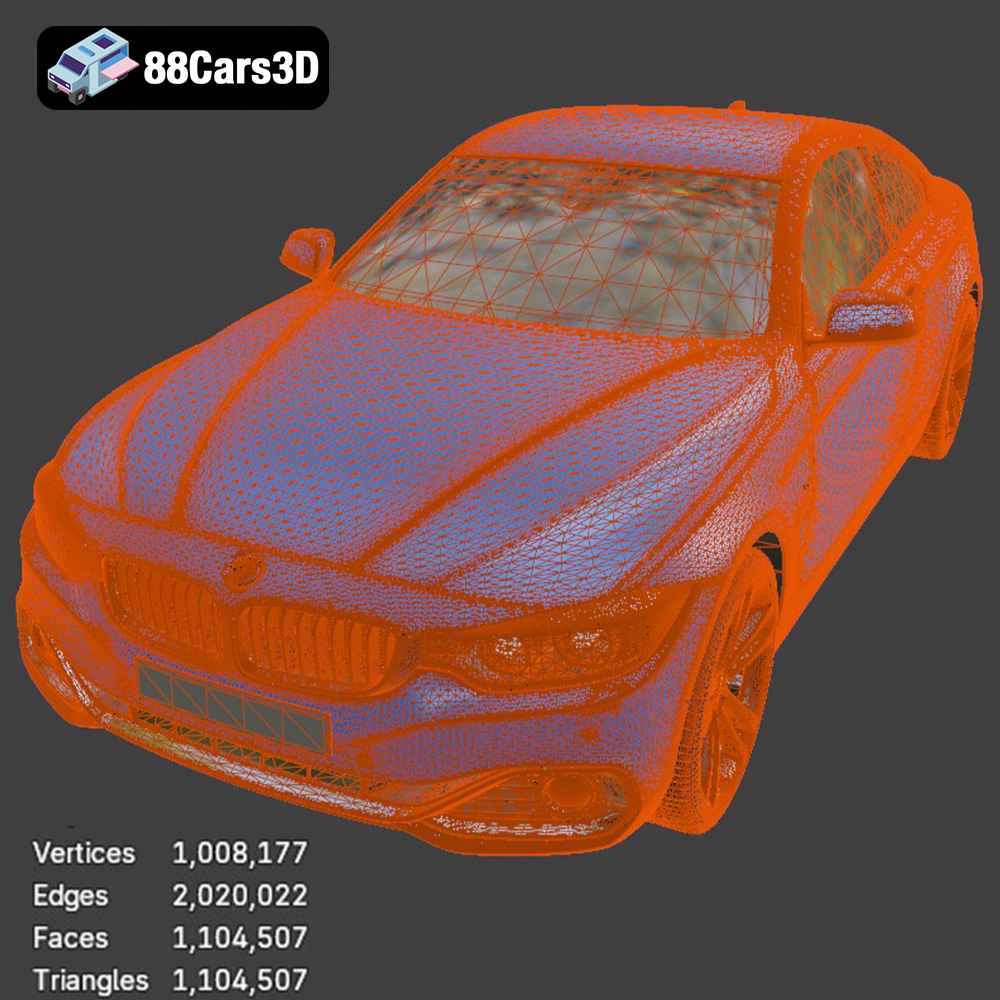
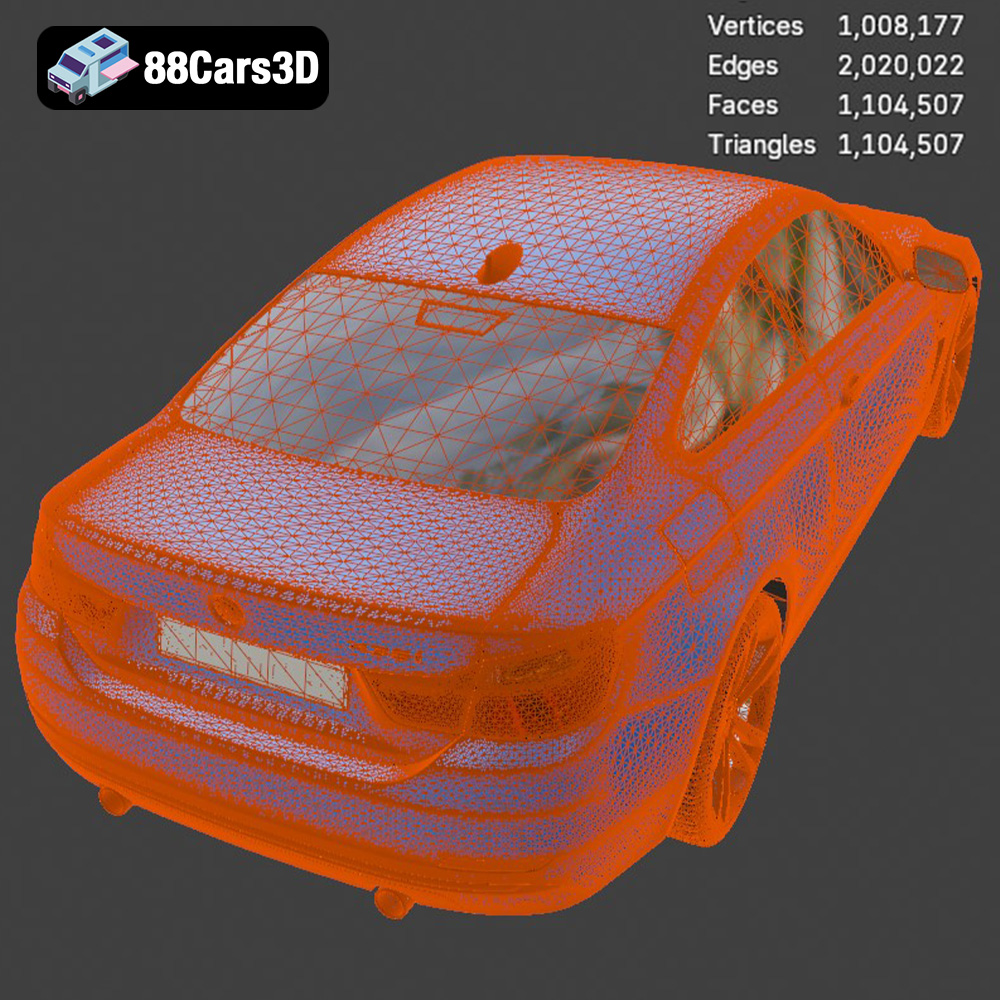
For game developers, performance is paramount. The BMW F32 Coupe, with its 1,104,507 triangle count, strikes a perfect balance. This polycount is high enough to provide exceptional visual fidelity for modern next-gen racing games and open-world titles, yet optimized to run efficiently in real-time engines like Unreal Engine and Unity. The game-ready nature of this model is further reinforced by its real-world scale accuracy and proper pivot setup for steering, wheel rotation, and suspension travel. This means less time spent on rigging and calibration, allowing developers to focus on gameplay mechanics and environmental design.
For artists focused on photorealistic rendering for marketing, architectural visualization, or cinematic productions, the flexibility offered by the .max and .blend formats is invaluable. These native project files allow for deep customization and leverage the full power of advanced renderers.
The utility of a comprehensive 3D car model extends far beyond traditional screen-based applications. The BMW 4 Series F32 Coupe model is designed with versatility in mind, catering to emerging technologies and niche applications, demonstrating the foresight and quality offered by 88cars3d.com.
Augmented Reality (AR) and Virtual Reality (VR) are transforming how we interact with digital content. The BMW F32 Coupe, with its optimized geometry and multiple file formats, is perfectly suited for these immersive environments. The .glb format, specifically, is ideal for lightweight, interactive web-based AR/VR showrooms and configurators. Users can explore the vehicle in a virtual space, change colors, open doors, and even ‘sit’ inside, providing an unprecedented level of engagement. This capability is invaluable for automotive brands looking to offer interactive virtual experiences to their customers.
For enthusiasts, designers, or educators, translating a digital model into a physical object via 3D printing offers a tangible connection to the design. The inclusion of the .stl format for the BMW F32 Coupe is a significant advantage. The detailed product description even provides specific 3D print settings, which is a rare and valuable addition.
No two projects are identical, and the ability to customize a 3D asset is crucial. The BMW F32 Coupe model is built with customization in mind, offering flexibility that empowers artists and developers to tailor the asset to their specific vision.
In today’s competitive digital landscape, the distinction between good and exceptional often comes down to the quality of your assets. Opting for a meticulously crafted 3D car model, such as the BMW 4 Series F32 Coupe available on 88cars3d.com, provides a strategic advantage that transcends mere aesthetics.
Creating a 3D car model of this caliber from scratch requires hundreds of hours of expert labor. This includes CAD data conversion, retopology for optimal polycount, intricate UV mapping, texture creation, and rigging for animation. By purchasing a pre-built, production-ready asset, you eliminate these significant time and labor costs. This allows your team to allocate resources more efficiently, focusing on broader project goals, innovation, and bringing your unique vision to life.
Professional 3D car models are designed to deliver uncompromised visual fidelity. The BMW F32 Coupe model’s 1,104,507 triangle count is a sweet spot, providing enough detail for stunning close-up renders while remaining optimized for real-time applications. Features like accurate BMW 4 Series F32 Coupe frame geometry, detailed interiors, and correctly set up pivots are hallmarks of assets that truly elevate a project’s visual impact, whether it’s for a brand campaign, a racing simulator, or an architectural visualization.
With a comprehensive range of included file formats (.blend, .fbx, .obj, .glb, .stl, .ply, .unreal, .max), this BMW F32 Coupe model ensures compatibility with current and future software iterations and pipelines. This versatility future-proofs your investment, making it a reliable asset that can adapt to evolving project requirements and technological advancements in the 3D industry. Whether you’re targeting cinematic renders, real-time game assets, AR/VR experiences, or even physical 3D prints, this model is prepared for every challenge.
The journey of bringing a digital automotive vision to life is complex, demanding a combination of artistic skill and technical precision. High-quality 3D car models serve as the cornerstone of this process, providing the foundation for everything from photorealistic renders to immersive interactive experiences. The BMW 4 Series F32 Coupe 3D Model is an outstanding example of such an asset, meticulously crafted to capture the essence of modern Bavarian engineering while offering unparalleled technical flexibility.
Its detailed exterior and interior, optimized polycount for real-time engines, and comprehensive suite of file formats make it an indispensable tool for game developers, automotive rendering specialists, AR/VR creators, and even 3D printing enthusiasts. By leveraging professional-grade assets from reputable sources like 88cars3d.com, creators can save invaluable time, enhance visual fidelity, and ensure their projects stand out in an increasingly competitive digital landscape. This BMW 4 Series F32 Coupe model isn’t just a 3D asset; it’s an investment in quality, efficiency, and creative potential, ready to drive your next project to success.
Experience the perfect blend of dynamic performance and elegant design with our BMW 4 Series F32 Coupe 3D model. Capturing the essence of modern Bavarian engineering, this model highlights the iconic twin-kidney grilles, aggressive front fascia, signature LED headlight clusters, and the sweeping, aerodynamic roofline that defines the F32 generation. Every curve and crease along its sculpted side profile has been meticulously recreated to reflect the vehicle’s athletic stance and luxurious heritage. Boasting a highly detailed 1,104,507 triangle count, this 3D asset provides exceptional visual fidelity for close-up renders while maintaining an efficient topology suitable for modern high-end game engines. Whether utilized in next-gen racing games, immersive architectural visualization, or high-budget commercial animations, the model delivers unmatched realism and flexibility for creators demanding top-tier quality. Perfect for urban racing games, luxury lifestyle visualizations, virtual showrooms, and high-end automotive rendering.
$64.00
.blend
.bmw
.fbx
.glb
.max
.obj
.ply
.rendering
.sports coupe
.stl
.unreal
4-series
car-3d-model
f32-coupe
game asset
game-ready
high poly
luxury car
optimized
VR/AR